
For effective revision, students can use BSE Odisha Class 8 English Solutions Chapter 11 Harvest Hymn Question Answer to practice textbook exercises.
Class 8 English Harvest Hymn Question Answer
Class 8 English Chapter 11 Question Answer Odia Medium
Let us do these activities before we read
(ଚାଲ ପଢ଼ିବା ପୂର୍ବରୁ ଏହି କାର୍ଯ୍ୟଗୁଡ଼ିକୁ କରିବା
Work in pairs and answer the questions that follow. Share your answers with your classmate and teacher
(ଦୁଇଜଣିଆ ଦଳରେ କାମ କର ଏବଂ ପରବର୍ତ୍ତୀ ପ୍ରଶ୍ନଗୁଡ଼ିକର ଉତ୍ତର ଦିଅ । ତୁମର ସହପାଠୀ ଓ ଶିକ୍ଷକଙ୍କ ସହ ଉତ୍ତରଗୁଡ଼ିକୁ ବିନିମୟ କର ।)
1. India celebrates many harvest festivals. When is the harvest festival ?
(ଭାରତରେ ବହୁତ ଫସଲ ଅମଳ ଉତ୍ସବ ପାଳିତ ହୁଏ । କେବେ ଅମଳ ଉତ୍ସବ ପାଳନ କରାଯାଏ ?)
Answer:
In Odisha Makar Sankranti is major harvest festival as this festival is closely linked to the completion of the harvest of paddy.

2. A hymn refers to a song of praise.
(ସ୍ତବ/ସ୍ତୁତି ପ୍ରଶଂସାର ଏକ ଗୀତକୁ ସୂଚିତ କରିଥାଏ ।)
(i) To whom do we offer a hymn ?
(ଆମ୍ଭେମାନେ କାହାକୁ ସ୍ତବ ବା ସ୍ତତି ଜଣାଇଥାଉ ?)
Answer:
To God (ଈଶ୍ବରଙ୍କୁ)
(ii) When and where do we sing a hymn ? (କେବେ ଓ କେଉଁଠାରେ ଆମ୍ଭେମାନେ ଗୋଟିଏ ସ୍ତୁତି ଗାଇଥାଉ ?)
Answer:
We sing a hymn in sacred places (ପବିତ୍ର ଜାଗାମାନଙ୍କରେ ) like temple, mosque (ମସ୍ଜିଦ୍), church or at home particulary (ବିଶେଷକରି ) etc. at evening or in the morning.
(ii) Why do we offer it ? (ଆମ୍ଭେମାନେ କାହିଁକି ସ୍ତୁତି କରିଥାଉ ?)
Answer:
We offer it (hymn) to praise God, Almighty (ସର୍ବଶକ୍ତିମାନ ଈଶ୍ଵର) for His wonderful creation (ତାଙ୍କର ଚମତ୍କାର ସୃଷ୍ଟିପାଇଁ) and having besttowed on us (ଆମ୍ଭମାନଙ୍କୁ ପ୍ରଦାନ କରିଥୁବା ପାଇଁ) so many natural beauties.
II. Work in pairs. Read the paragraph and select the correct meaning for each underlined word from the options given below. Share your answers with your classmates and teacher.
(ଦୁଇଜଣ ହୋଇ କାର୍ଯ୍ୟ କର । ଅନୁଚ୍ଛେଦଟିକୁ ପଢ଼ ଓ ପ୍ରତ୍ୟେକ ରେଖାଙ୍କିତ ଶବ୍ଦର ସଠିକ୍ ଅର୍ଥ ନିମ୍ନ ପ୍ରଦତ୍ତ ବିକଳ୍ପଗୁଡ଼ିକ ମଧ୍ୟରୁ ଚୟନ କର । ତୁମ୍ଭମାନଙ୍କର ଉତ୍ତରଗୁଡ଼ିକୁ ତୁମର ସହପାଠୀ ଓ ଶିକ୍ଷକଙ୍କ ସହ ବିନିମୟ କର ।)
Under the golden 1. radiance of the evening sun, the villagers gathered to pay 2. tribute to their 3. cherished elder, who had dedicated his life to their well-being. His wise 4. counsel had guided generations, steering them through challenges. Known for his 5. munificent spirit, he never hesitated to share his resources generously.
Let us discuss (ଆସ ଆଲୋଚନା କରିବା)
I. Write the stanza number for the main idea of each stanza given below. Share your answers with your classmates and teacher.
(ତଳେ ଦିଆଯାଇଥିବା ପ୍ରତ୍ୟେକ ପଂକ୍ତିର ମୁଖ୍ୟ ଧାରଣା ପାଇଁ ପଂକ୍ତିର କ୍ରମ ସଂଖ୍ୟା ଲେଖ । ତୁମର ଉତ୍ତରଗୁଡ଼ିକୁ ସହପାଠୀ ଓ ଶିକ୍ଷକଙ୍କ ସହ ବିନିମୟ (Question with Answer)
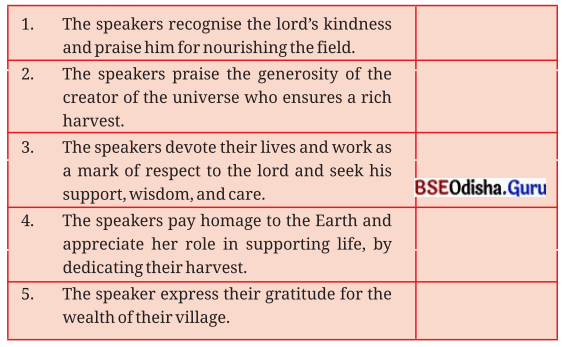
Answer:
| 1. The speakers recognise the lord’s kindness and praise him for nourishing the field. | I |
| 2. The speakers praise the generosity of the creator of the universe who ensures a rich harvest. | 1 |
| 3. The speakers devote their lives and work as a mark of respect to the lord and seek his support, wisdom, and care. | 4 |
| 4. The speakers pay homage to the Earth and appreciate her role in supporting life, by dedicating their harvest. | 3 |
| 5. The speaker express their gratitude for the wealth of their village. | 2 |
II. Fill in the blanks by choosing the appropriate words or phrases from within the brackets.
(ବନ୍ଧନୀ ମଧ୍ଯରୁ ଥିବା ସଠିକ୍ ଶବ୍ଦ ବା ବାକ୍ୟଶ ବାଛି ଶୂନ୍ୟସ୍ଥାନ ପୂରଣ କର ।)
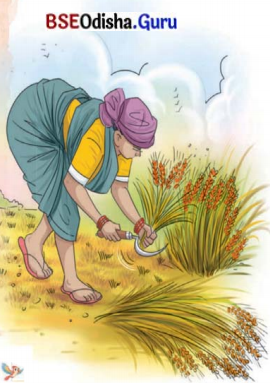
1. The setting of the poem is a rural landscape (ଗ୍ରାମ୍ୟ ଭୂଭାଗ), possibly (ସମ୍ଭବତଃ) during a (harvest/religious) festival.
Answer: harvest
2. The tone (ଭାବ) of the poem is respectful and celebratory (ସମ୍ମାନପ୍ରଦ ଓ ଆନନ୍ଦଜନିତ) because it praises respect and gratitude. (the men and women/ nature and the Lord) with deep
Answer: nature and the Lord (ପ୍ରକୃତି ଓ ଈଶ୍ୱର)
3. In the line ‘Thou art our Hands and our Heart and our Home’, the letter ‘h’ is capitalised in ‘Hands’, ‘Heart’ and ‘Home’ because
work of farmers/God resides in them)
Answer: God resides in them
III. Identify the poetic device used in the following lines from the poem.
(କବିତାରୁ ଆସିଥିବା ନିମ୍ନଲିଖତ ଧାଡ଼ିଗୁଡ଼ିକରେ ବ୍ୟବହୃତ ଅଳଙ୍କାର ଚିହ୍ନାଅ ।)
Bright and munificent lord of the morn!
Answer: Alliteration
We bring thee our lives and our labours for tribute
Answer: Alliteration
IV. Match the lines from the poem in Column 1 with their expressions in Column 2. Choose the appropriate poetic device from the box given below and write in Column 3.
(ସ୍ତମ୍ଭ ‘1’ ରେ ଦିଆଯାଇଥବା କବିତାର ଧାଡ଼ିଗୁଡ଼ିକ ସ୍ତମ୍ଭ ‘2 ରେ ପ୍ରଦତ୍ତ ସେଗୁଡ଼ିକ ବ୍ୟାଖ୍ୟା ନିମ୍ନ ପ୍ରଦତ୍ତ ବାକ୍ସରୁ ସଠିକ ଅଳଙ୍କାର ବାଛି ସ୍ତମ୍ଭ ‘3’ ରେ ଲେଖ ।) (Question with Answer)
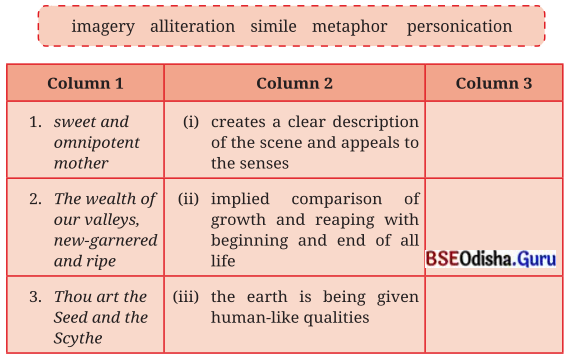
Answer:
| Column 1 | Column 2 | Column 3 |
| 1. sweet and omnipotent mother | (i) creates a clear description of the scene and appeals to the senses | Personification |
| 2. The wealth of our valleys, new-garnered and ripe | (ii) implied comparison of growth and reaping with beginning and end of all life | Metaphor |
| 3. Thou art the Seed and the Scythe. | (iii) the earth is being given human-like qualities | Metaphor |
V. Certain words or phrases are repeated in the same line of the poem.
(କବିତାର ଏକା ଧାଡ଼ିରେ କେତେକ ଶବ୍ଦ ବା ବାକ୍ୟାଶର ପୁନରାବୃତ୍ତି ହୋଇଛି ।)
For example: The gold of our fields and the gold of our fruit;
Find more such repetitions from the poem. What is the poet’s purpose of using repetition in the poem ?
(କବିତାରେ ଏଭଳି ଅଧ୍ବକ ପୁନରାବୃତ୍ତିଗୁଡ଼ିକୁ ବାହାର କର । କବିତାରେ repetation ବ୍ୟବହାର କରିବାରେ କବିଙ୍କ ଉଦ୍ଦେଶ୍ୟ କଣ ?)
Answer:
The lines with repetitions of words:
- We bring thee out songs and our garlands for tribute.
- Queen of the guard-flower, queen of the harvest.
- Lord of the rainbow, lord of the harvest.
The poet uses repetition to create a rhythmic and musical quality and emphasize the importance of gratitude and unify the voices of the community in praise.
VI. The poem uses ‘symbolism’ to convey deeper meanings Match the symbols in Column 1 with the meanings they convey in Column 2.
(ଗୂଢ଼ ଅର୍ଥ ପ୍ରକାଶ କରିବା ପାଇଁ କବିତାରେ ସଙ୍କେତ ପ୍ରତିକ ବ୍ୟବହାର ହୋଇଛି । ସ୍ତମ୍ଭ 1’ ରେ ଥିବା ସଙ୍କେତକୁ ସ୍ତମ୍ଭ ‘1’ ରେ ସେଗୁଡ଼ିକ ପ୍ରକାଶ କରୁଥିବା ଅର୍ଥ ସହ ମିଳାଅ ।)
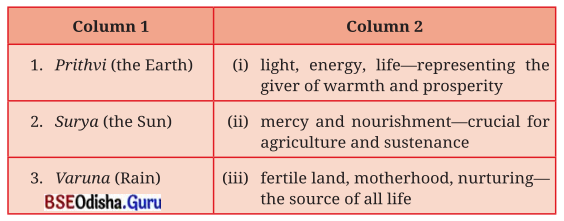
Answer:
| Column 1 | Column 2 |
| 1. Prithvi (the Earth) | (iii) fertile land, motherhood, nurturing – the source of all life. |
| 2. Surya (the Sun) | (i) light, energy, life – representing the given of warmth and prosperity. |
| 3. Varuna (Rain) | (ii) mercy and nourishment – crucial for agriculture and sustenance |
Let us think and reflect
(ଆସ ଚିନ୍ତା କରିବା ଓ ବିଚାର କରିବା):
Read the given extracts and answer the questions that follow.
(ପ୍ରଦତ୍ତ ଉଦ୍ଧୃତାଂଶକୁ ପଢ଼ ଓ ପରବର୍ତୀ ପ୍ରଶ୍ନଗୁଡ଼ିକର ଉତ୍ତର ଦିଅ ।)
1. We bring thee our songs and our garlands for tribute,
The gold of our fields and the gold of our fruit;
O giver of mellowing radiance, we hail thee,
We praise thee, O Surya, with cymbal and flute.
(i) What does the act of bringing songs and garlands as tribute suggest about the people’s relationship with the divine ?
(ଈଶ୍ଵରଙ୍କ ନିକଟରେ ଗୀତ ଗାନ ଓ ତାଙ୍କୁ ଫୁଲହାର ଅର୍ପଣ ଭଳି ସମ୍ମାନ ଲୋକମାନଙ୍କର ତାଙ୍କ ସହିତ ଥବା ସଂପର୍କ ବିଷୟରେ କ’ଣ ସୂଚିତ କରୁଛି ?)
A. They fear the gods and wish to calm them in any way possible.
B. They have a deep sense of reverence and gratitude towards the divine.
C. They are forced to perform rituals without understanding the divine.
D. They depend on the gods for their daily needs and activities.
Answer:
B. They have a deep sense of reverence and gratitude towards the divine (God).
(ii) Complete the following sentence suitably. (ନିମ୍ନଲିଖତ ବାକ୍ୟକୁ ସଠିକ୍ଭାବରେ ପୂରଣ) (Question with Answer)
The word ‘gold’ in the phrases ‘the gold of our fields’ and ‘the gold of our fruit’ symbolises the fruit of labour, nature’s bounty, prosperity or growth (ପ୍ରଗତି ବା ଉନ୍ନତି).
(iii) How does the description ‘O giver of mellowing radiance’ help us understand Surya’s role in the harvest?
(ଉଜ୍ଜ୍ବଳତା) ବର୍ଣ୍ଣନା ଫସଲ ସୂର୍ଯ୍ୟର ଭୂମିକା ‘O giver of’ mellowing radiance’ ବୁଝିବାରେ ଆମ୍ଭମାନଙ୍କୁ ସାହାଯ୍ୟ କରୁଛି ?)
Answer:
In “Harvest Hymn” Surya on the Sun God is addressed as the giver of mellowing radiance to highlight his (Surya, role as the source of light, energy and life that help to grow and mature (ripen)( ପାଚିବାରେ ସାହାଯ୍ୟ କରିବାରେ) crops (ଫସଲ) or harvest. (ଅମଳ)
(iv) Fill in the blank by selecting the correct option from those given in the brackets.
(ବନ୍ଧନୀ ମଧ୍ଯରୁ ଉପଯୁକ୍ତ ବିକଳ୍ପ ବାଛି ଶୂନ୍ୟସ୍ଥାନ ପୂରଣ କର ।)
The use of cymbal and flute signifies (joy and celebration/meditation and worship)
Answer:
……….. joy and celebration
Question 2.
All Voices:
Lord of the Universe, Lord of our being,
Father eternal, ineffable Om!
Thou art the Seed and the Scythe of our harvests,
Thou art our Hands and our Heart and our Home.

(i) In the phrase ‘Lord of our being,’ what does the word ‘being’ most likely refer to ?
(ବାକ୍ୟାଶ ‘Lord of our being’ ରେ ‘being’ ଶବ୍ଦଟି କ’ଣ ସୂଚାଉଛି ?)
A. Our physical body
B. Our entire existence
C. Our spiritual practices
D. Our earthly possessions
Answer:
B. Our entire existence
(ii) Identify whether the following statement is true or false.
(ନିମ୍ନୋକ୍ତ ଉକ୍ତି ଠିକ୍ କି ଭୁଲ ଚିହ୍ନଟ କର ।)
The imagery of ‘the Seed and the Scythe’ symbolises the divine’s role as both the beginning (creation) and the end (harvest) of the agricultural cycle.
Answer:
True
(iii) Identify the phrases from the extract that mean the following:
(ଉଦ୍ଧୃତାଂଶରୁ ନିମ୍ନଲିଖତକୁ ବୁଝାଉଥବା ବାକ୍ୟାଶ ଚିହ୍ନଟ କର ।)
A. The divine as a timeless, everlasting presence.
B. Beyond human comprehension or description
Answer:
A. Father eternal
B. ineffable
(iv) How do we know that these lines from the extract are spoken as a chorus ?
(ଆମ୍ଭେମାନେ କିପରି ଜାଣୁଛୁ ଯେ ଉଦ୍ଧୃତାଂଶର ଏହି ଧାଡ଼ିଗୁଡ଼ିକ ସମବେତ ସ୍ଵରରେ ଗାୟନ କରାଯାଇଛି ?)
Answer:
Because these lines are related to “All Voices”.
II. Some poets and authors use words that are no longer a part of common usage. Such words are called ‘archaic’ words.
(କେତେକ କବି ଓ ଲେଖକ ଶବ୍ଦ ବ୍ୟବହାର କରିଥାନ୍ତି ଯେଉଁଗୁଡ଼ିକ ସାଧାରଣ ବ୍ୟବହାରର ଏକ ଅଂଶ ନୁହେଁ । ଏଭଳି ଶବ୍ଦକୁ archaic words ବା ପୁରୁଣାକାଳିଆ ଶବ୍ଦ କୁହାଯାଏ ।)
Work in pairs. Read the sentences given below. Match the underlined archaic words in Column 1 with their meanings in Column 2. Share your answers with your classmates and teacher.
(ଦୁଇଜଣିଆ ଦଳରେ କାମ କର । ନିମ୍ନଲିଖତ ବାକ୍ୟଗୁଡ଼ିକୁ ପଢ଼ି । ସ୍ତମ୍ଭ ‘1’ ରେ ଥିବା ରେଖାଙ୍କିତ ପୁରୁଣାକାଳିଆ ଶବ୍ଦଗୁଡ଼ିକୁ ସ୍ତମ୍ଭ ‘2 ରେ ଥିବା ସେମାନଙ୍କ ଅର୍ଥ ସହ ମିଳାଅ । ତୁମ ଉତ୍ତରଗୁଡ଼ିକୁ ସହପାଠୀ ଓ ଶିକ୍ଷକଙ୍କ ସହ ବିନିମୟ କର ।)
“Thou art my friend, and I trust thee. Thy kindness is great, and everything that is mine is thine.’
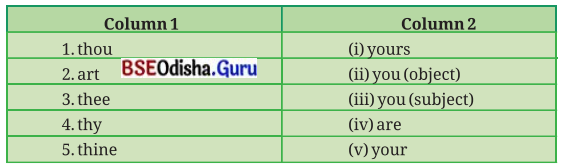
Answer:
| Column 1 | Column 2 |
| 1. thou 2. art 3. thee 4. thy 5. thine |
(iii) you (subject) (iv) are (ii) you (object) (v) your (possessive adjective) (v) yours (possessive pronoun) |
III. Answer the following questions.
Question 1.
Why do the farmers hail the God of rain?
(ବର୍ଷାର ଦେବତାଙ୍କୁ କୃଷକମାନେ କାହିଁକି ପ୍ରଶଂସା କରନ୍ତି ?)
Answer:
The farmers hail (admire) the God of rain for helping their crops grow before they are ready for harvest (ଅମଳ ହେବା ପୂର୍ବରୁ).
Question 2.
What is being referred to as ‘wealth of our valleys’? Why?
(‘Wealth (ସମ୍ପତ୍ତି) of our valleys’ (ଉପତ୍ୟକା) କ’ଣ ସୂଚିତ କରୁଛି ? କାହିଁକି ?)
Answer:
Prosperity is being referred to as “Wealth of our valleys” as fertile valleys (ଉର୍ବର ଉପତ୍ୟକା ସବୁ) provide (ଯୋଗାଇଥାଏ ) us happiness or pleasure like prosperity through fresh, abundant crops and grains.
Question 3.
State one reason why the women refer to the Earth as a ‘source of manifold gladness’.
(ନାରୀମାନେ କାହିଁକି ପୃଥିବୀ ବା ବସୁଧାକୁ ଅସଂଖ୍ଯ ଖୁସି/ଆନନ୍ଦର ଉତ୍ସ ବୋଲି ଅଭିସିତ କରିଛନ୍ତି, ଗୋଟିଏ କାରଣ ଦର୍ଶାଅ ।)
Answer:
The women refer to the earth as a “source of manifold gladness”
(ବିଭିନ୍ନ ଆନନ୍ଦ ଉଲ୍ଲାସର ଉତ୍ସ ରୂପେ) because of the Earth’s providing (ଅର୍ପଣ କରିବା) numerous/ manifold (ଅସଂଖ୍ୟ) benefits like food, water, resources (ସମ୍ବଳ) and happiness.
Question 4.
Why does everyone in the poem offer their ‘labours for tribute”?
(କବିତାରେ ସମସ୍ତେ କାହିଁକି ଈଶ୍ବରଙ୍କ ପ୍ରତି ଶ୍ରଦ୍ଧାଞ୍ଜଳି ବା ସମ୍ମାନ ପାଇଁ ସେମାନଙ୍କର ଶ୍ରମ ବିନିଯୋଗ କରିଛନ୍ତି ?)
Answer:
Everyone in the poem offers their labour or hard work in fields to get the crops or grains as an expression of deep gratitude (ଗଭୀର କୃତଜ୍ଞତାର ଏକ ଅଭିବ୍ୟକ୍ତି ରୂପେ) to God for his blessings.
Question 5.
Why has the poet presented the poem as voices of men, women, and all voices ?
(କବି କାହିଁକି କବିତାକୁ ପୁରୁଷ, ନାରୀ ଓ ସମସ୍ତଙ୍କର ସ୍ୱର ରୂପେ ଉପସ୍ଥାପିତ କରିଛନ୍ତି ?)
Answer:
The poet has presented the poem as voices of men, women and all voices to show the entire community (ସଂପୂର୍ଣ୍ଣ ସଂପ୍ରଦାୟ) collective gratitude (ସାମଗ୍ରିକ କୃତଜ୍ଞତା) to God through different natural elements like sun, earth and rain.
Question 6.
How does the poet create the joyous atmosphere of rural India at harvesting time ?
(ଫସଲ ଅମଳ ସମୟରେ କବି କିପରି ଗ୍ରାମ୍ୟ ଭାରତର ଆନନ୍ଦପୂର୍ଣ୍ଣ ପରିବେଶ ସୃଷ୍ଟି କରିଛନ୍ତି ?)
Answer:
It is the harvest time in rural India. The poet creates the joyous (pleasant) atmosphere in the poem as (when) the Indians celebrate the time by praising gods with deep thanks for the good harvest using cymbol, flute, pipe and drum.
Question 7.
Why is the poem presented as a hymn ?
(କବିତାକୁ କାହିଁକି ଏକ ସ୍ତବ ବା ପ୍ରାର୍ଥନା ରୂପେ ଉପସ୍ଥାପିତ କରାଯାଇଛି ?)
Answer:
A hymn is a devotional song (ଭକ୍ତିଗୀତ) meant (ଉଦ୍ଦିଷ୍ଟ) for admiring God for his wonderful gifts of crops and grains to people during harvest time.
Let us learn (ଆସ ଶିଖୁବା) :
Match the pictures of the farming implements given in Column 1 with their use given in Column 2. Then, fill in the blanks in Column 3 to complete the name of the – implement.
(ସ୍ତମ୍ଭ 1’ ରେ ଥିବା କୃଷି ଉପକରଣଗୁଡ଼ିକର ସମ୍ବନ୍ଧିତ ଛବିଗୁଡ଼ିକୁ ସ୍ତମ୍ଭ ‘2 ରେ ଥିବା ସେଗୁଡ଼ିକ ବ୍ୟବହାର ସହିତ ମିଳାଅ । ତାପରେ ସ୍ତମ୍ଭ ‘3’ ରେ ଦିଆଯାଇଥବା ଶୂନ୍ୟସ୍ଥାନଗୁଡ଼ିକୁ ଉପକରଣଗୁଡ଼ିକର ନାମ ଲେଖୁ ପୂରଣ କର ।)
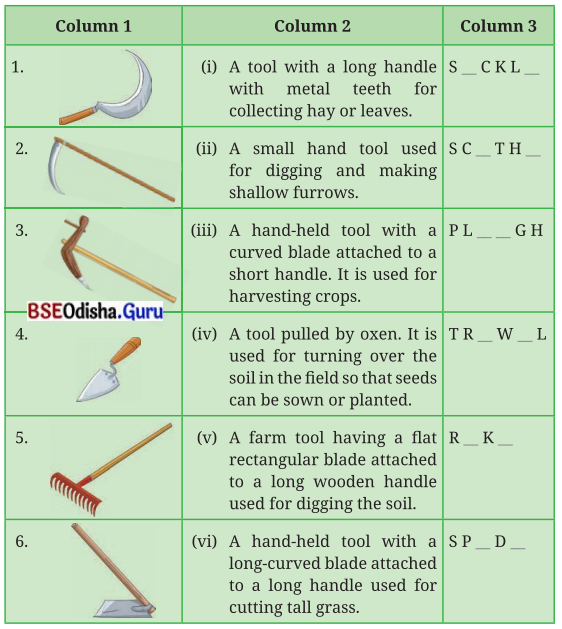
Answer:
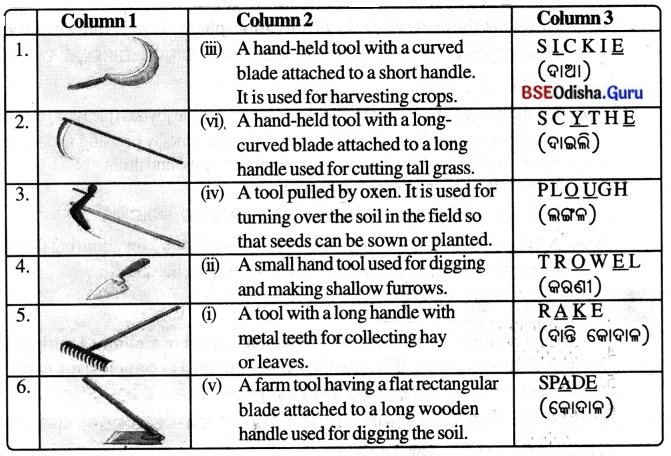
II. Choose the correct synonyms for the underlined words in the given sentences from the box below. Circle the words or phrases in the sentences that helped you to infer the meanings. One example has been done for you.
(ପ୍ରଦତ୍ତ ବାକ୍ୟଗୁଡ଼ିକରେ ରେଖାଙ୍କିତ ଶବ୍ଦଗୁଡ଼ିକ ପାଇଁ ସଠିକ୍ ପ୍ରତିଶବ୍ଦ ନିମ୍ନ ପ୍ରଦତ୍ତ ବାକ୍ସରୁ ବାଛ । ତୁମକୁ ଉତ୍ତର ପାଇବା ପାଇଁ ସାହାଯ୍ୟ କରୁଥିବା ଶବ୍ଦ ବା ବାକ୍ୟାଶ ଚାରିପଟେ ଗୋଲ ବୁଲାଅ ।’ ଗୋଟିଏ ଉଦାହରଣ ତୁମ ପାଇଁ କରି ଦିଆଯାଇଛି ।)

1. The king was beneficent to the poor because he took good care of them.
synonym: kind
2. He was munificent towards the needy and donated a lot for their health care.
synonym: generous
3. When he lost his job, all his friends gave him succour by supporting him with money.
synonym: help
4. When the sun’s rays came into the dark room, the whole room was full of radiance.
synonym: brightness
5. The little girl was speechless with ineffable joy when she got her birthday gift from her aunt.
synonym: indescribable
Let us listen:
I. Listen to the talk about paddy cultivation. As you listen, number the events in the correct order in which they happen. (Transcript for teacher on page 203)
(ଧାନ ଚାଷ ବିଷୟରେ ହେଉଥିବା କଥାବାର୍ତ୍ତା ଶୁଣ । ଶୁଣୁଥିବାବେଳେ ଘଟଣାଗୁଡ଼ିକୁ ସେମାନେ ଘଟିଥିବା କ୍ରମରେ ସଜାଅ । ଶିକ୍ଷକଙ୍କ ପାଇଁ Transcript ପୃଷ୍ଠା 203 ରେ ଅଛି ।)
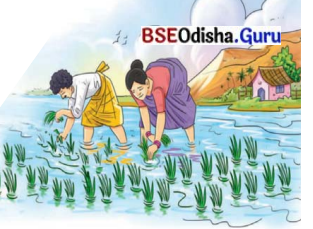
1. Transplanting of seedlings
2. Ploughing of soil
3. Threshing of grains
4. Puddling of land
5. Harvesting of paddy
6. Irrigating the field
7. Milling of rice
Answer:
2. Ploughing of soil (દા|ડิ શ્રોઈ)
4. Puddling of land (જવે6ર દા|ઠิત્તાળ)
6. Irrigating the field (னா6ঘত্নে)
1. Transplanting of seedlings
3. Threshing of grains ( ઈવ૫/ ટાવજ જ઼ને।)
7. Milling of rice (યાત્તથૂ 6જાવા ณઙ્વાવજી ભાર્વપ)
5. Harvesting of paddy (યાજ થવન્ન)
II. Now, listen to the talk again. As you listen, choose the correct option to answer the questions that follow.
(ବର୍ତ୍ତମାନ, ଆଉଥରେ କଥୋପକଥନ ଶୁଣ । ଶୁଣୁଥିବାବେଳେ ପ୍ରଦତ୍ତ …… ପ୍ରଶ୍ନଗୁଡ଼ିକର ଉପଯୁକ୍ତ/ସଠିକ୍ ବିକଳ୍ପ ବାଛ ।) ଓ
Question 1.
What is the main step (ପ୍ରଧାନ/ମୁଖ୍ୟ ପଦକ୍ଷେପ) in preparing the soil (ମୃଭିକା) for cultivation of rice?
(i) Ploughing the soil
(ii) Clearing the soil
(iii) Puddling the soil
Answer:
(iii) Puddling the soil
Question 2.
How long does it take for rice seeds to grow into seedlings before being transplanted?
(i) 2-3 weeks
(ii) 4-5 weeks
(iii) 6-7 weeks
Answer:
(ii) 4-5 weeks
Question 3.
Why is drying rice grains important after threshing?
(i) To get rice seeds for plantation
(ii) To separate the rice grains easily
(iii) To store the rice grains for longer
Answer:
(iii) To store the rice grains for longer
Let us Speak (ଆସ କହିବା) :
I. In English, some letters are not pronounced in certain words. For example, in words like ‘knife’, ‘knowledge’, and ‘know’, the first letter k” is not pronounced.
Let us look at a few more such examples.
(ଇଂରାଜୀରେ କେତେକ ନିର୍ଦ୍ଦିଷ୍ଟ ଶବ୍ଦରେ କେତେକ ଅକ୍ଷର ଉଚ୍ଚାରିତ ହୁଏ ନାହିଁ । ଉଦାହରଣ ସ୍ୱରୂପ knife, knowledge ଓ know ଭଳି ଶବ୍ଦରେ ପ୍ରଥମ ଅକ୍ଷର k? ଉଚ୍ଚାରିତ ହୁଏ ନାହିଁ, ଅର୍ଥାତ୍ ଅକ୍ଷର k’ mute ବା silence ରହେ । ଆସ ଆଉ କିଛି ଅଧ୍ବକ ଉଦାହରଣ ଦେଖିବା ।)
More Exmples:
In the words given below the letter ‘n’ is silent when it appears with ‘m’ at the end of the word.
(ନିମ୍ନରେ ଦିଆଯାଇଥିବା ଶବ୍ଦଗୁଡ଼ିକରେ ଶେଷରେ ଥିବା ଅକ୍ଷର ‘n’ ଅକ୍ଷର ଉଚ୍ଚାରିତ ହୁଏ ନାହିଁ ରହେ ଯଦି ଏହା (n) ପୂର୍ବରୁ ଅକ୍ଷର ‘m’ ଥାଏ ।)
- hymn (ହିମ୍) (ହିନ୍ x)
- autumn (ଅଟମ୍) (ଅଟନ୍ x)
- column (କଲମ୍) (କଲନ୍ x)
- solemn (ସଲେମ୍ବ) (ସଲେନ୍ x)
Now, say these words aloud.
(ଏବେ ଏହି ଶବ୍ଦଗୁଡ଼ିକୁ ବଡ଼ପାଟିରେ ପଢ଼ ।)
In the words given below the letter ‘b’ is silent when it appears with ‘m’.
(ନିମ୍ନ ପ୍ରଦତ୍ତ ଶବ୍ଦଗୁଡ଼ିକ ‘b’ ଅକ୍ଷର ନୀରବ ରହେ ଯେତେବେଳେ ଏହା ‘m’ ସହ ମିଶିକରି ଥାଏ ।)
- womb (ଉମ୍) (ଊମ୍ x)
- bomb (ବମ୍) (ବମ୍ବ୍ x)
- comb (କୋମ୍) (କୋମ୍ବ୍ x)
- tomb (ଟୋମ୍) (ଟୋମ୍ x)
- climb (କ୍ଲାଇମ୍) (କ୍ଲାଇମ୍ବ x)
Now, say these words aloud.
(ଏବେ ଏହି ଶବ୍ଦଗୁଡ଼ିକୁ ବଡ଼ପାଟିରେ ପଢ଼ ।)
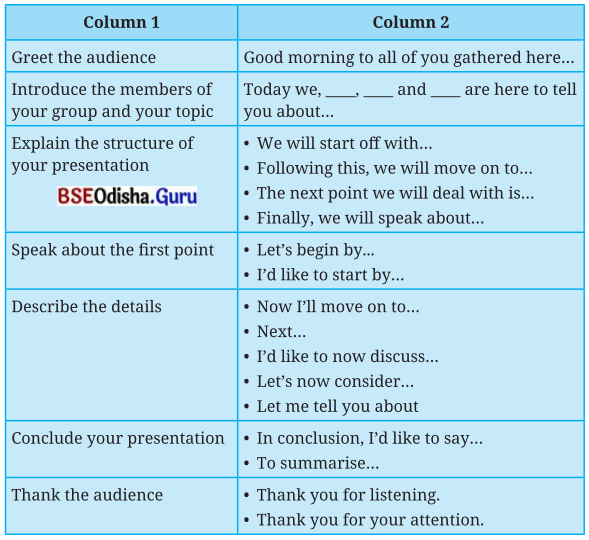
II. In our country, harvest is celebrated with the preparation of delicious dishes. Work in groups and make a presentation on any popular dish made during the harvest festival in your region. Use the prompts given in the box to make your presentation. Make sure that all the members share their views.
(ଆମ ଦେଶରେ ସ୍ଵାଦିଷ୍ଟ ଖାଦ୍ୟ ବ୍ୟଞ୍ଜନ ପ୍ରସ୍ତୁତ କରି ଅମଳ ଉତ୍ସବ ପାଳିତ ହୋଇଥାଏ । ଦଳରେ କାମ କର ଏବଂ ତୁମ ଅଞ୍ଚଳରେ ଅମଳ ଉତ୍ସବ ପାଳନ ସମୟରେ ପ୍ରସ୍ତୁତ ହେଉଥିବା କୌଣସି ଲୋକପ୍ରିୟ ବ୍ୟଞ୍ଜନ ବା ଖାଦ୍ୟ ବିଷୟରେ ଗୋଟିଏ ଉପସ୍ଥାପନ ରଖ । ଉପସ୍ଥାପନ ପାଇ ବାକ୍ସରେ ପ୍ରଦତ୍ତ ସୂଚନା ବ୍ୟବହାର କର । ନିଶ୍ଚିତ ହୁଅ ଯେ ସମସ୍ତ ସଦସ୍ୟ ସେମାନଙ୍କର ମତ ବିନିମୟ କରଛନ୍ତି ।)
Include the following : (ନିମ୍ନଲିଖିତଗୁଡ଼ିକୁ ଅନ୍ତର୍ଭୁକ୍ତ କର ।)
- What is the dish called? Is it known by any other name in other parts of India?
- What ingredients are used to make the dish?
- How is the dish prepared?
- How is the dish served?
- What does the dish taste like?
- What is the special ritual related to the preparation of this dish?
- Describe any special memory associated with the preparation of this dish.
Answer:

Answer:
Making Poda-pitha (ପୋଡ଼ପିଠା ତିଆରି)
My dear children, today I would like to share with you all about the preparation of a particular delicious dish of our own state Odisha. It is nothing other than the famous Poda-pitha, a tasty dish prepared in almost all houses of Odia origin, just before the season of transplatation of paddy seedlings comes. This dish goes by the same name everywhere.
It is made by slowly baking fermented rice, black gram, grated coconut and jaggery overnight. These are the ingredient (ବା ଉପାଦାନ) used to make the dish.
After the ingradients are collected the slow-cooked pitha is allowed to look properly, particularly for a specific period at night. Since this dish nees burning on a continuous fire with low heat, it is called ‘Poda’. The pitha is put in a pot after the fermented rice is mixed with black gram, grated coconut and jaggery in right quantity.
Poda pitha has a tasty flavour if it is served hot. The mixture of grated coconut and jaggery gives the pitha a unique taste. The crust of the poda pitha is slightly burnt while the inside is soft. The special Raja ritual is related to the preparation of this dish. The uniqueness of making poda pitha is associated with the Jagannath temple at Puri. Poda pitha is served to Lord Jagannath and his siblings (elder brother Lord Balabhadra and his sister Devi Subhadra) at Mausi Maa temple on their way back after Ratha Yatra from Gundicha temple to Jagannath temple.
Or
Good morning to all of you gathered here, my classmates and the senior ones. Today we, the students of class VIII and some of our upper class students are here to tell you about the preparation of a popular dish being made during the harvest festival of our region. We will start off with the name of the dish (food) getting popular at Salipur, my locality. This dish is ‘Poda Pitha’ a stuffed cake for everyone to relish (eat and enjoy) it. Now I’ll move on to the ingredients required to make ‘Poda Pitha’.
The dish requires fermented rice along with black gram, grated coconut and jaggery. After the mixture of these elements with fermented rice is done, the new dish is put on mild heat in the hearth overnight to allow it to be brunt outside, its crust. The inside remains soft. Before the onset (beginning) of paddy cultivation making of this favourite Odia dish is linked to the celebration of Raja.
To conclude, Poda pitha has its uniqueness in Odia culture since this dish is served to Lord Jagannath at Mausi Maa temple with His elder brother God Balabhadra and His sister Subhadra share during their stay (ରହଣି ସମୟରେ) in this temple.
Thank you for your patient listening.
Let us Write (ଆସ ଲେଖୁବା) :
I. Creative slogans are used to spread a message to capture the reader’s attention. Some examples are given below:
(ପାଠକଙ୍କର ଧ୍ୟାନ ଆକର୍ଷଣ ନିମନ୍ତେ ସୃଜନଶୀଳ ସ୍ଲୋଗାନ ବା ସମୂହ ଧ୍ଵନି ବ୍ୟବହାର କରାଯାଏ । ତଳେ କେତୋଟି ଉଦାହରଣ ପ୍ରଦାନ କରାଯାଇଛି ।)

Education is the Key, Unlock Your Destiny!
Protect the Environment Today for a Better Tomorrow.
Learn, Grow, Succeed
Go Green by Keeping the Planet Clean.
Your school wishes to express gratitude to the farmers who play an important role in providing us the food on our plates. Draft a creative slogan to be put up on the school notice board.
(ତୁମ ବିଦ୍ୟାଳୟ କୃଷକମାନଙ୍କ ପ୍ରତି କୃତଜ୍ଞତା ଜଣାଇବାକୁ ଚାହୁଁଛି, ଯେଉଁମାନେ ଆମ ଥାଳିରେ ଆମ୍ଭମାନଙ୍କୁ ଖାଦ୍ୟ ଯୋଗାଣରେ ଏକ ଗୁରୁତ୍ଵପୂର୍ଣ୍ଣ ଭୂମିକା ନିର୍ବାହ କରିଥାନ୍ତି । ତୁମ ବିଦ୍ୟାଳୟର ବିଜ୍ଞାପନ ବୋର୍ଡ଼ରେ ଲଗାଇବା ପାଇଁ ଏକ ସୃଜନଶୀଳ ସ୍ଲୋଗାନ ଲେଖ ।)
Remember to (ମନେରଖ):
focus the main idea to be expressed. (ପ୍ରକାଶ କରିବାକୁ ଥିବା ମୁଖ୍ୟ ପ୍ରସଙ୍ଗ ଉପରେ ଗୁରୁତ୍ଵ ଦିଅ ।)
use simple language. (ସରଳ ଭାଷା ବ୍ୟବହାର କର ।)
be concise – express yourself in a few words. (ନିଜ ସ୍ଲୋଗାନକୁ ସୀମିତ ଶବ୍ଦ ମଧ୍ଯରେ ପ୍ରକାଶ କର ।)
You may write the slogan on a chart paper and decorate it. (ତୁମେ ଏକ ଚାର୍ଟ କାଗଜ ଉପରେ ସ୍ଲୋଗାନ ଲେଖୁ ଏହାକୁ ସଜାଇ ପାର ।)
Answer:
No Farmer. No Food
As of Farmers Make Earth Smile
Let us explore (ଆସ ଅନ୍ଵେଷଣ କରିବା) :
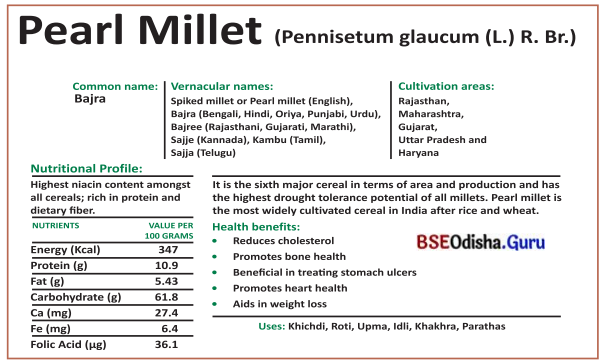
Millets are a varied group of small-seeded grasses. They have more fibre and minerals than other cereals. Millets have been a part of the Indian cuisine for years. They have MBD been rediscovered worldwide as superfoods.
(ମାଣ୍ଡିଆ ହେଉଛି ଭିନ୍ନ ଧରଣର କ୍ଷୁଦ୍ର ମଞ୍ଜି ବିଶିଷ୍ଟ ଖାଦ୍ୟ । ଅନ୍ୟ ଶସ୍ୟଜାତୀୟ ଖାଦ୍ୟ ତୁଳନାରେ ମାଣ୍ଡିଆରେ ଅଧୂକ ତନ୍ତୁ ଓ ଧାତୁସାର ଥାଏ । ବର୍ଷ ବର୍ଷ ଧରି ଭାରତୀୟ ଖାଦ୍ୟ ପରମ୍ପରାରେ ମାଣ୍ଡିଆ ଏକ ଅଂଶବିଶେଷ ହୋଇ ରହିଛି । ସଂପୂର୍ଣ୍ଣ ପୃଥିବୀରେ ପୁନଃ ଆବିଷ୍କୃତ କରାଯାଇ ଏହାକୁ ଅତି ଉଚ୍ଚମାନର ଖାଦ୍ୟ ରୂପେ ସ୍ଵୀକୃତି ଦିଆଯାଇଛି ।)
Question 1.
Read the information on Pearl Millet given below.
(ନିମ୍ନରେ ଦିଆଯାଇଥିବା Pearl Millet (ବାଜାରା) ଉପରେ ଆଧାରିତ ସୂଚନା ବା ତଥ୍ୟ ପଢ଼ ।)
Use the link given below to know more about other kinds of millets.
(ଅନ୍ୟ ପ୍ରକାର ମାଣ୍ଡିଆଗୁଡ଼ିକ ବିଷୟରେ ଜାଣିବା ପାଇଁ ନିମ୍ନସ୍ଥ Link କୁ ବ୍ୟବହାର କର ।)
haps://eatrightindia.gov.i/imillets2023/assets/documents/Millets%20-%2020Cereal%20of%20India.pdf
Question 2.
Work in groups of four and do the following activities.
2017 ଚାରି ଜଣ ମିଶି ଗୋଟିଏ ଦଳ ଗଠନ କରି ନିମ୍ନଲିଖତ କାର୍ଯ୍ୟାବଳୀ କର ।)
(i) Find out if millets are a part of your cuisine.
(ମାଣ୍ଡିଆ ତୁମ ଖାଦ୍ୟର ଏକ ଅଂଶବିଶେଷ ଅଟେ କି ନାହିଁ ନିର୍ଣ୍ଣୟ କର ।)
Answer:
Undoubtedly have been an integral part (ଅବିଚ୍ଛେଦ୍ୟ ଅଂଶ) of Indian cusinary (cooking – ରୋଷେଇ ) heritage (ଐତିହ୍ୟ ବା for thousands of years. Definitely this golden grain (very top quality) has been/is a vital (very important) of our/my cuisine. In these days of fast, junk (useless)
and unhygenic (unhealthy) food culture taken to (accepted) by our youths, millet’s often called as a “poor man’s food” has found unprecedent demand among all sectors of the society for its affordability (purchasing power – କ୍ରୟ କ୍ଷମତା), nutritional (ପୁଷ୍ଟିସାର) values, rich fibre (ପ୍ରଚୁର ତନ୍ତୁ) and minerals. Millets often called as a regular foodstuff at my breakfast table.
The Indian families, particularly in their breakfast, prefer (like more) millet to stay fit and strong for the rest of the day. Milletes are used for centuries as staples (main food) providing diverse flavours in dishes (food items) like bajra roti (ବାଜରା ରୋଟି), jawar flat breads (ଜଓ୍ବାର ପରଟା) dosa and even (ଏପରିକି) sweets. Today, I find myself energetic and cheerful thanks to this super food.
(ii) Find recipes with millets and compile them into a booklet.
(ମାଣ୍ଡିଆରୁ ପ୍ରସ୍ତୁତ ବିଭିନ୍ନ ଖାଦ୍ୟର ପ୍ରସ୍ତୁତି ପ୍ରଣାଳୀ ଖୋଜ ଏବଂ ତାହାକୁ ଏବ ପୁସ୍ତିକାରେ ଟିପି ରଖ ।)
Booklet (ପୁସ୍ତିକା)
Answer:
Features: Milet is a highly versatile having various qualities or bebefits, gluten-free and nutritious grain that can be used in both sweet and savory (ପୋଦିନାଶାଗ ଜାତୀୟ) dishes (food), ranging (ବ୍ୟାପ୍ତ) from fluffy (କୋମଳ) side dishes to porridge (କ୍ଷୀରି ) and burgers. (ହାଲୁକା ଓ ନରମ ଖାଦ୍ୟ). Here are several (many) recipes and ways to use millet:
Breakfast Recipes (ପ୍ରାତଃ ଭୋଜନର ରନ୍ଧନ ପଦ୍ଧତି):
- Creamy millet receipes (ମଲାଇଦାର ମିଲେଟ୍), Porridge (ଜାଉ)
Receipe:
- Cook millet with three cups of liquid (water or milk), cinamom and vanilla
- Top with nuts (କୋଳି), fruits or a fruit compote (ଫଳର ମିଠା ପାକ)
Ragi (Finger millet) Malt/Porridge
A nutritious, cooling drink made from ragi flour ideal for breakfast.
Vegan carrot cherry breakfast.
1. For extra crunch cookies (ଅତିରିକ୍ତ କୁର୍କୁରା ବା ଚର୍ବଣ ପାଇଁ) :
Barnyward Millet Poha (ସୁଆଁ ମାଣ୍ଡିଆ ପୋହା )
A nutritious savoury breakfast dish made with flattened millet (ଚପଟା ମାଣ୍ଡିଆ) tempered (ତଡ଼କା ଯୁକ୍ତ) curry leaves (ଭୁସୁରୁଙ୍ଗା ପତ୍ର) and spices (ମସଲା)
(iii) Create a receipe of your choice.
Answer:
Here are the receipe of mawing millet of my choice.
Step-by-step method:
(a) Throughly rinse (wash properly) one cup of millet in a fine sieve under running water.
(b) In a dry pot or saucepen toast the millet over medium heat for 4-5 minutes until it turns a rich golden brown and smells deep nutty.
(c) Add 2 cups of water and 1/4 teaspoons of salt and bring to a boil.
(d) Reduce heat to low, cover and cook for about 15 minutes until most of the water is absorbed. (ଅଧୁକାଂଶ ଜଳ ନ ଶୋଷି ନେବା ପର୍ଯ୍ୟନ୍ତ)
(e) Remove from heat and let it stand, covered for minutes. Fluff (ନରମ କର) it with a fork (କଣ୍ଟା ଚାମଚରେ).
II. Songs related to harvest season form a part of our culture and heritage.
(ଅମଳ ଋତୁ ସହିତ ସଂପର୍କିତ ସଙ୍ଗୀତ ଆମ ସଂସ୍କୃତି ଓ ଐହିହ୍ୟର ଏକ ଅଂଶ ଗଠନ କର ।)
Talk to the elders in your house and learn a song sung on a harvest festival. Share it with your classmates and teacher. Then, compile all the songs to create a songbook with the help of teacher.
(ତୁମ ଘରର ବରିଷ୍ଠ/ବୟସ୍କମାନଙ୍କ ସହିତ କଥାବାର୍ତ୍ତା କର ଓ ଏକ ଅମଳ ଋତୁରେ ଗାୟନ କରାଯାଇଥିବା ଏକ ଗୀତ ଗାଇବା ଶିଖ । ତୁମ ଶ୍ରେଣୀ ସାଙ୍ଗ ଓ ଶିକ୍ଷକଙ୍କ ସହିତ ଆଲୋଚନା କର । ତା’ପରେ ସବୁ ଗୀତକୁ ନେଇ ତୁମ ଶିକ୍ଷକଙ୍କ ସହାୟତାରେ ଏକ ଗୀତ ପୁସ୍ତିକା ପ୍ରସ୍ତୁତ କର ।)
Answer:
It is harvest time
It is harvest time
It is harvest time
Let’s celebrate it!
We’re here to give our thanks
For the good things that we have
Celebrate, celebrate,
It’s harvest time
India is busy growing,
Different kinds of tea,
Food from every corner of the world.
If we work together,
We can lend a helping hand
It’s precious’
Gathered from the land.
2. I was out in a field one day and said,
“Farmer, what are you growing ?”
He looked up at me, then he smiled and said,
“Look at what I am sowing.”
3. Harvest time is here again
Thank you for the sun and rain
Plant the seeds and watch them sprout
Grow it, cook it, dish it out !
Don’t be greedy, why n’t share ?
Not my problem, I don’t care !
So much good, lots to spare
Think about the world
Idon’t care !
Harvest time is here again,
Thank you for the sun and rain
Tasty food for us to eat
Grow it, cook it, what a treat !
4. Everybody rise up
It is harvest time
The fields are white
The time is right
The call is yours and mine
No time to play
Let’s work today,
5. It is harvest time, harvest time
The Savior’s calling
Grain is falling
Oh, don’t wait
It is growing late
Behold, the fields are white,
It’s harvest time.
6. We have sown
Rains have fallen
Now we reap for it’s harvest time
There were good times
There were bad times,
But this is God’s time.
Harvest Hymn Class 8 Summary
Men’s Voices:
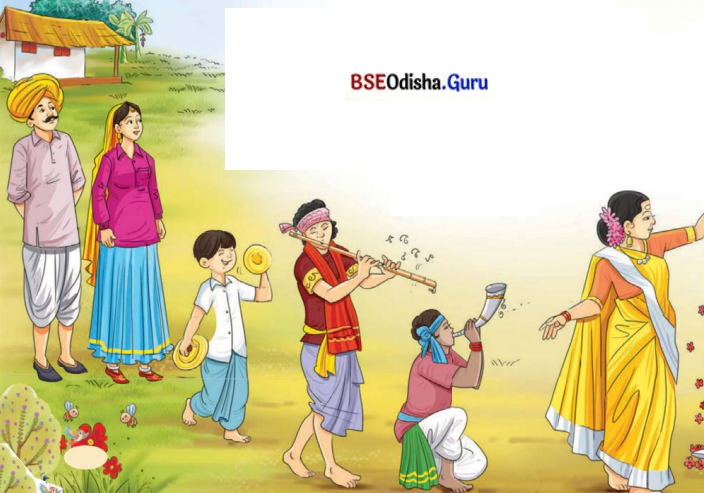
Lord of the lotus, lord of the harvest,
Bright and munificent lord of the morn!
Thine is the bounty that prospered our sowing,
Thine is the bounty that nurtured our corn.
We bring thee our songs and our garlands for tribute,
The gold of our fields and the gold of our fruit;
giver of mellowing radiance, we hail thee,
We praise thee, O Surya, with cymbal and flute.
Lord of the rainbow, lord of the harvest,
Great and beneficent lord of the main!
Thine is the mercy that cherished our furrows,
Thine is the mercy that fostered our grain.
We bring thee our thanks and our garlands for tribute,
The wealth of our valleys, new-garnered and ripe;
O sender of rain and the dewfall, we hail thee,
We praise thee, Varuna, with cymbal and pipe.
Men’s Voices (ପୁରୁଷମାନଙ୍କର ସ୍ଵର)
କମଳର ପ୍ରଭୁ, ଅମଳର (ଫସଲର) ପ୍ରଭୁ,
ପ୍ରଭାତର ଉଜ୍ଜ୍ଵଳ ଓ ଦୟାଳୁ ପ୍ରଭୁ !
ତୁମର ସେହି ଦାନ ଯାହା
ତୁମର ସେହି ଦାନ ଯାହା
ଆମର ବିହନକୁ ସମୃଦ୍ଧ କରିଥିଲା,
ଆମର ଶସ୍ୟକୁ ପୋଷଣ| ଫଳପ୍ରସୂ କରିଥିଲା ।
ଆମ୍ଭେ ତୁମପାଇଁ ଆମ୍ଭମାନଙ୍କର ଗୀତ ଓ ଶ୍ରଦ୍ଧାଞ୍ଜଳି ପାଇଁ ମାଳା ଆଣିଛୁ,
ଆମ କ୍ଷେତର ସୁନା ଓ ଆମର ଫଳର ସୁନା,
(ଏଠାରେ ସୁନାଭଳି ଉତ୍ତମ ଫସଲ ଓ ଅମଳର ଉଜ୍ୱଳତାର ସୂଚନା ପ୍ରଦାନ କରାଯାଇଛି ।)
ହେ ମଳିନ ଆଲୋକର ଦାତା, ଆମ୍ଭେ ତୁମକୁ ପ୍ରଶଂସା କରୁଛୁ,
ଏଥୁ ସହିତ ଝାଞ୍ଜ ଓ ବଂଶୀ ବାଦନପୂର୍ବକ ଆପଣଙ୍କ ସୃଷ୍ଟି ସୂର୍ଯ୍ୟ ଦେବତାଙ୍କୁ ମଧ୍ୟ
ହେ ଇନ୍ଦ୍ରଧନୁର ଈଶ୍ଵର (ପ୍ରଭୁ) ଫସଲର ପ୍ରଭୁ,
ମହାନ ଓ ଉପକାରୀ ପ୍ରଭୁ,
ତୁମର ସେହି ଦୟା ଯାହା ଆମ୍ଭମାନଙ୍କର କ୍ଷେତକୁ ପୋଷଣ କରିଥିଲା,
ତୁମର ସେହି ଦୟା ଯାହା ଆମ୍ଭମାନଙ୍କର ଶସ୍ୟକୁ ବୃଦ୍ଧି କରିଥିଲା ।
ଆମେ ତୁମକୁ ଆମର ଧନ୍ୟବାଦ ଶ୍ରଦ୍ଧାଞ୍ଜଳି ପୂର୍ବକ ପୁନର୍ବାର ଅର୍ପଣ କରୁଛୁ,
ଆମ ଉପତ୍ୟକାର ସଂପରି, ସଂଗୃହୀତ ପାଚିଲା ଫସଲ,
ହେ ବର୍ଷା ଓ ଶିଶିରପାତର ପ୍ରେରକ, ଆମେ ତୁମକୁ ପ୍ରଶଂସା କରୁଛୁ,
ହେ ବରୁଣ (ସମୁଦ୍ର) ଗ୍ରହ, ଆମ୍ଭେମାନେ ଝାଞ୍ଜ ଓ ପେଁକାଳିର ନିନାଦରେ ତୁମ୍ଭକୁ ବନ୍ଦନା କରୁଛୁ ।
Women’s Voices:
Queen of the gourd-flower, queen of the harvest,
Sweet and omnipotpnt mother, O Earth !
Thine is the plentiful bosom that feeds us,
Thine is the womb where our riches have birth.
We bring thee our love and our garlands for tribute,
With gifts of thy opulent giving we come;
O source of our manifold gladness,
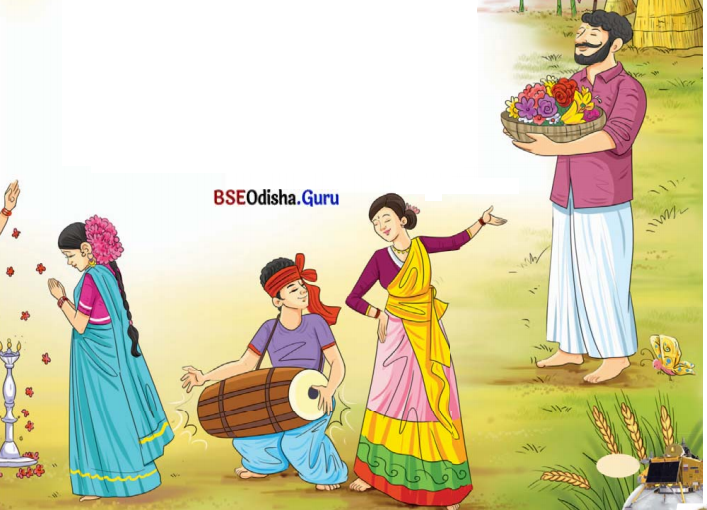
we hail thee, We praise thee, Prithvi, with cymbal and drum.
Women’s Voices (ନାରୀର ସ୍ଵର)
ଲାଉ ଫୁଲର ରାଣୀ, ଅମଳର ରାଣୀ
ହେ ପୃଥିବୀ ! ତୁମେ ମଧୁର ଓ ସର୍ବବିଦ୍ୟମାନ ମାତା !
ଆମ୍ଭମାନଙ୍କୁ ଖାଦ୍ୟଦେଇ ପ୍ରତିପୋଷଣ କରୁଥିବା ତୁମ୍ଭେ ହେଉଛ ପ୍ରଚୁର ବ୍ୟାପକ କୋଳ,
ତୁମ୍ଭେ ହେଉଛ ସେହି ଗର୍ଭାଗାର ଯେଉଁଠାରେ ଆମ୍ଭମାନଙ୍କର ଧନ/ବୈଭବର ସୃଷ୍ଟି ହୋଇଥାଏ ।
ଆମେମାନେ ତୁମକୁ ଆମର ପ୍ରେମ ଓ ଶ୍ରଦ୍ଧାଞ୍ଜଳିର ହାର ପ୍ରଦାନ କରୁଛୁ
ହେ ପୃଥିବୀ ମାତା ! ତୁମର ପ୍ରଦତ୍ତ ସଂପରିର ଦାନ ଦେଇ ଆମେମାନେ ତୁମକୁ ଧନ୍ୟବାଦ ଦେବାପାଇଁ ଆସିଛୁ,
ହେ ମାତା ! ଆମମାନଙ୍କର ଚିରନ୍ତନ ଆଲୋକର ଉତ୍ସ !
ଆମେମାନେ ତୁମକୁ ବନ୍ଦିତ (ପ୍ରଶଂସା) କରୁଛୁ
ଝାଞ୍ଜ ଓ ଢୋଲ ବାଦନ ସହ ଆମେମାନେ ତୁମର ଗୁଣଗାନ କରୁଛୁ ।
All Voices:
Lord of the Universe, Lord of our being,
Father eternal, ineffable Om!
Thou art the Seed and the Scythe of our harvests,
Thou art our Hands and our Heart and our Home.
We bring thee our lives and our labours for tribute,
Grant us thy succour, thy counsel, thy care.
O Life of all life and all blessing, we hail thee,
We praise thee, Bramha, with cymbal and prayer.
All Voices (ସମସ୍ତ ସ୍ଵର)
ବ୍ରହ୍ମାଣ୍ଡର ପ୍ରଭୁ, ଆମ୍ଭମାନଙ୍କର ସତ୍ତା/ ଜୀବନଜୀବିକାର ପ୍ରଭୁ
ଅନନ୍ତ/ଶାଶ୍ଵତ ପିତା, ଅବର୍ଣ୍ଣନୀୟ ଓମ୍ !
ତୁମେ ଆମ ଫସଲର ବୀଜ ଓ ଆମମାନଙ୍କର ଫସଲ ଅମଳର ଦାଆ ସଦୃଶ ତୁମେ ଆମମାନଙ୍କର ହାତ, ହୃଦୟ ଓ ଘର ।
ଶମ ଅର୍ପଣ କରିଛ
ତୁମକୁ ଶ୍ରଦ୍ଧାଞ୍ଜଳି ଦେବା ନିମନ୍ତେ ଆମେମାନେ ତୁମପାଇଁ ଆମର ଜୀବନ ଓ ଶ୍ରମ
ହେ ଈଶ୍ଵର ! ତୁମ ସାହାଯ୍ୟ, ପରାମର୍ଶ ଓ ଯନ୍ ଆମମାନଙ୍କୁ ପ୍ରଦାନ କର । ହେ, ସମସ୍ତ ଜୀବର ଜୀବନ ଓ ସମସ୍ତ ଆଶୀର୍ବାଦ ଆମେମାନେ ତୁମକୁ ପ୍ରଶଂସା କରୁଛୁ,
ହେ ବ୍ରହ୍ମା (ବ୍ରହ୍ମାଣ୍ଡର ସୃଷ୍ଟିକର୍ତ୍ତା) ଝାଞ୍ଜବାଦନ ଓ ପ୍ରାର୍ଥନା ପୂର୍ବକୁ ଆମେ ତୁମର ଗୁଣଗାନ କରୁଛୁ ।
Notes & Glossary (ଶବ୍ଦାର୍ଥ):
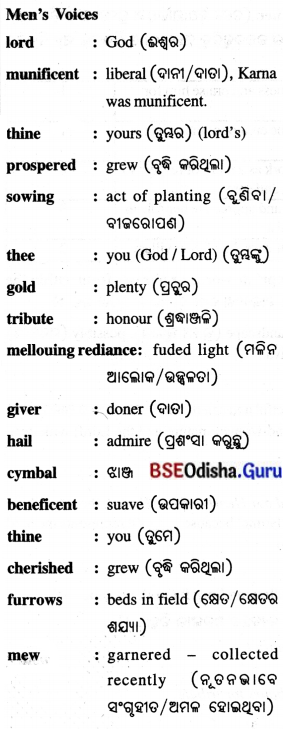
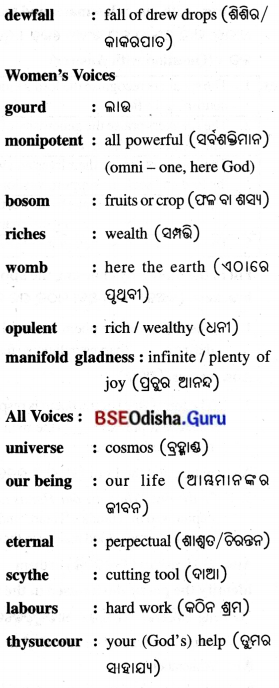
Harvest Hymn Class 8 MCQ
Question 1.
Who is called the Lord of louts?
(a) the sun
(b) the moon
(c) the earth
(d) the Universe
Answer:
(a) the sun
Question 2.
Why is the sun called the Lord of the morn ?
(a) because we see it only in the morning
(b) because we see it only in the day time
(c) because we worship it in the morning
(d) because it brings us the first light of the day
Answer:
(d) because it brings us the first light of the day
Question 3.
What does the sunshine nurture ?
(a) seeds
(b) corn
(c) harvest
(d) garlard
Answer:
(b) corn
Question 4.
Who is called the Lord of the rainbow ?
(a) Lord Varuna
(b) the Earth
(c) the Universe
(d) Lord Brahma
Answer:
(a) Lord Varuna
Question 5.
What does Lord Varuna bring us ?
(a) rainfall
(b) dewfall
(c) both of these
(d) neither of these
Answer:
(c) both of these
Question 6.
What does ‘wealth of our valleys’ refer to ?
(a) newly gathered ripe grains
(b) beautiful show of rainbows
(c) the garlands of tribute
(d) the well-cherished furrows
Answer:
(a) newly gathered ripe grains
Question 7.
Who is called the ‘queen of the gourd-flower’ ?
(a) the moon
(b) the women
(c) the rains
(d) the earth
Answer:
(d) the earth
Question 8.
Where do our grains of corn take birth ?
(a) seed and scythe of harvests
(b) rainfall and dewfall
(c) womb of the earth
(d) our sincerity and hard work
Answer:
(c) womb of the earth
Question 9.
With what do the women sign the praise song for the Earth ?
(a) the cymbal and the flute
(b) the cymbal and the pipe
(c) the cymbal and the drum
(d) the cymbal and prayer
Answer:
(c) the cymbal and the drum
Question 10.
Who is called ‘Father eternal’ ?
(a) Lord of the lotus
(b) Lord of the Universe
(c) Lord of the rainbow
(d) Lord of the harvest
Answer:
(b) Lord of the Universe
Question 11.
What has the Lord of the Universe granted us ?
(a) His succour
(b) His counsel
(c) His care
(d) all of these
Answer:
(d) all of these
Question 12.
What does ‘seed and scythe of the harvest’ mean ?
(a) sowing seeds and cutting grains of corn
(b) the entire cycle of planting and harvesting
(c) the wealth of our corn-field
(d) our riches that have birth in the womb of the earth
Answer:
Harvest Hymn Class 8 Fill in the Blanks
1. The sun’s ………… prospers the sowing.
Answer: bounty
2. The farmers offer ………… for tribute.
Answer: garlands
3. The sun gives mellowing ………….
Answer: radiance
4. The rains cherish ………….
Answer: the furrows
5. The farmers praise the Lord of lotus with ………….
Answer: cymbals and flutes
6. The farmers praise the Lord of rainbow with ………….
Answer: cymbals and pipes
7. Prithvi is said to be the ………… mother.
Answer: omnipotent
8. The women bring ………… for tribute.
Answer: love and garlands
9. The Lord of Universe is the ………… Om.
Answer: ineffable
10. ………… is our Hands, Heart and Home.
Answer: the Lord of the Universe
11. The women praise Prithvi with ………….
Answer: cymbals and drums
12. ………… praise Brahma with cymbal and prayer.
Answer: All of the men and women
Harvest Hymn Class 8 Short Question Answer
Question 1.
How does the sun nurture the corn ?
Answer:
Plants can grow well with the availability of required amount of sunlight, warmth and energy. The sun provides all these requirments and so nurtures the corn.
Question 2.
Why do the farmers convey their thanks to Varuna ?
Answer:
Varuna brings water during the rainfall and the dewfall. Water is very necessary for the growth and survival of plants. After harvesting plenty of ripe corn, the farmers feel contented and they thank Varuna for the gift of water.
Question 3.
Who is described as the ‘Queen of the harvest’ and why?
Answer:
The Earth is described as the ‘Queen of the harvest’. It is because growth of plants cannot be imagined without soil or earth. The corn is nurtured with the water, minerals and manure extracted from the earth and harvest is possible after the corn is ripened.
Question 4.
Why is the Sun God described as the ‘Lord of the lotus’?
Answer:
The lotus usually opens its petals when the sun rises in the morning and closes them at sunset. As the life cycle of the lotus is directly tied to the presence of the sun, the Sun God is described as the ‘Lord of the lotus’.
Question 5.
Why is the poem titled ‘Harvest Hymn’?
Answer:
The poem describes the farmers’ song of praise and gratitude towards the divine forces for their help in fostering and nurturing their crops. The poem has a devotional composition that justifies it as a hymn. As the rural people sang it during the harvest festivals, the poem is aptly titled ‘The Harvest Hymn’.
Question 6.
What moral lessons does the poem convey to students ?
Answer:
The first moral lesson that the poem conveys to students is that they should always be grateful to those who help them and render services for their well-being. It also teaches them to value harmony, respect nature and environment so that they can enjoy lives full of happiness and contentment.
Question 7.
What does ‘seed and scythe’ symbolize ?
Answer:
The phrase ‘seed and scythe’ symbolizes the beginning and the end of the agricultural circle. It is an imagery used in the poem regarding sowing of seeds (creation) and finally cutting them with the scythe (harvest). Secondly, it also signifies the cycle of life and death. This connects nature, spirituality and human labour.