
For effective revision, students can use BSE Odisha Class 8 English Solutions Chapter 14 Magnifying Glass Question Answer to practice textbook exercises.
Class 8 English Magnifying Glass Question Answer
Class 8 English Chapter 14 Question Answer Odia Medium
Let us do these activities before we read
(ଚାଲ ପଢ଼ିବା ପୂର୍ବରୁ ଏହି କାର୍ଯ୍ୟଗୁଡ଼ିକୁ କରିବା ।)
Work in pairs. Answer the questions that follow the pictures given below. Share your answers with your classmates and teacher.
(ଦୁଇଜଣିଆ ଦଳରେ କାର୍ଯ୍ୟ କର । ନିମ୍ନ ପ୍ରଦତ୍ତ ଚିତ୍ର ତଳେ ଥିବା ପ୍ରଶ୍ନଗୁଡ଼ିକର ଉତ୍ତର ଦିଅ । ତୁମ ଉତ୍ତରଗୁଡ଼ିକୁ ସହପାଠୀ ଓ ଶିକ୍ଷକଙ୍କ ସହ ବିନିମୟ କର ।)
Question 1.
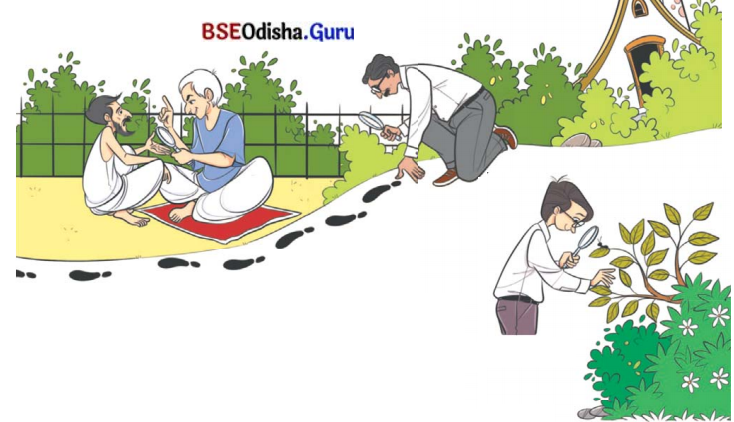
What is common in all these pictures ?
(ଏ ସମସ୍ତ ଛବିରେ ସାଧାରଣ କଥା କ’ଣ ଅଟେ ?)
Answer:
Magnifying glasses are used to look closely at something that isn’t easily visible (ସହଜରେ ଦୃଶମାନ ହେବନାହିଁ) to the naked eye.
Question 2.
Select the pictures you are familiar with. (ତୁମେ ପରିଚିତଥିବା ଛବିଗୁଡ଼ିକୁ ଚୟନ କର ।)
Answer:
I am familiar (ପରିଚିତ ଅଟେ) with the top picture showing looking at the foot prints (ପାଦଚିହ୍ନଗୁଡ଼ିକୁ ଦେଖୁଥିବାର) possibly (ସମ୍ଭବତଃ) from detective stories (ଗୁଇନ୍ଦା ଗଳ୍ପ) on crime investigations. (ଅପରାଧ ତଦନ୍ତ).

Question 3.
Why do think the people in the pictures need to use a magnifying glass?
(ତୁମେ କାହିଁକି ଭାବୁଛ ଯେ ଛବିରେ ଥିବା ଲୋକମାନେ magnifying glass ବ୍ୟବହାର କରିବା ଦରକାର କରୁଛନ୍ତି କି ?)
Answer:
I think the people in the pictures need to use (ବ୍ୟବହାର କରିବାକୁ ପଡ଼ିଥାଏ) a magnifying glass to see small objects (ଛୋଟ ଦ୍ରବ୍ୟ ଦେଖିବାପାଇଁ) or find details (ବିସ୍ତୃତ ତଥ୍ୟ ପ୍ରାପ୍ତ କରିବା ପାଇଁ).more clearly.
Question 4.
What other instruments magnify objects?
(ଅନ୍ୟ କେଉଁସବୁ ଯନ୍ତ୍ର ଜିନିଷଗୁଡ଼ିକର ଆକାର ବଡ଼ କରିଥାଏ ?)
Answer:
Microscope, telescope, binoculars, reading glasses, magnify objects.
Question 5.
If you have a magnifying glass, what would you like to use it for and why? Share your answers with your classmates and teacher.
(ତୁମ ପାଖରେ ଯଦି ଗୋଟିଏ ବିବର୍ଷକ କାଚ ଅଛି, ତୁମେ ଏହାକୁ କେଉଁ କାର୍ଯ୍ୟରେ ବ୍ୟବହାର କରିବାକୁ ଚାହୁଁଛ ଓ କାହିଁକି ? ତୁମର ଉତ୍ତରଗୁଡ଼ିକୁ ଶ୍ରେଣୀ ସହପାଠୀ ଓ ଶିକ୍ଷକଙ୍କ ସହିତ ବିନିମୟ କର ।)
Answer:
If I have got a magnifying glass, I use it for reading purposes and to see my
favourite (ପ୍ରିୟ) cricketers while sitting at the stadium.
Let us discuss (ଆସନ୍ତୁ ଆଲୋଚନା କରିବା)
Complete the summary of the poem given below with suitable words from the poem :
(କବିତାର ସଠିକ୍ ଶବ୍ଦ ସହ ଦିଆଯାଇଥିବା କବିତାର ସାରକଥାକୁ ପୂରଣ କର ।) (Question with Answer)
The poem describes (ବର୍ଣ୍ଣନା / ଆଲୋକପାତ କରୁଛି) the magic of seeing the world (ପୃଥିବୀକୁ ଦେଖିବାର ଯାଦୁ) through (ମଧ୍ୟଦେଇ) a 1. magnifying glass. It reveals (ପ୍ରକାଶ କରୁଛି ସ୍ପଷ୍ଟ ) how tiny things like 2. moss and 3. chalk can appeared (4 ହୁଏ) vast (ବିଶାଳ) and complex (ଜଟିଳ). Even (ଏପରିକି) a 4. drop of water can seem like a hive of 5. bees (ଏକ ମହୁଫେଣାଭଳି). The poet is impressed (ମୁଗ୍ଧ ହୋଇ ପଡ଼ିଛନ୍ତି ) at how the spider spins its 6. web from its 7. spinnerets. The poem ends with the idea that through lenses, the 8. moon seem within reach.
Fill in the blanks by choosing the correct answers from the brackets :
(ବନ୍ଧନୀ ମଧ୍ଯରୁ ସଠିକ୍ ଉତ୍ତର ବାଛି ଶୂନ୍ୟସ୍ଥାନ ପୂରଣ କର ।)
1. The main idea of the poem is the transformative power of (wonders in nature/close observation) through the magnifying glass.
Answer: close observation
2. The tone of the poem is ………………..
Answer: wonder and curiosity
3. The poem has ………….. stanzas with ……………. lines in each stanza. Hence, it is a quatrain. (four; six/six; four)
Answer: six; four
4. The rhyme scheme of the poem is …………. (ABCD; ABCB)
Answer: ABCD
III. Pick examples from the poem for the following poetic devices :
1. Simile – ଉପମା ଅଳଙ୍କାର
Answer:
A drop of water/like hive of bees.
Yes, with lenses like it.
2. Alliteration (ଅନୁପ୍ରାସ ଅଳଙ୍କାର)
Answer:
shells show forest flowers, wait and watch, woven, web, silk make more
3. marvellous (Repetition of consonant sounds of sh, f, m)
Metaphor (ରୂପକ ଅଳଙ୍କାର) :
Answer:
magic talk
ଚିତ୍ରଣରେ ସମୃଦ୍ଧ ଯାହାକି କ୍ଷୁଦ୍ର,
IV. The poem is rich in visual imagery, painting vivid pictures of small, everyday things magnified into something grand. (କବିତାଟି ଦୃଶ୍ୟ ଦୈନନ୍ଦିନ ଦ୍ରବ୍ୟଗୁଡ଼ିକ ବିଶାଳ ଓ ବିବର୍ଜିତ କରି ଉଲ୍ଲେଖ କରିଛି ।)
What is visual imagery ? (କବିତାରେ ପଠନ ସମୟରେ ଯେଉଁ ଶବ୍ଦ ସବୁ ଆମ୍ଭମାନଙ୍କ ମନରେ ତତ୍ ସମ୍ବନ୍ଧୀୟ ସ୍ପଷ୍ଟ କାଳ୍ପନିକ ଚିତ୍ର ତିଆରି କରିଥାଏ ସେହି ଶବ୍ଦ ସମ୍ବନ୍ଧୀୟ ଚିତ୍ରକୁ visual imaginary କୁହାଯାଏ ।) (Questions with Answer)
1. In the line “A myriad (countless) shells show in a scrap (stick) of chalk”, the magnifying glass reveals the intricate details and fossilized remains within the chalk.
2. In the line “A forest-flowers and trees”, the poet uses the imagery of nature to emphasise how much beauty and wonder exists in small things.
V. Complete the following sentences with a reason. (କାରଣ ସହ ନିମ୍ନଲିଖତ ବାକ୍ୟଗୁଡ଼ିକୁ) (Questions with Answer)
1. The poet uses exclamation marks in lines, “The tigerish claws he has ! “with all those eyes! and “In an afternoon! because it implies the speaker’s awe and astonishment when small and ordinary things turn extraordinary and marvellous ( ଅସାଧାରଣ ଓ ଚମତ୍କାର) in the magnifying glass.
2. In the phrase, “Magic talk” the poet uses personification to describe the magnifying glass because it (glass) though non-living object (ଗୋଟିଏ ପ୍ରାଣହୀନ ଦ୍ରବ୍ୟ) seems to tell (କହୁଥିବାର ଜଣାପଡୁଛି) secrets (ଗୁପ୍ତକଥା) about the small world like a living human magically.
3. Each stanza follows a repetitive pattern of introducing a small or ordinary object and then describing the extraordinary details revealed through magnification (ବିଶାଳତାଦ୍ୱାରା ସ୍ପଷ୍ଟ ହୋଇଥିବା).
This is because it supports the theme of perception as the spearker reveals (states clearly) a shift in view that even tiny objects can reveal new and interesting worlds.
4. In the final stanza the poet shifts from small, everyday objects being magnified to a celestial body like moon (ବିଶାଳ କରି ଚନ୍ଦ୍ରଭଳି ଏକ ସ୍ଵର୍ଗୀୟ ବସ୍ତରେ ପରିଣତ କରି) because it suggests that even distant objects seem accessibe and magical (ଯାଦୁକରୀ).
Let us think and reflect :
(ଆସ ଚିନ୍ତା କରିବା ଓ ବିଚାର କରିବା) :
Read the given extracts and answer the questions that follow.
(ନିମ୍ନଲିଖତ ଉଦ୍ଧୃତାଂଶଗୁଡ଼ିକୁ ପଢ଼ ଓ ପରବର୍ତୀ ପ୍ରଶ୍ନଗୁଡ଼ିକର ଉତ୍ତର ଦିଅ ।)
1. With this round glass
I can make Magic talk –
A myriad shells show
In a scrap of chalk;
Of but an inch of moss
A forest flowers and trees;
(i) ନିମ୍ନଲିଖୂତ ବାକ୍ୟଟି ସତ୍ୟ କି ମିଥ୍ୟା ଚିହ୍ନଟ କର ।) Identify whether the following
statement is true or false.
The poet uses his magical powers to make the round glass powerful.
Answer:
false
(ii) Select the line from the extract that expresses the presence of intricate patterns in ordinary objects.
(ସାଧାରଣ ବସ୍ତୁରେ ଜଟିଳ ସଂରଚନାର ଉପସ୍ଥିତି ପ୍ରକାଶ କରୁଥିବା ଧାଡ଼ି କବିତାରୁ ଚୟନ କର ।)
Answer:
A myriad shells show/In a scrap of chalk.
(iii) What does the comparison of ‘an inch of moss’ to a ‘forest’ suggest about the speaker’s view of the world through the magnifying glass?(ଏକ ଇଞ୍ଚର ଶିଉଳିକୁ ଏକ ଜଙ୍ଗଲ ସହିତ ତୁଳନା କରିବା ବକ୍ତାଙ୍କର ପୃଥିବୀକୁ ବିବଦ୍ଧକ କାଚ ମାଧ୍ୟମରେ ଦେଖୁବା ବିଷୟରେ କ’ଣ ସୂଚିତ କରୁଛି ?)
Answer:
The comparison (ତୁଳନା) of an ‘inch of moss’ (ଏକ ଇଞ୍ଚର ଶିଉଳି) to a “forest” suggests about the speaker’s view of the world through the magnifying glass vast complexity and intricate details in even the smallest, most ordiary natural objects making them appear grand and expansive (ବ୍ୟାପକ) as a forest (ଏକ ଜଙ୍ଗଲ).
(iv) How does the poet feel about the ability of the magnifying glass to reveal hidden wonders ?
(ଲୁକ୍କାୟିତ ଲୁଚିଥିବା ବିସ୍ମୟଗୁଡ଼ିକୁ ପ୍ରକାଶ କରିବାପାଇଁ ବିବର୍ଷକ କାଚର ସାମର୍ଥ୍ୟ ବିଷୟରେ କବି କିପରି ଅନୁଭବ କରିଛନ୍ତି ?)
A. Satisfied
B. Fascinated
C. Grateful
D. Determined
Answer:
B. Fascinated (ମୁଗ୍ଧ | ଆମୋଦିତ)
II. Answer the following questions :
(ନିମ୍ନଲିଖତ ପ୍ରଶ୍ନଗୁଡ଼ିକର ଉତ୍ତର ଦିଅ ।)
Question 1.
What is the significance of the spider in the poem ?
(କବିତାରେ ବୁଢ଼ିଆଣୀର ଗୁରୁତ୍ଵ କ’ଣ ଅଟେ ?)
Answer:
The spider is the symbol (ପ୍ରତୀକ) of the harsh reality (କଠୋର ବାସ୍ତବତା) of nature. Through the magnifying glass the spider looks huge and powerful ( ଓ ଶକ୍ତିଶାଳୀ ଦେଖାଯାଉଛି) which waits patiently (ଧୈର୍ଯ୍ୟର ସହିତ ଅପେକ୍ଷା କରିଛି) to trap (ଫାଶରେ ପକାଇବାପାଇଁ) the silly (ବୋକା) flies to feast on them (ସେମାନଙ୍କୁ ଭୋଜନ କରିବାପାଇଁ). Its significance (ଗୁରୁତ୍ଵ) is felt (ଅନୁଭବ କରାଯାଏ) when it shows its beauty and cruelty (ସୁନ୍ଦରତା ଓ ନିର୍ଦ୍ଦୟତା) through the glass the
Question 2.
How might the speaker’s view of the natural-world change if there was no use of a magnifyihg glass ?
(ଯଦି ବିବର୍ଷକ କାଚର ବ୍ୟବହାର ନଥା’ନ୍ତା, ପ୍ରାକୃତିକ ପୃଥିବୀ ପ୍ରତି ଥିବା ବକ୍ତାଙ୍କର ଧାରଣା କିଭଳି ବଦଳିଯା’ନ୍ତା ?)
Answer:
If there was no use of a magnifying glass, the speaker would see only (ଦେଖନ୍ତେ) the outside appearnace (ବାହ୍ୟଦୃଶ୍ୟ) of things. The hidden patterns (ଲୁକ୍କାୟିତ ଶୈଳୀ) and structures (lion) of things would remain unseen ( ଅଦୃଶ୍ୟ ହୋଇଯା’ନ୍ତା). Without the magnifying glass nature might seem (ଜଣାପଡ଼ନ୍ତା) simple, dull (ଜଡ଼) and ordinary (ସାଧାରଣ).
Question 3.
Why does the poem end with the idea of the moon being within reach ?
(ଚନ୍ଦ୍ର ହାତ ପାହାନ୍ତାରେ ଥିବା ଧାରଣା ସହ କବିତାଟି କାହିଁକି ଶେଷ ହୋଇଛି ?)
Answer:
It is the power of observation through the magnifying glass that even the moon seems close enough (ଯଥେଷ୍ଟ ପାଖରେ ଥିବାର ଜଣାପଡୁଛି) to reach out to it (ଏହା ପାଖରେ ପହଞ୍ଚିବା ପାଇଁ).
Question 4.
What is the speaker’s attitude towards nature and the act of observation ?
(ପ୍ରକୃତି ଓ ନିରୀକ୍ଷଣ କାର୍ଯ୍ୟ ପ୍ରତି ବକ୍ତାଙ୍କର ମନୋଭାବ କ’ଣ ଅଟେ ?)
Answer:
In the poem The ‘Magnifing Glass’, the speaker’s attitude towards nature and the act of observation is sheer wonder, curiosity (ଉତ୍ସୁକତା/ଜିଜ୍ଞାସା) and admiration (ପ୍ରଶଂସା). He is able to notice (ଦେଖିବାକୁ ସମର୍ଥ) the hidden beauty of nature through the magnifying glass.
Question 5.
Which is your favourite part of the poem? Why?
Answer:
The favourite part of the poem for me is, “The tigerish claws he has !/And oh ! the silly flies/ The stumble into his net – With all those eyes!”. It is because the poem very nicely describes how the spider using the tigerish claws (like the pointed nails that of a tiger) attracts the silly flies into its web (ବୋକା ମାଛିମାନଙ୍କୁ ନିଜର ଜାଲ ଭିତରକୁ ଆକର୍ଷିତ କରୁଛି) and devows them (ସେମାନଙ୍କୁ ଭକ୍ଷଣ କରୁଛି) revealing (ପ୍ରକାଶିତ) awe (ଭୟ) and wonder (ଆଶ୍ଚର୍ଯ୍ୟ).
Let us Learn (ଆସ ଶିଖୁବା)
I. Fill in the blanks in the sentences with the words given in the box below.
(ବାକ୍ସରେ ଦିଆଯାଇଥବା ଶବ୍ଦଗୁଡ଼ିକୁ ବ୍ୟବହାର କରି ବାକ୍ୟଗୁଡ଼ିକରେ ଶୂନ୍ୟସ୍ଥାନ ପୂରଣ କର ।)

With his 1. ………… description, the author has written the story beautifully 2. ………… with fascinating details. When you read the story, you will surely enjoy the 3. ………… storytelling technique that attracts all kinds of readers. What makes the story interesting is the superb way of describing the 4 . ………… emotions and feelings of the characters. The reader will 5. ………… upon the unexpected twists and turns that 6. ………… all our understanding and make us wonder at the narrative power of the author.
Answer:
1. deft
2. woven
3. marvellous
4. myriad
5. stumble
6. surpass
II. The collective noun ‘a hive of bees’, is used in the poem, Match the phrases in the column 1 with suitable words in Column 2 to make collective noun phrases.
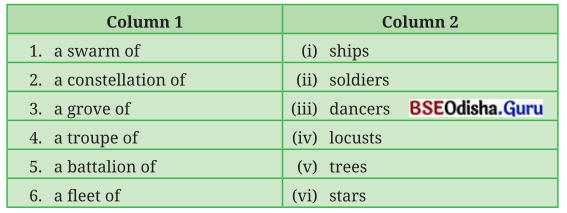
(ସମଷ୍ଟିଗତ ବିଶେଷ୍ୟ ‘a live of bees’ କବିତାରେ ବ୍ୟବହୃତ ହୋଇଛି । ସମଷ୍ଟିଗତ ବିଶେଷ୍ୟପଦ କରିବାପାଇଁ ସ୍ତମ୍ଭ 1 ରେ ଥିବା ବାକ୍ୟାଶଗୁଡ଼ିକୁ ସ୍ତମ୍ଭ 2? ର ଉପଯୁକ୍ତ ଶବ୍ଦ ସହ ମିଳାଅ ।)
Answer:
| Column 1 | Column 2 |
| 1. a swarm of | (iv) locusts |
| 2. a constellation of | (vi) stars |
| 3. a grove of | (v) trees |
| 4. a troup of | (iii) dancers |
| 5. a battalion of | (ii) soldiers |
| 6. a fleet of | (i) ships |
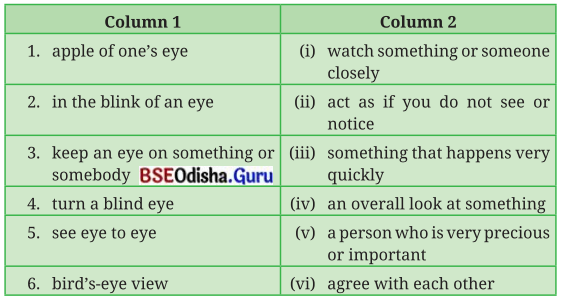
III. The poet uses the expression “eyeing the moon” in the poem. Match the idiomatic expressions with ‘eye’ given in column I with their meanings in column 2. You may refer to a dictionary.
(କବି ‘eyeing the moon? ଉକ୍ତିଟିକୁ କବିତାରେ ବ୍ୟବହାର କରିଛନ୍ତି । ସ୍ତମ୍ଭ 1 ରେ ଦିଆଯାଇଥବା ରୂଢ଼ି (ପ୍ରବଚନ) ଗୁଡ଼ିକୁ ସ୍ତମ୍ଭ ‘2 ରେ ଥିବା ଏହାର ଅର୍ଥଗୁଡ଼ିକ ସହ ମିଳାଅ ।
Answer:
| Column 1 | Column 2 |
| 1. apple of one’s eye | (v) a person who is very precious or important |
| 2. in the blink of an eye | (iii) something that happens very quickly |
| 3. keep an eye on something or somebody | (i) watch something or somebody closely |
| 4. turn a blind eye | (ii) act as if you don’t see or notice |
| 5. see eye to eye | (vi) agree with each other |
| 6. bird’s-eye view | (iv) an overall look at something. |
IV. The poet uses the adjective form ‘tigerish’ in the poem by adding the suffix ‘ish’ to the noun tiger’. In the same way, we can make adjectives by adding the suffix ‘ish’ to some nouns.
(କବି କବିତାରେ ବିଶେଷ୍ୟ ପଦ ‘tiger’ ରେ ପରି ପ୍ରତ୍ୟୟ ‘ish’ ଯୋଗକରି ବିଶେଷଣ ପଦ ‘tigerish’କୁ ବ୍ୟବହାର କରିଛନ୍ତି । ସେହିଭଳି ଆମେ କେତେକ ବିଶେଷ୍ୟ ପଦରେ ‘ish’ ଯୋଗକରି ବିଶେଷଣ ପଦ ତିଆରି କରିପାରିବା ।)
Choose the nouns to which you can add the suffix ‘ish’ to make adjectives. (ବିଶେଷ୍ୟପଦ ଗୁଡ଼ିକୁବାଛ ଯେଉଁଥରେ ତୁମେ ‘ish’ ଯୋଗକରି ବିଶେଷଣ ପଦରେ ପରିଣତ କରିପାରିବା ।)

Answer:
girl + ish = girlish, boy + ish = boyish, water + ish = waterish, book + ish bookish, moon + ish = moonish, silk + ish = silkish
Let us listen (ଆସ ଶୁଣିବା) :
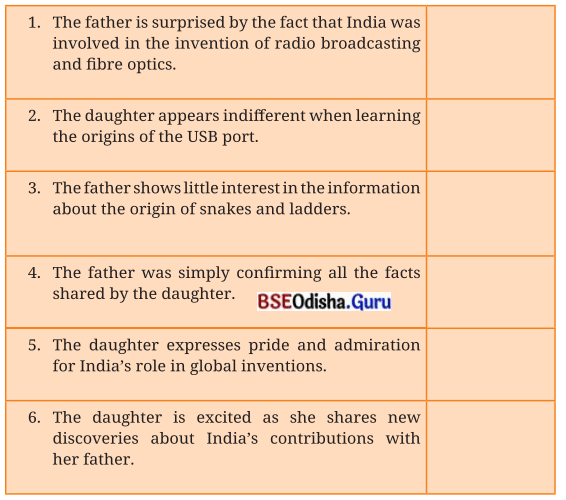
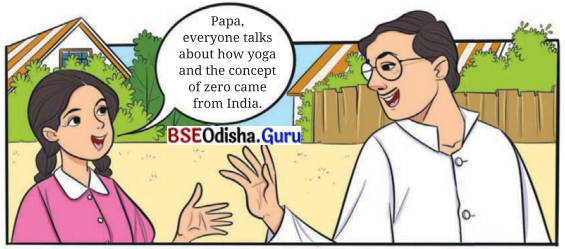
I. You will listen to a conversation between a father and daughter about lesser- known Indian inventions. As you listen, mark the four true statements from (1) — (6) given below. (Transcript for teacher on page 250)
(କମ୍ ଜଣାଶୁଣା/ଜ୍ଞାତ ଭାରତୀୟ ଉଦ୍ଭାବନ ବିଷୟରେ ଜଣେ ପିତା ଓ ତାଙ୍କର ‘କନ୍ୟା (ଝିଅ) ମଧ୍ୟରେ ହେଉଥିବା ଏକ କଥୋପକଥନ ତୁମେ ଶୁଣିବ । ଶୁଣିଲାବେଳେ ନିମ୍ନ ପ୍ରଦତ୍ତ (1)`- (6) ଉକ୍ତ ଗୁଡ଼ିକରୁ ଚାରୋଟି ସଠିକ୍ ଉକ୍ତି ଚିହ୍ନାଅ । ଶିକ୍ଷକଙ୍କ ପାଇଁ Transcript – 250 ପୃଷ୍ଠାରେ ଅଛି ।
Answer:
| 1. The father is surprised by the fact that India was involved in the invention of radio broadcasting and fibre optics. | (True) |
| 2. The daughter appears indifferent when learing the origins of the USB port. | (True) |
| 3. The father shows little interest in the information about the origin of snakes and ladders. | (True) |
| 4. The father was simply confirming all the facts (ସମସ୍ତ ତଥ୍ୟ ପ୍ରତି ନିଃସନ୍ଦେହରେ ନିଶ୍ଚିତ କରୁଥିଲେ) showed by the daughter. | (True) |
| 5. The daughter expresses pride and admiration (ଗର୍ବ ଓ ପ୍ରଶଂସା ବ୍ୟକ୍ତ କରିଛି) for India’s role (ଭୂମିକା) in global invention (କୌଶିକ ଉଦ୍ଭାବନରେ) | (True) |
| 6. The daughter is excited as she shares new discoverties about India’s contributions with her father | (True) |
Let us Speak (ଆସ କହିବା) :
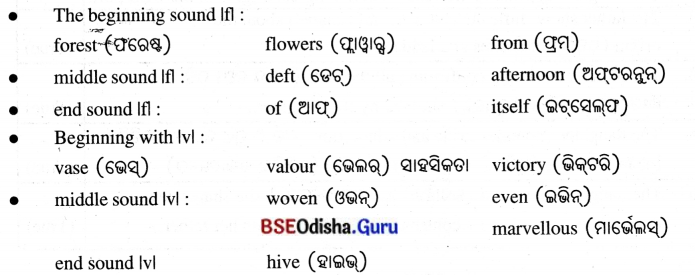
I. When pronouncing lvl and If the lower lip lightly touches the edge of the upper teeth. Air flows through the small gap, creating a self-friction sound.
(ଆମେ ‘V’ ଓ ‘f ଉଚ୍ଚାରଣ କରିବା ସମୟରେ ତଳ ଓଠ ଉପର ଦାନ୍ତଗୁଡ଼ିକର ଧାରକୁ ସାମାନ୍ୟ ସ୍ପର୍ଶ କରେ । ଛୋଟ ଶୂନ୍ୟ ସ୍ଥାନଦେଇ ମୃଦୁ ଘର୍ଷଣ ଧ୍ଵନି ସୃଷ୍ଟି କରି ପବନ ପ୍ରବାହିତ ହୁଏ ।)
Note the difference between lvl and Ifl. When we pronounce words with lvl sound, there is a vibration, whereas sound has no vibration. Both the sounds can occur in the beginning, middle, or at the end of words.
(‘V’ ଓ ‘f, ମଧ୍ୟରେ ପାର୍ଥକ୍ୟ ଲକ୍ଷ୍ୟକର । ଯେତେବେଳେ ‘v’ ଧ୍ଵନିଥିବା ଶବ୍ଦ ଉଚ୍ଚାରଣ କରୁ ଏକ କମ୍ପନ ସୃଷ୍ଟି ହୁଏ, ଯେତେବେଳେ କି ‘୮ ଧ୍ଵନିରେ କମ୍ପନ ସୃଷ୍ଟିହୁଏ ନାହିଁ । ଉଭୟ ଧ୍ଵନି ଶବ୍ଦଗୁଡ଼ିକର ଆରମ୍ଭରେ, ମଧ୍ୟ ଭାଗରେ କିମ୍ବା ଶେଷରେ ରହି ପାରନ୍ତି ।
Read these words aloud with the help of your teacher. (ତୁମ ଶିକ୍ଷକଙ୍କ ସହାୟତାରେ ଏହି ଶବ୍ଦଗୁଡ଼ିକୁ ବଡ଼ ପାଟିରେ ପଢ଼ ।)
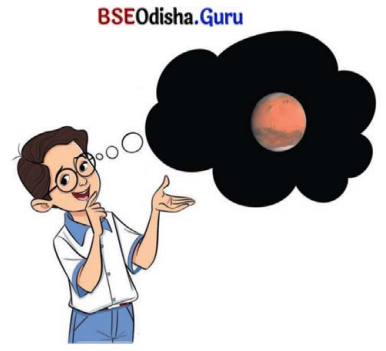
II. If you could travel to space which planet would you like to visit? Why? What preparations would you like to make? Speak about any five things that you would like to take along?
(ଯଦି ତୁମେ ମହାଶୂନ୍ୟକୁ ଯାତ୍ରା କରିପାରିବ ତୁମେ କେଉଁ ଗ୍ରହକୁ ବୁଲିଯିବାକୁ ଇଚ୍ଛା କରିବ କାହିଁକି ? ତୁମେ କ’ଣ ସବୁ ପ୍ରସ୍ତୁତି କରିବାକୁ ପସନ୍ଦ କରିବ ? ଯେକୌଣସି ପାଞ୍ଚଟି ଜିନିଷ କୁହ ଯାହା ତୁମେ ସାଙ୍ଗରେ ନେବାକୁ ଚାହୁଁଛ ।)
Answer:
If I could travel to space I would like to visit the planet Jupiter Because it is the largest planet (9) and very beautiful. So far preparations to be made (ଯେତେଦୂର ପ୍ରସ୍ତୁତି କରିବାକୁ ହେବ), the followings are the things, I would attend to (ଗୁରୁତ୍ଵ 696). They are:
- Learning about the planet like atmosphere, temperature and gravity (ମାଧ୍ୟାକର୍ଷଣ ଶକ୍ତି)
- Physical training: Getting fit to move in different gravity conditions.
- Safety training: Learning how to use a space suit and emergency (ଜରୁରୀକାଳୀନ) equipment (ସରଞ୍ଜାମ)
Five things I would like to take along :
- Space suit
To breathe and stay protected (ସୁରକ୍ଷିତ ରହିବାପାଇଁ) - Food and water supply
For survival (ବଞ୍ଚିରହିବା ପାଇଁ) during the trip (ଯାତ୍ରା ସମୟରେ) - Communication device (ଯୋଗାଯୋଗ ଯନ୍ତ୍ର)
To stay in contact (ସମ୍ପର୍କରେ ରହିବା ପାଇଁ) with earth. - Scientific tools (ଯନ୍ତ୍ର) or camera.
To observe (ନିରୀକ୍ଷଣ କରିବାପାଇଁ) and record discoveries. - First-aid kit (ପ୍ରାଥମିକ ଚିକିତ୍ସା ବାକ୍ସ)
For safety (ନିରାପତ୍ତା ପାଇଁ) in case of injury (କ୍ଷତ ସମୟରେ)
III. If you could invent something, what would you like to invent and how? Give reasons for the choice of your invention. Speak about your wonder invention.
(ଯଦି ତୁମେ କିଛି ଉଦ୍ଭାବନ କରିପାରିବ, ତୁମେ କ’ଣ ଓ କିପରି ଉଦ୍ଭାବନ କରିବାକୁ ଚାହିଁବ ? ତୁମ ଉଦ୍ଭାବନର ପସନ୍ଦର କାରଣ ଦର୍ଶାଅ । ତୁମର ଆଶ୍ଚର୍ଯ୍ୟଜନକ ଉଦ୍ଭାବନ ବିଷୟରେ କୁହ ।)
Answer:
If I could invent (ଉଦ୍ଭାବନ କରିପାରନ୍ତି) something, I would create (ତିଆରି କରିଥା’ନ୍ତି) a smart wearable (ପିନ୍ଧିବାଯୋଗ୍ୟ) device (ଯନ୍ତ୍ର) which generally guides people to stay healthy. (ସୁସ୍ଥ ରହିବାପାଇଁ)
Reasons for the choice of my invention (ମୋ ଉଦ୍ଭାବନର ପସନ୍ଦର କାରଣ)
1. Improving health Awareness (ସ୍ୱାସ୍ଥ୍ୟ ସଚେତନତା ବୃଦ୍ଧି କରାଇବା) :
My device would track (ଲକ୍ଷଣ ବାରିପାରନ୍ତା) heart beat (ହୃଦ୍ ସ୍ପନ୍ଦନ), sleep, stress levels (ଅବସାଦ ସ୍ତର) and activity (କାର୍ଯ୍ୟ), helping to users (ବ୍ୟବସ୍ଥାକାରୀ) to take actions immediately.
2. Supporting Mental Comfort (ମାନସିକ ଆରାମ ବା ଶାନ୍ତିକୁ ସମର୍ଥନ କରିବା ।)
Besides physical fitness (ଶାରୀରିକ ସୁସ୍ଥତା ଛଡ଼ା) the device developed by me (ମୋ ଦ୍ଵାରା ବିକଶିତ ହେବାକୁ ଥିବା) would help users like breathing shortbreaks etc.
3. Easy and Affordable Care. (ସହଜ ଓ କ୍ରୟଯୋଗ୍ୟ ଯନ୍ତ୍ର)
Since visiting doctors regularly (ଯେହେତୁ) is a sheer botheration (କେବଳ ଏକ ବିରକ୍ତି ଛଡ଼ା କିଛି ନୁହେଁ), the smart wearable could give basic guidance, making healthcare support more accessible (ଅଧୁକ ବ୍ୟବହାରଯୋଗ୍ୟ) particularly (ବିଶେଷକରି) in rural pockets (ଗ୍ରାମାଞ୍ଚଳମାନଙ୍କରେ )
4. Encouraging healthy habits (ସୁସ୍ଥ ଅଭ୍ୟାସଗୁଡ଼ିକୁ ଉତ୍ସାହିତ କରିବା)
This wearable device would motivate (ଉତ୍ସାହିତ କରନ୍ତା) us to drink water, exercise, sleep in time helping them build a healthier lifestyle (ଏକାଧ୍ଵକ ସୁସ୍ଥ ଜୀବନଶୈଳୀ ଗଢ଼ି ତୋଳିବାରେ) gradually (slowly) (କ୍ରମଶଃ).
Let us Write : (ଆସ ଲେଖୁବା)
1. In a conversation, we communicate through dialogues. While writing a conversation, we need to ensure that the dialogues are engaging and serve a purpose. (କଥୋପକଥନ)
(ଏକ କଥୋପକଥନରେ, ଆମେ ସଂଳାପ ମାଧ୍ୟମରେ ଯୋଗାଯୋଗ କରିବା । କଥୋପକଥନ (ସଂଳାପ) ଲେଖୁବାବେଳେ, ଆମେ ନିଶ୍ଚିତ ହେବା ଆବଶ୍ୟକ ଯେ ସଂଳାପ ଉଦ୍ଦେଶ୍ୟ ସାଧନ କରିବା ସହିତ ସମସ୍ତଙ୍କୁ ବ୍ୟସ୍ତ ରଖୁଥିବ ।)
Points to remember:
- Mention where, when and with whom the conversation (କଥାବାର୍ତ୍ତା) is taking place (ହେଉଛି)
- Identify the word choice (ଶବ୍ଦ ଚୟନ ଚିହ୍ନଟ କର) and tone (ସ୍ଵର)-formal (ଆନୁଷ୍ଠାନିକ) or informal (ଅଣଆନୁଷ୍ଠାନିକ).
- Include (ସାମିଲ କର) key (ମୁଖ୍ୟ) information (ତଥ୍ୟ/ସୂଚନା), points of agreement (ସମ୍ମତିସୂଚକ ପ୍ରସଙ୍ଗ) and disagreement (ଅସମ୍ମତି) etc.
Use words in brackets to express emotions or actions (ଆବେଗ ବା କାର୍ଯ୍ୟ ପ୍ରକାଶ କରିବାପାଇଁ) such as joyfully (sits down).
Deepa and Asma, members of the science club have a conversation (କଥୋପକଥନ କରୁଛନ୍ତି) to take a decision about making a model (ଗୋଟିଏ ନମୁନା ପ୍ରସ୍ତୁତ କରିବାପାଇଁ) for an upcoming (ଆଗାମୀ) Science Fair (ବିଜ୍ଞାନ ମେଳା). Create this
conversation between Deepa and Asma.
You may begin the conversation like this. (ଏଇଭଳି ତୁମେ କଥାବାର୍ତ୍ତା ଆରମ୍ଭ କରିପାର ।)
DEEPA: Hi Asma! Asma! Our Science teacher mentioned that you have a wonderful idea for the science Fair project.
ASMA: (hesitatingly) yes, I do. Buy I am n’t sure if it is good enough.
DEEPA: (encouagingly) Don’t worry….
Answer:
DEEPA: Hi Asma! Our science teacher mentioned that you have a wonderful idea (ଚମତ୍କାର ଧାରଣା) for the Science Fair project (ପ୍ରକଳ୍ପ).
ASMA: (hesitatingly) yes, I do. Buy I’m not sure if it is good enough.
DEEPA: (encouagingly) Don’t worry, I’ll help upon.
ASMA: Thank a lot, Then I’ll make (ତିଆରି କରିବି) clay (ମାଟି ତିଆରି) models of birds and label their feathers like beak shapes and wings. (ଡେଣା/ପକ୍ଷ).
DEEPA: Good ! We should also add (ଯୋଡ଼ିଦେବା) a chart explaining (ବୁଝାଇ) how birds help farmers by eating insects (କୀଟ ଭକ୍ଷଣ କରି).
ASMA: Yes, we can include a short message (କ୍ଷୁଦ୍ର ସନ୍ଦେଶ /ବାର୍ତ୍ତା ସାମିଲ କରିପାରିବା) about protecting birds and their habitats (ପକ୍ଷୀମାନଙ୍କୁ ଓ ସେମାନଙ୍କର ବାସସ୍ଥଳୀକୁ ସୁରକ୍ଷିତ ରଖୁବା).
DEEPA: Let us divide the work (ଚାଲ କାର୍ଯ୍ୟ ବାଣ୍ଟିଦେବା) and finish it before Saturday so that (ଯାହା ଫଳରେ) we can practise explaining its.
ASMA Great ! I’m so excited (ମୁଁ ବହୁତ ଉତ୍ସାହିତ). Our model will look (ଦେଖାଯିବ) beautiful and be inforamtive too (ସୂଚନାପ୍ରଦ ହେବ ମଧ୍ଯ).
DEEPA: Done! Then gear up (ପ୍ରସ୍ତୁତି ହୋଇ ପଡ଼ିବା) for the project after the school work.
ASMA: Bye!
DEEPA: You’re welcome.
Let us explore (ଚାଲ ଅନ୍ଵେଷଣ କରିବା) :
Children with low vision may benefit from different types of visual aids, such as magnifying spectacles, stand magnifiers, hand-held magnifiers, and telescopes. Magnifying spectacles are used for reading, threading a needle or doing other closeup tasks. Stand magnifiers rest above the object and are hands-free and help to keep the magnifying lens at a proper distance. Hand held magnifiers with the without built-in lights, are usually smaller and lighter to move over printed material. They can be moved more easily. Telescopes are used to see objects or signs far away. Some telescopes can even be attached to eyeglasses.
(ନିମ୍ନ ଦୃଷ୍ଟି ସଂପନ୍ନ ପିଲାମାନେ ବିଭିନ୍ନ ଦର୍ଶନ ସହାୟକ ଉପକରଣ ଯଥା ବିବର୍ଷକ ଚଷମା, stand magnifier, hand-held magnifier, ଦୂରବୀକ୍ଷଣର ସୁବିଧା ଦେଇପାରନ୍ତି ? ବିବର୍ଷକ ଚଷମା ପଢ଼ିବା, ଛୁଞ୍ଚରେ ସୂତା ପୂରାଇବା, ଅନ୍ୟାନ୍ୟ ତୀକ୍ଷ୍ଣଣ ଦୃଷ୍ଟି ଆବଶ୍ୟକ କରୁଥିବା କାର୍ଯ୍ୟପାଇଁ ବ୍ୟବହାର ହୁଏ ? stand magnifier ବସ୍ତୁ ଉପରେ ରହେ ଏବଂ ବିବର୍ଷକ ଲେନ୍ସକୁ ସଠିକ୍ ଦୂରତାରେ ରଖୁବାପାଇଁ ହସ୍ତ ମୁକ୍ତ ଥାଏ । Hand- held magnifier ଆଲୋକ ସଂପାତ କିମ୍ବା ଆଲୋକ ରହିତ ହୋଇପାରେ ଏବଂ ମୁଦ୍ରିତ ବସ୍ତୁ ଉପରେ ଚାଳନା କରିବାପାଇଁ ଛୋଟ ଓ ହାଲୁକା ହୋଇଥାଏ । ଦୂରବୀକ୍ଷଣ ଦୂରରେ ଥିବା ବସ୍ତ ଓ ପ୍ରତୀକକୁ ଦେଖିବାକୁ ବ୍ୟବହାର କରାଯାଏ । କେତେକ ଦୂରବୀକ୍ଷଣ ମଧ୍ୟ ଚଷମା ସହ ସଂଯୁକ୍ତ ହୋଇଥାଏ ।)
1. The largest telescope in India for studying celestial objects is located in the district of Nainital, Uttarakhand. Commissioned in 2016, it is maintained and operated by ARIES (ryabhama Research Institute of Observational Sciences). The Indian Astronomical observatory (IAO) is a high-altitude astronomy station located in Hanle, Ladakh, India. It is situated at an elevation of 4,500 meters (14,764 ft), and supports optical, infrared, and gamma-ray telescopes.
2. The largest, most powerful, and most complex telescope ever launched into space is the James Webb Space Telescope. NASA launched it on, 25 December 2021. It orbits the Sun at a distance of 1.5 million kilometres from Earth. To learn more, visit the link below.
https://science.asa.gov/mission/webb/
3. The Mauna Kea Observatory, astronomical observatory in Hawaii, US, that has become one of the most important in the world because of its outstanding observational conditions. The Mauna Kea Observatory is operated by the University of Hawaii and lies at an elevation of 4,205 metres (13,796 feet) atop the peak of Mauna Kea, a dormant volcano on north-central Hawaii island. The summit hosts a world-renowned collection of astronomical research facilities and large telescope observatories, including the Keck Observatory and Subaru Telescope, for optical, infrared, and submillmeter astronomy.
4. The observatories and set up here because of Mauna Kea’s high elevation, dry environment, and stable airflow that make it a prime location for astronomical observation. The focus is scientific research across the electromagnetic spectrum. Public Access: The Onizuka Center for International Astronomy provides visitory information and exhibits about the mountain and its observatories, and offers guided tours of the summit.
Find out more about them from the internet and discuss with your science teacher and classmates.
(ସେଗୁଡ଼ିକ ବିଷୟରେ ଅଧ୍ଯକ ତଥ୍ୟ internet ରୁ ସଂଗ୍ରହକ ଏବଂ ତୁମ ବିଜ୍ଞାନ ଶିକ୍ଷକ ଓ ସହପାଠୀମାନଙ୍କ ସହ ଆଲୋଚନା କର ।)
III. Read about ancient Indian scholars.
(ପ୍ରାଚୀନ ଭାରତୀୟ ଜ୍ଞାନୀ/ପଣ୍ଡିତମାନଙ୍କ ବିଷୟରେ ଅଧ୍ୟୟନ କର ।)
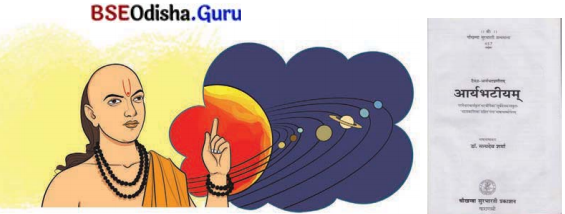
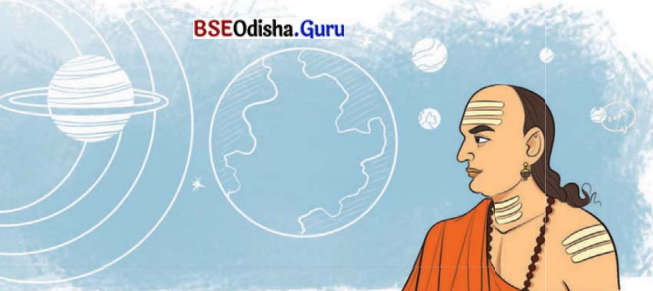
1. One of the eminent astronomers (ପ୍ରସିଦ୍ଧ ଜ୍ୟୋତିର୍ବିଦ୍ମାନଙ୍କ ମଧ୍ୟରୁ ଜଣେ) of the ancient India was ryabhama. His work ryabhamiyam, laid the groundwork (u mm) for various astronomers to develop in subsequent (ପରବର୍ତୀ) centuries and continues to be (ହୋଇ ରହିଛି) an important work even today. ryabhama proposed a heliocentric model of the solar system (centuries before Copernicus. He also gave a scientific explanation of lunar and solar eclipses (ଓ ସୂର୍ଯ୍ୟୋପରାଗ )
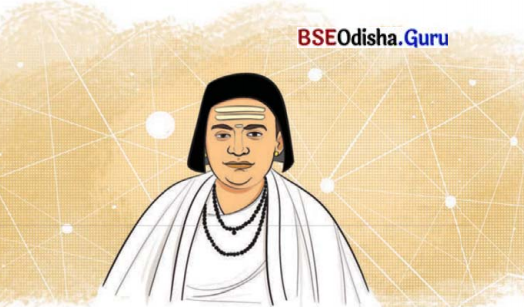
2. Varmihira, the sixth-century CE astronomer, philosopher (îâî), and mathematician (ଗଣିତଜ୍ଞ) wrote the astronomical treatise (ଜ୍ୟୋତିର୍ବିଜ୍ଞାନ ga) Parnchasiddhntika (Fine Treatises), a compendium of Greek, Egyptian, Roman, and Indian astronomy.
3. The tenth-century CE mathematician-astronomer Bhaskaracharya II contributed significantly (ଗୁରୁତ୍ୱପୂର୍ଣ୍ଣ ଅବଦାନ ଦେଇଥିଲେ) to the advancement of astronomical concepts (ଜ୍ୟୋତିର୍ବିଜ୍ଞାନ ସମ୍ବନ୍ଧୀୟ ମୌଳିକ ଧାରଣାଗୁଡ଼ିକର ବିକାଶରେ). His works Siddhantasiromani and Karanakutuhala, include compiled data (ସଂକଳିତ ତଥ୍ୟ) on planetary positions (ଗ୍ରହମାନଙ୍କର ସ୍ଥିତି), conjunctions, and eclipses journey-through history-astronomy-india.
IV. The 21st centrury astronomer Dr. Kailash Chandra Sahoo is popularly known as the planet hunter” who is working at the space Telescope Science Institute. He grew in a small village of Ganjam district of Odisha state. There was no electricity in his village in his childhood and he spent nights looking at the stars that sparked his love for astronomy (68416 ପ୍ରେମ | ଦୁର୍ବଳତାକୁ ଉଜ୍ଜ୍ଵଳ କରିଥିଲା ଉତ୍ସାହିତ କରି ।)
His interests in science:
- Determining masses of nearby stars through relativistic deflections.
- Detecting and measuring the masses if isolated, stellar-mass black holes through astromatic microlensing.
- Detection and study of Exoplanets through transits and microlensing.
- Study of the different stellar populations of the Galactic bulge.
Magnifying Glass Class 8 Summary
Let us read (ଆସ ପଢ଼ିବା ।)
Stanza – 1 and 2
With this round glass……………hive of bees.
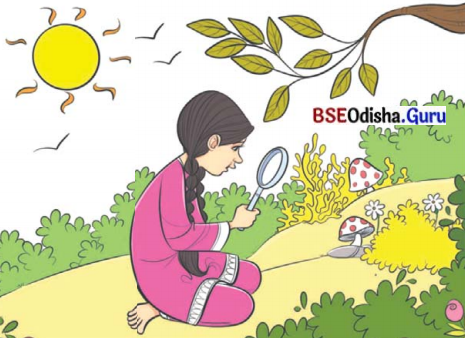
Gist: In stanza 1, the speaker (poet) introduces (ପରିଚୟ ପ୍ରଦାନ କରିଛନ୍ତି) the round glass (magnifying glass) as a magical tool that brings hidden, tiny details to life. For example, a tiny piece of chalk, when magnified, reveals countless, complex shell-like structures.
In stanza 2 the poet says in the round glass an inch of moss is transformed into a miniature, lush forest of flowers and trees. Not only this much, but a single drop of water looks like a busy hive of bees sparkled with life.
ବକ୍ତା (କବି) ପ୍ରଥମ ପଂକ୍ତିରେ ଗୋଲାକାର କାଚକୁ ଏକ ଯାଦୁକରୀ ଯନ୍ତ୍ର ରୂପେ ପାଠକଙ୍କ ନିକଟରେ ଉପସ୍ଥାପନ କରିଛନ୍ତି ଯାହା ଗୁପ୍ତ ବା ଲୁକ୍କାୟିତ କ୍ଷୁଦ୍ର ଦ୍ରବ୍ୟଗୁଡ଼ିକ ବ୍ୟାପକ ଜୀବନ୍ତ ରୂପେ ପ୍ରତିଫଳିତ କରିଥାଏ । ଉଦାହରଣସ୍ୱରୂପ ଏକ ଖଣ୍ଡ ଅତି କ୍ଷୁଦ୍ର ଚକ୍କୁ ଯେତେବେଳେ ଗୋଲାକାର କାଚରେ ଦେଖାଯାଏ, ତାହା ଅସଂଖ୍ୟ ଜଟିଳ ଶାମୁକା ସଦୃଶ ଜୈବିକ ଗଠନର ଧାରଣା ସୃଷ୍ଟି କରିଥାଏ । ଠିକ୍ ସେଇଭଳି ଏକ ଇଞ୍ଚ ବହଳର ଶିଉଳି ଏହି ଗୋଲିଆ କାଚରେ ଫୁଲ ଓ ଗଛର ଏକ ସବୁଜିମାଭରା ଜଙ୍ଗଲରେ ରୂପାନ୍ତରିତ ହୋଇଯାଏ । କେବଳ ଏତିକି ନୁହେଁ ଜଳର ଏକ ବିନ୍ଦୁ ପ୍ରାଣବନ୍ତ ମହୁମାଛିଗୁଡ଼ିକର ଏକ ବ୍ୟସ୍ତ | ସକ୍ରିୟ ମହୁଫେଣା ଭଳି ପ୍ରତୀୟମାନ ହୋଇଥାଏ ।
Stanza – 3
I lie in wait ………………………. spinnerets.
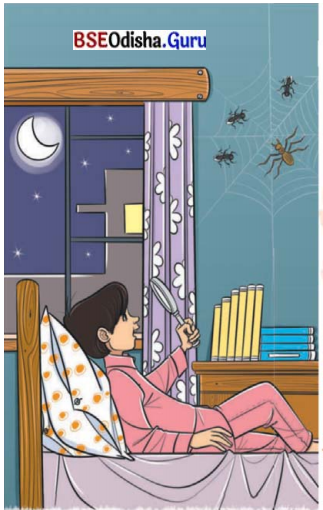
Gist: In the third stanza the poet says that he waits patiently and watches very carefully as (when) the skilled spider makes its web. The spider shoots out thin threads of silk very quickly from its spinnerets. As he uses a magnifying glass, he can see this delicate and precise action clearly.
ତୃତୀୟ ପଂକ୍ତିରେ କବି ଧୈର୍ଯ୍ୟର ସହିତ ଓ ସତର୍କତାର ସହିତ ଲକ୍ଷ୍ୟ କରିଛନ୍ତି ଯେତେବେଳେ କୁଶଳୀ ବୁଢ଼ିଆଣୀ ଏହାର ଜାଲ ତିଆରି କରୁଛି । ସେ (ବୁଢ଼ିଆଣୀ) ତାହାର ସୂତା ନିଷ୍କାସନ ଅଙ୍ଗରୁ ବହୁତ ଶୀଘ୍ର ପତଳା ରେଶମ ବାହାର କରେ । ଯେହେତୁ ବକ୍ତା/କବି ଗୋଟିଏ ବିବର୍ଷକ କାଚର ସାହାଯ୍ୟ ନେଇଛନ୍ତି, ସେ ବୁଢ଼ିଆଣୀର ଏସବୁ ସୂକ୍ଷ୍ମ ଓ ସଠିକ୍ କାର୍ଯ୍ୟ ସ୍ପଷ୍ଟ ଭାବରେ ଦେଖୁ ପାରୁଛନ୍ତି ।
Stanza – 4
The tigerish claws ………… all those eyes.
Gist: The poet says that the spider’s legs or claws are strong, sharp and fierce like a tigers (claws). It shows how powerful and deadly the spider turns into, for its prey. Then he makes a surprise comment, though flies have many eyes, yet they fall/get trapped into the spider’s web, The flies, according to the speaker are silly as they fail to notice ‘the impeding danger’.
କବି କହିଛନ୍ତି ଯେ ବୁଢ଼ିଆଣୀର ଗୋଡ଼ ବା ପଞ୍ଝା ବାଘର ପଞ୍ଝା ଭଳି ଶକ୍ତିଶାଳୀ, ତୀକ୍ଷ୍ଣ ଓ ଭୟଙ୍କର । ଏଥୁରୁ ଜଣାପଡୁଛି ନିଜର ଶିକାର ପାଇଁ ବୁଢ଼ିଆଣୀ କିପରି ମାରାତ୍ମକ ହୋଇଯାଏ । ଏହାପରେ କବି/ ବକ୍ତା ଏଠାରେ ଏକ ଆଶ୍ଚର୍ଯ୍ୟଜନକ ମନ୍ତବ୍ୟ ଦେଇଛନ୍ତି । ଯଦିଓ ମାଛିମାନଙ୍କର ବହୁତ ଗୋଡ଼ ଅଛି, ତଥାପି ସେମାନେ ବୁଢ଼ିଆଣୀର ଜାଲରେ ଫଶିଯା’ନ୍ତି । ବକ୍ତାଙ୍କ କହିବା ଅନୁସାରେ ଏହି ମାଛିଗୁଡ଼ିକ ବୋକା କାରଣ ମାଡ଼ି ଆସୁଥିବା ବିପଦକୁ ଦେଖୁବାକୁ ଅସଫଳ ହୋଇଥାଆନ୍ତି ।
Stanza – 5
Not even the tiniest …………….. surpass.
Gist: The magnifying glass can make even very small or ordinary things look bigger, clearer and more wonderful. While doing this, it also displays its own special power as if it surpasses itself by revealing beauty.
ବିବର୍ଷକ କାଚ ଏପରିକି ଛୋଟ ବା ସାଧାରଣ ଜିନିଷଗୁଡ଼ିକୁ ବୃହତ୍ତର, ସ୍ପଷ୍ଟତର ଓ ଅଧିକ ଚମତ୍କାର କରି ଦେଖାଇପାରିବ । ଏଭଳି କଲାବେଳେ, ଏହା ଚିତ୍ରର ସ୍ଵତନ୍ତ୍ର/ବିଶେଷ ଶକ୍ତି ପ୍ରଦର୍ଶନ କରିଥାଏ ସତେଯେପରି ସୁନ୍ଦରତା ଉଦ୍ଘାଟନ ପ୍ରକାଶ କରିବାରେ ଏହା ଚିତ୍ରକୁ ମଧ୍ୟ ଟପିଯାଏ ।
Stanza – 6
Yes and with ……………….. an afternoon.
Gist: The poet imagines that if you look at the moon through such a lense, it would seem so near that you could walk to it in just one afternoon.
ଏଭଳି ଏକ କାଚ ବା ଲେନ୍ସଦ୍ଵାରା ତୁମେ ଯଦି ଚନ୍ଦ୍ରକୁ ଦେଖୁବ, ଲାଗିବ ଯେ ତୁମେ ଏକ ଅପରାହ୍ଣରେ ସେଠାରେ ଚାଲିଚାଲି ପହଞ୍ଚିଯିବ ।
Summary (ସାରକଥା) :
The poem “The Magnifying Glass” by Walter De La Mare describes how simple magnifying glass can make ordinary, tiny (very small – 26 ) things look extraordinary (ଅସାଧାରଣ). When the poet looks through the magnifying glass, he is delighted with surpirse (ଆଶ୍ଚର୍ଯ୍ୟରେ ଆନନ୍ଦିତ ହୋଇ ପଡ଼ିଛନ୍ତି) to see different objects appear larger, clearer and more fascinating (ଅଧୁକ ଆକର୍ଷଣୀୟ). It is about a spider and its web (ଜାଲ) that the poet focuses on. (ଧ୍ୟାନକେନ୍ଦ୍ରିତ କରିଛନ୍ତି).
Through the magnifying glass, the spider looks powerful and fierce and its web appears like a carefully woven work of art (ସତର୍କ ଭାବରେ ବୁଣାଯାଇଥିବା ଏକ କଳାତ୍ମକ କାର୍ଯ୍ୟ). The narrator (ବର୍ଣ୍ଣନାକାରୀ) becomes (ହୋଇପଡ଼ିଛନ୍ତି) curious (ଜିଜ୍ଞାସୁ/ଉତ୍ସାହୀ) when the silly flies (ବୋକା ମାଛିସବୁ) fall into the web of the spider (ବୁଢ଼ିଆଣୀର ଜାଲ ଭିତରେ ଫଶି ଯାଉଛନ୍ତି) even having clear eyes (ସ୍ପଷ୍ଟ ଆଖୁ ଥାଇ ମଧ୍ଯ). The moon, too (ମଧ୍ୟ) looks (ଦେଖାଯାଉଛି within reach (ହାତ ପାହାନ୍ତାରେ) thanks to (ଯୋଗୁଁ), the magical power of the magnifying lense.
Notes and Glossary
Magnifying Glass Class 8 MCQ
Question 1.
What does the magnifying glass make a scrap of chalk look like ?
(a) a white mountain
(b) a piece of cloth
(c) a smooth stone
(d) myriad shells
Answer:
(d) myriad shells
Question 2.
What does the poet use to observe tiny things ?
(a) telescope
(b) microscope
(c) binoculars
(d) magnifying glass
Answer:
(d) magnifying glass
Question 3.
What is seen like a hive of bees ?
(a) a drop of water
(b) a piece of chalk
(c) an inch of moss
(d) a forest with trees
Answer:
(a) a drop of water
Question 4.
Where from does the spider weave the web-silk ?
(a) legs
(b) wings
(c) claws
(d) spinnerets
Answer:
(d) spinnerets
Question 5.
Who was tigerish claws ?
(a) the fly
(b) the bee
(c) the moss
(d) the spider
Answer:
(d) the spider
Question 6.
The flies tumble into the spider’s web despite having ………… (Fill in the blank)
(a) claws
(b) wings
(c) eyes
(d) spinnerets
Answer:
(c) eyes
Question 7.
The claws of the spiders are compared to those of …………. (Fill in the blank)
(a) lions
(b) tigers
(c) bears
(d) kites
Answer:
(b) tigers
Question 8.
What happens to the flies?
(a) They escape easily
(b) They fly away.
(c) They help the spider.
(d) They stumble into the spider’s web
Answer:
(d) They stumble into the spider’s web
Magnifying Glass Class 8 Fill in the Blanks
Question 1.
The poem describes the fascinating world seen through a ………….
Answer:
magnifying glass
Question 2.
A spider skilfully spins its ………… and traps flies.
Answer:
web
Question 3.
The magnifying glass can make even ………… things look marvellous.
Answer:
the tiniest
Question 4.
The tone of the poem is ………….
Answer:
wonder and curiosity
Question 5.
‘Magnifying Glass’ was written by ………….
Answer:
Walter De La Mare.
Magnifying Glass Class 8 Short Question Answer
Question 1.
What does ‘magic talk’ mean ?
Answer:
The expression ‘magic talk’ is a metaphor. It refers to the amazing discoveries through the magnifying glass. It shows the unseen wonders. The speaker feels like talking to nature.
Question 2.
What does the line ‘A forest-flowers and trees’ mean ?
Answer:
The speaker describes an inch of moss as a forest with trees and flowers when he views it through a magnifying glass. The line highlights how magnification can make small things appear large.
Question 3.
How is the spider described in the poem ?
Answer:
The spider skilfully spins its web from its spinnerts. It has tigerish claws. The speaker observes the activities of the spider lying, waiting and watching.
Question 4.
What is the central idea of a poem ?
Answer:
The poem encourages close observation of nature through a magnifying glass. It highlights how scientific tools can uncover beauty in small and overlooked things.
Question 5.
What does ‘eying the moon’ and ‘you’d walk there in an afternoon’ suggest ?
Answer:
Being long away from us the moon looks small although it is big. In the last stanza the poet imagines that using lenses one could feel like walking on the surface of the moon and make the unreachable even close.
Question 6.
Why is the speaker interested in using the magnifying glass ?
Answer:
The speaker has a keen and observant mind. He is curious to know the minute details of different objects and living beings. He uses the magnifying glass to reveal unknown things about a piece of chalk, the moss, a drop of water and a spider. The last stanza shows his excited and imaginative mind as it describes the speaker’s observation of the moon.
Question 7.
Why does the poet mention the moon in the last stanza ?
Answer:
After looking at the nearby reachable things through the magnifying glass, the speaker might have been interested to look at far away things. This shows his curiosity and scientific progress. The speaker even imagines walking on the moon giving the end of the poem a note of wonder and exploration.
Question 8.
How does the poet use imagery in the poem ?
Answer:
Imagery turns ordinary things into extraordinary things. The poet uses visual imagery to describe small things in great detail. A clear picture of how a scrap of chalk holds myriad shell, moss becomes forests and a spider spins its web touches the readers’ mind.
Question 9.
What message does the poem convey ?
Answer:
The main message that the poem conveys is that small things have plenty of hidden beauty. They may not be visible to ordinary and mere eyes. But the magnifying glass makes it possible to see the details about them. It uncovers the secret behind those tiny things.