
For effective revision, students can use BSE Odisha Class 8 English Solutions Chapter 1 The Wit that Won Hearts Question Answer to practice textbook exercises.
Class 8 English The Wit that Won Hearts Question Answer
Class 8 English Chapter 1 Question Answer Odia Medium
I. Read the short story given below
(ત્નિવ્તচ্চি વેષ્ટાવાષ્ટથૃવ શૂધ્ટ્ર જાઇાલાર્ટિવું ઘઉં।)
Once Shiva and Parvati held a competition between their sons Ganesh and Kartikeya. They were given the challenge to move around the world three times. The one who wins, would receive the fruit of wisdom. Kartikeya, with his peacock mount, quickly set off. Ganesh, on his mouse, realized he couldn’t compete with Kartikeya’s speed. Instead, he moved around his parents, Shiva and Parvati three times, He took for them as his entire world. Pleased with his devotion and wisdom, Shiva and Parvati gave him the divine fruit.
ଓଡ଼ିଆ ଅନୁବାଦ:
ଏକଦା ଶିବ ଓ ପାର୍ବତୀ ସେମାନଙ୍କର ଦୁଇ ପୁତ୍ର ସନ୍ତାନ ଗଣେଶ ଓ କାର୍ତ୍ତିକେୟଙ୍କ ମଧ୍ୟରେ ଏକ ପ୍ରତିଯୋଗିତା କଲେ । ସେମାନଙ୍କୁ ପୃଥିବୀ ଚାରିପାଖରେ ତିନିଥର ବୁଲିଆସିବାକୁ ଆହ୍ଵାନ ଦିଆଗଲା । ଯିଏ ଜିତିବ ସେ ଜ୍ଞାନ ଫଳ ଗ୍ରହଣ କରିବ । କାର୍ତ୍ତିକେୟ ମୟୂର ବାହାନରେ ବସି ଯାତ୍ରା ଆରମ୍ଭ କଲେ । ଗଣେଶ ମୂଷା ଉପରେ ବସି ଭାବିଲେ ଯେ ସେ କେବେହେଲେ କାର୍ତ୍ତିକେୟଙ୍କୁ ବେଗରେ ପାରିବେ ନାହିଁ । ତେଣୁ ସେ ମୂଷା ଉପରେ ବସିଲେ ଏବଂ ନିଜର ପିତାମାତା ଶିବ ଓ ପାର୍ବତୀଙ୍କ ଚାରିପାଖରେ ତିନିଥର ବୁଲି ଆସିଲେ । ସେ ସେମାନଙ୍କୁ ସମଗ୍ର ପୃଥିବୀ ବୋଲି ଭାବିନେଲେ । ଗଣେଶଙ୍କର ଭକ୍ତି ଓ ବୁଦ୍ଧିମତ୍ତାରେ ପ୍ରୀତ ହୋଇ ଶିବ ଓ ପାର୍ବତୀ ତାଙ୍କୁ ଜ୍ଞାନ ଫଳ ପ୍ରଦାନ କଲେ ।
Now, discuss the reason why Ganesh was given the fruit of wisdom.
(ବତ୍ତର୍ମାନ ଗଣେଶଙ୍କୁ କାହିଁକି ଜ୍ଞାନ ଫଳ ଦିଆଗଲା ତାହାର କାରଣ ଆଲୋଚନା କର ।)
Answer:
Ganesh was given the fruit of wisdom (1) because he had the wisdom over his brother, Kartikeya. When they were given the task with circling (ବୃତ୍ତାକାରରେ ବୁଲିବା) the world three times to win the fruit of wisdom, Ganesha understood his limitation (ପରିସୀମା) and circled his parents Shiva and Parvati saying that they were his world. Kartikeya travelled around the world on his peacock with physical speed. Shiva and Parvati understood that Ganesha’s wisdom is superior (ଉତ୍କୃଷ୍ଟତର) to Kartikeya’s physical power (ଶାରୀରିକ ଶକ୍ତି).
II. Work in pairs and answer the riddles that are given below. Share the answers with your classmates and teacher.
(ଦୁଇଜଣିଆ ଦଳ ହୋଇ ନିମ୍ନରେ ଦିଆଯାଇଥିବା ଧନ୍ଦାଗୁଡ଼ିକର ଉତ୍ତର ଦିଅ । ତୁମ ଉତ୍ତରକୁ ସହପାଠୀ ଓ ଶିକ୍ଷକଙ୍କ ସହ ଆଲୋଚନା କର ।
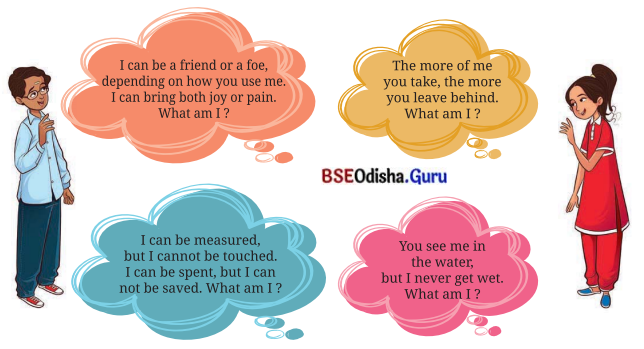
1. I can be a friend or a foe, depending on how you use me. I can being both joy or pain. What am I?
(ମୁଁ ଜଣେ ମିତ କିମ୍ବା ଶତ୍ରୁ ହୋଇପାରେ, ତୁମର ବ୍ୟବହାର ମଧ୍ଯରେ ନିର୍ଭର କରୁଛି । ମୁଁ ଆନନ୍ଦ କିମ୍ବା ବିଷାଦ ହୋଇପାରେ । ମୁଁ କିଏ ?)
Answer: Word
2. The more of me you take, the more you leave behind. What am I ?
(ମୋତେ ଯେତେ ଅଧ୍ବକ ନେବ ସେତିକି ପଛରେ ଛାଡ଼ିବ । ମୁଁ କିଏ ?)
Answer: Future

3. I can be measured, but I cannot be touched. I can be spent, but I can not be saved. What am I ?
(ମୋତେ ମାପିପାରିବ କିନ୍ତୁ ଛୁଇଁ ପାରିବ ନାହିଁ । ମୋତେ ବ୍ୟବହାର କରାଯାଇପାରେ କିନ୍ତୁ ସଞ୍ଚୟ କରି ହେବ ନାହିଁ । ମୁଁ କିଏ ?
Answer: Time
4. You see me in the water, but I never get wet. What am I ?
(ତୁମେ ମୋତେ ପାଣି ଭିତରେ ଦେଖୁବ କିନ୍ତୁ ମୁଁ କେବେ ଓଦା ହୁଏ ନାହିଁ । ମୁଁ କିଏ ?)
Answer: Secret
Discuss in pairs
(ଦୁଇ ଜଣିଆ ଦଳରେ ଆଲୋଚନା କର ।)
Question 1.
Why are qualities like humour and wit important in a person?
(ହାସ୍ୟ ଓ ବୁଦ୍ଧିମତ୍ତା ଭଳି ଗୁଣଗୁଡ଼ିକ ଜଣେ ବ୍ୟକ୍ତି ପାଇଁ କାହିଁକି ଗୁରୁତ୍ଵପୂର୍ଣ ଅଟେ ?)
Answer:
Qualities like humour and wit help a person face difficult situations (qul ପରିସ୍ଥିତି) calmly and wisely. They help communication more effectively (ସଫଳ ଭାବେ) and solve problems easily. These qualities also make a person more lovable and approachable (ପ୍ରିୟ ଓ ନିକଟତର).
Question 2.
Why do you think kings and queens preferred to have witty people among their courtiers?
(ରାଜା ଓ ରାଣୀମାନେ ବୁଦ୍ଧିମାନ ବ୍ୟକ୍ତିଙ୍କୁ ତାଙ୍କର ସଭାସଦ୍ମାନଙ୍କ ମଧ୍ୟରେ ରଖୁବାକୁ ପସନ୍ଦ କରୁଥିଲେ ବୋଲି ତୁମେ କାହିଁକି ଭାବୁଛ ?)
Answer:
Kings and queens in the past preferred (ପସନ୍ଦ କଲେ) to have witty people among their courtiers because they could lighten tense moments, otherwise solve difficult problems and entertain the court with their wit and humour (ହାସ୍ୟରସ). They are valuable as they maintain peace and harmony by offering wise advice.
Question 3.
If you were asked to solve a disagreement between two people, what approach would you take?
(ଯଦି ତୁମକୁ ଦୁଇଜଣ ଲୋକଙ୍କ ମଧ୍ୟରେ ଗୋଟିଏ ମତଭେଦ ସମାଧାନ କରିବାକୁ କୁହାଯାଏ, ତୁମେ କେଉଁ ପଦକ୍ଷେପ ନେବ ?)
Answer:
If I were aksed to solve a disagreement between two people, I would first listen to both sides patiently. Then I would try to find out common ground and helped them understand each other. If needed, I would use humour to ease their tension (ପ୍ରକ୍ଷୋଭ).
Question 4.
Have you ever been in a situation where a small misunderstanding led to a big problem ? How was it resolved ?
(ତୁମେ କେବେ ଏଭଳି ପରିସ୍ଥିତିରେ ପଡ଼ିଛ କି ଯେଉଁଠାରେ ସାମାନ୍ୟ ଭୁଲ୍ ବୁଝାମଣା ଏକ ବିରାଟ ସମସ୍ୟା ସୃଷ୍ଟି କରିଥିଲା ? ଏହା କିପରି ସମାଧାନ ହୋଇଥିଲା ?)
Answer:
Yes, I have been in such a situation where a small misunderstanding (ବୁଝାବଣାର ଅଭାବ) led to a big problem. One day I misunderstood a friend’s message and thought that he was upset with me. We didn’t talk for a few days. But when I spoke friendly, I realized (ହୃଦୟଙ୍ଗମ କଲି) that it was just a mistake. After that we talked honestly and forgave (କ୍ଷମାଦେଲି) each other. It helped me resolve (ସମାଧାନ) the problem.
Let us discuss
(ଚାଲ ଆଲୋଚନା କରିବା)
Correct the following false statements from the text.
(ପାଠ୍ୟ ବିଷୟରୁ ଭୁଲ୍ ଭକ୍ତିଗୁଡ଼ିକୁ ସଂଶୋଧନ କର ।)
Question 1.
The queen insulted his poem the king by speaking against the quality of his poem.
Answer:
The queen yawned due to tiredness, not to insult him.
Question 2.
Tenali Rama immediately (2016) went to the king and convinced him to talk to the queen.
Answer:
Tenali Rama first planned a clever strategy and used wit in the court to make the king realise his mistake.
Question 3.
The courtiers admired the king’s poems and praised his literary talent.
Answer:
The courtiers avoided listening to the king’s poem and made excuses.
Question 4.
The ministers in the court were eager to hear Tenali Rama’s idea about paddy cultivation.
Answer:
The ministers were doubtful and mocked Tenali Rama’s idea.
Question 5.
The king never realised his mistake and continued to stay angry with the queen.
Answer:
The king realised his mistake and apologized to the queen.
Let us think and reflect
(ଚାଲ ଚିନ୍ତାକରିବା ଓ ଭାବିବା) :
Read the extracts and answer the questions that follow.
(ଏହି ଉଦ୍ଧୃତାଂଶଟିକୁ ପଢ଼ ଓ ପରବର୍ତୀ ପ୍ରଶ୍ନଗୁଡ଼ିକର ଉତ୍ତର ଦିଅ ।)
Question 1.
…….The king thought I was disrespecting his poem and stormed off. Since then, he has not spoken to me. If I had known this would happen I would have chosen another day. Help me, please Rama. Only you can help the king understand.” Rama nodded thoughtfully. “If you like, I will try my best to resolve this matter, Your Highness. But this needs a well-planned approach and I may need time to find the right strategy.
(i) Why does the queen believe that only Tenali Rama can help the king understand ?
(ରାଣୀ କାହିଁକି ବିଶ୍ଵାସ କରୁଥୁଲେ ଯେ କେବଳ ତେନାଲି ରାମା ରାଜାଙ୍କୁ ବୁଝାଇ ଦେବାରେ ସମର୍ଥ ହୋଇପାରିବେ ? )
Answer:
The queen believes that only Tenali Rama can help the king understand because he is witty, wise and trusted by the king.
(ii) What does the queen’s statement, “If I had known this would happen, I would have chosen another day”, suggest about her feelings?
(ରାଣୀଙ୍କର ଉକ୍ତି, ‘ଏପରି ଘଟିବ ବୋଲି ମୁଁ ଜାଣିଥା’ନ୍ତି, ତେବେ ମୁଁ ଅନ୍ୟ ଏକ ଦିନ ବାଛିଥା’ନ୍ତି?? ତାଙ୍କର କେଉଁ ଭାବନା ବିଷୟରେ ସୂଚାଉଛି ?)
A. She is angry at the king for overreacting.
B. She regrets the unintended misunderstanding.
C. She believes the poem was not worth listening to.
D. She is worried that the king might punish her.
Answer:
B. She regrets the unintended misunderstanding
(iii) How does Tenali Rama’s response reflect his wisdom and problem-solving skills ?
(ତେନାଲି ରାମାଙ୍କର ଉତ୍ତର କିପରି ତାଙ୍କ ଜ୍ଞାନବତ୍ତା ଓ ସମସ୍ୟା ସମାଧାନ ଦକ୍ଷତା କିପରି ପ୍ରତିଫଳିତ କରୁଛି ?)
Answer:
Tenali Rama’s response reflects his wisdom and problem-solving skills because he often plans carefully before doing something. He listens carefully and handles the problems wisely.
(iv) Fill in the blanks by choosing the correct option from those given in the blackets.
(ବନ୍ଧନୀ ମଧ୍ଯରେ ଦିଆଯାଇଥିବା ବିକଳ୍ପଗୁଡ଼ିକ ମଧ୍ୟରୁ ସଠିକ୍ ବିକଳ୍ପ ବାଛି ଶୂନ୍ୟସ୍ଥାନ ପୂରଣ କର ।)
The king’s reaction shows that he is sensitive and (has a lot of faith/takes great pride) in his poetry.
Answer:
takes great pride.
Question 2.
(i) That evening, the king approached the queen with a softened expression, “Thirumalambal”, he bagan, his voice gently, “I have been foolish. I see now that I overreacted. I let my pride blind me. I’m so sorry.”
The queen, who had longed for this moment, smiled and replied, “If you like, we can leave this quarrel behind us. I would very much like to listen to your poem.”
Complete the following with a suitable explanation.
When the king said, “I let my pride blind me”, he means that…………
Answer:
When the king said, “I let my pride blind me”, he means that his pride prevented him from understanding the situation clearly. His pride made him arrogant (ଅଭିମାନୀ).
(ii) Why does the queen say, “If you like, we can leave this quarrel behind us ?
Answer:
The queen says so because she wants to forgive the king and move on peacefully.
(iii) Fill in the blank by choosing the correct option from those given in the brackets.
(ବନ୍ଧନୀ ମଧ୍ଯରେ ଦିଆଯାଇଥିବା ବିକଳ୍ପଗୁଡ଼ିକ ମଧ୍ୟରୁ ସଠିକ୍ ବିକଳ୍ପ ବାଛି ଶୂନ୍ୟସ୍ଥାନ ପୂରଣ କର ।)
The king acknowledges that his pride clouded his judgement which shows (intelligence and courage/maturity and self-awareness).
Answer:
maturity and self-awareness
(iv) State any one characteristics that the queen’s response to the king’s apology shows about her.
(ରାଜାଙ୍କ କ୍ଷମା ପ୍ରାର୍ଥନା ପ୍ରତି ରାଣୀଙ୍କ ଉତ୍ତର ତାଙ୍କ ବିଷୟରେ ଦର୍ଶାଉଥିବା କୌଣସି ଏକ ବୈଶିଷ୍ଟ୍ୟ ଆଲୋଚନା କର ।)
Answer:
The one characteristic that the queen’s response to the king’s apology shows that the queen was forgiving and kind hearted.
Answer the following questions.
(ନିମ୍ନଲିଖତ ପ୍ରଶ୍ନଗୁଡ଼ିକର ଉତ୍ତର ଦିଅ ।)
Question 1.
Why was the Vijayanagara Empire considered to be in its ‘Golden Era’ during Krishnadeva Raya’s reign ?
(କୃଷ୍ଣଦେବ ରାୟଙ୍କ ଶାସନ କାଳରେ ବିଜୟ ନଗର ସାମ୍ରାଜ୍ୟ କାହିଁକି ତା’ର ‘ସୁବର୍ଣ୍ଣ ଯୁଗ’ରେ ଥିଲା ବୋଲି ବିବେଚନା କରାଯାଏ ?)
Answer:
The Vijayanagara Empire was considered to be in its ‘Golden Era’ during Krishnadeva Raya’s reign because during his time art, literature and architecture were flourished.
Question 2.
How did Tenali Ramakrishna gain a special place in the king’s court?
(ତେନାଲି ରାମକୃଷ୍ଣ ରାଜାଙ୍କର ଦରବାରରେ ଏକ ସ୍ଵତନ୍ତ୍ର ସ୍ଥାନ ପାଇଥିଲେ କିପରି ?)
Answer:
Tenali Ramakrishna gained a special place in the king’s court because of his quick wit, humour and cleverness in problem-solving skills.
Question 3.
How did the quarrel between the king and the queen affect the palace?
(ରାଜା ଓ ରାଣୀଙ୍କ ମଧ୍ୟରେ ଉପୁଜିଥିବା କଳହ ରାଜପ୍ରାସାଦକୁ କିପରି ପ୍ରଭାବିତ କଲା ?)
Answer:
The quarrel between the king and the queen affected the palace seriously. The cheerful palace became dull and lifeless when the king stopped visiting the queen.
Question 4.
What strategy did Tenali Rama use to make the king realise his mistake?
(ରାଜା ନିଜର ଭୁଲ ବୁଝିପାରିବା ପାଇଁ ତେନାଲି ରାମା କି କୌଶଳ ପ୍ରୟୋଗ କଲେ ?)
Answer:
Tenali Rama used a skilled strategy to make the king realise his mistake. He presented a humorous comparison (ତୁଳନା) between sowing seed (ବିହନ ବୁଣିବା) and yawning to make the king realise his mistakes.
Question 5.
What was the reaction of the courtiers when Tenali Rama introduced his ‘special” paddy seeds ?
(ଯେତେବେଳେ ତେନାଲି ରାମା ସ୍ଵତନ୍ତ୍ର ଧାନ ବିହନ ଉପସ୍ଥାପନ କଲେ ସଭାସଦ୍ମାନଙ୍କର ପ୍ରତିକ୍ରିୟା କ’ଣ ଥିଲା ?)
Answer:
When Tenali Rama introduced ‘special paddy seeds’, all the courtiers showed their reactions. They mocked at him and doubted his claim.
Question 6.
How does the story conclude, and what lesson can be learnt from it ?
Answer:
The story concludes with comedy because the king apologies and peace is restored. The story teaches us the value of empathy, wit and communication.
Let us Learn
Fill in the blanks and complete the paragraph by choosing suitable expressions from the box given below. (Questions with answer)
| cast a shadow, murmur swept through the room, hush fell over, mind raced back, stormed off, rippled through |
Answer:
My mother is quite witty, and her sense of humour always lightens stressful moments. Once, at a family dinner, an agrument began over a minor issue, and 1. a hush fell over, making everyone feel uncomfortable. Just as things were getting serious, she made a clever remark and laughter 2. rippled through the gathering, making everyone relaxed. The person who started the agrument 3. stormed off. Everyone disapproved of the action and a 4. murmur swept through the room. My 5. mind raced back to how my mother had saved other situations like this. Without her, such moments would have 6. cast a shadow over the gatherings. I hope that I grow up to be as witty as my mother.
II. The writer uses words like ‘roared’, ‘murmur’ in the text to indicate the sound produced. Fill in the blanks with suitable sound words from the box given below. You may refer to a dictionary.
(ଲେଖକ roared, murmur ଭଳି ଶବ୍ଦ ଉତ୍ପନ୍ନ ହୋଇଥିବା ଧ୍ଵନିକୁ ସୂଚେଇବା ପାଇଁ ପାଠ୍ୟ ବିଷୟରେ ବ୍ୟବହାର କରିଛନ୍ତି । ତଳେ ଥିବା କୋଠରିରୁ ଉପଯୁକ୍ତ ଧ୍ଵନିସୂଚକ ଶବ୍ଦ ନେଇ ଶୂନ୍ୟସ୍ଥାନ ପୂରଣ କର । ତୁମେ ଶବ୍ଦକୋଷ ବ୍ୟବହାର କରିପାର ।)
[mumble, gasped, murmur, sighed, groan, rattle, snickers, whispered, roared, thud]
1. As the teacher began the riddle challenge, a ………….. of excitement spread through the classroom.
Answer: murmur
2. Sukanya …………….in relief, she loved riddles more than solving Mathematics problems.
Answer: sighed
3. “Think carefully,’ the teacher began to …………. as she wrote a riddle on the board.
Answer: mumble
4. When the questions was revealed, a few students…………… realising it wasn’t as easy as they had expected.
Answer: gasped
5. Some exchanged ……………, wondering if anyone at all would be able to solve it.
Answer: snickers
6. Just then, Sukanya tapped her book on the desk with a small …………. deep in thought.
Answer: thud
7. ‘Ah, I see it now!’ she said stretching with a …………… as if it had taken her great effort.
Answer: groan
8. A small breeze made the windows ……………….. adding to the suspense of the moment.
Answer: rattle
9. So, what’s the answer?’ the students …………… their voices filled with playful enthusiasm.
Answer: roared
10. Leaning forward with a smile, Sukanya …………, ‘Sometimes, the trickiest questions have the simplest answers.
Answer: whispered
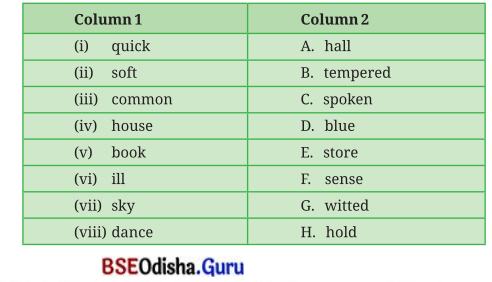
III. You have already learnt that a compound word is formed when two or more words are combined to make a new word with a distinct meaning. Here are some words given in column 1 and column
1. Make compound words by matching words in Column 1 with those in
(ବା ତାହାଠାରୁ ଅଧିକ ଶବ୍ଦ ମିଶି ଏକ ଭିନ୍ନ ଅର୍ଥବହନ କରେ ସେତେବେଳେ ଯୌଗିକ ଶବ୍ଦ ଗଠିତ ହୁଏ । ଏଠାରେ ସ୍ତମ୍ଭ 1 ଓ ସ୍ତମ୍ଭ 2 ରେ କେତେକ ଶବ୍ଦ ଦିଆଯାଇଛି ।)
Answer:
| Column 1 | Column |
| (i) quick | G. witted |
| (ii) soft | C. spoken |
| (iii) common | F. sense |
| (iv) house | H. hold |
| (v) book | E. store |
| (vi) ill | B. tempered |
| (vii) sky | D. blue |
| (viii) dance | A. hall |
Question 2.
Fill in the blanks with the words created in the previous question.
(ପୂର୍ବ ପ୍ରଶ୍ନରେ ଗଠିତ ହୋଇଥବା ଶବ୍ଦଗୁଡ଼ିକୁ ନେଇ ଶୂନ୍ୟସ୍ଥାନ ପୂରଣ କର ।)
Ravi was (i)………. always speaking calmly even in arguments. He grew up in a lively (ii)…… where he learned to handle different personalities. His friend Arun, however, was (iii) ……….and often lost his patience. Despite this, Arun admired Ravi’s (iv) ……….. thinking. One evening, as they passed a (v)…… they saw some performers rushing out. Ravi noticed that one of them dropped a (vi)……. book on the ground. “Is this yours ?” he asked. “Oh thank you, young man !” The performer smiled. “Its a recent purchase from the (vii)……… the corner.” True to his nature Arun promptly said to Ravi, “It’s (viii)…… it’s not from a bakery but bookshop !” Ravi smiled and they walked on.
Answer:
(i) soft-spoken
(ii) house hold
(iii) ill-tempered
(iv) quick witted
(v) dance hall
(vi) sky-blue
(vii) book store
(viii) common sense
IV. Read the sentences from the text and their explanation given in the table below.
(ପାଠ୍ୟ ବିଷୟରୁ ବାକ୍ୟଗୁଡ଼ିକ ପଢ଼ ଏବଂ ସେଗୁଡ଼ିକର ବ୍ୟାଖ୍ୟା ନିମ୍ନ ସାରଣୀରେ ଦିଆଯାଇଛି ।)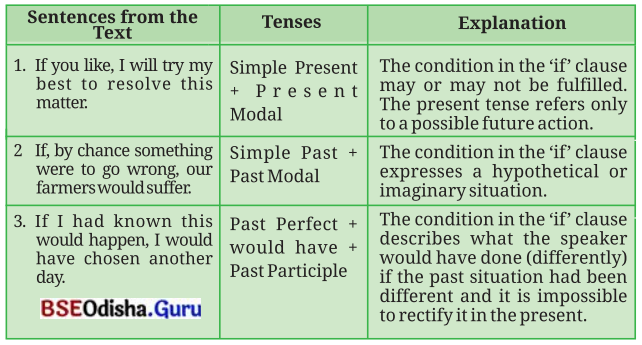
In sentence 1 ‘if you like’ is the subordinate clause (if clause) and ‘I will try my best to resolve this matter’ is the main clause.
Note: Read the sentence and separate then info two parts. “If you like, “I will try my best to resolve this matter.” If you like – one part (first part) “I will try my best to resolve this matter”. (another part/2nd part). Let first part – ‘x’ (If part) 2nd part-‘y’ (Main part)
In ‘x’ part (If part) we have a present simple verb ‘like’ and in ‘Y’ part (main part) will – Modal auxiliary (If part) – X – Part happens first. (Main Part) – Y – Part happens later. (If Part)- X – Part is the cause/condition. (Main Part)-Y- Part is the result/effect. In both the Parts – time reference is Futurity. Here the present tense in the ‘If’ Part-refers to more possible actions in the future.
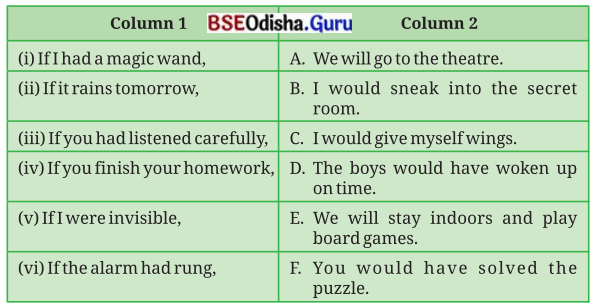
Now, match the subordiante clauses (if causes) in Column 1 with the appropriate main clauses in Column 2 to make complete sentences.
(ବର୍ତ୍ତମାନ Column – 1 ରେ ଥିବା ଆଶ୍ରୟୀ ଉପବାକ୍ୟ Column – 2 ରେ ଥିବା ମୁଖ୍ୟ ଉପବାକ୍ୟ ମିଳାଇ ବାକ୍ୟ ଗଠନ କର ।)
Answer:
| Column 1 | Column 2 |
| (i) If I had a magic wand, | C. I would give myself wings. |
| (ii) If it rains tomorrow, | E. We will stay indoors and play board games. |
| (iii) If you had listened carefully, | F. You would have solved the puzzle. |
| (iv) If you finish your homework, | A. We will go to the theatre |
| (v) If I were invisible, | B. I would sneak into the secret room. |
| (vi) If the alarm had rung, | D. The boys would have woken up on time |
V. Complete the following sentence appropriately with either the main clause or the subordinate clause (if clause).
(ମୁଖ୍ୟ ଉପବାକ୍ୟ କିମ୍ବା ଆଶ୍ରୟୀ ଉପବାକ୍ୟ ବ୍ୟବହାର କରି ବାକ୍ୟଗୁଡ଼ିକୁ ଯଥୋପଯୁକ୍ତ ଭାବେ ପୂରଣ କର ।) (Question with Answer)
1. Your teacher will be unhappy if you don’t complete your homework.
2. They would have caught the train if they had left earlier.
3. You will feel tired if you continue to stay up late every night.
4. If she knew the answer, she would raise her hand up.
5. She would have passed if she had studied harder.
6. If I had a million rupees, I would travel all over the world.
VI. Complete the following sentences. One example has been done for you.
(ନିମ୍ନଲିଖତ ବାକ୍ୟଗୁଡ଼ିକୁ ପୂରଣ କର । ଗୋଟିଏ ଉଦାହରଣ ତୁମ ପାଇଁ କରି ଦିଆଯାଇଛି ।) (Question with Answer)
1. If I were a tree, I would play with the wind and talk to the bird.
2. If I were the Head Teacher of my school, I would introduce yoga class for the students.
3. If I were a bird, I would fly over the mountains and the oceans.
4. If I were a magician, I would turn everything into gold.
5. If I had studied harder, I would have got a first class.
I. Let us Listen (ଆସ ଶୁଣିବା) :
You will listen to a woman narrating a story. As you listen, fill in the blanks in the following sentences by selecting the correct options. (Transcript for teacher on page 46)
(ଜଣେ ମହିଳା ଗୋଟିଏ ଗଳ୍ପ କହୁଥିବା ତୁମେମାନେ ଶୁଣିବ । ଶୁଣିବା ସମୟରେ, ଠିକ୍ ବିକଳ୍ପ ବାଛି ନିମ୍ନଲିଖୁତ ବାକ୍ୟଗୁଡ଼ିକରେ ଶୂନ୍ୟସ୍ଥାନ ପୂରଣ କର । ଶିକ୍ଷକଙ୍କ ପାଇଁ Transcript ପୃଷ୍ଠା ୪୬ରେ ଅଛି ।)
Question 1.
The rope tying the bundle of sticks was …………….
(i) loose
(ii) thick
(iii) short
Answer:
(i) loose
Question 2.
The scholar is finally referred to as…………….
(i) irritable
(ii) mischievous
(iii) arrogant
Answer:
(iii) arrogant
II. You will once again listen to the story, As you listen, number the events of the story in the correct order of occurrence.
(ତୁମେ ପୁନର୍ବାର ଗଳ୍ପଟିକୁ ଶୁଣିବ । ତୁମେ ଶୁଣିବା ସମୟରେ ଗଳ୍ପଟିର ଘଟଣାଗୁଡ଼ିକୁ କ୍ରମ ଅନୁସାରେ ସଜାଇ ଲେଖ ।)
1. The great scholar was ashamed because he did not know what to say.
2. Rama accepted the challenge thrown by the visitor.
3. Rama had a bundle tied in silk when he came to the palace.
4. The king laughed at the explanation given by Rama.
5. The visitor wanted to show his superiority over others in the palace.
6. Rama showed the work to be a bundle of sticks tied together by a rope.
7. The king wanted to know more about the work mentioned by Rama.
8. The court scholars were afraid of the king’s anger.
Answer:
5. The visitor wanted to show his superiority over others in the palace.
8. The court scholars were afraid of the king’s anger.
2. Rama accepted the challenge thrown by the visitor.
3. Rama had a bundle tied in silk when he came to the palace.
1. The great scholar was ashamed because he did not know what to say.
7. The king wanted to know more about the work mentioned by Rama.
6. Rama showed the work to be a bundle of sticks tied together by a rope.
4. The king laughed at the explanation given by Rama.
Let us speak (ଆସ କହିବା) :
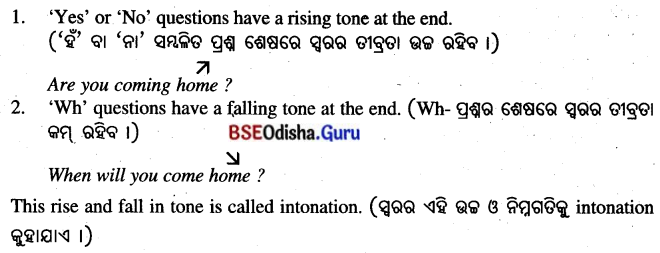
I. While asking questions, it is important to use the appropriate tone to convey the correct meaning.
(ପ୍ରଶ୍ନ ପଚାରିବା ସମୟରେ, ଠିକ୍ ଅର୍ଥ ପ୍ରକାଶପାଇଁ ଉପଯୁକ୍ତ ସ୍ଵରରେ ଉଚ୍ଚାରଣ କରିବା ଗୁରୁତ୍ଵପୂର୍ଣ୍ଣ ଅଟେ ।)
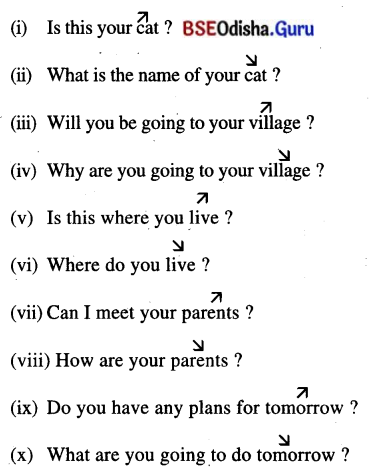
Now, work in pairs and mark the intonation in the questions given below.
(ଏବେ ଦୁଇ ଦୁଇଜଣ ହୋଇ କାର୍ଯ୍ୟରେ ଏବଂ ନିମ୍ନରେ ଦିଆଯାଇଥିବା ପ୍ରଶ୍ନଗୁଡ଼ିକର intonation ଚିହ୍ନିତ କର ।)…
Take turns to practise by saying them aloud with the correct intonation.
(ଠିକ୍ intonation ବ୍ୟବହାର କରି ସେଗୁଡ଼ିକୁ ପାଳି ଅନୁସାରେ ବଡ଼ ପାଟିରେ ପଢ଼ ।)
II. ‘What’, ‘Why’, ‘When’, ‘How’, ‘Where’, and ‘Who’ are the words used to ask questions. These words are called question words. Let us use these words and make some questions.
(What, Why, When, Where ଏବଂ Who ଶବ୍ଦଗୁଡ଼ିକ ପ୍ରଶ୍ନ ପ୍ରଚାରିବା ପାଇଁ ବ୍ୟବହୃତ ହୁଏ । ଏଗୁଡ଼ିକୁ ପ୍ରଶ୍ନସୂଚକ ଶବ୍ଦ କୁହାଯାଏ । ଆସ ଏହି ଶବ୍ଦଗୁଡ଼ିକୁ ବ୍ୟବହାର କରି କେତେକ ପ୍ରଶ୍ନ ତିଆରି କରିବା ।)
While making questions, remember the correct word order.
(ପ୍ରଶ୍ନ ତିଆରି ସମୟରେ ସଠିକ୍ ଶବ୍ଦ କ୍ରମକୁ ମନେରଖ ।)
- Who is the cleverest character in the story? (Correct)
- Who the cleverest character is in the story? (Incorrect)
Work in pairs and take turns to ask and answer questions about a trip that you are planning. Remember to use the correct intonation while asking these questions. (ଦୁଇ ଦୁଇଜଣ କରି କାର୍ଯ୍ୟ କର ଏବଂ ତୁମେ ଯୋଜନା କରିଥିବା ଭ୍ରମଣ ଉପରେ ପାଳି ଅନୁସାରେ ପ୍ରଶ୍ନ ପଚାର ଓ ଉତ୍ତର ଦିଅ । ପ୍ରଶ୍ନ ପଚାରିବା ସମୟରେ ସଠିକ୍ intonation (ସ୍କର ବିନ୍ୟାସ) ବ୍ୟବହାର କରିବାକୁ ମନେରଖ ।)
Here are some prompts for you. (ଏଠାରେ ତୁମ ପାଇଁ କେତେକ ସୂଚନା ଅଛି ।)
- The destination (Where…)
- Mode of transport (How…)
- Travel companions (Who…)
- Purpose (Why…)
- Duration (When…)
- Activities (What…)
Answer:
1. Q. Where are you going?
Answer: We are going to Puri.
2. Q. Why are you going there?
Answer: We are going there to worship Lord Jagannath
3. Q. How are you going there?
Answer: We are going there by bus.
4. Q. When are you going there?
Answer: We are going there on Sunday.
5. Q. Who are going with you?
Answer: My parents are going with us.
6. Q. What are you going to do there?
Answer: We are going there to visit sea beach.
Now, work in pairs and take turns to ask and answer the questions about witty characters in folktales or stories you have read. Use the correct intonation while asking questions. (ଏବେ ଦୁଇଜଣିଆ ଦଳରେ କାର୍ଯ୍ୟ କର ଏବଂ ପାଳି ଅନୁସାରେ ତୁମେ ପଢ଼ିଥିବା ଲୋକଗଳ୍ପ କିମ୍ବା ଗଳ୍ପର ବୁଦ୍ଧିମାନ ଚରିତ୍ର ବିଷୟରେ ପ୍ରଶ୍ନ ପଚାର ଓ ଉତ୍ତର ଦିଅ । ପ୍ରଶ୍ନ ପଚାରିବା ସମୟ ସଠିକ୍ ସ୍ଵରବିନ୍ୟାସ (intonation) ବ୍ୟବହାର କର ।)
For example: Your favourite character in the folktale (Who..?) Who is your favourite character in the folktale?
1. The name of the witty character (Who…?)
2. The reason for her/his wit being important in the story (Why…?)
3. The most famous trick or clever idea she/he used (What…?)
4. The time period or setting of the folktale/story (When…?)
5. The way she/he used her/his intelligence to solve a problem (How…?)
6. The location where the story takes place (Where…?)
Answer:
1. Q. Who is the witty character in the story?
Answer:
Jadumani is the witty character in the story.
2. Q. Why is his/her wit important in the story?
Answer:
His wit is important in the story for his instant reply.
3. Q. What is the most famous trick or clever idea that he/she used?
Answer:
The most clever idea he/she used is that heavier things always go downward
in a scale to show a person’s importance.
4. Q. When was the folk story written ?
Answer: The folk story was written during his stay in the Khandapada princely state.
5. Q. How did she/he use her/his intelligence to solve a problem?
Answer: He used his/her intelligence with his/her keen observation and instant response to solve problems.
6. Q. Where does the story take place?
Answer: The folk story takes place when he was the principal poet during the rule of King Binayak Singh Mandhata.
You have already come across how to write a paragraph. Now come forward to learn how to write essays. Remember essay-writing is of mainly three types: such as
(i) Controlled/Guided writing
(ii) Free writing
(iii) Creative/imaginative writing.
Look at the fomat of an essay writing:
(i) A Relevant Title.
(ii) Introduction:
(iii) Organisation of ideas
(iv) Body/content
(v) Language appropriateness/Grammaticality
(vi) Style
(vii) Conclusion/ Ending.
Let us start with the controlled/Guided writing. In a Guided writing the title of the essay will be given. followed by some hints/outlines. Those outlines/hints will be developed into small paragraphs. While developing the points given above should be well taken care of. Remember the conclusion part must have a graceful ending.
Title: A Lesson in Responsibility.
Outlines: Village you live in – festivals you observe in your locality- how you observe it -your responsibility you perform- your realisation (Develop the outlines into an essay)
Read the sample essay given below.
In our village in Odisha, Kartika Purnima is observed with pomp and ceremony. The river glows with hundreds of clay lamps (dipa), believed to guide our ancestors and bring peace to our homes.
Last year, my mother gave me responsibility of carrying a tray of lit dipas to the ghat. It was the first time I was given such a task; so I felt proud. On the way, I met some friends and got distracted. Laughing and not paying attention to it, I tripped and dropped the tray. The dipas broke into pieces. I was embarrased and afraid to face my family. But just then; my grandmother who was walking behind me, reached out to help. She did not scold me. She simply said, “A dipa must burn steadily. If we are careless, we break more than just clay.”
Her words touched me. I realised I had taken the task too lightly, thinking it was easy. That evening, I helped relight the remaining dipas with great care. Since that day, I’ve learned that responsibility isn’t measured by how big a task is, but how sincerely we do it. Whether it’s schoolwork or helping at home, every small work matters.
1. Now write the following essays developing the outlines given below.
(ନିମ୍ନରେ ପ୍ରଦତ୍ତ ରୂପରେଖକୁ ବିସ୍ତାର କରି ନିମ୍ନଲିଖତ ରଚନାଗୁଡ଼ିକୁ ଲେଖ ।)
(a) Road Safety: (Title)
Answer:
Outlines: What is an accident? What are the traffic rules in our country? – What should we do before crossing the road?-Why is it dangerous to fly kites or play in the streets? – How can motorists make the road safe?
Road Safety
An accident is an event which happens completely by chance. It is also something unpleasant and unfortunate. It often leads to injury or death. In India traffic keeps to the left side of the roads. Motor-cars, trucks, buses and cyclists must keep to the left side of the roads. Before crossing the road, we must stop and look both ways.
We must look right, look left and look right side again. If no vehicles are coming, then it is safe to cross the road. Children shouldn’t fly kites or play games in the streets. Many children often forget about traffic when they are flying kites. They start running without looking to see if a vehicle is coming or not. They shouldn’t play or fly kites in the streets. It is very dangerous.
Accidents are often caused by carelessness of the drivers. A driver who drives too fast along the road, causes fatal accidents. They should take care at cross-roads and they mustn’t drive if they are tired. They must drive slowly. Unless they are careful, their lives along with others might be in danger. Everyone on the road, must obey the traffic rules. If we obey the rule of the road, the roads will be safer. We must remember that normal speed meets everyone need and fast drive could be the last drive.
(b) My Mother: (Title)
Answer:
Outlines: Who is she? Name and age- appearance, dress, qualifications- What work does she do and when ? what does she do in free time? – about her relations /dealings with others – why do you like her?·
My Mother
My mother is the most important person in my family. She is the emotional person who holds the entire family together. Her wisdom shapes my personality and her guidance gives me courage and protection.
Mrs Monali Moharana is my mother. She is a young lady of thirty-five years. She is a science graduate. She often wears simple dresses. She takes care of everyone in my family. She gets up early in the morning. She cooks food and keeps our house neat and clean. She teaches me good habits and moral values. She tells me stories in free time. She is my first teacher, guide and my best friend. Her devotion, love and faith inspires me a lot. My mother is the precious gift of God to me. She teaches me to be honest, polite and respectful to everyone. I love my mother very much.
(c) A Journey by Bus: (Title)
Outlines: What is a journey? – What was the occasion ? – How did your journey start? – What was the scene inside? – What are your experiences on the way?
A Journey by Bus
A journey is an act of travelling from one place to another, especially in a vehicle. A journey by bus is often a source of pleasure.
It was the month of July. I had to perform a journey by bus to attend the marriage ceremony of my uncle on the morning of 15 July. We started our journey from Cuttack to Baripada. My uncle is a teacher working in Baripada Government School. The bus was a luxury coach carrying 65 passengers.
Soon the bus left the bus stand, it came to the national highway. The bus was running at full speed. It crossed the bridge over the Mahanadi. I peeped out of the window and enjoyed the beautiful sights outside. I saw houses, shops trees along with the both sides of the road. I saw small forests, gardens, paddy fields. The air inside the bus got hot. So some passengers became angry and they shouted among themselves. Finally we arrived at the bus stand at night. We enjoyed the journey very much.
Let us explore
(ଆସ ଅନ୍ଵେଷଣ କରିବା):
Limerics are poems in five lines that have a twist in the last line. Read and enjoy the following limericks and create one on your own.
(Limerics ହେଉଛି ପାଞ୍ଚ ଧାଡ଼ି ବିଶିଷ୍ଟ କବିତା ଯାହାର ଶେଷ ଧାଡ଼ିରେ ପରିବର୍ତ୍ତନ/ ମୋଡ଼ ଆସିଥାଏ । ନିମ୍ନ limericsକୁ ପଢ଼ ଓ ଉପଭୋଗ କର ଏବଂ ନିଜେ ଏକ limerics ତିଆରି କର ।)
Raju flew his kite in the sky so wide.
It soared with grace, full of pride.
But a crow came along.
Singing its song.
And now it’s the crow on a joyride!
II. Go to the library and read a story of your choice. Share its theme and the interesting parts of the story with your classmates and teacher.
( ଓ ତୁମ ପସନ୍ଦ ଅନୁସାରେ ଗୋଟିଏ ଗଳ୍ପ ପଢ଼ । ଗଳ୍ପ ମଜାଦାୟକ ଅଂଶକୁ ତୁମ ସହପାଠୀ ଓ ଶିକ୍ଷକଙ୍କ ସହ ଆଲୋଚନା କର ।)
Answer:
Students do this activity themselves.
III. You must have read stories of wit, humour, and wisdom in your own language or English. Make a list of these stories that you have read on a chart paper. Each student should read at least one new story from the list.
(ତୁମେମାନେ ବୁଦ୍ଧିମତ୍ତା, ହାସ୍ୟରସାତ୍ମକ, ବିଜ୍ଞତାପୂର୍ଣ୍ଣ ଗପସବୁ ପଢ଼ିଥିବ । ଏକ ଚାର୍ଟ ପେପରରେ ତୁମେ ପଢ଼ିଥିବା ଗପସବୁର ଏକ ତାଲିକା କର । ପ୍ରତ୍ୟେକ ଛାତ୍ର ଏହି ତାଲିକାରୁ ପଢ଼ିବା ଉଚିତ । ଗୋଟିଏ ନୂଆ ଗପ|)
Answer:
Students should do it themselves.
The Wit that Won Hearts Class 8 Summary
Let us read (ଚାଲ ପଢ଼ିବା) :
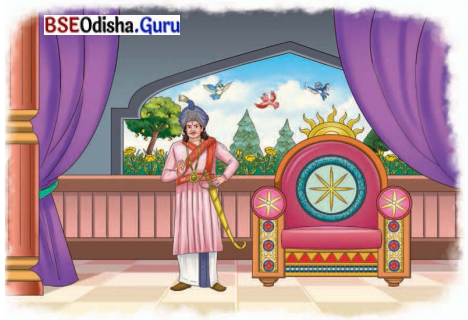
The Vijayanagara Empire was renowned for its glory, wealth, and cultural achievements. Among its many illustrious rulers, King Krishnadeva Raya (ruled 1509- 29 CE) stood out as a wise and powerful monarch. His reign is often referred to as the Golden Era of the Vijayanagara Empire, a time when art, literature, and architecture flourished. A great patron of learning, Krishnadeva Raya was not only an eminent warrior but also a gifted poet. His works, such as the epic Amuktamalyada and the Sanskrit drama Jambavati Parinayam, are acclaimed even today.
ଓଡ଼ିଆ ଅନୁବାଦ :
ବିଜୟନଗର ସାମ୍ରାଜ୍ୟ ଏହାର ଗୌରବ, ଧନସଂପଦ ଓ ସାଂସ୍କୃତିକ ଉପଲବ୍ଧିରେ ସୁବିଦିତ ଥିଲା । ଏହି ସାମ୍ରାଜ୍ୟର ସୁନାମଧନ୍ୟ ଶାସକମାନଙ୍କ ମଧ୍ୟରେ ରାଜା କୃଷ୍ଣଦେବରାୟ (୧୫୦୯–୧୫୨୯) ଅନ୍ୟତମ ବୁଦ୍ଧିମାନ ଓ ଅତ୍ୟନ୍ତ ଶକ୍ତିଶାଳୀ ରାଜା ଥିଲେ । ତାଙ୍କର ଶାସନକାଳକୁ ବିଜୟନଗର ସାମ୍ରାଜ୍ୟର ସୁବର୍ଣ୍ଣ ଯୁଗ ବୋଲି କୁହାଯାଏ । ଏହି ସମୟରେ କଳା, ସାହିତ୍ୟ ଓ ନିର୍ମାଣକଳା କ୍ଷେତ୍ରରେ ବ୍ୟାପକ ଉନ୍ନତି ହୋଇଥିଲା । ଶିକ୍ଷାର ମହାନ୍ ପୃଷ୍ଠପୋଷକ, କୃଷ୍ଣଦେବ ରାୟ କେବଳ ଜଣେ ଖ୍ୟାତିସଂପନ୍ନ ଯୋଦ୍ଧା ନଥିଲେ, ପରନ୍ତୁ ଜଣେ ପ୍ରତିଭାଶାଳୀ କବି ମଧ୍ୟ ଥିଲେ । ତାଙ୍କର ସାହିତ୍ୟ କୃତି ଯେପରି ଆମୁକ୍ତମାଲ୍ୟଦା ଏବଂ ସଂସ୍କୃତ ନାଟକ ‘ଜାମ୍ବବତୀ ପରିଣୟମ୍’ ଆଜି ମଧ୍ୟ ଆଦରଣୀୟ ହୋଇ ରହିଅଛି ।
Word Notes (ଓଡ଼ିଆ):
- renowned: ଜଣାଶୁଣା (well known) Radhanath was a renowned poet.
- illustrious: ଖ୍ୟାତି ସଂପନ୍ନ (respected and famous) Namita is an illustrious singer.
- patron: ସପକ୍ଷବାଦୀ (supporter) She is a patron of arts.
- eminent: ଜଣାଶୁଣା (famous) Dr. Kalam was an eminent scientist.
- acclaimed: ପ୍ରଶଂସା କଲେ (praised) He gave an acclaimed dance on the stage
Krishnadeva Raya’s court was home to eight celebrated poets, collectively known as the Ashtadiggajas. These poets, including Allasani Peddana and Tenali Ramakrishna, enriched the literary tradition with their masterpieces. Tenali Ramakrishna, in particular, was known for his quick wit and humour, earning him a special place in the king’s court as both a poet and a witty advisor. His clever solutions to seemingly insurmountable problems made him a beloved figure in the empire’s history.
Even the wisest rulers face moments of disharmony, and at one such time, the king had a quarrel with his queen, Thirumalambal, over a seemingly trivial matter. For weeks, he did not utter a single word to her, and in his frustration, stopped visiting her altogether.
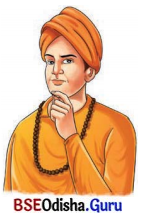
His absence cast a shadow over the palace, and the once cheerful corridors seemed quiet and forlorn. Thirumalambal, was upset and tried her best to resolve the issue but failed. With no other alternative, she decided to seek the help of Tenali Rama, the court’s brilliant and witty poet. Rama listened patiently as the queen recounted the incident in detail.
ଓଡ଼ିଆ ଅନୁବାଦ:
କୃଷ୍ଣଦେବ ରାୟଙ୍କ ଦରବାରରେ ଆଠଜଣ ଯଶସ୍ୱୀ କବି ଥିଲେ । ସେମାନେ ସମଜ୍ଜିତଭାବେ ଅଷ୍ଟଦିଗ୍ଗଜ ଭାବେ ପରିଚିତ ଥିଲେ । ଏହି କବିମାନଙ୍କ ମଧ୍ୟରେ ଆଲ୍ଲାସାନି ପେଦ୍ଦାନା ଓ ତେନାଲି ରାମକ୍ରିଷ୍ଣା ପ୍ରମୁଖ ଥିଲେ । ଏମାନଙ୍କ ଉତ୍କୃଷ୍ଟ ରଚନାବଳୀ ସାହିତ୍ୟିକ ପରମ୍ପରାକୁ ସମୃଦ୍ଧ କରିଥିଲା । ତେନାଲୀ ରାମକୃଷ୍ଣ ପ୍ରକୃତପକ୍ଷେ ନିଜର ତୀବ୍ର ବୁଦ୍ଧିମତ୍ତା ଓ ହାସ୍ୟରସ ପାଇଁ ପରିଚିତ ଥିଲେ । ଏହି କାରଣରୁ ରାଜଦରବାରରେ ସେ ଜଣେ କବି ଓ ବୁଦ୍ଧିମାନ ଉପଦେଷ୍ଟା ରୂପେ ଏକ ବିଶେଷ ସ୍ଥାନ ପାଇଥିଲେ । ତାଙ୍କର ଚତୁର ଚିନ୍ତାଧାରା ବହୁତ କଷ୍ଟକର
ସମସ୍ୟାକୁ ସରଳ ଭାବରେ ସମାଧାନ କରୁଥିଲା । ଏହି କାରଣରୁ ସାମ୍ରାଜ୍ୟର ଇତିହାସରେ ସେ ଜଣେ ପ୍ରିୟ ବ୍ୟକ୍ତିରୂପେ ବିବେଚିତ ହୋଇଥିଲେ । ଏପରିକି ସବୁଠାରୁ ଶ୍ରେଷ୍ଠ ବୁଦ୍ଧିମାନ ଶାସକମାନଙ୍କୁ ବେଳେବେଳେ କଳହ ମୁହୂର୍ଭର ସମ୍ମୁଖୀନ ହେବାକୁ ପଡ଼ିଥାଏ । ଏହିପରି ଏକ ସମୟରେ ରାଜା ଓ ରାଣୀଙ୍କ ମଧ୍ୟରେ ଏକ ଛୋଟ ଘଟଣା ଯୋଗୁ ଝଗଡ଼ା ହୋଇଗଲା । କେତେକ ସପ୍ତାହ ପର୍ଯ୍ୟନ୍ତ ରାଜା ଗୋଟିଏ ଶବ୍ଦ ଉଚ୍ଚାରଣ କଲେ ନାହିଁ । ନୈରାଶ୍ୟରେ ରାଜାରାଣୀଙ୍କୁ ସାକ୍ଷାତ କରିବା ବନ୍ଦ କରିଦେଲେ । ରାଜାଙ୍କ ଅନୁପସ୍ଥିତିରେ ରାଜଉଆସ ପରିବେଶ ଉଦାସ ହୋଇଗଲା । ଯେଉଁଠାରେ ଆନନ୍ଦ ଉଲ୍ଲାସ ଲାଗିରହିଥିଲା, ଏବେ ଏହି ସ୍ଥାନ ହତଶ୍ରୀ ହୋଇଗଲା । ରାଣୀ Thirumalambal ବହୁତ ଅନୁତପ୍ତ ଓ ଦୁଃଖୀ ହେଲେ । ସେ ଏହି ଝଗଡ଼ାର ସମାଧାନ ପାଇଁ ବହୁତ ଚେଷ୍ଟା କଲେ, କିନ୍ତୁ ସଫଳ ହେଲେ ନାହିଁ । କୌଣସି ଉପାୟ ନପାଇ, ରାଣୀ ଦରବାରର ବୁଦ୍ଧିମାନ ଓ ଚତୁର କବି ତେନାଲୀ ରାମାଙ୍କର ସାହାଯ୍ୟ ନେବାପାଇଁ ସ୍ଥିର କଲେ । ରାମା ଧୈର୍ଯ୍ୟର ସହିତ ରାଣୀଙ୍କର ଘଟଣା ଶୁଣିଲେ ।
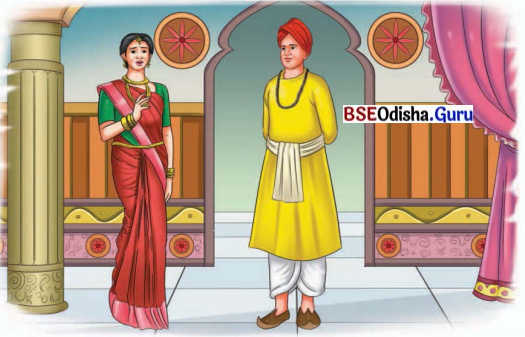
“The king wrote a poem,” she began, her voice trembling. “It was filled with vague expressions – sun, moon, stars, beautiful sky – but it made no sense. When he tried reciting it to his ministers, they all avoided him, making excuses. It was late evening when he came to me, seeking an audience. He began reciting it to me, but I was so exhausted after a tiring day that I yawned- not once, but several times. The king thought I was disrespecting his poem and stormed off. Since then, he has not spoken to me. If I had known this would happen I would have chosen another day. Help me, please, Rama. Only you can help the king understand.”
ଓଡ଼ିଆ ଅନୁବାଦ:
‘‘ରାଜା ଗୋଟିଏ କବିତା ଲେଖୁଲେ’’, ରାଣୀ ଥରଥର ସ୍ଵରରେ କହିବା ଆରମ୍ଭ କଲେ । ‘ଏହି କବିତାରେ ସୂର୍ଯ୍ୟ, ଚନ୍ଦ୍ର ଓ ସୁନ୍ଦର ଆକାଶ ପ୍ରଭୃତି ଶବ୍ଦ ଥିଲା, କିନ୍ତୁ ଏଗୁଡ଼ିକର କୌଣସି ସ୍ପଷ୍ଟ ପରିପ୍ରକାଶ ନଥିଲା । ଯେତେବେଳେ ଏହି କବିତା ସେ ତାଙ୍କର ମନ୍ତ୍ରୀମାନଙ୍କୁ ଶୁଣାଇଲେ, ସେମାନେ ସମସ୍ତେ ବାହାନା କରି, ସେଠାରୁ ଚାଲିଯିବା ପାଇଁ ଚେଷ୍ଟା କଲେ । ବିଳମ୍ବିତ ସନ୍ଧ୍ୟା ସମୟରେ ସେ ମୋ ପାଖକୁ ଜଣେ ଶ୍ରୋତା ଖୋଜିବା ପାଇଁ ଆସିଲେ ।
ଏହି କବିତା ଆବୃତ୍ତି କରି ସେ ମୋତେ ଶୁଣେଇବାକୁ ଆରମ୍ଭ କଲେ, କିନ୍ତୁ ଗୋଟିଏ କ୍ଳାନ୍ତିପୂର୍ଣ୍ଣ ଦିନପରେ ମୁଁ ଏତେ ଥକିଯାଇଥୁଲି ଯେ ମୁଁ ହାଇମାରିଲି, ଥରେ ନୁହେଁ, ଅନେକଥର । ରାଜା ଭାବିଲେ ମୁଁ ତାଙ୍କ କବିତାକୁ ଅପମାନ ଦେଉଛି । ରାଗରେ ସେ ସେଠାରୁ ଚାଲିଗଲେ । ସେହିଦିନଠାରୁ ସେ ମୋତେ ଗୋଟିଏ ଶବ୍ଦ କହି ନାହାଁନ୍ତି । ଯଦି ଏପରି ଘଟିବ ବୋଲି ମୁଁ ଜାଣିଥାଆନ୍ତି, ମୁଁ ଅନ୍ୟ ଗୋଟିଏ ଦିନ ବାଛିଥାଆନ୍ତି । ମୋତେ ସାହାଯ୍ୟ କର, ରାମା । କେବଳ ତୁମେ ହିଁ ରାଜାଙ୍କୁ ବୁଝାଇପାରିବ ।’’
Rama nodded thoughtfully. “If you like, I will try my best to resolve this matter, Your Highness. But this needs a well- planned approach, and I may need time to find the right strategy.” The queen, who had placed her last hope in Rama, agreed and thanked him profusely. The next morning, the royal court was bustling with activity.
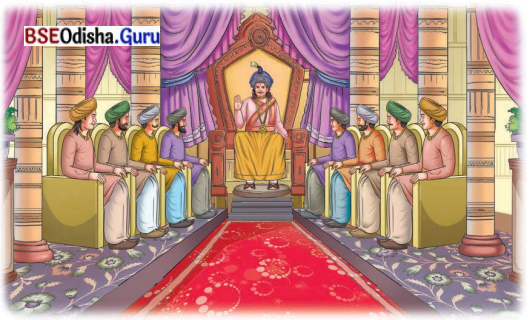
Ministers, scholars, and courtiers filled the courtroom, Rays of sunlight streamed through the open windows, illuminating the floor adorned with exquisite rugs. Despite the lively chatter, a tension hung in the air. The king sat on his ornate throne, his expression stern, his sharp eyes scanning the room. It was evident that the unresolved quarrel still gnawed at him.
ଓଡ଼ିଆ ଅନୁବାଦ:
ରାମା ଚିନ୍ତାଶୀଳ ହୋଇ ମୁଣ୍ଡ ହଲାଇ ରାଜି ହୋଇଗଲେ । ‘ଯଦି ତୁମେ ଚାହିଁବ, ମୁଁ ସମସ୍ୟାର ସମାଧାନ ପାଇଁ ପୂରା ଚେଷ୍ଟା କରିବି । ହେ ମହାଶୟା ! ଏଥପାଇଁ ଏକ ପରିକଳ୍ପିତ ଯୋଜନାର ଆବଶ୍ୟକତା ଅଛି ଏବଂ ଠିକ୍ କୌଶଳ ପାଇବା ପାଇଁ ସମୟ ଲାଗିବ ।’’ ରାଣୀଙ୍କର ଶେଷ ଆଶା କେବଳ ରାମାଙ୍କ ଉପରେ ଥିଲା । ସେ ରାଜି ହୋଇଗଲେ ଓ ରାମାକୁ ବାରମ୍ବାର ଧନ୍ୟବାଦ ହେଲେ । ପରଦିନ ସକାଳେ ରାଜଦରବାର କାର୍ଯ୍ୟ ବ୍ୟସ୍ତତାରେ ଚଳଚଞ୍ଚଳ ହୋଇଉଠିଲା ମନ୍ତ୍ରୀମାନେ, ବିଦ୍ଵାନ୍ମାନେ ଦରବାର କକ୍ଷରେ ଭର୍ତ୍ତି ହୋଇଗଲେ । ମୁକ୍ତ ଝରକା ଦେଇ ସୌର ରଶ୍ମି ଦରବାର ଚଟାଣରେ ଥିବା ସୁନ୍ଦର ଗାଲିଚାକୁ ସଜାଇ ଦେଲା । ସୁନ୍ଦର କଥାବାର୍ତ୍ତା ଚାଲିଥିବା ସତ୍ତ୍ୱେ ବାତାବରଣରେ ଅଶାନ୍ତି ଭରି ରହିଥିଲା । ରାଜା ତାଙ୍କର ସୁସଜ୍ଜିତ ସିଂହାସନରେ ବସିଥିଲେ । ତାଙ୍କର ଗମ୍ଭୀର ଚେହେରା ମଧ୍ୟରେ ତାଙ୍କର ଆଖୁଗୁଡ଼ିକ ପୂରା ଦରବାର ଉପରେ ନଜର ପକାଉଥିଲା । ତାଙ୍କର ଅସମାହିତ ଝଗଡ଼ା ତାଙ୍କର ହୃଦୟରେ ଦୁଃଖ ଦେଇଥିଲା ବୋଲି ଜଣାପଡୁଥିଲା ।
The court discussion was centred on improving paddy cultivation in the empire. One by one, the ministers rose to present their ideas. Some suggested expanding irrigation networks, while others advocated for better manure. Amid these suggestions, Tenali Rama stood quietly at the edge of the court, observing everyone with an amused smile.
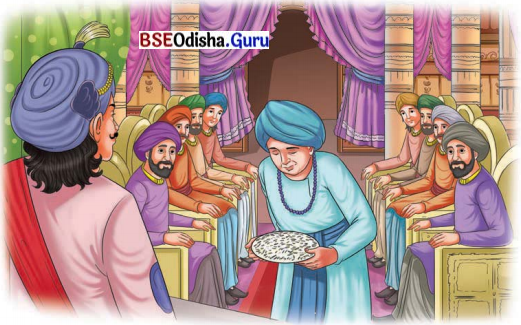
Finally, the king called upon Rama. The chatter in the court died down as all eyes turned to him. Rama approached the throne, carrying a plateful of paddy seeds. Bowing low, he began, “Your Majesty, I bring you a revolutionary type of paddy seeds. If these are sown, the yield will be three times greater than the current results.”
ଓଡ଼ିଆ ଅନୁବାଦ:
ରାଜ୍ୟରେ ଧାନ ଚାଷରେ ଉନ୍ନତି ଆଣିବା ଉପରେ କେନ୍ଦ୍ରୀଭୂତ ଥିଲା । ଜଣେ ଜଣେ ମନ୍ତ୍ରୀ ଠିଆହୋଇ ନିଜ ନିଜର ଚିନ୍ତାଧାରା ଉପସ୍ଥାପନ କଲେ । କେତେକ ଜଳସେଚନ ବ୍ୟବସ୍ଥାକୁ ବଢ଼ାଇବା ପାଇଁ ପ୍ରସ୍ତାବ ଦେଲେ । ଅନ୍ୟ କେତେଜଣ ଭଲ ସାର ପ୍ରୟୋଗ ପାଇଁ ଯୁକ୍ତି ଉପସ୍ଥାପନ କଲେ । ଏହି ପ୍ରସ୍ତାବଗୁଡ଼ିକ ଭିତରେ ତେନାଲି ରାମା ଏକ କୋଣରେ ଚୁପ୍ଚାପ୍ ଠିଆ ହୋଇ ରହିଥିଲେ । ସମସ୍ତଙ୍କୁ ହାସ୍ୟଭରା ମୁହଁରେ ନିରୀକ୍ଷଣ କରୁଥିଲେ । ଶେଷରେ ରାଜା ରାମାଙ୍କୁ ଡାକିଲେ । ଦରବାରର ଚର୍ଚ୍ଚା ପୂରା ଶାନ୍ତ ହୋଇଗଲା ଏବଂ ସମସ୍ତଙ୍କର ଆଖ୍ ରାମାଙ୍କ ଉପରେ ପଡ଼ିଲା । ରାମା ହାତରେ ଗୋଟିଏ ପାତ୍ରରେ ଧାନବିହନ ଧରି ସିଂହାସନ ପାଖକୁ ଗଲେ । ମୁଣ୍ଡ- ନୁଆଁଇ ପ୍ରଣାମ କରି ସେ କହିଲେ, ‘ମହାରାଜ ! ମୁଁ ଆପଣଙ୍କ ପାଇଁ ଏକ କ୍ରାନ୍ତିକାରୀ ଧାନବିହନ ଆଣିଛି । ଯଦି ଏହାକୁ ବିଲରେ ବୁଣାଯାଏ, ବର୍ତ୍ତମାନ ତୁଳନାରେ ତିନିଗୁଣ ଅଧୂକ ଧାନ ଉତ୍ପାଦନ ହେବ ।’’
A murmur swept through the room. One of the courtiers, known for his sarcasm, whispered just loud enough to be heard, “I wonder if these are magic seeds! Next, he’ll claim they grow without water.” Another muttered, “Perhaps he found them on the moon!” Snickers rippled through the court. The king frowned, unimpressed. “That sounds absurd,” he muttered. “Such cultivation would need special soil, manure, and pest and insect repellents. If, by chance, something were to go wrong, our farmers would suffer.” Rama smiled, unfazed. “That may be true, Your Majesty, but the real issue lies not with the seeds themselves but with the person who sows them.”
ଓଡ଼ିଆ ଅନୁବାଦ:
ଘର ଭିତରେ ଗୁଞ୍ଜରଣ ଶୁଣାଗଲା । ଜଣେ ସଭାସଦ୍ ଯିଏ କି ତାଙ୍କର ବ୍ୟଙ୍ଗ ପାଇଁ ପରିଚିତ ଥିଲେ ଧୀର ସ୍ଵରରେ ଏପରି କହିଲେ ଯାହା ଶୁଣାଯାଉଥିଲା, ‘ମୁଁ ବିସ୍ମିତ ଯଦି ସେଗୁଡ଼ିକ କୁହୁକ ମଞ୍ଜି ହୋଇଥାଆନ୍ତା । ଏହା ପରେ ସେ ଦାବି କରନ୍ତା ସେଗୁଡ଼ିକ ବିନା ଜଳରେ ଚାଷ ହୋଇ ପାରନ୍ତା ।’ ଆଉ ଜଣେ ଅସ୍ପଷ୍ଟ ସ୍ୱରର କହିଲେ, “ ‘ବୋଧହୁଏ ସେ ଚନ୍ଦ୍ରପୃଷ୍ଠରେ ସେଗୁଡ଼ିକୁ ପାଇ ଥାଆନ୍ତା ।’’ ରାଜଦରବାରରେ ଚାପାହସ ଶୁଣାଗଲା । ରାଜା ବିରକ୍ତ ହେଲେ, ଉଦାସୀନ ହୋଇ କହିଲେ, ‘‘ତାହା ଅବାସ୍ତବ ଜଣାପଡୁଛି’’, ସେ ଧୀରେ ଧୀରେ କହିଲେ । “ ଏପରି କୃଷିକାର୍ଯ୍ୟ ସ୍ଵତନ୍ତ୍ର ମାଟି, ରାସାୟନିକ ସାର, କ୍ଷତିକାରକ ପୋକ ଓ କୀଟପତଙ୍ଗ ବିନାଶକାରୀ ଔଷଧ ଦରକାର କରିବ । ଯଦି, ଦୈବାତ୍ କିଛି ଭୁଲ ହୋଇଯାଏ, ଆମର କୃଷକମାନେ ଦୁର୍ଦ୍ଦଶା ଭୋଗ କରିବେ ।’
The king’s expression shifted as realisation dawned. His mind raced back to the quarrel with the queen. He remembered scolding her harshly for yawning while he recited his poem. He realised how unfair he had been. “If I had known that yawning was not a sign of disrespect, I wouldn’t have taken her gesture so personally,” he thought, regret filling
his heart.
ଓଡ଼ିଆ ଅନୁବାଦ:
ରାଜାଙ୍କର ଭାବଭଙ୍ଗୀ ବଦଳାଇ ଓ ସେ ଅନୁତାପ କରିବାକୁ ଲାଗିଲେ, ତାଙ୍କର ମାନସ ରାଣୀଙ୍କର ସହିତ କଳି ଆଡ଼କୁ ପଶ୍ଚାତ ଗମନ କଲା । ସେ କବିତା ଆବୃତ୍ତି କରୁଥିବା ସମୟରେ ରାଣୀଙ୍କୁ ହାଇ ମାରିବା ପାଇଁ ଗାଳି ଦେଇଥିବା କଥା ମନେ ପକାଇଲେ । ସେ ଅନୁଭବ କଲେ ଯେ ସେ ନିଜେ ଅନ୍ୟାୟ କରିଛନ୍ତି । ‘ମୁଁ ଜାଣିଥାଆନ୍ତି ହାଇ ମାରିବା ଅସମ୍ମାନର ଚିହ୍ନ ନୁହେଁ, ତାଙ୍କର ଅଙ୍ଗଭଙ୍ଗୀକୁ ଏଭଳି ଭାବି ନଥାନ୍ତି ।’’ ଏହିପରି ସେ ଭାବିଲେ ଏବଂ ତାଙ୍କର ହୃଦୟରେ ଦୁଃଖ ଭରିଗଲା ।
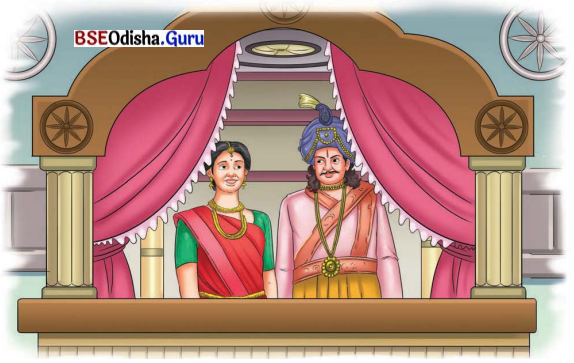
That evening, the king approached the queen with a softened expression. ‘“Thirumalambal,” he began, his voice gentle, “T have been foolish. I see now that I overreacted. I let my pride blind me. I’m so sorry.” The queen, who had longed for this moment, smiled and replied, “If you like, we can leave this quarrel behind us.
I would very much like to listen to your poem.” Rama, who had orchestrated this settlement, felt victorious. The king and the queen later presented him with valuable gifts for his service. The royal couple’s bond was restored, and the palace brimmed once again with joy and laughter.
ଓଡ଼ିଆ ଅନୁବାଦ:
ସେହିଦିନ ସଂଧ୍ୟାରେ ରାଜା ରାଣୀ Thirumalambal ଙ୍କ ପାଖକୁ ଗଲେ ଓ ନମ୍ର ସ୍ୱରରେ କହିଲେ, ‘ମୁଁ ବୋକା ଥୁଲି । ଏବେ ମୁଁ ଦେଖୁଛି ମୁଁ ଅଧିକ ପ୍ରତିକ୍ରିୟାଶୀଳ ହୋଇଥୁଲି । ମୋର ଗର୍ବ ମୋତେ ଅନ୍ଧ କରି ଦେଇଥୁଲା, ମୁଁ ଖୁବ୍ ଦୁଃଖୁତ । ରାଣୀ ଯିଏ ସେହି ମୁହୂର୍ତ୍ତକୁ ଅପେକ୍ଷା କରିଥିଲେ, ସ୍ମିତ ହସ ହସି ଉତ୍ତର ଦେଲେ, ‘ଆପଣ ଯଦି ଚାହୁଁଛନ୍ତି, ସେହି କଳହକୁ ଛାଡ଼ିଦେଇ ମୁଁ ଆପଣଙ୍କ କବିତାକୁ ଶୁଣିବାକୁ ଇଚ୍ଛା କରୁଛି ।’’ ରାମା ଯିଏ ଏହି ବିବାଦର ସମାଧାନ କରିଥିଲେ, ବିଜୟୀ ହେବାର ଆତ୍ମପ୍ରସାଦ ଅନୁଭବ କଲେ । ରାଜା ଓ ରାଣୀ ତାଙ୍କୁ ତାଙ୍କର ସେବାପାଇଁ ବହୁ ମୂଲ୍ୟବାନ ଉପହାର ପ୍ରଦାନ କଲେ । ରାଜକୀୟ ଦମ୍ପତିଙ୍କ ବନ୍ଧନ ପୁନଃସ୍ଥାପିତ ହେଲା । ରାଜପ୍ରାସାଦ ଆନନ୍ଦ ଓ ହସରେ ପୂରିଉଠିଲା ।
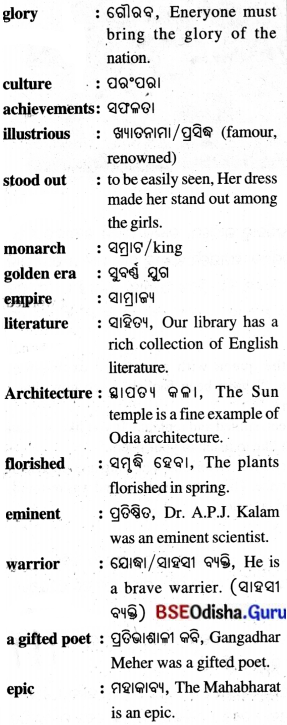
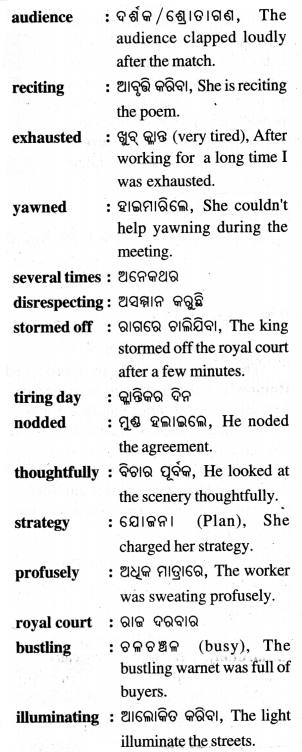
Notes and Glossary:
The Wit that Won Hearts Class 8 MCQ
Question 1.
What is referred to as the Golden Era of the Vijayanagar Empire ?
(a) flourishment of art, literature and architecture
(b) Krishnadeva Raya’s reign
(c) presence of eight celebrated poets
(d) Tenali Rama’s special place in the royal court.
Answer:
(b) Krishnadeva Raya’s reign
Question 2.
What is Amuktamalyada ?
(a) an epic
(b) a Sanskrit drama
(c) a poem
(d) a Telugu novel
Answer:
(a) an epic
Question 3.
Who was both a poet and a witty advisor?
(a) Allasani Peddana
(b) Tenali Ramakrishna
(c) krishnadeva Raya
(d) Thirumalambal
Answer:
(b) Tenali Ramakrishna
Question 4.
Why was Thirumalambal distraught and upset?
(a) because the king did not talk to her
(b) because the king stopped visiting her
(c) both of these
(d) neither of these
Answer:
(c) both of these
Question 5.
Why did the ministers make excuses ?
(a) because the king’s poem was filled with vague expressions
(b) because the king’s poem made no sense
(c) because the king could not recite the poem properly
(d) because they avoided the king
Answer:
(d) because they avoided the king
Question 6.
What did Rama need for a well-planned approach ?
(a) time
(b) gift
(c) money
(d) all of these
Answer:
(a) time
Question 7.
What was the court discussion centred on ?
(a) health and hygiene
(b) irrigation network
(c) law and order
(d) paddy cultivation
Answer:
(d) paddy cultivation
Question 8.
“I wonder if these are magic seeds !” – who said this ?
(a) the king
(b) Tenali Rama
(c) Allasani Peddana
(d) a courtier known for his mockery
Answer:
(d) a courtier known for his mockery
Question 9.
What did Tenali Rama emphasize on ?
(a) the revolutionary type of seeds
(b) three times greater yield
(c) the person who sows the seeds
(d) necessity of special soil, manure etc.
Answer:
(c) the person who sows the seeds
Question 10.
When did the king remember about his harsh attitude to the queen for yawning ?
(a) after Rama had said that yawning is as natural as breathing
(b) after he had realised that the queen’s yawning was not intentional, but natural
(c) both of these
(d) neither of these
Answer:
(c) both of these
The Wit that Won Hearts Class 8 Fill in the Blanks
Question 1.
King Krishnadeva Raya was one of the many ………… rulers of the Vijayanagar Empire.
Answer: illustrious
Question 2.
The epic Amuktamalyada was written by ………….
Answer: Krishnadeva Raya
Question 3.
Allasani Peddana and Tenali Ramakrishna enriched the literary tradition with their …………
Answer: masterpieces
Question 4.
King Krishnadeva Raya had a quarrel with his queen at a moment of ………….
Answer: disharmony
Question 5.
The king’s absence ………… over the palace.
Answer: cast a shadow
Question 6.
After thinking that the queen was disrespecting his poem, the king ………….
Answer: stormed off
Question 7.
Tenali Rama needed time to find the ………… to resolve the royal couple’s quarrel.
Answer: right strategy
Question 8.
The pillars of the court were ………… carved.
Answer: intricately
Question 9.
The court discussion was centred on ………….
Answer: improving paddy cultivation
Question 10.
After the royal couple’s bond had been restored, the palace brimmed once again with ………….
Answer: joy and laughter
The Wit that Won Hearts Class 8 Very Short Question Answer
Question 1.
Why was Tenali Rama so famous in the king’s court ?
Answer:
Tenali Rama was so famous in the kings’s court for his wit and cleverness.
Question 2.
Why did the king get upset with the queen ?
Answer:
The king got upset with the queen because she yawned while the king was reciting the poem to her.
Question 3.
What does the inclusion of the Ashtadiggajas in the story illustrates ?
Answer:
The inclusion of the Ashtadiggajas in the story illustrates the cultural and literacy ; richness of Krishnadeva Raya’s court.
Question 4.
Why was Tenali Rama considered a valuable figure in the king’s court ?
Answer:
Tenali Rama was considered a valuable figure in the king’s court for his wit and ability to solve difficult problems.
Question 5.
What did Tenali Rama brings to the court to set his plan in motion ?
Answer:
Tenali Rama brought a platelul of paddy seeds to the court to set his plan in motion.
The Wit that Won Hearts Class 8 Short Question Answer
Question 1.
What happened in the palace when the king stopped speaking to the queen ?
Answer:
When the king stopped speaking to the queen, the atmosphere in the palace changed and became dull. The king’s absence made the palace gloomy and lifeless.
Question 2.
What made the courtiers change their attitude from mocking Rama to laughing with him ?
Answer:
Tenali Rama used the paddy seeds to make a point in the court. He cleverly used seeds to talk about care and habits. At first the courtiers thought that Rama’s approach was strange, but the funny response surprised the courtiers. His cleaverness made the courtiers change their attitude and made everyone laugh.
Question 3.
How did the queen react to the King’s silence and absence ?
Answer:
The queen got hurt and tired many times to solve the problem but nothing happened. Finally she asked Tenali Rama to help her.
Question 4.
Why did the ministers in the King’s court avoid listening to the poem ?
Answer:
The poem written by the king was hard to understand and fitted with unclear poetic devices. The ministers didn’t want to upset the king, so they avoided listening to it.