
For effective revision, students can use BSE Odisha Class 8 English Solutions Chapter 15 Bibha Chowdhuri: The Beam of Light that Lit the Path for Women in Indian Science Question Answer to practice textbook exercises.
Class 8 English Bibha Chowdhuri: The Beam of Light that Lit the Path for Women in Indian Science Question Answer
Class 8 English Chapter 15 Question Answer Odia Medium
I. Let us do these activities before we read
(ଚାଲ ପଢ଼ିବା ପୂର୍ବରୁ ଏହି କାର୍ଯ୍ୟଗୁଡ଼ିକୁ କରିବା ।
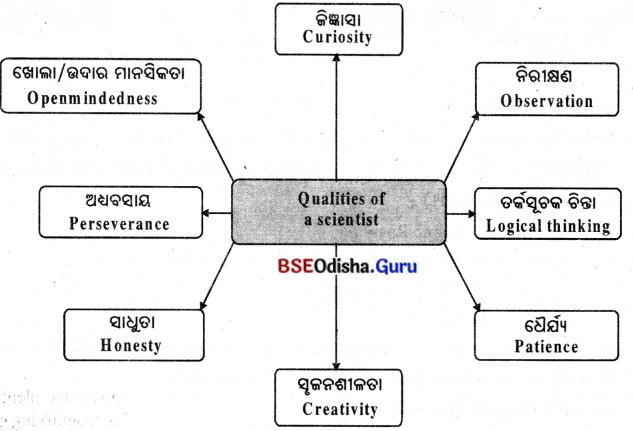
Work in pairs. What qualities do you associate with a scientist ?
ଦୁଇଜଣିଆ ହୋଇ କାମ କର । ତୁମେ ଜଣେ ବୈଜ୍ଞାନିକଙ୍କ ସହ କେଉଁ ଗୁଣାବଳୀଗୁଡ଼ିକୁ ସମ୍ପର୍କିତ କରିପାରିବ ? ତୁମ ଉତ୍ତରଗୁଡ଼ିକୁ ଶ୍ରେଣୀ ସାଥୀ ଓ ଶିକ୍ଷକଙ୍କ ସହ ବିନିମୟ କର । ନିମ୍ନ ପ୍ରଦତ୍ତ ଶବ୍ଦ ଜାଲକକୁ ପୂରଣ କର ।
Share your answers with your classmates and teacher. Complete the word web given below.
Answer:

II. Some pictures of women scientists are given below. What do you know about their work? Share your answers with your classmates and teacher.
(ନାରୀ ବୈଜ୍ଞାନିକମାନଙ୍କର ଛବି ଦିଆଯାଇଛି ? ସେମାନଙ୍କର ବୈଜ୍ଞାନିକ କୃତିତ୍ୱ ବିଷୟରେ ତୁମେ କ’ଣ ଜାଣିଛ ? ନିଜର ଉତ୍ତରଗୁଡ଼ିକୁ ସହପାଠୀ ଓ ଶିକ୍ଷକଙ୍କ ସହିତ ବିନିମୟ କର ।)
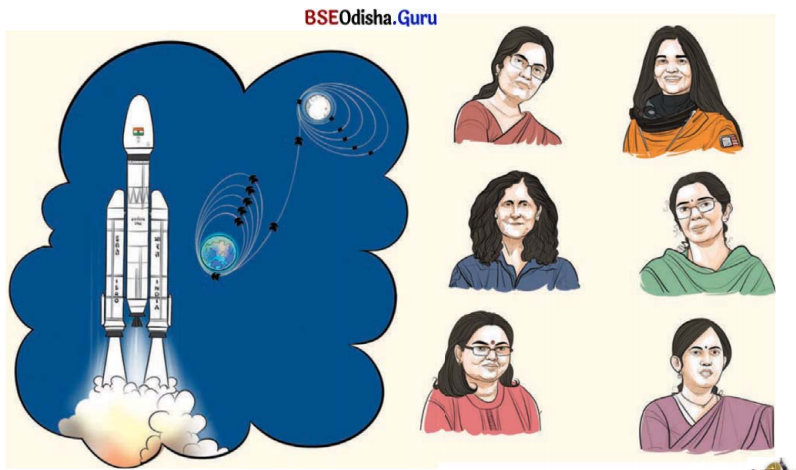
Answer:
1. Bibha Chowdhuri :
Bibha Chowdhuri was one of the first Indian women scientist to make significant contributions to particle physics and cosmic ray research.
Key works (ମୁଖ୍ୟ କାର୍ଯ୍ୟ) :
- Research on Cosmic Rays
- Work at Tata Institute of Fundamental Research
- Discovery (ଆବିଷ୍କାର) of New particles (କଣିକା)
2. Dr. Arundhati Pantaware:
Dr. Arundhati Pantaware is a famous Indian scientist who contributed (ଦେଇଥିଲେ) to scientific research (ଗବେଷଣା) and education.
Her work and contributions :
- Associated with scientific research and academic activities.
- Her work in the role of Women in Science.
- Her inspiration to girls, especially to persue careers in science and research.
3. Asima Chatterjee :
Asima Chatterjee as a noted (ପ୍ରସିଦ୍ଧ) chemist (ରସାୟନବିତ୍) specialized (ବିଶେଷ ଦକ୍ଷତା ) in organic chemistry and medical chemistry.
Major Scientific Contributions (ପ୍ରମୁଖ ବୈଜ୍ଞାନିକ ଅବଦାନ) :
- Research on plant alkaloids (ଉଦ୍ଭଦରେ ଥିବା ଏକ ପ୍ରକାର ଜୈବ ରାସାୟନିକ ଯୌଗିକ)
- Anti-malaria and anti-epileptic drugs
- Vinca alkaloids (ଭିନ୍ଙ୍କା ବା ନୟନତାରା ଗଛରୁ ଉପଲବ୍ଧ ରାସାୟନିକ ଯୌଗିକ)
4. Kalpana Chawla:
Kalpana Chawla a famous Geospace engineer and astronaut.
Her work as a scientist :
- Aerospace Engineer
- Nasa Astronaut
- Scientific Experiment (ଗବେଷଣା)
5. P. Sudharani :
- P. Sudharani, an eminent (famous) Indian woman sceintists, has contributed to science through research, teaching and promoting scientific awareness.
Key Points:
- Commitment to research (ଗବେଷଣା ପ୍ରତି ପ୍ରତିବଦ୍ଧତା)
- Role Model for students
- Promotion (Growth) of scientific thinking
- Contribution to education
6. Kamla Sohanie:
Kamla Sohanie was one of India’s pioneering (leading) women scientist and in outstanding (famous) biochemist.
Her contributions:
- Research on nutrition (ପୁଷ୍ଟିସାର ଉପରେ ଗବେଷଣା)
- Work on Neera
Scientific Achievement (ବୈଜ୍ଞାନିକ କୃତିତ୍ଵ):
First Indian scientist to have earned a Ph D in a scientific discipline (course)
Let us discuss (ଆସ ଆଲୋଚନା କରିବା)
1. Arrange the following events from Bibha Chowdhury’s life in the correct order of occurrence. Share your answers with your classmates and teacher.
( ଚୌଧୁରୀଙ୍କ ଜୀବନୀରେ ଘଟିଥିବା ଘଟଣାଗୁଡ଼ିକୁ ଘଟଣାକ୍ରମ ଅନୁସାରେ ସଜାଅ । ତୁମର ଉତ୍ତରଗୁଡ଼ିକ ସହପାଠୀ ଓ ଶିକ୍ଷକଙ୍କ ସହିତ ବିନିମୟ କର ।)
1. The International Astronomical Union (honoured her legacy by renaming a star in the constellation Leo-HD 86081- -as ‘Bibha’.
2. She became the first woman faculty member at the Tata Institute of Fundamental Research.
3. Bibha Chowdhuri was born in pre-independent India.
4. The Government of India declared a chair professorship in Bibha’s name.
5. She joined the University of Manchester under the guidance of the celebrated Nobel Laureate, Patrick M.S. Blackett.
6. She was nominated for a Nobel Prize by Erwin Schrodinger.
Answer:
3. Bibha Chowdhury was born in pre-independent India.
5. She joined the University of Manchester under the guidance of of the celebrated (ବିଶିଷ୍ଟ/ପ୍ରସିଦ୍ଧି) Nobel Laureate (ନୋବେଲ୍ ପୁରସ୍କାର ବିଜେତା), Patrick M.S. Blackett.
2. She was nominated (ml) for a Nobel Prize by Erwin Schrodinger. She became the first woman faculty member at the Tata Institute of Fundamental Research (TIFR).
4. The Government of India declared a chair professorship in Bibha’s name.
1. The International Astronomical Union (IAU) honoured her legacy by remaining (ପୁନଃନାମିତ କରି) a star in the constellation (ତାରକାପୁଞ୍ଜରେ) Leo-HD 86081 – as ‘Bibha’.
Let us think and reflect (ଆସ ଚିନ୍ତା କରିବା ଓ ବିଚାର କରିବା) :
Read the given extracts and answer the questions that follow.
1. In 1945, Bibha’s academic academic journey took her to the University of Manchester. Under the guidance of the celebrated Nobel Laureate, Patrick M.S. Blackett, she delved deeper into the field of cosmic rays. Her Ph.D. thesis on cosmic rays earned local recognition, with newspapers introducing her as ‘India’s New Woman Scientist-She has an eye for cosmic Ray’s.
(i) Why is the mention of Patrick M.S. Blackett, a Nobel Laureate, significant in this extract.
(ଏହି ଉଦ୍ଧୃତାଂଶରେ ଜଣେ ନୋବେଲ ବିଜେତା। Patrick M.S. Blackett ଙ୍କ ଉଲ୍ଲେଖ କାହିଁକି ଗୁରୁତ୍ଵପୂର୍ଣ୍ଣ ?)
Answer:
In this extract the mention of Patrick M.S. Blackett, a Nobel Laurette, is significant because he guided Bibha Chowdhuri and helped her delve deep into the field of cosmic rays.
(ii) What can be inferred about the public perception of women scientists in the 1940s from the given to her by the press India’s New Woman Scientist?
(୧୯୪୦ ଦଶକରେ ଗଣମାଧ୍ୟମ ଦ୍ଵାରା ତାଙ୍କୁ ଦିଆଯାଇଥିବା ‘ଭାରତର ନୂତନ ମହିଳା ବୈଜ୍ଞାନିକ’ ଉପାଧ୍ବରୁ ଜନସାଧାରଣଙ୍କର ମହିଳା ବୈଜ୍ଞାନିକମାନଙ୍କ ପ୍ରତି ମନୋଭାବରୁ କ’ଣ ଅନୁମାନ କରାଯାଇପାରେ ?)
A. Women scientists were widely accepted and celebrated at that time.
B. The world was still doubtful about the capabilities of women scientists.
C. Women scientists were as common and renowned as men in the 1940s.
D. Women were not allowed to study sciences or pursue scientific careers.
Answer:
D. Women scientists were widely accepted and celebrated at that time. The world was still doubtful about the capabilities of women scientists. Women scientists were as common and renowned as men in the 1940s. Women were not allowed to study sciences or pursue scientific careers. Women were not allowed to study sciences or pursue scientific careers.
(iii) In the phrase ‘celebrated Nobel Laureate’ the word ‘celebrated’ refers to to all of the following EXCEPT someone who is :
(ବାକ୍ୟାଶ ‘celebrated Nobel Laureate’ ରେ ‘celebrated? ନିମ୍ନଲିଖତ ସବୁଗୁଡ଼ିକୁ ସୂଚିତ କରୁଛି ଗୋଟିଏ ବ୍ୟତୀତ ଜଣେ ବ୍ୟକ୍ତି ଯିଏକି)
A. famous and highly respected
B. frequently seen in public
C. renowned for their achievements
D. well-regarded in their field
Answer:
B. frequently seen in public (ଜନସାଧାରଣରେ ଅନେକଥର ଦୃଶ୍ୟମାନ ହେଉଥିବା)
(iv) Complete the following sentence suitably.
(ନିମ୍ନଲିଖତ ବାକ୍ୟଟିକୁ ସଠିକ୍ ଭାବେ ପୂରଣ କର ।)
The phrase “She has an eye for Cosmic Rays” suggests that
Answer:
She has a keen interest and special ability in studying Cosmic Rays.
2. The journey from Bibha Chowdhuri’s era to today’s women scientists has been long and arduous, but it is also inspiring. The struggles Chowdhuri faced are a stark reminder of how far we’ve come and how much further we have to go. But with every cosmic achievement be it landing on the moon or reaching Mars-these women prove that the journey is well worth it. Bibha Chowdhuri’s legacy lives on. Her story continues to inspire young women to pursue their passions, break barriers, and leave their mark on the world. As the stars of Indian science shine brighter, Bibha Chowdhuri, the beacon-beam of light,’ will always guide the way.
(i) What can be inferred about the challenges faced by women scientists today, as compared to Bibha Chowdhuri’s.
(ବିଭା ଚୌଧୁରୀଙ୍କ ସମୟ ତୁଳନାରେ ଆଜିର ମହିଳା ବୈଜ୍ଞାନିକମାନେ ସମ୍ମୁଖୀନ ହେଉଥିବା ଆହ୍ବାନଗୁଡ଼ିକ ବିଷୟରେ କ’ଣ ଅନୁମାନ କରାଯାଇପାରେ ?)
A. Women scientists no longer face any barriers.
B. The challenges remain, but progress has been made.
C. The struggles have become more difficult over time.
D. The struggles are the same as they were for Chowdhuri.
Answer:
B. The challenges remain, but progress has been made.
(ii) The phrase “Bibha Chowdhuri’s legacy lives on suggests that ………………
Answer:
The phrase “Bibha Chowdhuri’s legacy lives on suggest that her inspiration and contributions (ତାଙ୍କର ପ୍ରେରଣା ଓ ଅବଦାନ) continue to influence (ପ୍ରଭାବିତ କରିବା ଚାଲୁରଖୁଛି) and guide (ପଥ ପ୍ରଦର୍ଶନ କରୁଛି) people today.
(iii) Why is Bibha Chowdhury referred to as a ‘beacon’ and a ‘beam of light” in the extract ?
(ଉଦ୍ଧୃତାଂଶରେ ବିଭା ଚୌଧୁରୀଙ୍କ କାହିଁକି ଏକ ‘ଆଲୋକବର୍ତ୍ତିକା’ ଓ ‘ଆଲୋକର ଧାରା’ କୁହାଯାଏ ?)
Answer:
It is so because as a shining star shows light to passers-by (ବାଟୋଇମାନଙ୍କୁ) in darkness (ଅନ୍ଧାରରେ), Bibha guides and inspires young women to go in for pursue science by overcoming barriers (ବାଧାବିଘ୍ନଗୁଡ଼ିକୁ ଅତିକ୍ରମ କରି) as had been happened (ଯେପରି ଘଟିଥିଲା) in her life.
(iv) State whether the following sentence is a fact or an opinon.
(ନିମ୍ନଲିଖତ ବାକ୍ୟଟି ଏକ ତଥ୍ୟ କିମ୍ବା ଏକ ମତାମତ ଉଲ୍ଲେଖ କର ।)
Bibha Chowdhuri was the beacon, ‘the beam of light’ whose story continues to inspire young women.
Answer:
he given sentence is an opinion.
II. Answer the following questions:
Question 1.
Why is Bibha Choudhuri considered a pioneer in the field of science?
(ବିଜ୍ଞାନ କ୍ଷେତ୍ରରେ ବିଭା ଚୌଧୁରୀଙ୍କୁ କାହିଁକି ଜଣେ ପଥପ୍ରଦର୍ଶକ କୁହାଯାଏ ?
Answer:
Bibha Chowdhuri is considered (ବିବେଚନା କରାଯାଏ) a pioneer in the field of science because she was among the first Indian women physicists (ଭାରତର ନାରୀ ପଦାର୍ଥବିଜ୍ଞାନୀ ମାନଙ୍କ ମଧ୍ୟରେ ପ୍ରଥମ ଥିଲେ) to work in high energy particle physics (ଉଚ୍ଚ ଶକ୍ତି କଣିକା ପଦାର୍ଥ ବିଜ୍ଞାନ) breaking gender barriers (ଲିଙ୍ଗ ପ୍ରତିବନ୍ଧକଗୁଡ଼ିକୁ ଭାଙ୍ଗି / ପ୍ରତିରୋଧ କରି ).
Question 2.
What does Bibha Chowdhuri’s nomination by Erwin Schrodinger tell us about her abilities ?
(ଏଇଉଇନ୍ ସ୍ଟ୍ରୋଡିଙ୍ଗରଙ୍କଦ୍ଵାରା ବିଭା ଚୌଧୁରୀଙ୍କ ମନୋନୟନ ତାଙ୍କର ଦକ୍ଷତା / ସାମର୍ଥ୍ୟ ବିଷୟରେ ଆମ୍ଭମାନଙ୍କୁ କ’ଣ କହୁଛି ?)
Answer:
Bibha Chowdhuri being nominated (ମନୋନୟନ ହେବାର) by Erwin Schrodinger tells us that Bibha’s research (ଗବେଷଣା) was valued (ଗୁରୁତ୍ଵ ବହନ କରିଥିଲା) at the highest global level (ବିଶ୍ବର ଶୀର୍ଷତମ ସ୍ତରରେ) and her work in cosmic rays and particle physics was considered innovative and important (ଅଭିନବ ଓ ଗୁରୁତ୍ଵପୂର୍ଣ୍ଣ ବୋଲି ବିବେଚନା କରାଯାଇଥିଲା). Her nomination reflects (ପ୍ରତିବିମ୍ବିତ କରୁଛି) her strong analytical skills (ଦୃଢ଼ ବିଶ୍ଳେଷଣାତ୍ମକ କୌଶଳ), perseverance (ଅଧ୍ଯବସାୟ) and deep understanding of physics (ପଦାର୍ଥ ବିଜ୍ଞାନରେ ତାଙ୍କର ଗଭୀର ବୁଝିବା ଶକ୍ତି)
Question 3.
Bibha Chowdhuri never worked for awards or recognition. Support this statement with evidence from the text.
(ବିଭା ଚୌଧୁରୀ କେବେ ବି ପୁରସ୍କାର ବା ସ୍ୱୀକୃତି ପାଇଁ କାର୍ଯ୍ୟ କରିନଥିଲେ । ପାଠ୍ୟ ବିଷୟରୁ ପ୍ରମାଣ ସହ ଏହି ଉକ୍ତିର ସମର୍ଥନ କର ।)
Answer:
The statement that Bibha Chowdhuri never worked for awards or recognition is supported by the facts that her focus (ଏକାଗ୍ରତା) was on research, not fame (ପ୍ରସିଦ୍ଧ ନୁହେଁ), (ବରଂ ଗବେଷଣା ଉପରେ). There was lack of publicity (ବିଜ୍ଞାପନର ଅଭାବ) despite her major contribution (ତାଙ୍କର ପ୍ରମୁଖ ଅବଦାନ ସତ୍ତ୍ବେ).
Question 4.
How does the renaming of a star as ‘Bibha’ serve as both a literal and symbolic recognition of her contributions to sciences ?
(ଗୋଟିଏ ନକ୍ଷତ୍ରକୁ ‘ବିଭା’ ନାମରେ ପୁନଃ ନାମିତ କରିବା କିପରି ବିଜ୍ଞାନ ପ୍ରତି ବିଭାଙ୍କର ଅବଦାନର ଉଭୟ ଆକ୍ଷରିକ ଓ ପ୍ରତୀକାତ୍ମକ ସ୍ୱୀକୃତି ପ୍ରଦର୍ଶିତ କରୁଛି ?)
Answer:
The renaming of a star as (ରୂପେ) ‘Bibha’ works on two levels (ଦୁଇଟି ସ୍ତରରେ କାର୍ଯ୍ୟ କରୁଛି) – literal recognition and symbolic recognition. In literal recognition her pioneering (leading) work in cosmic rays and particle physics and true to her name, it ensures (ଏହା ନିଶ୍ଚିତ କରୁଛି ଯେ ) her contributions (ଅବଦାନଗୁଡ଼ିକ) are recorded in institutional memory (ଆନୁଷ୍ଠାନିକ ସ୍ଥିତିରେ ଲିପିବଦ୍ଧ ହୋଇ ରହିଛି ।) helping students, researchers (ଗବେଷକମାନଙ୍କୁ) and the public (peoples, pursue (follow – ଅନୁସରଣ କରିବା) her legacy. Secondly, in matters of symbolic recognition (ସଙ୍କେତ/ପ୍ରତୀକାତ୍ମକ ସ୍ୱୀକୃତି କ୍ଷେତ୍ରରେ) the renaming represents becomes a symbol of inspiration (ପ୍ରେରଣାର ଏକ ପ୍ରତୀକ) encouraging (ଉତ୍ସାହିତ କରି) young girls, in particular (ବିଶେଷ କରି) to make a mark for themselves (ନିଜକୁ ପ୍ରତିଷ୍ଠିତ କରିବା) in science.
Question 5.
How do the roles of women in ISRO reflect broader changes in attitudes towards women in “STEM” in India?
(ଆଧୁନିକ ISRO ରେ ମହିଳାମାନଙ୍କର ଭୂମିକା କିପରି ଭାରତରେ ବିଜ୍ଞାନ, ବିଷୟିକ ବିଦ୍ୟା, ଯନ୍ତ୍ରବିଦ୍ୟା ଓ ଗଣିତ ବିଦ୍ୟା କ୍ଷେତ୍ରରେ ବ୍ୟାପକ ସାମାଜିକ ପରିବର୍ତ୍ତନୀୟ ପ୍ରତିଫଳିତ କରୁଛି ?)
Answer:
The roles of women in the ISRO today strongly reflect broader shifts (ପରିବର୍ତ୍ତନ) in India’s societal attitudes towards (ପ୍ରତି) women in STEM (Science, Technology, Engineering and Mathematics). Their (women’s) growing numbers, leadership (ନେତୃତ୍ଵ) and dominance (ପ୍ରାଧାନ୍ୟ) in high-profile mission (ଉଚ୍ଚ/ ମହତ | ଲକ୍ଷ୍ୟ / ଉଦ୍ଦେଶ୍ୟରେ) are a telling testimony (ପ୍ରତ୍ୟକ୍ଷ ପ୍ରମାଣ) So their gradual (କ୍ରମଶଃ) but steady (ଦୃଢ଼) participation (ଅଂଶଗ୍ରହଣ) in various branches of science.
Question 6.
What is the writer’s purpose of highlighting the contributions of Bibha Chowdhuri and other Modern women scientists ?
(ବିଭା ଚୌଧୁରୀ ଓ ଅନ୍ୟାନ୍ୟ ଆଧୁନିକ ମହିଳା ବୈଜ୍ଞାନିକମାନଙ୍କର ଅବଦାନଗୁଡ଼ିକ ଉପରେ ଲେଖକ ଗୁରୁତ୍ୱାରୋପ କରିବାର ଉଦ୍ଦେଶ୍ୟ କ’ଣ ?
Answer:
The writer’s purpose of highlighting the contributions of Bibha Chowdhuri and other modern women scientists is chiefly because of (ଯୋଗୁଁ )
- recognizing their achievements (ସେମାନଙ୍କର କୃତିତ୍ଵ/ସଫଳତାଗୁଡ଼ିକୁ ସ୍ବୀକୃତି ଦେବା)
- Inspiring readers (ପାଠକମାନଙ୍କୁ ପ୍ରେରଣା ଦେବା)
- Showing gender equality in science (ବିଜ୍ଞାନରେ ଲିଙ୍ଗ ସମାନତାକୁ ଦର୍ଶାଇବା)
- Correcting historical neglect as done to women scientists in the past
(ମହିଳା ବୈଜ୍ଞାନିକମାନଙ୍କ ପ୍ରତି କରାଯାଇଥିବା ଅବହେଳାକୁ ସଂଶୋଧନ କରିବା ।)
Question 7.
How might this text help shape people’s perception of the role of women in other traditionally male-dominated fields ?
(ଅନ୍ୟ ପାରମ୍ପରିକ ପୁରୁଷ ପ୍ରଧାନ କ୍ଷେତ୍ରଗୁଡ଼ିକରେ ଏହି ବିଷୟଟି କିପରି ନାରୀମାନଙ୍କର ଭୂମିକା ପ୍ରତି ଥିବା ଲୋକମାନଙ୍କର ଧାରଣାକୁ ପରିବର୍ତ୍ତିତ କରିପାରିବ ?)
Answer:
By showing women succeeding (ସଫଳ ହେଉଥିବା) in areas (କ୍ଷେତ୍ରରେ) traditionally dominated by men this text might help shape people’s perception (ଲୋକମାନଙ୍କର ଧାରଣ ଗଠନରେ) of the role of women as they are gradually breaking barriers (କ୍ରମଶଃ ପ୍ରତିବନ୍ଧକଗୁଡ଼ିକୁ ପ୍ରତିହତ କରୁଛନ୍ତି) in pursuit of (ଅନ୍ଵେଷଣରେ) careers having been inspired (ପ୍ରେରଣା ଲାଭ କରି) by Bibha Chowdhuri.
Let us learn (ଆସ ଶିଖୁବା)
I. Complete the crossword puzzle by filling in the antonyms from the clues given below in the table. You may refer to the text.
(ସାରଣୀ ତଳେ ପ୍ରଦତ୍ତ ସୂଚନା ଆଧାରରେ ବିପରୀତ ଶବ୍ଦଦ୍ୱାରା ଶବ୍ଦ ଧନ୍ଦାଟିକୁ ପୂରଣ କର । ତୁମେ ପାଠ୍ୟ ବିଷୟ ଅନୁସରଣ କରିପାର ।) (Question with Answer)
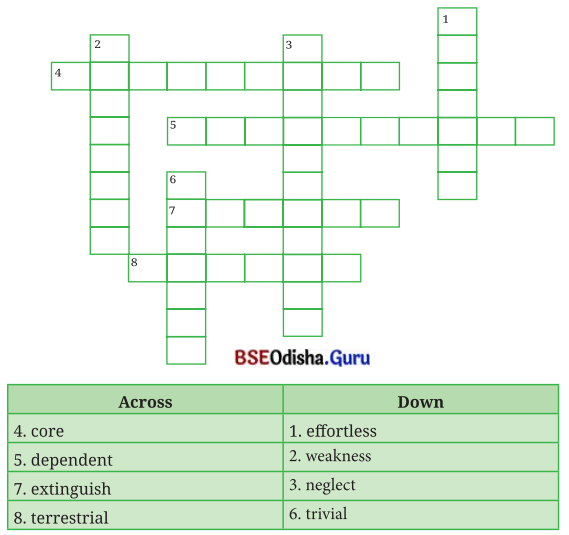
Answer:
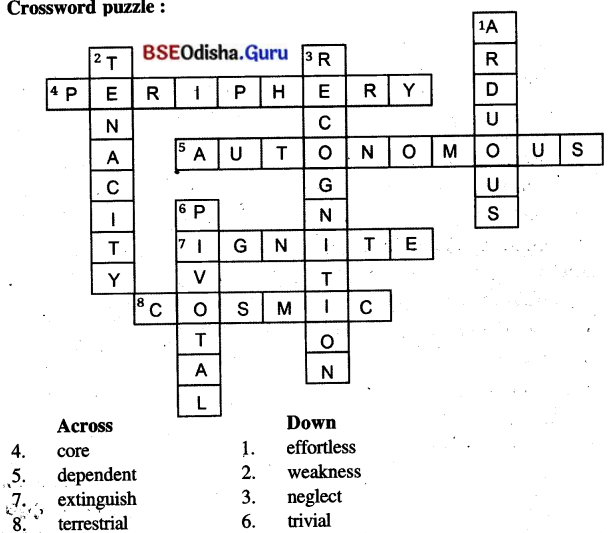
II. Substitute the underlined phrases in the sentences with the suitable words from the box given below :
(ନିମ୍ନ ପ୍ରଦତ୍ତ କୋଠରିରୁ ଉପଯୁକ୍ତ ଶବ୍ଦ ବାକ୍ୟଗୁଡ଼ିକର ରେଖାଙ୍କିତ ବାକ୍ୟାଶ ବଦଳରେ ସ୍ଥାନିତ କର ।)

1. They are considered to be the first people to start the online markets.
Answer:
pioneers (ପଥପ୍ରଦର୍ଶକ / ଅଗ୍ରଗଣ୍ୟ)
2. A scientist who studies matter, energy, light etc.
Answer:
physicist
3. Most of my friends are my classmates and are my age.
Answer:
Peers (ସମବର୍ଗ ଓ ବୟସ୍କ ବ୍ୟକ୍ତି ବିଶେଷ )
4. We first welcome of all the important people in folk song for the award ceremony. (ପୁରସ୍କାର ବିତରଣ ଉତ୍ସବ ପାଇଁ)
Answer:
luminaries (ପ୍ରସିଦ୍ଧ ବା ବିଶିଷ୍ଟ ବ୍ୟକ୍ତି ବିଶେଷ)
5. My brother finally succeeded in his business because of his continuous efforts and determination.
Answer:
Persistence (ଅନବରତ ପ୍ରଚେଷ୍ଟା ଓ ସଂକଳ୍ପ)
6. We should remove all the things that block our way. (ଆମ୍ଭମାନଙ୍କର ପଥ ବନ୍ଦ କରିଦିଏ ।) in achieving success (ସଫଳତା ହାସଲରେ)
Answer:
barriers (ବାଧା / ପ୍ରତିବନ୍ଧକ)
III. The words ‘professionship’, ‘mentorship’, and ‘leadership’ are used in the text. These words are made by adding the suffix ‘-ship’ to the words ‘professor’, ‘mentor’ and ‘leader’. Similarly, we can make words by adding -ment and -hood to certain words.
Now, make words by adding suitable suffixes -ship, -ment, and -hood to the words given below. One example has been done for you.
(ବର୍ତ୍ତମାନ ନିମ୍ନପ୍ରଦତ୍ତ ଶବ୍ଦଗୁଡ଼ିକରେ —ship, –ment ଓ –hood ପରପ୍ରତ୍ୟେୟ (suffix) ଯୋଗ କରି ଶବ୍ଦ ଗଠନ କର । ଗୋଟିଏ ତୁମ ପାଇଁ କରି ଦିଆଯାଇଛି ।) achieve + meant = achievement
(Question with Answer)
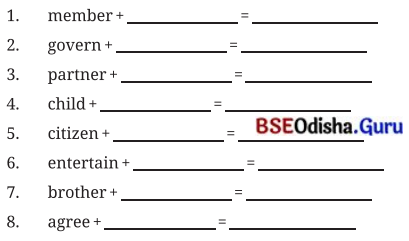
Answer:
1. member + ship = membership
2. govern + ment = government (ସରକାର)
3. partner + ship = partnership (ଅଂଶୀଦାରୀ ବ୍ୟବସାୟ)
4. child + hood = childhood (ଶୈଶବାବସ୍ଥା)
5. citizen + ship = citizenship (ନାଗରିକତା)
6. enertain+ ment = entertainment
7. brother + hood = brotherhood (ଭ୍ରାତୃତ୍ଵ)
8. agree+ment = agreement (ରାଜିନାମା)
IV. The abbreviations – ISRO and STEM – used in the text are called acronyms because they are read on pronounced as full words.
The grid given below has acronyms for the following. Circle the acronyms in the grid. (ISRO ଏବଂ STEM ଭଳି ସଂକ୍ଷିପ୍ତରୂପ ବିଶେଷକୁ acronym କୁହାଯାଏ କାରଣ ସେଗୁଡ଼ିକୁ ପୂର୍ଣ୍ଣ ଶବ୍ଦ ରୂପେ ଉଚ୍ଚାରଣ କରାଯାଏ । ତଳଲିଖତ ଶବ୍ଦ ବିଶେଷଗୁଡ଼ିକର acronym ନିମ୍ନସ୍ଥ grid ରେ ଦିଆଯାଇଛି । ସେଗୁଡ଼ିକ ଉପରେ ଗୋଲ ବୁଲାଅ ।)
(Question with Answer)
- National Aeronautics and Space Administration
- All India Institute of Medical Sciences.
- Ayurveda Yoga and Naturopathy, Unani, Siddha and Homeopathy.
- National Institute of Pharmaceutical Education and Research.
- World Health Organisation
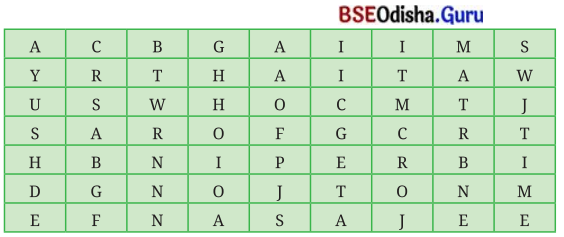
(Acronym for No. 3 is not found in the grid.)
Clipping (ଶବ୍ଦ ଛେଦନ ପ୍ରକ୍ରିୟା)
The short form of laboratory is lab. In making this short form, the front part of the word is retained and the end part is removed or clipped. Clipping is a method of making words from larger words in English. There are three clipping methods.
(Laboratory (ପରୀକ୍ଷାଗାର)ର short form ବା କ୍ଷୁଦ୍ରରୂପ ହେଉଛି ‘lab’ । ଏହି ସଂକ୍ଷିପ୍ତ ରୂପ ତିଆରିରେ ଶବ୍ଦର ସମ୍ମୁଖ ଅଂଶକୁ ପରିବର୍ତ୍ତନ ନକରି ଶେଷ ଅଂଶକୁ ଉଠାଇ ଦିଆଯାଇଛି ବା କାଟି ଦିଆଯାଇଛି । clipping (ଶବ୍ଦ ଛେଦନ) ହେଉଛି ଏକ ପ୍ରକ୍ରିୟା ବା ପଦ୍ଧତି ଯାହାଦ୍ଵାରା ବୃହତ୍ ଶବ୍ଦଗୁଡ଼ିକୁ କ୍ଷୁଦ୍ର ଶବ୍ଦ ବିଶେଷରେ ପରିଣତ କରାଯାଏ । ୩ ପ୍ରକାରର ଶବ୍ଦ ଛେଦନ ନିୟମ ରହିଛି ।)
- Back clipping: a word is made by removing the end part of a word and retaining the front part (exam-examination, ad-advertisement, gas-gasoline, memo— memorandum, gym-gymnasium, photo-photograph, etc.).
- Front clipping: a word is made by removing the front part of a word and retaining the end part (phone-telephone, net-internet, bike-motorbike, net-internet, etc.).
- Middle clipping: a word is made by removing the front and the end parts of the word and retaining the middle part (flu-influenza, fridge-refrigerator, etc.).
V. Read the following sentence from the text and the table that follows.
(ନିମ୍ନ ବାକ୍ୟଟିକୁ ପାଠ୍ୟ ବିଷୟରୁ ସାରଣୀରୁ ପଢ଼ ।)

Here the verb is expressed in passive forms.
(ଏଠାରେ କ୍ରିୟାପଦ was laid (ପଡ଼ିଥିଲା/ପକାଯାଇଥିଲା) କର୍ମ ବାଚ୍ୟ ରୂପରେ ବ୍ୟବହୃତ ହୋଇଛି ।)
Verbs can be expressed in either active voice or passive voice.
When the subject performs the action, the sentence is said to be in active voice. On the other hand, when the subject receives the action, the sentence is in passive voice. Generally, sentences written in active voice are considered effective. However, passive voice is used when the
- action is more important than the doer,
A cure for the disease was discovered.
(The focus is on the discovery, not on who discovered it.) - doer of the action (agent) is obvious,
The national anthem is sung at the beginning of the event.
(It is clear that people sing it, so mentioning the doer is unnecessary.) - doer of the action is unknown.
The car was stolen last night.
(The identity of the thief is unknown.)
| Active Voice | Passive Voice |
| I. The Subject does the action. (କର୍ତ୍ତା କାର୍ଯ୍ୟ କରେ) |
I. Subject receives the action (କର୍ତ୍ତା/କାର୍ଯ୍ୟ ଗ୍ରହଣ କରେ ।) |
| II. The subject is the doer/actor. (କାରକ) | II. The subject is the receiver. (ଗ୍ରହୀତା) |
The sentence is in passive voice when
- action is made important than the doer (କର୍ତ୍ତା/କାରକ ଅପେକ୍ଷା କାର୍ଯ୍ୟ ଅଧିକ ଗୁରୁତ୍ଵପୂର୍ଣ୍ଣ)
- doer of the action is obvious/known (କାର୍ଯ୍ୟର କର୍ତ୍ତା ପରିଚିତ ବା ଜ୍ଞାତ)
- doer of the action is not important (କାର୍ଯ୍ୟର କର୍ତ୍ତା ଗୁରୁତ୍ଵପୂର୍ଣ୍ଣ ନୁହଁନ୍ତି)
Example:
Bread is eaten at night in Odisha. (ଓଡ଼ିଶାରେ ରାତିରେ ରୁଟି ଖୁଆଯାଏ ।) (Passive voice)
ଏଠାରେ ରୁଟି କିଏ ଖାଆନ୍ତି ତାହା ଗୁରୁତ୍ଵପୂର୍ଣ୍ଣ ନୁହେଁ ।
ବରଂ ‘ରୁଟିକୁ ଓଡ଼ିଶାରେ ରାତିରେ କଣ କରାଯାଏ’’ ତାହା ଗୁରୁତ୍ଵପୂର୍ଣ ।
ତେଣୁ Bread is eaten at night in Odisha ଏକ Passive Voice ବା କର୍ମବାଚ୍ୟ ଅଟେ ।
To know “Bread is eaten at night in Odisha” is in the passive voice, we put two questions:
(i) What is eaten at night……..?
(ii) What is done to bread in…..?
In short (ସଂକ୍ଷେପରେ)
The subject ‘Bread’ receives the action of ‘eating’. So the sentence is in passive voice.
| Active Voice (କର୍ତ୍ତବାଚ୍ୟ) | Passive Voice (ନିଷ୍କ୍ରିୟ ସ୍ୱର) |
| Ram killed Ravan in the battle of Lanka. (ରାମ ରାବଣକୁ ଲଙ୍କା ଯୁଦ୍ଧରେ ବଧ କରିଥିଲେ ।) |
Ravan was killed in the battle of Lanks. (ରାବଣ ଲଙ୍କା ଯୁଦ୍ଧରେ ବଧ ହୋଇଥିଲା ।) |
| I. Who killed? (କିଏ ହତ୍ୟା କରିଥିଲେ। Answer: Ram (subject) |
I. Who was killed? (କାହାକୁ ହତ୍ୟା କରାଯାଇଥିଲା ?) Answer: Ravan |
| II. Whom did he kill? (ସେ କାହାକୁ ହତ୍ୟା କରିଥିଲେ ?) Answer: Ravan (object) |
II. What was done to Ravan? (ରାବଣକୁ କ’ଣ କରାଯାଇଥିଲା ? Answer: was killed |
| III. What did Rama do to Ravan? Answer: killed |
Now complete the following news report with the passive forms of verbs given in the box below. (ନିମ୍ନ ପ୍ରଦତ୍ତ କୋଠରୀରୁ verb ର pasive form ବ୍ୟବହାର କରି ନିମ୍ନଲିଖୁଡ଼ new report 1) (Question with Answer)

Last year, significant advancements in medical science 1. were published in leading medical journals when a new vaccine for malaria 2. was discovered The vaccine 3. was tested through several clinical trials and results 4. were recorded in those journals. During the trials, blood samples 5. were taken (ନିଆଯାଇଥିଲା) from participants (ଅଂଶଗ୍ରହଣକାରୀ ମାନଙ୍କଠାରୁ) to monitor (ଅନୁଧ୍ୟାନ କରିବାପାଇଁ) their immune response (ସେମାନଙ୍କର ପ୍ରତିରୋଧ ଶକ୍ତିକୁ). The amount of antibodies (ପ୍ରତିରକ୍ଷାକାରୀ ପଦାର୍ଥର ପରିମାଣ) produced 6. was measured (ମପାଯାଇଥିଲା) carefuly to assess the effectiveness of the vaccine. (ଟୀକାର ପ୍ରଭାବକୁ ମୂଲ୍ୟାଙ୍କନ କରିବା ପାଇଁ)
VI. Read the following report of an experiment. Rewrite the report using passive verbs wherever necessary. (ଏକ ପରୀକ୍ଷଣର ନିମ୍ନଲିଖତ ବିବରଣୀଟିକୁ ପଢ଼ । ଆବଶ୍ୟକସ୍ଥଳେ କ୍ରିୟାପଦଗୁଡ଼ିକର passive form ବ୍ୟବହାର କରି ବିବରଣୀଟିକୁ ଆଉ ଥରେ ଲେଖ ।)
I conducted an experiment to investigate the effects of light on plant growth. I placed various plants under different light conditions and measured their growth over several weeks. I recorded data daily to track the height of each plant. At the end of the experiment, I analysed the results and found that plants exposed to natural light grew significantly taller than those under artificial light. I concluded that sunlight plays a crucial role in plant development. I presented my findings to the class, highlighting the importance of light in enhancing photosynthesis and overall plant health. You may begin like this.
An experiment was conducted…
Answer:
An experiement was conducted (କରାଯାଇଥିଲା/କରାଗଲା) by me to investigate the effects of light (ଆଲୋକର ପ୍ରଭାବଗୁଡ଼ିକୁ ପରୀକ୍ଷା କରିବାପାଇଁ) on plant growth. Various plants were placed (ରଖାଗଲା | ରଖାଯାଇଥିଲା) by me under different light conditions and their growth was measured. (ମପାଗଲା/ ମପାଯାଇଥିଲା) over several weeks (ଅନେକ ସପ୍ତାହ ଧରି). Date (plural noun) ତଥ୍ୟ were recorded (ଲିପିବଦ୍ଧ କରାଗଲା |କରାଯାଇଥିଲା) daily to track the height (ଉଚ୍ଚତା ଜାଣିବାପାଇଁ) of each plant.
At the end of the experiment, the results were analyzed. (ବିଶ୍ଳେଷଣ କରାଗଲା | କରାଯାଇଥିଲା) and it was found (ଜଣାପଡ଼ିଲା) that plants exposed to natural lihgt (ପ୍ରାକୃତିକ ଆଲୋକରେ ରହୁଥିବା) grew significantly.(କ୍ଷିପ୍ର ବେଗରେ ବଢ଼େ | ବଢ଼ୁଥିଲା) than those under artificial light (କୃତ୍ରିମ ଆଲୋକରେ ଥିବା) It was concluded by me (ଶେଷରେ ଜାଣିବୁ ପାଇଲି |ଏହି ସିଦ୍ଧାନ୍ତରେ ଉପନୀତ ହେଲି ଯେ) sunlight plays that a crucial role (ଏକ ଗୁରୁତ୍ଵପୂର୍ଣ ଭୂମିକା) in plant development. The findings (ସର୍ବଶେଷ ତଥ୍ୟ) were presented (ଉପସ୍ଥାପିତ କରାଗଲା | କରାଯାଇଥିଲା) by me to the class, highlighting the importance of light (ଆଲୋକର ଗୁରୁତ୍ୱ ପ୍ରଦାନ କରି) in enhancing (ବଢ଼ାଇବାରେ / ବୃଦ୍ଧି କରିବାରେ ) photosynthesis (ଆଲୋକ ସଂଶ୍ଳେଷଣ) and overall plant health.
VII. Read the instructions given in the box on landing of Chandrayan. Complete the passage by choosing the correct answer from the options given.
(ଚନ୍ଦ୍ରଯାନରେ ଅବତରଣ ବିଷୟରେ ନିମ୍ନସ୍ଥ କୋଠରୀରେ ଦିଆଯାଇଥବା ନିର୍ଦ୍ଦେଶାଳବୀକୁ ପଢ଼ ।.. ପ୍ରଦତ୍ତ ବିକଳ୍ପଗୁଡ଼ିକ ମଧ୍ୟରୁ ସଠିକ ଉତ୍ତର ବାଛି ଅନୁଚ୍ଛେଦକୁ ପୂରଣ କର ।)
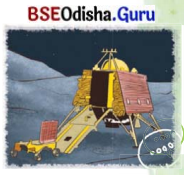
Launch the spacecraft towards the Moon from Earth. Position the spacecraft to enter the Moon’s orbit.
Adjust the spacecraft’s path for landing.
Slow down the spacecraft as (660606m) it nears (168 169) the Moon’s surfaces. (ଚନ୍ଦ୍ର ପୃଷ୍ଠ ଆଡ଼କୁ)
Release (ଛାଡ଼ିଦିଅ) the rover to explore the surface (ଚନ୍ଦ୍ରପୃଷ୍ଠକୁ ଅଧ୍ୟୟନ କରିବାପାଇଁ) and collect valuable data. (ଉପାଦେୟ ତଥ୍ୟ ସଂଗ୍ରହ କରିବାପାଇଁ)
Chandrayaan’s landing mission involves several key steps. First, the spacecraft 1. …………towards the Moon from the Earth. Then, it 2. …………to enter the Moon’s orbit. After reaching the Moon’s orbit, the spacecraft’s path 3. …………for landing. Next, the spacecraft 4. …………as it nears the Moon’s surface. Finally, the rover 5. …………to explore the surface and collect valuable data.
(i) A. launched
B. were launched
C. was launched
D. is launched
(ii) A. position
B. was positioned
C. is positioned
D. has positioned
(iii) A. adjusted
B. was adjusted
C. is adjusted
D. were adjusted
(iv) A. slowed down
B. was slowed down
C. is slowed down
D. were slowed down
(v) A. is released
B. has released
C. were released
D. was released
Answer:
Chandrayan’s landing mission involves eveeral key steps (କେତେଗୁଡ଼ିଏ ମୁଖ୍ୟ ସୋପାନ). First (ପ୍ରଥମେ ) the spacecraft is launched (ପଠାଯାଏ / 690) towards the Moon from the Earth. Then it is positioned to enter the Moon’s orbit. After reaching the Moon’s orbit, the spacecraft’s path is adjusted for landing. Next, the spacecraft is slowed down as it rears the Moon’s surface. Finally, the rover is released to explore the surface and collect valuable data.
Let us Listen (ଆସ ଶୁଣିବା) :
You will listen to a podcast about Artificial Intelligence. As you listen, answer the following questions by selecting the correct options. (Transcript for teacher on page 251)
(ତୁମେ କୃତ୍ରିମ ବୁଦ୍ଧିମତା ଉପରେ ଏକ podcast ଶୁଣିବ । ଶୁଣିବା ସମୟରେ ସଠିକ୍ ବିକଳ୍ପ ବାଛି ନିମ୍ନଲିଖିତ ପ୍ରଶ୍ନଗୁଡ଼ିକର ଉତ୍ତର ଦେବ । ଶିକ୍ଷକଙ୍କ ପାଇଁ Transcript ପୃଷ୍ଠା 251 ରେ ଅଛି ।)
Question 1.
What is one of the key benefits of AI in the healthcare sector
(ସ୍ୱାସ୍ଥ୍ୟର ଯନ୍ କ୍ଷେତ୍ରରେ AI ର ମୁଖ୍ୟ ଉପକାରିତା ମଧ୍ୟରୁ ଗୋଟିଏ କଣ ?)
(i) Helps doctors communicate faster with patients.
(ii) Provides personalised treatments and faster diagnoses.
(iii) Focuses on cosmetic surgeries to improve appearance.
Answer:
(ii) Provides personalised treatments and faster diagnoses.
Question 2.
How did AI play a crucial role during the global pandemic?
(ବୈଶ୍ଵକ ମହାମାରୀ ସମୟରେ AT କିଭଳି ଗୁରୁତ୍ଵପୂର୍ଣ ଭୂମିକା ନିର୍ବାହ କରିଥାଏ ?)
(i) AI robots monitored patient behaviour in hospitals.
(ii) AI assisted in speeding up the discovery of new medicines.
(iii) AI developed different types of vaccines by itself.
Answer:
(ii) AI assisted in speeding up the discovery of new medicines.
Question 3.
What example was given regarding AI’s role in renewable energy?
(ନବୀକରଣ ଯୋଗ୍ୟ ଶକ୍ତି ସମ୍ବନ୍ଧୀୟ AI ର କେଉଁ ଭୂମିକାରେ ଉଦାହରଣ ଦିଆଯାଇଥିଲା ?)
(i) AI is optimising the placement of wind turbines and solar panels in cities.
(ii) AI is promoting alternative energy from wind turbines and solar panels.
(iii) AI is improving the performance of wind turbines and solar panels.
Answer:
(i) AI is improving the performance of wind turbines and solar panels in cities
Question 4.
What does AI offer to teachers in the field of education?
(ଶିକ୍ଷା କ୍ଷେତ୍ରରେ AI ଶିକ୍ଷକମାନଙ୍କୁ କ’ଣ ପ୍ରଦାନ କରିଥାଏ)
(i) Helps teachers assign grades more quickly.
(ii) Allows teachers to communicate better with students.
(iii) Helps teachers analyse student performance
Answer:
(iii) Helps teachers analyse (ବିଶ୍ଳେଷଣ କରିବାରେ ସାହାଯ୍ୟ କରିଥାଏ) student performance. (ପ୍ରଦର୍ଶନ)
Question 5.
What is one of the user-friendly features that AI is enhancing for people with disabilities ?
(ଶାରୀରିକ ବିକଳାଙ୍ଗମାନଙ୍କ ପାଇଁ AI ବିକଶିତ କରିଥିବା ବ୍ୟବହାର ଅନୁକୂଳ ବୈଶିଷ୍ଟ୍ୟଗୁଡ଼ିକ ମଧ୍ୟରୁ ଗୋଟିଏ କି ?)
(i) Helps them find better jobs in the mainstream.
(ii) Improves speech recognition and voice command technologies.
(iii) Trains individuals to interact with robots
Answer:
(ii) Improves speech recognition and voice command technologies.
Let us Speak (ଆସ କହିବା) :
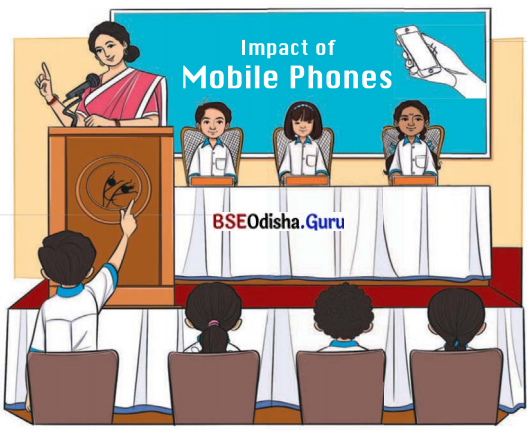
Impact of Mobile Phones (ମୋବାଇଲ୍ ଫୋନ୍ର ପ୍ରଭାବ)
I. Form a group of five. Conduct a panel discussion on the topic, ‘Evaluating the Impact of Mobile Phones – Beneficial and Harmful’. Each student will take on one of the following roles.
(ଏକ ପାଞ୍ଚଜଣିଆ ଦଳ ଗଠନ କର । ମୋବାଇଲ୍ ଫୋନର ପ୍ରଭାବ ମୂଲ୍ୟାୟନ ଲାଭଦାୟକ କିମ୍ବା କ୍ଷତିକାରକ ଉପରେ ଏକ ଧାରାବାହିକ ଆଲୋଚନା କର । ପ୍ରତି ଛାତ୍ର ନିମ୍ନଲିଖୁତ ମଧ୍ୟରୁ ଗୋଟିଏ ଭୂମିକା)
- Moderator (initiates and directs the flow of the discussion inviting the speakers to share their views on the subject; at the end sums up the points of discussion and thanks the members of the group)
- Principal (opposed to-focus on discipline in school)
- Teacher (in favour of-partially in favour, educational use with limitations)
- Parent (opposed to-concerned about health and social effects on children)
- Student (in favour of-highlighting the benefits like connectivity and learning) You may use the cues given below and add your own ideas while speaking.
You may use the cues given below and add your own ideas while speaking.
(ତୁମ୍ଭେ ନିମ୍ନରେ ଦିଆଯାଇଥିବା ସୂଚନା ବ୍ୟବହାର କରିପାର ଏବଂ ଭାଷଣ ଦେବାବେଳେ ତୁମର ନିଜ ଧାରଣାକୁ ଯୋଗ କରିପାର ।)
Answer:
1. Principal:
As a Principal I strongly believe mobile phones are largely disruptive (ବହୁଳ ଭାବରେ ବାଧକ) because they infringe (ଉଲ୍ଲଙ୍ଘନ କରୁଛି) the discipline (ଶୃଙ୍ଖଳା) that we try our level best (ଆମ୍ଭେମାନେ ଆମ୍ଭମାନଙ୍କର ସାମର୍ଥ୍ୟ ମୁତାବକ ଚେଷ୍ଟା କରୁଛେ) to inculcate (ଅନ୍ତର୍ଭୁକ୍ତ କରିବାପାଇଁ) in students and help them execute it (ଏହାକୁ ପାଳନ କରିବାରେ ସେମାନଙ୍କୁ . This besides playing video games, access to dangerous apps (applications) (ଭୟଙ୍କର apps ରେ ଯୋଡ଼ିହେବା) make them show rash (rude – ନିଷ୍ଠୁର ) behvaiour to the elders. Mobiles in hands of students distract them from rapt listening) and doing homework.
2. Teacher:
From an educator’s perspective, I think mobile phones can be valuable but they (mobiles) must be strictly restricted ସୀମିତ କରାଯିବା ଉଚିତ). It is obvious that (ସ୍ପଷ୍ଟ ଯେ) ignoring (ଅବହେଳା କରିବା) mobiles will be a foolish act (ଏକ ବୋକାମି କାର୍ଯ୍ୟ ହେବ). But if the uses (ବ୍ୟବହାର) of mobiles aren’t restricted (ସୀମିତ ରଖାନଯାଏ), then (ତା’ହେଲେ) they become the major (ମୁଖ୍ୟ କାରଣ) cause students’ distraction (ଧ୍ୟାନଭଙ୍ଗ) from lessons (ପାଠପଢ଼ା). To sum up (ମୋଟାମୋଟି ଭାବରେ କରିବାକୁ ଗଲେ), providing (ଦେବା) mobiles to students should be on the basis of learning (ଶିଖୁବା ଆଧାରରେ ହେବା ଉଚିତ), but not as a source of exploitation of social media (ସାମାଜିକ ଗଣମାଧ୍ୟମର ଶୋଷଣର ଏକ ଉତ୍ସରୂପେ ନୁହେଁ).
3. Parent :
As a parent, I am concerned (ଚିନ୍ତିତ ଅଟେ) that mobile phones pose (ସୃଷ୍ଟି କରୁଛି) certain risks (ନିର୍ଦ୍ଦିଷ୍ଟ ବିପଦ) to children’s health and social development. I can prove my points lucidly (ପରିଷ୍କାର ଭାବରେ). I often see my child pore over (ନିରୀକ୍ଷଣ କରିବା) the display (mobile screen) for hours (ଘଣ୍ଟା ଘଣ୍ଟା ଧରି), leading to poor concentration on lessons (ପାଠପଢ଼ା ପ୍ରତି ଦୁର୍ବଳ ଧ୍ୟାନ ଘଟାଇ) and eye strain (ଆଖୁ ଉପରେ ଚାପ). 24 x 7 online obsession (ଆସକ୍ତି) continues to affect (ପ୍ରଭାବିତ କରିବାରେ ଲାଗିଛି) his/her health and mind.
4. Student :
I, very humbly (ଅତି ନମ୍ରତାର ସହିତ) disagree with what my respected Principal and the parent view (ମତ ଦେଇଛନ୍ତି) on the evil consequences (କୁପରିଣାମ) of giving mobile sets in students’ hands. Mobile in my view (ମୋ ମତରେ), is a gateway (ଦ୍ୱାର) to the unending (ଅସରନ୍ତି) sources of knowledge or information. To deal with textual problem (ପାଠ୍ୟ ବିଷୟ ସମ୍ବନ୍ଧିତ ସମସ୍ୟା ସମାଧାନ ପାଇଁ) mobile is the panacea (ସମାଧାନ). As a student ought to know (ଜାଣିବା ଉଚିତ୍) that excess of everything is bad. I am cock sure (ମୁଁ ଦୃଢ଼ ନିଶ୍ଚିତ) if students like me, use it for learning purpose, it can be a boon (ଏକ ଆଶୀର୍ବାଦ ହୋଇପାରିବ), not a bane. (ଏକ ଅଭିଶାପ ନୁହେଁ),
Let us Write (ଆସ ଲେଖୁବା):
Your school recently hosted the Zonal Science Exhibition, in which teams of students from 25 schools participated enthusiastically. As the student editior, write a report on the exhibition to to be published in your school magazine. Use the clues given below with your own ideas to compose this report. (ତୁମ ବିଦ୍ୟାଳୟ ଏକ ଆଞ୍ଚଳିକ ବିଜ୍ଞାନ ପ୍ରଦର୍ଶନୀ ଆୟୋଜନ କରିଥିଲା, ଯେଉଁଥିରେ ୨୫ ଟି ବିଦ୍ୟାଳୟରୁ ଛାତ୍ରଛାତ୍ରୀ ଦଳ ଆଗ୍ରହ ସହକାରେ ଅଂଶଗ୍ରହଣ କରିଥିଲେ । ଜଣେ ଛାତ୍ର ସଂପାଦକ ଭାବେ ତୁମ ସ୍କୁଲ ପତ୍ରିକାରେ ପ୍ରକାଶିତ ହେବାପାଇଁ ଏକ ବିବରଣୀ ଲେଖ । ଏହି ବିବରଣୀ ଲେଖୁବା ପାଇଁ ନିମ୍ନରେ ଥିବା ସୂଚନା ସହ ତୁମ ଧାରଣା ବ୍ୟବହାର କର ।)
- Who was the organiser and who hosted the exhibition?
(ସଂକଠକ କିଏ ଥିଲେ ଓ କିଏ ପ୍ରଦର୍ଶନୀ ଆୟୋଜନ କରିଥିଲେ ?) - When (date and time) and where was it held?
(କେତେବେଳେ (ତାରିଖ ଓ ସମୟ) ଏବଂ ଏହା କେଉଁଠାରେ ଅନୁଷ୍ଠିତ ହୋଇଥିଲା ?) - Why was it held?
(ଏହା କାହିଁକି ଅନୁଷ୍ଠିତ ହୋଇଥିଲା ?) - Who participated?
(କେଉଁମାନେ ଅଂଶଗ୍ରହଣ କରିଥିଲେ ?) - Who was the Chief Guest ?
(ମୁଖ୍ୟ ଅତିଥୁ କିଏ ଥିଲେ ?) - What were the competitions held?
(କେଉଁସବୁ ପ୍ରତିଯୋଗିତା କରାଯାଇଥିଲା ?) - For example Science Quiz, Science Models etc.
(ଉଦାହରଣ ସ୍ୱରୂପ ବିଜ୍ଞାନ କ୍ରିଜ୍, ବିଜ୍ଞାନ ନମୁନା ଇତ୍ୟାଦି ।) - What were the topics of models exhibited ? Give details.
(କେଉଁ ନମୁନାଗୁଡ଼ିକର ବିଷୟ/ଶୀର୍ଷକ ପ୍ରଦର୍ଶିତ ହୋଇଥିଲା ? ସବିଶେଷ ବିବରଣୀ ଦିଅ ।) - Which team got the trophy for best exhibit?
(ସର୍ବଶ୍ରେଷ୍ଠ ପ୍ରଦର୍ଶନ ପାଇଁ କେଉଁ ଦଳ ଟ୍ରଫି ପାଇଥିଲା) ? - What were the observations of the Chief Guest and other visitors?
(ମୁଖ୍ୟ ଅତିଥି ଓ ଅନ୍ୟାନ୍ୟ ଦର୍ଶକମାନଙ୍କର ମତାମତ କ’ଣ ଥିଲା ?)
Points to remember (ମନେରଖ) :
1. Write the report in Past Tense, Passive Voice and Third Person. (ବିବରଣୀକୁ ଅତୀତ କାଳ, କର୍ମବାଚ୍ୟ ଓ ତୃତୀୟ ପୁରୁଷରେ ଲେଖ ।)
2. Follow proper format with a headline, reporter’s name and three paragraphs. (ଶୀର୍ଷକ, ବିବରଣୀ ପ୍ରଦାନକାରୀଙ୍କ ନାମ ଓ ତିନୋଟି ଅନୁଚ୍ଛେଦ ସହ ସଠିକ୍ ରୂପରେଖ ଅନୁସରଣ କର ।)
Answer:
Zonal Science Exhibition at Salipur High School. (Bijay Kumar Sahoo) The Zonal Science Exhibition was hosted by Salipur Government High School, on 22nd January 2026 from 10 am to 2 pm in the school’s auditorium. The exhibition was officially inaugurated (ଉଦ୍ଘାଟିତ ହୋଇଥ୍ଲା) by Mr. Anil Swain, a noted (ପ୍ରସିଦ୍ଧ) educationalist (ଶିକ୍ଷାବିତ୍) of the locality. He stressed on (ଗୁରୁତ୍ଵ ଦେଇଥିଲେ), the importance of sustainable technology (ଧାରଣୀୟ ଜ୍ଞାନକୌଶଳ) in his opening address.
Teams representing (ପ୍ରତିନିଧୁତ୍ଵ କରୁଥୁଲା) 10 schools across the Zone participated in the exhibition enthusiastically (ଉତ୍ସାହର ସହିତ). The exhibition witnessed a variety of (ବିଭିନ୍ନ) competitions comprising a Science Quiz, a Poster making and the display (ପ୍ରଦର୍ଶନ) of Working science models (ନମୂନା). The models or projects (ପ୍ରକଳ୍ପ) exhibited (ପ୍ରଦର୍ଶିତ ହୋଇଥିଲା) covered diverse (ଅନେକ) topics such as (ଯଥା) renewable energy sources
(ନବୀକରଣ ଯୋଗ୍ୟ ଶକ୍ତି ଉତ୍ସ), waste management (ଅଦରକାରୀ ବା ନଷ୍ଟ ହୋଇଯାଇଥିବା ପଦାର୍ଥଗୁଡ଼ିକର ପରିଚାଳନା ) and robotics. Each exhibit was thoroughly (ପୁଙ୍ଖାନୁପୁଙ୍ଖ ଭାବରେ) evaluated (ମୂଲ୍ୟାଙ୍କନ a) by the panel of judges on the basis of creativity, technically and practical applications (ତିଆରି ଯାନ୍ତ୍ରିକ ପଦ୍ଧତି ଓ ବ୍ୟାବହାରିକ ପ୍ରୟୋଗ ଆଧାରରେ), The trophy for the “Best Exhibit” was awarded to Bhagabati Vidyapitha, Sukleswar, Mahanga, Cuttack for their innovative model on “Low cost Water Purifier.
The Chief Guest, the Judges, the visitors and others were highly impressed (ପ୍ରଭାବିତ ହୋଇଥିଲେ) by the unique skill (ଅସାଧାରଣ କୌଶଳ) and equipment used or delighted by the students. The exhibition came to an end with the headmaster giving a vote of thanks to everyone for their help and co-operation (ସହଯୋଗ) in making the program (କାର୍ଯ୍ୟକ୍ରମକୁ କରାଇବାରେ) a huge success (ଏକ ବିରାଟ ସଫଳତା).
Let us explore (ଆସ ଅନ୍ଵେଷଣ କରିବା)
I. In the recent times, Augmented Reality and Virtual Reality are changing the way students learn. Let us know more about them.
(ବର୍ତ୍ତମାନ ସମୟରେ ବୃଦ୍ଧିପ୍ରାପ୍ତ ବାସ୍ତବତା ଓ ଆଭାସୀ ବାସ୍ତବତା ଛାତ୍ରଛାତ୍ରୀ ଶିକ୍ଷଣ ଉପାୟକୁ ପରିବର୍ତ୍ତିତ କରୁଅଛି । ଆସ ଏ ବିଷୟରେ ଅଧ୍ବକ ଜାଣିବା ।)
- Augmented reality (AR) enhances a person’s environment by adding digital elements to what can be seen in real time, usually through a smartphone camera.
- Virtual reality (VR) offers a fully immersive experience, replacing the real world with a simulated one.
- Through AR and VR, the students can see and interact with things that they could not interact with in real life. This enables younger students to understand difficult ideas easily.
- To keep up with the times, NCERT has developed the e-Pathshala AR (Augmented Reality) App under the aegis of MHRD, Government of India.
- This App aims to enable students to go beyond textbooks and four walls of the classrooms and learn concepts by directly experimenting rather than only through reading and memorisation.
- This revolutionary effort will change most students from passive listeners to active learners.
- This effort is in line with the Prime Minister’s Digital India vision to empower varied sectors using technology and addressing the triple need of skill, scale, and speed. Gear up for the new age education!
https://ciet.ncert.gov.in/ar-vr
II. The Government of India has come out with a new set of National Awards in the field of Science, Technology, and Innovation known as ‘Rashtriya Vigyan Puraskar’.
(ଭାରତ ସରକାର ‘ରାଷ୍ଟ୍ରୀୟ ବିଜ୍ଞାନ ପୁରସ୍କାର’ ନାମକ ଏକ ନୂତନ ପୁରସ୍କାର ସମୂହ ବିଜ୍ଞାନ, ବୈଷୟିକ ବିଦ୍ୟା, ନୂତନ ଚିନ୍ତାଧାରା ପାଇଁ ପ୍ରଦାନ କରୁଛନ୍ତି ।)
The objective of the Rashtriya Vigyan Puraskar (RVP) is to recognise the notable and inspiring contribution made by the scientists, technologists, and innovators individually or in teams in various fields of science, technology, and technology-led innovation.
- Vigyan Ratna (VR) award will recognise lifetime achievements and contributions made in any field of science and technology.
- Vigyan Shri (VS) award will recognise distinguished contributions in any field of science and technology.
- Vigyan Yuva-Shanti Swarup Bhatnagar (VY-SSB) award will recognise and encourage young scientists up to the age of 45 years, who have made an exceptional contribution in any field of science and technology.
- Vigyan Team (VT) award to be given to a team comprising three or more cientists/researchers/innovators, who have made an exceptional contribution working in a team in any field of science and technology.
III. A glimpse of women pioneers from different fields.
ପ୍ରଥମ ନାରୀ ହେବାର କୃତିତ୍ଵ ଲାଭ କରିଥିବା ମହିଳାମାନଙ୍କର ଏକ ବିହଙ୍ଗାବଲୋକ/ ସ୍ଥୂଳ ଦୃଷ୍ଟି ।)
.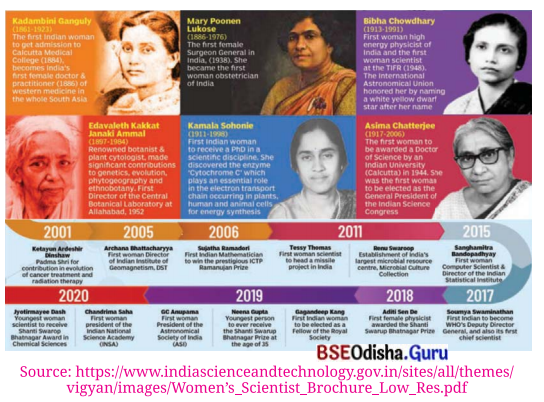
Susama Panigrahi: Known as the first Odia Woman Scientist (ବୈଜ୍ଞାନିକ୍ ଭାବରେ ଜଣାଶୁଣା) who served (ସେବା ପ୍ରଦାନ କରିଥିଲେ) in ISRO for around 30 years. She was one of the group director there. She hailed from Aska in Ganjam district.
Transcripts Feathered Friend
Let us listen (refer to page 217)
I. You will listen to a conversation between Monika and Toby. Toby is a Martian and is stranded on Earth. He has become Monika’s friend. As you listen, put a tick mark against the correct statements and a cross against the wrong ones.
MONIKA: Hi, Toby ! Do you miss your planet?
TOBY: Very much, Monika ! I miss my people and home.
MONIKA: Oh ! I wish I could do something about it! But I am happy to have you as my friend.
TOBY: Thank you, Monika!
MONIKA: Er… could you tell me something more about yourself?
TOBY: Why not! What do you want to know about me, Monika?
MONIKA: What do you eat for breakfast?
TOBY: Well, we Martians don’t need to eat anything. We get our energy from the Sun.
MONIKA: Oh ! Don’t you ever feel like having ice-creams and chocolates ? I can’t think of life without them !
TOBY: No, Monika! We are made of different stuff.
MONIKA: Okay, tell me one thing. How are you able to see with only one eye ? I see only one big eye in the centre of your face.
TOBY: My friend, we Martians need only one eye to see clearly. In fact, I can see even with my eye closed. I can see beyond mountains and clouds, wood and even metals. I can see that you are carrying a toy in your pocket. It’s a blue aeroplane. Isn’t it ? And yes ! That apple you just had for breakfast is going round-and-round in your stomach right now !
MONIKA : (gasps in disbelief) Oh my goodness !
II. Listen to the conversation again and fill in the blanks with the exact words you hear.
Magnifying Glass
Let us listen (refer to page 227)
I. You will listen to a conversation between a father and daughter about lesser-known Indian inventions. As you listen, mark the four true statements from 1-6 given below.}
DAUGHTER: Papa, everyone talks about how yoga and the concept of zero came from India, but I recently found out there are so many more inventions that people don’t really know about !
FATHER: Oh really? Like what ?
DAUGHTER: Well, did you know that radio broadcasting has roots in India? We usually credit Marconi, but Jagadish Chandra Bose, a Bengali scientist, actually conducted an experiment using microwaves before Marconi.
FATHER: Wow, I didn’t know that! That’s incredible. I can recollect something about fibre optics.
DAUGHTER: Yes! You’re absolutely right Papa. Can you imagine life without fibre optics? No fast internet, no clear communication… And guess what? It was pioneered by Narinder Kapany, an Indian physicist from Punjab. He’s called the ‘father of fibre optics.’
FATHER: That’s something I use every day, but I just had an idea that the origins were in India. What about fun things? Any of those that you’ve found out about ?
DAUGHTER: Yes indeed! You’ll love this one-Snakes and Ladders! It was actually invented as a game to teach children values, with ladders representing virtues and snakes representing evil. It wasn’t just a board game like we think today. It had a spiritual meaning in ancient times.
FATHER: So even that simple game had such deep roots. Let me tell you about one that I just remembered
DAUGHTER: Of course! I’d love to know.
FATHER: Well, the USB port, something we rely on all the time to connect devices, was invented by Ajay Bhatt. He’s an Indian-born engineer who helped revolutionise the way we use technology.
DAUGHTER: That’s amazing. USB is such a basic part of life now. It’s hard to imagine a time without it.
FATHER: That’s incredible. And all this from India. I definitely learned a lot from this conversation.
Adapted from-https://www.bbc.co.uk/programmes/articles/SrnsYslQcP
Bibha Chowdhuri The Beam Of Light That Lit The Path For Women In Indian Science
Let us listen (થાવ શ્રુજોણ) (refer to page 244)
I. You will listen to a podcast about Artificial Intelligence. As you listen, answer the following questions by selecting the correct options.
Hello and welcome to Tech Talks, the podcast where we explore how technology is shaping our world! I’m Faizy, your host, and today we’re diving into the fascinating topic of artificial intelligence, or AI, and how it’s benefiting humankind.
AI is often seen as futuristic, but it’s already making everyday tasks easier and more efficient. Let’s look at some of the incredible ways AI is improving our lives in four of the many segments.
Let’s begin with Segment 1: Healthcare Transformation
AI systems can analyse medical data much faster and more accurately than humans, leading to quicker diagnoses and personalised treatments.
AI-powered robots are also assisting in surgeries, making them more precise and less invasive. And during the global pandemic, AI played a crucial role in speeding up the discovery of new medicines.
Let’s now talk about Segment 2: Environmental Sustainability AI is helping us fight climate change. It helps in predicting natural disasters, and managing resources like water and agriculture more efficiently.
In renewable energy, AI is improving the performance of wind turbines and solar panels, pushing us toward a greener future.
Next, we have Segment 3: Enhancing Education
In education, AI is offering personalised learning experiences to students.
Teachers also benefit from AI, which helps analyse student performance and manage administrative tasks, giving them more time to focus on teaching.
Segment 4: Accessibility and Inclusion is the final segment of the podcast today. You see, AI is also improving accessibility for people with disabilities. Technologies like speech recognition, text-to-speech, and voice commands make communication easier and faster.
Now you know how AI is improving life for humankind. AI is a powerful force for good but we need to use it responsibly.
Thanks for tuning in to Tech Talks. Join us next time for another deep dive into the world of technology. Until then, stay curious, and keep exploring !
Bibha Chowdhuri: The Beam of Light that Lit the Path for Women in Indian Science Class 8 Summary
Let us read (ଆସ ପଢ଼ିବା) :
In a world where women’s potential_in_science, technology, engineering, and mathematics (STEM) is being recognised beyond doubt, India has seen its share of trailblazers who paved the way. Today, the women behind ISRO’s Mars Orbiter Mission and Chandrayaan-3 are celebrated for their brilliance and achievements. However, the foundation was laid by early pioneers like Bibha Chowdhuri-India’s first woman physicist who carved a path in the male-dominated field of physics.
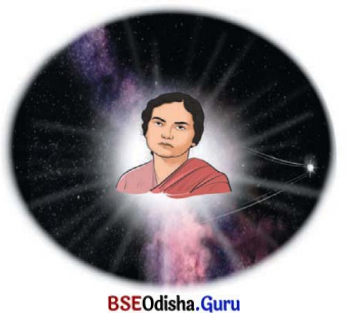
At a time when Indian women struggled to seek knowledge and equitable access to education, Bibha Chowdhuri emerged as a rare beam of light woman who defied the odds and lit a path for others to follow. Born in 1913 in Kolkata, in an India that still followed the traditional path. Bibha’s story was anything but ordinary.
She was a scientist who rose not only against the societal expectations of women but also amidst the towering giants of science-men whose names the world would come to celebrate, while hers was whispered only in the halls of those who recognised her brilliance. Bibha’s persistence eventually earned her a place at the Bose Institute. She had already begun to chip away at the walls of exclusion, becoming the first Indian woman to excel in high-energy particle physics.
ଯେଉଁ ପୃଥିବୀରେ ବିଜ୍ଞାନ, ପ୍ରଯୁକ୍ତି ବିଦ୍ୟା, ଇଞ୍ଜିନିୟରିଂ ଓ ଗଣିତ କ୍ଷେତ୍ରରେ ନାରୀମାନଙ୍କର ସାମର୍ଥ୍ୟ ନିଃସନ୍ଦେହ ଭାବେ ସ୍ୱୀକୃତ ହୋଇଛି, ଭାରତରେ ମଧ୍ୟ ନାରୀମାନେ ସେହିପରି ନୂତନ ପଥର ସ୍ରଷ୍ଟା ହୋଇପାରିଛନ୍ତି । ସଂପ୍ରତି ଇସ୍ରୋ (ISRO) ର ପୃଷ୍ଠଭୂମିରେ ମଙ୍ଗଳ କକ୍ଷକୁ ଅଭିଯାନ ଏବଂ ଚନ୍ଦ୍ରଯାନ-3 ରେ କାର୍ଯ୍ୟରତ ମହିଳାମାନେ ସେମାନଙ୍କ ବିଚକ୍ଷଣ ବୁଦ୍ଧି ଓ ସଫଳତା ପାଇଁ ପ୍ରସିଦ୍ଧ ହୋଇପାରିଛନ୍ତି । ଯାହାହେଉ, ଭାରତର ପ୍ରଥମ ମହିଳା ପଦାର୍ଥବିଜ୍ଞାନୀ ବିଭା ଚୌଧୁରିଙ୍କ ପରି ଅଗ୍ରଣୀ ମହିଳାଙ୍କଦ୍ୱାରା ଏହାର ଭିତ୍ତି ସ୍ଥାପିତ ହୋଇଥିଲା, ଯିଏକି ପୁରୁଷପ୍ରଧାନ ପଦାର୍ଥ ବିଜ୍ଞାନ କ୍ଷେତ୍ରରେ ମହିଳାମାନଙ୍କ ପାଇଁ ନୂତନ ପଥ ନିର୍ମାଣ କରିଥିଲେ । ବିଭା ଚୌଧୁରୀ ଏପରି ଏକ ସମୟରେ ଆଲୋକରେଖା ପରି ଆବିର୍ଭାବ ହୋଇଥିଲେ, ଯେତେବେଳେ ଭାରତୀୟ ନାରୀମାନେ ଜ୍ଞାନ ଅନ୍ଵେଷଣ ପାଇଁ ପୁରୁଷମାନଙ୍କ ସହିତ ଶିକ୍ଷାକ୍ଷେତ୍ରରେ ସମଭାବରେ ପ୍ରବେଶ କରିବା ପାଇଁ ପ୍ରବଳ ସଂଘର୍ଷ କରୁଥିଲେ । ସେ ଏଭଳି ଜଣେ ମହିଳା ଥିଲେ, ଯିଏ ସମସ୍ତ ପ୍ରତିବନ୍ଧକକୁ ଅତିକ୍ରମ କରି ଅନ୍ୟମାନେ ଅନୁସରଣ କରିବା ପାଇଁ ପଥ ସୃଷ୍ଟି କରିଥିଲେ । ପାରମ୍ପରିକ ପଥ ଅନୁସରଣ କରୁଥିବା ତତ୍କାଳୀନ ଭାରତରେ ସେ 1913 ମସିହାରେ କୋଲକତାଠାରେ ଜନ୍ମଗ୍ରହଣ କରିଥିଲେ । ବିଭାଙ୍କ କାହାଣୀ ଏକ
ବ୍ୟତିକ୍ରମ ଥିଲା । କେବଳ ନାରୀମାନଙ୍କ ସାମାଜିକ ପ୍ରତ୍ୟାଶ ବିରୁଦ୍ଧରେ ସେ ଯେ ଜଣେ ବୈଜ୍ଞାନିକ ଥିଲେ ତାହା ନୁହେଁ, ବରଂ ବିଜ୍ଞାନ କ୍ଷେତ୍ରରେ ଶୀର୍ଷସ୍ଥାନ ଲାଭ କରିଥିବା ଓ ପୃଥିବୀରେ ପ୍ରସିଦ୍ଧି ଲାଭ କରିଥିବା ପୁରୁଷ ବିଜ୍ଞାନୀଙ୍କ ମଧ୍ୟରେ ସେ ଜଣେ ବିଜ୍ଞାନୀ ହୋଇପାରିଥିଲେ । କେବଳ ଯେଉଁମାନେ ତାଙ୍କ ବିଚକ୍ଷଣତା ଜାଣିପାରିଥିଲେ, ସେ ସେମାନଙ୍କ ନିକଟରେ ସୁପରିଚିତ ହୋଇପାରିଥିଲେ ।
ବିଭାଙ୍କ ନିରନ୍ତର ପ୍ରୟାସ ବୋଷ୍ ଇନ୍ଷ୍ଟିଚ୍ୟୁଟ୍ରେ ତାଙ୍କ ପାଇଁ ଏକ ସ୍ଥାନ ସୃଷ୍ଟି କରିପାରିଥିଲା । ସେ ସମସାମୟିକ ପ୍ରତିବନ୍ଧକର ପ୍ରାଚୀରକୁ ଅତିକ୍ରମ କରି ଉଚ୍ଚ ଶକ୍ତିସଂପନ୍ନ କଣିକା ବିଜ୍ଞାନ କ୍ଷେତ୍ରରେ ଦକ୍ଷତା ହାସଲ କରିବାରେ ‘ପ୍ରଥମ ଭାରତୀୟ ମହିଳା ହୋଇଥିଲେ ।
Breaking Boundaries:
In 1945, Bibha’s academic journey took her to the University of Manchester. Under the guidance of the celebrated Nobel Laureate, Patrick M.S. Blackett, she delved deeper into the field of cosmic rays. Her Ph.D. thesis on cosmic rays earned local recognition, with newspapers introducing her as ‘India’s New Woman Scientist. She has an eye for Cosmic Rays’. This title reflected the awe she inspired in a world still sceptical of her capabilities.
In an era marked by towering scientific discoveries, Bibha was often on the cusp of greatness but remained in the shadows of her male counterparts. Her most notable contribution was the discovery of pi-mesons, a subatomic particle. Her nomination for a Nobel Prize in 1950 by Erwin Schrodinger, though unsuccessful, reflected her remarkable talent. Her life, full of challenges and struggles, was marked by an uphill battle to be heard and seen in the field of science. Chowdhuri never received any awards during her lifetime, but continued her work tirelessly.
In 1949, upon her return to India, she became the first woman faculty member at the Tata Institute of Fundamental Research, personally selected by Homi J. Bhabha. Chowdhuri’s contributions spanned across research institutes like the Physical Research Laboratory in Ahmedabad and the Saha Institute of Nuclear Physics in Kolkata.
This is where she continued her work on cosmic rays and subatomic particles. Through decades of crucial research, from Kolar Gold Mines to the Physical Research Laboratory under the mentorship of Vikram Sarabhai, Bibha’s work went on quietly, as she remained in the periphery of Indian scientific acclaim. She passed away in 1991, her story untold, her name largely forgotten.
1945, ମସିହାରେ ବିଭାଙ୍କ ଶୈକ୍ଷିକ ଯାତ୍ରା ତାଙ୍କୁ ମାଞ୍ଚେଷ୍ଟର ବିଶ୍ଵବିଦ୍ୟାଳୟକୁ ନେଇଯାଇଥିଲା । ବିଖ୍ୟାତ ନୋବେଲ୍ ବିଜେତା ପାଟ୍ରିକ୍ ଏମ୍.ଏସ୍. ବ୍ଲାକେଟ୍ଙ୍କ ତତ୍ତ୍ୱାବଧାନରେ ସେ ମହାଜାଗତିକ ରଶ୍ମି କ୍ଷେତ୍ରରେ ଗଭୀରଭାବେ ପରୀକ୍ଷା ନିରୀକ୍ଷା କରିଥିଲେ । ତାଙ୍କର ପି.ଏଚ୍.ଡ଼ି ଥେସିସ୍ ସ୍ଥାନୀୟ ପରିଚିତି ହାସଲ କରିଥିଲା । ସମ୍ବାଦପତ୍ରଗୁଡ଼ିକ
ତାଙ୍କୁ ‘ଭାରତର ନୂଆ ମହିଳା ବେଜ୍ଞାନିକ’ ରୂପେ ପରିଚିତ କରାଇଥିଲା । ତାଙ୍କ ଭୀତିପ୍ରେରିତ ପୃଥିବୀରେ ତାଙ୍କର ସନ୍ଦେହଜନକ ସାମର୍ଥ୍ୟକୁ ଏହି ପଦବୀ ପ୍ରତିଫଳିତ କରିଥିଲା ।
ବହୁଳ ବୈଜ୍ଞାନିକ ଆବିଷ୍କାର ଯୁଗରେ ବିଭା ମହନୀୟତାର ଶୀର୍ଷକୁ ଯାଇ ମଧ୍ଯ ତାଙ୍କ ସମରୂପ ପରୁଷମାନଙ୍କ ଆଢୁଆଳରେ ରହିଯାଇଥୁଲେ । ପାଇ-ମେସନ୍ ଭଳି ଏକ ଉପଆଣବିକ କଣିକାର ଆବିଷ୍କାର ତାଙ୍କର ଉଲ୍ଲେଖନୀୟ ଅବଦାନ ଥିଲା । 1950 ମସିହାରେ ତାଙ୍କ ନାମ ନୋବେଲ୍ ପୁରସ୍କାର ପାଇଁ ଏର୍ୱିନ୍ ସ୍ପୋଡ଼ିଙ୍ଗରଙ୍କଦ୍ଵାରା ମନୋନୟନ ଯଦିଓ ଅସଫଳ ହୋଇଯାଇଥିଲେ ତଥାପି ଏହା ତାଙ୍କ ପ୍ରତିଭାକୁ ଉଲ୍ଲେଖନୀୟ ଭାବେ ପ୍ରତିଫଳିତ କରିଥିଲା । ଆହ୍ଵାନ ଓ ସଂଘର୍ଷପୂର୍ଣ୍ଣ ତାଙ୍କ ଜୀବନୀ ବିଜ୍ଞାନ କ୍ଷେତ୍ରରେ ଶୁଣାଯାଉଥିବା ଓ ଦେଖାଯାଉଥିବା ଏକ କଠିନ ସଂଗ୍ରାମ ଥିଲା । ଚୌଧୁରି ତାଙ୍କ ଜୀବନରେ କୌଣସି ପୁରସ୍କାର ଲାଭକରି ନଥିଲେ, କିନ୍ତୁ ତାଙ୍କ କାର୍ଯ୍ୟ ଅକ୍ଳାନ୍ତ ଭାବେ କରିଚାଲିଥିଲେ ।
1949 ମସିହାରେ ଭାରତକୁ ପ୍ରତ୍ୟାବର୍ତ୍ତନ କରିବା ପରେ ହୋମି ଜେ. ଭାବାଙ୍କ ବ୍ୟକ୍ତିଗତ ଚୟନ ଅନୁଯାୟୀ ସେ ଟାଟା ଇନ୍ଷ୍ଟିଚ୍ୟୁଟ୍ ଅଫ୍ ଫଣ୍ଡାମେଣ୍ଟାଲ୍ ରିସର୍ଚ୍ଚରେ ପ୍ରଥମ ମହିଳା ଅଧ୍ୟାପକ ରୂପେ ନିଯୁକ୍ତି ପାଇଥିଲେ । ଚୌଧୁରୀଙ୍କ ଅବଦାନ ଅହମଦାବାଦର ଫିଜିକାଲ ରିସର୍ଚ୍ଚ ସେଣ୍ଟର ଓ କୋଲକାତାର ସାହା ଇନ୍ଷ୍ଟିଚ୍ୟୁଟ୍ ଅଫ୍ ନ୍ୟୁକ୍ଲିୟାର ଫିଜିକ୍ସ ଭଳି ଗବେଷଣା ଅନୁଷ୍ଠାନକୁ ବ୍ୟାପି ଯାଇଥିଲା । ଏହିସବୁ ସ୍ଥାନରେ ସେ ମହାଜାଗତିକ ରଶ୍ମି ଓ ଉପଆଣବିକ କଣିକା ଉପରେ ତାଙ୍କର କାର୍ଯ୍ୟ ଚାଲୁ ରଖୁଥିଲା । ଦଶନ୍ଧି ଦଶନ୍ଧି ଧରି ବିକ୍ରମ ସରାଭାଇଙ୍କ ମାର୍ଗଦର୍ଶନରେ ତାଙ୍କର ଗୁରୁତ୍ଵପୂର୍ଣ୍ଣ ଗବେଷଣା କୋଲାର ସୁନାଖଣିରୁ ଫିଜିକାଲ ରିସର୍ଚ୍ଚ ଲାବୋରେଟୋରୀ ପର୍ଯ୍ୟନ୍ତ ଧୀରସ୍ଥିର ଭାବେ ଚାଲୁ ରହିଥିଲା, ଯେହେତୁ ସେ ଭାରତୀୟ ବୈଜ୍ଞାନିକ ସୀମା ମଧ୍ୟରେ ପ୍ରଶଂସିତ ହୋଇଥିଲେ । ସେ 1991 ମସିହାରେ ମୃତ୍ୟୁବରଣ କରିଥିଲେ । ତାଙ୍କ ଜୀବନ କାହାଣୀ ଅକୁହା ଓ ବହୁଳଭାବେ ବିସ୍ମୃତ ହୋଇଯାଇଛି ।
The Legacy of Bibha Chowdhuri and Today’s Women in Indian Science
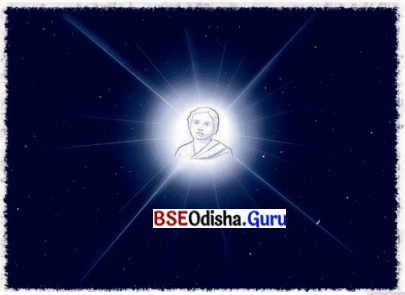
The stars are not meant to remain hidden forever. In 2019, the International Astronomical Union (IAU) honoured her legacy by renaming a star in the constellation Leo-HD 86081-as ‘Bibha,’ meaning ‘beam of light.’ Fittingly, she is now a ‘star in heaven,’ a symbol of the light she brought to Indian science. A fitting tribute to a woman whose life was a radiant example of tenacity, brilliance, and quiet determination. In 2020, the Government of India declared a chair professorship in her name. Fast forward to the present day, and the advancements made by women in I in Indian science reflect Chowdhuri’s pioneering spirit and the progress she helped ignite. Women in ISRO, for instance, are no longer participants but leaders in missions that make global headlines.
One such luminary is Dr. Ritu Karidhal Srivastava, popularly referred to as the ‘Rocket Woman of India.’ Her pivotal role in ISRO’s Mars Orbiter Mission and subsequent leadership in Chandrayaan-2 and Chandrayaan-3 reflect the leaps women have made in STEM in India. Over 50 women contributed to Chandrayaan-3, and their success is built upon the shoulders of pioneers like Bibha Chowdhuri. Their roles in developing autonomous systems for spacecraft and managing mission-critical operations highlight the capabilities of women in pushing India’s space programme forward.
From Shadows to the Stars.
The journey from Bibha Chowdhuri’s era to today’s women scientists has been long and arduous, but it is also inspiring. The struggles Chowdhuri faced are a stark reminder of how far we’ve come-and how much further we have to go. But with every cosmic achievement-be it landing on the moon or reaching Mars-these women prove that the journey is well worth it.
Bibha Chowdhuri’s legacy lives on. Her story continues to inspire young women to pursue their passions, break barriers, and leave their mark on the world. Whether exploring cosmic rays or sending rockets to Mars, India’s women scientists are writing the next chapter in a story that Bibha Chowdhuri helped begin. As the stars of Indian science shine brighter, Bibha Chowdhuri, the beacon-‘beam of light,’ will always guide the way.
ବିଭା ଚୌଧୁରି ପରଂପରା ଏବଂ ଭାରତୀୟ ବିଜ୍ଞାନ କ୍ଷେତ୍ରରେ ଆଜିର ନାରୀ ତାରକାମାନେ ଚିରଦିନ ପାଇଁ ଲୁକ୍କାୟିତ ହୋଇ ରହନ୍ତି ନାହିଁ । 2019 ମସିହାରେ ଆନ୍ତର୍ଜାତିକ ଜ୍ୟୋତିର୍ବିଜ୍ଞାନ ସମିତି ତାଙ୍କ ସମ୍ମାନ ନିମନ୍ତେ ଲିଓ−ଏଚ୍.ଡ଼ି 80681 ତାରକାମଣ୍ଡଳରେ ଏକ ତାରାକୁ ପୁନର୍ନାମିତ କରି ‘ବିଭା’ ରଖିଲେ, ଯାହାର ଅର୍ଥ ‘ଆଲୋକଧାରା’ ଏବଂ ଯାହା ଭାରତୀୟ ବିଜ୍ଞାନର ଏକ ପ୍ରତୀକ ଥିଲା । ଏହା ଜଣେ ମହିଳାଙ୍କ ପ୍ରତି ଉପଯୁକ୍ତ ଶ୍ରଦ୍ଧାଞ୍ଜଳି ଥୁଲା, ଯାହାଙ୍କ ଜୀବନୀ ଦୃଢ଼ପ୍ରତିଜ୍ଞା ଓ ବିଚକ୍ଷଣତାର ଉଜ୍ଜ୍ଵଳ ଉଦାହରଣ ଥୁଲା । 2020 ମସିହାରେ ଭାରତ ସରକାର ତାଙ୍କ ନାମରେ ଏକ ପ୍ରଫେସରସିପ୍ ଚେୟାର ଘୋଷଣା କରିଥିଲେ । ତ୍ଵରିତ ବେଗରେ ଆଜିର ଦିନକୁ ଆସିଲେ ଭାରତୀୟ ନାରୀମାନଙ୍କର ବିଜ୍ଞାନ କ୍ଷେତ୍ରରେ ଅଗ୍ରସର ହେବା ଜଣାଯାଏ ।
ଏହା ଚୌଧୁରୀଙ୍କ ଉଚିତ ମାର୍ଗଦର୍ଶନ ଓ ଉତ୍ସାହ ପ୍ରଦାନ ଏବଂ ପ୍ରଗତି ଉଦ୍ରେକ କ୍ଷେତ୍ରରେ ତାଙ୍କର ସହାୟତାକୁ ପ୍ରତିଫଳିତ କରେ । ଦୃଷ୍ଟାନ୍ତସ୍ଵରୂପ, ଇସ୍ରୋ (ISRO) ରେ କାର୍ଯ୍ୟ କରୁଥିବା ମହିଳାମାନେ ଏକେ କେବଳ ଅଂଶଗ୍ରହଣକାରୀ ନୁହନ୍ତି, ସେମାନେ ଅଭିଯାନର ନେତୃତ୍ଵ ନେଇ ଆନ୍ତର୍ଜାତିକ ସ୍ତରରେ ଶୀର୍ଷ ସମ୍ବାଦ ପାଲଟିଛନ୍ତି । ସେହିଭଳି ଜଣେ ପ୍ରେରଣାଦାୟୀ ମହିଳା ହେଉଛନ୍ତି ଡ. ରିତୁ କରିଧାଲ ଶ୍ରୀବାସ୍ତବ, ଯାହାଙ୍କୁ ଶ୍ରଦ୍ଧାରେ ରକେଟ୍ ମହିଳା (Rocket Women of India) କୁହାଯାଏ । ଇସ୍ରୋର ମଙ୍ଗଳ କକ୍ଷୀୟ ଅଭିଯାନରେ ତାଙ୍କର ଗୁରୁତ୍ଵପୂର୍ଣ୍ଣ ଭୂମିକା ଚନ୍ଦ୍ରାୟନ-୨ ଓ ଚନ୍ଦ୍ରାୟନ-୩ରେ ତାଙ୍କର ନେତୃତ୍ୱ ଭାରତୀୟ ମହିଳାମାନଙ୍କର
ବିଜ୍ଞାନ, ପ୍ରଯୁକ୍ତିବିଦ୍ୟା, ଇଞ୍ଜିନିୟରିଂ ଓ ଗଣିତ କ୍ଷେତ୍ରରେ ଆଗକୁ ବଢ଼ିଥିବା ପ୍ରତିଫଳିତ କରିଥାଏ । ଚନ୍ଦ୍ରାୟନ-3 ପାଇଁ ପଚାଶରୁ ଉର୍ଦ୍ଧ ନାରୀଙ୍କ ଅବଦାନ ରହିଥିଲା । ସେମାନଙ୍କର ସଫଳତା ବିଭା ଚୌଧୁରୀଙ୍କ ପରି ପ୍ରଥମ ଗବେଷକଙ୍କ ସଫଳତା ଉପରେ ଆଧାରିତ ଥିଲା । ସ୍ଵୟଂଚାଳିତ ପ୍ରଣାଳୀର ଉନ୍ନତିକରି ମହାକାଶଯାନ ନିର୍ମାଣ ଏବଂ ଅଭିଯାନ ସଂପର୍କୀୟ ଜଟିଳ କାର୍ଯ୍ୟ ସଂପାଦନ ସେହି ନାରୀମାନଙ୍କ ଭାରତର ମହାକାଶ ସମ୍ବନ୍ଧୀୟ କାର୍ଯ୍ୟକ୍ରମକୁ ଆଗକୁ ନେବା ବିଷୟ ବିଶେଷ ଭାବେ ଦର୍ଶାଏ ।
ବିଭା ଚୌଧୁରୀଙ୍କ ଯୁଗଠାରୁ ବର୍ତ୍ତମାନର ମହିଳା ବୈଜ୍ଞାନିକମାନଙ୍କ ଯୁଗପର୍ଯ୍ୟନ୍ତ ଯାତ୍ରାପଥ ଅତ୍ୟନ୍ତ ଦୀର୍ଘ ଓ କଷ୍ଟସାଧ୍ୟ ହୋଇଥିଲେ ମଧ୍ୟ ପ୍ରେରଣାଦାୟୀ ହୋଇପାରିଛି । ଆମେ କେତେଦୂର ଅଗ୍ରଗତି କରିଛୁ ଏବଂ ଆଗକୁ ଚୌଧୁରୀ କରିଥିବା ସଂଘର୍ଷର ସ୍ପଷ୍ଟ ସ୍ମାରକ ହୋଇ ରହିଛି । ଚନ୍ଦ୍ରପୃଷ୍ଠରେ ପାଦ ରଖୁବା ବା ମଙ୍ଗଳ ଗ୍ରହରେ ପହଞ୍ଚିବା ଆଦି ଯେଉଁସବୁ ମହାକାଶ ସମ୍ବନ୍ଧୀୟ ସଫଳତା ଆମେ ପାଇଛୁ, ତାହା ଏହି ନାରୀମାନଙ୍କ ପାଇଁ ଫଳପ୍ରଦ ହୋଇପାରିଛି । କେତେ ଅଗ୍ରଗତି କରିବୁ, ତାହା
ଏବେ ମଧ୍ୟ ବିଭା ଚୌଧୁରୀଙ୍କ ପରମ୍ପରା ବଞ୍ଚିରହିଛି । ତାଙ୍କ କାହାଣୀ ଯୁବତୀମାନଙ୍କୁ ପ୍ରେରଣା ଦେଇଆସୁଛି । ସମସ୍ତ ପ୍ରତିବନ୍ଧକ ଅତିକ୍ରମ କରି ଏବଂ ନିଜ କର୍ମପ୍ରବଣତାକୁ ପ୍ରୟୋଗ କରି ଉତ୍କୃଷ୍ଟ କର୍ମ ସାଧନ କରିବାକୁ ତାହା ସେମାନଙ୍କୁ ଉତ୍ସାହିତ କରୁଛି । ଅନୁସନ୍ଧାନ କରିବା ହେଉ ବା ମଙ୍ଗଳ ଗ୍ରହକୁ ରକେଟ୍ ପ୍ରେରଣ କରିବା ହେଉ, ଏସବୁ କ୍ଷେତ୍ରରେ ଭାରତୀୟ ମହିଳା ବୈଜ୍ଞାନିକମାନେ ଯେଉଁ କାହାଣୀ ଲେଖୁଛନ୍ତି, ସେସବୁକୁ ସହାୟତା ଦେଇଛି ବିଭା ଚୌଧୁରୀ ଆରମ୍ଭ କରିଥିଲା କାହାଣୀ । ଭାରତୀୟ ବିଜ୍ଞାନ କ୍ଷେତ୍ରରେ ତାରକାମାନେ ଯେତେ ଉଜ୍ଜ୍ୱଳତର ହେଉଥିବେ, ଉତ୍ସାହପ୍ରଦାନର ଏକ ଦୃଷ୍ଟାନ୍ତସ୍ୱରୂପ ବିଭା ଚୌଧୁରୀ ଏକ ‘ଆଲୋକ ଧାରା’ ହୋଇ ସେମାନଙ୍କୁ ସେତେ ପଥପ୍ରଦର୍ଶନ କରୁଥିବେ ।
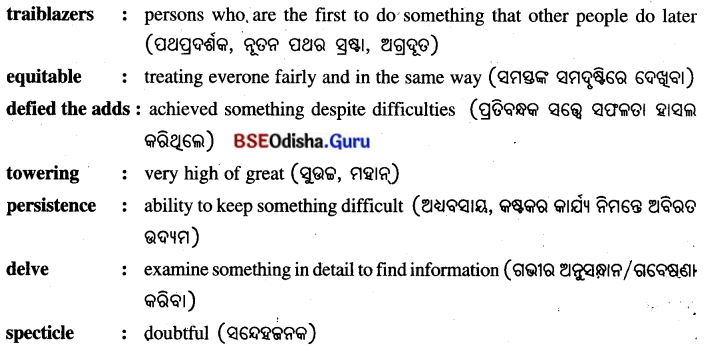
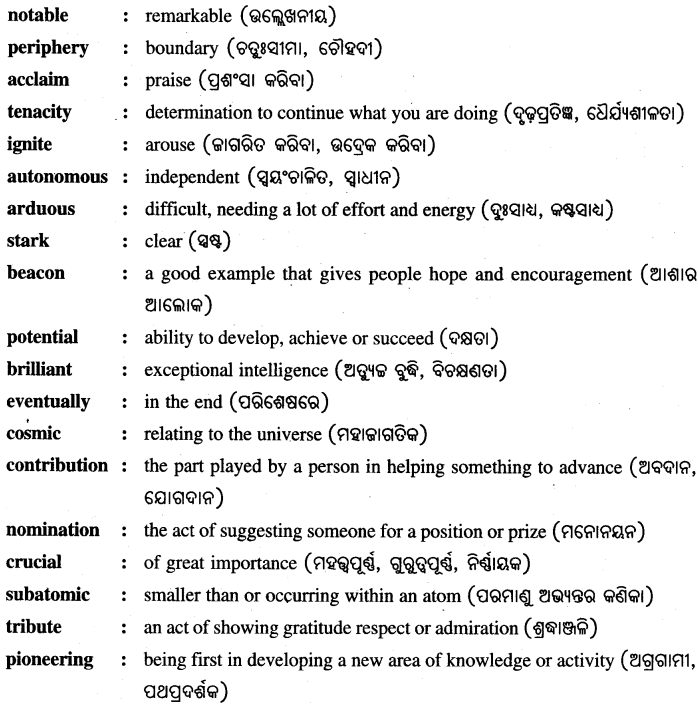
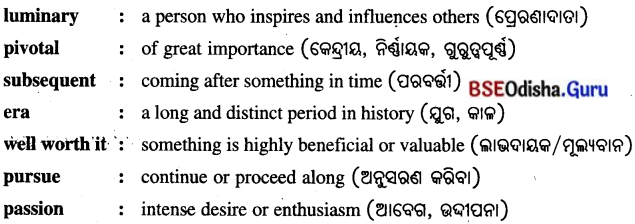
Notes and Glossary (ଶବ୍ଦାର୍ଥ) :
Bibha Chowdhuri: The Beam of Light that Lit the Path for Women in Indian Science Class 8 MCQ
Question 1.
What is being recognised beyond doubt in the present day world ?
(a) women’s potential in STEM
(b) achievements of NASA
(c) success story of ISSRO
(d) researchers at TIFR
Answer:
(b) achievements of NASA
Question 2.
Which year was Bibha Chowdhuri born in ?
(a) 1911
(b) 1912
(c) 1913
(d) 1914
Answer:
(c) 1913
Question 3.
What did Bibha Chowdhuri rise against ?
(a) the societal expectations of women
(b) the towering giants of science
(c) both of these
(d) neither of these
Answer:
(c) both of these
Question 4.
Bibha Chowdhuri was introduced as ‘India’s New Woman Scientist’ by …………… (Fill in the blank.)
(a) Government of India
(b) Government of U.K.
(c) her guide
(d) newspapers
Answer:
(d) newspapers
Question 5.
Which year did Bibha Chowdhuri return to India ?
(a) 1949
(b) 1950
(c) 1951
(d) 1952
Answer:
(a) 1949
Question 6.
Where is Saha Institute of Nuclear Physics ?
(a) Ahmedabad
(b) Kolkata
(c) Hyderabad
(d) Mumbai
Answer:
(b) Kolkata
Question 7.
What does ‘Bibha’ literally mean ?
(a) bright light
(b) sunlight
(c) beam of light
(d) reflection of light
Answer:
(c) beam of light
Question 8.
Who was popularly referred to as the ‘Rocket Woman of India’ ?
(a) Kalpana Chawla
(b) Sunita William
(c) Ritu Karidhal Srivastava
(d) Bibha Chowdhuri
Answer:
(c) Ritu Karidhal Srivastava
Bibha Chowdhuri: The Beam of Light that Lit the Path for Women in Indian Science Class 8 Fill in the Blanks
1. The full form of STEM is ………………..
Answer: science, technology, engineering and mathematics
2. Bibha Chowdhuri excelled in high-energy ………….
Answer: particle physics
3. Bobha Chowdhuri remained in the ………… of her male counterparts.
Answer: shadows
4. The full form of TIFR is …………
Answer: Tata Institute of Fundamental Research.
5. In India Bibha Chowdhuri continued her research work on cosmic rays and …………
Answer: Subatomic particles
6. The International Astronomical Union honoured Bibha’s ………… by renaming a star.
Answer: legacy
7. Over ………… women contributed to Chandrayan-3.
Answer: fifty
Bibha Chowdhuri: The Beam of Light that Lit the Path for Women in Indian Science Class 8 Short Question Answer
Question 1.
What challenges did Bibha Chowdhuri face in her early life ?
Answer:
Bibha Chowdhuri faced the system of limited women’s role in domestic and social life. However she proved her abilities not to be inferior to men in the then mendominated society.
Question 2.
How was Bibha Chowdhuri’s work not recognised formally ?
Answer:
Although Bibha Chowdhuri worked tirelessly in her lifetime, she had never been awarded any formal reward. A few people known to her recognised her brilliance.
Question 3.
Which institutions did Bibha Chowdhuri work at on her return to India ?
Answer:
On her return to India, Bibha became the first woman faculty at the Tata Institute of Fundamental Research. She also worked at the Physical Research Laboratory, Ahmedabad and the Saha Institute of Nuclear Physics, Kolkata.
Question 4.
How was Bibha Chowdhuri honoured by the International Astronomical Union ?
Answer:
The International Astronomical Union honoured Bibha’s legacy by renaming a star in the constellation Leo-HD 86081 as ‘Bibha’ which literally means ‘beam of light’.
Question 5.
Who is popularly referred to as the ‘Rocket Woman of India’ and why ?
Answer:
Dr. Ritu Karidhal Srivastav is popularly referred to as the ‘Rocket Woman of India’ for her significant role in ISRO’s Mars Orbiter Mission and her subsequent leadership in Chandrayaan-2 and.Chandrayaan-3.
Question 6.
What was Bibha Chowdhuri’s most notable achievement in the field of science ?
Answer:
The discovery of pi-mesons, a subatomic particle was Bibha Chowdhuri’s most notable achievement in the field of science. This was an important discovery in the field of particle physics. After this discovery her name was nominated for a Nobel Prize by Erwin Schrodinger in 1950. Though unsuccessfull, this nomination reflected her remarkable talent.
Question 7.
How did Bibha Chowdhuri’s story inspire the women scientists of India ?
Answer:
Bibha Chowdhuri’s courage, dedication and determination became a source of inspiration for today’s women scientists of India, especially those who work under the ISRO. They have been encouraged with Bibha’s legacy and they are progressing in their work on Mars and Moon Mission. She was become a role model for them.
Question 8.
What qualities helped Bibha Chowdhuri proceed in her work despite odds on her way ?
Answer:
Bibha Chowdhuri was a very intelligent woman. She was not afraid of the then male dominated society. She was quite confident about progressing on her work. He patience, courage and intellectual brilliance took her to the peak of her achievement. She focused on the quality of her research rather than fame and awareds
Question 9.
How was Bibha Chowdhuri honoured after her death ?
Answer:
Bibha Chowdhuri passed away in 1991, her story untold and her name largely forgotten. But after her death, the International Astronomical Union renamed a star after her name. This renaming recognized her role in illuminating women scientists. Further, the Government of India honoured her legacy by establishing a chair professorship in her name.
Question 10.
Why does the writer say that Bibha Chowdhuri’s legacy lives on.
Answer:
According to the writer, the success achieved by today’s large number of Indian women scientists is built upon the shoulders of pioneers like Bibha Chowdhuri. Her story continues to inspire young women to pursue their passion breaking barriers. The Indian women scientists are writing the next chapter in a story that Bibha Chowdhuri helped begin. This is why the writer says that her legacy lives on.