
For effective revision, students can use BSE Odisha Class 4 English Solutions Chapter 1 My Bicycle Question Answer to practice textbook exercises.
Class 4 English My Bicycle Question Answer
Class 4 English Chapter 1 Question Answer Odia Medium
Answer the following questions.
(ନିମ୍ନୋକ୍ତ ପ୍ରଶ୍ନ ଗୁଡ଼ିକର ସଠିକ୍ ଉତ୍ତର ଦିଅ)
Question 1.
What is the poem about?
କବିତାଟି କାହା ବିଷୟରେ ?
Answer:
The poem is about a child’s bicycle.
Question 2.
What colour is the bicycle?
ସାଇକେଲର ରଙ୍ଗ କଣ ?
Answer:
The bicycle is red.
Question 3.
How many times is the word ‘I’ used in the poem?
Who is ‘I ? କବିତାରେ ‘I’ ଶବ୍ଦଟି କେତେଥର ବ୍ୟବହାର କରାଯାଇଛି ? ।” କିଏ ?
Answer:
The word “I” is used five times in the poem. Here, the child is “I”.
Question 4.
How does the bell sound?
ଘଣ୍ଟିର ଶବ୍ଦ କିପରି ହୁଏ ?
Answer:
The bell sounds “trin…trin…”,
Question 5.
What colour is the seat?
ସିଟ୍ ର ରଙ୍ଗ କଣ ?
Answer:
The seat is blue.
Question 6.
What is the colour of tyres and pedals?
ଟାୟାର ଏବଂ ପେଡାଲର ରଙ୍ଗ କଣ ?
Answer:
The colour of the tyres and pedals is black.
Question 7.
What does the bicycle need to move?
ସାଇକେଲ ଚାଲିବା ପାଇଁ କଣ ଦରକାର ?
Answer:
The bicycle needs only some air to move.
Question 8.
Why does the child put on a helmet?
ପିଲାଟି ହେଲମେଟ୍ କାହିଁକି ପିନ୍ଧେ ?
Answer:
The child puts on a helmet to protect his head from injury in case of an accident.
Additional :
ଆସ ଜାଣିବା “Subject-verb agreement” (କର୍ଲା-କ୍ରିୟା ସମ୍ବନ୍ଧ)
ଆମେ ଆଗରୁ ଜାଣିଛେ ଯେ, ଇଂରାଜୀର ପ୍ରତ୍ୟେକ ବାକ୍ୟରେ ଏକ “କର୍ତ୍ତା” ଏବଂ ଏକ “କ୍ରିୟା” ରହିବା ନିହାତି ଆବଶ୍ୟକ । ଆମେ ଏକଥା ମଧ୍ୟ ଜାଣିଛେ ଯେ, ଗୋଟିଏ ବାକ୍ୟରେ ଘଟୁଥିବା କାର୍ଯ୍ୟ ବା କାମଟି ହେଉଛି “କ୍ରିୟା” ବା “Verb”, ଏବଂ ଯାହାଦ୍ବାରା ସେହି କାର୍ଯ୍ୟଟି ସମ୍ପାଦିତ ହୁଏ କିମ୍ବା ବାକ୍ୟଟି ଯାହା ବିଷୟରେ, ସେ ବାକ୍ୟର “କର୍ତ୍ତା” ବା “Subject” ।
ତେବେ, କୌଣସି ବି ବାକ୍ୟକୁ ସଠିକ୍ ହେବା ପାଇଁ “କାର୍ଯ୍ୟ କରୁଥିବା ବ୍ୟକ୍ତି କିମ୍ବା ଜିନିଷ (Subject)” ସହିତ “କ୍ରିୟା ଶବ୍ଦ (Verb)” କୁ ସମ୍ପୂର୍ଣ୍ଣ ଭାବରେ ସମନ୍ବିତ ହେବାକୁ ପଡିବ (ମେଳ ଖାଇବାକୁ ପଡ଼ିବ) ।
ଅର୍ଥାତ୍,
- ଯଦି ବାକ୍ୟର କର୍ତ୍ତା “ଏକବଚନ” (ଜଣେ ବ୍ୟକ୍ତି ବା ଜିନିଷ) ତେବେ କ୍ରିୟା ମଧ୍ୟ “ଏକବଚନ” ରେ ରହିବ ।
- ଏବଂ ଯଦି କର୍ତ୍ତା “ବହୁବଚନ” (ଏକ ରୁ ଅଧିକ ବ୍ୟକ୍ତିବିଶେଷ ବା ଜିନିଷ) ତେବେ କ୍ରିୟା ମଧ୍ୟ “ବହୁବଚନ” ହେବ ।
ଉଦାହରଣ :
The child plays in the study.
ଏଠାରେ “The child” କର୍ତ୍ତା (ଏକବଚନ) ଏବଂ “plays” କ୍ରିୟା (ଏକବଚନ)
ସେହିଭଳି,
They love fish.
ଏଠାରେ “They” କର୍ତ୍ତା (ବହୁବଚନ) ଏବଂ “love” କ୍ରିୟା (ବହୁବଚନ)
ଆହୁରି ମଧ୍ୟ,
“Subject-verb agreement”, First, Second ଏବଂ Third Person (ଉଭୟ ଏକବଚନ (singular) ଏବଂ ବହୁବଚନ (plural)) ରେ ଥିବା ସମସ୍ତ ବିଷୟ/କର୍ତ୍ତାମାନଙ୍କ ପାଇଁ ଲାଗୁ ହୁଏ । ଏହି ନିୟମ ଅନୁସାରେ ହିଁ କୌଣସି ବାକ୍ୟର “କ୍ରିୟା” ବର୍ତ୍ତମାନ କାଳରେ ବାକ୍ୟର “କର୍ତ୍ତା” ର ସଂଖ୍ୟା ସହିତ ମେଳ ଖାଏ ।
- Third Person Singular (He / She I It) କର୍ତ୍ତାମାନଙ୍କ ପାଇଁ Verb ଏକବଚନରେ ରହିବ ।
- Plural ଏବଂ First/Second Person (I/You/We/They) କର୍ତ୍ତାମାନଙ୍କର ପାଇଁ Verb ବହୁବଚନ ହେବ ।
(ମନେରଖ : “।” ଏବଂ “You” ଏକବଚନ ହେଲେ ମଧ୍ୟ ସେମାନଙ୍କ ସହିତ verb ସବୁବେଳେ ବହୁବଚନରେ ରହିବ ।)
ଉଦାହରଣ :
| Person | Singular | Plural |
| First Person Second Person Third Person |
I walk. You walk. He/She/It walks. |
We walk. You walk. They walk. |
ତେବେ, ନିୟମକୁ ନେଇ ଭ୍ରମିତ ହୋଇଯିବନାହିଁ……..
- ବେଳେବେଳେ କିଛି ଅଧିକ ଶବ୍ଦ (extra words) କର୍ତ୍ତା (Subject) ଏବଂ କ୍ରିୟା (Action/Verb) ମଝିରେ ରହି ଯାଇଥାଆନ୍ତି । ଏଭଳି କ୍ଷେତ୍ରରେ କର୍ତା କିଏ ସଠିକ୍ ଭାବରେ ଚିହ୍ନିବା ଜରୁରୀ ।
ଉଦାହରଣ:
- ବାକ୍ୟ : The bag of toys is heavy.
(ଏଠାରେ “toys” ଶବ୍ଦଟି ବହୁବଚନ (Plural), କିନ୍ତୁ ଏହା ବାକ୍ୟର କର୍ତ୍ତା ନୁହେଁ । ବାକ୍ୟର କର୍ତ୍ତା ହେଉଛି “The bag” । ଏଠାରେ କେବଳ ଗୋଟିଏ ବ୍ୟାଗ୍ ବିଷୟରେ ହିଁ କୁହାଯାଉଛି ।)
- ବାକ୍ୟ: The students in the class talk loudly.
(ଏଠାରେ “the class”, ଯାହା verb “talk”ର ଠିକ୍ ପୁର୍ବରୁ ଅଛି, ଏକବଚନ । କିନ୍ତୁ ଏହା ବାକ୍ୟର କର୍ତ୍ତା ନୁହେଁ । ବାକ୍ୟର କର୍ତ୍ତା ହେଉଛି “The students” । ଏଠାରେ “students” (ଏକରୁ ଅଧିକ student) ମାନଙ୍କ ବିଷୟରେ କୁହାଯାଉଛି ।)
ଆହୁରି ମଧ୍ୟ…
- ଯେତେବେଳେ କୌଣସି ବାକ୍ୟରେ “ଦୁଇ” କିମ୍ବା ଅଧିକ ବ୍ୟକ୍ତି ବା ବିଷୟ “and” ଦ୍ବାରା ଯୋଡା ହୋଇଥାଆନ୍ତି, ସେତେବେଳେ “ବହୁବଚନ” କ୍ରିୟା ବ୍ୟବହୃତ ହୁଏ । (ଯଥା: “Sara and Jinu are going to the store.” ଏବଂ “Mohan and Hari play football.”)
- ଯେତେବେଳେ ବିଷୟଗୁଡ଼ିକୁ “or” କିମ୍ବା “nor” ଦ୍ବାରା ଯୋଡା ଯାଇଥାଏ, ସେତେବେଳେ କ୍ରିୟାଟି ତା’ର ନିକଟତର ବିଷୟର ସଂଖ୍ୟା ସହିତ ଏକମତ ହେବା ଉଚିତ । ଅର୍ଥାତ୍, ଯଦି କ୍ରିୟାର ନିକଟବର୍ତ୍ତୀ କର୍ତ୍ତା ଏକବଚନ, ତେବେ କ୍ରିୟା ଏକବଚନରେ ରହିବ । ଯଦି କ୍ରିୟାର ନିକଟବର୍ତ୍ତୀ କର୍ତ୍ତା ବହୁବଚନ, ତେବେ କ୍ରିୟା ବହୁବଚନରେ ରହିବ । (ଯଥା:
“Neither the teacher nor the students know.” “Neither the students nor the teacher knows.”) - ସେହିଭଳି, “anyone, everyone, someone, no one, nobody, each, neither” ଭଳି ଶବ୍ଦ ଗୁଡ଼ିକ ଶୁଣିବାକୁ ଅନେକ ଭଳି ଲାଗୁଥିଲେ ମଧ୍ୟ, ବ୍ୟାକରଣ ଅନୁଯାୟୀ “ଗୋଟିଏ ଗ୍ରୁପ୍” ବୁଝାଏ, କୌଣସି ନିର୍ଦ୍ଦିଷ୍ଟ ବ୍ୟକ୍ତି ବା ଜିନିଷକୁ ନୁହେଁ । ତେଣୁ ଏସବୁ ଏକବଚନ ଅଟନ୍ତି । ଏଗୁଡିକୁ “Singular Indefinite Pronouns” କୁହାଯାଏ । ଏହି କ୍ଷେତ୍ରରେ verb ଏକବଚନରେ ରହିବ ।
ଯଥା : “Everyone loves music.” ଏବଂ “Each of the students has a pen.”
(ମନେରଖ, ଯଦି “Each” କିମ୍ବା “Everyone” ଇତ୍ୟାଦି ପରେ ଯଦି “of the…” ଲାଗି କିଛି ବହୁବଚନ ଶବ୍ଦ ଥାଏ, ତଥାପି ମଧ୍ଯ Verb Singular ହିଁ ରହିବ ।
କାରଣ ଆମେ ଏଠାରେ “ପ୍ରତ୍ୟେକ (ପ୍ରତି ଏକ)” ବ୍ୟକ୍ତି କିମ୍ବା ବସ୍ତୁ ବିଷୟରେ କହୁଛେ ।
ଉଦାହରଣ :
ବାକ୍ୟ : Each of the apples is red. (“ପ୍ରତ୍ୟେକ ସେଓ ନାଲି ରଙ୍ଗର ।”)
ଏଠାରେ “apples” ବହୁବଚନ । କିନ୍ତୁ ଆମେ “ସମସ୍ତ apple” red ବୋଲି କହୁନାହେଁ । ଆମେ କହୁଛେ ଯେ “ପ୍ରତି apple” red I)
- “ସାମୁହିକ ବିଶେଷ୍ୟ” ବା “Collective Noun” (team, committee, family ଇତ୍ୟାଦି) ଗୁଡ଼ିକ ଅନେକ ଲୋକ ବା ଜିନିଷକୁ ନେଇ ଗଠିତ ଏକ “ଗୋଷ୍ଠୀ” (Group) କୁ ବୁଝାଏ । ତେଣୁ, ଏଭଳି ଶବ୍ଦ ଗୁଡ଼ିକୁ ଆମେ ପ୍ରାୟତଃ Singular (ଏକବଚନ) ବୋଲି ଧରିଥାଉ । କାରଣ ଏଠାରେ ସମସ୍ତ ସଦସ୍ୟ ମିଶି ଗୋଟିଏ ୟୁନିଟ୍ ଭାବରେ କାମ କରନ୍ତି ବା ଜଣେ ଭାବରେ ପରିଗଣିତ ହୁଅନ୍ତି ।
ଉଦାହରଣ :
ବାକ୍ୟ: The team is winning. (ଏଠାରେ “team” ଗୋଟିଏ ୟୁନିଟ୍ ଏବଂ ଏଠାରେ ସମସ୍ତ ସଦସ୍ୟ ଗୋଟିଏ ଲକ୍ଷ୍ୟରେ କାମ କରୁଛିନ୍ତି ।)
- ଯେତେବେଳେ ଆମେ ଟଙ୍କା (Money), ସମୟ (Time), କିମ୍ଵା ଦୂରତା (Distance) ବିଷୟରେ କଥା ହେଉ, ସେତେବେଳେ ପରିମାଣ/ସଂଖ୍ୟାଟି ବହୁବଚନ (Plural) ଭଳି ଦେଖାଗଲେ ମଧ୍ୟ ଆମେ ତାକୁ ଏକବଚନ (Singular) ବୋଲି ଧରିଥାଉ । କାରଣ ଆମେ ସେହି ପୁରା ପରିମାଣକୁ ଗୋଟିଏ ୟୁନିଟ୍ ଭାବରେ ଦେଖୁ । (ଅର୍ଥାତ୍, ଯେତେବେଳେ ଆମେ କୌଣସି ଜିନିଷର ମୋଟ ପରିମାଣ ବିଷୟରେ କହୁଛେ, ସେତେବେଳେ ଆମେ ସବୁବେଳେ Singular Verb (is I has I was) ବ୍ୟବହାର କରିବା ।)
ଚତୁର୍ଥ ଶ୍ରେଣୀ:
| Money | Fifty rupees is not much. |
| Time | Two hours wait is very long. |
| Distance | Three kilometers is not very far. |
Post-reading – ପଠନ ପରେ
A. Visual Memory Development Technique (VMDT)
(ଦୃଶ୍ୟ ସାହାଯ୍ୟରେ ସ୍ମୃତି ଶକ୍ତି ବିକାଶ କରିବାର ଉପାୟ)
ତୁମର ଆଖ୍ କ୍ୟାମେରାରେ ପଢ଼ିଥିବା ଗୀତଟିର ଚିତ୍ର ଉତ୍ତୋଳନ କର (ଗୀତଟିକୁ ଭଲ ଭାବରେ ଦେଖ) ।
ଏବେ ତୁମର ଆଖ୍ ବନ୍ଦ କର ଏବଂ ନିମ୍ନୋକ୍ତ ଜିନିଷ ଗୁଡ଼ିକ ଉପରେ ନିଜର ତର୍ଜନୀ ଆଙ୍ଗୁଠି ରଖ ।
Whole: (i) Which paragraph tells about
(ଯେଉଁ ପଦରେ ନିମ୍ନୋକ୍ତ ଜିନିଷ ଗୁଡ଼ିକ ବିଷୟରେ କୁହାଯାଇଛି, ସେଗୁଡ଼ିକ ଉପରେ ଯଥାକ୍ରମେ ନିଜର ଆଙ୍ଗୁଠି ରଖ ।)
(ii) seat, tyre (ସିଟ୍, ଟାୟାର)
(iii) bicycle moving (ସାଇକେଲ ଚାଲିବା)
(iv) bell, pedal (ଘଣ୍ଟି, ପେଡାଲ)
Part : (କବିତାରେ ଥିବା ନିମ୍ନୋକ୍ତ ଶବ୍ଦ ଗୁଡ଼ିକ ଉପରେ ଯଥାକ୍ରମେ ନିଜର ଆଙ୍ଗୁଠି ରଖ ।)
move, colour, sometimes, track, air, helmet, happily, everywhere
B. Let us Listen and Speak
(ଚାଲ ଶୁଣିବା ଏବଂ କହିବା)
1. Can you make the sounds of the following?
ତୁମେ ନିମ୍ନୋକ୍ତ ଜିନିଷ ଗୁଡ଼ିକର ଶବ୍ଦ କରିପାରିବ କି ?
a. school bell (ବିଦ୍ୟାଳୟ ଘଣ୍ଟି)
b. clock (ଘଣ୍ଟା (କାନ୍ଥ ଘଣ୍ଟା))
c. train (ଟ୍ରେନ୍):
d. drum (ଡ୍ରମ୍ / ଢୋଲ)
e. phone (ଫୋନ୍)
f. doorbell (ଡୋରବେଲ୍)
g. police van siren (ପୋଲିସ ଭ୍ୟାନ୍ ସାଇରନ୍)
h. raindrop (ବର୍ଷା ବିନ୍ଦୁ)
2. We go from one place to another by using different vehicles. Which vehicle do you like the most?
ଆମେ ବିଭିନ୍ନ ଯାନବାହାନ ବ୍ୟବହାର କରି ଗୋଟିଏ ସ୍ଥାନରୁ ଅନ୍ୟ ସ୍ଥାନକୁ ଯାଉ। ତୁମକୁ କେଉଁ ଯାନବାହାନ ସବୁଠାରୁ ଭଲ ଲାଗେ ?
Chain drill
- Teacher to student 1 : — I like a bicycle. What about you ?
ଶିକ୍ଷକ ପ୍ରଥମ ଛାତ୍ରଙ୍କୁ : — ମତେ ସାଇକେଲ ଭଲ ଲାଗେ । ତୁମକୁ କଣ ଭଲ ଲାଗେ ? - Student1 to student 2 : — I like an aeroplane. What about you ?
ପ୍ରଥମ ଛାତ୍ର ଦ୍ଵିତୀୟ ଛାତ୍ରଙ୍କୁ : — ମତେ ଉଡାଜାହାଜ ଭଲ ଲାଗେ । ତୁମକୁ କଣ ଭଲ ଲାଗେ ? - Studnent 2 to student 3 : — I like a scooty. What about you ?
ଦ୍ଵିତୀୟ ଛାତ୍ର ତୃତୀୟ ଛାତ୍ରଙ୍କୁ : — ମତେ ସ୍କୁଟି ଭଲ ଲାଗେ । ତୁମକୁ କଣ ଭଲ ଲାଗେ ?
Chain drill continues till the last student participates.
ଏହିଭଳି ଯେପର୍ଯ୍ୟନ୍ତ ସମସ୍ତ ଛାତ୍ର/ଛାତ୍ରୀ ଭାଗ ନେଇସାରିବା ପର୍ଯ୍ୟନ୍ତ ତୁମେମାନେ ଅଭ୍ୟାସଟି ଜାରି ରଖୁବ ।
3. Your teacher will sing the alphabet song. Listen to him/ her and repeat.
ତୁମର ଶିକ୍ଷକ/ଶିକ୍ଷୟତ୍ରୀ ବର୍ଣ୍ଣମାଳା ଗୀତଟିକୁ (The Alphabet Song) ଗାଇବେ । ସେ ଗାଇବା ସମୟରେ ତାଙ୍କୁ ମନଦେଇ ଶୁଣ ଏବଂ ସଠିକ୍ ଭାବରେ ପୁନରାବୃଭି କର ।
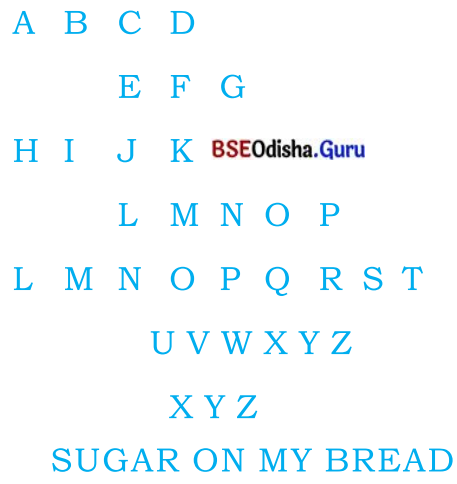
ଏ ବି ସି ଜି
ଇ ଏଫ ଜି
ଏଚ ଆଇ ଜେ କେ
ଏଲ ଏମ ଏନ ଓ ପି
ଏଲ ଏମ ଏନ ଓ ପି କ୍ୟୁ ଆର ଏସ ଟି
ୟୁ ଭି ଡବ୍ଲ୍ୟୁ ଏକ୍ସ ୱାଇ ଜେଡ୍
ଏକ୍ସ ୱାଇ ଜେଡ୍
ମୋ ପାଉଁରୁଟି ଉପରେ ଚିନି ।
C. Let us read
(ଆସ ପଢ଼ିବା)
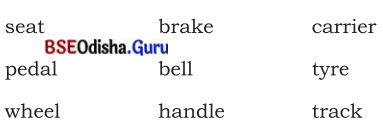
1. Read the following words.
ନିମୋକ୍ତ ଶବ୍ଦ ଗୁଡ଼ିକୁ ଠିକ୍ ଭାବରେ ପଢ଼ ।
2. Given below are some road safety rules. Read them aloud.
ତଳେ କେତେଗୋଟି ସଡ଼କ ସୁରକ୍ଷା ନିୟମ ଦିଆଯାଇଅଛି । ସେଗୁଡ଼ିକୁ ବଡ଼ ପାଟିରେ ପଢ଼ ।
- Helmet First (ହେଲମେଟ୍ ଫଷ୍ଟ) ପ୍ରଥମେ ହେଲମେଟ୍
- Follow traffic signals (ଫଲୋ ଟ୍ରାଫିକ୍ ସିଗ୍.ନଲ୍) ଟ୍ରାଫିକ୍ ସଙ୍କେତ ମାନନ୍ତୁ
- Keep to the left (କିପ୍ ଟୁ ଦ ଲେଫ୍) ବାମ ପାଖରେ ରୁହନ୍ତୁ
- Follow the road signs (ଫଲୋ ଦ ରୋଡ୍ ସାଇନ୍ସ) ରାସ୍ତାର ସଙ୍କେତଗୁଡ଼ିକୁ ମାନନ୍ତୁ
- Go slow (ଗୋ ସ୍ଲା) ଧୀରେ ଯାଆନ୍ତୁ
- No phones (no ଫୋନ୍) ଫୋନ୍ ବ୍ୟବହାର ମନା
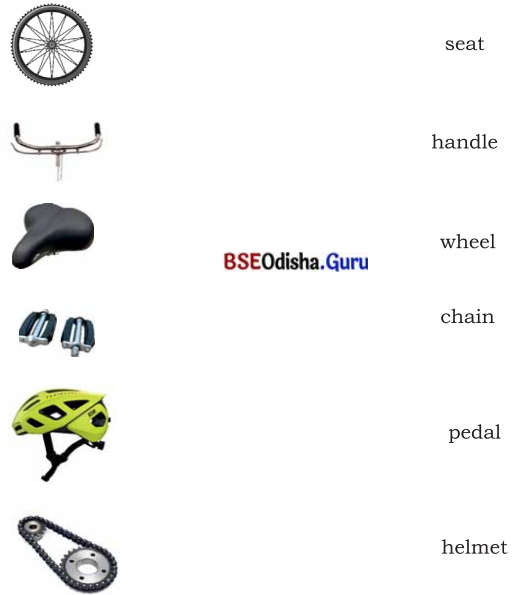
3. Draw lines to match the pictures with their names.
ଚିତ୍ରଗୁଡ଼ିକୁ ସେମାନଙ୍କ ନାମ ସହିତ ମେଳ କରିବା ପାଇଁ ଗାର ଟାଣ ।
D. Let us write
(ଆସ ଲେଖୁବା)
1. Let us arrange some words in alphabetical order.
ଚାଲ କିଛି ଶବ୍ଦକୁ ବର୍ଣ୍ଣମାଳା କ୍ରମରେ (ଅର୍ଥାତ୍ ପ୍ରଥମେ A ରୁ ଆରମ୍ଭ ହେଉଥିବା ଶବ୍ଦ ରହିବ, ତା’ପରେ Bରୁ ଆରମ୍ଭ ହେଉଥିବା ଶବ୍ଦ, ତା’ପରେ C… ଏହିଭଳି କ୍ରମରେ) ସଜାଇବା
Let us take names of five fruits to begin with: ଆରମ୍ଭ କରିବା ପାଇଁ ଆସ ପାଞ୍ଚୋଟି ଫଳର ନାମ ନେବା :

Now arrange these words in alphabetical order.
Look at the first letter of each word.
Put them in the order of the alphabet.
Write down the word that begins with A first, B next and so on
ବର୍ତ୍ତମାନ ଏହି ଶବ୍ଦଗୁଡ଼ିକୁ ବର୍ଣ୍ଣମାଳା ଅନୁସାରେ ସଜାଅ । ପ୍ରତ୍ୟେକ ଶବ୍ଦର ପ୍ରଥମ ଅକ୍ଷରକୁ ଦେଖ । ସେଗୁଡିକୁ ଇଂରାଜୀ ବର୍ଣ୍ଣମାଳା କ୍ରମରେ ରଖ । ପ୍ରଥମେ A ରୁ ଆରମ୍ଭ ହେଉଥିବା ଶବ୍ଦ ଲେଖ, ତାପରେ B ଏବଂ ଏହିପରି ଭାବରେ ଲେଖ ।
So, the names of these fruits in alphabetical order would be:
ତେଣୁ, ଏହି ଫଳଗୁଡିକର ନାମ ବର୍ଣ୍ଣମାଳା କ୍ରମରେ ଏହିପରି ହେବ :

Now, write these colours in alphabetical order :
ବର୍ତ୍ତମାନ, ଏହି ରଙ୍ଗଗୁଡିକୁ ବର୍ଣ୍ଣମାଳା କ୍ରମରେ ଲେଖ :


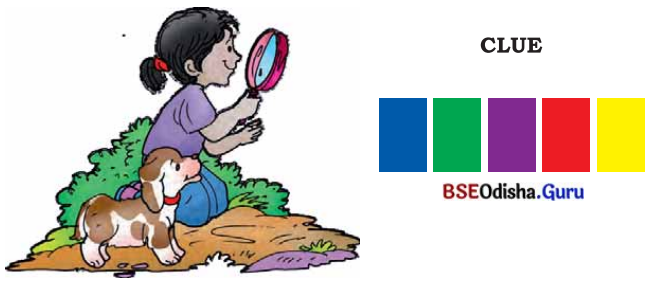
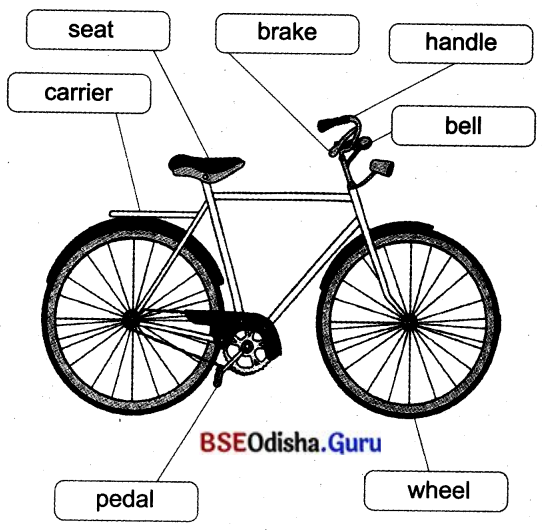
2. Write the names of the parts of the bicycle in the given boxes. You may use the help box for selecting names.
ଦିଆଯାଇଥିବା ବାକ୍ସଗୁଡ଼ିକରେ ସାଇକେଲର ବିଭିନ୍ନ ଅଂଶର ନାମ ଲେଖ । ନାମ ବାଛିବା ପାଇଁ ତୁମେ ସାହାଯ୍ୟକାରୀ ବାକ୍ସ ବ୍ୟବହାର କରିପାରିବ ।
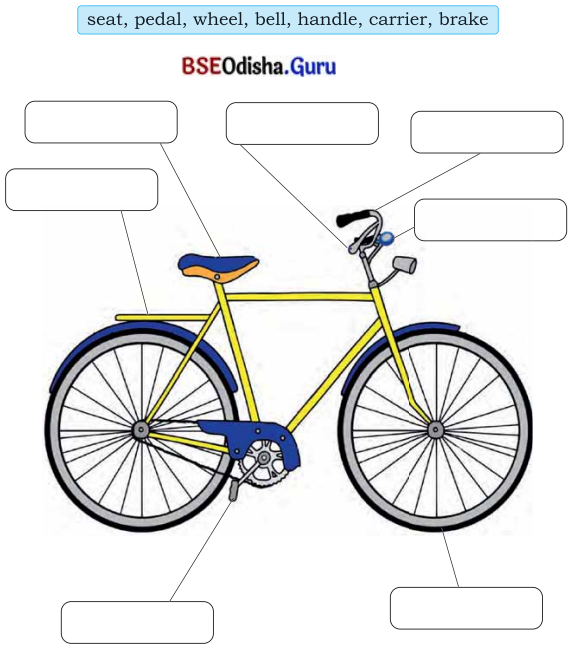
Answer:
3. Put a ( ✓ ) tick for the correct sentences and a cross ( ✗ ) for the incorrect sentences in the box.
ବାକ୍ସ ଭିତରେ ଠିକ୍ ବାକ୍ୟ ପାଇଁ ଠିକ୍ ଚିହ୍ନ ( ✓ ) ଏବଂ ଭୁଲ୍ ବାକ୍ୟ ପାଇଁ ଛକି ( ✗ ) ଚିହ୍ନ ଦିଅ ।
a. The child has a blue bicycle. ( ✗ )
ପିଲାଟି ପାଖରେ ଗୋଟିଏ ନୀଳ ସାଇକେଲ ଅଛି ।
b. The bell sounds Trin….trin….. trin….. ( ✓ )
ଘଣ୍ଟିଟି ଗ୍ରିନ୍….ଟ୍ରିନ୍….. ଟ୍ରେନ୍…. ବାଜେ ।
c. The seat of the bicycle is black. ( ✗ )
ସାଇକେଲର ସିଟ୍ କଳା ଅଟେ ।
d. The bicycle is always slow. ( ✗ )
ସାଇକେଲଟି ସବୁବେଳେ ଧୀର ଅଟେ ।
e. The bicycle needs some air to move. ( ✓ )
ସାଇକେଲ ଚାଲିବା ପାଇଁ କିଛି ପବନ ଦରକାର କରେ ।
4. Fill in the blanks using the right words from brackets.
ବନ୍ଧନୀରୁ ସଠିକ୍ ଶବ୍ଦ ବାଛି ଶୂନ୍ୟସ୍ଥାନ ପୂରଣ କର ।
a. The bicycle is red in colour. (black, yellow, blue, red)
ସାଇକେଲଟି ନାଲି ରଙ୍ଗର ଅଟେ । (କଳା, ହଳଦିଆ, ନୀଳ, ନାଲି)
b. The seat is blue in colour. (pedal, handle, seat, bell)
ସିଟ୍ ଟି ନୀଳ ରଙ୍ଗର ଅଟେ । (ପେଡାଲ୍, ହ୍ୟାଣ୍ଡେଲ, ସିଟ୍, ଘଣ୍ଟି)
c. A bicycle has two pedals. (one, two, three, four)
ଗୋଟିଏ ସାଇକେଲର ଦୁଇଟି ପେଡାଲ୍ ଥାଏ । (ଗୋଟିଏ, ଦୁଇଟି, ତିନୋଟି, ଚାରୋଟି)
d. air is needed to keep the bicycle moving. (air, water, petrol, diesel)
ସାଇକେଲକୁ ଚାଲୁ ରଖିବା ପାଇଁ ପବନ ଦରକାର ହୁଏ । (ପବନ, ପାଣି, ପେଟ୍ରୋଲ, ଡିଜେଲ)
e. The child always wears a helmet for safety (happiness, safety, moving, speed)
ପିଲାଟି ସବୁବେଳେ ହେଲମେଟ୍ ପିନ୍ଧେ ସୁରକ୍ଷା ପାଇଁ । (ଖୁସି, ସୁରକ୍ଷା, ଘୁଞ୍ଚିବା, ଗତି)
f. The sound of the bell makes people move aside. (bell, whistle, clapping, horn)
ଘଣ୍ଟି ର ଶବ୍ଦ ଲୋକଙ୍କୁ ରାସ୍ତାରୁ କଡେଇ ଦିଏ । (ଘଣ୍ଟି, ସିଟି, ତାଳି, ହର୍ଣ୍ଣ)
E. Mental Talk
(ମାନସିକ କଥନ)
We enjoy riding a bicycle.
(ଦିଆଯାଇଥିବା ବାକ୍ୟଟିକୁ ଇଂରାଜୀରେ ମନେ ମନେ କୁହ ଏବଂ ଏହା ଉପରେ ବିଚାର କର ।)
F. Let us do
(ଆସ କରିବା)
Draw the picture of a bicycle in the box.
ତଳେ ଦିଆଯାଇଥିବା ବାକ୍ସରେ ଏକ ସାଇକେଲର ଚିତ୍ର ଆଙ୍କ ।
My Bicycle Class 4 Summary
Let us sing and enjoy
(ଆସ ଗୀତ ଗାଇବା ଏବଂ ଆନନ୍ଦ ନେବା)
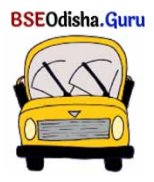
The wheels on the bus go
round, round, round
round, round, round
all through the town.
(ଦି ହୁଇଲସ୍ ଅନ୍ ଦି ବସ୍ ଗୋ
ରାଉଣ୍ଡ୍, ରାଉଣ୍ଡ୍, ରାଉଣ୍ଡ୍
ରାଉଣ୍ଡ୍, ରାଉଣ୍ଡ୍, ରାଉଣ୍ଡ୍
ଅଲ୍ ଥୁ ଦି ଟାଉନ୍)
ଅନୁବାଦ: ବସର ଚକା ଗୁଡିକ ଗୋଲ, ଗୋଲ, ଗୋଲ ହୋଇ ଘୂରେ । ଗୋଲ ଗୋଲ ଗୋଲ / ସାରା ସହରରେ ।
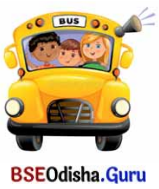
The wipers on the bus go
swish, swish, swish
swish, swish, swish
all through the town.
(ଦି ୱାଇପର୍ସ ଅନ୍ ଦି ବସ୍ ଗୋ
ସ୍ପିସ୍, ସ୍ବାସ୍, ସ୍ବାସ୍
ସ୍ପିସ୍, ସ୍ବାସ୍, ସ୍ବାସ୍
ଅଲ୍ ଥୁ ଦି ଟାଉନ୍)
ଅନୁବାଦ: ବସ୍ ର ୱାଇପର୍ ଗୁଡିକ ସ୍ବାସ୍, ସ୍ବାସ୍, ସ୍ବାସ୍ ଶବ୍ଦ କରେ ଓ ସ୍ବାସ୍, ସିସ୍, ସିସ୍ ସାରା ସହରରେ ।
The wheels on the bus go round, round, round. How do the bicycle wheels go ?
Let us read the poem ‘My Bicycle’ and enjoy.
ବ୍ୟାଖ୍ୟା: ମୁଖ୍ୟ ବିଷୟ ପଢ଼ିବା ପୁର୍ବରୁ, ବସ୍ ଉପରେ ଏହି ଛୋଟ ଗୀତଟି ଆମମାନଙ୍କୁ ମୁଖ୍ୟ ବିଷୟ ସହିତ ସହଜ କରିବାର
ଏକ ମାଧ୍ୟମ । ଏଠାରେ ଆମେ ଜାଣିଲେ ଯେ ବସ୍ ର ଚକ ଗୁଡ଼ିକ ଗୋଲ୍ ଗୋଲ୍ ଘୁରନ୍ତି ଏବଂ ବସ୍ ର ୱାଇପର୍ ଗୁଡ଼ିକ ସୁଇସ୍ ସୁଇସ୍ ଶବ୍ଦ କରେ । ଏବେ ଚାଲ ସାଇକେଲ୍ ଉପରେ ଏକ ଗୀତ ପଢ଼ି ସାଇକେଲ୍ ର ବିଭିନ୍ନ ଅଂଶଗୁଡ଼ିକ ଚିହ୍ନିବା । ତେବେ ତା’ ପୁର୍ବରୁ ନିମ୍ନୋକ୍ତ ପ୍ରଶ୍ନ ଗୁଡ଼ିକର ଉତ୍ତର ଭାବ । ବସ୍ର ଚକଗୁଡ଼ିକ ଗୋଲ, ଗୋଲ, ଗୋଲ ଘୁରି ବୁଲୁଥାଏ । ସାଇକେଲ ଚକଗୁଡ଼ିକ କିପରି ବୁଲେ ?
Answer:
The bicycle wheels go round and round.
ଆସ “My Bicycle” କବିତାଟି ପଢ଼ିବା ଏବଂ ଏହାର ଆନନ୍ଦ ନେବା ।
While-reading
ପଠନ ସମୟରେ
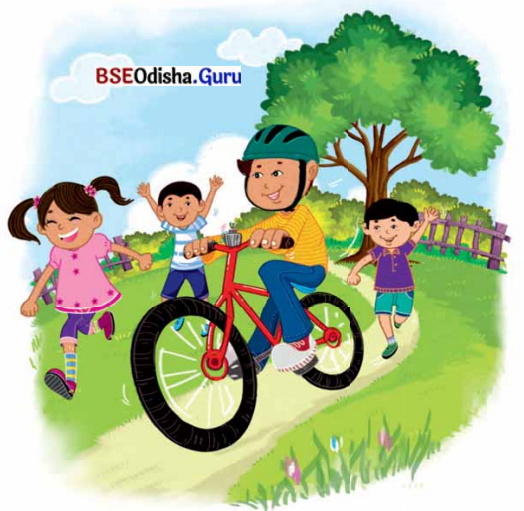
I have a red bicycle.
I pedal and I ride.
Trin… trin… trin… goes the bell.
Makes my friends move aside.
ଅନୁବାଦ: ମୋ ପାଖରେ ଏକ ନାଲି ସାଇକେଲ
ଅଛି । ଟ୍ରନ୍… ଟ୍ରନ୍… କରି ଘଣ୍ଟି ବାଜେ,
ଟ୍ରିନ୍… ଟ୍ରିନ୍… ଟ୍ରେନ୍… ଗୋଜ୍ ଦି ବେଲ୍.
ମେକ୍ସ ମାଇ ଫ୍ରେଣ୍ଡ୍ ମୁଭ୍ ଆସାଇଡ୍.)
(ଆଇ ହ୍ୟାଭ୍ ଏ ରେଡ୍ ବାଇସାଇକଲ୍.
ଆଇ ପେଡାଲ୍ ଆଣ୍ଡ୍ ଆଇ ରାଇଡ୍.
ମୁଁ ପେଡାଲ୍ ମାରେ ଏବଂ ଏହାକୁ ଚଲାଏ ।
ମୋ ସାଙ୍ଗମାନଙ୍କୁ କଡ଼କୁ ଘୁଞ୍ଚାଇ ଦିଏ ।
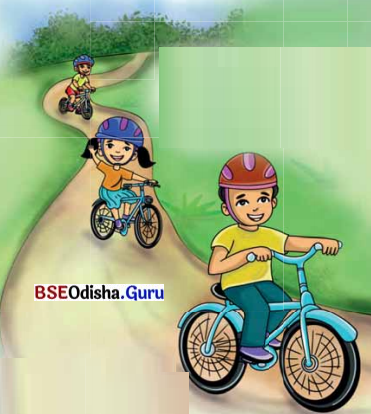
The seat is blue in colour,
The tyres and pedals are black.
Sometimes fast, sometimes slow,
But my bicycle is always on track.
(ଦି ସିଟ୍ ଇଜ୍ ବ୍ଲ ଇନ୍ କଲର୍)
(ଦି ଟାୟାର୍ସ ଆଣ୍ଡ୍ ପେଡାଲ୍ସ ଆର୍ ବ୍ଲକ୍)
(ସମଟାଇମ୍ସ ଫାଷ୍ଟ୍, ସମଟାଇମ୍ସ ସ୍ଲୋ)
(ବଟ୍ ମାଇ ବାଇସାଇକଲ୍ ଇଜ୍ ଅଲୱେଜ୍ ଅନ୍ ଟ୍ରାକ୍)
ଅନୁବାଦ : ଏହାର ସିଟ୍ଟିର ରଙ୍ଗ ନୀଳ, ମtion
ଟାୟାର୍ ଏବଂ ପେଡାଲ୍ ଗୁଡ଼ିକ କଳା ।
କେବେ ଦ୍ରୁତ, ତ କେବେ ଧୀରେ,
କିନ୍ତୁ ମୋ ସାଇକେଲ ସବୁବେଳେ ରହେ ଠିକ୍ ପଥରେ ।
To keep my bicycle moving,
All I need is some air.
I put on my little helmet,
And go happily everywhere.
(ଟୁ କିପ୍ ମାଇ ବାଇସାଇକଲ୍ ମୁଭିଙ୍ଗ୍)
(ଅଲ୍ ଆଇ ନିଡ୍ ଇଜ୍ ସମ୍ ଏୟାର୍)
(ଆଇ ପୁଟ୍ ଅନ୍ ମାଇ ଲିଟିଲ୍ ହେଲମେଟ୍)
(ଆଣ୍ଡ ଗୋ ହ୍ୟାପିଲି ଏକ୍ରିହେୟାର୍)
ଅନୁବାଦ : ମୋ ସାଇକେଲକୁ ଚଳାଇ ରଖିବା ପାଇଁ,
ମତେ କେବଳ ଦରକାର କିଛି ପବନ । ଆକ
ମୁଁ ମୋର ଛୋଟ ହେଲମେଟ୍ ପିନ୍ଧେ,
ଏବଂ ଖୁସିରେ ସବୁଆଡ଼େ ଯାଏ ।
ନିର୍ଦ୍ଦେଶ : ତୁମର ଶିକ୍ଷକ/ଶିକ୍ଷୟତ୍ରୀ କବିତାଟି ପାଠ କରିବା ସମୟରେ ଧ୍ୟାନ ଦେଇ ଶୁଣ । କବିତାଟିରୁ ତୁମେମାନେ କେତୋଟି ନୁଆ ଶବ୍ଦ ଶିଖୁଲ କୁହ । ତା’ପରେ ନିଜେ ନିଜେ କବିତାଟିର ସଠିକ୍ ଭାବରେ ଆବୃତ୍ତି କର ।
My Bicycle Summary in English
The poem is about a child, who has a red bicycle. The child loves riding his bicycle. His bicycle has a blue seat, two black tyres and two black pedals. When he rings the bell of his bicycle, his friends move aside. Sometimes, he goes fast and sometimes slow, but he never goes outside the track. Some air in the tyres is enough to keep the bicycle moving. The child puts on his little helmet and rides everywhere happily.
My Bicycle Summary in Odia
ଏହି କବିତାଟି ଜଣେ ପିଲା ବିଷୟରେ, ଯାହା ପାଖରେ ଏକ ନାଲି ସାଇକେଲ ଅଛି । ପିଲାଟି ତା’ର ସାଇକେଲ ଚଲାଇବାକୁ ବହୁତ ଭଲପାଏ । ତା’ ସାଇକେଲର ସିଟ୍ ନୀଳ ରଙ୍ଗର, ଏବଂ ଟାୟାର୍ ଓ ପେଡାଲ୍ ଗୁଡ଼ିକ କଳା । ଯେତେବେଳେ ସେ ସାଇକେଲର ଘଣ୍ଟି ବଜାଏ, ତା’ର ସାଙ୍ଗମାନେ କଡ଼କୁ ହୋଇଯାନ୍ତି । ସେ କେତେବେଳେ ଦ୍ରୁତ ଗତିରେ ତା’ର ସାଇକେଲ ଚଲାଏ, ତ କେତେବେଳେ ଧରେ । କିନ୍ତୁ ତା’ ସାଇକେଲ କୌଣସି ବି ପରିସ୍ଥିତିରେ ଠିକ୍ ରାସ୍ତାରୁ ବାହାରକୁ ଯାଏ ନାହିଁ । ତା’ର ସାଇକେଲକୁ ଚଲାଇବା ପାଇଁ, କେବଳ ଦୁଇ ଟାୟାରରେ ଯଥେଷ୍ଟ ପବନ ଥିବା ଦରକାର । ସେତିକି ହୋଇଗଲେ, ପିଲାଟି ନିଜର ଛୋଟ ହେଲମେଟ୍ ପିନ୍ଧି ଖୁସିରେ ଚାରିଆଡ଼େ ବୁଲିବାକୁ ପଳାଏ ।
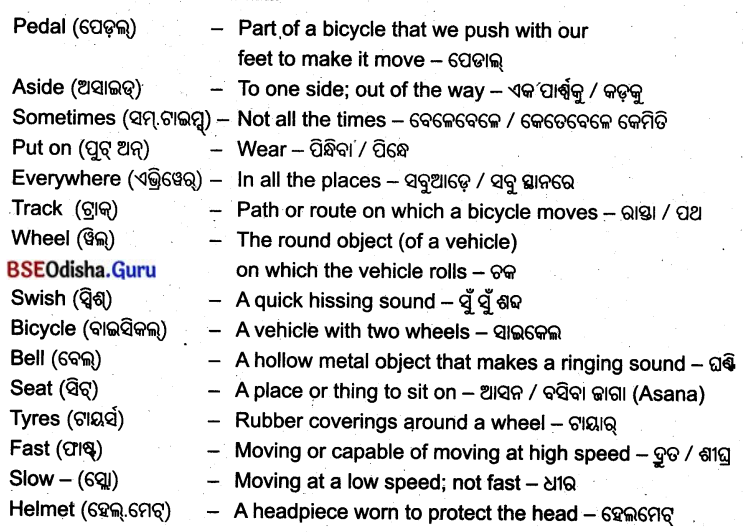
Notes and Glossary:
My Bicycle Class 4 Extract Based Questions
Question 1.
How does the child ride the bicycle ?
Answer:
The child pedals and rides the bicycle.
Question 2.
How does the bicycle go?
Answer:
The bicycle goes fast sometimes and sometimes, it goes slow.
Question 3.
Does the child ever go off the track?
Answer:
No, the child never goes off the track. His bicycle is always on the track.
Question 4.
What happens when the child rings the bicycle’s bell?
Answer:
When the child rings the bell of his bicycle, his friends move aside.
Question 5.
Where does the child go on his bicycle?
Answer:
The child goes everywhere on his bicycle.
My Bicycle Class 4 MCQ
Question 1.
The tyres of the bicycle are ………….
(a) red
(b) black
(c) blue
(d) green
Answer:
(b) black
Question 2.
The child wears his little ………… and rides everywhere.
(a) cap
(b) shoes
(c) helmet
(d) raincoat
Answer:
(c) helmet
Question 3.
The tyres and ………… are black.
(a) handles
(b) seat
(c) bell
(d) pedals
Answer:
(d) pedais
Question 4.
The bicycle is always ………….
(a) fast
(b) slow
(c) on track
(d) in air
Answer:
(c) on track
Question 5.
The bicycle sometimes goes fast, sometimes ………….
(a) slow
(b) very fast
(c) stops
(d) goes on track
Answer:
(a) slow