
For effective revision, students can use BSE Odisha Class 7 English Solutions Chapter 1 The Day the River Spoke Question Answer to practice textbook exercises.
Class 7 English The Day the River Spoke Question Answer
Class 7 English Chapter 1 Question Answer Odia Medium
Let us do these activities before we read
(ଚାଲ ପଢ଼ିବା ପୂର୍ବରୁ ଏହି କାର୍ଯ୍ୟଗୁଡ଼ିକୁ କରିବା ।)
I. Close your eyes and quietly listen to the sounds around you for a minute.
(ଆଖୁ ବନ୍ଦ କର ଏବଂ ଏକ ମିନିଟ୍ ପାଇଁ ଶାନ୍ତଭାବରେ ତୁମ ଚତୁଃପାର୍ଶ୍ଵର ଶବ୍ଦକୁ ଶୁଣ ।)
Question 1.
Are they trying to tell you something?
(ସେମାନେ ତୁମକୁ କିଛି କହିବାକୁ ଚେଷ୍ଟା କରୁଛନ୍ତି କି ?
Answer:
Yes, the sounds around us can tell us many things. For example, birds chirping might indicate morning or nature, a train’s whistle shows that a train is passing, or the rustling of leaves can tell us that the wind is blowing.
Question 2.
Do you think the things around you also listen to you all day long?
(ତୁମେ ଭାବୁଛ କି ତୁମ ଚତୁଃପାର୍ଶ୍ଵର ଥିବା ଜିନିଷଗୁଡ଼ିକ ତୁମକୁ ସାରାଦିନ ଶୁଣୁଛନ୍ତି ?)
Answer:
Not literally, but we can feel as if the surroundings notice us. Talking to nature or observing it can help us understand our environment better, like Jahnavi listening to the river in the story.
II. Jahnavi was a bright young girl. She lived with her parents and three brothers in a coastal (a) village in India. Her parents worked on the farm. She had a dream
(ସ୍ଵପ୍ନ). (ଜାହ୍ନବୀ ଜଣେ ଉଜ୍ଜ୍ଵଳ ଯୁବା ବାଳିକା ଥିଲା । ସେ ତା’ର ପିତାମାତା ଓ ତିନିଭାଇଙ୍କ ସହ ଭାରତର ଏକ ଉପକୂଳ ଗ୍ରାମରେ ବାସ କରୁଥିଲା । ତା’ର ପିତାମାତା ଏକ କୃଷିକ୍ଷେତ୍ରରେ କାର୍ଯ୍ୟ କରୁଥିଲେ । ତା’ର ଏକ ସ୍ଵପ୍ନ ଥିଲା ।)
Question 1.
What could be the dream of Jahnavi?
(ଜାହ୍ନଭୀର ସ୍ଵପ୍ନ କ’ଣ ହୋଇପାରିଥାଏ ?)
Answer:
Jahnavi’s dream was to go to school and learn, just like her brothers. She wanted to read, write, and explore the world through education.
Question 2.
How could she make her dream come true?
(ସେ କିପରି ତା’ର ସ୍ଵପ୍ନକୁ ସତ୍ୟରେ ପରିଣତ କଲା ?)
Answer:
She could make her dream come true by gathering courage (12), asking her parents for permission, attending school, and listening carefully to her lessons.
Question 3.
What is your dream? (ତୁମର ସ୍ଵପ୍ନ କ’ଣ ?)
Answer:
(Students can write their own personal dream, e.g., “My dream is to become a doctor.”)

Question 4.
What can you do to make your dream come true?
(ତୁମେ ତୁମର ସ୍ଵପ୍ନକୁ ସତ୍ୟରେ ପରିଣତ କରିବା ପାଇଁ କ’ଣ କରିପାରିବ ?)
Answer:
(Students can answer based on their dream, e.g., “I will study hard, take guidance from teachers, and practise regularly to achieve my goal.”)
Share your answers with your classmates and the teacher.
(ତୁମ ଉତ୍ତରଗୁଡ଼ିକୁ ତୁମ ସହପାଠୀ ଓ ଶିକ୍ଷକଙ୍କ ସହ ବିନିମୟ କର ।)
Let us discuss
(ଆସ ଆଲୋଚନା କରିବା)
Question 1.
What was Jahnavi’s dream? Was it important to her? Why? (ଜାହ୍ନବୀର ସ୍ଵପ୍ନ କ’ଣ ଥିଲା ? ଏହା ତା ପାଇଁ ଗୁରୁତ୍ଵପୂର୍ଣ୍ଣ ଥିଲା କି ? କାହିଁକି ?
Answer:
Jahnavi’s dream was to go to school and learn like her brothers. It was very important to her because she wanted to read, write, and know the answers to the many questions in her mind. Education was her way to explore the world.
Question 2.
Do you think the river can help her in fulfilling her dream? How? (ତୁମେ ଭାବୁଛ କି ନଦୀଟି ତା’ର ସ୍ଵପ୍ନ ପୂରଣ କରିବାରେ ସାହାଯ୍ୟ କରିପାରିବ ? କିପରି ?
Answer:
The river could not directly take her to school, but it gave her courage and confidence. It encouraged Jahnavi to overcome her fear and try attending school on her own. Thus, the river played an important role in motivating her to fulfil her dream.
Let us discuss
(ଆସ ଆଲୋଚନା କରିବା)
1. Complete the table given below with Jahnavi’s questions in Column 1 and the River’s answers in Column 2. Check your answers with the teacher. (ସ୍ତମ୍ଭ ‘1’ ରେ ଜାହ୍ନବୀର ପ୍ରଶ୍ନ ଓ ସ୍ତମ୍ଭ ‘2’ ରେ ନଦୀର ଉତ୍ତର ଲେଖୁ ନିମ୍ନ ସାରଣୀ ପୂରଣ କର । ତୁମର ଉତ୍ତରଗୁଡ଼ିକୁ ଶିକ୍ଷକଙ୍କ ଦ୍ଵାରା ଯାଞ୍ଚ କରାଅ ।)
Question with Answer:
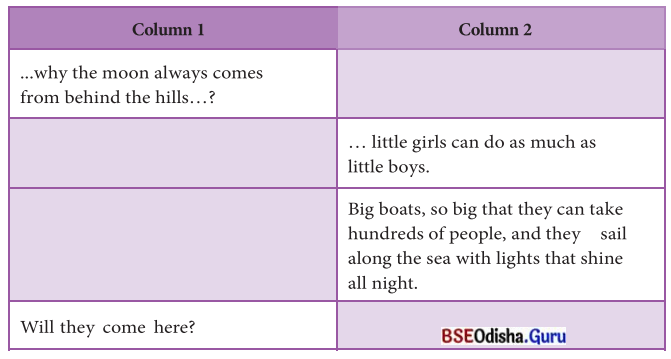
Answer:
| Column 1 (Jahnavi’s Questions) | Column 2 (River’s Answers) |
| why the moon always comes from behind the hills ____ ? | It goes down towards the sea, I’ve seen, it always takes the same way-over the mountains and down the see, like me ! |
| Can I do something ? | little girls can do as much as little boys. |
| What are ships? | Big boats, so big that they can take hundreds of people, and they sail along the sea with lights that shine all night. |
| Will they come here? | I’m afraid not. Too large, you know, Chandu’s catamaran is good enough for me. Chandu can take you to see a ship someday. |
2. The following persons and the river helped Jahnavi to go to school. How?
(ବ୍ୟକ୍ତିଗଣ ଏବଂ ନଦୀଟି ଜାହ୍ନବୀକୁ ବିଦ୍ୟାଳୟକୁ ଯିବାକୁ ସାହାଯ୍ୟ କଲେ, କିପରି ?)
(Question with Answer)
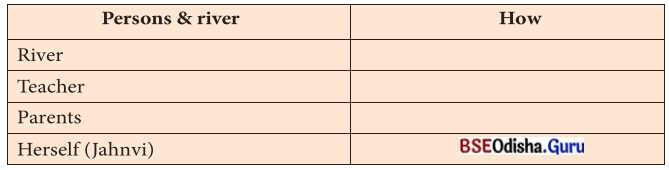
Answer:
| Persons & river | How |
| River | Encouraged Jahnavi to be brave and try going to school. |
| Teacher | Welcomed her in class and spoke to her father and persuaded him to send Jahnavi to school. |
| Parents | Finally agreed and supported her decision to study. |
| Herself (Jahnavi) | Gathered courage, went to school, and proved her determination. |
Let us think and reflect
(ଆସ ଭଲ ଭାବରେ ଚିନ୍ତା କରିବା)
I. Read the extracts given below and answer the questions that follow.
(ନିମ୍ନଲିଖତ ଉଦ୍ଧୃତାଂଶଗୁଡ଼ିକୁ ପଢ଼ ଓ ପରବର୍ତୀ ପ୍ରଶ୍ନଗୁଡ଼ିକର ଉତ୍ତର ଦିଅ ।)
1. “You shouldn’t cry, you know,” the voice went on. “And you really shouldn’t be scared, when you have been coming here to see me every day, well, almost every day.” She was puzzled. It was such a voice, like the river. It couldn’t be the river! “Well, tell me all about it,” said the River, for it was the River. “I’ve got to hurry to reach the sea, you know.”
(i) Complete the sentence with the correct option from those given in the brackets.
(ବନ୍ଧନୀ ଭିତରେ ଦିଆଯାଇଥିବା ବିକଳ୍ପଗୁଡ଼ିକ ମଧ୍ୟରୁ ଠିକ୍ ବିକଳ୍ପଟି ବାଛି ବାକ୍ୟକୁ ସମ୍ପୂର୍ଣ୍ଣ କର ।)
The tone of the River in the given extract is. (assuring/sympathising)
(ii) Select a phrase from the extract which shows that Jahnavi was a frequent visitor to the spot.
(ଉଦ୍ଧୃତାଂଶରୁ ଏକ ବାକ୍ୟଶ ଚୟନ କର ଯାହା ଜାହ୍ନବୀ ସ୍ଥାନଟିକୁ ବାରମ୍ବାର ବୁଲିବାକୁ ଆସୁଥିବାର ଦର୍ଶାଉଛି ।)
(iii) Choose the correct option to complete the sentence.
(ବାକ୍ୟଟିକୁ ସମ୍ପୂର୍ଣ୍ଣ କରିବ । ପାଇଁ ଠିକ୍ ବିକଳ୍ପଟି ବାଛି ।)
The use of an exclamation mark at the end of the line, ‘It couldn’t be the river!’ expresses
A. excitement
B. hesitation
C. irritation
D. disbelief
(iv) Choose three qualities of the River highlighted in the extract from the words in the box given below.
(ଉଦ୍ଧୃତାଂଶରେ ଉଲ୍ଲିଖତ ନଦୀର ତିନୋଟି ଗୁଣ ନିମ୍ନ ପ୍ରଦତ୍ତ କୋଠରିରୁ ବାଛ ।)

Answer:
(i) The tone of the River in the given extract is assuring.
(ii) Phrase: “When you have been coming here to see me every day, well, almost every day.”
(iii) D. disbelief
(iv) Three qualities of the River: affectionate, thoughtful, kind-hearted
2. “Can I do something?” asked Jahnavi. “Well, it’s up to you,” said the River. “Seems. to me little girls can do as much as little boys-they swim as fast as little boys. You just slip along one morning and sit there in the school and listen to what’s going on, and may be the teacher will let you stay.”
“I couldn’t,” gasped Jahnavi. “I couldn’t! They’d scare
me! They’d chase me out.”
(i) Complete the sentence with an appropriate reason.
(ଉପଯୁକ୍ତ କାରଣ ସହ ବାକ୍ୟକୁ ସମ୍ପୂର୍ଣ କର ।)
According to the River, there was no difference between girls and boys because
Answer:
According to the River, there was no difference between girls and boys because they can do the same things equally well, like swimming and learning.
(ii) Identify whether the following statement is true or false.
(ନିମ୍ନସ୍ଥ ଉକ୍ତିଟି ଠିକ୍ ନା ଭୁଲ୍ ଚିହ୍ନଟ କର ।)
The River encourages Jahnavi to have faith in herself and fulfill her desire to go to school.
Answer:
True
(iii) Choose the correct option to complete the sentence.
(ବାକ୍ୟଟିକୁ ସମ୍ପୂର୍ଣ୍ଣ କରିବା ପାଇଁ ଠିକ୍ ବିକଳ୍ପଟି ବାଛ ।)
When the River suggests that Jahnavi should ‘slip along’, it means that she should move.
A. quickly
B. casually
C. quietly
D. confidently
Answer:
C. quietly
(iv) What does the repetition of the phrase I couldn’t, tell us?
(‘I couldn’t’ ବାକ୍ୟାଶଟିର ବାରମ୍ବାର ବ୍ୟବହାର ଆମକୁ କ’ଣ କହୁଛି ?)
Answer:
The repetition of “I couldn’t” shows Jahnavi’s fear and lack of confidence about going to school.
(v) In the phrase “I could not “I stands for, ______
Answer:
A. river
B. Jahnvi
C. lizard
D. writer
Answer:
B. Jahnavi
Answer the Following Questions
(ନିମ୍ନ ପ୍ରଶ୍ନଗୁଡ଼ିକର ଉତ୍ତର ଦିଅ ।)
Question 1.
The writer describes different aspects of nature through different animals, birds and objects at the beginning of the story. They are?
(ଲେଖକ ଗଳ୍ପ ଆରମ୍ଭରେ ବିଭିନ୍ନ ଦୃଷ୍ଟିକୋଣକୁ ବିଭିନ୍ନ ପଶୁ, ପକ୍ଷୀ ଏବଂ ବସ୍ତ୍ର ମାଧ୍ୟମରେ ବର୍ଣ୍ଣନା କରିଛନ୍ତି । ସେଗୁଡ଼ିକ ହେଲା
Answer:
They are a kingfisher, a green lizard, parrots, a snake, spiders, frogs, bamboo trees and the river.
Question 2.
How did the River know so much about Jahnavi?
(ନଦୀଟି ଜାହ୍ନବୀ ବିଷୟରେ ବହୁତ କିଛି ଜାଣିଲା କିପରି ?)
Answer:
The River knew so much about Jahnavi because she often visited the riverbank, spoke her thoughts aloud, and shared her feelings there.
Question 3.
Jahnavi says, “And I’m so old now, they’ll never let me go.” What do you think about?
(ଜାହ୍ନବୀ କହୁଛି, ‘ମୁଁ ବର୍ତ୍ତମାନ ଅଧୁକ ବୟସର ହୋଇଗଲିଣି, ସେମାନେ ମୋତେ ଯିବାକୁ ଦେବେନି !”’ ତୁମେ ଏ ବିଷୟରେ କ’ଣ ଭାବୁଛ ?)
Answer:
Jahnavi felt sad and hopeless because she thought that at her age she would no longer be allowed to join school like the younger children.
Question 4.
Why did the River laugh when Jahnavi said she would be scared at school?
(ନଦୀଟି କାହିଁକି ହସିଲା ଯେତେବେଳେ ଜାହ୍ନବୀ କହିଲା ସେ ବିଦ୍ୟାଳୟରେ ଡରିଯିବ ?)
Answer:
The River laughed because Jahnavi was brave in facing snakes, lizards, and trains, yet she was afraid of going to school, which was not dangerous at all.
Question 5.
Why did Jahnavi follow the River’s advice?
(ଜାହ୍ନଭୀ ନଦୀଟିର ଉପଦେଶକୁ କାହିଁକି ଅନୁସରଣ କଲା ?)
Answer:
Jahnavi followed the River’s advice because she trusted the River and wanted to achieve her dream of going to school and learning.
Question 6.
What is the main message that the writer intends to convey?
(6m almalg ଚାହୁଁଥିବା ମୁଖ୍ୟ ବାର୍ତ୍ତାଟି କ’ଣ ?)
Answer:
The writer intends to convey the message that girls deserve equal opportunities in education as boys, and with courage and determination they can fulfill their dreams despite obstacles.
Let us Learn (ଆସ ଶିଖୁବା)
I. You have learnt that naming words are called nouns and only proper nouns begin with a capital letter. Why has the author used a capital letter for the ‘River’ even when it is a common noun? (Clue: Has the River been given qualities of a human being?)
(ତୁମେ ଶିକ୍ଷା କରିଛ ଯେ ନାମବାଚକ ଶବ୍ଦଗୁଡ଼ିକୁ ବିଶେଷ୍ୟ କୁହାଯାଏ ଏବଂ ନାମବାଚକ ବିଶେଷ୍ୟଗୁଡ଼ିକ ବଡ଼ ଅକ୍ଷରରେ ଆରମ୍ଭ ହୁଏ । ମାତ୍ର ନଦୀ ବା ରିଭର ଏକ ଜାତିବାଚକ ବିଶେଷ୍ୟ ହୋଇଥିବାବେଳେ ଲେଖକ ‘River’ରେ କାହିଁକି କ୍ୟାପିଟାଲ ଲେଟର ବ୍ୟବହାର କରିଛନ୍ତି ?) (ସୂଚନା : ନଦୀକୁ କ’ଣ ମନୁଷ୍ୟର ଗୁଣାବଳୀ ଦିଆଯାଇଛି କି ?)
Answer:
The author used a capital letter for the ‘River’ because the River has been given human qualities like speaking, advising, and laughing. It is treated as a character in the story.
II. There are a few words related to sound in the text. Pick the words from the text and write them next to the correct definition.
(ପାଠ୍ୟ ବିଷୟରେ ଧ୍ଵନି ସହ ସମ୍ପର୍କିତ କେତେକ ଶବ୍ଦ ଅଛି । ପାଠ୍ୟ ବିଷୟରୁ ଶବ୍ଦଗୁଡ଼ିକ ବାଛ ଏବଂ ସେଗୁଡ଼ିକୁ ସଠିକ୍ ସଂଜ୍ଞା ପରେ ଲେଖ ।)
1. made a high-pitched piercing sound’
2. to cause liquid to strike or fall on something’
3. a low continuous background noise
4. cry with loud uncontrollable gasps ‘
5. to make a soft dry sound, like paper or leaves moving’
6. took a short quick breath through the mouth due to surprise, pain or shock gasped
7. shaking rapidly to make continuous short, sharp sounds’
8. making a lot of noise’
9. made a long, high cry, usually because of pain or sadness’
Answer:
1. shrieked
2. splashed
3. murmuring
4. sob
5. rustle
6. gasped
7. rattling
8. noisy
9. wailed
Now, fill in the blanks with suitable sound words from exercise (II).
(ବର୍ତ୍ତମାନ ଅଭ୍ୟାସ (I)ରେ ବ୍ୟବହାର ହୋଇଥିବା ଉପଯୁକ୍ତ ଧ୍ଵନାତ୍ମକ ଶବ୍ଦ ବସାଇ ଶୂନ୍ୟସ୍ଥାନ ପୂରଣ କର ।)
The classroom grew (i) _____as the students noticed the teacher carrying the answer papers. As the teacher turned the pages with a (ii) _____, the children (iii) _____wondering what comments awaited. Someone (iv) _____in frustration, and the (v) _____of the students steadily increased. Finally, when the teacher praised the students for their excellent performance, the students (vi) _____with excitement.
Answer:
(i) noisy
(ii) rustled
(iii) gasped
(iv) wailed
(v) murmuring
(vi) shrieked
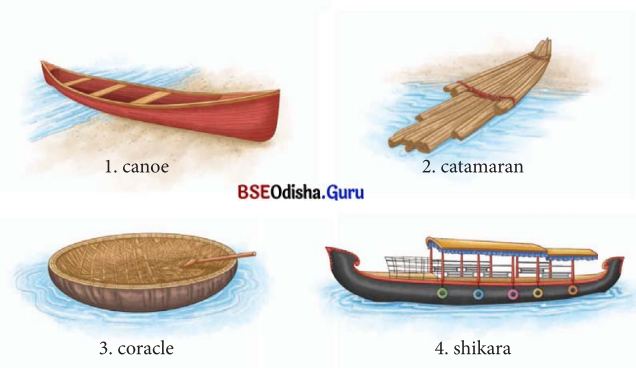
III. The word ‘catamaran’ is used in the text. The word originates from the Tamil language ‘kattu maram’ meaning ‘tied wood’.
(ପାଠ୍ୟ ବିଷୟରେ ‘catamaran’ ଶବ୍ଦଟି ବ୍ୟବହୃତ ହୋଇଛି । ଶବ୍ଦଟି ତାମିଲ ଭାଷାର ‘kattu maram’ ଶବ୍ଦରୁ ଉତ୍ପତ୍ତି ହୋଇଛି ଯାହାର ଅର୍ଥ ‘ବନ୍ଧାଯାଇଥିବା କାଠ’)
IV. Find out the meanings of these words. From which Indian language these words were borrowed. An example has been given. (ଏହି ଶବ୍ଦଗୁଡ଼ିକର ଅର୍ଥ ବାହାର କର । କେଉଁ ଭାରତୀୟ ଭାଷାରୁ ଏହି ଶବ୍ଦଗୁଡ଼ିକୁ ଅଣାଯାଇଛି । ଏକ ଉଦାହରଣ ଦିଆଯାଇଛି ।)
1. karma (Sanskrit)
2. sahib
3. chutney
4. guru
5. verandah
6. jungle
7. palanquin
Answers:
1. karma – Results of your action (Sanskrit)
2. sahib – Word for Sir (Urdu/Hindi)
3. chutney – Spicy Sauce (Hindi)
4. gurur-Teacher (Sanskrit)
5. verandah – Roofed Porch (Hindi)
6. jungle – Forest (Hindi/Sanskrit)
7. palanquin – (Sanskrit / Hindi)
(i) Which boat would you like to travel in?
(କେଉଁ ଡ଼ଙ୍ଗାରେ ତୁମେ ଯାତ୍ରା କରିବାକୁ ପସନ୍ଦ କରିବ ।)
Answer:
I would like to travel in a shikara, because it is beautiful, colourful, and peaceful, and it floats gently on lakes.
(ii) Make a colourful drawing of a boat that you would like to travel in.
(ଗୋଟିଏ ରଙ୍ଗୀନ ଡଙ୍ଗା ଚିତ୍ର କର, ଯେଉଁଥୁରେ ତୁମେ ଯାତ୍ରା କରିବାକୁ ପସନ୍ଦ କରିବ ।)
Answer:
(Students should draw the picture themselves)
V. Solve the crossword puzzle based on words related to water transport.
(ଜଳ ପରିବହନ ସହିତ ସମ୍ବନ୍ଧିତ ଶବ୍ଦ ବ୍ୟବହାର ଶବ୍ଦଧନ୍ଦାଟିକୁ ସମାଧାନ କର ।)
(Question with Answer)
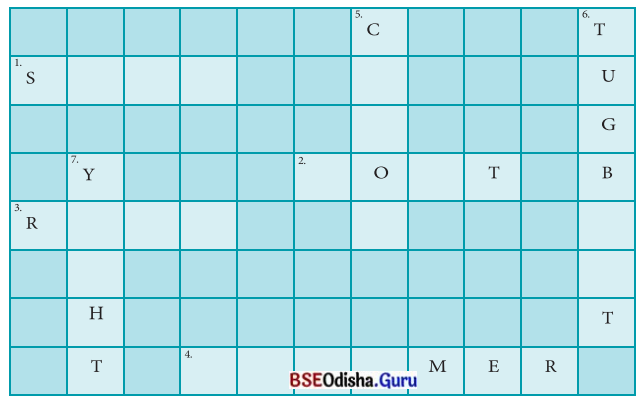
Across
1. a large vessel used for transporting goods or passengers by sea
2. a small vessel for travelling on water, typically propelled by oars, sails, or an engine
3. a flat floating structure for travelling across water
4. a boat or ship driven by steam.
5. a small, light, narrow boat, pointed at both ends and moved using a paddle
6. a boat with a powerful engine which can change direction easily and is used to pull large ships into and out of port
Answer:
Across
1. SHIP
2. BOAT
3. RAFT
4. STEAMER
Down :
5. CANOF
6. TUGBOAT
7. YACHT
VI. Read the highlighted words in the following lines from the text. They are called prepositions. (ପାଠ୍ୟବିଷୟରୁ ଆସିଥିବା ତଳ ଧାଡ଼ିଗୁଡ଼ିକରେ ଥିବା କଳା ଚିହ୍ନିତ ଶବ୍ଦଗୁଡ଼ିକୁ ପଢ଼ । ସେଗୁଡ଼ିକ Preposition (ଅବ୍ୟୟ) ଅଟନ୍ତି ।)
“She goes down towards the sea. I’ve seen her; she always takes the same way— over the mountains and down to the sea, like me!”
Prepositions are words that indicate the relationship between nouns or pronouns and other elements in a sentence. They show direction, location, time or logical relationships between ideas. (ଅବ୍ୟୟଗୁଡ଼ିକ ହେଉଛି ସେହି ଶବ୍ଦ ଯାହା ବାକ୍ୟରେ ବିଶେଷ୍ୟ ବା ସର୍ବନାମ ଓ ଅନ୍ୟାନ୍ୟ ଉପାଦାନଗୁଡ଼ିକର ସମ୍ପର୍କ ସୂଚିତ କରିଥାଏ । ସେଗୁଡ଼ିକ ଦିଗ, ଅବସ୍ଥିତି, ସମୟ କିମ୍ବା ଯୁକ୍ତିସଙ୍ଗତ ସମ୍ପର୍କ ଦର୍ଶାଇଥାଏ ।)
A. Here are six pictures, Look at them and say what you see in about 5/6 sentences.
(ଏଠାରେ ଛଅଟି ଚିତ୍ର ଅଛି । ସେଗୁଡ଼ିକୁ ଦେଖ ଏବଂ ତୁମେ କ’ଣ ଦେଖୁଛ ୫/୬ଟି ବାକ୍ୟରେ କୁହ ।) (Divide the entire class into five groups and provide each group with one picture from the following set of the pictures. Give 2/3 minutes time for discussion in the group. Their team leader will present with meaningsful sentences.) Use of Propositions. (ସାରାଶ୍ରେଣୀକୁ ପାଞ୍ଚଟି ଦଳରେ ବିଭକ୍ତ କର ଏବଂ ପ୍ରତ୍ୟେକ ଦଳକୁ ନିମ୍ନ ଚିତ୍ର ସେଗୁଡ଼ିକ ମଧ୍ୟରୁ ଗୋଟିଏ ଦିଅ । ଦଳରେ ଆଲୋଚନା ପାଇଁ ୨/୩ ମିନିଟ୍ ସମୟ ଦିଅ । ସେମାନଙ୍କ ଦଳ ମୁଖ୍ୟ ଅର୍ଥସୂଚକ ବାକ୍ୟ ସବୁ ଉପସ୍ଥାପନ କରିବେ ।) ଅବ୍ୟୟ ପଦ ସବୁ ବ୍ୟବହାର କର ।
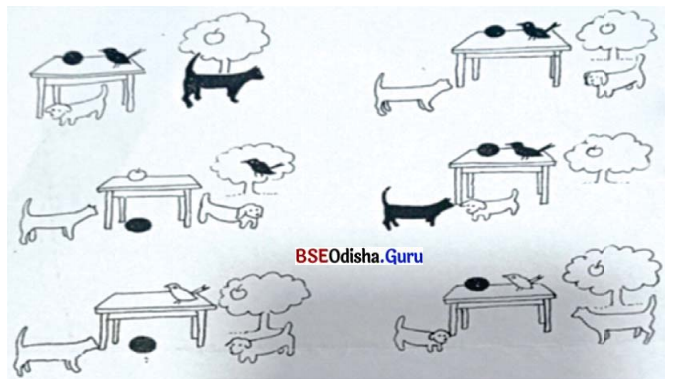
Note: (The teacher in the classroom will make some groups as per the feasibility (1) of the class. Ask the students to frame questions about the positions of different objects in the picture and answer them.)
Example:
Questions: Where is the bird?
Answer: The bird is on the table.
Answer:
In the picture I see that :
1. The bird is on the table.
2. The ball is on the table.
3. The dog is under the table.
4. The cat is near the tree.
5. The apple is on the tree.
6. The dog is beside the table.
Similarly studetns will make groups, frame questions and answer them under the guidance of teacher.
B. Now, fill in the blanks with suitable prepositions given within the brackets.
(ବନ୍ଧନୀ ମଧ୍ୟରେ ଦିଆଯାଇଥିବା ଉପଯୁକ୍ତ ଶବ୍ଦ ବାଛି ଶୂନ୍ୟସ୍ଥାନ ପୂରଣ କର ।)
Jahnavi takes the River’s advice and goes to school. On her first day 1. _____ (at/in/ on) school, Jahnavi stood nervously 2. _____ (in/outside/above) the gate, clutching her bag close to her. The bell rang and she hurried 3. _____ (outside/through/inside) the bustling classroom. She found a seat. 4. _____ (among/between/from) two friendly classmates. The teacher greeted them warmly and started the lesson. 5. _____ (about/ in/for) numbers. Jahnavi listened attentively, feeling excited 6. _____ (at/about/for) the new adventure ahead.
Answer:
Prepositions
1. at
2. outside
3. inside
4. between
5. about
6. about
VII. Read the highlighted words in the following sentence from the text.
(ପାଠ୍ୟ ପୁସ୍ତକରୁ ପ୍ରଦତ୍ତ ନିମ୍ନ ବାକ୍ୟଗୁଡ଼ିକରେ କଳାଚିହ୍ନିତ ଶବ୍ଦଗୁଡ଼ିକୁ ପଢ଼ ।)
A kingfisher swept down, its wings an arrow of blue in the sunlight.
Words like on, off, up, down can function both as preposition and as adverb particle.
For example (ଉଦାହରଣ ସ୍ଵରୂପ):
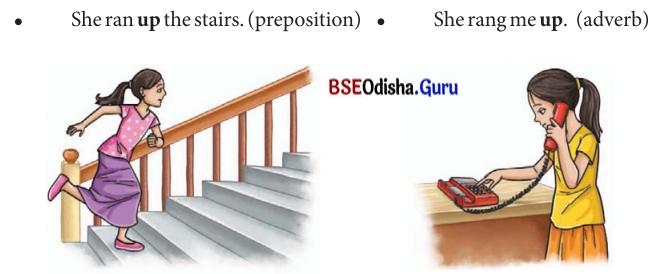
A preposition is usually followed by an object (noun) whereas an adverb will tell you more about the action (verb).
(ବାକ୍ୟରେ Preposition ସାଧାରଣତଃ ଏକ ବସ୍ତ (noun) ପୂର୍ବରୁ ବସେ, ମାତ୍ର Adverb (କ୍ରିୟା) ବିଶେଷଣ କାର୍ଯ୍ୟ (verb) ବିଷୟରେ ଅଧିକ କିଛି କହିଥାଏ ।)
Fill in the blanks with prepositions or adverbs.
(Preposition ବା Adverb ବ୍ୟବହାର କରି ଶୂନ୍ୟସ୍ଥାନ ପୂରଣ କର ।)
1. The cat jumped ______ the table. (preposition)
Answer:
The cat jumped on the table. (preposition)
2. The children played ______ until dark. (adverb)
Answer:
The children played outside until dark. (adverb)
3. She quickly ran ______ the park. (preposition)
Answer:
She quickly ran to the park. (preposition)
4. The helicopter was hovering ______. (adverb)
Answer:
The helicopter was hovering above. (adverb)
5. We were just walking. ______, chatting. (adverb)
Answer:
We were just walking along chatting. (adverb phrase)
6. After thoroughly wiping his shoes, he stepped ______. (adverb)
Answer:
After thoroughly wiping his shoes, he stepped inside. (adverb)
7. She drove slowly ______, the sharp curve. (preposition)
Answer:
She drove slowly around the sharp curve. (preposition)
8. He placed the keys ______ the mat before leaving. (preposition)
Answer:
He placed the keys on the mat before leaving. (preposition)
Let us listen (ଆସ ଶୁଣିବା) :
I. Read the words given in the box below. You will listen to five people speak about school life. As you listen, circle the words that are used by the speakers. There are two words you do not need. (Transcript for the teacher on page-40)
(ନିମ୍ନରେ କୋଠରୀ ମଧ୍ୟରେ ଥିବା ଶବ୍ଦଗୁଡ଼ିକୁ ପଢ଼ । ତୁମେ ୫ ଜଣ ବ୍ୟକ୍ତି ବିଦ୍ୟାଳୟ ଜୀବନ ଉପରେ କହୁଥିବାର ଶୁଣିବ । ଶୁଣିବାବେଳେ, ବକ୍ତାଦ୍ଵାରା କୁହାଯାଇଥିବା ଶବ୍ଦଗୁଡ଼ିକ ଚାରିପଟେ ଗୋଲ ବୁଲାଅ । ଏଠାରେ ଥିବା ଦୁଇଟି ଶବ୍ଦ ତୁମର ଦରକାର ନାହିଁ । ଶିକ୍ଷକଙ୍କ ପାଇଁ transcript ପୃଷ୍ଠା ୪୦ରେ ଅଛି ।)
(Question with Answer)

Answer:

II. You will once again listen to the five speakers. As you listen, match each statement 1-7 to each speaker (i)-(v). There are two statements that you do not need.
(ତୁମେ ପୁଣିଥରେ ୫ଜଣ ବକ୍ତା କହୁଥିବାର ଶୁଣିବ । ଶୁଣିବା ସମୟରେ ତୁମେ ବାକ୍ୟକୁ ୧-୭ ଉକ୍ତିଗୁଡ଼ିକୁ (i)-(v) ବକ୍ତାଙ୍କ ସହିତ ମିଳାଅ । ଏଠାରେ ଥିବା ଦୁଇଟି ଉକ୍ତି ତୁମର ଆବଶ୍ୟକ ନାହିଁ ।)
(Question with Answer)
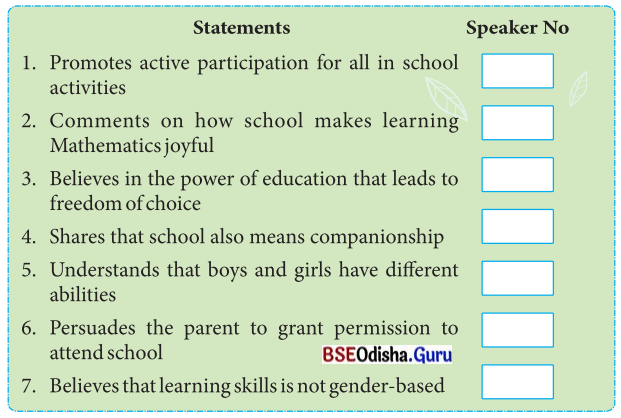
Answer:
| Statements | Speaker No |
| 1. Promotes active participation for all in school activities | (v) |
| 2. Comments on how school makes learning Mathematics joyful | – |
| 3. Believes in the power of education that leads to freedom of choice | (i) |
| 4. Shares that school also means companionship | (iv) |
| 5. Understands that boys and girls have different abilities | – |
| 6. Persuades the parent to grant permission to attend school | (i) |
| 7. Believes that learning skills is not gender-based | (iii) |
Statement 2 and 5 do not match with any speaker.
Let us read (ଆସ ପଢ଼ିବା) :
I. Read the sentence given below
(ନିମ୍ନରେ ପ୍ରଦତ୍ତ ବାକ୍ୟକୁ ପଢ଼ ।)
“Dear, dear! What’s the matter?… You shouldn’t cry, you know. And you really shouldn’t be scared, when you have been coming here to see me every day, well, almost every day.”
(ପିଲାମାନେ ହର୍ଷ, ବିସ୍ମୟ, କ୍ରୋଧ, ଭୀତତ୍ରସ୍ତ, ଦୁଃଖ୍ତ ଏବଂ ବ୍ୟସ୍ତବିବ୍ରତ ଭାବ ପ୍ରକାଶ ପାଇଁ ବାକ୍ୟଟି କିପରି ଉଚ୍ଚାରଣ କରାଯିବ ଶିକ୍ଷକଙ୍କ ସମ୍ମୁଖରେ ତା’ର ଅଭ୍ୟାସ କରିବେ ।)
The River spoke to Jahnavi in a ‘sleepy’ voice. Work in pairs and take turns to speak the same sentence in ‘other’ voices. Some hints are given below.
(ନଦୀଟି ଜାହ୍ନବୀକୁ ନିଦୁଆ ସ୍ୱରରେ କହିଲା । ଦୁଇଜଣିଆ ଦଳରେ କାମ କରି ଏବଂ ପାଳି ଅନୁସାରେ ସେହି ବାକ୍ୟଟିକୁ ଅନ୍ୟ ସ୍ୱରରେ କୁହ । ତୁମକୁ କେତେକ ସୂଚନା ଦିଆଯାଇଛି ।)
(Students try to do this activity themselves)

II. Janhavi asks the River for advice and the River gives advice. Read the given situations and work in pairs to ask for and give advice. Take turns to change your roles. Use the prompts given below.
(ଜାହ୍ନବୀ ନଦୀଟିକୁ ଉପଦେଶ ମାଗିଛି ଏବଂ ନଦୀ ଉପଦେଶ ଦେଇଛି । ନିମ୍ନରେ ପ୍ରଦତ୍ତ ପରିସ୍ଥିତିକୁ ପଢ଼ ଏବଂ ଦୁଇଜଣିଆ ହୋଇ ଜଣେ ଜଣକୁ ଉପଦେଶ ମାଗ ଏବଂ ଅନ୍ୟ ଜଣେ ଉପଦେଶ ଦେଉ । ତଳେ ଥିବା ସୂଚନା ବ୍ୟବହାର କର ।)
1. Situation (i): You wish to play football at school but it has an all-boys’ team only.
2. Situation (ii): You have been unable to score well in Mathematics due to nervousness during exams.
3. Situation (iii): You really enjoy music classes but do not get enough time to practise for it.
4. Situation (iv): You cannot see the blackboard clearly from the last bench.
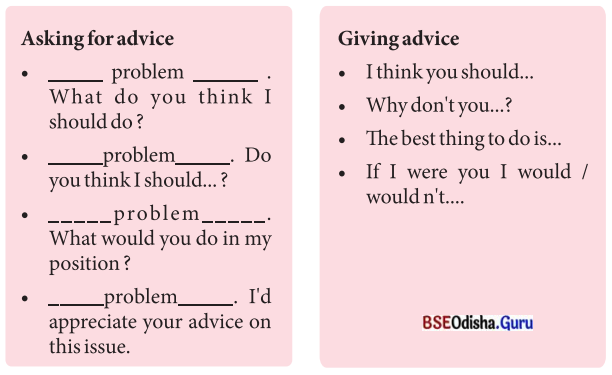
The teacher gives an example of how to ask for advice and how to give advice on any one situation using the prompts given.
(ଦିଆଯାଇଥିବା ସୂଚନାକୁ ବ୍ୟବହାର କରି କିପରି ଉପଦେଶ ମଗାଯିବ ଓ ଉପଦେଶ ଦିଆଯିବ ଶିକ୍ଷକ ତାହାର ଏକ ଉପଦେଶ ଦେବେ ।)
Let us write (ଚାଲ ଲେଖୁବା)
Observing Nature
(ପ୍ରକୃତି ପର୍ଯ୍ୟବେକ୍ଷଣ)

Take some time to observe the world around you. Over the next few days, pay attention to the colours, shapes, patterns, and textures found in nature. Look closely at the plants, trees, flowers, birds, and even the sky. Make detailed notes of what you observe, focusing on textures, movements, and how light plays with these elements. Record your observations in detail and the features that draw your attention the most— whether it’s the soft ripple of water, the vibrant flutter of a butterfly or the colour of the birds or flowers.
Now, write a descriptive paragraph based on what you’ve observed. Highlight the colours, shapes, textures, and unique details that made an impression on you.
(ତୁମେ କ’ଣ ପର୍ଯ୍ୟବେକ୍ଷଣ କଲ ତାହାର ଅଧାରରେ ଏକ ବର୍ଣ୍ଣନାତ୍ମକ ଅନୁଚ୍ଛେଦ ଲେଖ । ତୁମକୁ ପ୍ରଭାବିତ କରିଥିବା ଜିନିଷର ରଙ୍ଗ, ଆକାର, ସଂରଚନା ଓ ସଂପୂର୍ଣ୍ଣ ବିବରଣୀ ଲେଖ ।)
Give a title to your paragraph.
(ତୁମ ଅନୁଚ୍ଛେଦର ଏକ ଶୀର୍ଷକ ଦିଅ ।)
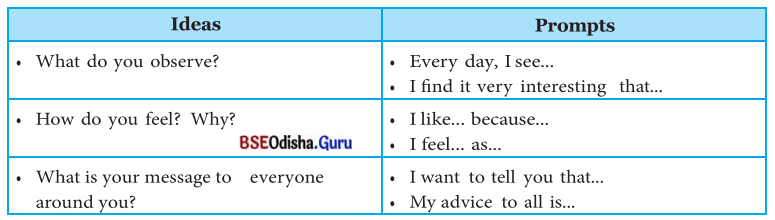
Answer:
| Ideas | Prompts |
| What do you observe? | Every day, I see nature’s beauty in small things. While walking in the garden, I fear the soft sound of leaves in the wind. The morning sun makes golden spots on the ground. I find it very interesting that every leaf is different. Some are smooth and shiny, while others are twisted |
| How do you feel? Why? | I like watching butterflies because they bring colour and beauty to every place. I feel calm and happy as nature becomes quiet and beautiful around me. |
| What is your message to everyone around you? | I want to tell you that even ordinary things become extraordinary when we look carefully around us. My advice to all is to spend a moment observing pature |
Let us explore (ଆସ ଅନ୍ଵେଷଣ କରିବା) :
I. Discuss why rivers in India are considered to be sacred and most of them are referred to as female. Some rivers are referred to as male, for example, the Brahmaputra and the Sone.
(ଭାରତରେ ନଦୀଗୁଡ଼ିକ କାହିଁକି ପବିତ୍ର ମନେକରାଯାଏ ଏବଂ ଅଧିକାଂଶକୁ କାହିଁକି ନାରୀ ମନେକରାଯାଏ । କେତେକ ନଦୀକୁ ପୁରୁଷ ମନେକରାଯାଏ । ଉଦାହରଣ ସ୍ଵରୂପ- ବ୍ରହ୍ମପୁତ୍ର ଏବଂ ସୋନ)
II. Whole Class Activity (ସମସ୍ତ ଶ୍ରେଣୀ କାର୍ଯ୍ୟାବଳୀ)
1. India is a multilingual country, and many of us can speak two to three languages easily. Make a list of the languages that everyone in the class can speak and display it on a chart paper in the classroom.
(ଭାରତ ଏକ ବହୁ ଭାଷାଭାଷୀ ଦେଶ ଏବଂ ଆମ ମଧ୍ୟରୁ ଅନେକ ସହଜରେ ଦୁଇ ବା ତିନୋଟି ଭାଷାରେ କଥା ହୋଇପାରନ୍ତି । ଶ୍ରେଣୀର ପ୍ରତ୍ୟେକ କହୁଥିବା ଭାଷାର ଏକ ତାଲିକା କର ଏବଂ ଶ୍ରେଣୀଗୃହରେ ଚାର୍ଟ କାଗଜରେ ପ୍ରଦର୍ଶନ କର ।)
2. In which language do you enjoy reading and learning the most?
(ତୁମେ କେଉଁ ଭାଷାରେ ଅଧିକ ପଢ଼ିବା ଓ ଶିଖୁବାକୁ ଆନନ୍ଦ ଅନୁଭବ କର ।)
III. Read the poster given below and answer the questions that follow.
(ତଳେ ଦିଆଯାଇଥିବା ପୋଷ୍ଟରକୁ ପଢ଼ ଓ ପରବର୍ତ୍ତୀ ପ୍ରଶ୍ନଗୁଡ଼ିକର ଉତ୍ତର ଲେଖ ।)
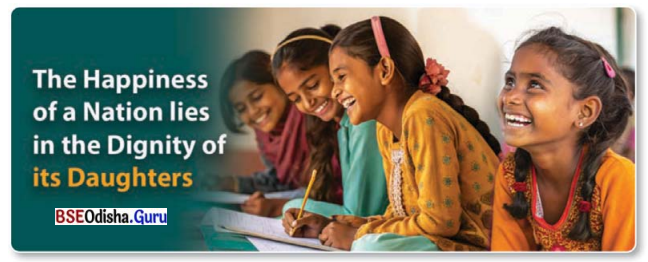
1. What are the things you can observe in the poster?
(ତୁମେ ପୋଷ୍ଟରରେ ଥିବା କେଉଁ କେଉଁ ଜିନିଷକୁ ପର୍ଯ୍ୟବେକ୍ଷଣ କରିପାରିବ ?)
2. Why do you think the girls look happy?
(ବାଳିକାମାନେ ଖୁସି ଅଛନ୍ତି ବୋଲି ତୁମେ କାହିଁକି ଭାବୁଛ ?)
3. Dignity means ‘self-respect’. What is the relation between ‘dignity’ and ‘happiness’ ?
(ମର୍ଯ୍ୟାଦା ଅର୍ଥ ଆତ୍ମ ସମ୍ମାନ । ଆତ୍ମ ମର୍ଯ୍ୟାଦା ଓ ଖୁସି ମଧ୍ଯରେ କ’ଣ ସମ୍ପର୍କ ଅଛି ?)
4. How does a Nation prosper when its daughters are happy?
(ଯେତେବେଳେ ଦେଶର ବାଳିକାମାନେ ଖୁସି ରହନ୍ତି ଦେଶ କିପରି ଉନ୍ନତି କରିଥାଏ ?)
IV. The Government has launched many schemes for the education of the girl child. Some of them are ‘Beti Bachao Beti Padhao’, ‘Balika Samridhi Yojana’, ‘Samagra Shiksha Scheme – Kasturba Gandhi Balika Vidyalayas’, etc.
(ସରକାର ବାଳିକା ଶିକ୍ଷା ପାଇଁ ଅନେକଗୁଡ଼ିଏ ଯୋଜନା କରିଛନ୍ତି । ସେମାନଙ୍କ ମଧ୍ୟରୁ କେତେକ ହେଲା – ‘ବେଟୀ ବଚାଓ ଓ ବେଟୀ ପଢ଼ାଓ’, ‘ବାଳିକା ସମୃଦ୍ଧି ଯୋଜନା’, ‘ସମଗ୍ର ଶିକ୍ଷା ଯୋଜନା’, ‘କସ୍ତରବା ଗାନ୍ଧି
ବାଳିକା ବିଦ୍ୟାଳୟ’, ଇତ୍ୟାଦି । ଶିକ୍ଷକଙ୍କ ଠାରୁ ଅନ୍ୟାନ୍ୟ ଯୋଜନାଗୁଡ଼ିକ
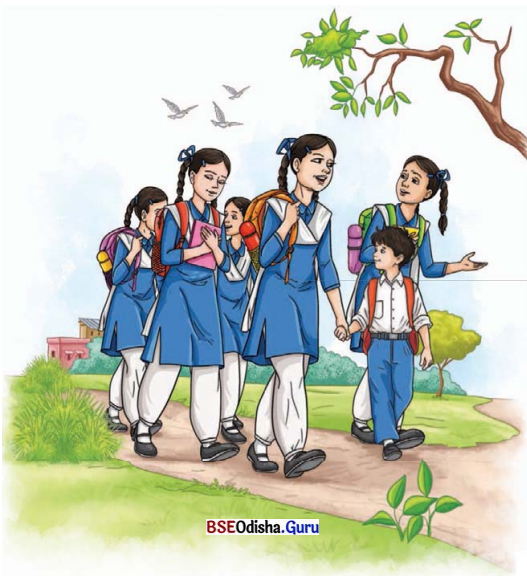
Find out more such schemes from the internet or from your teacher and spread awareness in your neighbourhood.
(ଇଣ୍ଟରନେଟ୍ କିମ୍ବା ବୁଝ ଏବଂ ତୁମ ପଡ଼ୋଶୀ ଅଞ୍ଚଳରେ ସଚେତନତା ବୃଦ୍ଧି କର ।)
The Day the River Spoke Class 7 Summary
Let us read (ଆସ ପଢ଼ିବା)
TEXT – I
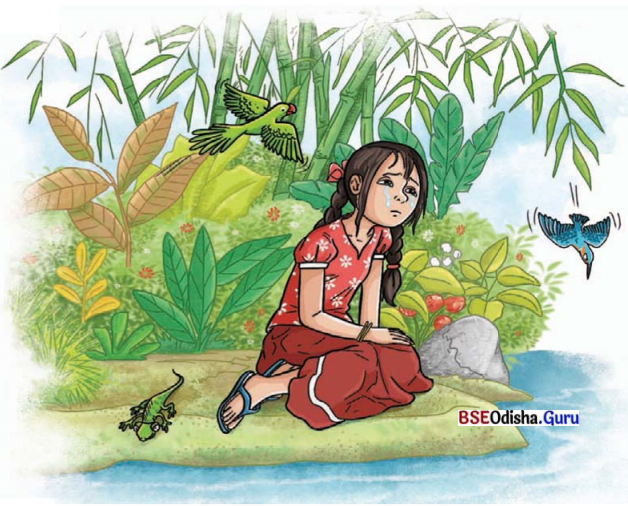
A big bright tear splashed down her nose. And another. A kingfisher swept down, its wings an arrow of blue in the sunlight. And a green lizard slithered down to the river’s edge to bask in the sun.
ଓଡ଼ିଆ ଅନୁବାଦ :
ଲୁହ ଟୋପାଏ ତା’ ନାକ ଉପରେ ପଡ଼ିଲା । ଆହୁରି ଟୋପାଏ ମଧ୍ଯ ପଡ଼ିଲା। ଗୋଟିଏ ମାଛରଙ୍କା ପକ୍ଷୀଟି ତଳକୁ ଉଡ଼ି ଖସିଲା, ତା’ର ନୀଳ ଡେଣା ଦୁଇଟା ସୂର୍ଯ୍ୟ ଆଲୋକର ତୀର ଭଳି ଦେଖାଯାଉଥିଲା ଏବଂ ଏକ ସବୁଜ ରଙ୍ଗର ଏଣ୍ଡୁଅଟିଏ ଖରା ଖାଇବାପାଇଁ ନଦୀ ଧାର ନିକଟକୁ ଧୀର ଭାବରେ ଖସି ଆସିଲା ।
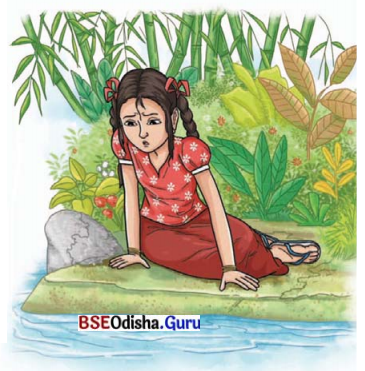
“Dear, dear!” said a sleepy, murmuring voice, “What’s the matter?”
Jahnavi was startled, because she was sure she had been quite alone. It couldn’t have been the lizard. And the kingfisher was up in the thicket of bamboo eating the fish it had caught. It couldn’t be the parrots, because parrots shrieked and this was such a sleepy voice. She looked around her. There wasn’t a soul in sight. She was rather scared and wanted to run away. “You shouldn’t cry, you know,” the voice went on. “And you really shouldn’t be scared, when you have been coming here to see me every day, well, almost every day.”
She was puzzled. It was such a voice, like the river. It couldn’t be the river! “Well, tell me all about it,” said the River, for it was the River. “I’ve got to hurry to reach the sea, you know:’
ଓଡ଼ିଆ ଅନୁବାଦ :
ଏକ ନିଦୁଆ ଗୁଣୁଗୁଣୁ ସ୍ୱରରେ କହିଲା, ‘‘ପ୍ରିୟ, ପ୍ରିୟ ! ଘଟଣା କ’ଣ ?’’ ଜାହ୍ନଭୀ ଚକିତ ହୋଇଗଲା କାରଣ ସେଠାରେ ସେ ଏକାକୀ ନୀରବରେ ଥିଲା । ଏହା ତ ଏଣ୍ଡୁଅର ସ୍ଵର ହୋଇନପାରେ । ଏବଂ ମାଛରଙ୍କା ପକ୍ଷୀଟି ଉପରକୁ ଉଠିଯାଇ ଘଞ୍ଚ ବାଉଁଶ ଗଛ ଉପରେ ଧରିଥିବା ମାଛଟିକୁ ଖାଉଥିଲା । ଏହା ମଧ୍ୟ ଶୁଆମାନେ ବି ନହୋଇ ପାରନ୍ତି କାରଣ ସେମାନେ ଚିତ୍କାର କରି ବୋବାନ୍ତି କିନ୍ତୁ ଏଇଟା ଗୋଟେ ନିଦୁଆ ସ୍ଵର । ସେ ତା’ର ଚାରିପଟକୁ ଅନେଇଲା । କୌଣସି ଆତ୍ମାଟିଏ ଦେଖାଯାଉ ନଥିଲା । ସେ ବରଂ ଭୟଭୀତ ହେଲା ଏବଂ ଦୌଡ଼ି ପଳାଇବାକୁ ଚାହିଁଲା। ‘ସ୍ଵର ପୁଣି ଶୁଭିଲା, ତୁମେ କାନ୍ଦିବା ଉଚିତ୍ ନୁହେଁ, ତୁମେ ମଧ୍ଯ ଭୟଭୀତ ହୁଅ ନାହିଁ । ଯେହେତୁ ତୁମେ ମତେ ପ୍ରତ୍ୟେକଟି ଦେଖା କରିବାକୁ ଆସୁଛି ।
ସେ ଚକିତ ହୋଇଗଲା । ଏହା ତ ନଦୀ ସ୍ଵର ଭଳି ଲାଗୁଛି । ଏହା ନଦୀର ସ୍ଵର ହୋଇନପାରେ । ଆଚ୍ଛା, ଘଟଣା କ’ଣ ମତେ କୁହ’’, ନଦୀଟି କହିଲା, ‘ତୁମେ ଜାଣ ମୁଁ ସମୁଦ୍ରରେ ପହଞ୍ଚିବାକୁ ତରବର ଅଛି ।
“They won’t let me go to school: said Jahnavi. “I asked my mother, “Why can’t I go to school like my elder brother Gopi and Ramu.” And Mother had replied, ‘You are too small, baby. May be later.’ “ But when she was five, little Ramu was born and Mother still said, “May be next year. Jahnavi, mind your little brother while I go to the fields” Now, she was nearly ten and minding Little Appu, who was the smallest. “They don’t want me. They only..7″ —she stopped with a
sob…
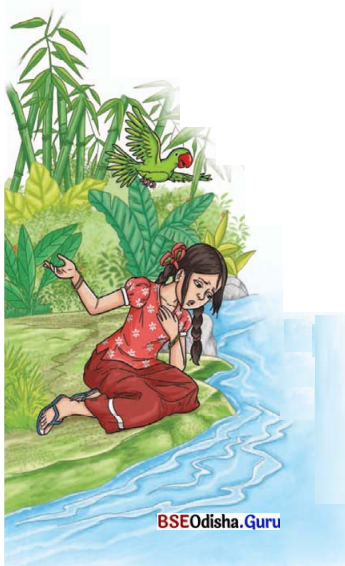
“I am scared to go to school. And I’m so old now, they’ll never let me go. But I want to go. I want to learn to read like Gopi and Ramu” “I want to know why spiders are yellow in yellow flowers, why bamboo trees rustle, why the moon always comes from behind the hills, never the other way, why the baby fish in the field water become frogs, why..:’
ଓଡ଼ିଆ ଅନୁବାଦ
ଜାହ୍ନବୀ କହିଲା, ‘ସେମାନେ ମୋତେ ବିଦ୍ୟାଳୟକୁ ଯିବାକୁ ଦେଉ ନାହାଁନ୍ତି । ମୁ ମୋ ମାଆଙ୍କୁ ପଚାରିଲି, ‘ମୁଁ କାହିଁକି ମୋ ବଡ଼ ଭାଇ ଗୋପୀ ଓ ରାମୁଙ୍କ ଭଳି ସ୍କୁଲକୁ ଯାଇପାରିବିନି’’ ? ମା’ ଉତ୍ତର ଦେଲେ, ‘ତୁ ଅତି ଛୋଟ ପିଲା, ପରେ ଯିବୁ ।’’ ମୁଁ ଯେତେବେଳେ ୫ ବର୍ଷର ହୋଇଥିଲି ରାମୁ ସେତେବେଳେ ଜନ୍ମ ହୋଇଥିଲା । ମା’, କହିଲେ ତଥାପି ଦେଖୁବା ଆରବର୍ଷକୁ ଯିବୁ । ବର୍ତ୍ତମାନ ତୁ ତୋର ସାନ ଭାଇକୁ ଦେଖାରଖା କର, କାରଣ ମୁଁ ବିଲକୁ ଯାଉଛି । ବର୍ତ୍ତମାନ ମତେ ୧୦ ବର୍ଷର ହେଲାଣି ଏବଂ ସବା ସାନଭାଇ ଆପୁକୁ ଜଗାରଖା କରୁଛି । ସେମାନେ ମୋତେ ବିଦ୍ୟାଳୟକୁ ପଠାଇବାକୁ ଚାହୁଁ ନାହାନ୍ତି ।’’ ଏହା ସେ କୋହଭରା କଣ୍ଠରେ କହିଲା, ମୁଁ ସ୍କୁଲକୁ ଯିବାକୁ ଭୟ କରୁଛି । ମୋତେ ବହୁତ ବର୍ଷ ହେଲାଣି। ସେମାନେ ମତେ ଯିବାକୁ ଦେବେନି। କିନ୍ତୁ ମୁଁ ଯିବାକୁ ଚାହୁଁଛି । ମୁଁ ଗୋପୀ ଏବଂ ରାମୁଙ୍କ ଭଳି ପଢ଼ିବାକୁ ଚାହୁଁଛି ।
“Stop!” said the River. “You make me breathless. So many whys! I can tell you where the moon goes,” the River said secretly. “It goes down towards the sea. I’ve seen; it always takes the same way-over the mountains and down to the sea, like me!”
ଓଡ଼ିଆ ଅନୁବାଦ :
ମୁଁ ଜାଣିବାକୁ ଚାହୁଁଛି ବୁଢ଼ୀଆଣୀଟା ହଳଦିଆ ଫୁଲ ଭିତରେ କାହିଁକି ହଳଦିଆ ଦେଖାଯାଏ, ବାଉଁଶ ଗଛଗୁଡ଼ିକ କାହିଁକି ଖସ୍ ଖସ୍ ଶବ୍ଦ କରନ୍ତି, କାହିଁକି ଚନ୍ଦ୍ର ସବୁବେଳେ ପାହାଡ଼ ପଛରୁ ଆସେ, କାହିଁକି ଅନ୍ୟ ପ୍ରକାରେ ନୁହେଁ, କାହିଁକି ଛୁଆ ମାଛଟା ବେଙ୍ଗ ହୋଇଯାଏ କାହିଁକି…….. ।
ଏତେ କଥା ଶୁଣି ନଦୀଟି କହିଲା, ‘ଅଟକିଯା, ଝିଅ । ତୁ ମତେ ଅଣନିଶ୍ୱାସୀ କରିଦେବୁ । ଏତେଗୁଡ଼ିଏ କାହିଁକି ! ମୁଁ ତତେ କହିପାରିବି ଚନ୍ଦ୍ର କୁଆଡ଼େ ଯାଏ । ସେ ତଳ ମୁହାଁ ହୋଇ ସମୁଦ୍ରକୁ ଯାଏ । ମୁଁ ଦେଖୁଛି ସେ ମୋଭଳି ଉଚ୍ଚ ପାହାଡ଼କୁ ଅତିକ୍ରମ କରି ତଳ ମୁହାଁ ହୋଇ ସମୁଦ୍ରକୁ ଯାଏ ।’’
TEXT – II
“Even little Ramu goes to school:” said Jahnavi, “pity, the school isn’t by the sea: said the River. “Then I could take you along, you know. But, I suppose I couldn’t really. You’d get your feet wet. And that would never do! I’m afraid there’s only one thing you can do.”
ଓଡ଼ିଆ ଅନୁବାଦ :
ଜାହ୍ନବୀ କହିଲା, ‘ଏପରିକି କୁନିପିଲା ରାମୁ ବି ବିଦ୍ୟାଳୟକୁ ଯାଉଛି ।’’ ନଦୀଟି କହିଲା, ‘ବଡ଼ ଦୁଃଖର କଥା, ବିଦ୍ୟାଳୟଟା ସମୁଦ୍ର କୂଳରେ ନାହିଁ, ନଚେତ୍ ମୁଁ ତୁମକୁ ନେଇଯାଇଥା’ନ୍ତି । କିନ୍ତୁ ମୁଁ ଭାବୁଛି ବାସ୍ତବରେ ତା’ ମୁଁ କରିନଥା’ନ୍ତି, କାରଣ ତୁମ ଗୋଡ଼ ଓଦା ହୋଇଯାଇଥା’ନ୍ତା । ତା’ କେବେ ହୋଇ ନଥା’ନ୍ତା । ମୁଁ ଦୁଃଖ ଯେ କେବଳ ଗୋଟିଏ କାର୍ଯ୍ୟ ତାହା ତୁମେ କରିପାରିବ ।
“Can I do something?” asked Jahnavi. “Well, it’s up to you:” said the River. ‘Seems to me little girls can do as much as little boys-they swim as fast as little boys. You just slip along one morning and sit there in the school and listen to what’s going on, and may be the teacher will let you stay:’
“I couldn’t,” gasped Jahnavi. “I couldn’t! They’d scare me! They’d chase me out:’
ଓଡ଼ିଆ ଅନୁବାଦ :
‘ମୁଁ କିଛି କରିପାରିବି’, ଜାହ୍ନବୀ ପଚାରିଲା, ‘ଏହା ତୁମ ଉପରେ ନିର୍ଭର କରେ’’ ନଦୀଟି କହିଲା । “ ମୋତେ ଯାହା ଲାଗେ ଯେ ଛୋଟ ଝିଅମାନେ ମଧ୍ୟ ଛୋଟ ଛୋଟ ପୁଅମାନଙ୍କ ଭଳି କାର୍ଯ୍ୟ କରିପାରନ୍ତି । ଝିଅମାନେ ପୁଅମାନଙ୍କ ଭଳି ଶୀଘ୍ର ପହଁରି ପାରନ୍ତି । ତୁମେ ଦିନେ ସକାଳେ ଘରୁ ଖସିଯାଇ ବିଦ୍ୟାଳୟକୁ ଯାଅ ଏବଂ ଶ୍ରେଣୀ କକ୍ଷରେ ବସିପଡ଼ ଏବଂ କ’ଣ ସବୁ ହେଉଛି ଦେଖ, ହୁଏତ୍ ଶିକ୍ଷକ ତୁମକୁ ରହିବାକୁ କହିପାରନ୍ତି ।
‘‘ମୁଁ ପାରିବି ନାହିଁ, ଧଇଁସଇଁ ହୋଇ ଜାହ୍ନବୀ କହିଲା । ‘ସେମାନେ ମୋତେ ଭୟ ଦେଖାଇବେ । ସେମାନେ ମୋତେ ଗୋଡ଼ାଇ ବିଦ୍ୟାଳୟରୁ ତଡ଼ିଦେବେ ।’’
The River laughed. “You? Scared?” the River said, “when you’re not afraid of the green lizard, or of the snake in the bamboo clump, (Jahnavi startled) or the big trains rattling past that bridge:’ “Trains are noisy; I prefer ships:’ said the River.
asked.
Jahnavi never knew the snake lived in the bamboo clump. “What are ships?” she
“Big boats:” said the River, “so big that they can take hundreds of people, and they sail along the sea with lights that shine all night.”
ଓଡ଼ିଆ ଅନୁବାଦ :
ନଦୀଟି ହସିଲା ଏବଂ କହିଲା, ‘ତୁମେ ଡରିଯିବ । ଯେତେବେଳେ ତୁମେ ନୀଳ ଏଣ୍ଡୁଅକୁ ଭୟ କର ନାହିଁ କିମ୍ବା ବାଉଁଶ ବୁଦାରେ ଥିବା ସାପକୁ ଭୟ କର ନାହିଁ, କିମ୍ବା ବ୍ରିଜ୍ ଉପରେ ଗର୍ଜନ କରି ଯାଉଥିବା ରେଳକୁ ଭୟ କର ନାହିଁ । ରେଳଗୁଡ଼ିକ ଭୟଙ୍କର ଶବ୍ଦ କରନ୍ତି; ମୁଁ ଜାହାଜକୁ ପସନ୍ଦ କରେ ।’’
ଜାହ୍ନବୀ କେବେ ବି ଜାଣି ନଥୁଲା ବାଉଁଶ ବୁଦାରେ ସାପ ରୁହନ୍ତି ବୋଲି । ‘ଜାହାଜଗୁଡ଼ିକ କ’ଣ ?’’ ସେ ପଚାରିଲା ।
‘ବଡ଼ ଡଙ୍ଗାମାନ’ ନଦୀଟି କହିଲା, ‘ଏତେବଡ଼ ଯେ ଶତାବ୍ଦିକ ଲୋକକୁ ନେଇ ଯାଇପାରିବ ଏବଂ ସେମାନେ ସମୁଦ୍ରରେ ରାତ୍ରିସାରା ଯାତ୍ରା କରନ୍ତି ଚକ୍ ଚକ୍ ଆଲୋକ ସହ ।’’
Jahnavi held her breath. “Will they come here?” she asked.
“T’m afraid not,” said the River. “Too large, you know. Chandu’s catamaran is good enough for me. Chandu can take you to see a ship, someday.”
“They’d never let me!” wailed Jahnavi.
“Try going to school first,” said the River. “Remember-it’s up to you!”
ଓଡ଼ିଆ ଅନୁବାଦ :
ଜାହ୍ନବୀ ନିଃଶ୍ୱାସ ବନ୍ଦ କରି କହିଲା, ‘ସେମାନେ କ’ଣ ଏଠିକୁ ଆସିବେ । ନଦୀଟି କହିଲା, ‘‘ମୁଁ କିନ୍ତୁ ଭୟ କରେ ନାହିଁ । ତୁମେ ଜାଣ, ସେଗୁଡ଼ିକ ବହୁତ ବଡ଼ । ଚନ୍ଦୁର ଡଙ୍ଗା ମୋ ପାଇଁ ବହୁତ ଭଲ । ଚନ୍ଦୁ ତୁମକୁ ଦିନେ ଜାହାଜ ଦେଖିବାକୁ ନେଇଯିବ ।’’
‘ସେମାନେ ମୋତେ କେବେହେଲେ ଛାଡ଼ିବେ ନାହିଁ ।’’ ଜାନବୀ କାନ୍ଦି ଉଠିଲା, ନଦୀଟି କହିଲା, ‘ପ୍ରଥମେ ବିଦ୍ୟାଳୟକୁ ଯିବାକୁ ଚେଷ୍ଟା କର । ମନେରଖ, ଏହା ତୁମ ଉପରେ ନିର୍ଭର କରେ ।’’
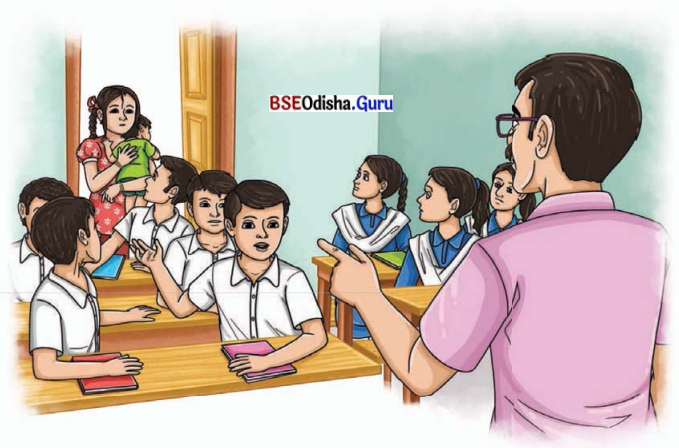
Jahnavi gathered courage. The next day she reached the school, panting and out of breath and stood by the door listening while the teacher read out the lesson. It was a story about a prince called Ashoka, who became a great king. Little Appu had fallen asleep on her shoulder. She crept nearer and nearer till she was in the back row, squatting with the others on the earthen floor. Little Appu made no noise and she listened.
“Where did you spring from, little girl?” asked the teacher. “And what is your name? You’re new in my class.”
She’s Gopi’s sister, Gopi is in the next class:’ said one of the boys. “It’s Jahnavi,” said another. “So, you’re Gopi’s little sister? Nice lad, Gopi.“
– If you really, really want to come to my school, Jahnavi,” the teacher had said, “we’ll talk to your father about it. Don’t you worry. We’ll find a way.”
Jahnavi saw the teacher walking up the steps to their gate the next evening when she was lighting the lamp. She could see her father scratching his cheek the way he did when he was worried.
ଓଡ଼ିଆ ଅନୁବାଦ :
ଜାହ୍ନବୀ ସାହସ ଜୁଟାଇଲା । ତା’ପରଦିନ ସେ ବିଦ୍ୟାଳୟରେ ପହଞ୍ଚିଗଲା । ଘନ ଘନ ନିଃଶ୍ଵାସ ନେଇ, ସେ ଶ୍ରେଣୀରେ ଦ୍ଵାରଦେଶରେ ଛିଡ଼ା ହୋଇ ଶିକ୍ଷକ ପଢ଼ାଉଥିବାର ଶୁଣୁଥିଲା । ଏହା ଏକ ଗପ ରାଜକୁମାର ଅଶୋକଙ୍କ ବିଷୟରେ ଯିଏ ଦିନେ ଏକ ମହାନ୍ ରାଜା ହୋଇଥିଲେ । କୁନିପିଲା ଆପୁ ତା’ କାନ୍ଦରେ ଶୋଇପଡ଼ିଲାଣି । ସେ ନୀରବରେ ଧୀରେ ଧୀରେ ନଇଁ ନଇଁ ମାଟି ଚଟାଣ ଉପରେ ପଛ ଧାଡ଼ିକୁ ଚାଲିଗଲା । ତା’କାନ୍ଧରେ ଥିବା ଆପୁ କିଛି ବି ଶବ୍ଦ କରୁନଥିଲା ।
ଏହି ସମୟରେ ଶିକ୍ଷକ ପଚାରିଲେ, ‘ହେ କୁନିଝିଅ, ତୁମେ କେଉଁଠୁ ଆସିଲ । ତୁମ କାମ କ’ଣ ? ତୁମେ ମୋ ଶ୍ରେଣୀରେ ନୂଆ ଆସିଛ ।’’
‘ସେ ଗୋପିର ଭଉଣୀ ଗୋପୀ ଆର ଶ୍ରେଣୀରେ ଅଛି,’’ ଏକଥା ଏକ ବାଳକ କହିଲା । ‘‘ସେ ହେଉଛନ୍ତି ଗୋପୀର ଭଉଣୀ,’’’ ଅନ୍ୟ ଏକ ପିଲା କହିଲା ।
ଶିକ୍ଷକ କହିଲେ, ‘ଆଚ୍ଛା, ତୁମେ ଗୋପୀର ସାନ ଭଉଣୀ । ଗୋପୀ ବହୁତ ଭଲ ପିଲାଟେ ।’’, ଶିକ୍ଷକ କହିଲେ, ‘ତୁମେ ଯଦି ବାସ୍ତବରେ ବିଦ୍ୟାଳୟକୁ ଆସିବାକୁ ଚାହୁଁଚ, ଆମେ ତୁମ ବାପାଙ୍କ ସାଥ୍ରେ କଥା ହେବୁ । ବ୍ୟସ୍ତ ହୁଅ ନାହିଁ । ଆମେ ଏକ ରାସ୍ତା ବାହାର କରିଦେବୁ ।
ତା’ପରଦିନ ସନ୍ଧ୍ୟାରେ ଜାହ୍ନବୀ ଲ୍ୟାମ୍ପ ଲଗାଉଥିବା ବେଳେ ଶିକ୍ଷକ ତାଙ୍କ ଘର ଫାଟକ ଆଡ଼କୁ ଚାଲିଚାଲି ଆସୁଥିବା ଦେଖୁଲା । ଜାହ୍ନବୀ ଦେଖିଲା ବାପା ତାଙ୍କ ଗାଲକୁ କୁଣ୍ଡାଉଛନ୍ତି । ଯେତେବେଳେ ସେ ଅଧିକ ବ୍ୟସ୍ତ ହୋଇଯାଆନ୍ତି, ଏପରି କରନ୍ତି ।
The teacher was nodding and saying something she couldn’t make out. And Mother said, “Little Jahnavi, I shall miss you when you go to school. Girls should learn as much as they want. When I was your age, I wanted to go to school, but your grandmother said ‘No’, but now, I am glad the teacher came to talk to your father:”
ଓଡ଼ିଆ ଅନୁବାଦ
ଶିକ୍ଷକ ମୁଣ୍ଡ ହଲାଇ କିଛି କହୁଥୁବାର ସେ ଦେଖୁଲା, କିନ୍ତୁ କିଛି ବୁଝି ପାରୁନଥିଲା । ମା’ କହିଲେ, ‘କୁନି ଝିଅ ଜାହ୍ନବୀ ତୁ ବିଦ୍ୟାଳୟକୁ ଗଲେ ମୁଁ ତୋ ଅନୁପସ୍ଥିତି ଅନୁଭବ କରିବି । ଝିଅମାନେ କିନ୍ତୁ ଯେତେପର୍ଯ୍ୟନ୍ତ ଚାହାନ୍ତି ପଢ଼ିବା କଥା । ମୁଁ ଯେତେବେଳେ ତୋ ବୟସର ଥୁଲି, ମୁଁ ବିଦ୍ୟାଳୟକୁ ଯିବାକୁ ଇଚ୍ଛା କରୁଥିଲି, କିନ୍ତୁ ତୋର ଆଈ ମନା କଲେ । କିନ୍ତୁ ଆଜି ମୁଁ ଖୁସି ଯେ ଶିକ୍ଷକ ତୋ ପାଇଁ ତୋ ବାପାଙ୍କୁ କହିବାକୁ ଆସିଲେ ।’’
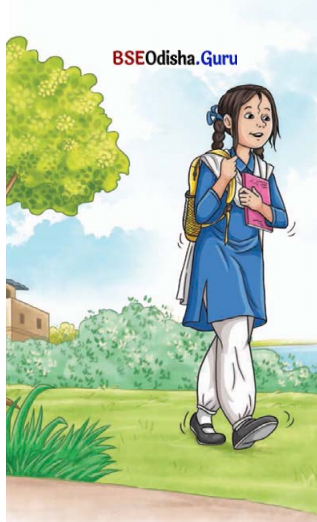
And Jahnavi said, “Mother, when I grow up, I’ll be a teacher. I’ll go from house to house in our village and ask all the little girls to come to my school. And I’ll teach them all that I’m going to learn.”
And she went down the path between the fields the next morning before school began, to meet the River. “I did it!” she told the River. “I was scared, but I did it! And they’re letting me go. I’m going to learn to write my name and do sums. And I am going to find out why our little fishes in the rice fields turn into frogs.” She heard the river’s sleepy chuckle, “Come again, little girl, and I’ll tell you all about the ships that sail the sea.”
KAMALA NAIR (An extract adapted from The Day the River Spoke)
ଓଡ଼ିଆ ଅନୁବାଦ :
ଜାହ୍ନବୀ କହିଲା, ‘ମା’, ମୁଁ ବଡ଼ ହେଲେ ଜଣେ ଶିକ୍ଷକ ହେବି । ଏବଂ ମୁଁ ଗ୍ରାମରେ ଘରକୁ ଘର ଯାଇ ଝିଅମାନଙ୍କୁ ମୋ ବିଦ୍ୟାଳୟକୁ ପଢ଼ିବାକୁ ଆସିବାକୁ କହିବି । ମୁଁ ସେମାନଙ୍କୁ ଶିକ୍ଷା ଦେବି ଯାହା ମୁଁ ଶିକ୍ଷା କରିବାକୁ ଯାଉଛି ।’’
ତା’ପରଦିନ ସକାଳେ ବିଦ୍ୟାଳୟ ଆରମ୍ଭ ହେବା ପୂର୍ବରୁ ସେ ଜମିରେ ଚାଲି ଚାଲି ନଦୀ ପାଖକୁ ଗଲା ଏବଂ କହିଲା, ‘ମୁଁ ଏହା କରିଦେଲି, କିନ୍ତୁ ମୁଁ ଡରିଯାଉଥିଲି,”’ । ସେମାନେ ମୋତେ ଯିବାକୁ ଦେଲେ । ମୁଁ ବର୍ତ୍ତମାନ ଯାଉଛି ମୋ ନାମ ଲେଖୁବା ଏବଂ ଗଣିତ କଷିବା ଶିଖୁବି । ଏବଂ ମୁଁ ଜାଣିବାକୁ ଚାହୁଁଛି ଆମ ଧାନ କିଆରିର ଥିବା ଛୋଟ ମାଛଗୁଡ଼ିକ ବେଙ୍ଗ କାହିଁକି ହୋଇଯାଉଛନ୍ତି’’ ସେ ନଦୀଟି ଧୀର ଭାବରେ କହୁଥିବାରୁ ଶୁଣିଲା, ‘ହେ କୁନିଝିଅ ତୁମେ ଆଉଥରେ ଆସ, ମୁଁ ତୁମକୁ କହିବି ଜାହାଜମାନେ କିପରି ସମୁଦ୍ରରେ ଯାତ୍ରା କରନ୍ତି ।’’
Summary of The Text
(ପାଠ୍ୟ ବିଷୟର ସଂକ୍ଷିପ୍ତ ସାରକଥା)
Jahnavi was a bright girl living in a coastal village with her parents and three brothers. She wanted to go to school like her brothers, but her parents always asked her to take care of her younger siblings. This made her sad, and one day she cried by the river. To her surprise, the river spoke to her and encouraged her to be brave. The river told her that little girls are as capable as boys and advised her to go to school on her own.
The next day, Jahnavi gathered courage and entered the classroom quietly with her youngest brother Appu. The teacher noticed her and welcomed her, promising to speak to her father. Later, her father and mother agreed to let her study. Jahnavi was overjoyed and dreamed of becoming a teacher in the future, so she could educate all the girls in her village. This story highlights the importance of education for girls and the courage needed to follow one’s dreams.
Notes and Glossary :
- splashed – fell on a surface in drops (ଭୂମି ଉପରେ ଟୋପା ଟୋପା ହୋଇ ପଡ଼ିଲା)
- Swept – come down ( ବୋହି ଗଲା।। ଝାଡ଼ିଦେଲା)
- Slithered – moved smoothly by sliding from side to side (ଘୁଷୁରି ଘୁଷୁରି ଗଲା)
- murmuring – speaking in a low voice (ଗୁଣୁଗୁଣୁ ହେବା)
- startled – surprised or shocked suddenly (ହଠାତ୍ ଆଶ୍ଚର୍ଯ୍ୟ ହେଲା)
- thicket – a dense group of bushes or trees (ଏକ ଘଞ୍ଚ ବୁଦା ବା ବୃକ୍ଷଗହଳି)
- shrieked – screamed loudly (ଚିତ୍କାର କଲା)
- puzzled – confused (ବିବ୍ରତ ହେଲା)
- minding – taking care (ଧ୍ୟାନ ଦେବା / ଯନ୍ ନେବା)
- sob – crying sound (କାନ୍ଦିବା ଶବ୍ଦ)
- rustle – soft sound of leaves moving (ପତ୍ର ହଲିବାର ହାଲକା ଶବ୍ଦ)
- breathless – out of breath (ଶ୍ଵାସରୁଦ୍ଧ)
- conspiratorially – secretly (ଗୋପନରେ ଷଡ଼ଯନ୍ତ୍ର କରିବା ପରି)
- slip – to go/move quietly (ଖସିଯିବା)
- chase out – to drive away (ଘଉଡ଼ାଇ ଦେବା)
- gasped – breathed quickly in surprise (ଆଶ୍ଚର୍ଯ୍ୟ ହୋଇ ସଁ ସଁ ହୋଇ ନିଃଶ୍ଵାସ ନେବା)
- rattling – noise made by shaking things (ଖଡ଼ଖଡ଼ ଶବ୍ଦ),
- clump – a group of plants growing together (ଗଛର ଗୋଛା)
- bailed – cried loudly (ଜୋର୍ ରେ କାନ୍ଦିଲା)
- catamaran – a type of small boat (ଏକ ପ୍ରକାର ଛୋଟ ଡଙ୍ଗା)
- panting – breathing quickly due to running (ଦୌଡ଼ିବା ଯୋଗୁଁ ଖର ନିଃଶ୍ୱାସ ନେବା)
- crept – moved very quietly (ଲୁଚି ଲୁଚି ଗଲେ)
- spring from- come from (ସୃଷ୍ଟି ହେବ। / ବାହାରିବା)
- squatting sitting on one’s heels close to the ground (ଜଣେ ନିଜ ଗୋଇଠି ଉପରେ ମାଟିରେ ବସିବା)
- earthen floor – soil floor (ମାଟି ଚଟାଣ)
- scratching – rubbing skin with nails (କୁଣ୍ଡାଇବା)
- worried – feeling troubled (ଚିନ୍ତିତ)
- nod – move the head to show agreement (ରାଜି ହେ ବା ଉଦ୍ଦେଶ୍ୟରେ ମୁଣ୍ଡ ହଲାଇବା)
- make out – to understand (ବୁଝିପାରିବା)
- chuckle – A soft, gentle laugh (ମୃଦୁ ହାସ୍ୟ)
The Day the River Spoke Class 7 MCQ
Question 1.
What was the kingfisher doing in the bamboo thicket?
(a) Building a nest
(b) Playing in the water
(c) Eating the fish it had caught
(d) sleeping
Answer:
(c) Eating the fish it had caught
Question 2.
Who actually spoke to Jahnavi?
(a) The parrot
(b) The lizard
(c) The River
(d) Her mother
Answer:
(c) The River
Question 3.
What did the River suggest Jahnavi should try first?
(a) Visit the sea
(b) Go to school and listen to the lessons
(c) Learn swimming
(d) Take care of Appu
Answer:
(b) Go to school and listen to the lessons
Question 4.
Who helped Jahnavi by talking to her father?
(a) Gopi
(b) A neighbour
(c) The River
(d) The teacher
Answer:
(d) The teacher
Question 5.
What did Jahnavi want to become in the future?
(a) A doctor
(b) A singer
(c) A teacher who will bring girls to school and teach them
(d) A fisher woman
Answer:
(c) A teacher who will bring girls to school and teach them
Question 6.
What colour was the lizard mentioned in the story?
(a) blue
(b) red
(c) green
(d) yellow
Answer:
(c) green
Question 7.
Jahnavi was being spoken to by ______.
(a) the lizard
(b) the river
(c) the kingfisher
(d) her mother
Answer:
(b) the river
Question 8.
What did Jahnavi want to do like Gopi and Ramu?
(a) play games
(b) go to school
(c) go fishing
(d) travel to the city
Answer:
(b) go to school
Question 9.
How old was Jahnavi?
(a) four
(b) eight
(c) nearly ten
(d) twelve
Answer:
(c) nearly ten
Question 10.
Jahnavi was puzzled because ______.
(a) the river was flooding
(b) she thought she was alone but heard a voice
(c) she saw a strange animal
(d) she forgot her way
Answer:
(b) she thought she was alone but heard a voice
The Day the River Spoke Class 7 Fill in the Blanks
1. Jahnavi was nearly ________ years old.
Answer:
ten
2. Little Appu was the ________ brother of Jahnavi.
Answer:
smallest
3. The ________ spoke to Jahnavi and asked what the matter was.
Answer:
River
4. The River said little girls can do as much as little ________.
Answer:
boys
5. Jahnavi was scared that others would ________ her out of school.
Answer:
chase
6. Jahnavi wants to learn why baby fishes become ________.
Answer:
frogs
7. Chandu’s ________ is good enough for the River.
Answer:
catamaran
8. The teacher promised to talk to Jahanvi’s ________ about allowing her to study.
Answer:
father
9. The kingfisher’s wings shone like an arrow of ________ in the sunlight.
Answer:
blue
10. The River said it must hurry to reach the ________.
Answer:
sea
The Day the River Spoke Class 7 True or False
1. Jahnavi was startled because the kingfisher spoke to her.
Answer: False
2. The River spoke to Jahnavi in a sleepy, gentle voice.
Answer: True
3. Jahnavi’s mother allowed her to go to school when she was five.
Answer: False
4. Chandu is Jahnavi’s elder brother’s real name.
Answer: False
5. The lizard slithered down to the river to bask in the sun.
Answer: True
6. Jahnavi was afraid of the snake in the bamboo clump.
Answer: False
7. The River said ships are small boats with only a few pople.
Answer: False
8. Jahnavi stood at the door and listened before entering the classroom.
Answer: True
The Day the River Spoke Class 7 Very Short Question Answer
Question 1.
Why did Jahnavi feel scared when she heard the voice?
Answer:
Jahnavi felt scared because she thought she was alone. There was no one nearby, and
she could not understand where the voice came from.
Question 2.
How is the river described when it speaks to Jahnavi?
Answer:
The river speaks in a sleepy, murmuring voice and tries to comfort her like a friend.
Question 3.
Why did Jahnavi think people would chase her out of school?
Answer:
Jahnavi feared that the teachers and students would not accept her because she had never been to school before and was nervous to try it.
Question 4.
How did Jahnavi feel when she finally entered the school?
Answer: Jahnavi was scared and nervous at first, but she slowly gained courage and sat in the back listening to the lesson happily.
Question 5.
What made Jahnavi’s mother happy about her joining school?
Answer:
Jahnavi’s mother remembered how she was not allowed to study as a child, so she was glad that Jahnavi got the chance to learn.
Question 6.
How did the River try to comfort Jahnavi?
Answer:
The river spoke gently, telling her not to cry or be scared. It reminded her that she
visited it everyday and encouraged her to share her problems.
Question 7.
Why could Jahnavi not go to school when she was five?
Answer:
Jahnavi couldn’t go to school then as little Ramu was born and she had to mind her brother.
Question 8.
Why did the teacher come to Jahnavi’s house?
Answer:
The teacher came to her house to request her father to send Jahnavi to school.
The Day the River Spoke Class 7 Short Question Answer
Question 1.
Describe the scene near the river that Jahnavi experienced before hearing the voice.
Answer:
A tear fell from Jahnavi’s nose as she cried. A kingfisher swept down shining blue in the sunlight and a green lizard moved to the river bank to enjoy the sun. The surroundings were calm and natural.
Question 2.
Describe Jahnavi’s experience on the day she entered school.
Answer:
Jahnavi went to school early with Appu asleep on her shoulder. She stood at the door and listened to a story about king Ashoka. Slowly she moved to the back row and sat with the other children. The teacher welcomed her and promised to talk to her father.
Question 3.
What was Jahnavi’s dream for the future and why?
Answer:
Jahnavi wanted to become a teacher and visit every house it the village to invite all girls to school. She wished to teach them everything she learned because she understood how important education was for girls.
Question 4.
How did Jahnavi share her happiness with the River at the end?
Answer:
Jahnavi went to the River before school and excitedly told it that she did it. She gained courage, went to school and got permission to study. She hapily said she would learn many new things and the River responded happily too.
Question 5.
Why didn’t Jahnavi’s mother allow her to go to school?
Answer:
When Jahnavi was five, her brother Ramu was born. Her mother worked in the fields. So, she asked Jahnavi to mind the baby instead of going to school.
Question 6.
Jahnavi told the River that she was curious to know certain things. What were they?
Answer:
Jahnavi told the River that she wanted to know “why spiders are yellow in yellow flowers, why bamboo trees rustle, why the moon always comes from behind the hills, why the baby fish in the field water become frogs, why….”
Question 7.
What was Jahnavi’s mother’s reaction when she came to learn about her daughter’s Schooling?
Answer:
The teacher reached Jahnavi’s house and explained to her father about her schooling. Her mother could realise that Jahnavi should go to school. She supported it. She admitted that her mother-in-law didn’t allow her to go to school. But she was glad that Jahnavi could go to school.
Question 8.
Why was Jahnavi startled?
Answer:
Jahnavi was sitting beside the River. Suddenly, she heard a voice calling ‘Dear, dear’. She knew that there was nobody else except her. The voice could not be of the kingfisher or fish or even a parrot. So she got startled.