
For effective revision, students can use BSE Odisha Class 7 English Solutions Chapter 3 Three Days to See Question Answer to practice textbook exercises.
Class 7 English Three Days to See Question Answer
Class 7 English Chapter 3 Question Answer Odia Medium
Let us do these activities before we read
(ଆସ ପଢ଼ିବା ପୂର୍ବରୁ ଏହି କାର୍ଯ୍ୟଗୁଡ଼ିକୁ କରିବା ।)
I. Work in pairs. Recall a visit to a place that you liked. Discuss the details of that place and write about the following:
(ଯୋଡ଼ି ହୋଇ କାମ କର । ତୁମେ ପସନ୍ଦ କରୁଥିବା ଏକ ବୁଲିଯାଇଥିବା ସ୍ଥାନକୁ ମନେ ପକାଅ । ସେହି ସ୍ଥାନ ଉପରେ ବିଶଦ ଆଲୋଚନା କର ଏବଂ ନିମ୍ନୋକ୍ତ ପ୍ରଶ୍ନର ଉତ୍ତର ଲେଖା (Question with Answer)
1. Name of the place: Puri Beach
2. Persons you went with: Family/Friends
3. Things you could:
- see: waves, sand, people playing
- listen: sound of waves, birds
- smell: sea breeze, flowers
- taste: ice cream, local food
- touch/feel: sand, water, shells
II. How does this memory make you feel?
(ଏହି ସ୍ମୃତି ତୁମକୁ କିପରି ଅନୁଭବ ହେଉଛି ।)
Answer:
Happy, relaxed, excited, and peaceful.
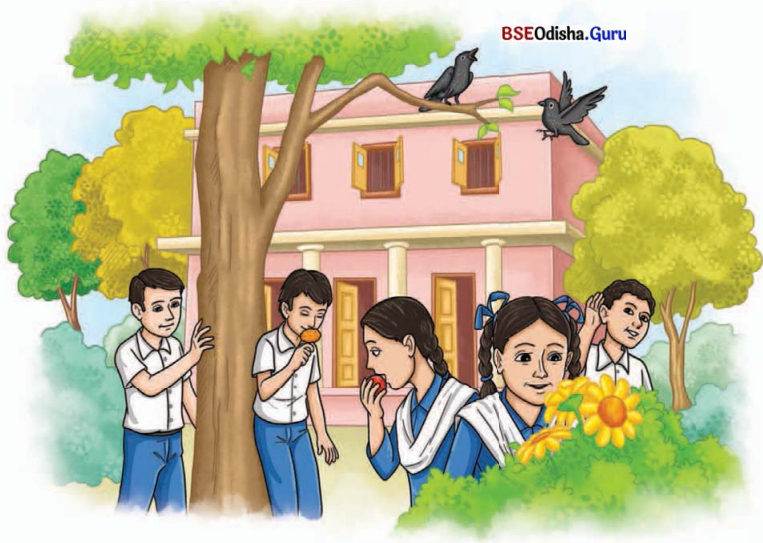
III. Do you think your visit/experience would be different if you could not see or hear? Share your answers with your classmates and the teacher.
(ତୁମେ ଭାବୁଛ କି, ତୁମର ପରିଦର୍ଶନ ଅଭିଜ୍ଞତା ଅଲଗା ହୋଇଥା’ନ୍ତା ଯଦି ତୁମେ ଶୁଣିପାରୁ ନଥା’ନ୍ତ ବା ଦେଖିପାରୁନଥା’ନ୍ତ । ତୁମ ଉତ୍ତରଗୁଡ଼ିକୁ ତୁମ ଶ୍ରେଣୀସାଥୀ ଓ ଶିକ୍ଷକଙ୍କ ସହ ବିନିମୟ କର ।)
Answer:
Yes, because our senses help us experience the world fully. Without them, the experience would have been limited.
Did you know that our five senses are essential for us to experience and make sense of the world around us?
(ତୁମେ ଜାଣିଥୁଲ କି ଆମର ପାଞ୍ଚଟି ଇନ୍ଦ୍ରିୟ ଆମ ଚାରିପାଖରେ ଥିବା ପୃଥିବୀକୁ ଅନୁଭବ କରିବାପାଇଁ ଆବଶ୍ୟକ ?)
Answer:
Yes, our five senses are essential for us to experience and make sense of the ‘world around us.
Let us discuss
(ଆସ ଆଲୋଚନା କରିବା)
I. Work in pairs. Identify the statements that are true from the ones given below. Share your answers with the teacher.
(ଯୋଡ଼ି ହୋଇ କାମ କର । ନିମ୍ନ ପ୍ରଦତ୍ତ ଉକ୍ତିଗୁଡ଼ିକ ମଧ୍ୟରୁ କେଉଁଗୁଡ଼ିକ ସତ୍ୟ ଚିହ୍ନାଅ । ତୁମର ଉତ୍ତରଗୁଡ଼ିକୁ ଶିକ୍ଷକଙ୍କ ସହ ବିନିମୟ କର ।)
1. The author expresses a deep longing to experience the world through the sense of hearing.
2. The author would like exploring the city only to observe how people are suffering.
3. The author would spend the first day seeing the people whose kind-heartedness and friendship have enriched her life.
4. The author acknowledges that even in three days, she would not be able to see everything.
5. The author feels that everyone can find the greatest joy merely by the sense of touch.
6. The author advises those who can see to appreciate every moment as if they might lose their senses tomorrow.
7. On the third day, the author would like to observe people in their daily lives and understand their experiences.
8. The author focuses that the sight must be the most delightful one.
Answer :
1. False. The author does not emphasize hearing. Instead, she expresses a deep longing to experience the world through the sense of sight.
2. False. She would like to explore the city to observe people’s daily lives – their smiles, determination, and emotions – not only their suffering.
3. True. On the first day, the author would spend her time seeing the people whose kindness, love, and friendship have enriched her life.
4. True. She acknowledges that three days are too short, and she would not be able to see everything she longed to see.
5. False. While she finds joy through touch, the author clearly states that sight must be the most delightful sense of all.
6. True. She advises them to use their eyes as if they might lose their sight tomorrow, and similarly, to cherish all other senses as if they could be lost the next day.
7. True. On the third day, she would like to observe people in their daily lives, watch their activities in the city, and understand their experiences.
8. True. The author considers sight to be the most delightful of all the senses.

II. Complete the table given below with what Helen Keller wanted to do on the three days if she had sight.
(ହେଲେନ୍ କେଲର ତିନିଦିନ ପାଇଁ ଯଦି ଦୃଷ୍ଟିଶକ୍ତି ପାଆନ୍ତି ତେବେ ସେ କ’ଣ କରିବେ ଲେଖୁ ସାରଣୀ ପୂରଣ କର ।)
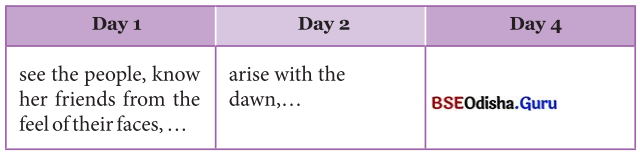
Answer:
| Day 1 | Day 2 | Day 3 |
| see the people, know her friends from the feel of their faces, whose kindness and companionship enriched her life. | arise with the dawn observe the transformation of night into day, visit museums to see Earth’s history and man’s progress. | observe people in their daily lives, understand their experiences by sight, explore work a day world. |
Let us think and reflect
(ଆସ ଭାବିବା ଓ ବିଚାର କରିବା):
I. Read the extracts given below and answer the questions that follow.
(ନିମ୍ନ ପ୍ରଦତ୍ତ ଉଦ୍ଧୃତାଂଶଗୁଡ଼ିକୁ ପଢ଼ ଓ ପରବର୍ତୀ ପ୍ରଶ୍ନଗୁଡ଼ିକର ଉତ୍ତର ଦିଅ ।)
“I feel the delicate symmetry of a leaf. I pass my hands lovingly about the smooth skin of a silver birch, or the rough, shaggy branch of a pine. In spring, I touch the branches of trees hopefully in search of a bud, the first sign of awakening Nature after her winter’s sleep. Occasionally, I am very fortunate; I place my hand gently on a small tree and feel the happy quiver of a bird in full song.”
(i) How many times the word ‘I’ is used in the passage?
(ଅନୁଚ୍ଛେଦରେ ‘I? ଶବ୍ଦଟି କେତେଥର ବ୍ୟବହୃତ ହୋଇଛି ?)
Answer:
The word ‘I’ is used five times in the passage.
(ii) The word I refers to ________. (Choose the correct option)
‘T’ ଶବ୍ଦଟି ________ କୁ ବୁଝାଉଛି । (ସଠିକ୍ ବିକଳ୍ପଟି ବାଛ ।)
A. Leaf
B. Tree
C. Author
D. Nature
Answer:
C. Author
(iii) Complete the sentence appropriately. (Choose the correct option) (VÔN ଭାବରେ ବାକ୍ୟଟିକୁ ସଂପୂର୍ଣ କର । ସଠିକ୍ ବିକଳ୍ପଟି ବାଛ ।)
The phrase ‘awakening Nature after her winter’s sleep’ refers to
A. winter
Answer:
B. spring
B. spring
C. summer
D. autumn
2. “The next day I should arise with the dawn and see the thrilling miracle by which night is transformed into day. I should behold with awe the magnificent panorama of light with which the sun awakens the sleeping earth. This day I should devote to a hasty glimpse of the world, past and present. I should want to see the pageant of man’s progress, and so I should go to the museums.
(i) The word ‘thrilling’ has been used with ‘miracle’.
Which of the following words does not match with the word ‘thrilling’?
(‘thrilling’ ଶବ୍ଦଟି ‘miracle’ ସହ ବ୍ୟବହୃତ ହୋଇଛି । ନିମ୍ନଲିଖତ କେଉଁ ଶବ୍ଦଟି ‘thrilling’ ସହ ମେଳ ଖାଉନାହିଁ ।)
A. experience
B. tale
C. knowledge
D. adventure
Answer:
C. knowledge
(ii) Why does the author refer to the earth as ‘sleeping earth’ ?
(ଲେଖକ କାହିଁକି ପୃଥିବୀକୁ ସୁପ୍ତ ପୃଥିବୀ (sleeping earth) ବୋଲି କହିଛନ୍ତି ?)
Answer:
The author calls the earth as ‘sleeping earth’ because during the night everything rests in darkness, and with the sunrise, life, light, and activity return, as if the earth has woken up from sleep.
(iii) Complete the sentence with an appropriate reason.
(ଉପଯୁକ୍ତ କାରଣ ଲେଖୁ ବାକ୍ୟଟିକୁ ସଂପୂର୍ଣ୍ଣ କର ।)
The writer wishes to dedicate the day to a brief look at the present and past world because _____.
(ଲେଖକ ଦିନଟିକୁ ପୃଥିବୀର ବର୍ତ୍ତମାନ ଏବଂ ଅତୀତକୁ ଏକ ସମ୍ୟକ ଦର୍ଶନ କରିବାକୁ ଇଚ୍ଛା କରିଛନ୍ତି କାରଣ ______)
Answer:
The writer wishes to dedicate the day to a brief look at the present and the past world because she wanted to understand human progress, nature, and history in a short time, and museums would provide her that opportunity through a condensed glimpse of the world.
(iv) How many times is the word ‘should’ used in the extract?
(ଊଦ୍ଧୃତାଂଶରେ ‘should’ ଶବ୍ଦଟି କେତେଥର ବ୍ୟବହାର ହୋଇଛି ?)
Answer:
The word ‘should’ is used five times in the extract.
(v) What does the use of ‘should’ focus on in the extract? (ଶବ୍ଦଟି କାହା ‘should’s ଶବ୍ଦଟି କେତେଥର ବ୍ୟବହାର ହୋଇଛି ?)
Answer:
The repeated use of ‘should’ shows that the author is imagining or wishing what she would do if given the chance to see for a limited time. It conveys her longing and hypothetical plans.
Answer the following questions.
(ନିମ୍ନଲିଖତ ପ୍ରଶ୍ନଗୁଡ଼ିକର ଉତ୍ତର ଦିଅ ।)
Question 1.
The sense of touch makes up for the loss of sight and hearing. Explain this statement with reference to the text. (ସ୍ପର୍ମେନ୍ଦ୍ରିୟ ଦୃଷ୍ଟି ଏବଂ ଶ୍ରବଣର କ୍ଷତିକୁ ଭରଣା କରୁଛି । ଏହି ଉକ୍ତିକୁ ପାଠ୍ୟବିଷୟ ଆଧାରରେ ବୁଝାଅ ।)
Answer:
Helen Keller explains that although she cannot see or hear, the sense of touch helps her connect with the world. She feels the texture of leaves, the smoothness of birch bark, or the roughness of a pine branch. She can even sense a bird quivering in song through touch. Thus, touch provides her with a unique way of experiencing nature and compensates for the absence of sight and hearing.
Question 2.
Why does the author believe that the sense of sight is the most wonderful one?
(ଲେଖକ କାହିଁକି ବିଶ୍ଵାସ କରନ୍ତି ଯେ ଦୃଷ୍ଟି ଶକ୍ତି ସବୁଠାରୁ ଆଶ୍ଚର୍ଯ୍ୟଜନକ ଅଟେ ?)
Answer:
The author believes sight is the most wonderful sense because it reveals the beauty, colours, and expressions of the world in an instant. While touch and hearing give limited understanding, sight allows one to grasp emotions, nature, art, history, and daily life directly. She feels that among all senses, sight provides the richest and most delightful experiences.
Question 3.
How might the author’s opinion on making the most of our senses guide us to be kinder towards people with special abilities ?
(ଲେଖକଙ୍କ ମତ କିପରି ଆମର ସମସ୍ତ ଇନ୍ଦ୍ରିୟକୁ ଭିନ୍ନକ୍ଷମ ବ୍ୟକ୍ତିକୁ ଦୟାଶୀଳ ହେବା ପାଇଁ ପରିଚାଳିତ କରେ ।)
Answer:
The author’s view reminds us to value our senses and not take them for granted. It also teaches us empathy for those with special abilities, like the blind or deaf, who rely on their remaining senses. By appreciating our blessings, we can respect their struggles, understand their strengths, and support them with kindness rather than pity.
Question 4.
What is the significance of the loss of a sense, according to the author?
(ଲେଖକଙ୍କ ମତରେ, ‘‘ଗୋଟିଏ ଇନ୍ଦ୍ରିୟ ହରାଇବାର ଗୁରୁତ୍ଵପୂର୍ଣ୍ଣ କ’ଣ ?)
Answer:
According to the author, the loss of a sense makes people realize its true value. She suggests that if we imagine losing sight, hearing, or touch tomorrow, we will use them more meaningfully today. Hence, losing a sense highlights the importance of making the best use of the abilities we still possess.
Question 5.
How does the author encourage people to approach their everyday sensory experiences ?
(ଲେଖକ ଲୋକମାନଙ୍କୁ ସେମାନଙ୍କର ପ୍ରତ୍ୟେକ ଦିନର ଇନ୍ଦ୍ରିୟଜନିତ ଅନୁଭୂତିକୁ କିପରି ଗ୍ରହଣ କରିବାକୁ ଉତ୍ସାହିତ କରିଛନ୍ତି ?)
Answer:
The author encourages people to treat every sensory experience as precious. She advises to hear music as if tomorrow one would be deaf, to smell flowers as if tomorrow the sense of smell would vanish, and to see everything as if one would be blind tomorrow. In this way, she urges us to enjoy and value every moment of sensory experience fully.
Let us learn (ଆସ ଶିଖ୍):
Sensory words are descriptive – they describe how we experience the world: how we see, hear, smell, taste or feel something. (ସମ୍ବେଦନଶୀଳ ଶବ୍ଦଗୁଡ଼ିକ ବର୍ଣ୍ଣନାତ୍ମକ – ସେଗୁଡ଼ିକ ଆମେ କିପରି ପୃଥିବୀକୁ ଅନୁଭବ କରୁ ତାହା ବର୍ଣ୍ଣନା କରିଥା’ନ୍ତି- ଆମେ କିପରି ଦେଖୁ, ଶୁଣୁ, ସ୍ଵାଦବାରୁ ଏବଂ କିଛି ଜିନିଷକୁ କିପରି ଅନୁଭବ କରୁ ।
Some sensory words from the text are given in column 2 for the 5 senses in column 1. Read the text again and add the new words in column 3. (Question with Answer) (ପାଠ୍ୟ ବିଷୟରୁ କେତେକ ଇନ୍ଦ୍ରିୟ ସମ୍ପର୍କିତ ଶବ୍ଦ ସ୍ତମ୍ଭ ‘2 ରେ ସ୍ତମ୍ଭ ‘1’ ରେ ଥିବା 5 ଟି ଇନ୍ଦ୍ରିୟ ପାଇଁ ଦିଆଯାଇଛି । ପାଠ୍ୟ ବିଷୟକୁ ଆଉଥରେ ପଢ଼ ଏବଂ ସ୍ତମ୍ଭ ‘3’ କିଛି ନୂଆ ଶବ୍ଦ ଯୋଗକର ।)
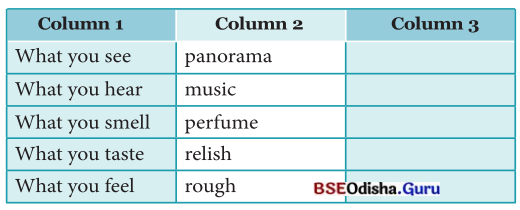
Answer:
| Column 1 (Sense) | Column 2 (From text) | Column 3 (New words from text) |
| What you see | panorama | dawn, light, museums |
| What you hear | music | voice, bird song, orchestra |
| What you smell | perfume | fragrance, flowers, smell |
| What you taste | relish | morsel, taste, flavour |
| What you feel | rough | smooth, delicate, quiver, shaggy |
II. Read the following sentences from the text and underline the verbs.
(ନିମ୍ନଲିଖତ ବାକ୍ୟଗୁଡ଼ିକ ପଢ଼ ଏବଂ verbଗୁଡ଼ିକ ତଳେ ଗାର ଟାଣ ।) (Questions with Answers)
I should divide the period into three parts.
On the first day, I should want to see.
The next day I should arise with the dawn…
I should behold with awe…
The words you have underlined are a combination of two verbs. In each of these sentences, ‘should’ is the modal verb (suggestion), and the second verb (divide, want, arise, behold) is the main verb.
Modal verbs are auxiliary verbs that express necessity, possibility, permission, or ability. They are used before the main verb to give additional information about the function of the main verb. Common modal verbs include can, could, may, might, shall, should, will, would, must, and ought to.
Look at the chart
(ତଳ ଚାର୍ଟକୁ ଦେଖ ।)
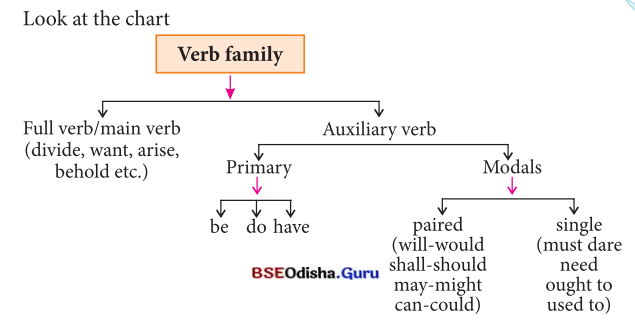
Modal verbs are auxiliary verbs that express necessity, possibility, permission, or ability.
(Modal verb ଗୁଡ଼ିକ ଆବଶ୍ୟକତା, ସମ୍ଭାବନା, ଅନୁମତି କିମ୍ବା ଦକ୍ଷତା ପ୍ରକାଶ କରିଥା’ନ୍ତି ।)
They are used before the main verb to give additional information about the function of the main verb. (ସେଗୁଡ଼ିକ ମୁଖ୍ୟ କ୍ରିୟାର ପୂର୍ବରୁ ବ୍ୟବହାର ହୋଇ main verb ବିଷୟରେ ଅଧିକ ତଥ୍ୟ ପ୍ରଦାନ କରିଥା’ନ୍ତି ।)
III. Identify the modal verbs in the following sentences. Choose the functions they express from those given in the box below.
(ନିମ୍ନ ବାକ୍ୟଗୁଡ଼ିକରେ Modal verb ଗୁଡ଼ିକୁ ଚିହ୍ନାଅ । ସେମାନେ କେଉଁ କାର୍ଯ୍ୟ କରୁଛନ୍ତି ତଳ ବାକ୍ସରୁ ବାଛି ଲେଖ ।)
(necessity, polite request, ability, moral obligation, possibility)
1. You can learn a lot from this experience.
Answer:
Modal verb – can’! Function: ability
2. They might arrive late due to traffic.
Answer:
Modal verb – might’! Function: possibility
3. She must finish her homework before dinner.
Answer:
Modal verb – must’! Function: necessity
4. They ought to apologise for their mistake.
Answer:
Modal verb – ought to ‘! Function: moral obligation
5. He would like to have some lassi, please.
Answer:
Modal verb – would ‘! Function: polite request
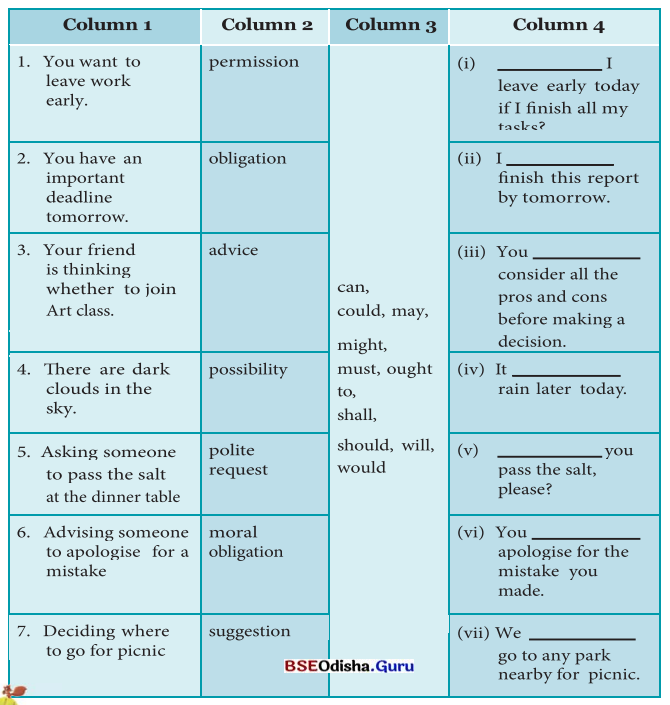
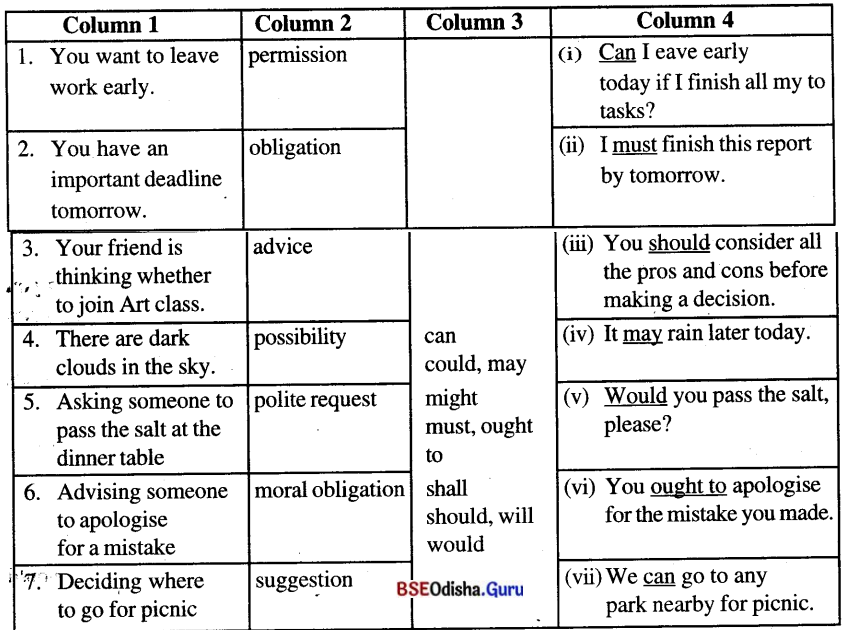
IV. Read the situations in Column 1 and functions in Column 2. Fill in the blanks in the sentences in Column 4 with appropriate modal verbs from Column 3. After filling in the blanks, the teacher makes groups and allows the students to discuss the function of each modal.
(ସ୍ତମ୍ଭ ‘1’ ରେ ଥିବା ପରିସ୍ଥିତିଗୁଡ଼ିକୁ ଓ ସ୍ତମ୍ଭ ‘2’ ରେ ଥିବା କାର୍ଯ୍ୟଗୁଡ଼ିକୁ ପଢ଼ । ସ୍ତମ୍ଭ ‘3’ ରୁ ଉପଯୁକ୍ତ Modal verb ଗୁଡ଼ିକୁ ନେଇ ସ୍ତମ୍ଭ 4” ର ବାକ୍ୟଗୁଡ଼ିକୁ ପୂରଣ କର । ଶୂନ୍ୟସ୍ଥାନ ପୂରଣ କରିସାରିବା ପରେ ଶିକ୍ଷକ ଦଳ ଗଢ଼ିବେ ଏବଂ ପିଲାମାନଙ୍କୁ ପ୍ରତି modal ର କାର୍ଯ୍ୟ ଆଲୋଚନା କରିବାକୁ ଅନୁମତି 6769 1) (Question with Answer)
Answer:
Let us listen (ଆସ ଶୁଣିବା):
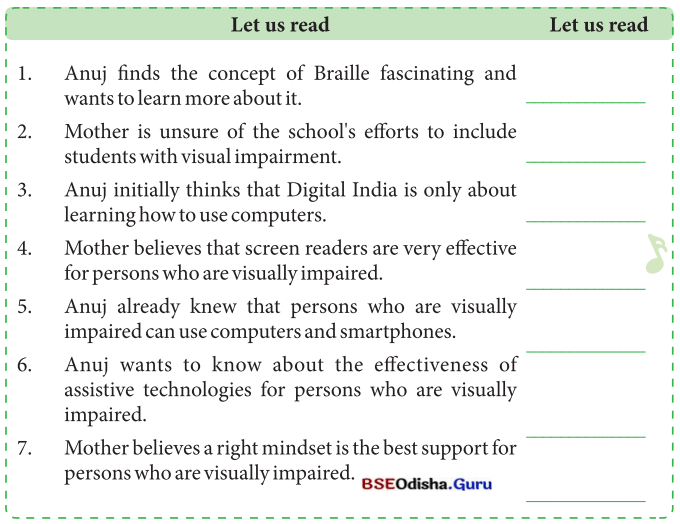
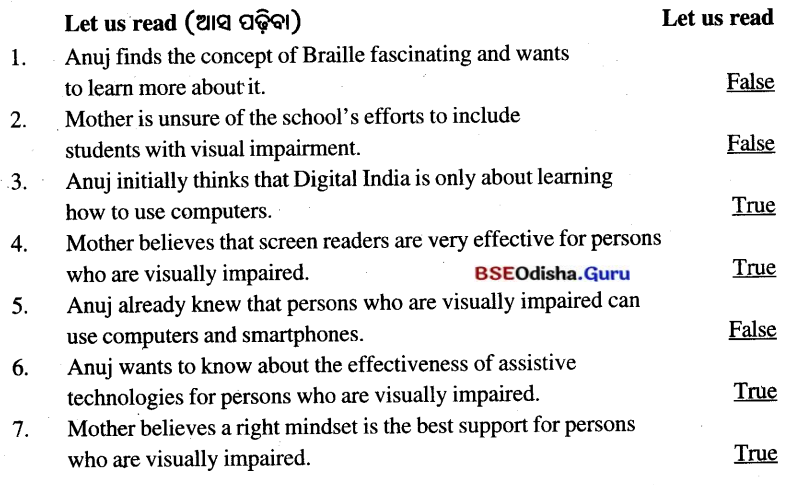
You will listen to a conversation between a mother and son. As you listen, select four true statements from 1-7 given below. (Transcript for the teacher on page – 42) (ତୁମେ ମାଆ ଓ ପୁଅଙ୍କ ମଧ୍ୟରେ ଏକ କଥୋପକଥନ ଶୁଣ । ଶୁଣିବା ସମୟରେ ୧–୭ ଉକ୍ତିଗୁଡ଼ିକ ମଧ୍ୟରୁ ଚାରୋଟି ଠିକ୍ ଉକ୍ତି ବାଛ । ଶିକ୍ଷକଙ୍କ ପାଇଁ Transcript ପୃଷ୍ଠା 42 ରେ ଅଛି ।)
(Question with Answers)
Let us read (ଆସ ପଢ଼ିବା)
Let us read
Answer:
Let us speak (ଆସ କହିବା)
Work in pairs. Take turns to speak for a minute on any one of the senses you value the most, Use the given prompts to frame your response before you speak.
(ଦୁଇ ଜଣିଆ ଦଳରେ କାମ କର । ଇନ୍ଦ୍ରିୟଗୁଡ଼ିକ ମଧ୍ୟରୁ ତୁମେ ସବୁଠାରୁ ଅଧିକ ମୂଲ୍ୟବାନ ମନେ କରୁଥୁବା ଇନ୍ଦ୍ରିୟ ତୁମ ପାଳି ଆସିଲେ ଏକ ମିନିଟ୍ ପାଇଁ କୁହ । ତୁମ କହିବା ପୂର୍ବରୁ ତୁମ ଉତ୍ତର ପ୍ରସ୍ତୁତି ପାଇଁ ନିମ୍ନଲିଖତ ସୂଚନାଗୁଡ଼ିକ ବ୍ୟବହାର କର ।)
I value my sense of sight/sound/touch/smell/taste the most because…
One of my favourite experiences is…
This is so because…
I appreciate being able to see/hear/touch/smell/taste…
God forbid, if I were to lose the sense of sight/sound/touch/smell/taste, it would make me feel…
I would not be able to…
I thank God that I am able to see/hear/touch/smell/taste.
Remember to
speak clearly and confidently
glance at your notes for reference rather than reading
make eye contact
use gestures if you wish to
pronounce words clearly and avoid mumbling
speak at a steady, moderate pace
Answer:
I value my sense of sight the most because it lets me seel everything around me. One of my favlourite experiences is watching colourful sunsets. This is so because they are beautiful and peaceful.
I appreciate being able to see my family’s faces and read my favourite books. If I were to lose my sense of sight it would make me feel very sad and lonely. I would not be able to see my friends or enjoy movies.
I thank God that I am able to see.
Let us write (ଆସ ଲେଖୁବା)
A descriptive paragraph describes a person, place, object or event to create a memorable experience for the reader. Write a descriptive paragraph describing a place that you visited recently.
(ଏକ ବର୍ଣ୍ଣନାତ୍ମକ ଅନୁଚ୍ଛେଦ ପାଠକଙ୍କ ପାଇଁ ସ୍ମରଣୀୟ ଅନୁଭୂତି ସୃଷ୍ଟି କରିବା ନିମନ୍ତେ ଏକ ବ୍ୟକ୍ତି, ସ୍ଥାନ, ବସ୍ତ କିମ୍ବା ଘଟଣା ବିଷୟରେ ବର୍ଣ୍ଣନା କରିଥାଏ । ତୁମେ ନିକଟ ଅତୀତରେ ବୁଲିବାକୁ ଯାଇଥିବା ଏକ ସ୍ଥାନ ବିଷୟରେ ଏକ ବର୍ଣ୍ଣନାତ୍ମକ ଅନୁଚ୍ଛେଦ ଲେଖ ।)
Follow the guidelines given below to draft this paragraph.
(ଅନୁଚ୍ଛେଦଟି ଲେଖୁବା ପାଇଁ ନିମ୍ନ ପ୍ରଦତ୍ତ ନିର୍ଦ୍ଦେଶାବଳୀ ଅନୁସରଣ କର ।)
1. In the opening line, begin with something interesting to capture the reader’s attention. Introduce the place you visited.
2. In the supporting lines, describe the place using adjectives and specific details that appealed to your five senses-sight, sound, smell, taste, and touch. You may repeat words, phrases, and sentences; compare objects and use personification to hold the reader’s attention.
3. Use fresh, soothing, ear kissing words.
4. Sentences must have a magnetic touch.
5. Try not to use long sentences.
6. In the concluding lines, summarise the description to provide a final impression. Mention what was the most important thing about that place which others should also experience.
Answer:
I visisted Indira Park in Bhubaneswar last Sunday morning. It was full of life and colour. The green lawn were like soft carpets. Children played on the slides. The happy shouts filled the air. I saw bright yellow and red flowers. They smiled at the sun. The smell of the wet soil and roses was refreshing. A cool fountain sprayed tiny water drops. They touched my skin like a soft mist. I sat on a bench under a big tree. Its shade was cool and peaceful. The most wonderful thing was the toy train. It moved in a slow circle. Everyone, young and old, should take a ride. It makes me feel like a happy child again.
Let us explore
(ଆସ ଅନ୍ଵେଷଣ କରିବା):

Do you know how persons with visual challenges are able to read and write? They read through touch with the help of Braille, a code of raised dots that represents the letters of the alphabet. This touch code (tactile) was developed over a period of nine years by Louis Braille, who became blind at a very young age due to an accident.
Study the code given below and write your name using it. You may use bindis or grains of daal to make the dots that you can touch and feel.
(ନିମ୍ନ ପ୍ରଦତ୍ତ କୋଡ଼ଗୁଡ଼ିକୁ ପଢ଼ ଓ ଏହାକୁ ବ୍ୟବହାର କରି ତୁମ ନାମ ଲେଖ । ତୁମେ ଛୁଇଁ ପାରୁଥିବା ଓ ଅନୁଭବ କରି ପାରୁଥିବା ବିନ୍ଦି କିମ୍ବା ଡାଲି ଦାନ ବ୍ୟବହାର କରିପାର ।)
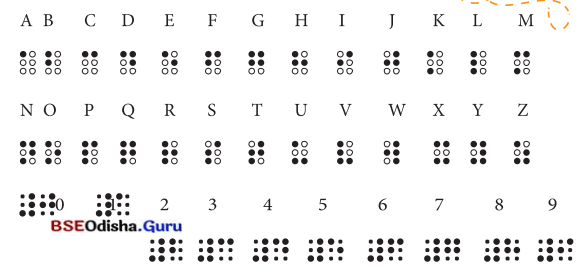
(Students will write their names themselves using the code.)
II. Have you heard about the International Day of Persons with Disabilities? Find out when and how it is observed in India. Write your findings on a sheet and put it up on the class board.
(ତୁମେ ଆନ୍ତର୍ଜାତିକ ଭିନ୍ନକ୍ଷମ ଦିବସ ବିଷୟରେ ଶୁଣିଛ କି ? ଏହା କେବେ ଓ କିପରି ଭାରତରେ ପାଳିତ ହୁଏ ନିରୂପଣ କର । ତୁମେ ପାଇଥିବା ତଥ୍ୟଗୁଡ଼ିକୁ ଏକ କାଗଜରେ ଲେଖୁ ଶ୍ରେଣୀ ବୋର୍ଡ଼ରେ ଲଗାଅ ।)
III. Do you like to know about sign language? Go to the link given below to learn about the Indian sign language. (ତୁମେ ସଙ୍କେତ ଭାଷା ବିଷୟରେ ଜାଣିବାକୁ ପସନ୍ଦ କରୁଛ କି । ନିମ୍ନ ପ୍ରଦତ୍ତ linkରେ ଅନୁସନ୍ଧାନ କରି ଭାରତୀୟ ସଙ୍କେତ ଭାଷା ବିଷୟରେ ଶିକ୍ଷା କର ।) https:/ncert.nic.in/pdf/accessibility.ISL 200word_v15.pdf
Answer:
Do Yourself.
Three Days to See Class 7 Summary
Let us read (ଆସ ପଢ଼ିବା):
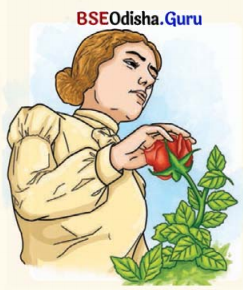
I, who cannot see, find hundreds of things to interest me through mere touch. I feel the delicate symmetry of a leaf. I pass my hands lovingly about the smooth skin of a silver birch, or the rough, shaggy branch of a pine. In spring, I touch the branches of trees hopefully in search of a bud, the first sign of awakening Nature after her winter’s sleep. Occasionally, I am very fortunate; I place my hand gently on a small tree and feel the happy quiver of a bird in full song.
ଓଡ଼ିଆ ଅନୁବାଦ:
ମୁଁ ଯେ କି ଦେଖିପାରେ ନାହିଁ କେବଳ ସ୍ପର୍ଶଦ୍ଵାରା ଶହ ଶହ ଜିନିଷ ପ୍ରତି ଆଗ୍ରହ ସୃଷ୍ଟି ହୁଏ । ମୁଁ ଏକ ପତ୍ରର ସୂକ୍ଷ୍ମ ସମରୂପତା ସ୍ପର୍ଶଦ୍ଵାରା ଅନୁଭବ କରେ । ମୁଁ ମୋର ହାତକୁ ଅତି ପ୍ରେମର ସହିତ ଭୁର୍ଜଗଛର ସୂକ୍ଷ୍ମ ଧବଳ ବକଳ କିମ୍ବା ପାଇନ୍ ଗଛର ଖଦଖଦଡ଼ିଆ, ଅଡୁଆ ଚତୁଆ ଡାଳ ଉପରେ ବୁଲାଇ ଦିଏ । ବସନ୍ତ ଋତୁରେ, ମୁଁ ଆଶାର ସହ ଗଛମାନଙ୍କ ଡାଳରେ ହାତର ସ୍ପର୍ଶ କରେ କଢ଼ଟିଏ ଖୋଜିବାକୁ, ଯାହାକି ପ୍ରକୃତିକୁ ଜାଗରଣ କରିବାର ପ୍ରଥମ ସଂକେତ ଏବଂ ଯିଏକି ତାର ଶୀତର ନିଦ୍ରାରୁ ଉଠିଛି । ସମୟ ସମୟରେ, ମୁଁ ବହୁତ ଭାଗ୍ୟବାନ୍, ମୁଁ ମୋ ହାତକୁ,ଏକ ଛୋଟ ଗଛର ଉପରେ ଥୋଇଦିଏ ଏବଂ ଏକ ପକ୍ଷୀର ସଙ୍ଗୀତ ଭରା ଥରିବା ଅନୁଭବରେ ଖୁସି ହୁଏ ।
At times, my heart cries out with longing to see all these things. If I can get so much pleasure from mere touch, how much more beauty must be revealed by sight.
And I have imagined what I should most like to see if I were given the use of my eyes, say, for just three days.
ଓଡ଼ିଆ ଅନୁବାଦ:
ବେଳେବେଳେ, ମୋ ହୃଦୟ ବିଳପି ଉଠେ, ଏ ସବୁକୁ ଦେଖିବା ଇଚ୍ଛାରେ । ଯଦି ଏ ସବୁକୁ ସ୍ପର୍ଶ କରିବାରେ ମୋତେ ଏତେ ଆନନ୍ଦ ମିଳୁଛି, ତେବେ ଏମାନଙ୍କୁ ଆଖରେ ଦେଖୁ ପାରିଲେ ଆଉ କେତେ ସୌନ୍ଦର୍ଯ୍ୟର ପରିପ୍ରକାଶ ହୋଇପାରିଥା’ନ୍ତା ଏବଂ ମୁଁ କଳ୍ପନା କରିପାରିଛି ଯେ ଯଦି ମୋତେ ଦୃଷ୍ଟିଶକ୍ତି ମିଳନ୍ତା, ମାତ୍ର ତିନିଦିନ ପାଇଁ ମୁଁ କେତେକ ଭଲ ପାଉଥିବା ଜିନିଷ ଦେଖୁବା ଉଚିତ ମନେ କରିଥା’ନ୍ତି ।
I should divide the period into three parts. On the first day, I should want to see the people whose kindness and companionship have made my life worth living. I do not know what it is to see into the heart of a friend through that ‘window of the soul’, the eye.
I can only ‘see’ through my fingertips the outline of a face. I can detect laughter, sorrow and other obvious emotions. I know my friends from the feel of their faces.
ଓଡ଼ିଆ ଅନୁବାଦ:
ପ୍ରଥମ ଦିନ, ମୁଁ ସେହି ଲୋକମାନଙ୍କୁ ଦେଖିବାକୁ ଯୋଗ୍ୟ କରିଦେଇଛି । ମୁଁ ଜାଣେନାହିଁ, ସେହି ଦେଖୁବା ମୁଁ କେବଳ ମୋର ଆଙ୍ଗୁଠି ଛାପରେ ମୁଁ ସେ ସମୟକୁ ତିନୋଟି ଭାଗରେ ବିଭକ୍ତ କରିଥା’ନ୍ତି । ଇଚ୍ଛା ଯେଉଁମାନଙ୍କ ଦୟାଳୁତା ଏବଂ ବନ୍ଧୁତ୍ଵ ମୋ ଜୀବନକୁ ବଞ୍ଚିବା ଆଖୁ, ଯାହାକି ଆତ୍ମାର ଝରକା, ଜଣେ ବନ୍ଧୁର ହୃଦୟକୁ କିପରି ଜଣକର ମୁଖମଣ୍ଡଳକୁ ଦେଖିପାରିବି । ମୁଁ ହସ, ଦୁଃଖ ଏବଂ ଅନ୍ୟାନ୍ୟ ଭାବପ୍ରବଣତାକୁ ଚିହ୍ନଟ କରିପାରିବି । ମୁଁ ସାଙ୍ଗମାନଙ୍କୁ ଜାଣିପାରିବ ସେମାନଙ୍କ ମୁଖମଣ୍ଡଳର ସ୍ପର୍ଶଦ୍ଵାରା ।
The next day I should arise with the dawn and see the thrilling miracle by which night is transformed into day. I should behold with awe the magnificent panorama of light with which the sun awakens the sleeping earth. This day I should devote to a hasty glimpse of the world, past and present.
ଓଡ଼ିଆ ଅନୁବାଦ:
ତା’ପରଦିନ ମୁଁ ପ୍ରଭାତରେ ଉଠିଯିବି ଏବଂ ସେହି ରୋମାଞ୍ଚକର ଚମତ୍କାର ଦୃଶ୍ୟ ଦେଖୁବି ଯହା ରାତ୍ରକୁ ଦିନରେ ପରିବର୍ତ୍ତିତ କରୁଛି । ମୁଁ ବିସ୍ମୟର ସହ ଦେଖୁ ସେହି ମନୋରମ ଆଲୋକର ଦୃଶ୍ୟ ଯେତେବେଳେ ସୂର୍ଯ୍ୟ ଜାଗ୍ରତ କରିଦିଅନ୍ତି ସୁପ୍ତ ପୃଥିବୀକୁ । ଏହିଦିନ ମୁଁ ପୃଥିବୀ ଉପରେ ସମ୍ୟକ ଦୃଷ୍ଟିପାତ କରି କଟାଇବି । ତାର ଅତୀତ ଓ ବର୍ତ୍ତମାନ ବିଷୟରେ ଜାଣିବାକୁ ଚାହିଁବି ।
I should want to see the pageant of man’s progress, and so I should go to the museums. There my eyes would see the condensed history of the earth-animals and the races of men pictured in their native environment; gigantic carcasses of dinosaurs and mastodons that roamed the earth before man appeared, with his tiny stature and powerful brain, to conquer the animal kingdom.
ଓଡ଼ିଆ ଅନୁବାଦ:
ମୁଁ ମାନବ ପ୍ରଗତିର ଦୃଶ୍ୟ ଦେଖିବାକୁ ଚାହିଁବି, ସେଥିପାଇଁ ମୋତେ ସଂଗ୍ରହାଳୟକୁ ଯିବାକୁ ପଡ଼ିବ । ସେଠାରେ ମୋ ଆଖୁ ପୃଥିବୀର ସଂକ୍ଷିପ୍ତ ଇତିହାସକୁ ଦେଖୁବ । ସଂଗ୍ରାହଳୟରେ ଥିବା ପଶୁ ଏବଂ ବିଭିନ୍ନ ପ୍ରଜାତି ମାନବର ପ୍ରତିମା, ଡାଇନାସୋର ଦେଖୁବି ଯାହାକି ମାନବ ଆସିବା ପୂର୍ବରୁ ପୃଥିବୀରେ ବିଚରଣ କରୁଥିଲା । ପୃଥିବୀକୁ ପରେ ଆସି ଆଜି ଏହି ଛୋଟ ଶରୀର ଏବଂ ଶକ୍ତିଶାଳୀ ମସ୍ତିଷ୍କ ଧାରଣ କରିଥିବା ମାନବ ସମଗ୍ର ପଶୁଜଗତକୁ ଅଧିକାର କରିଛି ।
The following morning, I should again greet the dawn, anxious to discover new delights, new revelations of beauty. Today, this third day, I shall spend in the workaday world, amid the haunts of men going about the business of life. The city becomes my destination.
ଓଡ଼ିଆ ଅନୁବାଦ:
ପରବର୍ତୀ ସକାଳର ମୁଁ ପ୍ରଭାତକୁ ଶୁଭେଚ୍ଛା ଜଣାଇବା ସହ ଅନେକ ଆନନ୍ଦକୁ ଆବିଷ୍କାର କରିବି ଏବଂ ସୌନ୍ଦର୍ଯ୍ୟର ବିଭିନ୍ନ ରୂପକୁ ଦେଖୁବାକୁ ଚାହିଁବି । ଆଜି ହେଉଛି ତୃତୀୟଦିନ । ମୁଁ ଆଜି ଏହି ବ୍ୟସ୍ତବହୁଳ ପୃଥିବୀରେ ସହରକୁ ଦେଖାସାକ୍ଷାତ୍ ଉଦ୍ଦେଶ୍ୟରେ ଆସୁଥିବା ବ୍ୟକ୍ତିଗଣଙ୍କ ମଧ୍ୟରେ କାଟିବି । ସହର ବର୍ତ୍ତମାନ ମୋର ଲକ୍ଷ୍ୟସ୍ଥଳ ।
First, I stand at a busy corner, merely looking at people, trying by sight of them to understand something of their daily lives. I see smiles, and I am happy. I see serious determination, and I am proud. I see suffering, and I am compassionate.
ଓଡ଼ିଆ ଅନୁବାଦ:
ପ୍ରଥମେ ମୁଁ ଏକ କୋଣରେ ଛିଡ଼ା ହୋଇ ସହରର ଲୋକମାନଙ୍କୁ ଦେଖିବା ସହିତ ସେମାନଙ୍କ ଦୈନନ୍ଦିନ ଜୀବନ ବିଷୟରେ ଜାଣିବାକୁ ଚାହିଁବି । ମୁଁ ଲୋକଙ୍କ ହସ ଦେଖିଲେ, ଖୁସି ହେବି । ମୁଁ ଲୋକଙ୍କ ଗମ୍ଭୀର ଦୃଢ଼ ମନ ଦେଖିଲେ, ଗର୍ବ ଅନୁଭବ କରିବି ଏବଂ ମୁଁ ଲୋକଙ୍କ ଯନ୍ତ୍ରଣା ଦେଖୁଲେ ଅନୁକମ୍ପା କରିବି ।
At midnight, permanent night would close in on me again. Naturally in those three short days I should not have seen all I wanted to see. Only when darkness had again descended upon me should I realise how much I had left unseen.
ଓଡ଼ିଆ ଅନୁବାଦ:
ମଧ୍ୟରାତ୍ରରେ, ମୋର ସ୍ଥାୟୀ ଅନ୍ଧକାର ପୁଣି ଆସିଯିବ । ପ୍ରକୃତରେ ସେହି ତିନିଦିନରେ ମୁଁ ଚାହିଁଥିବା ସମସ୍ତ ଜିନି ଦେଖୁପାରିବି ନାହିଁ । ଯେତେବେଳେ ଅନ୍ଧକାର ମୋ ଉପରକୁ ଓହ୍ଲାଇ ଆସିବ ମୁଁ ସେତେବେଳେ ଭାବିବି ମୁଁ ଆଉ କେତେ ଜିନିଷ ଛାଡ଼ି ଦେଇଛି ଦେଖିବା ପାଇଁ ।
I who am blind can give one hint to those who can see: use your eyes as if tomorrow you would be stricken blind. And the same method can be applied to your other senses. Hear the music of voice, the song of a bird, the mighty strains of an orchestra, as if you would be stricken deaf tomorrow. Touch each object as if tomorrow your tactile sense would fail. Smell the perfume of flowers, taste with relish each morsel, as if tomorrow you could never smell and taste again. Make the most of every sense; glory in all the facets of pleasure and beauty, which the world reveals to you through the several means of contact, which Nature provides. But of all the senses, I am sure that sight must be the most delightful one.
HELEN KELLER
ଓଡ଼ିଆ ଅନୁବାଦ:
ମୁଁ ଜଣେ ଅନ୍ଧ ହିସାବରେ ଦେଖିପାରୁଥିବା ବ୍ୟକ୍ତିମାନଙ୍କୁ ଗୋଟିଏ ସଙ୍କେତ ଦେବାକୁ ଚାହୁଁଛ, ତୁମର ଆଖୁକୁ ଏପରି ବ୍ୟବହାର କର ଯେପରି ଆସନ୍ତାକାଲି ତୁମେ ଅନ୍ଧ ହୋଇଯିବ । ଏବଂ ସେହି ଏକା ପ୍ରକାର ଉପାୟ ତୁମେ ତୁମର ଅନ୍ୟ ଇନ୍ଦ୍ରିୟମାନଙ୍କ ଉପରେ ପ୍ରୟୋଗ କର । ସଙ୍ଗୀତର ସ୍ଵର ଶୁଣ, ପକ୍ଷୀଟିର ଗୀତ, ଅର୍କେଷ୍ଟ୍ରାର ଜୋର ବାଦ୍ୟ ଶୁଣ ଯେପରିକି ତୁମେ ଆସନ୍ତାକାଲି ବଧୂର ହୋଇଯିବ । ପ୍ରତ୍ୟେକ ଦ୍ରବ୍ୟକୁ ସ୍ପର୍ଶ କର ଯେପରିକି ତୁମର ସ୍ପର୍ମେନ୍ଦ୍ରିୟ ଫେଲ୍ ହୋଇଯିବ । ଫୁଲଗୁଡ଼ିକର ବାସ୍ନା ଗ୍ରହଣ କର, ପ୍ରତି ଖାଦ୍ୟ ଦାନକୁ ଆନନ୍ଦରେ ଖାଅ ଯେପରି କାଲି ତୁମେ ବାସ୍ନା ନା ସ୍ଵାଦ ବାରିପାରିବ ନାହିଁ । ସମସ୍ତ ଇନ୍ଦ୍ରିୟର ସମ୍ପୂର୍ଣ୍ଣ ଉପଯୋଗ କର, ସୁଖ ଏବଂ ସୌନ୍ଦର୍ଯ୍ୟର ସମସ୍ତ ଦିଗର ଗୌରବ ଯାହା ତୁମ ପାଖକୁ ଆସିବ ବିଭିନ୍ନ ସଂଯୋଗର ଉପାୟରେ ଯାହା ପ୍ରକୃତି ଯୋଗାଇ ଦେଇଛି । କିନ୍ତୁ ସମସ୍ତ ଇନ୍ଦ୍ରିୟ ଅପେକ୍ଷା, ମୁଁ ନିଶ୍ଚିତ ଯେ ଦୃଷ୍ଟି ଶକ୍ତି ସବୁଠାରୁ ଅଧିକ ଆନନ୍ଦପୂର୍ଣ୍ଣ ।
-ହେଲେନ୍ କେଲ୍ର
Summary of Text
(ପାଠ୍ୟ ବିଷୟର ସଂକ୍ଷିପ୍ତ ସାରକଥା):
The essay “Three Days to See” by Helen Keller is a reflection on the value of sight and other senses. Keller, who is blind, imagines what she would do if she could see for just three days.
Day 1: She would spend time with the people who have brought kindness and companionship into her life, appreciating their expressions and emotions through sight.
Day 2: She would explore the natural world, from the sunrise to museums, observing the progress of humanity, animals, and history.
Day 3: She would go to the city and observe the lives of ordinary people, their happiness, determination, and suffering.
Keller emphasizes that sight is precious and urges people to use all their senses fully, appreciating the world as if they might lose them tomorrow. Her message is to value every sense and never take the pleasures of life for granted.
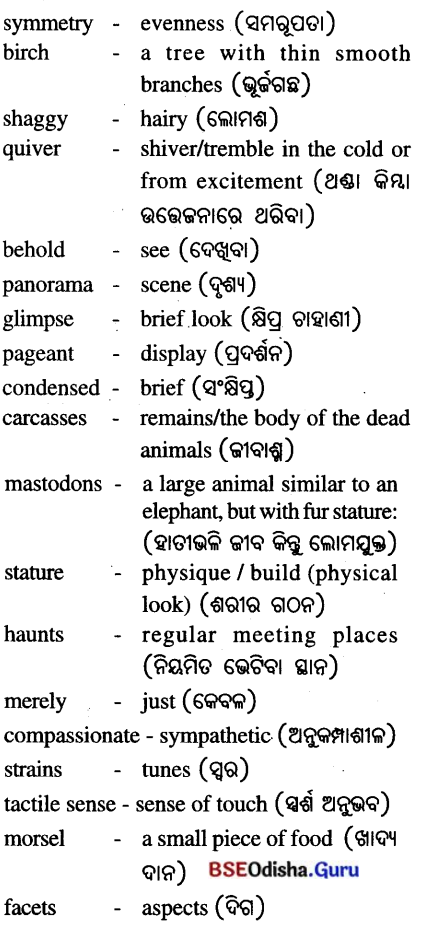
Notes & Glossary (ଶବ୍ଦାର୍ଥ)
Three Days to See Class 7 MCQ
Question 1.
What does the writer feel to understand the symmetry of nature?
(a) a flower
(b) a leaf
(c) a stone
(d) a bird
Answer:
(b) a leaf
Question 2.
What does the writer feel on a small tree?
(a) cold wind
(b) rough bark
(c) rain drops
(d) happy quiver of a bird
Answer:
(d) happy quiver of a bird
Question 3.
Why does the writer touch tree branches in spring?
(a) to find fruit to eat
(b) to feel for the first new bud
(c) to break off a branch
(d) to see if the tree is strong
Answer:
(b) to feel for the first new bud
Question 4.
What does the speaker logically conclude from her experience of touch?
(a) the world is a dangerous place
(b) there must be even more beauty accessible through sight
(c) other senses are unreliable
(d) imagination is superior to reality
Answer:
(b) there must be even more beauty accessible through sight
Question 5.
The tone of the essay can best be described as ______.
(a) bitter and sarcastic
(b) wistful and reflective
(c) humorous and light-hearted
(d) detached and analytical
Answer:
(b) wistful and reflective
Question 6.
What can the author primarily recognise her friends?
(a) by the sound of their voice
(b) by the feel of their faces
(c) by their kindness and companionship
(d) by looking into their eyes
Answer:
(b) by the feel of their faces
Question 7.
Why does the writer value seeing people more than objects?
(a) objects are easy to imagine
(b) people give meaning to her life
(c) she dislikes nature
(d) she is afraid of places
Answer:
(b) people give meaning to her life
Question 8.
Which creatures roamed the earth before humans?
(a) lions and tigers
(b) birds and fish
(c) dinosaurs and mastodons
(d) monkeys
Answer:
(c) dinosaurs and mastodons
Question 9.
The writer spends the third day ______.
(a) in the countryside
(b) in the city
(c) in a museum
(d) in a forest
Answer:
(b) in the city
Question 10.
The writer stands to observe people ______.
(a) in a park
(b) in an office
(c) at a busy street corner
(d) at home
Answer:
(c) at a busy street corner
Three Days to See Class 7 Fill in the Blanks
1. If I ______ given the use of my eyes.
Answer: were
2. Much more beauty must be revealed by ______.
Answer: sight
3. I should divide the period into ______ parts.
Answer: three
4. My heart cries out with ______ to see all these things.
Answer: longing
5. I feel the ______ symmetry of a leaf.
Answer: delicate
Three Days to See Class 7 True or False
1. The author uses the sense of touch to know the world.
Answer: True
2. The author feels the delicate symmetry of a bud.
Answer: False
3. The tree Silver Birch has rough skin.
Answer: False
4. The author considers the sense of sight most useful.
Answer: True
5. The first day is spent by the author in museum.
Answer: False
6. The third day is spent at busy corner.
Answer: True
7. Tactile sense refers to smelling.
Answer: False
8. The author suggests ‘to make best use of every sense’.
Answer: True
Three Days to See Class 7 Very Short Question Answer
Question 1.
How does the writer enjoy nature without sight?
Answer:
The wirter enjoys nature through her sense of touch. She feels leaves, tree bark, buds and even the movement of birds using her hands.
Question 2.
Why does the writer describe sunrise as a “magnificent panorama of light”?
Answer:
Becuse the sunrise fills the world with beauty, light, and wonder, creating a powerful visual experience.
Question 3.
What does the contrast between dinosaurs and humans suggest?
Answer:
It suggests that physical size is less important than intelligence, as humans conquered nature using their powerful brains.
Question 4.
Why does the writer feel happy, proud, and compassionate watching people?
Answer:
Because people’s expression reflect joy, determination and suffering, which awaken different human emotions in the writer.
Question 5.
What does the phrase “permanent night” suggest?
Answer:
It suggests that the writer will lose the power of sight again and return to complete darkness.
Question 6.
Why does the writer realise how much she had left unseen only after darkness returns?
Answer:
Because the limited time makes her understand the true value of sight and how much more there is to see in the world.
Question 7.
What does the writer suggest about touch, smell and taste?
Answer:
The writer suggests touching objects, smelling flowers and testing food fully, as if these might fail the next day.
Question 8.
Which sense does the writer consider the most delightful and why?
Answer:
The writer considers sight the most delightful sense because it reveals the beauty and pleasure of the world most richly.
Three Days to See Class 7 Short Question Answer
Question 1.
What is basis for the speaker’s belief that sight must reveal great beauty?
Answer:
The basis is her own experience. She reasons that if the sense of touch alone can give her so much pleasure, then sight-a much more comprehensive sense-must reveal a far greater dimension of beauty.
Question 2.
In your own words, what is the “thought experiment” the speaker is conducting?
Answer:
The speaker is imagining and planning how she would use the gift of eye sight, if it were granted to her for only three days, to see the things she considers most important and beautiful.
Question 3.
Why does the author say, “I am very fortunate”?
Answer:
The author, in spite of being blind, considers herself fortunate because her other four senses are perfect. She can use these senses to live her life happily. There are people who are without many senses. But the author has lost only the sense of sight, so she considers herself fortunate.
Question 4.
How does the author plan to spend the third day?
Answer:
The author plans to spend the third day among the common people, their business of life, their happiness and sufferings. She would be compassionate toward them. She would feel pride for such experiences.
Question 5.
What advice does the author provide to the people with sight and other senses?
Answer:
The author advises the people having the sense of sight and other senses, to use them fully with appreciation for the wonderful creation as if they might lose these senses tomorrow.
Question 6.
Describe what does the author want to experience with the sense of sight.
Answer:
The author thinks with the sense of sight she could discover the beauty of creation, such as how her near and dear ones appear, the change of day into night, the history of earth in museum, people’s busy life, and the world of work. She would understand everything in a better manner.
Question 7.
What values does the author exhibit in her writing?
Answer:
The author is very sensitive. She is eager to know everything in detail. She does not feel bad though she is blind. She compensates for her blindness by using her other senses. She has concern for mankind. She loves to be amidst them and share their sorrow and happiness. She is very much compassionate towards mankind. She is simple and straight towrad in her statement.