
For effective revision, students can use BSE Odisha Class 7 English Solutions Chapter 11 Travel Question Answer to practice textbook exercises.
Class 7 English Travel Question Answer
Class 7 English Chapter 11 Question Answer Odia Medium
Let us do these activities before we read
(ଆସ ପଢ଼ିବା ପୂର୍ବରୁ ଏହି କାର୍ଯ୍ୟଗୁଡ଼ିକୁ କରିବା)
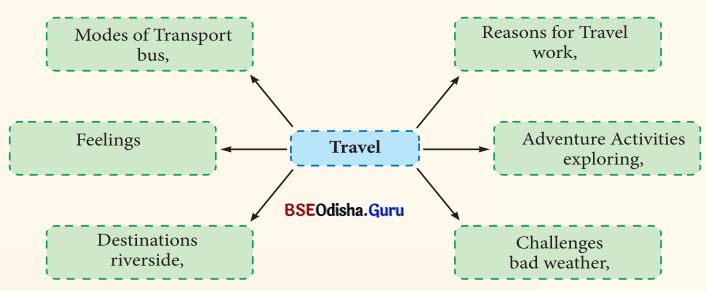
Complete the following word web on travel.
(ଭ୍ରମଣ ଉପରେ ନିମ୍ନ ଶବ୍ଦ ଜାଲକୁ ସଂପୂର୍ଣ୍ଣ କର ।)
Answer:
- Modes of Transport – bus, train, car, metro, boats, aeroplane.
- Reasons for Travel – work, vacation, business trips, pilgrimage, shopping.
- Feelings – joy, excitement, nostalgia, compassion, comfort, sadness.
- Adventure Activities – exploring, rafting, scuba diving, trekking, wildlife photography, jungle safaris.
- Destinations – riverside, island, desert, beachside, forest, wildlife sanctuaries.
- Challenges – bad weather, health issues, lost or stolen belongings, poor accommodation.

II. You are going on a trip to an adventure camp with your classmates and teacher.
(ତୁମେ ତୁମ ସହପାଠୀ ଶିକ୍ଷକଙ୍କ ସହ ଏକ ଦୁଃସାହସିକ ଯାତ୍ରାରେ ଯାଉଛ ।)
Question 1.
How will you travel to the adventure camp?
(ତୁମେ ଦୁଃସାହସିକ କ୍ୟାମ୍ପକୁ କିପରି ଯାତ୍ରା କରିବ ?)
Answer:
I will travel to the adventure camp by bus or train with my classmates and teacher.
Question 2.
What things will you take along?
(ତୁମେ ସାଥୁରେ କେଉଁ ଜିନିଷ ସବୁ ନେବ ?)
Answer:
I will take clothes, shoes, water bottle, snacks, torch, toiletries, and a camera.
Question 3.
Why would you like to go there?
(ତୁମେ ସେଠାକୁ ଯିବାକୁ କାହିଁକି ପସନ୍ଦ କରୁଛ ?)
Answer:
I want to go to the adventure camp to enjoy exciting activities, explore new places, connect with nature, and make great memories with friends.
Question 4.
What are the activities you would like to do with your friends?
(ତୁମେ ତୁମ ସାଙ୍ଗମାନଙ୍କ ସହ କେଉଁସବୁ କାର୍ଯ୍ୟକଳାପ କରିବାକୁ ପସନ୍ଦ କରିବ ?)
Answer:
I would like to go hiking, try zip-lining, camp under the stars, have a bonfire, play fun games, and explore the surroundings with my friends at the adventure camp.
Question 5.
How much time will it take to complete your adventure trip?
(ଦୁଃସାହସିକ ଯାତ୍ରା ସଂପୂର୍ଣ୍ଣ କରିବା ପାଇଁ ତୁମେ କେତେ ସମୟ ନେବ ?)
Answer:
It will take about 3 to 5 days to complete my adventure trip, depending on the activities and the location of the camp.
III. Discuss in pairs. What might be the reasons that people enjoy train journeys?
(ଯୋଡ଼ିରେ ଆଲୋଚନା କର । ଲୋକମାନେ ରେଳଯାତ୍ରାକୁ ପସନ୍ଦ କରିବାର କାରଣ କ’ଣ ହୋଇଥାଇପାରେ ?)
Answer:
People enjoy train journeys because they offer scenic views, allowing travellers to enjoy beautiful landscapes like mountains and rivers. Trains are also comfortable, with space to move around and relax. Unlike driving or flying, train travel is often less stressful, with fewer hassles. Train journeys provide time to relax and enjoy the trip.
Let us discuss
(ଚାଲ ଆଲୋଚନା କରିବା) :
I. The main ideas of each stanza of the poem are given below. Write the number of the stanza against the matching main idea.
(କବିତାର ପ୍ରତି ପଂକ୍ତିର ମୁଖ୍ୟ ଧାରଣା ନିମ୍ନରେ ଦିଆଯାଇଛି । ମୁଖ୍ୟ ଧାରଣା ସହ ମେଳ ଖାଉଥିବା ପଂକ୍ତିର ସଂଖ୍ୟା ତା’ସମ୍ମୁଖରେ ଲେଖ ।)
(Question with Answer)
Answer:
1. At night, the speaker imagines the train and hears its engine in the quiet. -Stanza 2
2. The speaker feels a strong desire to take any train, no matter where it goes. – Stanza 3
3. The speaker hears the train whistle during the day, even though the train is far away – Stanza 1
II. Read the poem and underline the rhyming words in each stanza. Write the rhyming words from each stanza. An example has been done for you.
(କବିତାଟିକୁ ପଢ଼ ଏବଂ ପ୍ରତି ପଂକ୍ତିରେ ସମତାନିକ ଶବ୍ଦକୁ ରେଖାଙ୍କିତ କର । ପ୍ରତି ପଂକ୍ତିର ସମତାନିକ ଶବ୍ଦଗୁଡ଼ିକୁ ଲେଖ । ଗୋଟିଏ ଉଦାହରଣ ତୁମ ପାଇଁ କରି ଦିଆଯାଇଛି ।)
1. Stanza (i): away-day; ______.
2. Stanza (ii): ______.
3. Stanza (iii): ______.
Answer:
1. Stanza (i): away-day; speaking- shrieking
2. Stanza (ii): by-sky; dreaming-streaming
3. Stanza (iii): make-take; knowing-going
III. Identify the rhyme scheme of the poem from the options given below.
(ନିମ୍ନ ବିକଳ୍ପଗୁଡ଼ିକ ମଧ୍ୟରୁ କବିତାର ଯତିପାତ କ୍ରମ ଚିହ୍ନଟ କର ।)
1. AABB
2. ABCA
3. ABAB
4. ABBC
Answer:
3. ABAB
IV. Identify the word in the poem that personifies the whistle of the train.
(କବିତାର ଶବ୍ଦଟିକୁ ଚିହ୍ନଟ କରି ଯାହା ଟ୍ରେନ୍ର ହୁଇସିଲ୍କୁ ପ୍ରତିନିଧ୍ୟ କରୁଛି ।)
Answer:
The word in the poem that gives the train’s whistle human-like qualities is “shrieking”. It makes the whistle sound sharp and intense, like a cry or scream.
V. Tone refers to the attitude the poet has about the poem. Which of these words can be used to describe the poet’s tone in this poem?
(କବିଙ୍କର କବିତା ପ୍ରତି ମନୋଭାବକୁ ସ୍ଵର (Tone) କୁହାଯାଏ । ଏହି ଶବ୍ଦଗୁଡ଼ିକ ମଧ୍ୟରୁ କେଉଁଗୁଡ଼ିକ ଏହି କବିତାରେ କବିଙ୍କ ସ୍ଵରକୁ ବର୍ଣ୍ଣନା କରୁଛି?)

Answer:
The words that can be used to describe the poet’s tone in this poem are: excited, enthusiastic, joyful, content.
VI. Select the words that tell us what the train represents in the poem.
(ସେହି ଶବ୍ଦଗୁଡ଼ିକୁ ଚିହ୍ନାଅ ଯାହା କବିତାରେ ଟ୍ରେନ୍ର ପ୍ରତିନିଧ୍ଵ କରୁଛି ।)
1. education
2. adventure
3. comfort
4. opportunities
Answer:
2. adventure and 4. opportunities.
VII. Complete the following by choosing the correct option from those given in brackets.
(1 ମଧ୍ୟରୁ ସଠିକ୍ ବିକଳ୍ପ ବାଛି ନିମ୍ନଲିଖଟିକୁ ସଂପୂର୍ଣ୍ଣ କର ।)
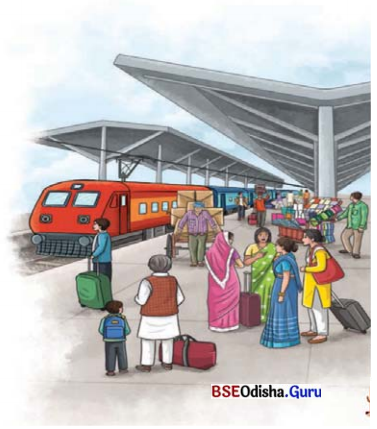
The poet repeats the line, ‘…there isn’t a train goes by,’ in all three stanzas to _____.
(highlight the speaker’s fascination with the train/ suggest that the area has many trains passing through).
Answer:
highlight the speaker’s fascination with the train.
VIII. The poem contrasts the busy day with the stillness of the night. What is the common factor in these?
(କବିତାଟି କୋଳାହଳମୟ ଦିନ ସହ ରାତିର ନିସ୍ତବ୍ଧତାର ବୈଷମ୍ୟ ଦର୍ଶାଇଛି । ଏଗୁଡ଼ିକ ମଧ୍ୟରେ ସାଧାରଣ ଉପାଦାନଟି କ’ଣ ?)
Answer:
The common factor in both the busy day and the stillness of the night is the train’s presence. Despite different times of day, the poet hears the train’s whistle during the day and imagines its engine at night.
(IX) Select the phrases from the poem that are examples of imagery.
One example is given : (କବିତାରୁ କଳ୍ପନା (imaginary) ର ଉଦାହରଣ ଥିବା ବାକ୍ୟାଶଗୁଡ଼ିକ ବାଛ । ଗୋଟିଏ ଉଦାହରଣ ଦିଆ ଯାଇଛି ।)
day is loud, night is ____, _____ is warm
Answer:
(a) whistle shrieking
(b) night is still for sleep and dreaming
(c) cinders red on the sky
(d) engine steaming
Let us think and reflect
(ଆସ ଚିନ୍ତା କରିବା ଓ ବିଚାର କରିବା) :
I. Read the extract given below and answer the questions that follow.
(ନିମ୍ନ ପ୍ରଦତ୍ତ ଉଦ୍ଧୃତାଂଶଟି ପଢ଼ ଓ ପରବର୍ତୀ ପ୍ରଶ୍ନଗୁଡ଼ିକର ଉତ୍ତର ଦିଅ ।)
1. My heart is warm with the friends I make,
And better friends I’ll not be knowing…

(i) Choose the suitable option to complete the following.
(ନିମ୍ନଲିଖତକୁ ସଂପୂର୍ଣ୍ଣ କରିବାପାଇଁ ଉପଯୁକ୍ତ ବିକଳ୍ପଟି ବାଛ ।)
The line ‘My heart is warm’ refers to a heart that is
A. filled with worries
B. full of love
C. feeling upset
D. experiencing anger
Answer:
B. full of love
(ii) What does the speaker say about her current friends?
(ବକ୍ତା ତାଙ୍କର ବର୍ତ୍ତମାନର ବନ୍ଧୁମାନଙ୍କ ବିଷୟରେ କ’ଣ କହିଛନ୍ତି ?)
Answer:
The speaker says that her current friends warm her heart, and that she believes she will not find better friends than them.
(iii) What does the line ‘better friends I’ll not be knowing’ suggest about the speaker’s feelings toward their current friends?
(“better friends I’ll ot be knowing’ ଧାଡ଼ିଟି ବକ୍ତାଙ୍କର ବର୍ତ୍ତମାନର ବନ୍ଧୁମାନଙ୍କ ପ୍ରତି କି ପ୍ରକାର ଅନୁଭବର ସୂଚନା ଦେଉଛି?)
Answer:
The line “better friends I’ll not be knowing” suggests that the speaker values her current friends deeply and believes no one could be better. It reflects her strong emotional bond and appreciation for them.
(iv) Complete the following suitably.
(ଉପଯୁକ୍ତଭାବେ ନିମ୍ନଲିଖୂତଟିକୁ ସଂପୂର୍ଣ୍ଣ କର ।) The tone of the speaker in these lines is (grateful/content)
Answer:
grateful
Answer the following questions.
(ନିମ୍ନଲିଖତ ପ୍ରଶ୍ନଗୁଡ଼ିକର ଉତ୍ତର ଦିଅ ।)
Question 1.
What does the phrase ‘cinders red on the sky’ tell us about the train at night?
(‘cinders red on the sky’ ବାକ୍ୟାଶଟି ରାତିର ଟ୍ରେନ୍ ବିଷୟରେ କ’ଣ କହେ ?)
Answer:
The phrase “cinders red on the sky” tells us that the train’s glowing sparks are visible in the night sky, showing the train’s presence even at night.
Question 2.
What is the significance of the repeated references to the train’s whistle?
(ଟ୍ରେନ୍ ହିସିଲ୍ର ବାରମ୍ବାର ଉଲ୍ଲେଖର ଗୁରୁତ୍ଵ କ’ଣ ?)
Answer:
The repeated references to the train’s whistle show the speaker’s strong connection to the train. It highlights how the train’s sound is always present in the speaker’s mind, even when no train is nearby, symbolising the speaker’s longing for adventure and travel.
Question 3.
What does the line ‘no matter where it’s going’ reveal about the speaker’s attitude towards travel?
(‘no matter where it’s going’ ଧାଡ଼ିଟି ବକ୍ତାଙ୍କର ଭ୍ରମଣ ପ୍ରତି ମନୋଭାବ ବିଷୟରେ କ’ଣ କହୁଛି ?)
Answer:
The line “no matter where it’s going” reveals that the speaker is open to travel without a specific destination in mind. It shows her desire for new experiences and a willingness to explore wherever the journey may take her.
Question 4.
Do you think the poet actually sees and hears the train? Why or why not?
(ତୁମେ କ’ଣ ଭାବୁଛ କି କବି ପ୍ରକୃତରେ ଟ୍ରେନ ଦେଖୁଛନ୍ତି ଓ ଟ୍ରେନ୍ର ଶବ୍ଦ ଶୁଣିଛନ୍ତି ? କାହିଁକି ଓ କାହିଁକି ନୁହେଁ ?)
Answer:
No, the poet doesn’t actually see or hear the train. The poet is imagining the train and its sounds, showing an interest in it rather than experiencing it in reality.
Let us learn
(ଆସ ଶିଖ୍) :
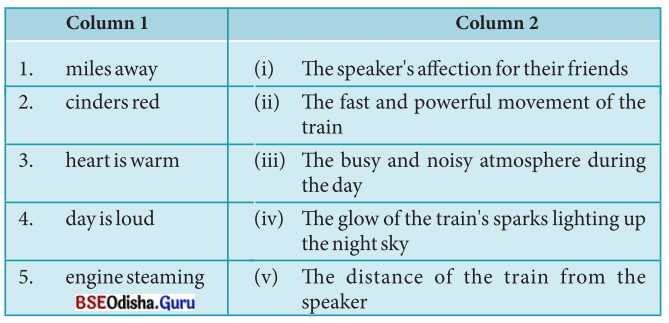
I. Read the expressions from the poem given in Column 1 and match them with what they indicate in Column 2.
(ସ୍ତମ୍ଭ ‘1’ ରେ ଥିବା କବିତାର ଉକ୍ତିଗୁଡ଼ିକ ପଢ଼ ଏବଂ ସ୍ତମ୍ଭ ‘2 ରେ ଥିବା ସେଗୁଡ଼ିକ ସୂଚାଉଥବା ଅର୍ଥ ସହ ଯୋଡ଼ ।)
Answer:
| Column 1 | (v) The distance of the train from the speaker |
| 1. miles away | (iv) The glow of the train’s sparks lighting up the night sky |
| 2. cinders red | (i) The speaker’s affection for their friends |
| 3. heart is warm | (iii) The busy and noisy atmosphere during the day |
| 4. day is loud | (ii) The fast and powerful movement of the train |
| 5. engine steaming | (v) The distance of the train from the speaker |
Now, use the expressions in Column 1 to fill in the following blanks correctly.
(ଏବେ ସ୍ତମ୍ଭ ‘1’ ର ଉକ୍ତିଗୁଡ଼ିକୁ ବ୍ୟବହାର କରି ଶୂନ୍ୟସ୍ଥାନ ସଠିକ୍ ଭାବେ ପୂରଣ କର ।)
1. After meeting her old friend, her _____ with the joy of rekindled memories.
2. As I arrived at the railway station I could hear the _____.
3. The marketplace is bustling, and the _____ with the chatter of shoppers and vendors.
4. The bornfire glowed brightly, throwing _____ into the dark night sky.
5. The sound of a train could still be heard _____ as the evening grew quiet.
Answer:
1. After meeting her old friend, her heart is warm with the joy of rekindled memories.
2. As I arrived at the railway station, I could hear the engine steaming.
3. The marketplace is bustling, and the day is loud with the chatter of shoppers and vendors.
4. The bonfire glowed brightly, throwing cinders red into the dark night sky.
5. The sound of a train could still be heard miles away as the evening grew quiet.
Let us listen
(ଆସ ଶୁଣିବା) :
I. Listen to this announcement made in the morning assembly about a school trip to the National Science Centre. As you listen, circle the information that is not correct. (Transcript for the teacher on Page – 177)
(ଜାତୀୟ ବିଜ୍ଞାନ କେନ୍ଦ୍ରକୁ ବିଦ୍ୟାଳୟର ଭ୍ରମଣ ବିଷୟରେ ସକାଳ ସଭାର ଏକ ଘୋଷଣା ଶୁଣ । ତୁମେ ଶୁଣିବା ସମୟରେ ଠିକ୍ ହୋଇ ନଥିବା ତଥ୍ୟ ଚାରିପଟେ ଗୋଲ ବୁଲାଅ । ଶିକ୍ଷକଙ୍କ ପାଇଁ Transcript ପୃଷ୍ଠା ୧୭୭ରେ ଅଛି ।)
- he trip to the National Science Centre is organised on 15 September.
- Students will start from school at 8.00 in the morning and return by 5.00 in the evening.
- The permission slip is to be signed by the parents.
- Refreshments will not be provided during the trip.
- Students are permitted to carry a phone, a notebook, and a pen.
- The permission slip is to be submitted to your class teacher by 10 September.
- Mr. Mohapatra is the Adventure Club in-charge.
II. Now, listen to the announcement again and rectify the sentences.
(ଏବେ ଘୋଷଣାଟିକୁ ଆଉଥରେ ଶୁଣ ଏବଂ ବାକ୍ୟଗୁଡ଼ିକୁ ସଂଶୋଧନ କର ।)
Answer:
- Incorrect. The trip to the National Science Centre is organised on 16th September.
- Incorrect. Students will start from school at 8:00 in the morning and return by 5:30 in the evening.
- Incorrect. Refreshments will be provided at the museum.
- Incorrect. Students are not permitted to wear any jewellery or carry mobile phones; they may carry a notebook and a pen.
- Incorrect. The permission slip is to be signed by a parent.
- The statement is correct.
- Incorrect. Mr. Mukherjee is the excursion in-charge.
Let us speak
(ଆସ କହିବା):
When speaking in English, small differences in pronunciation can change the overall meaning of the words. One such difference is in the pronunciation of the consonant ‘c’.
(ଇଂରାଜୀରେ କହିବାବେଳେ ଉଚ୍ଚାରଣରେ ସାମାନ୍ୟ ପାର୍ଥକ୍ୟ ଶବ୍ଦର ଅର୍ଥ ପରିବର୍ତ୍ତନ କରିଦେଇପାରେ । ସେହିଭଳି ଏକ ପାର୍ଥକ୍ୟ ବ୍ୟଞ୍ଜନ ବର୍ଣ୍ଣ ‘୯” ଉଚ୍ଚାରଣରେ ହୋଇଥାଏ ।)
For example: cat (uses /k/ sound for ‘c’) and city (uses the /s/ sound for ‘c’). The poem uses the word ‘cinders’, which is pronounced with a /s/ sound.
The letter ‘c’ has two sounds. It can be pronounced as a/k/ or /s/ sound. But which is right depends on the next letters of the words.
- Letter ‘c’ produces /s/ sound if it is followed by the letters ‘e’, ‘i’, or ‘y’. For example, city (‘c’ is followed by ‘i’). This /s/ sound is known as the soft ‘c’ sound.
- Letter ‘c’ produces /k/ sound if it is followed by the letters ‘a’, ‘o’, or ‘u’ or a consonant at the end of the word. For example, cat (‘c’ is followed by ‘a’). This /k/ sound is known as the hard ‘c’ sound.
That is why ‘cinders’ is pronounced with a /s/ sound. The letter ‘c’ is followed by ‘i’!
Now, work in pairs. Pronounce the given words aloud. Keep the rules of the soft and hard ‘c” pronunciation in mind.
(ଏବେ ଦୁଇଜଣିଆ ଦଳରେ କାର୍ଯ୍ୟ କର । ନିମ୍ନଲିଖ ଶବ୍ଦଗୁଡ଼ିକୁ ବଡ଼ ପାଟିରେ ପଢ଼ । ‘୯” ର ମୃଦୁ ଧ୍ଵନି ଓ କର୍କଶ ଧ୍ଵନି ଉଚ୍ଚାରଣ ସମ୍ବନ୍ଧୀୟ ନିୟମଗୁଡ଼ିକୁ ମନେରଖ ।)

Answer:
Students should pronounce the given words aloud, keeping the rules of soft and hard ‘c’ pronunciation in mind.
Let us write
(ଆସ ଲେଖୁବା)
We come across many interesting while travelling. They become interesting because of their actions, their behaviour, and manner of speaking. Describe one such character that you met. Follow these steps.
(ଆମେ ଯାତ୍ରା/ଭ୍ରମଣ କଲାବେଳେ ଅନେକ ମଜାଦାର ବ୍ୟକ୍ତିଙ୍କୁ ଭେଟିଥାଉ । ସେମାନେ ସେମାନଙ୍କ କାର୍ଯ୍ୟକଳାପ, ବ୍ୟବହାର ଓ କଥାକହିବା ଶୈଳୀପାଇଁ କୌତୁହଳ ଉଦ୍ଦୀପକ ହୋଇଥା’ନ୍ତି । ତୁମେ ଭେଟିଥିବା ଗୋଟିଏ ଚରିତ୍ର ବିଷୟରେ ବର୍ଣ୍ଣନା କର । ଏହି ସୋପାନଗୁଡ଼ିକୁ ଅନୁସରଣ କର ।)
Question 1.
Remember where and when you met the person.
(ତୁମେ ତାଙ୍କୁ କେଉଁଠାରେ ଓ କେବେ ଭେଟିଥୁଲ ମନେପକାଅ ।)
Answer:
During my trip to the hills, I met an interesting man.
Question 2.
Describe his/her good qualities.
(ତାଙ୍କର ଭଲ ଗୁଣଗୁଡ଼ିକ ବର୍ଣ୍ଣନା କର ।)
Answer:
He is kind, wise and gentle.
Question 3.
Create a first draft of your description including the following details.
(ନିମ୍ନଲିଖତ ବିବରଣୀଗୁଡ଼ିକୁ ଅନ୍ତର୍ଭୁକ୍ତ କରି ତୁମ ବର୍ଣ୍ଣନାର ପ୍ରାରମ୍ଭିକ ଲେଖା ପ୍ରସ୍ତୁତ କର ।)
(i) What is the name of the person?
(ii) What does the person look like?
(iii) What does he/she do?
(iv) What kind of person is she or he?
(v) Include any line or incident from the text that you like the most.
Answer:
(i) His name was Sunny. Though he was initially a man of few words, once he started talking, there was no stopping him.
(ii) Sunny had a kind face with deep lines. His thinning hair was neatly combed, and his round glasses made his eyes sparkle.
(iii) Sunny was a retired teacher who spent his days in the garden, talking to his plants as if they were his former students. His humor was dry, and he often shared stories filled with wisdom.
(iv) Sunny was kind and funny, always sharing a wise thought or a funny story. He had a way of making even simple moments feel important, leaving you thinking long after the conversation was over.
(v) I asked him how he stayed so happy. With a twinkle in his eye, he leaned in and said, It’s quite simple. If you can’t find joy in the little things around you, you’ll never find it anywhere else.
Question 4.
Check your description for any spelling mistakes or errors.
(ବନାନଗତ ତ୍ରୁଟି ପାଇଁ ତୁମ ବର୍ଣ୍ଣନାଟିକୁ ଯାଞ୍ଚ କର ।)
Answer:
Students should do it themselves.
Question 5.
Show your classmates your work and ask for suggestions.
(ତୁମ ଲେଖାଟି ଶ୍ରେଣୀ ସାଥୀଙ୍କୁ ଦେଖାଅ ଓ ସେମାନଙ୍କ ମତାମତ ନିଅ ।)
Answer:
Students should do it themselves.
Question 6.
Rewrite your description including all the changes and suggestions for improvement.
(ସମସ୍ତ ମତାମତ ଓ ପରିବର୍ତ୍ତନକୁ ଅନ୍ତର୍ଭୁକ୍ତ କରି ତୁମ ବର୍ଣ୍ଣନାଟିକୁ ଆଉଥରେ ଲେଖ ।)
Answer:
Students should do it themselves.
Let us explore
(ଆସ ଅନ୍ଵେଷଣ କରିବା) :
The Mountain Railways of India are outstanding examples of hill railways and they are designated as a UNESCO World Heritage Site under the name Mountain Railways of India. These three railways are the Darjeeling Himalayan Railway, the Nilgiri Mountain Railway, and the Kalka-Shimla Railway.
The Matheran Hill Railway and Kangra Valley Railway are on the tentative list of UNESCO World Heritage Sites.
They are still fully operational as living examples of the ingenious engineering enterprise of the late nineteenth and early twentieth centuries. The owner of the three properties is the Railway Ministry of the Indian Government.
In groups of four, find out more about these heritage trains and make a presentation in the class.
(ଚାରି ଜଣିଆ ଦଳରେ ଭାଗ ହୋଇ ଏହି ଐତିହ୍ୟ ସମ୍ପନ୍ନ ଟ୍ରେନ୍ଗୁଡ଼ିକ ବିଷୟରେ ଅଧ୍ବକ ଜାଣିବାକୁ ଚେଷ୍ଟାକର ଏବଂ ଶ୍ରେଣୀ ଗୃହରେ ଉପସ୍ଥାପନ କର ।)
As an excellent example of the ‘Make in India’ success story, the Indian Railways launched India’s fist indigenous semi-high-speed train, Vande Bharat Express. It has become a symbol of India’s aspirations for modern, efficient, and comfortable rail travel. The fist Vande Bharat Express train was flagged off on 15 February 2019, on the New Delhi- Kanpur-Allahabad-Varanasi route, running at a speed of 160 kilometres per hour.
Courtesy PIB. Posted on: 02 September 2024 3:41 p.m.
In groups of four, find out more about these heritage trains and make a presentation in the class.
(ଚାରି ଜଣିଆ ଦଳରେ ଭାଗ ହୋଇ ଏହି ଐତିହ୍ୟ ସମ୍ପନ୍ନ ଟ୍ରେନ୍ଗୁଡ଼ିକ ବିଷୟରେ ଅଧ୍ବକ ଜାଣିବାକୁ ଚେଷ୍ଟାକର ଏବଂ ଶ୍ରେଣୀ ଗୃହରେ ଉପସ୍ଥାପନ କର ।)
III. Some of the underwater rail tunnels are the Thames Tunnel in London, the Seikan Tunnel in Japan and the Channel Tunnel between England and France. India’s fist underwater metro route in Kolkata started in March 2024. A part of this special metro line runs beneath the Hooghly River.
IV. Which of these trains do you think would be adventurous to travel in? Discuss among yourselves.
(ଏହି ଟ୍ରେନ୍ଗୁଡ଼ିକ ମଧ୍ୟରୁ କେଉଁଟିରେ ଯାତ୍ରା କରିବା ଦୁଃସାହସିକ କାର୍ଯ୍ୟ ହେବ ? ତୁମ ନିଜ ନିଜ ଭିତରେ ଆଲୋଚନା କର ।)
Answer:
I & II. The Mountain Railways of India are a group of historic hill railways that demonstrate exceptional engineering and heritage value. They have been recognised as a UNESCO World Heritage Site under the collective name Mountain Railways of India.
Railways Included in the UNESCO List:
Darjeeling Himalayan Railway (West Bengal) – Built in 1881, this narrow-gauge railway is famous for its toy train and stunning views of the Eastern Himalayas.
Nilgiri Mountain Railway (Tamil Nadu) – Established in 1908, it is the only rack-and-pinion railway in India, climbing steep gradients to reach Ooty. Kalka-Shimla Railway (Himachal Pradesh) – Opened in 1903, it is known for its 102 tunnels, beautiful landscapes, and connection to the colonial history of Shimla.
IV. The Seikan Tunnel in Japan would likely be the most adventurous to travel through due to its impressive 23.3 km underwater and the experience of being so deep beneath the ocean. The idea of travelling through such a long and deep tunnel adds an exciting element to the journey. On the other hand, Kolkata’s Underwater Metro, India’s first underwater metro, offers a unique adventure of travelling under the Hooghly River. It combines modern engineering with the excitement of crossing beneath one of India’s major rivers, making it a memorable experience.
Travel Class 7 Summary
Let us read
(ଆସ ପଢ଼ିବା) :
The railroad track is miles away,
And the day is loud with voices speaking, Yet there isn’t a train goes by all day
But I hear its whistle shrieking. All night there isn’t a train goes by, Though the night is still for sleep and dreaming, But I see its cinders red on the sky,
And hear its engine steaming.
My heart is warm with the friends I make, And better friends I’ll not be knowing; Yet there isn’t a train I wouldn’t take, No matter where it’s going.
EDNA ST. VINCENT MILLAY
ଓଡ଼ିଆ ଅନୁବାଦ :
ରେଳଧାରଣା ମାଇଲ ମାଇଲ ଦୂରରେ ଅଛି । ଏବଂ ଦିନଟି କଥାବାର୍ତ୍ତାର ଶବ୍ଦରେ କୋଳାହଳପୂର୍ଣ୍ଣ, ତଥାପି ଦିନସାରା ଟ୍ରେନଟିଏ ଯାଏନାହିଁ କିନ୍ତୁ ମୁଁ ତା’ର ତୀକ୍ଷ୍ଣ ସିଟି ଶବ୍ଦ ଶୁଣିପାରୁଛି । ରାତିସାରା ଟ୍ରେନ୍ଟିଏ ଯାଉନାହିଁ ଯଦିଓ ରାତ୍ରିଟା ଶୋଇବା ଏବଂ ସ୍ଵପ୍ନ ଦେଖିବାକୁ ନିଷ୍ଫଳ ହୋଇଥାଏ । କିନ୍ତୁ ମୁଁ ଆକାଶରେ ଏହାର ନାଲି ନିଆଁ କଣିକା (ଅଙ୍ଗାର) ଦେଖିପାରୁଛି । ଏବଂ ଏହାର ଇଞ୍ଜିନ୍ ବାମ୍ଫ ଛାଡୁଥିବାର ଶୁଣିପାରୁଛି । ମୁଁ ବନାଉଥିବା ବନ୍ଧୁମାନଙ୍କ ପାଇଁ ମୋ ହୃଦୟ ଆନନ୍ଦରେ ଉଷ୍ମ ଅନୁଭବ କରୁଛି । ଏବଂ ଏହାଠାରୁ ଭଲ ବନ୍ଧୁ ମୁଁ ଆଉ ପାଇବି ନାହିଁ । ତଥାପି, ଏମିତି କୌଣସି ଟ୍ରେନ୍ ନାହିଁ, ଯେଉଁଥରେ ମୁଁ ଯିବାକୁ ଚାହିଁବି, ତାହା ଯେଉଁଠାକୁ ବି ଯାଉନା କାହିଁକି ।
STANZA-WISE EXPLANATION OF “TRAVEL”
Stanza 1
The poet describes how he often looks out of his window and sees trains rushing past. These trains are moving quickly towards far away destinations. The sight excites him because he feels a strong desire to be a part of those journeys.
Meaning: The child wants to leave behind his ordinary surroundings and experience something new. The trains represent movement, adventure, and the call of the unknown.
Stanza 2
The poet imagines the strange places he could visit if he could travel-new cities, mountains, seas, and lands he has never seen before. He thinks about all the things beyond his familiar world that he wants to explore.
Meaning: This stanza shows the child’s curiosity and eagerness to discover the unfamiliar. The idea of going beyond the known world fascinates him.
Stanza 3
The poet feels restless because he cannot join the trains or travel immediately. His mind is filled with dreams of freedom and adventure. He wants to break free from the walls of his house and go out into the big world.
Meaning: Here the poet expresses
the universal human longing for freedom, movement, and learning through travel. The restlessness reflects the natural desire to go beyond one’s limits.
CENTRAL IDEA:
The poem highlights the excitement and importance of travel. It shows how travel broadens our minds, helps us learn about new people, places, and cultures, and gives us joy and freedom.
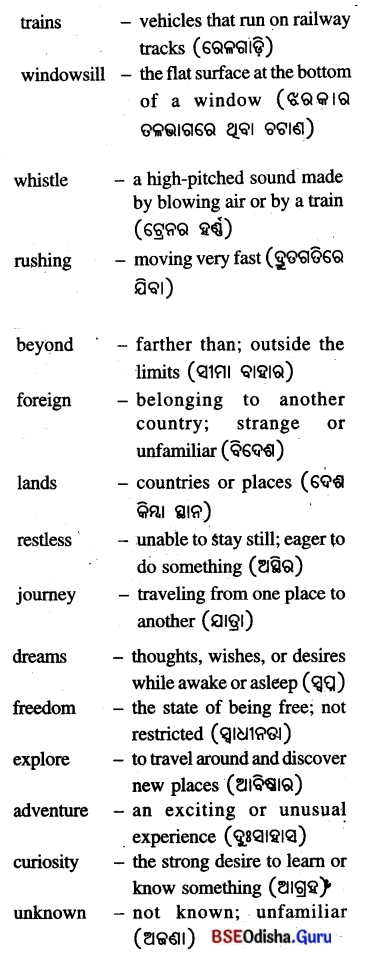
trains
windowsill
Notes & Glossary (ଶବ୍ଦାର୍ଥ):
Travel Class 7 MCQ
Question 1.
The day is loud with _____.
(a) silence
(b) voices speaking
(c) rain
(d) music
Answer:
(b) voices speaking
Question 2.
At night the poet sees _____.
(a) flowers
(b) clinders red
(c) snow
(d) sun
Answer:
(b) clinders red
Question 3.
The poet hears the engine _____.
(a) steaming
(b) laughing
(c) sleeping
(d) falling
Answer:
(a) steaming
Question 4.
The poet would take a train _____.
(a) only to school
(b) only to Delhi
(c) anywhere
(d) nowhere
Answer:
(c) anywhere
Question 5.
The whistle is described as _____.
(a) soft
(b) shrieking
(c) sweet
(d) slow
Answer:
(b) shrieking
Question 6.
The poet imagines trains even when _____.
(a) train passes daily
(b) no train passes
(c) she travels
(d) she sleeps
Answer:
(b) no train pass
Question 7.
The poem has _____ stanzas.
(a) 2
(b) 3
(c) 4
(d) 5
Answer:
(b) 3
Question 8.
The poet wants to travel because _____.
(a) she is bored
(b) she loves adventure
(c) she dislikes trains
(d) she is afraid
Answer:
(b) she loves adventure
Question 9.
The trains’s engine is described as _____.
(a) steaming
(b) crying
(c) jumping
(d) sleeping
Answer:
(a) steaming
Question 10.
The poet feels _____ about travel.
(a) worried
(b) excited
(c) sleepy
(d) sad
Answer:
(b) excited
Travel Class 7 Fill in The Blanks
1. The day is _____ with voices.
Answer: loud
2. Cinders in the sky refer to _____.
Answer: stars
3. The night is described as _____.
Answer: still
4. The poet has _____ relationship with her friends.
Answer: warm
Travel Class 7 True or False
1. Cinders come from the stream engine.
Answer: True
2. The railroad track is just a mile away.
Answer: False
3. The poet wants to make more new friends.
Answer: False
4. The poet doesn’t like dreaming.
Answer: False
Travel Class 7 Very Short Question Answer
Question 1.
What does the poet hear during the day?
Answer:
The train whistle.
Question 2.
What does the train symbolize?
Answer:
Adventure and travel.
Question 3.
Why is the night called still?
Answer:
It is quiet for sleep.
Question 4.
How does the poet feel about trains?
Answer:
She loves them deeply.
Question 5.
What is the central idea?
Answer:
Desire to travel and explore.
Question 6.
What does the poet wish for?
Answer:
Travel and new experiences.
Question 7.
What does repetition highlight?
Answer:
Her constant interest in trains.
Travel Class 7 Short Question Answer
Question 1.
Why do you think the poet hears the train whistle even when no train passes by?
Answer:
The poet hears the whistle in her imagination, because she thinks a lot about travel. The train represents her strong desire for adventure and freedom.
Question 2.
What does the train symbolize in the poem ? Explain your answer.
Answer:
The train symbolizes adventure, new opportunities and the wish to explore new places. It shows the poet’s longing to move beyond daily life.
Question 3.
The poet says her heart is warm with friends, yet she would still take any train. What does this tell us about her personality?
Answer:
it shows that she is loving and values friendships, but she is also curious, brave and eager to experience new journeys in life.
Question 4.
How does the contrast between the noisy day and silent night help us understand the poet’s feelings?
Answer:
The contrast shows that the poet’s thoughts about train never stop. Whether it is day or night, her mind is always filled with the sound and image of trains.
Question 5.
Do you think that the poet is satisfied with staying in one place? Why or why not?
Answer:
No, the poet is not fully satisfied. Even though she has friends and comfort, she dreams of travelling anywhere. This shows her restless spirit and love for exploration.
Question 6.
Why does the poet want to board any train?
Answer:
The poet says that she can board any train be whatever is its destination. She has a strong desire for an adventurous train journey.