
For effective revision, students can use BSE Odisha Class 4 English Solutions Chapter 3 Between Home and School Answer to practice textbook exercises.
Class 4 English Between Home and School Question Answer
Class 4 English Chapter 3 Question Answer Odia Medium
Pre-reading
ପଠନ ପୂର୍ବରୁ
Children are fond of games. When they go near a river or a pond, they play and make a lot of fun.
ଚିଲଡ୍ରେନ୍ ଆର୍ ଫଣ୍ଡ୍ ଅଫ୍ ଗେମ୍ସ । ହେନ୍ ଦେ ଗୋ ନିଅର୍ ଏ ରିଭର୍ ଅର୍ ଏ ପଣ୍ଡ୍, ଦେ ପ୍ଲେ ଆଣ୍ଡ୍ ମେକ୍ ଏ ଲଟ୍ ଅଫ୍ ଫନ୍ ।
ଅନୁବାଦ : ପିଲାମାନେ ଖେଳିବାକୁ ଭଲ ପାଆନ୍ତି । ଯେତେବେଳେ ସେମାନେ ନଦୀ କିମ୍ବା ପୋଖରୀ ପାଖକୁ ଯାଆନ୍ତି, ସେମାନେ ଖେଳନ୍ତି ଏବଂ ବହୁତ ମଜା କରନ୍ତି ।
Tick (✓) the things you do when you are near a pool or a pond.
ପୋଖରୀ କିମ୍ବା କୁଣ୍ଡ ପାଖରେ ଥିବା ବେଳେ ତୁମେ ଯେଉଁ ସବୁ କାମ କର, ତାହା ପାଖରେ ଠିକ୍ ଚିହ୍ନ ଦିଅ ।
touch the cool water (ଥଣ୍ଡା ପାଣିକୁ ଛୁଇଁବା) — (✓)
paddle water with feet (ପାଦରେ ପାଣିକୁ ଛାଟିବା / ଖେଳିବା) — (✓)
splish splash hands in water (ପାଣିରେ ହାତ ଛପ୍ ଛପ୍ କରିବା) — (✓)
float paper boats on water (ପାଣିରେ କାଗଜ ଡଙ୍ଗା ଭସାଇବା) — (✓)
look at your image/ shadow in water (ପାଣିରେ ନିଜର ପ୍ରତିବିମ୍ବ/ଛାଇ ଦେଖୁବା) — (✓)

Answer the following questions
Question 1.
Who is the speaker in the story?
କାହାଣୀରେ କିଏ କହୁଛନ୍ତି?
Answer:
A boy named Ravi is the speaker in the story.
Question 2.
What class is Ravi in ?
ରବି କେଉଁ ଶ୍ରେଣୀରେ ପଢ଼େ?
Answer:
Ravi is in class 4
Question 3.
How does Ravi go to school?
Answer:
Ravi goes to school on foot.
Question 4.
Who goes to school with Ravi?
ରବି ସହିତ କିଏ ସ୍କୁଲକୁ ଯାଏ?
Answer:
Ravi’s friend goes to school with him.
Question 5.
What do Ravi and his friend pass through on their way to school?
ସ୍କୁଲ ଯିବା ବାଟରେ ରବି ଏବଂ ତାଙ୍କ ସାଙ୍ଗ କେଉଁ ସବୁ ସ୍ଥାନ ଦେଇ ଯାଆନ୍ତି?
Answer:
Ravi and his friend pass through paddy fields, and the mango grove on their way to school.
Question 6.
What fun do they have every day?
ପ୍ରତିଦିନ ସେମାନେ କି ମଜା କରନ୍ତି?
Answer:
Every day, they jump over the canals, climb up the trees, swing from the branches, and watch the garden lizards.
Question 7.
Do they reach school on time?
ସେମାନେ କ’ଣ ଠିକ୍ ସମୟରେ ସ୍କୁଲରେ ପହଞ୍ଚନ୍ତି କି?
Answer:
Yes, they reach school on time.
Additional :
ଆସ ଜାଣିବା “Prepositions”
ଆମେ ପଢ଼ିଥିବା ବିଷୟଟିରେ ଆମେ “to school, on foot, through the paddy fields, over the canals, from the branches” ଭଳି ବାକ୍ୟଶ ସବୁ ଦେଖିବାକୁ ପାଇଲେ । ଏଗୁଡ଼ିକରେ ଯେଉଁ “to, on, through, over, from” ଇତ୍ୟାଦି ଶବ୍ଦ ଗୁଡ଼ିକ ଅଛି, ସେସବୁକୁ ଇଂରାଜୀରେ “Preposition” ବୋଲି କୁହାଯାଏ ।
“Preposition” ହେଉଛି ଏକ ଛୋଟ ଶବ୍ଦ ଯାହା ବାକ୍ୟରେ ସଂଯୋଜକ ଭଳି କାର୍ଯ୍ୟ କରେ । ଏହା ଏକ ବାକ୍ୟରେ ଥିବା noun, pronoun କିମ୍ବା phrase ଗୁଡ଼ିକୁ ବାକ୍ୟର ଅନ୍ୟ ଶବ୍ଦମାନଙ୍କ ସହିତ ଯୋଡ଼ିବା ପାଇଁ ବ୍ୟବହୃତ ହୋଇଥାଏ । ଏହା ବାକ୍ୟର ବିଭିନ୍ନ ଭାଗଗୁଡ଼ିକୁ ଏକାଠି ଯୋଡ଼ି ଏକ ସଂପୂର୍ଣ୍ଣ ଅର୍ଥ ପ୍ରକାଶ କରିବାରେ ସାହାଯ୍ୟ
କରେ ।
“Preposition” ଗୁଡ଼ିକ ସାଧାରଣତଃ କୌଣସି ଜିନିଷର “ସ୍ଥିତି, ସ୍ଥାନ, ସମୟ କିମ୍ବା ଦିଗ” ଦର୍ଶାନ୍ତି । (A preposition is a small word that shows the “position, place, time, or direction” of something.)
Common Prepositions:
Preposition of Time (ସମୟ ସୂଚକ)
(କୌଣସି ଘଟଣାର ସମୟ/ସମୟ ସୀମା ବା କେତେବେଳେ ଘଟୁଛି ତାହା ସୂଚାଏ)
• In : କୌଣସି ମାସ କିମ୍ବା ବର୍ଷ ପାଇଁ
- I was born in July.
- My brother was born in 2024.
On : ନିର୍ଦ୍ଦିଷ୍ଟ ବାର କିମ୍ବା ତାରିଖ ପାଇଁ
- We will go there on Sunday.
- We celebrate our Independence Day on 15th August.
- He was born on August 15.
At : ନିର୍ଦ୍ଦିଷ୍ଟ ସମୟ ପାଇଁ (We left for home at 5:30 pm)
For: କୌଣସି କାର୍ଯ୍ୟର ଅବଧୂ ଦର୍ଶାଇବା ପାଇଁ (We lived in England for two years)
Before/After: (I brush my teeth before breakfast.) (I wipe myself after a bath.)
During: (He came home during the summer vacation.)
Since/Until: (କେବେ) ଠାରୁ / (କେତେବେଳ) ପର୍ଯ୍ୟନ୍ତ
- We have been living here since 1980.
- The library is open until 8 pm.
Preposition of Place (ସ୍ଥାନ ସୂଚକ)
(କୌଣସି ବସ୍ତୁର ଅବସ୍ଥିତି ବା ସେ ଅନ୍ୟ ବସ୍ତୁ ତୁଳନାରେ କେଉଁ ସ୍ଥାନରେ ଅଛି ତାହା ଦର୍ଶାଏ)
Under / Over: ତଳେ | ଉପରେ (କିନ୍ତୁ ଲାଗିକରି ନଥିବା ଜିନିଷ ଇତ୍ୟାଦିକୁ ସୁଚାଇବା ପାଇଁ)
- The cat is under the table.
- He jumped over the wall.
Above / Below: ଉଚ୍ଚରେ I ନିମ୍ନରେ (ସ୍ତର ବା ଉଚ୍ଚତାର ତଫାତ ସୂଚାଇବା ପାଇଁ)
- The clock hangs above the blackboard.
- The village is below the sea level.
Between: ଦୁଇଟି ଜିନିଷର ମଝିରେ
The post office is between my home and school.
In / Out:
- I live in Cuttack.
- She jumped out of her bed.
On: କୌଣସି ଜିନିଷ ଉପରେ ଲାଗିକରି (ସ୍ପର୍ଶ କରି) ରହିବା
- The mop is on the floor.
- The cat is sleeping on the table.
At: ଏକ ନିର୍ଦ୍ଦିଷ୍ଟ ସ୍ଥାନ
- Wait for me at the bus stop.
From: / (I am from Cuttack.)
By: ପାଖରେ (next to) / ଦ୍ବାରା / ସୁଦ୍ଧା ବା ଏକ ନିର୍ଦ୍ଧିଷ୍ଠ ସମୟ ଭିତରେ / କୌଣସି ଜିନିଷ ବା ସ୍ଥାନ ପାଖ ଦେଇ
- She sat by the window.
Preposition of Direction/Motion
(ଜଣେ ବ୍ୟକ୍ତି ବା କୌଣସି ଜିନିଷ କେଉଁଆଡ଼କୁ ଗତି କରୁଛି ତାହା ଦର୍ଶାଏ) ଆd to
To / Towards: କୌଣସି ଲକ୍ଷ୍ୟସ୍ଥଳକୁ / ସେହି ଦିଗକୁ
- Give it to her.
- She ran towards the ice-cream seller.
Into: ଭିତରକୁ ପ୍ରବେଶ କରିବା (He jumped into the pool.)
Through: କୌଣସି ଜିନିଷର ମଝି ଦେଇ ବାହାରିବା (We walked through the forest to the main road)
• Across: (She swam across the river.)
• Up / Down: ଉପରକୁ / ତଳକୁ
- Ram walked up the stairs.
- douchdi bebs
Around: (The children sat around their grandfather.)
Past: (He walked past the library.)
Other Prepositions:
Preposition of Manner (ଶୈଳୀ): କୌଣସି ଏକ କାର୍ଯ୍ୟ କିପରି (How) କରାଯାଉଛି
By: ଦ୍ବାରା
He goes to school by bus.
[Preposition “By” ର ଅନ୍ୟ ପ୍ରୟୋଗ: ଦ୍ବାରା / ସୁଦ୍ଧା ବା ଏକ ନିର୍ଦ୍ଦିଷ୍ଟ ସମୟ ଭିତରେ / କୌଣସି ଜିନିଷ ବା ସ୍ଥାନ ପାଖ ଦେଇ]
- The book was written by her.
- I will finish the task by tomorrow.
- He walked by the old cottage.
With: କୌଣସି ଯନ୍ତ୍ରପାତି ବା ଅନୁଭୂତି ସହିତ ବା ସାହାଯ୍ୟରେ କାମ କରିବା ର ତାତି କାରକୁ ଜ
- write with a pen.
In: କାର୍ଯ୍ୟ କରିବାର ଶୈଳୀ ବା ଅବସ୍ଥା (କେଉଁ ପ୍ରକାରରେ)
- She spoke in a low voice.
Prepositions of Cause (କାରଣ): (କୌଣସି ଏକ କାର୍ଯ୍ୟ କେଉଁ କାରଣରୁ (Why) ହେଲା)
Because of / Due to: ମୁଖ୍ୟ କାରଣ ଦର୍ଶାଇବା ପାଇଁ
- The match was cancelled because of rain.
- He was delayed due to heavy traffic.
From: କୌଣସି ଅବସ୍ଥାର ଉତ୍ସ ଦର୍ଶାଇବା ପାଇଁ
- He is suffering from fever.
Of: ପ୍ରାୟତଃ କୌଣସି ରୋଗ ଯୋଗୁଁ ହୋଇଥିବା ମୃତ୍ୟୁ ଦର୍ଶାଇବା ପାଇଁ
- He died of cholera.
Through: କୌଣସି ମାଧ୍ୟମ ବା ପ୍ରଚେଷ୍ଟା ଦ୍ବାରା
- He succeeded through hard work.
Prepositions of Purpose (ଉଦ୍ଦେଶ୍ୟ): କୌଣସି କାର୍ଯ୍ୟ କେଉଁ ଲକ୍ଷ୍ୟରେ (What for) କରାଯାଉଛି
For : କୌଣସି ବସ୍ତୁ ବା ବ୍ୟକ୍ତିଙ୍କ ପାଇଁ | ଉଦ୍ଦେଶ୍ୟରେ
- I am waiting for you.
- I stayed at home for my mother.
To : କୌଣସି କାର୍ଯ୍ୟ କେଉଁଥ୍ପାଇଁ କରାଯାଇଛି ତାହା ଦର୍ଶାଇବା ପାଇଁ
He studies to pass.
ଇଂରାଜୀରେ ଏଭଳି ଆହୁରି ଅନେକ “preposition” ଅଛି | ସେସବୁ ବିଷୟରେ ତୁମେମାନେ ଉପର ଶ୍ରେଣୀମାନଙ୍କରେ ଅଧିକ ପଢ଼ିବ ।
ତେବେ, ପ୍ରାୟତଃ ସବୁ preposition ଭିନ୍ନ ଭିନ୍ନ ପରିସ୍ଥିତିରେ ଭିନ୍ନ ଭିନ୍ନ ପ୍ରକାରରେ ବ୍ୟବହୃତ ହୋଇ ପାରିବେ | ଯେପରିକି, “in, on, at” ଇଂରାଜୀରେ ସବୁଠାରୁ ଅଧିକ ବ୍ୟବହାର ହେଉଥିବା Preposition ଗୁଡ଼ିକ ମଧ୍ୟରେ ଆସନ୍ତା | ଏବଂ ଏଗୁଡ଼ିକ “ଉଭୟ ସ୍ଥାନ ଏବଂ ସମୟ” ପାଇଁ ବ୍ୟବହୃତ ହୁଅନ୍ତି |
Post-reading ପଠନ ପରେ
A Visual Memory Development Technique (VMDT)
ଏକ ଦୃଶ୍ୟମାନ ସ୍ମୃତି ବିକାଶ କୌଶଳ (ଭି.ଏମ୍.ଡି.ଟି.)
Whole: paddy field, mango grove, main road
ସମ୍ପୂର୍ଣ୍ଣ: ଧାନ କ୍ଷେତ, ଆମ୍ବ ତୋଟା, ମୁଖ୍ୟ ରାସ୍ତା
Part : canal, lizard, swinging, climbing
ଅଂଶ: କେନାଲ, ଏଣ୍ଡୁଅ, ଝୁଲିବା, ଚଢିବା
B. Let us Listen and Speak
1. Listen to the words that your teacher will read out. Say the words aloud and point to each object that represents the word.
ତୁମ ଶିକ୍ଷକ ଯେଉଁ ଶବ୍ଦଗୁଡ଼ିକୁ ପଢ଼ିବେ, ତାହା ଶୁଣ । ଶବ୍ଦଗୁଡ଼ିକୁ ଉଚ୍ଚ ସ୍ବରରେ କୁହ ଏବଂ ଶବ୍ଦକୁ ବୁଝାଉଥିବା ପ୍ରତ୍ୟେକ ବସ୍ତୁ ଆଡ଼କୁ ଆଙ୍ଗୁଠି ଦେଖାଅ ।

Note to the teacher: Prepare for the class by bringing the relevant objects and place them infront of the classroom.
ଶିକ୍ଷକଙ୍କ ପାଇଁ ସୂଚନା: ସମ୍ପୃକ୍ତ ବସ୍ତୁଗୁଡ଼ିକୁ ଆଣି ଶ୍ରେଣୀ ପାଇଁ ପ୍ରସ୍ତୁତ ହୁଅନ୍ତୁ ଏବଂ ସେଗୁଡ଼ିକୁ ଶ୍ରେଣୀଗୃହ ସାମ୍ନାରେ ରଖନ୍ତୁ ।
Bingo Game
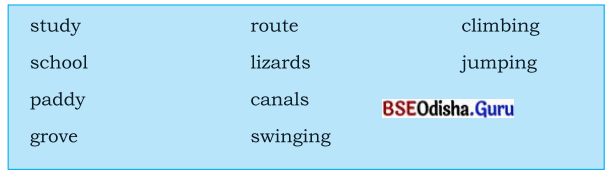
2. Write any 6 words from the box in your notebook. Your teacher will read the words aloud at random (not serially) one by one. Listen to him/her and tick (✓) the word if it is in your list. If it is not in your list, wait. Your teacher will go on reading the words one by one. The student who ticks all the words first will be the winner of the game and he/she will stand up and say “BINGO” aloud. Everybody will congratulate him/her.
ତୁମ ଖାତାରେ ବାକ୍ସରୁ ଯେକୌଣସି ୬ଟି ଶବ୍ଦ ଲେଖ । ତୁମର ଶିକ୍ଷକ ଶବ୍ଦଗୁଡ଼ିକୁ କ୍ରମାଗତ ଭାବେ ନୁହେଁ, ବରଂ ଗୋଟିଏ ପରେ ଗୋଟିଏ ଯେକୌଣସି କ୍ରମରେ ଉଚ୍ଚ ସ୍ବରରେ ପଢ଼ିବେ । ତାଙ୍କୁ ଶୁଣ ଏବଂ ଯଦି ଶବ୍ଦଟି ତୁମ ତାଲିକାରେ ଅଛି ତେବେ ଠିକ୍ (✓) ଚିହ୍ନ ଦିଅ । ଯଦି ଏହା ତୁମ ତାଲିକାରେ ନାହିଁ, ତେବେ ଅପେକ୍ଷା କର । ତୁମ ଶିକ୍ଷକ ଗୋଟିଏ ପରେ ଗୋଟିଏ ଶବ୍ଦ ପଢ଼ିବେ । ଯେଉଁ ଛାତ୍ର ପ୍ରଥମେ ସମସ୍ତ ଶବ୍ଦରେ ଠିକ୍ ଚିହ୍ନ ଦେବେ, ସେ ଖେଳର ବିଜେତା ହେବେ ଏବଂ ସେ ଛିଡ଼ା ହୋଇ ଉଚ୍ଚ ସ୍ବରରେ “ବିଙ୍ଗୋ” କହିବେ । ସମସ୍ତେ ତାଙ୍କୁ ଅଭିନନ୍ଦନ ଜଣାଇବେ ।
3. Listen to your teacher saying the riddle. Think and answer.
ତୁମ ଶିକ୍ଷକଙ୍କ ଠାରୁ ପ୍ରହେଳିକା/ଢଗ ଶୁଣ । ଭାବ ଏବଂ ଉତ୍ତର ଦିଅ ।
A Riddle:
My first two is my last
My last two is my first
And you are in the middle
voled abhow art been
Who am I ?
ମୋର ପ୍ରଥମ ଦୁଇଟି ମୋର ଶେଷ ଆଉ
ମୋର ଶେଷ ଦୁଇଟି ମୋର ପ୍ରଥମ
ଏବଂ ତୁମେ ମଝିରେ ଅଛ
ମୁଁ କିଏ ?
Answer:
CHURCH
4. Tell your classmates about the fun you make on your way to school.
ସ୍କୁଲକୁ ଯିବା ବାଟରେ ତୁମେ କରୁଥିବା ମଜା ବିଷୟରେ ତୁମର ସହପାଠୀମାନଙ୍କୁ କୁହ ।
C. Let us write
Read the story again and say whether the statements given below are true ding or false. Put a tick (✓) in the box for true statement and a cross (✗) in the box for false statement.
କାହାଣୀଟିକୁ ପୁଣି ଥରେ ପଢ଼ ଏବଂ ତଳେ ଦିଆଯାଇଥିବା ବାକ୍ୟଗୁଡ଼ିକ ସତ କି ମିଛ କୁହ । ସତ ବାକ୍ୟ ପାଇଁ ବାକ୍ସରେ ଠିକ୍ (✓) ଚିହ୍ନ ଏବଂ ମିଛ ବାକ୍ୟ ପାଇଁ କ୍ରସ୍ (✗) ଚିହ୍ନ ଦିଅ
Answer:
a. Ravi and his friend pass through a forest. (✗)
ରବି ଏବଂ ତାଙ୍କ ସାଙ୍ଗ ଏକ ଜଙ୍ଗଲ ଦେଇ ଯାଆନ୍ତି ।
b. They jump over the canals. (✓)
ସେମାନେ କେନାଲ ଉପର ଦେଇ ଡିଅଛି ।
c. They do not come to the main road. (✗)
ସେମାନେ ମୁଖ୍ୟ ରାସ୍ତାକୁ ଆସନ୍ତି ନାହିଁ ।
d. They climb trees. (✓)
ସେମାନେ ଗଛ ଚଢନ୍ତି ।
e. They watch butterflies. (✗)
ସେମାନେ ପ୍ରଜାପତି ଦେଖନ୍ତି ।
f. They reach school late. (✗)
ସେମାନେ ସ୍କୁଲରେ ବିଳମ୍ବରେ ପହଞ୍ଚନ୍ତି ।
2. Read the words below each picture.
ପ୍ରତ୍ୟେକ ଚିତ୍ର ତଳେ ଥିବା ଶବ୍ଦଗୁଡ଼ିକୁ ପଢ଼ ।
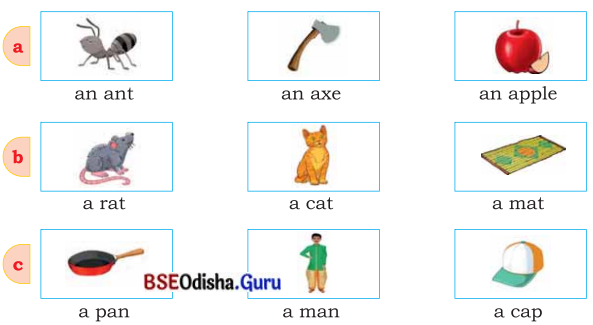
୍ରତ୍ୟେକ ଚିତ୍ର ତଳେ ଥିବା ଶବ୍ଦଗୁଡ଼ିକୁ ପଢ଼ |
ଇଂରାଜୀରେ ୫ଟି “Vowel” ବା “ସ୍ୱରବର୍ଣ୍ଣ” ଅଛି । ସେଗୁଡ଼ିକ ହେଲା – a, e, i, o, ଏବଂ u ।
ଏଠାରେ ଥିବା ଶବ୍ଦଗୁଡ଼ିକରେ, ଆମେମାନେ “a” କୁ ବିଭିନ୍ନ ସ୍ଥାନରେ ବ୍ୟବହୃତ ହେବାର ଦେଖୁଛେ । ପ୍ରତ୍ୟେକ ଶବ୍ଦକୁ ବଡ଼ ପାଟିରେ ପଢ଼ ଏବଂ ସେସବୁରେ “a” ର ଉଚ୍ଚାରଣ ଉପରେ ଧ୍ୟାନ ଦିଅ ।
ଜାଣିବା କଥା: ଏଠାରେ ତୁମେ ଦେଖୁଥିବ ଯେ, କେତେକ ଶବ୍ଦ ପୁର୍ବରୁ “a” ଏବଂ କେତେକ ଶବ୍ଦ ପୁର୍ବରୁ “an” ର ପ୍ରୟୋଗ ହୋଇଛି । ଏହି “a” ଏବଂ “an”କୁ ଇଂରାଜୀରେ article କୁହନ୍ତି ।
ଇଂରାଜୀରେ Articles ଦୁଇ ପ୍ରକାରର ହୋଇଥାଏ:
- Indefinite Article: A, An (କୌଣସି ନିର୍ଦ୍ଦିଷ୍ଟ ଜିନିଷକୁ ବୁଝାଏ ନାହିଁ | ଯେକୌଣସି ଜିନିଷ ପାଇଁ ପ୍ରୟୋଗ କରିହେବ)
- Definite Article: The (ଏକ ନିର୍ଦ୍ଦିଷ୍ଟ ଜିନିଷ ବା ବ୍ୟକ୍ତିକୁ ବୁଝାଏ)
“A” ଏବଂ “An” ର ବ୍ୟବହାର :
- ଏହି ଦୁଇଟି article, ସାଧାରଣତଃ ଏକବଚନରେ ଥିବା (Singular) ଗଣି ହେଉଥିବା ବିଶେଷ୍ୟ (Countable Noun) ବା ଶବ୍ଦ ପୂର୍ବରୁ ବ୍ୟବହାର ହୁଏ ।
- ଯଦି ଶବ୍ଦଟିର ଉଚ୍ଚାରଣ, “Vowel Sound” (a, e, i, o, u) ବା “ସ୍ୱରବର୍ଣ୍ଣ” (ଅ, ଆ, ଇ, ଈ, ଉ, ଏ, ଓ) ରୁ ଆରମ୍ଭ ହେଉଥାଏ, ତେବେ ତା’ଆଗରୁ “An” ଲାଗେ |
ଯେପରିକି : An apple, An elephant, An umbrella ଇତ୍ୟାଦି ।
ସେହିଭଳି କେତେକ ଶବ୍ଦ “a, e, i, o, କିମ୍ବା u” ରୁ ଆରମ୍ଭ ହୋଇ ନଥାନ୍ତି କିନ୍ତୁ ସେଗୁଡ଼ିକର ଉଚ୍ଚାରଣ “ଅ, ଆ, ଇ, ଈ, ଉ, ଏ, କିମ୍ବା ଓ” ଭଳି ସ୍ବରବର୍ଣ୍ଣରୁ ହୋଇଥାଏ । ସେଭଳି ଶବ୍ଦଗୁଡ଼ିକ ପୂର୍ବରୁ ମଧ୍ୟ “An” ଲାଗିବ । ଯେପରିକି: An hour
ଏଠାରେ “hour”ର ଉଚ୍ଚାରଣ “ଆୱର୍” ଅଟେ “ହାୱର୍” ନୁହେଁ । ତେଣୁ ଏଠାରେ “An” ଲାଗିବ । ଅନ୍ୟ ଉଦାହରଣ: An honest man, An MLA, An S.P. ଇତ୍ୟାଦି
ଅନ୍ୟପଟେ ଯଦି ଶବ୍ଦଟି Consonant Sound ବା ବ୍ୟଞ୍ଜନବର୍ଣ୍ଣ (କ, ଖ, ଗ…) ଇତ୍ୟାଦିରୁ ଆରମ୍ଭ ହେଉଥାଏ, ତେବେ ସେହି ଶବ୍ଦ ଆଗରୁ “A” ଲାଗେ ।
ଯେପରିକି: A boy, A cat, A rose ଇତ୍ୟାଦି ।
ସେହିଭଳି, କେତେକ ଶବ୍ଦ “a, e, i, o, କିମ୍ବା u” ରୁ ଆରମ୍ଭ ହୋଇଥାଆନ୍ତି କିନ୍ତୁ ସେଗୁଡ଼ିକର ଉଚ୍ଚାରଣ “ଅ, ଆ, ଇ, ଈ, ଉ, ଏ, କିମ୍ବା ଓ” ଭଳି ସ୍ବରବର୍ଣ୍ଣରୁ ହୋଇ ନଥାଏ । ସେଭଳି ଶବ୍ଦଗୁଡ଼ିକ ପୂର୍ବରୁ ମଧ୍ୟ “A” ଲାଗିବ । ଯେପରିକି: A university
(ଏଠାରେ “university” ର ଉଚ୍ଚାରଣ “ୟୁନିଭର୍ସିଟି” ଅଟେ । ଏହା “ୟୁ” ରୁ ଆରମ୍ଭ, ଯାହା ଏକ ବ୍ୟଞ୍ଜନବର୍ଣ୍ଣ ଶବ୍ଦ । ତେଣୁ ଏଠାରେ “A” ଲାଗିବ ।)
ଅନ୍ୟ ଉଦାହରଣ: A one-rupee, A European man, A union ଇତ୍ୟାଦି
(ମନେରଖ: କୌଣସି ଶବ୍ଦ ପୁର୍ବରୁ “A” କିମ୍ବା “An” ର ପ୍ରୟୋଗ କରିବା ପୂର୍ବରୁ, କେବଳ ଶବ୍ଦର ପ୍ରଥମ ଅକ୍ଷର (letter) କୁ ନଦେଖ୍, ଶବ୍ଦଟିକୁ ଉଚ୍ଚାରଣ କରିବା ସମୟରେ ପ୍ରଥମେ କେଉଁ “ଧ୍ବନି” ଆସୁଛି ତାହା ଉପରେ ଧ୍ୟାନ ଦେବ । ଯେତେବେଳେ ଆମେ କୌଣସି ନିର୍ଦ୍ଦିଷ୍ଟ ବା ସ୍ବତନ୍ତ୍ର ଜିନିଷ ବିଷୟରେ କହୁ, ସେତେବେଳେ “The” ବ୍ୟବହାର କରାଯାଏ ।
ଯେପରିକି:
- ଏ ନିର୍ଦ୍ଦିଷ୍ଟ ବସ୍ତୁ ପାଇଁ: Open the door. (ସେହି କବାଟଟିକୁ ଖୋଲ ।)
- ଏ ଦୁନିଆରେ ଅଦ୍ୱିତୀୟ (Unique) ଜିନିଷ ପାଇଁ: The Sun, The Moon, The Earth.
- ଏ ନଦୀ, ପର୍ବତ, ସମୁଦ୍ର ଏବଂ ‘ଧର୍ମଗ୍ରନ୍ଥ ପୂର୍ବରୁ: The Ganges, The Himalayas, The Gita, The Bible.
- ଏ କୌଣସି ସର୍ବୋତ୍କୃଷ୍ଟ ଜିନିଷ/ଗୁଣ ପୂର୍ବରୁ: Ram is the tallest boy in the class.)
D. Let us read
Question 1.
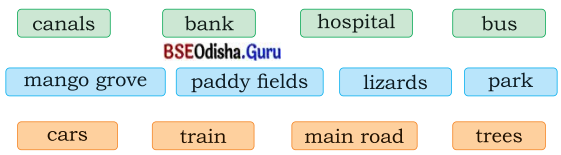
Circle all the things that Ravi and his friend see on their way to school.
ସ୍କୁଲ ଯିବା ବାଟରେ ରବି ଏବଂ ତାଙ୍କ ସାଙ୍ଗ ଦେଖୁଥିବା ସମସ୍ତ ଜିନିଷଗୁଡ଼ିକ ଚାରିପାଖରେ ଗୋଲ୍ ବୁଲାଅ।
canals, bank, hospital, bus, mango grove, paddy fields, lizards, park, cars, train, main road, trees
କେନାଲ, ବ୍ୟାଙ୍କ, ଡାକ୍ତରଖାନା, ବସ୍, ଆମ୍ବ ତୋଟା, ଧାନ କ୍ଷେତ, ଏଣ୍ଡୁଅ, ପାର୍କ, କାର୍, ଟ୍ରେନ୍, ମୁଖ୍ୟ ରାସ୍ତା, ଗଛଗୁଡ଼ିକ
Answer:

Question 2.
Write some interesting things you see every day between your home and your school.
ପ୍ରତିଦିନ ତୁମ ଘର ଏବଂ ତୁମ ବିଦ୍ୟାଳୟ ମଧ୍ଯରେ ତୁମେ ଦେଖୁଥିବା କିଛି ମଜାଦାର ଜିନିଷ ଲେଖ ।
Answer:
1. I see a park between my home and school.
2. There are many flowers and butterflies in the park.
3. There are some tall trees in the park. I see some birds living in those trees.
4. I also see a big playground.
5. There is a canal between my home and my school. There is a beautiful bridge over the canal.
Question 3.
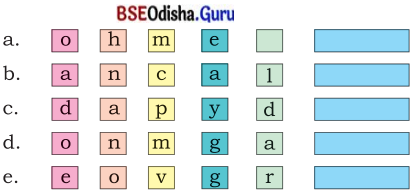
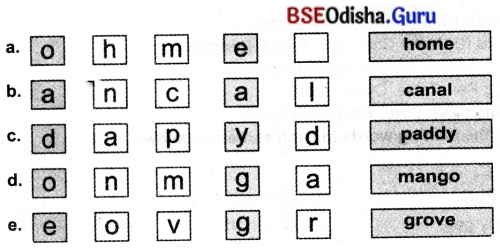
Rearrange the jumbled letters to make words. Hint: The words are from the lesson.
ଶବ୍ଦ ତିଆରି କରିବା ପାଇଁ ଏଲୋମେଲୋ ଅକ୍ଷରଗୁଡ଼ିକୁ ସଜାଡ଼ି ଲେଖ । ସୂଚନା: ଶବ୍ଦଗୁଡ଼ିକ ପାଠରୁ ଆସିଛି
Answer:
Question 4.
Look at this picture.
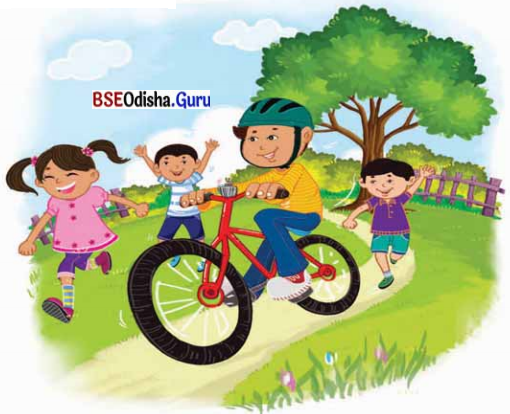
A boy is riding his bicycle on the road.
The word ‘boy’ is a naming word. It names a person. The word ‘bicycle’ is a naming word. It names a thing. The word ‘road’ is a naming word. It names a place.
Naming words are the names of persons, places, things, flowers, fruits, animals, birds etc.
ଉପରୋକ୍ତ ବାକ୍ୟରେ, “Boy” ଶବ୍ଦଟି ଏକ ନାମବାଚକ ଶବ୍ଦ । ଏହା ଜଣେ ବ୍ୟକ୍ତିଙ୍କୁ ନାମିତ କରେ । ସେହିଭଳି, “Bicycle” ଶବ୍ଦଟି ଏକ ନାମବାଚକ ଶବ୍ଦ । ଏହା ଏକ ବସ୍ତୁର ନାମକୁ ବୁଝାଏ । “Road” ଶବ୍ଦଟି ଏକ ନାମବାଚକ ଶବ୍ଦ । ଏହା ଏକ ସ୍ଥାନର ନାମକୁ ବୁଝାଏ ।
ନାମବାଚକ ବା ନାମସୂଚକ ଶବ୍ଦଗୁଡ଼ିକ ହେଉଛି “ବ୍ୟକ୍ତି, ସ୍ଥାନ, ବସ୍ତୁ, ଫୁଲ, ଫଳ, ପଶୁ, ପକ୍ଷୀ” ଇତ୍ୟାଙ୍କର ନାମ ।
(ଜାଣିବା କଥା: ଇଂରାଜୀ ବ୍ୟାକରଣରେ ଏହି “Naming Words” କୁ Noun (ବିଶେଷ୍ୟ) ବୋଲି କୁହାଯାଏ । Noun ହେଉଛି ସେହି ଶବ୍ଦ ଯାହା କୌଣସି “ବ୍ୟକ୍ତି, ସ୍ଥାନ, ବସ୍ତୁ ବା ଧାରଣାର” ନାମ କୁ ବୁଝାଏ ।
ଉଦାହରଣ:
Person (ବ୍ୟକ୍ତି): Ram, Girl, Teacher, Doctor
Animal/Bird (ପଶୁ/ପକ୍ଷୀ): Cow, Lion, Parrot, Peacock.
Place (ସ୍ଥାନ): School, Odisha, Garden, Cuttack
Thing (ବସ୍ତ୍ର): Pen, Table, Cycle, Apple
Idea/Feeling (ଭାବ): Love, Happiness ଇତ୍ୟାଦି)
Underline the naming words in each sentence below.
Answer:
1. I live in Puri — ମୁଁ ପୁରୀରେ ରୁହେ ।
2. This is my pen — ଏହା ମୋର କଲମ ।
3. I am reading a book — ମୁଁ ଗୋଟିଏ ବହି ପଢୁଛି ।
4. I have a pet dog — ମୋର ଗୋଟିଏ ପୋଷା କୁକୁର ଅଛି ।
5. These mangoes are sweet — ଏହି ଆମ୍ବଗୁଡ଼ିକ ମିଠା ଅଟେ ।
E. Mental Talk
Young learners have a lot of fun on their way to school.
ଛୋଟ ପିଲାମାନେ ସ୍କୁଲ ଯିବା ବାଟରେ ବହୁତ ମଜା କରନ୍ତି ।
F. Let us read
Cut a picture of a vehicle from an old magazine or newspaper or poster and paste it in the box. Write its name.
ଏକ ପୁରୁଣା ପତ୍ରିକା କିମ୍ବା ଖବରକାଗଜ କିମ୍ବା ପୋଷ୍ଟରରୁ ଏକ ଯାନବାହନର ଚିତ୍ର କାଟି ବାକ୍ସରେ ଲଗାଅ । ଏହାର ନାମ ଲେଖ ।
Between Home and School Class 4 Summary
While-reading
ପଠନ ସମୟରେ
Ravi and his friend walk to school everyday. What do they do on their way?
ରବି ଆଣ୍ଡ୍ ହିଜ୍ ଫ୍ରେଣ୍ଡ୍ ୱାକ୍ ଟୁ ସ୍କୁଲ୍ ଏଭ୍ରଡେ । କ୍ଵାଟ୍ ଡୁ ଦେ ଡୁ ଅନ୍ ଦେୟାର୍ ୱେ ?
ଅନୁବାଦ : ରବି ଏବଂ ତାଙ୍କ ସାଙ୍ଗ ପ୍ରତିଦିନ ଚାଲି ଚାଲି ସ୍କୁଲ ଯାଆନ୍ତି । ବାଟରେ ସେମାନେ କ’ଣ କରନ୍ତି? ‘Between home and school’ tells you about their fun on the way. Read and enjoy. ‘ବିଟୁଇନ୍ ହୋମ୍ ଆଣ୍ଡ୍ ସ୍କୁଲ୍’ ଟେଲ୍ସ ୟୁ ଆବାଉଟ୍ ଦେୟାର୍ ଫନ୍ ଅନ୍ ଦି ୱେ । ରିଡ୍ ଆଣ୍ଡ୍ ଏଞ୍ଜୟ ।
ଅନୁବାଦ : ‘ଘର ଏବଂ ସ୍କୁଲ ମଧ୍ୟରେ’ ବିଷୟଟି ତୁମକୁ ସେମାନଙ୍କ ରାସ୍ତାର ମଜା ବିଷୟରେ କହିଥାଏ । ପଢ଼ ଏବଂ
ଉପଭୋଗ କର ।
THE TEXT
Hello, I am Ravi. I study in Class 4. My friend and I go to school on foot.
(ହ୍ୟାଲୋ, ଆଇ ଆମ୍ ରବି । ଆଇ ଷ୍ଟଡି ଇନ୍ କ୍ଲାସ୍ ଫୋର୍ । ମାଇ ଫ୍ରେଣ୍ଡ୍ ଆଣ୍ଡ୍ ଆଇ ଗୋ ଟୁ ସ୍କୁଲ୍ ଅନ୍ ଫୁଟ୍ ।) ନମସ୍କାର, ମୁଁ ରବି । ମୁଁ ଚତୁର୍ଥ ଶ୍ରେଣୀରେ ପଢ଼େ । ମୁଁ ଏବଂ ମୋ ସାଙ୍ଗ ଚାଲି ଚାଲି ସ୍କୁଲ ଯାଉ ।
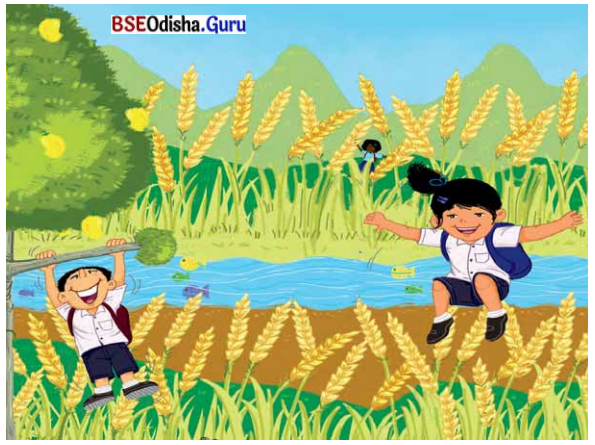
We pass through the paddy fields, the mango grove and then reach the main road.
ଉଇ ପାସ୍ ଥୁ ଦି ପ୍ୟାଡି ଫିଲ୍ଡସ୍, ଦି ମ୍ୟାଙ୍ଗୋ ଗ୍ରୋଭ୍ ଆଣ୍ଡ୍ ଦେନ୍ ରିଚ୍ ଦି ମେନ୍ ରୋଡ୍ ।
ଅନୁବାଦ : ଆମେ ଧାନ କ୍ଷେତ, ଆମ୍ବ ତୋଟା ଦେଇ ଯାଉ ଏବଂ ତା’ପରେ ମୁଖ୍ୟ ରାସ୍ତାରେ ପହଞ୍ଚୁ ।
That is the shortest route we take to school. What fun we have every day!
ଦ୍ୟାଟ୍ ଇଜ୍ ଦି ସର୍ଟେଷ୍ଟ ରୁଟ୍ ଉଇ ଟେକ୍ ଟୁ ସ୍କୁଲ୍ । ହାଟ୍ ଫନ୍ ଉଇ ହ୍ୟାଭ୍ ଏଗ୍ରି ଡେ!
ଅନୁବାଦ : ସ୍କୁଲକୁ ଯିବା ପାଇଁ ଏହା ଆମର ସବୁଠାରୁ ଛୋଟ ରାସ୍ତା ଅଟେ । ପ୍ରତିଦିନ ଆମେ କେତେ ମଜା କରୁ!

jumping over the canals!
-ଜମିଙ୍ଗ୍ ଓଭର୍ ଦି କେନାଲ୍ସ!
ଅନୁବାଦ : -କେନାଲ ଉପର ଦେଇ ଡେଇଁବା!
climbing the trees!
(କ୍ଲାଇମ୍ବିଙ୍ଗ୍ ଦି ଟ୍ରିଜ୍!)
ଗଛ ଚଢିବା!
ଅନୁବାଦ : ଗଛ ଡାଳେ ଚଢ଼ି ଖେଳୁ ଆମେ ଆଉ!
swinging from the branches! watching garden lizards!
ସ୍ଵିଙ୍ଗିଙ୍ଗ୍ ଫ୍ରମ୍ ଦି ବ୍ରାଞ୍ଜେସ୍! ୱାଚିଙ୍ଗ୍ ଗାର୍ଡେନ୍ ଲିଜାର୍ଡ଼!
ଅନୁବାଦ : ଡାଳରୁ ଝୁଲିବା! ବଗିଚାରେ ଏଣ୍ଡୁଅ ଦେଖୁବା!
Yet we reach school on time.
ୟେଟ୍ ଉଇ ରିଚ୍ ସ୍କୁଲ୍ ଅନ୍ ଟାଇମ୍ ।
ଅନୁବାଦ : ତଥାପି ଆମେ ଠିକ୍ ସମୟରେ ସ୍କୁଲରେ ପହଞ୍ଚୁ ।
Between Home and School Summary in English
In this short story, a boy named Ravi is telling the readers how he has a lot fun on his way to school. Ravi walks to school with his friend. They pass through paddy fields and the mango grove before reaching the main road. They always have fun by climbing the trees, swinging from the branches, jumping over the canals, and watching the garden lizards. However, they are never late. They always reach school on time.
Between Home and School Summary in Odia
ଏହି କ୍ଷୁଦ୍ର ଗଳ୍ପଟିରେ, ରବି ନାମକ ଜଣେ ବାଳକ ପାଠକମାନଙ୍କୁ କହୁଛି କି ସେ ସ୍କୁଲକୁ ଯିବା ବାଟରେ କିପରି ମସ୍ତୀ ସବୁ କରେ । ରବି ତା’ର ସାଙ୍ଗ ସହିତ ଚାଲି ଚାଲି ସ୍କୁଲକୁ ଯାଏ । ମୁଖ୍ୟ ରାସ୍ତାରେ ପହଞ୍ଚିବା ପୂର୍ବରୁ ସେମାନେ କେତେକ ଧାନ କ୍ଷେତ ଏବଂ ଏକ ଆମ୍ବ ତୋଟା ଦେଇ ଯାଆନ୍ତି । ସେମାନେ ଘରୁ ସ୍କୁଲ୍ ଯିବା ଭିତରେ, ଗଛରେ ଚଢ଼ି, ଗଛ ଡାଳରେ ଝୁଲି, ନାଳ ଉପରେ ଡେଇଁ ଏବଂ ଏଣ୍ଡୁଅମାନଙ୍କୁ ଦେଖି ବହୁତ ମଜା କରି କରି ଯାଆନ୍ତି । ତଥାପି, ସେମାନେ ସ୍କୁଲରେ ପହଞ୍ଚିବାରେ କେବେ ହେଲେ ବିଳମ୍ବ କରନ୍ତି ନାହିଁ । ସେମାନେ ସବୁବେଳେ ଠିକ୍ ସମୟରେ ସ୍କୁଲରେ ପହଞ୍ଚନ୍ତି ।
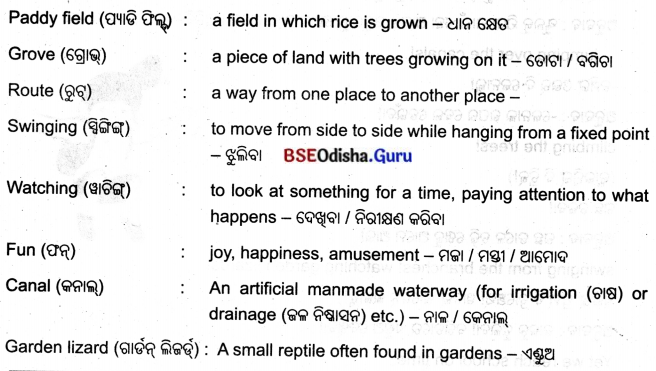
Notes and Glossary:
Between Home and School Class 4 MCQ
A. Fill in the blanks :
Question 1.
…………is the speaker in the story “Between Home and School”.
(a) Ravi
(b) Rishi
(c) Ravi’s friend
(d) Rohan
Answer:
(c) Ravi’s friend
Question 2.
Ravi is in class ………….
(a) II
(b) III
(c) IV
(d) V
Answer:
(a) II
Question 3.
Ravi goes to school with his ………….
(a) brother
(b) sister
(c) friend
(d) father
Answer:
(c) friend
Question 4.
Ravi goes to school ………….
(a) by bus
(b) on foot
(c) by bicycle
(d) by car
Answer:
(b) on foot
Question 5.
Ravi and his friend pass through …………
(a) paddy fields
(b) a mango grove
(c) paddy fields and mango grove
(d) paddy fields, mango grove and canal
Answer:
(c) paddy fields and mango grove
Question 6.
The shortest route to Ravi’s school is through the ………….
(a) paddy fields and mango grove
(b) main road
(c) canal bridge
(d) jungle and stream
Answer:
(a) paddy fields and mango grove
Question 7.
Ravi and his friend jump over the ………..
(a) trees
(b) canals
(c) branches
(d) paddy fields
Answer:
(b) canals
Question 8.
Ravi and his friend ………… the trees.
(a) jump over
(b) rest under
(c) climb up
(d) play under
Answer:
(b) rest under
Question 9.
Ravi and his friend swing from the ………….
(a) trees
(b) branches
(c) swings in the garden
(d) canal bridge
Answer:
(b) branches
Question 10.
Ravi and his friend watch the garden ………….
(a) flowers
(b) lizards
(c) insects
(d) all of the above
Answer:
(b) lizards
B. Grammar:
Question 1.
The clock is hanging ………… the wall.
(a) in
(b) on
(c) from
(d) over
Answer:
(b) on
Question 2.
The dog is sleeping ………… the table.
(a) in
(b) off
(c) under
(d) over
Answer:
(c) under
Question 3.
We walk to school ………… the paddy fields.
(a) in
(b)from
(c) over
(d) through
Answer:
(d) through
Question 4.
The cat jumped ………… the fence.
(a) in
(b) on
(c) from
(d) over
Answer:
(d) over
Question 5.
Stand ………… a line.
(a) in
(b) on
(c) from
(d) over
Answer:
(a) in
Question 6.
My birthday is ………… October.
(a) in
(b) on
(c) at
(d) from
Answer:
(a) in
Question 7.
We have lunch ………… 1:30 PM.
(a) in
(b) on
(c) at
(d) of
Answer:
(c) at
Question 8.
I brush my teeth ………… the morning.
(a) in
(b) on
(c) from
(d) at
Answer:
(a) in
Question 9.
The train passes ………… a tunnel.
(a) in
(b) on
(c) from
(d) through
Answer:
(d) through
Question 10.
We walked ………… the beach to see the waves.
(a) in
(b) on
(c) at
(d) to
Answer:
(d) to
C. Underline the naming words.
1. Ram is playing with a ball.
2. The cat is under the table.
3. My mother is in the kitchen.
4. The peacock is beautiful.
5. I have a red bicycle.
6. I am going to school.
7. The lion is the king of the forest.
8. The doctor treats patients.
9. My father is a teacher.
10. I live in Odisha.
Answer:
1. Ram is playing with a ball.
2. The cat is under the table.
3. My mother is in the U.
4. The peacock is beautiful.
5. I have a red bicycle.
6. I am going to school.
7. The lion is the king of the forest
8. The doctor treats patients.
9. My father is a teacher.
10. I live in Odisha.
D. Fill in using A/An
1. I have ………… umbrella.
2. I am eating ………… apple.
3. She has ………… English story book.
4. It is ………… old house.
5. Wait for ………… hour.
6. He is ………… university student.
7. I saw ………… elephant in the zoo.
8. He is ………… one-eyed man.
9. Give me ………… pen.
10. My father is ………… honest man.
Answer:
1. an
2. an
3. an
4. an
5. an
6. a
7. an
8. a
9. a
10. an