
For effective revision, students can use BSE Odisha Class 5 English Solutions Chapter 4 Be Smart, Be Safe Question Answer to practice textbook exercises.
Class 5 English Be Smart, Be Safe Question Answer
Class 5 English Chapter 4 Question Answer Odia Medium
Let Us Do These Activities Before We Read
Let us Discuss
Question 1.
Who has written this letter? To whom?
ଏହି ଚିଠିଟି କିଏ ଲେଖୁଛନ୍ତି ? କାହାକୁ ଲେଖୁଛନ୍ତି ?
Answer:
The traffic police officer has written this letter to the school children.
Question 2.
The traffic police share with the children.
(a) the school timing
(c) first aid
(b) safety tips
(d) clean rules
ଟ୍ରାଫିକ୍ ପୋଲିସ୍ ପିଲାମାନଙ୍କ ସହିତ କ’ଣ ବାଣ୍ଟୁଛନ୍ତି (କହୁଛନ୍ତି) ?
Answer:
(b) safety tip
Question 3.
What helps us stay safe while walking on roads?
ରାସ୍ତାରେ ଚାଲିବା ସମୟରେ କ’ଣ ଆମକୁ ସୁରକ୍ଷିତ ରହିବାରେ ସାହାଯ୍ୟ କରେ ?
Answer:
Following traffic rules and staying alert help us stay safe while walking on roads.
Question 4.
Zebra crossing is marked with……..and…….strips.
ଜେବ୍ରା କ୍ରସିଙ୍ଗ୍ କେଉଁ କେଉଁ ରଙ୍ଗର ପଟିରେ ଚିହ୍ନଟ ହୋଇଥାଏ ?
Answer:
Zebra crossing is marked with black and white strips.
Question 5.
What should you do while crossing the road?
ରାସ୍ତା ପାର ହେବା ସମୟରେ ତୁମକୁ କ’ଣ କରିବା ଉଚିତ୍ ?
Answer:
We should look to the right, then to the left, and then to the right again before crossing the road.
Question 6.
Footpath are meant for………
ଫୁଟ୍ପାଥ୍ କାହା ପାଇଁ ଉଦ୍ଦିଷ୍ଟ ?
Answer:
Footpaths are meant for pedestrians (people who are walking).

Question 7.
Whose hand should you hold while crossing the road?
ରାସ୍ତା ପାର ହେବା ସମୟରେ ତୁମେ କାହାର ହାତ ଧରିବା ଉଚିତ୍ ?
Answer:
You should hold the hand of an elder or an adult while crossing the road.
Question 8.
What shouldn’t we use while driving?
ଗାଡ଼ି ଚଳାଇବା ସମୟରେ ଆମେ କ’ଣ ବ୍ୟବହାର କରିବା ଉଚିତ୍ ନୁହେଁ ?
Answer:
We should not use mobile phones while driving.
Let us Listen and Speak
1. There are some statements below. Teacher will speak out the statements one after another. Students will show their right thumbs if the statement is true. They will put their left hands on their forehead if it is false.
a. You should always walk on the footpaths.
Answer:
True
(Show your right thumb).
b. It is safe to run while crossing the road.
Answer:
False
(Put your left hand on your forehead).
c. You should use the zebra crossing to cross the road.
Answer:
True
(Show your right thumb).
d. Wearing dark clothes in the evening makes you more visible.
Answer:
False
(Put your left hand on your forehead).
e. It is safe to play near the road.
Answer:
False
(Put your left hand on your forehead).
f. You should use headphones while walking on the road.
Answer:
False
(Put your left hand on your forehead)
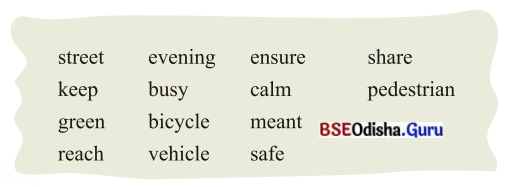
2. The teacher will read aloud a word and the students will first listen and then repeat with/after the teacher, several times to practice the pronunciation. Students will practice the following words in this way.
Answer:
Student activity
Let us Read
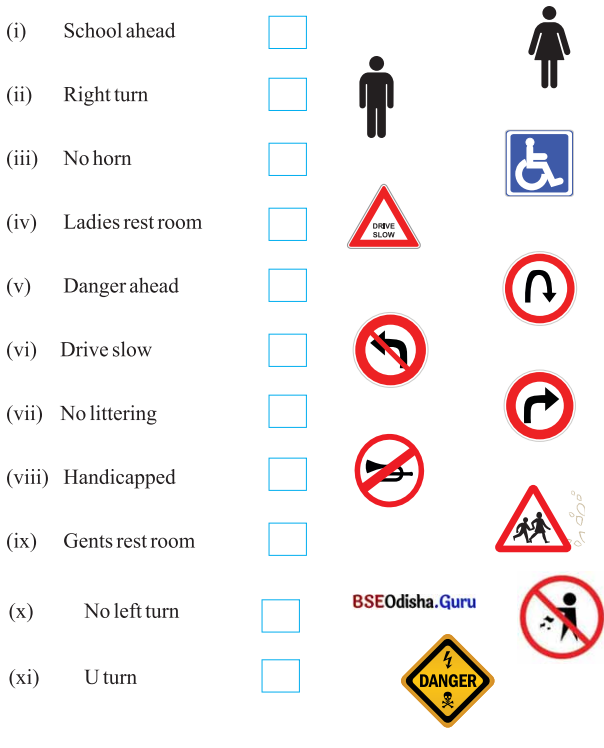
1. Match the symbols under column ‘A’ with their meaning under column ‘B’. Write the serial numbers in the box.
ସ୍ତମ୍ଭ ‘A’ ରେ ଥିବା ଚିହ୍ନଗୁଡ଼ିକୁ ସ୍ତମ୍ଭ ‘B’ ରେ ଥିବା ସେଗୁଡ଼ିକର ଅର୍ଥ ସହିତ ମିଳାଅ । ବାକ୍ସରେ କ୍ରମିକ ସଂଖ୍ୟା ଲେଖନ୍ତୁ ।
Answer:
| Column A (Symbols) | Column B (Meanings) Serial Numbers |
| (i) School ahead | 1 (students) |
| (ii) Right turn | 2 (follow right direction) |
| (iii) No horn | 3 (No horn) |
| (iv) Ladies rest room | 4 (Ladies rest room) |
| (v) Danger ahead | 5 (Danger ahead) |
| (vi) Drive slow | 6 (Drive slow) |
| (vii) No littering | 7 (No littering) |
| (viii) Handicapped | 8 (Handicapped) |
| (ix) Gents rest room | 9 (Gents rest room) |
| (x) No left turn | 10 (No left turn) |
| (xi) U turn | 11 (U turn) |
2. Based on your reading tick (✔) the box for the correct option.
ତୁମର ପଠନ ଉପରେ ଆଧାର କରି ଠିକ୍ ଦିକଳ୍ପ ପାଇଁ ବାକ୍ସରେ ଟିକ୍ (✔) ଚିହ୍ନ ଦିଅ ।
(i) What should you do before crossing a road?
(A) run quickly [ ]
(B) stop, look right, then left, again right [ ]
(C) close your eyes [ ]
Answer:
(B) stop, look right, then left, again right
(ii) Where should you walk near the road?
(A) on the footpaths [ ]
(B) on the road [ ]
(C) in the middle of the road [ ]
Answer:
(A) on the footpaths.
(iii) Why should you avoid using headphones on the road?
(A) It looks bad. [ ]
(B) It makes you run faster. [ ]
(C) It can distract you from traffic sounds. [ ]
Answer:
(C) It can distract you from traffic sounds.
Let us write:
1. For each statement, write ‘Safe’ or ‘Unsafe’ in the box.
ପ୍ରତ୍ୟେକ ବାକ୍ୟ ପାଇଁ ବାକ୍ସରେ ‘ସୁରକ୍ଷିତ’ (Safe) କିମ୍ବା ‘ଅସୁରକ୍ଷିତ’ (Unsafe) ଲେଖ । ;
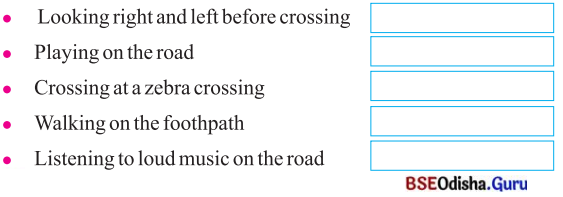
Looking right and left before crossing
Answer:
Safe
Playing on the road
Answer:
Unsafe
Crossing at a zebra crossing
Answer:
Safe
Walking on the footpath
Answer:
Safe
Listening to loud music on the road
Answer:
Unsafe
2. (i) Look at the letter from the Traffic Police of Odisha to the children, and notice that the letter has many parts.
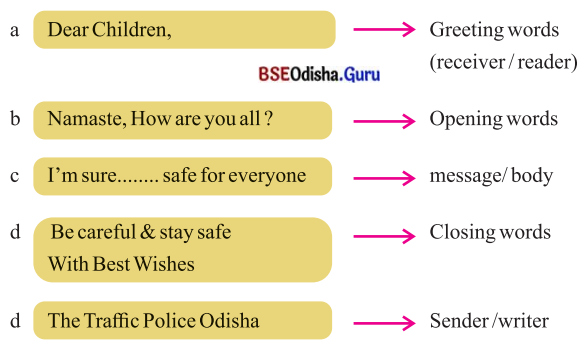
(ii) Here is a mini letter. Read it. Write the letter parts in the boxes.
ଏଠାରେ ଏକ ଛୋଟ ଚିଠି ଅଛି । ଏହାକୁ ପଢ଼ । ବାକ୍ସଗୁଡ଼ିକରେ ଚିଠିର ଅଂଶଗୁଡ଼ିକୁ ଲେଖ ।
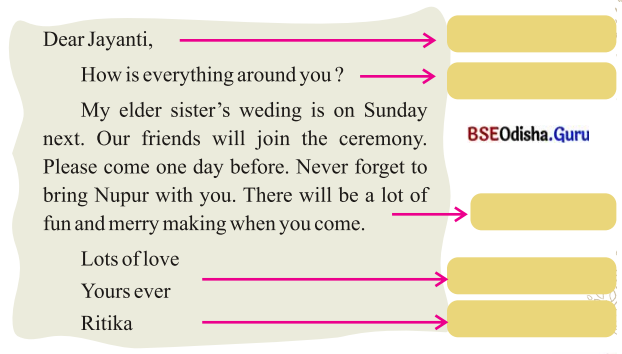
Answer:
| Letter Part | Content from Mini Letter |
| a. Greeting words (receiver/reader) | Dear Jayanti |
| b. Opening words | How is everything around you ? |
| c. Message/body | My elder sister’s wedding is on Sunday next. Our friends will join the ceremony. Please come one day before. Never forget to bring Nupur with you. There will be a lot of fun and merry making when you come. |
| d. Closing words | Lots of love |
| e. Sender/writer | Yours ever Ritika |
(iii) Read the parts of a letter given in boxes. They are not in order. Write the serial numbers in the boxes and arrange them.
ବାକ୍ସରେ ଦିଆଯାଇଥିବା ଚିଠିର ଅଂଶଗୁଡ଼ିକୁ ପଢ଼ । ସେଗୁଡ଼ିକ କ୍ରମରେ ନାହିଁ । ସେଗୁଡ଼ିକୁ ସଜାଡ଼ିବା ପାଇଁ କ୍ରମିକ ସଂଖ୍ୟା ଲେଖ ।
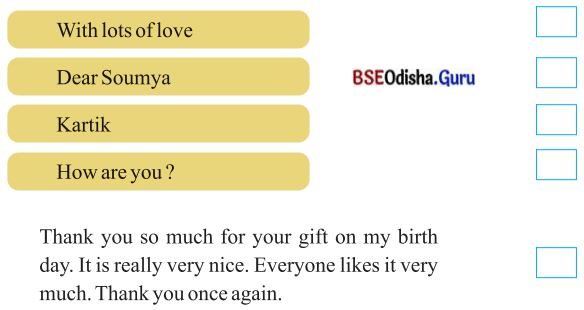
Answer:
Correct Letter Order with Serial Numbers
Dear Soumya (Greeting words – Serial No: 1)
How are you? (Opening words – Serial No: 2)
Thank you so much for your gift on my birth day. It is really very nice. Everyone likes it very much. Thank you once again. (Message/body – Serial No: 3)
With lots of love (Closing words – Serial No: 4)
Kartik (Sender/writer – Serial No: 5)
(iv) Now, write the letter in the space below putting the serial parts in their right places.

Answer:
ବର୍ତ୍ତମାନ, କ୍ରମିକ ଅଂଶଗୁଡ଼ିକୁ ଠିକ୍ ସ୍ଥାନରେ ରଖ୍ ତଳେ ଥିବା ଖାଲି ସ୍ଥାନରେ ଚିଠିଟିକୁ ଲେଖ ।
Correct Letter Order with Serial Numbers
Dear Soumya (Greeting words – Serial No: 1)
How are you? (Opening words – Serial No: 2)
Thank you so much for your gift on my birthday. It is really very nice. Everyone
likes it very much. Thank you once again.
(Message/body – Serial No: 3)
With lots of love (Closing words – Serial No: 4)
Kartik (Sender/writer – Serial No: 5)
3. A naming word/Noun is a word that names a person, place, thing or an idea. However, some nouns can be used both in singular and plural forms and some cannot.
The nouns that can be used both in singular and plural forms are known as countable nouns.
Example, apples, buses, chairs, etc.
Nouns that cannot be used in their plural forms are known as uncountable nouns. They usually do not have a plural form.
Example, water, rice, air, etc
Question.
Write ‘C’ for countable nouns and ‘U’ for Uncountable nouns.
ଗଣାଯାଇପାରୁଥିବା ବିଶେଷ୍ୟ ପାଇଁ ‘C’ ଏବଂ ଗଣାଯାଇପାରୁନଥିବା ବିଶେଷ୍ୟ ପାଇଁ ‘U’ ଲେଖ ।
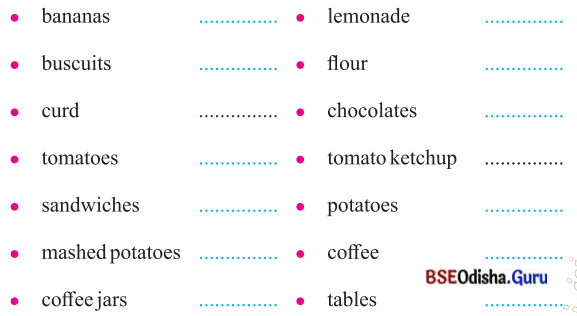
Answer:
Bananas (C)
Biscuits (C)
Curd (U)
Tomatoes (C)
Sandwiches (C)
Mashed potatoes (U)
Coffee jars (C)
lemonade (U)
flour (U)
chocolates (C)
tomato ketchup (U)
potatoes (C)
coffee (U)
tables (C)
Countable nouns (C) can be singular/plural like bananas, biscuits.
Uncountable nouns (U) like lemonade, flour have no plural form and are measured in quantities (e.g., a glass of lemonade). Mashed potatoes and tomato ketchup are treated as uncountable masses.
4. Put each noun under the right head.
ପ୍ରତ୍ୟେକ ଶବ୍ଦକୁ ଠିକ୍ ଶୀର୍ଷକ ତଳେ ରଖ ।
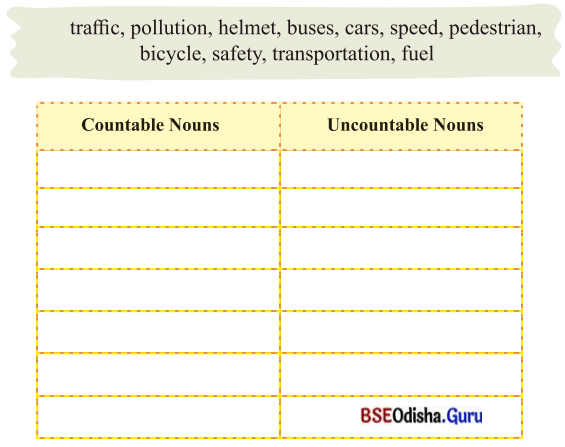
Answer:
| Countable Nouns | Uncountable Nouns |
| helmet | traffic |
| buses | pollution |
| cars | speed |
| bicycle | safety |
| pedestrian | fuel |
| transportation |
5. We look up new words in a dictionary. Words in a dictionary are arranged in an order- A, B, C, D…..order or alphabetical order.
Arrange the following words as you will find them in a dictionary.
ନିମ୍ନଲିଖତ ଶବ୍ଦଗୁଡ଼ିକୁ ଇଂରାଜୀ ଅଭିଧାନ (ଡିକ୍ସନାରୀ) କ୍ରମ ଅନୁସାରେ ସଜାଇ ଲେଖ ।
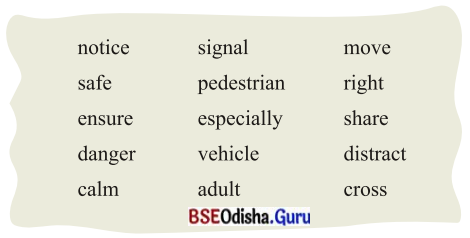
Answer:
Alphabetical Order (A-Z):
1. adult
2. calm
3. cross
4. danger
5. distract
6. ensure
7. especially
8. move
9. notice
10. pedestrian
11. right
12. safe
13. share
14. signal
15. vehicle
6. Write answers to the following questions, each in a sentence or two.
ନିମ୍ନଲିଖତ ପ୍ରଶ୍ନଗୁଡ଼ିକର ଉତ୍ତର ଗୋଟିଏ ବା ଦୁଇଟି ବାକ୍ୟରେ ଲେଖ ।
(i) Why are the traffic police on the roads?
Answer:
The traffic police are on the roads to control the flow of vehicles and ensure everyone follows safety rules. They help prevent accidents and keep the roads safe for everyone.
(ii) Who walk on the footpath?
Answer:
Pedestrians (people who are walking) walk on the footpath to stay safe from moving vehicles.
(iii) What should you do before crossing the road?
Answer:
Before crossing the road, you should stop at the edge, look to your right, then to your left, and then to your right again to make sure no vehicles are coming.
(iv) Where can you find traffic lights?
Answer:
You can find traffic lights at road crossings or traffic squares where different roads meet.
(v) Use words form the help box and fill in the blanks.
Wait, Stop, Go
Answer:
At traffic square:
(a) Red light says: Stop
(b) Yellow light says: Wait
(c) Green light says: Go
Helpful Tip: Remember the rhyme from your lessons :
Red says Stop,
Green says Go,
Yellow says Wait even if you’re slow !
Mental Talk
Road safety rules help us keep our life safe and longer.
Answer:
That is a very wise Mental Talk !
When we tell ourselves that road safety rules help us keep our life safe and longer, we remind ourselves that being careful is an act of self-care. It isn’t just about following the law; it’s about protecting ourselves and others so we can enjoy a long, happy life.
In Be Smart Be Safe chapter, this Mental Talk helps us remember:
Safety first: Always prioritize your life over being in a hurry.
Responsibility: Staying safe on the road is a duty we have toward ourselves and our families.
Smart habits: Walking on the footpath and using zebra crossings are the smartest ways to travel.
Let us Do
Spot what’s wrong with the picture.
Look at the following picture below and spot six errors.
ଚିତ୍ରରେ କ’ଣ ଭୁଲ୍ ଅଛି ଖୋଜି ବାହାର କର । ତଳେ ଥିବା ଚିତ୍ରକୁ ଦେଖ ଏବଂ ଛଅଟି ଭୁଲ୍ ବାହାର କର ।
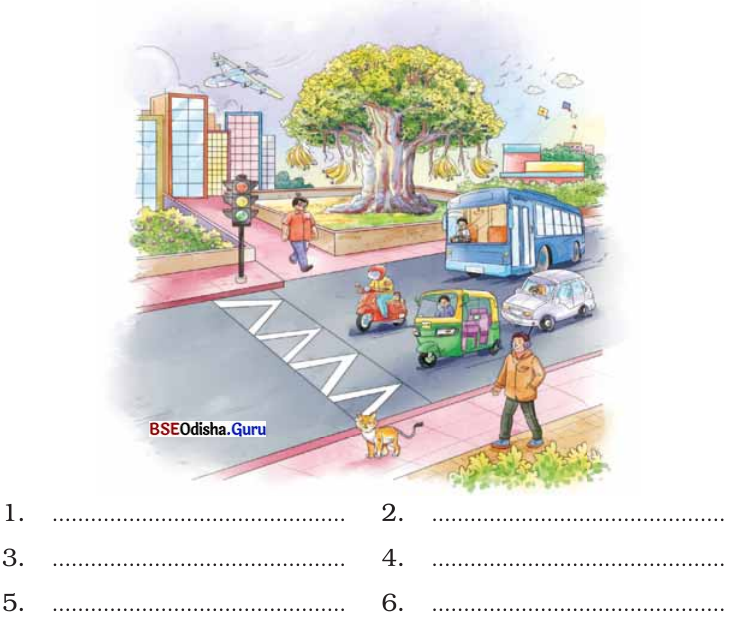
Answer:
Here are the six errors typically found in that traffic scene:
1. A Zebra with a cat’s tail: You will see a zebra in the picture that has a tail belonging to a cat.
2. An aeroplane flying upside down: Look at the sky; the plane is not flying the right way up.
3. Bananas hanging on a banyan tree: Look at the large banyan tree, it has bananas growing on it instead of its own fruit.
4. A man with antennae on his headphones: There is a person walking with headphones, but the headphones have strange antennae (like a radio or an insect) on them.
5. All traffic lights glowing at once: In a real traffic signal, only one light (Red, Yellow, or Green) should be on, but here they are all working at the same time.
6. A zigzag zebra crossing: Instead of straight white lines, the zebra crossing on the road is drawn in a zigzag pattern.
Just for Fun
କେଉଁ ଜିନିଷ ‘T’ ରୁ ଆରମ୍ଭ ହୁଏ, ‘T’ ରେ ଶେଷ ହୁଏ ଏବଂ ତା ଭିତରେ ପୂରା ‘T’ ଭର୍ତ୍ତି ହୋଇଥାଏ ?
Answer:
A Teapot
Why?
It starts with the letter ‘T’.
It ends with the letter ‘T’.
It is full of ‘Tea’ (which sounds like the letter ‘T’!).
Be Smart, Be Safe Class 5 Summary
Pre-reading
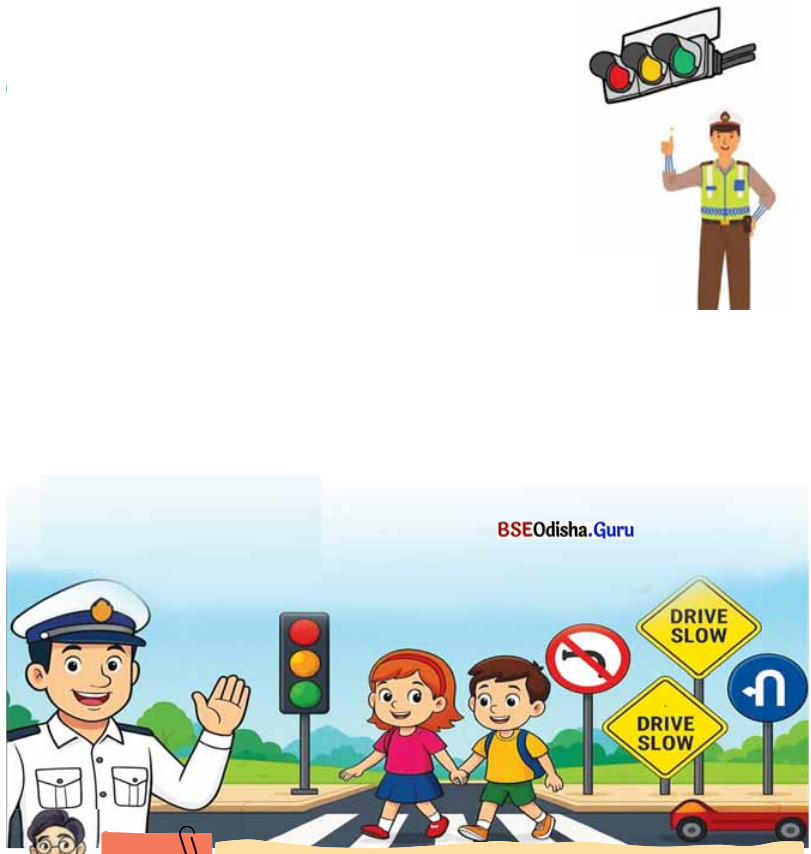
Red light red light,
What do you say?
“Stop, stop right way !”
ରେଡ୍ ଲାଇଟ୍ ରେଡ୍ ଲାଇଟ୍, ହାଟ୍ ଡୁ ୟୁ ସେ ?
“ଷ୍ଟପ୍, ଷ୍ଟପ୍ ରାଇଟ୍ ୱେ !”
ଅନୁବାଦ : ନାଲି ଆଲୁଅ ନାଲି ଆଲୁଅ, ତୁମେ କ’ଣ କହୁଛ ?
“ଅଟକି ଯାଅ, ସାଙ୍ଗେ ସାଙ୍ଗେ ଅଟକି ଯାଅ !”
Green light, green light,
What do you say?
“Go, go right away !”
ଗ୍ରୀନ୍ ଲାଇଟ୍, ଗ୍ରୀନ୍ ଲାଇଟ୍,
ଦ୍ଵାଟ୍ ଡୁ ୟୁ ସେ ?
“ଗୋ, ଗୋ ରାଇଟ୍ ଆୱେ !”
ଅନୁବାଦ :
ସବୁଜ ଆଲୁଅ, ସବୁଜ ଆଲୁଅ, ତୁମେ କ’ଣ କହୁଛ ?
“ଯାଅ, ଏଇକ୍ଷଣି ଯାଅ !”
Yellow light, yellow light,
What do you say ?”
“Wait till the light
Turns green, hooray !”
ୟେଲୋ। ଲାଇଟ୍, ୟେଲୋ ଲାଇଟ୍,
ହାଟ୍ ଡୁ ୟୁ ସେ ?”
“ୱେଟ୍ ଟିଲ୍ ଦ ଲାଇଟ୍
ଟର୍ନସ୍ ଗ୍ରୀନ୍, ହୁରେ !”
ଅନୁବାଦ : ହଳଦିଆ ଆଲୁଅ, ହଳଦିଆ ଆଲୁଅ,
ତୁମେ କ’ଣ କହୁଛ ?
“ଆଲୁଅ ସବୁଜ ହେବା ପର୍ଯ୍ୟନ୍ତ ଅପେକ୍ଷା କର, ହୁରେ !”
While-reading
Let us Recite:
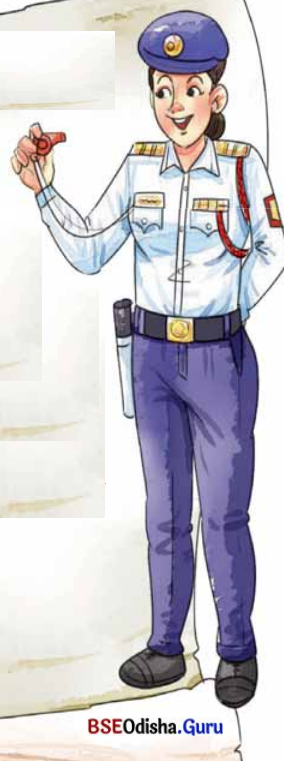
Dear Children,
Namaste ! How are you all ? I’m sure you are happy and safe, and enjoying school.
ଡିଅର୍ ଚିଲଡ୍ରେନ୍, ନମସ୍ତେ ! ହାଓ ଆର୍ ୟୁ ଅଲ୍ ? ଆଇ ଆମ୍ ସିଓର୍ ୟୁ ଆର୍ ହ୍ୟାପି ଆଣ୍ଡ ସେଫ୍, ଆଣ୍ଡ ଏନ୍ଜୟିଙ୍ଗ୍ ସ୍କୁଲ୍.
ଅନୁବାଦ : ପ୍ରିୟ ପିଲାମାନେ, ନମସ୍କାର ! ତୁମେମାନେ ସମସ୍ତେ
କିପରି ଅଛ ? ମୁଁ ନିଶ୍ଚିତ ଯେ ତୁମେମାନେ ଖୁସିରେ ଏବଂ ସୁରକ୍ଷିତ
ଥିବ, ଏବଂ ସ୍କୁଲ୍କୁ ଉପଭୋଗ କରୁଥିବ ।
Some of you reach school on foot, some by bicycle
and others by bus.
ସମ୍ ଅଫ୍ ୟୁ ରିଚ୍ ସ୍କୁଲ୍ ଅନ୍ ଫୁଟ୍, ସମ୍ ବାଇ ବାଇସାଇକଲ୍ ଆଣ୍ଡ ଅଦର୍ସ ବାଇ ବସ୍.
ଅନୁବାଦ : ତୁମ ମଧ୍ୟରୁ କେହି କେହି ଚାଲି ଚାଲି, କେହି ସାଇକେଲରେ ଏବଂ ଅନ୍ୟମାନେ ବସ୍ରେ ସ୍କୁଲ୍ରେ ପହଞ୍ଚୁଥିବ ।
You may have noticed that there is often a lot of traffic on roads. ୟୁ ମେ ହ୍ୟାଭ୍ ନୋଟିସ୍ ଦ୍ୟାଟ୍ ଦେଆର୍ ଇଜ୍ ଅଫନ୍ ଏ ଲଟ୍ ଅଫ୍ ଟ୍ରାଫିକ୍ ଅନ୍ ରୋଡସ୍.
ଅନୁବାଦ : ତୁମେମାନେ ଲକ୍ଷ୍ୟ କରିଥିବ ଯେ ରାସ୍ତାରେ ପ୍ରାୟତଃ ଅନେକ ଯାନବାହନ (ଟ୍ରାଫିକ୍) ଥାଏ ।
Roads can be busy and, at times, dangerous. We, the traffic police, are
here to keep you safe on the roads.
ରୋଡସ୍ କ୍ୟାନ୍ ବି ବିଜି ଆଣ୍ଡ, ଆଟ୍ ଟାଇମ୍ବ, ଡେଞ୍ଜରସ୍. ୱି, ଦି ଟ୍ରାଫିକ୍ ପୋଲିସ୍, ଆର୍ ହିଅର୍ ଟୁ କିପ୍ ୟୁ ସେଫ୍ ଅନ୍ ଦି ରୋଡସ୍.
ଅନୁବାଦ : ରାସ୍ତାଗୁଡ଼ିକ ବ୍ୟସ୍ତବହୁଳ ଏବଂ ବେଳେବେଳେ ବିପଜ୍ଜନକ ହୋଇପାରେ । ଆମେ, ଟ୍ରାଫିକ୍ ପୋଲିସ୍, ତୁମକୁ ରାସ୍ତାରେ ସୁରକ୍ଷିତ ରଖିବା ପାଇଁ ଏଠାରେ ଅଛୁ ।
So, we want to share some important safety tips to help you stay safe while walking on, or crossing the streets.
ସୋ, ୱି ୱାଣ୍ଟ୍ ଟୁ ସେୟାର୍ ସମ୍ ଇମ୍ପୋଟାଣ୍ଟ ସେପ୍ଟି ଟିପ୍ସ ଟୁ ହେଲ୍ସ ୟୁ ଷ୍ଟେ ସେଫ୍ ସ୍ପାଇଲ୍ ୱାକିଙ୍ଗ୍ ଅନ୍, ଅର୍ କ୍ରସିଙ୍ଗ୍ ଦି ଷ୍ଟ୍ରିଟସ୍.
ଅନୁବାଦ : ତେଣୁ, ରାସ୍ତାରେ ଚାଲିବା ବା ପାର ହେବା ସମୟରେ ତୁମକୁ ସୁରକ୍ଷିତ ରହିବାରେ ସାହାଯ୍ୟ କରିବା ପାଇଁ ଆମେ କିଛି ଗୁରୁତ୍ବପୂର୍ଣ୍ଣ ସୁରକ୍ଷା ନିୟମ ଜଣାଇବାକୁ ଚାହୁଁଛୁ ।
By following these simple rules, you can keep yourself safe and help us keep the roads accident-free. Let’s work together to make our roads safer for everyone.
ବାଇ ଫଲୋଇଙ୍ଗ୍ ଦିଜ୍ ସିମ୍ପଲ୍ ରୁଲ୍ସ, ୟୁ କ୍ୟାନ୍ କିପ୍ ୟୋରସେଲ୍ଫ ସେଫ୍ ଆଣ୍ଡ ହେଲ୍ସ ଅସ୍ କିପ୍ ଦି ରୋଡସ୍ ଆକ୍ସିଡେଣ୍ଟ୍-ଫ୍ରି. ଲେନ୍ସ ୱାର୍କ ଟୁଗେଦର୍ ଟୁ ମେକ୍ ଆୱାର୍ ରୋଡସ୍ ସେଫର୍ ଫର୍ ଏଗ୍ରିୱାନ୍.
ଅନୁବାଦ : ଏହି ସରଳ ନିୟମଗୁଡ଼ିକୁ ମାନିବା ଦ୍ବାରା, ତୁମେ ନିଜକୁ ସୁରକ୍ଷିତ ରଞ୍ଝାପାରିବ ଏବଂ ରାସ୍ତାକୁ ଦୁର୍ଘଟଣାମୁକ୍ତ ରଖିବାରେ ଆମକୁ ସାହାଯ୍ୟ କରିପାରିବ । ଆସ, ସମସ୍ତଙ୍କ ପାଇଁ ଆମ ରାସ୍ତାକୁ ଅଧିକ ସୁରକ୍ଷିତ କରିବାକୁ ଆମେ ଏକାଠି କାମ କରିବା ।
Be careful and stay safe,
With Best Wishes,
The Traffic Police
Bharat
ବି କେୟାରଫୁଲ୍ ଆଣ୍ଡ ଷ୍ଟେ ସେଫ୍,
ୱିଥ୍ ବେଷ୍ଟ୍ ୱିଶେସ୍,
ଦି ଟ୍ରାଫିକ୍ ପୋଲିସ୍
ଭାରତ.
ଅନୁବାଦ : ସାବଧାନ ରୁହ ଏବଂ ସୁରକ୍ଷିତ ରୁହ । ଶୁଭେଚ୍ଛା ସହିତ, ଟ୍ରାଫିକ୍ ପୋଲିସ୍ ଭାରତ ।
Post-reading
VISUAL MEMORY DEVELOPMENT TECHNIQUE (VMDT):
Whole: safety tips by traffic police, traffic lights, footpaths, moving vehicles, headphones, reflective stickers (Rule-5 and Rule-6)
Part: mobile phones or head phones, reflexive stickers distract you from traffic sounds
Answer:
Using the Visual Memory Development Technique (VMDT) helps you lock these safety rules into your mind by connecting the Whole picture with specific Parts. Here is a breakdown of those rules in simple sentences to help you memorize them:
The Whole Picture: Safety Rules
- Safety Tips: The traffic police give us tips to keep us safe from accidents.
- Traffic Lights: We must always follow the red, yellow, and green traffic lights.
- Footpaths: Always walk on the footpath to stay away from moving vehicles.
The Part Focus: Rules 5 & 6
Rule 5 (Distractions) :
- Do not use mobile phones or headphones while walking or crossing.
- These distract you from the sound of traffic and horns.
Rule 6 (Visibility):
- Wear reflective stickers or bright clothes at night.
- These help drivers see you clearly in the dark.
Picture the Color:
- Associate Red with the Headphones (Stop/Danger)
Picture the Glow:
- Associate Silver/Neon with the Reflective Stickers (Safety/Visibility)
Memory Tip:
Imagine a Whole street scene in your head. Now, zoom in on the Part-a student putting away their headphones and putting on a reflective sticker to stay safe!
Be Smart, Be Safe Summary in English
The extract is a letter from the Traffic Police of Bharat to school children, giving road safety tips in simple language. The police greet the children; hope they are happy and safe. They remind them that roads are often very busy and dangerous because of heavy traffic. They say their duty is to keep everyone safe on the road. They want children to follow some easy rules while walking on or crossing streets, so that roads can be accident-free for all.
They give six clear rules under the heading Road Safety Tips for Little Feet.
Rule 1 says that children should always use the zebra crossing, the black and white strip on the road, and must look right, then left, then right again, and cross only when no vehicles are coming.
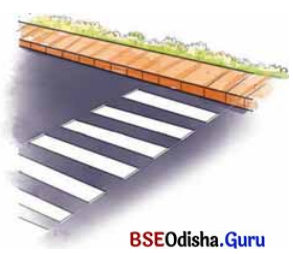
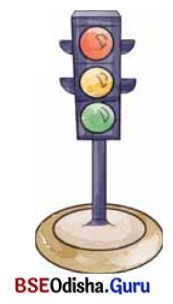
Rule 2 tells them to follow traffic lights, wait for the pedestrian signal to turn green, and never run but walk calmly while crossing.
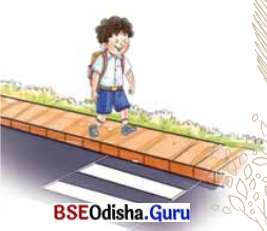
Rule 3 tells them to walk on footpaths because these are meant for pedestrians and keep them away from moving vehicles.
Rule 4 advises children to hold an adult’s hand while walking near the road, especially during crossing.
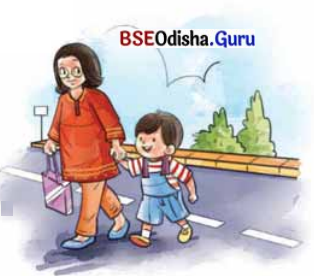
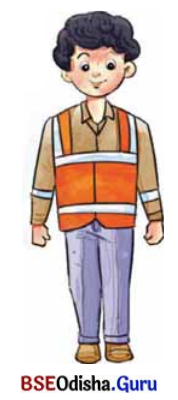
Rule 5 says they should use reflective stickers on their clothes in the evening or dark so drivers can see them clearly.
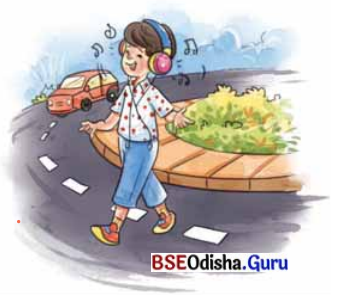
Rule 6 asks them to be alert, not play near roads, and avoid using headphones or mobile phones while near traffic as these cause distraction.
At the end, the traffic police request children to follow these rules and work together with them to make roads safer and keep everyone safe from accidents.
Be Smart, Be Safe Summary in Odia
ଏହି ଲେଖାଟି ହେଉଛି ଭାରତର ଟ୍ରାଫିକ୍ ପୋଲିସ୍ଙ୍କ ତରଫରୁ ସ୍କୁଲ୍ ପିଲାମାନଙ୍କ ପାଇଁ ଏକ ଚିଠି, ଯେଉଁଥରେ ସହଜ ଭାଷାରେ ରାସ୍ତା ସୁରକ୍ଷା ନିୟମ ବିଷୟରେ କୁହାଯାଇଛି ।
ପୋଲିସ୍ ପିଲାମାନଙ୍କୁ ଶୁଭେଚ୍ଛା ଜଣାଇଛନ୍ତି ଏବଂ ଆଶା କରିଛନ୍ତି ଯେ ସେମାନେ ଖୁସି ଓ ସୁରକ୍ଷିତ ଥବେ । ସେମାନେ ମନେ ପକାଇ ଦେଇଛନ୍ତି ଯେ ପ୍ରବଳ ଭିଡ଼ ଯୋଗୁଁ ରାସ୍ତାଗୁଡ଼ିକ ପ୍ରାୟତଃ ବହୁତ ବ୍ୟସ୍ତ ଏବଂ ବିପଜ୍ଜନକ ରହିଥାଏ । ସେମାନେ କହିଛନ୍ତି ଯେ ରାସ୍ତାରେ ସମସ୍ତଙ୍କୁ ସୁରକ୍ଷିତ ରଖୁବା ହେଉଛି ସେମାନଙ୍କର କର୍ତ୍ତବ୍ୟ । ସେମାନେ ଚାହାଁନ୍ତି ଯେ ପିଲାମାନେ ରାସ୍ତାରେ ଚାଲିବା ବା ପାରି ହେବା ସମୟରେ କିଛି ସହଜ ନିୟମ ପାଳନ କରନ୍ତୁ, ଯାହା ଦ୍ବାରା ରାସ୍ତା ସମସ୍ତଙ୍କ ପାଇଁ ଦୁର୍ଘଟଣାମୁକ୍ତ ହୋଇପାରିବ ।
“କୁନି ପାଦ ପାଇଁ ରାସ୍ତା ସୁରକ୍ଷା ଟିପ୍ପ” ଶୀର୍ଷକରେ ସେମାନେ ଛଅଟି ସ୍ପଷ୍ଟ ନିୟମ ଦେଇଛନ୍ତି :
ନିୟମ – ୧ : ପିଲାମାନେ ସବୁବେଳେ ରାସ୍ତାରେ ଥିବା କଳା ଓ ଧଳା ଗାର (ଜେବ୍ରା କ୍ରସିଂ) ବ୍ୟବହାର କରିବା ଉଚିତ୍ । ରାସ୍ତା ପାର ହେବା ପୂର୍ବରୁ ପ୍ରଥମେ ଡାହାଣକୁ, ତା’ପରେ ବାମକୁ ଏବଂ ପୁଣି ଡାହାଣକୁ ଦେଖିବା ଦରକାର । କୌଣସି ଗାଡ଼ି ଆସୁନଥିଲେ ହିଁ ରାସ୍ତା ପାର୍ ହେବା ଉଚିତ୍ ।
ନିୟମ – ୨ : ଟ୍ରାଫିକ୍ ଲାଇଟ୍ ମାନି ଚଳିବା ଉଚିତ୍ । ପାଦଚାରୀଙ୍କ ସିଗନାଲ୍ (ଚାଲିକି ଯାଉଥିବା ଲୋକଙ୍କ ସିଗନାଲ୍) ସବୁଜ ହେବା ପର୍ଯ୍ୟନ୍ତ ଅପେକ୍ଷା କରନ୍ତୁ । ରାସ୍ତା ପାର ହେଲା ବେଳେ କେବେବି ଦୌଡ଼ନ୍ତୁ ନାହିଁ, ବରଂ ଶାନ୍ତ ଭାବରେ
ଚାଲି ଚାଲି ଯାଆନ୍ତୁ ।
ନିୟମ – ୩ : ଫୁଟପାଥ୍ରେ ଚାଲନ୍ତୁ କାରଣ ଏହା ପାଦଚାରୀମାନଙ୍କ ପାଇଁ ଉଦ୍ଦିଷ୍ଟ ଏବଂ ଏହା ସେମାନଙ୍କୁ ଚଳନ୍ତା ଗାଡ଼ିଠାରୁ ଦୂରରେ ରଖୁଥାଏ ।
ନିୟମ – ୪ : ରାସ୍ତା ପାଖରେ ଚାଲିବା ସମୟରେ, ବିଶେଷ କରି ରାସ୍ତା ପାରି ହେବା ବେଳେ ବଡ଼ମାନଙ୍କ ହାତ ଧରିବା ପାଇଁ ପିଲାମାନଙ୍କୁ ପରାମର୍ଶ ଦିଆଯାଇଛି ।
ନିୟମ – ୫ : ସନ୍ଧ୍ୟାରେ କିମ୍ବା ଅନ୍ଧାରରେ ସେମାନେ ନିଜ ପୋଷାକରେ ରିଫ୍ଲେକ୍ଟିଭ୍ (ଚମକୁଥିବା) ଷ୍ଟିକର୍ ବ୍ୟବହାର କରିବା ଉଚିତ୍ ଯାହାଦ୍ବାରା ଡ୍ରାଇଭରମାନେ ସେମାନଙ୍କୁ ସ୍ପଷ୍ଟ ଭାବରେ ଦେଖିପାରିବେ ।
ନିୟମ – ୬ : ସବୁବେଳେ ସତର୍କ ରହନ୍ତୁ, ରାସ୍ତା ପାଖରେ ଖେଳନ୍ତୁ ନାହିଁ ଏବଂ ଟ୍ରାଫିକ୍ ପାଖରେ ଥିବାବେଳେ ହେଡଫୋନ୍ କିମ୍ବା ମୋବାଇଲ୍ ଫୋନ୍ ବ୍ୟବହାର କରନ୍ତୁ ନାହିଁ, କାରଣ ଏହା ଧାନ ଭଙ୍ଗ କରିଥାଏ ।
ଶେଷରେ, ଟ୍ରାଫିକ୍ ପୋଲିସ୍ ପିଲାମାନଙ୍କୁ ଏହି ନିୟମଗୁଡ଼ିକ ପାଳନ କରିବାକୁ ଅନୁରୋଧ କରିଛନ୍ତି ଏବଂ ରାସ୍ତାକୁ ଅଧ୍ବକ ସୁରକ୍ଷିତ କରିବା ତଥା ସମସ୍ତଙ୍କୁ ଦୁର୍ଘଟଣାରୁ ରକ୍ଷା କରିବା ପାଇଁ ମିଳିମିଶି କାମ କରିବାକୁ କହିଛନ୍ତି ।
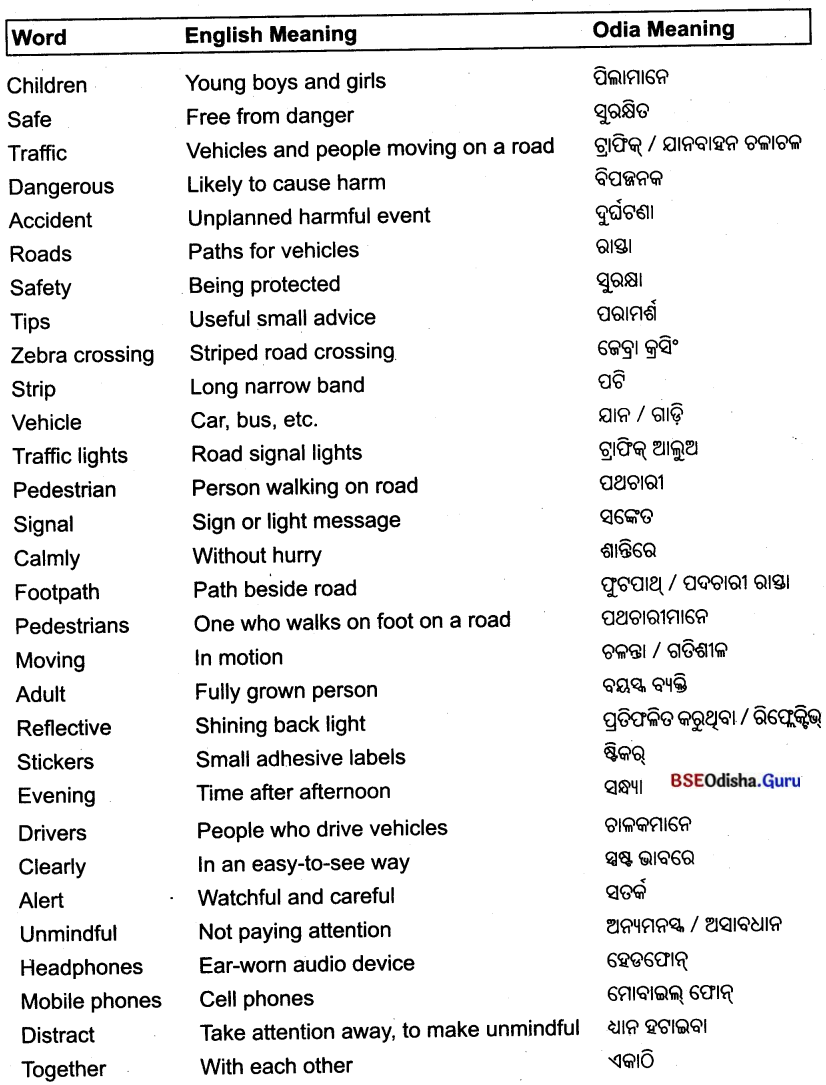
Notes and Glossary:
Be Smart, Be Safe Class 5 Extract Based Questions
Read the following extracts and answer the questions that follow.
(I)
You may have noticed that there is often a lot of traffic on roads. Roads can be busy and, at times, dangerous. We, the traffic police, are here to keep you safe on the roads. So, we want to share some important safety tips to help you stay safe while walking on, or crossing the streets.
By following these simple rules, you can keep yourself safe and help us keep the roads accident-free. Let’s work together to make our roads safer for everyone.
Question 1.
What is the main purpose of traffic police sharing safety tips?
(a) To make roads busier
(b) To keep children safe on roads
(c) To stop all vehicles
(d) To build more roads
Answer:
(b) To keep children safe on roads
Question 2.
How can children help make roads accident-free?
(a) By ignoring traffic
(b) By following simple safety rules
(c) By walking in the middle of roads
(d) By running across streets
Answer:
(b) By following simple safety rules
Question 3.
Why are roads sometimes dangerous?
Answer:
Roads can be busy with lots of traffic.
Question 4.
Who keeps children safe on roads?
Answer:
Traffic police keep children safe on roads.
(II)
RULE – 1: ALWAYS USE THE ZEBA CROSSING :
When you need to cross the road, look for a black and white strip which is known as ‘Zebra Crossing’. Look right, then left, again right to ensure that no vehicles are coming. Cross only when it’s safe.
RULE – 2: FOLLOW THE TRAFFIC LIGHTS
Traffic lights are placed on very busy roads to control movement. Wait for the pedestrian signal to turn green before crossing. Never run across the road. It’s safer to walk calmly!
Question 1.
What is a zebra crossing?
(a) A red light signal
(b) Black and white strip on road
(c) A footpath for walking
(d) Reflective stickers on clothes
Answer:
(b) Black and white strip on road
Question 2.
What should you do at traffic lights?
(a) Run across quickly
(b) Wait for green pedestrian signal
(c) Cross without looking
(d) Ignore the lights
Answer:
(b) Wait for green pedestrian signal
Question 3.
How to check before crossing a zebra crossing?
Answer:
Look right, left, and again right.
Question 4.
Why walk calmly at traffic lights?
Answer:
It is safer to walk calmly.
(III)
RULE – 3: WALK OF THE FOOTPATHS
Footpaths are meant for pedestrians. Always walk on them and stay away from moving vehicles.
RULE – 4: HOLD AN ADULT’S HAND
If you are walking near the road, always hold an adult’s hand, especially while crossing the road.
Question 1.
What are footpaths meant for?
(a) For vehicles to park
(b) For pedestrians to walk
(c) For playing games
(d) For bicycles only
Answer:
(b) For pedestrians to walk
Question 2.
When should you hold an adult’s hand?
(a) Only while playing
(b) While walking near the road
(c) Only in school
(d) Never, walk alone
Answer:
(b) While walking near the road
Question 3.
Why walk on footpaths?
Answer:
Stay away from moving vehicles.
Question 4.
Where to hold an adult’s hand, especially?
Answer:
Especially while crossing the road.
(IV)
RULE – 5: USE REFLECTIVE STICKERS IN THE DARK
If you are walking on a road in the evening, put some reflective stickers on your clothes so that the drivers can see you clearly.
RULE – 6 : BE ALERT
Do not play or be unmindful near roads. Also, avoid using headphones or mobile phones while driving. These can distract you from traffic sounds.
Question 1.
Why use reflective stickers on clothes?
(a) To look colorful
(b) So drivers can see you clearly
(c) To play in the dark
(d) For school uniform
Answer:
(b) So drivers can see you clearly
Question 2.
What should you avoid near roads?
(a) Walking calmly
(b) Using headphones or mobile phones
(c) Holding an adult’s hand
(d) Staying alert
Answer:
(b) Using headphones or mobile phones
Question 3.
When to use reflective stickers?
Answer:
Walking on road in evening.
Question 4.
Why avoid headphones near roads?
Answer:
They distract from traffic sounds.
Be Smart, Be Safe Class 5 MCQ
Question 1.
Who is the sender of this message to the children?
(a) The School Principal
(b) The Traffic Police
(c) A Doctor
(d) A Parent
Answer:
(b) The Traffic Police
Question 2.
How do the children reach school according to the text?
(a) On foot
(b) By bicycle
(c) By bus
(d) All of the above
Answer:
(d) All of the above
Question 3.
What is the main purpose of the traffic police?
(a) To give homework
(b) To keep children safe on roads
(c) To sell bicycles
(d) To build new roads
Answer:
(b) To keep children safe on roads
Question 4.
What are the black and white strips on the road called?
(a) Tiger Crossing
(b) Zebra Crossing
(c) Horse Crossing
(d) White Lines
Answer:
(b) Zebra Crossing
Question 5.
According to Rule 1, in which order should you look before crossing?
(a) Left, then right
(b) Right, then left, then right again
(c) Only straight ahead
(d) Left, then right, then left again
Answer:
(b) Right, then left, then right again
Question 6.
What is the purpose of traffic lights?
(a) To make the road look colourful
(b) To control movement on busy roads
(c) To provide light at night
(d) To help trees grow
Answer:
(b) To control movement on busy roads
Question 7.
When should a pedestrian cross the road at a signal?
(a) When the light is red
(b) When the pedestrian signal turns green
(c) When the light is yellow
(d) Whenever they are in a hurry
Answer:
(b) When the pedestrian signal turns green
Question 8.
How should you move across the road?
(a) Run as fast as possible
(b) Jump across
(c) Walk calmly
(d) Close your eyes and walk
Answer:
(c) Walk calmly
Question 9.
Footpaths are specifically meant for:
(a) Moving vehicles
(b) Pedestrians
(c) Parking cars
(d) Playing cricket
Answer:
(b) Pedestrians
Question 10.
What should you do while walking near the road if you are a child?
(a) Run ahead of everyone
(b) Hold an adult’s hand
(c) Hide behind cars
(d) Walk in the middle of the road
Answer:
(b) Hold an adult’s hand
Question 11.
When are reflective stickers most useful?
(a) In the bright morning
(b) In the dark or evening
(c) During a rainy afternoon
(d) Inside the classroom
Answer:
(b) In the dark or evening
Question 12.
Why should you use reflective stickers?
(a) To look fashionable
(b) So drivers can see you clearly
(c) To keep your clothes clean
(d) To keep yourself warm
Answer:
(b) So drivers can see you clearly
Question 13.
Rule 6 advises children not to be _____ near roads.
(a) Alert
(b) Unmindful
(c) Careful
(d) Safe
Answer:
(b) Unmindful
Question 14.
What can distract you from hearing traffic sounds?
(a) Wearing a hat
(b) Carrying a school bag
(c) Using headphones or mobile phones
(d) Wearing spectacles
Answer:
(c) Using headphones or mobile phones
Question 15.
The letter is signed off with the name:
(a) Arjun
(b) Bharat
(c) Vijay
(d) Ravi
Answer:
(b) Bharat
Question 16.
What is the main goal of working together with the police?
(a) To make roads busier
(b) To make roads accident-free
(c) To stop all cars
(d) To close the roads
Answer:
(b) To make roads accident-free
Question 17.
When should you cross at traffic lights?
(a) When vehicles move fast
(b) When the pedestrian signal turns green
(c) When the red light is on for vehicles
(d) Anytime you want
Answer:
(b) When the pedestrian signal turns green
Question 18.
Where should pedestrians always walk?
(a) In the middle of the road
(b) On the footpaths
(c) On the zebra stripes only
(d) Near moving vehicles
Answer:
(b) On the footpaths
Question 19.
Why should children use reflective stickers in the dark?
(a) To decorate their clothes
(b) So drivers can see them clearly
(c) To play games
(d) To follow school rules
Answer:
(b) So drivers can see them clearly
Question 20.
What should children avoid near roads to stay alert?
(a) Talking to friends
(b) Wearing school uniform
(c) Using headphones or mobile phones
(d) Carrying a school bag
Answer:
(c) Using headphones or mobile phones
Be Smart, Be Safe Class 5 Fill in the blanks
1. Traffic police greet children with _____ !
Answer: Namaste
2. Zebra crossing is a ______ and white strip on the road.
Answer: black
3. Before crossing, look rights, then left, ______ right.
Answer: again
4. Traffic lights are on very ______ roads.
Answer: busy
5. Wait for the pedestrian signal to turn ______ before crossing.
Answer: green
6. ______ are meant for pedestrians only.
Answer: Footpaths
7. Always hold an ______ hand while crossing the road.
Answer: adult’s
8. Use ______ stickers on clothes in the dark.
Answer: reflective
9. Do not ______ or be unmindful near roads.
Answer: play
10. Avoid headphones as they distract from ______ sounds.
Answer: traffic
Be Smart, Be Safe Class 5 True or False
1. Zebra crossing is a red and blue strip on the road.
Answer: False.
2. Always look right, left, right before crossing at a zebra crossing.
Answer: True.
3. Traffic lights are only on quiet roads.
Answer: False.
4. Wait for the green pedestrian signal to cross at traffic lights.
Answer: True.
5. Footpaths are for vehicles to drive on.
Answer: False.
6. Hold an adult’s hand while crossing the road.
Answer: True.
7. Reflective stickers help drivers see you in the dark.
Answer: True.
8. Play games near roads to stay happy.
Answer: False.
9. Roads are always safe with no traffic.
Answer: False.
10. Avoid headphones near roads to hear traffic sounds.
Answer: True.
Be Smart, Be Safe Class 5 Very Short Answer Questions
Question 1.
What is a zebra crossing?
Answer:
A zebra crossing is a black and white strip on the road.
Question 2.
How should you look before crossing at a zebra crossing?
Answer:
You should look right, left, and right for safe crossing.
Question 3.
What do traffic lights control?
Answer:
Traffic lights control movement on busy roads.
Question 4.
When can you cross at traffic lights?
Answer:
You can cross when the pedestrian signal turns green.
Question 5.
Where should pedestrians always walk?
Answer:
Pedestrians should always walk on the footpaths.
Question 6.
Why hold an adult’s hand near roads?
Answer:
Holding an adult’s hand provides protection and prevents you from accidentally stepping into traffic.
Question 7.
What to use in the dark while walking?
Answer:
Wear reflective stickers or bright clothing to stay visible safely.
Question 8.
Why use reflective stickers in the evening?
Answer:
Reflective stickers make you visible to drivers in the dark.
Question 9.
What should you avoid near roads?
Answer:
Avoid using mobile phones, headphones, or playing near busy roads.
Question 10.
Why avoid headphones near roads?
Answer:
Headphones distract you from hearing approaching traffic sounds or horns.
Be Smart, Be Safe Class 5 Short Answer Questions
Question 1.
What greeting do the traffic police give to children?
Answer:
Namaste! They hope children are happy, safe, and enjoying school.
Question 2.
Why are roads sometimes dangerous for children?
Answer:
Roads are dangerous because fast vehicles, distractions like headphones, and poor visibility can cause serious accidents for children.
Question 3.
What is the role of traffic police?
Answer:
Traffic police manage traffic flow, ensure people follow safety rules, and provide essential tips to prevent road accidents.
Question 4.
Describe a zebra crossing and how to use it safely.
Answer:
A zebra crossing is a black-and-white striped path; only cross when traffic stops and you have a clear view both ways.
Question 5.
What should you do at traffic lights before crossing?
Answer:
Wait for the red light to stop vehicles, and then look both ways carefully before crossing on the green signal. Wait for green pedestrian signal and walk calmly.
Question 6.
Why are footpaths important for pedestrians?
Answer:
Footpaths provide a safe space away from vehicles, keeping pedestrians separated from traffic to prevent accidents and ensure smooth movement.
Question 7.
Why should you hold an adult’s hand?
Answer:
Holding an adult’s hand provides protection and prevents you from accidentally stepping into traffic or moving vehicles unexpectedly.
Question 8.
How do reflective stickers help in the evening?
Answer:
Reflective stickers make you glow in the dark, allowing drivers to see you clearly from a distance to avoid accidents.
Question 9.
What does ‘Be Alert’ rule advise against?
Answer:
The ‘Be Alert’ rule advises against using mobile phones or headphones, which distract you from hearing approaching vehicles or horns.
Question 10.
How can the rules make roads safer?
Answer:
Rules provide clear instructions that manage vehicle flow and pedestrian behavior, effectively reducing accidents and ensuring everyone’s personal safety.
Be Smart, Be Safe Class 5 Long Answer Questions
Question 1.
What do the traffic police say to children at the start?
Answer:
The traffic police greet children with Namaste! They say children are happy, safe, and enjoying school. Some go by foot, bicycle, or bus. They note busy roads with traffic and share safety tips.
Question 2.
Why do traffic police share road safety tips with children?
Answer:
Roads are busy and dangerous with lots of traffic. Traffic police keep children safe while walking or crossing streets. Following simple rules prevents accidents and makes roads safer for everyone.
Question 3.
Explain Rule 1: Always use the zebra crossing. How to cross safely?
Answer:
Zebra crossing is a black and white strip on road. Look right, then left, again right to check no vehicles. Cross only when safe. This keeps children protected from traffic.
Question 4.
Describe Rule 2 and Rule 3 for safe walking.
Answer:
Follow traffic lights: wait for green pedestrian signal and walk calmly, don’t run. Walk on footpaths meant for pedestrians. Stay away from moving vehicles to remain safe always.
Question 5.
What are Rules 4 and 5 for children’s safety?
Answer:
We should hold an adult’s hand if walking near a road, especially while crossing. Use reflective stickers on clothes in evening or dark. This helps drivers see children clearly and prevents accidents.
Question 6.
What does Rule 6 ‘Be Alert’ mean? Why is it important?
Answer:
Do not play or be unmindful near roads. Avoid headphones or mobile phones while walking. They distract from traffic sounds. Being alert keeps children safe from dangers.
Be Smart, Be Safe Class 5 Competency Based Questions
Question 1.
How would you apply Rule 1 to cross a busy school road safely? Explain steps.
Answer:
Find zebra crossing black-white strip. Look right, left, and right for no vehicles. Cross only when safe. This applies by checking traffic first, preventing accidents near school.
Question 2.
Analyze why Rule 2 and Rule 3 together make walking safer. Give reason.
Answer:
Traffic lights control busy roads; wait for green and walk calmly. Footpaths keep pedestrians away from vehicles. Together, they reduce risks from fast traffic and running.
Question 3.
If alone in evening, how can Rule 4 and Rule 5 protect you? Suggest actions.
Answer:
We should hold an adult’s hand if walking near a road, or stay alert. Put reflective stickers on clothes in evening or night for drivers to see. This protects from dark and crossing dangers.
Question 4.
Why is Rule 6 Be Alert important for children? Create a situation showing its use.
Answer:
Situation: Playing near road with headphones, children miss car horn. Rule 6 says be alert, no play or devices. It saves from distractions and accidents.