
Combining textbook study with BSE Odisha Class 6 Science Notes and Class 6 Science Curiosity Chapter 11 Nature’s Treasures Notes can make exam preparation more effective.
Nature’s Treasures Notes Class 6
Class 6 Science Curiosity Chapter 11 Notes
Air
A layer of air envelops the Earth, called the atmosphere, which is essential for our survival and extends up many kilometres.
Composition of Air
- Air is a mixture of gases surrounding the Earth.
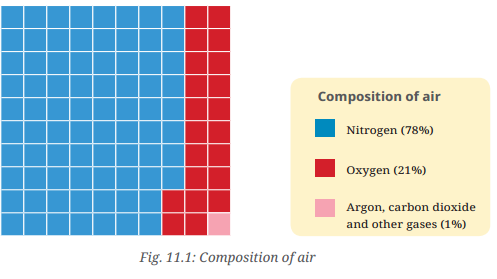
- It is composed of 78% nitrogen. 21% oxygen, and 1% other gases (argon, carbon dioxide, water vapour, and other gases).
Key Gases and their Importance
- Nitrogen: The most abundant gas in the atmosphere. It is essential for plant growth.
- Oxygen: Necessary for breathing and survival of living beings. It also supports burning.
- Carbon dioxide: Used by plants to make food and helps regulate the Earth’s temperature by trapping heat coming from the Sun.
- Water vapour: Contributes to humidity, drives the water cycle, and helps keep the atmosphere warm.

Harnessing Wind Energy
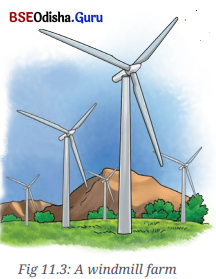
- Wind is moving air. When wind blows, it rotates the large blades of a windmill, which helps generate energy. This energy can be used for various purposes, including producing electricity. Many windmills are set up together in large open areas called wind farms.
- Some famous wind farms in India are Muppandal Wind Farm (Tamil Nadu), Jaisalmer Wind Farm (Rajasthan), and Brahmanvel Wind Farm (Maharashtra).
- Wind energy is a clean and renewable source of power that does not pollute the environment. India is the fourth-largest country in the world in wind power capacity.
Water
- Water is indispensable for life and is required to perform daily activities. It is important for plant growth, agriculture, industries, and regulating the Earth’s temperature and climate.
- The Earth is called the “Blue Planet” because about two-thirds of its surface is covered with water.
- Most of the Earth’s water is saline or salty (present in oceans and seas) and cannot be used for domestic, farming and industrial purposes.
- For all these, freshwater is required, which is found in ponds, rivers, kikes, underground sources (groundwater – part of rainwater that seeps into the ground through the soil and collects between the rocks), and in (lie form ol ice.
Water Pollution
- Water pollution is a serious problem that makes water unsafe for use. It is caused by plastic waste, household waste, and other litter thrown into water bodies.
- Chemicals from industries and agricultural waste (like fertilisers) also pollute water when released without proper treatment.
- Since freshwater is limited (less than 1%), pollution worsens water shortages. Therefore, we must prevent water pollution and use water wisely.
Water Conservation
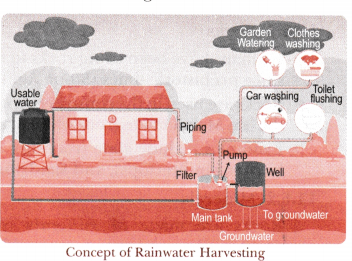
- Rainwater harvesting is an effective method to conserve water. It involves collecting rainwater from rooftops of houses and other buildings and storing it for future use.
- Rainwater harvesting is a traditional practice in India, especially important in dry regions like Rajasthan and Gujarat. Stepwells, known as Bawadis in Rajasthan or Vavs in Gujarat, are built for storing rainwater and help in recharging groundwater.
Solar Energy
- The Sun is the ultimate source of energy for life and daily activities on Earth. Plants use sunlight to make their food (photosynthesis), which supports all living beings.
- Sunlight keeps us warm, especially during cold weather. It also gives us light, enabling us to see and carry out daily activities, like drying of clothes.
Harnessing Solar Energy
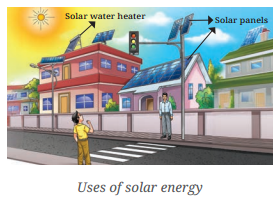
- Solar energy is obtained from the Sun’s rays and can be used to generated heat and electricity through solar panels, n It is a clean, renewable source of energy.
- The Indian government encourages the use of solar energy by providing subsidies for installing solar panels.
Forests
- A forest is a dense area with a wide variety of plants and animals. Forests are called the Earth’s “green lungs” for the vast amount of oxygen released by the plants.
- They also regulate the climate, prevent soil erosion, and provide food and shelter to many animals, birds, and insects, as well as timber and medicines for humans.
Deforestation
Clearing of land by cutting trees is called deforestation, which leads to loss of natural resources, soil erosion, landslides (due to loss of tree roots), and other harmful effects, on the environment.
Conservation of Forests
- Plant more trees (afforestation) and educate people about the importance of forests.
- Prevent overgrazing by cattle.
- Control forest fires using anti-fire measures.
- Recycle paper to reduce the cutting of trees, n Promote alternate energy sources; reduce firewood use.
The Chipko Movement, started in the 1970s in Uttarakhand, was led by local women who hugged trees to prevent them from being cut down. It was a protest against commercial logging and deforestation. Leaders like Chandi Prasad Bhatt, Sunderlal Bahuguna, and Gaura Devi played key roles in the movement.
Van Mahotsav (the festival of trees) is celebrated during the first week of July to encourage tree planting and forest conservation. The festival aims to increase green cover by actively involving local communities and government agencies in creating a greener, cleaner India.
Soil
- Soil forms the topmost layer of the Earth’s surface and consists of organic and inorganic materials.
- Soil supports plant growth by allowing roots to grow, access air, and absorb water and nutrients. It is also home to organisms (like earthworms) and microbes that enrich soil fertility.
- It is replenished by the decay of organic matter and by nutrient recycling.
- It forms from the slow disintegration (breaking apart or weathering) of rocks over thousands of years by the Sun, wind, water, and living organisms.
Rocks and Minerals
Rocks
- Humans have been using rocks to make tools like arrowheads and axes since prehistoric times (Stone Age).
- Rocks are used in the construction of houses, buildings, monuments (like the Taj Mahal made from white marble), roads, dams, and table tops.
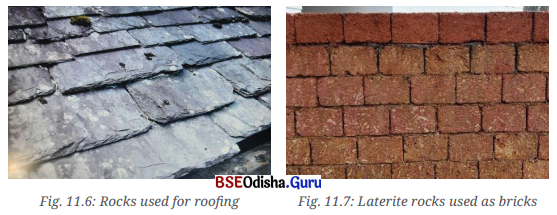
- Examples include slate (roofing), laterite (brick-making), granite (for kitchen countertops), and sandstone.
Minerals
- Rocks are made of minerals (solid, naturally occurring substances with specific chemical compositions and structures), which can consist of a single or a combination of elements, n a Several important metals come from minerals, including aluminium, gold, copper, iron, quartz, and calcite (limestone).
- Minerals are essential in everyday products, playing a key role in manufacturing airplanes, jewellery, electronics, automobiles, and cosmetics.
Conservation and Responsible Use
- Rocks and minerals take millions of years to form, so they must be conserved and used responsibly.
- Mining can harm the environment, cause deforestation, soil erosion, groundwater contamination, and habitat destruction, thus making sustainable mining practices crucial.Mineral resources are unevenly distributed, so their extraction and transportation must be done carefully.
Fossil Fuels
Fossil fuels (petrol, diesel, natural gas now used in the form of CNG) are natural resources formed from the remains of ancient plants and microorganisms over millions of years. These fuels were formed under extreme heat and pressure deep inside the Earth and are the major sources of energy used worldwide.
Coal and Petroleum
- Coal is widely used in production of cement, steel, and electricity generation, a Petrol, diesel, and kerosene are derived from petroleum.
CNG (Compressed Natural Gas) - Natural gas is formed through the same process as petroleum and is found near petroleum reserves.
- It produces fewer harmful emissions and less smoke compared to other fossil fuels.
- Used for transportation, cooking, and electricity generation.
Natural Resources: Renewable and Non-renewable
The materials that we use to meet our daily needs are known as resources. Resources provided by nature are called natural resources. They are broadly classified into two categories:
| Basis of Difference | Renewable Resources | Non-renewable Resources |
| Meaning | Natural resources that can regenerate or replenish themselves over time. | Natural resources that exist in limited quantities and cannot be replenished within a human lifetime., |
| Availability | Available continuously and can be used repeatedly | Available in fixed amounts and are depleted with use |
| Formation Time | Replenished naturally in a short period | Formed over millions of years |
| Rate of
Replenishment |
Replaced by nature at the same or faster rate than consumption | Cannot be replaced at the same rate as they are consumed |
| Examples | Water, sunlight, air, and forests | Coal, petroleum, natural gas, rocks, minerals, and soil |
| Risk of Depletion | Less risk if used responsibly | High risk of exhaustion once used |
Resources made by human beings to meet their needs are called human-made resources (like bulbs, cars, etc.).
Nature’s Treasures
Resources are nature’s treasures that we need for our survival and for making our lives more comfortable.
Natural Resources: Resources provided by nature
Renewable Resources: Resources that get renewed, replenished or restored within a reasonable period of time
Air
- Mixture of gases
- Contains 78% nitrogen, 21% oxygen, and 1% argon, carbon dioxide and other gases.
- Present around us in a thin layer called the atmosphere.
- Windmills harness wind (moving air) energy to generate electricity.
Water
- Covers about two-thirds of the Earth’s surface
- Most of the water found in large water bodies is saline and thus unsuitable for daily use; very small fraction of water is usable, which is called freshwater.
- Water Pollution: Contamination of water by harmful substances, making it unfit for use.
- Rainwater harvesting is a wise method for conserving water.
Energy from the sun
- The Sun is the ultimate source of energy for all living beings on Earth.
- Plants get energy from the Sun and produce food, which are then eaten by animals.
- Solar energy can be used to generate electricity using solar panels.
Forests
- A dense area where we find a large variety of plants and animals.
- Forest cover is decreasing due to human activities like large-scale cutting of trees (deforestation).
- Van Mahotsav is a tree-planting festival celebrated in India which aims to promote awareness about the importance of forests and encourages planting and conservation of trees.
Human-made Resources
Resources created by human beings to meet their needs are called human-made resources. Humans use natural resources to make many useful things like light bulbs, furniture, machines, bicycles, etc.
Non-renewable Resources: Resources which are found in limited quantities, and once used, get exhausted
Soil, Rocks, and Minerals
- Soil is formed by the disintegration (weathering) of rocks and is a precious treasure that supports biodiversity.
- Rocks are made up of minerals apd takes thousands to millions of years to form.
- Important metals, like gold, copper, and iron are extracted from minerals.
- Mining is the process of extracting minerals.
Fossil Fuels
- Formed from the remains of microorganisms and plants.
- Petrol, diesel, and kerosene are obtained from petroleum.
- Coal is used for the production of electricity.
- Natural gas is used in the form of Compressed Natural Gas (CNG) for cooking and in vehicles as fuel.
- When fossil fuels are burned, smoke and carbon dioxide are produced which cause air pollution.
Sustainable use of natural resources means using them judiciously so that they are available for future generations.