
For effective revision, students can use BSE Odisha Class 8 English Solutions Chapter 2 A Concrete Example Question Answer to practice textbook exercises.
Class 8 English A Concrete Example Question Answer
Class 8 English Chapter 2 Question Answer Odia Medium
Let us do these activities before we read
(ଚାଲ ପଢ଼ିବା ପୂର୍ବରୁ ଏହି କାର୍ଯ୍ୟଗୁଡ଼ିକୁ କରିବା ।)
I. Read the names of items you usually find in a garden and write their names
against each picture given below. (ତୁମେ ସାଧାରଣତଃ ବଗିଚାରେ ଦେଖୁଥିବା ସାମଗ୍ରୀଗୁଡ଼ିକର ନାମ ପଢ଼ ଏବଂ ନିମ୍ନରେ ପ୍ରଦତ୍ତ ଛବି କଡ଼ରେ ସେମାନଙ୍କର ନାମ ଲେଖ ।)
garden hose, sapling, hedge, flower beds, flower pot, pebbles, rockery, fence, vine, wheelbarrow
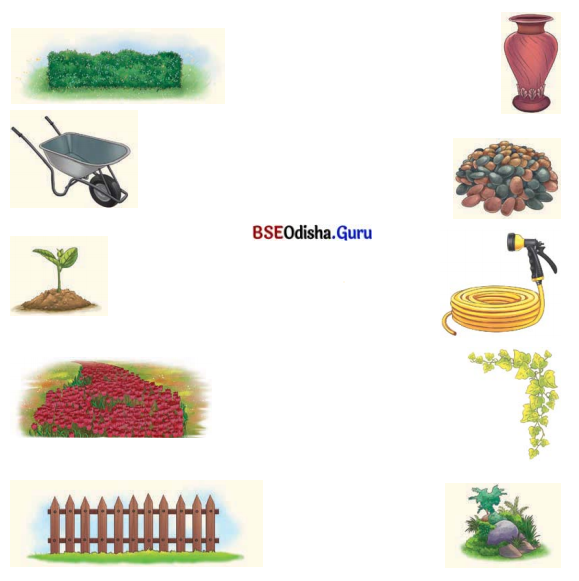
Answer:
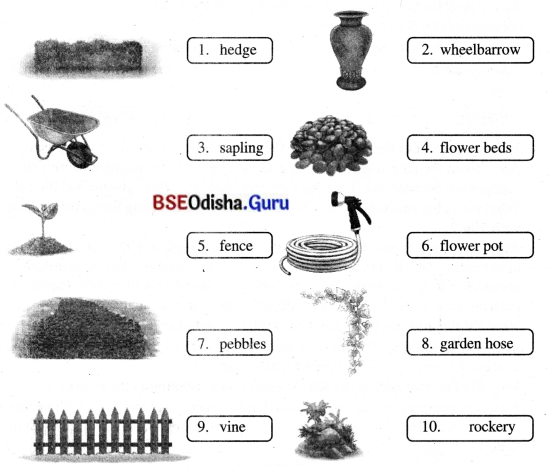
II. Work in groups of four. What kind of garden would you like to have? Mention the features that you can include and the reasons for your choice. Share your answers with your classmates and teacher.(ଚାରିଜଣିଆ ଦଳରେ କାମ କର । ତୁମେ କେଉଁ ପ୍ରକାର ବଗିଚା ରଖୁବାକୁ ପସନ୍ଦ କରୁଛ ? ତୁମେ ଯେଉଁ ମୁଖ୍ୟ ବୈଶିଷ୍ଟ୍ୟଗୁଡ଼ିକୁ ଅନ୍ତର୍ଭୁକ୍ତ କରିପାରିବ ଉଲ୍ଲେଖ କର ଏବଂ ତୁମ ପସନ୍ଦର କାରଣ କଣ ଲେଖ । ତୁମର ଉତ୍ତର ଶ୍ରେଣୀସାଥୀ ଓ ଶିକ୍ଷକଙ୍କ ସହିତ ବିନିମୟ କର ।)
Answer:
My Dream Garden:
I want to have a beautiful garden. It will have rows of flower plants like roses, sunflowers, marigold, jasmine and hibiscus because flowers make the garden bright and attractive. There will be a patch of vegetables such as tomatoes, beans, brinjals and carrots. We can eat healthy food. In the corner of the garden there will be a small pond with lilies and lotuses. The garden will be enclosed with a fence and decorated with pebbles, flowerpots. I love such a garden because it will attract butterflies, grasphoppers and birds. It will be a peaceful spot where we can relax and enjoy watching the nature.

III. Read the title of the poem. What comes to your mind when you read the word ‘concrete’? Does it have more than one meaning? Share your answers with your classmates and teacher.
(କବିତାଟିର ଶୀର୍ଷକକୁ ପଢ଼ । ଯେତେବେଳେ ‘Concrete’ ପଦଟିକୁ ପଢ଼ିବ ତୁମ ମନରେ କ’ଣ ଆସୁଛି ? ଏହାର କ’ଣ ଏକାଧୁକ ଅର୍ଥ ଅଛି ? ତୁମର ଉତ୍ତର ଶ୍ରେଣୀସାଥୀ ଓ ଶିକ୍ଷକଙ୍କ ସହିତ ବିନିମୟ କର ।)
Answer:
When I read the word ‘concrete’ I think of concrete materials or stones used in buildings since I see concrete in walls and roads. But it can mean something that is clear, real or definite. So the title ‘A Concrete Example’ has two meanings. One is about Mrs Jones’s garden and the other is about giving a definite example. Thus double making is a play on words or pull which makes the title interesting.
Let us discuss
(ଆସ ଆଲୋଚନା କରିବା) :
Complete the following summary with exact words from the poem. One example has been done for you. Share your answers with your classmates and teacher.
(କବିତାରୁ ଅବିକଳ ଶବ୍ଦଗୁଡ଼ିକୁ ନେଇ ନିମ୍ନଲିଖୁତ ସାରାଂଶଟିକୁ ପୂରଣ କର । ତୁମପାଇଁ ଗୋଟିଏ ଉଦାହରଣ କରିଦିଆଯାଇଛି । ତୁମର ଉତ୍ତର ତୁମ ଶ୍ରେଣୀସାଥୀ ଓ ଶିକ୍ଷକଙ୍କ ସହିତ ବିନିମୟ କର ।)
The poem describes Mrs. Jones, the speaker’s next-door neighbour, who has a unique garden filled with 1. ______. Her garden includes a peculiar 2. ______ a pond, and a rockery, along with an unusual 3.______ that she finds charming. Mrs. Jones plants tiny, 4. ______ planted with a 5. ______ they discuss a 6. ______ plants between the stones, which the speaker thinks must be so small that they are One day, Mrs. Jones invites the speaker to see her garden, and that Mrs. Jones treasures. When the speaker asks where the 7.______ flower is, Mrs. Jones says that the speaker has been 8.______ on it all along.
Answer:
1. stones
2. path
3. device
4. delicate
5. pin
6. flower
7. lovely
8. standing
II. Select the correct option to fill in the blanks for the following sentences.
(ନିମ୍ନଲିଖତ ବାକ୍ୟଗୁଡ଼ିକୁ ଉପଯୁକ୍ତ ବିକଳ୍ପଦ୍ୱାରା ଶୂନ୍ୟସ୍ଥାନ ପୂରଣ କର ।)
Question 1.
The tone of the poem is………………
(i) mocking
(iii) mournful
(ii) humorous
(iv) amusing
(v) light-hearted
A. (i), (ii), and (iii)
B. (i), (ii), and (v)
C. (ii), (iii), and (iv)
D. (ii), (iv), and (v)
Answer:
D. (ii), (iv), and (v)
Question 2.
The speaker in the poem is………………
(i) Mrs. Jones
(ii) the poet
(iii) a gardener
(iv) a child
Answer:
(ii) the poet
Question 3.
The rhyme scheme of the poem is ……………….
(i) AABBCC
(ii) ABABCC
(iii) AABCAC
(iv) ABBACC
Answer:
(i) AABBCC
III. Complete the following sentences by choosing the correct answer given in the brackets.
(ବନ୍ଧନୀ ମଧ୍ଯରୁ ଠିକ୍ ଉତ୍ତର ବାଛି ନିମ୍ନଲିଖତ ବାକ୍ୟଗୁଡ଼ିକୁ ପୂରଣ କର ।)
Question 1.
The poet uses the word ‘stones’ in all stanzas in order to emphasise her. (obsession with a stony garden / pride in gardening skills)
Answer:
obsession with a stony garden
Question 2.
The poet uses imagery to describe the features of the garden that help readers (understand Mrs. Jones’ love for plants / visualise the garden’s peculiar nature)
Answer:
visualise the garden’s peculiar nature
IV. Identify the line that is repeated in the poem in each stanza.
(ପ୍ରତି stanza ରେ ବାରମ୍ବାର ପୁନରାବୃତ୍ତି ହେଉଥବା ଧାଡ଼ିଟିକୁ ଚହ୍ନଟ କର ।)
Answer:
My next-door neighbour, Mrs. Jones.
V. In this poem there are some letters or sounds at the begining of words that are close together. Identify those words and phrases from the poem and give examples.
(ଏହି କବିତାରେ ଶବ୍ଦଗୁଡ଼ିକର ଆରମ୍ଭରେ କେତେକ ଅକ୍ଷର କିମ୍ବା ଧ୍ୱନି ଅଛି ଯେଉଁଗୁଡ଼ିକ ପାଖାପାଖୁ ଅଟନ୍ତି । କବିତାରୁ ସେହି ଶବ୍ଦ ଓ ବାକ୍ୟାଶଗୁଡ଼ିକୁ ଚିହ୍ନଟ କର ଓ ଉଦାହରଣ ଦିଅ ।)
Answer:
puts-plants, flower-for, quite a quarter, stood and talked
VI. Mrs. Jones’ excitement about her garden contrasts with the speakers disappointment on how ordinary it is. Find out the line which explains this.
(Mrs. Jones’ଙ୍କ ତାଙ୍କ ବଗିଚାକୁ ନେଇ ଉତ୍ସାହର ବିରୋଧାଭାଷ ହେଉଛି ବକ୍ତାଙ୍କର ସାଧାରଣ ବଗିଚାଟି ପ୍ରତି ଉଦାସୀନତା । ଏହାକୁ ବୁଝାଉଥବା ଧାଡ଼ିଟିକୁ ଖୋଜ ।)
Answer:
“You are standing on it” she cried.
VII. Complete the following sentences with appropriate words given in the brackets.
(ବନ୍ଧନୀ ମଧ୍ଯରୁ ଉପଯୁକ୍ତ ଶବ୍ଦ ନେଇ ନିମ୍ନଲିଖତ ବାକ୍ୟଗୁଡ଼ିକୁ ପୂରଣ କର ।)
1. The word ‘concrete’ refers to ___ (specific/general) in Mrs. ‘Jones’ garden.
Answer: specific
2. The title has a symbolic meaning, as the poem provides a clear or ‘concrete’ example of Mrs. Jones’ (peculiar/common) gardencing habits.
Answer: peculiar
VIII. The title ‘A Concrete Example’ carries both literal and symbolic meaning. Some sentences have words with multiple meanings or words that sound alike but have different meanings, creating a humorous effect.
(A Concrete Example ଶୀର୍ଷକଟିର ଉଭୟ ସାହିତ୍ୟିକ ଓ ସାଙ୍କେତିକ ଅର୍ଥ ରହିଛି । କେତେକ ବାକ୍ୟଗୁଡ଼ିକରେ କେତେଗୁଡ଼ିଏ ଶବ୍ଦ ରହିଛି ଯାହା ବହୁ ଅର୍ଥବୋଧକ କିମ୍ବା ଶବ୍ଦଗୁଡ଼ିକର ଉଚ୍ଚାରଣ ଏକାଭଳି ମାତ୍ର ଅର୍ଥ ଭିନ୍ନ ଯାହାକି ପରିହାସବ୍ୟଞ୍ଜକ ପ୍ରଭାବ ସୃଷ୍ଟି କରୁଛି ।)
- A bicycle can’t stand on its own because it is two-tired. (two-tired sounds like “too tired, which means very exhausted).
- The librarian is always booked. (since they are always surrounded by books, so they are booked)
- We had a pun contrest in class, but it was a punishment to read them all. (the pun is a joke using wordplay which can be unpleasant or painful.)
Let us think and reflect
(ଆସ ଚିନ୍ତାକରିବା ଓ ବିଚାର କରିବା):
Read the given extract and answer the questions that follow.
(ପ୍ରଦତ୍ତ ଉଦ୍ଧୃତାଂଶଟିକୁ ପଢ଼ ଓ ପରବର୍ତୀ ପ୍ରଶ୍ନଗୁଡ଼ିକର ଉତ୍ତର ଦିଅ ।)

1. My next-door neighbour, Mrs. Jones,
has got a garden full of stones:
A crazy path, a lily pond,
a rockery and, just beyond
A sundial with a strange device,
which Mrs. Jones thinks rather nice.
(i) What do you think about Mrs. Jones’s taste in gardening from the description of her garden being ‘full of stones’?
(ତୁମେ ‘ପ୍ରସ୍ତର ପରିପୂର୍ଣ୍ଣ’ ବର୍ଣ୍ଣନାରୁ Mrs. Jones ଙ୍କ ବଗିଚା ସମ୍ବନ୍ଧୀୟ ପସନ୍ଦ ବିଷୟରେ କ’ଣ ଭାବୁଛ ? )
Answer:
Mrs Jones takes great-pride in her stone-filled beautiful garden where small plants grow between rocks. She has an artistic taste in gardening. She prefers decorative stones and she has fascination with unusual non-living garden elements.
(ii) Identify whether the following statement is true or false.
(ନିମ୍ନ ଉକ୍ତିଟି ସତ୍ୟ କିମ୍ବା ମିଥ୍ୟା ଚିହ୍ନାଅ ।)
The garden serves as a means to reveal more about Mrs. Jones herself.
Answer:
True
(iii) What do you mean by ‘crazy path?
(ତୁମେ crazy path ର ଅର୍ଥ କ’ଣ ବୁଝୁଛ ?)
Answer:
The expression ‘crazy path’ means a path with an odd or irregular arrangement.
(iv) What does the sundial with a ‘strange device’ suggest about Mrs. Jones’ personality ?
(ଏକ ଅଜଣା ଉପକରଣ ସହ ସୂର୍ଯ୍ୟଘଡ଼ି Mrs Jones ଙ୍କର କେଉଁ ପ୍ରକାର ବ୍ୟକ୍ତିତ୍ଵ ପ୍ରଦର୍ଶନ କରୁଛି ।)
A. She has a fascination with unusual items.
B. She prefers traditional garden decorations.
C. She is uninterested in her garden’s appearance.
D. She likes modern and expensive items.
Answer:
A. She has a fascination with unusual items.
II. Answer the following questions.
Question 1.
How does Mrs. Jones feel about her garden? Support your answer with example from the poem.
(Mrs. Jones ତାଙ୍କର ବଗିଚା ସଂପର୍କରେ କ’ଣ ଅନୁଭବ କରନ୍ତି ? ତୁମ ଉତ୍ତରକୁ କବିତାରୁ ଉଦାହରଣ ଦେଇ ସମର୍ଥନ କର ।)
Answer:
Mrs Jones feels pride about her unique garden. She loves her garden deeply because she calls the sundial nice. Her passion on the unique garden is exciting. She spends her time planting tiny plants between stones. She also invites people to see her garden.
Question 2.
Why do you think the speaker describes the plants as being so small that they could be planted with a pin ?
(ଚାରାଗଛଗୁଡ଼ିକ ଏତେ କ୍ଷୁଦ୍ର ଯେ କେବଳ ଏକ ପିନ୍ ଦ୍ଵାରା ରୋପଣ କରିହେବ ବୋଲି ବକ୍ତା କହିଛନ୍ତି ବୋଲି 8691 କାହିଁକି ଭାବୁଛ ?)
Answer:
The speaker tells the plants size. She descibes the plants as being so small and delicate that they could be planted with a pin.
Question 3.
What do we get to know about Mrs. Jones-based on her gardening style and her interaction with the speaker ?
(ବଗିଚା ପ୍ରସ୍ତୁତି ଶୈଳୀ ଓ ବକ୍ତାଙ୍କ ସହ ତାଙ୍କର କଥୋପକଥନରୁ ଆମେ Mrs. Jones ବିଷୟରେ କ’ଣ ଜାଣିବାକୁ ପାଉଛୁ ?)
Answer:
Based on gardening style and the conversation with the speaker, it is clear that Mrs. Jones is detail-oriented and values tiny things that others may overlook.
Question 4.
The poem portrays Mrs. Jones in a positive light. Support this statement.
(କବିତାଟି Mrs. Jones ଙ୍କୁ ସକାରାତ୍ମକ ଦୃଷ୍ଟିଭଙ୍ଗୀରେ ଚିତ୍ରଣ କରିଛି । ଏହି ଉକ୍ତିର ସମର୍ଥନରେ ଯୁକ୍ତି ଦିଅ ।)
Answer:
The poem portrays Mrs Jones in a positive light. She is shown as someone with a desire and passion for gardening. Gardening encourages her to plant the plants which are so small that they could be planted with a pin.
Question 5.
What does the poem tell us about the way people think differently about the world around them ?
(ଲୋକମାନେ ସେମାନଙ୍କ ଚାରିପଟେ ଥବା ପୃଥିବୀକୁ ଭିନ୍ନ ଦୃଷ୍ଟିରେ ଦେଖୁବା ବିଷୟରେ କବିତାଟି କ’ଣ କହୁଛି ?)
Answer:
The poet tells us about the way people think differently about the world around them. People find charm in different things. Varied views encourage them to enjoy the beauty of the things in the world. It encourages watching varied views.
Let us learn (ଆସ ଶିଖୁବା)
Select the appropriate word from the brackets that correctly replaces the underlined word in the sentences from the text.
(ପାଠ୍ୟ ବିଷୟରେ ବାକ୍ୟଗୁଡ଼ିକର ରେଖାଙ୍କିତ ଶବ୍ଦ ବଦଳରେ ବସି ପାରୁଥିବା ସଠିକ୍ ଶବ୍ଦ ବନ୍ଧନୀ ମଧ୍ୟରୁ ଚୟନ କର ।)
1. A sundial with a strange device, (unusual, peculiar, new, rare, external)
Answer: strange – peculiar
2. Which Mrs. Jones thinks rather nice. (pleasant, superior, agreeable, gentle, charming)
Answer: nice – charming
3. They are so delicate… (delicious, fragile, dainty, graceful, weak)
Answer: delicate – fragile
4. “Where is this lovely thing?” I cried. (exclaimed, wept, shouted, announced, whispered)
Answer: cried – exclaimed
II. The ‘sundial’ is referred to as a ‘device’ in the poem. Work in pairs to infer the meaning of ‘device’. Share your thoughts with your classmates and teacher.
(ସୂର୍ଯ୍ୟଘଡ଼ିକୁ କବିତାରେ ଏକ ଯନ୍ତ୍ର ସହ ତୁଳନା କରାଯାଇଛି । ଦୁଇଜଣିଆ ଦଳହୋଇ ‘device’ (ଯନ୍ତ୍ର)ର ଅର୍ଥ ବୁଝିବା ପାଇଁ ଚେଷ୍ଟା କର । ତୁମର ଭାବନାକୁ ତୁମର ଶ୍ରେଣୀସାଥୀ ଓ ଶିକ୍ଷକଙ୍କ ସହ ବିନିମୟ କର ।)
Answer:
The ‘sundial’ is referred to as a ‘device’ in the poem. The word ‘device’ means a piece of equipment that has been designed to do a particular job/work. Now, match the type of instruments in Column 1 with their definitions in Column 2. Column 3 shows one example of each type of instrument. Add more examples in Column 3.
(ବର୍ତ୍ତମାନ Column-1 ରେ ଥିବା ଉପକରଣର ପ୍ରକାର ସହ Column-2 ରେ ଥିବା ସେମାନଙ୍କ ସଂଜ୍ଞାକୁ ମିଳାଅ । Column-3 ରେ ପ୍ରତ୍ୟେକ ପ୍ରକାର ଉପକରଣ ଗୋଟିଏ ଲେଖାଏଁ ଉଦାହରଣ ଦିଆଯାଇଛି । Column-3 ରେ ଅଧ୍ବକ ଉଦାହରଣ ଯୋଗକର ।
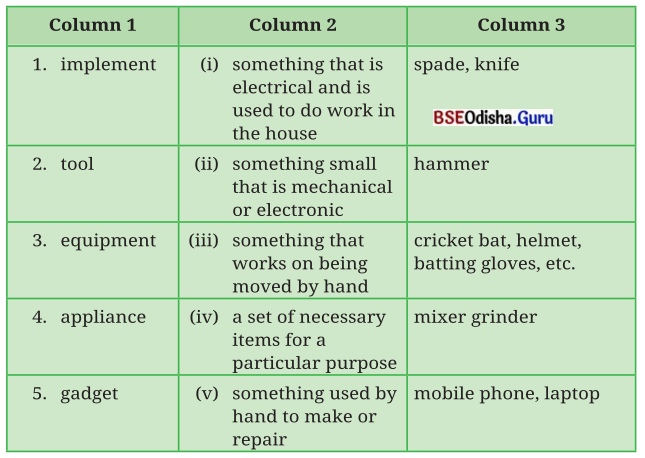
Answer:
| Column 1 | Column 2 | Column 3 |
| 1. implement | (iii) something that works on being moved by hand | spade, knife, scissors |
| 2. tool | (v) something used by hand to make or repair | hammer, screw driver, wrench |
| 3. equipment | (iv) a set of necessary items for a particular purpose | cricket bat, helmet, batting glovs, pad |
| 4. appliance | (i) something that is electrical and is used to do work in the house | mixer grinder microwave, toaster |
| 5. gadget | (ii) something small that is mechanical or electronic | mobile phone, laptop, smartwatch, tablet |
1.
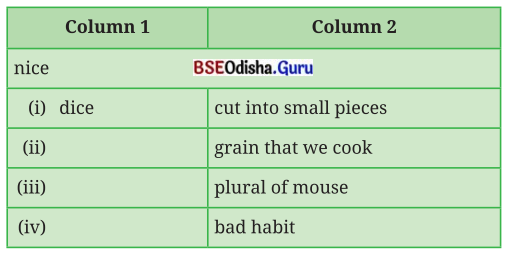
Answer:
| Column 1 | Column 2 |
| nice | |
| (i) dice | cut into small pieces |
| (ii) rice | grain that we cook |
| (iii) mice | plural of mouse |
| (iv) vice | bad habit |
2.
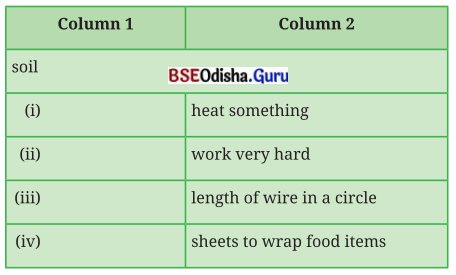
Answer:
| Column 1 | Column 2 |
| nice | |
| (i) boil | heat something |
| (ii) toil | work very hard |
| (iii) coil | length of wire in a circle |
| (iv) foil | sheets to wrap food items |
Let us listen
(ଆସ ଶୁଣିବା):
I. You will listen to a presentation about the wonderful Rock Garden of Chandigarh. As you listen, answer the following questions using one to three exact words from the presentation. (Transcript for teacher on page 47)
(ଚଣ୍ଡୀଗଡ଼ର ବିସ୍ମୟକର ପ୍ରସ୍ତର ଉଦ୍ୟାନର ଏକ ଉପସ୍ଥାପନା ତୁମେ ଶୁଣିବ । ତୁମେ ଶୁଣିବା ସମୟରେ ଉପସ୍ଥାପନାରୁ ଅବିକଳ ଗୋଟିଏରୁ ତିନୋଟି ଶବ୍ଦ ବ୍ୟବହାର କରି ନିମ୍ନଲିଖ ପ୍ରଶ୍ନଗୁଡ଼ିକର ଉତ୍ତର ଦିଅ । ଶିକ୍ଷକଙ୍କ ପାଇଁ Transcript ୪୭ ପୃଷ୍ଠାରେ ଅଛି ।)

1. Where was Nek Chand’s Rock Garden featured ?
(ନେକ୍ଚାନ୍ଦଙ୍କ ପ୍ରସ୍ତର ଉଦ୍ୟାନ କେଉଁଥରେ ପ୍ରଦର୍ଶିତ ହୋଇଛି ?)
Answer:
Indian postage stamp.
2. What kind of sculptures does the Rock Garden have?
(ପ୍ରସ୍ତର ଉଦ୍ୟାନରେ କେଉଁ ପ୍ରକାର ମୂର୍ତ୍ତିକଳା ଅଛି ?)
Answer:
colourful sculptures.
3. How is the Rock Garden divided ?
(ପ୍ରସ୍ତର ଉଦ୍ୟାନ କିପରି ଭାଗ ହୋଇଛି ?)
Answer:
three distinct phases.
4. Name any one thing that has been transformed into a piece of art in the Rock Garden.
(ଗୋଟିଏ ଜିନିଷର ନାମ କୁହ ଯାହା ପ୍ରସ୍ତର ଉଦ୍ୟାନରେ ଏକ କଳାକୃତିରେ ପରିବର୍ତ୍ତିତ ହୋଇଛି ?)
Answer:
Broken toilet pots
5. Approximately, how many statues border the Rock Garden?
(ପ୍ରସ୍ତର ଉଦ୍ୟାନର ଚାରିପାଖରେ ଆନୁମାନିକ କେତୋଟି ପ୍ରତିମୂର୍ତ୍ତି ଅଛି ?)
Ans. 5,000 statues
Let us speak (ଆସ କହିବା) :
The speaker of the poem might have felt sorry for stepping on Mrs. Jones’ flower. When we make a mistake, we must express regret and apologise for our actions.
(Mrs Jones ଙ୍କ ଫୁଲ ଉପରେ ପାଦ ପକାଇ କବିତାର ବକ୍ତା ଦୁଃଖ ପ୍ରକାଶ କରିଥାଇପାରନ୍ତି । ଆମେ ଯେତେବେଳେ ଗୋଟିଏ ଭୁଲ୍ କରୁ, ଆମର କାର୍ଯ୍ୟ ପାଇଁ ନିଶ୍ଚିତ ରୂପେ ଅନୁତାପ କରୁ ଓ କ୍ଷମା ମାଗିଥାଉ ।)
Question 1.
When we apologise to a friend or a family member, we use informal language. Take turns to apologise for the following situations and respond to the apology.
(ଯେତେବେଳେ ଆମେ ଜଣେ ବନ୍ଧୁ କିମ୍ବା ଜଣେ ପରିବାର ସଦସ୍ୟଙ୍କୁ କ୍ଷମା ପ୍ରାର୍ଥନା କରୁ, ଆମେ ଅନୌପଚାରିକ ଭାଷା ବ୍ୟବହାର କରୁ । ପାଳି ଅନୁସାରେ ନିମ୍ନ ପରିସ୍ଥିତିଗୁଡ଼ିକ ପାଇଁ କ୍ଷମା ପ୍ରାର୍ଥନା କର ଓ କ୍ଷମା ପ୍ରାର୍ଥନାର ପ୍ରତ୍ୟୁତ୍ତର ଦିଅ ।)
(i) You have eaten your brother’s share of sweets.
(ii) You have broken your sister’s flower craft.
(iii) You accidentally spilled ink on your mother’s important documents.
(iv) You forgot to bring your friend’s notebook to the school after borrowing.
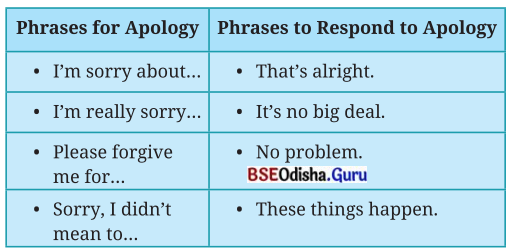
Answer:
(i) Apology: I am extremely sorry for not bringing the assignment that is due today. I really regret my mistake.
Response: I respect your apology, please ensure that you must submit it tomorrow without fail.
(ii) Apology: I am really sorry for being late to school for the last three days. I assure you this will never repeat again.
Response: I appreciate you saying this. Please make sure you are on time going forward.
(iii) Apology: I really regret not submitting my project work on time. I promise it won’t happen again.
Response: I am very glad to realise your mistake. Be sure to meet the deadline.
(iv) Apology: I am really sorry for forgetting your notebook. I will bring it tomorrow.
Propose: No problem, Just Just don’t forget it again.
You may use the following phrases given below.
Question 2.
When we apologise to someone in authority like a Principal or a teacher in a formal setting, we use formal language. Work in pairs and take turns to apologise for the following situations and respond to the apology into
(ଯେତେବେଳେ ଆମେ ଏକ ଔପଚାରିକ ସଂସ୍ଥାର ଜଣେ ଅଧ୍ୟକ୍ଷ କିମ୍ବା ଜଣେ ଶିକ୍ଷକଙ୍କ ଭଳି ପଦପଦବୀରେ ଅଧ୍ୟଷ୍ଠିତ କୌଣସି ବ୍ୟକ୍ତିଙ୍କୁ କ୍ଷମା ମାଗୁ, ଆମେ ଔପଚାରିକ ଭାଷା ବ୍ୟବହାର କରୁ । ଦୁଇଜଣିଆ ଦଳରେ କାମ କର ଏବଂ ନିମ୍ନଲିଖତ ପରିସ୍ଥିତି ପାଇଁ ପାଳି ଅନୁସାରେ କ୍ଷମା ମାଗ ଓ କ୍ଷମାପ୍ରାର୍ଥନାର ପ୍ରତିକ୍ରିୟା ପ୍ରକାଶ କର ।)
(i) You did not bring an assignment that was due for submission.
(ii) You were late to school for the past three days and has to meet the Principal.
(iii) You did not submit your project work and were asked to explain. You may use the phrases given below.
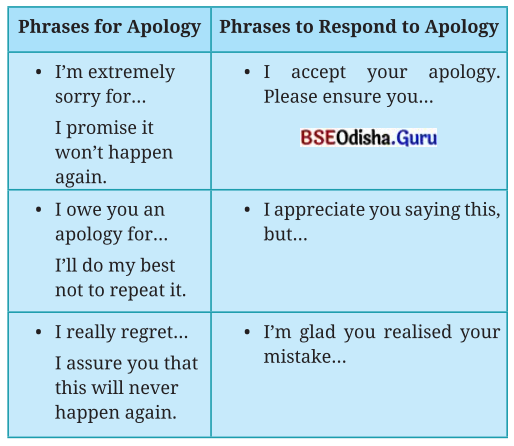
Answer:
(i) Apology: I am extremely sorry for not bringing the assignment that is due today. I really regret my mistake.
Response: I respect your apology, please ensure that you must submit it tomorrow without fail.
(ii) Apology: I am really sorry for being late to school for the last three days. I assure you this will never repeat again.
Response: I appreciate you saying this. Please make sure you are on time going forward.
(iii) Apology: I really regret not submitting my project work on time. I promise it won’t happen again.
Response: I am very glad to realise your mistake. Be sure to meet the deadline.
Let us write (ଆସ ଲେଖୁବା):
You are a member of the Nature Club of your school. Draft a notice informing the students of Grades 6-8 about the inauguration of the Herb Garden.
(ତୁମେ ତୁମ ବିଦ୍ୟାଳୟର Nature Clubର ଜଣେ ସଦସ୍ୟ । ଏକ ଔଷଧୀୟ ବଗିଚା ଉଦ୍ଘାଟନ ବିଷୟରେ ଷଷ୍ଠରୁ ଅଷ୍ଟମ ଗ୍ରେଡ଼ର ଛାତ୍ରଛାତ୍ରୀଙ୍କୁ ଜଣାଇବା ପାଇଁ ଏକ ବିଜ୍ଞପ୍ତିର ଖସଡ଼ା ପ୍ରସ୍ତୁତ କର ।)
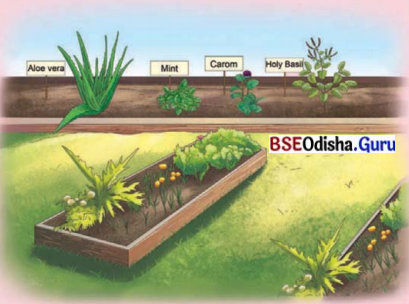
Points to remember:
Mention the purpose of writing, date, time, venue, and any other relevant information – whom to contact, when, and inthe and where.
Use formal language in the third person form.
Write the notice in a box.
|
NAME OF THE ORGANISATION Title |
|
HAPPY DAYS PUBLIC SCHOOL Inauguration of Herb Garden |
Let us explore (ଆସ ଅନ୍ଵେଷଣ କରିବା):
I. The flower garden of Raj Bhavan, Bhubaneswar, is spread over an expanse of about 10 acres of the entire area. It features lush lawns, a formal rose garden and seasonal flower beds, an extensive nursery including a kitchen garden and medicinal garden. It also features ornamental plants such as crotons, coleus, cycas and dracaena in pots. Six illuminated fountains enhance evening ambiance. It has repeated recognition as the best garden among state and central government offices in city competitions. Notable distinguished planting events include a pengulai tree planted by president APJ Abdul Kalam (2006).
Now, find out about popular gardens in your region and share with your classmates and teacher.
(ଏବେ ନିଜ ଅଞ୍ଚଳର ଲୋକପ୍ରିୟ ଉଦ୍ୟାନ ବିଷୟରେ ଅନୁସନ୍ଧାନ କର ଏବଂ ତୁମ ସହପାଠୀ ଓ ଶିକ୍ଷକଙ୍କ ସହ ବିନିମୟ କର ।)
Answer:
Popular Garden in our region.
Nandankanan Botanical Garden in Bhubaneswar, Odisha is a 75 hectare plant conservation hub. It was established in 1963. It is adjacent to the Nandankanan zoo. It serves as a premier centre in plant conservation, research and nature education. This garden is essential for offering a serene environment for visitors.
Key Attractions:
- Houses over two thousand species of plants, trees and herbs.
- The garden includes a cactus house, Rose Garden and Japanese Garden.
- Butterfly Park: A dedicated space for viewing diverse butterfly species.
- Medicinal Garden: Dedicated to the conservation of many medicinal plants and herbs.
- Kanjia Lake: The lake offers scenic views and acts as a vital part of the ecosystem.
- The garden remains a premier destination for ecological education and nature observation.
2. Ekamra Kanan Botanical Garden
Ekamra Kanan Garden was established in 1985 to promote biodiversity and environmental research.
Key Attractions:
- Cactus House is the large glass house.
- Floral Garden: The garden boasts a rose garden with medicinal plants.
- It has a lake which serves as a centrepiece offers boating facilities.
- Musical fountain: It is a popular attraction in the evening.
- It serves as a centre for plant conservation, research and education.
II. My Herbarium Activity:
I collected some fallen flowers and leaves from neighbourhood garden and the nearby
Let us explore (ଆସ ଅନ୍ଵେଷଣ କରିବା):
Question 1.
The flower garden of Raj Bhavan, Bhubaneswar, is spread over an expanse of about 10 acres of the entire area. It features lush lawns, a formal rose garden and seasonal flower beds, an extensive nursery including a kitchen garden and medicinal garden. It also features ornamental plants such as crotons, coleus, cycas and dracaena in pots.
Six illuminated fountains enhance evening ambiance. It has repeated recognition as the best garden among state and central government offices in city competitions. Notable distinguished planting events include a pengulai tree planted by president APJ Abdul Kalam (2006).
Now, find out about popular gardens in your region and share with your classmates and teacher.
(ଏବେ ନିଜ ଅଞ୍ଚଳର ଲୋକପ୍ରିୟ ଉଦ୍ୟାନ ବିଷୟରେ ଅନୁସନ୍ଧାନ କର ଏବଂ ତୁମ ସହପାଠୀ ଓ ଶିକ୍ଷକଙ୍କ ସହ ବିନିମୟ କର ।)
Answer:
Popular Garden in our region.
1. Nandankanan Botanical Garden in Bhubaneswar, Odisha is a 75 hectare plant conservation hub. It was established in 1963. It is adjacent to the Nandankanan zoo. It serves as a premier centre in plant conservation, research and nature education. This garden is essential for offering a serene environment for visitors.
Key Attractions:
- Houses over two thousand species of plants, trees and herbs.
- The garden includes a cactus house, Rose Garden and Japanese Garden.
- Butterfly Park: A dedicated space for viewing diverse butterfly species.
- Medicinal Garden: Dedicated to the conservation of many medicinal plants and herbs.
- Kanjia Lake: The lake offers scenic views and acts as a vital part of the ecosystem.
- The garden remains a premier destination for ecological education and nature observation.
2. Ekamra Kanan Botanical Garden
Ekamra Kanan Garden was established in 1985 to promote biodiversity and environmental research.
Key Attractions:
- Cactus House is the large glass house.
- Floral Garden: The garden boasts a rose garden with medicinal plants.
- It has a lake which serves as a centrepiece offers boating facilities.
- Musical fountain: It is a popular attraction in the evening.
- It serves as a centre for plant conservation, research and education.
II. My Herbarium Activity:
goon Icollected some fallen flowers and leaves from neighbourhood garden and the nearby park. The types of leaves and flowers I picked up included gulmohar leaf and hibiscus flowers, neem leaves and petals.

III. Read and enjoy the poem.
In the Garden of Greens
In my Odisha garden green and wide,
Leafy trees stand side by side.
Mango, neem and tamarind trees,
Whisper secrets in the breeze.
Bright red flowers bloom unseen,
Like silent trumpets in the green.
Bamboo lines at dusk’s pale light,
Hold up shadows of the night.
A lotus floats on mirrored pond.
Silken petals calm and fond
Moonlight turns the lotus bright,
Into a cup of silver light.
Waves of leaves that softly sign,
Dance beneath the evening sky.
Nature’s hush- I pause and see
A little Eden, calm and free.
Anonymous
(Inspired by Pallikabi Nanda Kishore Bala)
A Concrete Example Class 8 Summary
Let us Read (ଆସ ପଢ଼ିବା):
Stanza – 1
My next-door neighbour, Mrs. Jones,
has got a garden full of stones:
A crazy path, a lily pond,
a rockery and, just beyond
A sundial with a strange device,
which Mrs. Jones thinks rather nice.
ଓଡ଼ିଆ ଭାବାର୍ଥ :
ମୋର ପାଖ ପଡ଼ୋଶୀ Mrs Jones ଙ୍କର ଗୋଟିଏ ପଥର ପରିପୂର୍ଣ୍ଣ ବଗିଚା ଅଛି । ଏହି ବଗିଚାରେ ଗୋଟିଏ ବଙ୍କାତେଢ଼ା ରାସ୍ତା, ଗୋଟିଏ କଇଁଫୁଲ ଥିବା ପୋଖରୀ, ଏକ ଶିଳା ଉଦ୍ୟାନ ରହିଛି । ଏହାର ଅପରପାର୍ଶ୍ଵରେ ଏକ ଅଜଣା ଉପକରଣ ସହ ସୂର୍ଯ୍ୟ ଘଡ଼ି ଅଛି । Mrs Jones ଏଗୁଡ଼ିକୁ ଅତ୍ୟନ୍ତ ଆକର୍ଷଣୀୟ ବୋଲି ଭାବିଥା’ନ୍ତି ।
Stanza 2.
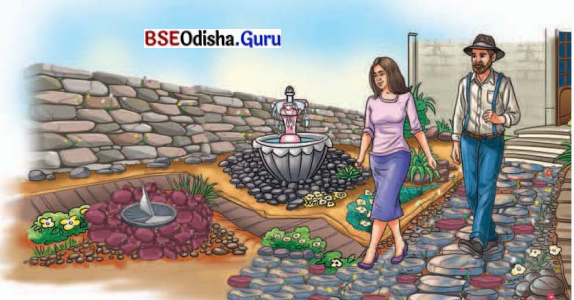
My next-door neighbour, Mrs. Jones,
puts little plants between the stones
They are so delicate and small,
they don’t mean anything at all.
I can’t think how she gets them in,
unless she plants them with a pin.
ଓଡ଼ିଆ ଭାବାର୍ଥ :
ମୋର ପାଖ ପଡ଼ୋଶୀ Mrs Johnes ଛୋଟ ପଥର ଖଣ୍ଡ ମଧ୍ଯରେ ଛୋଟ ଚାରାଗଛ ସବୁ ରୋପଣ କରନ୍ତି । ସେମାନେ ଏତେ ଛୋଟ ଓ କଅଁଳିଆ ଯେ ଯେପରି ସେଗୁଡ଼ିକର କୌଣସି ଅର୍ଥ ନାହିଁ । ମୁଁ ଭାବିପାରୁନାହିଁ ସେ କିପରି ଏଗୁଡ଼ିକୁ ରୋପଣ କରିଛନ୍ତି । ଯଦି ସେ ସେଗୁଡ଼ିକୁ ପିଦ୍ଵାରା ରୋପଣ ନ କରନ୍ତି, ରୋପଣ କରିବା ସମ୍ଭବ ହେବନାହିଁ । |
Stanza 3.
My next-door neighbour, Mrs. Jones,
once asked me round to see her stones.
We stood and talked about a flower
for quite a quarter of an hour.
“Where is this lovely thing?” I cried.
“You’re standing on it,” she replied.
Reginald Arkell
ଓଡ଼ିଆ ଭାବାର୍ଥ:
ମୋର ପାଖ ପଡ଼ୋଶୀ Mrs Johnes ଦିନେ ମୋତେ ତାଙ୍କ ବଗିଚାରେ ପଥରଖଣ୍ଡଗୁଡ଼ିକୁ ବୁଲି ଦେଖିବାପାଇଁ ଡାକିଲେ । ଆମେ ସେଠାରେ ଠିଆହେଲୁ ଓ ପନ୍ଦର ମିନିଟ୍ ପର୍ଯ୍ୟନ୍ତ ଗୋଟିଏ ଫୁଲ ବିଷୟରେ ଆଲୋଚନା କଲୁ । ମୁଁ ଉଚ୍ଚ ସ୍ୱରରେ କହିଲି, ‘ସେଇ ସୁନ୍ଦର ଜିନିଷଟି କେଉଁଠି ଅଛି ?’’ ସେ ଉତ୍ତର ଦେଲେ, ଉପରେ ଠିଆ ହୋଇଛ ।’’
ତୁମେ ତା’ରି
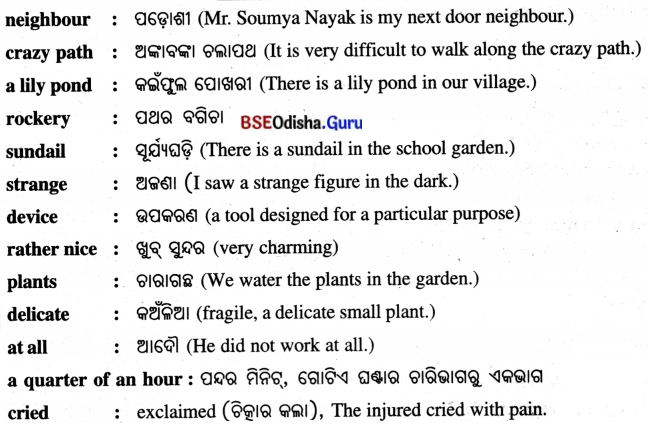
Notes and Glossary:
A Concrete Example Class 8 MCQ
Question 1.
What is Mrs. Jones’ garden filled with?
(a) plants
(b) flowers
(c) stones
(d) ponds
Answer:
(c) stones
Question 2.
What is Mrs. Jones garden path like ?
(a) muddy
(b) stony
(c) zigzag
(d) straight
Answer:
(b) stony
Question 3.
What is there with a strange device ?
(a) the crazy path
(b) a lily pond
(c) a rockery
(d) a sundial
Answer:
(d) a sundial
Question 4.
What are the plants between the stones like ?
(a) delicate
(b) small
(c) both of these
(d) neither of these
Answer:
(c) both of these
Question 5.
What did Mrs. Jones ask the speaker one day ?
(a) to go round her garden
(b) to talk about a flower
(c) to enjoy the beauty of her garden
(d) to show him a lovely thing
Answer:
(a) to go round her garden
Question 6.
How long did Mrs. Jones and the speaker talk about a flower ?
(a) one hour
(b) half an hour
(c) a quarter of an hour
(d) a few minutes
Answer:
(c) a quarter of an hour
Question 7.
What is the main feature of Mrs Jones garden ?
(a) plants
(b) flowers
(c) trees
(d) stones
Answer:
(d) stones
Question 8.
What is the tone of the poem ?
(a) mournful
(b) delightful
(c) humorous
(d) serious
Answer:
(c) humorous
Question 9.
What does the speaker do to the little flower in Mrs. Jonnes garden ?
(a) plucks it
(b) moves it
(c) smells it
(d) steps on it
Answer:
(d) steps on it
Question 10.
What does the ‘crazy path’ suggest about the garden ?
(a) It is well-built
(b) It is very long
(c) It is unevenly designed
(d) It is carefully planned
Answer:
(c) It is unevenly designed
Question 11.
What grows between the stones ?
(a) vegetable plants
(b) long bushes
(c) big trees
(d) small delicate plants
Answer:
(d) small delicate plants
Question 12.
How does Mrs. Jones feel about her garden ?
(a) with pride
(b) with indifference
(c) with dissatisfaction
(d) with disappointment
Answer:
(a) with pride
Question 13.
What does Mrs. Jones think to be very nice ?
(a) the pond full of lily flower
(b) the strange device on the sundial
(c) the little plants between the stones
(d) the garden full of stone
Answer:
(b) the strange device on the sundial
Question 14.
Which literacy device is used in the line ‘My next-door neighbour Mrs. Jones’ ?
(a) hyperbole
(b) metaphor
(c) irony
(d) alliteration
Answer:
(d) alliteration
A Concrete Example Class 8 Fill in the Blanks
1. There is a ………… with a strange device in Mrs. Jones’ garden.
Answer: sundial
2. The sundial is situated beyond the ………….
Answer: rockery
3. Mrs. Jones puts ………… between the stones.
Answer: little plants
4. The little plants are ………… and small.
Answer: delicate
5. The speaker thinks that Mrs. Jones has planted the small plants with a ………….
Answer: pin
6. The speaker and Mrs. Jones talked about a ………….
Answer: flower
7. The flower they talked about is said to be a ………….
Answer: lovely thing
8. Mrs. Jones’ garden has a ………… path.
Answer: crazy
9. The speaker does not find any significance in the ………….
Answer: small and delicate plants
10. The ‘crazy path’ refers to an irregular and uneven ………… path.
Answer: stony
11. The speaker thinks that the ………… does not mean anything.
Answer: plants between the stones
12. The literary device used in the line ‘unless she plants them with a pin’ is a ………….
Answer: hyperbole
13. There were no ………… plants in Mrs. Jones’ garden.
Answer: traditional
14. The poem ‘A Concrete Example’ is written by.
Answer: Reginald Arkell.