
For effective revision, students can use BSE Odisha Class 7 English Solutions Chapter 2 Try Again Spoke Question Answer to practice textbook exercises.
Class 7 English Try Again Question Answer
Class 7 English Chapter 2 Question Answer Odia Medium
Let us do these activities before we read
(ଆସ ପଢ଼ିବା ପୂର୍ବରୁ ଏହି କାର୍ଯ୍ୟଗୁଡ଼ିକୁ କରିବା ।)
I. Who inspires you to do your best?
(କିଏ ତୁମକୁ ତୁମ ସର୍ବୋତ୍ତମ କରିବାପାଇଁ ଉତ୍ସାହିତ କରନ୍ତି ?)
Answer:
People or examples that inspire me could be parents, teachers or elders who guide and encourage me. Famous personalities like scientists, athletes, or leaders, even small creatures or events in nature, like the spider in the poem, can teach us persistence and courage. These persons and things inspire me to do my best.
II. Work in pairs. Identify what you see in the pictures given below. What can we learn from them? Share your answers with your classmates and the teacher.
(ଦୁଇ ଜଣିଆ ଦଳ ହୋଇ କାର୍ଯ୍ୟ କର, ନିମ୍ନରେ ପ୍ରଦତ୍ତ ଛବିରେ କ’ଣ ଦେଖୁଛ ତାକୁ ଚିହ୍ନ । ଆମେ ସେମାନଙ୍କଠାରୁ କ’ଣ ଶଙ୍ଖା । ତୁମ ଉତ୍ତରଗୁଡ଼ିକୁ ଶ୍ରେଣୀସାଥୀ ଓ ଶିକ୍ଷକଙ୍କ ସହ ବିନିମୟ କର ।)
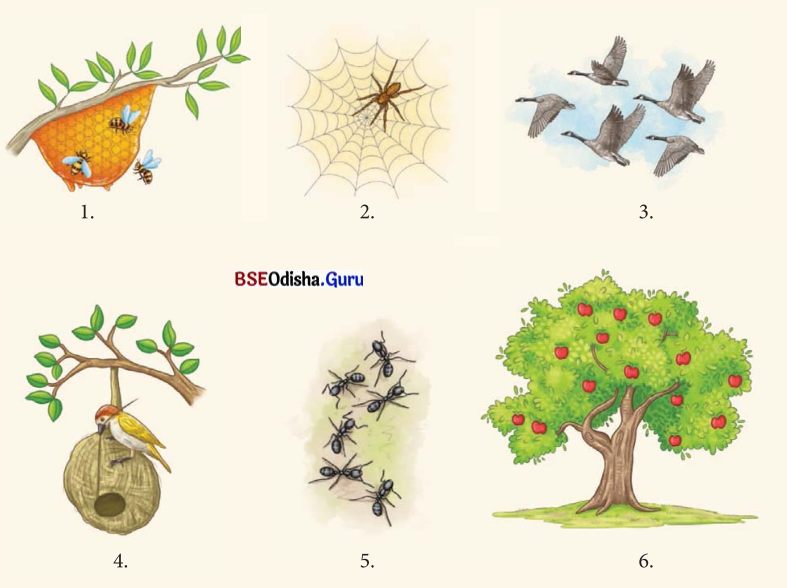
Let us discuss (ଆସ ଆଲୋଚନା କରିବା) :
Complete the summary choosing the suitable words given in the box. Share your answers with the teacher. An example has been given.
(ତଳେ ବାକ୍ସରେ ଦିଆଯାଇଥିବା ଉପଯୁକ୍ତ ଶବ୍ଦ ବାଛି କବିତାର ସାରାଂଶକୁ ସମ୍ପୂର୍ଣ୍ଣ କର । ଉତ୍ତରଗୁଡ଼ିକ ଶିକ୍ଷକଙ୍କ ସହ ବିନିମୟ କର । ଗୋଟିଏ ଉଦାହରଣ ତୁମ ପାଇଁ କରିଦିଆଯାଇଛି ।)

The poem, written in a narrative style, tells the story of King Bruce of Scotland, who was feeling 1. _____ after falling multiple times to achieve something 2. _____ great for his people. In a moment of 3. _____ despair, he observed a spider trying to reach its web high above. The spider 4. _____ every time it fell after getting close to its goal. It made nine 5. _____ and finally succeeded. The king said that the spider had 6. _____ and so would he. Inspired by the spider’s determination, King Bruce decided to 7. _____ When he 8. _____ this time, he ultimately succeeded.
Answer:
1. low
2. great
3. despair
4. mounted 8. tried
5. attempts
6. conquered
7. strive
II. Complete the following sentence suitably
(ନିମ୍ନୋକ୍ତ ବାକ୍ୟକୁ ଉପଯୁକ୍ତ ଭାବରେ ପୂରଣ କର ।)
The central idea of the poem is: _____.
Answer:
The central idea of the poem is that perseverance, determination, and courage makes one successful; so one should never give up, even after repeated failures.

III. Pick three examples from the poem for each of the following:
(ପ୍ରତ୍ୟେକଙ୍କ ପାଇଁ କବିତାରୁ ତିନୋଟି ଉଦାହରଣ ବାଛ ।)
1. Lines that describe the spider’s efforts :
(ଯେଉଁ ଧାଡ଼ିରେ ବୁଢ଼ିଆଣୀର ଉଦ୍ୟମ ବିଷୟରେ ବର୍ଣ୍ଣନା କରାଯାଇଛି ।)
Answer:
(i) “Up, up it ran, not a second to stay, To utter the least complaint.”
(ii) “Again it fell and swung below, But again it quickly mounted.”
(iii) “Steadily, steadily, inch by inch, Higher and higher he got.”
2. Alliteration (the repetition of the same consonant sounds at the beginning of closely connected words)
Answer:
Examples of alliteration:
(i) “Bold little run”
(ii) “Foolish thing will strive”
(iii) “Fell still lower”
IV. Why does the poet repeat the following words or phrases in the poem ? ( କବି କବିତାରେ ନିମ୍ନୋକ୍ତ ଶବ୍ଦ ସମୂହ କିମ୍ବା ବାକ୍ୟାଶକୁ ପୁନରାବୃତ୍ତି କରିଛନ୍ତି ?)
tried and tried; steadily, steadily; up, up
Answer:
tried and tried: To show that King Bruce made repeated efforts and did not give up. steadily, steadily: To emphasize the slow, careful, and consistent effort of the spider. up, up: To highlight the spider’s repeated climbing attempts and determination.
V. In stanza 1, ‘down’ rhymes with ‘crown’. Now find the pairs of rhyming words in the poem. Discuss in groups also.
(ପଂକ୍ତି ‘p’ ରେ ‘down’ ସହିତ ‘crown’ର ଯତିପାତ ହେଉଛି । ଏବେ କବିତାରୁ ସେହିପରି ଯତିପାତ ହେଉଥିବା ଶବ୍ଦ ବାହାର କର । ଦଳରେ ମଧ୍ୟ ଆଲୋଚନା କର ।)
Answer:
Rhyming words in the poem (କବିତାରେ ଶବ୍ଦଗୁଡ଼ିକ))
down/ crown; deed/succeed; glad/sad; despair/there; be/he; dropped/stopped; clue/ do; dome/home; fine/divine; craw/sprawl; endeavour/ever; stay/lay; complaint/faint; below/slow; mounted/counted; thing/cling; more/dore; minitute/it; inch/pinch; got/cot; tail/fail.
Let us think and reflect
(ଆସ ଚିନ୍ତା କରିବା ଓ ବିଚାର କରିବା) :
1. Read the extracts given below and answer the questions that follow.
(6 ଉଦ୍ଧୃତାଂଶଗୁଡ଼ିକୁ ପଢ଼ ଏବଂ ପରବର୍ତ୍ତୀ ପ୍ରଶ୍ନଗୁଡ଼ିକର ଉତ୍ତର ଦିଅ ।)
“He flung himself down in low despair,
As grieved as man could be;
And after a while he pondered there,
“I’ll give it all up,” said he.
Now just at that moment a spider dropped,
With its silken, filmy clue;”
(i) Select the phrase which shows the physical
expression of the King’s emotional state.
(ଆବେଗପ୍ରବଣ ଅବସ୍ଥାକୁ ଦର୍ଶାଉଥବା ଶାରୀରିକ ଭାବଭଙ୍ଗୀ ସୂଚକ ବାକ୍ୟାଶଟି ଚୟନ କର ।)
Answer:
“He flung himself down in low despair” – shows
his physical expression on sadness and helplessness.
(ii) The poet has used the word ‘low’ before despair. What does it mean here?
(କବି ‘low’ ଶବ୍ଦକୁ despair ପୂର୍ବରୁ ବ୍ୟବହାର କରିଛନ୍ତି । ଏହାର ଅର୍ଥ କ’ଣ?)
Answer:
‘Low’ here means deep or extreme, indicating the King’s intense sadness.
(iii) Choose the correct option to complete the sentence.
(ବାକ୍ୟଟିକୁ ପୂରଣ କରିବାପାଇଁ ସଠିକ୍ ବିକଳ୍ପଟି ବାଛ ।)
In the line, ‘And after a while he pondered there’, the word ‘pondered’ means _____.
(A) paused
(B) thought
(C) noticed
(D) rested
Answer:
(B) thought
(iv) Choose the correct option from the words given in the brackets.
The phrase ‘silken, filmy clue’ creates an image of something that is ______. (long and light/very delicate and soft)
Answer:
very delicate and soft
2. “…when it toils so hard to reach and cling,
And tumbles every time.”
But up the insect went once more,
Ah me! it is an anxious minute;
He’s only a foot from his cobweb door,
Oh say, will he lose or win it?”
(i) List any two characteristics of the spider highlighted in the line, ‘But up the insect went once more’.
(‘But up the insect went once more’ ଧାଡ଼ିଟିରେ ବୁଢ଼ିଆଣୀର ଦୁଇଟି ବୈଶିଷ୍ଟ୍ୟର ତାଲିକା କର।)
Answer:
Persistence – The spider continues trying despite falling.
Courage / Determination – It does not give up and keeps moving toward its goal.
(ii) Choose the correct option to complete the sentence.
The expression ‘Ah me!’ in the extract indicates a sense of _____.
A. happiness
B. stress
C. relief
D. loneliness
Answer:
B. stress
(iii) Complete the sentence with an appropriate reason.
(ଏକ ଉପଯୁକ୍ତ କାରଣ ଦେଇ ଶୂନ୍ୟସ୍ଥାନ ପୂରଣ କର ।)
Readers are able to relate to this extract because _____.
Answer:
Readers are able to relate to this extract because they also face difficulties and challenges, and just like the spider, they can learn to keep trying despite failures.
3. Answer the following questions
(ନିମ୍ନ ଲିଖ୍ତ ପ୍ରଶ୍ନଗୁଡ଼ିକର ଉତ୍ତର ଲେଖ ।)
Question 1.
How does the first stanza help in setting the mood of the poem?
(ପ୍ରଥମ ପଦ କିପରି କବିତାର ଭାବକୁ ଉପସ୍ଥାପନା କରିବାରେ ସହାୟକ ହୋଇଛି ?)
Answer:
The first stanza describes King Bruce’s sadness and despair, setting a serious and reflective mood. It shows his disappointment and hopelessness, which prepares the reader to understand the lesson of perseverance later.
Question 2.
Describe how King Bruce’s attitude changes from the beginning towards the end of the poem.
(ରାଜା ବ୍ରୁସ୍ଙ୍କର ମନୋଭାବ କିପରି କବିତାର ଆରମ୍ଭରୁ ଶେଷ ପର୍ଯ୍ୟନ୍ତ ପରିବର୍ତ୍ତିତ ହୋଇଛି ?)
Answer:
At the beginning, King Bruce feels sad, disappointed, and ready to give up. By the end, after observing the spider, he becomes determined, courageous, and hopeful, ready to try again and succeed.
Question 3.
The poet describes every action of the spider in great detail. What does this tell us about her attitude towards the spider? (କବି ବୁଢ଼ୀଆଣୀର ପ୍ରତ୍ୟେକ କାର୍ଯ୍ୟକୁ ପୁଙ୍ଖାନୁପୁଙ୍ଖ ବର୍ଣ୍ଣନା କରିଛନ୍ତି । ତାଙ୍କର ବୁଢ଼ିଆଣୀ ପ୍ରତି ମନୋଭାବ ସମ୍ପର୍କରେ ଏହା ଆମକୁ କ’ଣ କହୁଛି ?)
Answer:
The poet’s detailed description shows that she admires the spider and wants readers to notice its effort, determination, and persistence, highlighting the lesson of never giving up.
Question 4.
How does the spider inspire us to overcome despair and not give up?
(ନିରାଶାକୁ ଅତିକ୍ରମ କରିବା ପାଇଁ ଓ ତ୍ୟାଗ ନକରିବା ପାଇଁ ବୁଢ଼ିଆଣୀ ଆମକୁ କିପରି ପ୍ରେରଣା ଦେଉଛି ?)
Answer:
The spider inspires us because it keeps trying despite repeated failures, showing that determination and effort can lead to success even when the situation seems hopeless.
Question 5.
The poem teaches us that failures are stepping stones to success. Explain.
(କବିତାଟି ଶିକ୍ଷା ଦିଏ, ‘ବିଫଳତା ହିଁ ସଫଳତାର ପାହାଚ’’, ବୁଝାଅ ।)
Answer:
The spider falls multiple times but finally reaches its web. Similarly, failures teach us lessons and help us grow, and by learning from them, we can eventually achieve our goals.
Question 6.
The spider’s journey tells us that anyone can be a source of inspiration in our lives. Elaborate.
(ବୁଢ଼ୀଆଣୀର ଯାତ୍ରା ଆମକୁ କହେ ଯେ, ଆମ ଜୀବନରେ ଯେକୌଣସି ବ୍ୟକ୍ତି ଉତ୍ସାହର ଉତ୍ସ ହୋଇପାରେ !)
Answer:
Even a small creature like a spider can inspire great lessons. It shows that inspiration can come from unexpected sources, teaching us courage, perseverance, and hope in our own challenges.
Let us learn (ନିମ୍ନଲିଖତ) :
I. Write the opposite word in meaning of the following.
ଗୁଡ଼ିକର ବିପରୀତ ଅର୍ଥବୋଧକ ଶବ୍ଦ ଲେଖ)
(Question with Answer)
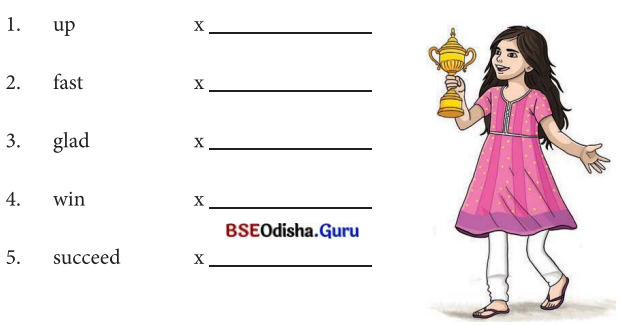
Answer:
| Word | Opposite Meaning |
| 1. up | down |
| 2. fast | slow |
| 3. glad | sad |
| 4. win | lose |
| 5. succeed | fail |
II. Read the following sentences. Match the meaning of the underlined words with the expressions given in the box.
(ନିମ୍ନୋକ୍ତ ବାକ୍ୟଗୁଡ଼ିକୁ ପଢ଼ । ରେଖାଙ୍କିତ ଶବ୍ଦର ଅର୍ଥ ସହ କୋଠରିରେ ଥିବା ଭକ୍ତିଗୁଡ଼ିକ ସହ ମିଳାଅ ।)
1. work very hard and/or for a long time
2. prepared themselves for something difficult
3. an attempt to do something new or difficult
4. to try very hard to achieve something
(i) Please make every endeavour to arrive on time.
(ii) Ants toil tirelessly to save food for rainy season.
(iii) We encourage all students to strive to do their best.
(iv) The sailors braced themselves against the strong wind.
Answer:
| Sentence (ବାକ୍ୟ) | Meaning (થર્થ) of the underlined word |
| (i) Please make every endeavour to arrive on time. | 3. an attempt to do something new or difficult |
| (ii) Ants toil tirelessly to save food for rainy season. | 1. work very hard and/or for a long time |
| (iii) We encourage all students to strive to do their best. | 4. to try very hard to achieve something |
| (iv) The sailors braced themselves against the strong wind. | 2. prepared themselves for something difficult |
II. The poem uses words that show distance.
(କବିତାରେ ଦୂରତାକୁ ଦର୍ଶାଉଥବା ଶବ୍ଦ ବ୍ୟବହୃତ ହୋଇଛି ।)
For example (ଉଦାହରଣ ସ୍ଵରୂପ) :
a long way up, inch by inch, higher and higher, half-yard higher
Some of the words are given below in a box. They relate to distance ‘Far’ and ‘Near’. Separate them into two groups in the space provided. (You may take the help of a dictionary)
(କେତେକ ଶବ୍ଦ ନିମ୍ନ କୋଠରିରେ ଦିଆଯାଇଛି । ସେମାନେ ‘ଦୂର’ ଓ ‘ନିକଟ’ ସହ ସମ୍ପର୍କିତ । ସେମାନଙ୍କୁ ପ୍ରଦତ୍ତ ସ୍ଥାନରେ ଦୁଇଟି ଗ୍ରୁପ୍ରେ ଅଲଗା ଅଲଗା କର । ତୁମେ ଏକ ଶବ୍ଦକୋଷ ଦେଖୁପାର ।)
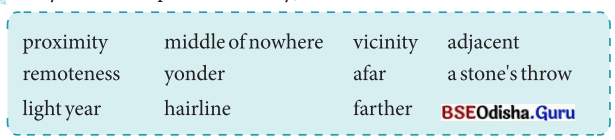
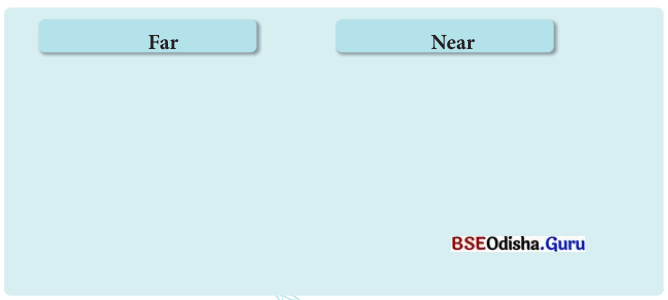
Answer:
| Far | Near |
| remoteness light yea middle of nowhere yonder afar farther |
proximity hairline vicinity adjacent a stone’s throw |
Let us listen (ଆସ ଶୁଣିବା) :
I. You will listen to a story about an ant. Read the questions given below and before you. Listen, guess the answers to these questions. (Transcript for the teacher on page-41)
(ତୁମେ ଏକ ପିମ୍ପୁଡ଼ି ବିଷୟରେ ଏକ ଗପ ଶୁଣ । ନିମ୍ନରେ ଦିଆଯାଇଥିବା ପ୍ରଶ୍ନଗୁଡ଼ିକୁ ପଢ଼ି । ଶୁଣ ଏବଂ ଏହି ପ୍ରଶ୍ନଗୁଡ଼ିକର ଉତ୍ତର ଅନୁମାନ କର । ଶିକ୍ଷକଙ୍କ ପାଇଁ Transcript ପୃଷ୍ଠା 41 ରେ ଦିଆଯାଇଛି ।)
Question 1.
What was the ant known for?
(କ’ଣ ପାଇଁ ପିମ୍ପୁଡ଼ି ଜଣାଶୁଣା ଥିଲା ?)
(i) determination
(ii) strength
(iii) wisdom
Answer:
(i) determination
Question 2.
Why was the ant unable to take the roti home ?
(କାହିଁକି ପିମ୍ପୁଡ଼ି ରୁଟିକୁ ଘରକୁ ନେବାକୁ ଅସମର୍ଥ ଥୁଲା ?)
(i) It was stuck under a rock.
(ii) It was too heavy to carry.
(iii) It was pulled by other ants.
Answer:
(ii) It was too heavy to carry
Question 3.
What was the bird doing ?
(ପକ୍ଷୀଟି କ’ଣ କରୁଥିଲା ?)
(i) playing with the ant
(ii) searching for food
(iii) picking up leaves
Answer:
(iii) picking up leaves
Question 4.
How did the bird make the ant feel ?
(ପକ୍ଷୀଟି ପିମ୍ପୁଡ଼ିକୁ କିପରି ଅନୁଭବ କରେଇଲା)
(i) proud
(ii) inspired
(iii) relaxed
Answer:
(ii) inspired
Question 5.
How did the fellow ants help ?
(ସାଥୀ ପିମ୍ପୁଡ଼ିମାନେ କିପରି ସାହାଯ୍ୟ କଲେ ?)
(i) by advising the ant continuously
(ii) by standing still near the ant
(iii) by joining the ant in her efforts
Answer:
(iii) by joining the ant in her efforts
III. Now, listen to the story once again and as you listen, check whether your answers are correct.
(ଗଳ୍ପଟିକୁ ଆଉଥରେ ଶୁଣ ଏବଂ ତୁମର ଉତ୍ତର ଠିକ୍ କି ନାହିଁ ଚେକ୍ କର ।)
Answer:
Students are supposed to listen to the story again to verify their guesses. The answers given above are correct according to the story.
Let us speak (ଆସ କହିବା) :
Narrate a personal experience about a time when you were motivated by someone or something to carry on and never give up. Your perseverance helped you!
(ଏକ ବ୍ୟକ୍ତିଗତ ଅନୁଭୂତି ବର୍ଣ୍ଣନା କର ଯେତେବେଳେ ତୁମେ କୌଣସି ବ୍ୟକ୍ତି ବିଶେଷ ଦ୍ଵାରା କିମ୍ବା ବସ୍ତ ବିଶେଷ ଦ୍ଵାରା ପ୍ରେରଣାପ୍ରାପ୍ତ ହୋଇ ନିଜ ଲକ୍ଷ୍ୟରେ ଅଟଳ ରହିବାକୁ ଓ ବିଚ୍ୟୁତ ନହେବାକୁ ସ୍ଥିର କରିଛ । ତୁମର ଅଧ୍ୟବସାୟ ତୁମକୁ ସାହାଯ୍ୟ କଲା ।)
Use the following sentence prompts as a guide for your narration. Use as per your topic.
(ତୁମର ବର୍ଣ୍ଣନା ପାଇଁ ନିମ୍ନଲିଖତ ସୂଚନାଗୁଡ଼ିକୁ ବ୍ୟବହାର କର । ତୁମ ବିଷୟ ଅନୁସାରେ ବ୍ୟବହାର କର ।)
1. Introduction: (ଉପକ୍ରମ)
- I remember a time when I felt like giving up. It was when…..
- There was a moment in my life when I faced a big challenge. It happened when…
2. Describe the challenge: (ଆହ୍ୱାନକୁ ବର୍ଣ୍ଣନା କର)
- The challenge I faced was…
- I was struggling with…
- The problem seemed too big because…
3. Feeling disheartened: (ନିରାଶା ଅନୁଭୂତ ହେଲା ।)
- At first, I felt discouraged and thought about giving up because…
- I didn’t think I could succeed because…
- I felt upset and wanted to leave because…
4. The source of motivation : (ପ୍ରେରଣାର ଉତ୍ସ)
- But then, I saw/heard/read about…
- Someone/something inspired me to keep going. It was…
- I remembered the poem… do not quit…
5. Taking action : (କାର୍ଯ୍ୟାନୁଷ୍ଠାନ ନେବା)
- After feeling inspired, I decided to…
- I gathered my strength and…
- With a new sense of willpower, I…
- I asked for help from…
6. The result: (ଫଳାଫଳ)
- In the end, I was able to…
- Thanks to standing firm and never giving up, I achieved…
- I felt proud because…
- It was worth it because…
7. Reflection : (ପ୍ରତିଫଳନ)
- This experience taught me that…
- I learned that perseverance is the key to success
- Now, I always remember to…
- The lesson I learnt from this is…
Personal Experience: Never Giving Up
Answer:
1. Introduction: I remember a time when I felt like giving up. It was when I was preparing for my school science competiton. There was a moment in my life when I faced a big challenge. It happened when I realized that my experiment was not working as I had planned.
2. Describe the challenge: The challenge I faced was designing a working model for my project. I was struggling with getting the results to match my hypothesis. The problem seemed too big because I had limited time and the materials kept failing.
3. Feeling disheartened: At first, I felt discouraged and thought about giving up because every attempt ended in failure. I didn’t think I could succeed because I had tried everything I knew. I felt upset and wanted to leave the project aside.
4. The source of motivation : But then, I remembered the poem “King Bruce and the Spider”. The spider kept trying despite falling many times, and it finally succeeded. Someone/Something inspired me to keep going. It was the story of the spider that reminded me that perseverance leads to success.
5. Taking action : After feeling inspired, I decided to try again, this time with a new approach. I gathered my strength and focused on small improvements. With a new sense of willpower, I worked patiently and carefully tested my experiment. I asked for help from my teacher whenever I was stuck.
6. The result : In the end, I was able to complete my project successfully. Thanks to standing firm and never giving up, I achieved first place in the science competition. I felt proud because all my hard work and persistence paid off. It was worth it because I learned that challenges can be overcome with determination.
7. Reflection : This experience taught me that perseverance is the key to success. I learned that even when things seem impossible, small steps and continuous effort can lead to achievement. Now, I always remember to keep trying, no matter how difficult the situation. The lesson I learnt from this is: never give up, and success will follow.
Let us write (ଆସ ଲେଖୁବା)
King Bruce was inspired by the spider that kept on trying till it was successful. Think about the steps you can take to overcome a difficult situation and write them down. Now, write a letter to your cousin on how you plan to overcome any difficult situation. Also advise to carryon and not to quit, to carry on and not to quit.
(ଏବେ ନିଜର ସମ୍ପର୍କୀୟ ଭାଇକୁ ଏକ ଚିଠି ଲେଖ ଯେ ତୁମେ କିପରି ଏକ କଷ୍ଟଦାୟକ ପରିସ୍ଥିତିକୁ ଅତିକ୍ରମ କରିବା ପାଇଁ ତୁମେ କିପରି ଯୋଜନା କରିଥିଲା । କାମରେ ଲାଗି ରହିବାକୁ ଓ ପରିତ୍ୟାଗ ନକରିବାକୁ ଉପଦେଶ ମଧ୍ୟ ପ୍ରଦାନ କର ।)
Use transition words like “To begin with…,’ Next…,”After that…,’ ‘Then…,’ ‘Finally…,’ to share the steps of your plan.
Look at an informal letter writing: Remember you are going to write a letter (informal/ personal letter) to your cousin Aletter formal or informal has generally 6 steps:
Example of an informal letter
(ଏକ ଅନୌପଚାରିକ ପତ୍ରର ଉଦାହରଣ:)
Step 1: The heading: a) Address of the sender without name Date : 5th May 2025/May 5th, 2025
Step 2: The greeting/ salutation: Dear Siddhy, (First name/nick name but not full name, Comma is optional)
Step 3: The body part/subject……………
Step 4: The ending: Yours truly/ever/ truly yours, not your’s (comma is optional)
Step 5: The signature: Sender’s name (Only nick name/first name),
Step 6: Adress on the envelope
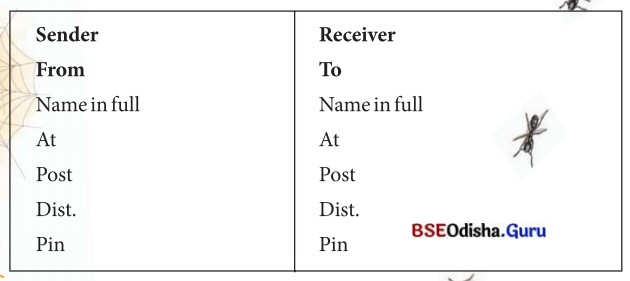
You may begin this way :
(ତୁମେ ଏହିପରି ଆରମ୍ଭ କରିପାର 🙂
21, Bijaya Ramchandrapur, Baripada
25 May 2026
Dear Sunita
Thank you for your letter asking me about…
You may end this way
(ତୁମେ ଏହିପରି ଶେଷ କରିପାର 🙂
Yours affectionately, Rashmi
Answer:
Letter
21, Bijaya Ramachandrapur, Baripada
25 May, 2026
Dear Sunita,
Thank you for your letter asking me about how I plan to overcome a difficult situation. You know, I have decided to stay calm and understand the problem clearly before reacting.
Next, I will break the big task into small and easy steps so that I don’t feel stressed. After that, I will practise regularly and try to improve a little every day.
Then, if I find somethng too difficult, I will ask my teachers or parents for help.
Finally, I will remember king Bruce’s lesson- to carry on and not to quit, even if I fail sometimes.
I hope these steps will also help you whenever you face a difficult situation. Remember, success comes to those who keep trying.
Yours affectionately
Rashmi
Let us explore
(ଆସ ଅନ୍ଵେଷଣ କରିବା) :
I. Collect folk songs in your own language that connect us with nature and compile them as a class project.
(ତୁମେ ନିଜ ଭାଷାର କିଛି ଲୋକଗୀତ ସଂଗ୍ରହ କର ଯାହା ତୁମକୁ ପ୍ରକୃତି ସହ ଯୋଡୁଥିବ ଏବଂ ତାହାକୁ ଏକ ଶ୍ରେଣୀ ପ୍ରକଳ୍ପ ଭାବେ ସଙ୍କଳନ କର ।)
II. Did you know that spiders are not insects? They belong to a group called the arachnids. Observe a spider and an ant from a distance and note down the differences between them. Share your observations with your classmates. Ask your Science teacher for more information to know about spiders better.
(ବୁଢ଼ିଆଣୀ ଏକ କୀଟ ନୁହେଁ ବୋଲି ତୁମେ ଜାଣିଥୁଲା କି ? ସେମାନେ arachnids ଗ୍ରୁପର ଅଟନ୍ତି । ଏକ ବୁଢ଼ିଆଣୀ ଓ ଏକ ପିମ୍ପୁଡ଼ିକୁ କିଛି ଦୂରରୁ ରହି ଦେଖ ଓ ସେମାନଙ୍କ ମଧ୍ୟରେ ଥିବା ଭିନ୍ନତା ଟିପି ରଖ । ତୁମ ପର୍ଯ୍ୟବେକ୍ଷଣକୁ ତୁମ ସହପାଠୀମାନଙ୍କ ସହ ବିନିମୟ କର । ଅଧୂକ ତଥ୍ୟ ପାଇଁ ତୁମ ବିଜ୍ଞାନ ଶିକ୍ଷକଙ୍କୁ ପଚାର ।)
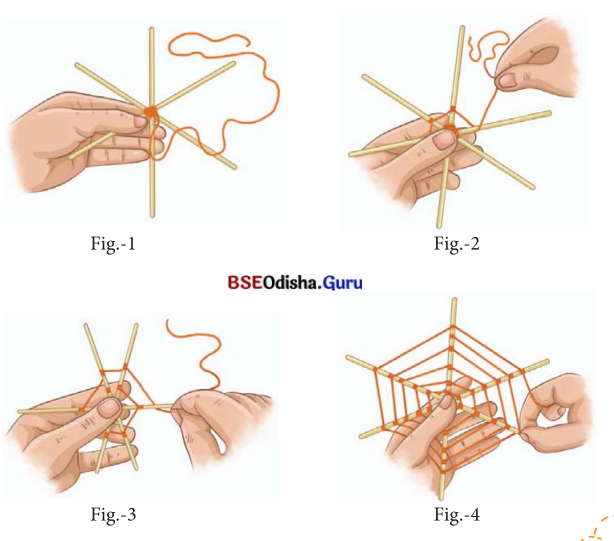
Let us learn how to weave a spider web.
(ଆସ ଏକ ବୁଢ଼ିଆଣୀ ଜାଲ ବୁଣିବା ଶିଖୁବା ।)
- Take three sticks (each about eight inches long) and a roll of old wool.
- Tie the sticks together in the centre with the wool (Fig. 1).
- Start weaving the web by putting a loop around every stick (Fig. 2 and 3).
- Complete the web and tie the thread in a knot on the stick where the web is complete (Fig. 4).
Now, decorate it with words and phrases you learnt about the spider in the poem or anything else that you like.
(ଏବେ ଏହାକୁ ତୁମେ କବିତାରେ ପଢ଼ିଥିବା କିମ୍ବା ତୁମ ଇଚ୍ଛା ଅନୁସାରେ କେତେକ ଶବ୍ଦ ଓ ବାକ୍ୟାଶକୁ ଲେଖୁ ସଜାଅ ।)
Answer:
Do Yourself.
Try Again Class 7 Summary
Let us read (ଆସ ପଢ଼ିବା) :
King Bruce of Scotland flung himself down
In a lonely mood to think;
‘Tis true he was monarch, and wore a crown,
But his heart was beginning to sink.
ଓଡ଼ିଆ ଅନୁବାଦ :
ସ୍କଟଲାଣ୍ଡର ରାଜା ବ୍ରୁସ୍ ନିଜକୁ ଭୂମି ଉପରେ ଲୋଟାଇ ଦେଲେ । ଏକାନ୍ତରେ ଭାବିବାକୁ ଲାଗିଲେ । ଏହା ସତ୍ୟ ଯେ ସେ ଜଣେ ସମ୍ରାଟ ଏବଂ ମୁକୁଟ ପିନ୍ଧିଛନ୍ତି, କିନ୍ତୁ ତାଙ୍କ ହୃଦୟ ଦୁଃଖରେ, ଭାଙ୍ଗି ପଡ଼ିବାରେ ଲାଗୁଛି ।
For he had been trying to do a great deed,
To make his people glad;
He had tried and tried, but couldn’t succeed
And so he became quite sad.
ଓଡ଼ିଆ ଅନୁବାଦ :
ସେ ଏକ ମହାନ୍ କାର୍ଯ୍ୟ କରିବା ପାଇଁ ଚେଷ୍ଟା କରୁଥିଲେ ତାଙ୍କ ଲୋକଙ୍କୁ ଖୁସି କରିବା ପାଇଁ । ସେ ଚେଷ୍ଟା ପରେ ଚେଷ୍ଟା କରିଥିଲେ କିନ୍ତୁ କୃତକାର୍ଯ୍ୟ ହୋଇପାରି ନଥିଲେ । ତେଣୁ ସେ ପୂରା ଦୁଃଖୀ ହୋଇପଡ଼ିଥିଲେ ।
He flung himself down in low despair,
As grieved as man could be;
And after a while he pondered there,
“I’ll give it all up,” said he.
ଓଡ଼ିଆ ଅନୁବାଦ :
ଅତି ହତାଶାରେ ସେ ତଳେ ଲୋଟି ପଡ଼ିଲେ ଯେମିତିକି ଜଣେ ମଣିଷ ଅତି ଦୁଃଖରେ ହୋଇଯାଏ । କିଛି ସମୟ ପରେ ସେ ଗଭୀର ଭାବରେ ଚିନ୍ତାକଲେ ଓ କହିଲେ, ଏହି ସବୁକୁ ମୁଁ ପରିତ୍ୟାଗ କରିବି ।
Now just at that moment a spider dropped,
With its silken, filmy clue;
And the King, in the midst of his thinking, stopped
To see what the spider would do.
ଓଡ଼ିଆ ଅନୁବାଦ
ଏବେ ଠିକ୍ ସେହି ମୁହୂର୍ତ୍ତରେ ଏକ ବୁଢ଼ିଆଣୀ ଖସି ପଡ଼ିଲା ରାଜା ଚିନ୍ତାମଗ୍ନ ଅବସ୍ଥାରେ ବୁଢ଼ିଆଣୀଟି କ’ଣ କରିବ ଦେଖୁବା ତା’ର ସୂକ୍ଷ୍ମ ସିକ ସୂତାକୁ ସାଙ୍ଗରେ ନେଇ; ଏବଂ ପାଇଁ ଅଟକିଗଲେ ?
‘Twas a long way up to the ceiling dome,
And it hung by a rope so fine;
That how it would get to its cobweb home,
King Bruce could not divine.
ଓଡ଼ିଆ ଅନୁବାଦ :
ଛାତ ଗମ୍ବୁଜ ପର୍ଯ୍ୟନ୍ତ ଲମ୍ବା ପଥ ଥିଲା ଏବଂ ଏହା ଏକ ସୂକ୍ଷ୍ମ ତାରରେ ସେ ଓହଳିଥିଲା । ତେବେ ସେ କିପରି ତା’ର ଜାଲଘରକୁ ଫେରିପାରିବ । ରାଜା ବ୍ରୁସ ଅନୁମାନ କରିପାରିଲେ ନାହିଁ ।
It soon began to cling and crawl
Straight up with strong endeavour;
But down it came with a slippery sprawl,
As near to the ground as ever.
ଓଡ଼ିଆ ଅନୁବାଦ :
ଏହା ଖୁବ୍ ଶୀଘ୍ର ତା ସିଲ୍ ସୂତାକୁ ଜାବୁଡ଼ି ଧରି ଉପରକୁ ଚାଲିଲା । କଠିନ ପରିଶ୍ରମ କରି ଉପରକୁ ଉଠୁଥିଲା । କିନ୍ତୁ ପୁଣି ସେ ତଳକୁ ଖସି ଆସୁଥୁଲା, ପ୍ରାୟ ତଳକୁ ବା ଭୂମିର ଅତି ପାଖକୁ ।
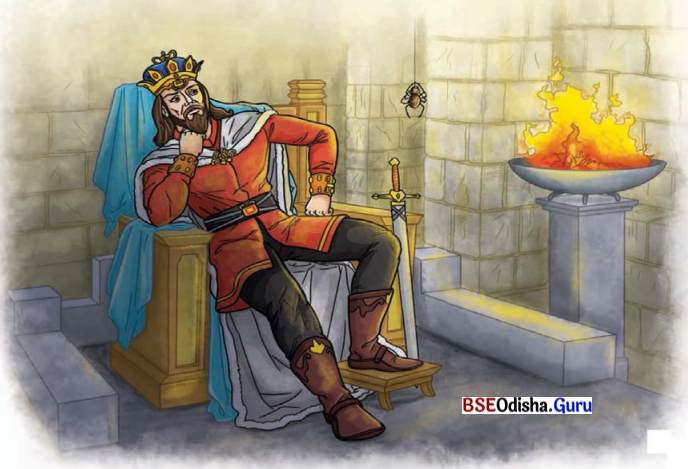
Up, up it ran, not a second to stay,
To utter the least complaint;
Till it fell still lower, and there it lay,
A little dizzy and faint.
ଓଡ଼ିଆ ଅନୁବାଦ :
ଉପରକୁ ଉପରକୁ ଏହା ଦୌଡ଼ିଲା, ଏକ ସେକେଣ୍ଡ ବି ଅଟକୁ ନଥିଲା । ତା’ର ଟିକିଏ ବି ଅଭିଯୋଗ ନଥିଲା । ଏହା ପୁଣି ଆହୁରି ତଳକୁ ଖସି ପଡ଼ିନଥିଲା ଏବଂ ସେଠାରେ ପଡ଼ି ରହିଲା । ତାକୁ ଟିକିଏ ହାଲିଆ ଲାଗିଲା ଏବଂ ସେ କିଛି ସମୟ ପଡ଼ି ରହିଲା ।
Its head grew steady – again it went,
And travelled a half-yard higher;
‘Twas a delicate thread it had to tread,
And a road where its feet would tire.
ଓଡ଼ିଆ ଅନୁବାଦ :
ତା’ପରେ ସେ ଉଠିଗଲା ତା’ର ମୁଣ୍ଡ ସିଧା ହୋଇଗଲା ଏବଂ ଅଧଗଜ ବାଟ ଉଠିଗଲା ।
ଏହା ସୂକ୍ଷ୍ମ ସୂତା ଯାହା ଉପରେ ତାକୁ ଚାଲିବାକୁ ପଡୁଥିଲା । ଏହା ଏପରି ଏକ ରାସ୍ତା ଯେଉଁଥରେ ତା’ର ପାଦ କ୍ଳାନ୍ତ ହୋଇଯିବ ।
Again it fell and swung below,
But again it quickly mounted;
Till up and down, now fast, now slow,
Nine brave attempts were counted.
ଓଡ଼ିଆ ଅନୁବାଦ :
ପୁଣିଥରେ ସେ ଖସିପଡ଼ିଲା ଏବଂ ତଳକୁ ଓହଳି କରି ରହିଲା । କିନ୍ତୁ ପୁଣି ସେ ଶୀଘ୍ର ଚଢ଼ିଗଲା । ସେ ପର୍ଯ୍ୟନ୍ତ ସେ ଉପରକୁ ଓ ତଳକୁ ହେଉଥାଏ । କେତେବେଳ ଦ୍ରୁତଗତି ତ ଆଉ କେତେବେଳେ ମନ୍ଥର । ନଅଥର (୯) ସେ ସାହସିକ ପଦକ୍ଷେପ ନେବାର ରାଜା ଦେଖିଲେ ।
“Sure,” cried the King, “that foolish thing
Will strive no more to climb;
When it toils so hard to reach and cling,
And tumbles every time
ଓଡ଼ିଆ ଅନୁବାଦ
ରାଜା ଚିତ୍କାର କରି କହିଲେ, ଏଥର ନିଶ୍ଚିତ ରୂପେ ସେ ବୋକା ଆଉ ଚଢ଼ିବା ପାଇଁ ଚେଷ୍ଟା କରିବ ନାହିଁ । ଯେତେବେଳେ ସେ କଠିନ ପରିଶ୍ରମ କରୁଛି ପହଞ୍ଚିବା ପାଇଁ ଏବଂ ଧରିବା ପାଇଁ, ସେ ପ୍ରତ୍ୟେକ ଥର ପଡ଼ିଯାଉଛି ।
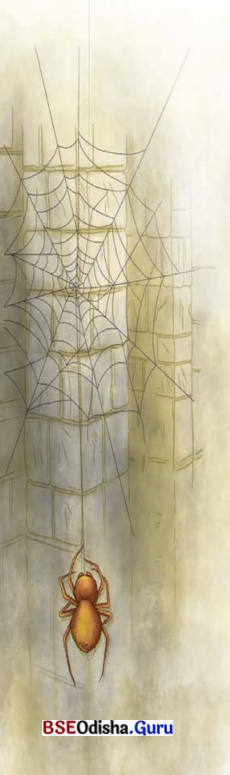
But up the insect went once more,
Ah me! ’tis an anxious minute;
He’s only a foot from his cobweb door,
Oh say, will he lose or win it?
ଓଡ଼ିଆ ଅନୁବାଦ :
ସେ କୀଟଟି ଆଉଥରେ ଚଢ଼ିଗଲା । ମୋ ପାଇଁ ଏହାଥିଲା ଏକ ଚିନ୍ତିତ ମୁହୂର୍ତ୍ତ । ସେ ବର୍ତ୍ତମାନ ତା’ର ଜାଲଘର ଦ୍ଵାରଠାରୁ ଏକ ଫୁଟ୍ ଦୂରରେ ଥିଲା । କୁହ, ସେ ହାରିବ ନା ଜିତିବ ।
Steadily, steadily, inch by inch,
Higher and higher he got;
And a bold little run at the very last pinch
Put him into his native cot.
ଓଡ଼ିଆ ଅନୁବାଦ :
ଧୀରେ ଧୀରେ ଇଞ୍ଚ ପରେ ଇଞ୍ଚ ଉଚ୍ଚରୁ ଉଚ୍ଚତର ସେ ଉଠିଗଲା ଏବଂ ଏକ ସାହସର ସହ ଏକ ଛୋଟ ଦୌଡ଼ ଶେଷ ମୁହୂର୍ତ୍ତରେ ସେ ନିଜକୁ ତା’ର ସ୍ଵଦେଶୀ (ନିଜସ୍ଵ) ଖଟରେ ଥୋଇଦେଲା ।
“Bravo, bravo!” the King cried out,
“‘All honour to those who try;
The spider up there, defied despair;
He conquered, and why shouldn’t I?”
ଓଡ଼ିଆ ଅନୁବାଦ :
‘ସାବାସ, ସାବାସ,’’ ରାଜା ଚିତ୍କାର କଲେ, ସମସ୍ତ ସମ୍ମାନ ତାଙ୍କୁ ଯିଏ ଚେଷ୍ଟା କରେ । ଉପରେ ଥିବା ବୁଢ଼ୀଆଣିଟି ନିରାଶାକୁ ଦୂରେଇ ଦେଇ ବିଜୟ ଲାଭ କଲା, ତେବେ ମୁଁ କାହିଁକି ନପାରିବି ?
And Bruce of Scotland braced his mind,
And gossips tell the tale,
That he tried once more as he tried before,
And that time did not fail.
ଓଡ଼ିଆ ଅନୁବାଦ :
ଏବଂ ସ୍କଟଲ୍ୟାଣ୍ଡର ବ୍ରୁସ୍ ନିଜକୁ ମାନସିକ ସ୍ତରରେ ପ୍ରସ୍ତୁତ କଲେ । ଆଗରୁ ଯେପରି ସେ ସେପରି ସେ କଲେ ଆଉ ଥରେ ଚେଷ୍ଟା କଲେ ଏବଂ ଏଥର ସେ ବିଫଳ ହେଲେ ନାହିଁ । ଏହା ପାଲଯି ଯାଇଛି ।
ELIZA COOK
Central Idea / Theme (ବିଷୟବସ୍ତୁର କେନ୍ଦ୍ରୀୟ ଭାବଧାରା)
The poem teaches the importance of perseverance, courage, and determination. It shows that even small creatures like a spider keep trying despite repeated failures, and humans can learn to overcome difficulties by never giving up.
Key message: Success comes to those who are patient, persistent, and brave.
Summary of the Poem (କବିତାର ସାରକଥା) :
King Bruce was sad and disappointed because he had tried many times to do something great for his people but had failed. He sat alone, thinking about giving up. While thinking, he notices a spider trying to climb to its web. The spider keeps falling, but each time it climbs higher, showing determination and courage. the spider finally reaches its web after several attempts. King Bruce is inspired by its perseverance. He realizes that if a small spider can keep trying, he too can achieve his goal. King Bruce gathers courage, tries again, and succeeds. The poem ends by celebrating the qualities of persistence, patience, and courage.
Notes & Glossary (ଶବ୍ଦାର୍ଥ)

Try Again Class 7 MCQ
Question 1.
Choosing the correct option from the ones given below each. The spider fell “still lower” because
(a) The thread was delicate
(b) It was tired and dizzy
(c) Someone pushed it
(d) It wanted to rest
Answer:
(b) It was tired and dizzy
Question 2.
The “road where its feet would tire” refers to
(a) A long journey
(b) A smooth path
(c) A challenging climb
(d) A rust place
Answer:
(c) A challenging climb
Question 3.
What does the king call the spider?
(a) Brave
(b) Foolish
(c) Clever
(d) Lazy
Answer:
(b) Foolish
Question 4.
How far is the spider from its cobweb door?
(a) A meter
(b) A span
(c) A yard
(d) A foot
Answer:
(d) A foot
Question 5.
The question “Oh say, will he lose or win it ?” is an example of _____.
(a) Prediction
(b) Sarcasm
(c) Simile
(d) Irony
Answer:
(a) Prediction
Question 6.
The line “defied despair” suggests that the spider _____.
(a) Gave up
(b) Ignored the king
(c) Fought against hopelessness
(d) Rested for a long time
Answer:
(c) Fought against hopelessness
Question 7.
What made the king doubt the spider’s ability to success?
(a) Its colour
(b) Its tiny size and thin rope
(c) It was tired
(d) It was not trying
Answer:
(b) Its tiny size and thin rope
Question 8.
Why did the spider fall ?
(a) It jumped
(b) Someone pushed it
(c) The rope broke
(d) It slipped
Answer:
(d) It slipped
Question 9.
What was the result of the repeated failures?
(a) He became angry
(b) He became quite sad
(c) He became lazy
(d) He stopped trying immediately
Answer:
(b) He became quite sad
Question 10.
The king’s sadness mainly came from _____.
(a) Being tired
(b) Being hungry
(c) Not succeeding in helping his people
(d) Losing his kingdom
Answer:
(c) Not succeeding in helping his people
Try Again Class 7 Fill in the Blanks
1. King Bruce learns that success often comes only after one shows _____ and determination.
Answer:
Patience
2. The spider’s repeated attempts show that giving up is never a solution but a barrier to _____.
Answer:
success
3. The poem suggest that every failure is a chance to learn and _____ our efforts.
Answer:
improve
4. The spider did not succeed at first because the task was difficult, but it kept trying because it had strong _____.
Answer:
will power
5. The spider teaches that effort is meaingful only when we _____ it constantly.
Answer:
continue
6. The poem suggests that determination grows stronger when we face repeated _____.
Answer:
failures
7. King Bruce drew hope from the spider because he saw his own struggles reflected in its _____.
Answer:
struggle
8. The spider inspired Bruce to gather his soldiers again and ______ for Scotland.
Answer:
fight
9. The poem warns that quitting too soon prevents us from discovering our true ______.
Answer:
potential
10. the king realizes that success belongs to those who rise each time they ______.
Answer:
fall
11. Bruce learns that determination can turn despair into ______.
Answer:
hope
12. The message of the poem encourages us to try again until the work is ______ completely.
Answer:
done
Try Again Class 7 True or False
1. Bruce was a monarch but he was unhappy.
Answer: True
2. The king decided to give up after watching the spider’s repeated failure.
Answer: True
3. The spider defied despair and conquered.
Answer: True
4. The spider moved sometimes fast and sometimes slow.
Answer: True
Try Again Class 7 Very Short Question Answer
Question 1.
What quality is more important-strength or determination? Explain.
Answer:
Determination is more important. The spider is small and weak, but its strong will power helps it continue despite falling and feeling tired.
Question 2.
What lessons can we learn from the spider’s repeated attempts to climb higher despite its difficulties?
Answer:
We learn that persistence and patience lead to success. No matter how many times we fail, we should keep trying-just like the spider.
Question 3.
What message does the king convey when he says, “He conquered, and why shouldn’t I?
Answer:
The king understands that success is possible for one who tries repeatedly. The line encourages human beings to believe in themselves and not to accept failure.
Question 4.
If you were watching the spider like the king, what would you feel and why ?
Answer:
I would feel both worry and admire worry because the spider keeps falling and admiration because it continues trying despite repeated failure.
Question 5.
Why do repeated failure affect the king so deeply?
Answer:
Because he feels his responbility for his people’s well-being. Each failure makes him feel that he is letting them down, causing emotional stress and sadness.
Question 6.
Why did the spider achieve success?
Answer:
Because he spider kept on trying in spite of many failures.
Question 7.
What did King Bruce want to do?
Answer:
The King Bruce wanted to do some great deed for happiness of his people.
Try Again Class 7 Short Question Answer
Question 1.
Why do you think the king quickly assumes the spider will stop trying? What does this reveal about his state of mind?
Answer:
The king is discouraged and hopeless after losing many battles, so he assumes failure easily. His negative thinking reflects his weakened confidence and belief that trying again is meaningless.
Question 2.
What effect does the spider’s success have on the king?
Answer:
The king feels inspired and gains new courage. He realizes that if the spider can conquer its difficulties, he too can overcome his problmes with determination and effort.
Question 3.
Describe the spider’s attempt to climb and what happened afterward?
Answer:
The spider cling to the thread and crawled upward with strong effort. But after climbing some distance, it slipped and fell down again, ending up as close to the ground as before.
Question 4.
How does the king’s sadnesss prepare the reader for the lesson he later learns from the spider?
Answer:
The king’s sadness shows how discouraged he is, making the spider’s message of perseverance more powerful. When he sees the spider keep trying, it becomes a turning point in his mindset.
Question 5.
How does the spider’s continuous effort influence the king’s perspective on his own situation?
Answer:
The spider’s determination inspires the king. It makes him realise that repeated failures do not mean the end. He understands that he, too, must keep trying instead of giving up.
Question 6.
What changed the king?
Answer:
The king lying in despair observed a spider trying to climb up to its cobweb home. It also failed in its attmept like him. The king thought that the spider would make no more attempt. But the spider could succeed after nine attempts. This changed the king and he decided to try again to acheive success.
Question 7.
Why did the king cry out ‘All honour to those who try ?’
Answer:
The king was astonished to see the spider’s success through repeated attempts. He realised that one who succeeds, he never stops. Continuous effort shall bring success. So he said “All honours to those who try”.