
For effective revision, students can use BSE Odisha Class 8 English Solutions Chapter 8 The Magic Brush of Dreams Question Answer to practice textbook exercises.
Class 8 English The Magic Brush of Dreams Question Answers
Class 8 English Chapter 8 Question Answer Odia Medium
Let us do these activities before we read
(ଚାଲ ପଢ଼ିବା ପୂର୍ବରୁ ଏହି କାର୍ଯ୍ୟଗୁଡ଼ିକୁ କରିବା ।)
Work in pairs. Choose the acts of kindness and unkindness from the box that you have heard, read or experienced. Write them separately in appropriate boxes. (ଦୁଇ ଦୁଇ ଜଣ କାର୍ଯ୍ୟ କର । ତୁମ୍ଭେମାନେ ଶୁଣିଥିବା, ପଢ଼ିଥିବା, ଅନୁଭୂତି ଲାଭ, କରିଥିବା ଦୟାଶୀଳ ଓ ନିର୍ଦ୍ଦୟ କାର୍ଯ୍ୟଗୁଡ଼ିକୁ ଚୟନ କର/ବାଛ । ସଠିକ୍ ବାକ୍ସ ଭିତରେ ଶବ୍ଦଗୁଡ଼ିକୁ ଅଲଗା ଲେଖ ।) Share your answers with your classmates and teacher.
(ଶ୍ରେଣୀସାଥୀ ଓ ଶିକ୍ଷକଙ୍କ ସହିତ ତୁମର ଉତ୍ତରଗୁଡ଼ିକର ଆଲୋଚନା କର ।)
(friendly, heartfelt, mean, thoughtful, impatient, caring, selfish, unfriendly, nice, pleasant, hateful, thoughtfulness.)
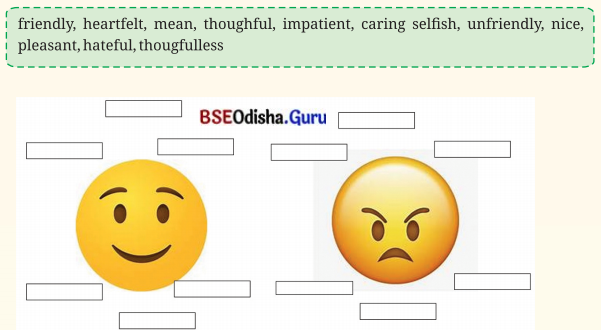
Answer :
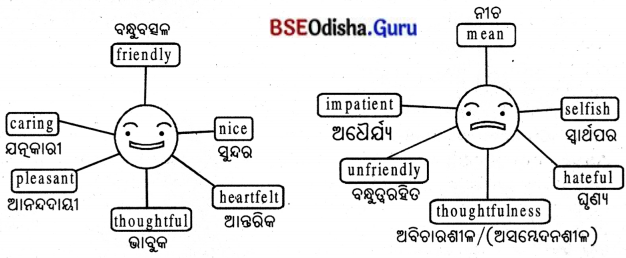

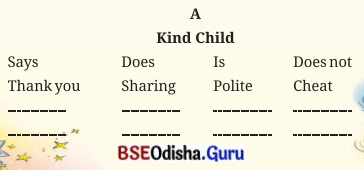
II. Use appropriate words to express the qualities of a kind child on a Kind Child following aspects mentioned in the box. Here is an example for you.
(ଗୋଟିଏ ଦୟାଳୁ ପିଲାର ଗୁଣାବଳୀ ପ୍ରକାଶ କରିବାପାଇଁ ନିମ୍ନଲିଖୁତ ପରିପ୍ରେକ୍ଷୀରେ କୋଠରିରେ ଉଲ୍ଲିଖତ ସଠିକ୍ ଶବ୍ଦ ବ୍ୟବହାର କର । ଏଠାରେ ତୁମ୍ଭପାଇଁ ଗୋଟିଏ ଉଦାହରଣ ଦିଆଯାଇଛି ।)
Answer:
A kind child says ‘Thank you”.
He believes in sharing joys and sorrows with others.
He is polite.
He never cheats people.
I. Let us discuss (ଆସ ଆଲୋଚନା କରିବା)
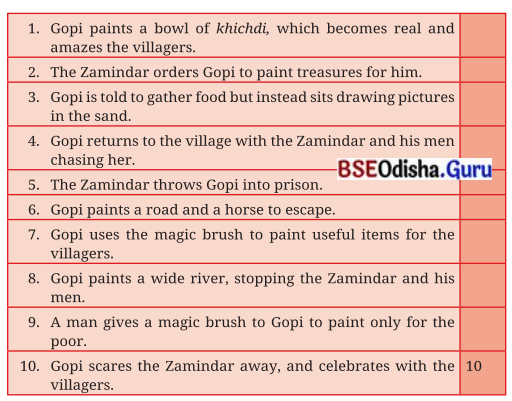
Arrange the events in order of occurrence in the poem. The last one has been marked for you. Share your answers with your classmates and teacher.
(କବିତାରେ ଘଟିଥିବା କ୍ରମ ଅନୁସାରେ ଘଟଣାଗୁଡ଼ିକୁ ସଜାଅ । ସହପାଠୀ ଓ ଶିକ୍ଷକଙ୍କ ସହିତ ଆଲୋଚନା Q 1) (Questions with Answer)
Answer:
| 1. Gopi paints a bowl of khichdi, which becomes real and amazes the villagers. | 3 |
| 2. The Zamindar orders Gopi to paint treasures for him. | 5 |
| 3. Gopi is told to gather food but instead sits drawing pictures in the sand | 1 |
| 4. Gopi returns to the village with the Zamindar and his men chasing her. | 8 |
| 5. The Zamindar throws Gopi into prison. | 6 |
| 6. Gopi paints a road and a horse to escape. | 7 |
| 7. Gopi uses the magic brush to paint useful items for the villagers. | 4 |
| 8. Gopi paints a wide river, stopping the Zamindar and his men. | 9 |
| 9. A man gives a magic brush to Gopi to paint only for the poor. | 2 |
| 10. Gopi scares the Zamindar away, and celebrates with the villagers. | 10 |
II. Fill in the blanks by choosing the correct answer from the box given below.
(ନିମ୍ନ ପ୍ରଦତ୍ତ କୋଠରିରୁ ସଠିକ୍ ଉତ୍ତର ବାଛି ଶୂନ୍ୟସ୍ଥାନ ପୂରଣ କର ।) (Questions with Answer)
The tone of the poem shifts throughout, reflecting the different moods of the story. Initially, the tone is 1. playful and innocent as Gopi uses her imagination to draw in the sand, and later when the Zamindar enters the story, the tone shifts to one of 2. tension and suspense. In the final part of the poem, the tone becomes 3. triumphant and celebratory as Gopi escapes, the Zamindar is defeated, and the villagers rejoice.
III. Fill in the blanks by choosing the correct option from within the brackets.
(ବନ୍ଧନୀ ମଧ୍ଯରୁ ସଠିକ୍ ବିକଳ୍ପ ବାଛି ଶୂନ୍ୟସ୍ଥାନ ପୂରଣ କର ।)
1. The poem mostly follows a simple rhyme scheme,…………which adds a rhythmic flow. (ABCB, ABBA, ABAB)
Answer:
ABCB (Example from the first stanza)
Gopi – A, rice (B), mangoes (C), nice (B)
2. This poem belongs to the ………….. poetry genre, which tells a story through verse.
(descriptive, narrative or ballad, free style)
Answer:
narrative or ballad
IV. Choose the correct answer from the options given.
(ପ୍ରଦତ୍ତ ବିକଳ୍ପଗୁଡ଼ିକ ମଧ୍ୟରୁ ଠିକ୍ ଉତ୍ତର ବାଛ ।)
(a) What is special about the brush in the poem ?
(କବିତାରେ ‘ବ୍ରଶ୍ ବା ତୂଳୀର ବିଶେଷତ୍ଵ କ’ଣ ?)
(i) It can paint.
(ii) It can bring painting to life.
(iii) It is made of gold.
(iv) It has magical power.
Answer:
(ii) It can bring painting to life
(ଏହା ଚିତ୍ରକୁ ଜୀବନରେ ରୂପାନ୍ତରିତ କରିପାରିବ ।)
(b) What does the poem ultimately teach us?
(କବିତାଟି ଶେଷରେ ଆମ୍ଭମାନଙ୍କୁ କି ଶିକ୍ଷା ପ୍ରଦାନ କରୁଛି ?)
(i) Art is more valuable than money.
(ii). Power and kindness should be used to help the poor and needy.
(iii) Wealth is the most important thing.
(iv) Magic solves all problems.
Answer:
(ii) Power and kindness should be used to help the poor and needy.
(କ୍ଷମତା ଓ ଦୟା ଦରିଦ୍ର ଓ ଅଭାବୀମାନଙ୍କୁ ସାହାଯ୍ୟ କରିବା ପାଇଁ ବ୍ୟବହାର ହେବା ଉଚିତ୍ ।)
(V) Match the phrases from the poem in Column 1 with what they symbolise in Column 2. (Questions with answer)
(‘ସ୍ତମ୍ଭ’ ୧ ରେ ଥିବା କବିତାର ବାକ୍ୟାଶଗୁଡ଼ିକୁ ‘ସ୍ତମ୍ଭ’ ୨ ରେ ସେଗୁଡ଼ିକ ସୂଚିତ କରୁଥିବା ବାକ୍ୟାଶ ସହ ଯୋଗକର ।)
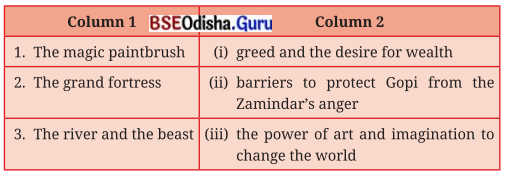
Answer:
| Column 1 | Column 2 |
| 1. The magic paintbrush | (iii) the power of art and imagination to change the world |
| 2. The grand fortress | (i) greed and the desire for wealth |
| 3. The river and the beast | (ii) barriers to protect Gopi from the Zamindar’s anger |
VI. Identify whether the following statement is true or false.
(ନିମ୍ନଲିଖତ ଭକ୍ତିଟି ଠିକ୍ କି ଭୁଲ୍ ଚିହ୍ନାଅ)
While Gopi uses the magic brush to help others, the Zamindar wants to use it for personal gain. This contrast drives the moral of the story.
Answer:
True
Let us think and reflect.
(ଆସ ଚିନ୍ତା କରିବା ଓ ବିଚାର କରିବା)
Read the given extracts and answer the questions that follow.
(ଦିଆଯାଇଥିବା ଉଦ୍ଧୃତାଂଶଟି ପଢ଼ ଓ ପରବର୍ତ୍ତୀ ପ୍ରଶ୍ନଗୁଡ଼ିକର ଉତ୍ତର ଦିଅ ।)
1. But on a stone there sits a man,
A brush is in his hand.
He looks around. He calls to Gopi.
“Come here!” he whispers. “Hush!
We mustn’t let the village know
About this magic brush.”
He slips the brush into her hand
And tells her to be sure,
“Paint not for the wealthy ones,
But only for the poor.”
(i) Fill in the blank by selecting the correct option from those given in the brackets.
(ବନ୍ଧନୀ ମଧ୍ଯରେ ପ୍ରଦତ୍ତ ବିକଳ୍ପଗୁଡ଼ିକ ମଧ୍ୟରୁ ସଠିକ୍ ବିକଳ୍ପ ବାଛି ଶୂନ୍ୟସ୍ଥାନ ପୂରଣ କର ।)
The man is whispering and telling
Gopi to keep the brush a secret reflects his (careful and secretive/magical and delightful) nature.
Answer:
careful and secretive
(ii) What is the significance of the man slipping the brush into Gopi’s hand?
(ଅଜଣା ବ୍ୟକ୍ତିର ଗୋପୀର ହାତକୁ ଗୁପ୍ତରେ ଯାଦୁ ତୂଳୀଟିକୁ ବତାଇ ଦେବାର ଗୁରୁତ୍ଵ କ’ଣ ଅଟେ ?)
Answer:
The significance of the man slipping the brush into Gopi’s hand is the use of the brush by Gopi for the benefits of the poor and the needy.
(iii) Complete the following sentence with a suitable reason.
(ଏକ ଯୁକ୍ତିଯୁକ୍ତ କାରଣ ସହିତ ନିମ୍ନଲିଖତ ବାକ୍ୟଟିକୁ ପୂରଣ କର ।) (Questions with Answer)
Answer:
The most likely reason (ସବୁଠାରୁ ସମ୍ଭାବ୍ୟ କାରଣ), the man instructs Gopi ‘to paint not for wealthy ones but only for the poor is because they (the poor) need our help and support to live a better life.
(iv) Select the most appropriate title for the extract from the two given below.
(ନିମ୍ନରେ ଦିଆଯାଇଥବା ଦୁଇଟି ମଧ୍ୟରୁ ଉଦ୍ଧୃତାଂଶପାଇଁ ସଠିକ/ ସାର୍ଥକ ଶୀର୍ଷକ ତତ୍ସନ କର ।)
A. The Magic Brush’s Secret
B. Gopi’s Special Gift
Answer:
A. The Magic Brush’s Secret.
2. And soon the news spread far and wide,
Through forests, fields, and plains,
Until the Zamindar himself
Hears of these magic gains.
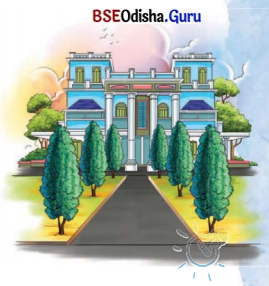
“I order you to paint for me,
A fortress tall and grand.
Paint treasures, jewels, and riches rare,
Enough to rule this land.
Complete the following sentence with the correct reason.
(ସଠିକ୍ କାରଣ ସହ ନିମ୍ନଲିଖତ ବାକ୍ୟକୁ ପୂରଣ କର ।) (Questions with Answer)
The news of Gopi’s magic brush spreads through forests, fields and plains because of its amazing magical touch turning every lifeless object into life or reality.
(ପ୍ରତ୍ୟେକ ନିର୍ଭିକ ବସ୍ତରେ ସଜୀବତା ବା ବାସ୍ତବତାର ଅଲୌକିକ ଯାଦୁର ସ୍ପର୍ଶ ପ୍ରଦାନ କରିବାର ଶକ୍ତି ।)
The things painted by Gopi’s paintbrush are compared to magic gains. Why ?
(ଗୋପୀର ରଂଗତୁଳିଦ୍ଵାରା ଅଙ୍କିତ ଜିନିଷଗୁଡ଼ିକୁ ଯାଦୁକରୀ ଲାଭ ସହିତ ତୁଳନା କରାଯାଇଛି । କାହିଁକି ?)
Answer:
The things painted by Gopi’s paintbrush are compared to magic gains because they become original objects offering profits instantly as the spell of magic.
(iii) Which of the following statements given below is false? Rectify the false statement.
ନିମ୍ନଲିଖ୍ତ ଉକ୍ତିଗୁଡ଼ିକ ଭିତରୁ କେଉଁଟି ଭୁଲ୍? ଭୁଲ ଉକ୍ତିଟିକୁ ସଂଶୋଧନ କର ।)
A. Gopi’s magic brush draws the attention of the powerful Zamindar.
B. The Zamindar requests Gopi to paint a grand fortress and jewels.
Answer:
B. The Zamindar requests Gopi to paint a grand fortress (ଅଙ୍କନ କରିବା ପାଇଁ) and jewels (ଗହଣା).
Correct Statement: The Zamindar orders Gopi to paint a grand fortress and jewels.
(iv) What does the Zamindar’s demand for a grand fortress and jewels reveal about his character ?
(ଏକ ବିଶାଳ ଦୁର୍ଗ ଓ ଗହଣାଗୁଡ଼ିକ ପାଇଁ ଦାବି ଜମିଦାରଙ୍କ ଚରିତ୍ର ବିଷୟରେ କ’ଣ ପ୍ରକାଶ କରୁଛି ?)
Answer:
The Zamindars demand for a grand fortress and jewels reveals about his greed and jealousy.
Answer the following questions.
(ନିମ୍ନଲିଖତ ପ୍ରଶ୍ନଗୁଡ଼ିକର ଉତ୍ତର ଦିଅ ।)
Question 1.
Explain why Gopi made the right decision by refusing to paint for the Zamindar.
(ଜମିଦାରଙ୍କ ପାଇଁ ଚିତ୍ର ଆଙ୍କିବାକୁ ମନା କରି ଗୋପୀ କାହିଁକି ଠିକ୍ ନିଷ୍ପତ୍ତି ନେଇଥୁଲା, ବୁଝାଅ ।)
Answer:
Truly, Gopi made the right decision by refusing to paint for the Zamindar because the magic brush was meant for the poor to improve their condition as told it committed to her by the stranger.
(ତାକୁ ଯେଉଁଭଳି ଅଜଣା ବ୍ୟକ୍ତି ଦ୍ଵାରା ଶପଥ କରାଇ ଦିଆଯାଇଥିଲା ।)
Question 2.
Gopi threatens to draw a beast to scare away the Zamindar. Justify her action. How would you have dealt with the situation differently.
(ଜମିଦାରଙ୍କୁ ଘଉଡ଼େଇ ଦେବାପାଇଁ ଗୋପୀ ଏକ ହିଂସ୍ର ପ୍ରାଣୀ ଆଙ୍କିବାର ଧମକ ଦେଲା । ତାଙ୍କ କାର୍ଯ୍ୟର ଯଥାର୍ଥତା ପ୍ରମାଣ କର । ତୁମେ କିପରି ପରିସ୍ଥିତିକୁ ଭିନ୍ନ ଭାବରେ ମୁକାବିଲା କରିଥା’ନ୍ତ ?)
Answer:
Gopi threatens to draw a beast to scare away (ଘଉଡ଼େଇ ଦେବାପାଇଁ) the Zamindar. Because if she had not done so (ସେ ଯଦି ଏଭଳି କରିନଥା’ନ୍ତା), the Zamindar would have killed (ମାରିଦେଇଥା’ନ୍ତେ) for not having heeded his order (ତାଙ୍କର ଆଦେଶ ଅବମାନନା କରିଥିବାରୁ). As for myself (ମୋ ବିଷୟରେ କହିବାକୁ ଗଲେ) I would have dealt with the situation by mesmerizing him with the spell of the magic brush. ‘ (ତାକୁ ବଶୀଭୂତ କରି ।)
Question 3.
What is the significance of Gopi celebrating with the villagers at the end of the poem ?
(କବିତାର ଶେଷରେ ଗ୍ରାମବାସୀମାନଙ୍କ ସହିତ ଗୋପୀର ଆନନ୍ଦ ଉତ୍ସବ ପାଳନର ତାତ୍ପର୍ଯ୍ୟ କ’ଣ ଅଟେ ?)
Answer:
Gopi truly loved the villagers and tried his best to improve the condition of the poor people. So she celebrated with the villagers. Besides this (1918!) she had outsmarted (ବୁଦ୍ଧିଦ୍ୱାରା ପରାସ୍ତ କରିଥିଲା) the Zamindar’s men with the miracle
(ଅଲୌକିକତା) of the magic brush like a victor. (ଜଣେ ବିଜୟୀଭଳି)
Question 4.
Compare Gopi’s use of the magic brush to how the Zamindar would have used it ?
(ଗୋପୀର ଯାଦୁକରୀ ବା କୁହୁକ ତୂଳୀର ବ୍ୟବହାରକୁ ଜମିଦାରଙ୍କ ଏହାର ବ୍ୟବହାର ବିଷୟରେ ତୁଳନା କର ।)
(ବା, ଗୋପୀ ଯେଉଁଭଳି କୁହୁକ ତୂଳୀ ବ୍ୟବହାର କରୁଥିଲେ, ଯଦି ଏହା ଜମିଦାରଙ୍କ ପାଖରେ ଥା’ନ୍ତା, ତାକୁ ସେ କିଭଳି ବ୍ୟବହାର କରିଥା’ନ୍ତେ ?)
Answer:
As per the commitment made to the stranger (ଅଜଣା ବ୍ୟକ୍ତିଙ୍କୁ କରିଥିବା ଶପଥ ଅନୁସାରେ) Gopi used the magic brush for the well-being (ମଙ୍ଗଳ ବା ଉନ୍ନତି) of the poor. But if the brush had come to the Zamindar’s possession (କିନ୍ତୁ ଯଦି ଏହା ଜମିଦାରଙ୍କ ଅଧିକାରକୁ ଆସିଥା’ନ୍ତା) he would have used it exclusively (ମୁଖ୍ୟତଃ ବ୍ୟବହାର କରିଥାନ୍ତେ) for gathering more and more wealth unjustly. (ଅନ୍ୟାୟଭାବେ ଅଧିକରୁ ଅଧିକ ସମ୍ପତ୍ତି ଜମା କରିବାରେ)
Question 5.
What can be inferred about Gopi’s character based on her refusal to follow the Zamindar’s orders?
(ଜମିଦାରଙ୍କର ଆଦେଶ ମାନିବାକୁ ଅସ୍ଵୀକାର କରିବା ପଛରେ ଗୋପୀର ଚରିତ୍ର ବିଷୟରେ କ’ଣ ଅନୁମାନ କରାଯାଇପାରେ ?)
Answer:
Based on her refusal (ପ୍ରତ୍ୟାଖ୍ୟାନର ଆଧାରରେ) to follow (ମାନିବାପାଇଁ) the Zamindar’s order it can be inferred (ଅନୁମାନ କରାଯାଇପାରେ) about Gopi’s character that (ଯେ) she was fearless (ନିର୍ଭିକ) and practical (ବାସ୍ତବବାଦୀ) to the core (ସଂପୂର୍ଣ୍ଣ ଭାବରେ) and committed. (ଅଙ୍ଗୀକାରବଦ୍ଧ).
Question 6.
Justify appropriateness of the title of the poem.
(କବିତାର ଶୀର୍ଷକ ବା ନାମକରଣର ସାର୍ଥକତା ପ୍ରତିପାଦନ କର ।)
Answer:
The title of the poem is “The Magic Brush of Dreams”. I think the title is apt (ସାର୍ଥକ) as the entire poem moves around the gift (ଉପହାର ) of the magic brush to Gopi and her escape (ପଳାୟନ) from the cruel (ନିଷ୍ଟର) Zamindar when she was dreaming about the wonders of the magic brush.
Question 7.
If you had the magic brush, how would you use it in today’s world ?
(ତୁମ ପାଖରେ ଯଦି କୁହୁକ ତୂଳୀ ରହନ୍ତା, ତୁମେ ଏହାକୁ କିପରି ବର୍ତ୍ତମାନରେ ପୃଥିବୀରେ ବ୍ୟବହାର କରନ୍ତ ?)
Answer:
If fortunately (ସୌଭାଗ୍ୟବଶତଃ) I had the magic brush, I would use it for removing poverty, diseses and suffering and crimes in today’s world to make it (the world) a better and beautiful place for everyone to live in it.
Let us Learn (ଆସ ଶିଖୁବା):
The verb ‘draw’ has different meanings in different contexts. Match the sentence in column-1 with their appropriate meanings in column 2.
ବିଭିନ୍ନ କ୍ଷେତ୍ରରେ କ୍ରିୟାପଦ ‘draw’ ର ଭିନ୍ନ ଭିନ୍ନ ଅର୍ଥ ରହିଛି । ସ୍ତମ୍ଭ ‘୧’ରେ ଥିବା ଶବ୍ଦଗୁଡ଼ିକ ସହିତ ସ୍ତମ୍ଭ ?ରେ ଦିଆଯାଇଥିବା ସଠିକ୍ ଅର୍ଥକୁ ଯୋଗକର ।)
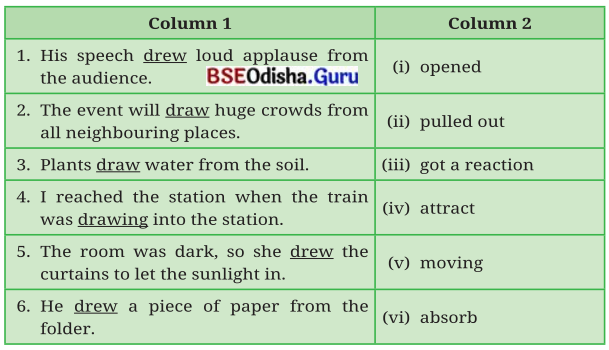
Answer:
| Column – 1 | Column – 2 |
| 1. His speech drew loud applause from the audience | (iii) got a reaction |
| 2. The event will draw huge crowds from all neighbouring places. | (iv) attract |
| 3. Plants draw water from the soil. | (vi) absorb |
| 4. I reached the station when the train was drawing into the station. | (v) moving |
| 5. The room was dark, so she drew the curtain to let the sunlight in. | (i) opened |
| 6. He drew a piece of paper from the folder. | (ii) pull out |
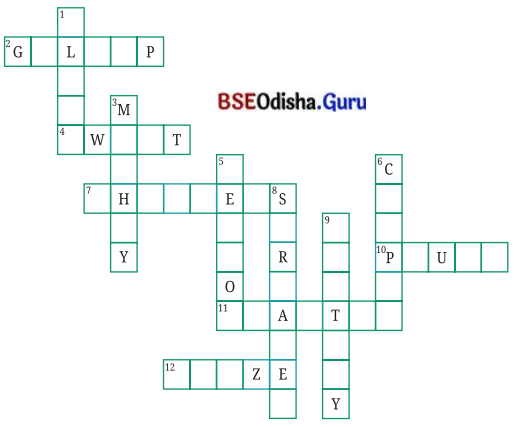
II. Fill in the cross word. Clues have been given below. You will find the words in the poem.
(ଶବ୍ଦ ଧନ୍ଦାଟିକୁ ପୂରଣ କର । ନିମ୍ନରେ ସୂଚନା ଦିଆଯାଇଛି । ତୁମେ କବିତାରେ ଶବ୍ଦଗୁଡ଼ିକ 1) (Question with Answer)
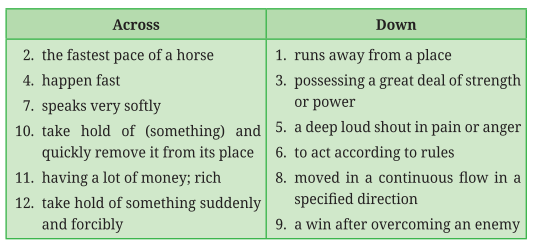
III. There are certain expressions that convey a sudden feeling or reaction. They can be used to express a variety of emotions and thoughts.
(କେତେକ ନିର୍ଦ୍ଦିଷ୍ଟ ଉକ୍ତି ରହିଛି ଯାହା ବକ୍ତାଙ୍କର ତ୍ଵରିତ ଆବେଗ ବା ପ୍ରତିକ୍ରିୟା ପ୍ରକାଶ କରେ । ବିଭିନ୍ନ ଆବେଗ ଓ ଭାବନା ସୂଚିତ କରିବାପାଇଁ ସେଗୁଡ଼ିକୁ ବ୍ୟବହାର କରାଯାଇପାରିବ ।)
Example: … he whispers. “Hush!”
(‘Hush’ denotes the act of silencing someone).
(କାହାକୁ ନୀରବ ରହିବାପାଇଁ ସୂଚିତ କରିବାପାଇଁ ‘Hush’ ବ୍ୟବହାର କରାଯାଏ ।)
Now, much the expressions in Column 1 with what emotions or reactions they convey, in Column 2.
(ଏବେ ସ୍ତମ୍ଭ ‘1’ ରେ ଥିବା ଉକ୍ତିଗୁଡ଼ିକୁ ସ୍ତମ୍ଭ ‘2 ରେ ଥିବା ସେଗୁଡ଼ିକ ପ୍ରକାଶ କରୁଥିବା ଆବେଗ ବା ପ୍ରତିକ୍ରିୟା ସହିତ ଯୋଗ କର ।) (Questions with Answer)
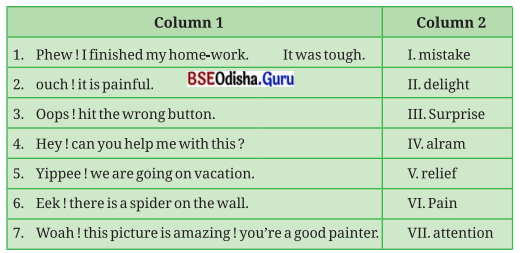
Answer:
| Column I | Column II |
| 1. Phew! I finished my homework. It was tough. | (v) relief |
| 2. Ouch! It is painful. | (vi) pain |
| 3. Oops! hit the wrong button. | (i) mistake |
| 4. Hey! Can you help me with this? | (vii) attention |
| 5. Yippee/ We are going on vacation. | (ii) delight |
| 6. Eek! There is a spider on the wall. | (iv) alarm |
| 7. Woah! This picture is amazing! You’re a good painter. | (iii) surprise |
Now make sentences using any five expression from column I.
(ସ୍ତମ୍ଭ ‘୧’ରୁ କୌଣସି ପାଞ୍ଚଟି ଉକ୍ତିକୁ ନେଇ ବାକ୍ୟ ଗଠନ କର ।)
Answer:
(i) Ouch ! What a pain in the neck.
(ii) Phew ! (ଆଶ୍ୱସ୍ତି) I finally finish the project.
(iii) Eek! (ସାବଧାନ) The road is slippery. (ଖସଡ଼ା)
(iv) Yippee! (ହୁରେ) We have won the trophy.
(v) Woah! (ଆହା) Very beautiful mobile.
Let us listen (ଆସ ଶୁଣିବା):
I. You will listen to five speakers speak about a magical power they wish for. As you listen, match statements 1-7 with speakers (i)-(v). There are two statements you do not need. (Transcript for teacher on page 152 )
(ପାଞ୍ଚଜଣ ବ୍ୟକ୍ତି ସେମାନେ ଇଚ୍ଛା କରୁଥିବା ଏକ କୁହୁକ ଶକ୍ତି ବିଷୟରେ କହୁଥିବା ତୁମେ ଶୁଣିବ । ତୁମେ ଶୁଣିବା ସମୟରେ ଉକ୍ତି 1 ରୁ 7 କୁ ବକ୍ତା (i) ରୁ (v) ସହିତ ମିଳାଇବ । ଦୁଇଟି ଭକ୍ତି ଅଛି ଯାହା ତୁମ ପାଇଁ ଦରକାର ନୁହେଁ ।)
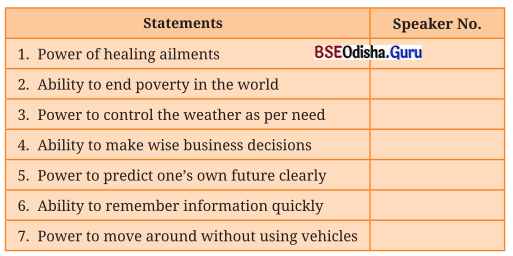
Answer:
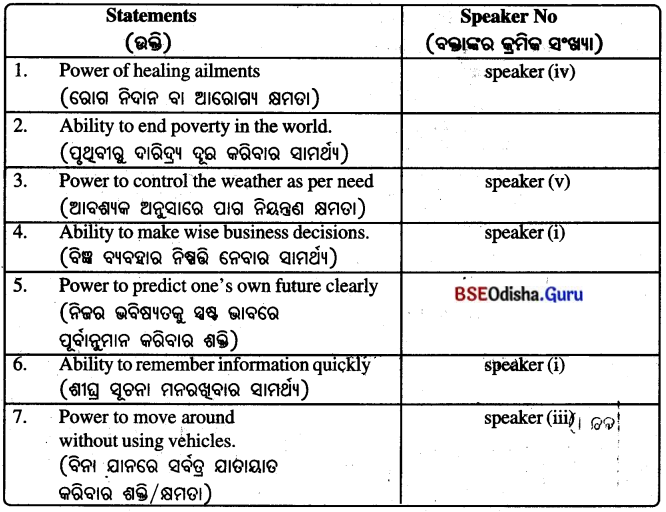
Remember, the statements against ‘2’ and ‘6’ aren’t given by any speaker.
(ମନେରଖ, ଭକ୍ତି ‘2’ ଓ ‘5’କୌଣସି ବକ୍ତା କହିନାହାନ୍ତି ।)
Let us speak (ଆସ କରିବା) :
I. Intonation is the rise and fall of the pitch of the tone while speaking. (କହିଲା ବେଳେ ସ୍ଵରର pitch ରେ ଥିବା ଊର୍ଦ୍ଧ୍ବ ଓ ନିମ୍ନ ଗତିକୁ intonation ବା ସ୍ଵର ଲହରୀ କୁହାଯାଏ ।
The ‘falling’ tone is the fall in the pitch of the voice from a high level to a low level. It is marked N. The falling tone is generally used in imperative sentences. Such sentences are used in speech for different communicative purposes-to express a command or an instruction, to ask for a favour or to give a warning.
ଏହି ଚିହ୍ନଦ୍ଵାରା ଶବ୍ଦର ଉଚ୍ଚାରଣରେ ସ୍ଵରର ନିମ୍ନଗତିକୁ ବୁଝାଯାଏ ।
Use (ବ୍ୟବହାର) :
‘Falling tone’ ନିମ୍ନ ବା ତଳମୁଖୀ ସ୍ୱର ସାଧାରଣତଃ Imperative sentence ବା ଆଦେଶ, ଉପଦେଶ, ଆଶିଷ ବା ଅନୁରୋଧସୂଚକ ବାକ୍ୟରେ ବ୍ୟବହାର କରାଯାଏ ।
Read the following sentences from the text with the falling tone.
(ପାଠ୍ୟ ବିଷୟରୁ ନିମ୍ନାଭିମୁଖୀ ସ୍ତରଯୁକ୍ତ ନିମ୍ନଲିଖତ ବାକ୍ୟଗୁଡ଼ିକୁ ପଢ଼ ।)
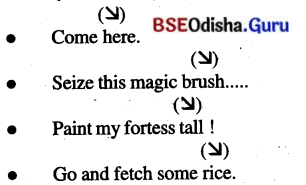
II. Work in pairs. Take turns to make requests for the following formal and informal situations.
(ଦୁଇଜଣିଆ ଦଳରେ କାମ କର । ନିମ୍ନରେ ଦିଆଯାଇଥିବା ପାଳି ଅନୁସାରେ ଆନୁଷଙ୍ଗିକ ଓ ଅଣଆନୁଷଙ୍ଗିକ ଅନୁରୋଧ କର ।)
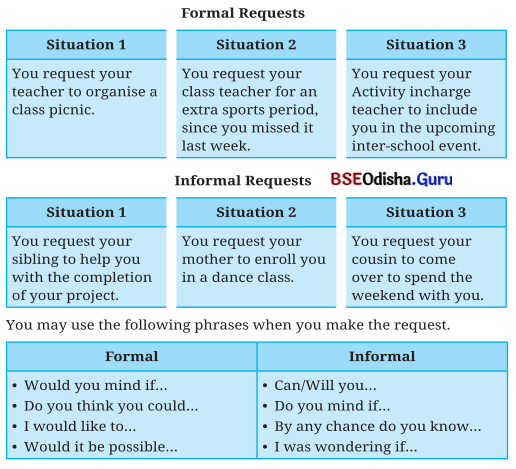
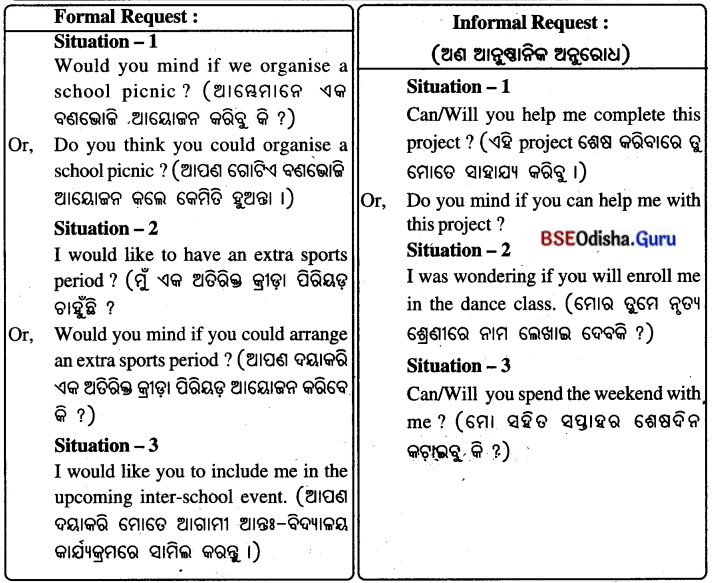
Answer:
Let us write (ଆସ ଲେଖୁବା)
1. The writing of an essay is like the construction of a house. Before constructing a house, we make a plan. Likewise we plan out that we want to write about the subject in the form of outlines/hints.
(ଏକ ପ୍ରବନ୍ଧ ବା ରଚନା ଲେଖୁବା ଏକ ଗୃହ ନିର୍ମାଣ ଭଳି । ଘର ତିଆରି ପୂର୍ବରୁ ଆମ୍ଭେମାନେ ଏକ ଯୋଜନା କରିଥାଉ । ସେହିଭଳି ପ୍ରବନ୍ଧ ଲେଖୁବା ପାଇଁ ଆମେ ବିଷୟବସ୍ତୁର ରୂପରେଖ/ସୂଚନା ପ୍ରସ୍ତୁତ କରିଥାଉ ।)
(i) While developing the outlines, efforts should be made to link one idea.
(ରୂପରେଖକୁ ବ୍ୟାପକ କରିବା ସମୟରେ ତାହାକୁ ଗୋଟିଏ ଧାରଣା ସହିତ ସଂଯୁକ୍ତ କରିବାରେ ଚେଷ୍ଟା କରାଯିବା ଉଚିତ ।)
(ii) Put space between paragraphs.
(Paragraph ଗୁଡ଼ିକ ମଧ୍ୟରେ କିଛି ବ୍ୟବଧାନ ବା ଶୂନ୍ୟ ଜାଗା ରଖ ।)
(iii) Choose the greatest information.
(ବ୍ୟାପକ ସୂଚନା ବା ତଥ୍ୟ ଚୟନ କର ।)
(iv) Organise the information/ ideas in sequence.
ତଥ୍ୟ ବା ସୂଚନାଗୁଡ଼ିକ ଏକ କ୍ରମରେ ସଂଗଠିତ କର ବା ସଜାଅ ।)
(v) Use short and cut sentences.
(କ୍ଷୁଦ୍ର ଏବଂ ଖଣ୍ଡିତ ବାକ୍ୟଶଗୁଡ଼ିକୁ ବ୍ୟବହାର କର ।)
(vi) Choose sweet soothing easy words.
(ମଧୁର ଶୁଭୁଥିବା ଓ ସହଜ ଶବ୍ଦଗୁଡ଼ିକୁ ବାଛ ।)
(vii) Each sentences in a paragraph should have magnetic touch.
(ଗୋଟିଏ Paragraph ରେ ପ୍ରତ୍ୟେକ ବାକ୍ୟର ଆକର୍ଷଣୀୟ ସ୍ପର୍ଶ/ଛାପ ରହିବା ଉଚିତ୍ ।)
(viii) Due care should be given to appropriateness of the language or grammaticality.
(ଭାଷାର ବ୍ୟାକରଣଗତ ସଠିକତା ପ୍ରତି ଉପଯୁକ୍ତ ଗୁରୁତ୍ଵ ଦିଆଯିବା ଉଚିତ ।)
(ix) Read your essay over and over again to improve your expressions and constructions.
(ତୁମର ଉକ୍ତି ଓ ବାକ୍ୟର ଗଠନଶୈଳୀକୁ ଉନ୍ନତ କରିବାପାଇଁ ପ୍ରବନ୍ଧକୁ ବାରମ୍ବାର ପଠନ କର ।)
(x) The beginning and the end must be short and effective.
(ପ୍ରବନ୍ଧର ଆରମ୍ଭ ଓ ସମାପ୍ତ (ଉପସଂହାର) କ୍ଷୁଦ୍ର ଓ ପ୍ରଭାବୀ ହେବା ଉଚିତ ।)
Now write the following essays in about 100 words developoing the outlines given :
(ସଂକ୍ଷିପ୍ତ ଧାରଣାଗୁଡ଼ିକ ବିକଶିତ କରି ନିମ୍ନଲିଖୁତ ପ୍ରବନ୍ଧଗୁଡ଼ିକୁ ପ୍ରତ୍ୟେକ ୧୦୦ ଶବ୍ଦରେ ଲେଖ ।)
(a) Trees (Title)
Outlines: The role (ଭୂମିକା) of trees in human life and its usefulness, (ଉପକାରିତା) how they supply oxygen, timber (କାଠ ଗଣ୍ଡି) and essential conveniences (ଦରକାରୀ ସୁବିଧା), protect the surface soil (ପୃଷ୍ଠମାଟି) of the earth, cause (ସୃଷ୍ଟ କରିଥାଏ) rain and prevent floods – country’s wealth. One should look after there well.
Answer:
Trees:
What soul is to human existence is trees for our survival. Trees are the nature’s greatest gift for human beings and animals and most importantly for the ecological balance.
Trees produce oxygen through photosynthesis (ଆଲୋକ ସଂଶ୍ଳେଷଣ ମାଧ୍ୟମରେ) a process where they use sunlight, water (from soil) and carbon dioxide (from air) to produce their food (sugars/glucose) and release oxygen, vital for the living human and animal kingdom. Timbers of trees are used for making carts, rail lines, roof beams and building materials. Among other essential conveniences are fruits, roots, leaves, flowers, twigs etc. they provide for the comforts of life.
Trees protect the surface soil of the earth with the roots binding the soil (ମାଟିକୁ ବାନ୍ଧିରଖ୍) from being eroded
Trees help clouds make cold and heavy, causing rain. We know how indispensable this rain is for life and growth. Floods are prevented where we find large scales states of trees with the soil remaining firm or intact. (ଦୃଢ଼ ବା ଅକ୍ଷୁଣ୍ଣ)
Trees are the country’s wealth. Economic development largely depends on the extensive cover of trees are used for manifold purposes of a country as all the plants Since trees are the major source of our programmes, it is our first and foremost (ପ୍ରଥମ ଓ ସର୍ବପ୍ରଧାନ) duty to look after them (ସେଗୁଡ଼ିକର ଯନ୍ତ୍ର ନେବା).
(b) When I was a child. (Title)
Outlines: The happiest period, free from sorrow and burdens how you were looked after by your parents. (ତୁମେ କିପରି ବାପା ମା’ଙ୍କ ଦ୍ଵାରା ଲାଳିତପାଳିତ ହୋଇଥୁଲ) How you were loved by your grandparents. Some unforgotable memories when you joined your first school love of teachers (ଶିକ୍ଷକଙ୍କ ସ୍ନେହ) your liking of the stage. (ତୁମର ସେ ସମୟର ପସନ୍ଦ)
Answer:
When I was child (ମୁଁ ଯେତେବେଳେ ପିଲା | ଶିଶୁ ଥୁଲି)
Childhood is the golden period in man’s life. An innocent and simple child is unaffected (ପ୍ରଭାବିତ ହୋଇନଥାଏ) by sorrow (ଦୁଃଖ) and burdens. (ଦାୟିତ୍ୱ)
My parents are my living God and Goddess in the temple-like family. They took every care to make me happy and comfortable. In them I found the fountain source of pleasure. My grandparents were still alive when I was five. Since I am the pinbasket (youngest one) of the family, they poured all sorts of joys and jovialities on me. During most of the parts of day and night. I stuck to them. (ସେମାନଙ୍କ ପାଖରେ ଲାଗିରହୁଥୁଲି)
When I went to school with father, the very first day produced before me a colourful world of school where the children in colourful dresses looked joyous with sparkling (shining) smiles on thin lips. My teachers, like my parents and grandparents, were very loving, affectionate (ସ୍ନେହୀ) and caring. The stage of childhood is still itched out (ସତେଜ ହୋଇ ରହିଛି) on my mind.
Let us explore (ଆସ ଅନ୍ଵେଷଣ କରିବା):
Have you heard of Odisha’s famous magician P.L, Sundarka (Senior). His fall name is Panna Lal. He is known as one of the “India’s Gretest Magician’. He was from Nayagarh, Itamati, Odisha. He was known for being a disciple of the renowned magician P.C. Sorcar.
He was also known as the “Emperor of Magic” or “Jadusamrat” in India. He was known for his grand stage illusions and captivating performances which drew large crowds.
II. Words can also play tricks. Read the riddles about things that seem to be unreal and find what they refer to.
(ଶବ୍ଦଗୁଡ଼ିକ ମଧ୍ୟ ଯାଦୁ ସଦୃଶ ହୋଇପାରେ । ଦ୍ରବ୍ୟ ବିଷୟରେ ପ୍ରହେଳିକାଗୁଡ଼ିକୁ ପଢ଼ ଯାହା ଅବାସ୍ତବ ଜଣାଯାଏ ଏବଂ କୁହ ସେଗୁଡ଼ିକ କାହାକୁ ବୁଝାଉଛି ।)
Question 1.
I can fill a room, but I take up no space. I’m often heard, but never seen. What am I?
(ମୁଁ ଏକ କୋଠରି ଭର୍ତ୍ତି କରିଦେଇପାରେ, କିନ୍ତୁ କୌଣସି ଜାଗା ନିଏ ନାହିଁ । ମୁଁ ସବୁବେଳେ ଶୁଣାଯାଏ, ‘ମାତ୍ର କେବେ ଦେଖାଯାଏନା । ମୁଁ କିଏ ?)
Answer: Air
Question 2. The more you take, the more you leave behind. What am I?
(ତୁମେ ଯେତେ ଅଧ୍ବକ ନେବ, ସେତେ ଅଧିକ ଛାଡ଼ିବ । ମୁଁ କିଏ ?)
Answer: Foot steps / Foot prints
Question 3. I have cities but no houses, I have forests but no trees. What am I ?
(ମୋର ସହରି ଅଛି ମାତ୍ର ଘର ନାହିଁ, ମୋର ଜଙ୍ଗଲ ଅଛି ମାତ୍ର ଗଛ ନାହିଁ । ମୁଁ କିଏ ?)
Answer: Map (ମାନଚିତ୍ର)
Question 4. I am tall when I’m young and short When I’m old, in a dark room. My story is
told. (ମୁଁ ପିଲା ଅବସ୍ଥାରେ ଡେଙ୍ଗା ଓ ବୃଦ୍ଧାବସ୍ଥାରେ ଗେଡ଼ା, ଅନ୍ଧାର କୋଠରିରେ ମୋ ଗପ କୁହାଯାଏ ?)
Answer: Shadow (ଛାଇ)
III. You are asked to create a magical object. What object would you create ? Make a drawing with all its details and mention its special quality on the same sheet. Put up the sheet on the display board.
(ତୁମକୁ ଗୋଟିଏ କୁହୁକ ଦ୍ରବ୍ୟ ତିଆରି କରିବାକୁ କୁହାଗଲା । ତୁମେ କେଉଁ ଦ୍ରବ୍ୟ ତିଆରି କରିବ ? ଗୋଟିଏ କାଗଜ ଫର୍କରେ ଏହାର ସମସ୍ତ ବିବରଣୀ ଅଙ୍କନ କର ଏବଂ ସ୍ଵତନ୍ତ୍ର ଗୁଣାବଳୀ ଉଲ୍ଲେଖ କର । Display board ଉପରେ କାଗଜ ଫର୍ଦ୍ଦକୁ ଲଗାଇ ଦିଅ ।)
Magical Tree (କୁହୁକ/ ଯାଦୁକରୀ ଗଛ)
A magical tree drawing can be explained in many ways, often drawing on mythology (ପୁରାଣ), folklore (ଲୋକଗୀତ) and fantasy (ସ୍ଵପ୍ନ ବା ଅବାସ୍ତବତା).
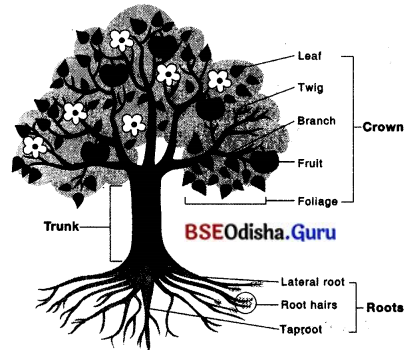
Here is a detailed explanation of the magical tree drawn above.
- Its roots (ଚେର ବା ମୂଳ):
Its roots are intricate on entangled spreading deep into the earth. The strength (ଶକ୍ତି) of the roots make the tree stand tall and straight.
It is the main support of the tree, transporting from roots to leaves and holding up the branches. - Branches: Branches extend from the trunk, holding leaves (ପତ୍ର), providing (ପ୍ରଦାନ କରି) habitat (ଆଶ୍ରୟ) for wildlife (ବନ୍ୟଜନ୍ତୁ).
- Leaves (ପତ୍ର): Leaves are called food factories of the tree using sunlight, water and carbon dioxid for “Photosynthesis” making energy.
- Flowers: Flowers are the colourful structures that attract pollinators, leading to fruit and seed production.
- Fruits: Fruits protect the seeds and help in their dispersal (ବିକ୍ଷୀପ୍ତିକରଣରେ).
- Crown/Canopy: It is the entire upper section of the tree, including all the branches and leaves, maximizing sunlight absorption (ସୂର୍ଯ୍ୟକିରଣ ଶୋଷଣ ବା ଗ୍ରହଣକୁ ଅତ୍ୟନ୍ତ ବଢ଼ାଇ).
The Magic Brush of Dreams Class 8 Summary
Let us read (ଆସ ପଢ଼ିବା) :
“Go and gather wild beans,
Gopi, Go and fetch some rice.
Go and pluck the mangoes
And bring home something nice.”
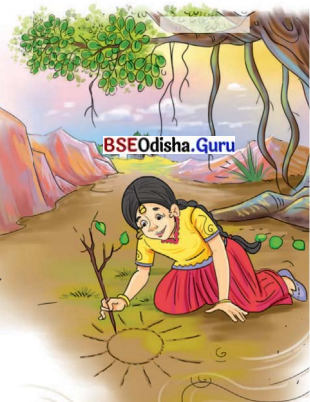
Gopi sits beneath the banyan,
A twig is in her hand.
She sits there drawing pictures,
Pictures in the sand.
The winds blow by and sweeps away-
The pictures in the sand.
‘‘ଗୋପୀ, ଯା’ ଜଙ୍ଗଲୀ ଶିମ୍ବ ସଂଗ୍ରହ କର,
ଯା’ କିଛି ଚାଉଳ ଆଣ ।
ଯା’ ଆମ୍ବସବୁ ତୋଳି ଆଣ
ଓ ଘରକୁ କିଛି ସୁନ୍ଦର ଜିନିଷ ଆଣ ।’’
ଗୋପୀ ବସିଥାଏ ବରଗଛ ତଳେ
ଗୋଟିଏ ଡାଳ ଥାଏ ତା’ ହାତରେ ।
ସେଠାରେ ସେ ବସିପଡ଼ିଛି
ବାଲିରେ ଛବି ସବୁ ଆଙ୍କିଛି । ଏତିକି ବେଳେ ପବନ ବହି
ତାର ଛବିସବୁକୁ ଦେଲା ଲିଭାଇ ।
But on a stone there’sits a man,
A brush is in his hand.
He looks around. He calls to Gopi.
“Come here!” he whispers. “Hush!
We mustn’t let the village know
About this magic brush.”
He slips the brush into her hand
And tells her to be sure,
“Paint not for the wealthy ones,
But only for the poor.”
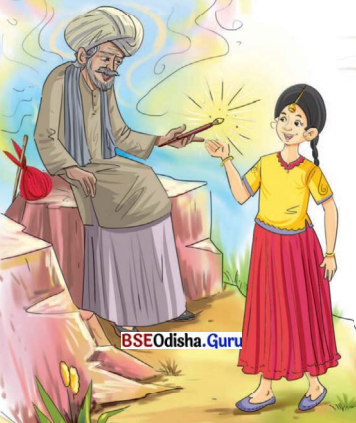
ଜଣେ ଲୋକ ପଥର ଉପରେ ଥାଏ ବସି
ହାତରେ ଧରିଣ ଏକ ତୁଳୀ ।
ଚାରିଆଡ଼ ଚାହିଁ ସେ ଗୋପୀକୁ ଡାକିଲା,
‘‘ଏଠାକୁ ଆସ’’ ବୋଲି ଧୀରେ କହିଲା ।
‘‘ ନୀରବ ରହିବୁ ତୁହି
ଗ୍ରାମବାସୀଙ୍କୁ କହୁକ ତୁଳୀ କଥା ନିଦେବା ଜଣାଇ ।’’
ଗୋପୀ ହାତେ ଧରାଇ ସେ ତୁଳୀ
କହିଲା ତାକୁ ନିଶ୍ଚୟ କରି, କେବଳ ଗରିବ ପାଇଁ
ଧନୀ ପାଇଁ କେବେ ଆଙ୍କିବୁ ନାହିଁ ।’’
“Did you gather wild beans, Gopi?
Did you fetch some rice?
Did you pluck 616-n tangoes?
And bring horrie- something nice?”
“No beans, no rice, no mangoes!”
Gopi grins and runs inside.
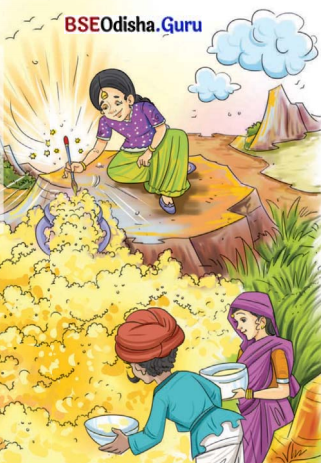
She paints a bowl of khichdi and waits,
Until the paint has dried.
‘‘ଗୋପୀ, ତୁ ଆଣିଲୁ କି ବନ୍ୟ ଶିମ୍ବ ?
ଆଣିଲୁ କି କିଛି ଚାଉଳ ?
ତୁ ତୋଳିଲୁ କି କିଛି ଆମ୍ବ
ଓ ଘରକୁ ଆଣିଲୁ କି କିଛି ସୁନ୍ଦର ଜିନିଷ ???
‘ଚାଉଳ କି ଆମ୍ବ, ଶିମ୍ବ ନାହିଁ’’
ଗୋପୀ ପଶିଗଲା ଘରେ ଦାନ୍ତ ଦେଖାଇ ।
ଆଙ୍କି ବସେ ଏକ ହାଣ୍ଡି ଖେଚେଡ଼ିର ଛବି ଅପେକ୍ଷା
କରଇ ରଙ୍ଗ ଯିବାଯାଏ ଶୁଖୁ ।
“The bowl is full of khichdi, Gopi!”
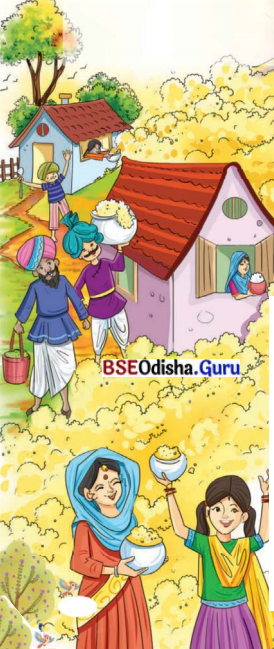
Into the house the villagers streamed
The young and old all wish to see
The magic brush of dreams.
She paints a muffler for a farmer,
A plough for another man,
A shawl for a grandmother,
And fora girl, a fan.
And soon the news spreads far and wide,
Through forests, fields, and plains,
Until the Zamindar himself
Hears of these magic gains.
‘‘ଗୋପୀ, ହାଣ୍ଡିଟି ତ ଖେଚିଡ଼ିରେ ଭର୍ତ୍ତି ।’’
ଖୁସିରେ ଚିତ୍କାର କରି ଗ୍ରାମବାସୀ ଘରେ ଗଲେ ପଶି ।
ପିଲାଠାରୁ ବୁଢ଼ାଯାଏ ସଭିଏଁ ଚାହାନ୍ତି
ଦେଖିବାକୁ କୁହୁକ ତୁଳୀ କରାମତି ।
ଚାଷୀ ପାଇଁ ଆଙ୍କିଲା ବସି ଏକ ମଫଲର,
ଅନ୍ୟ ଜଣକ ପାଇଁ ଆଙ୍କିଲା ଗୋଟିଏ ଲାଙ୍ଗଳ ।
ବୁଢ଼ୀ ମା’ ପାଇଁ କଲା ଶାଲଟିଏ
ବାଳିକାଟି ପାଇଁ କଲା ପଙ୍ଖାଟିଏ ।
ସଙ୍ଗେ ସଙ୍ଗେ ଖବରଟି ଚାରିଆଡ଼େ ଗଲା ବ୍ୟାପି
ଡେଇଁ ଜଙ୍ଗଲ, ବିଲ ଓ ସମତଳ ଭୂଇଁ ।
ନ ଶୁଖୁବା ଯାଏ ଜମିଦାର
“I order you to paint for me,
A fortress tall and grand.
Paint treasures, jewels, and riches rare,
Enough to rule this land.”
Gopi bows and shakes her head.
“My lord, I can’t comply.
I swore to use this magic brush
To help the needy by.”
The Zamindar roars and stamps his foot.
He bellows to his men,
“Seize this brush and seize the girl.
Throw her in the pen!”
ଆଙ୍କ ମୋ ପାଇଁ ମୋର ଆଦେଶ,
ଗୋଟିଏ ବିଶାଳ, ଭବ୍ୟ ଓ ଉତ୍ତୁଙ୍ଗ ଦୁର୍ଗ ।
ଆଙ୍କ ସମ୍ପଦ, ଅଳଙ୍କାର ଓ ଦୁର୍ଲଭ ମୂଲ୍ୟବାନ ଜିନିଷ,
ଯାହା ଦରକାର ଶାସନ କରିବାକୁ ଦେଶ ।
ଗୋପୀ ନାସ୍ତି କଲା ପୁଣି ମୁଣ୍ଡକୁ ହଲାଇ
ଆପଣଙ୍କ ଆଦେଶ ପାଳି ପାରିବି ନାହିଁ ।
ମୁଁ ଶପଥ କରିଛି ଏହି ମୋର ତୁଳୀ
କେବଳ ଗରିବଙ୍କ ସାହାଯ୍ୟ ପାଇଁ ।
ଜମିଦାର ଗୋଡ଼ କଚାଡ଼ି କଲେକ ଗର୍ଜନ
ଡାକିଲେ ତାଙ୍କର ଯେତେ ବୋଲ କରାଗଣ ।
ତୂଳୀକୁ ଜବତ କରି ସେ ଝିଅକୁ ଧର
ନେଇ ତାକୁ କାରାଗାରେ ନିକ୍ଷେପ କର
Now Gopi waits inside the cell,
Upon a cold mud floor.
Until the Zamindar returns
And shouts through the door.
He holds the brush. He thunders loud,
“Paint my fortress tall!
Paint gold and rubies, emeralds bright,
And you shall leave this hall!”
ଗୋପୀ ରହିଅଛି କାରାଗାରର ଭିତରେ
ମାଟିର ନିର୍ମିତ ଏକ ଥଣ୍ଡା ଚଟାଣରେ ।
ବାହୁଡ଼ି ଆସିଲା ପରେ ସେହି ଜମିଦାର
ଦ୍ଵାର ପାରୁଶେ ରହିଣ କଲେକ ଗର୍ଜନ
ହାତରେ ଧରିଣ ତୁଳୀ କଲେକ ଗର୍ଜନ
ମୋର ପାଇଁ ଆଙ୍କ ତୁହି ଦୁର୍ଗ ଯେ ଉତ୍ତୁଙ୍ଗ
ସୁନା, ଲାଲ ମୁକ୍ତା ଓ ଉଜ୍ଜ୍ଵଳ ନୀଳମଣି ଆଙ୍କ
ତେବେ ଯାଇ ବନ୍ଦୀଘରୁ ହୋଇବୁ ତୁ ମୁକ୍ତ ।
That night the Zamindar lies in bed,
Dreaming of his gold,
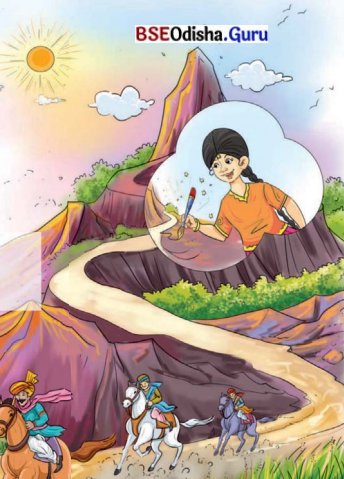
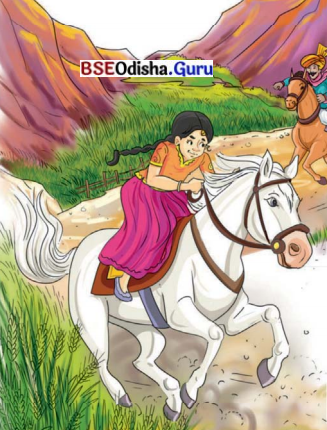
While Gopi paints a winding road,
A horse both strong and bold.
The road leads out of prison gates.
The horse, she swiftly urges
Gopi leaps on and gallops fast,
Through fields and many villages.
‘It’s Gopi! It’s Gopi! She’s back again!”
Say the villagers, merry and kind.
But Gopi keeps on painting still,
With the Zamindar’s men following behind.
ସେହି ରାତିରେ ଜମିଦାର ଶୋଇ ପଲଙ୍କରେ
ଆଶା କରିଥିବା ସୁନା ରୂପା ସପନରେ ।
ଗୋପୀ ଆଙ୍କୁଥାଏ ଏଣେ ଅଙ୍କାବଙ୍କା
ରାସ୍ତା ସବଳ ଆଉ ସାହସୀ ଏକ ଶକ୍ତ ଘୋଡ଼ା
କାରାଗାର ବାହାରକୁ ରାସ୍ତା ଲମ୍ବିଥିଲା
ଘୋଡ଼ାକୁ ସେ ବେଗଶାଳୀ ହେବାକୁ ବାଛିଲା ।
ଗୋପୀ ବସି ଘୋଡ଼ାପରେ ଝପଟାଇ ଦେଲା
କେତେ ଗ୍ରାମ କେତେ କ୍ଷେତ ଅତିକ୍ରମି ଗଲା ।
ଏଇ ଗୋପୀ ଆମ ପାଖେ ଆସିଛି, ଯେ ଫେରି
ଗ୍ରାମବାସୀଏ କହିଲେ ଅତି ଖୁସି ହୋଇ ।
ତଥାପି ଗୋପୀ ଚାଲିଥାଏ ଆଙ୍କି
ଜମିଦାର ଲୋକମାନେ ପଛୁ ଆସୁଥା’ନ୍ତି ଛୁଟି ।
She paints a mighty river wide,
Its currents fast and deep.
The Zamindar and all his men
Stop short and cannot leap.
“Now should I paint a beast
To leap and chase you through?
Stop this chase or it will feast
On you, and you and you!”
The Zamindar cries, ‘No, no, no more!
I’ll leave, I’ll go away!”
He turns and flees; his men behind
Dare not choose to stay.
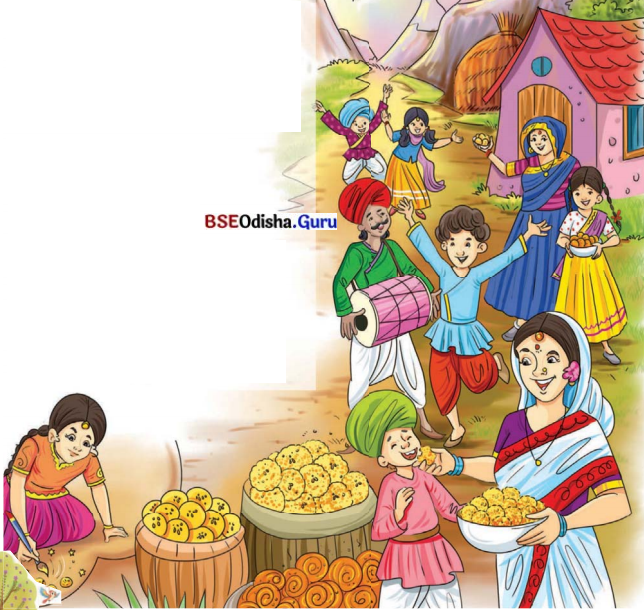
Now Gopi paints for the village folk,
A feast of sweets and tea
A courtyard bright, a band to play,
And songs of victory. — Adapted from a Folk Tale
ଆଙ୍କିଲା ସେ ଶକ୍ତିଶାଳୀ ନଦୀ ଓସାରିଆ
ତୀବ୍ର ତା’ର ସ୍ରୋତ ପୁଣି ଅଟେ ଗହୀରିଆ ।
ଜମିଦାର ଓ ଭୃତ୍ୟ ସବୁ ପଛେ ରହିଗଲେ
କିଛି ନ କରିପାରି ହତାଶ ହୋଇଲେ ।
ଏବେ ମୁଁ ଆଙ୍କିବି ଏକ ହିଂସ୍ର ପଶୁ
ଲମ୍ଫ ଦେଇ ଗୋଡ଼ାଇବ ସେ ତୁମକୁ ।
ଗୋଡ଼ାଇବା ଛାଡ଼ି ନୋହିଲେ ସେ ଖାଇଯିବ
ତୁମକୁ ତୁମ ଲୋକଙ୍କୁ ନଛାଡ଼ିବ ।
ଜମିଦାର ଚିତ୍କାର କଲେ ଆଉ ନୁହେଁ
ଛାଡ଼ି ଚାଲିଯିବ ମୁହଁ ବହୁ ଦୂରେ ।
ବୁଲିପଡ଼ି ପଛକୁ ସେ କଲେ ପଳାୟନ
ରହିବାକୁ ନଥୁଲା ଯେ ସାହସ ତାଙ୍କର ।
ଏବେ ଗୋପୀ ଆଙ୍କିଲା ଗ୍ରାମବାସୀ ପାଇଁ ଚା’
ଆଉ ମିଠା ସବୁ ଖାଇବାର ପାଇଁ ।
ବିଜୟ ଗୀତିକ ଗାଇ ସର୍ବେ ପ୍ରାଙ୍ଗଣରେ
ବାଜା ବଜାଇ ନାଚିଲେ ଆନନ୍ଦ ମନରେ ।
Adapted from a Folk Tale.
(ଗୋଟିଏ ଲୋକ ଗଳ୍ପରୁ ସଂଗୃହୀତ)
The Magic Brush of Dreams Class 8 MCQ
Question 1.
What was Gopi asked to bring in addition to beans, mangoes and rice ?
(a) some useful things
(b) some nice things
(c) some pictures
(d) the magic brush
Answer:
(b) some nice things
Question 2.
What did the old man whisper to make Gopi silent?
(a) Phew!
(b) Hey!
(c) Ouch!
(d) Hush!
Answer:
(d) Hush!
Question 3.
“And tells her to be sure”- What does the old man want Gopi to do?
(a) to decide
(c) to promise
(b) to remember
(d) to follow
Answer:
(c) to promise
Question 4.
Who came to Gopi’s house to see the bowl full of Khichdi ?
(a) all the villagers
(b) the old man
(c) the Zamindar
(d) the Zamindar’s men
Answer:
(a) all the villagers
Question 5.
What does ‘magic gains’ of the brush imply ?
(a) its magical quality
(b) its ownership
(c) the benefit of using it
(d) dreams of having it
Answer:
(c) the benefit of using it
Question 6.
What did the Zamindar order his men to seize ?
(a) the girl
(b) the brush
(c) both of these
(d) neither of these
Answer:
(c) both of these
Question 7.
“It’s Gopi ! It’s Gopi !” What does the repetition of this expression by the villagers imply ?
(a) their happiness
(b) their kindness to Gopi
(c) both of these
(d) neither of these
Answer:
(c) both of these
Question 8.
Why did Gopi paint ‘a band to play’?
(a) to be loyal to her promise
(b) to celebrate her victory over the Zamindar
(c) to scare the Zamindar and his men
(d) to drive away the Zamindar and his men
Answer:
(b) to celebrate her victory over the Zamindar
The Magic Brush of Dreams Class 8 Fill in the Blanks
1. Sitting under the banyan tree, Gopi was drawing pictures with ………….
Answer: a twig
2. The winds ………… the pictures that Gopi drew in the sand.
Answer: swept away
3. The man sitting on the stone told Gopi to use the magic brush only for ………….
Answer: the poor
4. The news about the magic brush spread ………….
Answer: far and wide
5. Gopi painted a ………… horse.
Answer: strong and bold
6. Gopi threatened the Zamindar and his men that she would paint a ………… to kill them.
Answer: beast
7. The courtyard that Gopi painted was ………….
Answer: bright
The Magic Brush of Dreams Class 8 Short Question Answer
Question 1.
What was Gopi asked to do?
Answer:
Gopi was asked to go out and gather wild beans, fetch some rice and pluck the mangoes. In addition to these, she was also asked to bring home something nice.
Question 2.
What did the man say to do Gopi with the brush?
Answer:
The man told Gopi to use the brush to paint pictures only for the poor people, but not for the wealthy people. He also told her to make sure that she would act upon his advice. He told her not to tell the villagers about the magic brush.
Question 3.
How did Gopi use the magic brush to paint different things for the poor people of her village?
Answer:
With the magic brush, Gopi painted a muffler for a farmer and a plough for another man. She also painted a shawl for an old woman and a fan for a girl.
Question 4.
What did the Zamindar order Gopi and why?
Answer:
The Zamindar ordered Gopi to paint a tall and grand fortress, treasures, jewels and rare riches for him. Being greed, he liked to possess more and more wealth and be proud of it.
Question 5.
What did Gopi do to escape from the prison?
Answer:
Gopi painted a winding road as well as a strong and bold horse to escape from the prison. She rode the horse and moved very fast through fields and many villages to reach her village as soon as possible.
Question 6.
How did Gopi obstruct the chase of the Zamindar and his men?
Answer:
When Gopi saw that the Zamindar and his men were chasing her, she painted a mighty and wide river which had strong and fast currents. She could obstruct their chase as they could not come across the river.
Question 7.
What qualities of Gopi do you find in the poem?
Answer:
Gopi was a simple and kind-hearted girl. The man who gave her the magic brush could see these qualities in her. She used the brush to help the poor people of the village. Being bold enough against injustice, she refused the Zamindar to paint wealth for him. She was very clever and fearless so that she could be free her from the clutch of the Zamindar and made his dreams impossible.
Question 8.
What moral lessons do you learn from the poem?
Answer:
The poem emphasizes that power and talent should be used for selfless good, but not to satisfy greed. It also highlights that one can help others with creativity and kindness. The important moral lesson of the poem is that greatness is found in using abilities for others, but not for own selfish gain.