
For effective revision, students can use BSE Odisha Class 7 English Solutions Chapter 5 A Funny Man Question Answer to practice textbook exercises.
Class 7 English A Funny Man Question Answer
Class 7 English Chapter 5 Question Answer Odia Medium
Let us do these activities before we read
(ଆସ ପଢ଼ିବା ପୂର୍ବରୁ ଏହିସବୁ କାର୍ଯ୍ୟଗୁଡ଼ିକୁ କରିବା ।)
Look around you for things or people that make you laugh. Write them in the bubbles given below. Share the reasons for your answers with your classmates and the teacher.
(One is done for you.)
(ତୁମ ଚାରିପଟେ ଥିବା ବସ୍ତୁ ଲୋକମାନଙ୍କୁ ଯିଏ ତୁମକୁ ହସାଇଥା’ନ୍ତି । ସେଗୁଡ଼ିକୁ ନିମ୍ନ ପ୍ରଦତ୍ତ ବୁଦ୍ବୁଦ୍ ମଧ୍ଯରେ ଲେଖ । ତୁମ ଉତ୍ତରର କାରଣ ଗୁଡ଼ିକୁ ତୁମ ସହପାଠୀ ଓ ଶିକ୍ଷକଙ୍କ ସହ ବିନିମୟ କର । ଗୋଟିଏ ତୁମ ପାଇଁ କରି ଦିଆଯାଇଛି ।)
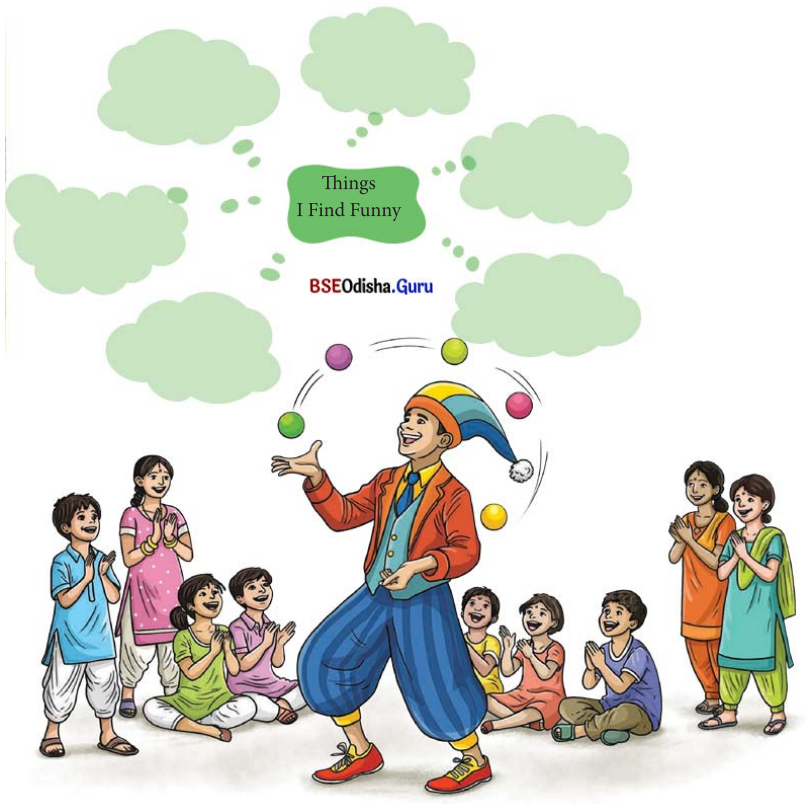
Answer:
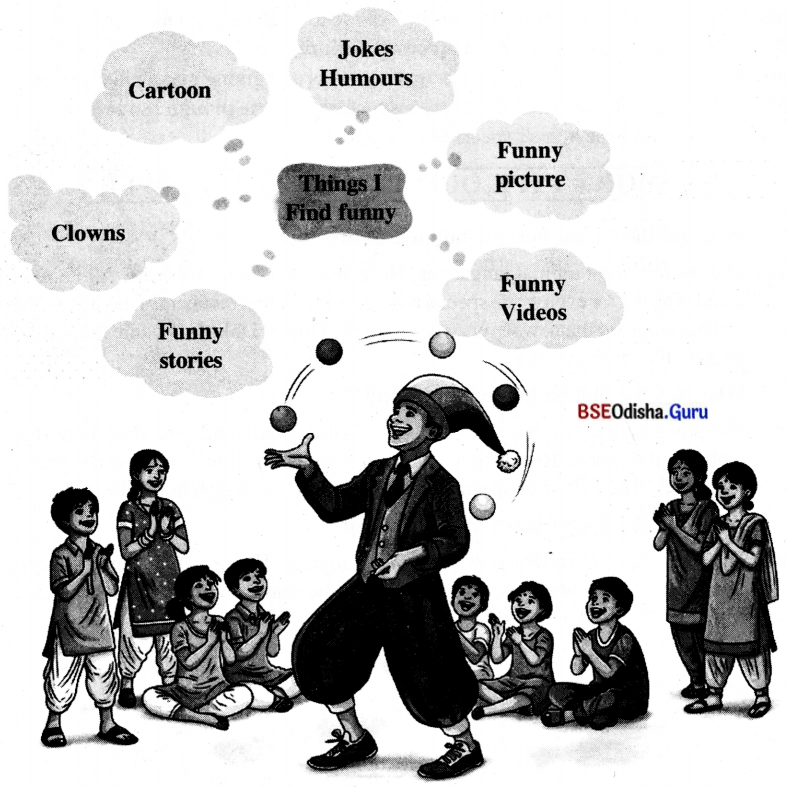
Let us discuss
(ଆସ ଆଲୋଚନା କରିବା)
Work in pairs. Identify the true statements. Check your answers with the teacher.
(ଯୋଡ଼ି ହୋଇ କାମ କର । ଠିକ୍ ବାକ୍ୟଗୁଡ଼ିକୁ ଚିହ୍ନଟ କର । ତୁମ ଉତ୍ତରକୁ ଶିକ୍ଷକଙ୍କୁ ଦେଖାଅ ।)
Question 1.
The poet says that she had never heard such an amusing song.
Answer:
True (Stanza 5: “You never heard in all your life such a funny feeling sound”)
Question 2.
The funny man was quite ill-mannered.
Answer:
False (Stanza 2: “His manners were polite”)
Question 3.
The funny man wore two hats on his feet.
Answer:
True (Stanza 6: “why do you wear two hats upon your feet?”)
Question 4.
The funny man hopped on his head to reach home.
Answer:
True (Stanza 6: “hopped home on his head”)

Question 5.
The funny man gave a rose to the poet.
Answer:
False (Stanza 3: “He offered a currant bun, not a rose”)
Question 6.
The funny man smiled at the poet.
Answer:
True (Stanza 2: “He raised the shoe and smiled at me”)
Identify the words from the poem based on the meanings given. Share your answers with your classmates and the teacher.
(କବିତାରୁ ପ୍ରଦତ୍ତ ଅର୍ଥ ଉପରେ ପର୍ଯ୍ୟବସିତ ଶବ୍ଦଗୁଡ଼ିକୁ ଚିହ୍ନଟ କର । ତୁମ ଉତ୍ତରକୁ ଶ୍ରେଣୀ ସାଥୀ ଓ ଶିକ୍ଷକଙ୍କ ସହିତ ବିନିମୟ କର ।)
1. a small seedless raisin – C_R_ _ _T
2. moved unsteadily – S _ _ GG_ _ _D
Answer:
1. CURRANT
2. STAGGERED
III. Complete the following sentences with a reason.
(ନିମ୍ନୋକ୍ତ ବାକ୍ୟଗୁଡ଼ିକୁ ଏକ କାରଣ ସହ ସମାପ୍ତ କର ।)
1. The word ‘street’ rhymes with ‘feet’ in the stanza. Now identify the other rhyming pairs and share your views with classmates.
2. The poet has frequently repeated the word ‘funny’ in order to have emphasis on the man’s _____ behaviour.
3. The phrases ‘sounding sight’ and ‘hopped home’ are examples of ____ .
4. Find the correct option given below. (ନିମ୍ନ ପ୍ରଦତ୍ତ ସଠିକ୍ ବିକଳ୍ପ ବାଛ ।)
Who moved back in an unusual way against the wall?
a) the funny kind man
b) the poet’s friend
c) the poet himself
Answer:
1. Rhyming words in the poem :
Stanza – 2: Polite – sight, Stanza – 3: rose – nose
Stanza – 4: well – smell, Stanza – 5: ground – sound
Stanza – 6: said – head
2. Peculiar/strange/ridiculous/silly
3. Alliteration
4. (c) the poet himself
IV. Can you think of any real-world situations where people do something for fun, entertainment, or performance? Share your ideas with your classmates and the teacher.
(ତୁମେ ଏଭଳି ଏକ ବାସ୍ତବ ଦୁନିଆ ପରିସ୍ଥିତି କଥା ଚିନ୍ତା କରିପାରିବ କି ଯେଉଁଠି ଲୋକମାନେ ମଜା, ଆନନ୍ଦ କିମ୍ବା ଅଭିନୟ ପାଇଁ କିଛି କରିଥା’ନ୍ତି । ତୁମର ଧାରଣାକୁ ଶ୍ରେଣୀ ସାଥୀ ଏବଂ ଶିକ୍ଷକଙ୍କ ସହିତ ବାଣ୍ଟ ।)
Answer:
Several real-world examples mirror the funny man’s behaviour:
Let us think and reflect
(ଆସ ଚିନ୍ତା କରିବା ଓ ବିଚାର କରିବା) :
I. Read the extracts given below and answer the questions that follow:
(ନିମ୍ନରେ ପ୍ରଦତ୍ତ ଉଦ୍ଧୃତାଂଶଗୁଡ଼ିକୁ ପଢ଼ ଏବଂ ପରବର୍ତ୍ତୀ ପ୍ରଶ୍ନଗୁଡ଼ିକର ଉତ୍ତର ଦିଅ ।)
1. He said, “Allow me to present
Your Highness with a rose.
And taking out a currant bun
He held it to my nose.
I staggered back against the wall
And then I answered, “Well!”
(i) Choose a phrase from the extract which indicates a polite request.
Answer:
The phrase “Allow me to present” indicates a polite request.
(ii) Choose the option which shows a ‘currant bun’.
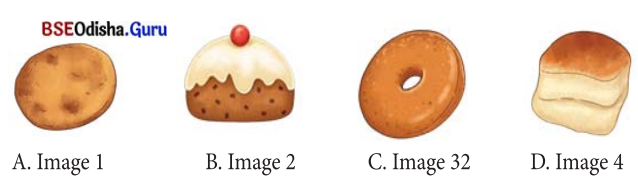
Answer:
Image 2 is of a currant bun (image 1 is of Bread, image 3 is of a donut, and image 4 is of a loaf.)
(iii) Complete the sentence with an appropriate reason.
When the poet says, ‘Well!’, it expresses surprise. This was so because
Answer:
the man offered a currant bun instead of a rose, which was unexpected.
(iv) “I staggered…..” Here ‘I’ stands for whom?
Answer:
Here ‘I’ stands for the poet.
2. You never heard in all your life
Such a funny feeling sound.
“My friend, why do you wear two hats
Upon your feet?” I said.
He turned the other way about,
And hopped home on his head.
(i) Choose the line from the extract which tells us that the sound was unique.
(ଉଦ୍ଧୃତାଂଶରୁ ଏକ ଧାଡ଼ି ବାଛ ଯାହା ଶବ୍ଦଟି ଅନନ୍ୟ ଥିଲା ବୋଲି କହୁଛି ।)
Answer:
“You never heard in all your life such a funny feeling sound.”
(ii) Complete the sentence with an appropriate reason.
(ଏକ ସମୁଚିତ କାରଣ ସହ ବାକ୍ୟ ସଂପୂର୍ଣ୍ଣ କର ।)
The poet calls the funny man ‘my friend’ because ______.
Answer:
The poet calls the funny man ‘my friend’ because she finds him amusing and non-threatening.
(iii) The poet said, “Dear friend, why do you wear two hats upon your feet?” How did the funny man react to the poet’s question?
Answer:
His reaction shows doesn’t take things seriously. Instead of answering the poet’s questions, he turned the other way and hopped home on his head.
(iv) Choose the correct option to complete the sentence. The last line of the extract makes the readers feel
A. dreamy
B. impatient
C. worried
D. cheerful
Answer:
D. cheerful
II. Answer the following questions:
(ନିମ୍ନଲିଖତ ପ୍ରଶ୍ନଗୁଡ଼ିକର ଉତ୍ତର ଦିଅ ।)
Question 1.
Which character trait of the funny man was most appealing to you? Why?
(କୌତୁକିଆ ବା ମଜାଳିଆ ଲୋକର କେଉଁ ଚାରିତ୍ରିକ ବୈଶିଷ୍ଟ୍ୟ ତୁମକୁ ଅଧୁକ ଆକୃଷ୍ଟ କରିଛି ?)
Ans:
His playfulness is appealing me because it creates joy without logic.
Question 2.
The funny man does unusual things in the poem. Make a list of such unusual things.
(କୌତୁକିଆ ଲୋକଟି କବିତାରେ ଅସାଧାରଣ କାର୍ଯ୍ୟମାନ କରୁଛି । ଏଭଳି ଅସାଧାରଣ କାର୍ଯ୍ୟଗୁଡ଼ିକର ଏକ ତାଲିକା କର ।
Answer:
The list of unusual things that a funny man does :
(i) wore a shoe upon is head.
(ii) wore hats upon his feet.
(iii) gave a currant bun saying rose.
(iv) sang a song in a funny-sounding way.
(v) hopped home on his head.
Question 3.
What alternative title would you suggest for the poem? Give reason(s) for your choice.
(କବିତାର କେଉଁ ବିକଳ୍ପ ନାମ ତୁମେ ପ୍ରସ୍ତାବ କରିବ । ତୁମ ପସନ୍ଦର କାରଣ ପ୍ରଦାନ କର ।)
Answer:
I would like to title it as “The Topsy Turvy Man” as it captures his upside- down actions.
Question 4.
What does the poet wish to convey by highlighting the unusual behaviour of the funny man?
(କବିତାରେ କୌତୁକିଆ ଲୋକର ଅସ୍ଵାଭାବିକ ବ୍ୟବହାରକୁ ପ୍ରାଧାନ୍ୟ ଦେଇ କବି କ’ଣ ବାର୍ତ୍ତା ଦେବାକୁ ଚାହିଁଛନ୍ତି ?)
Answer:
The poet highlights the funny man’s absurd behaviour to show how breaking conventions can create joy and wonder. Through his illogical antics, the poem celebrates imagination and the freedom to be playfully unconventional.
Let us learn (ଆସ ଶିଖୁବା)
Read the following phrases from the poem
(ପଦ୍ୟରୁ ନିମ୍ନଲିଖ୍ ବାକ୍ୟାଶ ଗୁଡ଼ିକୁ ପଢ଼)
- walking down (ତଳକୁ ଚାଲିବା)
- taking out (ବାହାର କରିବା)
- sat down (ତଳେ ବସିବା)
These are two-word verbs: (phrasal or prepositional verbs).
They are combinations of a verb with a preposition or an adverb particle that together function as a single unit. They often have meanings that are different from the individual words used alone. The same verb followed by different prepositions or adverb particles conveys different meanings.
I. Match the phrasal verbs in Column 1 with their correct meaning in Column 2.
(ସ୍ତମ୍ଭ ‘1’ phrasal verb ସହ ସ୍ତମ୍ଭ ‘2’ ର ସଠିକ୍ ଅର୍ଥ ମିଳାଅ ।)
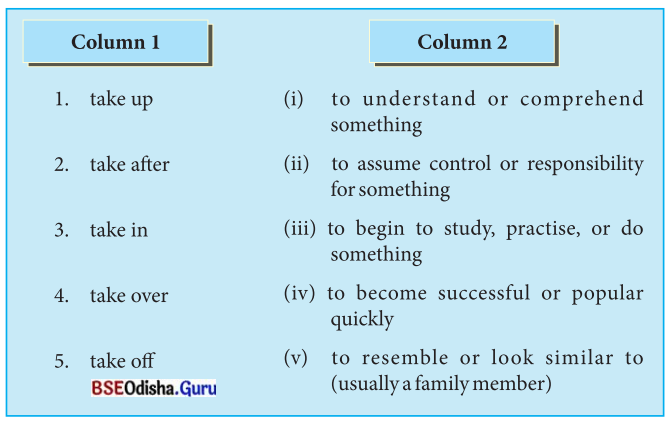
Answer:
| Column 1 | Column 2 |
| 1. take up | (iii) to begin to study, practise or do something. |
| 2. take after | (v) to resemble or look similar to (usually a family member) |
| 3. take in | (i) to understand and comprehend something. |
| 4. take over | (ii) to assume control or responsibility for something. |
| 5. take off | (iv) to become successful or popular quickly. |
Now, fill in the blanks with suitable phrasal verbs from the table given in I. You may change the tense of the verb, if required.
(ସାରଣୀ I ରେ ଦିଆଯାଇଥୁବା ଉପଯୁକ୍ତ phrasal verb ଦ୍ଵାରା ଶୂନ୍ୟସ୍ଥାନ ପୂରଣ କର । ଆବଶ୍ୟକ ସ୍ଥଳେ ତୁମେମାନେ verb ର tense ପରିବର୍ତ୍ତନ କରିପାର ।)
1. The new technology is set to ________ traditional methods of communication.
2. I tried hard to ________ what the writer wanted to say but was unsuccessful.
3. Arjun decided to ________ painting as a hobby.
4. The smartphone quickly ________ the sales in the market.
5. Sheela ________ her father; they have the same smile
Answer:
1. The new technology is set to take over traditional methods of communication.
2. I tried hard to take in what the writer wanted to say but was unsuccessful.
3. Arjun decided to take up painting as a hobby.
4. The smartphone quickly took off the sales in the market.
5. Sheela takes after her father; they have the same smile.
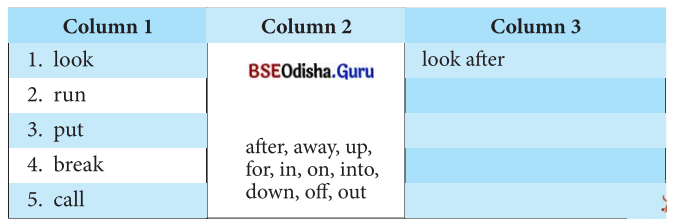
II. Match the verbs in Column 1 with any suitable adverbs or prepositions in Column 2. Write their meanings in Column 3. An example has been done for you.
(ସ୍ତମ୍ଭ 1 ରେ verb ସହିତ ସ୍ତମ୍ଭ 2ରେ ଥିବା adverb କିମ୍ବା preposition ମିଳାଅ । ସେଗୁଡ଼ିକର ଅର୍ଥ ସ୍ତମ୍ଭ 3ରେ ଲେଖ । ଗୋଟିଏ ଉଦାହରଣ ତୁମ ପାଇଁ ଦିଆଯାଇଛି ।)
(Questions with Answer)
Answer:
| Column 1 | Column 2 | Column 3 |
| 1. look 2. run 3. put 4. break 5. call |
after, away, up for, in, on, into, down, off, out | look after: take care of run down: exhausted put off: to postpone break into: enter forcefully call on: to mean |
Now, frame sentences of your own using any five phrasal verbs. (ଯେକୌଣସି ପାଞ୍ଚଟି phrasal verb ବ୍ୟବହାର କରି ତୁମ ନିଜ ବାକ୍ୟରେ ଲେଖ ।) look for – I need to look for my lost keys before I leave.
look after – The nurse looks after the patient.
run down – My car battery has run down.
put off – They put off the meeting until Tuesday.
break into – Thieves broke into our house yesterday night.
call on – I will call on my friend tomorrow.
III. Read the following words from the poem. (You can use a dictionary) ( ନିମ୍ନଲିଖିତ ଶବ୍ଦଗୁଡ଼ିକୁ ପଢ଼ । ତୁମେ ଏକ ଅଭିଧାନ ବ୍ୟବହାର କର ।)
walking, staggered, hopped
The given words denote the different ways of walking.
Arrange the words given in the box in increasing order of pace/speed.
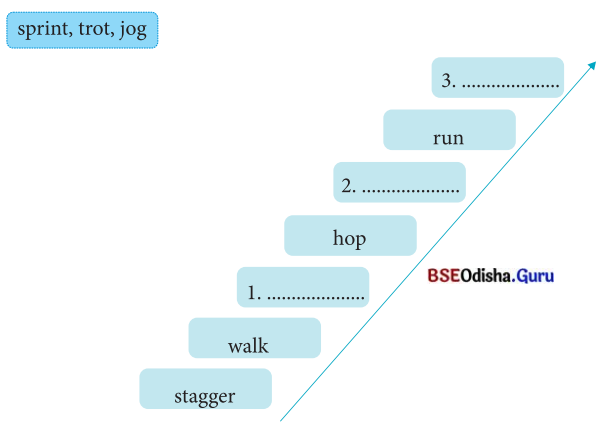
Answer:
1. jog
2. trot
3. sprint
Let us listen (ଆସ ଶୁଣିବା)
I. You will listen to a girl narrate a personal incident. As you listen, select the picture related to the narration. (Transcript for the teacher on pg. 88)
(ତୁମେ ଜଣେ ବାଳିକା ଏକ ବ୍ୟକ୍ତିଗତ ଘଟଣା ବର୍ଣ୍ଣନା କରୁଥିବାର ଶୁଣିବ । ଶୁଣିବା ସମୟରେ, ବର୍ଣ୍ଣନା ସହିତ ସମ୍ପର୍କିତ ଛବିଟି ବାଛ । ଶିକ୍ଷକଙ୍କ Transcript ପୃଷ୍ଠା ୮୮ରେ ଅଛି ।)
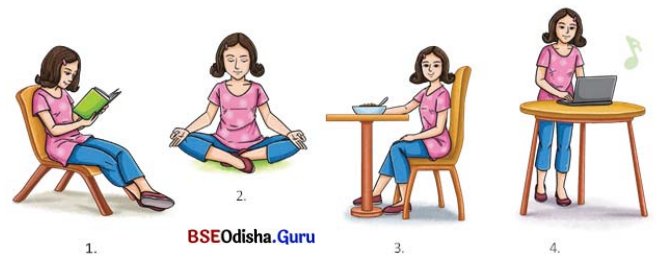
Answer:
Picture 3
II. You will once again listen to the girl narrate a personal incident. As you listen, arrange the events in order of occurrence.
(ବାଳିକାଟି ବ୍ୟକ୍ତିଗତ ଘଟଣା ବର୍ଣ୍ଣନା କରୁଥିବା ତୁମେ ଆଉଥରେ ଶୁଣିବ । ଶୁଣିବା ସମୟରେ ଘଟଣାଗୁଡ଼ିକୁ ଘଟୁଥିବା
1. Ate lunch
2. Took off shoes
3. Put shoes in the room
4. Laughed at the mistake
5. Placed the plate in the room
6. Prepared for the presentation
7. Put the plate in the kitchen
Answer:
Events in order of occurrence are as follows.
6. Prepared for the presentation
2. Took off shoes
1. Ate lunch
5. Placed the plate in the room
4. Laughed at the mistake
3. Put shoes in the room
7. Put the plate in the kitchen
Let us speak (ଆସ କହିବା) :
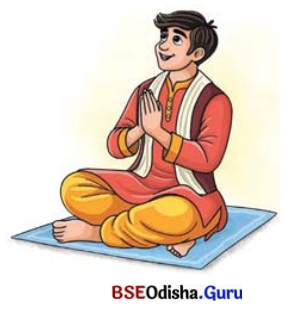
Read the joke given below.
(ନିମ୍ନ ପ୍ରଦତ୍ତ ମଜାକଥାଟି ଶୁଣ ।)
(A man is talking to God.)
The man says, “God, how long is a million years?”
God replies, “For me, it’s about a minute.”
The man asks, “How much is a million rupees?”
God smiles and replies, “It’s less than a rupee for me.’
The man quickly requests, “God, may I have a rupee?”
God promptly says, “Wait a minute.”
Work in pairs and take turns to tell the joke.
(ଦୁଇ ଜଣିଆ ଦଳରେ କାମ କର ଏବଂ ପାଳି ଆସିଲେ ଗପଟି କୁହ ।)
Remember (ମନେରଖ) :
- Man’s voice-change of voice (speak with curiosity and respect)
- God’s voice- deep voice (speak in a pleasant tone)
Now, work in pairs to create a joke and tell it in front of the class.
(ଏବେ ଦୁଇଜଣିଆ ଦଳରେ କାମ କରି ଏକ ମଜାକଥା ତିଆରି କର ଏବଂ ଶ୍ରେଣୀରେ କୁହ ।)
Answer:
1. For the given joke, students should practice:
Narration in a neutral tone
Man’s lines in a louder, respectful voice
God’s lines in a deep, calm voice
2. For the created joke (student responses will vary; no fixed answer).
Sample: A man buys a parrot who talks like a human:
One night, a thief breaks into the house.
The parrot calls out, “Who’s there?” The thief freezes and whispers, “It’s just the wind !”
The parrot replies, “Then why are you taking the TV ?”
Let us write (ଆସ ଲେଖୁବା)
I. A limerick is a nonsensical and funny verse consisting of five lines. Study the limerick given below and identify the rhyme scheme.
(ଏକ ପଞ୍ଚପଦୀ କବିତା (limerick) ହେଉଛି ଏକ ଅବୋଧ ଓ ମଜାଳିଆ କବିତା ଯେଉଁଥରେ ପାଞ୍ଚଟି ଧାଡ଼ି ଥାଏ । ନିମ୍ନ ପ୍ରଦତ୍ତ ପଞ୍ଚପଦୀ କବିତାଗୁଡ଼ିକୁ ପଢ଼ ଏବଂ ପଦପାତ (ଯତିପାତ) କ୍ରମ ଚିହ୍ନଟ କର ।)
1. There was an Old Man with a beard,
Who said, “It is just as I feared!
Two Owls and a Hen,
Four Larks and a Wren,
Have all built their nests in my beard!”
Edward Lear
Now, read another limerick.
(ଏବେ ଅନ୍ୟ ଏକ ପଞ୍ଚପଦୀ କବିତା ପଢ଼ ।)
2. There were two friends in Bengaluru’s lanes,
One loved books, the other flew planes.
They’d laugh and they’d play,
In their own unique way,
Creating stories and flying in dreams’ trains.
Remember all limericks have the same rhyme scheme AABBA.
(ମନେରଖ ସମସ୍ତ ପଞ୍ଚପଦୀ କବିତାରେ ସମାନ ଯତିପାତକ୍ରମ AABBA ଥାଏ)
Answer:
Rhyme scheme: AABBA (beard/ feared, Hen/Wren, beard)
Rhyme scheme: AABBA (lanes/ planes, play/way, trains)
II. Follow the structure given below and write a limerick on your own.
(ନିମ୍ନରେ ପ୍ରଦତ୍ତ ଗଠନଶୈଳୀକୁ ଅନୁସରଣ କରି ଏବଂ ଗୋଟିଏ ପଞ୍ଚପଦୀ କବିତା ଲେଖ ।)
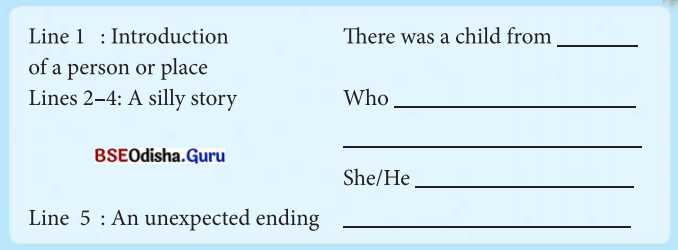
Answer:
There was a child from Dehradun,
Who ate soup with a spoon,
Then danced in the rain,
And forgot all her pain,
She/he howls at the full moon!
Let us explore
(ଆସ ଅନ୍ଵେଷଣ କରିବା):
I. In ancient Indian literature (ଭାରତୀୟ ସାହିତ୍ୟ) and mythology (ପୌରାଣିକ କଥା), there are several humorous (ହାସ୍ୟପୂର୍ଣ୍ଣ) or funny character who play important roles in the stories. These characters often represent wit, humour and mischief (ଚଗଲାମି) while conveying deeper moral lessons. Here are a few well-known funny characters:

Take any story to read and share it with your classmates and the teacher. (ପଢ଼ିବା ପାଇଁ ଯେ କୌଣସି ଏକ ଗପ ନିଅ ଏବଂ ଏହାକୁ ତୁମ ଶ୍ରେଣୀସାଥୀ ଓ ଶିକ୍ଷକଙ୍କ ସହ ବିନିମୟ କର ।)
Answer:
(Summary of a Tenali Rama story)
Once, Tenali Rama tricked a greedy merchant by. pretending that an ordinary rock was magical. The merchant fell into the trap and, bought it. Later he found it was worthless. This taught him the lesson that greed leads to loss.
II. We can identify the acts of the funny man with certain modern-day activities that have playfulness or unconventional behaviour.
(ଆମେ କୌତୁକିଆ ଲୋକର କାର୍ଯ୍ୟକୁ ଆଧୁନିକ କାର୍ଯ୍ୟକଳାପ ସହ ଚିହ୍ନିତ କରିପାରିବା ଯେଉଁଥୁରେ ଖେଳୁଆଡ଼ କିମ୍ବା ଅଣପାରମ୍ପରିକ ବ୍ୟବହାର ରହିଥାଏ ।)
For example:
STREET PERFORMERS OR CLOWNS (ରାସ୍ତା କଳାକାର କିମ୍ବା ବିଦୂଷକ ।): Like the funny man in the poem, modern-day street performers or clowns often dress in unusual ways and do unexpected acts to entertain people.
PERFORMANCE ART OR ABSTRACT THEATRE (ପ୍ରଦର୍ଶନ କଳା କିମ୍ବା ଛାୟା ରଙ୍ଗମଞ୍ଚ)): The funny man’s actions, such as singing a song and hopping on the head, resemble performance art or abstract theatre, where artists break conventional rules to create thought-provoking, often humorous experiences.
CHILDREN’S ENTERTAINMENT AND COMEDY SHOWS (ପିଲ।ଙ୍କ ମନୋରଞ୍ଜନ କିମ୍ବା କମେଡ଼ି ସୋ): The funny man’s behaviour is reflected in children’s shows to make laughter.
In these examples, the common theme is humour, imagination, and defying logic or expectation, which is exactly what the funny man in the poem represents.
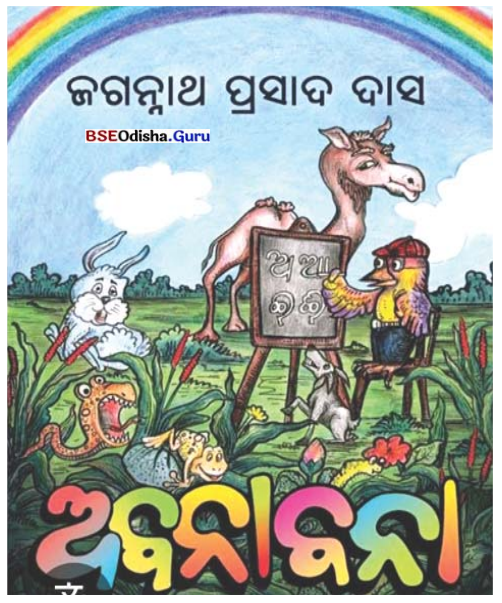
III. Jagannath Prasad Dash, an Odia poet, wrote poems in a similar style in his book Abanabana’.
(ଓଡ଼ିଆ କବି ଜଗନ୍ନାଥ ଦାଶ ତାଙ୍କ ପୁସ୍ତକ ‘ଅବନାବନା’ ରେ ସେହିଭଳି ଶୈଳୀରେ କବିତା ଲେଖୁଥିଲେ ।
You may also share a similar poem from your native language with your classmates and the teacher.
(ତୁମେ ତୁମ ଭାଷାରେ ଏହିଭଳି କବିତା ତୁମ ଶ୍ରେଣୀ ସାଥୀ ଓ ଶିକ୍ଷକଙ୍କ ସହ ବିନିମୟ କର ।)
For example:
STREET PERFORMERS OR CLOWNS (ରାସ୍ତା ପ୍ରଦର୍ଶନକାରୀ କିମ୍ବା ବିଦୂଷକ) :
Performance Art or Abstract Theatre, Children’s Entertainment and Comedy Shows (See Pages 67-68)
In these examples, the common theme is humour, imagination, and defying logic or expectation, which is exactly what the funny man in the poem represents.”
Answer:
- Street performers: Like wearing shoes on head for laughs.
- Clown acts: Similar to offering fake ‘roses” (like the bun).
- Comedy shows: Use absurd dialogue like the poem.
- Children’s entertainers: Do head- stands/hops like the funny man.
III. Sukumar Ray, an Indian poet and illustrator, wrote poems in a similar style in his book Abol Tabol.
You may also share a similar poem from your native language with your classmates
and the teacher.
Answer:
(Example Hindi poem):
“Bandar mama pahan pajama,
Neeli dhoti lal rumal,
Jab bhi aate ghar hamare,
Karte hain bahut tamasha!”
MY LOST PENCIL
(ମୋର ହଜିଥୁବା ପେନ୍ସିଲ)
Oh pencil, dear pencil, where have you gone?
I just had you here a minute at dawn!
You were sharp and perfect, ready to write,
Now you’re missing-gone from sight!
(ହେ ମୋର ପେନ୍ସିଲ୍, ତୁମେ କେଉଁଠିକୁ ଯାଇଛି ! ମୁଁ ତୁମକୁ ପ୍ରତ୍ଯୁଷରେ ଏକ ମିନିଟ୍ ପାଇଁ ଧରିଥୁଲି । ତୁମେ ତୀକ୍ଷ୍ଣ ଏବଂ ସଠିକ୍ ଥୁଲ, ଲେଖୁବାକୁ ପ୍ରସ୍ତୁତ ଥିଲ । ବର୍ତ୍ତମାନ ତୁମେ ହଜିଯାଇଛ ଦୃଶ୍ୟପଟ୍ଟରେ ନାହିଁ ।)
Did you roll off my desk? Did you fall to the floor?
Did someone swipe you for sure?
It’s always the same, I’ve lost fifty this year,
By the end of the month, they just disappear!
(ତୁମେ ମୋ ଡେସ୍କ ଉପରୁ ଖସି ପଡ଼ିଲ କି ? ତୁମେ ତଳେ ଚଟାଣ ଉପରେ ପଡ଼ିଗଲ କି ? ତୁମକୁ କେହି ଜଣେ ନିଶ୍ଚିତ ଭାବରେ ଚୋରି କରି ନେଇଛି କି ? ଏ ବର୍ଷ ପଚାଶଟା ହରେ ଇଛି । ମାସ ଶେଷରେ ସେମାନେ ଅଦୃଶ୍ୟ ହୋଇଯାଆନ୍ତି ।)
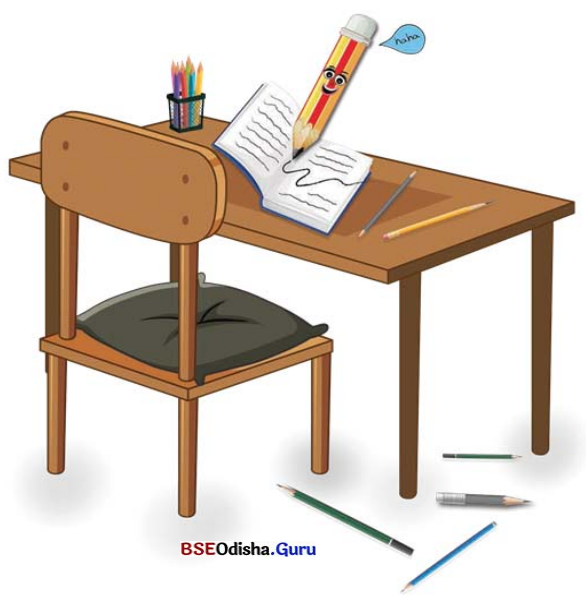
Next time, I’ll tie you with tape or a string,
Because losing my pencils is a real thing.
(ଆରଥରକୁ ମୁଁ ତୁମକୁ ଗୋଟିଏ ଟେପ୍ କିମ୍ବା ତାରରେ ବାନ୍ଧିଦେବି, କାରଣ ମୋ ପେନ୍ସିଲ୍ଗୁଡ଼ିକ ହଜେଇବା ଏକ ବାସ୍ତବ ଘଟଣା ।)
A Funny Man Class 7 Summary
Let us read (ଆସ ପଢ଼ିବା) :
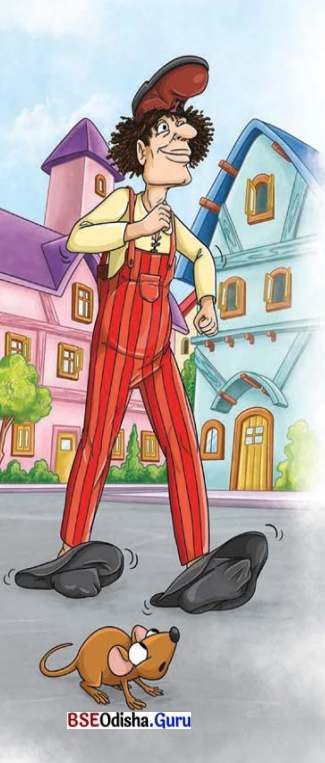
One day a funny kind of man
Came walking down this street
He wore a shoe upon his head
And hats upon his feet.
ଓଡ଼ିଆ ଅନୁବାଦ :
ଦିନେ ଜଣେ କୌତୁକିଆ ଲୋକ ଏହି ରାସ୍ତାରେ ଚାଲି
ଚାଲି ଆସିଲେ, ସେ ତାଙ୍କ ମୁଣ୍ଡରେ ଜୋତା ଏବଂ
ତାଙ୍କ ପାଦରେ ଟୋପି ପିନ୍ଧିଥିଲେ ।
He raised the shoe and smiled at me,
His manners were polite;
But never had I seen before
Such a funny sounding sight.
ଓଡ଼ିଆ ଅନୁବାଦ
ସେ ଜୋତା ଉପରକୁ ଉଠାଇଲେ ଏବଂ ମୋତେ ଦେଖୁ
ହସିଲେ, ତାଙ୍କର ବ୍ୟବହାର ଭଦ୍ର ଥିଲା କିନ୍ତୁ ମୁଁ ଆଗରୁ
କେବେ ଦେଖୁ ନଥୁଲି ଏଭଳି ଏକ ମଜାଳିଆ ଶୁଣାଯାଉଥିବା
ଦୃଶ୍ୟ।
He said, “Allow me to present
Your Highness with a ‘rose:’
And taking out a currant bun
He held it to my nose.
ଓଡ଼ିଆ ଅନୁବାଦ :
ସେ କହିଲେ, ‘‘ମୋତେ ଆପଣଙ୍କୁ ଗୋଟିଏ ଗୋଲାପ ଫୁଲ ଦେବାକୁ ଅନୁମତି ଦିଅନ୍ତୁ ଏବଂ ଏକ କସିମିସ୍ ଦିଆ ପାଉଁରୁଟି ବାହାର କରି ମୋ ନାକ ପାଖକୁ ଧରିଲେ ।
I staggered back against the wall
And then I answered, “Well!
I never saw a rose with such
A funny looking smell’
ଓଡ଼ିଆ ଅନୁବାଦ
ମୁଁ ପଛକୁ ହଟି ଆସି କାନ୍ଥକୁ ଆଉଜି ପାଡ଼ିଲି ଏବଂ ତା’ପରେ ମୁଁ ଉତ୍ତର ଦେଲି, ‘ଆଚ୍ଛା ! ମୁଁ କେବେହେଲେ ଏଭଳି ଏକ ଅଜବ ବାସ୍ନାର ଗୋଲାପ ଦେଖୁନଥିଲି ।’’
He then began to sing a song,
And sat down on the ground;
You never heard in all your life
Such a funny feeling sound.
ଓଡ଼ିଆ ଅନୁବାଦ :
ସେ ତା’ପରେ ଗୋଟିଏ ଗୀତ ଗାଇବାକୁ ଆରମ୍ଭ କଲା ଜୀବନରେ କେବେ ଶୁଣି ନଥିବ, ଏପରି ଏକ ମଜାଳିଆ ଏବଂ ଭୂମି ଉପରେ ବସିପଡ଼ିଲା ତୁମେ ଅନୁଭୂତିପୂର୍ଣ୍ଣ ଶବ୍ଦ ।
“My friend, why do you wear two hats
Upon your feet?” I said.
He turned the other way about,
And hopped home on his head.
ଓଡ଼ିଆ ଅନୁବାଦ :
ମୁଁ ପଚାରିଲି, ‘ହେ ମୋର ସାଙ୍ଗ ତୁମେ କାହିଁକି ଦୁଇଟି ଟୋପି ତୁମ ପାଦରେ ପିନ୍ଧିଚ ?’’ ସେ ଅନ୍ୟ ରାସ୍ତାରେ ବୁଲିପଡ଼ି ମୁଣ୍ଡରେ ଡେଇଁ ଡେଇଁ ଘରକୁ ପଶିଗଲା
NATALIE JOAN
Summary of The Poem
(ପାଠ୍ୟ କବିତାର ସଂକ୍ଷିପ୍ତ ସାରକଥା) :
The poem describes an encounter with a humorous and peculiar man who behaves in a very unusual way. He walks down the street wearing a shoe on his head and hats on his feet. The narrator is surprised by his strange manners and appearance. The man politely offers him a currant bun as rose, which has a funny smell. He sings a peculiar song, creating a funny sound. When asked why he wears hats on his feet, the man humorously turns the other way and hops home on his head. The poem captures the amusement and surprise of the narrator at this comical scene.
Central Idea / Theme (ମୁଖ୍ୟ ପ୍ରସଙ୍ଗ)
The poem celebrates humour, playfulness, and the joy of observing strange and funny things. It shows how the unusual behaviour of the man amuses the narrator and creates a light-hearted, entertaining scene.
Notes & Glossary (ଶବ୍ଦାର୍ଥ) :
- staggered – walked unsteadily (ଟଳମଳ ହୋଇଚାଲିବା।)
- currant bun – small sweet bread with dried fruit (କିସ୍ମିସ୍ ଦିଆ ପାଆଁରୁଟି)
- sight – something seen (ଦୃଶ୍ୟ)
- smell – odour, fragrance (ସୁଗନ୍ଧ)
- sounding – making a sound (ଶବ୍ଦ କରିବା)
- hopped – jumped lightly (ହାଲୁକା ଭାବରେ ଡେଇଁବା)
A Funny Man Class 7 MCQ
Question 1.
Where was the shoe worn by the funny man?
(a) on his foot
(b) on his head
(c) on his hand
(d) on his bag
Answer:
(b) on his head
Question 2.
The funny man smiled and raised the shoe to show his _________.
(a) anger
(b) fear
(c) politeness
(d) sadness
Answer:
(c) politeness
Question 3.
What did the man say he would present?
(a) a gift
(b) a bun
(c) a rose
(d) a hat
Answer:
(c) a rose
Question 4.
The poet staggered because he was __________.
(a) tired
(b) frightened
(c) angry
(d) shocked and confused
Answer:
(d) shocked and confused
Question 5.
What did the funny man do after offering the bun?
(a) ran away
(b) sang a song
(c) fell asleep
(d) spoke loudly
Answer:
(b) sang a song
Question 6.
The sound of his song was __________.
(a) sweet
(b) loud
(c) funny-feeling
(d) musical
Answer:
(c) funny-feeling
Question 7.
How did the funny man answer the poet’s question?
(a) by speaking
(b) by laughing
(c) by ignoring
(d) by hopping on his head
Answer:
(d) by hopping on his head
Question 8.
The poem mainly creates humour through ________.
(a) sadness
(b) exaggeration and absurdity
(c) anger
(d) fear
Answer:
(b) exaggeration and absurdity
Question 9.
The poet’s attitude towards the funny man is __________.
(a) hateful
(b) mocking
(c) amused and curious
(d) jealous
Answer:
(c) amused and curious
Question 10.
The funny man ignores social rules to show __________.
(a) rebellion
(b) madness
(c) individuality
(d) weakness
Answer:
(c) individuality
Question 11.
The phrase “Your Highness” shows __________.
(a) fear
(b) respect
(c) pride
(d) anger
Answer:
(b) respect
Question 12.
The ending of the poem makes the reader feel __________.
(a) worried
(b) sad
(c) cheerful
(d) confused.
Answer:
(c) cheerful
A Funny Man Class 7 Fill in the Blanks
1. The funny man came ______ down the _________.
Answer: running, street
2. The funny man _________ home on his _________.
Answer: hopped, head
3. The poet ______ back to avoid the funny man’s __________.
Answer: staggered, offer
4. The funny man presented a __________ as if a __________.
Answer: currant bun, rose
5. The funny man’s __________ were __________.
Answer: manners, polite
6. The ______ man placed a shoe on his ______.
Answer: funny, head
A Funny Man Class 7 True or False
1. The poet considered the funny man’s song ‘a funny feeling sound’.
Answer: True
2. The funny man’s conduct followed the traditions.
Answer: False
3. The poem creates a dramatic situation.
Answer: True
4. ‘Hopped home’ is an example of simile.
Answer: False
5. The poet called the smell of rose funny-looking.
Answer: True
6. The funny man came walking down the street.
Answer: False
A Funny Man Class 7 Very Short Question Answer
Question 1.
How do the poet’s reaction show his surprise at the funny man’s behaviour?
Answer:
The poet staggered back and feels confused by the man’s reaction.
Question 2.
Why does the poet say the man’s manners were polite?
Answer:
Because he smiled and spoke respectfully to the poet.
Question 3.
What made the poet stagger back against the wall?
Answer:
He was shocked and confused by the strange behaviour.
Question 4.
What does the phrase “funny looking smell” suggest?
Answer:
It means a strange and unusual smell.
Question 5.
How does the funny man respond to the poet’s question about the clothes?
Answer:
He does not speak and hops away on his head.
Question 6.
What kind of song does the funny man sing?
Answer:
He sings a strange and funny-feeling song.
Question 7.
How does the poem create humour through contrast?
Answer:
Humour is created through his strange and unexpected actions.
Question 8.
What do the funny man’s actions tell us about his attitude to social rules?
Answer:
He does not care about social rules.
Question 9.
Do you think the funny man is foolish or wise? Give reasons.
Answer:
The funny man is wise because he enjoys being himself.
A Funny Man Class 7 Short Question Answer
Question 1.
What message does the poem give about individuality?
Answer:
The poem teaches us to appreciate individuality. We come to know that being different from others has its own charm.
Question 2.
Why did the funny man behave in such odd manners?
Answer:
The funny man behaved in such manners to create a lighthearted situation for humour and amusement.
Question 3.
Why did the poet stagger back?
Answer:
The poet staggered back when the funny man offered her a currant bun instead of a rose, and the bun had a bad smell.
Question 4.
How did the funny man sing?
Answer:
The funny man sang a song full of funny sounds to create a situation for more amusement.