CHSE Odisha Class 12 Logic Solutions Chapter 8 Naya Theory of Knowledge

Odisha State Board CHSE Odisha Class 12 Logic Solutions Chapter 8 Naya Theory of Knowledge Questions and Answers.

CHSE Odisha 12th Class Logic Chapter 8 Question Answer Naya Theory of Knowledge

Group – A

Short type Questions with Answers
I. Answer with in Two/Three sentence.

Question 1.
What is Vyapti?
Answer:
Vyapti is an unconditional and invariable relation of concomitance between the middle and the major terms. For example; we infer fire (Sadhya) in the hill (Paksa) by seeing smoke (hetu) in the hill (Paksa) and knowing the invariable relation of concomitance between smoke (hetu) and fire (Sadhya).

Question 2.
What Is called Samavyapti?
Answer:
Vyapti between two terms of equal extension called as Samavyapti. It holds on between two terms that are co-extensive and hence from one term we may infer the other.

Question 3.
What is called Asamavyapti?
Answer:
Vyapti between two terms of unequal extension is called as Asamavyapti or Visamavyapti. It is a non-equipollent concomitance between two terms in which from one of the terms, we may infer the other, but not vice versa.

Question 4.
What is purvavat inference?
Answer:
In an inference if we infer an unperceived effect from the perceived cause that is called purvavat inferene. Example – If we infer the future rain from the dark clouds in the sky that is called purvavat inference.

CHSE Odisha Class 12 Logic Solutions Chapter 8 Naya Theory of Knowledge

Question 5.
What is called Sasavat inference?
Answer:
When we infer the unperceived cause from the perceived effect that is called sesavat inference. Example- If we infer the past rain from the perception of the muddy streets is called sesavat inference.

Question 6.
What is called Samanyatodrasta?
Answer:
When we infer one thing from the other not because they are causally related but because they are found to be uniformly related in our experience that is called Samanyatodrsta. For. example; on seeing the different positions of the hour’s hand of a watch, we infer that it is moving even though the motion is not berceived by us.

II. Answer with in Five/Six sentence :

Question 1.
What are the conditions on which Nyaya-inference is depend?
Answer:
Nyaya inference is based on two conditions. They are :
(i) Paksadharmata: Paksadharmata is the knowledge of the hetu in the Paksa.
(ii) Lingaparamarsa: Lingaparamarsa is the knowledge of the linga which is related to the Sadhya through the knowledge of Paksadharmata.

Question 2.
What is called Parathanuman inference?
Answer:
Parathanumana means making an inference for others. Here the argument is presented in a logical order. This argument consists of five constituent parts. It is Pachavayavi, Nyaya. These are; Pratijna, Hetu, Udaharana, Upanaya, Nigamana.

Question 3.
Distinguish between Purvavat inference and Sasavat inference.
Answer:
(i) When we infer the unperceived effect from the perceived cause that is called purvavat inference.
Example:
When we infer the future rain from the perceived dark clouds in the sky is called Parvavat inference.

(ii) But when we infer the unperceived cause from the perceived effect that is called sesavat inference.
Example:
When we infer the past rain from the perception of the muddy streets is called sesavat inference.

CHSE Odisha Class 12 Logic Solutions Chapter 8 Naya Theory of Knowledge

Question 4.
Distinguish between Kevaihvayi and Kevaiavyatireki inference.
Answer:
(i) When the middle term is positively related with the major term that is called Kevalnvayi inference.
Example : Wherever there is smoke, there is fire. There is smoke in the hill. There is fire in the hill.

(ii) But when the middle term is negatively related with the major term that is called Kevalvyatireki inference.
Example : No non-fiery entities are smoky.
The hill is smokey.
∴ The hill is fiery

Question 5.
What is the fallacy of hetavabhasa?
Answer:
(i) When the middle term (hetu) appears to based on reason but actually it is not base don reason at that time we commit the fallacy of hetvabhasa.
(ii) There are five kinds of hetavabhasa. These are;
(1) Savyabhicara
(2) Virudha
(3) Satpratipakas
(4) Asidha
(5) Badhita

Group – B

Long Type Questions With Answers.

Question 1.
Explain Nyaya theory of perception.
Answer:
The sage Gotam is the founder of Nyaya school. Nyaya philosophy is atomistic pluralism andlogical realism. According to Nyaya, when mind subject comes in contact with objects at that time knowledge is possible. And that knowledge is called pramana. There are four pramanas these are –
(1) Perception
(2) Inference
(3) Comparison
(4) Testimony

Perception :
According to Gotam, “Perception is a non-erroneous cognition which is produced by the intercourse of the sense organs with the object, which is not associated with a name and which is well defined.” But this definition of Gotam is too narrow, because it excludes the Yogic and divine perception where there is no contact between the sense organs and the object.

Hence Biswanath has defined perception as direct or immediate cognition which is not derived through the instrumentality of any other cognition. This definition of Biswanath includes both ordinary and extraordinary perception. According to him ordinary perception involves sense organs, objects, the self, the mind and their mutual contact.

Classification of Perception : Firstly perception is divided into two types, such as-

  1. Indeterminate perception (Nirvikalpa Pratyaksa)
  2. Determinate Perception (Savikalpa Pratyaksa)

These are not two different kinds but they are the two stages of the same perceptual knowledge. According to Gotam, perception is associated with a name and determinate perception is well defined. Indeterminate perception is the immediate apprehension or experience which is undifferentiated and non-relation. It is free from assimilation and discrimination, analysis and synthesis. But determinate perception is a mediate, differentiated relational mode of consciousness consists the result of assimilation and discrimination.

Secondly, perception is of two types, such as-
1. Ordinary and
2. Extraordinary perception.

(i) Ordinary Perception : When the sense organs come in contact with the object in the usual way that is called ordinary perception. Ordinary perception is a two types such as external ordinary perception and internal ordinary perception. External ordinary perception is of five types, such as visual, tactical, auditory, yastetory, olfactory. But internal ordinary perception is the feeling of pleasure, pain love, affection.

(ii) Extraordinary Perception : When the different sense organs come in contact with the object in an unusual way that is called extraordinary perception. It is of three types, such as :
(1) Perception of class or (Samanya laksana)
(2) Perception of complication (jnana laksana)
(3) Intuitive perception (Yogaja laksana)

(1) Samanya laksana : It is possible not in anusual way but in an unusual way. It is the perception of universals cannot be seen. It can be known only through particulars. For example : The universal conwness can be known through particular cows.

(2) Janana laksana : It is the complicated perception through association. It is called perception by complication because it is based on past experience. Here an object is not directly presented to sense organs but it is possible due to the memory of past cognition. For example : When we perceive a rose from distance and say that how fragrance it is ? Here the fragance of a rose has already been experienced by us in the past.

(iii) Yogaja laksana : It is the intuitive and immediate perception of all objects past, present and future possessed by theYogins. The Yogins immediately know the Nirvana, Kaivalya, self-knowledge.

CHSE Odisha Class 12 Logic Solutions Chapter 8 Naya Theory of Knowledge

Question 2.
What is Vyapti? Discuss the various kinds of Vyapti with examples.
Answer:
Vyapti is an unconditional and invariable relation of concomitance between the middle and the major term. It is considered to be the logical ground of inference. In an inference, the conclusion which expresses a relation between the major (Sadhya) and the minor (Paksa) terms depends on the previous knowledge of Vyapti. For example – we infer fire in the hill by seeing smoke in the hill.

The relation ofVyapti is universal and materially true. It many be either positive or negative. In its positive relation, the major term (Sadhya) is universally affirmed wherever there is the middle term (hetu). For example, wherever there is smoke, there is fire. In its negative relation, there is a universal denial between Sadhya and hetu. For example; No non-fiery things are smoky.

Again it is said that Vyapti is the relation between Vyapya and Vyapaka. Vyapti may be of the following two types such as (1) Samavyapti (2) Asamavyapti

(1) Samavyapti: Vyapti between two terms of equal extension is called as Samavyapti. It holds on between two terms that are co-extensive and hence from one term we may infer the other. For example; the terms knowable and ‘namable’ are co-extensive. Whatever is knowable is nameable and whatever is nameable is knowable.

(2) Asamavyapti: Vyapti between two terms of unequal extension is called as Asamavyapti or Visamavyapti. It is a rion-equipollent concomitance between two terms in which from one of the terms, we may infer the other, but not vice-versa. For example; fire and smoke have a relation of non-equipollent concomitance. This is because from smoke we may infer fire, but not vice-versa.

Question 3.
Explain the role of Vyapti in Nyaya inference.
Answer:
Out of three parts of the Nyaya inference, \yapti plays an important place. It is the invariable and concomitance relation between the middle and major term. Without Vyapti, no inference is possible the three components of inference are;

  1. The perception of the relation between the minor term (Paksa) and the middle term (Hetu).
  2. The knowledge of the invariable relation of concomitance between the middle term (Hetu) and the major term (Sadhya)
  3. The inference of the relation between the minor term (Paksa) and the major term (Sadhya).

Inference can be exemplified by clearly stating the above three components as under :

  1. The perception of smoke in the hill.
  2. Remembering the invariable relation of concomitance between smoke and fire.
  3. Inferring fire is the hill.

For the possibility of Nyaya inference, the following two conditions need to be fulfilled.

1. Paksadharmata : Paksadharmata is the knowledge of hetu in Paksa. This is an important conditions as, for the Naiyayikas, the inference starts with the recognition of a mark i. e. the perception of hetu in Paksa.

2. Lingaparamarsa: The knowledge of Vyapti and that of Paksadharmata lead to the second condition, namely, lingapara-marsa. Lingaparamarsa is the knowledge of linga or hetu or the middle term (smoke) as related to Sadhya or the major term (fire) and as characterised by the knowledge of Paksadharmata. After Lingaparamarsa, we infer Sadhya (fire) is Paksa (hill).

Question 4.
Discuss the Naiyayikas method of ascertaining Vyapti.
Answer:
According to Nyaya, Vyapti is established by an uncondictory experiences of the unconditional relation of concomitance between two entities. He also says that Vyapti is not based on any a priori principle but it is purely based a posteriori principle. For ascertaining Vyapti the Nyaya thinkers have gives the following six steps.

(a) Anvaya : Anavaya means agreement of presence : In this step we observe the relation of agreement is presence between two things. For example, whereever there is smoke, there is fire.

(b) Vyatireka : Vyatireka means agreement in absence. Here we observe a relation of agreement in absence between two things. For example; where there is no fire, there is no smoke.

(c) Vyabhicharagraha: It means without any contrary instance. Here we mark that there is no contrary instance Where one of the entities is present without the other. For example; there is no case of smoke without fire.

(d) Upadhinirasa: Upadhinirasa means without any condition. Even though there is no contrary instance against the relation of agreement in presence or absence, yet the relation cannot be considered as Vyapti, unless and until it is unconditional.
For example : The driver drives and the bus runs. If the say that there is a relation of invariable concomitance between driving and running if the bus, then it would be wrong.

(e) Tarka: Tarka means indirect proof. It is otherwise called as reduction ad absurdum in western logic.Though Vyapti is unconditional and invariable relation between two things, still some doubt arise. In order to prove this true Nyaya has given the following argument.

Let the preposition “All smoky entities are fiery” be false. So its contradictory “some smoke entities are not fiery” must be true. This implies that there are cases of smoke without fire. But this is wrong. There is no smoke without fire. So if is said that some smoky entities are not fiery is false and all smoke entities are fiery is true, (f) Samanyalaksana Pratyaksa: It means the perception of class concept. Here Nyayikas said that Vyapti is based on the perception of the common quality that is necessarily present in all particular cases. Example : The essence ‘horseness’ is present in all horses.

Question 5.
Discuss the nature of Nyaya inference. Compare if with the western syllogism.
Answer:
According to Nyaya, out of 4 kinds of sources of knowledge; inference orAnumana is one of the important valid source of knowledge. Anumana means the knowledge; which is possible after some other kinds of knowledge.

Example: The hill is fiery because it smokes and whatever smokes is fiery. Here we pass from the perception of smoke in the hill to the knowledge of fire in it. Here there is an invariable relation exists between smoke and fire. Nyaya inference and western logic are nearly the same but-the way in which they are expressed differs.

(1) In both, there are three terms minor term (Paksa), major term (sadhya), middle term (hetu)
(2) Both consisted of members. Aristotles syllogism is consisted of three members like major premise, minor premise and conclusion.

ButNyaya’s logic is consisted of 5 members like Pratijna, hetu, udaharana, upanaya, nigamana. If we reject the last two members or first two members of the Nyaya syllogism then it will be same with Aristotles syllogism.

Pratijna is the first member of the Nyaya Syllogism. It is the proposition that ends to be proved in the conclusion. Hetu gives the reason behind the argument. Udaharana shows the relation between the assertion made in the first proposition and the reason in the second proposition.

In the fourth step Upanaya, Vyapti is applied to the case under consideration and the last step is Nigamana. It is the result or conclusion. From the above it is’said that Nyaya syllogism is both formally valid and materially true.

CHSE Odisha Class 12 Logic Solutions Chapter 8 Naya Theory of Knowledge

Question 6.
Explain tht different classification of Nyay’s inference.
Answer:
Nyaya school has classified inference from three differetit Standpoints, They are :
(1) Use of inference
(2) Nature of vyapti
(3) Method of ascertaining Vyapti

(1) From the standpoint of the use, inference is classified into 2 types
(a) Svarthanumana : Svarthanumana is inference for oneself. It has three steps.

  • The hill is smoky (that which is perceive)
  • Wherever there is smoke, there is fire (Vyapti)
  • The hill is fiery (conclusion)

(b) Parathanumana: Parthanumana is inference for others. It is consisted of five members like Pratijna, Hetu, Udaharana, Upanaya and Nigamana.

(2) From the standpoint of the nature of Vyapti, inference is of three types.Type are :
(a) Purvavat inference : It is a form of inference in which we infer an unperceived effect from the perceived cause. Example – By observing the darkclouds if we infer the future rain then this is called purvavat inference.

(b) Sesavat inference : It is a form of inference in which we infer the unperceived cause from the perceived effect. Example – The inference of a past rain from the perception of the muddy streets is the sesavat inference.

(c) Samanyatodrsta : When we infer onething to another thing only the basis of co-existence that is called Samanya todrsta. Example- On seeing the different positions of the hours hand of a watch, we infer that it is moving even though the motion is not perceived by us.

(3) From the stand point of the method of ascertaining vyapti, inference is of three types.
(a) Kevalanvayi: When the middle term is related with the major term positively that is called kevalanvayi inference.
Example = wherever there is smoke, there is fire.
There is smoke in the hill.
There is fire in the hill.

(b) Kevalavyatireki: When the middle term is related with the major term negatively that is called Kevalvyatireki inference.
Example : No Non-fiery entities are smoky.
The hill is smoky.
∴ The hill is fiery.

(c) Anvayavyatireki: When the middle term is related with the major term both positively that is called Anvayavyatireki inference.
The above two examples of Kevalanvayi and Kevalvyatireki are coming under the Anvayavyatireki inference.

Question 7.
What is the procedure of inference in Nyaya system?
Answer:
The Nyaya system, one of the classical Indian schools of philosophy, has a well- defined procedure of inference known as Anumana. In Nyaya, inference is considered a valid means of knowledge (Pramana), alongside perception (Pratyaksha) and verbal testimony (Sabda). Anumana plays a crucial role in the Nyaya epistemological framework, providing a systematic method for drawing conclusions or acquiring knowledge about the unpefceived or imperceptible.

Procedure of Inference (Anumana) in Nyaya:
1. Pratijna (Proposition): The inference process begins with the enunciation of a proposition or statement. This proposition serves as the basis for the subsequent inference. The Pratijna is the initial claim that the reasoner intends to establish. Example: “The mountain has fire.”

2. Hetu (Reason) : The Hetu is the reason or middle term that connects the subject of the proposition with the predicate. It is the logical ground or evidence that supports the Pratijna. Example: “Because there is smoke on the mountain.”

3. Udaharana (Example/Illustration) : The Udaharana provides an example or illustration of the connection between the reason (Hetu) and the proposition (Pratijna). It demonstrates instances where the presence of the Hetu is invariably associated with the presence of the Pratijna. Example: “In the kitchen, where there is smoke (Hetu), there is fire (Pratijna).”

4. Upanaya (Application) : Upanaya involves the application of the example to the subject of the proposition. It highlights the parallel between the example (Udaharana) and the subject of the inference, emphasizing the universal connection between the reason and the proposition. Example: “Similarly, on the mountain where there is smoke (Hetu), there is fire (Pratijna).”

5. Nigamana (Conclusion) : The Nigamana is the conclusive statement that affirms the Pratijna based on the provided reasons. It summarizes the inference drawn from the presented evidence. Example: “Therefore, the mountain has fire.”

6. Vyapti (Universal Concomitance) : Vyapti is the principle of universal concomitance, asserting that wherever the Hetu is present, the Pratijna will also be present. Vyapti establishes an invariable connection between the reason and the proposition. Example : “Wherever there is smoke, there is fire.”

7. Tarka (Criticisms and Counterarguments) : The Nyaya system recognizes the importance of critical examination and anticipates potential objections or counterarguments. Tarka involves considering alternative explanations or challenges to the inference and responding to them.

8. Siddhanta (Established Conclusion) : Siddhanta represents the final, established conclusion that results from a sound and valid inference. A Siddhanta is accepted when the inference satisfies all the necessary conditions, including the presence of the Hetu in the subject.

Conditions for a Valid Inference (Hetvabhasa) :
The Nyaya system emphasizes the importance of avoiding fallacies or incorrect inferences known as Hetvabhasa. A valid inference must satisfy the following conditions :

  1. Sadhya (Probandum) : The Pratijna or the proposition must be something to be proved or established. It is the subject of the inference.
  2. Hetu (Reason) : The Hetu or the middle term must be present wherever the Pratijna is present and absent wherever the Pratijna is absent. This is known as Vyapti.
  3. Vyapti (Universal Concomitance) : There must be a universal concomitance between the reason (Hetu) and the proposition (Pratijna). This means that the presence of the Hetu is always associated with the presence of the Pratijna.
  4. Asamavayi (Non-coexistence of the Reason with the Opposite of the Proposition) : The Hetu should not be present where the opposite of the Pratijna is present. In other words, the Hetu should not be found in instances where the Pratijna is absent.
  5. Savvyabhicara (Non-deviation): The Hetu must not undergo any variations or exceptions. It should consistently exhibit a uniform relationship with the Pratijna.

Example of Nyaya Inference : Let’s consider an example:

  1. Pratijna (Proposition) : “The pot is hot.”
  2. Hetu (Reason) : “Because it has smoke.”
  3. Udaharana (Example/Illustration) : “In the kitchen, where there is smoke, there is fire.”
  4. Upanaya (Application) : “Similarly, in the pot where there is smoke, there is heat.”
  5. Nigamana (Conclusion) : “Therefore, the pot is hot.”
  6. Vyapti (Universal Concomitance) : “Wherever there is smoke, there is fire.”

In this example, the presence of smoke (Hetu) is invariably associated with the presence of fire (Pratijna) based on the example provided. The inference is valid when the conditions of Hetvabhasa are met, ensuring a logical and sound connection between the reason and the proposition.

Conclusion :
The Nyaya system’s procedure of inference, Anumana, is a systematic and rigorous method that follows a structured sequence of steps to establish knowledge about unperceived or imperceptible phenomena. Through careful analysis, logical reasoning, and the avoidance of fallacies, Nyaya inference contributes to the epistemological foundation of this classical Indian philosophical tradition. The adherence to conditions such as Vyapti ensures the reliability and validity of inferences drawn within the Nyaya framework.

CHSE Odisha Class 12 Logic Solutions Chapter 8 Naya Theory of Knowledge

Question 8.
Compare the Nyaya theory of inference with that of the Western method.
Answer:
The Nyaya theory of inference, as part of classical Indian philosophy, shares some similarities with Western methods of inference, particularly within the broader context of logical reasoning. However, there are notable differences in terms of foundational principles, epistemological frameworks, and the treatment of specific aspects of inference. A comparison between the Nyaya theory of inference and the Western method highlights both shared elements and distinct philosophical approaches.

Nyaya Theory of Inference :
1. Epistemological Context : Nyaya is one of the classical Indian schools of philosophy that places a strong emphasis on epistemology (theory of knowledge). In Nyaya, inference (Anumana) is considered a valid means of knowledge (Pramana), alongside perception (Pratyaksha) and verbal testimony (Sabda).

2. Components of Inference : Nyaya’s inference involves specific components, including Pratijna (proposition), Hetu (reason), Udaharana (example/illustration), Upanaya (application), Nigamana (conclusion), Vyapti (universal concomitance), Tarka (criticisms), and Siddhanta (established conclusion).

3. Conditions for Valid Inference (Hetvabhasa) : Nyaya emphasizes the importance of avoiding fallacies or incorrect inferences known as Hetvabhasa. A valid inference must satisfy conditions such as Sadhya (probandum), Hetu (reason), Vyapti (universal concomitance), Asamavayi (non-coexistence), and Sawyabhicara (non-deviation).

4. Inferential Knowledge (Anumiti) : Nyaya distinguishes between direct perception (Pratyaksha) and inferential knowledge (Anumiti). While direct perception involves immediate awareness of an object, inferential knowledge is derived through reasoning based on observed evidence.

Western Method of Inference :

1. Philosophical Traditions : Western philosophy encompasses a variety of traditions, including ancient Greek, medieval, modem, and contemporary philosophy. Within these traditions, various approaches to inference- and reasoning have been developed.

2. Epistemological Context: Western philosophy has explored epistemology extensively, with thinker’s like Aristotle, Descartes, Locke, and Hume contributing to discussions on the nature and sources of knowledge. Unlike Nyaya, Western philosophy may not explicitly categorize inference as a separate means of knowledge.

3. Logical Reasoning : Western methods of inference often rely on principles of formal and informal logic. Deductive reasoning, inductive reasoning, and abductive reasoning are fundamental to Western philosophical traditions. Logical systems, such as propositional and predicate logic, are extensively used.

4. Scientific Method : The Western method of inference has been heavily influenced by the development of the scientific method. Scientific inference involves systematic observation, hypothesis formulation, experimentation, and the drawing of conclusions based cm empirical evidence. This method is widely employed in natural and social sciences.

5. Empirical Emphasis: While Nyaya acknowledges the importance of empirical evidence, the Western method, especially in the scientific context, places a strong emphasis on empirical observation and experimentation. Empirical validation is a central criterion for establishing the validity of inferences.

Shared Elements :
1. Logical Reasoning : Both the Nyaya theory of inference and Western methods involve logical reasoning. They emphasize the importance of valid and sound inference, ensuring that conclusions are drawn based on logical principles.

2. Critique and Counterarguments : Both traditions recognize the importance of critique and counterarguments. In Nyaya, Tarka involves considering alternative explanations or challenges to the inference and responding to them. Similarly, Western philosophical traditions engage in critical analysis and dialectical reasoning.

3. Concern for Fallacies : Both’Nyaya and Western philosophical traditions are concerned with avoiding fallacies in reasoning. Whether labeled as Hetvabhasa in Nyaya or recognized as logical fallacies in Western philosophy, there is a shared commitment to identifying and rectifying incorrect inferences.

Distinct Elements :

1. Cultural and Historical Context: Nyaya arises within the context of classical Indian philosophy, which is influenced by its own cultural and linguistic traditions. Western methods of inference emerge within diverse cultural, linguistic, and historical contexts, resulting in differences in philosophical approaches.

2. Epistemological Emphasis : Nyaya places a specific emphasis on delineating different means of knowledge, including inference, perception, and testimony. In Western philosophy, while epistemology is a central concern, there may not be the same explicit categorization of various pramanas or means of knowledge.
3. Formal Logic vs. Empirical Validation : While both traditions engage in logical reasoning, the Western method, especially in the scientific context, places a greater emphasis on empirical validation. The scientific method, rooted in Western philosophical traditions, involves systematic observation and experimentation to test hypotheses and draw conclusions based on empirical evidence.

Conclusion :
The Nyaya theory of inference and Western methods share a common commitment to logical reasoning, critique, and the avoidance of fallacies. However, they diverge in terms of their epistemological foundations, cultural contexts, and the degree of emphasis on empirical validation. Nyaya’s explicit categorization of inference as a means of knowledge, along with its detailed components and conditions, reflects its unique contribution to the broader landscape of philosophical inquiry.

On the other hand, Western methods, shaped by diverse philosophical traditions, place a strong emphasis on formal and empirical reasoning, particularly within the scientific domain. A comparative analysis illuminates both the shared principles and the distinctive characteristics of these two philosophical approaches to inference.

Group – C

Objective type Questions with Answers
I. Multiple Choice Questions with Answers :

Question 1.
For Nyaya school knowledge is
(i) Cognition of objects
(ii) Apprehension of objects
(iii) Consciousness of objects
(iv) All of these
Answer:
(iv) All of these

Question 2.
A vlid presentative knowledge is called –
(i) Prama
(ii) Aprama
(iii) Pramana
(iv) Pratyaksa
Answer:
(i) Prama

Question 3.
Nyana theory of knowledge is –
(i) Realistic
(ii) Pragmatic
(iii) Both realistic and pragmatic
(iv) None of these
Answer:
(iii) Both realistic and pragmatic

Question 4.
How many kinds of external perception do we have?
(i) Three
(ii) Four
(iii) Five
(iv) Six
Answer:
(iii) Five

Question 5.
Which of the following constitutes Laukika Pratyaksa?
(i) Nirvikalpa Pratyaksa
(ii) Savikalpa Pratyaksa
(iii) Pratyabhijna
(iv) All of these
Answer:
(iv) All of these

CHSE Odisha Class 12 Logic Solutions Chapter 8 Naya Theory of Knowledge

Question 6.
Which of the following is the first stage of perception?
(i) Nirvikalpa
(ii) Savikalpa
(iii) Pratyabhijna
(iv) None of these
Answer:
(i) Nirvikalpa

Question 7.
Which of the following is not Alaukika Pratyaksa?
(i) Samanyalaksana
(ii) Jnana Laksana
(iii) Yogaja Laksana
(iv) Pratyabhijna
Answer:
(iv) Pratyabhijna

Question 8.
The perception of class essence is
(i) Samanya Laksana
(ii) Jnana Laksana
(iii) Yogaja Laksana
(iv) None of these
Answer:
(i) Samanya Laksana

Question 9.
The perception due to the contact of the mind with the psychological states, emotions, feelings etc. is –
(i) External perception
(ii) Internal perception
(iii) Visual perception
(iv) None of these
Answer:
(i) C

Question 10.
Perception by the sense-organs in the usual way is called
(i) Ordinary perception
(ii) Yogaja perception
(iii) Samanya Laksaria perception
(iv) Jnana Laksana Perception
Answer:
(i) Ordinary perception

Question 11.
The relation of Vypti is
(i) Only positive
(ii) Only negative
(iii) Either positive or negative
(iv) None of these
Answer:
(iii) Either positive or negative

CHSE Odisha Class 12 Logic Solutions Chapter 8 Naya Theory of Knowledge

Question 12.
Vyapti is an unconditional, invariable relation between the
(i) Middle and major term
(ii) Major and minor term
(iii) Middle and minor tenTh
(iv) None of these
Answer:
(I) Middle and major term

Question 13.
Hetu corresponds to the
(i) Major
(ii) Minor term
(iii) Middle term
(iv) None of these
Answer:
(iii) Middle term

Question 14.
Panchakarani is the member of
(i) Naiyikas
(ii) Buddhists
(iii) Vedantins
(iv) None ‘of’ these
Answer:
(ii) Buddhists

Question 15.
All kins of hetvabhasa are:
(i) Formal fa11acie
(ii) Informal fallacies
(iii) Both formal and informal
(iv) Material fallacies
Answer:
(iv) Material fallacies

Question 16.
Paksadharmata is what kind of ground of inference?
(i) Causal
(ii) Logical
(iii) Psychological
(iv) Inferential
Answer:
(iii) Psychological

Question 17.
Whereever there is smoke, there is fire, is an example of?
(i) Vyatiriki
(ii) Anvya
(iii) Tarka
(iv) None of these
Answer:
(ii) Anvya

Question 18.
Which one of the following is not a member of Nayaya Syllogism?
(i) Upanaya
(ii) Pratijina
(iii) Hetu
(iv) Paksa
Answer:
(iv) Paksa

II. Fill in the blanks :

Question 1.
Nyaya is a system of logical _______.
Answer:
Realism

Question 2.
_______ Perception is called the intuitive and immediate perception of all objects of past, present and future.
Answer:
Yogaja

Question 3.
Any invalid presentative knowledge is called as _______ .
Answer:
Aprama

Question 4.
Perception is a _______ source of knowledge.
Answer:
Perception

Question 5.
Savikalpa Pratyaksa is _______ perception.
Answer:
Determinate

Question 6.
There are _______ kinds of Alaukika Pratyaksa.
Answer:
Three

CHSE Odisha Class 12 Logic Solutions Chapter 8 Naya Theory of Knowledge

Question 7.
There are _______ distinctions or modes of Laukika Pratyaksa.
Answer:
Three

Question 8.
_______ is cognition of object as something cognised earlier.
Answer:
Pratyabhijina

Question 9.
The intuitive perception of objects through one’s meditative powers is _______ .
Answer:
Yogaja Pratyaksa

Question 10.
The usual contact of the senses with their respective objects is _______ .
Answer:
Pratyaksa

Question 11.
The perception of ‘Cowness’ in perceiving a cow is _______ Pratyaksa.
Answer:
Samanya Laksana

Question 12.
For the Nyaya School of thought, the most important source of knowledge is _______ .
Answer:
Inference

Question 13.
The western syllogism involves _______ number of proposition.
Answer:
Three

Question 14.
Inference is an _______ source of knowledge.
Answer:
Indirect

CHSE Odisha Class 12 Logic Solutions Chapter 8 Naya Theory of Knowledge

Question 15.
In inference we pass from the seen to _______ .
Answer:
Unseen

Question 16.
Anumana in English as _______ .
Answer:
Inference

Question 17.
_______ is the knowledge that follows from some other knowledge.
Answer:
Inference

Question 18.
Nyaya Syllogism involves _______ number of propositions.
Answer:
Five

Question 19.
Nyaya inference involves _______ number of terms.
Answer:
Three

Question 20.
From the standpoint of purpose, Nyaya inference may be either  _______ or _______ .
Answer:
Svarthanumana, Parethanumana

Question 21.
The inference for oneself is called _______ .
Answer:
Svarthanumana

Question 22.
There exists an invariable relations of concommittance between smoke and _______ .
Answer:
Fire

Question 23.
_______ is the relation of pervasion.
Answer:
Vyapti

Question 24.
Vyapti is of two types, namely _______ and _______ .
Answer:
Samavyapti, Asamavyapti

Question 25.
In ______ inference, on perceiving the antecedent cause, we infer the consequent effect.
Answer:
Purvavant

CHSE Odisha Class 12 Logic Solutions Chapter 8 Naya Theory of Knowledge

Question 26.
In _______ inference, on perceiving the consequent effect, we infer the antecedent cause.
Answer:
Sesavat

Question 27.
In inference, Vyapti doesnot depend on the _______ casual link but depends on co-existence.
Answer:
Samanatodrasta

Question 28.
In kevalanvayi inference, vyapti is based on the _______ instances of the relation of concommittance between the middle and the major term.

Question 29.
In Kevalavyatireki inference, Vyipti is based on the instances on the _______ relation of concommittance between the middle and the major term.
Answer:
Negative.

Question 30.
In _______ inference, Vyapti is based on both the positive and negative instances of the relation of concommittance between the middle and the major term.
Answer:
Anvayavyatireki.

Question 31.
There are _______ steps in scientific method.
Answer:
Five

Question 32.
There are _______ terms in Nyaya inference.
Answer:
Three

Question 33.
There are _______ kinds of inference from the stand point of purpose.
Answer:
Two

Question 34.
Paksa corresponds to _______ term.
Answer:
Minor

Question 35.
Sadhya corresponds to _______ term.
Answer:
Major

Question 36.
The conclusion of Nyaya inference is called _______ .
Answer:
Nigamana .

Question 37.
A Vyapti between two terms of equal extension is called _______ .
Answer:
Samavyapti

Question 38.
Inference is an _______.
Answer:
Indirect

CHSE Odisha Class 12 Logic Solutions Chapter 8 Naya Theory of Knowledge

Question 39.
Nyaya inference involves _______ kinds of propositions.
Answer:
Five

Question 40.
In Nyaya inference the minor term is called _______ .
Answer:
Paksa

Question 41.
In Nyaya inference, the major terms is called _______ .
Answer:
Sadhya

III. Correct the Sentences :

Question 1.
Prama is the wrong cognition of objects.
Answer:
Prama is the right congnition of objects.

Question 2.
Perception is a false cognition
Answer:
Perception is a right cognition

Question 3.
Perception is indeterminate
Answer:
Perception is determinate.

Question 4.
A clear-cut perception of objects with their characteristics is Nirvikalpa Pratyaksa.
Answer:
A clear-cut perception of objects with their chracteristics is savikalpa pratyaksa.

Question 5.
Perception may be mediate and indirect.
Answer:
Perception is always immediate and direct.

Question 6.
The relation of vyapti holds on between the middle and minor terms.
Answer:
The relation of vyapti holds on between the middle and major terms

CHSE Odisha Class 12 Logic Solutions Chapter 8 Naya Theory of Knowledge

Question 7.
Hetu is the major term
Answer:
Hetu is the middle term.

Question 8.
The relation of vyapti is formally true
Answer:
The relation of vyapti is materially true

Question 9.
Vyapti is apriori
Answer:
Vyapti is aposteriori

Question 10.
The Nyaya procedure for assertaining vyapti consists of five steps.
Answer:
The Nyaya procedure for assertaining vyapti consists of six steps.

Question 11.
Upadhinirasa means without any contrary instance.
Answer:
Upadhinirasa means without condition.

Question 12.
Vyapti is the unconditional invariable concomitance between two syllogism.
Answer:
Vyapti is the unconditional invariable concomitance between two events.

Question 13.
Paksadharmata is the knowledge of Tarka in the Paksa.
Answer:
Paksadharmata is the knowledge of hetu in Paksa.

Question 14.
Tarka means direct proof.
Answer:
Tarka means indirect proof.

CHSE Odisha Class 12 Logic Solutions Chapter 8 Naya Theory of Knowledge

Question 15.
Hentu is also called Paksa.
Answer:
Hetu is also called Linga Vyapti is a particular relation.
Answer:
Vyapti is a universal relation.

Question 16.
Vyapti is only formally true.
Answer:
Vyapti is both formally and materially true.

Question 17.
The relation of Vyapti holds on between the middle and the minor terms.
Answer:
The relation of Vyapti holds on between the middle and the major terms.

Question 18.
Hetu is the major term.
Answer:
Hetu is the middle term.

Question 19.
Vyapti is a priori.
Answer:
Vyapti is a posteriori.

Question 20.
Nyaya syllogism is consisted of three memers.
Answer:
Nyaya syllogism is consisted of five members

IV. Answer the following questions in one word :

Question 1.
Is perception direct or indirect knowledge.
Answer:
Direct.

Question 2.
Is inference direct or indirect knowledge,
Answer:
Indirect.

Question 3.
What is perception by association with some past cognition called?
Answer:
Jnanalaksana

Question 4.
What is the usual contact of the senses with their objects called?
Answer:
Laukika Pratyaksa

Question 5.
What is Vyapti between two terms of equal extension called?
Answer:
Samavyapti

Question 6.
Whether vyapti is conditional or unconditional?
Answer:
Unconditional

Question 7.
What is perceived in Samanya Laksana Pratyaksa?
Answer:
Class essence.

CHSE Odisha Class 12 Logic Solutions Chapter 8 Naya Theory of Knowledge

Question 8.
Name the Nyaya inference that corresponds to nulls method of agreement.
Answer:
Kevalanvayi

Question 9.
Name the Nyaya inferene in which the middle term is both positively and negatively related with the major term.
Answer:
Anvyavyatireki

Question 10.
How many kinds of Hetvabhasado we have?
Answer:
Five

Question 11.
Name the fallacy of non = inferenctially contradicted middle.
Answer:
Badhita

Question 12.
Who is the founder of Nyaya school?
Answer:
Gautama

Question 13.
How many kinds of ordinary perception are there?
Answer:
Two

Question 14.
Name the fallacy of unproved middle.
Answer:
Asidha

Question 15.
Name the Nyaya inference in which no contrary instance is found.
Answer:
Kevalavyatireki

Question 16.
What is the unconditional, invariable relation between two events called?
Answer:
Vyapti

CHSE Odisha Class 12 Logic Solutions Chapter 8 Naya Theory of Knowledge

Question 17.
To which term hetu corresponds in Aristotelean syllogism?
Answer:
Middle

Question 18.
What is Vyapti between two terms of equal extension called?
Answer:
Samavyapti

Question 19.
If what is Vyapti the logical ground?
Answer:
Anumana

Question 20.
Whether Vyapti is conditional or unconditional?
Answer:
Unconditional

Question 21.
What is the inference for one self called?
Answer:
Svarthanumana

Question 22.
What is the inference for others called?
Answer:
Parathaumana

Question 23.
How many kinds of Hetvabhasa do we have?
Answer:
Five.

CHSE Odisha Class 12 Economics Solutions Chapter 9 Meaning of Macroeconomics

Odisha State Board CHSE Odisha Class 12 Economics Solutions Chapter 9 Meaning of Macroeconomics Questions and Answers.

CHSE Odisha 12th Class Economics Chapter 9 Question Answer Meaning of Macroeconomics

Group – A

Short type Questions with Answers
I. Answer within Two/Three sentence.

Question 1.
Macro economics is the study of aggregates.
Answer:
Macro means large; hence Macro-economics deals with these concepts relating to the economy as a whole. It studies national income, total employment, aggregate demand & supply which are nothing but the aggregative concepts.

Question 2.
Microeconomics is the study of individual units. Justify.
Answer:
The term Micro has been derived from the Greek word “Mikros” which means small. As such, this branch deals with analysis of individual units & small groups of individual units such as individual income, price and demand for a product, output of a firm, supply of a goods etc. In brief, micro economics is a microscopic study of the economy.

Question 3.
How does Macroeconomics study functioning of an economy ?
Answer:
Macroeconomic analysis, is of paramount importance in getting us an idea of the functioning of an economic ‘system It is very essential for a proper and accurate knowledge of the behaviour pattern of the aggregative variables as the description of a large and complex economic system is impossible in terms of numerous individual items.

Question 4.
How does Macroeconomics study the National income ?
Answer:
It is the study of macroeconomics which has brought forward the immense importance of the study of national income and social accounts. In microeconomy such a study was relegated to the background. It is the study of national income which enables us to know that three-fourth of the world is living abject poverty. Without a study of national income, as a result of the development in macroeconomics, it was not possible to formulate correct economic policies.

Question 5.
Macro economics is the study of economic development. Justify.
Answer:
As a result of advanced study in macroeconomics, it has becomes possible to give more attention to the problem of development of underdeveloped countries. Study of macroeconomics has revealed not only the glaring inequalities of wealth within an economy but has also shown the vast differences in the standards of living of the people in various countries necessitating the adoption of important steps to promote their economic welfare.

II. Answer within Five/Six sentence :

Question 1.
What do you mean by Macroeconomics ?
Answer:
Macroeconomics studies the entire economic system or its major components such as households, business and Government. It deals with total private consumption expenditure, total private investment, total Government expenditure, and total imports and exports of goods as well as services. It seeks the causes and cures for unemployment, inflation and balance of payment deficits. Thus, macroeconomics is not concerned with a particular decision making unit, but with all such units combined together. It presents a complete picture of the economic system. That is why, macroeconomics is termed as aggregative economics.

CHSE Odisha Class 12 Economics Solutions Chapter 9 Meaning of Macroeconomics

Question 2.
Why do you study Macroeconomics ?
Answer:
The term macro is derived from the Greek word ‘makros’ which means large. Most of the modem economics is now macro-economics. Macro-economics studies the entire economic system or its major components such as households, business and Government. It deals with total private consumption expenditure, total private investment, total Government expenditure, and total imports and exports of goods as well as services. It seeks the causes and cures for unemployment, inflation and balance of payment deficits. Thus, macro-economics is not concerned with a particular decision making unit, but with all such units combined together. It presents a complete picture of the economic system. That is why, macro-economics is termed as aggregative economics.

Question 3.
Distinguish between Micro Economics & Macro Economics.
Answer:

  • Macro economics is the study of economic actions of individuals. It includes economic actions of the individual’s demand, price & output determination of firm & industry etc. Macro economics is the study if aggregates covering the entire economy such as total employment, total income, output, total saving & investment etc.
  • Micro economics does not study the problem of allocation of resources whereas macro economics studies the problem of allocation of resources.
  • Micro economics is based on the partial equilibrium whereas macro economics is based on the general equilibrium.

Group – B

Long Type Questions With Answers

Question 1.
What is Macroeconomics ? Describe the Importance of study of Macroeconomics.
Answer:
Macroeconomics, also called income theory is concerned with the analysis of the economy as a whole and its large aggregates or averages such as total national income and output, total employment, aggregate demand and supply and the general price level. Macroeconomics studies the entire economic system or its major components such as households, business and Government. It deals with total private consumption expenditure, total private investment, total Government expenditure, and total imports and exports of goods as well as services. It seeks the causes and cures for unemployment, inflation and balance of payment deficits.

Thus, macro-economics is not concerned with a particular decision making unit, but with all such units combined together. It presents a complete picture of the economic system. That is why, macro-economics is termed as aggregative economics. In the words of Kenneth E. Boulding. “Macro-economics deals not with individual quantities but with aggregate of these quantities, not with individual incomes but with national income, not with individual prices but with price levels, not with individual outputs but with the national output.” Further, Gardner Ackley says: “Macro economics deals with economic affairs in large. It concerns the overall dimensions of economic life. It studies the character of forest, independently of trees which compose it.”

In a nutshell, macro-economics examines and explains the determination of the level of composition, fluctuations (cycles) and trends (growth) in the over all economic activity, i.e., national income, output and employment. Further, here full employment is not assumed. We merely study the determinants of full employment and see how the fullest possible employment can be achieved. Importance of Macro- Economics
The analysis of the macro-economics has acquired great significance in recent years particularly for understanding economic problems like unemployment, poverty, inflation, depression, underdevelopment, etc. The study of the macro- economics is useful in many ways.

(a) Formulation and Execution of Economic Policies – Government’s intervention in the economic activities has been increasing day by day. The Government, however, can not deal with a particular individual or with small groups. Hence, the study of the macro-economics becomes very important,while formulating and executing economic policies. The economic policies for the removal of the poverty, the unemployment and the price instability are based upon aggregative requirements.
CHSE Odisha Class 12 Economics Solutions Chapter 9 Meaning of Macroeconomics Img 1
(b) Functioning of Economy- The macro- economics helps us to get an idea of how a complex economic system functions. It is very difficult to interpret the functioning of an economy in terms of micro-economics as there are numerous decision making units in the economy. We can understand the complex econofnic system through the study of national aggregates like income, output, expenditure, saving and investment.

(c) Helps to Understand Micro- Economics Better- The study of the macro-economics makes the understanding of the micro-economics better. Almost every micro-economic law is based on macro-economic study. For instance, the law of diminishing marginal utility (a fundamental law of consumption) has been framed by observing the behaviour of many consumers in the society.

(d) Study of Economic Development- Macro-economic developments have led to the study of the economic growth. This has enabled us to study and understand the problems of under developed countries. By analysing such problems, it has become possible for us to promote the development of the under developed countries. The macro economic analysis helps us to study the process of the income generation and to determine the factors accelerating the economic efficiency.

(e) Study of Welfare-It is not possible to measure the size of material welfare in terms of the micro-economics. The importance of macro- economics is enhanced, as the main objectives of the study of Economics is the welfare of society.

(f) Theory of Inflation and Deflation-In these days, the problem of inflation has assumed serious dimensions in both the developed and the underdeveloped countries. It is the result of excessive aggregate demand, as explained by Keynes. The theory of inflation is an important subject of macro-economics. In contrast, deflation is associated with a steady and sustained fall in the price level. The inflation as well as the deflation are explained in terms of aggregative economic variables like aggregate demand, output and money supply, which explain the general price level. The steps for curing these maladies are also based on the aggregative approach.

(g) International Comparisons-Macro- economics facilitates international comparisons by providing information about aggregate demand, national income, consumption and saving for different countries:
Business environment needs macro-economic analysis before decisions are taken by the firms. Macro-economic analysis as it exists today has been evolved through ages with contributions made by economists from different schools of thought. This analysis will help in evaluating the plans and policies towards the business firm.

Question 2.
What is Macro Economics ? Distinguish between Micro economics & Macro economics.
Answer:
Macro economics has been derived from Greek word “Makros” which means large. This macro economics is the study of economic system as a whole. In other words, it deals with the study of aggregates covering entire economy such as national income, national product, employment, general price level, aggregate demand, aggregate supply etc. This branch is not concerned with the individual quantities as in micro economics but it analyses the aggregates or averages of the entire economy.

On the other hand, the term Micro has been derived from the Greek word “Mikros” which means small. As such, this branch deals with analysis of individual units & small groups of individual units such as individual income, price and demand for a product, output of a firm, supply of a goods etc. In brief, micro economics is a microscopic study of the economy.
Micro & Macro economics stand as separate branches of economics because of certain distinctions which are mentioned below :

DIFFERENCE:-
(a) Micro economics is the study of economic behaviour of individuals such as individual consumers or producers, firms, markets, individual industries and thus, it studies one segment of the total economy.
On the other hand, macro economics is the study of aggregates covering the entire economy such as total volume of employment, national income, national output, total saving & investment etc.

(b) Micro economics studies the economic affairs in the large whereas micro economics studies a part of the entire economy.

(c) Micro economics uses the partial equilibrium analysis technique to study the prices of a particular commodity on the assumption that other things remaining unchanged. On the other hand, macro economics uses the technique of quasi-general equilibrium to study the determination of aggregate-price.

(d) Micro economics deals with consumption, production, sources of production for individual economics units whereas macro economics studies total consumption, total saving & investment, total production, total income etc.

(e) In Micro economic analysis total volume of employment is assumed to be constant & with
this its allocation among different sectors is studied. It assumes the prevalence of full employment in the economy. On the contrary, macro economics does not assume full employment as given rather it explains various factors for determining the total volume of employment.

(f) Being based on the assumption of full employment, micro economics does not provide suitable explanation for the emergence of trade cydes which is vividly described in macro economics.

(g) Micro economics remains away from the topic of problem of allocation of resources of the economy. It is based on the objective of optimum allocation of resources, for individual units. But macro economics studies the problem of allocation of resources for the entire economy & it also deals with the problems, principles & losses for it.

(h) The objective of micro economics is concerned with maximisation of utility as well as maximisation of profit. On the other hand, in macro economics, the objective is to attain full employment, general price stability, economic growth & favourable balance of payments, etc.

The distinctions as mentioned above are not rigid. It can be changed under varied circumstances. This distinction is really a matter of degree only. Only, the visible distinction what a common man observes is that micro economics is concerned .with the individual economic units whereas macro economics covers the entire economy as a whole.

Question 3.
What is Macro-economics ? Why do we study it.
Answer:
The term macro is derived from the Greek word ‘makros’ which means large. Most of the modem economics is now macro-economics. Macro-economics studies the entire economic system or its major components such as households, business and Government. It deals with total private consumption expenditure, total private investment, total Government expenditure, and total imports and exports of goods as well as services. It seeks the causes and cures for unemployment, inflation and balance of payment deficits. Thus, macro-economics is not concerned with a particular decision making unit, but with all such units combined together. It presents a complete picture of the economic system. That is why, macro-economics is termed as aggregative economics. The theoretical and the practical importance of macroeconomics would be deaf1 from the following arguments:

1. Functioning of an Economy : Macroeconomic analysis, is of paramount importance in getting us an idea of the functioning of an economic ‘system It is very essential for a proper and accurate knowledge of the behaviour pattern of the aggregative variables as the description of a large and complex economic system is impossible in terms of numerous individual items.

2. Formulation of Economic Policies: Macroeconomics is of great help in the formulation of economic policies. The days of Taissez faire’ are over and government intervention in economic matters is an accomplished fact. Governments deal not with individuals but with groups and masses of individuals, thereby establishing the importance of macroeconomic studies. For example, during depression, when the machines lie idle and men roam from pillar to post in search of employment, macroeconomics helps us to analyse the cause leading to depression and unemployment and to the adoption of suitable policies to cope with such a situation.

3. Understanding Macroeconomics : The study of macroeconomics is essential for the proper understanding of microeconomics. No Microeconomic law could be framed without a prior study of the aggregates; for example, the theory of individual firm could not have been formulated with reference to the behaviour pattern of one single firm, howsoever representative it might have been; the theory was possible only after the behaviour pattern of several firms had been examined and analysed, for example, the forest, though an aggregation of trees, does not exhibit the behaviour and characteristics of individual trees. Microeconomics has been, and to some extent, remains a jungle of special-assumptions, special cases, unsatisfactory measurements and abstract theorising.

4. Understanding and Controlling Economic Fluctuations : Economic fluctuations are a characteristic feature of the capitalist form of society. The theory of economic fluctuations can be understood and built up only with the .help of macroeconomics, for here we have to take into consideration aggregate consumption, aggregate saving and investment in the economy. Thus, we are led to analyse the causes of fluctuations in income, output and employment, and make attempts to control them or at least to reduce their severity.

5. Inflation and Deflation : Macroeconomic approach is of utmost importance to analyse and understand the effects of inflation and deflation. Different sections of society are affected differently as a result of changes in the value of money. Macroeconomic analysis enables us to take certain steps to counteract the adverse influences of inflation and deflation

6. Study of National Income: It is the study of macroeconomics which has brought forward the immense importance of the study of national income and social accounts. In microeconomy such a study was relegated to the background. It is the study of national income which enables us to know that three-fourth of the world is living abject poverty. Without a study of national income, as a result of the development in macroeconomics, it was not possible to formulate correct economic policies.

7. Study of Economic Development: As a result of advanced study in macroeconomics, it has becomes possible to give more attention to the problem of development of underdeveloped countries. Study bf macroeconomics has revealed not only the glaring inequalities of wealth within an economy but has also shown the vast differences in the standards of living of the people in various countries necessitating the adoption of important steps to promote their economic welfare.

8. Performance of an Economy: Macroeconomics helps us to understand and analyse the performance of an economy. It implies the result-oriented study of an economy- in terms of actual and factual achievements. Gross National Product (GNP) or National Income (NI) estimates are used to measure the performance of an economy over time by comparing the production of goods and services in one period with that of the other periods, the composition of GNP gives information about the quantum of contribution of each sector of the economy to GNP.

9. Nature of Material Welfare: Macroeconomics enables us to study the nature and size of the material welfare of the nations. The problem of measuring social welfare is not easy; even welfare economics does not help us. Those who are interested in the material and social welfare of all must study problems in their-macroeconomic setting. This adds to the importance of macroeconomics because when the chief objective of the studies of economics is the welfare of entire society, economics becomes the study of macroeconomics.

CHSE Odisha Class 12 Economics Solutions Chapter 9 Meaning of Macroeconomics

Question 4.
What is Macro-economics ? State its limitation.
Answer:
The term macro is derived from the Greek word ‘makros’ which means large. Most of the modem economics is now macro-economics. “The modem developments in macro economics are most closely associated with the work of Mr. J. M. Keynes”. Macro-economics, also called income theory is concerned with the analysis of the economy as a whole and its large aggregates or averages such as total national income and output, total employment, aggregate demand and supply and the general price level. Thus, macro-economics is not concerned with a particular decision making unit, but. with all such units combined together. It presents a complete picture of the economic system. That is why, macro-economics is termed as aggregative economics.

LIMITATIONS:
1. Excessive Generalisation : Despite theimmense importance of macro-economics, there is the danger of excessive generalisation from individual experience to the system as a whole, ff an individual withdraws his deposits from the bank, there is no-harm in it, but if all the persons rushed to withdraw deposits, the bank would perhaps collapse.

2. Excessive Thinking in terms of Aggregates: Again, macroeconomics suffers from excessive thinking in terms of aggregates, as it may not be always possible to have the homogeneous constituents. Prof. Boulding has pointed out that 2 apples + 3 apples = 5 apples is a meaningful aggregate; 2 apples + 3 oranges = 5 fruits may be described as a fairly meaningful aggregate; but 2 apples + 3 sky scrappers constitute a meaningless aggregate; it is the last aggregate which brings forth the fallacy of excessive aggregative thinking.

3. Heterogeneous Elements: It may, however, be remembered that macro-economics deals with such aggregates as aggregate consumption, saving, investment and income, all composed of heterogeneous quantities. Money is the only measuring rod. But the value of money itself keeps on changing, rendering economic aggregates immeasurable and incomparable in real terms. As such, the sum or average of heterogeneous individual quantities lose their significance for accurate economic analysis and economic policy.

4. Differences within Aggregates: Under this approach one is likely to overlook the differences within aggregates. For example, during the first decade of planning in India (from 1951 -1961) the national income increased by 42% ; this, however, doesn’t mean that the income of all the constituents, i.e., the wage earners or salaried persons increased by as much as that of entrepreneurs or businessmen. Hence, it takes no account of differences within aggregates.

5. Aggregates must be functionally related: The aggregates forming the main body of macroeconomic theory must be significant and mutually consistent. In other words, these should be functionally related. For example, aggregate consumption and investment expenditures -. which form part of the macroeconomic theory (Y= G + I) would have no importance, if they were not
functionally related to the levels of income, interest and employment. If these composing aggregates are mutually inconsistent or are not functionally related, the study of macroeconomic theory will be of little use.

6. Limited Application: Macroeconomics deals with positive economics in the sense of an analysis or how the aggregate theoretical models work-these are far removed from policy applications. These models explain the functioning of an economy and working of things in abstract and precise terms. Their abstraction and precision make such models unsuitable for use due to changes in significant variables from time to time and from one situation to another.

But these limitations, may be taken more in the nature of practical difficulties in formulating meaningful aggregates rather than factors invalidating the immense importance of macroeconomic analysis. With the commencement of Keynes’s General Theory and his basic equation, Y= C + I; interest in the study of macroeconomics has deep-ened. Significant breakthroughs in the computation of national income accounts (the study of which forms the very basis of macroeconomics) prove it beyond doubt that the limitations of rqacroeconomic studies are not insurmountable.

Is Meaningful Macroeconomics Possible ?
Sometimes a question is raised whether a meaningful macroeconomics is at. all possible? It is useless if macroeconomic variables simply confine to definitional relationships. Macroeconomics must study relationships amongst economic variables which express motivation and behaviour. The use of such an economics would depend upon whether or not aggregative theories of behaviour are possible. However, it may be understood that despite its limitations it can exist as an approximation to reality because:

(a) It depends upon certain macroeconomic truisms. Experience has shown that individuals do react in a certain generally common ways to changes in circumstances that confront them. With the increase in income, for example, other things remaining the same, individuals will increase then- expenditure though not in the same proportion. It will vary from person to person on account of variations in income, size of family, saving, expected income and so many other factors. Thus, while dealing with aggregates for the economy as a whole, we take into consideration the grater regularity of m&ss than of individual behaviour.

(b) The composition of many aggregates is relatively stable or varies regularly with changes in the magnitues of the aggregates so as to pave the way for meaningful aggregative theories.

(c) Many of the variables most significant in explaining individual economic behaviour cancel out, at least roughly, when dealing with the entire economy. This is more true in the short- run. Consumption behaviour of individual family, for example, depends op income, size of family, age, sex composition of its members, number of durable goods already ih possession, etc. While considering behaviour of aggregate families, many of these variables cancel out, specially in the short-run thus paving the way for more meaningful aggregative economics.

But these limitations may be taken more in the nature of practical difficulties in formulating meaningful aggregates rather than factors invalidating the immense importance of macroeconomic analysis. With the commencement of Keynes’s General Theory and his basic equation, Y= C + 1, interest in the study of macroeconomics has deepened. Significant ‘breakthroughs’ in the computation of national income accounts (the study of which forms the very basis of macroeconomics) prove it beyond doubt that the limitations of macroeconomic studies are not insurmountable.

Group – C

Objective type Questions with Answers
I. Multiple Choice Questions with Answers :

Question 1.
Macro economics deal with
(i) individual units
(ii) Price determination
(iii) aggregate of quantities
(iv) All of the above
Answer:
(iii) aggregate of quantities

Question 2.
Which is not included in Macro economics ?
(i) National output
(ii) National income
(iii) Household income
(iv) General price-level
Answer:
(iii) Household income

Question 3.
The term MACRO is derived from the Greek word ‘Macros’ which means
(i) Small
(ii) Medium
(iii) Large
(iv) None of the above
Answer:
(iii) Large

Question 4.
Which of the following belongs to Macroeconomics ?
(i) Price theory
(ii) Income theory
(iii) Expenditure theory
(iv) All of the above
Answer:
(ii) Income theory

Question 5.
The word Macro was derived from
(i) Latin word
(ii) Greek word
(iii) Indian word
(iv) European word
Answer:
(ii) Greek word

Question 6.
Which of the followings is studied in Macroeconomics ?
(i) Individuals Income
(ii) National Income
(iii) Price determination of a firm
(iv) All of the above
Answer:
(ii) National Income

Question 7.
What is the importance of Macroeconomics ?
(i) Formulation and Execution of Economic Policies
(ii) Functioning of Economy
(iii) Study of Economic Development-
(iv) All of the above
Answer:
(iv) All of the above

CHSE Odisha Class 12 Economics Solutions Chapter 9 Meaning of Macroeconomics

Question 8.
Which is the subject matter of Macroeconomics ?
(i) Inflation
(iii) Theory of income determination
Answer:
(iv) All of the above

Question 9.
Which is not the Macroeconomic concept ?
(i) National Income
(ii) Aggregate demand
(iii) Individual demand
(iv) Aggregate supply
Answer:
(iii) Individual demand

Question 10.
Which is the Macroeconomic concept ?
(i) Income distribution among the factor
(ii) Price determination of the firms
(iii) National Savings and investment
(iv) None of the above
Answer:
(iii) National Savings and investment

II. Fill in the blanks :

Question 1.
Microeconomic study _____ equilibrium.
Answer:
Partial

Question 2.
The National income is studied in _____ economics.
Answer:
Macro

Question 3.
_____ is the other name of Macroeconomics.
Answer:
Theory of income

Question 4.
The concept of aggregate demand is analysed in _____ econmics.
Answer:
Macro

Question 5.
The theory of employment is studied in _____ economics.
Answer:
Macro

Question 6.
Consumer’s choice is a subject matter of _____ economics:
Answer:
Micro

Question 7.
Macro is derived from the greek word _____
Answer:
Markos

Question 8.
The term micro is derived from the Greek word _____
Answer:
Mikros

Question 9.
Mikros literaly means _____
Answer:
Small

Question 10.
The price determination of a good is analysed in _____ economics.
Answer:
Micro

III. Correct the Sentences :

Question 1.
Macroeconomics deals with individual quantities.
Answer:
Incorrect.
Correct – Macroeconomics deals with the aggregates for the economy as a whole.

Question 2.
Micro economics deals with the functioning of the economy as a whole.
Answer:
Incorrect.
Correct – Macroeconomics deals with the functioning of the economy as a whole.

Question 3.
National Income analysis is the subject matter of micro economics.
Answer:
Incorrect.
Correct – National Income analysis is the subject matter of macro economics.

Question 4.
Macro-economics deals with the economic affairs “in the large”.
Answer:
Correct.

Question 5.
The theory of income determination is another name of Microeconomics.
Answer:
Incorrect
Correct – The theory of income determination is another name of Macroeconomics.

CHSE Odisha Class 12 Economics Solutions Chapter 9 Meaning of Macroeconomics

Question 6.
The theory of employment is studied in Microeconomics.
Answer:
Incorrect
Correct – The theory of employment is studied in Macroeconomics.

Question 7.
Price theory is another name of Macroeconomics
Answer:
Incorrect
Correct – Price theory is another name of Microeconomics

IV. Answer the following questions in one word:

Question 1.
What is Macro economics ?
Answer:
Macro economics studies the concepts of large agreement considering the economy as a whole.

Question 2.
What is Micro economics ?
Answer:
the term Micro has been derived from the Greek word “Mikros” which means small. As such, this branch deals with analysis of individual units & small groups of individual units such as individual income, price and demand for a product, output of a firm, supply of a goods etc. In brief, micro economics is a microscopic study of the economy.

Question 3.
Describe one difference between Microeconomics and Macroeconomics.
Answer:
Micro economics deals with consumption, production, sources of production for individual economics units whereas macro economics studies total consumption, total saving & investment, total production, total income etc.

Question 4.
Microeconomics deals with the individual units.
Answer:
Micro economics is the study of economic behaviour of individuals such as individual consumers or producers, firms, markets, individual industries and thus, it studies one segment of the total economy.

Question 5.
How does Macroeconomics deal with formulating economic policies ?
Answer:
The study of the macro-economics becomes very important while formulating and executing economic policies. The economic policies for the removal of the poverty, the unemployment and the price instability are based upon aggregative requirements.

CHSE Odisha Class 12 Logic Solutions Chapter 7 Scientific Explanation

Odisha State Board CHSE Odisha Class 12 Logic Solutions Chapter 7 Scientific Explanation Questions and Answers.

CHSE Odisha 12th Class Logic Chapter 7 Question Answer Scientific Explanation

Group – A

Short type Questions with Answers
I. Answer with in Two/Three sentence.

Question 1.
What is explanation?
Answer:
According to I. M. copi and carl cohen, an explanation is a group of statements from which the thing to be explained can logically be inferred and whose acceptance removes its problematic and puzzling character.

Question 2.
What is popular explanation?
Answer:
The explanation which is based on the belief, tradition, false conception imaginary and super natural agency is called popular explanation. For example; cholera is caused due to the anger of goddess.

Question 3.
What is scientific explanation?
Answer:
The explanation which makes a fact plain and intelligible by discovering the causal connection is called a scientific explanation.
For example : The law of tide and the law of planetary motion can be explained by the law of gravitation.

Question 4.
What is analysis?
Answer:
Analysis means breaking up of a complex phenomena into its constituent factors. For example; we can explain the growth of a child by the factors such as food, rest, exercise, environment etc.

CHSE Odisha Class 12 Logic Solutions Chapter 7 Scientific Explanation

Question 5.
What do you mean by subsumption?
Answer:
Subsumption is a form of scientific explanation by which we bring a law under a higher law. For example, we explain the law of tides and Planetary motion by the law of gravitation and the law of gravitation by the law of relativity.

Question 6.
State the different kinds at scientific explanation according to mill.
Answer:
According to mill, scientific explaration is of three kinds, such as
(i) Analysis
(ii) Concatenation
(iii) Subsumption.

Question 7.
State the different forms of explanation according to Ernest Nagel.
Answer:
According to Ernest Nagel, scientific explanation is of four types, such as
(i) Deductive explanation
(ii) Probable explanation
(iii) Functional or Teleological explanation

Question 8.
What is called Teleological explanation?
Answer:
When we explain a fact with reference to purpose or end that is called teleogical explanation, for example, people work hard because they may prosper in future.

Question 9.
What is genetic explanation?
Answer:
When we explain a fact with reference to process of development that is called genetic explanation.
For example:
A fever is explained as a case of typhoid by observing gradual rise and fall of temperature in course of a week!

CHSE Odisha Class 12 Logic Solutions Chapter 7 Scientific Explanation

Question 10.
What is deductive explanation?
Answer:
The explanation which deduces fact or law from a higher law is calle deductive explanation.
For example;
from the law of gravitation the laws of tides and planetary motion are deduced.

Question 11.
What is concatenation?
Answer:
Concatenation makes the relation between cause and effect.
For example; The loud sound in the bell is possible through the electricity.

II. Answer with in Five/Six sentence :

Question 1.
State the features of scientific explanation.
Answer:
The following features are the main features of scientific explanation.
(i) It seeks for essential points of similarity.
(ii) It explains natural facts by natural agencies.
(iii) It aims at understanding the nature of the events and establishing general laws of wider scope.

Question 2.
State the features of popular explanation.
Answer:
The following points are the main features at popular explanation.

  1. It satisfies the curiosity of an ordinary man and it is always concemaed with immediate . problems.
  2. It takes any familiar or important event to be the cause of an event.
  3. It is concerned with particular facts, so its scope is very limited.
  4. This explanation refers unreal, imaginary and supernatural agencies.

Question 3.
State the purpose at explanation:
Answer:
(i) Explanation aims at satisfying the curiosity of a person.
(ii) Explanation extends our knowledge.
(iii) Explanation makes the things systematic and coherent.
(iv) It brings a fact under a general law.

CHSE Odisha Class 12 Logic Solutions Chapter 7 Scientific Explanation

Question 4.
What is probable explanation?
Answer:
Probable explanation is a form of explanation where a particular fact is of deduced from a higher law, rather we explain a fact in relation to a higher law. Here as the result is not always certain, so it is probable, when we explain that the fallness of a child is due to the fallness of his parents, our explanation is not deductive but we refer to Mandel’s law of heredity.

Question 5.
Distinguish between scientific explanation and popular explanation.
Answer:

  1. Scientific explanation is based on real cause but popular explanation is based on blind beliefs dogmas, prejudics.
  2. Scientific explanation satisfies the educated and scientists but popular explanation satisfies the commmon men.
  3. Scientific explanation is always natural but popular explanation takes the help of a supernatural force.
  4. Scientific explanation requires for framing a hypothesis.
  5. Popular explanation provides explanation of a particular fact but scientific explanation provides a fact in general.
  6. Popular explanation is not rational and logical but but scientific explanation is rational and logical but scientific explanation is rational, coherent and logical.

Group – B

Long Type Questions With Answers

Question 1.
What is explanation ? Discuss the nature and purpose of explanation.
Answer:
Explanation means making something plain for easy understanding. In our everyday life we come across many Strange and unnatural phenomena which require some explanation When facts are obscure and difficult to our understanding, we explain it do have a clear picture of the phenomenon. So explanation aims at making something orderly, systematic and coherent. Besides, it makes man free from difficulty and perplexity.

Nature of explanation:
1. Explanation involves the clarity of facts : If something is difficult to understand, we want to explain the facts. Here our explanation must be clear and the way of explanation must relate to the knowable facts. As a result, it would constitute a body of knowledge.

2. Explanation involves two processes of assimilation and discrimination : We understand a fact if it is assimilated to our body of knowledge. That means, the fact must come under a class already known to us. For example, if the term tiger is not understood to a child, we assimilate, it to a group of animal like dog, cat, bear etc. Then we discriminate or differentiate the tiger from the other animals.

We explain ‘robot’ as a human machine, that means mechanism made to act like a man. Here we group the robot under a class, human-machine, distinguish it from human and machine and clarify the meaning that it looks like a man but it has no life. It also works like a man. So explanation involves classification.

3. Explanation involves deduction or inference : We explain a fact either by passing a reason or by bringing it under a law. In order to explain a law, we deduce it from a higher law. When the water pipe bursts in a hill station during winter, we explain it by saying that the water inside the pipe has freezed. We explain it through a general law.

The law of tides is also explained by deducing it from the law of gravitation. Thus a fact is explained when it is inferred from another fact or law. Therefore, explanation involves an inference in which a fact is known to be the consequence of or deducible from a general law.

4. Explanation consists in finding out the cause of a given phenomenon : The aim of explanation is to make something plain and clear to our understanding. A difficult or obscure thing becomes plain and clear to us when we are able to find out its cause. When we explain the downfall of our family, we particularly answer he ‘how’ and ‘why’ questions. Indirectly we want to discover and prove the causal connection. We may expain that father’s death is the cause of our downfall.

Purpose of Explanation :
(1) Explanation aims at satisfying the curiosity of a person: Man is always curious about unknown things. He cannot remain satisfied due to his eagerness to know something, if something is unclear to him, he wants explanation by which he can understand through his system of knowledge. Explanation makes something clear and connects the known system of knowledge to unknown things. So explanation is an aid to discovery. Explanation of something satisfies a person if he understands the situation. If somebody ask ‘what is horro’ ? We can explain him through different situations. In this case, the person should be able to understand the situation, otherwise explanation has no value for him.

(2) Explanation extends our knowledge: Nature is full of mysteries. We have little knowledge about nature. So the scope of our knowledge is limited, in our every day life we interrogate nature to know more things. When the puzzling things are explained in relation to our prese. System of knowledge, we get satisfied and our knowledge extends, if the digestive system of a man will be explained scientifically, it will extend the knowledge of a person about the food and disease.

(3) Explanation makes the things systematic and coherent: In an experiment, explanation makes the line clear. A teacher explains the facts to make the experiment methodical, in a murder case, the situation and the nature of murder should be clear, otherwise further investigation would not be systematic and consistent. As it makes the meaning of a term clear the further investigation becomes easy.

(4) Explanation bring facts under a general law : Our knowledge consists of a system of laws. Every known fact comes under this system of laws. If there is any new fact which is unintelligible to us. We explain its nature or pattern ofbehaviour to bring it under our known system. To explain anything is to connect it with what we know. For example, we explain the law of tides by pointing out its similarity with the law of falling bodies. Explanation helps us to find out the cause of a phenomenon.

CHSE Odisha Class 12 Logic Solutions Chapter 7 Scientific Explanation

Question 2.
Give a pull account of popular explanation.
Answer:
Popular explanation is known as common explanation. Common man explains things on the basis of his belief. He does not take any scientific facts or laws in his explanation. Common man explains the fever of a person with reference to an evil force. Similarly common people also explain the lunar eclipse with reference to a supernatural being-Rahu’s devouring the moon. This kind of a layman’s explanation is popular in uncultured societies.

Characteristics :
(1) Popular explanation satisfies the curiosity of an ordinary man : An ordinary man ask a regarding the cause of flood and famine. It is popularly explained to him that flood and famine are caused due to the wrath of nature. Cholera is due to the wrath of a goddess.

(2) Popular explanation is a body of belief: Popular explanation is based upon superstition, tradition, popular beliefs, divine vision or revelation. A man who cherishes such opinions cannot give any satisfactory account in support of his basis. He accepts this kind of unscientific explanation without any criticism. This kind of explanation is true to him and there cannot be any other type better than this. So to him this popular explanation is ultimate and unerring. A religious person accepts the views or statements of saints or philosophers as infallible.

(3) Popular explanation is concerned with immediate problems : Common man in interested with questions of who and what. If there is an accident, a common man is generally more interested to know about the person who died in the accident or what happened to the driver. If he gets the answer he is satisfied.

(4) Popular explanation takes any familiar or important event to be the cause of an event: Without proper analysis a man takes the immediate antecedent to be the cause. A man attends dinner in a marriage and in the next morning he vomits blood and dies. We explain that he died because of the dinner, if a new bride comes to our family and mother dies, then we explain that new bride is the cause of our mothers death.

(5) Popular explanation refers to unreal, imaginary and supernatural agencies : Uneducated and uncultured people explain natural evenets through supernatural agencies. They explain an earthquake as the wrath of a god. Break out of cholera in a village is explained as the anger of a goddess. Here we cannot verify the agent.

(6) Popular explanation is concerned with particular facts & limited in scope : Explanation should not be confined to a particular fact. It must be able to explain some further facts. This condition is not satisfied in popular explanation is always circular common people believe in the words of saints. It a saint says that a woman will give birth to a son and it becomes true, then the people stick to that fact and run to him for blessings.

(7) Popular explanation is based on superficial points of similarity : Common people are satisfied by any good or bad analogies. If they find that two things resemble each other in certain points, they explain that the two things will resemble each other in all other points. We observed that two particular college students were talking to each other and soon after they got married. If we find any other similar talking between two students, we say that they are going to marry. If we find two college girls resemble in dress, food habits, manner etc. then we agree that they also resemble in their intelligence. These are popular explanations.

(8) Popular explanation is not systematic : We sometimes explain a thing to serve a particular problem, here we don’t go to the details of the phenomenon. So our explanation becomes temporary and causal. We don’t mind the truth and relevance of the statements. If the son of a rich man dies, we say that the rich man is a greedy fellow.

(9) Popular explanation does not create any problem for the common man : the common man is satisfied with what is obvious and familiar. Water flows down, apple falls on the ground, sky is blue are familiar natural facts. The common man never bothers about all these facts. He remains silent without asking any question regarding these abyious facts. So these facts do not pose a problem for any ordinary man. On the other hand, it creats a problem for the students of science, who genuinely think over the facts. Newton saw a problem in the falling of apple and discovered the law of gravitation. So there is another way of explaining the facts which is called scientific explanation.

Question 3.
Discuss the characteristics of Scientific explanation.
Answer:
Scientific explanation makes a fact plain and intelligible by connecting it with another fact which we know. Discovery of causal connection in an aid to scientific explanation. The same type of explanation may not satisfy all. What is satisfactory to an ordinary man may not be so to a scientist. A scientist explains the facts through laws which can be verified. A boy returns home from playground and vomits blood. Some people may say that he has been severely beaten by his playmates. Others may say that he has been frightened by some abnormal situation. These are made for the immediate solution of the problem, so these are called popular explanations. This type of explanation cannot satisfy all persons. A doctor examines the body and finds any chronic disease. Thus he relates the fact to other facts which can be scientifically verified. The second type of explanation is called scientific explanation.

Characteristic :
(1) Scientific explanation gives us the clear understanding of a thing : Scientific explanation connects a fact with other facts through a chain of causation. Flood is not caused due to the wrath of nature, it is connected with other facts, continuous heavy rainfall is the cause of flood. So blood and heavy rainfall are causally related Truth & relevance of the facts can be examined, hence our understanding is clear because we can verify this causal connection from our experience, in popular explanation we fail to verify the relevant facts.

(2) In scientific explanation the cause is verifiable : In a scientific explanation we passing the cause to explain a phenomenon, in this case the cause is verifiable law of gravitation is the cause of the falling bodies. This law can he indirectly verified by higher laws, in case of popular explanation we do not relate the facts with other facts. So the cause is not verifiable in popular explanation.

(3) In scientific explanation we explain the natural facts by natural agencies : Scientific explanation is not based upon blind beliefs, revelation and superstitions. It believe in observable evidences. Cholera is not caused due to the wrath of a goodness, but it is due some particular virus, popular explanation, refers to supernatural agencies which can not be observed.

(4) Scientific explanation is based upon the essential points of similarity: We explain a fact in terms of a fact or law or theory. We explain the law of planaetary motion through the law of gravitation. We also explain the increase of a disease by laws of facts. Popular explanation refers to superficial points of similarity.

(5) Scientific explanation is an aid to scientific enquiry : The aim of scientific enquiry is to establish a general truth. In order to find out the cause of malarial fever, we have to know what is malaria fever and then the nature of malaria fever. That means we explain the event scientifically in relation to a cause.

(6) Scientific explanation is related to hypothesis : Unless a fact is explained scientifically, we can’t form a hypothesis. Hypothesis guides our investigation. When the nature of malaria fever is explained, we form a hypothesis that bite of mosquito may be the cause of malaria fever. Lastly, we discover that bite of anopheles is the cause of malaria fever.

(7) Scientific explanation refers to deduction of laws : According to Carveth Read, “Scientific explanation consists in discovering, deducing and assimilating the laws of phenomenon”. Firstly, in order to explain phenomena we state the causal laws or general conditions of the phenomena. If the laws are not know, we discover them by framing hypothesis, in order to explain a law, we deduce it from a higher law. Lastly, in order to explain a fact or law, we assimilate it to other known facts or laws.

(8) Scientific explanation is theoretical in character and wider in scope : In scientific explanation we not only explain the facts for which the explanation is made but also other facts. The law of gravitation is not only the cause of falling bodies but also explains the rise and falls of dides and movement of the planets. So the explanation is wider in scope because it covers more facts than the initial once here we seek universal explanation.

(9) Scientific explanation is always systematic, universal & unified : An explanation must be true & relevant. The statement or the premise which is offered as explanation of a fact must be relevant and true. The truth and relevance of the statement can be verified directly or indirectly. In case of scientific explanation, the statements are verifiable, it bring a fact under a law and a law under a higher law. So it is systematic and unified, popular explanation is not systematic and unified.

In conclusion we may say that the scientific and popular explanation differ both in respect of the nature of the problem and the character of the explanation scientific explanation is universal and general, serving a theoretical purpose whereas popular explanation is particular and immediate, serving a practical purpose.

CHSE Odisha Class 12 Logic Solutions Chapter 7 Scientific Explanation

Question 4.
State & explain the different forms of scientific explanation according to carveth Read with concrete examples.
Answer:
According to carveth Read & Mill, there are three forms of scientific explanation. These are analysis, concatenation & subsumption.
(i) Analysis : Analysis means breaking up of a complex phenomenon into its constituent factors. While explaining a fact scientifically, we must analyse the factors which jointly produce the effect. The path of a food ball depends upon the law of initial force, resistance of air and law of gravitation. We explain the growth of a tree by the factors responsible such as the seed, water, climatic, conditions, soil, the manures etc.

(ii) Concatenation : We cannot explain a thing directly at every time. We have to bring out the intermediary links between cause and effect. Concatenation is bringing out this intermediary steps between cause and its remote effect, we ordinarily explain that electricity directly produces the loud sound in the bell. But when we link different steps of causation, we find that electricity produces that, expands air, air moves the mechanical part of the bell & it produces a loud sound.

(iii) Subsumption : It is a form of explanation by which we bring a law under a higher law. We explain facts through laws or secondary laws through primary laws. Subsumption belongs to the second type. We explain the law of ides & planetary motion through the general law of gravitation.

According to Nagel, there are four foms of scientific explanation. These are-
(i) Deductive Model Explanation : Scientific explanation involves deduction, it: consists in deducing a fact or law from a higher law. From the law of gravitation, the law of tides.and planetary motion are deduced. The law of gravitation is also deduced from the theory of relativity. We go on deducing the lower law from the higher laws till we reach at the level of facts. From the law of falling bodies, we can explain the fall of my book from hand by deduction.

(ii) Probabilistic Explanation : This is a form of explanation where a particular fact is not deduced from a higher law, rather we explain a fact in relation to a higher law. The result of the law is not certain in all cases. It is true in most of the cases. That is why it is known as probabilistic explanation. When we explain that the fallness of a child is due to the fallness of parents our explanation is not deductive but we refer Mandel’s law of heredity.

(iii) Functional or Teleological Explanation : The word ‘teleology’ is derived from the word ‘teleos’ which means purpose or end. When we explain a fact with reference to purpose or goal, our explanation is teleological. Everybody struggles for existence because self-preservation is the goal of life people work hard because they may prosper in future.

(iv) Genetic Explanation : Sometimes we explain a fact with reference to the process of development we explain that the defeat of a ruling party is the logical development of its method of operation. A fever is explained as a case of typhoid by observing the gradual rise & fall of temperature in course of a week. Similarly we explain the occurrence of tuberculosis in a particular person by tracing its development to excessive drinking and smoking habits.

Question 5.
What is the significance of the scientific method ? Is it the same as the inductive procedure?
Answer:
The scientific method is a systematic and empirical approach to inquiry that forms the foundation of scientific investigation. It provides a structured process for formulating and testing hypotheses, gathering evidence, and drawing conclusions. The significance of the scientific method lies in its ability to facilitate objective, reliable, and evidence-based knowledge generation, fostering the advancement of scientific understanding and innovation. While the scientific method and the inductive procedure share some common elements, they are not synonymous. The inductive procedure is a broader approach encompassing various methods, including the scientific method.

Significance of the Scientific Method :

1. Empirical Rigor : The scientific method emphasizes empirical observation and experimentation. This ensures that scientific conclusions are grounded in real-world evidence, contributing to the credibility and reliability of scientific knowledge.

2. Objectivity and Impartiality : Objectivity is a crucial aspect of the scientific method. By minimizing bias and subjectivity, scientists aim to maintain impartiality in their investigations. This enhances the trustworthiness of scientific findings and promotes consensus within the scientific community.

3. Systematic Inquiry : The scientific method provides a systematic framework for inquiry, guiding researchers through a series of well-defined steps. This structure facilitates clarity in experimental design, data collection, and analysis, leading to more rigorous and organized research.

4. Hypothesis Testing : Hypothesesvwhich are educated guesses or predictions, form an integral part of the scientific method. Through systematic testing, scientists can evaluate the validity of their hypotheses, allowing for the refinement of theories and models based on empirical evidence.

5. Cumulative Knowledge : The scientific method encourages the accumulation of knowledge over time. As new evidence emerges, scientific theories can be modified or expanded to incorporate the latest insights. This iterative process contributes to the dynamic nature of scientific understanding.

6. Replicability and Verification : The scientific method places a strong emphasis on the replicability of experiments. Findings that can be independently verified by other researchers lend additional support to scientific conclusions, promoting confidence in the reliability of the results.

7. Predictive Power : A hallmark of successful scientific theories is their ability to make accurate predictions. The scientific method allows scientists to develop models that not only explain observed phenomena but also predict future outcomes. This predictive power is essential for practical applications and technological advancements.

8. Openness to Revision: Scientific knowledge is inherently open to revision. The scientific method encourages scientists to revise theories in light of new evidence, ensuring that the understanding of natural phenomena evolves and improves over time.

9. Communication and Peer Review : The scientific method promotes communication and collaboration within the scientific community. Through peer review, scientists critically evaluate each other’s work, helping to identify errors, validate results, and enhance the overall quality of scientific research.

10. Ethical Considerations : The scientific method incorporates ethical considerations, emphasizing transparency, honesty, and integrity in research practices. This commitment to ethical standards enhances the trustworthiness of scientific investigations.

Distinction Between the Scientific Method and the Inductive Procedure :
While the scientific method and the inductive procedure share common elements, they represent distinct concepts in the realm of scientific inquiry.

  •  Scientific Method :
    1. The scientific method is a specific and systematic approach to scientific inquiry that includes steps such as observation, hypothesis formulation, experimentation, data collection, analysis, and conclusion drawing.
    2. It emphasizes the importance of testing hypotheses through controlled experiments to gather empirical evidence.
    3. The scientific method aims to establish causal relationships, allowing for the formulation and refinement of scientific theories.
    4. It is characterized by its structured and iterative nature, providing a framework for objective and reliable knowledge generation.
  •  Inductive Procedure :
    1. The inductive procedure is a broader concept that encompasses various methods of reasoning, including induction. Induction involves drawing general conclusions from specific observations or instances.
    2. Inductive reasoning is one component of the inductive procedure, which also includes other forms of reasoning, such as analogy, abduction, and generalization.
    3. Unlike the scientific method, which often involves controlled experiments and hypothesis testing, the inductive procedure is not necessarily bound by a specific set of steps or criteria.
    4. While the scientific method is a subset of the inductive procedure, the latter extends beyond the confines of scientific inquiry and can be applied in diverse fields, including philosophy, logic, and everyday reasoning.

Relationship Between’ the Scientific Method and Inductive Reasoning :
1. Inductive Reasoning in the Scientific Method : Inductive reasoning plays a significant role within the scientific method. Observations and data collected through experimentation serve as the basis for inductive reasoning, leading to the formulation of general hypotheses and theories.

2. Generalization and Abduction : Generalization, a form of inductive reasoning, is employed in the scientific method when scientists draw broader conclusions from specific observations. Additionally, abduction, the process of forming the best possible explanation for observed phenomena, is often integrated into the scientific method.

3. Scientific Method as a Specific Application of Induction : While the scientific method utilizes inductive reasoning, it is a specific and specialized application of the broader concept of induction. The scientific method adds rigor and structure to the inductive process, emphasizing experimental testing and empirical verification.

4. Controlled Experiments and Deductive Elements : The scientific method incorporates controlled experiments, which involve both inductive and deductive elements. Deductive reasoning is employed in the formulation of hypotheses and predictions based on existing theories, while inductive reasoning is crucial in drawing general conclusions from specific experimental results.

Conclusion :
The scientific method holds immense significance in the realm of scientific inquiry due to its systematic and empirical approach to knowledge generation. Its- structured framework, emphasis on objectivity, and commitment to empirical evidence contribute to the reliability and credibility of scientific conclusions. While the scientifid method incorporates elements of inductive reasoning, it represents a specific and rigorous application within the broader context of the inductive procedure. The scientific method’s ability to facilitate cumulative knowledge, predict outcomes, and adapt to new evidence underscores its enduring importance in advancing our understanding of the natural world.

CHSE Odisha Class 12 Logic Solutions Chapter 7 Scientific Explanation

Question 6.
What sort of explanations are unsatisfactory according to science 7 Discuss.
Answer:
Science values explanations that are grounded in empirical evidence, adhere to logical reasoning, and contribute to a deeper understanding of natural phenomena. In contrast, there are several types of explanations that are considered unsatisfactory within the scientific framework. These unsatisfactory explanations often lack empirical support, rely on non-falsifiable claims, or invoke supernatural entities. Understanding the limitations and criteria for acceptability in scientific explanations is crucial for maintaining the integrity and rigor of scientific inquiry.

Types of Unsatisfactory Explanations in Science :
1. Unfalsifiability :
• Issue : Explanations that are unfalsifiable, meaning they cannot be tested or potentially proven wrong through empirical observation, are considered unsatisfactory in science. If a claim or explanation cannot be subjected to empirical testing or verification, it falls outside the realm of scientific inquiry.

• Example : The existence of an invisible, intangible, and undetectable dragon in someone’s garage. Since the dragon is claimed to be undetectable and leaves no trace, it cannot be subjected to empirical investigation, making the explanation unfalsifiable.

2. Appeal to the Supernatural:
• Issue: Explanations that invoke supernatural entities, forces, or phenomena without providing empirical evidence are generally regarded as unsatisfactory in science. The supernatural, by its nature, lies beyond the scope of empirical observation and testing, making it incompatible with the scientific method.

• Example : Explaining the origin of a natural phenomenon by attributing it to the actions of an invisible, omnipotent being without offering any empirical evidence or testable predictions.

3. Circular Reasoning :
• Issue : Circular reasoning occurs when an explanation assumes what it seeks to prove, creating a self-referential, lohp. Such explanations do not contribute meaningful insights or new information and are considered logically unsatisfactory in science.

• Example : “The Bible is the true word of God because it says so in the Bible.” This statement relies on the authority of the Bible to validate its own truth, creating a circular argument without external empirical support.

4. Ad Hoc Hypotheses:
• Issue: Ad hoc hypotheses are introduced solely to explain away inconsistencies or challenges to a particular theoiy without providing independent empirical support. While ad hoc reasoning can temporarily address objections, it is considered unsatisfactory because it does not contribute to a broader understanding or generate testable predictions.

• Example : Modifying a scientific theory each time new evidence challenges it without providing a more comprehensive or predictive explanation.

5. Overreliance on Anecdotal Evidence:
• Issue: Explanations based solely on anecdotal evidence, personal experiences, or testimonials are generally unsatisfactory in science. Anecdotes lack the systematic control and reliability required for scientific investigation, often leading to biased or unreliable conclusions.

• Example : Arguing that a particular treatment is effective because someone claims to have experienced positive results without rigorous, controlled studies to support the assertion.

6. Reduction to Ignorance:
• Issue : Explaining a phenomenon by attributing it to our current lack of understanding or gaps in knowledge without actively seeking empirical evidence or engaging in further inquiry is considered unsatisfactory. This form of explanation does not contribute to scientific progress or knowledge expansion.

• Example : Asserting that a mysterious event must be the result of unknown or supernatural forces simply because the current scientific understanding is incomplete.

7. Misuse of Scientific Terminology:
• Issue : Inappropriately using scientific terminology or concepts to lend an air of credibility to explanations that lack empirical support is considered unsatisfactory. Misusing scientific language without adhering to scientific principles undermines the rigor of scientific inquiry.

• Example : Asserting that a new-age or pseudoscientific claim is supported by quantum mechanics, even though the claim does not align with the principles or empirical evidence of quantum physics.

Criteria for Satisfactory Explanations in Science:
1. Empirical Evidence : Satisfactory explanations in science must be supported by empirical evidence obtained through systematic observation, experimentation, and measurement. Empirical evidence provides a basis for testing and validating hypotheses.

2. Testability and Falsifiability : Scientific explanations should be testable and potentially falsifiable. The ability to subject a hypothesis or theory to empirical testing allows for the validation or rejection of the explanation based on observed evidence.

3. Logical Coherence : Satisfactory explanations in science should demonstrate logical coherence and consistency. Logical reasoning ensures that the explanation is internally consistent and free from logical fallacies.

4. Predictive Pdwer : Strong scientific explanations possess predictive power—they allow scientists to make testable predictions about future observations or experiments. The ability to predict outcomes adds credibility to scientific explanations.

5. Generality and Scope : Scientific explanations are more satisfactory when they have broad generality and scope, providing a comprehensive understanding of natural phenomena. Generalizable explanations contribute to the development of overarching theories.

6. Reproducibility : For an explanation to be considered satisfactory, the results and observations supporting it should be reproducible by independent researchers. Reproducibility ensures that findings are not merely anecdotal or specific to a particular context.

7. Consensus within the Scientific Community : Satisfactory explanations gain support and acceptance within the scientific community through peer review and consensus-building. Scientific consensus reflects the convergence of evidence and agreement among experts in a particular field.

8. Absence of Circular Reasoning: Scientific explanations should avoid circular reasoning. The formulation of hypotheses, testing, and interpretation of results should follow a logical sequence, and the explanation should not assume what it seeks to prove.

Conclusion :
The significance of the scientific method lies in its ability to provide satisfactory explanations that are grounded in empirical evidence, subject to testing and falsification, and contribute to the cumulative knowledge of the scientific community. Unsatisfactory explanations often fall short of these criteria, relying on anecdotal evidence, circular reasoning, or appeals to the supernatural.

Maintaining the standards of empirical rigor, logical coherence, and testability ensures the integrity and reliability of scientific explanations, fostering the advancement of knowledge and understanding in diverse fields of inquiry.

Group – C

Objective type Questions with Answers
I. Multiple Choice Questions with Answers :

Question 1.
Explanation based on customs, tradictions, superstitions etc. is
(i) Popular Explanation
(ii) Scientific Explanation
(iii) Logical Explanation
(iv) None of these
Answer:
(i) Popular Explanation

Question 2.
The explanation that is regarded by the common men as absolute, certain and final is:
(i) Popular Explanation
(ii) Scientific Explanation
(iii) Logical Explanation
(iv) None of these
Answer:
(i) Popular Explanation

Question 3.
A theoretical account of a fact is :
(i) Popular Explanation
(ii) Scientific Explanation
(iii) Logical Explanation
(iv) None of thesec
Answer:
(ii) Scientific Explanation

Question 4.
Scientific Explanation is :
(i) Systematic
(ii) Coherent
(iii) Logically consistent
(iv) None of these
Answer:
(iv) All of these

Question 5.
Which of the following is not a form of scientific explanation?
(i) Analysis
(ii) Synthesis
(iii) Concatenation
(iv) Subsumption
Answer:
(ii) Synthesis

CHSE Odisha Class 12 Logic Solutions Chapter 7 Scientific Explanation

Question 6.
‘Man is a human being because he is a Home sapien’ is a
(i) Popular explanation
(ii) Scientific explanation
(iii) Fallacious explanation
(iv) None of these
Answer:
(iii) Fallacious explanation

Question 7.
Who says that scientific explanation may be of three types?
(i) Mill
(ii) Nagel
(iii) Copi
Answer:
(i) Mill

Question 8.
Whic one is not a primary quality?
(i) Extension
(ii) Motion
(iii) Gravity
(iv) Colour
Answer:
(iv) Colour

Question 9.
Which one is an elementary sensation?
(i) Shape
(ii) Resistance
(iii) Taste
(iv) Hinesty
Answer:
(iii) Taste

Question 10.
Which one cannot be explained?
(i) Table
(ii) Man
(iii) Teacher
(iv) Pleasure
Answer:
(iv) Pleasure

Question 11.
Which of the following is not a type of scientific explanation?
(i) Analysis
(ii) Generalisation
(iii) Subsumption
(iv) concatenation
Answer:
(ii) Generalisation

CHSE Odisha Class 12 Logic Solutions Chapter 7 Scientific Explanation

Question 12.
‘Famine is due to wrath of gods’ – what type of explanation is it?
(i) Popular
(ii) Scientific
(iii) Naturalistic
Answer:
(i) Popular

Question 13.
‘Table clock makes sounds in order to keep time’ what type of explanation is it?
(i) Genetic
(ii) Functional
(iii) Probabilistic
(iv) Deductive model
Answer:
(ii) Functional.

Question 14.
The aim of explanation is to make things:
(i) Simple
(ii) Gloomy
(iii) Obscure
(iv) Clear
Answer:
(iv) Clear

Question 15.
How many kinds of explanation are there?
(i) Two
(ii) Three
(iii) Four
(iv) Five
Answer:
(i) Two

Question 16.
Popular explanation is based on:
(i) Science
(ii) Evidence
(iii) Blind beliefs
(iv) All of the above
Answer:
(iii) Blind beliefs

Question 17.
How many kinds of scientific explanation, according to Nagel?
(i) One
(ii) Two
(iii) Three
(iv) Four
Answer:
(iv) Four

CHSE Odisha Class 12 Logic Solutions Chapter 7 Scientific Explanation

Question 18.
Which explanation is considered as most satisfactory form of explanation?
(i) Deductive model explanation
(ii) Probabilistic explanation
(iii) Functional explanation
(iv) Genetic explanation
Answer:
(i) Deductive model explanation

Question 19.
Which explanation is statistical in nature?
(i) Deductive model explanation
(ii) Probabilistic explanation
(iii) Functional explanation
(iv) Genetic explanation
Answer:
(ii) Probablistic explanation

II. Fill in the blanks :

Question 1.
There are _____ types of explanation.
Answer:
Two

Question 2.
Popular explanation is basically _____ and _____.
Answer:
Dogmatic, Superstitious.

Question 3.
_____ explanation is not scientific..
Answer:
Popular

Question 4.
According to _____ there are three types of scientific explanation.
Answer:
Mill.

Question 5.
_____ finds out the intermediary links between a remote cause and remote effect.
Answer:
Concatenation

CHSE Odisha Class 12 Logic Solutions Chapter 7 Scientific Explanation

Question 6.
_____ means to bring small laws under the purview of higher laws.
Answer:
Subsumption

Question 7.
According to _____ there are four types of scientific explanation.
Answer:
Nagel

Question 8.
According to Nagel, the most satisfactory form of explanation is _____ explanation.
Answer:
Deductive

Question 9.
Explanation extends our _____.
Answer:
Knowledge.

Question 10.
Explanation involves the clarity of _____.
Answer:
Facts.

Question 11.
Explanation is an aid to _____.
Answer:
Discovery

Question 12.
In _____ explanation the cause is verifiable.
Answer:
Scientific

Question 13.
In _____ explanation natural facts are explained by natural agencies.
Answer:

Question 14.
Scientific explanation is _____ in character.
Answer:
Theoretical

CHSE Odisha Class 12 Logic Solutions Chapter 7 Scientific Explanation

Question 15.
The word teleology is derived from the word _____.
Answer:
Teleos

Question 16.
In _____ explanation we explain a fact with reference to the process of development.
Answer:
Genetic

Question 17.
The limit at explanation is the limit at _____.
Answer:
Assimilation

Question 18.
The hypothesis, theories and laws together constitute a _____.
Answer:
Sysem

Question 19.
_____ explanation gives no room for superstitions, blind beliefs and dogmas..
Answer:
Scientific

III. Correct the Sentences :

Question 1.
Explanation makes a statement gloomy.
Answer:
Explanation makes a statement clear.

Question 2.
There are three types of explanation.
Answer:
There are two types of explanation.

Question 3.
Scientific explanation is based on blind beliefs.
Answer:
Popular explanation is based on blind beliefs.

Question 4.
Popular explanation is based on evidence.
Answer:
Scientific explanation is based on evidence.

Question 5.
According to mill, there are two types of scientific explanation.
Answer:
According to mill, there are three types of scientific explanation.

CHSE Odisha Class 12 Logic Solutions Chapter 7 Scientific Explanation

Question 6.
According to Nagel there are five types of scientific explanation.
Answer:
According to Nagel, there are four types of scientific explanatio.

Question 7.
Explanation creates doubts concerning an event.
Answer:
Explanation removes doubts concerning an event.

Question 8.
Explanation is required for the usual events.
Answer:
Explanation is required for the unusual events.

Question 9.
Explanation limits our knowledge.
Answer:
Explanation enhance our knowledge.

Question 10.
Popular explanation is a theoretical account of a fact.
Answer:
Scientific explanation is a theoretical account of a fact.

Question 11.
Popular explanation is also called as scientific explanation.
Answer:
Popular explanation is also called as unscientific explanation.

IV. Answer the following questions in one word

Question 1.
Which explanation is based on evidence?
Answer:
Scientific

Question 2.
How many kinds of scientific explanation, according to Nagel?
Answer:
Four

Question 3.
Which explantion is wider in scope?
Answer:
Scientific

Question 4.
In which explanation we bring a law under a higher law?
Answer:
Subsumption

Question 5.
In which explanation we explain a fact with reference to purpose or goal?
Answer:
Teleological

Question 6.
Which explanation is based on beliefs?
Answer:
Popular

Question 7.
Are fundamental principles of logic explainable?
Answer:
No

CHSE Odisha Class 12 Logic Solutions Chapter 7 Scientific Explanation

Question 8.
Which explanation, popular or scientific, provides the best explanation ?
Answer:
Scientific.

Question 9.
What is the explanation of a complex fact by its simple causes called?
Answer:
Analysis

Question 10.
Whatis the explanation of a law by a more jgeneral law called?
Ans:
lubsumption

Question 11.
Name any one kind of mill’s scientific explanation?
Answer:
Analysis

Question 12.
How many kinds of scientific explanation did Mill put forth?
Answer:
Three

Question 13.
How many kinds did Bain classify the fallacious explanations?
Answer:
Three

Question 14.
Which laws, primary or secondary, cannot be scientifically explained?
Answer:
Primary

Question 15.
Which of the experimental methods are based on observation?
Answer:
Naturalistic observation

CHSE Odisha Class 12 Economics Solutions Chapter 8 Market

Odisha State Board CHSE Odisha Class 12 Economics Solutions Chapter 8 Market Questions and Answers.

CHSE Odisha 12th Class Economics Chapter 8 Question Answer Market

Group – A

Short type Questions with Answers
I. Answer within Two/Three sentence.

Question 1.
In perfect competition, price is uniform.
Answer:
In perfect competition, goods are hemogeneous & transacted among the large number of buyers & sellers. Neither the buyers nor the sellers have any influence over this. So, the price remains uniform.

Question 2.
Normal price is an imaginary price.
Answer:
Normal price is a long-run price determined by the interaction of supply of & demand for a goods. Since long-period is an imaginary concept, the normal price is conceived as an imaginary price.

Question 3.
Market price is real price.
Answer:
Market price is the price that prevails in the market & at this price goods are bought & sold. So market price is real price.

Question 4.
Normal profit is the part of the cost of production.
Answer:
Normal profit is determined in the long-run in which AR & MR becomes equal to AC at its minimum point. So it is part of the average cost of production.

CHSE Odisha Class 12 Economics Solutions Chapter 8 Market

Question 5.
Super-normal profit is generally earned in the short-run.
Answer:
In the short run, the entry of new firm is restricted. The existing firms lam super normal profit because of favirable cost condition & price structure. So it is a short-run phenomenon.

Question 6.
The supply in the market period is inelastic.
Answer:
The market period is a very short-period during which additional supply is impossible. So the supply in market period is quite inelastic.

Question 7.
Monopoly indicates absence of any type of competition.
Answer:
In monopoly, there is single seller/producer selling/producing a goods having no close substitutes. So, it indicates absence of competition.

Question 8.
Price discrimination is possible only under monopoly.
Answer:
Under monopoly, there is single seller selling a product having no close substitutes. So it is viable under this to change different prices at different places for the same product.

Question 9.
Mopoly price is higher than price under perfect competition.
Answer:
Unlike the perfect competition monopolist sell a product having no close substitute & it has sole control over the price & market. So to get more profit, monopolist can charge higher price.

Question 10.
Monopolistic competition is the blending of perfect compeition & monopoly.
Answer:
In monopolistic competition, there observed a mixture of competitive elements like large number of buyers & sellers, free entry & exit along with some monopoly element like product differentiation etc. So, it is the blending of perfect competition & monopoly.

Question 11.
Each seller under monopolistic competition is a monopolist.
Answer:
In monopplistic competition, each seller sells a product having no perfect substitute but having close substitute. So each seller is a monopolist of his own product facing a competition from its rivals producing close substitutes.

Question 12.
In perfect competition price of goods is uniform.
Answer:
Under perfect competition, the Homogeneous goods are bought & sold by the large number of buyers & sellers. Neither the buyers nor the sellers have any control over the price.

Question 13.
Demand curve under perfect cometition is perfectly elastic.
Answer:
Under perfect competition, the goods are homogeneous & price is uniform. So the demand curve is perfectly elastic.

Question 14.
Both the demand for & supply of product determine the price under competition.
Answer:
As per Prof. Marshal both the demand side as well as supply side of a goods are equally influential in determining the price under perfect competition.

Question 15.
Monopoly price is higher than the competitive price.
Answer:
Under monopoly, there is single seller selling a goods having no close substitutes & hence it has sole control over the price. But under perfect competition neither the buyers nor the sellers have any control over the price because of homogeneous goods & uniform price.

Question 16.
Under monopoly, there is no distinction between firm & industry.
Answer:
Under monopoly, there is only one firm & it also constitutes the whole industry. So there is no distinction between firm and industry.

Question 17.
Monopolistic competition is the mixture of both monopoly & perfect competition.
Answer:
The monopolistic competition bears some features of perfect competition & monopoly. Every seller firm under this market structure is a monopolist facing competition.

Question 18.
Normal price is a long-run price.
Answer:
Normal price is determined by the interaction of supply & demand in the long-run.

II. Answer within Five/Six sentence :

(A) WRITE SHORT NOTES ON :

Question 1.
Market:
Answer:
In Economics, the market is not related to a place rather it is associated with goods. Market consists of a group of buyers & sellers sufficiently close contact with each other that exchange takes place among them. Hence, market is formed with buyers & sellers. These buyers & sellers are sufficiently attached with each other for the exchange of goods. Broadly market is of two types i.e. perfectly competitive market & imperfect market. Further, imperfect market may be in form of monopoly, monopolistic competition, Oligopoly etc.

Question 2.
Perfect Competition:
Answer:
Perfect competition is said to prevails when there are large number of buyers & sellers exchanging a homogeneous goods at a uniform price without any restriction. A large number of buyers & sellers, homogeneous goods, free entry and free exit, uniform price, perfect mobility etc. are the prominent features of perfect competition. Under perfect competition, the demand curve is perfectly elastic. Neither the buyers nor the seller can influence the price of the product. Price stands as a given datum & all the sellers are the “price-takers”. Perfect competition is an ideal market structure but it is rarely found in real world.

Question 3.
Homogeneous Goods:
Answer:
Homogeneous goods are those goods which are indentical in all respect. All the goods are similar with regard to quality, quantity, size, packing etc. All are similar in nature. All these goods are perfect substitute for each other & hence all these can be used alternatively. The price of such goods is likely to be uniform & any change in price of it will lead to infinite change in quantity demanded.

Question 4.
Equilibrium:
Answer:
Equilibrium is a state of rest or balance. It is free from all sorts of fluctuation. In this situation, there will be no tendency on the part of the buyers or sellers to change the quantity of goods purchased or sold. All the economic variables are found to be stable and indicate no symptom of change. This situation is possible only when the economic agents derive the best. The economic forces are in balance & shows no tendency for change.

Question 5.
Equilibrium Price:
Answer:
Equilibrium price refers to that price at which quantity demanded of a goods equates to its quantity supplied. It is determined by the interaction of forces of demand & supply. When these two forces are balance with each other, the equilibrium price results. In this situation, both the buyers & sellers maximise their satisafaction. The buyers maximise their utility whereas sellers maximise thir profit. Any change in either demand or supply takes place , this equilibrium price is changed.

Question 6.
Market Price :
Answer:
Market price refers to that price which actually prevails in the market at a particular point of time. It is the real price at which the commodities are but & sold in the market at a particular span of time. This market price is determined by the equilibrium of forces of demand & supply. During this period supply is fixed. So the demand for the product plays the vital role in determining the price. Any change in price in this period happens due to the fluctuations of demand for the product. Thus, market price is constructed as the equilibrium price determined in a very short period in which supply of the commodity is fixed.

CHSE Odisha Class 12 Economics Solutions Chapter 8 Market

Question 7.
Normal Price:
Answer:
Normal price denotes that price which is expected to prevail to in the long-run. Hence it is called long-run price. This price is determined by the forces of demand & supply. Supply of the product can be fully adjusted to any change in its demand. Normal price is an imaginary price based on expectation. As such normal prices are not found in real world. According to Marshall, “Normal price is the price which tends to prevails in a market when full time is given to the forces of demand & supply to .adjust themselves.” It is the long-run equilibrium price of a commodity with supply adjusted to demand.

Question 8.
Monopoly:
Answer:
Monopoly is a market structure in which there exists a single seller selling a product having no close substitutes. Literary speaking ‘mono’ means one & ‘poly’ means seller. Thus, in monopoly there is only one seller who controls the entire market. This partnership or a joint stock company. Besides, the product in monopoly market does n’t have any close substitute. This product is a unique product.

Question 9.
Oligopoly:
Answer:
Oligopoly denotes an inperfect market in which a few sellers/producers selling/producing either homogeneous goods or differentiated goods. In this market there is a few sellers or producers. The product is either homogeneous or differentiated. The competition is restricted to the few sellers selling very close or perfect substitute. The oligopoly is of two types. In case the sellers deals with homogeneous product, it is called “pure oligopoly” & in case of differentiated product, it is called “differentiated oligopoly.”

Question 10.
Differentiated Product:
Answer:
The products which are slightly different from each other are called differentiated products. These products are close substitutes for each other but not perfect substitutes. In these products, there observed the least differences in respect of their quality, quantity, size, colour or packing. This type of product becomes the feature of monopolistic competition. This product differentiation makes this monopolistic competition as a seperate market structure.

Question 11.
Selling Cost:
Answer:
Selling cost is a special cost incurred by the producer in imperfect market to promote the sale of.its product. This cost takes the form of advertisement cost. It is incurred to inform the consumer about the various aspect of the product. It is spent to attract the new customer towards a particular product. This cost is usally spent in monopoly, monopolistic competition & oligopoly.

Question 12.
What is equilibrium price ?
Answer:
The price of a commodity is determined somewhere between the maximum limit (demand price) and the minimum limit (supply price). Naturally the customers will like to strike the deal as low as possible compared to the demand price and the sellers will try their best to get as high a price as possible compared to the supply price. The point at which the quantity demanded and the quantity offered balance each other shall be the deciding point. That price is, therefore, known as the ‘equilibrium price’.

Question 13.
Define equilibrium.
Answer:
Equilibrium refers to a point of rest or stage of no change. It is a state of balance between various economic forces. In other words it means no movement away from the present position. In economics the term is used in the context of a consumer, a producer, a firm or an industry etc. A consumer is said to be in equilibrium when he feels no urge to change his combination of things as long as circumstances are not changed. Similarly a firm is said to be in equilibrium when it has no tendency either to expand or to contract its output. It is a position when the firm earns maximum profits or minimum losses. The same is true of an industry. An industry consisting of a group of firms is said to be in equilibrium only when no firm has the tendency to enter Into it or leave out of it. An industry is considered to be in equilibrium when all firms are earning normal profits.

Question 14.
Define market price.
Answer:
Market price is the price of a product which prevails at any given time as a result of temporary equilibrium between demand and supply. It is a fluctuating price. It is influenced more by demand which is especially true in case of perishable goods. It may sometimes be below the cost of production.

Question 15.
Distinguish between short period and long period.
Answer:
Short period refers to a situation where the time involved is not too short as in market period nor too long as in long period. During short period supply cannot fully adjust to change in demand, because the fixed factors like plant and machinery cannot be changed at short notice. Hence, plant size remains unaltered. Production can be increased or decreased to some extent by changing the variable factors only. Demand forces play an important role in determining price in the short period. Firms may reap supernormal profits in the short period.

Under long period, however, supply can fully adjust to demand conditions as all factors are variable during this period. Sufficient time is available to change the plant size by changing the factor inputs. New firms may enter the industry or old firms may quit depending upon the demand conditions. Thus adjustment between supply and demand becomes possible. In the long period the cost of production plays a dominant role in determining price. Firms earn only normal profits in the ! long period.
(B) DISTINGUISH BETWEEN

Question 16.
Homogeneous Product & Differentiated Product.
Answer:
The product which is similar in all respect is called homogeneous product, but the product which is slightly different from other product of similar nature is called differentiated product. The quality, quantity, size, packing etc are identical in case of homogeneous product whereas there found slight differences in quality, quanity, size, packing etc in case of differentiated product.

The homogeneous product are perfect substitutes for each other whereas the ditferentiated product are close substitutes for each other.
The price of homogeneous goods is uniform but there is difference in price in case of differentiated product. The homogeneous goods are found in perfectly competitive market but the differentiated goods are found in monopolistic competition.

Question 17.
Monopoly & Monopolistic Competition :
Answer:
Monopoly is an extreme form of imperfect market in which there exist single seller; but in monopolistic competition there are many sellers.
In monopoly, the product does not have close substitute whereas in monopolistic competition the product has close substitutes.
A producer under monopoly faces no competition but a producer under monopolistic competition faces stif competition.
Entry of new is restricted under monopoly but there is free entry in case of monopolistic competition.. ‘
Price discrimination is possible under monopoly but it is not possible under monopolistic competition.

Question 18.
Market Price & Normal Price.
Answer:
Market price prevails in the market at a particular point of time whereas normal price is expected to prevails in the long-run.
Market price is the real price what the consumer actually pays but normal price is an expected imaginary price.
Market price prevails during very short-period but normal price is prevails during long-run Market price is highly fluctuating but normal price is some how-stable.
All the goods have market price but only the reproducible goods have the normal price.

Question 19.
Perfect Competition & Pure Competition:
Answer:
Perfect competition possesses the features like large number of buyers & seller, homogeneous goods, free entry & exit, perfect knowledge about the market, free mobility of the factors, no transportation cost etc. But pure competition covers only first three features of perfect competition.
Perfect competition is a broader concept whereas pure competition is a narrow concept. Pure competition is a part of the perfect competition.

Question 20.
Perfect Competition & Imperfect Competition.
Answer:
Under perfect competition, there exists a large number of sellers whereas under imperfect competition, the number of sellers may be limited.
There prevails uniform price in perfect competition but different prices are charged under imperfect competition.
The buyers are well-informed about the market but the buyers lack perfect knowledge in imperfect competition.
There is no selling cost in perfect competition but it is very much present in imperfect competition.

Group – B

Long Type Questions With Answers

Question 1.
What do you mean by perfect competition ? Discuss its important features & find out the difference between perfect competition & pure competition.
Answer:
Broadly, market is classified into perfect competition and imperfect market. Perfect competition is an extreme form of market which is not seen in reality. Perfect competition is said to prevail in the market in which a large number of buyers & sellers with an easy access to enter into & exit from the market make the exchange of a homogeneous goods at a uniform .price. In other words, a perfectly competitive market is that market in which a large number of buyers & sellers exchange a homogeneous goods at a uniform price. All these features exposed in the definition indicate that neither a buyer nor a seller can influence this market structure in any manner. It is considered to be an ideal market.

Features : The salient features of perfect competition are mentioned below :
(a) Large number of buyers & sellers : In perfect competition, there observed innumerable of buyers and sellers. One seller or buyer is treated to be one amongst many. So a buyer can not influence the demand for the goods because of such limitation. Similarly, an individual seller can not also influence the supply of the goods in the market. Both the buyers & sellers are compelled to accept the prevailing price in the market. They are the price takers.

(b) Free entry & free exit: In perfect competition, there is no restriction on the part of the buyers or sellers with respect to their entry into & exit from the market. They are quite free & independent to enter into the market at their own will or they may exit from the market when- evej desire. It is because of the large size of the buyers & sellers who may earn normal or abnormal profit. In case of normal profit, the sellers may not be encouraged to enter into or exit from the market – But in case of abnormal profit, the out-side sellers are encouraged to enter into the market. On the other hand, the buyers are also extremely free to go or to come to the market.

(c) Homogeneous Goods : The goods which are exchanged in the perfectly competitive market are homogeneous. The goods which are identical in quality, quantity, size, packing etc are called homogeneous goods. This goods are identical in all respect. In such a case the buyers do not reveal their preference for any particular goods. In another angle, the buyers will never pay different price for the same goods or the sellers can not charge different price for the same good.

(d) Perfect knowledge about the market: The buyers in such market are completely aware of the market structure & condition. The buyers gather information about the type of goods & price of the goods. Similarly, the sellers are also quite aware of the market condition. Under this situation, bargaining about the price becomes a futile exercise on the part of the buyers or sellers.

(e) Perfect mobility of factors : The factors in this market are perfectly mobile. Mobility refers to easy & free movement from one place to another. As such, the factors can freely move from one place to another if there occurs imbalance between demand & supply. This feature leads to create a uniform price all over the market.

(f) No Transport Cost: As the product & price are uniform in perfect competition, there will be absense of transport cost. With the addition or inclusion of transport cost, the price of the product shall never be uniform rather it will vary from place to place. All these features indicate the prevalence of uniform price in perfect competition. So uniform price of the product is a derived feature in perfectly competitive market. All the buyers & sellers are forced to exchange the goods at this unifom price.

Difference between Perfect competition & pure competition:
E.H. Chamberlin, a noted American economists made the distinction between perfect competition & pure competition. According to him, perfect competition is a broader concept & pine competition is a narrower concept & it is a part of the perfect competition.

Pure competition possesses the features like a large number of buyers & sellers, free entry & exit, homogeneous goods along with uniform price. But perfect competition possesses all the features as mentioned above. Hence, pure competition is a part of the compehensive perfect competition. Though perfect competition is an ideal market, it is never found in the real world. It is an imaginary concept which has only theoretical validity.

CHSE Odisha Class 12 Economics Solutions Chapter 8 Market

Question 2.
How is the “Equilibrium Price” determined in the perfectly competitive market ?
Answer:
Perfectly Competitive Market or perfect competition is an ideal market in which a large number of buyers & sellers participate in exchange a homogenous goods at a uniform price without any restriction. The features of perfect competition reveal a uniform price which can not be challenged either by the buyers or the sellers. The price is uniform & it is same for all. So it is very much essential to determine the policy or process of price determination under perfect competition. .

The principle of price – determination under perfect competition was a controversial & debatable issue for the economists before the arrival of Alfred Marshall. Before Marshall, there was a dispute among the economists regarding this. One group of economists argued that the price under perfect competition can alone be determined by the demand-side & other group emphasised on the supply- side as the sole determinant. But Marshall outrightly rejected these two notions & enunciated that neither the demand side nor the supply side of the product can alone determine the price. Rather both the sides are equally Important for the price-determination under perfect competition. In case of absence of any one of the sides, the price can not be determined.

According to Marshall’s view, the price under perfect competition can be determined through the simultaneous interaction of the demand-side as well as the supply-side of the product. The equilibrium price can be determined at that level when the demand for goods is equal to supply of goods. Thus, equilibrium price is that price where the quantity demanded of a good is equal to the quantity supplied of it. As such, for the equilibrium price under perfect competition, the demand must coincide with the supply of goods.

Keeping the Marshallian concept in view, it is required to analyse both the demand -side as well as supply-side of the determination of price under perfect competition.

Demand Side :The demand for any product is the function of price. It is guided by the “Law of Demand”. According to this law, in an unchanged situation, more is demanded at lower prices & less is demanded at higher price. As such, there exists inverse relationship between price of a goods and quantity demanded. The demand-curve, thus, has a negative slope.

Supply – Side : The supply of a product is also a function of price. But unlike to demand- side, there exists direct functional relationship between price of a goods & its quantity supplied. As stated in law of supply,, more is supplied at higher price & less is supplied at lower price. Hence, the supply curve has a positive slope & it slopes upward from left to right.

Interaction : The determination of equilibrium price can be made by the interaction of demand side as well as supply-side. This interaction is mentioned below with the help of numerical analysis & graphcial analysis.

Numerical Analysis

Price (in Rs.) Quantity Demanded (in units.) Quantity Supplied (in units)
10 90 50
20 80 60
30 70 70
40 60 80
50 50 90

The above schedule is a numerical explanation of the interaction between supply-side & demand side for the product. In the schedule, the range of the price varies from Rs 10 to Rs 50 where as the range of the demand & supply varies from 50 units to 90 units. The demand-side in the schedule exhibits that when the price of the product rises from Rs 10 to Rs. 50, the quantity demanded of it decreases from 90 units to 50 units. It just describes the inverse relationship between the price of the product & its quantity demanded. On the other hand, with the rise in the price from Rs. 10 to Rs.50 the quantity-supplied of the product increases from 50 units to 90 units. It is just the direct relationship between price & quantity supplied of a product.

Further, it is also revealed that both the demand for & supply of the product, interacting with each other becomes equal when price is Rs.30. At this price, demand for the product & supply of the product are found to be 70 units each. So, the Price Rs.30 is accepted as “equilibrium price” as per Marshall’s assertions. The same analysis can be made with the help of a graphical illustration which is as follows :

Graphical analysis:
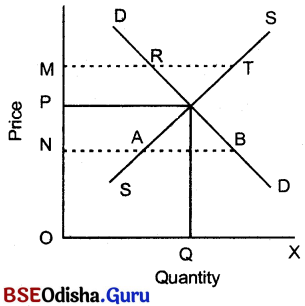
CHSE Odisha Class 12 Economics Solutions Chapter 8 Market Img 1
The above diagram measures quantity demanded & supplied of the product on OX-axis & price of the product on OY-axis.
The figure illustrates the downward slope (negative slope) of the demand curve (DD) & upward slope (positively slope) of the supply curve (SS). Both the demand curve & supply curve meet at point E resulting equilibrium price, OP. This point of intersection (E) results from the interaction of both the demand-side & supply-side. So in Marshallian framework, P is the equilibrium price & OQ is the equilibrium quantity that represents both the demand for & supply of the product. Justification of Equilibrium Point (E) :
Equilibrium denotes a state of rest or balance. At point E, the demand for the product equals to supply of the product & it is believed that this situation is free from fluctuation. To establish this, the price deviation may be made.

If equilibrium price (OP) becomes higher i.e. OM, the quantity supplied exceeds the quanity demanded to the extent of RT. This excess amount remains unsold unless the price gets reduced. So the sellers will be forced to reduce the price. This price reduction will continue till OP is restored. On the other hand, if the price falls to ON, there shall be excess demand to the extent of AB: So the buyers will compete with each other for the goods. As such, the sellers will be encouraged to raise the price & ultimately ‘OP’ price will be restored.
Thus, it is affirmed the ‘OP’ price is the equilibrium price. Neither OM nor ON loses its validity to be the equilibrium price. Hence, the price ‘OP’ is justified as equilibrium price.

Question 3.
What is normal price ? How can it be determined ?
Answer:
Normal price is an ideal price which is determined in the long-run through the interaction of demand for & supply of the product. It is other wise called long-run price. Normal price is determined at that level where the equilibrium between demand for & supply of a product is confirmed. In other words, it is determined at that level where demand for product is equal to supply of product.

It is a fact that long-period is a period during which all the factors are found to be variable & hence there is every possibility of full adjustment of supply to any change in demand for product. In the long-run, supply can be increased to any extent to match with the increase in demand.

With all the features of long-run, the normal price prevails. According to Marshall, “Normal value of a commodity is that which economic forces would tend to bring about in the long-run. Thus, normal price is viewed as that price to which one may expect actual prices to tend. It is not same thing as average price till price is constant.”

Like the price-determination in general, the normal price is also determined by the forces of demand and supply. The real force behind the demand is the marginal utility of the commodity whereas on the supply-side, it is the cost of production. In the long-run, as the supply can be fully adjusted to increase in demand, the supply-side plays the vital role in the long-run while determining the price. In the long-run, there is also no distinction between fixed cost & variable cost. All the costs are variable & undergo change with the change in the level of output. Besides, all these costs incurred are covered up & hence price in the long-run (Normal Price) is equal to average cost in the long-run. There is no question of earning abnormal profit nor incurring abnormal loss because of free entry & exit of firms. So, the price is equal to long-run average cost resulting in normal profit.

The process of price determinination in the long-run is illustrated with the help of diagram which is presented below :

Graphical Analysis:
In the figure, demand for & supply of the product is reflected on OX-axis & price on OY-axis.
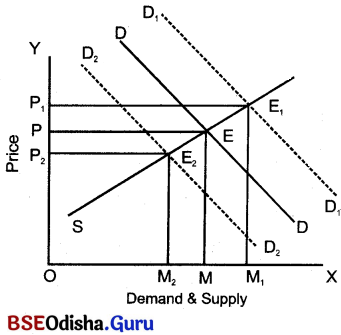
CHSE Odisha Class 12 Economics Solutions Chapter 8 Market Img 2
The DD & SS are the demand curve & supply curve respectively. Demand curve (DD) & supply curve (SS) take traditional shape. DD has negative slope & SS has the positive slope.
The demand curve (DD) intersects supply curve (SS) at point E resulting in price OP & quantity (OM). Suppose demand curve (DD) curve shifts upward to D1D1. This new demand curve (D1D1) cuts the supply curve at point E1 & new price will be OP1 & quantity OM1, This price (OP1) is greater than the previous price (OP). On the contrary, if demand decreases, the demand curve is D2D2. This demand curve (D2D2) cuts the supply curve at point E2 resulting price (OP2). This new (OP2) price is less than the previous price (OP).

The above analysis reflects that any change in demand is matched by adequate change in supply. Hence OP1 & OP2 are the normal price determined under the full adjustment of demand-side with supply side. All these prices are equilibrium price determined by equating demand & supply of the product. An increase in demand leads to higher price & decrease in demand leads to lower price. Hence supply is adjusted fully with demand. All these expressed above are the situations that happen in the long-run. So all these prices are stable price determined by the long-run equilibrium of demand & supply of the product.

Question 4.
Explain the market price & Normal Price. What are the differences between Market Price & Normal Price.
Answer:
On the basis of time elements of Marshall, time period can be classified into market period, short period & long-period. Thus, the price determined in the market period, short-period or long-period can be called as market price, short-run price & long-run price (Normal price). respectively. Market price & Normal price are the two level of price of a goods prevailing at two different time periods i.e. market period & long period.
Market price refers to that price which actually prevails in the market at a particular point of time. It is the real price at which the commodities are bought & sold in the market at a particular span of time. This market price is determined by the equilibrium of forces of demand & supply. During this period supply is fixed. So the demand for the product plays the vital role in determining the price.

Any change in price in this period happens due to the fluctuations of demand for the product. Thus market price is construed as the equilibrium price determined in a very short period in which supply of the commodity is fixed.

Normal price denotes that price which is expected to prevail to in the long-run. Hence it is called long-run price. This price is determined by the forces of demand & supply. Supply of the product can be fully adjusted to any change in its demand. Normal price is an imaginary price based on expectation. As such normal prices are not found in real world. According to Marshall, “Normal price is the price which tends to prevails in a market when full time is given to the forces of demand & supply to adjust themselves.” It is the long-run equilibrium price of a commodity with supply adjusted to demand. The noteworthy differences between market price & normal price are described below:

DIFFERENCE BETWEEN MARKET PRICE&NORMAL PRICE:

(a) Time element: Market price refers to that price which prevails in the market period (very short period). But the normal price is that price which is expected to prevail in the long-run. (long period)
Thus, market price prevails during a point time where as normal price prevails over a period of time.

(b) Real price & Imaginary Price : Market price is said to be the real price that rules in the market. The commodities are bought & sold in the market at this price. It is uniqe & uniform price what the purchase actually pays.
On the other hand, Normal price is an imaginary price expected to prevail in the market in the long run. It is a probable price based on an imaginary impression of long-run equilibrium of demand & supply. Its prevalene in the market is questionble.
Thus, market price is real price whereas the normal price is an imaginary price based on guess mark.

(c) Stability : Market price is not a stable price. It is highly fluctuating on account of frequent changes in demand. This fluctuation takes place due to temporary changes in the market.

But normal price is a stable price. Because the temporary events hapens in market period that naturalise each other in the long-run. The price comes to be settled at a particular level. So market price is found to be fluctuating but normal price is observed to be stable.

(d) Relative influence of demand & supply : Market period is a very short period during which supply of the commodity is fixed. So, in case of market price, demand plays the dominant role in determining it. Any fluctuation in market price is due to the change in the factors of demand as supply remains as a neutral component.

In case of normal price, it is determined by the long-run equilibrium of demand & supply. As all the factors are variable,, supply of the commodity can be fully-adjusted to change in demand to any extent. Supply of the commodity is quite flexible. In this case, supply-side plays the significant role.

(e) Relationship with cost of production : Market price is the price prevailed in the market period during which supply is fixed. As such market price does not have any relevance to the cost of production. In the determination of market price, demand-side is dominant which is guided by consumers, behaviour. Henqe market price is no way related to the cost of production.

On the other hand, supply-side plays the dominant role in determining the normal price. Supply is greatly influenced by the cost of production. So price in the long-run is somehow related to the cost of production. It must be equal to average cost of production. If it is more than the average cost, there shall be abnormal profit which attracts new producers. This new entry brings back the price to normal. Similarly, if the price is less than the average cost, there shall be abnormal loss for which existing producers will leave. This exit will bring back the normal price. Thus, market price is not related to cost of production,but normal price is related to it.

(f) Relevance to kinds of Goods : Market price is the price which prevails in the market. So all the commodities whether producible or non-reproduciable have market price. But only the reproducible goods have normal price. Hence rare paintings, old coins, ancient arts do not have normal price but those goods have market price.

(g) Emergence of Profit Loss : Market price is not associated with the cost of production. So the producer may earn super normal profit by charging higher price or may incur loss. But normal price always assures normal profit which is a part of the cost of production.

The above analysis affirms that market price is real price & the consumers are to rely on it. In real world, the market price is emphasised as the goods are bought & sold with this price. But normal price is an imaginary price which is expected in the 16ng-run. Long-run is a long period which is not categorically marked. So normal price is exclusively a theoretical concept which is not valid in the real world.

CHSE Odisha Class 12 Economics Solutions Chapter 8 Market

Question 5.
What is monopoly ? Explain the features of monopoly.
Answer:
Monopoly is a market structure in which there exists a single seller selling a product having no close substitutes. Literary speaking ‘mono’ means one & ‘poly’ means seller. Thus, in monopoly there is only one seller who controls the entire market. This may be a partnership or a joint stock company. Besides, the product in monopoly market does n’t have any close substitute. This product is a unique product.

FEATURES :
(a) Single seller & Innumerable buyers : Under monopoly, there is only seller who deals with a large number of buyers. This single seller dominates all over the market. This single seller may be in form of an individual or partnership or joint stock company. A large number of buyers in such market are to depend on this single seller.

(b) No close substitutes : The product exchanged in this market is unique. It does not have any close substitute. So no good can be substitute for this good. Non-availability of any close substitute makes the seller supreme & he may charge any price keeping the demand for the product in view. So under monopoly, higher price is very often charged.

(c) Free entry is restricted : In the monopoly, the entry of new sellers firm is completely ruled out. There is no scope for other sellers to reign over the market. This single seller is considered as the sole supplier or dealer of the product. There is no rival of it.

(d) Price discrimination: Under monopoly, there observed price discrimination. The monopolist can discriminate the price. Price-discrimination occurs when seller charges different prices from different buyers for the same good. As under monopoly, there is only one seller, he has ample scope to discriminate the price by keeping the demand for goods in view.

(e) Selling Cost: The monopoly incurs selling cost towards the advertisement. By spending this amount, the monopolist makes the consumers aware of the product & also informs the consumers about the quality & nature of product.

(f) Independent decision : Being a sole seller the monopolist takes his own decision regarding his business. It fixes the price of his product independently. He is the ‘price-maker’ very often it changes higher price & imposes a burden on the consumer.

(g) Demand Curve : Under monopoly, demand curve or avarage revenue curve slopes downward from left to right. It indicates that whenever a monopolist wants to sell more, he is to reduce the price & incase of higher price, he is to reduce the sale. Thus, the average revenue curve as well as marginal revenue curve slopes downward from left to right.

(h) Profit & Loss : It is not always true that monopolist earns super normal profit. Though a monopolist very often earns super normal profit by manipulating the supply of goods, yet it sometimes incurs loss because of insufficient demand for the product. If the demand for the product becomes inadequate, the monopolist incurs loss. So profit & loss also arise under monopoly.

Question 6.
Make a comparative analysis of perfect competition with monopoly.
Answer:
On the basis of the relative strength of competitive aspects in the market, market may be view as perfectly competitive market & imperfect market. Perfectly competitive market (perfect competition) market is constituted with a large number of buyers & sellers making the exchange of a homogeneous goods at a uniform price without any restriction to their entry & exit. In this market, no buyer nor seller has control over the market in influencing it. On the contrary, monopoly is a market structure comprising of a single sellerselling a product having no close substitute. Hence, this single seller has sole authority & control over the entire market & the price charged is not also uniform.

The critical analysis of both the extreme forms of market dictates certain similarities and disimilarities. The important concepts in this regard are describe below :
SIMILARTIES : Both the perfect competition & monopoly have certain common characters.

(a) Common goal: Both monopolist & perfectly competitive firm have a common goal. The seller or producer in both the market structures pursues to maximise its profit. So profit maximisation becomes the common goal or objective in perfect competition & monopoly.

(b) Perfect Knowledge : Under monopoly & perfect competition, the buyers & seller gather perfect information about the market, product & price. All the buyers & the seller (in monopoly single seller) are completely aware of the market condition & accordingly they behave for the maximisation of profit.

DISSIMILARITIES : Along with these similarities, there are number of dissimilarities between these market structures.

(i) Goods : The first & foremost difference between these two market is about the goods exchanged. In perfect competition, the goods are identical in all respect i.e. same in quality, quantity, size, packing etc. & hence the goods re homogeneous. In other words, under perfect competition the goods are perfect substitute for each other. On the other hand, under monopoly, the goods does not have any close substitute. The goods exchanged is unique & no other good can be substitute for it.

(ii) Number of buyers & sellers : Though the number of buyers in both the markets are innumerable, yet there is spectacular difference over the number of sellers. In perfect competition there is a large number of sellers selling a product. There is a large number of sellers in perfect competitive market. No individual seller has its own influence in the market. But, in monopoly, there is only one seller which can form the entire market. He has the sole authority or control over the market. He himself deals with the product & it is treated to be the single supplier. This single seller may be an individual, partnership or joint stock company.

(iii) Entry : In perfect competition, there exists free entry & exit in respect of the firms or selles. The buyers & sellers are free to enter into the market & they also leave the market at their own will.

On the other hand, this free entry & exit are quite banned under monopoly. As a single seller forms the market, the entry & exit are not possible. Thus entry & exit are restricted under monopoly.

(iv) Price : In perfect competition, price is uniform because of its inhertied features. Neither the buyers nor the sellers can influence the price. Price stands as a constant entity which is universally accepted.
But under monopoly, the price is not uniform. The monopolist can change prices to different buyers at different times. Besides it monopolist desires to sell more, he may reduce the price or if wants sell less, he may change higher price. As such the price is quite a variable concept.

(v) EquiHbrium Price & Output: In perfect competition, the equilibrium price is less than that of under monopoly. On the other hand, the equilibrium output in perfect competition is found to be higher than that of monopoly.

(vi) Price Discrimination : As the price is uniform in perfect competition, there is no scope for price-discrimination. A uniform price is changed & is same for all the buyers. But monopolist practise price-discrimination. He can charge different prices to different buyers for selling the same quantity of a commodity. This is not possible in perfect competition.

(vii) Demand Curve : The demand curve for an individual seller in perfect competition is found to be a horizontal straight line. It shows that the demand is perfectly elastic. But under monopoly, the demand curve slopes downward from left to right indicating that more is sold at lower price & vice-versa.
From the above analysis, its observed that the perfect competition & monopoly are two extreme forms of market. They possess certain distinct different features. Though these market structure seem to be theoretically valid, there are rarely structure seem to be theoretically valid, there are rarely found in real world.

Question 7.
What is Monopolistic Competition ? State its features.
Answer:
The concept of monopolistic competition is a joint contribution of E.H. Chamberlin & Joan Robinson. Both the economists treat this special market structure as a blending of perfect competition & monopoly. They term it as “Imperfect competition.”
Monopolistic competition is a market structure in which there are many sellers of a particular product but the product of each seller is in some way differentied in the minds of the consumers from the product of every other seller.

Simply speaking, monopolistic competition is a mixture of perfect competition & monopoly in which a large number of buyers & sellers exchange a differentiated product. Here the goods are not perfect substitute as in perfect competition rather close substitutes. Unlike monopoly, the goods is not unique rather close substitutes for each other. The monopolistic competition embraces some features of perfect competition & some features of monopoly. Thus, it is a combination of both these extreme forms of market & expressed in a unified manner.

In a single statement, it can be expressed that monopolistic competition is said to exist when a large number of sellers sell a slightly differentiated product to large number of buyers & enjoy a freedom of entry & exit. It is a competition amongst number of sellers selling close but not perfect substitutes.

FEATURES:

(i) A Large number of buyers & sellers : In monopolistic competition, there found sufficiently large number of buyers & sellers. There is no feeling of mutual inter-dependence among them. Thus, all the participants are quite independent &• activity take part in exchange of goods.

(ii) Product differentiation : Another unique feature of monopolistic competition is the product differentiation. The products are not homogenous nor unique as in perfect competition or in monopoly. The product is slightly differentiated so that these seem to be similar but they are close substitutes instead of perfect substitutes. The degree of differentiation describes the presence of competitive elements & monopoly elements. Thus, in this market, each is a monopolist & each is a competitor.

(iii) Free entry & free exit: Like perfect competition there found freedom of entry & exit in respect new firms/sellers. The entry & exit are permissible. The seller interested in selling the similar product may enter into the market freely & may leave it freely.

(iv) Selling cost: Selling cost is the cost incurred by the producer /seller to promote the product. As the products are close substitutes, there needs to provide certain eye catching information by the way of advertisement. It can attract the new consumer towards a particular brand. It is quite a non-product cost incurred in monopolistic competition.

(v) Price-Policy : The theory of monopolistic competition has its own price-policy. This policy is certainty different from that of perfect competition & monopoly. Neither the perfect competition nor the monopoly can provide an adequate explanation for price determination under monopolistic competition. It is because these are two mutually exclusive alternatives.

(vi) Imperfect Knowledge : Unlike perfect competition, the buyers are not completely aware of the nature & quality of the product. Hence, in monopolistic competition, the producer is able to create an imaginary superiority about the product in the minds of the consumer. For this the producer spends a lot in form of advertisement cost.

(vii) Non-Price Competition: In monopolistic competition, the non-price competition is quite visible. This non-price competition is also inevitable for each producer in order to promote their sale. This competition is visible in the form of warranty free, services, discount, free exchange etc.

All are the features of monopolistic competition. It quite revels that monopolistic competition is quite a new market structure which contains certain distinct features. Though it embraces the features of perfect competition & monopoly, yet it can be rightly told that monopolistic competition opens a new chapter in the theory of market.

CHSE Odisha Class 12 Economics Solutions Chapter 8 Market

Question 8.
What is monopolistic competition ? Compare it with the perfect competition.
Answer:
Monopolistic competition is a market structure in which there are many sellers of a particular product but the product of each seller is in some way differentied in the minds of the consumers from the product of every other seller. Simply speaking, monopolistic competition is a mixture of perfect competition & monopoly in which a large number of buyers & sellers exchange a differentiated product. Here the goods are not perfect substitute as in perfect competition rather close substitutes. Unlike monopply, the goods is not unique rather close substitutes for each other. The monopolistic competition embraces some features of perfect competition & some features of monopoly. Thus, it is a combination of both these extreme forms of market & expressed in a unified manner.

COMPARISION :
Monopolistic competition contains certain features of perfect competition like a large number of buyers & sellers “free entry & exit” etc. Besides these, there observed several points of difference between price & output decision & other aspects under perfect competition & monopolistic competition.

(i) Kinds of Goods : In perfect competition, the goods are homogeneous. They are identical in all respects so that all the goods act as perfect substitutes for each other. The quality, quantity, size & packing are similar in all respect.

But under monopolistic competition, there found “product differentiation”. The products are not perfect substitutes for each other rather there are close substitute. The products under monopolistic competition are slightly different from each other so that these goods can not be taken as identical or homogeneous goods.

(ii) Price : Under perfect competition, price of the goods remains uniform. All goods are exchanged at that uniform price. Neither the seller nor the buyer can influence this price. All the sellers or buyers are the “price-takers” but not the “price-jmaker”.

On the other hand, under monopolistic competition, price does not remain uniform because of interdependence of firms/sellers. The sellers /firms independently determines the price keeping the supply demand for its product in view. While determining price-policy, the seller/firm carefully analyses the rivals reaction. As the products are close substitutes, each seller / firm is a competitor as well as a monopolistic for his own product

(iii) Non-Production cost: Under perfect competition, the goods are homogenous & hence these are similar in all respect. Besides, the consumers are well informed about the market & product. Hence, there is no need of incurring non-production cost to promote the sale.

On the contrary, under monopolistic competition, the products are the close substitutes & the consumers are not well informed. Hence, the producer is compelled to incure non-production cost on warranty, free service etc. Thus, the non-production cost is visible in this market which is not in perfect competition.

(iv) Selling Cost: The selling costs are the costs which are incurred by the producer to provide information about the product to the consumer. This cost is spent on advertisement & hence it is also called advertise cost.

Under perfect competition, no such cost is incurred as the products are homogeneous & the consumers are folly aware of the market structure. But under monopolistic competition, the products are slightly differentiated. Each producer has its own competitors and every producer is also a monopolist of his own product. As such, the producer is to spend on advertisement.

(v) Relation with cost of production & revenue : Under perfect competition, price concide with average revenue, marginal revenue as well as average cost in the long run. But under monopolistic competition, price is equal to average revenue but it is greater than the marginal revenue.

(vi) Demand Curve : Under perfect competition, an individual firm faces with a perfectly elastic demand, curve which is a horizontal straight line. In this case, price of the product is equal to average revenue as well as marginal revenue. On the contrary, a firm under monopolistic competition faces a downward sloping demand curve. In this case price is equal to average revenue but greater than marginal revenue.

(vii) Excess capacity : Under perfect competition, the firm produces socially optimum output in the long-run. Hence, no excess capacity is realised because firm produces at the minimum point of long-run average cost.

But it does not happen under monopolistic competition. In this market, a firm produces the output at the falling portion of the average cost curve. Hence, socially optimum output is not produced & there found some inefficiency & excess capacity. All these indicate wasteful utilisation of productive resources. The facts presented above indicate that the monopolistic competition combines some elements of perfect competition & some of monopoly. So there observed the differences between these two market.

Question 9.
Illustrate the features of Oligopoly.
Answer:
Oligopoly denotes an inperfect market in which a few sellers/producers selling/producing either homogeneous goods or differentiated goods. In this market there is a few sellers or producers. The product is either homogeneous or differentiated. The competition is restricted to the few sellers selling very close or perfect substitute. The oligopoly is of two types. In case the sellers deals with homogeneous product, it is called “pure oligopoly” & in case of differentiated product, it is called “differentiated oligopoly.”

FEATURES:

(i) Interdependence : The sellors/firms under oligopoly are interdependent. Any decision taken by an individual seller/producer, with respect to price or product creates certain reaction among the rival firms. Any move taken by any seller has immediate counter move by the rivals. Hence, while assessing the market demand for its own product, the seller/firm concerned is to consider the reactions of its rivals. So no individual firm/seller can take independent decision of its own regarding the price & output.

(ii) Uncertainty : Uncertainty is another peculiar features under oligopoly. It arises because of the wide varieties of reaction patterns of the firm/seller. Any action taken by any firm /seller is well retaliated by the rivals which causes uncertainty. So, while taking decision, the firm/seller has to recognise the possible counter reaction of the rivals. Thus, the uncertainty under oligopoly creates difficulty in taking independent decision.

(iii) Selling Cost: The selling cost stands as an aggressive & defensive marketing device to achieve a greater share in the market. It appears due to the interdependence of the firms and uncertainty as well.

(iv) Group Behaviour : As the firms/sellers are interdependent & there exists uncertainty among them, the group behaviour acts as a proper solution. For maximising profitm the firms/ sellers act as a group by adopting a unanimously accepted norms. The group behaviour may reduce the degree of uncertainty that exists among the existing firms/sellers.

(v) Indeterminate Demand curve: The demand curve facing by an oligopoly is indeterminate. The demand curve usually reveals the price & product combination. In case of other market structures, the demand curve has got a definite shape. But in oligopoly, the demand curve is indeterminate because of inter dependence of firms that cause uncertainty. The concerned firm is not certain about the quantity he can sell at the price determined by him. It is because the firm concerned is not fully sure of the retaliatory move of its rivals. Such unpredictable response of the rivals to any action of the individual firm makes the demand curve indeterminate.

(vi) Price-rigidity & non-price competition : Price – rigidity is another feature in oligopoly. Any price, if accepted can not be easily changed & it continues to prevails over a long period. Thus, the price, under oligopoly is trend to be sticky & rigid, In spite of changes in cost-demand structure, the price is, not changed. Maintaining the quoted price, firms pursue to improve their competitive in the market through various types of non-price elements like rebate, free delivery, warranty etc. Thus non-price competition is believed to be a suitable business device. ‘

(viii) Non-Profit motive : Proft maximisation is not only objective of the oligopolist. Besides the entrepreneurs have many other motives like sales maximisation, security, risk minimisation etc. This is the special feature in oligopoly.

From the above features, it is believed that oligopoly is a real market structure that operates in real world. For a particular product, there is a few seller/producer competing with each other for having a greater share in the market. From this point of view, it is felt that oligopoly is a suitable market structure having practical validity.

Question 10.
What is market price ? How is it determined under condition of perfect competition ?
Answer:
Market price is the price of a commodity which prevails at any given time.’ This price is determined by momentary equilibrium between demand and supply at a time. Time in the market period is very small and the prices have a tendency to change very quickly during this period. Sometimes the prices change everyday and even every hour, The price of a good can be different in the morning and different in the evening. Market price is determined by the forces of demand and supply. But in the market period the price is influenced more by the demand. The main force behind demand side is the marginal utility of the commodity whereas from the side of supply the real force is the cost of production of the commodity. In the market period supply is almost fixed and cannot be increased. That is why when demand increases, price rises and when demand falls price also falls. We shall consider the price of the following two types of goods.

  1. Perishable goods.
  2. Durable or non-perishable goods.

Perishable goods – Perishable goods are those goods which do not last for a long time. These goods cannot be stored or kept. These goods go waste if stored. The perishable goods like fish, milk etc. have to be sold in the market whatever may be the price of these goods. Therefore, the supply curve of a perishable commodity in the market period is perfectly inelastic and is a vertical straight line. The pricing of a perishable commodity under market period can be shown with the diagram below.
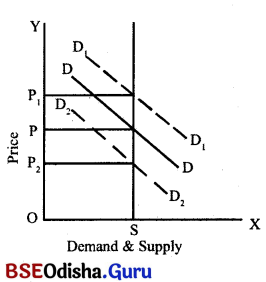
CHSE Odisha Class 12 Economics Solutions Chapter 8 Market Img 3
On OX-axis we measure demand and supply and on OY-axis we represent the price. SS is the supply curve which is parallel to OY-axis. This supply curve shows that supply is absolutely fixed and it cannot be changed. DD demand curve has a negative slope showing thereby that demand will extend when prices fall. Demand and supply are in equilibrium at price OP. Therefore, OP is the equilibrium market price. Now if the demand curve moves forward from DD to D1D1, the market price shall go up from OP to OP1 the supply of the commodity remaining fixed at OS.

Now if the demand curve moves downward from DD to D2D2 the market price falls from OP to OP2 the supply again remaining constant at OS. Hence we find that changes in the demand produces sharp changes in price in the market period, supply being costant dining that period.

Non-perishable goods – There are some goods which can be kept for a long period such as wheat, tea etc. In case of these commodities the firm fixes a reserve price and below this price the firm is not prepared to sell anything. If demand falls and as a result of it price falls below the reserve price the sellers instead of selling at this low price will keep their prdduce in the godowns. The supply in this period can be increased only out of the fixed stock which are already in hand. The reserve price is determined by several factors which are discussed below :

1. Future expectation – The reserve price of a commodity depends upon the expectations of the sellers regarding the future prices of the commodity. The reserve price will be higher if the producer expects the prices to go up in future and vice versa.

2. Need for cash – If the need of the sellers for pash is great, they will fix a low reserve price as they shall be interested to sell the commodity. But if they do not need cash early, they fix a higher reserve price.

3. Durability of the goods – The durability of thq goods also has its influence upon the reserve price because durable goods can be stored without fear of loss and anticipation of better price.

4. Future cost of production – Production cost to be incurred in the future on the commodity also has its effect on the reserve price. The producers will fix a higher reserve price, if they think that production cost in future shall be high.

5. Cost of storage – The reserve price also depends upon the cost of storage. The length of period for which the stock is to be stored is therefore, very important. The longer the period and the higher the cost of storing, the lower will be the reserve price and vice versa.
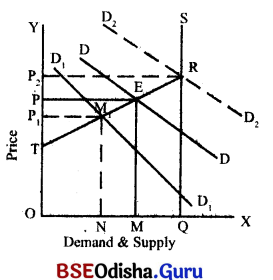
CHSE Odisha Class 12 Economics Solutions Chapter 8 Market Img 4
The diagram in the previous page shows the determination of market price of a durable commodity:
In the diagram TRS is the market period supply curve. OQ is the total stock of the goods. In the beginning the demand curve for the goods in the market is shown by the demand curve DD. The demand curve and the supply curve intersect each other at point E and price OP is determined. At this price the quantity purchased and sold is OM. Out of total stock OQ only OM is sold in the market and the remaining i. e., MQ is withheld by the sellers. If demand falls to D1D1 the equilibrium between demand and supply is established at point M and price shall be OP1. In this case the quantity sold is ON and NQ is kept in store. Now if demand increases to D2D2 the new equilibrium is established at point R and now the market price will rise to OP2 As is Clear from the above diagram, all the stock OQ shall be sold at OP2 price.

Group – C

Objective type Questions with Answers
I. Multiple Choice Questions with Answers :

Question 1.
In economics, which factor is not the essentials of the market ?
(i) Goods
(ii) Buyers & sellers
(iii) competition
(iv) cost of production
Answer:
(iv) cost of production

Question 2.
Large number of buyers & sellers are present in
(i) perfect competative market
(ii) monopolistic competition
(iii) obligopoly
(iv) Both (i) and (ii)
Answer:
(ii) monopolistic competition

Question 3.
Generally homogeneous goods are bought & sold in the
(i) monopolistic competiton
(ii) perfect competiton
(iii) obligopoly
(iv) monopoly
Answer:
(iv) monopoly

Question 4.
Which is.not one of the features of perfect competition ?
(i) uniform price
(ii) perfect mobility of factors
(iii) normal profit
(iv) identical cost
Answer:
(iv) identical cost

Question 5.
Absence of transportation cost is present
(i) monopoly
(ii) obligopoly
(iii) monopolistic competiton
(iv) perfect competiton
Answer:
(iv) perfect competiton

Question 6.
Under perfect competition AR is always
(i) equal to MR
(ii) greater than MR
(iii) less than marginal revenue
(iv) none of the above
Answer:
(i) equal to MR

Question 7.
Firm & industry lose their difference in
(i) perfect competition
(ii) monopoly
(iii) obligopoly
(iv) monopolistic competiton
Answer:
(ii) monopoly

Question 8.
In monopoly, the seller generally sells
(i) homogeneous goods
(ii) differentiated goods
(iii) goods having no close substitutes
(iv) goods having no perfect substitutes
Answer:
(iii) goods having no close substitutes

Question 9.
The elasticity of demand for the goods is zero in
(i) perfect competition
(ii) monopoly
(iii) obligopoly
(iv) monopolistic competiton
Answer:
(ii) monopoly

Question 10.
The entry of the new firm is restricted under
(i) perfect competition
(ii) monopolistic competition
(iii) monopoly
(iv) obligopoly
Answer:
(iii) monopoly

Question 11.
Absence of all sorts competition is found in
(i) perfect competition
(ii) monopoly
(iii) obligopoly
(iv) monopolistic competiton
Answer:
(ii) monopoly

Question 12.
One individual seller/ firm cannot influence the price of the product in
(i) monopoly
(ii) perfect competition
(iii) obligopoly
(iv) none of the above
Answer:
(ii) perfect competition

Question 13.
Under monopoly, AR is always
(i) greater than MR
(ii) Less than MR
(iii) equal to MR
(iv) none of the above
Answer:
(i) greater than MR

Question 14.
For the same goods, different prices can be changed in
(i) monopolistic competition
(ii) perfect competition
(iii) monopoly
(iv) obligopoly
Answer:
(iii) monopoly

CHSE Odisha Class 12 Economics Solutions Chapter 8 Market

Question 15.
Product differentiation is a feature of
(i) monopoly
(ii) perfect competition
(iii) monopolistic competition
(iv) obligopoly
Answer:
(iii) monopolistic competition

Question 16.
Non-price Competition is generally formed in
(i) perfect competition
(ii) monopolistic competition
(iii) monopoly
(iv) obligopoly
Answer:
(ii) monopolistic competition

Question 17.
Under perfect competition, price is determined by
(i) seller
(ii) buyer
(iii) firm
(iv) industry
Answer:
(iv) industry

Question 18.
Name the market were identical goods are sold at uniform price
(i) perfect competition
(ii) monopoly
(iii) obligopoly
(iv) monopolistic competiton
Answer:
(i) perfect competition

Question 19.
Charging different prices for the same goods happens in
(i) perfect competition
(ii) monopoly
(iii) monopolistic competition
(iv) obligopoly
Answer:
(ii) monopoly

Question 20.
The price at which the buyers purchase goods in the market is known as
(i) Real price
(ii) Normal price
(iii) Market price
(iv) All of the above
Answer:
(iii) Market price

Question 21.
Equilibrium price is influenced by
(i) demand for product
(ii) supply of product
(iii) lost of production
(iv) Both (i) and (ii)
Answer:
(iv) Both (i) and (ii)

Question 22.
If the demand for & supply of product changing in equal proportion, the equilibrium price
(i) increases
(ii) decreases
(iii) remains unaffected
(iv) all of the above
Answer:
(iii) remains unaffected

Question 23.
In determining equilibrium price, demand for a product is
(i) greater than supply
(ii) less than supply
(iii) equal to supply
(iv) both (i) and (ii)
Answer:
(iii) equal to supply

Question 24.
The price at which demand is equal to supply of a product is known as
(i) Normal price
(ii) market price
(iii) equlibrium price
(iv) all of the above
Answer:
(iii) equlibrium price

Question 25.
Other things remaining constant, if the demand for a product increases, the price
(i) rises
(ii) falls
(iii) remains uncharged
(iv) Both (i) and (ii)
Answer:
(i) rises

Question 26.
Long run price is otherwise knwon as
(i) Normal price
(ii) market price
(iii) short cut price
(iv) Both (i) and (ii)
Answer:
(i) Normal price

Question 27.
Most important condition of a perfect market is :
(i) A single producer or seller of a product.
(ii) No close substitutes for the product.
(iii) Homogenous product.
(iv) All of the above.
Answer:
(iii) Homogenous product.

Question 28.
Condition of a monopoly market:
(i) Uniformprice
(ii) Homogeneous product
(iii) Strong barriers to the entry into the industry
(iv) All of the above.
Answer:
(iii) Strong barriers to the entry into the industry

Question 29.
What is market price ?
(i) Price expected to prevail
(ii) Price actually prevailing in the market.
(iii) Both (i) and (iv)
(iv) None of he above
Answer:
(ii) Price actually prevailing in the market.

Question 30.
Under perfect competition :
(i) P>MR
(ii) P<MR
(iii) P = MR
(iv) None of the above
Answer:
(iii) P = MR

Question 31.
Under perfect competition price is determined by:
(i) Firm
(ii) industry
(iii) Seller
(iv) Buyer
Answer:
(ii) Industry

Question 32.
Normal price is a:
(i) Short-term price
(ii) Long-run price
(iii) All of the above
(iv) None of the above.
Answer:
(ii) Long-run price

Question 33.
Normal price is:
(i) A real price
(ii) An imaginary price
(iii) An unstabe price
(iv) None of the above.
Answer:
(ii) An imaginary price

Question 34.
Under monopoly the goods have:
(i) Close substitutes
(ii) Do not have close substitutes
(iii) All of the above
(iv) None of these
Answer:
(ii) Do not have close substitutes

Question 35.
Market in Economics refers to:
(i) Market for a commodity
(ii) A place
(iii) All of the above
(iv) None of the above
Answer:
(i) Market for a commodity

Question 36.
Under perfect competition goods are:
(i) Differentiated
(ii) Homogenous
(iii) Imperfect substitutes
(iv) None of the above
Answer:
(ii) Homogenous

II. Fill in the blanks:

Question 1.
In economics Market refers to _____
Answer:
a goods.

Question 2.
There is a large number of sellers and buyers in a _____ market.
Answer:
perfectly competitive

Question 3.
Under _____, there is free entry and free exit of the firms.
Answer:
perfect competition

Question 4.
Under _____, goods are homogeneous.
Answer:
perfect competition

Question 5.
Under _____, the goods are perfect substitutes for each other.
Answer:
perfect competition

Question 6.
Under perfect competition, price is represented through _____ Price = AR.
Answer:
Average Revenue

Question 7.
Under perfect competition, AR = _____
Answer:
MR.

Question 8.
Factors are perfectly mobile under _____
Answer:
perfect competition.

Question 9.
Price under perfect competition remains _____
Answer:
uniform.

Question 10.
Under _____ buyers have very weak bargaining power.
Answer:
perfect competition

Question 11.
Under perfect competition, the demand curve is a horizontal _____ line.
Answer:
straight

Question 12.
Under _____ the goods do not have any close substitutes.
Answer:
monopoly

CHSE Odisha Class 12 Economics Solutions Chapter 8 Market

Question 13.
The demand curve, under monopoly slopes _____ from left to right.
Answer:
downward

Question 14.
In monopoly there is a single _____ but many buyers.
Answer:
seller

Question 15.
Under monopoly the _____ is a price maker.
Answer:
monopolist

Question 16.
Under _____ competition the product is differentiated.
Answer:
monopolistic

Question 17.
Under monopolistic competition, the product is _____
Answer:
differentiated.

Question 18.
Entry and exit of firms are restricted under _____
Answer:
monopoly

Question 19.
Firm under _____ competition promotes its product through the selling cost.
Answer:
monopolistic

Question 20.
Under _____ there is only few sellers of the commodity.
Answer:
oligopoly

Question 21.
The price which is equal to MR is _____
Answer:
normal price.

Question 22.
_____ competition is a mixture of perfect competition and monopoly.
Answer:
Monopolistic

Question 23.
Demand curve under _____ competition is perfectly elastic.
Answer:
perfect

Question 24.
Normal price is influenced more by _____ under monopoly.
Answer:
supply

Question 25.
Only the _____ goods have normal price.
Answer:
reproducible

Question 26.
_____ price is determined by demand and supply of the goods.
Amwer:
Equilibrium

Question 27.
Firms under perfect competition earn _____ profit in the long-run.
Answer:
normal

Question 28.
Competitive output is _____ than monopoly output.
Answer:
higher

Question 29.
_____ price is a long-run price.
Answer:
Normal

Question 30.
_____ price is the price prevailing during very short period.
Answer:
Market

Question 31.
_____ price is an imaginary price
Answer:
Normal

III. Correct the Sentences :

Question 1.
Market, in economics, is associated with the name of a place.
Answer:
Incorrect.
Correct: Market in economics is associated with the name of a product

Question 2.
Market implies only perfectly competitive market.
Answer:
Incorrect.
Correct : Market implies both perfect & imperfect market.

Question 3.
The absence of competition is called perfect competition.
Answer:
Incorrect.
Correct: The absence of competition is called monopoly.

Question 4.
There are many buyers & few seller in perfect competition.
Answer:
Incorrect.
Correct: There are many buyers & many seller in perfect competition.

Question 5.
Buyers are influential in perfect competition.
Answer:
Incorrect.
Correct: Neither the buyers nor the sellers are influential in perfect competition.

Question 6.
There is free entry & free exit in perfect competition.
Answer:
Correct

Question 7.
In perfect competition, the goods are close substitutes for each other.
Answer:
Incorrect.
Correct: In perfect competition, the goods are perfect substitute for each other.

Question 8.
The buyers are ignorant of market condition in perfect competition.
Answer:
Incorrect.
Correct: The buyers have perfect knowledge about market conditions in perfect competition.

Question 9.
The factors ate immobile in perfect competition.
Answer:
Incorrect.
Correct: The factors are perfectly mobile in perfect competition.

Question 10.
There is no transportation cost in perfect competition.
Answer:
Correct

Question 11.
In perfect competition, the goods are homogeneous but price are different.
Answer:
Incorrect.
Correct: In perfect competition, the goods are homogeneous & price is uniform.

CHSE Odisha Class 12 Economics Solutions Chapter 8 Market

Question 12.
Under perfect competition, Average Revenue exceeds marginal Revenue.
Answer:
Incorrect.
Correct: Under perfect competition, average revenue equates marginal revenue.

Question 13.
Under perfect competition, demand for good is perfectly elastic.
Answer:
Correct

Question 14.
Perfect competition is a real market condition.
Answer:
Incorrect.
Correct: Perfect competition is a theoretical market condition.

Question 15.
Under perfect competition, price exceeds marginal revenue.
Answer:
Incorrect.
Correct: Under perfect competition, price is equal to marginal revenue.

Question 16.
Under Perfect competition, the buyers have strong bargaining power.
Answer:
Incorrect.
Correct: Under perfect competition, the buyers have very weak bargaining power.

Question 17.
In perfect competition, demand curve is a horizontal straight line.
Answer:
Correct

Question 18.
Equilibrium means a state of balance.
Answer:
Correct.

Question 19.
Equilibrium price is the price determined when demand for product exceeds supply of product.
Answer:
Incorrect.
Correct: Equilibrium price is the price determined when demand for the product is equal to supply of product.

Question 20.
In the determination of equilibrium price, both the demand & supply are dominant.
Answer:
Incorrect.
Correct: In the determination of equilibrium price, both the demand & supply are important.

Question 21.
Market price is stable but normal price is fluctuating.
Answer:
Incorrect.
Correct: Market price is fluctuating but normal price is stable.

Question 22.
All the goods have normal price but only the reproducible goods have market price.
Answer:
Incorrect.
Correct: All the goods have market price but only the reproducible goods have normal price.

Question 23.
Rare goods have normal price.
Answer:
Incorrect.
Correct: Rare goods have market price.

Question 24.
Normal price is real but market price is imaginary.
Answer:
Incorrect.
Correct: Market price is real but market price is imaginary.

Question 25.
All the goods have normal price.
Answer:
Incorrect.
Correct: All the goods have market price.

Question 26.
Market price is related with the cost of production.
Answer:
Correct.

Question 27.
Market price is Long – run price.
Answer:
Incorrect.
Correct: Normal price is long-run price.

Question 28.
Market period is a very short-period.
Answer:
Correct

Question 29.
In market period, supply of goods is fixed.
Answer:
Correct

Question 30.
In the determination of market price supply is dominant but in case of normal price demant is dominant.
Answer:
Incorrect.
Correct: In the determination of market price demand is dominant, but in case of normal price, supply is dominant.

Question 31.
There is single seller in monopoly.
Answer:
Correct

Question 32.
Under monopoly, the goods have close substitutes but under perfect competition the goods have perfect substitutes.
Answer:
Incorrect.
Correct: Under monopoly, the goods have no loss substitutes but under perfect competition. the goods have perfect substitutes.

Question 33.
In monopoly, entry is restricted.
Answer:
Correct

Question 34.
In monopoly, the seller adpot independent prices.
Answer:
Correct

Question 35.
Under monopoly. AR = MR.
Answer:
Incorrect.
Correct: Under monopoly. AR >MR.

Question 36.
Under monopoly, price equates MR.
Answer:
Incorrect.
Correct: Under monopoly, price equates AR

Question 37.
Under monopoly, price is uniform.
Answer:
Incorrect.
Correct : Under monopoly, price is different.

Question 38.
Price discrimination is possible under monopoly.
Answer:
Correct.

Question 39.
Under monopoly, AR curve is a vertical straight line.
Answer:
Incorrect.
Correct: Under monopoly, AR curve is a downward sloping curve.

Question 40.
In price discrimination, the monopolists sells different goods at same price.
Answer:
Incorrect.
Correct: In price discrimination, the monopolist sells same goods at different prices.

Question 41.
Monopolistic competition is a blending of perfect competition & monopoly.
Answer:
Correct

Question 42.
Monopolist charges high price to sell more & low price to sell less.
Answer:
Incorrect.
Correct: Monopolist charges low price to sell more & high price to sell less.

Question 43.
In monopolistic competition, there is only one seller.
Answer:
Incorrect.
Correct: In monopolistic competition, there are large number of sellers.

Question 44.
The products under monopolistic competition are the perfect substitutes for each other.
Answer:
Incorrect.
Correct: The products under monopolistic competition are close substitutes for each other.

Question 45.
Under monopolistic competition each firm is a monopolist.
Answer:
Correct

CHSE Odisha Class 12 Economics Solutions Chapter 8 Market

Question 46.
Under monopolistic competition, the price is less than that of perfect competition.
Answer:
Incorrect.
Correct: Under monopolistic competition, the price is higher than that of perfect competition.

Question 47.
In perfect competition, we find product differentiation.
Answer:
Incorrect.
Correct: In monopolistic competition, we find product differentiation.

Question 48.
Under oligopoly, there are many sellers.
Answer:
Incorrect.
Correct: Under oligopoly, there are few sellers.

Question 49.
Under oligopoly, demand curve slopes downward.
Answer:
Incorrect.
Correct: Under oligopoly, demand curve is indeterminate.

Question 50.
Under oligopoly, price is very flexible.
Answer:
Incorrect.
Correct: Under oligopoly, price is very rigid.

Question 51.
Group behaviour is found under monopoly.
Answer:
Incorrect.
Correct: Group behaviour is found under oligopoly.

Question 52.
Under oligopoly, each firm produces a small share of the market.
Answer:
Correct.

Question 53.
Under oligopoly, firms are independent.
Answer:
Incorrect.
Correct: Under oligopoly, firms are interdependent.

Question 54.
Under monopoly, the seller is a price maker.
Answer:
Incorrect.
Correct; Under monopoly, the seller is a price maker.

Question 55.
Selling cost is present both in monopoly & monopolistic competition.
Answer:
Correct.

Question 56.
In case of pure oligopoly, products are differentiated.
Answer:
Incorrect.
Correct: In case of pure oligopoly, products are homogeneous.

Question 57.
Under monopolistic competition, there is price-variation.
Answer:
Correct.

Question 58.
Uncertainty in the market is found in monopoly.
Answer:
Incorrect.
Correct: Uncertainty in the market is found in oligopoly.

Question 59.
Under duopoly, there are few sellers in the market.
Answer:
Incorrect.
Correct: Under duopoly, there are only two sellers in the market.

Question 60.
Duopoly is another form of monopoly
Answer:
Incorrect.
Correct: Duopoly is another form of oligopoly.

Question 61.
Oligopoly is a form of imperfect market.
Answer:
Correct.

IV. Answer the following questions in one word/One sentence :

Question 1.
What is a market ?
Answer:
Market consists of buyers & sellers sufficiently close contact with themeselves for the exchange of a particular goods.

Question 2.
What do you mean by perfect competition ?
Answer:
Perfect competition is said to prevail when a large number of buyers & sellers exchange a homogeneous goods at a uniform price without any restriction.

Question 3.
Write two features of perfect competition ?
Answer:
(i) Presence of a large number of buyers & sellers
(ii) Homogeneous goods.

Question 4.
What is homogeneous goods ?
Answer:
Homogeneous goods are those goods which are identical in all respects.

Question 5.
In which market there is uniform price ?
Answer:
In perfect competition there is uniform price.

Question 6.
What is.the shape of the demand curve for an individual firm under perfect competition ?
Answer:
Under perfect competition, the demand curve of an individual is a horizontal straight line (perfectly elastic demand curve).

Question 7.
Can a seller influence the price under perfect competition ?
Answer:
No, a seller cannot influence the price under prefect competition.

Question 8.
When does a market attain equilibrium ?
Answer:
Market is in equilibrium when there is no excess demand or excess supply.

Question 9.
What is meaning of equilibrium ?
Answer:
Equilibrium means a state of rest or balance.

Question 10.
What do mean by equilirium price ?
Answer:
Equilibrium price is that price at which quantity demanded is equal to quantity supplied.

CHSE Odisha Class 12 Economics Solutions Chapter 8 Market

Question 11.
What is pure competition ?
Answer:
Pure competition is perfect competition in narrow form which is characterised by the presence of a large number of buyers & sellers, homogeneous goods & free entry & exit.

Question 12.
How is the price determined under perfect competition ?
Answer:
Under perfect competition, price is determined by the interaction of forces of demand & forces of supply.

Question 13.
What sort of relationship exists between AR & MR under perfect competition ?
Answer:
AR & MR are equal under perfect competition

Question 14.
Who has propounded “price determination theory’ under perfect competition ?
Answer:
Alfred Marshall.

Question 15.
Which market deals with homogeneous goods ?
Answer:
Perfectly competitive market deals with homogeneous goods.

Question 16.
What is market price ?
Answer:
Market price is the real price which actually prevails in the market in a very short span of time.

Question 17.
What is Normal Price ?
Answer:
Normal price is an expected price which prevails in the long-run.

Question 18.
Write a distinction between Market price & normal Price ?
Answer:
Market price is real price but normal price is an expected price.

Question 19.
Which goods have only normal price ?
Answer:
Only the reproducible goods have normal price.

Question 20.
In which market, there is no transportation cost ?
Answer:
In perfectly competitive market, there is no transportation cost.

Question 21.
What is literacy meaning of ‘Monopoly’ ?
Answer:
Literacy meaning of ‘monopoly’ means one seller because ‘mono’ means one ‘poly’ means seller.

Question 22.
What are the various forms of imperfect market ?
Answer:
Imperfect market has three forms like monopoly, monopolistic competition & oligopoly.

Question 23.
What is the extreme form of imperfect market ?
Answer:
Monopoly is the extreme form of imperfect market.

Question 24.
What is monopoly ?
Answer:
Monopoly is a market structure in which single sellers sells a product having no close substitutes.

Question 25.
How many sellers are present in monopoly ?
Answer:
There is only one seller present in monopoly.

Question 26.
What a monopolist does to sell more of his product ?
Answer:
Monopolist reduces price to sell more of his product.

Question 27.
What is the shape of the demand curve under monopoly ?
Answer:
Monopolist has a downward sloping demand curve.

Question 28.
In which market price – discrimination is possible ?
Answer:
Price discrimination is possible under monopoly.

Question 29.
What is price discrimination ?
Answer:
Price discrimination is policy of charging different prices to different buyers for the same good.

Question 30.
What is relationship between AR & MR under monopoly ?
Answer:
AR is greater than MR under monopoly.

Question 31.
What is meant by dumping ?
Answer:
Dumping is the act of selling the same commodity at higher prices in the home market & at the lower price in the foreign market.

Question 32.
What is monopolistic competition ?
Answer:
Monopolistic competition is one form of imperfect competition which embraces some features of both the perfect competition & monopoly.

Question 33.
What is a differentiated product ?
Answer:
Diflfereentiated product is that product which is slightly different from other product of similar nature.

Question 34.
Which market product differentiation is visible ?
Answer:
In monopolistic competition product differentiation is visible.

Question 35.
What feature of monopoly is present in monopolistic competition ?
Answer:
The feature like product differentiation is present in monopolistic competition.

Question 36.
What common feature perfect competition is also present in monopolistic competition ?
Answer:
Presence of a large number of buyers & sellers is a common feature of perfect competition present in monopolistic competition.

Question 37.
What is selling cost ?
Answer:
Selling cost is the cost specially incurred to promote the sale of a product.

Question 38.
In which market selling cost is incurred ?
Answer:
In imperfect market selling cost is incurred.

Question 39.
What is the other name of selling cost ?
Answer:
Advertisement cost is the other name of selling cost.

Question 40.
What is oligopoly ?
Answer:
Oligopoly is an imperfect market in which a few sellers sell either homogeneous product or differentiated product.

Question 41.
What is pure oligopoly ?
Answer:
If a homogeneous product is produced or sold by a few producer/sellers, it is called pure oligopoly.

Question 42.
In which market, interdependent of firms are more visible.
Answer:
In oligopoly, interdependence of firms are more visible.

Question 43.
In which market, Group behaviour is found ?
Answer:
In oligopoly, group behaviour is found.

Question 44.
In which market demand curve is indeterminate ?
Answer:
In oligopoly, demand curve is indeterminate.

Question 45.
In which market, price is found stickly & rigid ?
Answer:
In oligopoly, price is found stickly & rigid.

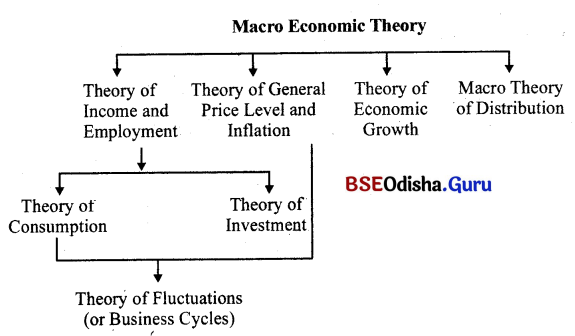
CHSE Odisha Class 12 Economics Solutions Chapter 7 Supply

Odisha State Board CHSE Odisha Class 12 Economics Solutions Chapter 7 Supply Questions and Answers.

CHSE Odisha 12th Class Economics Chapter 7 Question Answer Supply

Group – A

Short type Questions with Answers
I. Answer within Two/Three sentence.

Question 1.
Supply curve slopes upward from left to right.
Answer:
Supply curve is the geometrical representation of law of supply which shows the direct relationship between price & quantity supplied. So supply curve slopes downward from left to right.

Question 2.
Supply curve has a positive slope.
Answer:
Supply curve shows the direct relationship between price of a goods & its quantity so, It slopes upward from left to right showing a positive slope.

Question 3.
Supply of a goods differs from its stock.
Answer:
Stock refers to total quantity of goods stored by the producer; but supply of a goods refers to that part of the stock offered for sale at a given price. So, supply of a goods is a part of the stock.

Question 4.
Supply of good is different from stock of goods.
Answer:
Stock of goods refers to total quantity of goods brought & kept after production. But the supply of goods refers to quantities of a goods ofered for sale at different prices during a particular time period.

Question 5.
Supply function is a multi-variate function.
Answer:
Supply of a goods depends on price of that goods, price of related goods, cost of production, stage of technology etc. So it is a multivariate function.

CHSE Odisha Class 12 Economics Solutions Chapter 7 Supply

Question 6.
Supply of a goods varies directly with price.
Answer:
According to law of supply, the supply of a goods increases with rise in prices & vice versa. It is due to profit motive of the producers.

Question 7.
Supply curve has a positive slope.
Answer:
As the supply of a goods is directly related to its price-level, the supply curve slopes upward from left to right. So supply curve has a positive slope.

Question 8.
Law of supply does not operate for rare goods.
Answer:
Rare goods have fixed supply. Its supply cannot be increased with rise in price-level. So law of supply does not operate in this case.

Question 9.
Stock may exceed supply but supply can never exceed stock.
Answer:
Stock refers to the goods already produced & in possession of seller. But supply of a goods refers to a part of stock brought for sale in the market at a given price.

Answer within Five/Six sentence :

(A) WRITE SHORT NOTES ON :

Question 1.
Supply Function.
Answer:
Supply refers to the quantities of goods offered for sale by the producer at given prices during a particular time period. It is associated with the production of goods. As such, supply of goods depends on the factors of production, price of goods supplied, state of technology, government policy etc. So supply function is a multi-variate function comprising of all these variables. Mathematically stated,
Sx = f (Px, Pa, Pb, Pr, T, G )
Where as Px → Price of goods, Pa, Pb → Price of inputs, Pr → price of related good, T → state of technology, G → Government policy. All these factor are classified into price-factors & non-price factors. Other things (Non-price factors) remaining constant, the quantity supplied of a goods increases with a rise in the price-level and decreases with a fall in the price-level.

Question 2.
Supply schedule.
Answer:
Supply schedule is a tabular expression on showing a list of various quantities of a goods supplied at different given prices. Supply schedule is a numerical statement of law of supply. It shows that more is supplied at higher price & less is supplied at lower price. Supply schedule is of two types i.e.Individual supply schedule & market supply schedule. Market supply schedule is considered while explaining “ Law of supply”. Market supply schedule is the aggregate of individual supply schedule that denotes quantities of goods of offered for sale to the market at different prices.

Question 3.
Law of Supply
Answer:
Law of supply is a guiding principle that shows a functional relationship between price of a good & its quantity supplied in an unchanged situation. According to this law, more of a good is supplied at higher price & less of the good is supplied at lower price. It just exhibits the direct relationship between price & quantity .of a goods supplied, it indicates that price & supply move in a same direction. For this operation, factor like price related goods, prices of inputs, technology should remain constant.

Question 4.
Supply Curve.
Answer:
Supply Curve is a geometrical representation of supply schedule. This graphical illustration of supply schedule reflects the operation of law of supply. This curve describes the direct functional relationship between price & quantity supplied. Hence, the supply curve slopes upward from left to right indicating more is supplied at higher price & less supplied at lower price. This supply curve has positive slope. ‘

Question 5.
Change in Supply.
Answer:
Supply is a multi-variate function. A number of factors like price of the goods supplied, prices of inputs, price of related goods, state of technology, government policy etc. influence the supply. Change in supply takes place due to the change in all those factors other than the price of good supplied. Price of the goods remaining constant, if these factos change, there shall happen either increase in or decrease in supply. Hence, the supply curve may shift downward to the right or upward to the left. Thus, change in supply occurs either in form of increase in supply or decrease in supply. Here, price of the goods acts as a passive factor.

Group – B

Long Type Questions With Answers

Question 1.
What is supply ? What are the factors influencing it ?
Answer:
Supply refers to the amount of goods offered for sale by the producer at a given price during a particular time period. Supply is a flow concept. It indicates flow of different quantities of goods to the market at a different prices during a given time period. Thus, supply is quoted with price & expressed for a particular time period.
Supply of any goods does not means the entire stock of it. Rather, it is a part to the stock which is offered for sale at different prices during a given period. Supply of a good can be expressed by the supply function like.
Sx = f (Px, Py, Pz, Pa, Pb, Pc, T…. )
Like demand, supply is also a multi-variate function. Supply of a goods not only depends on its price, rather it depends on price of related goods (Py,Pz) price of inputs (Pa, Pb, Pc) state of technology (f) etc. All these factors directly influence the supply of goods.

FACTORS INFLUENCING SUPPLY :
Being a multivariate function, the supply of any goods is influenced by numerous factors. The important factors influencing demand are mentioned below.

(i) Price of Goods : It is an important factor that directly influences the supply. Price & supply of goods are positively correlated. It implies that in an unchanged situation more is supplied at higher price & less is supplied at lower price. It establishes that there exists direct relationship between price of a good & its quantity supplied. It is because of the profit motive of the producer. Producer is able to earn more profit only at higher price. So he is attaracted with higher price & supply more of goods.

(ii) Prices of related Goods : The supply of a goods is greatly influenced by the price of related goods. Related goods may be a substitute goods or complementary goods. If the price of a goods substitute of other falls, the quantity supplied of it falls & the supply of the original goods increases. Similarly, a rise in price of a goods leads to a fall in the supply of other goods. On the other hand, in case of complementary goods, if price of goods rises, the quantity supplied of its complementary goods also increases. It just proves the prices of related good as an important factor.

(iii) Prices of inputs: The Prices of factors of production (inputs) are also influential in determining the quantum of supply. If the prices of factors of production rise, the supply of the concered commodity decreases. Thus, there exists inverse relationship between price of inputs & quantity supplied. For example, if the price of a raw material of a good rises, the profit margin is expected diminishing & hence the producer reduces the supply of it.

(iv) State of Technology : State of technology stands as an important determinant of supply. Technological progress or introduction of cost-saving technology reduces the cost of production & raises the supply. Because it creates higher profit expectations. Thus, new inventions or discoveries in respect of technology raises the supply of goods.

(v) Goals of Business : In a free market economy, profit-motive is an importation objective of the business. Profit maximisation is a common goal of business. As such, the producer becomes interested to supply more only at higher price. If the goal of the business is to maximise profit & the profit expectation is bright, then producer supplies more. In socialistic economy, it may not happen.

(vi) Natural Factors : Natural factors like rain fall, natural calamities etc can also influence the supply. Expected rainfall raises the agricultural productivity & hence the supply increases. On the contrary, natural calamities like flood, cyclone etc. reduces the supply.

(vii) Government Policy : Government plays a vital role in changing the pattern of supply. Imposition of higher tax increases the cost of production & thus reduces the supply of goods. For example, rise in sales Tax has adverse impact on supply of the good on which it is imposed. On the other hand, decrease in tax encourages the producer to supply more – Thus, taxation policy acts as a dominant factor in moulding the supply.
All those factors are non-priced factors. So any change in these factors cause changes in supply & the supply curve may shift either upward or downward on the basis of the nature of the change of these factors.

CHSE Odisha Class 12 Economics Solutions Chapter 7 Supply

Question 2.
Explain the “Law of supply”. What are its limitations ?
Answer:
Supply refers to the quantity of a goods which are offered for sale at different prices during a given period of time. This very expression establishes that there exist certain relationship between price of a goods & quantity supplied. Law of supply tells about this relationship.

“Law of supply” speaks about the inter-relationship between the price of a goods & the quantity supplied of it. It describes the response or reaction of the sellers or producers with regard to supply of a goods to the prevailing price at a particular time-period. The price at which the goods are offered for sale (supplied) is called “Supply Price”. The supply price denotes the quantity or quantities of good supplied at different prices.
According to this law, “Other things remaing constant, the amount supplied of a good increases with the rise in its price & decreases with the fall in the price.”

So it clearly indicates a positive correlationship between price of a goods & its quantity supplied. This relationship holds goods in an unchanged situation i.e. some factors like price of related goods, Price of inputs, state of technology, Government Policy etc. should remain constant. In this situation, price of a goods & quantity supplied move in the same direction.

Illustration of law : The law of supply can be illustrated with the help of market supply schedule. Market supply schedule is a tabular expression showing a lilst of various quantities of a goods supplied at a different prices. This is purely a numerical exposition of law of supply.

MARKET SUPPLY SCHEDULE

Numerical Analysis Price of good (inRs.) Amount of good Supplied (in units)
1 10
2 20
3 30
4 40
5 50

This numerical analysis revals that the quantity supplied of a goods increases with the rise in its price. It clearly shows a positive relation between price of a good & quantity supplied of it. When price of good X rises from Rs. 1 to Rs. 5 the quantity supplied of it increases from 10 units to 50 units. This is the theoretical aspect of “Law os supply.

Graphical Analysis.
The same theory can also be explain with the help of a graph.
CHSE Odisha Class 12 Economics Solutions Chapter 7 Supply Img 1
The above figure shows that with the rise in price (measured on OY-axis) the quantity supplied (Measured on OX – axis) increases. When price is Rs. 1.00 the quantity supplied is 100 units. When the price rises to Rs 2.00,3.00,4.00 & 5.00, the quantity supplied increases to 20 unit, 30 units, 40 units, 40 units respectively. It just shows the direct positive relationship between the quantity supplied & price of a goods. By joining all these points, the supply curve can be obtained. Supply curve is, thus a graphical representation of supply schedule. It slopes upwards from left to right showing a positive slope. SS is the supply curve.

LIMITATIONS
Law of supply suffers from certain limitations which are presented below.
(a) Fixed supply : In case of some goods, the supply is found to be a fixed. The supply of such goods can not be increased irrespective of any change in its price. For example, the supply of rare collections, ancient coins, ancient manuscripts can not be increased with the change in price. Thus the law of supply does not operate in these cases.

(b) Change in other things : The law of supply does not hold goods if the non-price factors do change. In case of change in technology, prices of inputs, price of related goods, Government policy etc. the direct relationship between price of a good & its supply can not be proved.

(c) Prestigious Goods : The law is also not applicable to prestigious goods bearing a symbol of social status. Because, the supply of such goods are limited. So in spite of rise in price of these goods, the supply remains unchanged.

(d) Supply of labour : Through the law of supply speaks about the direct relationship between price of a good & quantity supplied of it, yet this does not hold good in case of supply of labour. Wage is the price of labour. A rise in wage creates more income to labour for- less horns work. So the labourer at higher wage rate prefers leisure to work. As such, the supply of labour gets reduced at higher wage rate.

(e) Future Expectation of Price-Change : If future change, in price is expected, the supply is also influenced. If the there is apprehension of fall in price in future, there shall be more supply at a currect price & vice-versa. As such, the law of supply loses its theoretical validity.

(f) Clearance Sale : In case of auction or clearance sale, the law of supply does not operate. In this case, more is supplied at lower price.

(g) Change in Taste & Preference : If any change in taste & preference of the consumer is observed the supply of goods decreases without any change in price.

In spite of all these limitations, the law of supply is treated as a universal law for its practical implications & tremendous significance. No doubt, the law of supply has practical validity for which it is appreciated.

Question 3.
What is change in supply ? What are the factors responsible for this ?
Answer:
Supply is a multi-valued function comprising of certain price & non-price elements. The direct relationship between price of a good & its quantity supplied can be proved only when these non-price factors remain unchanged. The change in these non-price factors shifts the supply curve either upwards or down-wards on the basis of the nature of change. This is truly called “ change in supply”.

Change in supply denotes increase or decrease in the supply as a result of the change in the factors other then the price of goods. Rise in price of inputs, rise in price of related goods, change in technology change in Government policy leads to, change in supply. In case of such change, the supply curve shifts either upwards or downward. Thus, it needs to analyse increase or decrease in supply & to discuss about the factors causing this increase or decrease.

Increase in Supply
Increase in supply takes place when more is supplied at same price & same is supplied at lower price. This figure presented below clarifies this concept.
CHSE Odisha Class 12 Economics Solutions Chapter 7 Supply Img 2
SS is the intial supply curve at OP price (on OY – axis) the quantity supplied (on OX – axis) is OQ.

In case of increase in supply, the supply curve shifts to the right (S1S1) Price remaining same it is clear that more of goods OR can be supplied at OP price due to increase in supply. On the other hand, same quantity (OQ) can also be supplied at the lower price OP because of increase in supply.
Decrease in Supply : Decrease in supply takes place when less is supplied at same price & same is supplied at higher price. The figure presented shows the concept of decrease in supply.
CHSE Odisha Class 12 Economics Solutions Chapter 7 Supply Img 3
The figure shows the shift of supply curve to the left & becomes S1S1 Intially, at OP price OQ quantity is supplied. But as a result of change in supply, less (OR) is supplied at same price (OP) & same (OQ) is supplied at higher price(OS).

Causes of Increase or decrease in Supply.
(a) Change in Price of inputs : If the price of the factors of production decreases, the cost falls & there results higher profit expectation. So the supply increases even price remains constant. On the contrary, if the price of inputs rises, the supply gets reduced at the same price.

(b) Price of Related goods : The price of substitute goods & complementary goods also causes change in supply. If the price of substitutes falls, it reduces the supply of this goods & it raises the supply of the original goods in question. Its reverse case leads to decrease in supply.

(c) Change W Technology : In case of technological progress the cost of production gets reduced & its supply increases. In case of traditional technology, the supply gets decreased.

(d) Tax Policy : Imposition of tax on good leads to increase in the cost of production which reduces the supply of goods. On the other hand, if the tax rate on goods gets reduced, the supply of goods increases because of lower cost.

(e) Future Price Expectation : If the price of the goods is expected to rise in fixture, its quantity supplied at present gets reduced & in its reverse case i.e. expectation of fall in price in future, the supply at present price increases.
All these factors cause a change in supply of the goods. In all the case, the price of the goods remains unchanged, only the non-price factors leads to increase in or decrease in supply.

Group – C

Objective type Questions with Answers
I. Multiple Choice Questions with Answers :

Question 1.
In economics, supply of a goods refers to
(i) stock of the goods
(ii) total production of the goods
(iii) quantity offered for sale
(iv) All of the above
Answer:
(iii) quantity offered for sale

Question 2.
According to law of supply, supply of a goods & its price are
(i) inversely related
(ii) directly related
(iii) proportionately related
(iv) disproportionately related
Answer:
(ii) directly related

CHSE Odisha Class 12 Economics Solutions Chapter 7 Supply

Question 3.
Supply made by the producer mainly depends on
(i) cost of production
(ii) price of the goods
(iii) willingness of the producer
(iv) ability to sell
Answer:
(ii) price of the goods

Question 4.
If the cost of production increases, the supply of goods
(i) increases
(ii) decreases
(iii) remains same
(iv) all of the above
Answer:
(ii) decreases

Question 5.
Supply is always quoted with
(i) cost of production & time period
(ii) price of goods & time period
(iii) technological development
(iv) transport cost
Answer:
(ii) price of goods & time period

Question 6.
The supply curve slopes
(i) upward from left to right
(ii) downward from left to right
(iii) like a vertical straight line
(iv) like a horizontal straight line
Answer:
(i) upward from left to right

Question 7.
When the seller has the fear of fall in price of a goods in future, its supply will
(i) increase
(ii) decrease
(iii) remains unaffected
(iv) cannot say
Answer:
(i) increase

Question 8.
Supply of commodity and stock of it are:
(i) Different concepts
(ii) All of the above
(iii) Same concepts
(iv) None of the above
Answer:
(i) Different concepts

Question 9.
With the rise in price of the substitutes supply of a goods will:
(i) Increase
(ii) Decrease
(iii) Remain the same
(iv) None of the above
Answer:
(ii) Decrease

Question 10.
With the rise in cost of production, supply tends to :
(i) Decrease
(ii) Increase
(iii) Remain the same
(iv) None of he above
Answer:
(i) Decrease

Question 11.
If the rise in price is expected in future, the supply of a commodity will:
(i) Increase
(ii) Decrease
(iii) Remain the same
(iv) None of the above
Answer:
(ii) Decrease

Question 12.
If a fall in price in future is apprehended, the supply will:
(i) Increase
(ii) Decrease
(iii) Remain the same
(iv) None of the above
Answer:
(i) Increase

Question 13.
Supply curve has a :
(i) Positive slope
(ii) Negative slope.
(iii) All of the above
(iv) None of the above.
Answer:
(i) Positive slope

Question 14.
According to Law of Supply, there exists :
(i) Indirect relationship between price and quantity supplied.
(ii) Direct relationship between price and quantity supplied
(iii) All of the above
(iv) None of the above
Answer:
(ii) Direct relationship between price and quantity supplied

Question 15.
If the price of a rare painting increases, its supply will:
(i) Increase
(ii) Decrease
(iii) Remain the same
(iv) None of the above
Answer:
(iii) Remain the same

Question 16.
Increase in supply refers to :
(i) Same supply at same price
(ii) Same supply at more price
(iii) More supply at same price
(iv) None of the above
Answer:
(iii) More supply at same price

II. Fill in the blanks :

Question 1.
Supply varies _____ with price.
Answer:
directly.

Question 2.
Price & _____ of a goods moves in same direction.
Answer:
supply

Question 3.
Supply curve & _____ schedule provides same information.
Answer:
supply

Question 4.
Supply curve has a _____ slope.
Answer:
positive

Question 5.
Supply of a goods depends on its _____
Answer:
price.

Question 6.
A fall in price of substitute goods leads to _____ in its supply.
Answer:
decrease

Question 7.
Supply of a goods _____ with the rise in price of its Substitutes.
Answer:
decreases

CHSE Odisha Class 12 Economics Solutions Chapter 7 Supply

Question 8.
Supply tends to _____ with the rise in cost of production.
Answer:
fall

Question 9.
Supply of a commodity _____ if the rise in price is expected.
Answer:
decreases

Question 10.
Supply of a commodity _____ if a fall in prices in future is apprehended.
Answer:
increases

Question 11.
Supply curve has a _____ slope.
Answer:
positive

Question 12.
Supply remains _____ to any price change of rare paintings.
Answer:
Unchanged

Question 13.
_____ in supply refers to more supply at same price or same supply at less price.
Answer:
Increase

Question 14.
Decrease in supply refers to _____ supply at same price.
Answer:
less

III. Correct the Sentences :

Question 1.
Supply refers to the total quantities of goods produced during a particular time period.
Answer:
Incorrect:
Correct: Supply refers to the quantities of goods offered for sale at different prices during a particular time period.

Question 2.
Stock is a part of the supply.
Answer:
Incorrect :
Correct: Supply is a part of the stock.

Question 3.
Supply Schedule is a numerical statement of law of supply.
Answer:
Correct:

Question 4.
Supply varies indirectly with price.
Answer:
Incorrect:
Correct: Supply varies directly with price.

Question 5.
Price & supply of a good moves in opposite direction.
Answer:
Incorrect:
Correct: Price & supply of a goods moves,in same direction.

Question 6.
Supply curve & supply schedule provides same information.
Answer:
Correct:

Question 7.
Supply curve has a negative slope.
Answer:
Incorrect:
Correct: Supply curve has a positive slope.

Question 8.
Price of a goods depends on its supply.
Answer:
Incorrect:
Correct: Supply of a goods depends on its price.

Question 9.
Supply of a goods is more when its price is higher.
Answer:
Correct:

Question 10.
A fall in price of a substitute goods leads to increase in its supply.
Answer:
Incorrect:
Correct: A fall in price of substitute goods leads to decrease in its supply.

Question 11.
Change in supply can be explained on same supply curve.
Answwer:
Incorrect:
Correct: Change in supply can be explained on different supply curve.

Question 12.
Supply curve shifts upward in case of increase in supply.
Answer:
Incorrect:
Correct: Supply curve shifts downward in case of increase in supply.

Question 13.
Supply of a commodity and stock of it are same concepts.
Answer:
Incorrect.
Correct: Supply of a commodity and stock of it are different concepts.

Question 14.
Supply of a goods increases with the rise in price of its substitutes.
Answer:
Incorrect.
Correct: Supply of a goods decreases with the rise in price of its substitutes.

Question 15.
Supply tends to increase with the rise in cost of production.
Answer:
Incorrect.
Correct: Supply tends to fall with the rise in cost of production.

CHSE Odisha Class 12 Economics Solutions Chapter 7 Supply

Question 16.
Supply of a commodity increases if the rise in price is expected in future.
Answer:
Incorrect.
Correct: Supply of a commodity decreases if the rise in price is expected.

Question 17.
Supply of a commodity decreases if a fall in price in future is apprehended.
Answer:
Incorrect.
Correct: Supply of a commodity increases if a fall in prices in future is apprehended.

Question 18.
Supply curve has a negative slope.
Answer:
Incorrect.
Correct: Supply curve has a positive slope.

Question 19.
According to Law of supply there exists direct relationship between price and quantity supplied.
Answer:
Correct.

Question 20.
If the price of a rare painting increases, its supply increases.
Answer:
Incorrect.
Correct: Supply remains unaffected to any price change of rare paintings.

Question 21.
Increase in supply refers to same supply at same price or same supply at more price.
Answer:
Incorrect.
Correct: Increase in supply refers to more supply at same price or same supply at less price.

Question 22.
Decrease in supply refers to less supply at same price.
Answer:
Correct.

IV. Answer the following questions in one word :

Question 1.
What is supply ?
Answer:
Supply refers to quantity of commodity offered for sale at different given prices during a prticular time period.

Question 2.
What is supply function ?
Answer:
The supply function shows the functional relationship between the supply of a goods & its price-level, while other things remaining constant.

Question 3.
What sort relationship exists between price of a goods & its quantity supplied ?
Answer:
There exists direct relationship between price of a goods & its quantity supplied.

Question 4.
What happens to supply of a goods if the price of its substitute rises ?
Answer:
The supply of goods decrease if the price of its substitutes rises.

Question 5.
What happens to supply of a goods if its price of inputs rises ?
Answer:
The supply of goods decreases if its price inputs rises.

Question 6.
What happens to supply of goods if higher price is expected in future.
Answer:
The supply of goods decreases if higher price is expected in future.

Question 7.
What is a supply schedule ?
Answer:
Supply schedule is a tabular expression showing various quantities of goods offered for sale at each prices during time period.

Question 8.
What is law of supply ?
Answer:
Law of supply states that more is supplied at higher price & less is supplied at lower price in an unchanged situation.

Question 9.
What similarity exists between supply schedule & supply curve ?
Answer:
Both supply schedule & supply curve explains law of supply.

Question 10.
What supply curve ?
Answer:
Supply curve is a n upwards sloping curve showing more quantities supplied at higher price & vice-versa.

Question 11.
What is the slope if supply curve ?
Answer:
Supply curve has positive slope.

Question 12.
In which case law of supply does not operate ?
Answer:
In case of Auction sale, the law of supply does not operate.

Question 13.
What is the shape of the supply curve ?
Answer:
Supply curve slopes upward from left to right.

Question 14.
State a reason for which supply curve slopes upward ?
Answer:
Profit motive of the producer causes upward sloping of supply curve.

Question 15.
What is change in supply ?
Answer:
Change in supply refers to increase or decrease in supply that happens due to the factors other than the price of goods.

CHSE Odisha Class 12 Logic Solutions Chapter 6 Experimental Methods of Mill

Odisha State Board CHSE Odisha Class 12 Logic Solutions Chapter 6 Experimental Methods of Mill Questions and Answers.

CHSE Odisha 12th Class Logic Chapter 6 Question Answer Experimental Methods of Mill

Group – A

Short type Questions with Answers
I. Answer with in Two/Three sentence.

Question 1.
What do you mean by experimental methods?
Answer:
(i) The word experiment relates to experience, so experience includes both observation and experiment.
(ii) So the methods are called experimental methods as they are based on experience.

Question 2.
Write the names of different methods of mill.
Answer:
(i) Mill has given 5 experimental methods.
(ii) These are, agreement, difference, joint method of agreement and difference, method of concomitant variation and the method of residues.

Question 3.
State the mills cannon of method of Agreement.
Answer:
Mill’s Canon of method of Agreement:
“If two or more instances of the phenomenon undo- investigation have only one circumstance in common, the circumstance in which alone all the instances agree is the cause of the given phenomenon.”

Question 4.
State the advantages of the method of Agreement.
Answer:
(i) Being a method of observation, it has a wide range and it can applied where experiment is not possible.
(ii) By this method we can discover cause from effect and effect from cause, since it is a method of observation.

Question 5.
Give a symbolic example of the method of residues.
Answer:
ABC are followed by abc.
BC are known to the cause of be
∴ A is the cause of a.

Question 6.
Why are the experimental methods called inductive method?
Answer:

  1. The experimental methods are called inductive methods because they are inductive in character.
  2. Here the whole process is empirical.
  3. Here the major premise is a result of inductive generalisation, the minor premise is obtained by observation and the conclusion is probable.

CHSE Odisha Class 12 Logic Solutions Chapter 6 Experimental Methods of Mill

Question 7.
What is the principle of elimination applied by the method of agreement?
Answer:
The method of agreement is based on the first principle of elimination which states that
“whatever antecedent can be left out without prejudice to the effect can be no part of the cause”.

Question 8.
What methods of mill are not fundamental and why?
Answer:

  1. The joint method of agreement, the method of concomitant variations and the method of residues are not fundamental.
  2. They are not fundamental because they are the modifications of either the method of agreement or the method of difference.

Question 9.
How can the method of concomitant variations be applied in permanent causes?
Answer:

  1. The method of concomitant variations can be applied in the causes of permanent cases of permanent causes.
  2. The permanent causes cannot be dropped but they can be increased or decreased.
  3. We can apply this method in the cases of heat, friction, gravitation and study their effects on the human body and other bodies.

Question 10.
Is the method of residues essentially a method of deduction?
Answer:
(i) The method of residues is essentially a method of deduction because we follow it to reach at the conclusion.
(ii) Here we adopt the method of substraction.

Question 11.
How can the method of concomitant variations be a graphic method ?
Answer:
(i) The method of concomitant variation is called as graphic method or statistical method because it is based on the quantiative aspect of causation.

(ii) Here the quantitative charges in both the causes and the effect can be represented graphically.

Question 12.
State the characteristics of the method of difference.
Answer:
(i) The method of difference is said to be a method of single difference.
(ii) It is a method of experiement
(iii) It is a method of proof and the result of this method is certain.

CHSE Odisha Class 12 Logic Solutions Chapter 6 Experimental Methods of Mill

Question 13.
State any three advantages of the method of difference.
Answer:
(i) This method requires only two instances in order to find out the cause.
(ii) It conclusively establish a causal relation between cause and effect.
(iii) The result of this method is reliable and dependable.

Question 14.
What are the merits of joint method.
Answer:
(i) It’s scope is very wide.
(ii) It’s conclusion is more certain.
(iii) This method is free from the defects arising out of the plurality of causes.

II. Answer within Five/Six sentence :

Question 1.
State the advantages of the method of difference.
Answer:
(i) As this method requires only two instances, so the trouble of collecting a large number of instances in avoided.
(ii) Under ideal conditions it can establish a casual relation conclusively.
(iii) The result of this method is reliable when based on experiment.

Question 2.
State three disadvantages of the joint method.
Answer:
(i) The joint method cannot distinguish Cause from condition.
(ii) It cannot distinguish causation from coexistence.
(iii) It is inapplicable in cases of permanent causes.

Question 3.
State the advantages of the method of concomitant variation.
Answer:
(i) This method is applicable in case of permanent causes.
(ii) As this method is a modification of the method of difference, so it called a method of proof.
(iii) It is useful in cases of intermixture of effect.

Question 4.
Why the method-of Residues is called as a method of discovery?
Answer:
The method of Residues is said to be method of discovery rather than method of proof, because many important disooveries have been made by this method. The planet Neptune and the gas Argon were discovered by this method. As, the result of this method in hypothetical and does not end with the deductive work of substructure, so mellone called if as finger post to fee unexplained.

CHSE Odisha Class 12 Logic Solutions Chapter 6 Experimental Methods of Mill

Question 5.
Which experimental method of , mill is called method of double Agreement?
Answer:
Joint method of mill is called the method of double Agreement, because it has an agreement in the presence in the positive set and also a agreement in the absence in the negative set. So fowler calls it, the double method of Agreement and Bain calls it the method of double Agreement.

Question 6.
Why the method of Agreement is said to be the method of single agreement? Explain.
Answer:
The method of Agreement is said to be the method of single agreement, because in third method different instances agree on a single point. But if the instances agree on a number of circumstances it will be difficulty by this method to ascertain which one of them in the cause. The singleness of the agreement generates our belief in the causal connection. This method in called “the method of single agreement”.

Group-B

Long Type Questions With Answers

Question 1.
State and Explain Mill’s method Difference.
Answer:
Mill’s Canon : “If an instance in which the Phenomenon under investigation occurs and an instance in which it does not occur have every circumstance in which alone the two instance differ in the effect, or the cause or an indispensable part of the cause of the phenomenon”.

CHSE Odisha Class 12 Logic Solutions Chapter 6 Experimental Methods of Mill - 1

Concrete examples :
(i) In a lighted rooom the furniture are visible at night. When the light is switched off, visibility is lost. So we conclude that light the cause of human visibility.

(ii) Some one sips coffee and finds that it does not taste well. Then he adds a bit of sugar and it becomes tasteful. So sugar is an indispensable part of the cause of the taste of coffee. Principle of elimination : The method of difference is based on the principle. “Which an antecedent can not be left out without the consequent disappearing, such an antecedent must be the cause or a part of the cause”.

Characteristics :
(1) The method of difference is said to be the method of single difference : In this method on comparison of two instance, we find that they differ only in one respect. It is the singleness of the difference that constitutes the ground of proof. Hence Mellone and coffey call this method the method of single difference.

(2) The method of difference is mainly a method of experiment : The essential requirement of this method is the two instances are special type. They must be exactly alike except that in one, the phenomenon under investigation is present and in other it is absent. It can be found only when the situation is under our control. Unless we examine, how can we know that our thirst can be quenced after drinking of water. So this method is truly called a method of experiment.

(3) The method of difference is said to be a method of proof in cases of experimental observation: The method of agreement does not prove the causal connection, but merely suggests something to be the cause. But the method of difference can prove the causal connection by experiment. Since this method faces many difficulties, it can not completely establish the causal connection.

Advantages :

  1. The method of difference requires only two instance, though of a special kind. So the trouble of collecting a large number of instance is a avoided.
  2. It can concresively establish a causal relation, under ideal conditions.
  3. When applied experimentally the result obtained by this method is reliable.

Disadvantages :
(1) The method of difference can not eradicate the difficult arising out of the plurality of causes : According to Mellone, it proves a cause but not the cause. In a particular case, this method can conclusively prove that x is the cause of y, but it does not prove that x is the only cause of y.

(2) In the method of difference, we are liable to commit the fallacy of post hoc er go proper hoc : This fallacy literally means, after this therefore due to this. When this method is wrongly used in out daily lige. We commit this fallacy. Anew bridge is the cause of my father’s death then my argument is certainly fallacious.

(3) This method falls to distinguish between cause and condition : Sometimes this method takes one condition to be cause. But this view is wrong. For example : Addition of bit of sugar brings about the right taste of coffee, but sugar alone is not the cause of the taste.

(4) The method of difference can not proceed from effect to cause : By experiment we can proceed from cause to effect, but not from effect to cause. So as a method of experiment, this method cannot proceed from effect to cause.

(5) The method of difference is inapplicable in the case of permanent causes : Because the permanent causes like friction, gravitation on the surface of the Earth etc. cannot totally eliminated. So this method is not applicable in such cashes.

(6) The scope of the method of difference is limited : As the method of difference is based on the method of experiment and experiment is not possible in all cases, that is why it’s scope is limited.

(7) The method of difference can not be applied where the phenomenon is complex and beyond our control.

CHSE Odisha Class 12 Logic Solutions Chapter 6 Experimental Methods of Mill

Question 2.
State and explain the joint method of Agreement and difference.
Answer:
Mill’s Canon : “If two or more instances in which the phenomenon occurs have only one circumstance in common, while two or more instance in which it does not occur have nothing in common save the absence of that circumstance, the circumstance in which alone the two sets of instances differ is the effect or the cause or an indispensable part of the cause of the phenomenon.

Symbolic example :

  • Positive Set :
    1. ABC are followed by abc.
    2. ACD are followed by acd.
    3. ADC are followed by ade.
  • Negative Set :
    1. BCD are followed by bed.
    2. DEC are followed by dec.
    3. EFD are followed by efd.

From these two sects of instances we inter that ‘A’ is the cause of a. Concrete examples :
(i) We collect the instances and find that where there is malaria fever, there are mosquitoes and where there is no malaria fever, there is no mosquitoes. So mosquito is the cause if malaria fever.

(ii) The students who are sincere in their study succeed in their examination and who are insincere in their study do not succeed in the examination. So sincere study is cause of success in the examination.

Principle of Elimination : The joint method is a modification of the method of a agreement and the method of difference. So the principles of elimination of both these methods are employed here.

  1. Whatever antecedent can be left out without prejudice to the effect can be no part of the cause.
  2. When an antecedent can not be left out without consequent disappearing, such antecedent must be the cause or part of the cause.

Characteristics :
(1) The joint method is a method of double agreement: This method is not a primary method, but it is considered to be a double application of the method of agreement and method of difference. It has an agreement in the presence in the positive set and also an agreement in the absence in the negative set. So fowler calls it, the double method of  agreement. Mill calls this method, “The indirect method of difference, “Because the negative instances are obtained noi by experiment but indirectly by showing what would be the result it experiment could be made.

(2) According to venn, this method is called as the method of exclusion because in this method all the circumstances are eliminated except one.

(3) This method is said to be a method of proof, because the causal connection suggested by the positive instances is confirmed by the negative instances.

Advantages :

  1. The joint method being a method of observation has a wide range of application. The scope of this method is wider because observation is universally applicable. Besides it helps discover by suggesting a hypothesis about cause.
  2. This method is free from the difficulties arising out of the plurality of causes. This method takes that the common antecedent and common consequent are causally related. If the negative instances contain all the circumstances other that what is uniformaly present in the positive set, there is no change of plurality of causes.
  3. The joint method is applicable in the field of experiment.
  4. This method can confirm the casual connection.

Disadvantages :

  1. The joint method fails to distinguish between cause and co-existence. Lightning and thunder are co-effects but they may be supposed to be cause and effect by this method.
  2. It is inapplicable in cases of permanent causes, such as heat, gravitation etc. Because in the these cases we can not find a negative set.
  3. It cannot distinguish between cause and condition. If may be shown that salt is uniformly present in several dishes of palatable curries but the same dishes become unpalatable when no salt is given. By this method we are liable to conclude that salt alone is responsible for palatableness of the curries.
  4. This method requires that different antecedents and consequent must be separately distinguishable. So it can not deal with the intermixture of effects where the separate effects are indistinguishable.

CHSE Odisha Class 12 Logic Solutions Chapter 6 Experimental Methods of Mill

Question 3.
State and explain the method of residues.
Answer:
Mill’s Cannon : “Subduct from any given Phenomenon such part as is known by previous inductions to the effect of certain antecedents and the residue of the phenomenon is the effect of the remaining antecedents.”

Symbolic example :
ABC ………… abc
BC …………… be
∴ A is the cause of a.

Concrete example :
(1) The shopkeeper weights the empty tin and then filled up the tin with oil, then weights it. Now by subtracting the weight of the empty tin from the total weight he determines the weight of the oil.

(2) You purchased a shirt, a banyon and a pant, you paid Rs 70. You know the price of the shirt is Rs 25 and banyan is Rs 5. So the price of the.pant is Rs 40.

The Principle of Elimination :
This method is based on the principle that what is the cause of one thing cannot be the cause of a different thing. When we are dealing with a complex set a phenomena and we already know the cause of same of them, we conclude that the cause of the reminder or residual phenomenon is to be found among the remaining antecedents.

  • Characteristics :
    1. It is a method of discover rather than proof.
    2. It is a special modification of method of difference.
    3. It is essentially method of deduction. We calculated the effect of known causes and substract this calculated effect from the total effect.
  • Advantages :
    1. This method is applicable of complex phenomena.
    2. It is capable of proving casual relation where the data are collected by experiment.
  • Disadvantages :
    1. The method of residues is inapplicable in cases where previous knowledge of causal relation is a lacking.
    2. The method of residues is in applicable when the complex effect is unanalysed.

Question 4.
Di$cuss critically mill’s method of Agreement.
Answer:
Mill’s common : If two or more instances of the phenomenon under investigation have only one circumstance in common, the circumstance in which alone all the instances agree is the cause (or effect) of the given phenomenon.

Symbolic Example :
ABC are followed by abc
ADE are followed by ade
AFG are followed by afg.
∴ A is the cause of a or a is the effect of A.

Concrete example : Female anopheles mosquito biting is the common antecedent of malaria fever. So female anopheles mosquito biting is the cause of malaria.

Principle of Elimination : The method of Agreement is based on the principle ‘Whatever antecedent can be left out without prejudice to the effect can be no part of the cause”.

Characteristics :
(1) The method of Agreement is said to be the method of single agreement:
Agreement on a single point or factor is important in this method. If the instance agree on a number of points, the real cause among them will be difficult to be found. Because we can not be sure which are among these points of agreement is the cause of the event.

(2) It is a method of observation : By observation we find instances for this method. Because it is based on observation, it has a wider range of application, there are certain areas where we can not experiment. For example, the planetory movement. In such cases, observation is the only way. This method of agreement has some advantages and some disadvantages. Let us discuss them.

Advantages:

  1. The scope of the method is wide. This method is based on observation and observation has a wider range of application than experiment. So this method is applicable to cases where experiment is not possible.
  2. In observation, we can go from cause to effect and also from effect to cause. So, as this method is based on observation, we get this advantage in the method. We can discover the cause and also the effect of an event.

Disadvantages :
1. This method fails to eradicate the difficulties arising out of pluraling of causes. Salt is the common element in all tasty curries. The method of agreement may declare salt as the cause of taste which is not the case.

2. There is the possibility of committing the fallacy of non-observation in this method. As this method collects its instances from observation, there always remains a possibility that we have overlooked certain circumstances. Those hidden factors may be responsible for the creation of effect of course, this difficulty can be removed to some extent by careful observation and manipulation of instances.

3. The method of Agreement fails to distinguish between cause and condition. We may mistake a condition to be the cause. The common antecedent may be a part of the cause but not the total cause!

4. It can not deal with intermixture of effects. There may be a case where the effect is a joint one from several causes. In atherwords, several causes together have produced an intermixture of effects. In such case, it is almost impossible to point out which effect is of which cause.

5. The result of this method is probable : This method depends only on the observation. There is always a possibility that we have not observed all the relevant facts. The probability only increases with more and more number of cases. Inspite of some disadvantages the method of agreement of mill is regarded as very important method.

CHSE Odisha Class 12 Logic Solutions Chapter 6 Experimental Methods of Mill

Question 5.
What is the method of concomitant variation. Discuss critically.
Answer:
Mill’s Common : “Whatever phenomenon varies in any manner whenever another phenomenon varies in some particular manner is either a cause or an effect of that phenomenon, or is connected with it through same fact of causation”.

Symbolic Example :
A1BC followed by a,be.
A2BC followed by a2bc.
A3BC followed by a3bc.
∴ A is the cause of a.

Concrete Example:
When the temperature rises, the mercury in the thermometer expands. So temperature is the cause of the expansion of mercury.

Principle of Elimination:
The method is based on the principle – “An antecedent and a consequent rising and falling together in numerical concomitance are to be held as cause and effect”.

Characteristics: The characteristics of the method given by J.S. Mill are

  1. This method of comitant variation is the modification of either the method of agreement or the method of difference. It is not a primary method.
  2. It is based on the quantitative aspect of causation. It can be represented graphically. So, this method is also called graphic method or statistical method.
  3. It is a method of discovery. When two phenomenon change simultaneously in a particular pattern, a casual connection is suspected.
  4. This method of concomitant variation has some advantages and also some disadvantages. All of them are discussed below.

Advantages :

  1. It is a method of proof. Because this method is a modification of the method of difference.
  2. This method is useful in case of permanent cause. Permanent causes like that, friction, etc. can not be totally eliminated. This method does not need total elimination of any factor.
  3. It is useful in case of intermixture of effects. Even when effects are blended together, variation in antecedent indicate a variation consequent and thereby a casual connection is established.

Disadvantages :

  1. This method is applicable to a certain limit. Exercise increase physical strength. But excess of it deterioates the strength.
  2. The method is not applicable in case of qualitative change. Only in case of variation in quantity this method is applicable.
  3. It fails to distinguish between cause and condition. Two things may changer together But that does not mean that they are cause and effect. One may be a condition.
  4. It is not free from the difficulties arising out of plurality of causes when it is a method of observation.
  5. This is the method of concomitant variation advanced by J.S. Mill to find the cause of an event.

Question 6.
Elaborate the advantages and the dis-advantages of the joint method of agreement and difference.
Answer:
The joint method of agreement and difference is a logical approach employed in the process of reasoning and argumentation. This method, developed by the philosopher John Stuart Mill, is a part of Mill’s broader system of inductive reasoning known as the Methods of Experimental Inquiry. The joint method involves identifying the common factors (agreements) and differences in a set of instances to arrive at more reliable conclusions. While the joint method has advantages in certain contexts, it also has its limitations and potential drawbacks.

Advantages of the Joint Method of Agreement and Difference :

1. Increased Reliability : The joint method combines the strengths of both the method of agreement and the method of difference. By considering both agreements and differences among instances, the reasoning process becomes more comprehensive and less susceptible to errors.

2. Robust Inductive Reasoning : The joint method enhances the robustness of inductive reasoning by addressing multiple aspects of the observed phenomena. It allows for a more thorough analysis of patterns, making the conclusions drawn from the data more reliable and well-founded.

3. Effective in Identifying Causal Factors : When used to analyze causal relationships, the joint method is effective in identifying factors that are consistently present (agreements) or consistently absent (differences) when a phenomenon occurs or does not occur. This can contribute to a better understanding of causation.

4. Versatility in Application : The joint method is versatile and applicable across various disciplines. Whether in scientific research, social sciences, or other fields, it provides a structured approach to analyze patterns and draw meaningful conclusions from observed data.

5. Guided Hypothesis Formation : The joint method guides the process of hypothesis formation by focusing on factors that consistently accompany or differ in instances under investigation. This can streamline the formulation of hypotheses that can be tested and refined through further empirical research.

6. Facilitates Comparative Analysis : Comparative analysis is inherent in the joint method, as it involves comparing instances to identify both commonalities and differences. This facilitates a nuanced understanding of the subject matter, contributing to more accurate generalizations.

Disadvantages of the Joint Method of Agreement and Difference :
1. Complexity and Resource Intensiveness : The joint method may be complex and resource-intensive, particularly when dealing with a large number of instances. Analyzing agreements and differences in a comprehensive manner requires careful consideration and detailed examination, which can be time-consuming.

2. Dependency on Quality of Data : The effectiveness of the joint method depends on the quality and reliability of the data used for analysis. If the data are flawed, incomplete, or biased, the conclusions drawn from the joint method may also be compromised.

3. Assumption of Relevance : The joint method assumes that the factors being considered (agreements and differences) are relevant to the observed phenomena. If important factors are overlooked or if irrelevant factors are included, the conclusions may be inaccurate or incomplete.

4. Limited Applicability in Some Contexts : While versatile, the joint method may not be equally applicable to all types of research questions or phenomena. In some cases, alternative methods or approaches may be more suitable for drawing meaningful conclusions.

5. Difficulty in Identifying Unobservable Factors : The joint method may face challenges in situations where certain factors are unobservable or difficult to measure. If critical factors are not considered due to their invisibility or complexity, the conclusions may be incomplete.

6. Potential for Overfitting : Overfitting occurs when an analysis is tailored too closely to the specific data set at hand, leading to conclusions that do not generalize well to new data. The joint method, if not carefully applied, may be susceptible to overfitting.

7. Limited Insight into Dynamic-Processes : The joint method may not be as effective in capturing dynamic or evolving processes where causal factors change over time. In such cases, alternative methods that account for temporal dynamics might be more appropriate.

Conclusion:
The joint method of agreement and difference offers a valuable approach to inductive reasoning by considering both commonalities and variations among instances. Its advantages lie in the increased reliability of conclusions, the robustness of inductive reasoning, and its effectiveness in identifying causal factors.

However, the method has its limitations, including potential complexity, dependency on data quality, and challenges in identifying unobservable factors. Researchers and analysts should carefully consider the context and nature of the phenomenon under investigation when deciding whether to apply the joint method or explore alternative methods that may better suit their specific research questions.

CHSE Odisha Class 12 Logic Solutions Chapter 6 Experimental Methods of Mill

Question 7.
What is the special feature of the method of residues?
Answer:
The method of residues, also known as the method of differences, is a mathematical technique used for solving problems in various fifelds, including calculus, number theory, and physics. This method, attributed to the French mathematician Francis Viete, is characterized by its special feature of isolating and manipulating the “residue” or remaining part of a given quantity after subtracting known components. Understanding the special features of the method of residues requires exploring its principles, applications, and advantages.

Principles of the Method of Residues :
1. Isolation of the Residue : The primary objective is to isolate and identify the residue in the given quantity. This is achieved by subtracting known components from the total quantity, leaving behind the residue. The residue represents the part of the quantity that is not accounted for by the known components.

2. Manipulation of Residue : Once the residue is isolated, mathematical operations are performed on it to obtain the desired result or solution. This manipulation often involves simplifying the residue or transforming it into a more manageable form.

Special Features of the Method of Residues :
1. Focused on the Remaining Quantity : The distinctive feature of the method of residues is its focus on the remaining or residual part of a quantity after subtracting known components. This allows mathematicians to direct their attention specifically to the part that requires further analysis or computation.

2. Utilization in Various Mathematical Disciplines : The method of residues finds applications in diverse mathematical disciplines, including calculus, complex analysis, number theory, and combinatorics. Its adaptability and versatility contribute to its widespread use in solving different types of problems.

3. Integration with Complex Analysis : In complex analysis, the method of residues is closely linked to the theory , of residues, which involves evaluating complex integrals using the residues of functions. The residues are residues of meromorphic functions, and their properties contribute to the evaluation of integrals.

4. Application in Combinatorics : The method of residues is employed in combinatorics to count certain types of objects or arrangements. The residue is often associated with a counting function, and its manipulation leads to the determination of combinatorial quantities.

5. Solution of Linear Recurrences : In number theory, the method of residues is utilized to solve linear recurrence relations, providing a systematic approach to finding closed-form expressions for sequences defined by recurrence relations.

6. Inverse Process of Synthesis : The method of residues can be viewed as an inverse process of synthesis, where a complex quantity is broken down into simpler components. This inverse approach is particularly valuable in solving problems where direct synthesis is challenging

7. Advantageous for Simplification : The method of residues is advantageous for simplifying complex mathematical expressions. By isolating the residue, mathematicians can focus on specific terms or components, making it easier to analyze and manipulate the expression.

8. Application in Indeterminate Analysis : The method of residues is applied in indeterminate analysis, where it aids in finding limits and evaluating indeterminate forms. The residue plays a crucial role in expressing the limit of a function as the residue of a corresponding function.

Applications and Examples:
1. Calculus and Integration: In complex analysis, the method of residues is applied to calculate integrals by identifying residues at singular points. This is particularly useful for integrals involving rational functions or functions with poles.

2. Combinatorial Enumeration: In combinatorics, the method of residues is used to count the number of objects satisfying certain conditions. The residue is often associated with a generating function, and its manipulation yields information about the combinatorial structure.

3. Linear Recurrence Relations: In number theory, the method of residues is employed to solve linear recurrence relations. By transforming the recurrence relation into a generating function, the residue can be used to find a closed-form expression for the sequence.

4. Evaluation of Indeterminate Forms: The method of residues is applied to evaluate indeterminate forms, such as limits involving 0/0 or ∞/∞. By isolating the residue, mathematicians can simplify the expression and determine the limit.

Advantages of the Method of Residues :
1. Versatility and Applicability : The method of residues is versatile and applicable to various mathematical disciplines, providing a unified approach to solving problems in calculus, complex analysis, number theory, and combinatorics.

2. Focus on Essential Components : By isolating the residue, the method of residues allows mathematicians to focus on the essential, remaining part of a quantity. This simplifies the analysis and facilitates the solution of complex problems.

3. Inverse Synthesis Approach : The method of residues offers an inverse approach to synthesis, breaking down complex quantities into simpler components. This can be advantageous in situations where the direct synthesis is challenging or impractical.

4. Integration with Complex Analysis : In complex analysis, the method of residues is a powerful tool for evaluating integrals involving meromorphic functions. Its integration with complex analysis enhances its effectiveness in solving problems in this domain.

Limitations of the Method of Residues :
1. Dependency on Quality of Data : The effectiveness of the method of residues depends on the quality, and accuracy of the data or functions involved. If the initial expressions are poorly defined or contain errors, the conclusions drawn from the method may be
compromised.

2. Complexity and Resource Intensiveness : The method of residues can be complex and resource-intensive, especially when dealing with intricate mathematical expressions. The manipulation of residues may involve intricate algebraic steps, requiring careful analysis

3. Applicability to Specific Problem Types : While versatile, the method of residues may not be equally applicable to all types of mathematical problems. Certain problems may have more efficient or suitable methods for solution, and reliance solely on the method of residues may not be optimal.

Conclusion :
The method of residues, characterized by its focus on isolating and manipulating the remaining part of a quantity, is a valuable mathematical tool with wide-ranging applications. Its principles, versatility, and integration with complex analysis contribute to its effectiveness in solving problems in calculus, number theory, and combinatorics.

However, like any method, the approach has its limitations, including dependence on data quality and potential complexity. Understanding the special features, advantages, and limitations of the method of residues is essential for mathematicians and researchers seeking to apply this method judiciously in various mathematical contexts.

Group -C

Objective type Questions with Answers
I. Multiple Choice Questions with Answers :

Question 1.
How many type principles of elimination are there in Mill’s experimental method?
(i) One
(ii) Two
(iii) Three
(iv) Four
Answer:
(iii) Three

Question 2.
Who has given five experimental methods in inductive logic?
(i) Mill
(ii) Jevons
(iii) Bain
(iv) Carveth Read
Answer:
(i) Mill

Question 3.
Which method is called as graphic or statistical method?
(i) The method of concomitant variations
(ii) The joint method of Agreement and Difference
(iii) The method of Difference
(iv) The method of Agreement
Answer:
(i) The method of concomitant variations

Question 4.
Which method is said to be a method of Deduction?
(i) The method of Agreement
(ii) The method of Difference
(iii) The method of concommitant variation
(iv) The method of Residues
Answer:
(iv) The method of Residues

CHSE Odisha Class 12 Logic Solutions Chapter 6 Experimental Methods of Mill

Question 5.
Which method of is said to be method of proof?
(i) The method of Agreement.
(ii) The method of Difference, Joint method and the method of concomitant variations.
(iii) The method of Residues
(iv) The method of concomitant variations.
Answer:
(ii) The method of Difference, Joint method and the method of concomitant variations.

Question 6.
Which method is called the method of Discovery?
(i) The method of Difference
(ii) The method of Residues
(iii) The method of Agreement and the method of concommitant variations.
(iv) The joint method of Agreement and Difference.
Answer:
(iii) The method of Agreement and the method of concommitant variations.

Question 7.
Which method is called as the method of experiment?
(i) The method of Difference
(ii) The method of Agreement.
(iii) The joint method of Agreement and Difference.
(iv) The method of concommitant variations
Answer:
(i) The method of Difference

Question 8.
In which method we are liable to commit the fallacy of post hoc ergo propter hoc?
(i) The method of Agreement
(ii) The joint method of Agreement and difference
(iii) The method of Difference
(iv) The method of Residues
Answer:
(iii) The method of Difference

Question 9.
Which method is called as a method of exclusion?
(i) Method of Agreement
(ii) Method of difference
(iii) Joint Method of Agreement and difference.
(iv) Method of Residues.
Answer:
(iii) Joint Method of Agreement and difference.

CHSE Odisha Class 12 Logic Solutions Chapter 6 Experimental Methods of Mill

Question 10.
Mill has puforth how many kinds of explanation?
(i) Three types
(ii) Four types
(iii) Five types
(iv) Six types
Answer:
(i) Three types

II. Fill in the blanks :

Question 1.
The method of Agreement in a method of ______.
Answer:
Discovery

Question 2.
The method of ______ is applicable in case of permanent causes.
Answer:
Concomittant variation

Question 3.
The method of ______ cannot distinguish between cause and condition.
Answer:
Agreement

Question 4.
In joint method we are unable to distinguish causation from ______.
Answer:
Co-existence.

Question 5.
The method of concern ittant variation is called ______ method.
Answer:
Graphic or statistical

Question 6.
There are ______ experimental methods in Logic.
Answer:
Five

CHSE Odisha Class 12 Logic Solutions Chapter 6 Experimental Methods of Mill

Question 7.
There are ______ principles of elimination.
Answer:
Three

Question 8.
The experimental methods are called the methods of elimination because ______.
Answer:
By applying these methods the accidental circumstances are discarded and the essential circumstances are determined.

Question 9.
The first principle of elimination says ______.
Answer:
An absent circumstances cannot be the cause.

Question 10.
The method of Agreement is based on ______ principle.
Answer:
The first

Question 11.
The method of difference is based on the ______ principle.
Answer:
Second

Question 12.
The method of concomitant variation is based on the ______ principle.
Answer:
Third

Question 13.
The joint method is modification of ______.
Answer:
The method of Agreement and the method of difference.

Question 14.
The method of Residues is modification of ______.
Answer:
The method of difference

Question 15.
The method of agreement is essentially a method of ______.
Answer:
observation

CHSE Odisha Class 12 Logic Solutions Chapter 6 Experimental Methods of Mill

Question 16.
The method of Agreement is used in. those cases where ______.
Answer:
The phenomenon is beyond our control

Question 17.
The method of Agreement suffers from the defects of ______.
Answer:
Plurality of causes and non-observation

Question 18.
The method of difference is pre-eminently a method ______.
Answer:
Experiment

Question 19.
When the method of difference is applied in the sphere of simple observation if leads to the fallacy of ______.
Answer:
Post hoc propter hoc

Question 20.
______ method is called a graphic or statistical method.
Answer:
Method of concomitant variation

Question 21.
Method of ______ is said to be a method of deduction.
Answer:
Residues

Question 22.
______ method is called a method of double agreement.
Answer:
Joint method

CHSE Odisha Class 12 Logic Solutions Chapter 6 Experimental Methods of Mill

Question 23.
______ calls the method of difference as the method of single difference.
Answer:
Mellone

Question 24.
Venn calls the Joint method as the ______.
Answer:
method of exclusion

Question 25.
The method of ______ is based on the quantitative aspect of causation.
Answer:
Agreement

Question 26.
The method of concomitant variation is useful’in cases of ______.
Answer:
Intermixture of effects

Question 27.
The method of concomitant variation is not applicable in cases of ______ .
Answer:
qualitative variation

Question 28.
The method of concomitant variation does not enable us to distinguish causation from ______
Answer:
Co-existence

CHSE Odisha Class 12 Logic Solutions Chapter 6 Experimental Methods of Mill

Question 29.
According to Mellone, Method of Residues is called ______.
Answer:
A finger post to the unexplained

Question 30.
The method of Residues is useful in cases of ______.
Answer:
Complex effect.

III. Correct the Sentences :

Question 1.
The method of Agreement is said to be the method of single difference.
Answer:
The method of Agreement is said to be the method of single agreement.

Question 2.
The method of Agreement is said to be mainly method of Experiment.
Answer:
The method of Agreement is said to be^nainly a method of observation.

Question 3.
The method of Agreement is said to be a method of proof rather than a method of Discovery.
Answer:
The method of Agreement is said to be a fttetfrod of discovery rather than a method of proof.

CHSE Odisha Class 12 Logic Solutions Chapter 6 Experimental Methods of Mill

Question 4.
In the method of Agreement we are liable to commit the fallacy of Petitio Principii.
Answer:
In the method of Agreement we are liable to commit the fallacy of Non-observation.

Question 5.
The result of the method of agreement is certain.
Answer:
The result of the method of agreement is probable.

Question 6.
The method of difference is said to be the method of single Agreement.
Answer:
The method of difference is said to be the method of single difference.

Question 7.
The method of difference is mainly a method of observation.
Answer:
The method of difference is mainly a method of experiment.

IV. Answer the following questions in one word :

Question 1.
Which method is said to be mainly a method of observation?
Answer:
Agreement

Question 2.
The method of Agreement is said to be a method of discovery rather than a method of what?
Answer:
Proof

Question 3.
The result of tae method of Agreement is only what?
Answer:
Probable

Question 4.
Which method is said to be the method of single difference?
Answer:
Difference

Question 5.
The method of difference is mainly a method of what?
Answer:
Experiment

Question 6.
In which method we are liable to commit the fallacy of “post hocergo propter hoc”?
Answer:
Difference

CHSE Odisha Class 12 Logic Solutions Chapter 6 Experimental Methods of Mill

Question 7.
Which method is not useful in cases of intermixture of effects?
Answer:
Joint method

Question 8.
Which method is called Graphic or statistical method?
Answer:
Concomitant – Variation

Question 9.
Which method is said to be essentially a method of deduction?
Answer:
Residues

Question 10.
Which method is called “a finger post to the unexplained”?
Answer:
Residues

Question 11.
Which method is called the method of Inclusion?
Answer:
Joint method

CHSE Odisha Class 12 Logic Solutions Chapter 5 Symbolic Logic

Odisha State Board CHSE Odisha Class 12 Logic Solutions Chapter 5 Symbolic Logic Questions and Answers.

CHSE Odisha 12th Class Logic Chapter 5 Question Answer Symbolic Logic

Group – A

Short type Questions with Answers
I. Answer with in Two/Three sentence.

Question 1.
State the characteristics of symbolic logic.
Answer:
(i) It uses ideograms
(ii) It uses deductive method.
(iii) It uses constants and variables.

Question 2.
What is variable?
Answer:
(i) Variable means that varies or changes from time to time.
(ii) Variable is a symbol which has no fixed meaning.
(iii) Three types of variables are used in symbolic logic
Prepositional variables = p, q, r, s, t, etc. predicate variable f, g,h and individual variables, x, y, z etc

Question 3.
What, is called propositional variable?
Answer:
(i) The variable which is used in order to symbolise any prepositional that is called propositional variable.
(ii) Example : Ram is intelligent and A Hari is clever can be symbolised as p and q.

Question 4.
What do you mean by constant?
(i) Constant means which is not changeable. It meaning is always same and it has a fixed meaning.
(ii) Different logical constants are used in the symbolic logic. These are conjunction (.), Disjunction (v), alternation (∧), implication (>), equivalence (=), negation (~)

CHSE Odisha Class 12 Logic Solutions Chapter 5 Symbolic Logic

Question 5.
What is truth function?
(i) When the truth of falsity of a proposition depends upon the truth of falsify of another proposition, then the first one is called the truth function of the second one.

(ii) Example;
Madhavi is beauty = P
Madhavi is not beauty = ~P

Question 6.
What is called conjuctive function?
(i) When two propositions are joined together with the word and that is called conjunctive function.
(ii) Example; Mira is beauty and Sarita is clever can be symbolised p. q

Question 7.
What is tautology?
(i) In a truth table, if the main result is always truth that is called tautology,
(ii) Examples;
CHSE Odisha Class 12 Logic Solutions Chapter 5 Symbolic Logic -1

Question 8.
What is contradictory truth table?
Answer:
(i) In a truth table, if the main result is always false that is called contradictory truth table.
(ii) Example;
CHSE Odisha Class 12 Logic Solutions Chapter 5 Symbolic Logic -2

Question 9.
Construct the truth table of the following;
Answer:
CHSE Odisha Class 12 Logic Solutions Chapter 5 Symbolic Logic -3

Question 10.
What is ideogram?
Answer:
(i) The soundless symbols are called ideograms.
(ii) All the written symbols like +, -, × , √ etc are called ideograms.

Question 11.
Fallacy of ambiguous minor :
Answer:
When the minor term is used more than one sense in an argument that is called the fallacy of ambiguous minor.

Question 12.
Fallacy of amphiboly.
Answer:
(i) The fallacy of amphibody arises due to the wrong construction of a sentence.
(ii) He was given twice two amd three rupees. It may mean that he was given either seven or ten rupees.

Question 13.
Fallacy of Division.
Answer:
(i) When we pass from the collective use of term to its distributive use, that is called the fallacy of division.

(ii) Example; the students of this college are intelligent.
Rani is a student of this college.
∴ Rani is intelligent

Question 14.
What is the fallacy of composition?
Answer:
(i) This fallacy arises, when we pass from the distributive use to a collective use of a term in our argument.
(ii) Example; Nine and one are odd numbers
Ten is nine and one
∴ Ten is an odd number

CHSE Odisha Class 12 Logic Solutions Chapter 5 Symbolic Logic

Question 15.
What is a called the fallacy of accent ?
Answer:
(i) When the emphasis is given on a particular word in a sentence at that time we commit the fallacy of accent.
(ii) Example : Thou shalt not insult thy parents

Question 16.
Fallacy of post hoc ergo propter hoc.
Answer:

  1. “Post hoc ergo propter hoc” literally means after this, therefore due to this.
  2. It arises when we take any and every antecedent to be the cause :
  3. Example; A crow sits on the palm tree and a palm falls down, so it is said that crow is the cause of the falling of the palm.

Question 17.
Fallacy of neglecting the negative condition.
Answer:
(i) When we take only positive conditions to be the cause and neglect the negative conditions then we commit this fallacy.
(ii) Example; Intelligence does not lead to success, as a large number or intelligent students are unemployed.

Question 18.
Fallacy of mistaking the co-effects of a cause and effect.
Answer:
(i) Cause is the antecedent and effect is the consequent. But if we take one of the coeffects of a common cause as the cause of its effect, we commit this fallacy.

(ii) Examples; Day invariably preceded night, so day is the cause of night.

Question 19.
Fallacy of undue assumption.
Answer:
(i) When we unduly assume a premise at that time we commit the fallacy of undue assumtpion.
(ii) Example; The people of America are wealthy, because they are industrious.

II. Answer within Five/Six sentence :

Question 1.
What are the main characteristics of symbolic Logic?
Answer:
The Logician C. I. Lews has suggested three different kinds of characteristics regarding the nature of symbolic Logic. These are;

  1. Symbolic Logic uses ideograms not phonograms
  2. It applies deductive method
  3. It uses constant and variables.

Question 2.
What is variable?
Answer:
A variable in a symbol which can stand for any one of a given range of values. Three types of variables are used in Logic, such as :
Prepositional variables, P, q, r, s, t etc (stand for the symbols of propositions) predicate variables, f, g, h (stand for the symbols of predicate), Individual variables x, y, z, (stands for the symbols of any individual.

Question 3.
What is Logical constant?
Answer:
Logical constant is a symbol whose meaning is remains same in any Logical expression. Logical constants are also called Logical connectives, because they connect propositions and build compound ones. The Logical connectives or constants are; Conjunction (.), Alternation (v), implication (a), Equivalence (s), Negation (u).

Question 4.
What is truth function?
Answer:
Borrowing the term ‘function’ from Mathematics, any expression with Logical constants is said to be a truth function of its Propositional variables, because the truth value of that expression depends value 01 that expression depends on the truth value of the prepositional variables.
Example: up is a truth function, of P, because the truth or falsity of ~p depends on the truth or falsity of‘up’.

CHSE Odisha Class 12 Logic Solutions Chapter 5 Symbolic Logic

Question 5.
Briefly explain the truth table.
Answer:
Truth table is a convenient way to show the truth-value of a truth function, taking into consideration all possible truth-values of the prepositional variables involved in it. Every proposition in either true or false, so the truth value of every constituent propositional variable can be written as true (T/I) or False (F/O).

Question 6.
What is conjunctive function?
Answer:
When two propositions are related with each other on the basis of conjuction or and (•) that is called conjunctive function. The conjunctive function will be true, when both antecedent and consequent are true together, otherwise if will be false.
Example:
CHSE Odisha Class 12 Logic Solutions Chapter 5 Symbolic Logic -4

Question 7.
Construct the truth table of Alternative function.
Answer:
CHSE Odisha Class 12 Logic Solutions Chapter 5 Symbolic Logic -5

Question 8.
What is called tauto Logical truth table?
Answer:
A tautological truth table is that truth table where the main result in always true (T/I).
Example:
CHSE Odisha Class 12 Logic Solutions Chapter 5 Symbolic Logic -6

Question 9.
What is Tautology ? Give an example.
Answer:
In a truth table, if the main result is always true (T/I) that is called Tautology.
For examples;
CHSE Odisha Class 12 Logic Solutions Chapter 5 Symbolic Logic -7

Question 10.
What is contingent truth table?
Answer:
In a truth table, if the result of many connective is mixed with true and false that is called contingent truth table For example:
CHSE Odisha Class 12 Logic Solutions Chapter 5 Symbolic Logic -8

Question 11.
What is contradictory Truth Table?
Answer:
In a truth table, if the main result is always false that is called contradictory truth table. For example, if we negate an affirmative proposition then we get its negative result. “Ram is a man” is a positive proposition but ‘Ram is not a man’ is a negative proposition. Let’s construct the truth false.
CHSE Odisha Class 12 Logic Solutions Chapter 5 Symbolic Logic -9

Question 12.
Fallacy of Equivocation.
Answer:
The fallacy of equivocation arises due to the use of ambiguous terms in an argument. A syllogism has three terms – the middle, the major and the minor. This fallacy arises if either the middle term or the major term or the minor term is used ambiguously or in more than one sense in the same argument.

Question 13.
Fallacy of Ambiguous middle :
Answer:
When the middle term is used more than one sense in an argument at that time the fallacy arises, Which is called the fallacy of Ambiguous middle.
Example : Light is pleasant
(Light = opposite of darkness) His injury is pleasant.

Question 14.
Ambiguous major :
Answer:
When the major term is used more than one sense in an argument at that time we commit the fallacy of ambugous major.
Example : No courageous creatures fly.
(Fly = run away)

Group – B

Long Type Questions With Answers

Question 1.
Explain the nature of symbolic Logic.
Or, State and explain the different characteristics of symbolic logic.
Or, What is symbolic Logic ? How it is different from classical or traditional Logic ? Explain.
Answer:
Symbolic logic is nothing but it is the recent or modem development of traditional logic. In otherwords we can say symbolic logic is called symbolic because certain symbols are used in it. We read symbolic logic because by the using of certain symbols. We simplety a great expression into a simple one within few minutes. That is why it is said that symbolic logic is very much necessary for us in modem age.

But the symbolic logic is definitely different from traditional or classical logic. Because in case of traditional logic we were using certain concrete examples but here in symbolic logic we are using certain symbolic examples. Aristotle is the father of traditional or classical logic. It is said that the foundation of logic were so brilliantly and thoroughly said by Aristotle in the 4th century B.C. That is seemed to most of Aristotle’s successors to be a finished science.

If we took out in the traditional logic then we can find out that he has given in syllogism certain premises and has drawn certain conclusion out of that premises. By this process he has proved that there are only 19 valid moods in syllogism. In this sense we can say Aristotles view carries only small branch of logic so it has a long history.

But latter on the great Mathematician and logicians like George Boole, Gowvon, Leibnitz, Basson and connor have proved there are 19 valid moods which have already seen given by Aristotle. According to them if we analyse Properly we will find actually there are not 19 valid moods but only 15 valid moods are there.

The main aim of philosophy is to know the idea of truth. As logic is the branch of philosophy so its business is to know whether an argument is valid or invalid. The logician have borrowed the idea of ‘truth’ from geometry and mathematics. As the conclusion of mathematics is always true in the similar way the conclusion of logic is always certain. As the structure traditional or classical logic is totally changed, then it is taken a new form which is known as symbolic logic. In this sense it is said that it has short history.
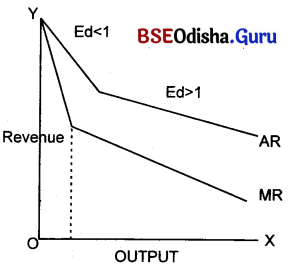
It is said that sometimes the traditional logicians have criticized the work at symbolic logician and vice-versa. But whatever may be now the logician are generally agree, that modern or symbolic logic is a development of concepts and techniques which were complicietely in the work of Aristotle. Thus according to Basson and connor, classical logic is related to symbolic logic as embryo to adult organism.

From this above discussion, it is said that tradition as or classical logical and symbolic logic are not differ in kind, yet the difference between them is only that of different stages of development. So symbolic logic is a developed stage of traditional of classical logic.

C.I. Lasisis a distinguished modern logician and a mathematician has cited three important characteristics regarding the nature of symbolic logic.

  1. The use of ideogram.
  2. The use of deductive method.
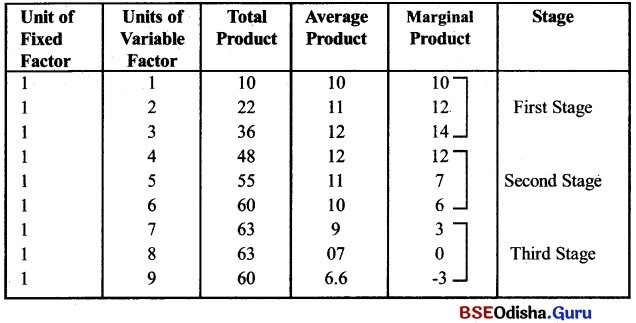
  3. The use of constant and variable.
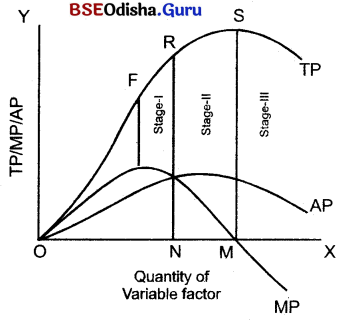
Let’s analyse the above three characteristics in details.
(1) The use of ideogram: Ideogram means the soundless symbols.
Example: All the written symbols like ? +, -, x, V etc. are called ideogram. But phonogram means soundful symbol. For example all the written words like question mark, plus, minus etc are called phonograms. So the ideogram directly stands for concept or symbols.

(2) The use of Deductive Method : In deductive method we clarify the complication. It is distributed in geometry. By the application of deductive method we can drawn a conclusion of out of premise. This method is used in case of symbolic logic and also in. traditional logic. But the difference is that in case of traditional logic we were used the concrete examples like. If there is sun then there is light.

CHSE Odisha Class 12 Logic Solutions Chapter 5 Symbolic Logic -10

(3) The use of constant and variable : A variable is different from constant. Constant is that which never changes. But variable means always changeable. It means we can take any variable for any proposition. The logician have borrowed this idea from geometry and mathematics. As we have seen in case of Geometry and mathematics. As we have seen in case of Geometry and mathematics, there are certain constant and variables are use such as x, y, z etc. are variables, But +,-,x, are constants like geometry and mathematics there are certain constants and variables used in case of symbolic logic.

Logical Constants:

  1. Conjuctive (And) (.)
  2. Disjuctive (either…or) (A) p,q,r,s,f etc.
  3. Alternative (either …. or) (A.)
  4. Equivalence (equalto) (‘=’)
  5. Contradiction (Negation) (N)

Logical variables:

  1. Prepositional variables
  2. Predicate variables s, f, g, h etc.
  3. Individual variable s, y, z etc.

CHSE Odisha Class 12 Logic Solutions Chapter 5 Symbolic Logic

Question 2.
What is Truth-function? Distinguish between variable and constant.
Answer:
All these concepts of truth-function, variable and constants are the concepts used is symbolic logic. The notion of function is very familiar in mathematics. Symbolic logic borrows this concept from Mathematics. An expression is said to be a function of a given variable or variables, if the value of the expression is uniquely determined when the variable or variables take a define value. The truth value of the expression is dependent on the truth value of the prepositional variables used in the expression. In Algebra, the formula ‘x – y + 5 ’ means the value of ‘x’ is dependent on the value of ‘y’. So ‘x’ is the function of‘y + 5′ If the value of ‘y’ is 3, then the value of x is (3 + 5) = 8. If the value of ‘y’ is 7, then the value of x is (7 + 5) 12. Similarly, the truth – value of ‘p⊃q’ is dependent on the truth – value of the variables ‘p’ and ‘q’. SO ‘p⊃q’ is the ‘truth – function’ of the prepositional variables p and q.

There is a lot of difference between variable and constant. A variable is a symbol which can stand for any one of a given range of values. Any letter of the alphabet may be taken as the symbol to represent any proposition, whatever may be its contents. Normally, ‘p’, ‘q’ ‘r’, etc. or p…p2, p3,, etc are used as prepositional variables. They constant for any proposition. These variables. They constant for any proposition. These variables are similar to the numerical variables are similar to the numerical variables x,y,z, etc of Algebra. Because they represent any number indifferently.

Logical constants are different from variables because the meaning oflogical constants always remains same in any logical expression. The symbol ‘V’ stands for ‘or’, stands for equivalence, etc. In the expression ‘pVq’ p and q are two variables standing for any two propositions. But the symbol ‘V’ stands for “either….. or…..” for example, if the variable ‘p’ stands for ‘Grass is green and ‘q’ stands for ‘Grass is red’ the ‘pVq’ will mean “Either grass is green or grass is red’. If ‘p’ stands for Grass is red and ‘q’ stands for “Birds are biped”, then the same expression ‘p v q’ stands for “Either grass is red or birds are biped”.

Question 3.
Draw the truth – tables of Negation, Conjuction Implication. Disjunction and Equivalence.
Answer:
Truth-Table of Negation or contradictory function: If the proposition ‘p’ is true, then its negation or contradiction ‘~p’ is false. Again, if ‘p’ is false, its negation ‘~p’ is true. The truth-table of negation or contradiction is given below, here ‘1’ means true and ‘o’ means false.
CHSE Odisha Class 12 Logic Solutions Chapter 5 Symbolic Logic -11

It is the truth-table of negation. Its matrix number is 01. Suppose, ‘p’ stands for ‘cat is white. If cat is white’ is true, then its negation ‘cat is not white’ is false. If cat is white is false, its hegation ‘cat is not white is true’.

Truth-Table of conjunctive Function:
Let ‘p’ and ‘q’ stand for two propositions ‘cat is white’ and ‘swan is white’ respectively. The conjunctive function ‘p q’ is true only when its constituent both propositions are true. In othe words, ‘p q’ is true only when ‘p’ is true and ‘q’ is true. If either of or both of them are false, the whole expression is false. Ther truth-table is
CHSE Odisha Class 12 Logic Solutions Chapter 5 Symbolic Logic -12

As we see in the above truth-table the conjuctive function is true only when both of the variables are true. Its matrix number is 1000.

Truth-Table of Disjunctive Function :
Let ‘p’ and ‘q’ be two propositions The truth-value of ‘p v q’ depends on the truth-value of ‘p’ and ‘q’. The symbol of disjunction is ‘v’ which means “either …. or ….” According to this function ‘p v q’ is true, when at least one of them is true. The function is false, when both of them are false. So the truth – table of disjunction is as below.
CHSE Odisha Class 12 Logic Solutions Chapter 5 Symbolic Logic -13
Disjunctive function is also called by some logicians as alternative function. The matrix – number of the truth table is 1110.

Truth – Table of Implicative function :
The symbol of implication is which stands for “If…. then….”. If‘p’ and ‘q’ are two variables stand for any two propositions, then ‘If p the q is symbolised as “P⊃q”, “P⊃q” is false only when p is true and q is thus.
CHSE Odisha Class 12 Logic Solutions Chapter 5 Symbolic Logic -14
The matrix number of the function is 1011.

Truth table of equivalence :
If p and q stand for any two propositions, then p equivalent to q is symbolised as p….q. p….q is true when both the propositions are true or both are false. The truth-table of equivalence is—
CHSE Odisha Class 12 Logic Solutions Chapter 5 Symbolic Logic -15
The matrix-number of equivalence is 1001. Two propositions are said to be equivalent when the meaning of both is same.

Question 4.
Determine the truth table of atternative function.
Answer:
When two propositions are related with each other on the basis of aftemative sign (A) that is called alternative function. It is always in the form of “either … or …. hot” both Here the word ‘or’ is used in the inclusive senser (weak sense).

For example:
Ramababu is either an M.L.A or an m.p but not both. Let’s take the symbol ‘p’ for the proposition Ramababu is an M.L.A. and the symbol ‘q’ for the proposition Ramababu is M.P.

Rule: When both antecedent and consequent are true together and false together at that time alternative function will be false, otherwise it will be true. Let’s construct the truth table of alternative function.
CHSE Odisha Class 12 Logic Solutions Chapter 5 Symbolic Logic -16

Question 5.
Explain the basic connectives of propositional logic.
Answer:
Propositional logic, also known as sentential logic, is a branch of formal logic that’deals with the manipulation and analysis of propositions. Propositions are declarative statements that are either true or false but not both. The language of propositional logic employs various logical connectives to form compound propositions from simpler ones. These basic connectives are fundamental building blocks in constructing logical expressions. Let’s explore the basic connectives of propositional logic:

1. Negation (~) : The negation connective, denoted by ~, is a unary operator that operates on a single proposition, changing its truth value. If P is a proposition, then ~P is the negation of P. The truth value of ~P is the opposite of the truth value of P.
For example, if P is “It is raining,” then ~P is “It is not raining.”

2 Conjunction (∧) : The conjunction connective, denoted by ∧, is a binary operator that combines two propositions, P and Q, to -form a compound proposition P ∧ Q. The compound proposition is true only when both P and Q are true; otherwise, it is false. For example, if P is “It is sunny” and Q is “It is warm,” then P ∧ Q is “It is sunny and warm.”

3. Disjunction (∨): The disjunction connective, denoted by (v is another binary operator that combines two propositions, P and Q, to form a compound proposition P ∨ Q. The compound proposition is true if at least one of P or Q is true. It is false only when both P and Q are false. For instance, if P is “It is a weekday” and Q is “It is a holiday,” then P ∨ Q is “It is either a weekday or a holiday.”

4. Implication (→) : The implication connective, denoted by →, is a binary operator that represents the relationship “if P, then Q.” The compound proposition P → Q is true unless P is true, and Q is false; in all other cases, it is true. It does not require P to cause Q, only that if P is true, then Q must also be true. For example, if P is “It is raining” and Q is “1 carry an umbrella,” then P → Q is “If it is raining, then I carry an umbrella.”

5. Biconditional (↔) : The biconditional connective, denoted by ↔, is a binary operator that represents the relationship “P if and only if Q.” The compound proposition P ↔ Q is true when both P and Q have the same truth value (either both true or both false). If they have different truth values, the compound proposition is false. For instance, if P is “It is noon” and Q is “The sun is at its zenith,” then P ↔ Q is “It is noon if and only if the sun is at its zenith.”

6. Exclusive Disjunction (XOR): While not always included in the basic set, the exclusive disjunction is a binary operator denoted by ⊕ or XOR. The compound proposition P ⊕ Q is true when either P or Q is true, but not both. It is false when both P and Q have the same truth value. For example, if P is “It is day” and Q is “It is night,” then P ⊕ Q is “It is either day or night, but not both.”

Understanding the properties and truth tables associated with these basic connectives is crucial for working with propositional logic. Truth tables provide a systematic way to evaluate the truth values of compound propositions based on the truth values of their constituent propositions. The logical connectives serve as tools for expressing relationships between propositions, and they play a fundamental role in various brandies of logic and computer science, including formal reasoning, artificial intelligence, and programming.

CHSE Odisha Class 12 Logic Solutions Chapter 5 Symbolic Logic

Question 6.
Distinguish between disjunction and alternation. Is alternation a basic connective? Discuss.
Answer:
In propositional logic, the terms “disjunction” and “alternation” are often used interchangeably, but it’s important to note that they can have nuanced meanings depending on the context. In this discussion, we will first distinguish between disjunction and alternation and then explore whether alternation can be considered a basic connective in propositional logic.

Distinguishing Disjunction and Alternation :
1. Disjunction (v) : Disjunction is a basic logical connective represented by the symbol ∨. In propositional logic, the disjunction of two propositions, P and Q, denoted as P ∨ Q, is true if at least one of P or Q is true. It is false only when both P and Q are false. Disjunction encompasses the idea of “or,” indicating that either P is true, or Q is true, or both. For example, if P is “It is sunny,” and Q is “It is warm,” then the disjunction P ∨ Q is true when either or both conditions are satisfied.

2. Alternation : The term “alternation” is more context-dependent and might not have a standardized symbol in propositional logic like disjunction. In some contexts, alternation refers to a similar concept as disjunction, indicating a choice between two options or the occurrence of either of two events. For instance, if P represents “Heads on a coin toss,” and Q represents “Tails on a coin toss,” then the alternation of P and Q could be seen as the concept of heads or tails.

In other contexts, “alternation” might be used to describe a more structured pattern of switching or oscillation between different states. This sense of alternation doesn’t necessarily align with the specific definition of disjunction in propositional logic but may have applications in ‘ other areas, such as temporal logic or automata theory.

Is Alternation a Basic Connective in Propositional Logic?
While disjunction is a recognized and well-defined basic connective in propositional logic, the term “alternation” itself is not typically considered a distinct basic connective within the formalism of propositional logic. Basic connectives in propositional logic are usually limited to a set that includes negation (~), conjunction (∧), disjunction (∨), implication (→), and biconditional (↔).

The absence of “alternation” as a basic connective does not diminish its significance in various logical discussions or applications. If alternation is used as a synonym for disjunction or is meant to convey a specific choice between alternatives, it aligns with the broader concept captured by the disjunction connective (v). However, if alternation is used in a more specialized context, such as temporal logic, it may involve different structures or operators beyond the basic connectives of propositional logic.

In certain logical systems, especially those dealing with temporal aspects or modalities, operators like “until” or “eventually” may be considered, but these go beyond the basic set of connectives in classical propositional logic.

Conclusion :
In summary, disjunction is a well-defined basic connective in propositional logic, represented by the symbol v, which captures the concept of “or.” On the other hand, “alternation” is a term that can be context-dependent and may be used to describe various patterns of choice or switching between alternatives. While “alternation” itself is not considered a basic connective in propositional
logic, it can be expressed using the disjunction connective when referring to a choice between two or more propositions. The specific interpretation of “alternation” may vary based on the context in which it is used, and it might, have specialized applications in specific logical systems.

Question 7.
Explain the indirect method of truth table decision.
Answer:
The indirect method of truth table decision, also known as the method of perfect induction or the method of exhaustion, is an approach used in propositional logic to determine the validity or satisfiability of logical formulas. This method involves constructing a truth table for a given formula and indirectly establishing its truth by showing that there are no cases where the formula is false. The indirect method is particularly useful when demonstrating the validity of logical arguments or proving the logical equivalence of two formulas. Let’s break down the steps involved in the indirect method of truth table decision :

1. Constructing the Truth Table : Start by constructing a truth table for the given logical formula. List all possible combinations of truth values for the atomic propositions involved in the formula. Each row in the truth table represents a unique combination of truth values.

Example :
Consider the formula (P → Q) ∧ (~ P ∨ Q). The truth table might look like this :
CHSE Odisha Class 12 Logic Solutions Chapter 5 Symbolic Logic -17

2. Identifying a Counterexample : A counterexample is a row in the truth table where the formula evaluates to false. In the indirect method, the goal is to show that no counterexample exists, indirectly establishing the truth of the formula.
Example:
In the truth table above, there is no row where (P ’! Q) ”'(¬p (“ Q) is false. Therefore, there is no counterexample, suggesting the formula is true in all cases.

3. Applying Perfect Induction: Perfect induction involves demonstrating that if the formula is true for a certain number of cases, it must be true for all cases. This is achieved by dividing the cases into subcases and showing that if the formula is true for each subcase, it is true for the entire set.
Example :
Subdivide the cases based on the truth values of P and Q :
Case 1: P is true.
Case 2: P is false.
Now, consider each subcase and verify that (P → Q) ∧ (~P ∨ Q) is true in each.
Subcase 1.1: P is true, Q is true. Formula is true.
Subcase 1.2: P is true, Q is false. Formula is true.
Subcase 2.1: P is false, Q is true. Formula is true.
Subcase 2.2: P is false, Q is false. Formula is true.
Since the formula is true for all subcases, it holds for all cases.

4. Generalizing for Ail Cases: Once it’s established that the formula is true for a set of cases, generalize the result to claim that the formula is true for all possible cases. This step involves making a general statement based on the perfect induction conducted in the previous step.
Example:
“Since (P → Q) ∨ (~P ∨ Q) is true for all possible combinations of truth values of P and Q, it is true for all cases.”

Advantages of the Indirect Method :
1. Simplicity and Systematic Approach : The indirect method provides a systematic and straightforward approach to proving the truth of a logical formula. By constructing a truth table and demonstrating the absence of counterexamples, it simplifies the process of establishing the validity or satisfiability of the formula.

2. General Applicability : The method of perfect induction is applicable to a wide range of logical formulas. It can be used to prove the validity of arguments, establish logical equivalence, or demonstrate the satisfiability of formulas in various contexts.

3. Rigorous Logical Analysis : The method encourages a rigorous analysis of all possible cases, ensuring that the formula is evaluated for every combination of truth values. This thorough examination contributes to a robust and convincing proof.

In conclusion, the indirect method of truth table decision is a valuable tool in propositional logic for proving the validity or satisfiability of logical formulas. By constructing a truth table, identifying counterexamples, applying perfect induction, and generalizing the result, one can establish the truth of a formula indirectly. This method provides a clear and systematic approach, contributing to a rigorous and convincing logical analysis.

Group – C

Objective type Questions with Answers
I. Multiple Choice Questions with Answers:

Question 1.
What is the truth value of p & q and if p = 0 and q = 1?
(i) 0
(ii) 1
(iii) undecided
(iv) None of these
Answer:
(i) 0

Question 2.
An argument is valid of the truth function corresponding to it is :
(i) A tautology
(ii) Contingent
(iii) Contradictory
(iv) None of these
Answer:
(i) A tautology

Question 3.
A disjunctive function in the exclusive sense (P k q) is true :
(i) When both p and q are true
(ii) When atleast one of them is true
(iii) When exactly one of them in true
(iv) All of these
Answer:
(iii) When exactly one of them in true

Question 4.
Symbolic logic is the developed stage of what?
(i) Deductive logic
(ii) Inductive logic
(iii) Traditional logic
(iv) Formal logic
Answer:
(iii) Traditional logic

Question 5.
Who has given the three important characteristics of symbolic logic?
(i) Aristotle
(ii) Plato
(iii) C.I. Lewis
(iv) J.S.Mill
Answer:
(iii) C.I. Lewis

CHSE Odisha Class 12 Logic Solutions Chapter 5 Symbolic Logic

Question 6.
Which of the following is the feature of Symbolic Logic?
(i) Use of ideogram
(ii) Use of variables
(iii) Application of the rules of deduction
(iv) All of these
Answer:
(i) All of these

Question 7.
Symbolic Logic builds?
(i) A deductive system
(ii) An inductive system
(iii) Both deductive and inductive system
(iv) Neither deductive nor inductive system
Answer:
(i) A deductive system

Question 8.
The soundless symbols are called what?
(i) Ideograms
(ii) Phonograms
(iii) Variables
(iv) Constants
Answer:
(i) Ideograms

Question 9.
The Letters like p,q,r, etc stand for :
(i) Prepositional variables
(ii) Logical constants
(iii) Truth function
(iv) All of these
Answer:
(i) Proposition variables

Question 10.
Variables are divided into
(i) Three types
(ii) Four types
(iii) Five types
(iv) Six types
Answer:
(i) Three Types

Question 11.
The letters like f, g, h etc stand for
(i) Prepositional variables
(ii) Predicate Variables
(iii) Individual variables
(iv) None of these
Answer:
(ii) Predicate Variables

CHSE Odisha Class 12 Logic Solutions Chapter 5 Symbolic Logic

Question 12.
The symbol ‘⊃’ stands for which of the following
(i) Conjunction
(iii) Implication
(ii) Disjunction
(iv) Equivalence
Answer:
(iii) Implication

Question 13.
The symbol ‘V’ stands for what?
(i) Conjuction
(ii) Disjunction
(iii) Alternation
(iv) Implication
Answer:
(iii) Alternation

Question 14.
The symbol ‘=’ stands for what?
(i) Conjunction
(ii) Equivalence
(iii) Alternation
(iv) Implication
Answer:
(ii) Equivalence

Question 15.
The symbol ‘A’ stands for what?
(i) Disjunction
(ii) Alternation
(iii) Disjunction
(iv) Alternative
Answer:
(i) Disjunction

Question 16.
The Symbol ‘•’ stands for what?
(i) Conjunction
(ii) Disjunction
(iii) Implication
(iv) Equivalence.
Answer:
(i) Conjuction
(ii) Disjunction
(iii) Alternation
(iv) Equivalence

Question 17.
The symbol stands for what?
(i) Conjuction
(ii) Alternation
(iii) Disjunction
Answer:
(iv) None of these

Question 18.
In which fruth tabular method, the main connective is always true? (iv) None of these
(i) Direct
(ii) Indirect
(iii) Tautology
(iv) Negation
Answer:
(iii) Tautology

II. Fill in the blanks:

Question 1.
Symbolic logic is the developmental stage of _____.
Answer:
Traditional logic

Question 2.
According to _____ there are three important characteristics of symbolic logic.
Answer:
C.I.Lewis

Question 3.
The three important characteristics of symbolic logic are _____,_____and _____.
Answer:
Use of ideogram, use of deductive method, use of constant and variable

Question 4.
The soundful symbols are called.
Answer:
Phonograms.

Question 5.
The soundless symbols are cal)ed _____.
Answer:
Ideograms:

Question 6.
Every talking word is called _____.
Answer:
Phonograms

CHSE Odisha Class 12 Logic Solutions Chapter 5 Symbolic Logic

Question 7.
If Aristotelian logic is a seed then symbolic logic is _____.
Answer:
Tree

Question 8.
Symbolic logic and traditional logic are related with each other just like embryo with
Answer:
Adult organism

Question 9.
The symbols that stand for proposition are called _____.
Answer:
Prepositional variables

Question 10.
The symbols that stand for relations of proposition are called _____.
Answer:
Logical constants

Question 11.
Variable is divided into _____ types.
Answer:
Three

Question 12.
The symbols like p,q,r,s,t etc are called _____.
Answer:
Prepositional variables

Question 13.
The symbols like f, g, h. etc are called _____.
Answer:
Predicate variables

Question 14.
The symbols like x,y,z are called _____.
Answer:
Individual variables

CHSE Odisha Class 12 Logic Solutions Chapter 5 Symbolic Logic

Question 15.
_____ stands for idea or concept directly.
Answer:
Ideogram

Question 16.
The symbol of contradiction or negation is _____.
Answer:
‘∼’

Question 17.
The symbol of conjunction is _____.
Answer:
‘•’

Question 18.
The symbol of disjunction is _____.
Answer:
‘∧’

Question 19.
The symbol of Alternation is _____.
Answer:
‘V’

Question 20.
The symbol of implication is_____
Answer:
‘⊃’

Question 21.
The symbol of equivalence is _____.
Answer:
‘s’

Question 22.
Symbolic logic uses _____ method.
Answer:
Deductive

Question 23.
Modem logicians are very much interested only for ideogram, not for .
Answer:
Phonogram

CHSE Odisha Class 12 Logic Solutions Chapter 5 Symbolic Logic

Question 24.
Truth tables are mainly divided into _____ types.
Answer:
Three

Question 25.
In a truth table, if the main result is always truth that is called _____ .
Answer:
Tautology

Question 26.
In a truth table, if the main result is always false that is called _____.
Answer:
Contradiction

Question 27.
In a truth table,-if the main result is mixed with truth and falsify (T/F) that is called
Answer:
contingent

Question 28.
Logical constants are also called as _____.
Answer:
Logical connectives

Question 29.
The truth values of an expression is a function of its constituent _____.
Answer:
Prepositional variables

Question 30.
PV~P is the example of _____ truth table.
Answer:
Tautological

Question 31.
P~P is the example of _____ truth table.
Answer:
Contradictory

Question 32.
The premises and the conclusion are connected by _____.
Answer:
Implication

CHSE Odisha Class 12 Logic Solutions Chapter 5 Symbolic Logic

Question 33.
Logical constants are _____ constants.
Answer:
Binary

Question 34.
When the truth value of a proposition is expressed in a tabular way then that is called _____.
Answer:
Truth table

Question 35.
The truth value of a proposition is _____ and _____.
Answer:
True or False

III. Correct the Sentences:

Question 1.
Symbolic makes the use of Phonograms.
Answer:
Symbolic makes the use of ideograms.

Question 2.
The letters like, p, q, r, s, t, etc are Logical constants.
Answer:
The letters like, p, q, r, s, t, etc are prepositional variables.

Question 3.
Aristotle has given three important characteristics of symbolic Logic.
Answer:
C.l. Lewis has given three important characteristics of symbolic Logic.

Question 4.
Ideograms are soundful symbols.
Answer:
Ideograms are soundless symbols.

Question 5.
Phonograms are soundless symbols.
Answer:
Phonogrmas are soundful symbols.

Question 6.
Symbolic Logic uses inductive method.
Answer:
Symbolic Logic uses deductive method.

CHSE Odisha Class 12 Logic Solutions Chapter 5 Symbolic Logic

Question 7.
The symbol stand for disjunction.
Answer:
The symbol V stands for conjunction.

Question 8.
The symbol‘V’stands for implication.
Answer:
The symbol ‘V’ stands for Alternation.

Question 9.
The symbol of implication is ____ .
Answer:
The symbol of implication is‘o’. .

Question 10.
When two propositions are related with each other in the form of if then that is called equivalence function.
Answer:
When two propositions are related with each other in the form of if then that is called implicative function.

Question 11.
When two propositions are related with each other in the form if “either… or” that is called _____ conjunctive function.
Answer:
When two propositions are related with each other in the form if “either… or” that is called alternative function.

Question 12.
A tautology is always false.
Answer:
A tautology is always true.

Question 13.
A contradictory function is sometimes true and sometimes false.
Answer:
A contingent function is sometimes true and sometimes false.

CHSE Odisha Class 12 Logic Solutions Chapter 5 Symbolic Logic

Question 14.
A contingent function is always false.
Answer:
A contradictory function is always false.

Question 15.
The letters like, f, g, g ete are called individual variables.
Answer:
The letters like f, g, h etc are called predicate variables.

IV. Answer the following questions in one word :

Question 1.
Which logic is called the development stage of traditional logic?
Answer:
Symbolic

Question 2.
The symbol which directly stands for idea or concept, it is called what?
Answer:
Ideogram

Question 3.
What is the symbol of Negative?
Answer:
‘−’

Question 4.
What is the symbol of Conjunction?
Answer:
‘•’

CHSE Odisha Class 12 Logic Solutions Chapter 5 Symbolic Logic

Question 5.
What is the symbol of Alternation?
Answer:
‘∨’

Question 6.
What is the symbol of Implication?
Answer:
‘⊃’

Question 7.
What is the symbol of equivalence?
Answer:
‘≡’

Question 8.
How many truth values are possible for a propositional variable, P?
Answer:
Two

Question 9.
If P = 1, what is the truth value of its contradictory function?
Answer:
Zero (0)

Question 10.
What is the truth value of ‘p≡q’ if p = 0 and q = 0?
Answer:
1

Question 11.
What is the truth function which is always true called?
Answer:
Tautology

Question 12.
Whether symbolic logic makes the use of ideograms or phonograms?
Answer:
Ideograms

Question 13.
How many truth combinations are possible if there are ‘n’ propositional variables in a truth function?
Answer:
2

Question 14.
What is the truth function which is always false called?
Answer:
Contradiction

CHSE Odisha Class 12 Logic Solutions Chapter 5 Symbolic Logic

Question 15.
What is truth function which is sometimes true and sometimes false called?
Answer:
Contigent

Question 16.
The letters like, p, q, r, s, t etc are coming under which variables?
Answer:
Propositional

Question 17.
The symbols like f, g, h etc. are coming under which variables?
Answer:
Predicate

Question 18.
When two propositions are related with each other in the form of if then that is called what?
Answer:
Implication

CHSE Odisha Class 12 Logic Solutions Chapter 4 Deductive and Inductive Fallacies

Odisha State Board CHSE Odisha Class 12 Logic Solutions Chapter 4 Deductive and Inductive Fallacies Questions and Answers.

CHSE Odisha 12th Class Logic Chapter 4 Question Answer Deductive and Inductive Fallacies

Group – A

Short type Questions with Answers
I. Answer within Two/Three sentence.

Question 1.
What is the fallacy of illicit major?
Answer:
(i) When the major term is distributed in the conclusion without being distributed in the major premise that is calledthe fallacy of illicit major.

(ii) Example :
A = All men are biped
E = No cows are men
E = No cows are biped

Question 2.
What is called the fallacy of illicit minor?
Answer:
(i) When the minor term is distributed in the conclusion without being distributed in the minor premise then that is called the fallacy of illicit minor.

(b) Example :
E = No students are hones.
A = All honest being are harmless
∴ E = No harmless being are students

Question 3.
Fallacy of two negative premises.
Answer:
(i) The general syllogistic rule number (5) says that from two negative premises no conclusion follows.
(ii) But if we draw any conclusion out of two negative premises then we commit the fallacy of two negative premises.

Question 4.
Fallacy of two particular premises.
Answer:
(i) When we draw the conclusion out of two particular premises then at that time we commit the fallacy of two particular premises.

(ii) Example;
I = Some M is P
I = Some S is m
I = Some S is P

CHSE Odisha Class 12 Logic Solutions Chapter 4 Deductive and Inductive Fallacies

Question 5.
Fallacy of ambiguous major:
Answer:
(i) When the major term is used more than one sense in an argument that is called the fallacy of ambiguous major.

(ii) Example :
All crickets are insects No players like insect.
No players like cricket.

Question 6.
Fallacy of ambiguous minor :
Answer:
When the minor term is used more than one sense in an argument that is called the fallacy of ambiguous minor.

Question 7.
Fallacy of amphiboly.
Answer:
(i) The fallacy of amphibody arises due to the wrong construction of a sentence.
(ii) He was given twice two and three rupees. It may mean that he was given either seven or ten rupees.

Question 8.
Fallacy of Division.
Answer:
(i) When we pass from the collective use of term to its distributive use, that is called the fallacy of division.

(ii) Example; the students of this college are intelligent Rani is a student of this college.
∴ Rani is intelligent

Question 9.
What is the fallacy of composition ?
Answer:
(i) This fallacy arises, when we pass from the distributive use to a collective use of a term in our argument.

(ii) Example; Nine and one are odd numbers Ten is nine and one
∴ Ten is an odd number

Question 10.
What is a called the fallacy of accent?
Answer:
(i) When the emphasis is given on a particular word in a sentence at that time we commit the fallacy of accent.
(ii) Example : Thou shalt not insult thy parents.

Question 11.
Fallacy of post hoc ergo propter hoc.
Answer:

  1. “Post hoc ergo propter hoc” literally means after this, therefore due to this.
  2. It arises when we take any and every antecedent to be the cause.
  3. Example; A crow sits on the palm tree and a palm falls down, so it is said that crow is the cause of the falling of the palm.

CHSE Odisha Class 12 Logic Solutions Chapter 4 Deductive and Inductive Fallacies

Question 12.
Fallacy of neglecting the negative condition.
Answer:
(i) When we take only positive conditions to be the cause and neglect the negative conditions then we commit this fallacy.

(ii) Example; Intelligence does not lead to success, as a large number of intelligent students are unemployed.

Question 13.
Fallacy of mistaking the co-effects of a cause and effect.
Answer:
(i) Cause is the antecedent and effect is the consequent. But if we take one of the coeffects of a common cause as the cause of its effect, we commit this fallacy.

(ii) Examples: Day invariably preceded night, so day is the cause of night.

Question 14.
Fallacy of undue assumption.
Answer:
(i) When we unduly assume a premise at that time we commit the fallacy of undue assumption.
(ii) Example; The people of America are wealthy, because they are industrious.

II. Answer with in Five/Six sentence :

Question 1.
Fallacy of Equivocation:
Answer:
The fallacy of equivocation arises due to the use of ambiguous terms in an argument. A syllogism has three terms – the middle, the major and the minor. This fallacy arises if either the middle term or the major term or the minor term is used ambiguously or in more than one sense in the same argument.

Question 2.
Fallacy of Ambiguous middle:
Answer:
When the middle term is used more than one sense in an argument at that time the fallacy arises, Which is called the fallacy of Ambiguous middle.
Example: Light is pleasant
(Light = opposite of darkness) His injury is pleasant.

Question 3.
Ambiguous major:
Answer:
When the major term is used more than one sense in an argument at that time we commit the fallacy of ambiguous major.
Example: No courageous creatures fly.
(Fly = run away)
Eagle is a courageous creature.
∴ Eagle does not fly.
(fly = move through air with wings)

Question 4.
Ambiguous Minor :
Answer:
When the minor term is ambiguous, or when the minor term is used more than one sense in an argument at that time the fallacy of Ambiguous minor arises.
Example :
No man in made of paper.
All pages are men.
∴ No pages are made of paper.

Here the minor term ‘pages’ is used in two different senses, in the minor premise ‘pages’ means boy servants’ and in the conclusion its means the leaf of a book.

Question 5.
Fallacy of composition:
Answer:
This fallacy arises when we pass from the distributive use to a collective use of a term. It means what is true of a member may not be true of a class.
Example:
Nine and one are odd numbers Ten is nine and ten.
∴ Ten is an odd numbers.

Question 6.
Fallacy of Division :
Answer:
When the we pass from the collective use of a term to its distributive us, we commit the fallacy of division. It means what is true of a class may not be true of its individual members.
Example :
The students of this college are intelligent. Mira is a student of this college. Mira is intelligent.

CHSE Odisha Class 12 Logic Solutions Chapter 4 Deductive and Inductive Fallacies

Question 7.
Fallacy of Accent :
Answer:
This fallacy arises que to the misplaced accent or emphasis on any expression in a sentence.
Example :
“Thou shaft not bear false witness against the neighbour”. One may be emphasis on against and interpret the sentence as meaning that if is of wrong to bear false witness in favour of a neighbour.

Question 8.
Fallacy of Accident :
Answer:
This fallacy arises due to the application of what is true under one circumstance in a case under different circumstances, so use commit this fallacy when we argue from a general rule to a special case.

Question 9.
Fallacy of Ambiboly or Amphibology.
Answer:
This is a kind of semilogical deductive fallacy, which arises due to the ambiguous meaning of a sentence because of its wrong construction. Such a sentence is capable of being interpreted in at least different ways. He was given me twice two and three rupees.

Question 10.
Fallacy of figure of speech :
Answer:
This fallacy arises from the supposition that words similar in form are also similar in meaning.
Example:
Whatever people desire is desirable.
Happiness in desired by people.
∴ Happiness in desirable.
This fallacy is other wise called as the fallacy of paronymous term.

Question 11.
What is called False Analogy ?
Answer:
A false analogy in one where the points of similarity are less and unimportant, the points of difference are more and important, and the sphere of known points is narrow. Here the probability is of a very low degree.

Question 12.
Write the different classification of ignoratio elenchi.
Answer:
There are five different classifications of ignoratio ejenchi these are;

  1. Argumentum ad hominem
  2. Argumentum ad populum
  3. Argumentum ad ignoratium
  4. Argumentum ad vereeundium
  5. Argumentum ad baculum

CHSE Odisha Class 12 Logic Solutions Chapter 4 Deductive and Inductive Fallacies

Question 13.
What is called the fallacy of Relevance?
Answer:
The fallacy of Relevance arises when one attempts to prove a conclusion by the premise that does not bear its truth to the conclusion. In this fallacy to tine exclusion. In this fallacy the premises are irrelevant to the conclusion.

Question 14.
What is the fallacy of Argumentum ad ignoratium?
Answer:
This is a fallaious ‘argument where we take the advantage of the opponent fails to disprove what we Rave said, we hold that our doctrine is correct. Here an attempt in made to silence an opponent by appealing to his ignorance and making him agree to what we say without convincing him.
Example : The existence of God is established as the opponent cannot disporve it.

Question 15.
State with example the fallacy of Argumentum ad hominem.
Answer:
When we direct our arguments to the opponent and not to the point at issue at that time we commit the fallacy of Argumentum ad hominem. For example; if some one asks us not to smoke be say that the speaker himself is a great smoker and he has no right to correct others.

Question 16.
State with example the fallacy of Argumentum ad baculum.
Answer:
When we cannot defeat the opponent by means of argument but put him the fallacy of argumentum ad baculum.
Example :
Whatever I say you admit that if is true and give me in working to the effect, otherwise I shall kill you by plunging this knife into your heart.

Question 17.
When we commit the fallacy of Argumentum ad verecundiam?
Answer:
When we take a statement to be proved or disproved by quoting the scriptures, or opinion of greatman or teacher without any reason then we commit the fallacy of argumentum ad vereeundium.
Example :
Non-violence in the best code of life because both lord Buddha ad Mahatma Gandhi have said so.

Question 18.
State with example the fallacy of Argumentum ad populaum.
Answer:
When an appeal to the passion and prejudice of the audience and not to their reason, we commit the fallacy of argumentum ad populaum.
Example:
You are a brahmin and so I am, therefore I have confident that you will realise my views to be correct.

Question 19.
Explain the fallacy of Non-Sequitur.
Answer:
Non-sequitur literally means it does not follow. If we inter the truth of the antecedent from the truth of the consequent or the falsity of the consequent from the falsity of the antecedent of a hypothetical proposition, we commit this fallacy.

Example :
It somebody is honest, he does not fear anybody.
He does not fear anybody.
∴ Therefore, he is honest.

Question 20.
Give with example the fallacy of Plaures interrogations.
Answer:
Plures interrogation literally means many questions. By this atleast two questions are combined and a plain answer – Yes or No is demanded.
Example:
Have you left thieving ? If you say ‘yes’ you were a their and if you say ‘No’ you are a their.

Question 21.
State with example the fallacy of Falsity of premise.
Answer:
When we argue from a premise which is itself false.
Example :
He must be suffering from a disease, since he went to the hospital. Here, we have assumed a premise; All who go to the hospital must be suffering from some disease.

Question 22.
State the fallacy of “petitio principii”.
Answer:
Literally the fallacy of “Petitio Principii” means assuming the same point which we want to prove. Mill commits this fallacy when he tries to prove induction with the help of the law of uniformity of Nature and also proves the law of uniformity of nature by induction.
Example:
India cannot prefer one religion to another, because if is a secular country, Meera is a matriculate because all her classmates are matriculates.

Question 23.
State the fallacy of presumption.
Answer:
The fallacy of presumption is the error which arises due to some false assumptions and hence fail to establish the truth of their conclusions. Overlooking of facts is one of the fallacy of presumption.

CHSE Odisha Class 12 Logic Solutions Chapter 4 Deductive and Inductive Fallacies

Question 24.
State the fallacy of distortion of facts.
Answer:
The fallacies of presumption that are due to the distortion of facts of the following kinds.

  1. False analogy
  2. False cause
  3. Slippery slope
  4. Irrelevant thetis

Question 25.
What is the fallacy of Red Herring?
Answer:
This fallacy arises when one brings irrelevant ideas into discussion as if they can add to the discussion and help it is arriving at the required result. For example, by bringing various theological ideas into a scientific discussion, one commits this fallacy.

Question 26.
What the fallacy of Strawman?
Answer:
The fallacy of strawman arises when one attacks an argument by taking its weaker form and then shows where it fails, assuming that the original argument is also defeated in the process.
Example :
We respect our teachers since we are told to respect them in the similar may our teachers respect their teachers. This is a long drawn process.

Question 27.
What is the fallacy of Argumentum ad misericordiam?
Answer:
Argumentum ad misericordiam means the argument that appeals to pity and in this argument, altruism and merry of the audience are the special emotions that are appealed to for getting a certain conclusion of accepted.
Example:
Madhu did not murder his children, please do not say that he is guilty since he is suffering for being childless.

Question 28.
State with example the fallacy of “Post hoc propter hoc”
Answer:
Literally the fallacy of “Post hoc ergo propter hoc” means “after this, therefore, due to this”. It arises when we take any and every antecedent to be the cause and it is otherwise called as crow-palm argument.

Example : A newly married bride came to her husbands house and her mother-in-law died, if we say that arrival of new married bride in the cause of the death of mother-in-law then we commit this fallacy.

Question 29.
Explain the fallacy of mistaking one condition for the whole cause.
Answer:
We know that cause is the sum total of all conditions, positive and negative taken together. If we take only one condition as the cause neglecting the other conditions, we commit this fallacy. Example; Madhu failed in the examination because his father was seriously ill prior to the examination.

CHSE Odisha Class 12 Logic Solutions Chapter 4 Deductive and Inductive Fallacies

Question 30.
Explain the fallacy of neglecting the negative condition.
Answer:
This fallacy arises when we take only positive conditions to be the cause and neglect the negative conditions.
Example:
Intelligence does not lead to success as a large number of intelligent students are unemployed.

Question 31.
Explain the fallacy of mistaking the coeffects of a causes as cause and effect.
Answer:
Cause is the antecedent and effect is the consequent. If we take one of the co-effects of a common cause as the cause of its effect, we commit this fallacy.

Example:
Day invariable precedes night. So day is the cause of night. In facts, day and Night are the Co-effects of the movement of the earth around its axis facing the Sun.

Question 32.
State and explain the fallacy of mistaking a remote condition to be the cause.
Answer:
A cause is an immediate antecedent of the effect. A remote condition is not unconditions and cannot be the cause of the recent event.
For example:
A habitual drunkard who worked hard in his young time has ill health now. Therefore, the cause of his ill health is hard Labour.

Group – B

Long Type Questions With Answers

Question 1.
State and explain different kinds of semilogical fallacies with examples.
Answer:
Semilogical fallacies arise due to the ambiguity in the meaning and use of term and proposition. There are seven types of semiological fallacies. Such as
(1) Fallacy of equivocation : A term cannot be used in more than one sense in the argument. But if it is so used then it in called an ambiguous term. This fallacy is divided into three way.

(i) Ambigous major : When the major term is used more than one sense in the same argument then at that time we commit the fallacy of ambiguous major.
Example:
All idtional animal, are men (human being)
All women are rational animal.
∴ All women are men (male human being)

(ii) Ambiguous minor : When the minor term is used more than one sense in an argument the we commit the fallacy of ambiguous minor.
Example:
No man is made of paper.
All page are men (boy servant)
∴ No pages are made of Paper cleaves of the book

(iii) Ambiguous middle : When the middle term is used more than one sense in an argument then we commit the above fallacy.
Example:
Well is a source of water.
His progress is well.
∴ His progress is a source of water.

(2) Fallacy of Division : When we proceed from the collective use of the term to its distributive use that is called the falacy of division.
Example:
The M.L.A. As of Odisha have passed this bill.
My uncle is an M.L.A. of Odisha.
∴ My uncle is passed this bill.

(3) Fallacy of composition : When we proceed from the distributive use of the term to its collective use then we commit the above fallacy.
Example:
Two and three are two number. Five is two and three. Five is two number.

(4) Fallacy of figure of speech : Paronymous terms : Two words may be derived from the same root, but may have very different meaning. But if we suppose that words similar in form have also similar cleaning the at that time we commit the above fallacy.
Example :
The stick on broken.
∴ The stick is broken.

Hari writes.
∴ Hari is a writer.

(5) Fallacy of accident : What is true under one circumstance may not be true under different circumstance. We commit the fallacy. When what is true under a specified circumstance is taken to be true under different circumstance. Then fallacy assumes two forms.

(i) Direct fallacy of accident: This fallacy arises when we agree from a general rule to a special case.
Example:
Water is liquid.
Ice is water.
∴ Ice is liquid.

(ii) The converse fallacy of accident: This fallacy arises when we agree from a special case to a general rule.
Example:
To plunge a knife into a man’s body is punishable.
The Surgeon while operating Plunges a knife into a man’s body.
∴ The surgeon does a punishable offence.

(6) Fallacy of Accent: This kind of fallacy arises when an emphasis is given on a particular word in a sentence, the meaning of the sentence changes.
Example:
Do not bear false witness against your neighbour. If you give emphasis on the neghbour, the expression means that you can bear false witness against others.

(7) Fallacy of Amphiboloy or Amphibology : This fallacy arises because of wrong construction of sentences. Suppose a sentence is used is one sense. But if we take it in a different sense then we commit the fallacy of Amphiboly or Amphibology.
Example:
He has given me twice five & three.
It means either he has given met thirteen or sixteen.

CHSE Odisha Class 12 Logic Solutions Chapter 4 Deductive and Inductive Fallacies

Question 2.
State and explain different fallacies of Ignoratio elenchi.
Answer:
(i) Argumentumad populam : It consists in appealing to the sentiment of the people & persuading them to accept the view of the speaker rather then giving an argument in support of this view.
Example:
You are a brahmin & So lam. Therefore, I am confident that you will realise my views to be correct.

(ii) Argumentumad baculum : It consists in forcing the opponent to accept a view when the cannot to be defeated by argument. Obviously this is not argument at all.
Example:
Whatever I say you admit that it is true & give me in writing to that effect, otherwise I shall kill you by plunging this knife into your heart.

(iii) Argumentum ad ignoratiam : It consist taking advantage of the ignorance of the opponent & since he cannot be disprpve our view, we make him admit that.it is proved.
Example:
We tell so embody that in his previous life, he’was a tiger. If grateman or scriptures in support of one’s view & this to take that the view is logically correct.

(iv) Argumentumad verecundiam : When we take a statement to be proved or disproved by quoting the scriptures or opinion of greatman without any reason then we commit the fallacy of Argumentum ad verecundiam.
Example:
Non-violence is the best code of life because both Lord Buddha and Mahatma Gandhi have said so.

(v) Argumentum ad hominem: It consists in criticising the conduct of the opponent rather than his view & concluding that the view is wrong.
Example:
If some one asks us not to smoke, because it is injurious no health. We just smile & say that the speaker himself is a great smoker & he has no right to correct others.

Question 3.
Test the following arguments :
(a) (i) Day is the cause of Night.
(ii) Ram is the Son of Dasaratha
Laba is the son of Ram.
∴ Laba is the son of Dasaratha.

(b) Explain, the fallacy of “Post hoc ergo Propter hoc”.
Answer:
(a) (i) Day in the cause of Night: We have known that cause is the antecedent and effect is the consequent. But if we take one of the co-effects of a common cause as the cause of its effect, then we commit the fallacy of mistaking the co-effects of a cause as cause and effect. It is true that Day invariably precedes night. But we cannot say that day in the cause of night. Day and night are only the two effects of the movement of the earth around its axis facing the sun.

(ii) Ram is the son of Dasaratha :
∴ Laba is the son of Ram.
∴ Laba is the son of Dasaratha.

This argument in a syllogism. It has four terms such as, (1) Ram, (2) The Son of Dasaratha, (3) Laba, (4) The Son of Ram. But according to Rule, a syllogism must have three and only three terms. So the above syllogism violates this rule and commits. The fallacy of four terms.

(b) Post hoc ergo propter hoc : The literal meaning of “Post hoc ergo Propter hoc’ is after this, therefore, due to this”. We commit this fallacy when we take an irrelevant antecedent phenomenon of the effect to be its cause. But cause must be the invariable unconditional immediate antecedent of the effect. For example, while starting a work somebody sneezed and the work could not be completed. So sneezing is the cause of incompletion of the work.

Question 4.
Find out the fallacies and the method of the argument in the following.
(a) So many people eat bread and all are in good health. Therefore bread must be a
healthy food.
(b) Explain the fallacy Argumentum ad baculum.
Answer:
(a) So many people eat bread and all are in good health. Therefore bread must be a healthy good. This argument in a fallacious argument and it in coming under fallacy of Non-observation. In this argument the fallacy of Non-observation arises because here we have drawn the conclusion by observing some cases. Here we take some particular cases and arrive at a hasty generalisation. It may be true that many people eat bread and all are in good health. But that does not mean bread must be a healthy good. Here we neglect other foods for the good health. Thus fallacy arises in case of the method of Agreement.

(b) Argumentum ad baculum : It consists in forcing the opponent to accept a view when he cannot be defeated by argument. Obviously this is no argument at all.
Example:
Whatever I say you admit that it is true and give me in writing to that effect, otherwise I shall kill you by plunging this knife into your heart”. The Leader of the Terrorist movement introduced himself and pointing a pistol at the of head of the rich man asked, ‘Don’t you think our movement in justified ? The reply was ‘yes’. Then let’s have a donation of one lakh from you well justified cause.

Question 5.
Explain and illustrate the distinction between fallacies of composition and division.
Answer:
Fallacies of composition and division are two types of logical errors that arise from making unwarranted assumptions about the relationship between parts and wholes. Understanding these fallacies is crucial for critical thinking and sound reasoning. Let’s delve into the distinction between fallacies of composition and division, along with illustrations to clarify each concept.

Fallacy of Composition : The fallacy of composition occurs when someone erroneously assumes that what is true for the parts of a whole must also be true for the whole itself. In other words, it involves incorrectly generalizing from properties of individual elements to properties of the entire group or system.,

Illustration : Consider a sports stadium with thousands of spectators. Each individual spectator has an unobstructed view of the game. A person commits the fallacy of composition if they assume that, because each spectator has an unobstructed view, the entire stadium must have an unobstructed view. In reality, the whole (stadium) might have structural elements like pillars or barriers that obstruct the view for some spectators.

Explanation : The fallacy of composition arises when one mistakenly infers a property of the whole based on the properties of its parts without considering the interactions or relationships among those parts. It is essential to recognize that the properties of individual components may not scale up to the entire system.

Fallacy of Division : Conversely, the fallacy of division occurs when someone wrongly assumes that what is true for the whole must also be true for its individual parts. This fallacy involves incorrectly attributing characteristics of the whole to its constituent elements.

Illustration : Consider an affluent country with a high average income. Committing the fallacy of division would involve assuming that*every individual in that country must have a high income, in reality, there could be significant income disparities among the population.

Explanation : The fallacy .of division arises when one incorrectly infers a property of the parts based on the properties of the whole. It disregards the diversity or differences among individual elements within the larger system.

Distinction between Fallacies of Composition and Division :

  1. Direction of Inference :
    • Composition : Involves inferring from the parts to the whole.
    • Division : Involves inferring from the whole to the parts.
  2. Assumption about Attributes :
    • Composition : Assumes that characteristics of the parts apply to the whole.
    • Division : Assumes that characteristics of the whole apply to the parts.
  3. Example Focus :
    • Composition: Focuses on situations where properties of individual elements are incorrectly extended to the entire group or system.
    • Division; Focuses on situations where properties of the entire group or system are incorrectly attributed to its individual elements.

Further Illustrations :

  1. Fallacy of Composition : Suppose a person observes that each member of a winning sports team is skilled and concludes that the entire team must be the best. This overlooks the fact that individual skill does not guarantee collective success, and other factors like teamwork and strategy contribute to overall team performance.
  2. Fallacy of Division : Consider a company that is highly profitable as a whole. Assuming that each employee in the company must be Highly paid would be committing the fallacy of division. In reality, individual salaries may vary based on roles and responsibilities.

Real-world Applications :

  1. Economics :
    • Composition : Assuming that if individuals save more money, the entire economy will experience economic growth.
    • Division : Assuming that if a country has a strong economy, every individual in that country must be economically prosperous.
  2. Statistics:
    • Composition : Believing that if each student in a class studies hard, the entire class will perform well in exams.
    • Division : Assuming that if the overall performance of a school is excellent, every teacher in that school must be exceptional.
  3. Environmental Science:
    • Composition: Believing that if each person reduces their carbon footprint, the overall environmental impact will decrease.
    • Division : Assuming that if a country has a high carbon footprint, every citizen in that country must contribute significantly to environmental degradation.

Mitigation Strategies :

  1. Critical Thinking : Encourage individuals to critically evaluate assumptions and not make unwarranted generalizations about parts and wholes.
  2. Consider Context : Emphasize the importance of considering the context and specific relationships among elements when making inferences about the whole or its parts.
  3. Avoid Oversimplification: Caution against oversimplifying complex systems and highlight the need to acknowledge the diversity and interactions within those systems.

In conclusion, fallacies of composition and division involve making erroneous assumptions about the relationships between parts and wholes. While the fallacy of composition incorrectly extends properties of individual elements to the entire system, the fallacy of division wrongly attributes characteristics of the whole to its constituent parts. Recognizing and avoiding these fallacies is essential for sound reasoning and critical thinking in various domains.

CHSE Odisha Class 12 Logic Solutions Chapter 4 Deductive and Inductive Fallacies

Question 6.
Explain the different forms of the fallacy of presumption.
Answer:
The fallacy of presumption refers to a category of logical errors where an argument relies on unwarranted or false assumptions. Presumptive fallacies occur when an argument includes an assumption that is not adequately supported or justified. These fallacies Can manifest in various forms, each with its own characteristics and pitfalls. Let’s explore some different forms c the fallacy of presumption:

1. Begging the Question (Petitio Principii) : This form of presumption occurs when an argument assumes the truth of what it is supposed to prove, essentially circular reasoning. The proposition being argued for is already embedded within the premises.
Example:
“The Bible is the infallible word of God because God says so in the Bible.” In this case, the conclusion (the Bible is the infallible word of God) is restated in the premise (God says so in the Bible).

2. Complex Question (Loaded Question) : This fallacy arises when a question is framed in a way that presupposes a particular answer. It often involves multiple claims or assumptions within a single question.
Example:
“Have you stopped cheating on exams ?” This question assumes that the person being asked has cheated on exams without providing any evidence or justification.

3. False Dichotomy (False Dilemma) : This form of presumption occurs when an argument presents only two options, implying that one must be true if the other is false, without considering alternative possibilities.
Example:
“Either you support this policy or you are against progress.”
This statement creates a false dichotomy by suggesting that there are only two options when, in reality, there could be a range of positions between support and opposition.

4. Suppressed Evidence (Omission) : This fallacy occurs when relevant information that might weaken an argument is omitted or not disclosed. The argument relies on a selective presentation of evidence, leading to a misleading conclusion.
Example:
“The new drug is 90% effective in treating the disease!” If information about potential side effects or the size of the study population is omitted, the overall effectiveness of the drug may be misrepresented.

5. Presumption of Guilt (Ad Hominem Circumstantial) : This fallacy involves attacking the circumstances or background of a person rather than addressing the argument itself. It presumes that a person’s circumstances automatically invalidate their argument.
Example:
“You can’t trust their economic policy recommendations because they are wealthy and out of touch with common people.”
This argument attacks the person’s wealth instead of addressing the economic policy recommendations directly.

6. Appeal to Ignorance (Argumentum Ad Ignorantiam) : This fallacy occurs when an argument assumes that a claim is true because it has not been proven false, or vice versa. Lack of evidence is misconstrued as evidence of the claim’s truth or falsity.
Example:
“There is no evidence that aliens exist, so they must not exist.”
This argument erroneously assumes that the absence of evidence equates to evidence of non-existence.

7. Circular Cause and Consequence (Circulus in Demonstrando): This fallacy involves asserting a cause-and-effect relationship where the cause is also a consequence of the effect.
Example:
“He failed the exam because he didn’t study, and he didn’t study because he knew he would fail.” This argument creates a circular reasoning loop by attributing the failure to the lack of studying, which, in turn, is attributed to the expectation of failure.

8. Hasty Generalization : Hasty generalization occurs when a conclusion is drawn from insufficient or biased evidence. It involves making broad generalizations based on a small or unrepresentative sample.
Example:
“I met two people from that city, and they were both rude. Therefore, people from that city must be rude.” This argument presumes the general behavior of an entire group based on a limited and unrepresentative sample.

9. Post Hoc Ergo Propter Hoc (False Cause): This fallacy asserts that because one event precedes another, it must be the cause of the second event. It confuses correlation with causation.
Example:
“I wore my lucky socks, and we won the game. Therefore, my lucky socks are the reason we won.” This argument presumesthat the wearing of lucky socks caused the team’s victory based solely on the temporal sequence.

10. Composition and Division : These fallacies involve assuming that what is true for the parts is also true for the whole (composition) or vice versa (division).

Example (Composition): “Each individual player is skilled, so the entire team must be unbeatable.”
Example (Division) : “The team won the championship, so every player on the team must be exceptionally talented.”

In composition, characteristics of individual elements are incorrectly extended to the whole, while in division, characteristics of the whole are incorrectly attributed to the individual elements.

Mitigation Strategies :

  1. Critical Thinking: Encourage individuals to critically assess assumptions, question premises, and avoid accepting claims without sufficient evidence.
  2. Consider Alternative Possibilities : Remind people to consider a range of possibilities and avoid framing arguments in overly simplistic terms or dichotomies.
  3. Examine Evidence : Emphasize the importance of examining evidence thoroughly, considering all relevant information, and being aware of selective or biased presentations of data.
  4. Awareness of Fallacies: Educate individuals about common fallacies, including presumptive fallacies, to enhance their ability to recognize and avoid them.

Understanding the various forms of the fallacy of presumption is essential for cultivating effective reasoning skills and avoiding logical pitfalls in arguments. By recognizing these patterns of flawed reasoning, individuals can engage in more robust and informed discussions, fostering a culture of critical thinking and logical rigor.

Group – C

Objective type Questions with Answers
I. Multiple Choice Questions with Answers :

Question 1.
“All flying animals are birds. Bats are flying animals. Therefore bats are birds.” It is a fallacy of:
(i) Falasity of premise
(ii) Argumentum ad populam
(iii) Petito Principii
(iv) None of these
Answer:
(i) Falasity of premise

Question 2.
The end of life is perfection. Death is the end of life. Therefore Death is the prefection of life. It is fallacy of:
(i) Fallacy of Ambiguous major
(ii) Fallacy of Ambiguous minor
(iii) Fallacy of Ambiguous middle.
(iv) None of these
Answer:
(iii) Fallacy of Ambiguous middle.

Question 3.
The university is a temple of learning and therefore politics has no place in it. It is a fallacy of: university is a temple of learning and therefore politics has no place in it. It is a fallacy of:
(i) Fallacy of undue Assumption
(ii) Fallacy of petitioprincipli
(iii) Fallacy of Bad Analogy
(iv) Fallacy of Falsity of premise
Answer:
(iii) Fallacy of Bad Analogy

Question 4.
Lying is wrong because it is vicious in the fallacy of:
(i) Petitioprincipli
(ii) Fallacy of Bad Analogy
(iii) Fallacy of Falsity of premise
(iv) Fallacy of post he ergo propter hoc.
Answer:
(i) Petitioprincipii

Question 5.
How many fallacies are there in mixed hypothetical syllogism?
(i) Two
(ii) Three
(iii) Four
(iv) Five
Answer:
(i) Two

Question 6.
Fallacy is a / an :
(i) Erroneous argument
(ii) Error of thought
(iii) Wrong assumption
(iv) None of these
Answer:
(i) Erroneous argument

CHSE Odisha Class 12 Logic Solutions Chapter 4 Deductive and Inductive Fallacies

Question 7.
Fallacies are:
(i) Formal in nature
(ii) Informal in nature
(iii) Either formal or informal
(iv) None of these
Answer:
(iii) Either formal or informal

Question 8.
Which of the following does not commit the fallacy of immediate inference?
(i) Simple conversion of A – type of proposition
(ii) Conversion of O-type of proposition.
(iii) Conversion of I-type of proposition.
(iv) Contraposition of I-type of proposition.
Answer:
(iii) Conversion of I-type of proposition.

Question 9.
Which of the following is not a fallacy of inference by opposition?
(i) Fallacy of sub-alternation
(ii) Fallacy of super-alternation
(iii) Fallacy of contrary opposition
(iv) Fallacy of subcontrary opposition
Answer:
(ii) Fallacy of super-alternation

Question 10.
Which of the following is not an informal fallacy?
(i) Fallacy of Relevance
(ii) Fallacy of presumption
(iii) Fallacy of ambiguity
(iv) Fallacy of undistributed middle
Answer:
(iv) Fallacy of undistributed middle

Question 11.
Which of the following is not a fallacy ambiguity?
(i) Fallacy of Equivocation
(ii) Fallacy of accident
(iii) Fallacy of accent
(iv) Fallacy of Amphiboly
Answer:
(ii) Fallacy of accident

Question 12.
The use of a term in two different senses a syllogism commits the fallacy of:
(i) Equivocation
(ii) Composition
(iii) Figure of speech
(iv) Accent
Answer:
(i) Equivocation

Question 13.
The fallacies of presumption arise due to
(i) Overlooking of facts
(ii) Evasion of facts
(iii) Distortion of facts
(iv) All of these
Answer:
(iv) All of these

CHSE Odisha Class 12 Logic Solutions Chapter 4 Deductive and Inductive Fallacies

Question 14.
Which of the following is not a fallacy presumption that arises due to the overlooking of facts?
(i) Petitio principii
(ii) Fallacy of accident
(iii) Fallacy of converse accident
(iv) Fallacy of false dilemman
Answer:
(i) Petitio principii

Question 15.
The fallacy that arises when one attacks and argument by taking its weaker form is called,
(i) Fallacy of slippery slope
(ii) Fallacy of false dilemma.
(iii) Fallacy of red herring
(iv) Fallacy of strawman
Answer:
(iv) Fallacy of strawman

Question 16.
Which of the following is not an inferential inductive fallacy?
(i) Fallacy of causation
(ii) Fallacy of illicit generalisation
(iii) Fallacy of false analogy
(iv) Fallacy of Hypothesis
Answer:
(iv) Fallacy of Hypothesis

Question 17.
The various fallacies of causation are the forms of:
(i) Post hoc ergo propter hoc
(ii) Non causa procausa
(iii) Both of these
(iv) None of these
Answer:
(ii) Non causa pro causa

Question 18.
Extralogical fallacies are also called as :
(i) Semilogical fallacies
(ii) Non-logical fallacies
(iii) Formal fallacies
(iv) None of these
Answer:
(ii) Non-logical fallacies

Question 19.
Who among the following has put forth that the fallacy of petitio porincipii may occur in five different forms?
(i) J.S.Mill
(ii) Jevons
(iii) Aristotle
(iv) Carveth Read
Answer:
(iii) Aristotle

Question 20.
The fallacy that arises due to ambiguity in framing a sentence is known as;
(i) Fallacy of equivocation
(ii) Fallacy of Amphiboly
(iii) Fallacy of Accent
(iv) Fallacy of figure of speech
Answer:
(ii) Fallacy of Amphiboly

Question 21.
The fallacy that arises when an argument is made besides the point is
(i) Petitio prineipii
(ii) Ignoratio elenchi
(iii) Non-sequitur
(iv) Plures interrogationes
Answer:
(ii) Ignoratio elenchi

CHSE Odisha Class 12 Logic Solutions Chapter 4 Deductive and Inductive Fallacies

Question 22.
The fallacy that arises when one makes the use of force to prove his point right is :
(i) Argumentum ad hominem
(ii) Argumentum ad populum
(iii) Argumentum ad verecundiam
(iv) Argumentum ad baculum.
Answer:
(iv) Argumentum ad baculum.

Question 23.
The fallacy that arises on assuming the same preposition that needs to be proved is :
(i) Ignoratio elenchi
(ii) Petitioprincipii
(iii) Plures interrogations
(iv) Non-sequitur
Answer:
(ii) Petitio principii

Question 24.
The question ‘Did you leave stealing’ ? Commits the fallacy of:
(i) Ignoratio elenchi
(ii) Non-sequitor
(iii) Plures interrogations
(iv) None of these
Answer:
(iii) Plures interrogations

Question 25.
Explanations by superstitions, blind, beliefs, etc commit the fallacy of:
(i) Argumentum ad poopulum
(ii) Ignoratio elenchi
(iii) Non-causa procausa
(iv) Illicit generalisation
Answer:
(iii) Non-causa procausa

Question 26.
Which of the following is not an Entralogical fallacy?
(i) Fallacy of converse accident
(ii) Ignoratio elenchi
(iii) Fallacy of false analogy
(iv) Non-causa procausa.
Answer:
(iii) Fallacy of false analogy

Question 27.
“We must have descended from Adam and Eve because Bible say so “is a fallacy of what?
(i) Argumentum ad balulum
(ii) Argumentum ad hominem
(iii) Petifioprincipii
(iv) Argumentum ad verecundiam
Answer:
(iv) Argumentum ad verecundiam

Question 28.
Water is liquid.
Ice is Water
Ice is Liquid
This argument commits the fallacy of what?
(i) Accident
(ii) Accent
(iii) PetitioPrincipii
(iv) Amphiboly
Answer:
(i) Accident

Question 29.
When from a collective use of a term we proceed to its distributive use, it is called the fallacy of what?
(i) Composition
(ii) Division
(iii) Accent
(iv) Accident
Answer:
(ii) Division

II. Fill in the blanks :

Question 1.
When facts or particulars which ought to have been observed are neglected the fallacy of _____ arises.
Answer:
Non-observation

Question 2.
The term fallacy comes from the Latin word _____.
Answer:
Fallacia

Question 3.
Deductive fallacies are of two kinds such as _____ and _____.
Answer:
Non-inferential, inferential

Question 4.
Inferential fallacies are of two types such as _____ and _____.
Answer:
Fallacy of immediate, fallacy of mediate

Question 5.
_____ fallacies are the errors which arise because of the ambigiuty of language.
Answer:
Semilogical

CHSE Odisha Class 12 Logic Solutions Chapter 4 Deductive and Inductive Fallacies

Question 6.
Semilogical fallacies are mainly divided into _____ types.
Answer:
Six

Question 7.
The fallacy of _____ arises due to the use of equivocal terms in argument.
Answer:
Equivocation

Question 8.
When the major term is used more than one senses in an argument then at that time _____ fallacy arises.
Answer:
Ambiguous major

Question 9.
When the minor term is used more than one senses in an argument then the fallacy of _____ arises.
Answer:
Ambiguous minor

Question 10.
When the middle term is used more than one senses in an argument then the fallacy of _____ arises.
Answer:
ambiguous middle

Question 11.
When we proceed from the distributive use of a term to its collective use at that time we commit _____ fallacy.
Answer:
Composition

Question 12.
When we proceed from the collective use of a term to its distributive use at that time the fallacy of _____ arises.
Answer:
Division

Question 13.
The fallacy of _____ arises from the supposition that words similar in form are also similar in meaning.
Answer:
Figure of speech

Question 14.
The fallacy of _____ arises due to the ambiguous meaning of a sentence because of its construction.
Answer:
Amphiboly or amphibology

Question 15.
_____ fallacy is the result of placing emphasis at a wrong word in a sentence.
Answer:
Accent

CHSE Odisha Class 12 Logic Solutions Chapter 4 Deductive and Inductive Fallacies

Question 16.
_____ fallacy arises due to the application of what is true under one circumstance in a case under different circumstances.
Answer:
Accident

Question 17.
When we argue from a general rule to a special rule then _____ fallacy arises.
Answer:
Accident

Question 18.
‘Post hoc ergo propter hoc’ is a fallacy of _____.
Answer:
Causation

Question 19.
Literally, post hoc ergo propter hoc means _____.
Answer:
After this, therefore due to this

Question 20.
When we take one condition whether positive or negative to be the whole cause then _____fallacy arises.
Answer:
Mistaking a condition to be the cause.

Question 21.
The fallacy of _____literally means taking something to be the cause which is not really the cause.
Answer:
None causa procausa

Question 22.
When we generalise wrongly then _____fallacy arises.
Answer:
Illicit generalisation

Question 23.
‘Petitio prinipii’ means _____.
Answer:
Assuming the very point proposed for debate at the outset.

CHSE Odisha Class 12 Logic Solutions Chapter 4 Deductive and Inductive Fallacies

Question 24.
When we argue from a premise which is itself false then the fallacy of _____ arises.
Answer:
Falsity of premise

Question 25.
When we unduly assume a premise we commit _____fallacy.
Answer:
Undue assumption

Question 26.
The fallacy of _____ literally means ‘ignoring the point in question’.
Answer:
Ignoratio elenhi

Question 27.
Fallacy of _____ ignoratio elenchi is of types.
Answer:
Five

Question 28.
When we direct our arguments to the opponent and not to the point at issue we ommit _____ fallacy.
Answer:
Argumentum and hominem

Question 29.
When we appeal to the passion and prejudice of the audience and not to their reason the _____ fallacy arises.
Answer:
Argumentum ad populum

Question 30.
When we make our conclusion taking advantage of the ignorance of the people then we ommit _____ fallacy.
Answer:
Argumentum ad ignoratiam

Question 31.
When an appeal in made to the sentiment of reverene or veneration for authority rather than to reason then we commit _____ fallacy.
Answer:
Agrumentum ad verecudiam

CHSE Odisha Class 12 Logic Solutions Chapter 4 Deductive and Inductive Fallacies

Question 32.
When we prove our point to be right by fighting if out then we commit _____ fallacy.
Answer:
Argumentum ad baculum

Question 33.
Non-sequitur literally means _____.
Answer:
It does not follow

Question 34.
_____ fallacy literally means many questions.
Answer:
Plures interrogationes

Question 35.
Have you left thieving? In the example of _____ fallacy.
Answer:
Plures interrogationes

Question 36.
“Niskam karma in the best action of life because Bhagabad Gita says so in the example of _____ fallacy.
Answer:
Argumentum ad verecundiam

Question 37.
An argument commits a _____ fallacy when its structure is not in accordance with the rules governing deductive logic.
Answer:
Formal

Question 38.
The fallacy of _____ occurs when the conclusion is drawn on the basis of superficial points of similarity between two things.
Answer:
False Analogy

Question 39.
The fallacy of _____ occurs when one attacks an argument by taking its weaker form.
Answer:
Strawman

CHSE Odisha Class 12 Logic Solutions Chapter 4 Deductive and Inductive Fallacies

Question 40.
The fallacy of Red Herring and the fallacy of strawman are the fallacies of _____.
Answer:
Irrelevant thesis

Question 41.
When a presumption arises due to the evasion of facts at that time _____ fallacy arises.
Answer:
Evasion of facts

Question 42.
_____ fallacy arises due to the application of double standards in the choice of words with an intension of evading certain tree facts.
Answer:
Special pleading

III. Correct the Sentences :

Question 1.
Fallacies are formal.
Answer:
Fallacies are either formal or informal.

Question 2.
The fallacy of accent occurs when we assume that the words similar in form are similar in meaning.
Answer:
The fallacy of figure of speech occurs when we assume that the words similar inform are similar in meaning.

Question 3.
The fallacies of presumption are formal fallacies.
Answer:
The fallacies of presumption are informal fallacies.

Question 4.
The fallacies of relevance arise due to the ambiguous use of language.
Answer:
The fallacies of ambiguity arise due to the ambiguous use of language.

Question 5.
Fallacy of equivocation arises due to the use of different terms in argument.
Answer:
Fallacy of equivocation arises due to the use of equivocal terns in argument.

Question 6.
The fallacy of Division arises it use proceed from the distributive use of a term to its collective use.
Answer:
The fallacy of composition arises if we proceed from the distributive use of a term to its collective use.

Question 7.
The fallacy of Amphibology arises due to the misplaced accent or emphasis of any expression in a sentence.
Answer:
The fallacy of Amphibology arises due to the ambiguous meaning of a sentence because of its construction.

Question 8.
The fallacy of Accident arises due to ambiguous meaning of a sentence because of its construction.
Answer:
The fallacy of Accident arises due to application of what is true under circumstance in a case under different circumstances.

Question 9.
Fallacy of Non causa procausa literally means we generalise something wrongly.
Answer:
Fallacy of Non causa procausa literally means taking something to be the cause which is not really the cause.

CHSE Odisha Class 12 Logic Solutions Chapter 4 Deductive and Inductive Fallacies

Question 10.
The fallacy of illicit generalisation committed when we unduly assume premise.
Answer:
The fallacy of illicit generalisation committed when we generalise wrongly.

Question 11.
The fallacy of Petitio Principii means “Afte this therefore due to this”.
Answer:
The fallacy of Petitio Principii means what we are going to prove is already proved.

Question 12.
The fallacy of Ignoratio elenchi means we argue from a Premise which is itself false.
Answer:
The fallacy of Ignoratio elenchi means “Ignoring the point in question”.

Question 13.
The fallacy of plures interrogations means it does not follow.
Answer:
The fallacy of Interrogations literally means many questions.

Question 14.
The fallacy of “Post hoc ergo propter hoc” means what we are going to prove is already proved.
Answer:
The fallacy of “post hoc ergo propter hoc” means After this, therefore, due to this.

Question 15.
Plato has putforth the extra logical fallacies.
Answer:
Aristotle has putforth the extralogical fallacies.

Question 16.
The fallacy of strawman occurs when one brings irrelevant ideas into discussion.
Answer:
The fallacy of Red Herring occurs when one brings irrelevant ideas into discussion.

Question 17.
Non causa procausa is a fallacy of illicit generalisation.
Answer:
Non causa pro-causa in a fallacy of causation.

IV. Answer the following questions in one word :

Question 1.
From which word the ‘fallacy’ is derived.
Answer:
Fallacia

Question 2.
Which fallacy arises, when the antecedent part of the major premise is denied in the minor premise?
Answer:
Denying the antecedent

Question 3.
Which fallacy arises, when the consequence part of the major premise is affirmed in the minor premise?
Answer:
Affirming the consequent

Question 4.
Which fallacy arises due to wrong construction of sentence?
Answer:
Semilogical

CHSE Odisha Class 12 Logic Solutions Chapter 4 Deductive and Inductive Fallacies

Question 5.
How many types of semilogical fallacies are there?
Answer:
Seven

Question 6.
Which fallacy arises due to the use of ambiguous terms in an argument?
Answer:
Equivocation

Question 7.
Which fallacy arises, when the middle term is used more than one sense?
Answer:
Ambiguous Middle

Question 8.
Which fallacy arises, when the major, term is used more than one sense in an argument?
Answer:
Ambiguous Major

Question 9.
Which fallacy arises, when the minor term is used more than one sense in an argument?
Answer:
Ambiguous Minor

Question 10.
Which fallacy arises, when we use the words similar in form with similar in meaning?
Answer:
Figure of speech

Question 11.
Which fallacy arises due to the misinterpretation of a sentence?
Answer:
Amphiboly or Amphibology

Question 12.
What type of fallacy arises, if we pass from the collective use of a term to its distributive use?
Answer:
Division

Question 13.
What type of fallacy arises, when we pass from the distributive use to a collective use of a term?
Answer:
Composition

Question 14.
When the emphasis is given on a wrong word in a sentence then which fallacy arises?
Answer:
Accent

CHSE Odisha Class 12 Logic Solutions Chapter 4 Deductive and Inductive Fallacies

Question 15.
Which fallacy we commit, when the confusion arises between the general and the special use of a term?
Answer:
Accident

Question 16.
How many kinds of informal fallacies are there?
Answer:
Three

Question 17.
Who has put forth the extra logical fallacies?
Answer:
Aristotle

Question 18.
Which fallacy, formal informal, occurs due to the improper structure of argument?
Answer:
Formal

Question 19.
In how many kind did Aristotle putforth the fallacy of petitio principii?
Answer:
Five

Question 20.
How many answers are desired in plures interrogations?
Answer:
One

Question 21.
Whether Non-sequitur is the fallacy of affirming the antecendent or consequent?
Answer:
Consequent

Question 22.
Which fallacy means, “it does not follow”?
Answer:
Non-sequitor

Question 23.
When we direct our arguments to the opponent but not to the point at issue, at that time which fallacy arises?
Answer:
Argumentum ad hominem

CHSE Odisha Class 12 Economics Solutions Chapter 6 Cost and Revenue

Odisha State Board CHSE Odisha Class 12 Economics Solutions Chapter 6 Cost and Revenue Questions and Answers.

CHSE Odisha 12th Class Economics Chapter 6 Question Answer Cost and Revenue

Group – A

Short type Questions with Answers
I. Answer within Two/Three sentence.

Question 1.
What is the shape of Marginal cost curve ?
Answer:
Marginal cost first falls because of the increasing returns from the factors in which MP of the factor increases. Secondly, marginal cost increases because of the diminishing returns from the factors & hence marginal lost becomes U-shaped.

Question 2.
What is shape of Short-run average cost (SAC) curve ?
Answer:
On account of the emergence of stage of increasing & diminishing returns, the AP of the factor increases & diminishes. This has the impact on the short-run Average cost for which it first falls & then rises & becomes U-shaped.

Question 3.
What, is nature of Average fixed Cost (AFC) with the increase in the level of output ?
Answer:
The total fixed cost is fixed in the short-run irrespective of the level of output. So with the increase in the level of output, the fixed cost per unit of output (AFC) goes on decreasing.

Question 4.
What is the relationship between Marginal cost and Average cost ?
Answer:
As long as MC < AC, AC must be falling & when MC > AC, AC must be rising. So, MC=AC at the minimum point of AC.

Question 5.
What is the nature of Variable Cost ?
Answer:
In the Short-run total fixed cost remains fixed & only the variable cost changes with the change in the level of output. So variable cost is the prime cost.

Question 6.
What is the relationship between average revenue and marginal revenue in perfect Competition ?
Answer:
In perfect competition, the goods are hemogeneous & sold at a uniform price by the large number of buyers & sellers So additional revenue from the extra unit sold (MR) & revenue per unit of output (AR) becomes same.

Question 7.
What is the slope of average revenue curve in Monopoly ?
Answer:
Under monopoly, single seller sells the product having no close substitute & if he wants to sell more, it is to reduce the price & vice-versa. So AR curve slopes downward.

Question 8.
Which revenue reflects price of the goods ?
Answer:
Average Revenue (AR) is the total revenue perunit of output \(\left(\frac{\mathrm{TR}}{\mathrm{q}}\right)\). So it reflects price

CHSE Odisha Class 12 Economics Solutions Chapter 6 Cost and Revenue

Question 9.
Which cost is called alternative cost ?
Answer:
The opportunity cost of any goods is the best alternative goods that is sacrificed. So it is called alternative Cost.

Question 10.
Which cost is independent of level of output ?
Answer:
Fixed cost is incurred for the use of fixed factors which remain unchanged in the short- run irrespective of the level of output. So fixed cost is independent of level of output.

Question 11.
What is Total cost ?
Answer:
Both fixed factors & variable factors are employed in the production for which fixed costs as well as variable costs are incurred. So total fixed cost & the total variable cost mixed together indicates total cost.

Question 12.
What is the shape of AR curve in under perfect competition ?
Answer:
Under perfect competition, price of goods remains uniform. So AR curve as well as MR curve is equal & horizontal straight line.

Question 13.
What is slope of AR curve under monopoly ?
Answer:
Under monopoly, if sella- wants to sell more, it is to reduce the price & vice-versa. So the AR curve slopes downward from left to right.

II. Answer within Five/Six sentence :

Question 1.
What is Total Revenue (TR) ?
Answer:
Total Revenue refers to the aggregate of income earned by the seller from the sale of his output. It is the sum of all sales, receipts or income of a price per unit multiplied quantity sold. Thus,
TR = P × Q Where P → Price per unit
Q → Output.

Question 2.
What do you mean by Average Revenue (AR) ?
Answer:
Average Revenue refers to the revenue received per unit. It is the per unit revenue received from the sale of one unit of a commodity. AR is calculated by dividing the Total Revenue by total output. Hence, symbolically,
AR = \(\frac{TR}{Q}\) Where Q – Output
AR is equal to price of the commodity.
AR = \(\frac{PQ}{Q}\) = P where P → Price.

Question 3.
Explain the concept Marginal Revenue (MR).
Answer:
Marginal Revenue refers to the net revenue obtained by selling an additional unit of the commodity. In other words, Marginal Revenue is the change in the total revenue which results from the sale of one more or one less unit of output. Thus, Marginal Revenue is the addition made to the total revenue by selling one more unit of the good.
MR = \(\frac{\Delta \mathrm{TR}}{\Delta \mathrm{Q}}\)
MRn = TRn – TRn-1

Question 4.
Explain the relationship between TR, AR and MR.
Answer:
TR goes on rising as long as MR remains positive. TR becomes maximum when MR is zero. TR starts falling when MR becomes negative and when AR falls MR follows AR, but MR falls at a faster rate than AR. When the AR curve goes on falling the MR curve lies below the AR. When AR rises the MR lies above the AR. The position of the MR is determined by the slope of the AR. When the AR curve is convex to the origin the MR curve is farther from the AR curve. When the AR curve is concave the MR curve lies closer to the AR curve.

(A) WRITE SHORT NOTES ON :

Question 5.
Money Cost.
Answer:
Money cost refers to the monetary expenses incurred by the producer to produce a given quantity of a goods. In other words, the cost of production incurred & expressed in terms of money is called money cost. Money cost is otherwise known as “Nominal cost”. It is expressed as sum of payments made to different factors of production in terms of money. Money cost includes wages for labourers, payment for raw materials, interest, taxes etc.

CHSE Odisha Class 12 Economics Solutions Chapter 6 Cost and Revenue

Question 6.
Accounting Cost.
Answer:
Accounting cost refers to the cost which can be expressed & whose accounts can be maintaned by the accountant. Accounting costs are expressible & hence called explicit cost. These costs are actually paid by the producer for hiring different factors of production. These accounting costs are nothing but the cash payments made to different factor owners such as wage, rent, interest paid in the productive process.

Question 7.
Economic Cost.
Answer:
Economic cost is a broader concept which includes both explicit cost & implicit cost. It takes the direct cost incurred & paid in terms of money to different into account along with the cost arising from land Owned & used by the producer, entrepreneurs self invested capital, self managment etc. Economic cost includes the total cost which covers both the explicit & implicit cost. The net profit is calculated by deducting this economic cost from the total revenue.

Question 8.
Real Cost.
Answer:
Real cost refers to all those efforts, sacrifices, troubles, toils undergone by the factors owners or the members of the society to produce a goods. It is a subjective concept. It also denotes the exertion of all different kinds of labour that are directly or indirectly involved in the production of goods. It is also called social costs’. It can not be meausred quantitatively & hence no monetary reward is paid.

Question 9.
Opportunity Cost.
Answer:
The opportunity cost of anything is the next best alternative that could be produced instead by the same factors or by an equivalent group of factors costing the same amount of money. In other words, the opportunity cost of any good is the next best alternative good that is foregone. For example, a farmer producing wheat in his land can not produce sugar cane simultaneously. So the production of sugar cane is sacrificed. The opportunity cost of producing wheat is the value of sugarcane sacrificed. This opportunity cost is otherwise called transfer cost or alternative cost.

Question 10.
Fixed Cost
Answer:
Fixed costs denote those costs which are incurred for the fixed factors employed in the productive process. Fixed costs remain unchanged irrespective of the level of output. Even at zero level of output, fixed cost is to be borne. The costs incurred towards land or building, plants & machiney insurance charges etc. are included in the category of fixed cost. Fixed costs are otherwise called “Supplementary cost” or indirect cost. It is also called “ overhead cost”.

Question 11.
Variable Cost.
Answer:
Variable costs are those costs which change with the change in the level of output. It increases with the increase in the level of output & decreases with the decrease in the level of output. Variables costs are called “direct cost” & also treated as “prime cost” during the short-run. The wages, the payment for raw materials are the examples of variable costs.

(B) DISTINGUISH BETWEEN

Question 12.
Explicit cost & Implicit Cost.
Answer:

  • Explict cost is that cost which is expressible in any form, but implicit cost is inexpressible.
  • Explicit cost is actually paid by the producer to hire different factors of production whereas implicit cost includes entrepreneurs self owned & self employed resources for which no payment is actually made.
  • Explicit cost can be properly maintained by an accountant but the accounts of implicit cost can not be maintained.
  • Gross profit is calculated by deducting only explicit cost from total revenue but net profit is calculated by deducting both implicit & explicit cost.

Question 13.
Money Cost & Real Cost.
Answer:

  • Money cost refers to the cost which is paid in terms of money whereas real cost refers to efforts & sacrifices undergone by the factor owners or the members of the society for producing a commodity.
  • Money cost is directly borne by the producer but real cost is the “spill over cost” borne by the society as a whole.
  • Money cost is incurred through cash payment to factor owners but no real payment is made in respect of real cost.
  • Money cost is a quantitative or objective concept but real cost is qualitative or subjective concept.

Question 14.
Fixed cost & Variable Cost.
Answer:

  • Fixed costs are those costs incurred for hiring fixed factors like land & building, plant & machinery whereas variable costs are those costs incurred for hiring variable factors like labour, raw materials, fuel etc.
  • Fixed costs remain unchanged irrespective of the level of output. It is indepedent of level of output. Variable costs change with the change in the level of output. It depends on the level of output.
  • Fixed costs are the supplementaiy or overhead costs that happen only in the short-run but variable costs are the prime cost which happen both in the short-run & in the long-run.
  • Fixed cost exist even at zero level of output but variable cost does not appear at zero level of out-put.

Question 15.
Average Cost & Marginal Cost
Answer:

  • Average cost is the total cost per unit of output. But marginal cost is the addition made to the total cost for producing one extra unit of good.
  • Both average cost & marginal cost are calculated from total cost.
  • When average cost is falling, MC < AC
  • When average cost is rising, MC > AC
  • Marginal cost becomes equal to average cost when average cost is minimum.

Group – B

Long Type Questions With Answers

Question 1.
What are the components of total cost ? How can total cost be derived in the short-run ?
Answer:
Cost of production refers to the total expenditure incurred for producing a given level of output. It is incurred for hiring different factors of production to be employed in the productive process. The concept of cost can be classified on the basis of the time period i.e. short-run & long- run. In traditional theory of cost, cost can be distinguished as short-run costs & long-run costs.

Total cost refers to the aggregate of expenditure incurred towards the various factors of production to produce a given quantity of output. It is the function of output to be produced. It increases or decreases with the increase or decrease in the level of output. In short-run, there are two components of total cost i.e. total fixed cost-(TFC) & total variable cost (TVC). The sum of total fixed cost & total variable cost gives rise to the total cost during short-period. (Mathematically, stated, TG=TFC +TVC.) For the derivation of total cost, these two components must be looked into.

Total Fixed Cost (TFC)
Total fixed cost is the cost incurred for employing fixed factors which are observed to be constant during short-run. Hence, total fixed costs denote to those costs which remain unchanged or constant in the productive process irrespective of the level of output. Thus, total fixed cost is quite independent of level of output. Any change in the level of output does not have any impact on this total fixed cost. Even at zero level of output, total fixed cost is to be borne. These cost are otherwise called overhead or supplementary cost. The cost of building, machinery, land, salaries of the executives etc. are the examples of fixed costs. The total fixed cost curve is a horizontal straight line.
CHSE Odisha Class 12 Economics Solutions Chapter 6 Cost and Revenue Img 1
In the figure units of outputs are measured on OX-axis & cost on the OY-axis. TFC is the total fixed cost which is constant (OM) irrespective of the level cost output.
Total Variable Cost-(TVC)
Tota variable costs are those cost which go on changing with the change in the level of output. Any increase in or decrease in level of output causes an increase or decrease in the total variable cost. It is otherwise called prime cost as it is a vital cost concept in the short-run. Expenses towards raw materials, labour power, fuel etc. are the examples of toal variable cost.
CHSE Odisha Class 12 Economics Solutions Chapter 6 Cost and Revenue Img 2
In the above figurem units of outputs are measured on OX-axis & cost on OY-axis. For producing OQ amount of output, the variable cost amounts to QR & for higher level of output (OS), it increases to ST. Thus, it is obvious that total variable cost increases with the increase in the level of output & decreases with the decrease in the level of output.

Derivation of TC.
As known total cost is the sum of total fixed cost & total variable cost. This total cost can be numerically derived by summing both these two costs & graphically total cost can be derived through vertical summation of total fixed cost curve & total variable cost curve.

Units of Output Total Fixed Cost (Rs.) Total Variable Cost (in Rs.) Total Cost (in Rs.)
0 10 0 10
1 10 8 18
2 10 13 23
3 10 16 26
4 10 20 30
5 10 26 36
6 10 35 45
7 10 45 55

The numercial analysis as above presents a break-up of total cost (TC) into total fixed cost (TFC) and total variable cost (TVC). It reveals that TFC remains unchanged (Rs. 10) irrespective of the level of output. But TVC increases with the increase in the level of output. Accordingly total cost being the sum of TFC & TVC increases with the increase-in the level of output. The same notion can be explained with the help of graphical analysis.
CHSE Odisha Class 12 Economics Solutions Chapter 6 Cost and Revenue Img 3
The above diagram measures units of output on OX- axis & cost on OY-axis The diagram describes that total fixed cost (TFC) remains constant & hence TFC curve is a horizontal straight line indicating OC amount of total fixed cost. But the total variable cost (TVC) increases with the increase in the level of output & thus TVC curve is inverse – S- shaped. As such TC being the vertical summation of TFC & TVC is represented through TC curve.

The figure also exposes that at OQ1 level of output, the TFC is OC & TVC is Q1V1 At this level, TC is found to be Q1T1, which is obtained by adding TVC (Q1V1) & TFC (OC).

∴ Total cost (TC) at OQ1 level of output = O1V1 + Q1C = Q1T1 Similarly, at higher level of output OQ2, the TFC remains unchanged at OC level as before & TVC increases to Q2V2. AT this level, TC is the sum of TFC (OC) & TVC (O2V2) i.e Q2T2.
∴ TC at OQ2 level of output = Q2V2 + Q2C = Q2T2
In this manner TC is derived in the short-run TC is found to be the aggregate of TFC & TVC.

CHSE Odisha Class 12 Economics Solutions Chapter 6 Cost and Revenue

Question 2.
Explain Average Cost in the Short-run. How can it be derived ?
Answer:
Average cost is the total cost incurred per unit of output. In the short-run, the analysis of average cost can be made by the way of its compnents exist in the short-run. Short-run is a period during which there are two types of costs like Total fixed cost (TFC) & Total variable cost (TVC). So in order to analyse the short-run average cost, there is need of analysing Average fixed cost (AFC) & Average variable cost (AVC).

Average fixed cost (AFC) :
As one of the components of C in the Short-run, Average fixed cost (AFC) can be defined as fixed cost per unit of output (Q). It can be calculated by dividing units output produced (Q) with the i.e. AFC = \(\frac{TFC}{Q}\)

Nature : As total fixed cost is a constant entity in the short-run cost structure, the AFC continuously falls with the increase in the level of output. Thus AFC gradually declines with the increase in the level of output. Hence, AFC curve slopes downward from left to right & takes the shape of rectangular hyperbola. This curve approachs both the axes but does never touch any axis.
CHSE Odisha Class 12 Economics Solutions Chapter 6 Cost and Revenue Img 4
In the figure, it is revealed that when the level of output (measure on OX-axis) increases, the cost (measured on OY-axis) falls. At OQ level of output, AFC is found to QA& when output level increases to OR & OS, the A’FC falls to RB & SC respectively. Thus AFC curve approaches both the axes but does not touch any axis.

Average Variable Cost.
Total variable cost incurred per unit of output is called average vriable cost. It can be calculated by dividing quantity of output (Q) produced with the total variable cost (TVC). Symbolically expressed.
AVC = \(\frac{TVC}{Q}\)
Nature :Average variable cost (AVC) at the intial stage diminishes with the increase in the level of output. After a point AVC increases with the increase in the level of output AVC curve takes the shape of‘U’. The nature & shape of AVC is due to the operation of “Law ofVariable Proportions”.
CHSE Odisha Class 12 Economics Solutions Chapter 6 Cost and Revenue Img 5
The figure describes that when the output (measured on OX-axis) increases, the average variable cost (AVQ declines. When output level increases from OAto OB, it falls fromAK to BM. At OB level of output, the AVC is minimum at OC level of output, the AVC is found to CL.
Here, output level OA BM < CL

Derivation of AC
Theoretically, short run AC can be derived from the TC which is composed of TFC & TVC TC = TFC + TVC
⇒ \(\frac{TC}{Q}\) = \(\frac{TFC}{Q}\) + \(\frac{TVC}{Q}\)
⇒ AC = AFC + AVC
The derivation of short-run average cost can be numerically & graphically represented.

Unit of output TFC (in Rs.) TVC (in Rs.) TC (in Rs.) AFC (in Rs.) AVC (in Rs) AC (in Rs.)
1 10 8 18 10 8 18
2 10 13 23 5 6.5 11.5
3 10 16 26 3.3 5.3 8.6
4 10 20 30 2.5 5 7.5
5 10 26 36 2 5.2 7.2
6 10 35 45 1.66 5.83 7.49
7 10 45 55 1.42 6.42 7.84
8 10 60 70 1.25 7.5 8.75

The above analysis indicates that AC is the sum of AFC & AVC. Secondly, it shows that the AFC goes on falling with the increase in the level of output. Thridly. the AVC is found to be falling upto the production of 5th unit of output & afterwards it goes on increasing with the increase in the level of output. On this basis, AC also falls upto the production of 5th unit then increases with the level of output.

GRAPHICAL ANALYSIS
The same principle can be reflected with the help the graph.
CHSE Odisha Class 12 Economics Solutions Chapter 6 Cost and Revenue Img 6
The figure reflects the shapes of AFC, AVC & AC curves. Primarily, the AFC curve gradually diminishes with the increase in the level of output. AFC curve takes the shape of a rectangular hyperbola. The AVC curve is U-shaped. At first, it goes on diminishing upto a point & then increases. The minimum point of AVC curve is shown as point ‘G’ in the figure. The AVC curve is thus U- shaped. It goes on diminishing upto the production on the level of output & the increases with the increases in the level of output.

As the AC is the sum of AFC & AVC the graphical structure of the AC curve can be shown through the vertical addition of AFC curve & AVC curve.
At OM level of output, AFC = MA; AVC = MB
Hence AC at OM level = MA + MB = MC
Thus, point C on AC curve is derived.
At OV level of output, AFC = VH; AVC = VG
Hence AC at OV level = VH + VG =-VK
Thus, point K on AC curve is derived.
At ON level of output, AFC = NQ; AVC = NR
Hence AC at ON level = NQ + NR = NT
Thus, point on AC curve is derived. .
At OS level of output, AFC = SD; AVC = SE
Hence AC at OS level = SD + SE = SF
Thus, point F on AC curve is derived.
At length, by joining C, K, T, & F points, the shape of SAC curve can be derived & this shape is just like‘U’.

Question 3.
Discuss the relationship between Marginal cost & Average cost.
Answer:
In the short-run, the cost is classified into fixed cost & variable cost. As such, the total cost incurred for producing a given level of output is assessed as the combination of these total fixed cost & total variable cost. Considering the nature of total fixed cost (TFC), it is observed that there is no change in the TFC irrespective of the level of output & hence stands as a constant entity in the productive process during short-run. Regarding total variable cost (TVC), this cost changes with the change in the level of output & hence treated as “Prime cost” in the cost-structure during short- run.

Marginal Cost & its Nature.
Marginal cost which is enunciated by Austrian school of Economics refers to rate of change of total cost by producing one additional unit of output. The total cost, being the sum of TFC & TVC it increase with the increases in the level of output. Hence Marginal Cost (MC) is defined as an addition made to the total cost coused by an increase in one extra unit produced. Mathematically stated.
MCn = TCn – TCn-1
or, MC = \(\frac{\Delta \mathrm{TC}}{\Delta \mathrm{C}}\)
Where, n → no of units produced
Q → output
Marginal cost is viewed as an extra cost for producing one extra unit more or less. As during short-run, total fixed cost does not change under any circumstances, marginal cost being expressed as change in total cost is no way related to this total fixed cost. It is only associated with Total Variable Cost (TVC) which changes with the change in the level of output. Marginal cost at first stage decreases with the increase in the level of output & afterwards increases. So marginal cost curve is U-shaped.

Average Cost & its Nature :
In the short-run, Average Cost (AC) is also composed of AFC & AVC. It is the cost incurred per unit of output produced. Hence AC = \(\frac{TC}{Q}\)

Average cost breaks into AFC & AVC. AFC regularly decreases with increase in the level of output & AVC, at first stage decreases with the increase in the level of output & then increases with the increases in the level output. Like MC curve, AC curve is also U-shaped.
The nature & behaviour of the AC & MC can be explained with numerical example & graphical illustrations.

Numerical Analysis

Units of Output (units) Total Cost (in Rs.) Average Cost (in Rs.) Marginal Cost (in Rs.)
1 40 40
2 60 30 20
3 70 23.3 10
4 76 19 6
5 84 16.8 8
6 96 16 12
7 112 16 16
8 136 17 24
9 162 18 26

The above numercial analysis indicates that the AC & MC both decreases with the increase in the level of output at the first phase of production But MC attains its minimum point much earlier than the AC (producing 4th unit). AC attains its minimum point while 7th unit is produced. At this level, MC = AC. Above this point MC < AC but afterwards AC < MC
CHSE Odisha Class 12 Economics Solutions Chapter 6 Cost and Revenue Img 7
The inference drawn with this analysis can also be explained with the help of graphical analysis. In the figure, OX-axis measures output & OY-axis measures cost. SAC & SMC represent short-run Average Cost & short-run Marginal Cost respectively. From the figure, it is obvious that upto the point E, AC > MC & AC is falling. At point E, (minimum point of AC curve) both AC & MC are equal after the point E, MC>AC & AC is increasing.

General Conslusion.
(a) Both Average cost & marginal cost can be calculated from Total cost i.e.
AC = \(\frac{TC}{Q}\) &MC = \(\frac{\Delta \mathrm{TC}}{\Delta \mathrm{Q}}\)
(b) When Average cost is falling, MC < AC (c) At the minimum point of AC, MC = AC (d) When AC is rising MC > AC
The above analysis has discussed the general inter-relationship between AC & MC.

Question 4.
Discuss the relationship among the Total Revenue, Average Revenue & Marginal Revenue.
Answer:
Revenue refers to the money income received from the sale of the product. It is the money receipts earned by the producer by selling its product in the market. Revenue can be expressed in three forms like Total Revenue, Average Revenue & Marginal Revenue.
(a) Total Revenue (TR) : Total Revenue refers to the sum total of income earned the sale of output. It is the total money receipts earned by the producer from the sale of its product. In other words, it is the sum of all sale, receipts or income of a firm.
Total Revenue can be calculated by multiplying price with the quantity sold.
TR = P × Q
P → Unit price
Q → Quantity sold

(b) Average Revenue (AR) : Average Revenue refers to the revenue earned per unit of output. It is the revenue earned by the seller/producer/firm by selling the per unit product. Average Revenue can be obtained by dividing the total revenue with number of units (Q) sold.
Thus, Average Revenue = AR = \(\frac{TR}{Q}\)

(c) Marginal Revenue (MR) : Marginal Revenue is the additional revenue earned from the sale of one extra unit of a good. In other words, it is the addition made to the TR by selling one extra unit of good. Thus, MR is the net revenue obtained from the sale of one additional unit. It is the change in the TR resulting from the sale of one more unit of good. Marginal Revenue can be obtained in the following way.
MRn = TRn – TRn-1
n → number of units sold
or, MR = \(\frac{\Delta \mathrm{TR}}{\Delta \mathrm{Q}}\)

Relationship among TR, AR & MR : There exists certain basic relationship among TR, AR & MR. This relationship can be explained under two heads which are classified into perfect competitive market & imperfect market.

(a) Relationship under Perfect competition.
Perfect competition is said to exist when all the goods are homogenous & sold at a uniform price. The relation among there TR, AR & MR can be explained with the following numerical & graphical analysis.
NUMERICAL ANALYSIS

Units of Output AR (in Rs.) TR (in Rs.) MR (in Rs.)
1 10 10 10
2 10 20 10
3 10 30 10
4 10 40 10
5 10 50 10

The above analysis reveals that under perfect competition AR or Price is uniform & hence MR becomes equal to AR. Total Revenue increases at a constant rate with the increase in the units of the product sold.

Graphical Analysis:
CHSE Odisha Class 12 Economics Solutions Chapter 6 Cost and Revenue Img 8
In the figure (a), it is observed that TR curve slopes upwards which established TR increase when more & more output are sold. The fig (b) indicates a horizontal straight line because of equality between AR & MR. AR curve coincides with MR due to this relationship.

(b) Relationship among TR, AR & MC under Imperfect Competition :
Under imperfect competition, AR gradually diminishes with the increase in the sale of output. It implies that if the sella” wants to sell more he is to reduce the price & vice – versa. Unlike the perfect competition price is not uniform. The relationship among TR, AR and MR is explained with the following example.

Numerical Analysis

Units (in Rs.) AR (in Rs.) TR (in Rs.) MR
1 10 10 1o
2 9 18 8
3 8 24 6
4 7 28 4
5 6 30 2

The analysis shows that AR gradually decreases with the increase in the sale of output, l R increases at a diminishing rate & MR gradually diminishes.

Graphical Analysis
CHSE Odisha Class 12 Economics Solutions Chapter 6 Cost and Revenue Img 9
The figure (a) indicates that TR increase at an increasing rate upto point & then increase at a diminishing rate. It implies that at the stage of diminishing returns TR increases at a diminishing rate & by selling OQ unit of output, it becomes maximum.
The figure (b) indicates that both AR & MR are falling with the increase in the number of units sold & AR is always greater than MR.
Thus, the relationship among TR & MR is found to be in different forms under different market structure.

CHSE Odisha Class 12 Economics Solutions Chapter 6 Cost and Revenue

Question 5.
Describe the nature of various revenue concepts under perfect competition & imperfect competition.
Answer:
Average Revenue (AR) refers to the revenue earned per unit of output. On the other hand marginal revenue refers to the addition made to the total revenue due to the additional sale of one unit, the nature of these differs from each other under different market conditions. In general, there exists certain relationship between these two concepts. But this relationship differs from market to market which is illustrates as follows :
(i) Perfect competition: Under perfect competition, individual firms are price-takers. They bring numerous exercise, no control and influence over the price. The price is determined by the industry as a whole which consists of a number of firms producing identical products. The price is determined by the interaction of market demand and supply for us. When all units of a product are sold at one price, the price equals to the average revenue and the average revenue equals to the marginal revenue. Therefore, under perfect competition the AR, MR and price become equal as shown in the following table.

Price in Rs. Quantity sold TR in Rs. AR in Rs. MR
5/- 5 25 5
5/- 6 30 5 5
5/- 7 35 5 5
5/- 8 40 5 5
5/- 9 45 5 5

The table makes evident that when price is Rs.5/ per unit the total revenue is obtained by multiplying the price with the quantity sold. As more and more quantity is sold the total revenue increases but the AR and MR remain unchanged. The price paid by the consumer is the revenue of the seller. Since price equals to AR and MR the demand curve, AR curve and MR curve coincide as shown in the following diagram.
CHSE Odisha Class 12 Economics Solutions Chapter 6 Cost and Revenue Img 10
(ii) Monopoly : A pure monopoly market presents a situation which is exactly opposite of pure competition. A monopolist being the only one seller in respect of a particular commodity controls the supply of the product. There is no substitute to the monopolist’s product. He is the price-maker of his product as he has no rival. Therefore, by restricting his output he can change any price so as to take away the entire consumers expenditure on the commodity. He may boost up his sales by lowering the price of his product or he may raise the price by restricting the supply. Therefore, the average revenue slopes downwards from left to right. But his total revenue remains unchanged and the marginal revenue is zero. The marginal revenue coincides with the ‘X’ axis as shown in the following table and diagram.

Price in Rs. Unity sold in Rs. TR in Rs. AR in Rs. MR in Rs.
5 8 40 5 0
4 10 40 4 0
2 20 40 2 0
1 40 40 1 0

From the table it may be seen that the monopolist sells more units of his product by lowering the price but his total revenue remains unaffected. Hence, the marginal revenue curve coincides with OX axis as shown in the diagram:
CHSE Odisha Class 12 Economics Solutions Chapter 6 Cost and Revenue Img 11
In the diagram the AR curve represents unitary elasticity of demand suggesting that the total revenue of the firm is constant at OP and OP1 price, though sale increases from OQ to OQ1 as a result of fall in price from OP to OP1.

(iii) Imperfect competition: Under imperfect competition market consists of many categories ranging from two sellers to a large number of buyers and selling. In these markets the AR curve is less than perfectly elastic. The elasticity differs from market to market. The demand curve or AR curve has a downward slope. The downward slope of the AR curve indicates that the seller can sell more and more by lowering the price level and vice versa. The corresponding marginal revenue will be less than the falling average revenue. The MR curve will, therefore, lie below the AR curve as shown in the following table and diagram.

Price Quantity sold TR AR MR
Rs. 5/- 1 5 5 5
Rs. 4/- 2 8 4 3
Rs. 3/- 3 9 3 1
Rs. 2/- 4 8 2 -1
Rs. 1/- 5 5 1 -3

The table shows that as more and more quantity is sold at lower and lower prices the total revenue increases at a diminishing rate. The average revenue also goes on falling but the MR falls at a greater rate than the fall of AR.
CHSE Odisha Class 12 Economics Solutions Chapter 6 Cost and Revenue Img 12
The diagram shows that the AR curve falls as more quantity is sold at lower prices and MR curve lies below the AR curve as the former falls at a greater rate than the latter. In this connection it may be noted that when the seller restricts the supply to sell at higher prices the AR curve takes a positive slope which is represented by a rising AR curve. When the AR curve slopes upwards, as shown in the diagram, the MR curve also slopes upwards and lies above the AR.

In a market characterised as monopolistic competition there are many small sellers and buyers. The products are differentiated, although not exact substitutes. A seller under this market structure faces competition from rival sellers. He is a monopolist in the sense that some buyers have preference for his product. Taking advantage of this a seller can charge a little more than his rivals
and sellers or charge a little less and sell more. The AR curve facing a firm in this situation is quite elastic though not perfectly elastic as in pure competition. The AR, therefore, has a gentle slope. The MR curve which slopes downwards lies close to the AR an shown in the diagram:
CHSE Odisha Class 12 Economics Solutions Chapter 6 Cost and Revenue Img 13
The diagram shows that the AR curve under the.monopolistic competition being more than unitary elastic the MR curve lies to the right of the mid-point of the perpendicular drawn from the price axis to the AR curve

(iv) Oligopoly : In oligopoly market there is a small number of sellers. The price changed by one invites retaliation from others and the latter may not react to the change in price. If a seller rises the price and other do not follow then the former will face a fall in demand for his product and suffer loss. In such a case the AR curve appears less elastic in some portion and more elastic in another portion. The corresponding MR curve becomes discontinuous as shown in the diagram:
CHSE Odisha Class 12 Economics Solutions Chapter 6 Cost and Revenue Img 14
To sum up the AR under perfect competition takes horizontal shape and the MR curve coincides withAR curve. In pure monopoly the AR curve sloped down wards with unitary elasticity throughout its length and the MR curve coincides with the OX horizontal axis.
The AR curve under imperfect competition has a negative slope and the MR curve lies below the AR curve.
Under monopolistic competition AR slopes downwards with more than unitary elasticity and the MR slopes downwards and lies close to the AR.
Under oligopoly the AR curve is indeterminate. It usually takes kinked shape and the MR, which lies below AR becomes discontinuous and slopes downwards at the point of kink.

Group – C

Objective type Questions with Answers
I. Multiple Choice Questions with Answers :

Question 1.
The price paid for the use of factor input is called
(i) factor price
(ii) value of factor
(iii) cost of production
(iv) price of input
Answer:
(iii) cost of production

Question 2.
The functional relationship between cost of production & output is called
(i) production function
(ii) consumption function
(iii) cost function
(iv) All of the above
Answer:
(iii) cost function

Question 3.
Cost is always expressed for a
(i) particular price of a factor
(ii) particular time period
(iii) particular quantity of a factor
(iv) None of the above
Answer:
(ii) particular time period

Question 4.
Change in cost of production occurs due to
(i) change in the level of output
(ii) Change in factor proportion
(iii) change in factory size
(iv)
Answer:
(i) change in the level of output

Question 5.
Cost in economics indicates
(i) only money case
(ii) only real cost
(iii) only economic cost
(iv) only real cost
Answer:
(iii) only economic cost

Question 6.
Money cost is otherwise known as
(i) normal cast
(ii) Prime cost
(iii) overhead cost
(iv) Supplementary cost
Answer:
(i) normal cast

Question 7.
Efforts, pain, sacrifices, troubles etc undertaken by the society due to production is termed as
(i) supplementary cost
(ii) opportunity cost
(iii) real cost
(iv) prime cost
Answer:
(iii) real cost

Question 8.
Producers do not generally bear
(i) Real cost
(ii) supplementary cost
(iii) Alternative cost
(iv) None of the above
Answer:
(i) Real cost

Question 9.
Economic cost comprises of both
(i) Money cost & Real cost
(ii) Explict cost & implicit cost
(iii) Prime cost & overhead cost
(iv) All of the above
Answer:
(ii) Explict cost & implicit cost

Question 10.
Money cost is basically
(i) Accounting cost
(ii) Explicit cost
(iii) implicit cost
(iv) Both (i) and (ii)
Answer:
(iv) Both (i) and (ii)

Question 11.
Real cost is generally borne by the
(i) Enterprereurs
(ii) workers
(iii) Members of the society
(iv) Government
Answer:
(iii) Members of the society

Question 12.
Rent for the self owned building for business is covered under
(i) money cost
(ii) real cost
(iii) opportunity cost
(iv) Both (i) and (ii)
Answer:
(iv) Both (i) and (ii)

Question 13.
The amount from the next best alternative use of a factor which is foregone is called
(i) alternative cost
(ii) supplementary cost
(iii) opportunity cost
(iv) Both (i) and (ii)
Answer:
(i) alternative cost

Question 14.
Suppose a piece of land be best be used for cultivating rice, potato, wheat & sugarcane. Frame rice, it earns 10,000, from potato it earns 15,000 from wheat it earns 9,000. & from sugar cane it earn, 12,000. If it is now used for producing potato, what will be its opportunity cost ?
(i) 15,000
(ii) 10,000
(iii) 12,000
(iv) 9,000
Answer:
(iii) 12,000

Question 15.
Salary of the manager is
(i) variable cost
(ii) fixed cost
(iii) real cost
(iv) None of the above
Answer:
(ii) fixed cost

Question 16.
If the level of output of a factory becomes zero its fixed cost becomes
(i) zero
(ii) decreases
(iii) increases
(iv) remains unaffected
Answer:
(iv) remains unaffected

Question 17.
If the level of output of a unit continuously goes on diminishing, its fixed cost shall
(i) diminish
(ii) remain unchanged
(iii) first diminish & then increase
(iv) become zero
Answer:
(ii) remain unchanged

Question 18.
Which cost remains unaffected irrespective of the level of output
(i) Supplementary cost
(ii) fixed cost
(iii) variable cost
(iv) Both (i) and (ii)
Answer:
(i) Supplementary cost

Question 19.
If the level of output of a factory goes on increasing, the fixed cost curve of it will
(i) slope upward from left toright
(ii) slope downward from left to right
(iii) become a vertical straight line
(iv) become a horizontal straight line
Answer:
(iv) become a horizontal straight line

Question 20.
The elasticity of the fixed cost curve is
(i) perfectly elastic
(ii) perfectly inelastic
(iii) unitary elastic
(iv) relatively more inelastic
Answer:
(i) perfectly elastic

Question 21.
Fixed cost is otherwise known as
(i) prime cost
(ii) supplementary cost
(iii) alternative cost
(iv) none of the above
Answer:
(iii) alternative cost

Question 22.
The emergence of fixed cost & variable cost occurs during
(i) long period
(ii) short-period
(iii) market period
(iv) All of the above
Answer:
(ii) short-period

Question 23.
Variable cost its otherwise known as
(i) prime cost
(ii) alternative cost
(iii) supplementary cost
(iv) overhead cost
Answer:
(i) prime cost

Question 24.
At the initial stage of production if the level of production increases, the average variable cost
(i) increases
(ii) decreases
(iii) remains unaffected
(iv) none of the above
Answer:
(ii) decreases

Question 25.
The shape of the average variable cost is generally
(i) ‘L’ shaped
(ii) ‘V’ shaped
(iii) ‘U’ shaped
(iv) none of the above
Answer:
(iii) ‘U’ shaped

Question 26.
If the level of output increases, the average fixed cost
(i) remains fixed
(ii) decreases
(iii) increases
(iv) both (i) and (ii)
Answer:
(iii) increases

Question 27.
AFC curve takes the shape of a
(i) ‘U’
(ii) L
(iii) Rectangular hyperbola
(iv) Straight line
Answer:
(iii) Rectangular hyperbola

Question 28.
At different levels of output, the total fixed cost
(i) remains constant
(ii) goes on increasing
(iii) goes on diminishing
(iv) first increases & then decreases
Answer:
(i) remains constant

Question 29.
When AC is falling marginal coat curve remains
(i) above the AC curve
(ii) below the AC curve
(iii) constant
(iv) none of the above
Answer:
(ii) below the AC curve

Question 30.
Firm has to bear the loss of
(i) variable cost
(ii) fixed cost
(iii) real cost
(iv) money cost
Answer:
(i) variable cost

Question 31.
Interest on capital borrowed is an example of
(i) alternative cost
(ii) fixed cost
(iii) real cost
(iv) variable cost
Answer:
(ii) fixed cost

Question 32.
Payment forth raw material is an example of
(i) fixed cost
(ii) variable coal
(iii) alternative cost
(iv) real cost
Answer:
(ii) variable cost

Question 33.
Insurance premium of a company is an example of
(j) fixed cost
(ii) variable cost
(iii) real cost
(iv) none of the above
Answer:
(i) fixed cost

Question 34.
Cost per unit of output is called
(i) total cost
(ii) average cost
(iii) marginal coat
(iv) none of the above
Answer:
(ii) average coat

Question 35.
Addition made to the total cost is called
(i) average cost
(ii) supplementary cost
(iii) marginal cost
(iv) All of the above
Answer:
(iii) marginal cost

Question 36.
AC becomes equal to MC when
(i) AC curve cuts MC from below
(ii) AC curve cuts MC at its minimum point.
(w) MC curve cuts AC at its minimum point
(iv) AC curve cuts MC curve from above
Answer:
(iii) MC curve cuts AC at its minimum point

Question 37.
Under perfect competition. AR becomes
(i) greater than MR
(ii) leas than AR
(iii) equal toAR
(iv) can not say
Answer:
(iii) equal to AR

Question 38.
Under pefect competition AR curve takes the shape of a
(i) rectanugal hyperbola
(ii) horizontal straight line
(iii) vertical straight line
(iv) U – shaped
Answer:
(ii) horizontal straight line

Question 39.
Under monopoly, AR curve lies
(i) above the MR curve
(ii) below the MR curve
(iii) equal to MR curve
(iv) none of the above
Answer:
(i) above the MR curve

Question 40.
MC is not related with
(i) fixed cost
(ii) variable cost
(iii) alternative cost
(iv) real cost
Answer:
(ii) variable cost

Question 41.
If AR = MR, AR curve and MR curve become :
(i) Parallel to OY axis
(ii) Parallel to OX axis
(iii) All of the above
(iv) None of the above
Answer:
(ii) Parallel to OX axis

CHSE Odisha Class 12 Economics Solutions Chapter 6 Cost and Revenue

Question 42.
Under perfect competition AR is :
(i) AR = MR
(ii) AR is less than MR
(iii) AR is greater than MR
(iv)
Answer:
(i) AR = MR

Question 43.
Average revenue generally indicates :
(i) MR
(ii) TR
(iii) Price
(iv) Both(i) and (ii)
Answer:
(iii) Price

Question 44.
Average Revenue is equal to :
(i) TR-Te
(ii) TRn – TRn-1
(iii) TR/Q
(iv) None of the above
Answer:
(iii) TR/Q

Question 45.
TR is maximum when :
(i) MR is maximum
(ii) MR is zero
(iii) All of the above
(iv) None of the above
Answer:
(ii) MR is zero

Question 46.
Total Revenue at any output is equal to :
(i) Cost per unit multiplied by quantity sold.
(ii) Price per unit multiplied by quantity sold.
(iii) Both (i) and (ii)
(iv) None of the above.
Answer:
(ii) Price per unit multiplied by quantity sold.

Question 47.
If MR is negative, TR remains :
(i) Constant
(ii) Rises
(iii) Falls
(iv) None of the above.
Answer:
(iii) Falls

Question 48.
MRn is :
(i) MRn – TRn – TRn-1
(ii) MRn = TRn-1 – TRn
(iii) MRn – ARn – ARn-1
(iv) None of the above.
Answer:
(i) MRn – TRn – TRn-1

Question 49.
Under Monopoly, MR is always.
(i) Greater than AR
(ii) Less than AR
(iii) Both (i) and (ii)
(iv) None of the above
Answer:
(ii) Less than AR

Question 50.
The incremental cost is associated with
(i) total cost
(ii) average cost
(iii) marginal cost
(iv) all of the above
Answer:
(iii) marginal cost

II. Fill in the blanks :

Question 1.
____ function describes the functional relationship between output and cost.
Answer:
Cost

Question 2.
____ costs are nominal costs.
Answer:
Money

Question 3.
Insurance charges are the example of ____ costs.
Answer:
money

Question 4.
Advertising Cost is the example of ____ cost.
Answer:
explicit

Question 5.
Payments for raw materials are ____ costs.
Answer:
explicit

Question 6.
____ Cost includes only explicit cost.
Answer:
Accounting

Question 7.
____ Cost is deducted from total revenue to calculate Gross Profit.
Answer:
Accounting

Question 8.
Net Profit is the difference between total revenue and ____ costs.
Answer:
Economic

Question 9.
Real cost is ____ cost.
Answer:
implicit

Question 10.
Total Variable Cost is ____ when the output is zero.
Answer:
zero

Question 11.
The wage paid to security personnel is ____ cost.
Answer:
Fixed Cost.

Question 12.
Total Variable Cost is inverted ____
Answer:
‘S’ shaped.

Question 13.
____ are‘Overhead Costs’.
Answer:
Fixed Costs

Question 14.
____ cost is prime cost.
Answer:
Variable

Question 15.
Fixed Costs are realised during ____ period
Answer:
Short

Question 16.
AFC ____ throughout with the increase in output.
Answer:
falls

Question 17.
AVC first ____ and then rises.
Answer:
diminishes

Question 18.
AC is ____ shape.
Answer:
U-shaped

Question 19.
Rate of change of Variable Cost for producing one more unit of output is called ____
Answer:
MC

Question 20.
MC cuts AC curve at its ____ point.
Answer:
minimum

Question 21.
____ Revenue at any point is equal to price per unit multiplied by quantity sold.
Answer:
Total

Question 22.
____ Revenue is the revenue per unit of output.
Answer:
Average

Question 23.
Marginal Revenue is the change in ____ Revenue resulting from the sale of one more unit of output.
Answer:
Total

Question 24.
If MR is negative, TR ____
Answer:
falls.

Question 25.
TR is maximum when MR is ____
Answer:
zero.

Question 26.
Under Imperfect Competition, TR ____ at an diminishing rate.
Answer:
increases

Question 27.
Under Perfect Compeition AR = ____
Answer:
MR.

CHSE Odisha Class 12 Economics Solutions Chapter 6 Cost and Revenue

Question 28.
Under monopoly, AR is always ____ than MR.
Answer:
greater

Question 29.
____ revenue generally indicates price.
Answer:
Average

Question 30.
____ = \(\frac{TR}{Q}\)
Answer:
AR

III. Correct the Sentences :

Question 1.
The quantity of output produced increases with the increase in cost of production.
Answer:
Incorrect:
Correct: Cost of production increases with the increase in quantity of output produced

Question 2.
Cost of production relates to demand for goods.
Answer:
Incorrect:
Correct: Cost of production relates to supply of goods.

Question 3.
Real cost is known as nominal cost.
Answer:
Incorrect
Correct: Money cost is known as nominal cost.

Question 4.
Accounting costs include both explicit & implicit cost.
Answer:
Incorrect.
Correct: Accounting costs include only explicit cost.

Question 5.
Transportation cost is a money cost.
Answer:
Correct:

Question 6.
Economic cost covers only explicit cost.
Answer:
Incorrect:
Correct: Economic cost covers both explicit & implicit cost.

Question 7.
Accounting cost is a broad concept but economic cost is a narrow concept.
Answer:
Incorrect:
Correct: Economic cost is a broad concept but accounting cost is a narrow concent.

Question 8.
Money cost is a subjective concept.
Answer:
Incorrect:
Correct: Real cost is a subjective concept.

Question 9.
Money cost is same as real cost.
Answer:
Incorrect:
Correct: Money cost is different from Real cost.

Question 10.
Money cost is a qualitative concept whereas real cost is a quantitative concept.
Answer:
Incorrect:
Correct: Real cost is a qualitative concept whereas money cost is a quantitative concept.

Question 11.
Money cost is otherwise called social cost.
Answer:
Incorrect:
Correct: Real cost is otherwise called social cost.

Question 12.
Real cost is not borne by the producer.
Answer:
Correct.

Question 13.
Money cost is expressed in terms of efforts & sacrifices.
Answer:
Incorrect:
Correct: Real cost is expressed in terms of efforts & sacrifices.

Question 14.
Opportunity cost is transfer cost.
Answer:
Correct.

Question 15.
Real cost is explicit cost.
Answer:
Incorrect :
Correct: Real cost is implicit cost.

Question 16.
Gross profit is calculated by deducting accounting cost from Total Revenue.
Answer:
Correct

Question 17.
Net Profit is calculated by deducting explicit cost from total revenue.
Answer:
Incorrect:
Correct: Net Profit is calculated by deducting economic cost from total revenue.

Question 18.
Fixed cost increases with the increase in the level of output.
Answer:
Incorrect:
Correct: Variable cost increases (or fixed cost remains samel with the increase in the level of output.

Question 19.
Fixed cost is independent of level of output.
Answer:
Correct:

Question 20.
Variable costs are supplementary cost.
Answer:
Incorrect:
Correct: Fixed cost are supplementary cost.

Question 21.
Fixed costs are direct costs.
Answer:
Incorrect:
Correct: Variable costs are direct costs.

Question 22.
Fixed costs are otherwise known as overhead costs.
Answer:
Correct:

Question 23.
Fixed costs become zero when the level of output is zero.
Answer:
Incorrect:
Correct: Fixed cost is positive when the level of output is zero.

Question 24.
Fixed costs are prime costs.
Answer:
Incorrect:
Correct: Variable costs are prime costs.

Question 25.
Insurance charges are real costs.
Answer:
Incorrect:
Correct: Insurance charges are money costs.

CHSE Odisha Class 12 Economics Solutions Chapter 6 Cost and Revenue

Question 26.
Salary of executives is a variable cost.
Answer:
Incorrect:
Correct: Salary of excutives is a fixed cost.

Question 27.
The shape of AC curve is U-shaped.
Answer:
Correct:

Question 28.
Average cost is equal to marginal cost at the maximum point of average cost.
Answer:
Incorrect:
Correct: Average cost is equal to marginal cost at the minimum point of average cost.

Question 29.
Average cost first increases & then decreases with the increase in the level of output.
Answer:
Incorrect:
Correct: Average cost first decreases & the increases with the increase in the level of output.

Question 30.
Marginal cost is associated with fixed cost in the short-run
Answer:
Incorrect:
Correct: Marginal cost is associated with variable cost in the short-run.

Question 31.
Average cost cuts marginal cost curve at its minimum point.
Answer:
Incorrect:
Correct: Marginal cost cuts average cost at its minimum point.

Question 32.
When AC is equal to MC, AC is minimum
Answer:
Incorrect:
Correct: When AC is equal to MC, AC is maximum.

Question 33.
When AC is less than MC, the AC must be falling.
Answer:
Correct

Question 34.
When AC is more than MC. AC must be falling.
Answer:
Correct

Question 35.
Average fixed cost is independent of level of output.
Answer:
Incorrect:
Correct: Total fixed cost is independent of level of output.

Question 36.
AFC is fixed with the increase in level of output.
Answer:
Incorrect
Correct: AFC decreases with the increase in the level of output.

Question 37.
Average cost changes faster than marginal cost.
Answer:
Incorrect
Correct: Marginal cost changes faster than average cost.

Question 38.
Fixed cost arises only in the long-run.
Answer:
Incorrect
Correct: Fixed cost arises only in the short-run.

Question 39.
All the costs are variable in the long run
Answer:
Correct

Question 40.
Total revenue represents price of the goods.
Answer:
Incorrect
Correct: Average revenue represents price of goods.

Question 41.
Average revenue curve is the demand curve.
Answer:
Correct:

Question 42.
In perfect competition, AR>MR.
Answer:
Incorrect:
Correct: In perfect competition AR = MR.

Question 43.
AR increases with the increase in the units of output sold in a perfectly competitive market.
Answer:
Incorrect:
Correct: AR regains same with the increase in the units of output sold in a perefectly competitive market.

Question 44.
Under monopoly, AR < MR.
Answer:
Incorrect:
Correct: Under monopoly, AR > MR

Question 45.
In imperfect market AR increases with the increase in the sale of output.
Answer:
Incorrect:
Correct: In Imperfect market AR decreases with the increase in the sale of output.

Question 46.
Total Revenue at any output is equal to cost per unit multiplied by quantity sold.
Answer:
Incorrect.
Correct: Total Revenue at any point is equal to price per unit multiplied by quantity sold.

Question 47.
Average Revenue is the revenue per unit of output.
Answer:
Correct.

Question 48.
Marginal Revenue is the change in average revenue resulting from the sale of one more unit of output.
Answer:
Incorrect.
Correct : Marginal Revenue is the change in Total Revenue resulting from the sale of one more unit of output.

Question 49.
If MR is negative, TR remains constant.
Answer:
Incorrect.
Correct: If MR is negative, TR falls.

Question 50.
TR is maximum when MR is maximum.
Answer:
Incorrect.
Correct: TR is maximum when MR is zero.

Question 51.
Under Imperfect Competition, TR increases at an increasing rate.
Answer:
Incorrect.
Correct: Under Imperfect Competition, TR increases at an diminishing rate.

CHSE Odisha Class 12 Economics Solutions Chapter 6 Cost and Revenue

Question 52.
If AR = MR, AR curve and MR curve become parallel to OX-axis.
Answer:
Correct.

Question 53.
Under Perfect Competition, AR is greater than MR.
Answer:
Incorrect.
Correct: Under Perfect CompeitionAR = MR.

Question 54.
Under Monopoly, MR is always greater than AR.
Answer:
Incorrect.
Correct: Under monopoly, AR is always greater than MR.

Question 55.
Marginal Revenue generally indicates price.
Answer:
Incorrect.
Correct: Average revenue generally indicates price.

Question 56.
AR = TR-TC
Answer:
Incorrect.
Correct: AR = \(\frac{TR}{Q}\)

IV. Answer the following questions in one word :

Question 1.
What does cost function show ?
Answer:
Cost function shows the functional relationship between cost of production & quantity of output produced.

Question 2.
What is cost of production ?
Answer:
Cost of production refers to the expenses incurred for producing a given level of output.

Question 3.
Which cost is called “Nominal Cost” ?
Answer:
Money cost is called “Nominal cost”.

Question 4.
What is money cost ?
Answer:
The cost of production expressessed in terms of money is called money cost.

Question 5.
What do you mean by accounting cost ?
Answer:
Accounting cost is explicit cost whose accounts can be maintained.

Question 6.
What is a difference between explicit cost & implicit cost ?
Answer:
Explicit cost can be expressed in any form but implicit cost is a hidden cost not expressible.

Question 7.
What is economic cost ?
Answer:
Economic cost is the sum of explicit cost & implicit cost.

Question 8.
Give an example of implicit cost.
Answer:
Payment for entrepreneur’s self invested capital.

Question 9.
How is the net profit calculated ?
Answer:
Net profit is calculated by deducting economic cost from total revenue.

Question 10.
What is real cost ?
Answer:
Real costs are the efforts & sacrifices, troubles, pain etc. undergone for producing a commodity.

Question 11.
Which cost is called social cost ?
Answer:
Real cost is called social cost.

Question 12.
For which cost no real payment is made ?
Answer:
For real cost no real payment is made.

Question 13.
Which cost is direct cost ?
Answer:
Money cost is direct cost.

Question 14.
What is opportunity cost ?
Answer:
Opportunity cost is the cost for the next best alternative good which is foregone.

Question 15.
Which cost is called transfer cost ?
Answer:
Opportunity cost is called transfer cost.

Question 16.
What is fixed cost ?
Answer:
Fixed cost is that cost incurred for hiring fixed factors.

Question 17.
What happens to fixed cost when the level of output increases ?
Answer:
Fixed cost remains unchanged when the level of output increases.

Question 18.
What happens to fixed cost if the level of output is zero ?
Answer:
Fixed cost remains unchanged even at zero level of output.

Question 19.
What is variable cost ?
Answer:
Variable cost refers to that cost incurred for hiring variable factor.

Question 20.
Which cost is called supplementary cost ?
Answer:
Fixed cost is called supplementary cost.

CHSE Odisha Class 12 Economics Solutions Chapter 6 Cost and Revenue

Question 21.
Which cost is called overhead cost ?
Answer:
Fixed cost is called overhead cost.

Question 22.
What is other name of variable cost ?
Answer:
Prime cost is the other name of variable cost.

Question 23.
What happens to variable cost at zero level of output ?
Answer:
Variable cost becomes zero at zero level of output.

Question 24.
What is marginal cost ?
Answer:
Marginal cost is the additional cost incurred for producing one extra unit of good.

Question 25.
What happens to marginal cost if average cost is falling ?
Answer:
Marginal cost is less than average cost if average cost is falling.

Question 26.
What happens to average cost if MC > AC ?
Answer:
Average cost must be rising if MC > AC.

Question 27.
At what point of AC curve, MC curve intersects ?
Answer:
MC curve cuts at the minimum point of the AC curve.

Question 28.
What is revenue ?
Answer:
Revenue refers to the income earned by the producer from the sale of output.

Question 29.
Which concept of revenue represents price ?
Answer:
Average revenue represents price.

Question 30.
Which revenue curve is treated as demand curve ?
Answer:
AR curve is treated as demand curve.

Question 31.
What is the nature of AR under perfect competition ?
Answer:
AR remains same under perfect competition.

Question 32.
What is the reltion between AR & MR under perfect competition ?
Answer:
AR = MR under perfect competition.

Question 33.
What is shape of AR curve under perfect competition ?
Answer:
AR curve is a horizontal straight line under perfect competition.

Question 34.
What is the shape of AR curve in imperfect market ?
Answer:
In imperfect market, AR curve slopes downward from left to right.

Question 35.
What is the relation between AR & MR under imperfect competition ?
Answer:
Under imperfect competition, AR > MR.

Question 36.
What do you mean by ‘revenue’ ?
Answer:
Revenue refers to the income earned by the firm from the sale of its output.

Question 37.
What is TR?
Answer:
TR referse to sum of all types of income earned by the firm from the sale of output.

Question 38.
What is Marginal Revenue (MR) ?
Answer:
Marginal Revenue is the change in total revenue resulting from the sale of one more unit of output.

Question 39.
Under what circumstances AR curve and MR curve become a horizontal straight line and coincide with each other ?
Answer:
AR and MR curves coincide with each other and become a horizontal straight line under perfect competition.

Question 40.
What is the relationship between AR and MR under imperfect competition (monopoly) ?
Answer:
Under imperfect competition (monopoly) AR is greater than MR.

CHSE Odisha Class 12 Economics Solutions Chapter 6 Cost and Revenue

Question 41.
What is the significance of the revenue curves ?
Answer:
The significance of the revenue curve is observed in case of estimation of profits and losses, equilibrium of firm and price-changes.

Question 42.
Which concept of revenue is called Price ?
Answer:
Average Revenue is the same thing as price.

Question 43.
When AR is constant, what is the state of MR ?
Answer:
When AR is constant, MR is also constant and equal to AR.

Question 44.
What is the shape of MR and AR curve under Perfect Competition ?
Answer:
Under Perfect Competition both MR and AR curves are represented by one curve which is parallel to OX-axis.

Question 45.
How are the MR and AR curves under monopoly ?
Answer:
Under monopoly, MR and AR curves are separate from each other and both are downward sloping.

CHSE Odisha Class 12 Economics Solutions Chapter 5 Production

Odisha State Board CHSE Odisha Class 12 Economics Solutions Chapter 5 Production Questions and Answers.

CHSE Odisha 12th Class Economics Chapter 5 Question Answer Production

Group – A

Short type Questions with Answers
I. Answer within Two/Three sentence.

Question 1.
What is Production ?
Answer:
Production refer to the creation of new goods having value-in-exchange. Hence it creates utility.

Question 2.
What are the stages of Law of variable propertions ?
Answer:
Law of variable proportions operates when some factors are fixed (indivisible) & some factors are variable. In the production process, there observed three stages like stage of increasing returns, stage of diminishing returns & stage of negative returns.

Question 3.
Which is the suitable stage of production ?
AnsWER:
In stage of diminishing returns (second stage) the total product becomes maximum & marginal product of the factor is zero. So it is considered as suitable stage of production.

Question 4.
What happens to the factors in the Long-run ?
Answer:
There are somefactors like building, machineries etc which are indivisible & lumpy in size & hence there supply can not be changed in short-period. As long-run is a pretty long-time, all these factors can be varied & so all the factors are said to be variable in the long-run.

Question 5.
Why does the Law of variable proportions operate ?
Answer:
Because of indivisibility of fixed factors, the return from these factors increases at an increasing rate then diminishing rate with the increase in the quantum of variable factors. It happens due to the gradual effective utilisatiion of these fixed factors & hence law of variable proportions operates with three distinct stages.

Question 6.
Which is the prime factor in the short run ?
Answer:
In short-run, the fixed factor remains unchanged & any change in level of output happens due to change in variable factor. So the variable factors are prime factors in the short run.

CHSE Odisha Class 12 Economics Solutions Chapter 5 Production

Question 7.
Which factor remains unchanged in the short-run ?
Answer:
Fixed factor like building, machinery etc. are indivisible & lumpy. So in the short-run, fixed factors remain unchanged.

Question 8.
In which stage the Production is carried on ?
Answer:
During the stage of diminishing returns, the total product becomes maximum. So it is rational to carry on production during this stage.

Question 9.
Why is the Law of Diminishing Returns more applicable to agriculture ?
Answer:
The law is applicable to agriculture because of ineffective supervision, natural influences, no division of labour, limited land, fall in the fertility of land etc.

Question 10.
Why is the Law of Increasing Returns called law of Decreasing Cost ?
Answer:
It is because as more and more doses of labour and capital are employed initially, the average cost falls as the total product increases at an increasing rate.

Question 11.
What is Average Product (AP)
Answer:
Average product is calculated by dividing the total product by the units of variable factors of production. This is also called per unit production cost of a factor.

Question 12.
What is Marginal Product (MP)
Answer:
The rate at which the total product increases is called marginal product. Marginal product is the addition made to the total product by an increase in one more unit of variable factor of production.

Question 13.
What is total product ?
Answer:
Total product refers to the total amount of goods and services produced with the help of factors of production in a given period. Total product increases at different rates if more and more factors are employed. At the outset, it is more likely to increase at an increasing rate and then it increases at a diminishing rate. At the worst case, it may fall.

Question 14.
Define ‘Law of Variable Proportions’.
Answer:
According to G J. Stigler, “As equal increments of one input are added, the inputs of other productive services being held constant, beyond a certain point, the resulting increments of product will decrease, i.e. marginal product will diminish.”

Question 15.
What do you mean by fixed factors ?
Answer:
Fixed factors are those factors which remain unchanged during the short-run irrespective of the level of output. In other words, fixed factors in the short run undergo no change in order to change the volume of output. It is almost fixed during short-run.

Question 16.
What do you mean by Variable factors ?
Answer:
Variable factors are those factors which undergo a change with the change in the level of output. This is called variable factors in the sense that these factors are to be changed in order to change the level of output during short-run.

II. Answer within Five/Six sentence :

(A) WRITE SHORT NOTES ON :

Question 1.
Production Function:
Answer:
Production function refers to the technological relationship between physical inputs & physical output. It tells a functional relationship between the in puts & output. Thus, it is the relationship between the two variables i.e. inputs & output. It shows that the quantity of output produced depends on the quantity of inputs. Mathmatically stated.
Q = f (a, b, c, d) where Q refers to the output & a, b, c, d are the inputs. T stands for the functional relationship that exists between the two. Simply speaking, the production function describes maximum quantity of output that can be produced with given inputs.

Question 2.
Fixed Factor:
Answer:
During the short-run, the factors of production can be classified into fixed factor & variable factor. Fixed factors are those factor which remain fixed in the short-run. The quantum of these factors remain constant irrespective of the level of output. The example of fixed factors is building, machinary, land etc. which can not be changed in the short-run. Thus, the production in the short-run is carried on with fixed quantity of such factors & variable factor.

Question 3.
Variable Factor:
Answer:
Variable factors are those factors which change with the change in the level of output in the short-run. In the short-run, any increase or decrease in the level of output happens due to the change in variable factors alone. Raw materials, labour etc. are the examples of variable factor. In short-run production function, there observed direct relationship between these variable factors & the level of output.

CHSE Odisha Class 12 Economics Solutions Chapter 5 Production

Question 4.
Relationship between Average Product & marginal product.
Answer:
Average product refers to the output produced per unit of variable product. It can be assessed by dividing amount of variable factor with the total product. On the other hand, marginal product is the addition made to the total product due to the increase in one additional unit of factor. At the intial stage both the marginal & average product increase with the increase amount of variable factor but the change in marginal product is more quicker than the change in average product. As long as marginal product exceeds average product, the average product continues to rise. When marginal product falls short of the average product the average product starts falling. Marginal product becomes equal to average product at the maximum point of the average product.

Question 5.
Marginal Product’:
Answer:
Marginal product is the addition made to the total product caused by an increase in one additional unit of a factor employed. It is the rate of change of total product per unit change in factor. Marginal product at the initial stage of production continues to rise & after a point it starts declining. Marginal product may be positive, zero or negative. In the stage of increasing returns, it becomes positive, in the stage of diminishing return, it is zero & in the stage of negative return it becomes negative.

Question 6.
Why is the law of diminishing returns called the law of increasing costs ?
Answer:
The law of diminishing returns operates when the total output increases less than proportionately as more and more of variable factors are combined with fixed factors. In other words after the optimum level of production the marginal returns go on falling progressively. The average cost of production, therefore, increases when output does not increase in equal proportion to increase in inputs. Hence, the law of diminishing returns amounts to increasing cost and the law is otherwise known as the law of increasing costs.

Question 7.
Describe the concepts of total product, marginal product & average product.
Answer:
Total production refers to the total amount of goods and services produced with the help of factors of production during a given time period. Marginal production refers to change in total production as a result of the employment of one more unit of variable factors. It can be calculated as MPn = TPn – TPn-1, where n refers to the unit. Lastly average production indicates the total production per unit of the variable factor and it is calculated as AP = TP/q where units of variable factor.

Question 8.
Why does the law of variable proportions operate ?
Answer:
This law operates with several assumptions like homogeneous factors, constant technology, variability of factor proportion and short – run time period. This law operates on account of two reasons as Joan Robinson suggests. Firstly, there is a limit to the extent to which one factor can be substituted for other and secondly, two factors are not perfect substitutes.

(B) DISTINGUISH BETWEEN

Question 9.
Short period & Long period.
Answer:
Short period refers to a situation where the time involved is nor too short as in market period nor too long as. in long period. During short period supply cannot fully adjust to change in demand, because the fixed factors like plant and machinery cannot be changed at short notice. Hence, plant size remains unaltered. Production can be increased or decreased to some extent by changing the variable factors only. Demand forces play an important role in determining price in the short period. Firms may reap supernormal profits in the short period.

During long period, supply can fully adjust to demand conditions as all factors are variable during this period. Sufficient time is available to change the plant size by changing the factor inputs. New firms may enter the industry or old firms may quit depending upon the demand conditions. Thus, adjustment between supply and demand becomes possible. Firms earn only normal profits in the long period.

Question 10.
Average product & marginal product.
Answer:
Average product refers to the output produced per unit of variable product. It can be assessed by dividing amount of variable factor with the total product. On the other hand, marginal product is the addition made to the total product due to the increase in one additional unit of factor. At the initial stage both the marginal & average product increase with the increase amount of variable factor but the change in marginal product is more quicker than the change in average product. As long as marginal product exceeds average product, the average product continues to rise. When Marginal Product falls short of the average product the average product starts falling. Marginal product becomes equal to average product at the maximum point of the average product.

Question 11.
Distinguish between TP and MP.
Anwser:

  • Total Product is the total amount of output produced during a given time period whereas marginal product (MP) refers to the addition made to the TP caused by an increase in one more unit of variable factor.
  • When MP increases, TP increases at an increasing rate.
  • When MP diminishes, TP increases at a diminishing rate.
  • When MP is zero, TP becomes maximum.
  • When MP is -negative, TP starts falling.

Group – B

Long Type Questions With Answers

Question 1.
What is production function ? Make a brief analysis of it.
Answer:
Production is an economic activity that creates new goods having exchange – value. Thus, it is the creation of utility. Production takes place with the combination of four factors of production, ie., land, labour, capital & organisation which can be broadly classified into fixed factor & variable factors. The combination of these factor produces output. In production, there occurs physical transformation of inputs into output. Hence, there exists a relationship between physical inputs & output which is called “ Production function”.

The production function refers to the technological relationship between physical inputs & physical output. It expresses the functional relationship between the two. The relationship between those inputs & outputs is presented in mathematical form which is the production function.” Symbolically .
Q = f (a, b, c, d)
Where Q → quantity of output
a, b, c, d → various inputs
f → function of
The above noted mathematical expression tells about production function. The word function refers to the relationship that exists between one dependent variable (output) & many independent variables (inputs). The production function shows the relationship between the maximum quantity of output produced in the productive process & the quantites of inputs used in that process.

Oh the physical aspects of production inside a firm & state of technology or method of organisation, the production function is quite external to economies. There may be many process of production & for each.of them there is a relationship between various combinations of inputs & the output. So a particular process is adopted & accepted which is well-suited to the enterpreneur. The combination perferred is determined on the basis of market prices of inputs used.

Production function bears an important implication. It expresses the relationship between quantity of output & the requirements & inputs for production. In otherwords, production function relates the various quantities of inputs with the maximum possible output which can be obtained out of the inputs, even the producer is interested in minimising the output from a given combination of inputs. Hence, the production function is considered to be a statement of technical facts which the producer uses to obtairie the least-cost combination of inputs required to produce a given quantity of output.

The form of production function can be determined by the state of technology. It represents the technical choice operate to each producer within a given span of time. A short-period production function differs from long period production function. When technical progRESS takes place, new production function comes into existence.

Production function for all firms may not be uniform. It differs from firm to firm & industry ‘ to industry. There are two types of inputs output relations in production function. First, the relations where quantities of some inputs are fixed while quantities of other inputs vary, secondly, where all the inputs are variable. The first type of production function is termed as short-run production function which is subject to “Law of Variable Proportion” & second one is subject to “Law of Returns to scale” which happens a long-run.
Production function is an essential device in the theory of production, technique of production & objectives & intention of the producer.

Question 2.
Explain the law of variable proportions.
Answer:
Production refers to the creation of goods & services having value in exchange. It takes place with the help of four factors of production like land, labour, capital & organisation which are broadly classified into two types of factors like fixed factor and variable factor. These factors are otherwise known as inputs. Thus, production is viewed as physical transformation of physical inputs into output. The quantum of output depends on the quantity of inputs used. So there observed certain relation between these inputs & output. The technological relationship between physical inputs & output is termed as production function. It expresses the functional relationship between these inputs & output.

This production function describes the maximum quantity of output that can be produced with given inputs. This production function may be short-run production function & long-jun production function. In the short-run, there are some factors kept fixed & at least one factor variable. But in the long run all the factors are variable & output can be increased by changing all the factors. The short-run production function explains that production process in which at least one factor should be variabale & other factors should be fixed. So when one variable factor is added or changed to combine with fixed factor, there occured a change in factor proportions. As the output is increased by changing the factor proportions, the law is so named as “Law of Variable Proportions.” This short-run production function is’ subject to the law of variable proportions.

Law of variable proportions occupies an important place in economics beacuse of its universal implications. This law is also known as “Law of Proportionality”. According to this law, if at least one factor in the combination of factors is varied, keeping other factors constant, beyond a certain point, the marginal product emerging out of this will diminish. This law has’ been variously difined by different economists.

According to GJ. Stigler, “As an equal increments of one input are added, the inputs of other productive services being held constant, beyond a certain point, the resulting increments of the product will diminish i.e. marginal product will diminish.” According to Prof. Benham, “As the proportion of the factor in a combination of factors is increased after a point, first the marginal & then the average product of that factor will diminish.”

From these definitions, it is clear that the increase in variable factor in the combinatin of factors leads to increase in output in different phases. It reveals that the marginal product as well as average product at the initial stage of production starts increasing & after a while both diminish. This law passes through three distinct phases.

Assumptions :,The law of variable proportion is based on following assumptions.

  1. (1) State of technology should memain unchanged. It means there should not be any change in technique of production.
  2. There should be two types of factors like fixed factors & variable factors in the shout-run.
  3. There should be the possibility of change in factor proportions. It means the factors can be combined in varied proportions.
  4. The factors employed in the productive process assumed to be homogeneous.

Explanation : The law of variable proportions possessed three distinct stages in which different
nature and behaviour of total product, average product & marginal product is observed. Total product is the aggregate of output produced at a given level of employment of variable factor. Average product denotes the output produced perunit of variable factor. Marginal product is the addition made to the total product caused by an employment of one additional unit of factor. All these products are studied in three stages of law of variable proportions.

Numerical Analysis:
CHSE Odisha Class 12 Economics Solutions Chapter 5 Production Img 1
The numerical example illustrates that the marginal product (MP) increases upto the employment of four units of variable factor. The average product also increases till this point. Total product at this point.increases at an increasing rate upto 3rd unit of variable factor & then increases at a diminishing rate. This is the first stage. From the employment of 5th unit of variable factor, the marginal product diminishes & it continues till 8th unit of variable factor. Total product at this stage increases at a diminishing rate. Average product also diminishes. After 8th unit of variable factor employed, marginal product becomes negative. Total product diminishes & average product also diminish. This is the third stage.
Graphical illustration : This notion can also be graphically illustrated as follows.
CHSE Odisha Class 12 Economics Solutions Chapter 5 Production Img 2
In the above figure, OX-axis measures quantity, of Variable factor & OY-axis measures the total product, (TP), marginal product (MP) & average product (AP). The figure shows three distinct stages.

Stage -1 : At the initial stage of production when the quantity of variable factor is gradually increased by keeping fixed factors constant, the TP increases at an increasing rate upto the point F, the point of inflexion & then increase at a diminishing rate up to point R. In this stage ON amount of variable factors are employed. Besides, marginal product first increases & then diminishes. The average product increases through out the stage. This first stage is commonly known as “stage of increasing returns which ends when marginal product cuts average product curve at its maximum point or when average product is maximum.

Stage – II: Stage II starts after the point of intersections of marginal product curve with average product curve. In this stage, total product increases at a diminishing rate and attains its maximum points. Mariginal product diminishes & becomes zero at point M . Average product also diminishes. In figure, with the employment of OM units of variable factor, total product becomes maximum & marginal product becomes zero. This stage is known as stage of diminishing returns & it comes to an end when total product is maximum or marginal product is zero.

Stage – III: After marginal product is being zero, further employment of variable factor leads to the emergence of third stage. In this stage, total product starts declining & Marginal product becomes negative. Hence, the variable factors becomes abundant in relation to fixed factor resulting negative marginal product of the variable factor.

Stage of Operation : Now, it is to adjudge which stage is suitable to carry on production. It is quite obvious that both the first & third stage are symmetrical. In the first stage, fixed factor is abundant in relation to variable factor for which fixed factors are not fully utilised. So the total product falls shoft of its maximum point. On the contrary in the third stage total product diminishes & marginal product is negative. So it is quite natural & irrational to opt for producing output in these two stages. As such, second stage i.e. stage of diminishing returns is the suitable stage for production. In this stage, both the factors are properly & effectively utilised & total product becomes maximum. So the rational producer prefers to produce in this stage.

Law of variable proportions gains wide appreciation because of its tremendous implications in the theory of production.

CHSE Odisha Class 12 Economics Solutions Chapter 5 Production

Question 3.
Illustrate the Law of Diminishing Returns. Is this law applicable to only agriculture ?
Answer:
Law of diminishing Returns is a unique law in the theory of production which has wide range of implications & applications. This law is prominently pronounced in the law of variable of proportions which is the generalised version of it. Though, this law becomes a part of the law of the variable proportions, yet it is admittedly conceived as the crucial part of it as it is the a suitable stage of production. Alfred Marshall, the chief architect of this law considers three law of returns corresponding to input-output relationship & thus concludes that diminishing returns quite visible in and applicable to agriculture.

According to Marshall, “An increase in the capital & labour applied in the cultivation of land causes in general a less than proportionate increase in the amount of product raised unless it happens to coincide with an improvement in the art of the agriculture.” In other words, it is observed that in the cultivation of land, if the quantity of land is fixed & the quantity of variable factors like labour & capital is gradually increased, the total production changes less than proportionately. In other way, it can also be read that if the quantity of variable factor is increased & combined with the fixed factor after a point, the resulting total product will diminish.

Assumptions : The law of diminishing returns operates on the basis of following assumptions.

  • The art of agriculture should remain unchanged. In generalised form, T is presented “Lai the technique of production should remain constant.
  • The variable factor must be homogenous.
  • There should be the possibility of change in factor proportions.

Explanation : This law can be explained by the way of numerical & graphical analysis. Marshall presumed land as a fixed factor which is combined with labour & capital, the variable factors. If the number of doses of labour & capital is increased & combined with fixed factor, land the marginal products go on diminishing i.e. total product increases at a diminishing rate.
Numerical Analysis

Unit of land (Fixed Factor) Units of labour & Capital (variable Factor) Total Product (TP) Average Product (MP) Marginal Product (AP)
1 acre 1 10 10 10
1 acre 2 18 8 9
1 acre 3 24 6 8
1 acre 4 28 4 7
1 acre 5 30 2 6

In the above analysis, it is revealed that with the gradual increase in the doses of labours & capital (1 unit to 5th unit) which is combined with fixed quantity of fixed factor, land (one acre), the marginal product diminishes & total product increases at a diminishing rate. Though this phenomenon does not happen immediately i.e. at the initial phase of production, yet it is the ultimate stage of operation in the productive process. In the analysis, the doses of labour & capital are increased from 1 to 5 units which results a decline in the marginal product from 10 units to 2 units. Total product increases from 10 units to 30 units.

Graphical Analysis : The same explanation can be graphically presented which is as follows :
CHSE Odisha Class 12 Economics Solutions Chapter 5 Production Img 3
In the above figure, doses of labours capital (in units) measured on OX-axis & marginal product on OY-axis. It is seen that with the increase in the doses of labour & capital, the marginal products of these factors goes on declinirig. Thus, the same conclusion as in numerical analysis is drawn in this graphical analysis.

Limitations : This law suffers from, certain limitations which are described below.

  • The law will not operate if the technique or art of production changes.
  • If the cultivation is undertaken for the first time, there may be increasing returns
  • The law is not applicable if the factors are perfectly divisible.
  • The law will not apply, if the labour & capital are inadequate.

Application of law : Primarily it is believed that the law is applicable to agriculture alone. Trough it is true that the application of this law is more prominently applied to agriculture, yet this law has wide application. This law is universally applied to agriculture, mining, fisheries, manufacturing industries, building etc.

Group – C

Objective type Questions with Answers
I. Multiple Choice Questions with Answers :

Question 1.
Production refers to
(i) creation of material wealth
(ii) creation of utility
(iii) creation of value
(iv) All of the above
Answer:
(ii) creation of utility

Question 2.
Goods which are used in productive process are termed as
(i) inputs
(ii) output
(iii) raw material
(iv) product
Answer:
(i) inputs

Question 3.
The input-out relationship shown in a functional manner is called
(i) input function
(ii) cost function
(iii) production function
(iv) All of the above
Answer:
(iii) production function

Question 4.
The factors which remain unchanged with the change in the level of output are called
(i) variable factors
(ii) fixed factors
(iii) None of the above
Answer:
(ii) fixed factors

Question 5.
Law of variable proportions operates during
(i) short-period
(ii) long period
(iii) market period
(iv) secular period
Answer:
(i) short-period

Question 6.
In law of variable proportions, the first stage is called
(i) stage of diminishing cost
(ii) stage of dminishing returns
(iii) stage in increasing cost
(iv) stage of negative returns
Answer:
(i) stage of diminishing cost

CHSE Odisha Class 12 Economics Solutions Chapter 5 Production

Question 7.
In which stage of law of variable proportions, the fixed factors are found to be abundant in relation to variable factors
(i) stage of increasing returns
(ii) stage of diminishing returns
(iii) stage of negative returns
(iv) all of the above
Answer:
(i) stage of increasing returns

Question 8.
The law of variable proportions is so named because
(i) Fixed factors changes in varied proportions
(ii) The ratio of fixed factor to variable factors change
(iii) The proportion of variable factors change
(iv) All of the above
Answer:
(ii) The ratio of fixed factor to variable factors change

Question 9.
In stage of increasing returns
(i) AP increases through out the stage.
(ii) TP increases at an increasing rate throughout the stage
(iii) MP increases through out the stage
(iv) All of the above
Answer:
(i) AP increases through out the stage.

Question 10.
The stage of increasing returns comes to an end
(i) when TP becomes maximum
(ii) when MP becomes maximum
(iii) when AP becomes maximum
(iv) None of the above
Answer:
(i) when TP becomes maximum

Question 11.
In stage of increasing returns
(i) MP curve cuts AP curve from below
(ii) AP curve cuts MP curve from above
(iii) MP curve cuts AP curve from above
(iv) MP curve cuts AP curve at its minimum point
Answer:
(iii) MP curve cuts AP curve from above

Question 12.
In the stage of increasing returns, the TP increases
(i) at an increasing rate
(ii) at a diminishing rate
(iii) at a cOnstant rate
(iv) initially at increasing rate & then at a diminishing rate
Answer:
(iv) initially at increasing rate & then at a diminishing rate

Question 13.
When MP goes on increasing
(i) TP increases at a diminishing raie
(ii) IP increases al an increasing rate.
(iii) TP increases at a constant rate
(iv) TP remains constant
Answer:
(ii) TP increases at an increasing raie.

Question 14.
As long as MP > AP, AP is
(i) increasing
(ii) diminishing
(iii) constant
(iv) Both increasing & diminishing
Answer:
(i) increasing

Question 15.
As long as MP > AP, AP is
(i) increasing
(ii) diminishing
(iii) Both increasing & diminishing
(iv) constant
Answer:
(ii) diminishing

Question 16.
TP becomes maximum during the stage of
(i) increasing returns
(ii) stage of diminishing returns
(iii) stage of negative return
(iv) None of the above
Answer:
(ii) stage of diminishing returns

Question 17.
When TP is maximum marginal product (MP) is
(i) positive
(ii) zero
(iii) negative
(iv) cannot say
Answer:
(ii) tCtO

Question 18.
TP starts falling when
(i) MP is -ve
(ii) AP is -ve
(iii) Mp is zero
(iv) APiszcro
Answer:
(i) MP is -ve

Question 19.
Which stage is the rational stage for production?
(i) stage of increasing returns
(ii) stage of diminishing returns
(iii) stage of negative returns
(iv) Both stage of increasing & diminishing returns
Answer:
(ii) stage of diminishing returns

Question 20.
Rate of change of total product is called
(i) Average product
(ii) marginal product
(iii) Both marginal & average product
(iv) None of the above
Answer:
(ii) marginal product

Question 21.
Which is the assumption for the law of variable proportions?
(i) All the factors arc homogeneous
(ii) There must be fixed & variable factors
(iii) Fixed factors should be perfectly divisible
(iv) All of the above
Answer:
(iv) All of the above

Question 22.
For which reason, the law of variable proportions operate ?
(i) indivisibility of fixed factor
(ii). indivisibility of variable factor
(iii) factors are perfect substitute for each other
(iv) All of the above
Answer:
(i) indivisibility of fixed factor

Question 23.
Law of variable proportions does not occur if
(i) factors are perfect divisible
(ii) factors are imperfect substitute
(iii) factors are homogeneous
(iv) All of the above
Answer:
(i) factors are perfect divisible

Question 24.
Which is the factor of production?
(i) Land
(ii) Labour
(iii) Capital
(iv) All of the above
Answer:
(iv) All of the above

CHSE Odisha Class 12 Economics Solutions Chapter 5 Production

Question 25.
A black market is not a producer because
(i) it does not earn income
(ii) it is an unethical practice
(iii) money is not involved
(iv) it does not create any value
Answer:
(iv) it does not create any value

Question 26.
Mines & fisheries are subject to the law of
(i) diminishing retursn
(ii) increasing returns
(iii) negative returns
(iv) constant returns
Answer:
(i) diminishing retursn

Question 27.
If on a piece of land, more & more labour & capital is employed after certain point, the output increases
(i) more than proportionately
(ii) less than proportionately
(iii) at constant rate
(iv) None of the above
Answer:
(ii) less than proportionately

Question 28.
If MP decreases & total product increases in this situation shows the stage of
(i) increasing returns
(ii) diminishing returns
(iii) negative returns
(iv) constant returns
Answer:
(ii) diminishing returns

Question 29.
In law of diminishing returns, returns to a variable factor
(i) increases
(ii) diminishes
(iii) remains constant
(iv) None of the above
Answer:
(ii) diminishes

Question 30.
If an acre of land is cultivated more intensively, the output
(i) increases more that proportionately
(ii) increases less than proportionately
(iii) decreases less than proportionately
(iv) increases proportionately.
Answer:
(ii) increases less than proportionately

Question 31.
The rate at which the total product changes is called
(i) average product
(ii) marginal product
(iii) Both (i) and (ii)
(iv) None of the above
Answer:
(ii) marginal product

II. Fill in the blanks :

Question 1.
_____ is the creation of utility.
Answer:
Production

Question 2.
_____ can be resumed with land, labour, capital and organisation.
Answer:
Production

Question 3.
Law of variable proportion is a law for _____
Answer:
short-run production.

Question 4.
According to Law of Variable Proportion, all the factors are _____
Answer:
Variable

Question 5.
Fixed factors, in the _____, remain unchanged/fixed irrespective of the level of output.
Answer:
short-run

Question 6.
Total product _____ at a diminishing rate in the stage of diminishing returns.
Answer:
increases

Question 7.
Stage of _____ is the suitable stage of production.
Answer:
diminishing returns

Question 8.
The marginal product becomes _____ in the second stage.
Answer:
zero

Question 9.
Total Product is maximum when Marginal Product is _____
Answer:
zero

Question 10.
Total Product _____ during the stage of negative returns.
Answer:
falls

Question 11.
_____ product can be zero or negative but not average product.
Answer:
Marginal

Question 12.
The law of _____ returns is more applicable to agriculture.
Answer:
diminishing

CHSE Odisha Class 12 Economics Solutions Chapter 5 Production

Question 13.
The law of variable proportion is a _____ period phenomenon.
Answer:
short-run

Question 14.
The law of diminishing returns is otherwise known as law of _____ cost.
Answer:
increasing

Question 15.
Mines and fisheries are subject to the law of _____ returns.
Answer:
diminishing

Question 16.
The stage of increasing returns operate due to the _____ of factors.
Answer:
indivisibility

Question 17.
Rate of change of total product is called _____
Answer:
Marginal Product

Question 18.
Total product becomes maximum in the stage of _____
Answer:
Diminishing return

Question 19.
The electricity is a _____ factor.
Answer:
variable

Question 20.
The manager employed in an enterprise is a _____ factor.
Answer:
Fixed

III. Correct the Sentences:

Question 1.
Production is the destruction of utility.
Answer:
Incorrect
Correct – Production is the creation of utility.

Question 2.
All the factors are variable in the short-run.
Answer:
Incorrect
Correct: All the factors are variable in the long-run.

Question 3.
Production function is the technical relationship between inputs & output.
Answer:
Correct

Question 4.
Law of variable proportions is applicable in long-run.
Answer:
Incorrect
Correct – Law of variable proportions is applicable in short-run.

Question 5.
Long-run production function is subject to law of variable proportions.
Answer:
Incorrect.
Correct – Short-run production function is subject to law of variable proportions.

Question 6.
In the long-run all the factors are variable.
Answer:
Correct

Question 7.
Machines are the examples of variable factor.
Answer:
Incorrect
Correct – Machines are the examples of fixed factor.

Question 8.
In the short-run, level of output can be increased due to change in fixed factor.
Answer:
Incorrect.
Correct – In the short-run, level of output can be increase due to change in variable factor

Question 9.
Total product becomes maximum in the stage of increasing returns.
Answer:
Incorrect.
Correct – Total product becomes maximum in the stage of diminishing returns.

Question 10.
In the second stage of law of variable proportions, the marginal product is zero.
Answer:
Correct.

Question 11.
In the first stage, the quantity of fixed factors is abundant in relation to variable factor.
Answer:
Correct.

Question 12.
Manager is a variable factor.
Answer:
Incorrect.
Correct – Manager is a fixed factor.

Question 13.
In the short-run, all the inputs can be varied.
Answer:
Incorrect.
Correct – In the long-run, all the inputs can be varied.

CHSE Odisha Class 12 Economics Solutions Chapter 5 Production

Question 14.
Stage of increasing returns & stage of diminishing returns are symmetrical.
Answer:
Incorrect.
Correct – Stage of increasing returns & stage of – ve retuns are symmetrical.

Question 15.
Producers produce in the stage of increasing returns.
Answer:
Incorrect.
Correct – Producer produce in the stage of diminishing returns.

Question 16.
When marginal product is zero, total product is maximum.
Answer:
Incorrect
Correct: When marginal product is zero, total product is maximum.

Question 17.
Marginal Product is maximum in the second stage of law of variable proportions.
Answer:
Incorrect
Correct: Marginal product is maximum in the first stage of law of variable proportions.

Question 18.
When marginal product is – ve. total product is negative.
Answer:
Incorrect
Correct: When marginal product is – ve. total product declines.

Question 19.
Marginal product is the sum of total product.
Answer:
Incorrect
Correct: Total product is the sum of marginal products

Question 20.
Law of diminishing returns is applied to agriculture alone.
Answer:
Incorrect
Correct: Law of diminishing returns is applied to all fields.

Question 21.
Marginal product can never be negative.
Answer:
Incorrect
Correct – Total product can never be negative.

IV. Answer the following questions in one word :

A. ANSWER IN ONE SENTENCE

Question 1.
What is Production ?
Answer:
Production is the creation of goods & services having exchange value, or, Production is the creation of utility.

Question 2.
What do you mean by inputs ?
Answer:
Inputs are those goods & services which are used for further poroduction.

Question 3.
What is fixed factor ?
Answer:
Fixed factor is that factor which remains unchanged irrespective of the level of output.

Question 4.
What is variable factor ?
Answer:
Variable factor is that factor which changes with the change in the level of output.

Question 5.
Give an example of variable factor.
Answer:
Raw material.

Question 6.
What is production function ?
Answer:
Production function refers to the technological relationship between physical inputs & output.

Question 7.
What is short-run ?
Answer:
Short-run or short-period is a short – span of time during which there observed some fixed factor & some variable factors.

Question 8.
What is short-run production function ?
Answer:
Short-run production function is that type of production function in which output is produced with the combination of fixed factors & variable factors.

Question 9.
What is total product ?
Answer:
Total product is aggregate of output produced with a given quantity of inputs.

CHSE Odisha Class 12 Economics Solutions Chapter 5 Production

Question 10.
What is average product ?
Answer:
Average product is the output produced per unit of variable factor.

Question 11.
What is marginal product ?
Answer:
Marginal product refers to the addition made to the total product caused by an increase in one additional unit of factor employed.

Question 12.
How is total product derived from marginal product ?
Answer:
Total product is sum of marginal products.

Question 13.
What happens to total product if marginal product falls ?
Answer:
Total product increases at a diminishing rate when marginal product falls.

Question 14.
What will be the total product if marginal product becomes zero ?
Answer:
Total product is maximum when marginal product is zero.

Question 15.
What happens to total product if marginal product is negative ?
Answer:
Total product diminishes when marginal product is negative.

Question 16.
What is shape of marginal product curve ?
Answer:
Marginal product curve is inverse U- shaped.

Question 17.
During which stage, total product becomes maximum.
Answer:
During the stage of diminishing returns, total product becomes maximum.

Question 18.
At which stage, the producer produces goods ?
Answer:
In the stage of diminishing returns (stage II) the producer produces goods.

Question 19.
What happens to marginal product in the stage of negative returns ?
Answer:
Marginal product becomes negative in the stage of negative returns.

Question 20.
At what point marginal product is to equal average product ?
Answer:
Marginal product is equal to average product at the maximum point of average product curve.

Question 21.
In which stage, total product declines ?
Answer:
In the stage of negative returns, the total product declines.

CHSE Odisha Class 12 Logic Solutions Chapter 3 Mixed Syllogism

Odisha State Board CHSE Odisha Class 12 Logic Solutions Chapter 3 Mixed Syllogism Questions and Answers.

CHSE Odisha 12th Class Logic Chapter 3 Question Answer Mixed Syllogism

Group – A

Short type Questions with Answers
I. Answer with in Two/Three sentence.

Question 1.
What is pure syllogism?
Answer:
(i) Pure syllogism is that syllogism where all the constituent propositions are of same type :

(ii) Example:
All men are mortal
Ram is a man.
∴ Ram is mortal.

Question 2.
What is called pure categorical syllogism?
Answer:
(i) If both the premises and the conclusion are categorical, the syllogism is called pure categorical.

(ii) Example:
All men are mortal
All students are men
∴ All students are mortal.

Question 3.
What is called pure hypothetical syllogism?
Answer:
(i) If both the premises and the conclusion are hypothetical, the syllogism is called pure hypothetical.

(ii) Example; If there is light, things are visible
If there is sun, there is light
If there is sun, things are visible.

Question 4.
Pure alternative syllogism.
Answer:
(i) If both the premises and the conclusion are alternative, the syllogism is called pure alternative.

(ii) Example : Madhu is either honest or intelligent
Madhu is either not-honest or industrious.
∴ Madhu is either intelligent or industrious.

CHSE Odisha Class 12 Logic Solutions Chapter 3 Mixed Syllogism

Question 5.
Pure disjunctive syllogism.
Answer:
(i) If both the premises and the conclusion are disjunctive, the syllogism is called pure disjunctive.

(ii) Example; All Ministers are not both Muslims and Hindus
∴ All ministers are not both not-Muslims and atheists.

Question 6.
What is mixed syllogism?
Answer:
(i) Mixed syllogism is that syllogism where all the constituent propositions are different types.
(ii) Example; If there is sun then there is light.
There is sun .
∴ There is light.

Question 7.
What is called hypothetical – categorical syllogism?
Answer:
(i) Hypothetical – categorical syllogism is that syllogism where the major premise is hypothetical, minor premise is categorical and the conclusion is categorical.

(ii) Example; If it rains he will not come It rains
∴ He will not come.

Question 8.
What is called disjunctive – categorical syllogism?
Answer:
(i) Disjunctive – categorical syllogism is that syllogism where the major premise is disjuctive, the minor premise is categorical, and the conclusion is categorical.

(ii) Example : Ramesh cannot be bom in both January and June Ramesh bom in January Ramesh is not bom in June.

Question 9.
Alternative – categorical syllogism.
Answer:
(i) Where the major premise alternative, the minor premise is categorical and the conclusion is categorical that is called alternative – categorical syllogism.

(ii) Krishna is either a teacher or a politician Krishna is not a teacher.
∴ Krishna is a politician.

CHSE Odisha Class 12 Logic Solutions Chapter 3 Mixed Syllogism

Question 10.
Give an example of simple constructive dilemma.
Answer:
If A is B, C is D and If E is F, C is D
Either A is B or E is F
∴ C is D

Question 11.
State the rules of hypothetical – categorical syllogism.
Answer:
(i) There are two rules in case of hypothetical categorical syllogism.

(ii) These are affirming the antecedent and denying the consequent.

Question 12.
What is called affirming the antecedent rule?
Answer:
Affirming the antecedent rule states that when we affirm the antecedent part of the major premise into the minor premise then in this respect we should affirm the consequent part of the major premise in the conclusion.

Question 13.
Fallacy of denying the antecedent.
Answer:
(i) When we deny the antecedent part of the major premise into the minor premise and consequent part of the major premise in the conclusion then we commit the fallacy of denying the antecedent.

(ii) Example, If there is sun then there is light.
There is no sun
∴ There is no light.

Question 14.
What is called simple constructive dilemma?
Answer:
(i) Simple constructive, dilemma is that dilemma where the conclusion is categorical and affirming the antecedent rule is applied.

(ii) If P then q and if r then q
Either p or r
∴ q

Question 15.
What is called complex destructive dilemma?
Answer:
(i) In a dilemma, if the conclusion is an alternative proposition and denying the consequent rule is applied that is called complex destructive dilemma.

(ii) If p then q and if r then s.
Neither q nor s
Neither p nor r.

II. Answer with in Five/Six sentence :

Question 1.
What is dilemma ?
Answer:
Dilemma is a mixed syllogism in which one premise is compound hypothetical the other premise is alternative and the conclusion is either categorical or alternative. As Dilemma is a combination of two hypothetical categorical syllogism, so the rules of this syllogism are observed dilemma. Example :
If A is B, then C is D and if E is f then G is H.
Either A is B or E is f
Either C is D or G is H.

Question 2.
Explain rebuttal of Dilemma.
Answer:
Rebuttal of Dilemma is done by giving a counter dilemma and showing that the opposite conclusion is also possible under the same circumstance.

Dilemma : If you are kind to your wife, your mother is displeased and if you are cruel to your wife, your mother-in-law is displeased.
Either your mother or your mother in-law is displeased.

Counter dilemma: If T and kind to my wife, my mother-in-law is pleased and if I am cruel to my wife, my mother is pleased.
Either I am kind to my wife or I am cruel to my wife.
∴ Either my mother or mother-in-law pleased.

Question 3.
What is called the fallacy of affirming the consequent?
Answer:
When we affirm the consequent part of the major premise in the minor and the antecedent part of the major premise in the conclusion, then the fallacy arises, which is called the fallacy of affirming the consequent.

Example :
If somebody wins a lottery prize he is
happy These school children are happy.
∴ They have own lottery prizes.

CHSE Odisha Class 12 Logic Solutions Chapter 3 Mixed Syllogism

Question 4.
Explain the fallacy of Denying the antecedent
Answer:
When we deny the antecedent part of the major premise in the minor and consequent part of the major premise in the conclusion then we commit a fallacy. Which is called the fallacy of denying the antecedent.

Example :
If there is war, the prices are high.
There is no war
∴ The prices are not high.

Question 5.
Give a symbolic example of constructive form of hypothetical categorical syllogism.
Answer:
It A is B then C is D
A is B
∴ C is D

Question 6.
Give a concrete example of simple constructive dilemma.
Answer:
If you are destined to pass, the reading is unnecessary and if you are destined to fail then reading is unnecessary. Either you are destined to pass or you are destined to fail… Reading is unnecessary.

Question 7.
What is alternative categorical syllogism.
Answer:
Alternative categorical syllogism is a kind of mixed syllogism in which the major premise is an alternative proposition, where as the minor premise and the conclusion are categorical propositions.
For example:
Either P or q
∴ \(\frac{\text { Not } P}{q}\)

Question 8.
Name the fallacy in the following argument. If there is rain, the ground is wet
∴ There is no rain
The ground is not wet
Answer:
The above argument is called the fallacy of denying the antecedent.

Question 9.
State the rules of hypothetical categorical syllogism.
Answer:
There are two rules in hypothetical categorical syllogism.
(i) By affirming the antecedent, we affirm the consequent but not conversely.
(ii) By denying the consequent, we deny the antecedent but not conversely.

Question 10.
Write the different forms of dilemma.
Answer:
There are four types of Dilemma such as :
(a) Simple constructive
(b) Simple destructive
(c) Complex constructive
(d) Complex destructive

Question 11.
Give a symbolic example of complex destructive dilemma.
Answer:
It A is B, C is D and if E is F, G is H.
Either C is not D or G is not H
∴ Either C is not B or E is not F,

CHSE Odisha Class 12 Logic Solutions Chapter 3 Mixed Syllogism

Question 12.
Briefly explain the fallacy of Dilemma.
Answer:
The format fallacies of dilemma are affirming the consequents or Denying the antecedents in the minor premise. Further they may be rebutted by taking the horns or escaping between the horns or by the process of rebutal Most dilemmas are formally valid but mate rally false and their falsity may be exposed by one or the other of the above methods of rebutation.

Question 13.
What is Modus pones?
Answer:
There are two kinds of Hypothetical categorical syllogism; such as constructive and Destructive. The constructive form of this kind of Syllogism is technically known as modus ponens. In this form of argument we firm the antecedent of the major premise in the minor premise to affirm the consequent in the conclusion.

Question 14.
What is Modus Tolens?
Answer:
The destructive form of Hypothetical categorical syllogism is known as moduls tollens. In this form of argument we deny the consequent of the major premise in the minor premise to deny the antecedent in the conclusion.
For example:
If there is sun then there is light and there is no light therefore, there is no sun.

Question 15.
Which rule governs Alternative categorical Syllogism?
Answer:
The alternative proposition aims at affirming one alternate by denying the denying the other. So the rule of Alternative categorical syllogism is to deny one alternate in the minor premise and to affirm the other alternate in the conclusion.

Question 16.
Write the different forms of Dilemma.
Answer:
There are four types of Dilemma such as :

  1. Simple constructive
  2. Simple destructive
  3. Complex constructive
  4. Complex destructive.

Question 17.
Give concrete example of simple constructive dilemma.
Answer:
If you are destined to pass, the reading unnecessary and if you are destined to fail then reading is unnecessary. Either you are destined to pass or fail. Reading is unnecessary.

Question 18.
Give the concrete example of simple destructive dilemma.
Answer:
If you read Bhagabad Gita, you should obey norms and if you read Bhagabad Gita, you should practise its ethos.
Either you do not obey its norms or you do practise its ethos.
∴ You do not read Bhagabad Gita.

Question 19.
Give the concrete example of complex destructive dilemma.
Answer:
If students are obedient, they must love their teachers and if the students are sincere, they must labour hard.
Either the students do riot love their teachers of the students do not labour hard.
∴ Either the students are not obedient or the students are not sincere.

CHSE Odisha Class 12 Logic Solutions Chapter 3 Mixed Syllogism

Question 20.
Define Dilemma.
Answer:
Dilemma is a mixed syllogism, in which the major premise in a compound hypothetical proposition and the minor premise is Alternative and the conclusion is either categorical or Alternative propositions.
Example :
If A is B, C is D and if E is F.
C is D
Either A is B or E is F
C is D

Question 21.
State the ways of refutation of Dilemma.
Answer:
A Dilemma may be refuted in the following three ways.
(a) Taking by One horn
(b) Taking by Two horns
(c) Escaping between the horns.

Question 22.
Write a concrete example of Rebuttal Dilemma.
Answer:
If you speak the truth, people will hate you and if you tell a lie, God will hate you. Either you speak the truth or tell lies.
∴ Either people will hate you or God will hate you.

Rebuttal: If I speak the truth, God will not hate me and of I tell lies, people will not hate. Either I speak the truth or tell lies.
∴ Either God will not hate me or people will not hate

Question 23.
Name the special syllogistic rules of Figure one.
Answer:
There are two special syllogistic rules in the figure one these are,
(1) Major premise must be universal
(2) Minor premise must be affirmative.

Question 24.
What is Reduction?
Answer:
Reduction is the process of proving the validity of the moods of the imperfect figures with the help of the moods of the perfect first figure. Direct reduction is the process of directly transforming a mood of inperfect figure to a mood of perfect figure. Indirect reduction is the process of showing that some moods of 2nd, 3rd and 4th figures are such that the conclusion cannot be false if the premises are true.

Question 25.
What in the direct Reduction of ‘DIMARIS’.
Answer:
DIMARIS – DARII
CHSE Odisha Class 12 Logic Solutions Chapter 3 Mixed Syllogism - 1

Group – B

Long Type Questions With Answers

Question 1.
What is Dilemma ? What are its different form?
Answer:
Dilemma is kind of mixed syllogism in which the major premise is a compound hypothetical proposition, the minor premise is alternative and the conclusion is either categorical or alternative.

There are different kinds of dilemma. Based on the nature of the minor premise, dilemma can be either constructive or destructive. If the minor premise affirms the antecedents of the major premise in the minor premise, the dilemma is called constructive. If the minor premise denies the consequents of the major premise, the dilemma is called destructive.

Again, a dilemma can be simple or complex, depending on the nature of the conclusion. If the conclusion of the dilemma is a categorical proposition, it is called simple dilemma. But if the conclusion is an alternative proposition, the dilemma is complex. So, by combining the above, we get four of dilemma. They are-
(a) Simple constructive
(b) Complex constructive
(c) Simple Destructive and
(d) Complex Destructive
Now, let us discuss the above different kind dilemma in details,

(a) Simple constructive Dilemma :
It is a kind of mixed syllogism in which the major premise is a compound-hypothetical proposition, (i.e. a conjunction of two hypothetical propositions), and the minor premise is a disjunctive proposition in which the antecedents of the major premise are affirmed disjunctively, and the conclusion is a categorical proposition. Symbolically it is of the following form:

CHSE Odisha Class 12 Logic Solutions Chapter 3 Mixed Syllogism - 2

The above one is the symbolic example complex constructive Dilemma. The dilemma is complex because its conclusion because the antecedents of major premise are affirmed in the minor premise.

(b) Complex constructive Dilemma :
Complex constructive dilemma is an argument, where the major premise is a compound hypothetical, in the minor premise the antecedents of the major premise are disjunctively affirmed and the conclusion is a disjunctive proposition. It is of the following form :

CHSE Odisha Class 12 Logic Solutions Chapter 3 Mixed Syllogism - 3

Concrete example :
If Rakesh is in Cuttack, he is in Odisha and if he is in Kolkata, then he is in Bengal
Rakesh is either in Cuttack or in Kolkata
Therefore, he is either in Odisha or in Bengal.

(c) Simple Destructive Dilemma :
In a simple destructive dilemmatic argument the consequents of the compound hypothetical major are alternatively denied in the minor premise and the conclusion is a categorical proposition. In other words, it is a kind of mixed syllogism in which the major premise is a compound hypothetical proposition and the minor premise is a disjunctive proposition in which the consequents of the major premise are alternatively denied. Finally, the conclusion is a denial of a categorical proposition. Symbolically it is of following form:

CHSE Odisha Class 12 Logic Solutions Chapter 3 Mixed Syllogism - 4

The above argument is a symbolic example simple Destructive Dilemma. Here the consequence the major premise are denined in the minor premise is destructive. Again, it is simple because the conclusion is categorical proposition.

(d) Complex Destructive Dilemma :
In this kind of dilemma, the major premise is a compound-hypothetical proposition, the minor premise and the conclusion are disjunctive propositions. Moreover, in the minor premise, the con-sequents of the major premise are disjunctively denied.

CHSE Odisha Class 12 Logic Solutions Chapter 3 Mixed Syllogism - 5

This is a symbolic form of complex Destructive Dilemma. The Dilemma is complex because conclusion is an alternative proposition. It is destructive because the consequents of the major premise*denied in the minor premise.

These are the four forms of dilemma. We see that looking at how the minor premise is constructive we can know whether the dilemma is constructive destructive. Again, looking at the conclusion, we know whether the dilemma is simple or complex.

Question 2.
How dilemma is refuted? Discuss.
Answer:
A dilemma is either formally valid materially true again a dilemma may be formally involved and materially false. A dilemma may be refuted both formally war or materially way. It is formally refuted when it violates the rules of dilemma and it is materially refuted when it is shown that the premises are materially false. However dilemma may be refuted in the following three ways such as,
(1) Taking by one horn.
(2) Taking by two horn.
(3) Escaping between the horn.

(1) Taking by one horn : Taking by one horn means when one consequent part of the major premise seems to be week. It means when one consequent part does not follow from its one antecedent part, at that time a dilemma is refuted which is called taking by one horn.

Example: If he is intelligent, then he can understand everything else and if he is honest, then he can admit his faults. Either he is intelligent or he is honest
∴ Either he can understand everything else or we can admit his fault.

(2) Taking by two horns : Taking by two horns means when both the consequent parts of the major premise seen to be weak. It means if both consequent part does not follow from its antecedent part does not follow from its antecedent parts then the dilemma is refuted which is called taking by two horns.

Example: If you are fated to be cure then consulting the physician is unnecessary and is you are not fated to be cured then consulting the physician is necessary.
Either you are fated to be cured.
or you are not fated to be cured.
∴ Consulting the physician is necessary.

(3) Escaping between the horns : Escaping between the horns means two puzzlement situation arise then at that time you should help another argument in under to escape from the situation.

Example:
If the day is hot, then you can if go out and if the day is cold then you can not go out.
Either the day is hot or the day is cold .’. You can’t go out.

CHSE Odisha Class 12 Logic Solutions Chapter 3 Mixed Syllogism

Question 3.
What is hypothetical – categorical syllogism? Discuss its forms and fallacies.
Answer:
Hypothetical – categorical syllogism is a valid of mixed syllogism in which the major premise is a categorical proposition and the conclusion is a categorical proposition. There are certain rules to be followed for a valid Hypothetical – categorical syllogism which are discussed below.

Rules of Reasoning :
1. By affirming the antecedent of the major premise in the minor premise, we affirm the consequent in the conclusion. Violating this if we affirm the consequent of the major premise in the minor premise, the argument becomes fallacious. It is called the fallacy of affirming the consequent.

When the antecedent is affirmed in the minor premise, so that the consequent is affirmed in the conclusion, it is the constructive form of the argument. It is also called modus ponens.

2. By denying the consequent of the major premise in the minor premise, we deny the antecedent in the conclusion. If we violate this rule and deny the antecedent in the minor premise, the argument becomes fallacious. The fallacy is called the fallacy of denying the antecedent. When the consequent is denied in the minor premise to deny the antecedent in the conclusion, it is the destructive form of the argument or modus Tollens.

Constructive form or modus ponens : For the elaboration of the constructive form of Hypothetical – categorical syllogism let us take the help of examples.

Symbolic example :
Let P and Q stand for any two propositions.
If P then Q
∴ Q

Concrete example :
If there is sun, then there is light.
There is sun
∴ There is light.

The argument given above is a valid form of modus ponens or constructive form of Hypothetical – categorical syllogism. Here the antecedent ‘P’ or There is sun’ is affirmed in the minor premise. In the conclusion the consequent ‘Q’ or ‘There is light’ is affirmed. If we violate this rule and affirm the consequent in the minor premise, we commit the fallacy of affirming the consequent.

Symbolic example of the fallacy :
If P the Q
Not P
∴ Not Q

Concrete example of the fallacy :
If there is sun, there is light.
There is sun.
∴ There is light

The argument is obviously fallacious because presence of light does not necessary imply the presence of sun. There are other sources of light too. The argument is fallacious. The absence of the sun does not mean there will certainly the absence of light. These are the different forms and fallacies of Hypothetical – categorical syllogism.

Question 4.
Explain the disjunctive – categorical syllogism.
Answer:
Disjunctive categorical syllogism is a kind of mixed syllogism in which the major premise is disjunctive, the minor premise is categorical and the conclusion is categorical. It is otherwise called as mixed disjunctive syllogism.

For example; Raja cannot stay both in Odisha and Bihar state at the sometime.
Raja stays in Odisha.
∴ Raja does not stay in the Bihar.

Rule : If we affirm one of the disjuncts in the minor we may deny the other in the conclusion, but not conversely.

Symbolic example :
A cannot both B and C
A is B.
∴ A is rot C.

Concrete example :
A cannot be both honest and cruel.
Joseph is honesty.
∴ Joseph is not cruel.

This form in accordance with the rule. So it is a valid form argument and it is called modus Ponendo Tollens. Let’s take an example in regard to the converse of the rule.

Symbolic example :
A cannot be both B and C
A is not B
∴ A is C

Concrete example :
Suprava cannot be both student of I.A. class and B.A. class.
She is not a student of I. A. class.
She is a student of B.A. class.

In this case we violate the rule and deny one of the disjuncts in the minor premise whereas affirm the other in the conclusion. This is called modus Tollendo Ponens. So this is an invalid form of argument.

CHSE Odisha Class 12 Logic Solutions Chapter 3 Mixed Syllogism

Question 5.
State and explain the rules and fallacies of Alternative categoric*! syllogism.
Answer:
Alternative categorical syllogism is a kind of mixed syllogism is a kind of mixed syllogism in which the major premise is an alternative proposition, the minor premise is a categorical proposition and the conclusion is either categorical proposition or alternative proposition.

Rule :
By denying one or more alternants of an alternative proposition, we can affirm the remaining alternants.

(1) Symbolic example
Either A is B or C is D.
A is not B
∴ C is D

Concrete example :
Either the sun is shining or it is raining.
The sun is not shining.
∴ It is raining.

(2) Symbolic example :
A is B or C or D
A is not B
∴ A is either C or D.

Concrete example :
Hari is intelligent or clever or foolish.
Hari is not intelligent
∴ Hari is either clever or foolish.

(3) Symbolic example.
A is B or C or D
A is neither B nor C
∴ A is D.

Concrete example :
Mira is intelligent or clever or foolish.
Mira is neither intelligent nor clever.
∴ Mira is foolish.

Violation of the rule : The rule governing mixed alternative syllogism is violated if by affirming one or more alternants, we deny the remaining alternants.
Symbolic Example;
Either A is B or C.
A is B
∴ A is not C

Concrete example;
Either Elina is clever or foolish Elina is clever.
∴ Elina is not foolish.
This is against the rule governing mixed alternative sylogism. Hence, the argument is invalid.

Group – C

Objective type Questions with Answers
I. Multiple Choice Questions with Answers :

Question 1.
In a simple dilemma, the conclusion is :
(i) Categorical
(ii) Alternative
(iii) Hypothetical
(iv) Either alternative
Answer:
(i) Categorical

Question 2.
The conclusion of a mixed syllogism is always :
(i) Hypothetical
(ii) Disjunctive
(iii) Alternative
(iv) Categorical
Answer:
(iv) Categorical

Question 3.
“When men are pure, Laws are useless. When men are corrupt, Laws are broken. Therefore laws are unnecessary”. This argument in :
(i) Materially true
(ii) Materially false
(iii) Formally true & materially false.
(iv) Formally invalid and materially false.
Answer:
(iii) Formally true & materially false.

Question 4.
Pure syllogism in mainly divided into :
(i) Two types
(ii) Three types
(iii) Four types
(iv) Five types
Answer:
(iii) Four types

Question 5.
Where all the constituent propositions are of categorical that is called what?
(i) Pure categorical syllogism
(ii) Pure hypothetical syllogism
(iii) Pure disjunctive syllogism
(iv) Dilemma
Answer:
(i) Pure categorical syllogism

Question 6.
Where all the constituent propositions are of disjunctive in character that is called which syllogism?
(i) Pure categorical
(ii) Pure hypothetical
(iii) Pure alternative
(iv) Pure disjunctive
Answer:
(iv) Pure disjunctive

Question 7.
If A is B then C is D.
If E is F then A is B.
∴ If E is F then C is D
This is a symbolic example of:

(i) Pure categorical syllogism
(ii) Pure hypothetical syllogism
(iii) Pure alternative syllogism
(iv) Pure disjunctive syllogism
Answer:
(ii) Pure hypothetical syllogism

Question 8.
How many kinds of mixed syllogism are there ?
(i) Two
(ii) Three
(iii) Four
(iv) Five
Answer:
(iii) Four

Question 9.
What is the major premise of mixed hypothetical syllogism?
(i) Hypothetical
(ii) Categorical
(iii) Alternative
(iv) Disjunctive
Answer:
(i) Hypothetical

Question 10.
What is the major premise of mixed alternative syllogism ?
(i) Hypothetical
(ii) Categorical
(iii) Alternative
(iv) Disjunctive
Answer:
(iii) Alternative

CHSE Odisha Class 12 Logic Solutions Chapter 3 Mixed Syllogism

Question 11.
What is the major premise of mixed disjunctive syllogism ?
(i) Hypothetical
(ii) Categorical
(iii) Alternative
(iv) Disjunctive
Answer:
(iv) Disjunctive

Question 12.
How many kinds of dilemma are there ?
(i) Two
(ii) Three
(iii) Four
(iv) Five
Answer:
(iii) Four

Question 13.
How many rules are observed in hypothetical categorical syllogism?
(i) Two
(ii) Three
(iii) Four
(iv) Five
Answer:
(i) Two

Question 14.
When we affirm the consequent part of the major premise in the minor premise then we commit which fallacy?
(i) Denying the antecedent
(ii) Affirming the consequent
(iii) Fallacy accent
(iv) Fallacy of accident
Answer:
(ii) Affirming the consequent

Question 15.
When the antecedent of the major premise is denied in the minor, then which fallacy arises?
(i) Denying the antecedent
(ii) Denying consequent
(iii) Affirming the antecedent
(iv) Affirming the consequent
Answer:
(i) Denying the antecedent

Question 16.
In a mixed syllogism, one of the premises is necessarily;
(i) Categorical
(ii) Alternative
(iii) Hypothetical
(iv) Disjunctive
Answer:
(i) Categorical

Question 17.
If there is smoke, then there is fire,
There is fire.
∴ There is smoke.
The fallacy committed here is:
(i) Fallacy of affirming the consequent.
(ii) Fallacy of affirming the antecedent.
(iii) Both of these.
(iv) None of these.
Answer:
(i) Fallacy of affiring the consequent.

Question 18.
Which of the following is are true of a Dilemma?
(i) One of the premises is a compound hypothetical proposition
(ii) The second premise is an alternative proposition.
(iii) The cpnclusibn is either alternative to categorical
(iv) All of these
Answer:
(iv) All of these

Question 19.
The consequents of the hypothetics propositions in the compound hypothetics proposition are same in:
(i) Simple constructive dilemma.
(ii) Simple destructive dilemma,
(iii) Complex constructive dilemma.
(iv) Complex destructive dilemma.
Answer:
(i) Simple constructive dilemma.

CHSE Odisha Class 12 Logic Solutions Chapter 3 Mixed Syllogism

Question 20.
A dilemmawhpse conclusion is alternative must be a ;
(i) Simple dilemma
(ii) Complied dilemma
(iii) Constructive dilemma
(iv) Destructive dilemma
Answer:
(ii) Complied dilemma

Question 21.
A dilemma is refuted by:
(i) Showing that if violates a rule.
(ii) Showing that a premise or both of its premises are materially false.
(iii) Rebuttal
(iv) All of the above
Answer:
(iv) All of the above

Question 22.
Which of the following kinds of Dilemma can only be rebutted?
(i) Simple constructive dilemma
(ii) Simple destructive dilemma
(iii) Complex constructive dilemma
(iv) Complex destructive dileittma
Answer:
(iii) Complex constructive dilemma

Question 23.
Which of the following proposition is the conclusion of simple constructive dilemma?
(i) Categorical
(ii) Alternative
(iii) Hypothetical
(iv) Disjunctive
Answer:
(i) Categorical

Question 24.
Which of the following proposition is the conclusion of complex constructive dilemma?
(i) Categorical
(ii) Alternative
(iii) Hypothetical
(iv) Disjunctive
Answer:
(ii) Alternative

Question 25.
Which of the following proposition is the conclusion of complex destructive dilemma?
(i) Categorical
(ii) Alternative
(iii) Hypothetical
(iv) Disjunctive
Answer:
(ii) Alternative

II. Fill in the blanks :

Question 1.
In a hypothetical categorical syllogism the major premise is ______ proposition.
Answer:
Hypothetical proposition

Question 2.
In an alternative categorical syllogism the major premise in ______ proposition.
Answer:
Alternative proposition

Question 3.
In a Disjunctive categorical syllogism to affirm the one is to ______.
Answer:
Deny the other

Question 4.
In a dilemma if both the alternatives are not exhaustive if is called ______.
Answer:
Escaping between the horns.

CHSE Odisha Class 12 Logic Solutions Chapter 3 Mixed Syllogism

Question 5.
In the dilemma the conclusion in ______.
Answer:
Either categorical or Alternative.

Question 6.
Traditionally, syllogisms are divided into ______ types.
Answer:
two

Question 7.
Syllogism is mainly classified into ______ and ______.
Answer:
pure, mixed

Question 8.
In a pure syllogism the constituent propositions are of ______.
Answer:
same type

Question 9.
In a mixed syllogism the constituent propositions are of ______.
Answer:
Different types

Question 10.
Pure syllogism is divided into three type; such as ______ and ______.
Answer:
pure categorical, pure alternative and pure disjunctive.

Question 11.
In a syllogism if all the constituents propositions are categorical that is ______ syllogism.
Answer:
pure categorical

Question 12.
In a syllogism if all the propositions are disjunctive that is called ______ syllogiosm.
Answer:
pure disjunctive

Question 13.
In a syllogism if all the propositions are of alternative that is called ______.
Answer:
pure alternative

Question 14.
There are ______ kinds of mixed syllogism.
Answer:
four

Question 15.
In a mixed hypotheical syllogism the major premise is ______.
Answer:
hypothetical proposition

Question 16.
In a mixed disjunctive syllogism the major premise is ______.
Answer:
disjunctive proposition

Question 17.
In a mixed alternative syllogism the minor premise is ______ .
Answer:
categorical proposition

Question 18.
In a mixed hypothetical syllogism the minor premise is ______.
Answer:
categorical proposition

Question 19.
In a dilemma the major premise is ______.
Answer:
a compound hypothetical proposition

Question 20.
In a dilemma the minor premise is ______.
Answer:
Alternative

Question 21.
In a dilemma the conclusion is ______.
Answer:
Higher alternative or categorical

Question 22.
In a mixed hypothetical syllogism to affirm the antecedent is to ______.
Answer:
affirm the consequent

Question 23.
In a mixed hypothetical syllogism to deny the consequent is to ______.
Answer:
Deny the antecedent

Question 24.
In a mixed alternative syllogism to deny any one is to ______.
Answer:
affirm the other

CHSE Odisha Class 12 Logic Solutions Chapter 3 Mixed Syllogism

Question 25.
In a mixed disjunctive syllogism to affirm the one is to ______.
Answer:
deny the other

Question 26.
There are ______ forms of dilemma.
Answer:
four

Question 27.
The dilemma is constructive if ______.
Answer:
The antecedants are affirmed in the minor premise.

Question 28.
The dilemma is destructive if ______.
Answer:
The consequents are denied in the minor premise.

Question 29.
The dilemma is simple if ______.
Answer:
The conclusion is and alternative proposition

Question 30.
The dilemma is complex if ______.
Answer:
The conclusion is an alternative proposition.

Question 31.
A hypothetical syllogism is constructive of ______.
Answer:
The antecedent k difirmed in the minor premise.

Question 32.
A hypothetical syllogism is destructive if ______.
Answer:
The antecedent is affirmed in the’minor premise.

Question 33.
The dilemma is formally valid if ______.
Answer:
The rules are correctly observed.

Question 34.
In a dilemma if one consequent does not follow from the antecedent it is called ______.
Answer:
Taking by one horn

CHSE Odisha Class 12 Logic Solutions Chapter 3 Mixed Syllogism

Question 35.
In a dilemma if both the consequents do not follow from the antecedent it is called ______.
Answer:
taking by both the honors

Question 36.
In a dilemma if both the alternatives are not exhaustive it is called ______.
Answer:
Escaping between the horns

Question 37.
There are two rules in mixed hypothetical syllogism, such as ______ and ______.
Answer:
Affirming the antecedent, Denying the consequent.

Question 38.
In a dilemma, if the antecedents are affirmed in the premise, it is called from ______.
Answer:
Constructive

Question 39.
In a dilemma, if the consequents are affirmed then ______ fallacy arises.
Answer:
Aflfirmin the consequent

Question 40.
In a dilemma, if the consequents are denied in the premise, it is called ______.
Answer:
Destructive

Question 41.
In a dilemma, if the antecedents are denied in the premise then ______ fallacy arises.
Answer:
Denying the antecedent

Question 42.
If the conclusion of a dilemma is categorical proposition that is called ______ dilemma.
Answer:
Simple

Question 43.
If the conclusion of a dilemma is alternative proposition that is called ______ dilemma.
Answer:
Complex

Question 44.
A dilemma is said to be ______ when is incorrectness is exposed.
Answer:
Rebutted

Question 45.
According to logicians, only ______ form of dilemma can be rebutted.
Answer:
Complex constructive

Question 46.
A dilemma is materially refuted if it is shown that a premise or both the premise are ______.
Answer:
Materially false

Question 47.
The ______ of a dilemma are like the two homess of a dangerous animal.
Answer:
Alternants

III. Correct the Sentences:

Question 1.
In pure syllogism all the constituent propositions are of different types.
Answer:
In mixed syllogism all the constituent propositions are of different types.

Question 2.
In mixed syllogism all the constituent propositions are of same types.
Answer:
In Pure Syllogism all the constituent propositions are of same types.

Question 3.
Mixed Syllogisms are of three types.
Answer:
Mixed syllogisms are of four types.

Question 4.
In a hypothetic 1.1 categorical syl logism, the maj or premise a alternative and the minor premise is categorical.
Answer:
In a hypothetical categorical syllogism, the major premise is hypothetical and the minor premise is categorical proposition.

CHSE Odisha Class 12 Logic Solutions Chapter 3 Mixed Syllogism

Question 5.
In a mixed disjunctive syllogism, the major premise is alternative and the minor premise is compound proposition.
Answer:
In a mixed disjunctive syllogism, the major premise is disjunctive proposition and the minor premise is categorical proposition.

Question 6.
The constructive form of the mixed hypothetical syllogism is also called Modus tollens.
Answer:
The constructive form of the mixed hypothetical syllogism is also called Modus Ponens.

Question 7.
The Destructive form of the mixed hypothetical syllogism is also called Pollendo Tollens.
Answer:
The Destructive form of the Mixed hypothetical syllogism is also called Modus Tollens.

Question 8.
There are two forms of dilemma.
Answer:
There are four forms of dilemma.

Question 9.
In case of simple dilemma the conclusion is an alternative proposition.
Answer:
In case of simple dilemma the conclusion is categorical proposition.

Question 10.
In case of complex dilemma the conclusion is categorical proposition.
Answer:
In case of complex dilemma the conclusion is an alternative proposition.

Question 11.
In hypothetical categorical syllogism Ponendo Ponens become valid.
Answer:
In hypothetical categorical syllogism Ponendo Ponens becomes invalid.

Question 12.
In disjunctive – categorical syllogism Tollendo Ponens is valid.
Answer:
In disjunctive – categorical syllogism, Tollendo Ponens is invalid.

CHSE Odisha Class 12 Logic Solutions Chapter 3 Mixed Syllogism

Question 13.
In alternative – categorical syllogism, Ponendo Tollens is valid.
Answer:
In alternative categorical syllogism, Ponendo Tollens is invalid.

Question 14.
Simple constructive dilemma can only be refuted.
Answer:
Complex constructive dilemma can only be refuted.

Question 15.
In a mixed disjunctive syllogism, one disjunct is denied to deny the other.
Answer:
In a mixed disjunctive syllogism, one disjunct is affirmed to deny the other.

IV. Answer the following questions in one word:

Question 1.
Syllogisms are mainly classified into how many types?
Answer:
Two

Question 2.
Where all the propositions are of same type that is called what syllogism?
Answer:
Pure

Question 3.
Where all the propositions are of different types that is called what syllogism?
Answer:
Mixed

Question 4.
Mixed syllogism is divided into how many types?
Answer:
Four

Question 5.
How many kinds of dilemma do use have?
Answer:
Four

Question 6.
How many hypothetical propositions are there in the compound hypothetical proposition of a dilemma?
Answer:
Two

CHSE Odisha Class 12 Logic Solutions Chapter 3 Mixed Syllogism

Question 7.
What in the method of refutation of a dilemma by constructing its counter dilemma called?
Answer:
Rebuttal

Question 8.
Whether the conclusion of a complex dilemma is alternative or categorical?
Answer:
Alternative

Question 9.
Whether the consequents of the hypothetical propositions in a simple constructive dilemma are same or different?
Answer:
Same

Question 10.
How many alternative propositions are there in a simple dilemma?
Answer:
One

Question 11.
How many alternative propositions are there in a complex dilemma?
Answer:
Two

Question 12.
How many types of rules are there in Hypothtical categorical syllogism?
Answer:
Two

Question 13.
If in a syllogism, one premise is hypothetical and other premise is categorical, what is the name of this mixed syllogism?
Answer:
Hypothetical Categorical

Question 14.
If in a syllogism one premise is disjunctive and other premise is categorical, What is the name of this mixed syllogism.
Answer:
Mixed-Disjunctive

Question 15.
In a mixed hypothetical syllogism, the conclusion is what type of proposition.
Answer:
Categorical

CHSE Odisha Class 12 Logic Solutions Chapter 3 Mixed Syllogism

Question 16.
Modus ponens form of mixed hypothetical syllogism is also called what?
Answer:
Constructive

Question 17.
Modus Tollens form of the mixed Hypothetical syllogism is also called what?
Answer:
Destructive

Question 18.
In’ mixed Disjunctive syllogism, the conclusion is what type of proposition.
Answer:
Categorical

Question 19.
If the antecedent part is affirmed, it is called what?
Answer:
Affirming the antecedent

Question 20.
If the consequent part is denied, it is called what?
Answer:
Denying the consequent

Question 21.
If the conclusion of dilemma is categorical, it is called what?
Answer:
Simple

Question 22.
If the conclusion of dilemma is alternative, it is called what?
Answer:
Complex

Question 23.
Which form of dilemma is only rebutted?
Answer:
Complex constructive

Question 24.
How many ways are there by which, a dilemma is refuted?
Answer:
Three