
Combining textbook study with BSE Odisha Class 7 Science Notes and Class 7 Science Curiosity Chapter 3 Electricity: Circuits and Their Components Notes can make exam preparation more effective.
Electricity: Circuits and Their Components Notes Class 7
Class 7 Science Curiosity Chapter 3 Notes
Electricity: Generation and Its Applications in Daily Life
- Electricity is a form of energy that powers many devices we use daily.
- It can be generated in various wavs, such as by windmills, solar panels, flowing water (hydropower), or burning natural gas and coal.
- Electricity is widely used in daily life for cooking, lighting, transportation, heating and cooling, entertainment, and communication. It operates appliances such as kettles, refrigerators, fans, televisions, trains, lifts, and mobile phones, making modern life convenient and efficient.

Simple Electric Circuit
Electric Cell
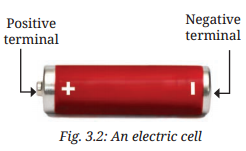
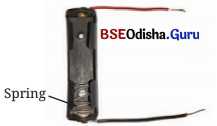
- An electric cell is a portable source of electrical energy used in devices such as torches, clocks and remotes.
- Every cell has two terminals: a positive terminal ( + ), which is the small metal cap, and a negative terminal (-), which is the flat metal disc at the other end.
- The chemical energy stored in the cell is converted into electrical circuit.
Battery
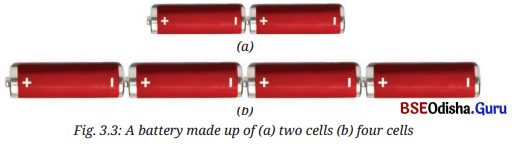
- A combination of two or more cells in a particular arrangement is called a battery. A battery can provide electrical energy for a longer time and/or more energy than a single cell.
- In a battery, the positive terminal of one cell is connected to the negative terminal of the next cell in series.
- Electric cells and batteries are compact, portable sources of electrical energy that make it easy to use in electrical devices anywhere.
- Electricity from cells and batteries is called direct current (DC) and is used for small devices, whereas the electricity from power plants that reaches homes and factories is called alternating current (AC) and is used for larger appliances.
Electric Lamp
An electric lamp in a torch may be an incandescent lamp (small bulb) or an LED lamp.
Incandescent Lamp
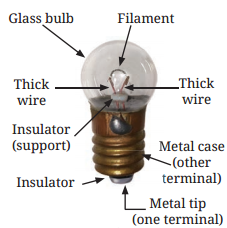
- In an incandescent lamp, the very thin wire inside the glass bulb is called the filament. The filament is supported by two thicker wires; one is connected to the metal case at the base and the other to the metal tip at the centre, forming the two terminals of the lamp.
- When electric current passes through the filament, it becomes very hot and glows, producing light.
Incandescent Lamp used in torch
Light Emitting Diode (LED)
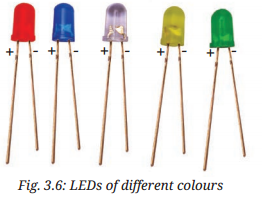
- An LED lamp does not have a filament. It has two terminals: the longer wire is the positive terminal and the shorter wire is the negative terminal.
- LEDs are commonly used in modern torches because thev use less energv, produce bright light and last much longer than filament lamps.
Electrical Circuit
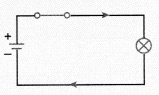
- An electrical circuit is a complete path in which electric current can flow from one terminal of the cell, through wires and components, back to the other terminal.
- A lamp glows only when the circuit is closed: one terminal of the lamp is connected to the positive terminal of the cell and the other terminal is connected to the negative terminal through connecting wires.
- If there is a gap anywhere in the path, or both wires from the lamp are connected to the same terminal of the cell, the circuit is open and the lamp does not glow.
- The conventional direction of electric current in an electrical circuit is taken to be from the positive to the negative terminal of the electric cell.
- In an incandescent lamp, the filament glows whenever a closed circuit is formed, regardless of how the terminals are connected. However, an LED glows only when connected in the correct direction, as it allows current to flow in one direction only. An electrical circuit
- Current passes through the LED only when the positive terminal (longer wire) of the LED is connected to the positive terminal of the battery, and the negative terminal (shorter wire) of the LED is connected to the negative terminal of the battery. If these connections are reversed, the LED does not glow.
- If the filament of an incandescent lamp breaks, the circuit becomes open inside the lamp, and the lamp is said to be fused. It will not glow even when connected in a proper circuit.
Electrical Circuit
Electric Switch
- A switch is a simple device used to open or close an electric circuit.
- When the switch is in the ON position, its conducting parts touch, the circuit is closed, and current can flow, so the lamp glows. When the switch is in the OFF position, there is a gap between its conducting parts, the circuit is open, and current cannot flow, so the lamp does not glow.
- A switch can be placed anywhere in a circuit to control the flow of current.
A Torchlight
A torchlight (flashlight) uses electricity from one or more electric cells to make a lamp glow. It has a lamp and a switch; the lamp glows when the switch is turned ON and goes off when the switch is turned OFF.
Circuit Diagrams
A diagram that shows the arrangement of the components in an electric circuit with the help of some standard symbols is called a circuit diagram.
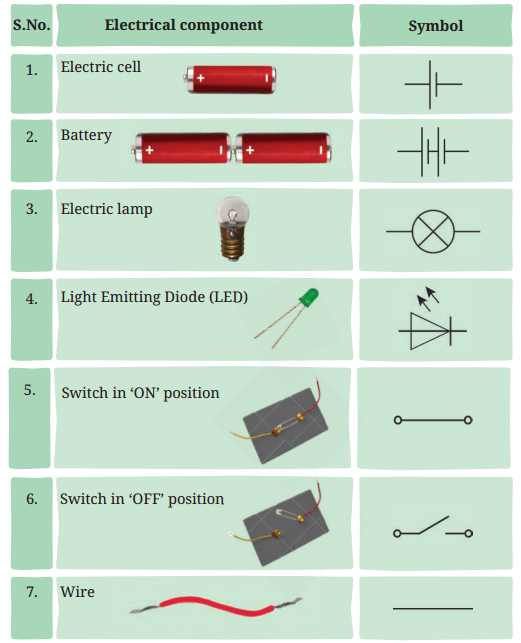
NOTE: In the symbol for an LED, the triangle points in the direction of current flow, and the arrows represent the emission of light by the LED. International organisations like IEC, ANSI and IEEE standardise these symbols so that they can be understood in the same way worldwide.
Electrical Conductors and Insulators
- Materials through which electric current flows easily are called good conductors or conductors of electricity.
- Materials through which electric current cannot pass are called insulators or poor conductors of electricity.
- Metals such as copper, aluminium, silver and gold are good conductors, so they are used for making wires and contacts in circuits.
- Among these, copper is most commonly used because it is a good conductor, relatively cheap and easilv available.
- Materials like plastic, rubber, glass, wax, ceramics and dry wood are insulators and do not allow current to flow through them.
- Electrical wires, plugs, switches and sockets use conductors for the inner parts to allow flow of current, but their outer parts are covered with insulating materials such as plastic, rubber or ceramic to protect people from electric shocks.
NOTE: Our body is a conductor of electricity; electric current passing through the body can cause serious injury or death, so electrical appliances must always be handled with great care. We should never touch switches or plugs with wet hands, use electrical devices in wet areas, or handle wires and plugs with damaged insulation.
Electrical Circuit
An electrical circuit is a complete conducting pathway that allows electric current to flow through connected components.
The conventional direction of electric current is from the positive to the negative terminal of a cell.
Electrical Cell
- An electrical cell is a portable source of electrical energy.
- All electric cells have two terminals.
Battery
- A combination of two or more cells is called a battery.
- In a battery the positive terminal of one cell is connected to the negative terminal of the next cell and so on.
Note: The term ‘battery’ is sometimes also used for a single cell.
Electric Lamp
Electrical lamps are devices that convert electrical energy into light.
Incandescent Lamp
- In incandescent lamps, a filament is attached to two thicker wires connected to the lamp’s terminals.
- When electric current passes through the filament, it heats up and glows, producing light.
- The connection of terminals to the positive or negative cell terminals does not affect its functioning.
- LED Lamp
LED (Light Emitting Diode) lamps are electrical lamps that produce light when electric current passes through them.
- LED lamps do not have a filament, and are energy- efficient.
- Electric current can pass through LEDs in one direction only.
Electric Switch
- A switch is a simple device that either completes or breaks a circuit.
- In the OFF position, the circuit is open.
- In the ON position, the circuit is closed.
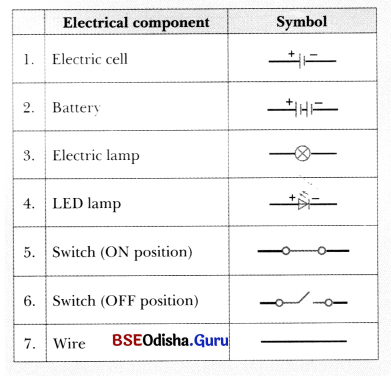
Circuit Diagram: A representation of an electrical circuit using symbols is called its circuit diagram.
Symbols: The various components of an electrical circuit are represented by symbols.
Electrical Conductivity
Conductor
- Materials that allow electric current to flow through them are called conductors.
- Examples: Copper, silver, gold, etc.
Insulator
- Materials that do not allow electric current to flow through them are called insulators.
- Examples: Rubber, plastic, wood, etc.