CHSE Odisha Class 11 Political Science Unit 2 Basic Concept Long Answer Questions Part-2

Odisha State Board CHSE Odisha Class 11 Political Science Solutions Unit 2 Basic Concept Long Answer Questions Part 2.

CHSE Odisha 11th Class Political Science Unit 2 Basic Concept Long Answer Questions Part-2

Long Answer Type Questions

Question 1.
Give a detail discussion of the various political rights guaranteed to individuals.
Answer:
Political right is one of the important rights of citizen without which human beings cannot manage to lead a civil life. Political rights are essential for the management of government. Various political rights of the citizens are discussed below.

Right to vote:
In a democratic government, normally free option is provided to share in the selection of the political party in whose hand the power of administration would be vested. It implies that every adult citizen should be provided the right of casting vote at the time of election which is restricted for aliens or the culprits. In modem days, democracy, right to vote is the only important way for the working of democracy. The right to vote of citizens provides the means and ways to be an active participant of the citizens.

Right to be Elected:
Right to be elected is the next important stage of popular participation in politics. The right to be elected refers that the law should not forbid any citizen from holding any public office, of course, there might be some sort of legal provisions for holding such public office on the basis of popular election. .

Right to Criticise the Government :
The dialogue was the basis of the ancient democracy existing in Greek city-states Accordingly, the present nation says that every policy and formulation of government should be subject to public scrutiny and criticism. Without right of criticizing the government, there must be an authoritarian trend in politics.

Right to Public Officers :
No citizen should be prohibited from holding public offices on the ground of religion, caste or color. Democracy believes that every human should be provided equal opportunities, None should be neglected on the discriminatory ground which would destroy the very principles of humanity and moral order.

Right to Petition :
Democratic legislature constituted on the basis of popular will is the best illustration of the forum for the ventilation of public grievances. So in a democracy, it has been provided constitutionally that every individual has free option to send a petition individually or collectively to the competent authority.

Right to Residence :
The Individual also enjoys the political right or the right to a residence which in other words would be termed as a permanent member of the state. This permanent membership or residence of an individual is exclusively reserved for citizens and is restricted for aliens who do not enjoy any political rights.

Right to Protection while Staying Abroad:
A citizen can seek the protection of his own life from the home state while staying abroad. Here the case of the repatriation of Indians. The Gulf countries during the tenure of V.P. Singh is a glaring example of the political staying abroad.

Right to Public Meeting:
Every citizen also possesses the right to public meetings and to form associations. A citizen should have a free option to express his opinion freely either may be through public meetings or by forming an association. Normally, the above-mentioned political rights are used to the best possible extent in a democratic setup of government. But in authoritarian states, those political rights are being misused and confused with duties and the collective interest of the society.

CHSE Odisha Class 11 Political Science Unit 2 Basic Concept Long Answer Questions Part-2

Question 2.
Define Human Rights and discuss the various kinds of human rights.
Answer:
Human rights are today considered to be a symbol of a civilized community. These are natural rights, inherent in every individual. These rights are essential for human welfare and prosperity. These rights help man to meet his basic needs of life and to lead a dignified life. They enhance the status of individuals in society and provide him with safeguards that are necessary for the protection of individuals against the arbitrary authority of state.
Every individual, irrespective of social discrimination, enjoys this right. It is a moral right that belongs to individuals, not to any country. Therefore, after the establishment of the UN, the Universal Declaration of Human Rights was adopted and it requested all the nations to secure the guarantee of these rights.
Characteristics :

  • These rights are universal in character and valuable for all nations, communities and cultural groups.
  • The individual is the centre of human rights.
  • Human rights are safer in a democracy
  • These are related to development and welfare.

Kinds of Human Rights :
The human rights mentioned in the Universal Declaration can be classified into, civil political, economic and cultural human rights.

Civil Human Rights: Civil human rights include

  • the rights to life, liberty and personal security.
  • the rights to freedom from slavery and servitude.
  • the right to freedom from torture and cruel; inhuman or degrading treatment or punishment.
  • the right to equality before law.
  • the rights to an effective judicial remedy.
  • the right to a fair trial and public hearing by an independent and impartial tribunal.
  • the rights to be treated as innocent until proven guilty.
  • the right to freedom from arbitrary interference with one’s privacy, family, home 6r correspondence.
  • the rights to free movement, and
  • the right to property and family etc.

Political Human Rights: These political rights are available only in a democracy. These rights are

  • the right to asylum and nationality.
  • the right to freedom of speech and expression
  • the right to form associations and peaceful assembly
  • the right to take part in Govt, and
  • the rights to vote and equal access to public service etc.

Economic Hump Rights: Economic human rights include

  • the rights to work and reasonable payment.
  • the right to rest and leisure,
  • the right to a standard of living adequate for health and well-being and
  • the right to social security etc.

Cultural Human Rights: Cultural human rights help an individual to preserve and conserve his culture amidst cultural diversities. These rights include.

  • the rights to education and cultural protection,
  • the rights to participate in the cultural life of the community.
  • the right to enjoy the arts and share in scientific advancement and its benefits.
  • the right to protection of moral and material interests resulting from scientific literacy or artistic production and
  • the right to a social and inter-nation order in which these freedoms can be enjoyed. All these rights are to be enjoyed in conformity with the principles and purposes of the United Nations.

Question 3.
Describe the modes of violation and redressal of human rights.
Or, How human rights are violated? Suggest remedies.
Answer:
There is no one to enforce or safeguard these rights which are useful not only for individuals but also for society as a whole. Human rights are natural in origin, but it was only after the establishment of the United Nations that efforts are made to protect and safeguard them against violation.

Modes of Violation :
Violations of human rights are frequent in various parts of the world. No society or state can claim to be free from such a violation. The various modes of violation of human rights can be discussed below.

  • When one nation attacks another or invades another nation and forcefully occupies the territory of the other human rights are violated. The recent military action of the USA on Iraq is a bright example of human rights violation.
  • It can be violated by terrorism, aggressive nationalism and regionalism when people of one region or country try to disrupt normal life and peace in another. Pakistan supported terrorism in Kashmir, Al-Quai-da’s activities in Europe and USA, etc. are examples of human rights violations.
  • Establishment of military rule.
  • Colonial and imperial domination over backward people
  • Racial determinations practiced in South Africa
  • Conflicts between religious groups, racial groups and communal factions, tribal conflict and ethnic violence, etc. also lead to violation of human rights.
  • Slavery arid forced labor, inhuman treatment to women and backward classes
  • Child labor
  • Ill-treatment of prisoners of war and criminals in jail.
  • War, military expeditions, and use of atomic and chemic weapons, and
  •  Social evils, customs, and orthodoxy also lead to human rights violations.

Remedial Measures:
These are two different modes of remedies for the violation of human rights.

Punitive Remedy:
Those violating human rights must be punished severely and this fear of punishment will act as a safeguard to human rights.

Preventive Remedy :

  • A worldwide awareness program may be launched to generate consciousness among ordinary people about human rights, their value and the dangers of violation. The mass media, educational institutions and non Government organizations may be engaged in this type of activity.
  • There is a need of a law to make it obligatory on the part of individuals and institutions not to violate human rights.
  • The woman, children and backward classes must be given moral strength and encouragement to face the situation.
  • The Govt, officials responsible for such violations may be severely punished and the Govt must be accountable for such acts.
  • The human rights commission set up at different levels must work sincerely in that direction. These are Useful arid valuable both for individuals and society so they must be protected with care.

CHSE Odisha Class 11 Political Science Unit 2 Basic Concept Long Answer Questions Part-2

Question 4.
Define citizens and discuss the methods of Acquisition of citizenship.
Answer:
Citizens are the residents of democracy. They are permanent residents of a state and they discharge their responsibilities properly. They enjoy all rights and privileges granted by the state and discharge obligations towards the state and other associations.
‘Citizenships’ refers to the qualities of citizens in a democratic society. A citizen is a person who resides in a state owes allegiance to the state and is protected by the state. He discharges his duties to the state and society and always gives priority to common internals over personal ones. All civil, political, and economic rights are available to a citizen.

Acquisition of Citizenship:
Citizenship can be acquired in two ways

  1. Natural Process and
  2. Naturalization

Natural process:
In the natural process, citizenship is acquired by birth. It is governed by two principles. Jus Soli and Jus Sanguinis.

Jus Soli (Rule of Place of Birth):
According to this principle, citizenship can be acquired as per one’s place of birth. That means a child born in a state becomes a citizen of that state, if he or she is born in a foreign country he or she will become a citizen of that country irrespective of his or her parental citizenship. This principle is followed in Japan and Argentina.

Jus Sanguinis (Rule of Blood Relationship):
As per this principle, the citizenship of a child is determined on the basis of the citizenship of his parents irrespective of the place of birth. France, Italy, Germany and India follow this principle.

Naturalization:
Naturalization means a formal process of bestowing citizenship on noncitizens. In this process, one has to apply to the Head of State on certain specific grounds and with the approval of the government, he or she can be conferred with citizenship. This process differs from state to state. In naturalization, there are certain conditions and an alien applying for citizenship must satisfy at least one such condition or else he will not be granted with citizenship. These conditions are as follows.

According to Plato “Justice consists in allocating to each individual functions for which he is best fitted in accordance with his natural fitness and training”. Aristotle interpreted justice in the sense of fairness and equality. According to Benn and Peters, “Justice is to treat all men alike except where there are relevant differences between them. Charles Merriam defines justice as, “Consisting of a system of understanding and procedures through which each is accorded what is agreed upon as fair. Barker treats justice as the synthesis of Political values.”

Thus, justice can be explained from a broad and narrow point of view, Broadly, speaking justice is eternal and absolute which is infallible and unchangeable. It is determined according to social needs and circumstances. But from a narrow point of view justice is associated with the legal system and legal process in society. It is concerned with the protection and maintenance of the rights and obligations of individuals by an independent and impartial juridical system.

Types of justice: Justice can be classified into legal, social, economic and political, etc.
Legal justice :
Legal justice means lawyers’ conception of justice. It is associated with the legal system and the judicial process. This type of justice can be realized through the instrumentality of laws. Justice of this nature demands that, the laws of the state should be reasonably fair and proper and every individual should get justice according to the rule of law as opposed to the arbitrary will of men, legal justice stressed upon independent and impartial judiciary and equality before law. Legal justice demands that the laws, the judges and the judiciary must be free from corruption and outside pressures.

Social Justice :
Social justice implies the absence of discrimination among individuals on artificial grounds social justice is related to the general welfare of the community and the state should take steps to promote the interests of the weaker sections of society. Social justice is a balance between individual rights and social control ensuring the fulfillment of the legitimate expectations of the individual under the existing laws and assuring benefits consistent with the unity of the nation and the needs of the society. Again social justice implies that, in case of conflict between social and individual interests, the common interest must prevail. Allen criticized social justice as vague and confusing. Sometimes, it implies the distribution of wealth and equality of opportunity.

Political justice :
Political justice implies that, the people should be given a chance of fair and free participation in the political life of the country. By the provision of universal adult franchise, people are able to participate in the election of their representatives. Grant of equal Political rights and opportunities to influence the policies of the government is a condition of Political justice.

Political Justice further demands that :

  • Elections must be free, fair, and regular
  • There must be a rule of law as opposed to the rule of men.
  • Freedom of speech, expression, assembly, petition, and criticism must be given to all.
  • The judiciary must be independent and deliver impartial justice guaranteeing individual rights.
  • The press must be free to organize public opinion.
  • And the state of Govt must be free from the external pressures of foreign countries.

Economic justice :
Economic justice is the foundation of all other kinds of justice. It seeks to eliminate economic exploitation of the rich to tire poor by providing the basic minimum needs of every individual in society. National every one is treated equally the economy should be so shaped that the benefits are shared by the maximum number of people. Lask defining economic justice has said, no ma I can be entitled to a house of twenty-one rooms until all people are adequately housed. One man even in that environment is not entitled, to a house of twenty rooms because his father is an advocate or an industrial. Economic justice aims at the reduction of the gap between rich and poor and the principle of equal pay for equal work must prevail.
Economic justice further demands that :

  • Every citizen shall get a right to adequate means of livelihood.
  • Distribution of ownership and control of wealth to achieve the common good.
  • The state shall take steps toward social security.
  • The state must take care to promote the socio-economic and educational interests of the weaker sections.
  • And equality in matters of employment, etc.
  • Thus justice can prevail in a society where there is social, economic, political, and legal justice.

CHSE Odisha Class 11 Political Science Unit 2 Basic Concept Long Answer Questions Part-2

Question 5.
Write an essay on Social Justice.
Answer:
The concept of social justice is an essential element of the welfare state. The term is used to denote the organization of society on the basis of ideas of equality and fairness. Social justice seeks to erect a social order in which Social justice is closely related to social equality. It believes in the elimination of inequality and privileges based on birth, wealth, status, religion, sex or color. According to G.D. H. cole, social justice is a way of life ensuring equality in status and opportunities in all aspects of the social life of individuals.
Social justice is related to social equality and social rights. In a liberal democracy, social justice seeks to remove exploitation, oppression, and discrimination.

Nature:

  • Social justice reduces inequality and removes special privileges by positive state action.
  • It creates a just and fair social order.
  • It gives special protection to the weaker sections and backward classes like, scheduled castes and scheduled tribes women and children.
  • It makes a balance between individual rights and social control.
  • Social justice enjoins upon the state to undertake far-reaching welfare measures to improve a lot of the lower classes.

A welfare state in order to maintain social justice introduces social security measures providing unemployment & sickness allowance- old age pensions, maternity benefits, and accident insurance etc. It allowances equitable distribution of goods and commodities and equal opportunity is given for all aspects of life irrespective of social classes or distinctions.

Social justice in India:
The Indian constitution has introduced a series of measures to ensure social justice.

  • The Fundamental Rights and the Directives seek to ensure social justice.
  • The Constitution has abolished discrimination on grounds of religion caste, sex or place of birth.
  • Untouchability is abolished under Art 14.
  • Art 23 prohibits forced labor. The exploitation of backward classes illegal use of women and child labor.
  • The interests of minorities are protected under Art. 29.
  •  Art. 42 directs the state to provide just and humane conditions of work and . maternity relief. The Govt takes special care for the education and economic interests of the children of the backward classes, and to save them from exploitation and justice.
  • The Govt provides for the reservation of seats for S.C. and S.T. in order to promote social justice.
  • The Govt has introduced economic planning and given the backward classes social status economic security, and a share in political power.

Question 6.
Define secularism and discuss the western and Indian approaches to secularism
Or, Distinguish between western and Indian aspects of secularism.
Answer:
The term secularism was used for the first time in 185.1 by Holyoke in its Latin
form speculum, this means that the activities of the state must be free from the influence of religion. In the ordinary sense, secularism implies equal treatment to religion and being tolerant towards any religion. As far as the interpretation of the term is concerned the word secularism is interpreted in the west in a different way from that of India. The difference in this approach may be explained below.

Secularism in India:
Indian secularism contains the following features:

  • Secularism in India is commonly used to mean equal treatment to religions.
  • It believes in the coexistence Of all religions and tolerance towards all religious faith.
  • In India the” majority religious communities exercise their superiority over minority communities.
  • It does not give scope for religious discrimination, or inequality of exploitation. The exploitation of women & backward classes is strongly resented by secular forces.
  • Secularism allows everybody to accept any religion of his own choice and to reject it at will. Every religious community is given full freedom to practice and propagate its religious values and ideas, and to perform religious rights and ceremonies.
  • The state has no religion of its own, but it can initiate religious reforms for the abolition of child marriage or untouchability.
  • The state never tolerates religious atrocities. Every religious community shall have the liberty in India to preserve its culture by establishing its own educational institution. But, the state is nor completely from religious pulls and pressures.

Western Secularism:
The basic features of western secularism may be discussed below:

  • In the western world, there is no state religion nor the state patronize any religion.
  • The state remains completely free from religious influence. It neither interferes in the freedom of religion of the people nor allows religious principles to guide state activities.
  • No state policy or program violates the religious freedom of the people.
  • The state does not provide any grant to any religious institution nor does it obstruct the activities of any religious institutions.
  • Religion is considered purely a private affair. No religious community enjoys special status in the west. The state does not tolerate religious exploitation or oppression. However, the basic difference between the two approaches is that while in the western state and religion remain completely detached in our country it is only in pen and paper. In India, there are enough examples of appeasement to religious communities by the government for securing political support. Further, in our country, secularism is used mostly as a vote-catching slogan but that never happens in the west.

CHSE Odisha Class 11 Political Science Unit 2 Basic Concept Long Answer Questions Part-2

Question 7.
Define development and discuss the various models of development.
Or, Write an essay on the models of development.
Answer:
Development is a continuous process of growth. It is a progression from a simpler to a more advanced or complex form of society. It includes all aspects of human growth like, including physical, mental, intellectual, social, and economic development.

Origin :
The process of development started in the post world war era. It was first of set in Europe and western countries and the process thereafter followed in other parts of the world. Depending on the process of development the western states were called developed nations and the states of Asia and Africa developed.

Models of development :
There are three models 6f development, such as

  • Capitalist model
  • Socialist model and
  • A sustainable model of development

Capitalist model of development:
This model of development is working today in the USA, UK, Australia, Canada, and other European countries. It is otherwise known as individual-centric or market-based development.

  • In this model economic development is considered to be a condition for political development.
  • The capitalist model pleads for the round development of individuals.
  • Rapid industrialization, technological development, modernization, employment generation, etc. are the ingredients of the capitalist model of development.
  • It further believes in the Liberalisation of the social, political, and economic systems.
  • The capitalist model further relies on free market economy and economic competition for growth.

Criticism:
This capitalist model widens the gap between rich and poor countries and here the underdeveloped states are the worst sufferers.

Socialist model of development:
The Socialist model is also known as the Marxist model of development. It is just the opposite of the capitalist model. It is now found in China. Bulgaria, Poland, Romania, Cuba and North Korea.

  • It believes in a state-controlled economy, production and means of distribution.
  • This model emphasizes on socioeconomic rights Of individuals, equality and social justice.
  • It looks after the well-being of the poor working class and depressed classes.
  • The state here, exercises control over industry, health, education, communication and transport and distribution system.
  • The state can sacrifice the interests of an individual or a group for the greater interests of society. This model was popular from 1920 to1980 but with the downfall of the Soviet Union, this model is losing ground.

Sustainable model of development:
In view of the rapid growth of population, industrialization, urbanization and modern lifestyle energy and natural resources are depleting first. Unplanned social and economic development has led to increasing in environmental pollution. Therefore, a new model of sustainable development has been introduced in place of the capitalist and socialist models.

  • The sustainable model believes in socio-economic development with due concern for environmental safety.
  •  It insists on the limited use of natural resources like water, air, soil and mineral resources and fossil fuels. Resources must be used with utmost care so that the future generation will not be deprived of those resources.
  • It focuses on ensuring a healthy and enduring balance between human needs natural resources and the economic system.
  • The development shall meet the needs of the present without keeping the future generation of risk.
  • There must be plans to ensure population control. Poverty alleviation, socio-economic justice protection of the environment, biodiversity, and conservation of natural resources.
  • This model emphasizes more on creating awareness among people for a secured future life with due importance toward environmental safety.

CHSE Odisha Class 12 Political Science Unit 1 Democracy in India Short Answer Questions

Odisha State Board CHSE Odisha Class 12 Political Science Solutions Unit 1 Democracy in India Short Answer Questions.

CHSE Odisha 12th Class Political Science Unit 1 Democracy in India Short Answer Questions

Short Questions And Answers

Question 1.
Define democracy. Why democracy cannot be defined only in political context?
Answer:
Democracy is defined as a form of government in which the supreme power is vested in the people and is exercised by them directly or indirectly through a system of representation usually involving periodic free elections. In essence, democracy is a form of government which is run by the elected representatives of the people.

Question 2.
Describe the essential conditions for a successful democracy.
Answer:
The definition of democracy is incomplete unless it is defined in social and individual contexts as well. In the present age, it means more than a mere form of government. In its comprehensive form democracy means,

  • a form of government
  • a type of state,
  • a pattern of social system,
  • a design of economic order
  • a way of life and culture.
    Therefore, when we say Indian democracy, we mean not only that its political institutions and processes are democratic but also that the Indian society and every Indian citizen is democratic, reflecting basic democratic values of equality, liberty, fraternity, secularism and justice in social sphere and individual behaviour.

Question 3.
What are the major challenges the Indian democracy faces? How these challenges are opportunities to make India an effective democratic system?
Answer:
A system can be termed as a genuine democracy only when it fulfils
(a) political conditions as follows:

  • Having a Constitution that vests supreme power in the people and protects fundamental rights, such as equality, liberty of thought and expression, belief, movement, communication and association.
  • Having universal adult franchise as the basis of electing representatives
  • Having a responsible government in which the executive is answerable to the legislature and the legislature to the people and

(b) social and economic conditions as follows:

  • The system ensuring social development that is in tune with democratic values and norms reflecting equality of social status, social security and social welfare and
  • The system facilitating a situation where the fruits of economic development reach all and especially the poor and deprived sections of the society.

1. Illiteracy, inequality and poverty adversely affect the functioning of Indian democracy,

  • Illiterate citizens are not able to play their roles effectively and exercise meaningfully their right to vote which is an individual expression of the power of the people. Literacy enables citizens to be aware of various issues, problems, demands, and interests in the country, be conscious of the principles of liberty and equality of all and ensure that the representatives elected by them truly represent all the interests in the society,
  • Poverty is perhaps the greatest bane of democracy. It is the root cause of all kinds of deprivations and inequalities and is the state of denial of opportunities to people to lead a healthy and fulfilling life.

2. Yes, the popular entertainment channels and films generally depict gender discrimination. In fact, the serials on television channels are reinforcing the prevailing patriarchal system showing females playing traditional roles of mothers, sisters, wives and daughters. It is true that a few of them question the traditional roles, but those also somehow reflect gender discrimination.

3. Caste System: The most detrimental and inhuman example of the prevailing caste system is the practice of untouchability which is continuing in different covert and overt ways in spite of the constitutional ban imposed on it.

  • The Dalits still bear the brunt of discrimination and deprivation. This has led to segregation of so called low castes, depriving them of education and other social benefits. The second example relates to politicization of caste system. Casteism has become notorious as a strategy of exploitation of caste consciousness for narrow political gains.
  • The caste system acts against the roots of democracy. Communalism: It disrupts quite often the smooth process of co-existence in a multi-religious Indian society Communal riots happening in the country since independence have been dangerous for peace order and social harmony. Secondly the misuse of religion by fundamentalist people during elections and even in other situations has always been proved to be counter-productive.

4. Although development process in the country aims alt growth and development of all regions, the regional disparities and imbalances continue to exist. Existence and continuation of regional inequalities in terms of differences in per capita income, literacy rates, state of health and educational infrastructure and services, population situation and levels of industrial and agricultural development both among States and within a State create a feeling of neglect, deprivation and discrimination.

5. The influence of muscle power in Indian politics has been a fact of life for a long time. Political parties and candidates do not hesitate in seeking the help of criminal elements to dominate the election scene in India. Earlier in the 1960’s, the criminals were content by covertly helping the politician win the election so that they could in turn get protection from him. But the roles have now been reversed. It is the politicians who now bank on the support of the criminals for protection.

6. One of the major reasons of increase of political violence has been the emergence of serious conflict of interests between higher and middle castes as an outcome of agricultural development, abolition of zamindari system, and developments like green revolution and white revolution. These have led to aggressive competition for political power which many a time leads to violence. Another reason is the backlash of the higher castes against the growing awareness and assertion of their rights by the lower castes, particularly the Scheduled Castes and the lowest backward castes. Moreover, violence has been associated with demands for separate States, re-organization of States or adjustment of State boundaries. As we observe, the Telangana Movement in Andhra Pradesh and Bodo Movement in Assam often turned violent. Violence has also been used quite frequently during industrial strikes, farmers’ movements, students’ agitations, and a number of other civil disobedience campaigns.

1. To attain the goal of universal literacy a nation-wide programme known as Saaksltar
Bharat is being implemented. Moreover, the Sarva Shiksha Abhiyan is a flagship programme for the universalization of elementary education for children between 6-14 years of age. Besides, the Parliament of India in 2009 passed Right to Education Act through which education has become a fundamental right of all children in the age group of 6-14 years. For poverty alleviation, two kinds of programmes are being implemented:

  • Programmes to lift beneficiaries above poverty line by providing them with productive assets or skills or both so that they can employ themselves usefully and earn greater income, and
  • Programmes to provide temporary wage employment for the poor and the landless. Public Distribution System (PDS) contributes towards meeting people’s basic food needs, the Integrated Rural Development Programme (IRDP) provides rural households below the poverty line with credit to purchase income-generating assets, the Jawahar Rbzgar Yojana (JRY), provides more than 700 million person days of work a year. Moreover, TRYSEM (Training Rural Youth for Self Employment) was started to provide technical skills to the rural youth and to help them to get employment.

2. Besides the State-specific efforts for reducing intra-State regional disparities, a number of Centrally Sponsored Programmes have been in operation for the last two to three decades for taking care of specific aspects of back wardness of such regions. Some of the major programmes are:

  • the Tribal Development Programme,
  • the Hill Area Development Programme,
  • the Border Area Development Programme,
  • the Western Ghat Development Programme,
  • the Drought Prone Area Programme, and
  • the Desert Development Programme.

3. For administrative reforms, the following recommendations need to be implemented:

  • to make administration accountable and citizen friendly,
  • to build its capacity for quality governance,
  • to orient administration for promoting peoples’ participation, decentralization and devolution of powers,
  • to make administrative decision-making process transparent,
  • to improve the performance and integrity of the public services,
  • to reinforce ethics in administration, and
  • to inculcate readiness for e-governance. For judicial reforms, the steps that are to be taken are as follows:
    (a) Simplification of Rules and Procedures,
    (b) Repealing Out-dated Laws,
    (c) Increase in the Judge Population Ratio,
    (d) Time-bound filling of Vacant Posts in Judiciary, Transparency in Appointment, Promotion and Transfer of Judges,
    (e) Judicial Accountability and
    (f) Transparency of Court Proceedings.

4. Sustainable development is a pattern of resource use that aims to meet human needs while preserving the environment so that these needs can be met not only in the present, but also for the future generations. When the development is human-centred and directed towards improvement of quality of life of all the people, it has to be focused on removal of poverty, ignorance, discrimination, disease and unemployment.

All these steps will strengthen Indian democracy.
1. Participation in a democratic polity is not confined simply to participation in elections. A vital form of participation comes through membership of political parties and more importantly, active membership in independent non-governmental organizations, that are known as “civil society organizations.” Civil Society Organizations, represent a variety of interests of different groups: women, students, farmers, workers, doctors, teachers, business owners, religious believers and human rights activists.
2. Citizens have to make the democratic system responsive and responsible. They are needed to ensure that the Parliamentarians, Members of State Legislatures and their representatives in Panchayati Raj and Municipal Institutions are accountable. The instruments created by Right to Information Act, 2005 in our country enable citizens to play their role, effectively. Citizens must watch carefully how their political leaders and representatives use their powers, and to express their own opinions and interests.

Question 4.
What is JGSY?
Answer:
Jawahar Gram Samridhi Yojana (JGSY) is a programme for the creation of rural economic infrastructure with employment generation as a secondary objective. The programme is implemented by the village panchayats and since its inception it has generated 27 crore men-days of employment each year. The Employment Assurance Scheme (EAS) covers 1,778 drought-prone, desert, tribal arid hill area blocks. The programme was designed to provide employment in the form of manual work in the lean agricultural season.

Question 5.
What is Sustainable development?
Answer:
lt is a pattern causing resources that aims to meet human needs while preserving the environment so that these needs can be met not only in the present, but also for future generations to come. The term was used by the Bruntland Commission (1987) which coined what has become the most often-quoted definition of sustainable development as development that “meets the needs of the present without compromising the ability of future generations to meet their own needs.”

Question 6.
What is MNREGA?
Answer:
The Mahatma Gandhi National Rural Employment Guarantee Act (MNREGA) is being implemented to enhance the livelihood security of people in rural areas by guaranteeing hundred days of wage-employment in a financial year to a rural household whose adult members volunteer to do unskilled manual work.

Question 7.
What are Goal and Objectives of National Policy for Empowerment of Women?
Answer:
The goal of this Policy is to bring about the advancement, development and empowerment of women. Specifically, the objectives of this Policy include:

  • Creating an environment through positive economic and social policies for full development of women to enable them to realize their full potential;
  • Equal access to participation and decision making of women in social, political and economic life of the nation;
  • Equal access to women to health care, quality education at all levels, career and vocational guidance, employment, equal remuneration, occupational health and safety, social security and public office, etc.;
  • Strengthening legal systems aimed at elimination of all forms of discrimination against women.
  • Elimination of discrimination and all forms of violence against women and the girl child.

Question 8.
Define Democracy.
Answer:
It is a form of government in which the people are the source of all power. It is exercised by them either directly or indirectly through their elected representatives.

Question 9.
What is indirect democracy?
Answer:
Indirect democracy means the government formed by the elected representatives of the people. It governs on the basis of public opinion.

Question 10.
What is direct democracy?
Answer:
In direct democracy the people directly take part in the law-making. They can reject any law in a referendum and propose bills for law-making under initiative.

CHSE Odisha Class 12 Political Science Unit 1 Democracy in India Short Answer Questions

Question 11.
What are the modern devices of Direct Democracy?
Answer:
The major modem devices of direct democracy are referendum and initiative. By these two the people participate in the process of law-making.

Question 12.
What are the three dimensions of Democracy?
Answer:
(a) Political Dimension, (b) Social Dimension and (c) Economic Dimension.

Question 13.
What is Referendum?
Answer:
Referendum is the power of the people to .approve or reject any law passed by the legislature. They can demand referendum on any law and then vote to reject or approve it by a majority.

Question 14.
What is Initiative?
Answer:
Initiative is right of the people to propose measures for law making. They can submit bills or demands for law-making on which the legislature has to act.

Question 15.
Write two most essential features of a Democracy.
Answer:
(1) Faith in popular sovereignty and mass political participation and (2) Faith in liberalism and equal rights of all the people.

Question 16.
What is Recall?
Answer:
Recall is the right of the people to recall an elected representative in case it has not been acting according to the dictates of public opinion or who is misusing his authority as their representative.

Question 17.
What is the merits of initiative?
Answer:
(1) A law initiated by the people represents popular will. (2) It positively involves people in the law-making process.

Question 18.
What is the meaning of Plebiscite?
Answer:
It means to know the opinion of the people over any particular issue. It is a democratic way of knowing public opinion on any national issue.

Question 19.
What is popular sovereignty?
Answer:
Popular sovereignty means supremacy i.e. supreme power of the people. It is the very basis of a democracy.

Question 20.
What is a political party?
Answer:
Political party is a large political organisation of people.

CHSE Odisha Class 12 Political Science Unit 1 Democracy in India Short Answer Questions

Question 21.
What is the most major objective of a political party?
Answer:
The most major objective of a political party is secure political power in the state.

Question 22.
For which purpose political parties use political power?
Answer:
Political parties use political power for securing national interests of the country.

Question 23.
Which party is called the major party?
Answer:
Which secures a majority of seats in a legislature is called the majority party.

Question 24.
What is Bi-party system?
Answer:
When a state has only two or two major and some other political parties, the system is known as bi-party system.

Question 25.
What is multiparty system?
Answer:
When a large number of active political parties are involved in politics is known as multiparty system.

Question 26.
Which party system is not held to be really democratic?
Answer:
One party system is not hold to be really democratic.

Question 27.
By whom elections are basically fought?
Answer:
By political parties elections are basically fought.

Question 28.
What is meant by limited government?
Answer:
When the government of the state enjoys defined powers and a fined hence it is called a limited government. The constitution of the state defines the powers of such government and it always works within such limits.

Question 29.
What are the basic principles of Democracy?
Answer:
The basic principles of democracy are:

  • Faith in popular sovereignty.
  • Right to equality.
  • Right to freedom.
  • Representative and responsible government.
  • Secret voting and free and fair election system.
  • Decentralisation of powers.
  • Limited government.
  • Rule of law.
  • Independence of judiciary.

Question 30.
What is universal adult franchise?
Answer:
When all the adult citizens, both men and women enjoy the right to vote, the system is called universal Adult Franchise. In every modem democratic system, the principle of universal Adult Franchise is essential.

CHSE Odisha Class 12 Political Science Unit 1 Democracy in India Short Answer Questions

Question 31.
What is direct democracy?
Answer:
In this form of democracy, people have the right and opportunity to directly participate in law-making. They have the power to approve or disapprove the laws passed by the legislature.

Question 32.
What is Indirect Democracy?
Answer:
Indirect democracy in which political power is used by the elected representative of the people. The elected representatives use the legislative and executive authority of the state for a fixed tenure.

Question 33.
What are the fundamental features of Liberal Democracy?
Answer:
The fundamental features of liberal democracy are:

  • Faith in the ideology of liberalism and the principle of sovereignty of the people.
  • Duly elected representative, limited and responsible government.
  • Accountability of all public servants and power-holders.
  • Transparency in the working of Government.
  • Supremacy of public opinion.
  • Mass political participation.

Question 34.
What is social inequality?
Answer:
Social inequality refers to the ways in which socially-defined categories of persons (according to characteristics such as gender, age, class and authenicity) are differentially positioned with regard to access to a variety of social ‘goods’ such as the labour market and other sources of income.

Question 35.
How the Indian Constitution grants constitutional and legal equality?
Answer:
Indian society continues to be a male dominated society. Women of India continue to live with certain inequalities and exploitations. The constitution of India grants equal fundamental rights to all the citizens. It declares that there is to be no discrimination on the basis of genders. Legally women enjoy equal opportunities for development as are being enjoyed by men.

Question 36.
What is the steps which Indian democracy must takes for eliminating social inequalities?
Answer:
Indian democracy must take several strong steps for eliminating social inequalities.
(1) To check caste based discrimination and violence through stronger laws,
policies and actions.
(2) To promote secularism as the way of life by suitably reforming the Indian
education system.
(3) To work for securing the empowerment of women by all.
(4) All women organisations like All India Women Conference and all non
government organisation (NGOs) must organise campaigns against social evils, particularly against casteism.
(5) Since social inequalities are mostly the products of ignorance and mad love for some age-old tradition, all the people must make concerted and collective efforts for creating widespread awareness against social evils.
(6) Our educational institutions, mass media and interest groups should try to build a strong public opinion against all social inequalities.
(7) Indian democracy must ensure that all the people should get encouraged to realise their responsibilities towards the nation.

Question 37.
What is Regionalism?
Answer:
Regionalism means the love for one’s area of living in a particular region to which one belongs. It is something quite natural. The inhabitants of Punjab love the language and culture and there is nothing unusual or wrong about it. To secure the interests of their state is a natural objective before all the inhabitants. This type of regionalism has to be accepted as a natural feature of a federal polity like India.

Question 38.
What is political violence?
Answer:
Violence is being used by some people, their groups and organizations for achieving their narrow political goals, it is called political violence. Several organizations, groups and individuals unfortunately believe that their political system or government will never respond to their political demands and consequently, they believe that use of violence is needed and justified for securing their political objectives.

Question 39.
What is Naxalism?
Answer:
The terms Naxal and Naxalism owe their origin to the village Naxal and Naxalbari movement (West Bengal). Naxalism or Naxal violence began as a violent opposition to the established order. It was basically a peasant and tribal movement against the existing socio-economic political system. It wanted to overthrow the established order by violent means. The Naxal movement had its birth in the late 1960s in the Naxalbari area of West Bengal.

Question 40.
What steps are needed for controlling Naxal violence?
Answer:
India government decided to use Indian Army and paramilitary forces for neutralizing and controlling the Naxal violence in the affected states.
The steps are needed for controlling Naxal violence :
(1) Modernisation, effective deployment and use of law and order enforcement
agencies.
(2) All necessary and well-designed systematic steps must be undertaken for the protection and promotion of the socio-economic welfare.
(3) Participation of all sections of people, particularly the poor peoples.
(4) Securing of sustainable development must be pursued as a priority.
(5) More employment opportunities must be created for poor, tribal people.
(6) Counter-Insurgency operations against the Naxals must be well-planned on efficiently executed.

CHSE Odisha Class 12 Political Science Unit 1 Democracy in India Short Answer Questions

Question 41.
Give one definition of a political party.
Answer:
Gilchrist writes “A political party may be defined as an orgnised group of citizens who profess to share the same political views and who, by acting as a political unit, try to control the government”.

Question 42.
What is One Party System?
Answer:
One party system is also called single party system. In it there is only one main political party which is continuously in power. One party system is held to be undemocratic.

Question 43.
Give three essential features of a political party.
Answer:
Three essential features of a political party are:
(1) A fairly large organised political association of people.
(2) Agreement on basic principles on ideology.
(3) Faith in peaceful and constitutional means.

Question 44.
Define Bi-party System.
Answer:
Party system exists in a state where there are either only two nearly equal popular political parties or two main political parties. However, there are also present some union or less influential political parties. People have the freedom to form their political parties but in actual practice there are present only two major political parties in . the country.

Question 45.
Define Multiparty System.
Answer:
Multiparty system means the presence of several equally influential political parties in the country. Several political parties are actively involved in the political process elections are contested by a large number of political parties.

Question 46.
Name some countries which have Multiparty System.
Answer:
Some countries which have multiparty system are: India, Switzerland, Japan, Italy and France.

Question 47.
What are the six main functions of political parties?
Answer:
The six main functions of political parties are:
(1) Formation of public opinion.
(2) Act as agencies of political education.
(3) Valuable agencies for recruitment of leaders.
(4) Formulation of Demands.
(5) Aggregation of public demands and taking these to the government.
(6) Formation of government or acting as opposition parties.

Question 48.
What is the merits of political parties?
Answer:
The merits of political parties are:
(1) Essential democratic actors of politics.
(2) Political parties are a source of rational unit.
(3) Political parties in opposition keep the government under check.
(4) Political parties are vital links between the people and their government.
(5) Parties act an agencies for the formulation of public opinion.

Question 49.
What is the demerits of political parties?
Answer:
The demerits in political parties are:
(1) Political parties are a source of divisions among the people.
(2) Political parties cannot reflect and clarify public opinion.
(3) Political parties are always dominated by rich people.
(4) Political parties are a source of disharmony and unhealthy opposition.
(5) Political parties are a source of dirty party politics and delays in law-making.
(6) Often give more importance to their interests over the national interests.

Question 50.
What is the role of political parties in a democracy?
Answer:
Political parties are essential for every democratic state. These act as the basic actors in politics. These continuously participate in the political process. In particular, these always contest elections. When a political party or an alliance of some political parties gets a majority, it forms the government and other parties act as opposition parties.

CHSE Odisha Class 12 Political Science Unit 1 Democracy in India Short Answer Questions

Question 51.
What is the meaning of “No party No Democracy”?
Answer:
Political parties are totally essential for the functioning of democracy. Without political parties elections cannot be held, government-making cannot be really done, there can be no real check in the exercise of government power, public opinion remains ambiguous and people do not get a real political party, no democratic government can really function. The absence of political parties means the presence of unreal democracy.

CHSE Odisha Class 12 Political Science Unit 1 Democracy in India Objective Questions

Odisha State Board CHSE Odisha Class 12 Political Science Solutions Unit 1 Democracy in India Objective Questions and Answers.

CHSE Odisha 12th Class Political Science Unit 1 Democracy in India Objective Questions

Multiple Choice Questions With Answers

Question 1.
Who among the following is the founder of the Bahujan Samaj Party?
(a) Kanshi Ram
(b) Sahu Maharaj
(c) B.R. Ambedker
(d) Jotiba Phule
Answer:
(a) Kanshi Ram.

Question 2.
What is the guiding philosophy of the Bharatiya Janata Party?
(a) Bahujan Samaj
(b) Revolutionary democracy
(c) Integral humanism
(d) Modernity
Answer:
(d) Modernity

Question 3.
Consider the following statements on parties.
(a) Political parties do not enjoy much trust among the people.
(b) Parties are often rocked by scandals involving top party leaders.
(c) Parties are not necessary to run governments.
Which of the statements given above are correct?
(a) (a) (b) and (c)
(b) (a) and (b)
(c) (b) and (c)
(d) (a) and (c)
Answer:
(b) (a) and (b)

Question 4.
The basis of Democracy is-
(a) Elected government
(b) Welfare State
(c) Bicameralism
(d) Popular Sovereignty
Answer:
(d) Popular Sovereignty

Question 5.
Which is a dimension of Democracy?
(a) Political democracy
(b) Social democracy
(c) Economic democracy
(d) All the above
Answer:
(d) All the above

Question 6.
A democratic government is-
(a) Elected government
(b) Responsible government
(c) Limited government
(d) All the above.
Answer:
(d) All the above.

Question 7.
Which of the following is not a feature of democratic government?
(a) Rule of one person
(b) Limited government
(c) Responsible government
(d) All the above.
Answer:
(a) Rule of one person

Question 8.
Indirect democracy is known as:
(a) Representative government
(b) Government of the public
(c) Non direct democracy
(d) Elected government
Answer:
(a) Representative government

Question 9.
Who said democracy is a government in which everyone has a share?
(a) Seeley
(b) Dicey
(c) Bryee
(d) Abraham Lincoln
Answer:
(a) Seeley

Question 10.
Direct Democracy is based upon the principle of:
(a) Direct Election
(b) Direct: participation of the/people in the work of the government.
(c) Sovereignty of State
(d) Rule of all.
Answer:
(b) Direct: Participation of the people in the work of the government.

CHSE Odisha Class 12 Political Science Unit 1 Democracy in India Objective Questions

Question 11.
Which is the most essential condition for the success of democracy?
(a) Economic equality
(b) Enlightened citizenship
(c) Democratic citizenship
(d) All the above
Answer:
(d) All the above

Question 12.
Initiative means:
(a) The system of representation.
(b) Right of the people to propose legislation.
(c) Right to approve legislation.
(d) The system of legislation.
Answer:
(b) Right of the people to propose legislation.

Question 13.
Referendum is a:
(a) Positive device
(b) Negative device
(c) Device of delegated legislation
(d) Legislative device.
Answer:
(b) Negative device

Question 14.
Which is not a device of direct democracy?
(a) Recall
(b) Representation
(c) Initiativer
(d) Referendum
Answer:
(b) Representation

Question 15.
Electorate means :
(a) Those who actually vote
(b) All the voters
(c) The right to vote
(d) Contestants in an election. ,
Answer:
(b) All the voters

Question 16.
A Representative Democracy has :
(a) Representative government
(b) Limited government
(c) Responsible and accountable government
(d) All the above.
Answer:
(d) All the above.

Question 17.
The system of direct legislation by all the people of a Canton is known in Switzerland as:
(a) Landesgemeimde
(b) Direct law making
(c) Popular law making
(d) Delegated legislation.
Answer:
(a) Landesgemeimde

Question 18.
The other name of representative democracy is :
(a) Direct Democracy
(b) Indirect Democracy
(c) Limited Democracy
(d) Partial Democracy
Answer:
(b) Indirect Democracy

Question 19.
Democracy cannot function without:
(a) Political parties
(b) Elections
(c) Electorate
(d) All these three
Answer:
(d) All these three

Question 20.
Referendum means :
(a) Reference
(b) Refer from
(c) Refer there
(d) Refer to
Answer:
(d) Refer to

CHSE Odisha Class 12 Political Science Unit 1 Democracy in India Objective Questions

Question 21.
Democracy has a form faith in the ideology of:
(a) Gandhism
(b) Socialists
(c) Individualism
(d) Liberalism
Answer:
(d) Liberalism

Question 22.
In universal adult franchise :
(a) All the people have the right to vote
(b) All adult women have the right to vote
(c) All adult men have right to vote
(d) AH adults have the right to vote
Answer:
(d) All adults have the right to vote

Question 23.
The inauguration of the Constitution of India on:
(a) 15th August 1947
(b) 23rd Feb. 1972
(c) 12th March 1962
(d) 26th January 1950
Answer:
(d) 26th January 1950

Question 24.
Which Article of the Constitution of India calls upon the state to provide adequate means of livelihood to men and women?
(a) Article 39
(b) Article 48
(c) Article 52
(d) Article 72
Answer:
(a) Article 39

Question 25.
Which Act is the criminal law Amendment?
(a) Act 1973
(b) Act 1983
(c) Act 1953
(d) Act 1963
Answer:
(b) Act 1983

Question 26.
Which Acts have given 30% reservation to women in Panchayati Raj and Urban local government Institution?
(a) 64th and 65th Amendment Acts
(b) 73rd and 74th Amendment Acts
(c) 45th and 46th Amendment Acts
(d) 84th and 85th Amendment Acts
Answer:
(b) 73rd and 74th Amendment Acts

Question 27.
Which Article of the Constitution of India calls upon the State to provide adequate means of livelihood?
(a) Article 39
(b) Article 56 .
(c) Article 48
(d) Article 93
Answer:
(a) Article 39

Question 28.
Which Act is the Dowry Prohibition?
(a) Act 1961
(b) Act 1972
(c) Act 1895
(d)Act 1983
Answer:
(a) Act 1961 .

Question 29.
Who among the following is the founder of the Bahujan Samaj Party?
(a) Kanshi Ram
(b) Sakshi Maharaj
(c) B.R. Ambedkar
(d) Jatiba Phule
Answer:
(a) Kanshi Ram

Question 30.
What is the guiding philosophy of the Bharatiya Janta Party?
(a) Bahujan Samaj
(b) Revolutionary democracy
(c) Integral humanism
(d) Modernity
Answer:
(d) Modernity

CHSE Odisha Class 12 Political Science Unit 1 Democracy in India Objective Questions

Question 31.
Indian National Congress was established-
(a) 1906
(b) 1885
(c) 1872
(d) 1892
Answer:
(b) 1885

Question 32.
Who observed “No Party No Democracy”?
(a) Munro
(b) Duvergen
(c) Gettell
(d) Burke
Answer:
(a) Munro

Question 33.
Most visible, function of political parties is?
(a) Formulation of Public opinion
(b) Policy-making
(c) Contesting elections
(d) Social Reforms
Answer:
(c) Contesting elections

Question 34.
The basis of organisation of a pressure group is-
(a) Ideology
(b) Interests
(c) Leadership
(d) Needs
Answer:
(b) Interests

Question 35.
Which is consider to be a better party system?
(a) Bi-Party system
(b) Lack of Party system
(c) Multi-Party systein
(d) Single-Party system.
Answer:
(a) Bi-Party system

True or False

1. Jawahar Gram Samridhi Yojana (JGSY) is a programme for the creation of rural economic infrastructure.
Answer: True

2. Sarva Shiksha Abhiyan is not a flagship programme for the universalization of elementary education.
Answer: False

3. Public Distribution System (PDS) contributes towards meeting people’s basic food needs.
Answer: True

4. During the 1990s non-food items like clothes, employment, shelter, education, etc. got included in the definition of poverty.
Answer: True

5. W.C. Bonnarjee was the first President of the Indian National Congress.
Answer: True

6. The two Communist Parties are the Communist Party of India (CPI) and the. Communist Party of India (Marxist)
Answer: True

7. In 2008 passed the Right to Education Act through which education has become a fundamental right for all children of age group 6-14 years.
Answer: False

CHSE Odisha Class 12 Political Science Unit 1 Democracy in India Objective Questions

8. The United Kingdom (UK) has not bi-party systems.
Answer: False

9. The United Kingdom (UK), the United States of America (USA), Australia and New Zealand has bi-party systems.
Answer: True

10. The BSP acquired the status of a national party in 1996.
Answer: True

BSE Odisha 7th Class Science Solutions Chapter 17 ଆବର୍ଜନାର ପରିଚାଳନା

Odisha State Board BSE Odisha 7th Class Science Solutions Chapter 17 ଆବର୍ଜନାର ପରିଚାଳନା Textbook Exercise Questions and Answers.

BSE Odisha Class 7 Science Solutions Chapter 17 ଆବର୍ଜନାର ପରିଚାଳନା

Question 1.
ଶୂନ୍ୟସ୍ଥାନ ପୂରଣ କର ।
(କ) ଜଳରେ ଦୂଷିତ ପଦାର୍ଥ ମିଶିଥିଲେ ତା’କୁ ________ ଜଳ କୁହାଯାଏ ।
(ଖ) ଦୂଷିତ ଜଳକୁ ବିଶୁଦ୍ଧ କରିବାପାଇଁ ________ ଓ ________ ରାସାୟନିକ ପଦାର୍ଥ ବ୍ୟବହାର କରାଯାଏ ।
(ଗ) ହଇଜା ________ ଓ ________ ଜଳ ବାହିତ ରୋଗ କୁହାଯାଏ ।
(ଙ) ନଳାଗୁଡ଼ିକ ________ ଓ ________ ପାଇଁ ଜାମ୍ ହୋଇଯାଏ ।
(ଚ) ଘରୁ ବାହାରୁଥ‌ିବା ଦୂଷିତ ଜଳକୁ ________ କୁହାଯାଏ ।
(ଛ) ଦୂଷିତ ଜଳର ଉପଚାର ________ ରେ କରାଯାଏ ।
Solution:
(କ) ଅପଚୟିତ
(ଖ) ଚୂନ, ବ୍ଲିଚିଂପାଉଡର
(ଗ) କାମଳ, ଟାଇଫଏଡ୍
(ଙ) ପଲିଥ୍, ତୁଳା
(ଚ) ସୁଏଜ୍ ବା ନାଳ ନର୍ଦ୍ଦମା ଆବର୍ଜନା
(ଛ) ଦୂଷିତଜଳ ଉପଚାର ପ୍ଲାଣ୍ଟ

BSE Odisha 7th Class Science Solutions Chapter 17 ଆବର୍ଜନାର ପରିଚାଳନା

Question 2.
କାରଣ ଲେଖ :
(କ) ନଳାରେ ରନ୍ଧାତେଲ କିମ୍ବା ପୋଡ଼ା ମୋବିଲ୍ ଆଦି ପକାଇବା ଉଚିତ୍ ନୁହେଁ ।
Solution:

  • ରନ୍ଧା ତେଲ କିମ୍ବା ପୋଡ଼ା ମୋବିଲ୍ ମାଟିର ଜଳ ଶୋଷଣରେ ବାଧା ସୃଷ୍ଟିକରେ ।
  • ଏହା ମାଟିର ଉପର ସ୍ତରରେ ଲାଗି ରହି ଜଳକୁ ଶୋଷଣ କରିବାକୁ ନଦେବାରୁ ଜଳ ଜମିରହେ ଓ ଉପକାରୀ ଅଣୁଜୀବ ମରିଯାନ୍ତି । ଏଣୁ ନଳାରେ ରନ୍ଧାତେଲ କିମ୍ବା ପୋଡ଼ା ମୋବିଲ ପକାଇବା ଉଚିତ ନୁହେଁ ।

(ଖ) କଠିନ ଆବର୍ଜନା ଯଥା ତୁଳା, କଣ୍ଢେଇ, ପ୍ଲାଷ୍ଟିକ, ଜରି ଇତ୍ୟାଦି ନଳାରେ ନ ପକାଇ ଡଷ୍ଟବିନ୍‌ରେ ପକାଇବା ଉଚିତ ।
Solution:
ତୁଳା, କଣ୍ଢେଇ, ପ୍ଲାଷ୍ଟିକ, ଜରି ଇତ୍ୟାଦି ନଳାରେ ପକାଇଲେ ନଳା ବନ୍ଦ ବା ଜାମ୍ ହୋଇଯାଏ । ଫଳରେ ଜଳ ନିଷ୍କାସନରେ ବାଧା ସୃଷ୍ଟି ହୁଏ । ଏଣୁ ଏଗୁଡ଼ିକୁ ନଳାରେ ନ ପକାଇ ଡଷ୍ଟବିନ୍‌ରେ ପକାଇବା ଉଚିତ ।

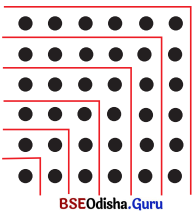
(ଗ) ଦୂଷିତ ଜଳ ପ୍ରବାହିତ ସ୍ଥାନରେ ଇଉକାଲିପଟାସ୍ ଗଛ ଲଗାଇବା ଆବଶ୍ୟକ ।
Solution:
ଇଉକାଲିପଟାସ୍ ଗଛ ଅତି ଶୀଘ୍ର ଦୂଷିତ ଜଳ ଶୋଷଣ କରିପାରେ ଏବଂ ଉଦ୍ବେଦନ ପ୍ରକ୍ରିୟାରେ ପରିଷ୍କାର ବାଷ୍ପ ବାୟୁମଣ୍ଡଳକୁ ଛାଡ଼ିଥାଏ । ଫଳରେ ପାଣି ଜମି ରହେ ନାହିଁ ଓ ପରିବେଶକୁ ପ୍ରଦୂଷିତ ହେବାରୁ ରକ୍ଷା କରେ ।

(ପ) ଦୂଷିତ ଜଳରେ ଉପଚାର ସମୟରେ ପ୍ରଥମେ ବାରସ୍କ୍ରିନ୍ ଦେଲ ଦିଆଯାଏ ।
Solution:
ଦୂଷିତ ଜଳରେ ଉପଚାର ସମୟରେ ଏହାକୁ ପ୍ରଥମେ ବାରସ୍କ୍ରିନ୍ ମଧ୍ୟଦେଇ ପ୍ରବାହିତ ହେବାକୁ ଦିଆଯାଏ । କାରଣ ଏହାଦ୍ଵାରା ସେଥ‌ିରେ ଥ‌ିବା କାଠି, କୁଟା, ପ୍ଲାଷ୍ଟିକ, ଜରି, ତୁଳା ଚିରାକନା ଇତ୍ୟାଦି କଠିନ ଭାସମାନ ଆବର୍ଜଣା ଛାଣି ହୋଇଯାଏ ।

(ଙ) ଖୋଲା ପଡ଼ିଆରେ ଝାଡ଼ା ପରିସ୍ରା କରିବା ମହାମାରୀର କାରଣ ।

  • ଖୋଲା ପଡ଼ିଆରେ ମଳତ୍ୟାଗ କଲେ ତାହା ବର୍ଷା ପାଣିରେ ଧୋଇହୋଇ ନଦୀ, ପୋଖରୀ ଓ କେନାଲ ପାଣିରେ ମିଶେ ।
  • ସେଥ‌ିରେ ନାନା ପ୍ରକାର ରୋଗଜୀବାଣୁ, କୃମି, କୃମିର ଅଣ୍ଡା, ନାନା ବିଷାକ୍ତ ପଦାର୍ଥ ଜଳକୁ ଦୂଷିତ କରେ ।
  • ଏହି ଦୂଷିତ ଜଳକୁ ପିଇଲେ ଏବଂ ସେଥ‌ିରେ ଗାଧୋଇଲେ ଆମେ ହଇଜା, ଆମ୍ବିକଜ୍ଵର, କାମଳ ଓ ଚର୍ମରୋଗରେ ଆକ୍ରାନ୍ତ ହୋଇଥାଉ । ଏହି ଦୂଷିତ ଜଳର ଉପଯୁକ୍ତ ନିଷ୍କାସନ ଓ ବିଶୋଧନ ନହେଲେ ଚାରିଆଡ଼େ ମହାମାରୀ

(କ) ପରିଷ୍କାର ପରିଚ୍ଛନ୍ନତା ଓ ରୋଗ ମଧ୍ୟରେ ସମ୍ପର୍କ କ’ଣ ?
Solution:

  • ଅସ୍ୱାସ୍ଥ୍ୟକର ପରିବେଶରେ ବସବାସ କରିବା ଓ ଦୂଷିତ ଜଳ ବ୍ୟବହାର କରିବା ସମସ୍ତ ରୋଗର ପ୍ରଧାନ କାରଣ ର୍ଥଟେ ।
  • ଏଣେତେଣେ ମଳତ୍ୟାଗ କଲେ ଯାହାଦ୍ୱାରା ବାୟୁ ଉପର ଓ ତଳ ମାଟିର ଜଳ ଦୂଷିତ ହୋଇଥାଏ । ଫଳରେ ଆମକୁ ହଇଜା, ଆମାଶୟ ଆଦି ଜଳବାହିତ ରୋଗ ସହଜରେ ବ୍ୟାପିଥାଏ ।
  • ଖାଲି ପାଦରେ ଝାଡ଼ାଗଲେ ମଳରେ ଥିବା କୃମି, ପାଦର ଚର୍ମଦେଇ ଶରୀର ଭିତରକୁ ପ୍ରବେଶ କରେ । ଏଣୁ ଚପଲ ପିନ୍ଧି ମଳତ୍ୟାଗ କରିବାକୁ ଯିବା ଆବଶ୍ୟକ । ମଳ ତ୍ୟାଗକରି ସାବୁନରେ ହାତ ଧୋଇବା ଓ ନିୟମିତ ଜଳ ପାନ କଲେ ରୋଗରୁ ରକ୍ଷା ମିଳେ ।

(ଖ) ଜଣେ ନାଗରିକ ହିସାବରେ ପରିମଳ ବ୍ୟବସ୍ଥା ପାଇଁ ତୁମର କର୍ତ୍ତବ୍ୟ କ’ଣ ?
Solution:

  • ଜଣେ ସଚେତନ ଓ ଉତ୍ତମ ନାଗରିକ ହିସାବରେ ପରିମଳ ବ୍ୟବସ୍ଥା ପାଇଁ ପୌର ପରିଷଦର କର୍ମକର୍ତ୍ତାଙ୍କୁ ଖବର ଦେଇ ନଳା, ରାସ୍ତା ଓ ସମ୍ପୂର୍ଣ୍ଣ ପରିବେଶକୁ ପରିଷ୍କାର ଓ ବିଶୋଧନ କରିବାପାଇଁ ଉପଯୁକ୍ତ ପଦକ୍ଷେପ ନେବା ଆବଶ୍ୟକ । କରାଇବା ଆବଶ୍ୟକ ।
  • ଗ୍ରାମ ପଞ୍ଚାୟତରେ ସରପଞ୍ଚଙ୍କୁ ଅନୁରୋଧ କରି ଖୋଲା ନଳାଗୁଡ଼ିକୁ ଘୋଡ଼ଣୀ ଦେଇ ବନ୍ଦ ମଶା, ମାଛି ଏବଂ ଅନ୍ୟାନ୍ୟ ଜୀବାଣୁମାନେ ସେଠାରେ ବଂଶବିସ୍ତାର କରନ୍ତି ।

(ଗ) ଦୂଷିତ ଜଳର ପୁନଃ ବ୍ୟବହାର ପାଇଁ ତୁମେ ଦିଦ୍ୟାଳୟରେ କ’ଣ କରିପାରିବ ?
Solution:
ଦୂଷିତ ଜଳର ପୁନଃ ବ୍ୟବହାର ପାଇଁ ବିଦ୍ୟାଳୟରେ ବ୍ୟବହୃତ ଜଳକୁ ନାଳି କାଟି ବଗିଚାରେ ଥ‌ିବା ଫଳ ଫୁଲ ଗଛ ମୂଳକୁ ଛାଡ଼ି ଦେଇପାରିବୁ କିମ୍ବା ଅନ୍ୟ ଆଡ଼କୁ ନଛାଡ଼ି ସୋକ୍‌ପିଟ୍‌ରେ ନିର୍ଦ୍ଦିଷ୍ଟ ଜାଗାକୁ ଛାଡ଼ିପାରିବୁ ନଚେତ୍ ଅଧିକ ଜଳକୁ ମୁଖ୍ୟ ନାଳ ସହ ସଂଯୋଗ କରି ଛାଡ଼ି ପାରିବୁ ।

(ଘ) ବିଦ୍ୟାଳୟ ପରିବେଶରେ ଶ୍ରେଣୀ କୋଠରିରୁ ବାହାରୁଥ‌ିବା ଆବର୍ଜନାର ନିଷ୍କାସନ ପାଇଁ କ’ଣ କରିବ ?
Solution:

  • ବିଦ୍ୟାଳୟ ପରିବେଶରେ ଶ୍ରେଣୀ କୋଠରିରୁ ବାହାରୁଥିବା କଠିନ ଆବର୍ଜନାର ନିଷ୍କାସନ ପାଇଁ ଦୁଇ ପ୍ରକାର ଡଷ୍ଟବିନ୍ ପ୍ରତି ଶ୍ରେଣୀରେ ରହିବା ଆବଶ୍ୟକ ।
  • ଗୋଟିଏ ସବୁଲ ରଲର ଯେଉଁଥିରେ ଲେବ ନିମ୍ନାକାରଣ ଯୋଗ୍ୟ ଆଦଲ୍ୟା ଆତ୍ ମାଟିରେ ମିଶିଯାଉଥିବା ଆବର୍ଜନା ରଖାଯିବ ଓ ଅନ୍ୟଟିରେ ଜୈବ-ନିମ୍ନକରଣ ଅଯୋଗ୍ୟ ଆବର୍ଜନା ରଖାଯିବ ।
  • ଏହି ସବୁଜରଙ୍ଗର ଆବର୍ଜନାକୁ ବଡ଼ ବଡ଼ ଗାତ ମଧ୍ଯରେ ପକାଇ ପଚନ ପଦ୍ଧତିରେ ଏହାକୁ କମ୍ପୋଷ୍ଟରେ ପରିଣତ କରାଯାଇପାରିବ ଏବଂ ଏହି ସାରକୁ ଫଲ ଫୁଲ ଗଛ୍ଠିରେ ଦେବତାର ବ୍ୟବହୃତ ହୋଇପାରିବ |
  • ଲାଲ ରଙ୍ଗର ଆବର୍ଜନାକୁ ଅର୍ଥାତ୍ କାଚ, ପ୍ଲାଷ୍ଟିକ, ପଲିଥ୍, ଟିଣ ଓ ଲୁହା ଆଦିକୁ ବିଭିନ୍ନ କଳକାରଖାନାକୁ ପଠାଳ ପୁନଚକୃଣ ପଦତିଦ୍ୱାରା ନୂତନ ଜିନିଷ ପୃସ୍ତୁତ କରାଯାଲପାରିବ |

(ଙ) ତୁମେ ବିଦ୍ୟାଳୟର ଶୌଚାଳୟ/ପାଇଖାନାର ସଦୁପଯୋଗ ପାଇଁ କ’ଣ ସବୁ କରିବ ?
Solution:

  • ବିଦ୍ୟାଳୟର ପାଇଖାନାର ସଦୁପଯୋଗ ପାଇଁ ଆମେ ପୃତି ବିଦ୍ୟାଳୟରେ ପୁଅ ଟିଥମାନକ ପାଳ ଥିଲଗା ପାଇଖାନା ଓ ପରିସ୍ରାଗାର ରଖୁବା ।
  • ଚପଲ ପିନ୍ଧି ପାଇଖାନାକୁ ଯିବାକୁ ପିଲାଙ୍କୁ ଶିଖାଇବା ।
  • ମଳତ୍ୟାଗ କରି ସାବୁନ୍‌ରେ ହାତଧୋଇବା ଅଭ୍ୟାସ କରାଇବା । ମଳତ୍ୟାଗ ପୂର୍ବରୁ ଓ ପରେ ପାଇଖାନାରେ ପାଣି ଢାଳିବାକୁ କହିବା ।
  • ନିୟମିତ ବ୍ୟବଧାନରେ ପାଇଖାନାକୁ ପରିଷ୍କାର କରିବା ଉଚିତ ।
  • ପାଇଖାନାରେ ବାଲ୍ଟି, ମଗ୍ , ସାବୁନ ଓ ପାଣି ରଖୁବା ନିହାତି ଆବଶ୍ୟକ । ପରିବେଶକୁ ସୁସ୍ଥ ଓ ପରିଷ୍କାର ରଖୁବା ଆମ ସମସ୍ତଙ୍କର କର୍ତ୍ତବ୍ୟ ।

BSE Odisha 7th Class Science Solutions Chapter 17 ଆବର୍ଜନାର ପରିଚାଳନା

Question 3.
ସଂକ୍ଷିପ୍ତ ଟିପ୍‌ପଣୀ ଲେଖ :
(i) ଦୂଷିତ ଜଳ :
Solution:
(a) ତରଳ ଆବର୍ଜନାର କାରକ ଗୁଡ଼ିକ ଜଳସହିତ ମିଶି ଏହାକୁ ଦୂଷିତ କରିଥାଏ ।
(b) ବିଭିନ୍ନ କାରଣରୁ ଜଳ ପ୍ରଦୂଷିତ ହୋଇଥାଏ; ଯଥା – ଶିଳ୍ପଜନିତ, କୃଷି ସମ୍ପର୍କିତ ଓ ଗୃହକାର୍ଯ୍ୟ ଜନିତ ଆଦି । ଏହି ଆବର୍ଜନା ମିଶା ଦୂଷିତ ଜଳକୁ ଅପଚୟିତ ଜଳ କୁହାଯାଏ ।
(c) ଅପଚୟିତ ଜଳରେ କେତେକ ଦୂଷିତ ପଦାର୍ଥ ଦ୍ରବୀଭୂତ ହୋଇଥାଏ ଓ କେତେକ ଭାସୁଥାଏ । ସେଥ୍ରେ କିଛି ହାନିକାରକ ଜୈବିକ ଓ ଅଜୈବିକ ପଦାର୍ଥ ରହିଥାଏ । ରୋଗ ସୃଷ୍ଟି କରୁଥିବା କେତେକ ବୀଜାଣୁ ଏବଂ ଅନ୍ୟାନ୍ୟ
(d) ଦୂଷିତ ଜଳ ପାନକଲେ ଏବଂ ସେଥ‌ିରେ ଗାଧୋଇଲେ ଆମେ ହଇଜା, ଆମାଶୟ, କାମଳ, ଟାଇଫଏଡ୍, କାଛୁକୁଣ୍ଡିଆ ଓ ଯାଦୁ ଆଦି ଜଳବାହିତ ରୋଗରେ ଆକ୍ରାନ୍ତ ହୋଇଥାଉ ।

(ii) ଜୈବିକ ଗ୍ୟାସ :
Solution:
(a) ମନୁଷ୍ୟ ଓ ଗାଈଗୋରୁଙ୍କ ମଳରୁ ବାହାରୁଥିବା ଗ୍ୟାସ୍‌ ଜୈବିକ ଗ୍ୟାସ୍ କୁହାଯାଏ ।
(b) ବାୟୋଗ୍ୟାସ୍ ପ୍ଲାଣ୍ଟରେ ବୀଜାଣୁମାନଙ୍କ ଦ୍ବାରା ମଳ ଅପଘଟିତ ହୋଇ ସେଥୁରୁ ଗ୍ୟାସ୍ ବାହାରେ । ଏହି ଗ୍ୟାସ୍ ରନ୍ଧନ କାର୍ଯ୍ୟରେ ବ୍ୟବହୃତ ହୁଏ ।
(c) ଏହି ଗ୍ୟାସ ପ୍ଲାଣ୍ଟରୁ ଗ୍ୟାସ୍‌ ସରିଲା ପରେ ଯାହା ଅବଶିଷ୍ଟ ରହିଥାଏ, ତାହା ଶସ୍ୟକ୍ଷେତ୍ର ପାଇଁ ଉତ୍ତମ ସାର ରୂପେ ବ୍ୟବହାର କରାଯାଏ ।
(d) ଏ ଦ୍ବିବିଧ ଲାଭ ପାଇଁ ଏବେ ଚୀନ ଓ ଭାରତର ଗାଁମାନଙ୍କରେ ଏହିପରି ଜୈବିକ ଗ୍ୟାସ୍ ପ୍ଲାଣ୍ଟ୍ ହଜାର ହଜାର ସଂଖ୍ୟାରେ ସ୍ଥାପନ କରିବା ପାଇଁ ଚେଷ୍ଟା ଚାଲିଛି ।

(iii) କଲାଭ ଉପଚାର :
Solution:
(a) ଜୈବିକ, ଭୌତିକ ଓ ରାସାୟନିକ ପ୍ରକ୍ରିୟାରେ ଦୂଷିତ ଜଳକୁ ବିଭିନ୍ନ ଉପଚାର କରାଯାଇ ସେଥ‌ିରେ ଥ‌ିବା ଅଦରକାରୀ ଭୌତିକ, ରାସାୟନିକ ଓ ଜୈବିକ ପଦାର୍ଥଗୁଡ଼ିକର ପରିବର୍ତ୍ତନ କରାଯାଇଥାଏ ।
(b) ପ୍ରଥମେ ଦୂଷିତ ଜଳ ବାର୍‌ସ୍କ୍ରିନ୍ ମଧ୍ୟଦେଇ ପ୍ରବାହିତ ହେବା ସମୟରେ ଏଥ‌ିରେ ଥ‌ିବା କାଠି, କୁଟା, ଜରି, ତୁଳା ଆଦି ଭାସମାନ ପଦାର୍ଥ ଛାଣି ହୋଇଯାଏ ।
(c) ଏହାପରେ ଜଳ ଆଉ ଏକ ଟ୍ୟାକୁ ଯାଏ, ଯେଉଁଠାରେ ଜଳରେ ଥିବା ବାଲି, ଗୋଡ଼ି ସବୁ ତଳେ ବସିଯାଏ । ଏହାପରେ ଜଳ ଗୋଟେ ବଡ଼ ଟାଙ୍କିରେ ରହେ ।
(d) ଏଠାରେ ବାଲି ଓ ଗୋଡ଼ି ତଳକୁ ରହିଯାଏ ଓ ଗୋଟେ କୋରଣା ଦ୍ଵାରା ବାହାରିଯାଏ । ଏଠାରେ ଚିକ୍କଣ ଅଠାଳିଆ ପଙ୍କୁଆ ପଦାର୍ଥକୁ ପଙ୍କ (Sludge) କୁହାଯାଏ ।
(e) ଜଳରେ ଭାସୁଥିବା କଠିନ ପଦାର୍ଥ, ଗାଡ଼ିରୁ ବାହାରି ଥ‌ିବା ତେଲ ଆଦିକୁ ଅଲଗା କରି ସ୍କିମର (Skimmer) ବାହାର କରିଦିଏ । ତେଲ ମିଶା କାଦୁଅକୁ ଅନ୍ୟ ଗୋଟିଏ ଟାଙ୍କିକୁ ନିଆଯାଏ । ସେଠାରେ ଥିବା ବିଜାଣୁମାନଙ୍କ ଦ୍ୱାରା ଏହା ଅପଘଟିତ କରାଯାଏ ।
(f) ଏଠାରେ ବାୟୁ ପ୍ରବେଶ କରାଯାଇ ବୀଜାଣୁଗୁଡ଼ିକୁ ବଢ଼ିବାରେ ସାହାଯ୍ୟ କରାଯାଏ । ଏମାନେ ଜଳରେ ରହିଥ‌ିବା ମଳ, ପଚାଫଳ, ସାବୁନ ଓ ଅନ୍ୟାନ୍ୟ ଅଦରକାରୀ ଜୈବିକ ପଦାର୍ଥଗୁଡ଼ିକୁ ଅପଘଟନ କରିଦିଅନ୍ତି ।
(g) କିଛି ସମୟ ପରେ ଜଳରେ ଭାସୁଥ‌ିବା ଅଣୁଜୀବଗୁଡ଼ିକ ତଳେ ବସି ଯାଆନ୍ତି । ଏହାପରେ ଉପରୁ ଜଳକୁ ବାହାର କରିଦିଆଯାଏ । ତଳେ ବସିଥିବା ମାଟି କାଦୁଅକୁ ସାର ରୂପେ ବ୍ୟବହାର କରାଯାଏ ଓ ପରିଷ୍କାର ଜଳକୁ କ୍ଲୋରିନ୍ କିମ୍ବା ଓଜୋନ୍‌ ଦ୍ବାରା ବ୍ୟବହାର ଯୋଗ୍ୟ କରାଯାଏ ।

(iv) ଖୋଲାନାଳର ଅପକାରିତା :
Solution:

  • ବର୍ଷାଦିନେ ଖୋଲାଥିବା ନଳାରେ ଅର୍ଧ ପାଣି ପଶିବା ଦ୍ବାରା ନଳାର ଆବର୍ଜନା ସବୁ ରାସ୍ତା ଉପରେ ଜମା ହୋଇ ଏକ ଅସ୍ବାସ୍ଥ୍ୟକର ପରିବେଶ ସୃଷ୍ଟି କରେ ।
  • ରାସ୍ତାରେ ଚାଲିବା କଷ୍ଟକର ହୋଇପଡ଼େ । କାରଣ ମଶା, ମାଛି ଏବଂ ଅନ୍ୟାନ୍ୟ ଜୀବାଣୁ ଏଠାରେ ବଂଶବିସ୍ତାର

Question 4.
ଅପଚୟିତ ଜଳରେ ଥ‌ିବା ବିଭିନ୍ନ ଉପାଦାନରୁ ଦୁଇଟି ଲେଖାଏଁ ଉଦାହରଣ ଲେଖ ।
BSE Odisha 7th Class Science Solutions Chapter 17 Img 1

Question 5.
ପଲିଥନ୍ ଓ ପ୍ଲାଷ୍ଟିକ ନିର୍ମିତ ପଦାର୍ଥର ବ୍ୟବହାର ପରେ ଏଣେତେଣେ ନ ଫିଙ୍ଗି ପୋଡ଼ିବା ଦ୍ବାରା ପରିବେଶର କ’ଣ କ୍ଷତି ହୁଏ ?
Solution:

  • ପଲିଥନ୍ ଓ ପ୍ଲାଷ୍ଟିକ ନିର୍ମିତ ପଦାର୍ଥଗୁଡ଼ିକୁ ଏଣେତେଣେ ଫିଙ୍ଗିଲେ ଏହା ଅଣୁ ଜୀବମାନଙ୍କ ଦ୍ବାରା ଅପଘଟିତ ହୋଇନଥାଏ କିମ୍ବା ମାଟିରେ ମିଶିନଥାଏ ।
  • ଏଗୁଡ଼ିକ ପୋଡ଼ିଲେ ସେଥ‌ିରୁ ବିଷାକ୍ତ ବାଷ୍ପ ଓ ଧୂଆଁ ନିର୍ଗତ ହୋଇ ବାୟୁମଣ୍ଡଳକୁ ଦୂଷିତ କରେ ।

Question 6.
ଆଜିକାଲି ଦେଖାଯାଉଥ‌ିବା ‘‘ରାସ୍ତାରୋକା’’ବେଳେ ରାସ୍ତା ମଝିରେ ଟାଏର୍ ଜଳାଯାଉଛି । ଏହାଦ୍ୱାରା ବାୟୁମଣ୍ଡଳ ଉପରେ କି ପ୍ରଭାବ ପଡ଼େ ?
Solution:
‘ରାସ୍ତାରୋକା’ ବେଳେ ରାସ୍ତା ମଝିରେ ଟାଏର୍ ଜଳାଇଲେ ବହୁ ପରିମାଣର ଅଙ୍ଗାରକାମ୍ଳ ଗ୍ୟାସ ବାୟୁ ମଣ୍ଡଳରେ ମିଶେ ଓ ଦୂର୍ଗନ୍ଧ ବାହାରି ପରିବେଶ ପ୍ରଦୂଷିତ ହୋଇଥାଏ ।

BSE Odisha 7th Class Science Solutions Chapter 17 ଆବର୍ଜନାର ପରିଚାଳନା

Question 7.
ପୁରୁଣା ଓ ବ୍ୟବହାର ହୋଇସାରିଥିବା ଟାଏର୍‌ଗୁଡ଼ିକୁ ସାଧାରଣତଃ ଆମେ ଅବ୍ୟବହୃତ ଜାଗାରେ ଫୋପାଡ଼ି ଦେଇଥାଉ । ଏଥୁଗୁଁ ଯେଉଁ ସ୍ଵାସ୍ଥ୍ୟଗତ ସମସ୍ୟା ସୃଷ୍ଟି ହୁଏ ଲେଖ ।
Solution:

  • ଟାଏରମ୍ମତିକ୍ ସାଧାରଣଙ କେବ-ନିମ୍ନାକରଣ ଅବଲାନା | ଏଣ୍ଡ ଅଶ୍ମଜୀବମାନଜ ଦାରା ଅପଣଟିତହୁଏ ନାହିଁ କି ମାଟିରେ ମିଶେ ନାହିଁ । ଏଣୁ ସହର ଓ ଗ୍ରାମାଞ୍ଚଳର ଆବର୍ଜନା ଦୂରୀକରଣ ଏକ ଗୁରୁତ୍ଵପୂର୍ଣ୍ଣ ସମସ୍ୟା ।

Question 8.
ଅଣୁଜୀବମାନେ ଶୁଖୁଲା ପତ୍ର ସହିତ ପ୍ରତିକ୍ରିୟା କରି କ’ଣ ସୃଷ୍ଟି କରନ୍ତି ?
(କ) ବାଲି (ଖ) ଛତୁ (ଗ) ହ୍ୟୁମସ୍ (ଘ) କାଠ
Solution:
ହ୍ୟୁମସ୍

Question 9.
କଟକ ଓ ଭୁବନେଶ୍ଵର ଭଳି ବଡ଼ ବଡ଼ ସହରରୁ ନିର୍ଗତ ବହୁ ପରିମାଣରେ ବାହିତ ମଳକୁ ସଦୁପଯୋଗ କରିବା ପାଇଁ ଦୁଇଟି ଉପାୟ ଲେଖ ।
Solution:

  • କଟକର CDAରୁ ବାହିତ ମଳର ସଦୁପଯୋଗ କରାଯାଇ ସେଥୁରୁ କେବଳ ସାର ସଂଗ୍ରହ କରାଯାଉଛି, ମାତ୍ର ଗୋଟିଏ ବାୟୋଗ୍ୟାସ ପ୍ଲାଣ୍ଟ କରାଗଲେ ଏଡ୍ ସହ ଜାଲେଣି ଗ୍ୟାସ ଓ ବିଦ୍ୟୁତ୍ ଶକ୍ତି ମିଳିପାରିବ ।
  • ଭୁବନେଶ୍ୱରରେ ବାହିତ ମଳକୁ ନେଇ ଗୋଟିଏ City Sewage Disposal Plant ଅର୍ଥାତ୍ ସହରର ଦୂଷିତ ଜଳ ଉପଚାର ପ୍ଳାଣ୍ଟ କରାଯାଇପାରିବ । ଫଳରେ ସେଥୁରୁ ସାର, ବିଦ୍ୟୁତ୍, ଜାଳେଣୀ ଗ୍ୟାସ୍ ଓ ପାନୀୟ ଜଳ ପରିମାଣରେ ମିଳିପାରିବ ।

ବିପଯୁବସ୍ତୁ ସପୂଜାପ ପୂଚନା ଓ ବିଶେଷଣ :

→ ଉପକ୍ରମ :

  • ମନୁଷ୍ୟର ଅଦରକାରୀ ବା ପରିତ୍ୟକ୍ତ ବସ୍ତୁ ସମୂହକୁ ତ୍ୟଜ୍ୟ ବସ୍ତୁ ବା ଆବର୍ଜନା କୁହାଯାଏ ।
  • ଆବର୍ଜନାଗୁଡ଼ିକର ଅବସ୍ଥାକୁ ନେଇ ଏହା କଠିନ, ତରଳ ଓ ଗ୍ୟାସୀୟ ହୋଇଥାଏ ।
  • ସହରର ବିଭିନ୍ନ ସ୍ଥାନରେ ଗୃହ ଆବର୍ଜନା ସବୁ ଜମା କରାଯାଏ । ପନିପରିବା ଚୋପା, ଫଳ, ମଞ୍ଜି, ରନ୍ଧନଶାଳାର ଆବର୍ଜନା, ଗଛ ପତ୍ର ଓ ଘାସ, ଭଙ୍ଗାରୁଜା ଟିଣ, ଅଦରକାରୀ କାଚ ବୋତଲ, ପ୍ଲାଷ୍ଟିକ ଓ ପଲିଥୁନ୍ ଆଦି କଠିନ ଆବର୍ଜନା ଅଟନ୍ତି ।
  • ଆଉ ଏକ ପ୍ରକାରର ଆବର୍ଜନା ହେଲା ନାଳ ଓ ନର୍ଦ୍ଦମା ପାଣି | ଶିଳ୍ପାଞ୍ଚଳଗୁଡ଼ିକରୁ ନିର୍ଗତ ତରଳ ତ୍ୟଜ୍ୟ ସବୁ
  • ଗାଡ଼ି ମଟର, କଳକାରଖାନା ଆଦିରୁ ଉତ୍ପନ୍ନ ଆବର୍ଜନା, ଗ୍ୟାସୀୟ ଆବର୍ଜନା ଅଟେ । ଜାଳେଣିରୁ ମଧ୍ଯ ଗ୍ୟାସୀୟ ଆବର୍ଜନା ବାୟୁମଣ୍ଡଳରେ ମିଶିଥାଏ ।
  • ତରଳ ଓ ଗ୍ୟାସୀୟ ଆବର୍ଜନା ଗୁଡ଼ିକ ରାସାୟନିକ ଆବର୍ଜନା ହୋଇଥିବାରୁ ଅତ୍ୟନ୍ତ ବିଷାକ୍ତ ଓ କ୍ଷତିକାରକ ।
  • ନାଳ, ନର୍ଦ୍ଦମାର ତରଳ ଆବର୍ଜନାରେ ପ୍ରଧାନ ଅଂଶ ହେଉଛି ଜଳ ଏବଂ ଏଥିରେ ଖଦା ଅଂଶ ଅତି କମ୍ । ଜଳକୁ ଖଦାରୁ ପୃଥକ କରି କ୍ଲୋରିନ ଦ୍ଵାରା ବିଶୋଧନ କରି ନଦୀ, ନାଳ, ସମୁଦ୍ର ବା ଅନ୍ୟାନ୍ୟ ଜଳଧାର ମାନଙ୍କରେ ଛାଡ଼ିଦିଆ ଯାଇପାରେ ।

→ ବିଶୁଦ୍ଧ ଜଳ :

  • ଆପେ କେବଳ ବିଶ୍ଵଦ୍ଧ କାଳକୁ ବୃ ପାନାମ୍ ଉପେ ବ୍ୟବହାର କରିଥାଇ |
  • ଦୂଷିତ ଜଳକୁ ପାନୀୟ ରୂପେ ବ୍ୟବହାର କରି ଲୋକମାନେ ଜଳ ବାହିତ ରୋଗ ଯଥା – କଲେରା, ଟାଇଫଏଡ଼ ଓ କାମଳ ଆଦି ରୋଗଦ୍ୱାରା ଆକ୍ରାନ୍ତ ହୋଇଥାଆନ୍ତି ।
    • ବିଶୁଦ୍ଧ ଜଳର ଆବଶ୍ୟକତାକୁ ଅନୁଭବ କରାଇ ଜନସଚେତନତା ଜାଗ୍ରତ କରିବା ପାଇଁ 2005 ମସିହାରୁ ମାର୍ଚ୍ଚ 22 ତାରିଖକୁ ଆମେ ‘ବିଶ୍ଵ ଜଳ ବିବସ’’ ରୂପେ ପାଳନ କରି ଆସୁଛୁ ।
  • ଜାତିସଂଘର ଘୋଷଣା ଅନୁଯାୟୀ ଦଶନ୍ଧି 2005 – 2015 କୁ ଆନ୍ତର୍ଜାତିକ ସ୍ତରରେ ‘‘ଜୀବନ ପାଇଁ ଜଳ’’ ଉପରେ କାର୍ଯ୍ୟାନୁଷ୍ଠାନ ଗ୍ରହଣ କରି ସମସ୍ତଙ୍କୁ ବିଶୁଦ୍ଧପାନୀୟ ଜଳ ଯୋଗାଇବାର ଏହି ପ୍ରକଳ୍ପର ଉଦ୍ଦେଶ୍ୟ ।
  • ତରଳ ଆବର୍ଜନାର ବିଭିନ୍ନ କାରକଗୁଡ଼ିକ ଜଳ ସହିତ ମିଶି ଜଳକୁ ଦୂଷିତ କରିଥାଏ । ବିଭିନ୍ନ କାରଣରୁ ଜଳ ପ୍ରଦୂଷିତ ହୋଇଥାଏ; ଯଥା – ଶିଳ୍ପଜନିତ, କୃଷି ସମ୍ପର୍କିତ, ଗୃହକାର୍ଯ୍ୟ ଜନିତ ଆଦି ।
  • ଅପଚଯିତ କାଳର ସମ୍ୟକୟକୃପେ ସେଥିରେ ମିଶିଥିବା ସମୟ ଆନକାନାର ଉପଚାର କୁହାଯାଏ ।

→ ଆବର୍ଜନା ମିଶ୍ରିତ ଜଳ :

  • ଆବର୍ଜନା ମିଶ୍ରିତ ଜଳକୁ ଅପଚୟିତ ଜଳ କୁହାଯାଏ । ପାଇଖାନା ଓ ଗାଧୁଆ ଘରୁ ବାହାରୁଥିବା ମଇଳା ଜଳ, ନାଳରୁ ବାହାରୁଥ‌ିବା ଜଳ, ବର୍ଷାଦ୍ବାରା ଧୋଇହୋଇ ଯାଉଥିବା ଜଳ ଆଦି ଅପଚୟିତ ଜଳ ।
  • ଅପଚୟିତ ଜଳରେ କେତେକ ଦୂଷିତ ପଦାର୍ଥ ଭାସମାନ ଅବସ୍ଥାରେ ରହିଥାଏ ଓ ଆଉ କେତେକ ଦ୍ରବୀଭୂତ ଅବସ୍ଥାରେ ରହିଥାଏ । ସେଥ‌ିରେ କେତେକ ହାନିକାରକ ଜୈବ ଓ ଅଜୈବ ପଦାର୍ଥ ଏବଂ ରୋଗ ସୃଷ୍ଟିକାରୀ ଜୀବାଣୁ ଓ ଅଣୁଜୀବ ରହିଥାନ୍ତି ।
  • ଜଳ ନିଷ୍କାସନର ସୁବ୍ୟବସ୍ଥା କରିବା ଉଚିତ ଓ ବର୍ଷା ଜଳକୁ ନଷ୍ଟ ହେବାକୁ ନଦେଇ ତା’କୁ ସଂଚୟ କରିବା ଉଚିତ୍ ।
  • ଅପଚୟିତ ଜଳରେ ଥିବା କେତେକ ପଦାର୍ଥର ଉଦାହରଣ ତଳେ ଦିଆଯାଇଛି ।

ଜୈବିକ ପଦାର୍ଥ – ମନୁଷ୍ୟର ମଳ, ପଶୁପକ୍ଷୀଙ୍କ ମଇଳା, ଅପରିଷ୍କାର ତୈଳ ଜାତୀୟ ପଦାର୍ଥ, ପଲିଥନ୍,
ଅଜୈବିକ ପଦାର୍ଥ – ମାଟି, ଗୋଡ଼ି, ପାଉଁଶ, ଭଙ୍ଗାକାଚ ଇତ୍ୟାଦି ।
ପୋଷକ – ନାଇଟ୍ରୋଜେନ୍, ଫସ୍‌ଫରସ୍, ପୋଟାସିୟମ୍ ଇତ୍ୟାଦି ଧାତୁର ଯୌଗିକରୁ ପ୍ରସ୍ତୁତ ସାର ।
ବୀଜାଣୁ – ହଇଜା ଓ ଆନ୍ତ୍ରିକ ଜ୍ଵର ସୃଷ୍ଟି କରୁଥିବା ବୀଜାଣୁ ।

→ ଦୂଷିତ ଜଳର ଉପଚାର :

  • ଜଣେ ସଚେତନ ଓ ଉତ୍ତମ ନାଗରିକ ହିସାବରେ, ତୁମେ ପୌରପରିଷଦର କର୍ମକର୍ତ୍ତା ତଥା ଗ୍ରାମ ସରପଞ୍ଚଙ୍କ ସହାୟତାରେ ପରିବେଶକୁ ପରିଷ୍କାର ଓ ବିଶୋଧନ କରିବାରେ ପଦକ୍ଷେପମାନ ନେବା ଆବଶ୍ୟକ ।
  • ନାଳ ନର୍ଦ୍ଦମା ପାଖରେ ଇଉକାଲିପଟାସ୍ ଗଛ ଲଗାଇଲେ ତାହା ଅପରିଷ୍କାର ଜଳ ଅଧ୍ବକ ଶୋଷଣ କରି ପରିଷ୍କାର ବାଷ୍ପ ବାୟୁମଣ୍ଡଳକୁ ଛାଡ଼ିଥାଏ ।

→ ଆବର୍ଜନା ନିଷ୍କାସନର ଉତ୍ତମ ମାର୍ଗ :

  • ଅଳ୍ପ ଆବର୍ଜନା ସୃଷ୍ଟି କରିବା ଓ ଦ୍ୱିତୀୟରେ ଆବର୍ଜନାର ଉପଯୁକ୍ତ ବିନିଯୋଗକରି ସେଥୁରୁ ଉତ୍ପନ୍ନ ଉପାଦାନଗୁଡ଼ିକୁ କାମରେ ଲଗାଇବା ।
  • ଅଦରକାରୀ ତୈଳଜାତୀୟ ପଦାର୍ଥ ମାଟିର ଜଳ ଶୋଷଣରେ ବାଧା ସୃଷ୍ଟି କରେ ଓ ମୋବିଲ, ପୋକମରା ଔଷଧ, ବିଭିନ୍ନ ରଙ୍ଗ, ଆଦି ନାଳରେ ପକାଇଲେ ଏହା ଉପକାରୀ ଅଣୁଜୀବଙ୍କୁ ମାରି ଅଶେଷ କ୍ଷତିସାଧନ କରିଥାଏ ।
  • ପଲିଥନ୍, ଛିଣ୍ଡାକନା, ତୁଳା, ଭଙ୍ଗା କଣ୍ଢେଇ ଆଦି ନାଳରେ ପକାଇଲେ ନାଳ ବନ୍ଦ ହୋଇ ଜଳ ନିଷ୍କାନରେ ବାଧାଦିଏ ।
  • ସହଜରେ ମାଟିରେ ମିଶିଯାଉଥ‌ିବା ଜୈବ ନିମ୍ବୀକରଣ ଯୋଗ୍ୟ ଆବର୍ଜନା ପାଇଁ ସବୁଜ ରଙ୍ଗର ଓ ଜୈବ – ନିମ୍ନକରଣ ଅଯୋଗ୍ୟ ଆବର୍ଜନା ପାଇଁ ଲାଲରଙ୍ଗର ଡଷ୍ଟବିନ୍ ଘରେ ଓ ବିଦ୍ୟାଳୟରେ ବ୍ୟବହାର କରିବା ଉଚିତ ।

→ ପରିମଳ ବ୍ୟବସ୍ଥାର :

  • ପରିମଳ ବ୍ୟବସ୍ଥାର ଉନ୍ନତି ପାଇଁ ସମସ୍ତେ ସ୍ବଚ୍ଛ ପାଇଖାନା ବ୍ୟବହାର କରିବା ଉଚିତ ।
  • ଖୋଲାଜାଗାରେ ମଳତ୍ୟାଗ କରିବା ଉଚିତ ନୁହେଁ, ଯଦି ମଳତ୍ୟାଗ ହୁଏ, ତେବେ ଏହାକୁ ବାଲି କିମ୍ବା ମାଟି ଦ୍ଵାରା ଘୋଡ଼ାଇ ଦେବା ଉଚିତ ।
  • ଆଜିକାଲି ଜଳମୁଦ ପାଇଖାନାରୁ ନିଷ୍କାସିତ ଜଳକୁ ପାଇପ୍ ସାହାଯ୍ୟରେ ବାୟୋଗ୍ୟାସ ପ୍ଲାଣ୍ଟ ସହ ସଂଯୋଗ କରି ସେଥ‌ିରୁ ବିଦ୍ୟୁତ୍ ଶକ୍ତି ଓ ତାପଶକ୍ତି ଉତ୍ପନ୍ନ କରାଯାଉଛି ।

→ ଯେଉଁଠାରେ ଭୂତଳ ନିଷ୍କାସନର ସୁବିଧା ନାହିଁ :

  • ପର୍ବପର୍ବାଣି, ମେଳା ଓ ମହୋତ୍ସବ ପାଳନ ବେଳେ, ହାଟ ବଜାର, ରେଳଷ୍ଟେସନ୍ , ଡାକ୍ତରଖାନା ଓ ବିମାନ ବନ୍ଦରରେ ଅନେକ ଲୋକ ପ୍ରତିଦିନ ଯାତାୟତ କରନ୍ତି । ଏଣୁ ଏଠାରେ ସୃଷ୍ଟି ହେଉଥ‌ିବା ଆବର୍ଜନାର ଉପଯୁକ୍ତ ନିଷ୍କାସନ ଓ ବିଶୋଧନ ଏକାନ୍ତ ଆବଶ୍ୟକ, ନଚେତ୍ ମହାମାରୀ ରୋଗ ବ୍ୟାପିବାର ସମ୍ଭାବନ ଅଛି ।
  • ପରିମଳ ବ୍ୟବସ୍ଥା ପ୍ରତି ନିଜେ ସଚେତନ ରହିବା ସହ ଅନ୍ୟମାନଙ୍କୁ ସଚେତନ କରିବା ଆମର କର୍ତ୍ତବ୍ୟ । କାରଣ ଆମ ପରିବେଶକୁ ସୁସ୍ଥ ଓ ପରିଷ୍କାର ରଖୁବା ଆମ ସମସ୍ତଙ୍କର କର୍ତ୍ତବ୍ୟ । ମିଳିତ ଉଦ୍ୟମରେ ପରିବେଶ ପ୍ରଦୂଷଣ ମୁକ୍ତ ହୋଇ ପାରିବ ।

→ ପରିଷ୍କାର ପରିଚ୍ଛନତା ଓ ରୋଗ :

  • ଅସ୍ବାସ୍ଥ୍ୟକର ପରିବେଶରେ ବାସ କରିବା ଓ ଦୂଷିତ ଜଳ ପାନ କରିବା ସମସ୍ତ ରୋଗର ପ୍ରଧାନ କାରଣ ।
  • ଏଣେତେଣେ ମଳତ୍ୟାଗ କରିବା ଫଳରେ ବାୟୁ, ମାଟି ଉପର ଓ ମାଟି ତଳ ଜଳ ଦୂଷିତ ହୋଇଥାଏ ।
  • ଖୋଲା ପଡ଼ିଆରେ ଝାଡ଼ା ନ ଯାଇ ବରପାଲି ବା ସେପ୍‌ଟିକ୍ ଟ୍ୟାକ୍ ବ୍ୟବହାର କରିବା ଆବଶ୍ୟକ ।
  • ଖାଲି ପାଦରେ ଝାଡ଼ାଗଲେ ମଳରେ ଥିବା କୃମି ପାଦର ଚର୍ମଦେଇ ଶରୀର ଭିତରକୁ ପ୍ରବେଶ କରନ୍ତି ।
    • ଦୂଷିତ ଜଳ ପାନ କଲେ ଏବଂ ସେଥ‌ିରେ ଗାଧୋଇଲେ ହଇଜା, କାମଳ,
    • ଟାଇଫଏଡ଼, କାଛୁକୁଣ୍ଡିଆ ଓ ଯାଦୁ ଆଦି ରୋଗ ହୋଇଥାଏ ।

→ ବ୍ୟବହୃତ ଜଳର ନିଷ୍କାସନ ଓ ପୁନଃ ବ୍ୟବହାର :

  • ବ୍ୟବହୃତ ଜଳକୁ ଗୋଟିଏ ଜାଗାରେ ଜମିବାକୁ ନ ଦେଇ ଏହାକୁ ସୋପିଟ ମଧ୍ୟକୁ ବା ବଗିଚାର ଗଛ ମୂଳକୁ ଛାଡ଼ିଦେବା ଉଚିତ ।
  • ସହରାଞ୍ଚଳରେ ବ୍ୟବହୃତ ଜଳକୁ ଏଣେତେଣେ ନ ଛାଡ଼ି ମୁଖ୍ୟନାଳକୁ ଛାଡ଼ିବା ଉଚିତ ।
  • କୂଅ ଓ ନଳକୂଅ ପାଖରେ ସିମେଣ୍ଟ ଚଟାଣ କରି ଉଚ୍ଚା କଲେ ବ୍ୟବହୃତ ପାଣି ଏହା ମଧ୍ୟକୁ ନଯାଇ ଜଳକୁ ଦୂଷିତ କରି ନ ଥାଏ ।
  • ନାଳ ନର୍ଦ୍ଦମାର ଆବର୍ଜନାକୁ ସଂଗ୍ରହ କରି ବିଭିନ୍ନ ପ୍ରଣାଳୀରେ ସେଥୁରୁ ଜଳ ଓ ଖଦା ଅଂଶକୁ ପୃଥକ କରି ଓ ଜଳକୁ ବିଶୋଧନ କରି ଚାଷପାଇଁ ଏହି ଜଳକୁ ବିନିଯୋଗ କରାଇପାରିବ । ଏପରିକି ମାଛ ଚାଷ ପାଇଁ ମଧ୍ୟ ଲାଭଜନକ ଭାବରେ ଏହାର ବ୍ୟବହାର କରାଯାଇପାରିବ ।

→ ଅପଚୟିତ ଜଳର ପୁନଃ ଚକ୍ରଣ ଏବଂ ପୁନଃ ବିନିଯୋଗ :

  • ପ୍ରତ୍ୟେକ ଆବର୍ଜନାର ପୁନଃଚକ୍ରଣ କରି ବ୍ୟବହାର ଯୋଗ୍ୟ କରାଯାଇ ପାରିବ । କଠିନ ଆବର୍ଜନାକୁ ସହଜରେ ପୁନଃଚକ୍ରଣ କରି ବ୍ୟବହାର କରାଯାଏ; ଯଥା –ଭଙ୍ଗା ଟିଣ, କାଚ, ପ୍ଲାଷ୍ଟିକ ଆଦି ଆବର୍ଜନାକୁ ଆବଶ୍ୟକୀୟ କାରଖାନାକୁ ପଠାଯାଇ ଏହାକୁ ତରଳାଇ ସେଥୁରୁ ନୂତନ ଜିନିଷ ପ୍ରସ୍ତୁତ କରାଯାଇଥାଏ ।
  • ଅପଚୟିତ ଜଳକୁ ସିଧାସଳଖ ନଦୀ ବା ସମୁଦ୍ରକୁ ଛାଡ଼ିବା ଫଳରେ ଅଶୋଧ ଜଳ ଓ ଏଥ‌ିରେ ଥିବା ମାରାତ୍ମକ ପଦାର୍ଥମାନ ଜଳଜ ଜୀବମାନଙ୍କର ଅଶେଷ କ୍ଷତି ଘଟାଇଥାଏ ।
  • ଆଜିକାଲି ଅପଚୟିତ ଜଳକୁ ବିଭିନ୍ନ ପ୍ରକ୍ରିୟାଦ୍ୱାରା ପୁନଃ ବ୍ୟବହାର ଉପଯୋଗୀ କରାଯାଇ ପାରୁଛି । ଉଦାହରଣ ସ୍ଵରୂପ, ଭୁବନେଶ୍ୱର ବିଡ଼ିଏ ନିକୋ ପାର୍କକୁ ବିଭିନ୍ନ ନଳାରେ ଆସୁଥ‌ିବା ଆବର୍ଜନା ପୂର୍ଣ୍ଣ ନର୍ଦ୍ଦମା ଜଳକୁ ପରିଷ୍କାର କରି ଏକ କୃତ୍ରିମ ହ୍ରଦ କରାଯାଇଛି । ଏହି ହ୍ରଦରେ ନୌକା ବିହାର ଓ ଅନ୍ୟାନ୍ୟ ଜଳକ୍ରୀଡ଼ା କରାଯାଇ ପାରୁଛି ।
  • ଭୌତିକ, ରାସାୟନିକ ଓ ଜୈବିକ ପ୍ରକ୍ରିୟାରେ ଦୂଷିତ ଜଳର ଉପଚାର କରାଯାଇ ଏହାକୁ ପରିଷ୍କାର ଓ ବ୍ୟବହାର
  • ଏଥୁରୁ ଶେଷରେ ସାର ମିଳିବା ସହ ଜାଳେଣି ଗ୍ୟାସ୍ ମଧ୍ୟ ମିଳେ ଏବଂ ପରିଷ୍କାର ବିଶୋଧ ଜଳକୁ ପାନୀୟ ଜଳରୂପେ ବ୍ୟବହାର କରାଯାଏ ।

→ ଆସ, ଜାଣିବା :

  • ଘରୁ, କଳକାରଖାନାରୁ, ଚାଷଜମିରୁ ନିର୍ଗତ ଓ ମନୁଷ୍ୟର ବିଭିନ୍ନ ବ୍ୟବହାରରୁ ନିର୍ଗତ ବା ନିଷ୍କାସିତ ଜଳକୁ ଆମେ ପାରୁଛି ।
  • ଅପଚୟିତ ଏକ ପ୍ରକାର ତରଳ ଦୂଷିତ ପଦାର୍ଥ ଯାହା, ମାଟି ଜଳ ଏବଂ ଜମିକୁ ପ୍ରଦୂଷିତ କରିଥାଏ ।
  • ଦୂଷିତ ଜଳକୁ ବିଭିନ୍ନ ପ୍ରକାର ପ୍ରକ୍ରିୟାରେ ଉପଚାର କରାଯାଏ ।
  • ଯେଉଁଠାରେ ଭୂତଳ ନିଷ୍କାସନର ସୁବିଧା ନାହିଁ ସେଠାରେ କମ୍ ଖର୍ଚ୍ଚରେ ସୁଲଭ ପରିମଳ ବ୍ୟବସ୍ଥା କରାଯାଇଥାଏ ।
  • ଦୂଷିତ ଜଳର ଉପଚାର ଫଳରେ ପଟୁମାଟି ଓ ଜୈବିକ ଗ୍ୟାସ୍ ଉପଲବ୍ଧ ହୋଇଥାଏ ।
  • ଖୋଲା ନାଳରେ ମାଛି, ମଶା ଏବଂ ବିଭିନ୍ନ ଅଣୁଜୀବ ସୃଷ୍ଟି ହୋଇଥାଆନ୍ତି । ସେଗୁଡ଼ିକ ବିଭିନ୍ନ ରୋଗର କାରଣ ।
  • ଖୋଲା ପଡ଼ିଆରେ ଝାଡ଼ା ନଯାଇ, ପକ୍କା ପାଇଖାନା ବା ବରପାଲି ପାଇଖାନା ବ୍ୟବହାର କରିବା ଆବଶ୍ୟକ ।

CHSE Odisha Class 12 Economics Chapter 7 Short Answer Questions in Odia Medium

Odisha State Board CHSE Odisha Class 12 Economics Solutions Chapter 7 ପରିବ୍ୟୟ Short Answer Questions.

CHSE Odisha 12th Class Economics Chapter 7 Short Answer Questions in Odia Medium

ସଂକ୍ଷିପ୍ତ ଉତ୍ତରମୂଳକ ପ୍ରଶ୍ନୋତ୍ତର
A ନିମ୍ନଲିଖତ ପ୍ରଶ୍ନଗୁଡ଼ିକର ଦୁଇଟି/ ତିନୋଟି ବାକ୍ୟ ମଧ୍ଯରେ ଉତ୍ତର ଦିଅ ।

1. ବ୍ୟକ୍ତିଗତ ପରିବ୍ୟୟ କହିଲେ କ’ଣ ବୁଝ ?
Answer:
ଉତ୍ପାଦନକାରୀ ସଂସ୍ଥା କୌଣସି ଏକ ନିର୍ଦ୍ଦିଷ୍ଟ ଦ୍ରବ୍ୟ ଉତ୍ପାଦନ କଲାବେଳେ ଯେଉଁ ବ୍ୟୟ ଭାର ବହନ କରିଥାଆନ୍ତି, ତାହାକୁ ବ୍ୟକ୍ତିଗତ ପରିବ୍ୟୟ ବୋଲି କୁହାଯାଏ । ସୁତରାଂ, ଏକ ନିର୍ଦ୍ଦିଷ୍ଟ ପରିମାଣର ଦ୍ରବ୍ୟ ଉତ୍ପାଦନ ନିମନ୍ତେ ଉତ୍ପାଦନକାରୀ ଯେଉଁ ପରିବ୍ୟୟ ନିଜେ ବହନ କରେ, ତାହାକୁ ବ୍ୟକ୍ତିଗତ ପରିବ୍ୟୟ ଆଖ୍ୟା ଦିଆଯାଏ । ଚୌଦ୍ବାରସ୍ଥିତ ଚାର୍ଜକ୍ରୋମ୍ କାରଖାନାର ବ୍ୟୟିତ ଖର୍ଚ୍ଚ କେବଳ ତା’ର ମାଲିକ ବହନ କରୁଥିବାରୁ ଏହା ବ୍ୟକ୍ତିଗତ ପରିବ୍ୟୟର ଏକ ଉଦାହରଣ ଅଟେ ।

2. ସାମାଜିକ ପରିବ୍ୟୟ କ’ଣ ?
Answer:
ଉତ୍ପାଦନକାରୀ ସଂସ୍ଥାମାନଙ୍କଦ୍ୱାରା ନିର୍ଦ୍ଦିଷ୍ଟ ଦ୍ରବ୍ୟ ଉତ୍ପାଦନ ନିମନ୍ତେ ସମାଜ ଯେଉଁ ଭାର ବହନ କରେ, ତାହାକୁ ସାମାଜିକ ପରିବ୍ୟୟ ବୋଲି କୁହାଯାଏ । କୌଣସି ଦ୍ରବ୍ୟ ଉତ୍ପାଦନ କଲାବେଳେ ଏପରିକି କାରଖାନା ସହ ଆଦୌ ସମ୍ପୃକ୍ତ ନ ଥ‌ିବା ସମାଜର ବିଭିନ୍ନ ଶ୍ରେଣୀର ବ୍ୟକ୍ତିବିଶେଷ ନାନା ଅସୁବିଧାର ସମ୍ମୁଖୀନ ହୁଅନ୍ତି । ପରିବେଶ ପ୍ରଦୂଷଣଜନିତ ଅସୁବିଧା ଏବଂ ତହିଁରୁ ମୁକ୍ତି ପାଇବାପାଇଁ ଯେଉଁ ବୋଝ ସରକାର ତଥା ସମାଜ ବହନ କରେ, ତାହାହିଁ ସାମାଜିକ ପରିବ୍ୟୟ ।

3. ସ୍ଵଳ୍ପକାଳ-କ’ଣ?
Answer:
ଯେଉଁ ସମୟସୀମା ମଧ୍ୟରେ ଉତ୍ପାଦନକାରୀ ପ୍ରତିଷ୍ଠାନର ଆୟତନରେ କୌଣସି ପରିବର୍ତ୍ତନ କରିପାରେ ନାହିଁ, ତାହାକୁ ଉତ୍ପାଦନ ପ୍ରକ୍ରିୟାରେ ସ୍ଵଳ୍ପକାଳ ବୋଲି କୁହାଯାଏ । ତେଣୁ ସ୍ଵଳ୍ପକାଳରେ କେବଳ ପରିବର୍ତ୍ତନୀୟ ଉପାଦାନରେ ବୃଦ୍ଧି ଘଟାଇ ଉତ୍ପାଦନ ବୃଦ୍ଧି ଘଟାଇବା ସମ୍ଭବ ହୋଇଥାଏ । ଏହି ସ୍ଵଳ୍ପକାଳରେ ଦୁଇ ପ୍ରକାର ପରିବ୍ୟୟ ଦେଖାଯାଏ; ଯଥା- ସ୍ଥିର ପରିବ୍ୟୟ ଏବଂ ପରିବର୍ତ୍ତନୀୟ ପରିବ୍ୟୟ ।

4. ଦୀର୍ଘକାଳ କ’ଣ ?
Answer:
ଯେଉଁ ସମୟସୀମା ମଧ୍ୟରେ ଉତ୍ପାଦନ ସଂସ୍ଥାର ଆୟତନ ଓ ଯନ୍ତ୍ରପାତି ଇତ୍ୟାଦିର ବୃଦ୍ଧି କରିବା ସମ୍ଭବ ହୋଇଥାଏ, ତାହାକୁ ଦୀର୍ଘକାଳ ବୋଲି କୁହାଯାଏ । ଦୀର୍ଘକାଳରେ କୌଣସି ଉପାଦାନ ସ୍ଥିର ବା ଅପରିବର୍ତ୍ତନୀୟ ରହେ ନାହିଁ ଅର୍ଥାତ୍ ଏହି ସମୟରେ ସମସ୍ତ ଉପାଦାନ ପରିବର୍ତ୍ତନୀୟ ହୋଇଥାଏ ।

CHSE Odisha Class 12 Economics Chapter 7 Short Answer Questions in Odia Medium

5. ପରିବର୍ତ୍ତନୀୟ ପରିବ୍ୟୟ କ’ଣ ?
Answer:
ଉତ୍ପାଦ ପରିମାଣରେ ପରିବର୍ତ୍ତନ ହେଲେ ଯେଉଁ ପରିବ୍ୟୟରେ ପରିବର୍ତ୍ତନ ଘଟେ, ତାହାକୁ ପରି ଉଁନୀୟ ପରିବ୍ୟୟ କୁହାଯାଏ । ଉତ୍ପାଦନରେ ବ୍ୟବହୃତ କଞ୍ଚାମାଲ ବାବଦ ଖର୍ଜ, ବ୍ୟବହୃତ ବିଜୁଳିଶକ୍ତି ବାବଦ ଦେୟ, ଶ୍ରମିକମାନଙ୍କ ମଜୁରି ଇତ୍ୟାଦି ପରିବର୍ତ୍ତନୀୟ ପରିବ୍ୟୟର ଅନ୍ତର୍ଭୁକ୍ତ । ଉତ୍ପାଦନ ବୃଦ୍ଧି ଘଟିଲେ ଏହି ପରିବ୍ୟୟର ବୃଦ୍ଧି ଘଟେ ଏବଂ ଉତ୍ପାଦନ ହ୍ରାସ ହେଲେ ଏହା ହ୍ରାସ ପାଇଥାଏ ଏବଂ ଉତ୍ପାଦନ ପରିମାଣ ଶୂନ୍ୟ ହେଲେ, ଏହି ପରିବ୍ୟୟ ମଧ୍ୟ ଶୂନ୍ୟ ହୋଇଥାଏ ।

6. ଯୋଜନା ରେଖା କ’ଣ ?
Answer:
ସ୍ଵଳ୍ପକାଳରେ ବାସ୍ତବରେ ଉତ୍ପାଦନ ସଙ୍ଘଟିତ ହୋଇଥାଏ, ମାତ୍ର ଦୀର୍ଘକାଳରେ ଉତ୍ପାଦନ ନିମିତ୍ତ କେବଳ ଯୋଜନା ପ୍ରସ୍ତୁତ କରାଯାଇଥାଏ । ସେଥ‌ିପାଇଁ ଦୀର୍ଘକାଳୀନ ହାରାହାରି ପରିବ୍ୟୟ ରେଖାକୁ ଯୋଜନା ରେଖା ବୋଲି ଅଭିହିତ କରାଯାଏ । କାରଣ ଦୀର୍ଘକାଳରେ ସ୍ଵଳ୍ପକାଳୀନ ହାରାହାରି ପରିବ୍ୟୟ ରେଖା ଭିତ୍ତିରେ ହିଁ ପରିବ୍ୟୟ ରେଖା ସ୍ଥିର କରାଯାଇପାରେ ।

7. ଆବୃତ ରେଖା କ’ଣ ?
Answer:
ପ୍ରତ୍ୟେକ ପ୍ରତିଷ୍ଠାନର ନୂନତମ ବିନ୍ଦୁକୁ ଯୋଗକଲେ ଦୀର୍ଘକାଳରେ ଯେଉଁ ରେଖା ଉତ୍ପନ୍ନ ହୁଏ, ତାହାହିଁ ଦୀର୍ଘକାଳୀନ ହାରାହାରି ପରିବ୍ୟୟ ରେଖା । ଏହା ସମସ୍ତ ସ୍ଵଳ୍ପକାଳୀନ ହାରାହାରି ପରିବ୍ୟୟ ରେଖାକୁ ଆବୃତ କରି ରଖୁଥାଏ। ତେଣୁ ଦୀର୍ଘକାଳୀନ ହାରାହାରି ପରିବ୍ୟୟ ରେଖାକୁ ଆବୃତ ରେଖା ବୋଲି କୁହାଯାଏ ।

8. ମୋଟ ପରିବ୍ୟୟ କ’ଣ ?
Answer:
ମୋଟ ପରିବ୍ୟୟ ହେଉଛି ପ୍ରତିଷ୍ଠାନର ମୋଟ ବ୍ୟୟ ବରାଦ । ଉଭୟ ସ୍ଥିର ଉପାଦାନ ଓ ପରିବର୍ତ୍ତନୀୟ ଉପାଦାନ ନିମନ୍ତେ ପ୍ରତିଷ୍ଠାନ କରୁଥିବା ମୋଟ ବ୍ୟୟକୁ ମୋଟ ପରିବ୍ୟୟ କୁହାଯାଏ । ଅର୍ଥାତ୍‌, ମୋଟ ପରିବ୍ୟୟ ହେଉଛି ମୋଟ ସ୍ଥିର ପରିବ୍ୟୟ ଓ ମୋଟ ପରିବର୍ତ୍ତନୀୟ ପରିବ୍ୟୟର ସମଷ୍ଟି ।

9. ଦୃଶ୍ୟମାନ ପରିବ୍ୟୟ କ’ଣ ?
Answer:
ପ୍ରତିଷ୍ଠାନଗୁଡ଼ିକ ସାଧନ ମାଲିମାନଙ୍କଠାରୁ ଉତ୍ପାଦନ ସହାୟକ ସେବା କ୍ରୟ କରିବାପାଇଁ ଯେଉଁ ବ୍ୟୟ ବହନ କରିଥା’ନ୍ତି ତାହାକୁ ଦୃଶ୍ୟମାନ ପରିବ୍ୟୟ କୁହାଯାଏ । ଅର୍ଥାତ୍ ପ୍ରତିଷ୍ଠାନଗୁଡ଼ିକ ଶ୍ରମ, ପୁଞ୍ଜି, ଭୂମି ଇତ୍ୟାଦି ଉତ୍ପାଦନର ମାଲିକମାନଙ୍କୁ ଯେଉଁ ଚୁକ୍ତିଗତ ମୌଦ୍ରିକ ଦେୟ ପ୍ରଦାନ କରିଥା’ନ୍ତି, ତାହାହିଁ ଦୃଶ୍ୟମାନ ପରିବ୍ୟୟ । ଏହାକୁ ମଧ୍ୟ ହିସାବଗତ ପରିବ୍ୟୟ କୁହାଯାଏ ।

10. ପ୍ରଚ୍ଛନ୍ନ ପରିବ୍ୟୟ କ’ଣ ?
Answer:
ଏପରି କେତେକ ପରିବ୍ୟୟ ଅଛି, ଯେଉଁଗୁଡ଼ିକ ପ୍ରକୃତରେ ବ୍ୟୟିତ ହୋଇ ନଥିଲେ ମଧ୍ୟ ପରିବ୍ୟୟର ଏକ ଅଂଶ ହେବା ଉଚିତ, ସେଗୁଡ଼ିକୁ ପ୍ରଚ୍ଛନ୍ନ ପରିବ୍ୟୟ ବା ଲୁକ୍‌କାୟିତ ପରିବ୍ୟୟ କୁହାଯାଏ । ଉତ୍ପାଦନକାରୀଙ୍କ ନିଜସ୍ବ ଭୂମି ପାଇଁ ଅଶେଷ, ନିଜସ୍ଵ ଶ୍ରମ ପାଇଁ ମଜୁରି ଇତ୍ୟାଦି ପ୍ରଚ୍ଛନ୍ନ ପରିବ୍ୟୟ । ଅର୍ଥନୈତିକ ପରିବ୍ୟୟରେ ଉଭୟ ପ୍ରଚ୍ଛନ୍ନ ପରିବ୍ୟୟ ଓ ଦୃଶ୍ୟମାନ ପରିବ୍ୟୟ ହିସାବକୁ ନିଆଯାଏ ।

11. ଉତ୍ପାଦନ ପରିବ୍ୟୟ କ’ଣ ?
Answer:
କୌଣସି ଦ୍ରବ୍ୟର ଉତ୍ପାଦନ ପାଇଁ ଉତ୍ପାଦନକାରୀ ସଂସ୍ଥା ଉପାଦାନଗୁଡ଼ିକ ପାଇଁ ଯେଉଁ ଖର୍ଚ୍ଚ କରିବାକୁ ପଡ଼ିଥାଏ, ତାହାକୁ ଉତ୍ପାଦନ ପରିବ୍ୟୟ କୁହାଯାଏ । ଉତ୍ପାଦନ କାଳରେ ଉତ୍ପାଦନକାରୀ ବିଭିନ୍ନ ଉତ୍ପାଦନର ସାଧନ କ୍ରୟ କରିଥାଏ ଏବଂ ସେଥ‌ିପାଇଁ ପାଉଣା ଦେଇଥାଏ । ତେଣୁ ସମସ୍ତ ପାଉଣାର ସମଷ୍ଟି ହେଉଛି ପରିବ୍ୟୟ । ଅର୍ଥାତ୍ କୌଣସି ଦ୍ରବ୍ୟ ଉତ୍ପାଦନ ପାଇଁ ଯେଉଁ ଖର୍ଚ୍ଚ ବହନ କରାଯାଇଥାଏ, ତାହାକୁ ଉତ୍ପାଦନ ପରିବ୍ୟୟ କୁହାଯାଏ ।

12. ପରିବ୍ୟୟ ଫଳନ କହିଲେ କ’ଣ ବୁଝ ?
Answer:
ପ୍ରତିଷ୍ଠାନ ଦ୍ରବ୍ୟର ଦାମ୍ ନିର୍ଦ୍ଧାରଣ କ୍ଷେତ୍ରରେ ମୋଟ ଉତ୍ପାଦନ ସହିତ ଦ୍ରବ୍ୟର ଉତ୍ପାଦନ ପରିବ୍ୟୟର ସମ୍ପର ୍କ୍ଥାପନ କରିଥାଏ । ଅର୍ଥାତ୍ ପରିବ୍ୟୟ ଓ ଉତ୍ପାଦନ ମଧ୍ୟରେ ସମ୍ପର୍କ ପରିବ୍ୟୟ ଫଳନ ଅଟେ । ପରିବ୍ୟୟ ଫଳନ ଏକ ବ୍ୟୁତ୍ପତ୍ତି ଫଳନ (Cost function is a derived function) । ଏହା ଉତ୍ପାଦନ ଫଳନରୁ ଗ୍ରହଣ କରାଯାଇଅଛି ।

13. ମୁଦ୍ରାଗତ ପରିବ୍ୟୟ କ’ଣ ?
Answer:
ମୋଟ ଉତ୍ପାଦନ ଖର୍ଚ୍ଚକୁ ମୁଦ୍ରା ଆକାରରେ ପରିମାପ କରାଗଲେ, ତାହାକୁ ମୁଦ୍ରାଗତ ପରିବ୍ୟୟ କୁହାଯାଏ । ଏକ ନିର୍ଦ୍ଦିଷ୍ଟ ପରିମାଣର ଦ୍ରବ୍ୟ ଉତ୍ପାଦନ ନିମନ୍ତେ ଉଦ୍ୟୋକ୍ତା ଯେଉଁ ଖର୍ଚ୍ଚ ମୁଦ୍ରା ଆକାରରେ କରିଥା’ନ୍ତି, ତାହାକୁ ମୁଦ୍ରାଗତ ପରିବ୍ୟୟ କୁହାଯାଏ । ତେଣୁ, ଉତ୍ପାଦନର ସମସ୍ତ ପରିବ୍ୟୟ ମୌଦ୍ରିକ ପରିବ୍ୟୟ ଅଟେ ।

14. ବାସ୍ତବ ପରିବ୍ୟୟ କ’ଣ ?
Answer:
ଉତ୍ପାଦନ ପ୍ରକ୍ରିୟାରେ ନିୟୋଜିତ ସମସ୍ତ ଉତ୍ପାଦନର ଉପାଦାନ ବା ସେମାନଙ୍କର ମାଲିକମାନଙ୍କର ସମସ୍ତ ପ୍ରକାରର ଅସୁବିଧା ଓ ତ୍ୟାଗର ସମଷ୍ଟିକୁ ବାସ୍ତବ ପରିବ୍ୟୟ କୁହାଯାଏ । ଶ୍ରମିକ ଶ୍ରମଦାନ କଲାବେଳେ ଯେଉଁ କଷ୍ଟ ଓ ପରିଶ୍ରମ ସ୍ୱୀକାର କରିଥାଏ ତାହା ବାସ୍ତବ ପରିବ୍ୟୟ । ସାମାଜିକ ଦୃଷ୍ଟିକୋଣରୁ ବାସ୍ତବ ପରିବ୍ୟୟ ଧାରଣର ଉପଯୋଗିତା ଥିଲେ ମଧ୍ୟ ଅର୍ଥଶାସ୍ତ୍ରରେ ଏହାର କୌଣସି ଭୂମିକା ନାହିଁ।

15. ହିସାବଗତ ପରିବ୍ୟୟ କ’ଣ ?
Answer:
କରିଥା’ନ୍ତି, ତାହାକୁ ହିସାବଗତ ପରିବ୍ୟୟ କୁହାଯାଏ । ଉତ୍ପାଦନକାରୀ କଞ୍ଚାମାଲ ପାଇଁ ଦର, ଶ୍ରମିକମାନଙ୍କ ପାଇଁ ମଜୁରି, ଭୂମି ପାଇଁ ଅଶେଷ, ବିଜ୍ଞାପନ, କର, ବୀମା ଇତ୍ୟାଦି ନିମନ୍ତେ ମଧ୍ୟ ବ୍ୟୟ ବରାଦ କରିଥା’ନ୍ତି । ଏହି ସମସ୍ତ ପରିବ୍ୟୟ ପ୍ରତିଷ୍ଠାନର ହିସାବ ଖାତାରେ ପ୍ରତିଫଳିତ ହୋଇଥାଏ । ତେଣୁ ଏହି ପରିବ୍ୟୟକୁ ହିସାବଗତ ପରିବ୍ୟୟ ବା ଦୃଶ୍ୟମାନ ପରିବ୍ୟୟ କୁହାଯାଏ ।

16. ବିକଳ୍ପ ପରିବ୍ୟୟ କ’ଣ ?
Answer:
ସମ୍ବଳ ସୀମିତ ହୋଇଥିବାରୁ ଉତ୍ପାଦନକାରୀ କୌଣସି ଏକ ଦ୍ରବ୍ୟ ଯଦି ଉତ୍ପାଦନ କରନ୍ତି, ତାହାହେଲେ ତାଙ୍କୁ ଅନ୍ୟ ଏକ ଦ୍ରବ୍ୟର ଉତ୍ପାଦନ ତ୍ୟାଗ କରିବାକୁ ହୋଇଥାଏ । ଏହି ତ୍ୟାଗ କରୁଥିବା ଦ୍ରବ୍ୟ ଉତ୍ପାଦିତ ଦ୍ରବ୍ୟର ବିକଳ୍ପ ପରିବ୍ୟୟ । ତେଣୁ, କୌଣସି ଦ୍ରବ୍ୟର ବିକଳ୍ପ ପରିବ୍ୟୟ ପରିତ୍ୟକ୍ତ ହୋଇଥିବା ସର୍ବୋତ୍ତମ ବିକଳ୍ପ ଦ୍ରବ୍ୟକୁ ବୁଝାଏ ।

17. ଅର୍ଥନୈତିକ ପରିବ୍ୟୟ କ’ଣ ?
Answer:
ଅର୍ଥନୈତିକ ପରିବ୍ୟୟ ଏକ ବିସ୍ତୃତ ତତ୍ତ୍ଵ ଯାହା ଉଭୟ ହିସାବଗତ ପରିବ୍ୟୟ ଓ ପ୍ରଚ୍ଛନ୍ନ ପରିବ୍ୟୟର ସମ୍ମିଶ୍ରଣ ଅଟେ । ପ୍ରତ୍ୟକ୍ଷ ଭାବେ ଦ୍ରବ୍ୟଗୁଡ଼ିକୁ କିଣିବାପାଇଁ ପ୍ରତିଷ୍ଠାନ ଯେଉଁସବୁ ଖର୍ଚ୍ଚ ବହନ କରିଥା’ନ୍ତି, ତାହାକୁ ହିସାବଗତ ପରିବ୍ୟୟ କୁହାଯାଏ । ଅନ୍ୟପକ୍ଷରେ ଉଦ୍ୟୋକ୍ତାଙ୍କର ସ୍ବସମ୍ବଳର ବିନିଯୋଗ ନିମନ୍ତେ ସେ ଯେଉଁ ପ୍ରାପ୍ୟ ପାଆନ୍ତି, ତାହାକୁ ପ୍ରଚ୍ଛନ୍ନ ପରିବ୍ୟୟ କୁହାଯାଏ । ତେଣୁ ଅର୍ଥନୈତିକ ପରିବ୍ୟୟ= ହିସାବଗତ ପରିବ୍ୟୟ + ପ୍ରଚ୍ଛନ୍ନ ପରିବ୍ୟୟ ।

CHSE Odisha Class 12 Economics Chapter 7 Short Answer Questions in Odia Medium

18. ସ୍ଥିର ପରିବ୍ୟୟ କ’ଣ ?
Answer:
ଉତ୍ପାଦନ ପ୍ରକ୍ରିୟାରେ ଯେଉଁ ପରିବ୍ୟୟର କୌଣସି ପରିବର୍ତ୍ତନ ଘଟିନଥାଏ, ତାହା ସ୍ଥିର ପରିବ୍ୟୟ । ଉତ୍ପାଦନର ପରିବର୍ତ୍ତନ ସ୍ଥିର ପରିବ୍ୟୟକୁ ପ୍ରଭାବିତ କରିପାରେ ନାହିଁ । ଉତ୍ପାଦର ପରିମାଣ ଯାହା ହେଉନା କାହିଁକି, ପ୍ରତିଷ୍ଠାନ ଏହି ବ୍ୟୟ ଭାର ବହନ କରିବାକୁ ବାଧ୍ୟ । ଉତ୍ପାଦର ପରିମାଣ ସହିତ ସ୍ଥିର ପରିବ୍ୟୟର କୌଣସି ସମ୍ପର୍କ ନଥିବାରୁ ଏହାକୁ ଅତିରିକ୍ତ ପରିବ୍ୟୟ ବା ପରୋକ୍ଷ ପରିବ୍ୟୟ ନାମରେ ମଧ୍ୟ ଅଭିହିତ କରାଯାଏ ।

19. ପରିବର୍ତ୍ତନୀୟ ପରିବ୍ୟୟ କ’ଣ ?
Answer:
ପରିବର୍ତ୍ତନୀୟ ଉପାଦାନମାନଙ୍କ ନିମନ୍ତେ ପ୍ରତିଷ୍ଠାନ ସ୍ୱଳ୍ପକାଳରେ ଯେଉଁ ବ୍ୟୟ ବରାଦ କରିଥାଏ, ତାହା ପରିବର୍ତ୍ତନୀୟ ପରିବ୍ୟୟ । ଉତ୍ପାଦର ଯେକୌଣସି ପରିବର୍ତ୍ତନ ସହିତ ଏହା ପ୍ରଭାବିତ ହୋଇଥାଏ । ଉତ୍ପାଦ ପରିମାଣ ଓ ପରିବର୍ତ୍ତନୀୟ ପରିବ୍ୟୟ ମଧ୍ୟରେ ପ୍ରତ୍ୟକ୍ଷ ସମ୍ପର୍କ ଦୃଷ୍ଟିଗୋଚର ହୁଏ । କଞ୍ଚାମାଲ ପାଇଁ ଦେୟ, ଶ୍ରମିକମାନଙ୍କ ମଜୁରି, ଶକ୍ତି ପାଇଁ ଖର୍ଚ୍ଚ ଇତ୍ୟାଦି ପରିବର୍ତ୍ତନୀୟ ପରିବ୍ୟୟର ଉଦାହରଣ ।

20. ସୀମାନ୍ତ ପରିବ୍ୟୟ କ’ଣ ?
Answer:
ଦ୍ରବ୍ୟର ଏକ ଅତିରିକ୍ତ ଏକକ ଉତ୍ପାଦନ ହେବାଦ୍ଵାରା ମୋଟ ପରିବ୍ୟୟରେ ଯେଉଁ ବୃଦ୍ଧି ଘଟେ, ତାହାକୁ ସୀମାନ୍ତ ପରିବ୍ୟୟ କୁହାଯାଏ । ଏହା ଏକ ଅତିରିକ୍ତ ଉତ୍ପାଦ ପାଇଁ ହେଉଥ‌ିବା ଅତିରିକ୍ତ ବ୍ୟୟ । ଅର୍ଥାତ୍, ବର୍ତ୍ତମାନର ମୋଟ ପରିବ୍ୟୟ ଓ ପୂର୍ବତନ ମୋଟ ପରିବ୍ୟୟର ପାର୍ଥକ୍ୟ ହେଉଛି ସୀମାନ୍ତ ପରିବ୍ୟୟ ।

21. ହାରାହାରି ସ୍ଥିର ପରିବ୍ୟୟ କ’ଣ ?
Answer:
ଉତ୍ପାଦର ପ୍ରତ୍ୟେକ ଏକକ ପାଇଁ ହେଉଥ‌ିବା ସ୍ଥିର ପରିବ୍ୟୟକୁ ହାରାହାରି ସ୍ଥିର ପରିବ୍ୟୟ କୁହାଯାଏ । ତେଣୁ ମୋଟ ସ୍ଥିର ପରିବ୍ୟୟକୁ ମୋଟ ଉତ୍ପାଦଦ୍ଵାରା ଭାଗ କରି ହାରାହାରି ସ୍ଥିର ପରିବ୍ୟୟ ଆକଳନ କରାଯାଏ । ଯେହେତୁ ମୋଟ ସ୍ଥିର ପରିବ୍ୟୟ ସର୍ବଦା ସ୍ଥିର, ମୋଟ ଉତ୍ପାଦ ପରିମାଣର ପ୍ରତ୍ୟେକ ଏକକ ବୃଦ୍ଧି ସହିତ ହାରାହାରି ସ୍ଥିର ପରିବ୍ୟୟ ହ୍ରାସମାନ ହାରରେ ହ୍ରାସ ପାଇଥାଏ।

22. ହାରାହାରି ପରିବର୍ତ୍ତନୀୟ ପରିବ୍ୟୟ କ’ଣ ?
Answer:
କୁହାଯାଏ । ମୋଟ ପରିବର୍ତ୍ତନୀୟ ପରିବ୍ୟୟକୁ ମୋଟ ଉତ୍ପାଦ ପରିମ ଣଦ୍ବାରା ଭାଗ କରି ହାରାହାରି ପରିବର୍ତ୍ତନୀୟ ପରିବ୍ୟୟ ନିର୍ଣ୍ଣୟ କରାଯାଏ । ଉତ୍ପାଦର ଏକକ ଓ ହାରାହାରି ପରିବର୍ତ୍ତନୀୟ ପରିବ୍ୟୟ ମଧ୍ୟରେ ପ୍ରଥମେ ପରୋକ୍ଷ ଓ ତତ୍ପରେ ପ୍ରତ୍ୟକ୍ଷ ସମ୍ପର୍କ ଥ‌ିବାରୁ ହାରାହାରି ପରିବର୍ତ୍ତନୀୟ ପରିବ୍ୟୟ ରେଖା ପ୍ରଥମେ ନିମ୍ନଗାମୀ ଓ ତତ୍ପରେ ଊର୍ଦ୍ଧ୍ୱଗାମୀ ବା ଏହା ଇଂରାଜୀ ଅକ୍ଷର ‘U’ ସଦୃଶ ହୋଇଥାଏ ।

23. ହାରାହାରି ପରିବ୍ୟୟ କ’ଣ ?
Answer:
ଦ୍ରବ୍ୟର ଏକକ ପିଛା ପରିବ୍ୟୟକୁ ହାରାହାରି ପରିବ୍ୟୟ କୁହାଯାଏ । ହାରାହାରି ପରିବ୍ୟୟ ନିର୍ଣ୍ଣୟ କରିବାକୁ ହେଲେ ମୋଟ ପରିବ୍ୟୟକୁ ଉତ୍ପାଦିତ ଦ୍ରବ୍ୟର ଏକକଦ୍ୱାରା ଭାଗ କରିବାକୁ ପଡ଼ିଥାଏ । ହାରାହାରି ପରିବ୍ୟୟ ହେଉଛି ହାରାହାରି ସ୍ଥାୟୀ ପରିବ୍ୟୟ ଏବଂ ହାରାହାରି ପରିବର୍ତ୍ତନୀୟ ପରିବ୍ୟୟର ସମଷ୍ଟି ।

B ପାଞ୍ଚଟି/ ଛଅଟି ବାକ୍ୟରେ ନିମ୍ନଲିଖୂ ପ୍ରଶ୍ନଗୁଡ଼ିକର ଉତ୍ତର ଦିଅ ।

1. ମୌଦ୍ରିକ ପରିବ୍ୟୟ କିପରି ନିର୍ଣ୍ଣୟ କରାଯାଏ ?
Answer:
ଉତ୍ପାଦନ ପ୍ରକ୍ରିୟାରେ ହେଉଥ‌ିବା ସମସ୍ତ ପରିବ୍ୟୟର ମୌଦ୍ରିକ ପରିପ୍ରକାଶକୁ ମୌଦ୍ରିକ ପରିବ୍ୟୟ କୁହାଯାଏ । ବର୍ତ୍ତମାନର ଅର୍ଥବ୍ୟବସ୍ଥା ହେଉଛି ମୌଦ୍ରିକ ଅର୍ଥବ୍ୟବସ୍ଥା । ଉତ୍ପାଦନକାରୀ ସମସ୍ତ ବ୍ୟୟ ମୁଦ୍ରା ମାଧ୍ୟମରେ ହିଁ ସମ୍ପାଦିତ କରିଥା’ନ୍ତି । ସେ ଶ୍ରମିକକୁ ଦେଉଥୁବା ମଜୁରି, ଋଣକୃତ ପୁଞ୍ଜି ପାଇଁ ଦେଉଥ‌ିବା ସୁଧ, ଭୂମି ପାଇଁ ପଇଠ କରୁଥିବା ଅଧୁଶେଷ, ସରକାରଙ୍କୁ ଦେଉଥ‌ିବା କର ଇତ୍ୟାଦି ମୁଦ୍ରା ମାଧ୍ୟମରେ ପ୍ରକାଶ କରାଯାଏ । ତେଣୁ ଉତ୍ପାଦନର ସମସ୍ତ ପରିବ୍ୟୟ ମୌଦ୍ରିକ ପରିବ୍ୟୟ ଅଟେ । ତେଣୁ ଏକ ନିର୍ଦ୍ଦିଷ୍ଟ ପରିମାଣର ଦ୍ରବ୍ୟ ଉତ୍ପାଦନ ନିମନ୍ତେ କରାଯାଉଥ‌ିବା ସମସ୍ତ ଅର୍ଥବ୍ୟୟର ସମଷ୍ଟିକୁ ଉକ୍ତ ଦ୍ରବ୍ୟର ମୁଦ୍ରାଗତ ପରିବ୍ୟୟ କୁହାଯାଏ

2. ବାସ୍ତବ ପରିବ୍ୟୟ କିପରି ଏକ ଅନୁଭବସିଦ୍ଧ ବା ମାନସିକ ବିଷୟ ।
Answer:
ଉତ୍ପାଦନ ପ୍ରକ୍ରିୟାରେ ନିୟୋଜିତ ସମସ୍ତ ଉତ୍ପାଦନର ଉପାଦାନ ବା ସେମାନଙ୍କର ମାଲିକମାନଙ୍କର ସମସ୍ତ ପ୍ରକାରର ଅସୁବିଧା ଓ ତ୍ୟାଗର ସମଷ୍ଟିକୁ ବାସ୍ତବ ପରିବ୍ୟୟ କୁହାଯାଏ । ଶ୍ରମିକ ଶ୍ରମଦାନ କଲାବେଳେ ଯେଉଁ କଷ୍ଟ ଓ ପରିଶ୍ରମ ସ୍ୱୀକାର କରିଥାଏ, ତାହା ବାସ୍ତବ ପରିବ୍ୟୟ । ଠିକ୍ ସେହିପରି, ପୁଞ୍ଜିର ମାଲିକ ଋଣ ଦେବାଦ୍ଵାରା ବର୍ତ୍ତମାନର ଉପଭୋଗରୁ ନିଜକୁ ବଞ୍ଚତ କରି ଯେଉଁ ତ୍ୟାଗ ସ୍ଵୀକାର କରେ, ତାହା ବାସ୍ତବ ପରିବ୍ୟୟ । କିନ୍ତୁ ଅସୁବିଧା ଓ ତ୍ୟାଗ ମନସ୍ତାତ୍ତ୍ଵିକ ଚିନ୍ତାଧାରା ହୋଇଥ‌ିବାରୁ ବାସ୍ତବ ପରିବ୍ୟୟର ସାଂଖ୍ୟକ ପରିମାପ ଅସମ୍ଭବ । ଏହା ଏକ ଉପଲବ୍ଧି ମାତ୍ର । ସାମାଜିକ ଦୃଷ୍ଟିକୋଣରୁ ବାସ୍ତବ ପରିବ୍ୟୟ ଧାରଣାର ଉପଯୋଗିତା ଥିଲେ ମଧ୍ୟ ଅର୍ଥଶାସ୍ତ୍ରରେ ଏହାର କୌଣସି ଭୂମିକା ନାହିଁ ।

3. ପ୍ରଚ୍ଛନ୍ନ ପରିବ୍ୟୟ କ’ଣ ?
Answer:
ଜଣେ ଉଦ୍ୟୋକ୍ତାଙ୍କର ସ୍ବ-ଅଧିକାରଭୁକ୍ତ ଏବଂ ସ୍ବ-ନିୟୋଜିତ ସାଧନଗୁଡ଼ିକର ପାରିଶ୍ରମିକ ବାବଦରେ ସେ ଯେଉଁ ଆୟ ପାଇବାକୁ ହକ୍‌ର, ତାହାକୁ ପ୍ରଚ୍ଛନ୍ନ ବା ଲୁକ୍କାୟିତ ପରିବ୍ୟୟ କୁହାଯାଏ । ଜଣେ ଉଦ୍ୟୋକ୍ତା ନିଜର ସମ୍ବଳ; ଯଥା- ଭୂମି, ପୁଞ୍ଜି, ଶ୍ରମ ଓ ସେବା ଉତ୍ପାଦନ ପ୍ରକ୍ରିୟାରେ ନିୟୋଜିତ କରିଥା’ନ୍ତି । ସେଗୁଡ଼ିକର ମୂଲ୍ୟ ହିସାବଗତ ପରିବ୍ୟୟରେ ଅନ୍ତର୍ଭୁକ୍ତ କରାଯାଇନଥାଏ । ମାତ୍ର ଉଦ୍ୟୋକ୍ତାଙ୍କ ନିଜର ସମ୍ବଳ ହେଲେ ମଧ୍ୟ ତାହା ଦ୍ରବ୍ୟ ଉତ୍ପାଦନରେ ସାହାଯ୍ୟ କରିଥାଏ । ତେଣୁ ଏଭଳି କେତେକ ପରିବ୍ୟୟ ଅଛି, ଯେଉଁଗୁଡ଼ିକ ପ୍ରକୃତରେ ବ୍ୟୟିତ ହୋଇ ନଥିଲେ ମଧ୍ୟ ପରିବ୍ୟୟର ଏକ ଅଂଶ ହେବା ଉଚିତ । ସେଗୁଡ଼ିକୁ ପ୍ରଚ୍ଛନ୍ନ ପରିବ୍ୟୟ କୁହାଯାଏ । ଏହି ପରିବ୍ୟୟକୁ ଆରୋପିତ ପରିବ୍ୟୟ ମଧ୍ୟ କୁହାଯାଏ ।

4. ହିସାବଗତ ପରିବ୍ୟୟ କ’ଣ ?
Answer:
ଉତ୍ପାଦନ ପ୍ରକ୍ରିୟାରେ ଉତ୍ପାଦନର ଉପାଦାନ ନିୟୋଜନ ନିମନ୍ତେ ଉତ୍ପାଦନକାରୀ ଯେଉଁ ସମସ୍ତ ଅର୍ଥ ବ୍ୟୟ କରିଥା’ନ୍ତି, ତାହାକୁ ହିସାବଗତ ପରିବ୍ୟୟ କୁହାଯାଏ । ଉତ୍ପାଦନକାରୀ କଞ୍ଚାମାଲ ପାଇଁ ଦର, ଶ୍ରମିକମାନଙ୍କ ପାଇଁ ମଜୁରି, ଭୂମି ପାଇଁ ଅଶେଷ ଓ ଋଣ କରିଥିବା ପୁଞ୍ଜି ପାଇଁ ସୁଧ ଦେବା ସଙ୍ଗେ ସଙ୍ଗେ ବିଜ୍ଞାପନ, କର, ବୀମା ଇତ୍ୟାଦି ନିମନ୍ତେ ବ୍ୟୟ ବରାଦ କରିଥା’ନ୍ତି । ଏହି ସମସ୍ତ ପରିବ୍ୟୟ ପ୍ରତିଷ୍ଠାନର ହିସାବ ଖାତାରେ ପ୍ରତିଫଳିତ ହୋଇଥାଏ । ତେଣୁ ଏହି ପରିବ୍ୟୟକୁ ହିସାବଗତ ପରିବ୍ୟୟ ବା ଦୃଶ୍ୟମାନ ପରିବ୍ୟୟ ବୋଲି ଅଭିହିତ କରାଯାଏ । ଏହା ପ୍ରତିଷ୍ଠାନର ହୋଇଥିବା ସମସ୍ତ ପରିବ୍ୟୟର ସମଷ୍ଟି ।

5. ଅର୍ଥନୈତିକ ପରିବ୍ୟୟ ହେଉଛି ହିସାବଗତ ପରିବ୍ୟୟ ଓ ପ୍ରଚ୍ଛନ୍ନ ପରିବ୍ୟୟର ସମଷ୍ଟି– କିପରି ?
Answer:
ଉତ୍ପାଦନ ପ୍ରକ୍ରିୟାରେ ନିୟୋଜିତ ସମସ୍ତ ବ୍ୟୟ ବରାଦକୁ ପରିବ୍ୟୟ ଭାବେ ବିବେଚନା କରାଯାଏ ଏବଂ ତାହା ସହିତ ପ୍ରକୃତରେ ବ୍ୟୟିତ ନ ହୋଇଥିଲେ ମଧ୍ୟ ଯେଉଁ ପରିମାଣ ଅର୍ଥ ବ୍ୟୟ ପରିସରଭୁକ୍ତ ହେବା ଉଚିତ ତାହାକୁ ମଧ୍ୟ ପରିବ୍ୟୟ ରୂପେ ଗ୍ରହଣ କରାଯାଏ । ଜଣେ ଉତ୍ପାଦନକାରୀ ଉତ୍ପାଦନରେ ନିଜ ପୁଞ୍ଜି ବିନିଯୋଗ କରିଛନ୍ତି । ତେଣୁ ସେ ପୁଞ୍ଜି ବାବଦକୁ ଯେଉଁ ସୁଧ ଦେଇଥା’ନ୍ତେ ତାହା ହେଉନାହାନ୍ତି । ତେଣୁ ଏହି ସୁଧକୁ ହିସାବଗତ ପରିବ୍ୟୟରେ ଏକ ଅଂଶ ବୋଲି ବିଚାର କରାଯାଏ ନାହିଁ ।

କିନ୍ତୁ ଯଦି ସେ ବିନିଯୋଗ କରିଥିବା ପୁଞ୍ଜି ରଣ କରିଥା’ନ୍ତେ, ତେବେ ତାଙ୍କୁ ସୁଧ ଦେବାକୁ ପଡ଼ିଥା’ନ୍ତା । ତେଣୁ ଏଭଳି କେତେକ ପରିବ୍ୟୟ ଅଛି, ଯେଉଁଗୁଡ଼ିକ ପ୍ରକୃତରେ ବ୍ୟୟିତ ହୋଇ ନଥିଲେ ମଧ୍ୟ ପରିବ୍ୟୟର ଏକ ଅଂଶ ହେବା ଉଚିତ, ସେଗୁଡ଼ିକୁ ପ୍ରଚ୍ଛନ୍ନ ପରିବ୍ୟୟ ବା ଲୁକ୍କାୟିତ ପରିବ୍ୟୟ କୁହାଯାଏ । ତେଣୁ ଅର୍ଥନୈତିକ ପରିବ୍ୟୟ ହେଉଛି ହିସାବଗତ ପରିବ୍ୟୟ ଓ ପ୍ରଚ୍ଛନ୍ନ ପରିବ୍ୟୟର ସମଷ୍ଟି ।

CHSE Odisha Class 12 Economics Chapter 7 Short Answer Questions in Odia Medium

6. ପରିବର୍ତ୍ତନୀୟ ପରିବ୍ୟୟ ହେଉଛି ପ୍ରଧାନ ପରିବ୍ୟୟ– କିପରି ?
Answer:
ପରିବର୍ତ୍ତନୀୟ ଉପାଦାନମାନଙ୍କ ନିମନ୍ତେ ପ୍ରତିଷ୍ଠାନ ସ୍ୱଳ୍ପକାଳରେ ଯେଉଁ ବ୍ୟୟ ବରାଦ କରିଥାଏ, ତାହା ପରିବର୍ତ୍ତନୀୟ ପରିବ୍ୟୟ । ଉତ୍ପାଦର ଯେକୌଣସି ପରିବର୍ତ୍ତନ ସହିତ ଏହା ପ୍ରଭାବିତ ହୋଇଥାଏ । ଉତ୍ପାଦ ପରିମାଣ ଓ ପରିବର୍ଭନୀୟ ପରିବ୍ୟୟ ମଧ୍ୟରେ ପ୍ରତ୍ୟକ୍ଷ ସମ୍ପର୍କ ଦୃଷ୍ଟିଗୋଚର ହୁଏ । ଉତ୍ପାଦନ ବନ୍ଦ ହେବା ସହିତ ପରିବର୍ତ୍ତନୀୟ ପରିବ୍ୟୟ ମଧ୍ୟ ବନ୍ଦ ହୋଇଥାଏ । କଞ୍ଚାମାଲ ପାଇଁ ଦେୟ, ଶ୍ରମିକମାନଙ୍କ ମଜୁରି, ଶକ୍ତି ପାଇଁ ଖର୍ଚ୍ଚ ଇତ୍ୟାଦି ପରିବର୍ତ୍ତନୀୟ ପରିବ୍ୟୟର ଉଦାହରଣ । ଏହି ପରିବ୍ୟୟ, ଉତ୍ପାଦନରେ ଗୁରୁତ୍ଵପୂର୍ଣ୍ଣ ସ୍ଥାନ ଅଧିକାର କରିଥାଏ । ଏହାକୁ ପ୍ରଧାନ ପରିବ୍ୟୟ, ପ୍ରତ୍ୟକ୍ଷ ପରିବ୍ୟୟ ବା ସ୍ବତନ୍ତ୍ର ପରିବ୍ୟୟ ମଧ୍ୟ କୁହାଯାଏ ।

7. ସ୍ଥିର ପରିବ୍ୟୟକୁ କାହିଁକି ଉପରି ପରିବ୍ୟୟ କୁହାଯାଏ ?
Answer:
ସ୍ୱଳ୍ପକାଳୀନ ପରିବ୍ୟୟ ସ୍ଥୂଳତଃ ଦୁଇଭାଗରେ ବିଭକ୍ତ, ସେଗୁଡ଼ିକ ହେଲା ସ୍ଥିର ପରିବ୍ୟୟ ଓ ପରିବର୍ତ୍ତନୀୟ ପରିବ୍ୟୟ । ତେଣୁ ଉତ୍ପାଦନ ପ୍ରକ୍ରିୟାରେ ଯେଉଁ ପରିବ୍ୟୟର କୌଣସି ପରିବର୍ତ୍ତନ ଘଟିନଥାଏ, ତାହା ସ୍ଥିର ପରିବ୍ୟୟ । ଉତ୍ପାଦର ପରିବର୍ତ୍ତନ ସ୍ଥିର ପରିବ୍ୟୟକୁ ପ୍ରଭାବିତ କରିପାରେ ନାହିଁ । ଉତ୍ପାଦନର ପରିମାଣ ଯାହା ହେଉନା କାହିଁକି, ପ୍ରତିଷ୍ଠାନ ଏହି ବ୍ୟୟ ଭାର ବହନ କରିବାକୁ ବାଧ୍ୟ । ଉତ୍ପାଦର ପରିମାଣ ସହିତ ସ୍ଥିର ପରିବ୍ୟୟର କୌଣସି ସମ୍ପର୍କ ନ ଥ‌ିବାରୁ ଏହା ଅତିରିକ୍ତ ପରିବ୍ୟୟ ବା ପରୋକ୍ଷ ପରିବ୍ୟୟ ନାମରେ ମଧ୍ୟ ଅଭିହିତ । ଉତ୍ପାଦର ସମସ୍ତ ଏକକ ପାଇଁ ସ୍ଥିର ପରିବ୍ୟୟ ଯେହେତୁ ସମାନ, ଏହାକୁ ଉପରି ପରିବ୍ୟୟ କୁହାଯାଏ ।

8. ବିକଳ୍ପ ପରିବ୍ୟୟ କ’ଣ ?
Answer:
ଆର୍ଥନୀତିକ ବିଶ୍ଳେଷଣରେ ବିକଳ୍ପ ପରିବ୍ୟୟର ବ୍ୟବହାର ବହୁଳ । ଏହା ବିକଳ୍ପ ବ୍ୟବହାରକ୍ଷମ ସମ୍ବଳ କ୍ଷେତ୍ରରେ ଏହା ପ୍ରଯୁଜ୍ୟ । ସମ୍ବଳ ସୀମିତ ହୋଇଥ‌ିବାରୁ ଉତ୍ପାଦନକାରୀ କୌଣସି ଏକ ଦ୍ରବ୍ୟ ଯଦି ଉତ୍ପାଦନ କରନ୍ତି, ତାହାହେଲେ ତାଙ୍କୁ ଅନ୍ୟ ଏକ ଦ୍ରବ୍ୟର ଉତ୍ପାଦନ ତ୍ୟାଗ କରିବାକୁ ହେବ । ତେଣୁ, ତ୍ୟାଗ କରୁଥିବା ଦ୍ରବ୍ୟ ଉତ୍ପାଦିତ ଦ୍ରବ୍ୟର ବିକଳ୍ପ ପରିବ୍ୟୟ । ଅର୍ଥାତ୍, କୌଣସି ଦ୍ରବ୍ୟର ବିକଳ୍ପ ପରିବ୍ୟୟ ପରିତ୍ୟକ୍ତ ହୋଇଥିବା ସର୍ବୋତ୍ତମ ବିକଳ୍ପ ଦ୍ରବ୍ୟକୁ ବୁଝାଏ । ପ୍ରଫେସର ବେନ୍‌ହାମ୍‌ଙ୍କ ମତରେ ସମପରିମାଣ ଅର୍ଥବ୍ୟୟରେ ଅନୁରୂପ ସମ୍ବଳ ବିନିଯୋଗ କରି ଯେଉଁ ସର୍ବୋତ୍ତମ ବିକଳ୍ପ ଉତ୍ପାଦିତ ହୋଇପାରେ, ତାହା ବିକଳ୍ପ ପରିବ୍ୟୟ ।

C ଛଅଟି ବାକ୍ୟ ମଧ୍ୟରେ ସୀମିତ ରଖ୍ ପାର୍ଥକ୍ୟ ଦର୍ଶାଅ ।

1. ସ୍ଥିର ପରିବ୍ୟୟ ଓ ପରିବର୍ତ୍ତନୀୟ ପରିବ୍ୟୟ :
Answer:
ଉତ୍ପାଦନ ପ୍ରକ୍ରିୟାରେ ସ୍ଥିର ଉପାଦାନ; ଯଥା- କାରଖାନା ଗୃହ, ମେସିନ୍, ଯନ୍ତ୍ରପାତି ଉଦ୍ଦେଶ୍ୟରେ ଯେଉଁ ବ୍ୟୟ କରାଯାଏ, ତାହାକୁ ସ୍ଥିର ପରିବ୍ୟୟ କୁହାଯାଏ । ଉତ୍ପାଦନର ଯେକୌଣସି ସ୍ତରରେ ଏହି ସ୍ଥିର ପରିବ୍ୟୟ ସମାନ ଭାବରେ ବହନ କରାଯାଏ । ଉତ୍ପାଦନ ପ୍ରକ୍ରିୟାରେ ଉତ୍ପାଦନ ‘ଶୂନ୍ୟ’ ହେଲେ ମଧ୍ୟ ଏହି ସ୍ଥିର ପରିବ୍ୟୟ ଅପରିବର୍ତିତ ରହିଥାଏ । ଏହି ପରିବ୍ୟୟ କେବଳ ସ୍ଵଳ୍ପକାଳରେ ବହନ କରାଯାଇଥାଏ । ଏହି ପରିବ୍ୟୟକୁ ଅତିରିକ୍ତ ପରିବ୍ୟୟ ମଧ୍ୟ କୁହାଯାଏ ।

ଉତ୍ପାଦନ ପ୍ରକ୍ରିୟାରେ ପରିବର୍ତ୍ତନୀୟ ଉପାଦାନ; ଯଥା – କଞ୍ଚାମାଲ, ମଜୁରି ଆଦି ଉଦ୍ଦେଶ୍ୟରେ ଯେଉଁ ବ୍ୟୟ କରାଯାଏ ତାହାକୁ ପରିବର୍ତ୍ତନୀୟ ପରିବ୍ୟୟ କୁହାଯାଏ । ଉତ୍ପାଦନର ବିଭିନ୍ନ ସ୍ତରରେ ଏହି ପରିବ୍ୟୟ ଭିନ୍ନ ହୋଇଥାଏ । ଉତ୍ପାଦନର ପରିମାଣ ଶୂନ୍ୟ ହେଲେ ଏହି ପରିବ୍ୟୟ ମଧ୍ୟ ଶୂନ୍ୟ ହୋଇଥାଏ । ଏହି ପରିବ୍ୟୟର ସ୍ଥିତି ଉଭୟ ସ୍ଵଳ୍ପକାଳ ଓ ଦୀର୍ଘକାଳରେ ଉପଲବ୍ଧ ହୋଇଥାଏ । ଏହି ପରିବ୍ୟୟକୁ ପ୍ରଧାନ ପରିବ୍ୟୟର ଆଖ୍ୟା ଦିଆଯାଇଥାଏ ।

2. ପ୍ରାକାଶ୍ୟ ପରିବ୍ୟୟ ଓ ପ୍ରଚ୍ଛନ୍ନ ପରିବ୍ୟୟ :
Answer:
ଯେଉଁ ପରିବ୍ୟୟକୁ ଉତ୍ପାଦନକାରୀ ସାଧାରଣଭାବେ ପରିପ୍ରକାଶ କରିପାରେ, ତାହାକୁ ଦୃଶ୍ୟମାନ ବା ପ୍ରାକାଶ୍ୟ ପରିବ୍ୟୟ କୁହାଯାଏ । ଏହିସବୁ ପରିବ୍ୟୟ ପ୍ରାକାଶ୍ୟ ପରିବ୍ୟୟ ଉପାଦାନ; ଯଥା- ମଜୁରି, ସୁଧ, ବୀମା, କର, କଞ୍ଚାମାଲ ଉଦ୍ଦେଶ୍ୟରେ ଏହି ବ୍ୟୟ କରାଯାଇଥାଏ । ଏହାର ହିସାବ ବା ମୂଲ୍ୟାୟନ କରାଯାଇ ପାରୁଥିବାରୁ ଏହାକୁ ମଧ୍ୟ ହିସାବଗତ ପରିବ୍ୟୟ କୁହାଯାଏ । ଏହି ପରିବ୍ୟୟକୁ ମୋଟ ଆୟରୁ ଅନ୍ତର କରାଯାଇ ମୋଟ ଲାଭ ନିର୍ଣ୍ଣୟ କରାଯାଇଥାଏ । ଏହା ଏକ ସଂକୀର୍ଣ୍ଣ ଅଭିଧାରଣ ।

ଯେଉଁ ପରିବ୍ୟୟ ଉତ୍ପାଦନ ପ୍ରକ୍ରିୟାରେ ଲୁକ୍‌କାୟିତ ଭାବରେ ରହିଥାଏ ଓ ଏହାର ପରିପ୍ରକାଶ ସାଧାରଣରେ କରାଯାଇନଥାଏ, ତାହାକୁ ପ୍ରଚ୍ଛନ୍ନ ପରିବ୍ୟୟ କୁହାଯାଏ । ଏହି ପରିବ୍ୟୟ କହିଲେ ଉତ୍ପାଦନକାରୀ ନିଜ ଅଧିକାରଭୁକ୍ତ ସମ୍ବଳର ପ୍ରୟୋଗ; ଯଥା- ନିଜସ୍ଵ ଭୂମି, ନିଜସ୍ଵ ପୁଞ୍ଜି, ନିଜସ୍ଵ ମଜୁରି ଆଦିକୁ ବୁଝାଇଥାଏ । ଏହା ନିଜସ୍ଵ ସମ୍ବଳର ପ୍ରୟୋଗଜନିତ ହୋଇଥ‌ିବାରୁ ଏହାର ହିସାବ ବା ମୂଲ୍ୟାୟନ ସମ୍ଭବ ହୋଇ ନଥାଏ । ମୋଟ ଆୟରୁ ଉଭୟ ପ୍ରାକାଶ୍ୟ ଓ ପ୍ରଚ୍ଛନ୍ନ ପରିବ୍ୟୟର ଅନ୍ତର କରାଯାଇ ନିଟ୍ ଲାଭ ନିର୍ଣ୍ଣୟ କରାଯାଏ । ଏହା ଏକ ବ୍ୟାପକ ଧାରଣା ।

3. ହିସାବଗତ ପରିବ୍ୟୟ ଓ ଅର୍ଥନୀତିକ ପରିବ୍ୟୟ :
Answer:
କରନ୍ତି, ତାହାକୁ ହିସାବଗତ ପରିବ୍ୟୟ କୁହାଯାଏ । ଉତ୍ପାଦନକାରୀ କଞ୍ଚାମାଲ ପାଇଁ ଦର, ଶ୍ରମିକମାନଙ୍କ ପାଇଁ ମଜୁରି, ବିଜୁଳି ଶକ୍ତି ଇତ୍ୟାଦି ନିମନ୍ତେ ବ୍ୟୟ ବରାଦ କରିଥା’ନ୍ତି । ଏହି ସମସ୍ତ ପରିବ୍ୟୟକୁ ହିସାବଗତ ପରିବ୍ୟୟ କୁହାଯାଏ । ତେଣୁ ଏହା କେବଳ ଦୃଶ୍ୟମାନ ପରିବ୍ୟୟକୁ ବୁଝାଏ । ଏହା ଉତ୍ପାଦନ ପରିବ୍ୟୟର ଏକ ସଂକୀର୍ଣ୍ଣ ଧାରଣା । ମୋଟ ଲାଭ ହିସାବ କରିବାପାଇଁ ମୋଟ ଆୟରୁ ହିସାବଗତ ପରିବ୍ୟୟକୁ ଅନ୍ତର କରାଯାଇଥାଏ ।

ଆରୋପିତ ପରିବ୍ୟୟକୁ ନିଆଯାଇଥାଏ । ଏହା ଉଭୟ ଦୃଶ୍ୟମାନ ଓ ଲୁକ୍କାୟିତ ପରିବ୍ୟୟକୁ ହିସାବକୁ ନିଆଯାଇଥାଏ । ଅର୍ଥନୈତିକ ପରିବ୍ୟୟ ହେଉଛି ଉତ୍ପାଦନ ପରିବ୍ୟୟର ଏକ ବିସ୍ତୃତ ଧାରଣା । ନିଟ୍ ଲାଭ ଆକଳନ ପାଇଁ ମୋଟ ଆୟରୁ ଅର୍ଥନୈତିକ ପରିବ୍ୟୟ ଅନ୍ତର କରାଯାଇଥାଏ ।

4. ହାରାହାରି ପରିବ୍ୟୟ ଓ ପ୍ରାନ୍ତୀୟ ପରିବ୍ୟୟ :
Answer:
ଉତ୍ପାଦନ ପ୍ରକ୍ରିୟାରେ ପ୍ରତି ଏକକ ପାଇଁ କରାଯାଉଥ‌ିବା ପରିବ୍ୟୟକୁ ହାରାହାରି ପରିବ୍ୟୟ କୁହାଯାଏ । ମୋଟ ପରିବ୍ୟୟକୁ ମୋଟ ଉତ୍ପାଦଦ୍ୱାରା ବିଭାଜିତ କରି ହାରାହାରି ପରିବ୍ୟୟ ନିର୍ଣ୍ଣୟ କରାଯାଇଥାଏ । ହାରାହାରି ପରିବ୍ୟୟ ନିର୍ଣ୍ଣୟ କରିବାପାଇଁ ହାରାହାରି ସ୍ଥିର ପରିବ୍ୟୟ ଓ ହାରାହାରି ପରିବର୍ତ୍ତନୀୟ ପରିବ୍ୟୟକୁ ଯୋଗ କରାଯାଏ । ହାରାହାରି ପରିବ୍ୟୟ ଉତ୍ପାଦନର ପ୍ରାରମ୍ଭିକ ସ୍ତରରେ ହ୍ରାସ ପାଇ ପରବର୍ତ୍ତୀ ପର୍ଯ୍ୟାୟରେ ବୃଦ୍ଧିପ୍ରାପ୍ତ ହୋଇଥାଏ । ଯେତେବେଳେ ହାରାହାରି ପରିବ୍ୟୟ ସର୍ବନିମ୍ନ, ସେତେବେଳେ ଏହା ସୀମାନ୍ତ ପରିବ୍ୟୟ ସହ ସମାନ ହୋଇଥାଏ ।

ଉତ୍ପାଦନ ପ୍ରକ୍ରିୟାରେ ଗୋଟିଏ ଅତିରିକ୍ତ ଏକକର ଉତ୍ପାଦନ ପାଇଁ ମୋଟ ପରିବ୍ୟୟ ଯେଉଁ ପରିମାଣରେ ବୃଦ୍ଧି ପାଏ, ତାହାକୁ ପ୍ରାନ୍ତୀୟ ପରିବ୍ୟୟ କୁହାଯାଏ । ବର୍ତ୍ତମାନର ମୋଟ ପରିବ୍ୟୟ ଓ ପୂର୍ବତନ ମୋଟ ପରିବ୍ୟୟର ପାର୍ଥକ୍ୟ ହେଉଛି ସୀମାନ୍ତ ପରିବ୍ୟୟ (MC = TCn – TCn-1) ସୀମାନ୍ତ ପରିବ୍ୟୟ ହାରାହାରି ପରିବ୍ୟୟଠାରୁ କମ୍ ଥ‌ିବାବେଳେ ହାରାହାରି ପରିବ୍ୟୟ ହ୍ରାସ ପାଏ ଏବଂ ସୀମାନ୍ତ ପରିବ୍ୟୟ ହାରାହାରି ପରିବ୍ୟୟଠାରୁ ଅଧିକ ଥିବାବେଳେ ହାରାହାରି ପରିବ୍ୟୟ ବୃଦ୍ଧି ପାଏ । ପ୍ରାନ୍ତୀୟ ପରିବ୍ୟୟ ଉତ୍ପାଦନର ପ୍ରାରମ୍ଭିକ ଅବସ୍ଥାରେ ହ୍ରାସ ପାଏ ଓ ପରବର୍ତ୍ତୀ ପର୍ଯ୍ୟାୟରେ ବୃଦ୍ଧି ପାଏ ।

CHSE Odisha Class 12 Economics Chapter 7 Short Answer Questions in Odia Medium

5. ହାରାହାରି ସ୍ଥିର ପରିବ୍ୟୟ ଓ ହାରାହାରି ପରିବର୍ତ୍ତନୀୟ ପରିବ୍ୟୟ :
Answer:
ପ୍ରତି ଏକକ ପାଇଁ ବ୍ୟୟ ହେଉଥ‌ିବା ସ୍ଥିର ପରିବ୍ୟୟର ପରିମାଣକୁ ହାରାହାରି ସ୍ଥିର ପରିବ୍ୟୟ କୁହାଯାଏ । ଉତ୍ପାଦନର ବୃଦ୍ଧି ସହ ହାରାହାରି ସ୍ଥିର ପରିବ୍ୟୟ କ୍ରମାଗତଭାବେ ହ୍ରାସ ପାଇଥାଏ । ମୋଟ ସ୍ଥିର ପରିବ୍ୟୟକୁ ମୋଟ ଉତ୍ପାଦନଦ୍ଵାରା ବିଭାଜିତ କରାଯାଇ ହାରାହାରି ସ୍ଥିର ପରିବ୍ୟୟ ନିର୍ଣ୍ଣୟ କରାଯାଏ । ହାରାହାରି ସ୍ଥିର ପରିବ୍ୟୟ ରେଖା ବାମରୁ ଡାହାଣକୁ ନିମ୍ନଗାମୀ ହୋଇଥାଏ; ମାତ୍ର ଏହା ଆନୁଭୂମିକ ଅକ୍ଷକୁ (horizontal axis) ସ୍ପର୍ଶ କରେ ନାହିଁ ଅର୍ଥାତ୍ ଏହା ଶୂନ୍ୟ ହୁଏ ନାହିଁ ।

ଉତ୍ପାଦନର ପ୍ରତି ଏକକ ପାଇଁ ବ୍ୟୟ ହେଉଥ‌ିବା ପରିବର୍ତ୍ତନୀୟ ପରିବ୍ୟୟକୁ ହାରାହାରି ପରିବର୍ତ୍ତନୀୟ ପରିବ୍ୟୟ କୁହାଯାଏ । ପ୍ରାଥମିକ ଅବସ୍ଥାରେ ଉତ୍ପାଦନର ବୃଦ୍ଧି ସହ ହାରାହାରି ପରିବର୍ତ୍ତନୀୟ ପରିବ୍ୟୟ ହ୍ରାସ ପାଏ ଓ ପରବର୍ତ୍ତୀ ପର୍ଯ୍ୟାୟରେ ଉତ୍ପାଦର ବୃଦ୍ଧି ସହ ଏହାର ବୃଦ୍ଧି ଘଟିଥାଏ । ମୋଟ ପରିବର୍ତ୍ତନୀୟ ପରିବ୍ୟୟକୁ ମୋଟ ଉତ୍ପାଦନଦ୍ବାରା ବିଭାଜିତ କରାଯାଇ ହାରାହାରି ପରିବର୍ତ୍ତନୀୟ ପରିବ୍ୟୟ ନିର୍ଣ୍ଣୟ କରାଯାଏ । ଏହାକୁ ହାରାହାରି ସ୍ଥିର ପରିବ୍ୟୟ କୁହାଯାଏ ।

6. ବ୍ୟକ୍ତିଗତ ଓ ସାମାଜିକ ପରିବ୍ୟୟ :
Answer:
ଏକ ନିର୍ଦ୍ଦିଷ୍ଟ ଉତ୍ପାଦନ କରିବାପାଇଁ ଉତ୍ପାଦନକାରୀ ସଂସ୍ଥା ଯେଉଁ ବ୍ୟୟଭାର ବହନ କରିଥା’ନ୍ତି, ତାହାକୁ ବ୍ୟକ୍ତିଗତ ପରିବ୍ୟୟ ବୋଲି କୁହାଯାଏ । ଦର ଓ ଉତ୍ପାଦ ସଂକ୍ରାନ୍ତୀୟ ନିଷ୍ପଭି ନେଲାବେଳେ ପ୍ରତିଷ୍ଠାନ ଏହି ପରିବ୍ୟୟର ବିଚାର କରିଥାଏ । ଚୌଦ୍ଵାରସ୍ଥିତ ଚାର୍ଜକ୍ରୋମ୍ କାରଖାନାର ବ୍ୟୟିତ ଖର୍ଚ୍ଚ କେବଳ ତା’ର ମାଲିକ ବହନ କରୁଥିବାରୁ ଏହା ବ୍ୟକ୍ତିଗତ ପରିବ୍ୟୟର ଏକ ଉଦାହରଣ ଅଟେ । ଅନ୍ୟପକ୍ଷରେ, ଏକ ନିର୍ଦ୍ଦିଷ୍ଟ ଦ୍ରବ୍ୟ ଉତ୍ପାଦନବେଳେ ସମାଜ ଯେଉଁ ବ୍ୟୟଭାର ବହନ କରିଥାଏ, ତାହାକୁ ସାମାଜିକ ପରିବ୍ୟୟ କୁହାଯାଏ ।

କୌଣସି ଦ୍ରବ୍ୟ ଉତ୍ପାଦନ ହେଲାବେଳେ ଏପରିକି କାରଖାନା ସହ ସଂପୃକ୍ତ ନ ଥ‌ିବା ସମାଜର ବିଭିନ୍ନ ଶ୍ରେଣୀର ବ୍ୟକ୍ତିବିଶେଷ ନାନା ଅସୁବିଧାର ସମ୍ମୁଖୀନ ହୋଇଥା’ନ୍ତି । ଗୋଟିଏ ସାର କାରଖାନାରେ ଉତ୍ପାଦନ ହେଉଥ‌ିବା ସମୟରେ ସେଥୁରୁ ନିର୍ଗତ ଦୂଷିତ ଜଳ, ଧୂଆଁ ଇତ୍ୟାଦି ପରିବେଶକୁ ଦୂଷିତ କରିବାଦ୍ଵାରା ସମାଜର ଅନେକ କ୍ଷତି ହୋଇଥାଏ । ତେଣୁ ଏହାକୁ ସାମାଜିକ ପରିବ୍ୟୟର ଅନ୍ତର୍ଭୁକ୍ତ କରାଯାଇଥାଏ ।

7. ସ୍ଵଳ୍ପକାଳ ଓ ଦୀର୍ଘକାଳ :
Answer:
ଉତ୍ପାଦନ ନିମନ୍ତେ ଯେଉଁ ଅର୍ଥନୈତିକ ସିଦ୍ଧାନ୍ତ ନିଆଯାଏ, ସେଥୁରେ ସମୟର ଗୁରୁତ୍ବ ରହିଛି । ଯେଉଁ ସମୟ ମଧ୍ୟରେ ପ୍ରତିଷ୍ଠାନ କେବଳ ପରିବର୍ତ୍ତନୀୟ ଉପାଦାନଗୁଡ଼ିକ ପରିବର୍ତ୍ତନ କରି ଉତ୍ପାଦିତ ଦ୍ରବ୍ୟର ପରିମାଣରେ ପରିବର୍ତ୍ତନ କରିବାକୁ ସକ୍ଷମ ହୋଇଥା’ନ୍ତି, ସେହି ସମୟର ଅବଧୂ ସ୍ଵଳ୍ପକାଳ କୁହାଯାଏ ।

ଅନ୍ୟପକ୍ଷରେ ଯେଉଁ ସମୟ ମଧ୍ୟରେ ପ୍ରତିଷ୍ଠାନ ତା’ର ସମସ୍ତ ଉପାଦାନଗୁଡ଼ିକୁ ପରିବର୍ତ୍ତନ କରି ଦ୍ରବ୍ୟର ଉତ୍ପାଦିତ ପରିମାଣ ପରିବର୍ତ୍ତନ କରିବାକୁ ସମର୍ଥ ହୋଇଥାଏ, ସେହି ସମୟର ଅବଧୂ ଦୀର୍ଘକାଳ କୁହାଯାଏ । ଦୀର୍ଘକାଳରେ ସ୍ଥିର ଉପାଦାନ ଏବଂ ପରିବର୍ତ୍ତନୀୟ ଉପାଦାନ ମଧ୍ୟରେ କୌଣସି ପାର୍ଥକ୍ୟ ନଥାଏ । ଏଠାରେ ସମସ୍ତ ଉପାଦାନ ପରିବର୍ତ୍ତନୀୟ । ତେଣୁ ଦୀର୍ଘକାଳରେ ସମସ୍ତ ପରିବ୍ୟୟ ପରିବର୍ତ୍ତନୀୟ ।

8. ମୌଦ୍ରିକ ପରିବ୍ୟୟ ଓ ବାସ୍ତବ ପରିବ୍ୟୟ :
Answer:
ଦ୍ରବ୍ୟ ଉତ୍ପାଦନ ସକାଶେ ମୋଟ ମୌଦ୍ରିକ ଖର୍ଚ୍ଚକୁ ମୁଦ୍ରାଗତ ପରିବ୍ୟୟ କୁହାଯାଏ । ମୌଦ୍ରିକ ପରିବ୍ୟୟ ହେଉଛି ପ୍ରକୃତ ପରିବ୍ୟୟ । ଶ୍ରମିକମାନଙ୍କର ମଜୁରି, କର୍ମଚାରୀମାନଙ୍କ ବେତନ, ଶକ୍ତି, କଞ୍ଚାମାଲ, ସୁଧ, ବୀମାଦେୟ, ପରିବହନ ଖର୍ଚ୍ଚ ଇତ୍ୟାଦି ମୁଦ୍ରାଗତ ପରିବ୍ୟୟର ଉଦାହରଣ । ଅର୍ଥାତ୍ ସବୁ ଉପାଦାନର କ୍ରୟ ବିକ୍ରୟରେ ନିୟୋଜିତ ଅର୍ଥର ସମଷ୍ଟିକୁ ମୁଦ୍ରାଗତ ପରିବ୍ୟୟ କୁହାଯାଏ । ମୁଦ୍ରାଗତ ପରିବ୍ୟୟ କ୍ଷେତ୍ରରେ ଦେୟ ମୁଦ୍ରା ଆକାରରେ ହୋଇଥାଏ । ମୁଦ୍ରାଗତ ପରିବ୍ୟୟ ଗଣନା କରିବା ସହଜ ହୋଇଥାଏ ।

ଦ୍ରବ୍ୟ ସାଧନର ମାଲିକମାନେ ଉତ୍ପାଦନକାରୀଙ୍କୁ ଉପାଦାନଗୁଡ଼ିକ ଯୋଗାଇଲାବେଳେ ଯେଉଁ କଷ୍ଟ, ଯନ୍ତ୍ରଣା, ତ୍ୟାଗ ସ୍ବୀକାର କରିଥାଆନ୍ତି ତାହାକୁ ବାସ୍ତବ ପରିବ୍ୟୟ କୁହାଯାଏ । ବାସ୍ତବ ପରିବ୍ୟୟ ଏକ ଅନୁଭବସିଦ୍ଧ ବିଷୟ । ବାସ୍ତବ ପରିବ୍ୟୟକୁ ଗଣନା କରିବା ସହଜସାଧ୍ୟ ହୋଇନଥାଏ । ଉପାଦାନମାନଙ୍କରେ ମାଲିକମାନଙ୍କର ପ୍ରଚେଷ୍ଟା, ତ୍ୟାଗ, ଅସୃଷ୍ଠି ଓ ହରାଇଥିବା ଉପଯୋଗିତାକୁ ବାସ୍ତବ ପରିବ୍ୟୟ ବୋଲି ଅଭିହିତ କରାଯାଏ ।

CHSE Odisha Class 12 Economics Chapter 7 Objective Questions in Odia Medium

Odisha State Board CHSE Odisha Class 12 Economics Solutions Chapter 7  ପରିବ୍ୟୟ Objective Questions.

CHSE Odisha 12th Class Economics Chapter 7 Objective Questions in Odia Medium

ବସ୍ତୁନିଷ୍ଠ ଓ ଅତିସଂକ୍ଷିପ୍ତ ପ୍ରଶ୍ନୋତ୍ତର
A ପ୍ରତ୍ୟେକ ପ୍ରଶ୍ନରେ ପ୍ରଦତ୍ତ ବିକଳ୍ପଗୁଡ଼ିକ ମଧ୍ୟରୁ ସଠିକ୍ ଉତ୍ତରଟି ବାଛି ଲେଖ ।

1. ଉତ୍ପାଦନ ପ୍ରକ୍ରିୟାରେ ନିୟୋଜିତ ସମସ୍ତ ସାଧନମାନଙ୍କ ପାଉଣାକୁ ଯାହା କୁହାଯାଏ :
(A) ସାଧନ ମୂଲ୍ୟ
(B) ଉତ୍ପାଦନ ମୂଲ୍ୟ
(C) ଉତ୍ପାଦନର ଦାମ୍
(D) ପରିବ୍ୟୟ
Answer:
(D) ପରିବ୍ୟୟ

2. କେଉଁ ପରିବ୍ୟୟକୁ ଦୃଶ୍ୟମାନ ପରିବ୍ୟୟ ମଧ୍ୟ କୁହାଯାଏ ?
(A) ଅର୍ଥନୈତିକ ପରିବ୍ୟୟ
(B) ହିସାବଗତ ପରିବ୍ୟୟ
(C) ବାସ୍ତବ ପରିବ୍ୟୟ
(D) ବିକଳ୍ପ ପରିବ୍ୟୟ
Answer:
(B) ହିସାବଗତ ପରିବ୍ୟୟ

3. ପ୍ରଚ୍ଛନ୍ନ ପରିବ୍ୟୟ କେଉଁ ପରିବ୍ୟୟର ଏକ ଅଂଶ ?
(A) ଅର୍ଥନୈତିକ ପରିବ୍ୟୟ
(B) ହିସାବଗତ ପରିବ୍ୟୟ
(C) ମୌଦ୍ରିକ ପରିବ୍ୟୟ
(D) ବିକଳ୍ପ ପରିବ୍ୟୟ
Answer:
(A) ଅର୍ଥନୈତିକ ପରିବ୍ୟୟ

4. ପ୍ରଚ୍ଛନ୍ନ ପରିବ୍ୟୟର ଅନ୍ୟ ନାମ ହେଉଛି :
(A) ସୁଯୋଗ ପରିବ୍ୟୟ
(B) ଆରୋପିତ ପରିବ୍ୟୟ
(C) ବାସ୍ତବ ପରିବ୍ୟୟ
(D) ହିସାବ ପରିବ୍ୟୟ
Answer:
(B) ଆରୋପିତ ପରିବ୍ୟୟ

CHSE Odisha Class 12 Economics Chapter 7 Objective Questions in Odia Medium

5. ସାଧନମାନଙ୍କର ତ୍ୟାଗ ଓ ଅସୁବିଧାକୁ କେଉଁ ପରିବ୍ୟୟ କୁହାଯାଏ ?
(A) ବାସ୍ତବ ପରିବ୍ୟୟ
(B) ପ୍ରଚ୍ଛନ୍ନ ପରିବ୍ୟୟ
(C) ବିକଳ୍ପ ପରିବ୍ୟୟ
(D) ଆରୋପିତ ପରିବ୍ୟୟ
Answer:
(A) ବାସ୍ତବ ପରିବ୍ୟୟ

6. ପରିତ୍ୟକ୍ତ ହୋଇଥ‌ିବା ସର୍ବୋତ୍ତମ ବିକଳ୍ପ ଦ୍ରବ୍ୟ ହେଉଛି :
(A) ବାସ୍ତବ ପରିବ୍ୟୟ
(B) ସୁଯୋଗ ପରିବ୍ୟୟ
(C) ପ୍ରଚ୍ଛନ୍ନ ପରିବ୍ୟୟ
(D) ଆରୋପିତ ପରିବ୍ୟୟ
Answer:
(B) ସୁଯୋଗ ପରିବ୍ୟୟ

7. ସ୍ଥିର ପରିବ୍ୟୟକୁ କେଉଁ ପରିବ୍ୟୟ ମଧ୍ୟ କୁହାଯାଏ ?
(A) ଅତିରିକ୍ତ ପରିବ୍ୟୟ
(B) ସ୍ଵତନ୍ତ୍ର ପରିବ୍ୟୟ
(C) ଉପରି ପରିବ୍ୟୟ
(D) ଉପରୋକ୍ତ କୌଣସିଟି ନୁହେଁ
Answer:
(A) ଅତିରିକ୍ତ ପରିବ୍ୟୟ

8. ଉତ୍ପାଦନର ପରିବର୍ତ୍ତନ ସହିତ କେଉଁ ପରିବ୍ୟୟର କୌଣସି ପରିବର୍ତ୍ତନ ଘଟେ ନାହିଁ ?
(A) ମୌଦ୍ରିକ ପରିବ୍ୟୟ
(B) ସ୍ଥିର ପରିବ୍ୟୟ
(C) ଅର୍ଥନୈତିକ ପରିବ୍ୟୟ
(D) ସୁଯୋଗ ପରିବ୍ୟୟ
Answer:
(B) ସ୍ଥିର ପରିବ୍ୟୟ

9. ଉତ୍ପାଦନର ପରିବର୍ତ୍ତନ ସହିତ ପ୍ରଭାବିତ ହେଉଥ‌ିବା ପରିବ୍ୟୟକୁ କେଉଁ ପରିବ୍ୟୟ କୁହାଯାଏ ?
(A) ମୌଦ୍ରିକ ପରିବ୍ୟୟ
(B) ସ୍ଥିର ପରିବ୍ୟୟ
(C) ପରିବର୍ତ୍ତନୀୟ ପରିବ୍ୟୟ
(D) ଅର୍ଥନୈତିକ ପରିବ୍ୟୟ
Answer:
(B) ସ୍ଥିର ପରିବ୍ୟୟ

10. ପ୍ରଧାନ ପରିବ୍ୟୟ କେଉଁ ପରିବ୍ୟୟର ଅନ୍ୟ ନାମ ?
(A) ମୌଦ୍ରିକ ପରିବ୍ୟୟ
(B) ସ୍ଥିର ପରିବ୍ୟୟ
(C) ପରିବର୍ତ୍ତନୀୟ ପରିବ୍ୟୟ
(D) ଅର୍ଥନୈତିକ ପରିବ୍ୟୟ
Answer:
(C) ପରିବର୍ତ୍ତନୀୟ ପରିବ୍ୟୟ

11. ମୋଟ ସ୍ଥିର ପରିବ୍ୟୟ ରେଖା :
(A) ଆନୁଭୂମିକ ହୋଇଥାଏ
(B) ଊର୍ଦ୍ଧ୍ୱଗାମୀ ହୋଇଥାଏ
(C) ନିମ୍ନଗାମୀ ହୋଇଥାଏ
(D) ଉଲ୍‌ମ୍ ହୋଇଥାଏ
Answer:
(A) ଆନୁଭୂମିକ ହୋଇଥାଏ

12. ମୋଟ ସ୍ଥିର ପରିବ୍ୟୟ ଓ ମୋଟ ପରିବର୍ତ୍ତନୀୟ ପରିବ୍ୟୟର ସମଷ୍ଟି ହେଉଛି :
(A) ମୋଟ ପରିବ୍ୟୟ
(B) ହାରାହାରି ପରିବ୍ୟୟ
(C) ସୀମାନ୍ତ ପରିବ୍ୟୟ
(D) ସ୍ଵତନ୍ତ୍ର ପରିବ୍ୟୟ
Answer:
(A) ମୋଟ ପରିବ୍ୟୟ

13. ଉତ୍ପାଦନର ବୃଦ୍ଧି ସହିତ ହାରାହାରି ସ୍ଥିର ପରିବ୍ୟୟ :
(A) ହ୍ରାସ ହୁଏ
(B) ବୃଦ୍ଧି ହୁଏ
(C) ଅପରିବର୍ତ୍ତିତ ରହେ
(D) ଉପରୋକ୍ତ କୌଣସିଟି ନୁହେଁ
Answer:
(A) ହ୍ରାସ ହୁଏ

14. ହାରାହାରି ପରିବ୍ୟୟ ରେଖା :
(A) ‘L’ ଆକୃତି ବିଶିଷ୍ଟ
(B) ‘U’ ଆକୃତି ବିଶିଷ୍ଟ
(C) ‘V’ ଆକୃତି ବିଶିଷ୍ଟ
(D) ‘C’ ଆକୃତି ବିଶିଷ୍ଟ
Answer:
(B) ‘U’ ଆକୃତି ବିଶିଷ୍ଟ

15. ହାରାହାରି ସ୍ଥିର ପରିବ୍ୟୟ ଓ ହାରାହାରି ପରିବର୍ତ୍ତନୀୟ ପରିବ୍ୟୟର ସମଷ୍ଟି ହେଉଛି :
(A) ମୋଟ ପରିବ୍ୟୟ
(B) ହାରାହାରି ପରିବ୍ୟୟ
(C) ସୀମାନ୍ତ ପରିବ୍ୟୟ
(D) ଉପରି ପରିବ୍ୟୟ
Answer:
(B) ହାରାହାରି ପରିବ୍ୟୟ

16. ଉତ୍ପାଦନର ପ୍ରତ୍ୟେକ ବୃଦ୍ଧି ମୋଟ ପରିବ୍ୟୟରେ ଯେଉଁ ବୃଦ୍ଧି ଘଟାଏ, ତାହାକୁ କେଉଁ ପରିବ୍ୟୟ କୁହାଯାଏ ?
(A) ମୋଟ ପରିବ୍ୟୟ
(B) ହାରାହାରି ପରିବ୍ୟୟ
(C) ସୀମାନ୍ତ ପରିବ୍ୟୟ
(D) ଉପରି ପରିବ୍ୟୟ
Answer:
(C) ସୀମାନ୍ତ ପରିବ୍ୟୟ

17. ଯେତେବେଳେ ସୀମାନ୍ତ ପରିବ୍ୟୟ ହାରାହାରି ପରିବ୍ୟୟଠାରୁ ସ୍ଵଳ୍ପତର, ସେତେବେଳେ ହାରାହାରି ପରିବ୍ୟୟ :
(A) ହ୍ରାସ ପାଏ
(B) ବୃଦ୍ଧି ପାଏ
(C) ସ୍ଥିର ରହେ
(D) ଦ୍ରୁତଗତିରେ ବୃଦ୍ଧି ପାଏ
Answer:
(A) ହ୍ରାସ ପାଏ

18. ଯେତେବେଳେ ସୀମାନ୍ତ ପରିବ୍ୟୟ ହାରାହାରି ପରିବ୍ୟୟ ସହ ସମାନ ହୋଇଥାଏ, ସେତେବେଳେ ହାରାହାରି ପରିବ୍ୟୟ :
(A) ସର୍ବାଧ‌ିକ ହୁଏ
(B) ସର୍ବନିମ୍ନ ହୁଏ
(C) ବୃଦ୍ଧି ପାଏ
(D) ହ୍ରାସ ପାଏ
Answer:
(B) ସର୍ବନିମ୍ନ ହୁଏ

19. ଯେତେବେଳେ ସୀମାନ୍ତ ପରିବ୍ୟୟ ହାରାହାରି ପରିବ୍ୟୟଠାରୁ ଅଧ୍ଵ, ସେତେବେଳେ ହାରାହାରି ପରିବ୍ୟୟ :
(A) ହ୍ରାସ ପାଏ
(B) ବୃଦ୍ଧି ପାଏ
(C) ସ୍ଥିର ରହେ
(D) ଉପରୋକ୍ତ କୌଣସିଟି ନୁହେଁ
Answer:
(B) ବୃଦ୍ଧି ପାଏ

20. ଉତ୍ପାଦନ କ’ଣ ହେଲାବେଳେ ପରିବର୍ତୀ ସାଧନଗୁଡ଼ିକର ସ୍ଥିତି ବିଲୁପ୍ତ ହୋଇଥାଏ ?
(A) ଧନାତ୍ମକ
(B) ଶୂନ୍ଯ
(C) ଋଣାତ୍ମକ
(D) ଉପରୋକ୍ତ ସମସ୍ତ
Answer:
(B) ଶୂନ୍ଯ

CHSE Odisha Class 12 Economics Chapter 7 Objective Questions in Odia Medium

21. ଅର୍ଥନୀତିରେ ପରିବ୍ୟୟ କହିଲେ କ’ଣ ବୁଝ ?
(A) ମୌଦ୍ରିକ ପରିବ୍ୟୟ
(B) ଅର୍ଥନୈତିକ ପରିବ୍ୟୟ
(C) ବାସ୍ତବ ପରିବ୍ୟୟ
(D) ଉପରୋକ୍ତ ସମସ୍ତ
Answer:
(B) ଅର୍ଥନୈତିକ ପରିବ୍ୟୟ

22. ପରିବ୍ୟୟ ବୃଦ୍ଧି କାହା ସହ ସମ୍ପୃକ୍ତ ?
(A) ମୋଟ ପରିବ୍ୟୟ ସହିତ ସମ୍ପୃକ୍ତ
(B) ପ୍ରାନ୍ତୀୟ ପରିବ୍ୟୟ ସହ ସମ୍ପୃକ୍ତ
(C) ହାରାହାରି ପରିବ୍ୟୟ ସହ ସମ୍ପୃକ୍ତ
(D) ଉପରୋକ୍ତ ସମସ୍ତ
Answer:
(A) ମୋଟ ପରିବ୍ୟୟ ସହିତ ସମ୍ପୃକ୍ତ

B. ଶୂନ୍ୟସ୍ଥାନ ପୂରଣ କର ।

1. ଏକ ପ୍ରଦତ୍ତ ଉତ୍ପାଦନ କୌଶଳରେ ଉପାଦାନଗୁଡ଼ିକ ଉତ୍ପାଦରେ ପରିଣତ ହେବାର ପ୍ରକ୍ରିୟାକୁ _____________ କୁହାଯାଏ ।
Answer:
ଉତ୍ପାଦନ

2. ଏକ ନିର୍ଦ୍ଦିଷ୍ଟ ପରିମାଣର ଉତ୍ପାଦନ ନିମନ୍ତେ ପ୍ରତିଷ୍ଠାନ ଯେଉଁ ସମସ୍ତ ବ୍ୟୟ କରିଥାଏ, ତାହାକୁ _____________ କୁହାଯାଏ ।
Answer:
ଉତ୍ପାଦନ ପରିବ୍ୟୟ

3. ଉତ୍ପାଦନ ପ୍ରକ୍ରିୟାରେ ଉତ୍ପାଦନର ଉପାଦାନ ନିୟୋଜନ ନିମନ୍ତେ ଉତ୍ପାଦନକାରୀ ଯେଉଁ ସମସ୍ତ ଅର୍ଥ ବ୍ୟୟ କରିଥା’ନ୍ତି, ତାହାକୁ ______________ ପରିବ୍ୟୟ କୁହାଯାଏ ।
Answer:
ହିସାବଗତ

4. ହିସାବଗତ ପରିବ୍ୟୟକୁ____________ ପରିବ୍ୟୟ ବୋଲି ଅଭିହିତ କରାଯାଏ ।
Answer:
ଦୃଶ୍ୟମାନ

5. କେତେକ ପରିବ୍ୟୟ ଅଛି, ଯେଉଁଗୁଡ଼ିକ ପ୍ରକୃତରେ ବ୍ୟୟିତ ହୋଇ ନଥିଲେ ମଧ୍ୟ ପରିବ୍ୟୟର ଏକ ଅଂଶ ହେବା ଉଚିତ, ସେଗୁଡ଼ିକୁ____________ ପରିବ୍ୟୟ କୁହାଯାଏ ।
Answer:
ପ୍ରଚ୍ଛନ୍ନ

6. ପ୍ରଚ୍ଛନ୍ନ ପରିବ୍ଯୟକୁ ___________ ପରିବ୍ୟୟ ମଧ୍ୟ କୁହାଯାଏ ।
Answer:
ଆରୋପିତ

7. ଉତ୍ପାଦନ ପ୍ରକ୍ରିୟାରେ ହେଉଥ‌ିବା ସମସ୍ତ ପରିବ୍ୟୟର ମୌଦ୍ରିକ ପରିପ୍ରକାଶକୁ ____________ ପରିବ୍ୟୟ କୁହାଯାଏ ।
Answer:
ମୌଦ୍ରିକ

8. ଉତ୍ପାଦନ ପ୍ରକ୍ରିୟାରେ ନିୟୋଜିତ ସମସ୍ତ ଉତ୍ପାଦନର ଉପାଦାନ ବା ସେମାନଙ୍କର ମାଲିକମାନଙ୍କର ସମସ୍ତ ପ୍ରକାରର ଅସୁବିଧା ଓ ତ୍ୟାଗର ସମଷ୍ଟିକୁ _____________ ପରିବ୍ୟୟ କୁହାଯାଏ ।
Answer:
ବାସ୍ତବ

9. ସମ ପରିମାଣ ଅର୍ଥବ୍ୟୟରେ ଅନୁରୂପ ସମ୍ବଳ ବିନିଯୋଗ କରି ଯେଉଁ ସର୍ବୋତ୍ତମ ବିକଳ୍ପ ଉତ୍ପାଦିତ ହୋଇପାରେ,_____________ ପରିବ୍ୟୟ ।
Answer:
ବିକଳ୍ପ

10. ଉତ୍ପାଦନ ପ୍ରକ୍ରିୟାରେ ଯେଉଁ ପରିବ୍ୟୟର କୌଣସି ପରିବର୍ତ୍ତନ ଘଟିନଥାଏ, ତାହା ____________ ପରିବ୍ୟୟ ।
Answer:
ସ୍ଥିର

CHSE Odisha Class 12 Economics Chapter 7 Objective Questions in Odia Medium

11. ଉତ୍ପାଦର ପରିମାଣ ସହିତ ସ୍ଥିର ପରିବ୍ୟୟର କୌଣସି ସମ୍ପର୍କ ନ ଥ‌ିବାରୁ ଏହା _____________ ପରିବ୍ୟୟ ବା ____________ ପରିବ୍ୟୟ ନାମରେ ଅଭିହିତ ହୋଇଥାଏ ।
Answer:
ଅତିରିକ୍ତ, ପରୋକ୍ଷ

12. ଉତ୍ପାଦର ସମସ୍ତ ଏକକ ପାଇଁ ସ୍ଥିର ପରିବ୍ୟୟ ଯେହେତୁ ସମାନ, ଏହାକୁ ___________ ପରିବ୍ୟୟ ମଧ୍ୟ କୁହାଯାଏ ।
Answer:
ଉପରି

13. ପରିବର୍ତ୍ତନୀୟ ଉପାଦାନମାନଙ୍କ ନିମନ୍ତେ ପ୍ରତିଷ୍ଠାନ ସ୍ଵଳ୍ପକାଳରେ ଯେଉଁ ବ୍ୟୟ ବରାଦ କରିଥାଏ, ତାହା _____________ ପରିବ୍ୟୟ ।
Answer:
ପରିବର୍ତ୍ତନୀୟ

14. ପରିବର୍ତ୍ତନୀୟ ପରିବ୍ୟୟ ଉତ୍ପାଦନରେ ଗୁରୁତ୍ଵପୂର୍ଣ୍ଣ ସ୍ଥାନ ଅଧିକାର କରୁଥିବାରୁ ତାହାକୁ_____________ ପରିବ୍ୟୟ କୁହାଯାଏ ।
Answer:
ପ୍ରଧାନ

15. ମୋଟ ସ୍ଥିର ପରିବ୍ୟୟ ରେଖା ____________ ହେବ ।
Answer:
ଆନୁଭୂମିକ

16. ଉତ୍ପାଦ ପରିମାଣ ଯଦି ଶୂନ୍ୟ ହୁଏ, ମୋଟ ପରିବର୍ତ୍ତନୀୟ ପରିବ୍ୟୟ ମଧ୍ୟ _____________ ହେବ ।
Answer:
ଶୂନ୍ୟ

17. ମୋଟ ସ୍ଥିର ପରିବ୍ୟୟ ଓ ମୋଟ ପରିବର୍ତ୍ତନୀୟ ପରିବ୍ୟୟର ସମଷ୍ଟି ହେଉଛି _______________ ପରିବ୍ୟୟ।
Answer:
ମୋଟ

18. ମୋଟ ପରିବ୍ୟୟ ରେଖା ଉତ୍ପାଦର ପ୍ରତ୍ୟେକ ଏକକରେ ମୋଟ ସ୍ଥିର ପରିବ୍ୟୟ ଓ ମୋଟ ପରିବର୍ତ୍ତନୀୟ ପରିବ୍ୟୟ ମଧ୍ୟରେ ଥ‌ିବା ______________ ଦୂରତ୍ବର ସମଷ୍ଟି ।
Answer:
ଉଲ୍ଲମ୍ବ

19. ଉତ୍ପାଦର ପ୍ରତ୍ୟେକ ଏକକ ପାଇଁ ହେଉଥ‌ିବା ସ୍ଥିର ପରିବ୍ୟୟକୁ _____________ ପରିବ୍ୟୟ କୁହାଯାଏ ।
Answer:
ହାରାହାରି, ସ୍ଥିର

20. ହାରାହାରି ସ୍ଥିର ପରିବ୍ୟୟ = \(\frac{ମୋଟ ସ୍ଥିର ପରିବ୍ୟୟ}{-}\)
Answer:
ମୋଟ ଉତ୍ପାଦ ପରିମାଣ

21. ଉତ୍ପାଦର ପ୍ରତ୍ୟେକ ଏକକ ପାଇଁ ହେଉଥ‌ିବା ପରିବର୍ତ୍ତନୀୟ ପରିବ୍ୟୟକୁ ହାରାହାରି _______________ ପରିବ୍ୟୟ କୁହାଯାଏ ।
Answer:
ପରିବର୍ତ୍ତନୀୟ

22. ଉତ୍ପାଦର ପ୍ରତ୍ୟେକ ଏକକ ପାଇଁ ହେଉଥ‌ିବା ______________ ପରିବ୍ୟୟ କୁହାଯାଏ ।
Answer:
ହାରାହାରି

23. ହାରାହାରି ପରିବ୍ୟୟ = \(\frac{-}{ମୋଟ ଉତ୍ପାଦ ପରିମାଣ}\)
Answer:
ମୋଟ ପରିବ୍ୟୟ

24. ହାରାହାରି ପରିବ୍ୟୟ = ହାରାହାରି ସ୍ଥିର ପରିବ୍ୟୟ + _____________ ପରିବ୍ୟୟ ।
Answer:
ହାରାହାରି ପରିବର୍ତ୍ତନୀୟ

25. ଦ୍ରବ୍ୟର ଏକ ଅତିରିକ୍ତ ଏକକ ଉତ୍ପାଦନ ହେବାଦ୍ଵାରା ମୋଟ ପରିବ୍ୟୟରେ ଯେଉଁ ବୃଦ୍ଧି ଘଟେ ତାହାକୁ ______________ ପରିବ୍ୟୟ କୁହାଯାଏ ।
Answer:
ସୀମାନ୍ତ

C. ନିମ୍ନଲିଖ ଉକ୍ତିଗୁଡ଼ିକ ଭୁଲ୍ କି ଠିକ୍ ଲେଖ । ରେଖାଙ୍କିତ ଅଂଶର ପରିବର୍ତ୍ତନ ନ କରି ଆବଶ୍ୟକ ସ୍ଥଳେ ସଂଶୋଧନ କର ।

1. ହିସାବଗତ ପରିବ୍ୟୟର ଅନ୍ୟନାମ ହେଉଛି ପ୍ରଚ୍ଛନ୍ନ ପରିବ୍ୟୟ ।
Answer:
ଭୁଲ୍ ।
ଠିକ୍ – ହିସାବଗତ ପରିବ୍ୟୟର ଅନ୍ୟନାମ ହେଉଛି ଦୃଶ୍ୟମାନ ପରିବ୍ୟୟ ।

2. ଶ୍ରମିକକୁ ଦିଆଯାଉଥବା ମଜୁରି ହେଉଛି ବାସ୍ତବ ପରିବ୍ୟୟ ।
Answer:
ଭୁଲ୍ ।
ଠିକ୍ – ଶ୍ରମିକକୁ ଦିଆଯାଉଥ‌ିବା ମଜୁରି ହେଉଛି ମୌଦ୍ରିକ ପରିବ୍ୟୟ ।

3. ସ୍ଥିର ପରିବ୍ୟୟର ଅନ୍ୟନାମ ହେଉଛି ପ୍ରଧାନ ପରିବ୍ୟୟ ।
Answer:
ଭୁଲ୍ ।
ଠିକ୍ – ପରିବର୍ତ୍ତନୀୟ ପରିବ୍ୟୟର ଅନ୍ୟନାମ ହେଉଛି ପ୍ରଧାନ ପରିବ୍ୟୟ ।

4. ପରିବର୍ତ୍ତନୀୟ ପରିବ୍ୟୟକୁ ଅତିରିକ୍ତ ପରିବ୍ୟୟ ମଧ୍ୟ କୁହାଯାଏ ।
Answer:
ଭୁଲ୍ ।
ଠିକ୍ – ସ୍ଥିର ପରିବ୍ୟୟକୁ ଅତିରିକ୍ତ ପରିବ୍ୟୟ ମଧ୍ୟ କୁହାଯାଏ ।

CHSE Odisha Class 12 Economics Chapter 7 Objective Questions in Odia Medium

5. ମୋଟ ସ୍ଥିର ପରିବ୍ୟୟ ରେଖା ଊର୍ଦ୍ଧ୍ୱଗାମୀ ହୋଇଥାଏ ।
Answer:
ଭୁଲ୍ ।
ଠିକ୍ – ମୋଟ ସ୍ଥିର ପରିବ୍ୟୟ ରେଖା ଆନୁଭୂମିକ ହୋଇଥାଏ ।

6. ଉତ୍ପାଦନ ବୃଦ୍ଧି ସହିତ ମୋଟ ସ୍ଥିର ପରିବ୍ୟୟ ବୃଦ୍ଧି ପାଏ ।
Answer:
ଭୁଲ୍ ।
ଠିକ୍ – ଉତ୍ପାଦନ ବୃଦ୍ଧି ସହିତ ମୋଟ ସ୍ଥିର ପରିବ୍ୟୟ ସ୍ଥିର ରହିଥାଏ ।

7. ହାରାହାରି ପରିବ୍ୟୟ ରେଖାର ଯେକୌଣସି ବିନ୍ଦୁରେ ସୀମାନ୍ତ ପରିବ୍ୟୟ ରେଖା ଛେଦ କରେ ।
Answer:
ଭୁଲ୍ ।
ଠିକ୍ ହାରାହାରି ପରିବ୍ୟୟ ରେଖାର ସର୍ବନିମ୍ନ ବିନ୍ଦୁରେ ସୀମାନ୍ତ ପରିବ୍ୟୟ ରେଖା ଛେଦ କରେ ।

8. ହିସାବଗତ ପରିବ୍ୟୟ ଓ ପ୍ରଚ୍ଛନ୍ନ ପରିବ୍ୟୟର ସମଷ୍ଟିକୁ ବିକଳ୍ପ ପରିବ୍ୟୟ କୁହାଯାଏ ।
Answer:
ଭୁଲ୍ ।
ଠିକ୍ – ହିସାବଗତ ପରିବ୍ୟୟ ଓ ପ୍ରଚ୍ଛନ୍ନ ପରିବ୍ୟୟର ସମଷ୍ଟିକୁ ଅର୍ଥନୈତିକ ପରିବ୍ୟୟ କୁହାଯାଏ ।

9. ମୋଟ ସ୍ଥିର ପରିବ୍ୟୟ ସର୍ବଦା ଉତ୍ପାଦନ ବୃଦ୍ଧି ସହିତ ହ୍ରାସ ପାଇଥାଏ ।
Answer:
ଭୁଲ୍ ।
ଠିକ୍ – ହାରାହାରି ସ୍ଥିର ପରିବ୍ୟୟ ସର୍ବଦା ଉତ୍ପାଦନ ବୃଦ୍ଧି ସହିତ ହ୍ରାସ ପାଇଥାଏ ।

10. ହାରାହାରି ପରିବ୍ୟୟ ରେଖା ପାରମ୍ଭରୁ ସାଧାରଣତଃ ଉର୍ଦ୍ଧ୍ୱଗାମୀ ହୋଇଥାଏ ।
Answer:
ଭୁଲ୍ ।
ଠିକ୍ – ହାରାହାରି ପରିବ୍ୟୟ ରେଖା ପ୍ରାରମ୍ଭରୁ ସାଧାରଣତଃ ନିମ୍ନଗାମୀ ହୋଇଥାଏ ।

11. ପ୍ରଚ୍ଛନ୍ନ ପରିବ୍ୟୟକୁ ହିସାବଗତ ପରିବ୍ୟୟ କୁହାଯାଏ ।
Answer:
ଭୁଲ୍ !
ଠିକ୍ – ପ୍ରାକାଶ୍ୟ ପରିବ୍ୟୟକୁ ହିସାବଗତ ପରିବ୍ୟୟ କୁହାଯାଏ ।

12. ହାରାହାରି ପରିବ୍ୟୟ ଶୂନ୍ୟ ହୋଇପାରେ, ମାତ୍ର ଋଣାତ୍ମକ ହୁଏ ନାହିଁ ।
Answer:
ଭୁଲ୍ ।
ଠିକ୍ – ହାରାହାରି ପରିବ୍ୟୟ ଶୂନ୍ୟ ହୁଏ ନାହିଁ କି ରଣାତ୍ମକ ହୁଏ ନାହିଁ ।

13. ସ୍ଵଳ୍ପକାଳରେ ସ୍ଥିର ପରିବ୍ୟୟ ଓ ପରିବର୍ତ୍ତନୀୟ ପରିବ୍ୟୟ ମଧ୍ୟରେ ନିଗୂଢ଼ ସମ୍ପର୍କ ରହିଥାଏ ।
Answer:
ଭୁଲ୍ ।
ଠିକ୍ – ସ୍ବଳ୍ପକାଳରେ ପ୍ରାନ୍ତୀୟ ପରିବ୍ୟୟ ଓ ପରିବର୍ଭନୀୟ ପରିବ୍ୟୟ ମଧ୍ୟରେ ନିଗୂଢ଼ ସମ୍ପର୍କ ରହିଥାଏ ।

14. ପରିବର୍ତ୍ତନୀୟ ପରିବ୍ୟୟକୁ ଅତିରିକ୍ତ ପରିବ୍ୟୟ କୁହାଯାଏ ।
Answer:
ଭୁଲ୍ ।
ଠିକ୍ – ସ୍ଥିର ପରିବ୍ୟୟକୁ ଅତିରିକ୍ତ ପରିବ୍ୟୟ କୁହାଯାଏ ।

15. ପ୍ରାନ୍ତୀୟ ପରିବ୍ୟୟ ହାରାହାରି ପରିବ୍ୟୟଠାରୁ ଅଧ‌ିକ ଥ‌ିବାବେଳେ ହାରାହାରି ପରିବ୍ୟୟ ହ୍ରାସ ପାଏ ।
Answer:
ଭୁଲ୍ ।
ଠିକ୍ – ପ୍ରାନ୍ତୀୟ ପରିବ୍ୟୟ ହାରାହାରି ପରିବ୍ୟୟଠାରୁ ଅଧ‌ିକ ଥିବାବେଳେ ହାରାହାରି ପରିବ୍ୟୟ ବୃଦ୍ଧିପାଏ ।

16. ଦୀର୍ଘକାଳରେ ସମସ୍ତ ପରିବ୍ୟୟ ହିଁ ପରିବର୍ତ୍ତନୀୟ ।
Answer:
ଠିକ୍

17. ପ୍ରାନ୍ତୀୟ ପରିବ୍ୟୟ ଋଣାତ୍ମକ ହୋଇ ନପାରେ ।
Answer:
ଭୁଲ୍ ।
ଠିକ୍ – ହାରାହାରି ପରିବ୍ୟୟ ଋଣାତ୍ମକ ହୋଇ ନ ପାରେ ।

18. ଉତ୍ପାଦନ ପ୍ରକ୍ରିୟାରେ ନିହିତ କଷ୍ଟ ଓ ତ୍ୟାଗକୁ ସୁଯୋଗ ପରିବ୍ୟୟ କୁହାଯାଏ ।
Answer:
ଭୁଲ୍ ।
ଠିକ୍ – ଉତ୍ପାଦନ ପ୍ରକ୍ରିୟାରେ ନିହିତ କଷ୍ଟ ଓ ତ୍ୟାଗକୁ ବାସ୍ତବ ପରିବ୍ୟୟ କୁହାଯାଏ ।

19. ହାରାହାରି ପରିବ୍ୟୟ ରେଖାର ଆକୃତି ‘U’ ଆକାରର ।
Answer:
ଠିକ୍ ।

20. ସୁଯୋଗ ପରିବ୍ୟୟକୁ ବିକଳ୍ପ ପରିବ୍ୟୟ କୁହାଯାଏ ।
Answer:
ଠିକ୍ ।

D. ଗୋଟିଏ ବାକ୍ୟରେ ଉତ୍ତର ଦିଅ ।

1. ଉତ୍ପାଦନ ପରିବ୍ୟୟ କାହାକୁ କହନ୍ତି ?
Answer:
ଏକ ନିର୍ଦ୍ଦିଷ୍ଟ ପରିମାଣର ଉତ୍ପାଦନ ନିମନ୍ତେ ପ୍ରତିଷ୍ଠାନ ଯେଉଁ ସମସ୍ତ ବ୍ୟୟ କରିଥାଏ, ତାହାକୁ ଉତ୍ପାଦନ ପରିବ୍ୟୟ କୁହାଯାଏ ।

CHSE Odisha Class 12 Economics Chapter 7 Objective Questions in Odia Medium

2. ହିସାବଗତ ପରିବ୍ୟୟ କହିଲେ କ’ଣ ବୁଝ ?
Answer:
ଉତ୍ପାଦନ ପ୍ରକ୍ରିୟାରେ ଉତ୍ପାଦନର ଉପାଦାନ ନିୟୋଜନ ନିମନ୍ତେ ଉତ୍ପାଦନକାରୀ ଯେଉଁ ସମସ୍ତ ଅର୍ଥ ବ୍ୟୟ କରିଥା’ନ୍ତି, ତାହାକୁ ହିସାବଗତ ପରିବ୍ୟୟ କୁହାଯାଏ ।

3. ଅର୍ଥନୈତିକ ପରିବ୍ୟୟ କ’ଣ ?
Answer:
ହିସାବଗତ ପରିବ୍ୟୟ ଓ ପ୍ରଚ୍ଛନ୍ନ ପରିବ୍ୟୟର ସମଷ୍ଟିକୁ ଅର୍ଥନୈତିକ ପରିବ୍ୟୟ କୁହାଯାଏ ।

4. ପ୍ରଚ୍ଛନ୍ନ ପରିବ୍ୟୟ କ’ଣ ?
Answer:
ଯେଉଁ ପରିବ୍ୟୟଗୁଡ଼ିକ ପ୍ରକୃତରେ ବ୍ୟୟିତ ହୋଇ ନଥିଲେ ମଧ୍ୟ ପରିବ୍ୟୟର ଏକ ଅଂଶ ହେବା ଉଚିତ, ସେଗୁଡ଼ିକୁ ପ୍ରଚ୍ଛନ୍ନ ପରିବ୍ୟୟ ବା ଲୁକ୍କାୟିତ ପରିବ୍ୟୟ କୁହାଯାଏ ।

5. ପ୍ରଚ୍ଛନ୍ନ ପରିବ୍ୟୟର ଗୋଟିଏ ଉଦାହରଣ ଦିଅ ।
Answer:
ଉତ୍ପାଦନକାରୀଙ୍କ ନିଜସ୍ବ ଭୂମି ପାଇଁ ଅଧୂଶେଷ ହେଉଛି ପ୍ରଚ୍ଛନ୍ନ ପରିବ୍ୟୟର ଏକ ଉଦାହରଣ ।

6. ହିସାବଗତ ପରିବ୍ୟୟର ଅନ୍ୟନାମ କ’ଣ ?
Answer:
ହିସାବଗତ ପରିବ୍ୟୟର ଅନ୍ୟନାମ ହେଉଛି ଦୃଶ୍ୟମାନ ପରିବ୍ୟୟ (Explicit cost)।

7. ବାସ୍ତବ ପରିବ୍ୟୟ କାହାକୁ କହନ୍ତି ?
Answer:
ଉତ୍ପାଦନ ପ୍ରକ୍ରିୟାରେ ନିୟୋଜିତ ସମସ୍ତ ଉତ୍ପାଦନର ଉପାଦାନ ବା ସେମାନଙ୍କର ମାଲିକମାନଙ୍କର ସମସ୍ତ ପ୍ରକାରର ଅସୁବିଧା ଓ ତ୍ୟାଗର ସମଷ୍ଟିକୁ ବାସ୍ତବ ପରିବ୍ୟୟ କୁହାଯାଏ ।

8. ବିକଳ୍ପ ପରିବ୍ୟୟ (ସୁଯୋଗ ପରିବ୍ୟୟ) କ’ଣ ?
Answer:
କୌଣସି ଦ୍ରବ୍ୟର ବିକଳ୍ପ ପରିବ୍ୟୟ ପରିତ୍ୟକ୍ତ ହୋଇଥିବା ସର୍ବୋତ୍ତମ ବିକଳ୍ପ ଦ୍ରବ୍ୟକୁ ବୁଝାଏ ।

9. କେଉଁ ପରିବ୍ୟୟର ଅନ୍ୟ ନାମ ଉପରି ପରିବ୍ୟୟ ?
Answer:
ସ୍ଥିର ପରିବ୍ୟୟର ଅନ୍ୟ ନାମ ଉପରି ପରିବ୍ୟୟ ।

10. ପ୍ରଧାନ ପରିବ୍ୟୟ କାହାକୁ କହନ୍ତି ?
Answer:
ପରିବର୍ଭନୀୟ ପରିବ୍ୟୟ ଉତ୍ପାଦନରେ ଗୁରୁତ୍ୱପୂର୍ଣ୍ଣ ସ୍ଥାନ ଅଧିକାର କରୁଥିବାରୁ ତାହାକୁ ପ୍ରଧାନ ପରିବ୍ୟୟ କୁହାଯାଏ ।

11. ମୋଟ ସ୍ଥିର ପରିବ୍ୟୟ ରେଖାର ଆକାର କିପରି ?
Answer:
ମୋଟ ସ୍ଥିର ପରିବ୍ୟୟ ରେଖାର ଆକାର ଆନୁଭୂମିକ ହେବ ।

12. ମୋଟ ପରିବର୍ତ୍ତନୀୟ ପରିବ୍ୟୟ ରେଖାର ଆକାର କିପରି ?
Answer:
ମୋଟ ପରିବର୍ତ୍ତନୀୟ ପରିବ୍ୟୟ ରେଖା ପ୍ରଥମେ ନିମ୍ନକୁ ଓ ତତ୍ପରେ ଊର୍ଦ୍ଧ୍ବକୁ ଅବତଳ ହେବ ।

13. ସୀମାନ୍ତ ପରିବ୍ୟୟ କାହାକୁ କହନ୍ତି ?
Answer:
ଦ୍ରବ୍ୟର ଏକ ଅତିରିକ୍ତ ଏକକ ଉତ୍ପାଦନ ହେବାଦ୍ଵାରା ମୋଟ ପରିବ୍ୟୟରେ ଯେଉଁ ବୃଦ୍ଧି ଘଟେ, ତାହାକୁ ସୀମାନ୍ତ ପରିବ୍ୟୟ କୁହାଯାଏ ।

14. ହାରାହାରି ପରିବ୍ୟୟ ରେଖାର କେଉଁ ବିନ୍ଦୁରେ ସୀମାନ୍ତ ପରିବ୍ୟୟ ରେଖା ଛେଦ କରେ ?
Answer:
ହାରାହାରି ପରିବ୍ୟୟ ରେଖାର ସର୍ବନିମ୍ନ ବିନ୍ଦୁରେ ସୀମାନ୍ତ ପରିବ୍ୟୟ ରେଖା ଛେଦ କରେ ।

15. ସ୍ଥିର ପରିବ୍ୟୟ କ’ଣ ?
Answer:
ଉତ୍ପାଦନ ପ୍ରକ୍ରିୟାରେ ସ୍ଥିର ଉପାଦାନ; ଯଥା- ଭୂମି, ମେସିନ୍, ଯନ୍ତ୍ରପାତି ଇତ୍ୟାଦିର ବ୍ୟବହାର ନିମନ୍ତେ ଯେଉଁ ବ୍ୟୟ ବହନ କରାଯାଏ, ତାହାକୁ ସ୍ଥିର ପରିବ୍ୟୟ କୁହାଯାଏ ।

16. ପରିବର୍ତ୍ତନୀୟ ପରିବ୍ୟୟ କ’ଣ ?
Answer:
ଯେଉଁ ପରିବ୍ୟୟ ପରିବର୍ତ୍ତନୀୟ ଉପାଦାନ; ଯଥା- ମଜୁରି, କଞ୍ଚାମାଲ, ଶକ୍ତି ଇତ୍ୟାଦିର ବ୍ୟବହାର ନିମନ୍ତେ ବହନ କରାଯାଏ, ତାହାକୁ ପରିବର୍ତ୍ତନୀୟ ପରିବ୍ୟୟ କୁହାଯାଏ ।

17. ଉତ୍ପାଦନର ପରିବର୍ତ୍ତନ ସହ ସ୍ଥିର ଉପାଦାନର କି ପ୍ରକାର ପରିବର୍ତ୍ତନ ହୁଏ ଦର୍ଶାଅ ।
Answer:
ଉତ୍ପାଦନର ବୃଦ୍ଧି ସହ ସ୍ଥିର ଉପାଦାନର ପରିମାଣ ସ୍ଥିର ରହିଥାଏ ।

18. ବିଜ୍ଞାପନ ଖର୍ଚ୍ଚ କି ପ୍ରକାର ପରିବ୍ୟୟ ?
Answer:
ବିଜ୍ଞାପନ ଖର୍ଚ୍ଚ ହେଉଛି ପରିବର୍ତ୍ତନୀୟ ପରିବ୍ୟୟ ।

CHSE Odisha Class 12 Economics Chapter 7 Objective Questions in Odia Medium

19. ନିରାପତ୍ତାରକ୍ଷୀଙ୍କ ମଜୁରି କି ପ୍ରକାର ପରିବ୍ୟୟ ?
Answer:
ନିରାପତ୍ତାରକ୍ଷୀଙ୍କ ମଜୁରି ହେଉଛି ସ୍ଥିର ପରିବ୍ୟୟ ।

20. ମୁଦ୍ରାଗତ ପରିବ୍ୟୟ କାହାକୁ କୁହାଯାଏ ?
Answer:
ମୌଦ୍ରିକ ବା ମୁଦ୍ରାଗତ ପରିବ୍ୟୟ କୁହାଯାଏ ।

21. ହାରାହାରି ପରିବ୍ୟୟର ଉପାଂଶଗୁଡ଼ିକ କ’ଣ ?
Answer:
ହାରାହାରି ସ୍ଥିର ପରିବ୍ୟୟ ଓ ହାରାହାରି ପରିବର୍ତ୍ତନୀୟ ପରିବ୍ୟୟ, ହାରାହାରି ପରିବ୍ୟୟର ଦୁଇଟି ଉପାଂଶ ।

22. କେଉଁ ପରିବ୍ୟୟ ଉତ୍ପାଦର ପରିମାଣ ବୃଦ୍ଧି ସହ ପରିବର୍ତ୍ତିତ ହୁଏ ନାହିଁ ?
Answer:
ସ୍ଥିର ପରିବ୍ୟୟ ଉତ୍ପାଦର ପରିମାଣ ବୃଦ୍ଧି ସହ ପରିବର୍ତ୍ତିତ ହୁଏ ନାହିଁ ।

CHSE Odisha Class 12 Sociology Unit 2 Indian Social Structure Long Answer Questions Part-1

Odisha State Board CHSE Odisha Class 12 Sociology Solutions Unit 2 Indian Social Structure Long Answer Questions Part-1.

CHSE Odisha 12th Class Sociology Unit 2 Indian Social Structure Long Answer Questions Part-1

Long Questions With Answers

Question 1.
What are the factors responsible for the different changes in the village community?
Answer:
Change is universal.
Every society and culture no matter how traditional and conservative is constantly undergoing changes and transformations are part of over lives Indian village community is not an exception to this. The village community is less dynamic than the undergoing change, no doubt but this does mean that the cultivators have absolutely no mobility. The village communities to are changeable even though the rate of change within them is very slow.

The characteristics of village community which have been eliminated above can be found to exist in those villages which have remained unaffected by the influence of the town. Otherwise, these elements are vanishing from the village community. Some important aspects of the village community in which changes are taking place are discussed below.

Change in caste system :
Changes in the elements of caste have brought changes in the different aspects of the village community. They are the following.

Caste is no more closed in today’s society. During British rule, the caste in the village community has lost its eight. The linkage between caste and occupation is no longer because the people are adopting new vocations in large numbers. This has happened because traditional occupations are unable to provide jobs to all its members in the context of the technological advances in agriculture. So many Brahmins and Kshatriyas have started farming.

The members of the untouchable castes have become agriculture labourers so in these days members of different. Caste, high and low, taking to factory work and other manual jobs. Regarding the status of an individual now it is determined no through his birth in a family but by his personality, financial conditions and activities as well. The Caste Panchayats have lost their power.

It has completely died away although some castes have formed their organisation for the protection of their interests. Although the caste system appears to be growing weak on the one hand. It seems to go in strength upon the other casteism is increasing due to political and other interests. Government as well as non-government authorities think it desirable to employ only the members of their own caste in elections who would try to gain advantages for their own caste.

Marriage:
The institution of marriage in the village community has completely changed. Marriage is no more endogamous Marriage is now contracted between members of neighbouring villages and groups. Marriage which was treated as a religious sacrament now it is found that a sacred base of marriage is gradually det deteriorating. Because the customs of marriage are undergoing changes. The area of selection of mates is increasing. Although the parents decide on the marriage.

It is considered quite proper to take the consent of the boy and girl. In today’s society, there is heavy demand for dowry which is increasing day by day among Hindus. So is that of Mehar in Muslims. Apart from it, the education and qualities of girls are still an important factors in marriage. The growth of divorce is very high in the village community. There is also a decline of child marriage and acceptance of widow remarriage in modem village communities.

Joint family:
The joint family which was previously treated as the unit of the village community has been replaced by the nuclear family. So the size of the family is being smaller and smaller and there is the growth of individualization, and materialisation showing the sign of disintegration. The role of elders in family decision-making has been weakened. Each and every member wants to become stronger by which the family ties are discarded.

The enlightenment of women has made them conscious of their position in the family. Their lives are no more confined to the four walls of the house and they have taken many activities inside the family, which is sometimes responsible for the breakdown of the family in the village community.

Jajmani system:
The jamjar system in the traditional village community was closely connected with the caste system. Due to changes in different aspects of caste the growth of the Jajmani system has been affected. As a result of different efforts made by the government, the lower castes have now gained a certain degree of self-respect and their Jajmani relations with other castes are in the progress of being broken.

The occupations are no longer based on caste and the caste panchayats have lost their power which leads to the elimination of the Jajmani system. The circulation of money in place of services in the village has a degenerating effect on the Jajmani system.

Food and Dress:
Many changes have been noticed in the mode of living of the village community, particularly in the dress and food habits, many changes have been taken place. There is a quick change in the dress of the village. They use modem-fascinated dresses by imitating the urban civilisation. It has given emphasis to the will-made cloth which has replaced the handspun cloth.

They have a liking towards western dresses. The village women are now consuming more clothes of artificial silk, artificial jewellery and cheap cosmetics. So there is an unexpected change not in food habits but in dresses also.

Recreation:
A great change has been noticed in the village communities. In traditional society, the family was treated as main centre of recreation. But today the young men of the village have developed a liking for cinema, newspapers, clubs, hotels, and parks. So the means of recreation are gradually getting into life patterns of village communities. The organized facilities like radio, television, and video have attracted the villagers in the village community on the place of old music sing theatre and drama.

Economic life:
There are rapid changes in the economic life of the village community. The development of industries, factories, factories and mills are the main cause of change in the economic condition of villagers. The use of modem machinery in agriculture has increased the agricultural products Establishment of a cooperative society and facilities of loans to them have brought changes and have brought changes and have improved the condition of financial capital.

The standard of living is rising creating a demand for new things. There is a quick change in the food, dress and housing etc. The education of young -men are preferring to towns in search of jobs instead of agriculture. The cottage industries have been encouraged by government aid.

Political changes:
Political change has deeply influenced the village communities in today’s society. The political consciousness of the people has increased because of the introduction of panchayats in the village communities. The knowledge of politics has emerged among the villages due to the availability of newspapers along with radio and television.

So the number of participants of the people with politics is increasing. The village community has been divided into many groups on the basis of political parties as a result of which individualism and community feelings have increased along with cooperation. So modem Indian village communities are not free from politics.

Health:
The modem age is the age of science and technology. Due to the development of science and technology, changes in health in the village communities are easily visible. There is progress of sanitation and an increase in the number of doctors in the village community. The number of PHCs and dispensaries have been increased.

The health condition of women including children is improving by the proper arrangement made by the Government. Control of Government over Malaria, T.B. Small Pox has been successful. But the excessive use of tea, opium and tobacco etc. has undermined the health of the villages.

Social Control:
A great difference is evident in the social control of the traditional villages and modem villages. The village community have much control over its members. But this has decreased to a great extent The means of control like customs traditions, folkways and modes have become weak due to the spread of education and the decrease in superstition. The primary groups like family neighbourhoods have lost their hold over their members.

The control is now in fact normal and is exercised through most police and law. anti-social activities like crime juvenile delinquency, prostitution and suicide have become common. From the above discussion, it is clear that the village community is not free from changes. It is also not correct to say that it is static. It is changing and it will keep on changing in future. So the change in the village community is quite inevitable and easily justified.

CHSE Odisha Class 12 Sociology Unit 2 Indian Social Structure Long Answer Questions Part-1

Question 2.
Discuss the important classification of the village community.
Answer:
With differential climatic and historical conditions different types of village communities have emerged in different periods of human history. They are different from each other in their social systems, folk- culture, traditions etc. For example, a wide variance is marked between a Saxon village the German murk Russian mi Indian Gram, a Village of feudal Europe, a U.S.A. village western – Eur or village etc. Different social thinkers and sociologists have classified village communities into different types on the basis of several factors. The major types may be discussed as follows.

On the basis of Residence:
On the basis of residence, H. J. Peake has classified village communities into three types such as:

Migratory village:
The people of this type of village live for months or for a season in a particular locality and arrange their food from wild fruits animal meats etc. When the food supply at a place exhausts they shift to another place where they can find an adequate amount of food.

Semi-permanent village:
In semi-permanent agricultural villages, people reside for a few years at a particular place and migrate to another place due to the exhaustion of the productivity of the land. The duration of residence is larger in comparison to the migratory type of villages. In this type of village, people keep domestic animals like cows and goats but do not cultivate the land for agriculture.

They generally bum down the small trees and bushes etc and sow seed over the earth which gives them some coups after rainfall. And when people find that, the land is not yielding the required amount of food grains, they leave the place for another new settlement.

Permanent Agricultural villages:
In such a type of village, people live permanently for generations. They develop their farm practices village organisation and social relations within their own village as well as with their neighbouring villages. Usually, they do not change their place of living and place of cultivation. In such types of villages, permanent households are created the number of households may vary from a little number to hundreds or thousands.

On the basis of settlements:
On the basis of settlement, the citizen classified the village community into two heads such as nucleated and Dispersed villages.

Nucleated village:
In the nucleated villages, the residents dwell in one cluster and it has a dense population. The different families live in physical proximity to each other and land a common life. Their forms are spread around the village dwelling. Their farmland may be scattered in many plots or may be consolidated in blocks.

Scattered village:
In this type of village, families are scattered over a relatively large piece of land. The villagers live separately in their respective farms which is away from one another. Since their homes are dispersed they have a lesser degree of contact with each other. Their social life assumes a different form. However, some sort of relationship binds all the families together. Generally, they participate in common festivals and observe common functions.

On the basis of organisation:
On this basis villages may be classified as follows:

Co-operative villages:
In this type of village, the land is owned individually and people pull their resources together for common cultivation and farming. Generally, cooperative villages in India and Saxon villages in Germany fall in this group.

Semi-collective villages :
In such villages, the land belongs to the collective body. All means of production and resources are owned collectively. The people work together for the production of food grains and other essential goods. For consumption they get their monthly or annual dues fixed according to the income of the village. The income of the villager is not associated with the hours of labour but in by him. The families receive their quota according to the numerical strength of the family.

Collective villages:
In this type, villages live in a communal settlement where all property is collectively owned and all the arrangements are done on a collective basis. Members of the village only render their labour to the common pool and get all the necessities of life like food, clothing, housing education etc. There is a common dining hall, common store and communal kindergarten in the village. The old and disabled persons are also maintained from the common fund. As a whole such type of village gives full security for the whole life of a person, his children and dependents.

On the basis of land ownership:
On this basis, villages may be classified into two categories such as:

Landlord village:
In such villages, the land is owned by individuals, families or a few families known as landlords. The landlords possess the rights over the land but give the land to the tenants. The landlords also impose rent on the land which tenants usually pay. The landlords give a certain percentage or rent to the Government and keep a good percentage for themselves. Such types of villages existed in India before the abolition of intermediaries in agricultural sectors.

Ryotwary villages:
In rotary villages, farmers are the owners of the land and they cultivation it. They directly pay the rent to the Government without any intermediary. Such villages are known as ryotwari villages where land is owned by ryot or cultivators.

CHSE Odisha Class 12 Sociology Unit 2 Indian Social Structure Long Answer Questions Part-1

Question 3.
Discuss the main characteristics of the urban community.
Answer:
A close examination of dominant features of urban life shows that there are significantly different between those who live in cities and those in rural areas. Urbanism as way of life, following is characterised by an extensive conflict of norms and values by rapid social change by increased social differentiation, greater social mobility, by a higher level of education and income.

By emphasis on material possessions and individualism. Urban values discussed by birth and other sociologists on western countries are not yet completely pre-dominant in India. In can be said that they are beginning to take root in Indian cities. Thus in the Indian context, the following description may not be wholly relevant.

Formal and impersonal Human relationship:
The large size and heterogeneous composition of urban areas prevent intimacy and purpose, for example, buyers and sellers in a store, and doctors and patients in a clinic. They are not usually concerned with all aspects of a person’s life. Apart from their family members and friends, urban people do not normally interact with others. This feature among the urban dwellers results in formal, impersonal superficial and secondary contacts.

Materialism:
In urban communities, external appearances and material possessions are of primary importance. Urban dwellers have often known for their status symbols such as the number of their financial assets or salaries the costliness of their homes and its furnishing T. V. or Video etc.

Individualism:
Urban dwellers give primary emphasis on their own interests and personal happiness. Urbanities do not show any concern for others and they do not think about the interests of others.

Mobility:
One of the distinctive features of urban life is greater mobility. People move again and again from one job to other from one locality to other. Residential mobility tends to weaken ties to the local community.

Formal Social Control:
Social control in Urban communities is more formal. Control in the urban community depends to large extent on large – scale super-local institutions. Responsibility for controlling behaviours in cities is largely shifting to police the court and other agencies of government to enforce the norms.

Norms and Social Role Conflict:
The diversity of social life is the most important characteristic or urbanism. It springs from the size, density and heterogeneity of the extreme specialisation of various occupations and the class structure existing in the larger communities the latter factors in farms generally result in divergent group norms and values and complicating social rules.

In urban communities, the ends sought by different groups are so differentiated and divergent that individuals often do not know in many areas of life exactly what are the norms are standards of behaviour and suitable social roles. The clash of norms and social rules creates a situation where no single standard is wide to be upheld and where deviation from it is not penalised.

Rationality:
With the impersonal nature of urban relationships, urban orientations tend to be utilitarian. That is people then enter into relationships after calculating potential gains from these associations. Here relationships are generally of the contractual kind where profit and loss are carefully evaluated. Once the contract is over the relationship between the people tends to end. Of course, there exists a wide range of variety in an individual relationship and all relationship is pointed out.

Secularism:
Heterogeneity of physical such as racial, social and cultural elements in urban life results in routine exposure to divergent styles and values. People become accustomed to seeing others very differently from themselves. As a result, they become more tolerant to differences. This rational and tolerant attitude produces a secular orientation in life. It is assumed that secular as opposed to religious orientation have been associated with urban social structure.

The decline in the functions of family:
Many of the educational recreational and other functions, performed within a rural joint family context are taken over by the institutions such as schools, clubs and other voluntary organisations in the urban social context, In urban society, there is generally a clear demarcation between the home and place of work which is not always found in rural society. Because of greater geographical mobility, regular contact between kins is often difficult if not impossible on these families.

Rapid social and cultural change:
Rapid social and cultural change also characterises urban life. Urban life itself also tends to facilitate changes in norms and ideologies as well as systems of behaviour which may greatly change the social structure and relations of the people to one another. The above description of the characteristics of the urban way of life should, however, be regarded as an ideal type. Cities vary in the extent or the degree to which they are characterised by urban qualities.

CHSE Odisha Class 12 Sociology Unit 2 Indian Social Structure Long Answer Questions Part-1

Question 4.
Discuss the important characteristics of the village community.
Answer:
The village community has certain basic and specific characteristics. This nature of the village community can be properly understood by an analysis of its characteristics. The important characteristics are as follows:

Agriculture as the dominant mode of occupation:
Agriculture is the main occupation in the village community. It is not only a mode of production, but also away of life. The entire village life is influenced by it. Smith remarks that “agriculture and the collective enterprise are the bases of rural economy. The ‘Farmer’and the ‘Countryman’ are almost synonymous terms”.

Maclver also proclaims that “the predominant occupation of agriculture has other attributes which impress themselves on the mentality of the countrymen and are reflected in his social life. He is not like urban wage earner, an employee working under immediate supergvision of a task specially assigned to him.

Whether he is tenant or free holder even where he is a serf his time and season, his vaiying tasks,his alteration of work and rest are set for him not by the community of a master by the exigencies of nature,” Thus, agriculture is the predominant mode of occupation of villagers which influence the entire gamut of relationship in rural setting.

The small size of the viallage community:
Village communities are comparatively small in size. Due to it a sense of belongingness and primary group relationship develop among the villagers. Smaller the group the more intimate it is. Thus, in village community a deep, intense and enduring type of relationship is found among the people. A deeper sincerity in affairs of fellow beings, intensity of community sentiment, we feeling, role feeling, feeling or dependence, are all due to the small size of village community.

The dominant role of family and neighbourhood:
Family occupies a very dominant position in village community. It acts as the main agent of social- control. It also determines the various activities of the people like marriage, religious performances, political affiliations etc. Such dominant position of the family also provides impetus for masked stability of village community. About the role of family Maclver says, “In rural life where the family is relatively dominant and self contained a group responsibility prevails.

The status of an individual is likely to be the status of the family. Property is likely to be thought of as family possession. Family opinion develops about most matters of interests of interest and is apt to permeate all its members. Neighbourhood plays a very important role in village community. It is constituted of almost identical cluster of huts and houses.

Neighbours are intimately connected with each other. They assist each other during the time of difficulties. Their topic of gossip is common. Everybody is under constant guidance of the whole neighbourhood. This reciprocal relationship in community marked ever one to act according to the prevailing ways.

Homogeneity of life:
The village community has comparatively a greater homogeneity. It means that people are more or less like in a village community and have relatively similar way of life. It is mainly due to the agriculture as predominant mode of occupation. Other occupations also exist in rural communities. But they are in a small scale and more or less linked with the agriculture. Thus, the predominance of single occupation and the common ways of living in a particular area for generations together makes the village life relatively homogeneous.

Simplicity and frugality of living:
Simplicity and frugality of living is another important characteristic of village life. Most of the individual farmers possess small size of the cultivable land. The agricultural production is limited due to many natural as well as man made factors. By didn’t of his hard labour and sweat, the farmer gets the substantial amount of crops by which he maintains his family.

The ill practices like theft, robbery, misconduct etc. are not significantly visible in villages. The villagers lead an idealistic life in accordance with the traditions of family and caste. Generally, they, do not make false pretentions’and boasting. Their life is plain and open. They are not so much mad after the material possessions and are satisfied with their hand. All these make them relatively simple, sober and soft.

Faith in God and religion:
Most of the village people are illiterate and ignorant. So they have strong belief on God and religion. They are nearer to nature. Nature causes heavy loss and devastation for the rural people.Thus, villagers develop a kind of fear for the natural forces and start worship in them with a view to escape for their wrath. Such nearness to nature also determines the attitude of farmers towards land, animals, wealth, natural calamities etc. Thus, religion becomes part and parcel of rural, social life.

Group feeling and natural co- operation:
In village life group feeling or feeling of occupies a important place. Villagers are ready to sacrifice their own interests or even life for the sake of village. They led a life based on co- operation and mutual understanding. Agriculture, the main occupation of the villagers is a sort of cooperative enterprise.

It needs a lot of man power, necessitating the people to co- operate with each other. Therefore, co- operation is a natural necessity of the village community. This co- operation is based on love, affection, goodwill and fellow feeling. Due to these things the social relationship in a village community, becomes genuine, sacred and permanent.

Common ideology and culture:
In village community people have common ideology, due to their compact living in a definite locality for years together over generations, a common ideology or belief naturally emerges out of their association and interaction. Generally in village, people have common views on politics, religion, customs etc. Thus, the people of a village cultivate some common cultural traits, behavioural patterns and follow common customs and traditions.

Lack of specialisation:
In village community there is no or little specialisation. Even in occupational activities, although different sectors of population are supposed to practice different types of occupations, there is no such specialisation in modem sense of the term. For example, agricultural occupation is a common occupation in rural community. Person belonging to different castes are engaged in agriculture. Due to lack of specialisation there is less innovation and discovery. People are governed by traditional norms and heritage.

Low density of population:
Comparatively, the concentration of population at a particular space is very low in a rural area. In urban centres a large number of people concentrate within a specified territory which leeds to high density of population. But in rural areas people are scattered over a large stretch of land living near to their agricultural fields. Again, due to heavy migration of people to urban areas, the number of village community decreases resulting in low density of population.

Hard-working and painstaking :
Village people are very hard- working and painstaking. Their life is governed by nature. Neither they feel suffocated in summer, nor chilled in winter, nor afraid of the lighting and thunders of rain. Hard conditions of life and the hardship of agricultural activities make them more pain staking from the very childhood.

Poverty and illiteracy:
Poverty and illiteracy are the constant friends of village life. Owing to pressure on lands it is fragmented in to small holdings which results in poor productivity. Besides there are also a number of landless labourers in village community. The agriculture is often affected by natural calamities. Villagers do not have other sources of income.

The ever increasing poverty, deprives them even from elementary education what to speak of highly expensive, technical, specialised education. Those minority who can afford for such are led by blind belief and religious dogmas which kills their initiative for higher education.

Caste System :
Caste system is another unique characteristic feature of village community. The whole village community is divided in to many groups on the basis of caste system. All the important aspects of social life are governed by the caste norms. Social life is governed by the caste norms. Social intercourse, ritual performance occupation- everything is decided by Caste Panchayats.

Less intensity of mobility and change:
Mobility of population in village community is less intensive. Because people generally follow the same occupation. The change of occupation or change of caste is not permissible. One’s status and position is permanently fixed on the basis of birth in a particular caste and family. The speed of social change in village community is very slow due to the rigidity of customs, traditions and value system.

Therefore, the village community is comparatively less dynamic. Smith has remarked that “Urban community may be said to resemble “swiftly moving river, where water chums about incrssantly, rural community is a quiet pond with small waves created by cool breeze. “Zimmerman, comments “rural community is similar to calm water in apail and the urban community, to boiling water in a kettle.”

Local Self- Government:
In early, days, village was a independent, self- sufficient and autonomous organisation. The villagers tried to manage their own affairs by themselves through the traditional institutions like Caste Panchayat or Village Panchayat. Village as a “Little Republic” have every thing for its member. Now- a – days a number of steps are being taken by this Govememnt to reorganise these “republics”, which had lost their vitality during British rule. These local self- governing bodies run the day- to- day life of village community through informal methods and thereby preserves its socio- economic identity.

Rigidity of social control :
In village community, the primary institutions play a very significant role in exercising social control. Such primary institutions are family, Caste- Council, neighbourhood, religious opinion etc. These institutions regulate the behaviour of individuals through informal means. Due to the rigidity of value system, customs, traditions etc. the observance of the information rules becomes obligatory etc. the observance of the information rules becomes obligatory for members. There is little chance of deviation from it. and such’deviation is severely criticised and published by the people in most informal manner.

Tradition:
The age- old tradition is peculiar characteristic of village community, Village community is custom bound and tradition- ridden. The minds of villagers are so much pre- occupied with traditional beliefs and faith that the diffusion of new ideas and beliefs take place very slowly.

CHSE Odisha Class 12 Sociology Unit 2 Indian Social Structure Long Answer Questions Part-1

Question 5.
Describe the various types of village communities.
Answer:
With different climates and historical conditions, different types of village communities have emerged in different periods of human history. They differ from even others in their social system folk- cultures, traditions etc. For example, a wide variance is marked between a Saxon village, the German Mark, a Russian city- Indian Gram, the village of Feudal Europe, a U.S.A. village, a Western Europe village etc. Different social factors. The major types may be discussed as follows

On the basis of Residence :
On the basis of residence, H.T. Peake has classified village communities into three types such as:

Migratory village:
The people of this of villages live for months or for a season in a particular locality, arranging their foods from natural resources in the form of wild hunts, animal meals etc. When the food supply at a place exhausts, they shift to another place where they can find an adequate amount of food.

Semi-permanent village:
In semi-permanent agricultural villages, people reside for a few years at a particular place and migrate to another place due to die exhaustion of the productivity of the land. The duration of residence is more as compared to the migratory type of village. In this type of village, people keep domestic animals like cows and goat but do not cultivate the land for agriculture.

They generally bum down the small trees and bushes etc. and sow seed over the earth which gives them some crops after rainfall. And when the people find that the land is not yielding the required amount of food grains, they leave the place for another new settlement.

Permanent agricultural village:
In such type of village, people have lived permanently for generations. They develop their farm practices, village organisations and social relations within their own village as well as their neighbouring villages. Usually, they do not change their place of living and place of cultivation. In such types of villages, permanent households are created. The number of households may vary from any little number of hundreds or thousands.

On the basis of settlement:
On the basis of settlement, we have classified village communities into two heads as Nucleated and Dispersed villages or scattered villages.

Nucleated village:
In the nucleated village, the residents dwell in one cluster and it has a dense population. The different families are in physical proximity to each other and lead a common life. Their forms are spread around the village dwelling. Their farmland may be scattered in many plots or may be scattered in many plots or may be consolidated in a block.

Scattered village:
In this type of village, families are scattered over a relatively large piece of land. The villagers live separately in their respective farms which is away from one another. Since they are dispersed they have a lesser degree of contact with each other. Their social life assumes a different form. However, some sort of relationship binds all the families together. Generally, they participate in common festivals and observe common functions.

On the basis of organisation:
On this basis villages may be classified as follows:

Co-operative village:
In this type of village, the land is owned individually and people pull their resources together for common cultivation and farming. Generally, co-operative houses are organised to supply them with their necessary commodities. The Mosawdion type of village of Israel, Co- an operative village in India and a Saxon village in Germany fall into this group.

Semi-collective village:
In such villages, the land belongs to the collective body. All means of production and resources are owned collectively. The people work together for the production of food grains and other essential goods. In respect of the consumption side, they get their monthly or annual duties fixed according to the income of the village. The income of villagers is not associated with the number of hours worked by a member of a particular family. The families receive their quota according to the numerical strength of the family.

Collective village:
In this type of village, villagers live in a communal settlement where all property is collectively owned and all the arrangements are done on a collective basis. Members of the village only render their labour to the common pool and get all the necessities of life like food, clothing, housing, education etc.

There is a common dining hall, common store and communal kindergarten in the village. The old and disabled persons are also maintained from the common fund. As a whole such type of village gives faith secretly for the whole life of a person, his children and dependents.

On the basis of Land Ownership:
On this basis, villages may be classified into two categories such as:

Landlord villages :
In such villages, the land is owned by individual families or a few families known as landlords. The landlords possess, all powers over the land but give the land to the tenants. The landlords also impose rent on the land which tenants usually pay. The (landlords) give a certain percentage for themselves. Such types of villages existed in India before the abolition of intermediaries in the agricultural sector.

Ryotwari villages:
In Ryotwari villages farmers are the owners of the land and they cultivate they directly pay the rent to the government without any intermediary.

CHSE Odisha Class 12 Sociology Unit 2 Indian Social Structure Long Answer Questions Part-1

Question 6.
Bring out the distinction between rural and urban communities.
Answer:
The rural and urban communities differ from each other on the basis of social, economic, religious and cultural standpoints. The sociologists like E.S. Bogardus, K. Davids, E.A. Ross, P. A. Sorokin and so on the point out the following distinction between rural communities and urban communities.

The difference in size:
The size of village community is small.Its scope is very narrow and limited because it is constituted by a small number of people.Due to the small size, the people of village can identify each other and create personal relations among them. But the size of urban community is large. Its scope is very wide and vast because it includes a large number of people of different religions. As a result the people can not identify each other personally.

The difference in Environment:
The environment of die rural community is pure, peaceful and natural than that of the urban community. The villages carry on agricultural works being constantly is struggle with sun, rain and winter. The environment becomes pure and healthy by cultivation instead of being polluted.But the environment of urban community is polluted and artificial. The city is the centre of factories and motor vehicle. The movement of vehicles, smoke and poisonous gas from the factories and the water of the drains make the environment polluted.

The difference in occupation:
Agriculture is the main occupation of the village community.lt is the life and soul of Villagers. Most of the people in the village depend directly on agriculture to earn their livelihood. Though a few landless people depend to cottage industries, yet agriculture is the main occupation from the economic stand point. But the only dwellers generally do not depend on agriculture, trade and commerce and job in government and private sectors is their main occupation. They earn their livelihood by depending directly on some non-agricultural occupation.

The difference in family system:
The family life of the village community is very simple and peaceful. Joint family system is mostly seen in villages. Most of the people in village live together in one house and take part in sorrow and joys of each other. Joint family is the main basis of rural unity. But on the other hand, the family of urban community is indisciplined, hard, rigid. The families or urban areas are nuclear type.

The difference in marriage:
The rural and urban communities differ from each other on the basis of marriage systemin village community marriage is performed according to the approval and consent of two families. Marriage outside the caste, is strictly prohibited in village. The son or the daughter has no right in the selection of mates. The marriage which is fixed by the parents and relatives is unanimously accepted. From this stand point, love marriage in urban community is performed according to the will and choice of two persons. The role of son and daughter is more important than the parents in the selection of mates.

The difference in caste system:
In village community, caste system is very hard and rigid. The villagers are distinguished from each other on the basis of caste. They deeply believe in caste system and create many restrictions in food, drink and social intercourse. The higher caste people village enjoy all kinds of social, economic, religious and cultural privileges and the lower caste people suffer from all kinds of disabilities. But on the other hand, caste system has no importance in urban community.The city dwellers do not believe incaste system. They uproot all restrictions of caste system.

The difference in Religion:
The village community is deeply influenced by religion. The villagers are more religious-minded. They worship many Gods and Goddesses. Different rituals and worships are the fundamental principles of rural life. The villagers fear honour and believe God. But the urban community is not much more influenced by religion. The city dwellers have less religious belief. They consider religion as a symbol of superstition. From this stand pointmany anti-social works happens in urban communities.

The difference in cultural life:
The cultural life of both rural and urban communities are different from each other. The rural culture is more static than that of the urban culture. The belief, art, law,customs and traditions of the rural people are rigid. The cultural life of the villagers is motivated on the basis of the caste system. The caste feeling controls and guides the day- to day life of the people. But the culture of the urban community is simple, flexible and changing. It is always based on the secular principles.

The difference in social relationship:
Village community is mostly characterised by primary relationship. There is a strong we feeling among the people. The villagers help each other and share the joys and sorrows. Their relationships is fundamental to the case. Tins relationship is direct, intimate, face- to- face, informal and stable. But, on the other side, the urban community is mostly characterised by secondary relationship. The city dwellers rarely know each other. The relationship among the people in an urban community is indirect impersonal, formal and short.

Question 7.
Define caste and discuss its various characteristics.
(Or)
What is caste? Point out its distinctive features.
(Or)
Examine the structural and functional features of caste in India.
Answer:
Stratification is a general feature of every society. An “unstratified society with a real equality of its members is a myth, which has never been realized in the history of mankind. Indian society presents a unique system of stratification based on birth, which is not found elsewhere in the world. This form, with other forms of social stratification, is the caste system.

The English word ‘caste’ is derived from the Portuguese word ‘Caste’. ‘Caste’ means breed, race or kind. The Hindi equivalent of caste is ‘Jati’ or ‘Jat’. Jati means birth or descent. Risley defines caste as “A collection of families or groups of Families bearing a common name, claiming a common descent from a mythical ancestor, human or divine, professing to follow the same hereditary calling and is regarded by those who are competent to give an opinion as forming a single homogeneous community.

Ketkar defines caste as “A social group having two characteristics.

  • Endogamy and
  • Membership is confined to those who are born of members and includes all persons so born.

According to Anderson and Parker, “Caste is that extreme form of social class organization . in which the position of individuals in the status hierarchy is determined by descent and birth”. Prof. Ghurye discusses some of the important characteristics of caste N.K. Dutta also gives a list of the salient features of the caste system, which is an essence not very much different from the one given by Prof. Ghurye. The general features of caste are:

Segmental division of society:
Society is divided into several small social groups under the caste system. Each social group is called a caste. The membership of a caste is based on birth, so mobility from one caste to another is impossible. Thus, each caste is a social world by itself.

Hierarchy:
Prof. George says that all the castes are arranged into a hierarchy on the basis of their social precedence. At the top of the hierarchy, there is the Brahmin caste and followed by Kshatriya, Vaishya and Shudra castes. The relative position of all these castes are not always very clear.

Restrictions on food, drink and social intercourse :
Every caste imposes restrictions on its members, with regard to food, drink and social intercourse. The members of a higher caste do not accept water or food from the lower castes or untouchables. For example, the Brahmins do not accept water and food from the Harijans. Likewise, there is restrictions on social inter¬course. There are widespread beliefs of pollution by touch which require the members of different castes to maintain social distance from one another.

Differential civil and religious privileges and disabilities:
In a caste society, there is an unequal distribution of privileges and disabilities among its members. While the higher caste people enjoy all the privileges the lower caste people suffer from all kinds of disabilities. The un- touchable castes live far away from the residential areas of the higher castes. They are not allowed to move freely in the community.

The untouchables along with the Shudras, are not permitted to study the Hindu scriptures like the Vedas. Punishment for crime varies not according to the caste of the criminal. They are not allowed to participate in public fairs etc. They are even not allowed to use public fairs etc. They are even not allowed to use public wells, ponds, roads etc.

Restrictions on choice of occupation:
The choice of occupations in a caste system is hereditary and the members of a caste are expected to follow their traditional occupations without fail. Thus, a Brahmin should be a Priest and Chamar should always cure hides and make chappals.

Restrictions on marriage:
Each caste is an endogamous group. Every caste or sub-caste imposes restrictions that its members should many within the group. Marriage outside one’s caste is strictly prohibited. Any deviation of this rule is viewed as a serious offence and results in ex-communication from the caste or severe punishment.

Sub-caste:
Each caste in Hindu society is subdivided into a number of sub-castes. Each sub-caste, like a caste, is an endogamous group.

Caste- panchayat:
Every caste has its own panchayat or praise. It discusses various matters and problems of its own caste. It functions like a governing body. It settles various disputes of caste and punishes the offenders who violate the rules of the caste.

CHSE Odisha Class 12 Sociology Unit 2 Indian Social Structure Long Answer Questions Part-1

Question 8.
Discuss various theories of the origin of the caste system.
Answer:
The English word ‘Caste’ is derived from the Portuguese word ‘caste’. ‘Caste’ is derived from the Portuguese word ‘caste’. ‘Caste’ means breed, race or kind. The Hindi equivalent of caste is ‘Jati’ or ‘jaf. Jati means birth or descent. So caste of a person is determined by his birth. A number of theories are found in India to explain the origin of the caste system in India. Some important theories of the origin of the caste system are

  • Racial Theory
  • Political Theory
  • Occupational Theory
  • Traditional Theory
  • Theory of Mana.
  • Functional – Racial Theory
  • Theory of cultural integration.
  • Evolutionary Theory

Racial Theory:
The racial theory is regarded as an important theory of the caste system. Sir Herbert Risely, GS. Ghurye and D.N. Mazumdar are the main propounders of racial theory. Sir Herbert Risely points out that the Caste system originated in India after the entrance of Aryans from Persia to India. He points out that when Aryans came to India, at that time there was a scarcity of women among them.

So they started marrying from non-Aryans or lower vamps. But the Aryans refused to give their women in Marring to the non-Aryans. Later on, when the Aryans had enough of women they closed to marrying women from the non-Aryans or lower vamps. Hence they married women among their Aryans and the custom of endogamy was founded.

Risely argues that the caste system originated due to this attitude of Aryans toward non-Aryans. Prof GS- Ghurye argues that the Aryans invaded India and conquered the original non-Aryan races. Later on, these non-Aryans were regarded as ‘Sudras’. The Aryans did not give permission to the non-Aryans or the Sudras to participate in all their religious and social activities.

Even the Aryans did not allow the non-Aryans to reside near their houses. This racial conflict is the cause of the origin of the caste system. Mazumdar points out that the caste system originated in India after the entrance of Aryans to India. After their arrival, hierarchy increased gradually in India. This hierarchy is the basis and origin of the caste system. Hutton criticises the racial theory of the origin of the caste- system.

He says that it is very difficult to believe that hypergamy has created the caste system in India alone. Secondly, the existence of two races cannot convincingly refer to the existence of untouchability in India Lastly, this theory only stresses race while it neglects many other possible factors which contribute to the formation of the caste system.

Political Theory:
Some early European observers point out that the Caste system was a creation of the clever priesthood on a single law- given for the division and subjection of the masses. Dr Ghurye says that the “Caste system in India is a Brahminic child of the Indo- Aryan culture.” But the critics of this theory says that caste system is so widespread and deep-rooted in Hindu society that it could not have been imposed upon the public either by a clever priesthood or by an administrative measure.

Secondly, the caste system is so co-related with Hindu society that it is difficult to conceive of Hindu society without a caste- system. Hence caste system is organic rather than artificial to Hindu society.

Occupational Theory:
Nesfield is the main propounder of this theory. According to him, some occupations were regarded as higher than others occupations. So occupation or function alone is responsible for the origin or caste- system in India. The critics of this theory say that if the occupation is the sole basis of the caste- system then why agricultural castes in the south are considered lower castes whereas they are regarded as respectable in North India.

Traditional Theory:
The traditional theory explains the caste- system in terms of divine origin. Rigveda states the four varhas have emerged from the four limbs of the supreme being. The Jatis or castes have been formed due to the prevalence of hypergamy and hypogamy marriages between the four original games.

The mixed offspring of such unions created many different castes. The critics of this theory say that from a scientific point of view it is wrong to believe that the four games are the creation of divine beings. Secondly, it is also wrong to believe that all the various castes have been formed by vamasankara.

Theory of Mana:
J.H. Hutton is the main propounder of this theory. He says that the belief in “Mana” has given rise to the caste system. Mana is a supernatural power in which, the tribal people believe. Mana has the power to do good or bad, profit or loss to people. It is also believed by the tribal people that “Mana” can be transmitted through contact and social- intercourse.

Functional Racial Theory:
Slater has tried to explain the origin of the caste system by functional and racial elements. According to him, the caste system developed in India much before the Aryans came. He says the caste system arose in India as a result of occupations becoming hereditary and marriage being arranged by parents to safeguard craft secrets. Further, the occupational groups were created because of magic and religious ceremonies attached to crafts. He says, the Aryans came and strengthened the existing tendency by associating a colour to castes.

Theory of Cultural Integration:
Sarat Chandra Roy is the main propounder of this theory. In his opinion, the caste system arose due to geographical intimacy and equality of social ideas of different races. He says the caste system evolved as a result of the integration and assimilation of different cultures. For example, the Aryan “Varna system us a cultural entity which is based on ‘Karma’, and the Dravidian division of society is<a culture which is based on occupation.

Evolutionary Theory:
Denzil Ibbetson is the main propounder of this theory. He points out that the caste system evolved as a result of the interaction of tribes, occupational guilds and religion. Therefore, from the above discussion, it is very clear that a number of theories are found to explain the origin of the caste- system.

But no theory has yet been able to explain its origin convincingly. The caste system is so complex that it is not easy to explain it in terms of any one factor. The Indian caste system is not the product of any one single factor. This system is a natural result of the interaction of geographical, social, political, economic and religious factors.

CHSE Odisha Class 12 Sociology Unit 2 Indian Social Structure Long Answer Questions Part-1

Question 9.
Discuss various merits or advantages of the caste system,
(Or)
Discuss different functions of the caste system.
Answer:
Risley says caste of “A collection of families or groups Of families bearing a common name, claiming a common descent from a mythical ancestor, human or divine, professing to follow the same hereditary calling and is regarded by those who are competent to give opinions as forming a single homogeneous community.” Under the caste, system society is divided into a number of castes.

Though the castes are hierarchically ordered hence the relative positions of different castes are always not very clear. The membership of a caste is based on birth, so mobility from one caste to another is impossible. Each caste has its own traditional social status, occupation, customs, rules and regulations. Each caste is an endogamous group. So a marriage outside one’s own caste is prohibited.

Every caste imposes restrictions on its members with regard to food, drink and social- intercourse. Each caste also has its own occupation. Freedom is not allowed for the members of the different castes to choose their occupations freely. Similarly, each caste has its own governing body called the ‘caste council’ of ‘ Jati’ Panchayat’, which enforces the caste rules. Thus, each caste is a social world itself. But in all activities, all the castes are dependent upon each other and serve as the device in our division of labour for the smooth functioning of society.

The caste system has certain merits and demerits:
The merits of the caste system can be viewed from two angles. One from the individual’s point of view, the other from social point of view. So the merits or advantages on functions of caste system from an individual point of view are:-

Determines Social Status:
As caste- system is based on the principle of birth an individual automatically becomes a member of it and gets the traditional status of that caste. For example, a Brahmin occupies the highest position in Hindu society not because of his extra- ordinaiy qualities or achievements, but because of his birth in a Brahmin caste. So in the caste- system the ascriptive status of the individual is fixed.

Provides Social Security:
A caste offers social security to the individual from his birth to death. It provides him with an occupation, acts as a trade union, a benefit society, health insurance and also provides for his funeral if it is needed.

Guides the Individual behaviour:
Caste- system controls the behaviour of the individual. Every caste has its own behaviour patterns. The members of each caste obey this behaviour patterns in matters like dress, diet, ceremony, rituals at birth, initiation on Upanayana, marriage, death etc.

Functions of the caste system from the social point of view –

Caste – system preserves culture:
Every society for its stability passes its culture from one generation to another generation. The caste system is specially, fit for such a task of handling over cultural patterns like skill, knowledge and behaviour from one preceding generation to the other succeeding generation with little change. In the caste- system the hereditary occupation and the caste customs are safeguarded and handed over to the next generation.

It integrates Society:
Caste system has acted as an effective means of integrating the diverse racial, religious, national and ethnic groups in to a vast Community. The caste- system is capable of integrating these groups in such a way that it becomes a part of the social whole and yet retains its own distinctive character and identity.

Caste – system establishes stability in society:
The caste- system has also been responsible for the stability in society. Hindu society has proved stable because it is firmly based on a caste- system, which survives even conversion to Islam or Christianity. It has also saved Hindu society from being disrupted under the pressure of alien invasions, famines and upheavals of all kinds.

Caste- system brings Political – stability in Society:
The caste- system has acted as a political stabilizer in the country. It acts as a constitution for the Hindu. The caste- system is responsible for the preservation of India from complete barbarism, a sure basis of orderly government, a defence against despotism and as a means for preserving the arts as a sure means for preserving Hindu pattern of culture under the regime of alien conquerors.

It serves as a device for the division of labour:
caste- system acts as a unique system of division of labour in Hindu society. It provides to the individual, with all functions ranging from education to scavenging. One important feature of this system is that it believes in the religious dogma that is belief in ‘Karma’. This belief in Karma makes in-equitable division of labour acceptable to the people. It is said that the present position and occupation of the individual is the result of his past life, and if he performs his caste duties perfectly in present life then he will maintain a better life in future.

The caste- system maintains the purity of blood:
The caste- system has served as a method for preserving the purity of blood by its instance on endogamy. Because the caste system prohibits marriage outside one’s own group. So this endogamy prevents hybridisation and thereby maintains the purity of blood.

CHSE Odisha Class 12 Sociology Unit 2 Indian Social Structure Long Answer Questions Part-1

Question 10.
Discuss dysfunctions of caste-system Or. Discuss the demerits of the caste- system
Answer:
‘No doubt’ caste- system has certain merits. It is not altogether devoid of dysfunctions or demerits. The system has been responsible for various evils in Hindu society. The main disadvantages or demerits or dysfunctions of caste- system are:-

Hinders Social Progress:
Caste-system is a hindrance to social progress. Because it does not easily allow the changes in society.Under caste system the individual has no freedom.He is bound to conform to his age old customs of his caste. If some one violates the age old customs, then he is published. Since the members of caste believe in the law of Karma, they become conservative in society. This rigidity of the system has almost paralysed Hindu society. Innovation has no place in it. So caste system hinders social progress in Hindu society.

Caste – system creates un- touchability:
Un- touchability is the ugliest expression of caste- system. Caste- system is mainly responsible for the prevalence of untouchability in Hindu society. These untouchables suffer from all kinds of disabilities. They are economically suffered, specially disabled, politically have no rights in the society.

Caste- system hinders the national unity:
Caste- system creates love and loyalty towards one’s own caste and hatred attitude towards other castes. This sense develops casteism among the people. Under caste system the lower caste people become dissatisfied with the behaviour of upper caste- people. As a result conflict takes place between different castes, which ultimately hinders the national unity.

Caste- system leads to political disunity:
Under caste- system an individual is required to be more loyal to his caste than to any other group. As such, it fosters casteism rather than nationalism among the people. It is for this reason that the Indians could not develop nationalism and combine against foreign invasions. In fact, disunity and lack of patriotism among the Indians encouraged many foreigners to invade India.

The past two hundred and fifty years of India’s recorded history reveals that India was a victim of foreign invasions for atleast hundred and twenty five times. In other words, India was attacked by foreign powers in every 20 years on an average. Even now, caste seems to be one of the most disruptive forces in India.

Caste- system perpetuates social in- equality :
Caste system has served as an instrument in the hands of the upper castes to maintain their own privileged position in society. It led to the disposition of the upper castes and created permanent feelings of inferiority and insecurity in the minds of the lower caste people.

The caste system imposes hardships on women:
Under caste system, a caste wishing to raise its status in the caste hierarchy, should follow certain customs like child marriage, prohibition on window remarriages and seclusion of women, which entails hardship for women.

Caste system hinders economic progress:
Caste – system acts as an obstacle on the path of economic development. Under the caste- system a person is not freely allowed to choose any occupation. Because there is fixed occupation for every caste and this custom is transmitted from one generation to other. Hence it leads to immobility and inefficiency of labour and there by to economic backwardness.

CHSE Odisha Class 12 Sociology Unit 4 Social Inequality, Exclusion and Movement Objective & Short Answer Type Questions

Odisha State Board CHSE Odisha Class 12 Sociology Solutions Unit 4 Social Inequality, Exclusion and Movement Objective & Short Answer Type Questions.

CHSE Odisha 12th Class Sociology Unit 4 Social Inequality, Exclusion and Movement Objective & Short Answer Type Questions

Multiple Choice Questions With Answers

Question 1.
In the caste system, occupation is
(a) Changing
(b) Fixed
(c) Discontinued
Ans:
(b) Fixed

Question 2.
Status in the caste system is
(a) achieved
(b) ascribed
(c) None of the above
Ans:
(b) ascribed.

Question 3.
Marriage is the caste system is
(a) Endogamous
(b)Exogamous
(c) None of the above
Answer:
(a) Endogamous.

Question 4.
The word caste owes is the origin to which word.
(a) Greek
(b) Spanish
(c) French
Answer:
(b) Spanish.

Question 5.
Warner and Hunt had not given one of the following classifications of classes.
(a) Upper – middle class
(b) Lower-lower class
(c) Capitalist class
Answer:
(a) Upper – middle class

CHSE Odisha Class 12 Sociology Unit 4 Social Inequality, Exclusion and Movement Objective & Short Answer Type Questions

Question 6.
Who said this waste as a closed class?
(a) MajumdarandMadan
(b)MacIver
(c)Kingsely
Answer:
(a) Majumdar and Madan

Question 7.
Who said this “When the status is wholly predetermined so that men are born to their lot in their life without any hope of changing it then class takes the form of caste”.
(a) C.H. Cooley
(b) Madan
(c) Majumdar
Answer:
(a) C.H. Cooley

Question 8.
Who write in “History of Caste in India”?
(a) Ketkar
(b) C.H. Cooley
(c) Madan
Answer:
(a) Ketkar

Question 9.
Who said this “Classes are aggregates of individuals Who have for same opportunities of acquisition goods, the same exhibited standard of Hv
(a) Max-Weber
(b) MacIver and Page
(c) P. Gisbert
Ans :
(a) Max-Weber

Question 10.
A social class is any portion of a community marked off from the rest by social status”.
(a) Maclver and page
(b) Max-Weber
(c) P. Gisbert
Answer:
(a) Maclver and Page

CHSE Odisha Class 12 Sociology Unit 4 Social Inequality, Exclusion and Movement Objective & Short Answer Type Questions

Question 11.
Who said this “A social class is one or more broad groups of individuals who are ranked by the members of the community in socially superior and inferior positions”.
(a) OgbumandNimkoff
(b) Maclver
(c) P.Gisbert
Answer:
(a) Ogbum and Nimkoff

Question 12.
Who said this “A social class is a category or group of persons having a definite status in society which permanently determines their relation to other groups.
(a) P. Gisbert
(b) Maclver
(c) Max-Weber
Answer:
(a) P. Gisbert

Question 13.
Who said this, “The untouchable castes are those who suffer from various social and political disabilities many of which are traditionally prescribed and socially enforced by the higher castes”.
(a) D.N. Majumdar
(b)Dr. B.R.Ambedker
(c) Mahatma Gandhi
Ans :
(a) D.N. Majumdar

Question 14.
Who said this, “Tribal society is a collection of families bearing the name, speaking a common dialect, occupying or professing to occupy a common territory and it is not usually endogamous though originally it might have been so”.
(a) Imperial Gazette
(b) D.N. Majumdar
(c) W.W. Hunter
Answer:
(a) Imperial Gazette

Question 15.
Who said this “A tribe is a collection of families bearing a common name, members of which occupy of the same territory, speak the same language and observe certain taboos regarding marriage profession or occupation and hence developed a well-assessed system of reciprocity and mutuality of obligation”.
(a) D.N. Majumdar
(b)W.W. Hunter
(c) Imperial Gazette.
Answer:
(a) D.N. Majumdar.

CHSE Odisha Class 12 Sociology Unit 4 Social Inequality, Exclusion and Movement Objective & Short Answer Type Questions

Question 16.
Who said this “The tribe is a well-organised social structure where the human group lives in the defined physical environment. It is a collection of families which have a common name, which normally claims descent from a common ancestral living in a defined territory speaking a common dialect and is endogamous”.
(a) Imperial Gazette
(b) D.N. Majumdar
(c) W.W. Hunter
Answer:
(c) W.W. Hunter

One Word Answers

Question l.
A system of stratification in which mobility up and down the status ladder at least ideally may not occur.
Answer:
Caste system

Question 2.
An endogamous group membership of which is hereditary.
Answer:
Caste system

Question 3.
A class is somewhat strictly hereditary.
Answer:
Caste system

Question 4.
Restrictions in social intercourse.
Answer:
Caste system

Question 5.
Mention any one characteristic of the caste system.
Answer:
Endogamy

CHSE Odisha Class 12 Sociology Unit 4 Social Inequality, Exclusion and Movement Objective & Short Answer Type Questions

Question 6.
Mention one demerit of the caste system.
Answer:
Hinders social progress

Question 7.
Mention any one merit of the caste system.
Answer:
Helped in the integration of society.

Question 8.
Mention any one factor responsible of the caste system.
Answer:
Industrialisation

Question 9.
Mention any one changing aspect of the caste system.
Answer:
Change in endogamy.

Question 10.
Mention any one characteristic of the class.
Answer:
Universal

Correct The Sentences

Question l.
Caste is based on wealth.
Answer:
Caste is based on birth.

Question 2.
Class is based on birth.
Answer:
Class is based on birth

Question 3.
Class in an open system.
Answer:
Caste is a closed system

Question 4.
Class is a closed system.
Answer:
Class is an open system.

Question 5.
Caste choice of occupation.
Answer:
Caste determines occupation.

CHSE Odisha Class 12 Sociology Unit 4 Social Inequality, Exclusion and Movement Objective & Short Answer Type Questions

Question 6.
Class system determines occupations.
Answer:
Class system is the choice of occupations

Question 7.
Caste prescribes on such rules regarding eating, drinking and social interaction among its members.
Answer:
Caste prescribes certain rules regarding eating, drinking and social interaction among its members.

Question 8.
Caste is a simple social system.
Answer:
Caste is a complex social system.

Question 9.
Caste is old to Indian society.
Answer:
Caste is unique to Indian society.

Question 10.
Caste and class close in Indian society.
Answer:
Caste and class co-exist in Indian society.

Question 11.
Caste is a secular system.
Answer:
Caste is a sacred system.

Question 12.
Class is a sacred system.
Answer:
Class is a secular system.

Question 13.
Class consciousness is an important feature of the caste system.
Answer:
Class consciousness is an important feature of the class system.

Question 14.
A social class is a relatively temporary group.
Answer:
A social class is a relatively permanent group.

CHSE Odisha Class 12 Sociology Unit 4 Social Inequality, Exclusion and Movement Objective & Short Answer Type Questions

Question 15.
In a class system, there are two modes of feeling.
Answer:
In a class system, there are three modes of feeling.

Question 16.
A social class is a social phenomenon.
Answer:
Social class is a universal phenomenon.

Fill In The Blanks

l. Caste is based on ______.
Answer: Birth

2. Caste is based on _______.
Answer: Wealth

3. Caste is a _______ system.
Answer: Closed

4. Caste is a _______ of its members.
Answer: Occupation

5. Caste is a ________ social system.
Answer: Complex

6. Caste and class _______ in Indian society.
Answer: Co-exist

7. A social class is _______ a permanent group.
Answer: relatively

CHSE Odisha Class 12 Sociology Unit 4 Social Inequality, Exclusion and Movement Objective & Short Answer Type Questions

8. A social class is essentially a _______ group.
Answer: status

9. The term varna literally means ________.
Answer: Colour

10. Caste groups are _______ groups.
Answer: Open

11. Caste which means ______ of ________.
Answer: Breed, Lineage

12. A social class is an ______ group.
Answer: Open

13. Class is a ______ phenomenon.
Answer: Universal

Very Short-Answer Type Questions

Question l.
What do mean by caste?
Answer:
The word caste owes its origin to the Spanish word Cast which means breed, race, strain or a Complex of hereditary qualities. The Portuguese applied this term to the classes of people in India known by the name of Jati.

Question 2.
Caste taboos
Answer:
Caste are required to observe certain taboos and moral rules. Castes that fail to observe these rules lose status, while the caste that follows them gains status. For example, taboo, eating, taboo and the commensality taboo (Which is concerned with the persons from whom one may accept cooked food or with whom one may take food, the food taboo which prescribed what kinds of food a man may eat).

Question 3.
Class
Answer:
Class is a major type of stratification found especially in the modem civilized countries. It is a social group within the collectivity. It is a product of economic process and division of labour. It emerged in its present form as the result of industrialisation. It is based upon rule and differentiation.

Question 4.
Define caste
Answer:
“When the status is wholly predetermined so that when are home to their lot in their life without any hope of changing it then class takes the form of caste”.

CHSE Odisha Class 12 Sociology Unit 4 Social Inequality, Exclusion and Movement Objective & Short Answer Type Questions

Question 5.
Define class.
Answer:
Max- Weber “classes are aggregate of individuals who have the same opportunities of acquiring goods the same exhibited standard of living”.

Question 6.
What is Scheduled Caste?
Answer:
The Scheduled Castes who comprise the bulk of untouchables are technically outside the four-fold vama scheme. These castes were imputed with the maximum degree of ritual and social impurity while their occupations were treated as the lowest defiling occupation in the hierarchy.

Question 7.
Define Schedule Caste.
Answer:
The untouchable castes are those who suffer from various social and political disabilities, many of which are traditionally prescribed and socially enforced by the higher castes”.

Question 8.
Who are the Tribes?
Answer:
Tribe refers to the indigenous Janas. They are commonly designed as Adivasi (original settlers) and Girijan (hill dwellers.) Girijan (hill dwellers. Vampjati( forest caste men), Adimjati (primitive castes Janjati (folk communities), Anusuchit janjati (Scheduled Tribes).

Question 9.
Define tribe,
Answer:
According to the Imperial Gazette “Tribal society is a collection of families bearing a name, speaking a common dialect occupy a common territory and it is not usually endogamous though originally it might have been so”.

Question 10.
Hierarchy and Hereditary:
Answer:
Hierarchy is one of the most original and basic features of the caste system. Hierarchy refers to an organisation with grades or classes ranked one above the other. The castes are arranged on the basis of superiority and inferiority to each other. Each caste is a hereditary group. The membership of the caste is confined only to those who are born into it by an endogamous marriage relation. The status of an individual is determined by virtue of his birth. The rights and privileges that is socially due to an individual is determined hereditarily.

CHSE Odisha Class 12 Sociology Unit 4 Social Inequality, Exclusion and Movement Objective & Short Answer Type Questions

Question 11.
Openness Vs. Closeness.
Answer:
The caste system is strictly a closed structure. One’s position and status is determined once for all by virtue of his birth in a particular caste. No amount of material possession or personal qualities can bring him up in the social hierarchy or caste. On the other handed class system is an open structure. Here the status and position of a man is determined on the basis of bis personal qualities, material possessions and achievements in different aspects of social life, the class system gives enough scope for upward and downward mobility.

Question 12.
Divine Sanctions Vs Secular Norms
Answer:
Whatever may be the origin of caste, it can be told without the fear of contradiction that it derives its strength of continuity from divine sanctions. The beliefs like, one has to observe Jati, Dharma (Caste duties) to have a better birth till future, life, it is the God who has created caste distinctions to punish those who had done bad deeds in past life etc.

Have given a religious and divine sanction to the caste system. But there is no such dogmatic belief in the class system. It is based on purely objective things like wealth, power and position and it is quite free from religious considerations or controls.

Question 13.
Rigidity Vs Flexibility.
Answer:
The caste system is too rigid with regard to the rules of social intercourse. The taboos of eating and drinking and norms of inter-caste marriage are strictly followed. A lot of restrictions are imposed upon the members of a particular caste with regard to their relationship with the members of other castes. Taking of water or cooked food from the hands of a man of a lower caste is punishable. Caste endogamy is strictly maintained by prohibiting inter-caste marriage.

Question 14.
Caste and Democracy.
Answer:
‘Caste is basically a social institution. Politics and Government are related aspects. It plays its role in these areas of democracy. On the other hand, democracy is basically a political system, with social justice and equality as its main objective. But since both these systems emerge from social life, it is quite natural and inevitable that they get interrelated.

Question 15.
Segmental division.
Answer:
Caste groups are segmental groups. They have well-defined boundaries. So to say, each caste is an autonomous group independent of the other. The status of an individual is determined by his birth. No amount of power, prestige and wealth can change the position. The membership of a caste, therefore, is unchangeable and immutable. Further, each, in a way has its own way of life.

Question 16.
Caste Council
Answer:
The Caste Council consists of elder members of the caste, the recognised leaders who command the respect and confidence of their community. It functions to settle caste disputes. Matter- such as breaking the marriage promise, refusing by the husband to take his wife to his house adultery by the wife, killing cows insulting Brahmins, having illicit sexual relations with people of other castes, non-payment of debt, defying the customs of the caste regarding feasts etc.

CHSE Odisha Class 12 Sociology Unit 4 Social Inequality, Exclusion and Movement Objective & Short Answer Type Questions

Question 17.
Hierarchy.
Answer:
The concept of hierarchy forms the crux of the caste groups. Dumont believes that the hierarchical division of caste is based on the concept of purity and pollution and according to, the given caste occupies a particular position in the caste hierarchy.

Short-Answer Type Questions

Question 1.
Analyse the characteristics of the caste system.
Answer:

Segmental Division:
A caste group is a segmental group. Under the caste system, society is divided into several small social groups known as castes, each caste is a well-developed social group.

Hierarchy:
In a caste society, all the castes are arranged into a hierarchy on the basis of their social importance. At the top of the hierarchy is Brahmanism whereas untouchable castes are at the bottom. In between them, many other castes exist.

Restrictions on Food:
Under the caste system caste imposes restrictions on its members with regard to food, drink and social intercourse.

Restrictions in civil and religious privileges:
In a caste-based society, there is an unequal distribution of privileges and disabilities along its members. Higher caste people enjoy all the privileges while lower caste people suffer from all kinds of disabilities.

Restrictions on occupation:
Under a caste system choice of occupation is not free. Each caste is traditional with a particular occupation.

Caste endogamy:
Every caste imposes restrictions on its members to marry one’s own caste or sub-caste.

CHSE Odisha Class 12 Sociology Unit 4 Social Inequality, Exclusion and Movement Objective & Short Answer Type Questions

Question 2.
Analyse the functions of caste that do not perform for individuals.
Answer:
Caste provides fixed social status to individuals. Under the caste system, the status of an individual is determined by their birth. His status is constant at all times. Caste provides social security to individuals. Every caste provides necessary social security to its members from its birth to death. It acts as health insurance. Caste guides an individual in his day- to day activities.

Every caste provides a specific behavioural pattern for its members to be followed on different fixed occasions. Caste determines the occupation of the individual. Every caste provides specific occupations for its members to follow. Caste provides mental security to individuals. Caste by prescribing and providing facilities to its member guarantees mental security to individuals.

Question 3.
Analyse the functions of caste in social life.
Answer:
Caste transmits and preserves culture. Every caste has its own culture to which it transmits, from generation to generation. At the same time, it also preserves culture. The caste system establishes social unity. It unites different people in a larger society and at the same time maintains their separate identities.

The caste system brings stability to society. It saves Hindu society from outside invasion, internal conflict and all sorts of problems. It makes religious conversion almost impossible. The caste system brings political stability to society. It acts as a constitution for Hindus. It saves Hindu culture from foreign forces. It continues to maintain political unity since ancient times.

The caste system serves as a unique system of division of labour. It makes provisions for all funds of work. It distributes all works among different castes. It also provides a religious explanation for the social division of labour as a result all perform their work smoothly.
By prescribing marriage within one’s own case or group it maintains the purity of blood.

Question 4.
Briefly discuss the different dysfunctions of caste.
Answer:
The caste system retorts social progress. Under the caste system individual has no freedom of any sort. At the same time, it does not accept change easily. With all the above, its rigidity stands as an obstacle to social progress. The caste system hinders economic progress. Under the caste system, an individual cannot choose his occupation freely.

Individual occupations are determined by caste, as a result, their efficiency suffers and thereby hampers economic progress. The caste system creates political disunity in society. It encourages individuals by loyalties towards one’s own caste and thereby casteism is created which ultimately threatens the unity and integrity of Indian society. The caste system perpetuates social inequalities in society.

Members of higher caste use castes as an instrument to keep their position in that as a result of which inequalities persist. The caste system also creates untouchability in society. It is the ugliest expression of the caste system. It keeps some members of Hindu society as untouchables. The condition of women was very pitiable under the caste system. The caste system also stands as an obstacle in the way of modernisation.

Question 5.
Briefly discuss the factors affecting caste systems.
Answer:
Modern education has played an important role in undermining the importance of caste in Indian society. it is based on democratic values like equality, liberty and fraternity. Industrialisation also quality affects the caste system. Caste is based on the rural economy. Hence, the industrial economy cuts to the roots of the caste system. Occupational caste cannot serve large-scale industrialisation.

The spread of urbanisation has made it impossible to practise caste restorations. Caste rules cannot be observed in urban society. Modem means of transportation also help in weakening the caste system by making it impossible to observe caste rules while travelling through it. A number of new social movements were launched against the caste system which helps in its disintegration.

Indian constitution has posed a grave threat to the very continuance of the caste system in Indian society. It makes many special provisions for its disintegration. The new legal system established by the Britishers also helps in weakening caste rigidity and its influence. The increasing importance of wealth also helps in weakening the observance of caste rules.

CHSE Odisha Class 12 Sociology Unit 4 Social Inequality, Exclusion and Movement Objective & Short Answer Type Questions

Question 6.
Briefly analyse a few changes that are being brought in the caste system in recent years.
Answer:
In recent years a number of changes are being introduced in the caste system as a result of the impact of many factors. These changes are discussed below. There is a change in the restrictions regarding the choice of occupation. Now every member of every caste is free to choose the occupation of his liking. There is a sharp decline in the supremacy of the Brahmins in society.

They are no more enjoying their traditional highest position in society. There is also a change in caste rigidity. It becomes more flexible. There is a change in the status of lower caste people as a result of a number of governmental efforts. There is also a change in the restrictions imposed on mental selection. Inter-caste marriages are encouraged. The caste system lost its control over its members. People are to more obeying their caste rules.

Question 7.
What is the class like? Discuss its characteristics.
Answer:
Social classes constitute an important aspect of social structure in modem Indian society. These social classes have always been present throughout the age, but the social classes as we see them today originated under British rule. Social class refers to the horizontal division of people who share a similar position in society.

Wealth, income, education, and occupation are some of the dying basic determinants of class. Social class is relatively open. There are social classes in society. These classes are hierarchically ranked in the forms of wealth and income.

Characteristics:
Class is a status group:
A social class is essentially a status group. Class is related to the status of the position of an individual in relation to others.

Achieved in nature:
Class is achieved and not ascribed like that of caste factors like income: occupation, wealth, and education.

Question 8.
Discuss the characteristics of the Tribe.
Answer:
The following characteristics of the tribe may be noted.

Definite common topography:
A tribe lives within a definite locality having similar physical features and natural environment it is because of this common habitat they develop similar socio-psychological traits.

A sense of unity:
The individuals of a tribe have a strong sense of unity. Because of the same habitat, and socio-psychological traits they develop a strong sense of solidarity among themselves.

A common name:
Each tribe has a name of its own. Its individual members are identified by the same common name outside the tribe.

A common language:
Each tribe becomes distinct from the others in its language and dialect. Because all the members speak a common language, their sense of unity and solidarity becomes more strong.

Common religious belief:
Each tribe claims a common ancestry and worships the ancestor in the form of a tribe. Religious beliefs and practices have great authoritative control over the members of the tribe. Religions guide the socio-economic as well as the political life of tribes to a great extent.

Endogamic practices:
Generally, a tribe is an endogamous group. The members of a tribe are usually many within their own tribe. But now- a – days because of the frequency of inter¬tribal contacts, the inter-tribe marriage rate is increasing. Even the tribes are also being seen marrying people from other religions like Christianity, Hinduism and Islam.

Political organisation:
Each tribe has a political organisation. This is helped and assisted by a group of other dominant members. The political organisation has its roots in the common need of the people for protection. All the intra- group conflicts are resolved by this organisation. All the important decisions about the tribe’s way of living are taken in this organisation. The authority of the chief is questionable and binding on the members.

Common culture:
Because of a common habit, common language and common religion, a tribe develops a common culture with a distinct way of life for itself.

CHSE Odisha Class 12 Sociology Unit 4 Social Inequality, Exclusion and Movement Objective & Short Answer Type Questions

Question 9.
Distinctions between caste and class.
Answer:
Caste is based on birth while class is based on wealth. Caste determines the occupation of its members. But on the other hand, there is no restriction on the choice of an occupation in the caste system. Caste is a closed system but class is an open system. The caste system is believed to be created by God and supported by religions while the class system is secular in nature. Caste society has a Caste Council but class society does not have such a council.

Question 10.
Distinguish between Caste and Tribe.
Answer:
A caste is a social group whereas a tribe is a territorial group. There are differences in the rank and status of the members of a tribe. But in caste, the status of all its members is generally conceived to be equal. Though a tribe, like a caste, is an endogamous group, endogamy is not strictly enforced in a tribe as it is in a caste. A tribe is always a politically organised group whereas a caste is never a politically organised group, though it performs many political families.

Question 11.
Write a short note on tribal problems.
Answer:
Trials in India are facing a large number of problems which continue to greaten. The very existence of tribes. Some of these important problems are as follows. Integration or assimilation of tribes with the national mainstream is an important problem for the tribes in India. Alienation of the tribes from their own land is an important problem of the tribes in India. Landlords or moneylenders of the plains gradually replaced the tribal landlords. Tribals nowadays are also suffering from many, socio-cultural problems.

Question 12.
Write a short note on tribal welfare programmes.
Answer:
The main aim of the tribal welfare programme was to solve different problems of tribal people arising mainly out of uncontrolled cultural contracts. However, at different times as well as non-government agencies. These measures are as follows:

  • Elvin suggested the creation of national parks for tribals.
  • Indian constitution had made a number of special provisions for the welfare of the tribal people.

Question 13.
What is the peasant movement? Discuss outs types.
Answer:
Agrarian unrest or peasant unrest is not a recent phenomenon since agriculture and land are regarded as the most important subjects the issue of agrarian unrest is to be taken up and handled carefully by the government. A.R. Desai has used the term peasant struggle to refer to agrarian unrest.

Doshi and Jain have pointed out the root of peasant unrest, therefore, lives on the social structure of the peasantry out history and processes of agricultural modernisation. Some of the peasant agitations have taken place in different places mostly for one or the other local causes. Some of these agitations were revolutions, peasant movements and so on.

Peasant discontent as recorded by historians has been a familiar feature of the 19th and 20th centuries. During the first quarter of the 20th century, pie peasant movements became much more violent. These movements were deeply influenced by the struggle for national freedom. While some of these had taken place prior to independence and a few others took place after the Independence.

Types of peasant struggles :
There are different types of peasant struggles depending upon the purpose ideology, organisational base, working style etc.

  • The Santhal insurrection was one variety whereas Bardoli Satyagraha represented another variety.
  • The Naxalbarti peasant struggle was actually a violent armed struggle.
  • In the Moplah Rebellion of Malabar was the influence of Muslim religious leaders.
  • The Champaran movement led by Mahatma Gandhi was absolutely a peaceful non-violent struggle.

CHSE Odisha Class 12 Sociology Unit 4 Social Inequality, Exclusion and Movement Objective & Short Answer Type Questions

Question 14.
Kathleen Gough’s classification of peasant struggle.
Answer:
Restorative Rebellion:
Agitations of this type usually consist of an attempt on the part of the agitations to right for the restoration of one-time existing privileges and statuses. Example The Santhal instruction. The Santhals fought against the British not very much for driving them away from India but for restoring their traditional rights. According to Ganga as many as 29 such rebellions took place in India prior to 1857.

Religious movements :
These types of movements took place under the active leadership of religious leaders. People supported and Joined in these agitations with the hope, wherein social equality Justice and brotherhood would be assured for all Example. The Moplah Muslims of Malabar revolted against the Hindu landlords and also the British.

Social Banditry:
It means a type of robbery in which the leaders loot the properties of the rich people and distribute the looted property among the poor, for example, the banditry led by Narasimha Reddy of Karmol in Andhra Pradesh.

The Terrorist Vengeance:
It is based on violence and armed revolt. Here the agitators make a frontal attack on the opponents who are regarded as their enemies. Here the enemies are tortured tyrannized and finally killed Example Noxalite agitations.

Mass Insurrections:
These take place suddenly and came to an end abruptly. They arise without any leader or any organisational base. Whenever they get a solution, may be temporary in nature, and the agitations may come to a sudden end, For Example, The so-called Deccan Revolt that took place in Poona, Ahmed Nagar, Satara and Solapur.

Liberal reformist movement:
Examples are the Champaran Satyagraha, Bardoli Satyagraha, and Kheda Satyagraha in Bihar and Gujurat, etc. This type of movement helps in removing some of the dangerous or at least harmful lords/ legislations. There is no use of violence, bloodshed, or attraction. These movements do not have the intention of creating any conflict or enmity between different communities.

CHSE Odisha Class 11 Political Science Unit 4 Constitution at Work-I Long Answer Questions Part-1

Odisha State Board CHSE Odisha Class 11 Political Science Solutions Unit 4 Constitution at Work-I Long Answer Questions Part-1.

CHSE Odisha 11th Class Political Science Unit 4 Constitution at Work-I Long Answer Questions Part-1

Long Questions With Answers

Question 1.
Describe the importance of election in a democracy.
(Or)
Examine the role and significance of elections in a democratic country.
Answer:
An independent and efficient election system is essential for the success of democracy. It is through election people exercise their-sovereign power and decide the future of government the electoral process determines the future of a country. Free and fair elections elect competent representatives who can take the nation forward. Defective electoral machinery may invite the downfall of democracy.

Importance of Elections :

Election gives an opportunity to the votes to serve the nation. The voters discharge their duty by exercising voting rights and they elect those representatives who can change government policies and programs. This election helps in organizing public opinion. It is through an election that parties capture ruling power. Through elections, people get an opportunity either to support or oppose, the government.

It offers an opportunity to the votes to dethrone a ruling party out of office peacefully. Thus, an ideal electoral system strengthens the nation-building process. Election brings political stability, economic progress, and social integrity. It brings the ruler’s arid rule closer. The representatives are convinced about the problems facing the people. Election develops public trust on the government and defends the interests of citizens.

In order to win in elections the representatives do everything to satisfy the voters. Participation of voters in the electoral process promotes their political consciousness and they come to realize problems facing the state and other contemporary crises. The election also enhances the rate of political participation. During elections in a democracy a large number of people become active participants they either contest for political office or cry on a campaign for candidates or exercise, voting right.

Thus, the election as a whole makes people politically conscious and responsible. It makes citizens active and develops in them a spirit of service and sacrifice- The more the rate of participation the more success for the political system. It makes people repose their faith on the democratic process.

CHSE Odisha Class 11 Political Science Unit 4 Constitution at Work-I Long Answer Questions Part-I

Question 2.
Narrate the Challenges to free and fair elections in India.
(Or)
Describe the deficiencies facing the Indian election System.
(Or)
Examine the problems facing the Indian electoral process.
Answer:
The new constitution of India has set up an independent and impartial election commission under Art. 324 of the constitution. The commission was set up in 1950 and the first general election was held in 1952. Since then 15 general elections have been conducted successfully under, the guidance and supervision of the election commission The Commission during the last 66 years has proved its efficiency, impartiality, and fairness. But still, the same obstacles are there which affect the integrity of the system.

These challenges and issues need to be discussed below. Challenges or threats to Indian Election System :
Use of Black money:
Election in India has become too costly because most of the political parties and candidates are making use of black money to win o the voters. The situation has become so acute that no ordinary citizen can venture to contest in ckcPwTha money power has affected the success of democracy.

Violence and muscle power :
The second major challenge is the use of muscle power and electoral violence to win elections. Most of the political parties today do not hesitate to give tickets to mafia dons and local goons to contest for the party. All moral ‘slogans of pacifying politics. Mabon, the World safe for women and children are more election slogans.

But no party sincerely contests election on moral grounds. The influx of criminals and anti-socials has increased so much that the election commission has come forward with proposals not to give party tickets to persons having criminal backgrounds.

Caste, Religion, Communal and Regional feelings:
Political parties in India are either based on caste religion community or regional feelings or extend favor, to such narrow feelings to win elections. Parties in the name of 3yizJjng elections create discord and disintegration within the state. The current problems j.tsanj out in k4be4 University ¡NU and NIT in Janimu and Kashmir and bright examples of Political parties encouraging divisive politics. This is not a good sign for the future of Indian democracy.

Defects in the electoral process:
Free and fair election in India is affected badly due to rigging and booth Capturing in various pooling stations. Despite police protection, such practices occur regularly putting a question – mark on the efficiency of the Election Commission.

Abuse of power by the ruling party :
During elections the party in power to center and states tend to abuse power for their political galaxy This poses a challenge to the fairness of the election commission Besides, political parties in India try to win over voters by influencing the poor, illiterate, and women voters So in order to increase the efficiency of election commission all these issues must be resolved by legal and other means.

Question 3.
Define universal suffrage and discuss its merits and demerits.
Answer:
Universal suffrage is a basis for the grant of voting right. When voting right is extended to all adults irrespective of their caste, religion, sex, discrimination, and educational or property qualifications it is called universal suffrage. It is found today in almost every democracy. However, it never gives voting rights to lunatics criminals, aliens, and others.

Merits:
The merits of universal suffrage may be discussed below:
Universal suffrage is in tune with the tune meaning of democracy. It believes in the principle of one man one vote. Universal suffrage establishes political equality. It demands that the right to vote should be equally distributed among all. It is not right to exclude some class or group from exercising franchise on the ground that they are poor, illiterate, or weaker.

The end of the state is common welfare. It is the common people that should determine the content of welfare, Because what touches all should also be decided by all. If one class is given the power to rule then it will always one class given the power to rule then it will always define general good in terms of its own. So if the universal voting right is given then all can have a share in the government.

It enables the minorities to protect their rights by electing their representatives for the national legislature; their feelings are voiced and their grievances are explained on the floor of chambers of parliament. Adult suffrage adds to the dignity and a sense of responsibility and political and civic education. A vote will give them an opportunity to understand the politics of the country and compute the political problems.

Universal franchise helps in bringing national units. and solidarity. Adult suffrage is the means through which people are bound together into a whole
The government as is backed by the majority feels strong which makes the administration stronger.

Demerits:
Universal suffrage is condemned for the following reason by Sidgwick, Mill, Maine, and others.

Universal adult suffrage may impede the scientific progress of the nation. Because the general people cannot make the best choice of candidate and those who shall be elected will be conservative enough to stand in the way of the progress and prosperity of the nation. Sir Henry Maine giving the argument said that universal suffrage would be in vogue in the UK during the scientific inventions and discoveries England could not have advanced so far.

He said universal suffrage could have prohibited the spinning jenny and the power loom. The right to vote for the uneducated ones is meaningless. Because the masses do not have the capacity to understand political problems and they can not elect the right type of representatives. So it should be given to those having the knowledge to make the best use of it. Universal voting right it is hoped, may lead to the loss of individual liberty, order, and civilization.

J.S. Mill argued for education and property qualification of votes. He said, education would make them conscious and property would make them responsible Mill said, no taxation without representation. That means those who do not pay taxes to the state should not vote taxes if they are given the voting right then public property and funds are likely to be spent lavishly.

If all are given the right to vote, then they shall be exploited by selfish individuals and political parties. They will be motivated by emotion and passion and it will be suicidal for democracy. The universal franchise may lead to the rule of ignorance. As the majority are illiterate they will represent an ignorant fellow and the government would be of the ignorant.

An audit franchise will lead to political corruption. Because the poor and the ignorant ones will sell their favor at the cost of tea or meal.
But, in spite of the drawbacks, this has been the order of the day. And ordinary people in poor underdeveloped countries have justified themselves as judicious voters and they have contributed to the success of democracy.

CHSE Odisha Class 11 Political Science Unit 4 Constitution at Work-I Long Answer Questions Part-I

Question 4.
Give your arguments against women’s suffrage.
(Or)
What Is women’s suffrage? Discuss its merits
and demerits.
Answer:
When voting right is granted to all adult women irrespective of any discrimination, it is called women surface, Generally, it was a feeling with the men that women as are weaker to men in physical capacity they should not be given the right to vote. But gradually, women became educated, and they no more remained bound within the four walls, they entered into public service and at present being treated as equals.

Thus, the political emancipation of women was achieved in the first quarter of the 20th century in England and USA and gradually it spread to other states. The women in England got the right to vote in 1918, those above 30 years of age, but in 1928 the age limit was reduced. In USA voting right was conferred upon women in 1920, in France in 1946, and in Switzerland in 1970. However, scholars differ as to the contention about whether women’s franchise is just or not.

Arment of Favour :

First of all, it is argued that women should be given the right to vote to exercise their civil rights. If they will be denied the right to vote then they could not be good citizens and cannot be treated at poor as men. So to protect them from men’s subjugation voting right is necessary. As women today are equal to men in every respect, they are joining the armed forces, and police, they are intelligent and clever, and it is illegal to deny them voting right.

The right to vote does not require physical strength but moral and mental fitness to decide whether an individual is capable or not so it is wrong to deprive women of voting right on the ground of their physical weakness. The right to vote for women will enable them to defend themselves and their civil rights. Voting right for women is useful for them as it will save them from the exploitation of men. Women in politics will definitely purify the system. Corruption, favoritism, and illegal activities will be reduced.

Demerits :
The drawbacks of women’s suffrage are as fiction:

Women’s suffrage disturbs the peace of family life. Women are homemakers, if they will join politics then their household activitie&wiil be neglected. Women’s suffrage will also deprive children of their care and protection. If women join politics then their feminine qualities like tolerance, simplicity, love, and affection will give way to rude behavior, and stress. It will completely disturb the trust and relationship between husband – wife.

Women always remain dependent on men for most of their necessities so if they join politics what can they do for others. Women are conservative and emotional. So they will not handle the stress and strains of a political leader throughout the year. However, women’s suffrage has been in tune with democracy. As they constitute almost half of the population it will be an injustice to deny voting rights to adult women.

Question 5.
What is proportional representation? Examine its merits and demerits.
Answer:
Proportional representation is a form of minority representation. In this system, all groups, factions, and sections of the population are given representation in proportion to the votes secured by them during the election. It is a model of the indirect election that seeks to rectify the defects of the majority vote system.
Proportional representation can be of two types:

  • The hare system or single transferable vote system.
  • the list system.

The Hare System (single transferable vote system):
This model was developed in 1857 by Thomas Hare of England and it is known as the Hare System of representation. This is useful only for the multi-member constituency where each candidate needs to secure a fixed quota of votes. In this system, each voter has only one vote but exercises this vote in order of preference. The number of preferences is equal to the number of candidates.

Way:-The Quota is determined in the following way:

\(\text { Quota }=\frac{\text { Total number of valid votes }}{\text { Number of state }+1}+1\)

At the time of counting the 1st preference votes are counted first and those who reach the quota are declared elected. If some seats remain vacant then the 2nd choice of those voters who voted for successful candidates are transferred to others. Then counting starts and those who reach the quota are declared elected. Due to this transfer of preferences, it is called a single transferable vote system. The President and vice President arid Rajya Sabha members are elected in this method.

(b) List system:
The list system is useful only for multi-member constituencies. Here every party has to prepare a list Of candidates to be elected. The voters vote for the party without knowing the candidates. After the election seats are divided among the parties in proportion to votes secured by each party. For example, if the total number of valid votes is a hundred and the number of seats is 5 then the quota is \(\frac{100}{5}=20\).

If a party has secured forty votes it will get two seats. If all the seats are not filled up then the party that has the largest fractional surplus gets the remaining seat. This list system is followed in US Presidential elections in Belgium, France, Sweden, and Switzerland.

Merits :
In this system, the defects of the single-member constituency model is rectified. It makes the legislature a true mirror of the nation because all groups and parties are duly represented. It provides an opportunity to minorities to represent in the legislature. In this system, no vote is wasted. It develops a civil interest in the people.

Demerits :
Proportional representation encourages: smaller parties and thus leads to political stability. No party secures a majority in the legislature giving way to coalition ministries. Here the voters elect candidates, whom they do not know. It encourages factionalism and disintegration. It is not suitable for federations. The system of proportional representation enhances the power of party leaders.

They prepare a list of candidates, so the representatives are more loyal to the party bosses than to voters. It breeds corruption. The vested interests can easily control party high commands. In proportional representation, it is not possible to hold by-elections as it requires a multi-member constituency. It encourages divisive forces in society and contributes to the aggravation of successful sectionalism.

CHSE Odisha Class 11 Political Science Unit 4 Constitution at Work-I Long Answer Questions Part-I

Question 6.
What is geographical or territorial representation? Discuss its merits and demerits.
Answer:
Territorial representation is otherwise known as geographic representation and it is found prevailing in most countries having representative governments. In this model, the whole country is divided into geographical areas or constituencies having approximately equal populations. From each constituency a single representative is elected by majority vote, The constituency may be single-member or multi-member, The territorial limits of the constituencies are fixed from time to time with the growth in population and voters.

Merits of Territorial Representation:
Territorial representation is simple and convenient. As the area of the constituency is limited it facilitates intimate contact between the voters and the representative. It is economical as much less amount is required for the restricted area. It ensures a stable majority in the legislature which is conducive to a strong and stable government.

Demerits:
The territorial representation is defective on the following grounds:
It narrows down the list of candidates available to the voter. In this method, no outsider can contest an election even if he or is experienced. Gerry’s meandering is the greatest defect of territorial representation. In this system boundary of the constituencies is manipulated by the ruling party for its advantage. It encourages parochialism in the representatives. They try to secure the local interests of their constituency and neglect national interests.

In this system professions and occupations are not represented. In this system a candidate requires a relative majority to win a seat, thus it leads to the permanent voicelessness of a perpetual minority.

Question 7.
What is functional representation? Examine its advantages and disadvantages.
(Or)
Give your views for and against functional representation.
Answer:
Functional representation is another type of minority representation which is a protest against territorial representation. Proportional representation represents only political minorities, hence, a functional representation that accords with the representation of all Occupation are- expected to be a better alternative to territorial representation.

Functional representation was advocated by Wallas, Webbs, Duguit and G.D.H. Cole, etc. According to them, the Parliament is elected by various professional vocational and functional groups like industry trading corporations, medical associations and lawyers associations, etc. This system was adopted by the Russian leaders after the Bolshevik Revolution.

Mussolini in Italy organized the Italian senate, on these lines. The German constitution of 1919 established an Economic council representing the special interests of labor, capital, and consumers. The Vidhan Parishads in Indian states are also organized on the basis of functional representation.

Advantages of Functional Representation:
The system of functional representation is advantageous on the following grounds:

In modem democracies, vocational groups play an important role so these groups should have representatives in the parliament. Most of the laws that parliament pass deal with industry, agriculture, trade, commerce, and other vocational interests. But these interests find no representation in parliament even though they are affected by the legislation. As the economic sector is playing an important role today functional representation should be adopted as the ideal basis of representation.

Disadvantages:
The system has been popular owing to its glaring detects as discussed below :

Functional representation is found to be inconsistent with national sovereignty. Esme says a legislative assembly elected on the basis of functional representation is expected to represent the interests of a particular group’s profession or interest but not of the nation. These groups within parliament fight for their sectional interests rather than adopt a national outlook.

If functional representation is followed, the then-the legislature shall turn into an area of conflict and every representative will blow his own trumpet and talk of his own group. It can serve no purpose. This system is based on unsound principles. One representative can not represent all shades or opinions. Laski says, how can a doctor talk of foreign policy since there is no medical view of foreign policy. Each representative shall be parochial in outlook and cannot serve the country at all.

There can be no adequate basis to provide adequate representation to various interests and vocations should the medical profession be placed on equal footing with the steel industry, agriculture, or otherwise. This system limits the choice of voters to professionals. Functional representation undermines the unity of the community.

Every voter is first of all a citizen of the country then he is a lawyer, a teacher or a farmer, but if his profession counts first then he will forget about the goal of the nation. On account of the following defects, functional representation is rarely followed. This system can only be supplemented with any other method.

CHSE Odisha Class 11 Political Science Unit 4 Constitution at Work-I Long Answer Questions Part-I

Question 8.
What is direct Election? Discuss its merits and demerits.
Answer:
An election can be of two types. Direct and indirect election. In a direct election, the voters directly cast their votes in favor of the candidate. It is a simple process where the votes go to the pooling booth and press the button on the EVM against their candidate of choice. The candidate who secures the maximum vote is declared elected. Direct election is found in most of countries of the world today. The members of Lok Sabha and Vidhan Sabha in India, the members of the British House commons and US senate, and the House of Representatives are elected in this process.

Merits :

  • In a direct elections, people participate in politics directly and become politically conscious.
  • It establishes direct contact between the voters and the candidates. The representatives remain answerable to the people and work for their interests.
  • It generates public opinion, interest, and initiative among voters.
  • The voters remain more responsible.

Demerits :
The drawbacks of the indirect election are as follows:

  • Direct election is not useful for poor, ignorant voters as they fail to choose proper candidates.
  • It confuses voters as different parties talk differently to influence votes. Here parties divide voters on caste, religion, and communal lines to seek their favor.
  • It tends to be influenced by falsehood & corruption parties go on condemning the character of opposition candidates. It pollutes the entire electoral atmosphere.
  • Direct election is costly and more prone to violence. However, this is the best available option in a democracy.

Question 9.
What is an indirect election? Discuss its merits and demerits.
Answer:
The indirect election is a process where the voters do not directly elect the real representatives. It involves two elections. First, the voter elects an intermediary group and then this group elects the real representatives. The President and Vice President and the members of Rajya Sabha are elected in this method.

Merits :
The indirect election is peaceful for which more educated and learned persons participate in the process as candidates. In this method, the voters who vote for the real candidates are conscious, clever and literate so they can not be influenced by false propaganda or lured by money or muscle power. It is suitable for poor, backward, and underdeveloped countries. It is less expensive. It is suitable for electing top political offices.

Demerits :
The indirect election also suffers from the following defects.

The indirect election is less democratic as it never involves more people. In this process, no political awareness is created. It makes voters indolent and inactive. In this method, party decisions prevail over individual preferences. The voters do not have contact with the representatives. In this method, parties try to influence the group through money and power. So it is prone to corruption and bribery. However, this method has limited utility and can be used for the same posts.

CHSE Odisha Class 11 Political Science Unit 4 Constitution at Work-I Long Answer Questions Part-I

Question 10.
Distinguish between direct and indirect elections.
Answer:
Elections in general can be direct or indirect. In the direct election, the voters participate directly and cast their votes in polling stations in favor of their liking; candidates. Those who secure the maximum votes in a constituency are declared elected. But, indirect election involves two elections. First people elect an intermediate body, which by the second election elects the real representatives.

Direct election establishes close contact between voters and representatives. But in an indirect election, no such contact can be established. Direct election promotes the political consciousness of voters and makes them responsible and conscious. But, the indirect election does not stimulate public interest. Direct election is suitable for educated and advanced countries, but the indirect election is useful for backward countries with ignorant and illiterate voters.

Direct election is expensive but indirect elections are less expensive. Direct election involves violence, corruption, booth capturing, rigging, and the use of illegal means to win elections. But in the indirect election, these things do not occur. In a direct election, the voters are free to make choices but in an indirect election, they have no choice but to act on party instructions. Direct election is more democratic than indirect elections. However, we find both practices in almost every state.

Question 11.
Discuss the electoral reforms which are yet to be introduced.
(Or)
Suggest reforms to rectify the Indian election system.
Answer:
The Indian election system is suffering from a member of defects, some of which are structural and others are operational. The election commission in concurrence with the union government has already introduced some reforms and some more are yet to be introduced. So, the proposed reforms should be enumerated below: Reforms suggested not introduced :

In order to reduce the vote-seat gap alternative systems must be followed like, the second ballot system or alternate vote system. To increase voter turnout during elections voting must be compulsory and voters must be encouraged to participate in voting. To eliminate the use of black money a poll fund should be created and donations to political parties must be open to all.

Special courts must be set up to speed up settling election disputes. Steps are taken to reduce the scope of defections. To enhance women’s representation, 33% reservation of seats for women must be introduced. Those violating the election code of conduct must be punished. Election campaigns should be monitored closely to keep it healthy. All these reforms will definitely improve the election system in India.

CHSE Odisha Class 11 Political Science Unit 4 Constitution at Work-I Long Answer Questions Part-I

Question 12.
Discuss the Organisation of the Central Election Commission.
Answer:
For every democratic polity like India, a free and independent electoral machinery is indispensable. The constitution, therefore, provides for an independent Election Commission Under Art. 324 and incorporated several steps for keeping it free from political and executive influences.

Composition:
The constitution under Art. 324 (2) states that the Election Commission of India shall consist of a Chief Election Commissioner and such other commissioners as the president may from time to time determine.

Membership:
Initially, the election commission was a one-man commission and it was only after 1989 its membership increased to three. Besides the chief election commissioner, there are two election commissioners and all of them enjoy equal authority.

Mode of appointment and removal:
The chief election commissioner and other members of the election commission are appointed- by the president as per the rules framed by the parliament. The constitution was silent about the qualification of the members and their terms of office. They hold office at the pleasure of the president. However, once appointed the members of the election commission to continue in office till they attain the age of 65 years or complete 6 years in office, whichever is earlier

They can resign from office at any time or can be removed by the president only on grounds of ‘proved misbehavior and incapacity. The president can’t on his own remove any member unless a proposal to that effect is passed in both houses, of parliament by 2/3rds majority of members present and voting. Thus, the election commission acts as an independent and autonomous body. Which ensures free and fair elections.

CHSE Odisha Class 11 Political Science Unit 4 Constitution at Work-I Short Answer Questions

Odisha State Board CHSE Odisha Class 11 Political Science Solutions Unit 4 Constitution at Work-I Short Answer Questions.

CHSE Odisha 11th Class Political Science Unit 4 Constitution at Work-I Short Answer Questions

Very Short-Answer Type Questions

Question 1.
What is an Election?
Answer:
The election is a process of choosing representatives.

Question 2.
What are the different types of elections?
Answer:
The election is of two types
(a) Direct election
(b) Indirect election.

Question 3.
What is a direct election?
Answer:
Direct election is a process where the voters cast their vote directly in favor of candidates.

Question 4.
What is an indirect election?
Answer:
The indirect election is a process in which the voters elect an intermediary group or body which again elects the true representative.

Question 5.
When the Indian election commission was set up?
Answer:
The Indian election commission was set on 26th January 1950

Question 6.
What is the function of the election commission?
Answer:
The election commission conducts free, fair, and impartial elections for the office of the President, Vice President, members of parliament, and the state legislature.

Question 7.
On what ground is the election? commissioners can be removed?
Answer:
The members of the Election Commission can be removed on grounds of proven misbehavior or incapacity.

CHSE Odisha Class 11 Political Science Unit 4 Constitution at Work-I Short Answer Questions

Question 8.
Which act regulates the election to the office of president and vice president?
Answer:
The presidential Vice-Presidential Election Act. 1952 regulates the election of the President and Vice President.

Question 9.
By which amendment Act the voting age of votes is reduced from 21 to 18 years?
Answer:
The (51st Amendment Act of 1988 has reduced the voting age from 21 to 18 years.

Question 10.
What is the tenure of office of Election Commissions?
Answer:
The tenure of office of each election commission is 6 years but he may retire before if he attains the age of 65.

Question 11.
How the chief election commissioner can be removed?
Answer:
The chief election commissioner can be removed on grounds of proof, of misbehavior or incapacity if a proposal to that effect is passed in both houses of parliament by a special majority.

Question 12.
What is the voter list of the Electoral roll?
Answer:
The electoral roll or voter list is the list containing the names of valid voters of a constituency.

Question 13.
Where do the candidates file their nominations?
Answer:
The candidates file their nomination before the District Returning Officer.

Question 14.
What is repolling?
Answer:
When polling takes place for the second time after the election in a both is countermanded due to irregularities, it is called repolling.

Question 15.
What do you mean by electoral reforms?
Answer:
Electoral reform is an attempt to restrict the effects of the prevailing electoral process.

Question 16.
What is the relative majority?
Answer:
The relative majority refers to a number that is not about half of the voters who cast their vote in an election but is a majority in comparison to all other contesting candidates.

CHSE Odisha Class 11 Political Science Unit 4 Constitution at Work-I Short Answer Questions

Question 17.
What is a by-election?
Answer:
When an election to an office is held due to runtime death or resignation of the office bearer before the normal term is known as buy election.

Question 18.
What is a mid-term poll?
Answer:
The election held before the end-of normal figure of Loksabha or Vidhansabha for unusual dissolution of the house is called a mid-term poll.

Question 19.
What is constituency?
Answer:
Constituency refers to an electoral segment constituted by taking the voters in that area from which one candidate is elected.

Question 20.
What is the electorate?
Answer:
Electorate refers to the valid voters of a definite constituency.

Question 21.
What is universal suffrage?
Answer:
Universal suffrage means an extension of voting rights to all adults irrespective of caste, color, sex, education, and property qualification.

Question 22.
To whom does the constitution deprive of voting rights?
Answer:
As per Art. 326, the constitution deprived the voting rights to aliens, criminals, lunatics, and bankrupt persons.

Question 23.
What is a single-member – constituency?
Answer:
One candidate can win in a definite election

Question 24.
What is a general election?
Answer:
The general election is a process where all the voters of the nation or state participate and so the election to Lok sabha and Vidhansabha is called a general election.

CHSE Odisha Class 11 Political Science Unit 4 Constitution at Work-I Short Answer Questions

Question 25.
Who are the constituents of Parliament?
Answer:
The parliament constitutes of Loksabha, RajyaSabha, and the President of India.

Question 26.
What is a quorum?
Answer:
Quorum means the minimum number of members to be present in any house for a day for transacting its business.

Question 27.
How the members of the Rajya Sabha are elected?
Answer:
The members of RajyaSabha are elected indirectly by state legislative assemblies through proportional representation single transferable vote

Question 28.
What is the consolidated fund?
Answer:
The fund in which all the receipts of income of the union government are deposited is called the consolidated fund of India.

Question 29.
What is a contingency fund?
Answer:
The contingency fund is a reserve fund in the hands of the president from which sanctions can be made to meet any unavoidable situation or natural calamity.

Question 30.
What is the financial year?
Answer:
The financial year is a time period that lasts from April 1 st to March 31 st.

Question 31.
What s question hour?
Answer:
Question hour is the very first hour of every parliamentary ‘ session that continues from 11 AM to 12 Noon every day.

Question 32.
What is zero hours?
Answer:
Zero hour refers1 to one hour of parliamentary business that extends from 12 Noon to 1 PM every working day.

Question 33.
What is an adjournment motion?
Answer:
An adjournment motion is a legislative motion introduced in either house to discuss any matter of public importance in place of the regular course of business in a house.

CHSE Odisha Class 11 Political Science Unit 4 Constitution at Work-I Short Answer Questions

Question 34.
What is half an hour discussion?
Answer:
Half an hour discussion is a brief discussion on administrative lapses arid negligence in the parliament.

Question 35.
What is a censure motion?
Answer:
A censure motion is a parliamentary motion that condemns corruption and inefficiency of any executive department.

Question 36.
What is the bill?
Answer:
Bill is a draft proposal pending legislation.

Question 37.
What is the public bill?
Answer:
A public bill is a bill that affects all or most of the residents in a state.

Question 38.
What is the private bill?
Answer:
A private bill relates to any private person, company or organization or section of the population.

Question 39.
What is the ordinary bill?
Answer:
The ordinary bill includes all bills except money bills and constitutional amendment bills.

Question 40.
What is an appropriation bill?
Answer:
An appropriation bill is a proposal for sanctioning of funds out of the consolidated fund for any specific department.

Question 41.
What is a vote on Account?
Answer:
A vote on the account is a temporary measure sought by the government if it fails to pass the general.budget before 31st March.

Question 42.
What is territorial representation?
Answer:
Territorial representation is also known- as geographical representation. In this process, the entire state is divided into a number of constituencies and from each such constituency, a representative is elected.

Question 43.
What is functional representation?
Answer:
Functional representation is a form of minority representation. It gives representation to people belonging to various functional groups and associations like industry, trading, corporations, medical association, lawyers, engineers, teachers, etc.

CHSE Odisha Class 11 Political Science Unit 4 Constitution at Work-I Short Answer Questions

Question 43.
What is proportional representation?
Answer:
Proportional representation is a technique of minority representation. In this method, a political party secures seats in proportion to the votes secured. It is further divided into a single transferable vote system and a list system.

Question 44.
What is universal suffrage?
Answer:
When voting right is extended to all adults irrespective of caste, religion, sex, property and educational qualification, it is called universal suffrage. Art. 326 of the constitution deals with it.

Question 45.
Lok Sabha
Answer:
Lok Sabha is the lower house of the Indian Parliament. It consists of 545 by citizen voters of the country.

Question 46.
Rajya Sabha
Answer:
Rajya Sabha is the upper house oi parliament. It is a permanent chamber and its members are elected indirectly b> state legislative assemblies.

Question 47.
Speaker of Lok Sabha
Answer:
Speaker is the chairman and presiding officer of Lok Sabha. He conducts the proceedings of Lok Sabha.

Question 48.
Answer:
The vice-President of India is the ex-officio chairman of the Rajya Sabha. He presides over the meetings of the Rajya Sabha and conducts its proceedings.

Question 49.
Consolidated fund of India
Answer:
Art. 266 of the constitution deals with the consolidated fund. All incomes, revenues, and taxes collected from various sources are deposited in this fund.

Question 50.
Contingency Fund
Answer:
Art. 267 provides for the contingency fund of India. It is under the disposal of the president and funds can be sanctioned to meet unforeseen expenditures.

Question 51.
What is call-attention motion?
Answer:
During the parliamentary discussion, if some members draw the attention of the house with due permission from the speaker about any vital issue affecting the general interest of the nation it is called a call attention motion. The opposition parties use it as a weapon to obstruct government policies and discussions.

Question 52.
What is privilege motion?
Answer:
When any minister is actions, behavior or words affect the dignity of any member or the house as a whole it results in a breach of privilege. The opposition may bring a privilege motion to criticize the ruling party.

CHSE Odisha Class 11 Political Science Unit 4 Constitution at Work-I Short Answer Questions

Question 53.
What is no confidence motion?
Answer:
A no-confidence motion is introduced by any members of Lok Sabha condemning the behavior and role of the government. If it is passed in the Lok Sabha by a simple majority of votes then the government has to resign.

Question 54.
What is the budget?
Answer:
The budget is the annual estimate of the income and expenditure of the government. It has to be passed in both houses of parliament before the beginning of the new financial year.

Question 55.
What are the financial powers of Parliament?
Answer:

  • The parliament approves the annual budget of the state.
  • Without its approval no new tax can be levied nor exempted.

Question 56.
What is question hour?
Answer:
Question hour is the very first hour of every working day when the parliament is in session. During this hour the members may ask various questions to the government about different issues.

Question 57.
What is an ordinance?
Answer:
The ordinance is an emergency legislation proclaimed either by the president of India or the Governor of any state. It is declared during the recess of parliament.

Question 58.
Joint sitting of Parliament.
Answer:
The joint sitting of Parliament is held as per Art. 108 of the constitution. The President may convene a joint sitting to settle the dispute sing between the two houses over the passage of an ordinary bill.

Question 59
What is a vote on Account?
Answer:
A vote on the account is a temporary measure taken by parliament when the annual budget can’t be passed before 31st March.  In this process, the Govt has to pass budgetary allocation for two to three months.

Question 60.
What is a closure?
Answer:
The program advisory committee of the Lok Sabha determines the time limit for discussing the demand for grants of every department during the budget. If it is not passed within the time then no discussion demand for grants takes place and that is called closure.

CHSE Odisha Class 11 Political Science Unit 4 Constitution at Work-I Short Answer Questions

Question 61.
What is the guillotine?
Answer:
During budget discussion, if the demand for grants of various departments can it be discussed then those are simply placed for a vote of the house, which is called the guillotine. It marks the end of the discussion on the demand for grants.

Question 62.
What is cut motion?
Answer:
During a discussion of the demand for grants of different departments, the opposition may initiate a cut motion. This motion proposes to bring down the expenditure of a department to Re.l.

Question 63.
What is the point of order?
Answer:
When any member of parliament seeks the intervention of the honorable Speaker citing irregularities in the parliamentary procedure it is called a point of order. It can be introduced for discussion if the speaker gives permission.

Question 64.
Independence of election commission
Answer:
The independence and autonomy of the Election Commission is essential for the conduct of a free and fair poll. Therefore, the constitution has kept the election commission free from politically arid bureaucratic interference.

Question 65.
Qualifications of an MLA.
Answer:
The qualification prescribed by the constitution for being an MLA is He/she must be a citizen of India. He/ she must be above 25 years of. He/she must pass all other qualifications as prescribed by parliament.

Question 66.
How the Vidhansabha exercises control over the state council of ministers?
Answer:
The members of Vidhansabha may ask questions, supplementary questions, motions, and resolutions to criticize the government. It can introduce not confidence motion to remove the ministry from office.

Question 67.
How the legislature controls the purse of the nation?
Answer:
The legislature passes the annual budget and approves all proposals for imposition, repeal, or collection of taxes. The government can’t raise or spent one rupee without the approval of the legislature. It also controls all incomes and expenditures incurred y the executive.

CHSE Odisha Class 11 Political Science Unit 4 Constitution at Work-I Short Answer Questions

Question 68.
What are the functions of the speaker of Lok Sabha?
Answer:
The speaker of Lok Sabha presides over the Lok Sabha. He conducts the proceedings of the house as an impartial umpire.

Question 69.
How the Lok Sabha exercises control over the union council of ministers?
Answer:
The Lok Sabha exercises control over the Union Council of Ministers by passing a vote of the no-confidence motion. It can also initiate cut motion, call attention motion, censure motion and put questions to ministers to keep the government under control.

Question 70.
What do you mean by the parliament of India?
Answer:
Parliament is the Union Legislature in India. It comprises the Lok Sabha, the Rajya Sabha, and the President of India. It is the most powerful organ of the state.

Question 71.
What are the two special powers of the Rajya Sabha?
Answer:
Rajya Sabha can pass a resolution by 2/3rds majority authorizing the parliament to make law on the state list. It can pass a resolution in respect of the creation or abolition of posts of All India Services.

Question 72.
What are the privileges of Members of Parliament?
Answer:
Members of Parliament enjoy unrestricted freedom to express their views in the house. During their tenure, they can’t be detained for any civil offense during and 40 days before and after the session of the house.

Question 73.
What is an appropriation bill?
Answer:
The appropriation bill contains all the demands for grants of all the departments and the amount charged to the consolidated fund of India. The Parliament by approval of this bill allows the government to incur expenditures for various departments under the government.

Question 74.
What is Finance Bill?
Answer:
The finance bill contains all proposals for taxation in the budget. It is introduced after the enactment of the Appropriation bill. The passage of the finance bill marks the end of the budget process.

Question 75.
How the second chamber of a state legislature can be created or abolished?
Answer:
The second chamber of a State legislature can be created or abolished if a proposal to that effect is passed in the concerned State Legislative Assembly by 2/3rds of its members present and voting. After that parliament reserves the right to take the final decision.

CHSE Odisha Class 11 Political Science Unit 4 Constitution at Work-I Short Answer Questions

Question 76.
How the members of Lok Sabha are elected?
Answer:
The members of Lok Sabha are elected directly by the people through single-member constituencies on the basis of a universal adult franchise. They are elected through a simple majority vote system.

Short-Answer Type Questions

Question 1.
Distinguish between direct and indirect elections.
Answer:
Direct election is a single election where the voters directly cast their votes in favor of the actual representative. But indirect election involves two elections, the first one by voters to elect the intermediary group, and by the second the true representatives are elected. In direct election close contact between the voters and the representatives is established. But in the indirect election so contact is established.

Direct election makes people conscious and responsible, but indirect election does not stimulate public interest. Direct election is suitable for developed countries but indirect election is useful for backward countries. Direct election is expensive but indirect election is less expensive.

Question 2.
Election Commission.
Answer:
The Indian constitution under Art. 324 has provided for an independent election commission. It ensures free, fair, and impartial elections in India. It conducts an election for President. Vice President Parliament and the state legislature. It comprises three members appointed by the president. It recognizes political parties and allows party symbols.

Question 3.
Functions of the election commission.
Answer:
The election commission discharges the following functions

  • Preparation and revision of electoral rolls.
  • Conduct of elections to the office of president, Vice-President, Parliament and state legislature
  • Recognition of political parties and allotment of party symbols.
  • Appointment of Returning officers, observers, election officers, and polling officers.

CHSE Odisha Class 11 Political Science Unit 4 Constitution at Work-I Short Answer Questions

Question 4.
Independence of Election commission.
Answer:
The Indian constitution has secured the independence of the election commission. The members of the election commission are appointed by the president as per the law made by the parliament. They can’t be removed from office unless a proposal to that effect is passed in both houses of parliament by a special majority. The salary and allowances of the members of the election commission can’t be lowered during their term of office. They enjoy equal status as that of the judges of the Supreme Court.

Question 5.
Electoral reforms.
Answer:
Electoral reforms are necessary for every democratic system because with changes in time the drawbacks of the election process need modification. The Government of India has therefore introduced some reforms in the election process and some more reforms are self-indispensable. The voting age of voters has been reduced from 21 to 18. Electronic voting machines have been introduced to conduct free and fair polls and speedy counting of results. The voters have been given photo identity cards. To avoid fake candidates number of proposers and seconders has been increased and the security deposit has also been hiked.

Question 6.
Chief Election Commissioner.
Answer:
The senior member of the election commission is known as the chief election commissioner. He is appointed and removed in the same process and enjoys equal powers with the other two members He enjoys a 6 years term and retires at the age of 65 years. He is removed on grounds of proven misbehavior or incapacity if a resolution to that effect is passed in both houses of parliament by a special majority. He has to coordinate the activities of the other two members of the election commission.

Question 7.
Features of an ideal election system.
Answer:

  1. After ideal election system is vital for the success of democracy.
  2. It must be free from political and . bureaucratic influence.
  3. There should be an independent judiciary to adjudicate election disputes.
  4. Public trust and support towards the election commission is an indicators of an ideal electoral system.
  5. It must have efficient administrative machinery to ensure free polling.

Question 8.
Importance of election for a democracy.
Answer:

  • An independent election system is vital for the success of democracy.
  • It enables voters to elect efficient and capable representatives.
  • Election leads to the formation of a stable government and a good election system makes people repose their faith on government.
  • Election lets the representatives enact good laws.
  • An ideal election system keeps criminals and evil-minded people away from the democratic process.

CHSE Odisha Class 11 Political Science Unit 4 Constitution at Work-I Short Answer Questions

Question 9.
Challenges to Indian Election Commission.
Or, Problems with the Indian electoral system
Answer:
The Indian election commission is now facing a few challenges which obstruct its efficiency, and these are

  • Use of black money & muscle power in elections.
  • The prevailing pattern of the relative majority system
  • Abuse of power by central and state employees.
  • Defects in the preparation of pectoral rolls.
  • Influence of caste, religion, language, communal and regional feelings electoral process. Entry of criminals and anti-socials into the process.

Question 10.
Universal suffrage
Answer:
Universal suffrage is the very basis of representation in a democracy. It believes in the granting of voting rights to all adults irrespective of their caste, color, sex, religious discrimination, and education or property qualification. It supports the one-man-one-vote principle. It ensures more participation of younger people and women in elections and this makes democracy real.

Question 11.
Merits of Universal suffrage.
Answer:
Universal suffrage makes democracy successful. It ensures political, equality and justice. It promotes political awareness among people and develops the self-respect of each voter. Universal suffrage makes the legislature a true representative chamber of various interest groups. It enables women and backward classes to safeguard their own interests.

Question 12.
Demerits of Adult Suffrage.
Answer:
The drawbacks of adult suffrage are as follows:
Universal suffrage gives voting rights to poor illiterate people who do not understand the value of a vote. So it tends to be abusing voting rights. It often results in the selling of votes for a meager amount. Those backward people make a mockery of their voting right. It makes democracy weak because illiterate votes can’t judge good candidates. Universal suffrage further affects the dignity of women and their feminine qualities.

Question 13.
Women suffrage.
Answer:
Women’s suffrage means a grant of voting rights to women. Women’s suffrage makes women equal to men. It develops a spirit of service and sacrifice in women. Women’s Suffrage was first of all granted in the USA in 1919. England in 1928, Switzerland in 1970. India in 1950 and European countries from 1940-50.

Question 14.
Merits of Women suffrage.
Answer:
John Stuart Mill Sidquick and Esmein support women’s suffrage on the following grounds. As in a democracy, women are treated at par with men, There is no, ground to deprive them of voting right. Women’s suffrage will make them safeguard their own rights and privilege. Today women are capable of doing everything even if they are joining- the army and airforce, so it will be an injustice today for them to vote right.

Women’s suffrage will bring a major change in the social setup. Women are less tolerant of corruption. Crime and favoritism so by giving them political rights they can abolish exploitation and inequality in society.

CHSE Odisha Class 11 Political Science Unit 4 Constitution at Work-I Short Answer Questions

Question 15.
Demerits of women suffrage.
Answer:
Women’s suffrage may lead to disruptions in family life. It will lead to neglect of children and the old. Women joining politics may develop a rift between husband and wife. As women are by nature fearful and apprehensive they may not discharge their duties properly. Unless they are educated it is not at all justifiable to give them voting right.

Question 16.
What is a direct election?
Answer:
Direct election is a process where the citizen voters directly cast their vote at a pooling booth to elect their representatives. It gives the opportunity and freedom to each voter to vote for his / her candidate of choice. In this election, the person who gets the maximum vote is declared elected. Direct election is democratic and it is seen everywhere. The members of Lok Sabha and Vidhan Sabha are elected by direct election.

Question 17.
Merits of direct election.
Answer:
Direct election gives every voter the freedom to vote for the candidate of his choice. In this process, each Voter gets the satisfaction that he is selecting the government. It establishes close contact between the votes and representatives. It promotes political consciousness. It makes voters accountable and develops the attitude of service.

Question 18.
Demerits of direct election
Answer:
The poor and ignorant people while casting their vote can not make the proper choices of representatives. Indirect election votes are swayed by election waves and do not make good choices. It is too much expensive, so poor people rarely get a chance to win. Violence and muscle power influence the outcome of a direct election.

Question 19.
Indirect election.
Answer:
The indirect election is a process where the voters elect their representatives indirectly that is through an intermediary group. It involves two elections, first, the intermediary group is elected and by second the group elects the real representatives. The Indian President, Vice-President and members of the Rajya Sabha are elected in this method.  It is less expensive and more representative. It may be carried out either by list system.

Question 20.
Minority Representation.
Answer:
Minority representation refers to the representation of minorities. Proportional representation is a technique of minority representation. Each group and party secures seats in proportion to the votes secured. It enables each minority to safeguard its interests.

CHSE Odisha Class 11 Political Science Unit 4 Constitution at Work-I Short Answer Questions

Question 21.
Merits of indirect election.
Answer:
Indirect election eliminates the evils of the party system, therefore more capable and efficient representatives are elected. Here merit of the candidates counts over the election wave. It is suitable for poor and backward countries. It is less influenced by the evils of party politics.

Question 22.
Demerits of Indirect Election.
Answer:
The indirect election is undemocratic as the voters are not given the scope to elect representatives directly. There is no direct contact between the voters and representatives. It discourages voters in a democracy. Here the party dominates over individual choice. It encourages corruption, bribery, and illegal activities.

Question 23.
Single transferable vote system.
Answer:
A single transferable vote system is a form of proportional representation. It was invented by Thomas Hare of England. It is suitable for multi-member constituencies. In this system, each voter cast his vote in order of preference. The 1st preference votes are taken into account first, and those who secure the required quota of votes are declared elected. Here the 2nd preference vote is transferred to another candidate for which it is called a single transferable vote system.

Question 24.
Proportional Representation.
Answer:
Proportional representation is a form of indirect election. It rectifies the defects of a single-member constituency. In this system, a representative is elected on the basis of votes cast in his favor. So every vote is taken into consideration. It provides an opportunity to smaller parties and groups to win some seats in proportion to their votes. No vote is wasted in this system.

Question 25.
Demerits of Proportional representation.
Answer:
Propositional Representation is a complex process that ordinary voters can not understand. It encourages small parties and factionalism in a democracy. If encourages a multi-party system and most of the time coalition ministries are formed. It establishes no links or relationships between voters and representatives. In this system, the voters are bound by partly decisions and policies.

Question 26.
Communal Representation.
Answer:
Communal representation means the formation of electoral constituencies on the basis of Hindu, Muslim, Christian and Sikh religious communities, This system was encouraged by Britishers during pre-independence In this system, representatives are elected from every religious community. It can be ensured by reservation of seats bn communal lines. The Indian constitution has rejected communal representation.

CHSE Odisha Class 11 Political Science Unit 4 Constitution at Work-I Short Answer Questions

Question 27.
Functional Representation.
Answer:
Functional Representation means the election of representatives from specific functional groups and units. It is an alternative to the system of territorial representation. This type of representation is prevailing in socialist and communist countries where representatives are chosen from farmers. It tends to neglect general interest for the sake of functional gr I p interest.

Question 28.
Challenges to Indian Election System.
Answer:
The Indian election system is facing, a lot of challenges in the nature

  • Lot-of challenges in the nature of
  • Increase in corruption and entry of criminals into politics.
  • Politicization of caste, religion, communal and regional issues.
  • Increasing violence, booth capturing arid rigging during the poll.
  • Most of political parties are trying to misguide and confuse voters especially the poor and weaker sections of society.

Question 29.
Difference between money bill and finance bill.
Answer:
The difference between money bills and financial bills is more systematic than real. Art. 110 deals with money bills while Art. li 7 deals with financial bills. Financial bills are mostly bills dealing with income and expenditure and some portions of money bills also deal with similar issues. But all financial bills are not many bills. A finance bill is a mixture of an ordinary bill and a money bill. Money bills can’t be amended by Rajya Sabha but financial bills can be.

Question 30.
Ordinary Bill and Money Bill.
Answer:
An ordinary bill may be a public bill or a private bill, but a money bill is always a public bill. Ah, the ordinary bill can be introduced into either House of Parliament, but a money bill can only be introduced into the Lok Sabha. A money bill is introduced with the prior permission of the President, but an ordinary bill requires no such permission. The President may or may not approve an ordinary bill, but can’t disapprove a motley bill. The Rajya Sabha can reject an ordinary bill, but it can’t reject a money bill.

Question 31.
Bill and Act.
Answer:
Bill is a draft proposal for legislation. It is the preliminary stage of an Act, but Act is the final stage of a bill. A bill is a legislative proposal that after parliamentary action becomes an Act. A bill is not enforceable either by the executive or judiciary but an Act is enforced by the executive and applied in law courts. A bill carries no legal sanction but an Act carries legal sanction.

CHSE Odisha Class 11 Political Science Unit 4 Constitution at Work-I Short Answer Questions

Question 32.
How does the legislature act as the custodian of the national purse?
Answer:
Without the approval of the budget by the legislature, no money can be raised or spent by the government. Without legislative sanction, no expenditure can be charged out of the consolidated fund, and no tax can be levied or exempted. It maintains a strict vigil over financial transactions made by executives. It appoints legislative committees like public accounts. Committee and Estimates Committee for the purpose.

Question 33.
How the Union Parliament is organized?
Answer:
Union Parliament is bicameral in structure, its Lower House is called Lok Sabha, and its Upper House as Rajya Sabha. Lok Sabha is the popular house and its members are elected directly by the citizen voters for five years. Rajya Sabha is the Upper House and its strength is 250 of which 238 members are elected indirectly from states and Union Territory Legislative Assembles for six years. The rest 12 are nominated by President.

Lok Sabha enjoys a five years tenure but Rajya Sabha is permanent.

Question 34.
What are the required qualifications for a member of the Rajya Sabha?
Answer:
A member of the Rajya Sabha is required to possess the following qualifications.

  • He must be a citizen of India.
  • He must be above 30 years of age.
  • He should not be insolvent or of unsound mind,
  • He should not hold any office or profit either under the Union of State Gate.

Question 35.
What are the required qualifications for a member of the Lok Sabha?
Answer:
A member of Lok sabha should satisfy the following qualifications.

  • He must be a citizen of India.
  • He must be above 25 years of age.
  • He must not be insolvent or of unsound mind.
  • He must not hold any office of profit either under the Union Govt or of slate.

Question 36.
Joint sitting of Parliament.
Answer:
The President summons the joint sitting of parliament under Art. 108 . to resolve the deadlock between the two houses of parliament over the passage of an ordinary bill. The meeting is held in. the central Hall of Parliament with the speaker of Lok Sabha in the chair. The matter is discussed and finally, a vote is taken. The decision of the majority is taken for granted. The Lok Sabha due to its, numerical strength usually wins.

Question 37.
Role of Rajya Sabha in the passage of a money bill.
Answer:
Rajya Sabha is the second chamber of the union parliament and it plays an insignificant role in the passage of a money bill. No money bill can be introduced into the House. A bill after approval of Lok Sabha comes to the house and it is given a period of 14 days to approve the bill. The House can’t amend or reject a money bill, but can suggest amendments. The lower house may consider such a suggestion or not. Under no circumstances it can delay a money bill beyond 14 days.

Question 38.
Write the special powers of RajyaSabha.
Answer:

  • Under Art. 249, Rajya Sabha can pass a resolution authorizing the Parliament to enact laws on any item of state list in the national interest.
  • The House can initiate a proposal for the removal of the Vice President.
  • Under Art. 312, it can pass a resolution authorizing the union Govt, either for the creation of addition of posts belonging to all Indian services.

Question 39.
What is a No-confidence motion?
Answer:
No confidence motion is an instrument in the hands of the Lok Sabha to control the ministry. It is moved by the members of the opposition bench to criticize and remove the government. It is initialed by at least l/4th members of the House and the Speaker gives a 14 days notice to the Govt. On the appointed date, the matter is discussed vividly and a final vote is taken. If the majority of the members are present and the voting vote is in favor of the motion the govt, resigns.

CHSE Odisha Class 11 Political Science Unit 4 Constitution at Work-I Short Answer Questions

Question 40.
What are the functions of the Speaker of Lok Sabha?
Answer:

  • The Speaker is the presiding officer of the Lok Sabha.
  • He presides over its meetings and maintains decorum
  • He conducts the business of the House.
  • He protects the privileges and freedom of the members
  • He interprets the rules of business of the House and decides on the admissibility of questions, resolutions and motions.
  • In case of a tie, he casts his vote.

Question 41.
Estimate Committee.
Answer:
The estimates committee is a parliamentary committee. It consists of 30 members elected from Parliament. It examines the estimates of various ministries and suggests alternative policies to bring efficiency and economy to administration. The committee also works to bring about improvements in organization and efficiency in administration.

Question 42.
What are the privileges of members of Parliament?
Answer:
The members of parliament enjoy the following privileges. They enjoy freedom of speech, and for that, no legal action can be taken. They are immune from all legal proceedings for any act committed inside the House. No, a member can be arrested or detained by the public authority during – the session without the permission of the speaker.

Question 43.
Appropriation Bill.
Answer:
After a discussion of demands for grants, the Appropriation Bill is prepared by taking the demands passed by Lok Sabha and expenditure charged upon the Consolidated Fund of India. This bill is presented to the Lok Sabha and it has to pass through all the stages as any other bill.

Question 44.
Finance Bill.
Answer:
All the taxation proposals contained in the budget are known as Finance Bill. It is presented to the Lok Sabha after the enactment of the Appropriation Bill. It is passed in the same process as money bills. The passing of finance bills marks the completion of the budget.

Question 45.
What is a Vote on Account?
Answer:
The financial year of the Govt ends on 31 st March and as per the rules, the Budget must be passed by 31st March. If for any reason the budget can’t be passed within the time then the Govt can seek an affirmative vote from the Parliament to make necessary expenditures on Adhoc basic. This is called Vote on Account.

Question 46.
What are the required qualifications for membership of the Legislative Assembly?
Answer:
As per 173 of the constitution, a member of the State Legislative Assembly is required to satisfy the following qualifications He must be a citizen of India. He must be above 25 years of age. He must possess all other qualifications as prescribed by the law of Parliament.

Question 47.
What, are the disqualifications for membership of the State Legislative Assembly?
Answer:
A person shall be disqualified for membership of a State Legislative Assembly if.He/she holds any office of profit either under the State or Union government. He /she is of unsound mind. He/she is an undischarged insolvent. He/she has voluntarily acquired the citizenship of a foreign state. He/she is disqualified by any law made by Parliament.

Question 48.
How the membership of an MLA can be terminated?
Answer:
Termination of membership of an MLA is a controversial issue and the final decision in this regard is given by the State Governor. The Governor before disqualifying a member has to obtain the view of the Election Commission and act accordingly. His decision is final and can not be questioned in any court of law. The membership of a disqualified member shall be terminated by the Assembly by passing a resolution to that, effect.

CHSE Odisha Class 11 Political Science Unit 4 Constitution at Work-I Short Answer Questions

Question 49:
What are the required qualifications of a member of the Legislative Council?
Answer:
A person should possess the following qualifications to become a member of the legislative council. He must be a citizen of India. He/she must be above 30 years of age. He/she must possess such other qualifications as may be prescribed by the law of parliament.

Question 50.
How the Second Chamber of the State Legislature can be abolished?
Answer:
The Second Chamber of a State Legislature can be abolished in accordance with Art. 169 of the Constitution. It can be done if a resolution to that effect is passed by a majority of the total membership of the Assembly and a two-thirds majority of members present and voting of the concerned state legislative assembly. This resolution must be followed by the Act of Parliament after which the President orders for the abolition of the Second Chamber.

Question 51.
Which states in India have bicameral legislature?
Answer:
Five of 25 states in India have a bicameral legislature. These states are

  • Uttar Pradesh.
  • Bihar.
  • Maharastra.
  • Jammu and Kashmir.

Question 52.
Legislative Council is a superfluous chamber.
Answer:
Legislative Council is the Second Chamber of a State Legislature. It is a weak chamber that exercises limited and negligible influence over the lower chamber in the legislative sphere. It can neither check the money bills nor ordinary bills against the wish of the Lower House. It has no control over the executive. It does not participate in the amendment of the Constitution and the election of the President. Thus, in comparison to the Lower House, the Legislative Council is weaker in all aspects for which it is criticized as a superfluous chamber.

Question 53.
What are the functions of the Speakers of the Legislative Assembly?
Answer:
Speaker is the Presiding officer of the Legislative Assembly and he performs the following functions. He presides over the sessions of the Assembly. He maintains decorum in the House and interprets the rules of business. He is the final authority to admit questions, motions, and resolutions. He conducts the proceedings and votes within the House He can cast his vote in case of a tic. He safeguards the privileges of the members of the House.

CHSE Odisha Class 11 Math Solutions Chapter 1 Mathematical Reasoning Ex 1(a)

Odisha State Board Elements of Mathematics Class 11 CHSE Odisha Solutions Chapter 1 Mathematical Reasoning Ex 1(a) Textbook Exercise Questions and Answers.

CHSE Odisha Class 11 Math Solutions Chapter 1 Mathematical Reasoning Exercise 1(a)

Question 1.
Choose the correct answer from the given choices:

(i) Negation of ‘Paris is in France and London is in England’ is :
(A) Paris is in England and London is in France.
(B) Paris is not in France or Landon is not in England.
(C) Paris is in England or London is in France.
(D) Paris is not in France and London is not in England.
Solution:
(A) Paris is in England and London is in France.

(ii) The conditional (p ∧ q) → p is :
(A) a tautology
(B) a contradiction
(C) neither a tautology nor a contradiction
(D) none of these
Solution:
(A) a tautology

(iii) Which of the following is a contradiction?
(A) (p ∧ q) ∧ ~ (p ∧ q)
(B) p ∨ (~ p ∧ q)
(C) (p → q) → p
(D) None of these
Solution:
(A) (p ∧ q) ∧ ~ (p ∧ q)

CHSE Odisha Class 11 Math Solutions Chapter 1 Mathematical Reasoning Ex 1(a)

(iv) Which of the following is logically equivalent to ~ (~ p → q)?
(A) p ∧ q
(B) p ∧ ~ q
(C) ~ p ∧ q
(D) ~ p ∧ ~ q
Solution:
(D) ~ p ∧ ~ q

(v) (~(~p) ∧ q) is equivalent to
(A) ~ p ∧ q
(B) p ∧ q
(C) p ∧ ~ q
(D) ~ p ∧ ~ q
Solution:
(B) p ∧ q

(vi) If p: It rains today, q: I go to school, r: I shall meet any friend, and s’: I shall go to a movie, then which of the following is the proposition.
If it does not rain or if I do not go to school, then I shall meet a friend and go to a movie.
(A) ∼ (p ∧ q) → (r ∧ s)
(B) ~ (p ∧ q) → (r ∧ s)
(C) ~ (p ∧ q) → (r ∨ s)
(D) None of these
Solution:
(A) ~ (p ∧ q) → (r ∧ s)

(vii) Which of the following is true?
(A) p → q ≡ (~p → ~q)
(B) ~ (p → ~ q) ≡ (~ p ∧ q)
(C) ~ (~p ~ q) ≡ (~ p ∧ q)
(D) ~ (p ↔ q) ≡ [~(p → q)∧~(q → p)]
Solution:
(C) ~ (~p ~ q) ≡ (~ p ∧ q)

(viii)The Inverse of the proposition p ∧ ~ q) → r is:
(A) ~ r (~ p ∨ q)
(B) ~ p ∨ q → ~ r
(C) r → (p ∧ ~q)
(D) None of these
Solution:
(B) ~p ∨ q → ~ r

(ix) The contrapositive of (p ∨ q) → r is
(A) r → (p ∨ q)
(B ) ~r → (p ∨ q)
(C) ~ r → (~p ∧ ~q)
(D) p → (q ∨ r)
Solution:
(C) ~ r → (~p ∧ ~q)

(x) Which of the following is inverse of the proposition: “If a number is a prime, then it is odd.
(A) if a number is not prime, then it is odd.
(B) if a number is not a prime, then it is not odd.
(C) if a number is not odd then it is not a prime.
(D) if a number is not odd, then it is a prime.
Solution:
(B) if a number is not a prime, then it is not odd.

Question 2.
Give examples, five in each case, of , sentences that are
(i) propositions
Solution :
Examples of a proposition:
(a) Rama is a boy.
(b) He is ten years old.
(c) He is reading in class six.
(d) He has 2 brothers and 3 sisters.
(e) 2 + 3 ≥ 5

CHSE Odisha Class 11 Math Solutions Chapter 1 Mathematical Reasoning Ex 1(a)

(ii) not-propositions
Solution:
Examples of not-proposition:
(a) How old are you?
(b) What is he to you?
(c) Read mindfully.
(d) What a beautiful girl!
(e) May God offer you long life.

Question 3.
Illustrate the use of all connectives and the modified ‘not’ in five separate examples of propositions.
Solution:
Conjunction: Hari and Madhu are two friends.
Disjunction: Hari or Madhu stand first in their class.
Implication: If I will be the king, then I will make you my queen.
Double Implication: I will love you if you will love me.
Negation: I don’t like her.

Question 4.
Try to construct an example of a proposition involving all connectives and also the modifier ‘not’.
Solutions:
If she do not come and take my help, then she neither understands the problem nor solves them but she can create other problems.

Question 5.
Which of the following sentences are propositions and which are not? Write with reasons :
(i) 2 < 5.
(ii) Is 9 < 3?
(iii) x is greater than 100.
(iv) Why are you crying?
(v) May God grant you long life.
(vi) Cuttack is a big city.
(vii) It is possible that there is life on Mars.
(viii)Ram is a friend of Hari.
(ix) x2 –  x + 1=0
(x) Oh! What scenery!
(xi) You must go to school every day.
(xii) It was raining yesterday.
Solution:
(i) 2 < 5 is a proposition, as it is true.

(ii) Is 9 < 3? Is not a proposition, as it is neither true nor false.

(iii) “x is greater than 100” is not a statement as x is not defined.

(iv) Why are you crying? Is not a statement as it is neither true nor false.

(v) “May God grant you long life” is not a statement as it is neither true nor false.

(vi) “Cuttack is a big city” is not a statement, as it contains the word ‘big’ (not defined).

(vii) “It is possible that there is life on Mars” is not a proposition. (To date it is not confirmed)

(viii)Ram is a friend of Hari. It is a statement as it is true or false.

(ix) “x2 – x + 1 = 0” is not a statement as ‘x’ is not defined.

(x) Oh! What scenery! It is not a statement as it is neither true nor false.

(xi) You must go to school every day. It is not a statement as it is neither true nor false.

(xii) It was raining yesterday. It is not a proposition as it is not known to which day yesterday means.

Question 6.
Write down negations of each of the following.
(i) If you read, you will pass.
(ii) John is a friend of Thomas.
(iii) Fifteen is greater than five.
(iv) Either Pramod is clever or he is laborious.
(v) Money is necessary for happiness.
(vi) It is raining and Mahanadi is flooded.
(vii) Pen is might than a sword.
(viii) |x| is equal to either x or – x.
(ix) It is raining and it is cool.
(x) 3 + 6 > 8 and 2 + 3 < 6.
Solution:
(i) It is not true that if you read, you will pass.
(ii) John is not a friend of Thomas.
(iii) Fifteen is not greater than five.
(iv) Pramod is not clever and also not laborious.
(v) Money is not necessary for happiness.
(vi) It is neither raining nor Mahanadi is flooded.
(vii) Pen is not more mighty than a sword.
(viii) |x| is neither x nor – x
(ix) It is not raining or it is not cool.
(x) 3 + 6 ≤ 8 or 2+ 3 ≥ 6.

CHSE Odisha Class 11 Math Solutions Chapter 1 Mathematical Reasoning Ex 1(a)

Question 7.
Translate the following propositions into symbolic form, stating the prime components in each case.
(i) If you do not work hard, you will repent.
(ii) Jamini will be rewarded if and only if he is punctual.
(iii) If there is a will, there is a way.
(iv) Time and tide wait for none.
(v) 29 is a prime number which is a sum of two squares.
(vi) Life is short, but virtue is lasting.
(vii) If the boy is poor, then he will be hungry and if he is hungry, then he cannot be honest.
(viii) A year consists of twelve months while a month does not consist of more than thirty-one days.
(ix) If the government cannot solve the unemployment problem, then public opinion will rise against it which will lead to a strengthening
of opposition.
(x) Chinu and Minu went to Calcutta, but Minu came back earlier since she lost all her money
Solution:
(i) Let p: You work hard, q: you will repent. Then the given statement is ~ p → q.
(ii) Let p: Jamini will be rewarded, q: He is punctual. The given statement is p ↔ q.
(iii) Let p: There is a will, q: There is a way.
∴ The given statement is p → q.
(iv) Let p: Time waits for none. q: Tide waits for none.
∴  Solution is p ∧ q.
(v) Let p: 29 be a prime number. q: It is a sum erf two squares
∴  Solution is p ∧ q.
(vi) Let p: Life is short. q: Virtue is lasting.
Solution is q ∧ q.
(vii) Let p: The boy is poor. q: He will be hungry. r: He can be honest.
Solution is (p → q) ∧ (q → ~r)
(viii) Let p: A year consists of twelve 9. months. q: A month consists of more than 31 days.
∴ Solution is p ∧ ~ q.
(ix) Let p: The Government can solve the unemployment problem. q: Public opinion will rise against it. r: It will lead to a strengthening
of opposition.
∴  Solution is (p → q) → r.
(x) Let p: Chinu went to Calcutta. q: Minu went to Calcutta. r: Minu came back earlier. s: She lost all her money.
Solution is (p ∧ q) ∧ (s → r).

Question 8.
Let p, q, and r denote respectively the statements: “you are honest”, “you are laborious” and “you will receive a promotion”, Translate the following statements into English language :
(i) (p ∨ q) → r
(ii) ~ r → ~ p
(iii) ~ (p ∨ q) → ~ r
(iv) |r ∨ (~ p)| → ~ q
(v) p ∧ q ∧ r
Solution:
Let p: You are honest. q: You are laborious. r: You will receive a promotion.
(i) (p ∨ q) → r. It’s the English language is “If you are honest or laborious then you will receive a promotion.”
(ii) If you will not receive a promotion, then you are not honest.
(iii) If you are neither honest nor laborious then you will not receive a promotion.
(iv) If you will receive a promotion or you are not honest then you are not, laborious.
(v) You are honest and laborious and you will receive a promotion.

CHSE Odisha Class 11 Math Solutions Chapter 1 Mathematical Reasoning Ex 1(a)

Question 9.
Construct truth tables for the following and indicate which of these are tautologies :
Solution:
(i) p ∧ q → p ∨ q

p q p ∧ q p ∨ q p ∧ q ∧ p ∨ q
T T T T T
T F F T T
F T F T T
F F F F T

∴ It is a tautology.

(ii) p ∧ q → p
Solution:

p q p ∧ q p ∧ q → p
T T T T
T F F T
F T F T
F F F T

∴ It is a tautology.

(iii) p ∧ (p → q) → q
Solution:

p q p → q p ∧ (p → q) p ∧ (p → q) → q
T T T T T
F T T F T
T F F F T
F F T F T

∴ It is a tautology.

(iv) p → p ∧ q
Solution:

p q p ∧ q p → (p ∧ q)
T T T T
T F F F
F T F T
F F F T

∴ It is a not tautology.

(v) p → (~p → q)
Solution:

p q ~p ~p → q p → (~p → q)
T T F T T
T F F T T
F T T T T
F F T F T

∴ It is a tautology.

(vi) ~p ∧ (p ∧ q) → q
Solution:
CHSE Odisha Class 11 Math Solutions Chapter 1 Mathematical Reasoning Exercise 1(a)
∴ It is a tautology.

(vii) (p ∨ ~q) ∧ (q ∨ ~p)
Solution:
CHSE Odisha Class 11 Math Solutions Chapter 1 Mathematical Reasoning Exercise 1(a) 1
∴ It is a not tautology.

(viii) p → (~ q ∧ r)
Solution:
CHSE Odisha Class 11 Math Solutions Chapter 1 Mathematical Reasoning Exercise 1(a) 2
∴ It is a not tautology.

(ix) (p → q) → [(q → r) → (p → r)]
Solution:
CHSE Odisha Class 11 Math Solutions Chapter 1 Mathematical Reasoning Exercise 1(a) 3
∴ It is a tautology.

(x) p ∨ → ~(p ∧ q)
Solution:
CHSE Odisha Class 11 Math Solutions Chapter 1 Mathematical Reasoning Exercise 1(a) 4
∴ It is a not tautology.

(xi) (p → ~p) → ~p
Solution:

P ~p p → ~p (p → ~p) → ~p
T F F T
F T T T

∴ It is a tautology.

(xii) (~ p ∨ p) → (~ q ∨ q)
Solution:
CHSE Odisha Class 11 Math Solutions Chapter 1 Mathematical Reasoning Exercise 1(a) 5
∴ It is a tautology.

(xiii) (p ∧ q) → p) → q
Solution:

p q p ∧ q (p ∧ q) → p ((p → q) → p) → q
T T T T T
T F F T F
F T F T T
F F F T F

∴ It is a not tautology.

(xiv) (p ↔ q) ∧ (q ↔ r) → (p ↔ r)
Solution:
CHSE Odisha Class 11 Math Solutions Chapter 1 Mathematical Reasoning Exercise 1(a) 6
∴ It is a tautology.

(xv) [p → (p ∨ q)] → [q → (p ∧ q)]
Solution:
CHSE Odisha Class 11 Math Solutions Chapter 1 Mathematical Reasoning Exercise 1(a) 7

Question 10.
If p has truth value T, what can be said about the truth values of
(i) ~p ∧ q → p ∨ q
Solution:
CHSE Odisha Class 11 Math Solutions Chapter 1 Mathematical Reasoning Exercise 1(a) 8
∴ ~p ∧ q → p v q is always true if p is true.

(ii) p ∨ q → ~p ∧ q
Solution:
CHSE Odisha Class 11 Math Solutions Chapter 1 Mathematical Reasoning Exercise 1(a) 9
∴ p ∨ q → ~ p ∧ q is always false it is true.

CHSE Odisha Class 11 Math Solutions Chapter 1 Mathematical Reasoning Ex 1(a)

Question 11.
Determine the truth values of p ↔  ~ q when the biconditional p ↔ q has truth value (i) F, (ii) T.
Solution:

p q -q p ↔ q p ↔ ~q
T T F T F
T F T F T
F T F F T
F F T T F

(i) When p ↔ q is False, p ↔ ~ q is True.
(ii) ∴ When p ↔ q is True, p ↔ ~q is False.

Question 12.
State the converse, inverse and contra-positive of each of the following propositions. Stating it as a conditional, wherever necessary.

(i) If A ABC is equilateral, then its three angles are congruent.
Solution:
If A ABC is equilateral, then its three angles are congruent.
Converse: If the three angles of the A ABC are congruent, then it is equilateral.
Inverse: If A ABC is not equilateral, then its three angles are not congruent.
Contrapositive: If the three angles of the A ABC are not congruent, then it is not equilateral.

(ii) If Gopal is clever, then he is rich.
Solution:
Con: If Gopal is rich, then he is clever.
Inv.: If Gopal is not clever, then he is not rich.
Cont: If Gopal is not rich, then he is not clever.

(iii) p → ~ q
Solution:
p → ~ q
Con: ~ q → p
Inv: ~ p → q
Cont: q → ~ p

(iv) Sum of two odd integers is even.
Solution:
If two integers are odd, then their sum is even.
Con: If the sum of two integers is even, then they are odd.
Inv: If two integers are not odd, then their sum is not even.
Cont: If the sum of two integers is not even then they are not odd.

(v) The square of an integer is a natural number.
Solution:
If a number is an integer, then its square is a natural number.
Con: If the square of a number is a natural number, then it is an integer.
Inv: If a number is not an integer, then its square is not a natural number.
Cont: If the square of a number is not a natural number then it is not an integer.

(vi) A parallelogram that is inscribed in a circle is a rectangle.
Solution:
If a parallelogram is inscribed in a circle, then it is a rectangle.
Con: If a parallelogram is a rectangle, then it is inscribed in a circle.
Inv: If a parallelogram is not inscribed in a circle then it is not a rectangle.
Cont: If a parallelogram is not a rectangle, then it is not inscribed in a circle.

(vii) The ground being wet, there has been rainfall at night.
Solution:
If the ground being wet then there has been rainfall at night.
Con: If there has been rainfall at night then the ground being wet,
Inv: If the ground is not wet then there has been no rainfall at night.
Con: If there has been no rainfall at night then the ground is not wet.

Question 13.
Are the following pair of statements negation of each other?
(i) The number π is not a rational number.
(ii) The number π is not an irrational number.
(iii) The number π is a rational number. The number π is an rational number.
Solution:
(i) No (ii) Yes

CHSE Odisha Class 11 Math Solutions Chapter 1 Mathematical Reasoning Ex 1(a)

Question 14.
Write the component statement of the following compound statements and check whether the compound statement is true or false.
(i) 24 is a multiple of 4 and 6
(ii) The school is closed if there is a holiday or a Sunday.
(iii) 7 is a rational number or an irrational number.
(iv) 57 is divisible by 2 or 3.
(v) All things have two eyes and two legs.
(vi) 2 is an even number and a prime number.
(vii) Every parallelogram is a trapezium or a rhombus.
Solution:

(i) The component statement is
p: 24 is a multiple of 4
q: 24 is a multiple of 6
The truth value of the statement is ‘True’

(ii) The component statements are :
p: There is a holiday or a Sunday
q: The School is closed
The truth value of the compound statement is ‘True’.

(iii) The component statements are
p: 7 is a rational number
q: 7 is an irrational number
The truth value of the compound statement is ‘True’.

(iv) The component statements are
p: 57 is divisible by 2
q: 57 is divisible by 3
The truth value of the compound statement is ‘True’.

(v) The component statements are
p: All things have two eyes.
q: All things have two eyes
The truth value of the compound statement is ‘false’

(vi) The component statements are
p: 2 is an even number
q: 2 is a prime number
The truth value of the compound statement is ‘ True.

(vii) The component statements are
p: Every parallelogram is a trapezium
q: Every parallelogram is a rhombus.
The truth value of the compound statement is “false”.

Question 15.
Identify the Quantifiers of the following statements.
(i) There exists a number that is equal to its square.
(ii) For every real number x, x is less than x + 1.
(iii) There exists a capital for every state of India.
(iv) For all x ∈ R , sin2 x + cos2 x = 1
(v) There exists an even prime number other than 2.
(vi) For every negative integer x, x3 is also a negative integer.
(vii) For every real number x, x2 ≠ x.
Solution:
(i) There exists
(ii) for every
(iii) There exists
(iv) for all
(v) There exists
(vi) for every
(vii) for every

CHSE Odisha Class 11 Math Solutions Chapter 1 Mathematical Reasoning Ex 1(a)

Question 16.
Write the negation of the following statement.
(i) Every living person is not 150 years old.
(ii) There exists x∈ N, x + 3 ≠ 10
(iii) All the students completed their homework.
(iv) There exists a number that is equal to its square.
(v) For every real number x, x + 4 is greater than x.
(vi) Everyone who lives in India is an Indian.
Solution:
(i) There exists a living person who is 150 years old.
(ii) for all x ∈ N, x + 3 ≠ 10
(iii) There exists a student who has not completed his homework.
(iv) Each number is not equal to its square.
(v) There exists a real number x, x + 4 is not greater than x.
(vi) There exists a person who lives in India but is not an Indian.