BSE Odisha 7th Class English Solutions Tail-Piece Lesson Branding Babies by Hot Iron Rods-A Bad Practice

Odisha State Board BSE Odisha 7th Class English Solutions Tail-Piece Lesson Branding Babies by Hot Iron Rods-A Bad Practice

BSE Odisha Class 7 English Solutions Tail-Piece Lesson Branding Babies by Hot Iron Rods-A Bad Practice

BSE Odisha 7th Class English Tail-Piece Lesson Branding Babies by Hot Iron Rods-A Bad Practice

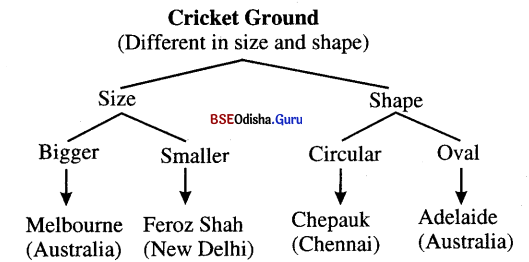
I. Pre-Reading (ପୂର୍ବ ପ୍ରସ୍ତୁତି)
You have already read the lesson “Birsa Munda”. Birsa Munda fought against superstition in the society. Read the following text to know about some other bad practices in our society. We will also know what we have to do.
(‘ବିର୍ସା ମୁଣ୍ଡା’ ବିଷୟ ତୁମେ ପଢ଼ିସାରିଛ । ବିର୍ସା ମୁଣ୍ଡା ସମାଜର କୁସଂସ୍କାର ବିରୋଧରେ ଲଢ଼ୁଥିଲେ । ଆମ ସମାଜରେ ଅନ୍ୟାନ୍ୟ ମନ୍ଦ ପ୍ରଥା ବିଷୟରେ ଜାଣିବାକୁ ନିମ୍ନ ପାଠ୍ୟବିଷୟକୁ ପଢ଼ । ଆମକୁ କ’ଣ କରିବାକୁ ହେବ ତାହା ମଧ୍ୟ ଆମେ ଜାଣିବା ।)

→ Look at the following newspaper headings and pictures.
(ଖବରକାଗଜର ନିମ୍ନ ଶିରୋନାମାକୁ ଏବଂ ଛବିକୁ ଦେଖ ।)

→”Branding by Hot Iron Rods Kills Five Babies in Nawarangpur.”
(‘‘ଶିଶୁମାନଙ୍କୁ ତତଲା ଲୁହାଛଡ଼ରେ ଚେଙ୍କ ନବରଙ୍ଗପୁରର ପାଞ୍ଚଜଣ ଶିଶୁଙ୍କ ଜୀବନ ନେଲା ।’’)

BSE Odisha 7th Class English Solutions Tail-Piece Lesson Branding Babies by Hot Iron Rods-A Bad Practice

→”Seven Babies Die in Two Months Due to Branding.”
(‘‘ଚେଙ୍କ ଯୋଗୁଁ ଦୁଇ ମାସରେ ସାତଜଣ ଶିଶୁଙ୍କ ପ୍ରାଣ ଗଲା ।’’)

BSE Odisha 7th Class English Solutions Tail-Piece Lesson Branding Babies by Hot Iron Rods-A Bad Practice

→Do you think these are good practices?
(ତୁମେ କ’ଣ ଭାବୁଛ ଏଗୁଡ଼ିକ ଭଲ ପ୍ରଥା ?)

→Do you have a role to play against such practices ?(ଏହି ପ୍ରଥାଗୁଡ଼ିକ ବିରୋଧରେ ତୁମର କିଛି ଭୂମିକା ଗ୍ରହଣ କରିବାର ଅଛି କି ?)Read the following text to know what you can do to stop such bad things from the society. (ସମାଜରୁ ଏଭଳି ଖରାପ ପ୍ରଥାଗୁଡ଼ିକୁ ବନ୍ଦ କରିବା ନିମିତ୍ତ ତୁମେ କ’ଣ କରିପାରିବ ତାହା ଜାଣିବା ପାଇଁ ନିମ୍ନ ପାଠ୍ୟ ବିଷୟକୁ ପଢ଼ ।)

II. While Reading (ପଠନକାଳୀନ)
Text(ପାଠ୍ୟବସ୍ତୁ)

  • SGP-1 (Sense Group Paragraph-1)
  • Read the following text silently and answer the questions that follow.
    (ନିମ୍ନ ପାଠ୍ୟ ବିଷୟକୁ ନୀରବରେ ପାଠ କର ଏବଂ ନିମ୍ନସ୍ଥ ପ୍ରଶ୍ନଗୁଡ଼ିକର ଉତ୍ତର ଦିଅ ।)

Every month two or three babies die due to branding in our state. When a baby has a fever or diarrhea or any other diseases, the illiterate parents and grandparents call the village quack, the disari. The quack, the village doctor puts hot iron rods on the stomach of the babies as a cure. Instead of getting cured, the babies die. But these blind practices continue. What can we do to check such blind practices? You are studying in schools. You know if we suffer from diseases, we should go to a qualified doctor, not to an illiterate disari or a village quack. As you are educated, you have a role to play in this regard. Tell the people not to go to a disari or a village quack. Ask them to go to a hospital for treatment. Talk to your classmates, form a group to fight against the bad and blind practices of branding in and around your village and locality.

ଓଡ଼ିଆ ଅନୁବାଦ :
ଆମ ରାଜ୍ୟରେ ପ୍ରତ୍ୟେକ ମାସରେ ଦୁଇରୁ ତିନିଜଣ ଶିଶୁ ଚେଙ୍କଦ୍ଵାରା ପ୍ରାଣ ହରାଉଛନ୍ତି । ଗୋଟିଏ ଶିଶୁକୁ କୌଣସି ଜ୍ଵର, ଝାଡ଼ାରୋଗ କିମ୍ବା ଅନ୍ୟ କିଛି ରୋଗ ହେଲେ, ଶିଶୁର ନିରକ୍ଷର ପିତାମାତା କିମ୍ବା ଜେଜେ ଓ ଜେଜେମା’ ଗ୍ରାମ ବୈଦ୍ୟ (ଦିସାରୀ) ଙ୍କୁ ଡକାନ୍ତି । ବୈଦ୍ୟ ବା ଗ୍ରାମ ଡାକ୍ତର ଆରୋଗ୍ୟ ନିମିତ୍ତ ଶିଶୁର ପାକସ୍ଥଳୀରେ । ଏପ୍ରକାର ଅନ୍ଧ ପ୍ରଥା ଚାଲୁ ରହିଛି । ଏ ପ୍ରକାର ଅନ୍ଧ ପ୍ରଥାକୁ ବନ୍ଦ କରିବାକୁ ଆମେ ସବୁ କ’ଣ କରିପାରିବା ? ତୁମେମାନେ ବିଦ୍ୟାଳୟରେ ପାଠ ପଢୁଛ । ତୁମେ ତ ଜାଣ, ଆମକୁ ଯଦି ରୋଗ ହୁଏ, ତେବେ ଆମେ ଜଣେ ଯୋଗ୍ୟ ଡାକ୍ତରଙ୍କ ପାଖକୁ ଯିବା ଉଚିତ ହେବ । ଜଣେ ଅଶିକ୍ଷିତ ଦିସାରୀ ବା ଗ୍ରାମ୍ୟ ବୈଦ୍ୟ ପାଖକୁ ନୁହେଁ । ଯେଣୁ ତୁମେ ଶିକ୍ଷିତ ତୁମର ମଧ୍ୟ ଏଥିପାଇଁ କିଛି ଭୂମିକା ଅଛି । ଲୋକମାନଙ୍କୁ କୁହ – ବୁଝାଅ ଦିସାରୀ ବା ଗ୍ରାମ୍ୟ ବୈଦ୍ୟ ପାଖକୁ ଯିବା ଦରକାର ନାହିଁ । ବୁଝାଇ ଦିଅ (ରୋଗ ହେଲେ) ଡାକ୍ତରଖାନାକୁ ଚିକିତ୍ସା ନିମିତ୍ତ ଯାଆନ୍ତୁ । ଶ୍ରେଣୀର ସାଥୀମାନଙ୍କ ସହିତ କଥା ହୁଅ, ଦଳବାନ୍ଧି ତୁମ ଗ୍ରାମ ବା ଅଞ୍ଚଳ ଅଥବା ଆଖପାଖ ଗ୍ରାମ ଓ ଅଞ୍ଚଳରେ ଏ ପ୍ରକାର ଖରାପ ଅନ୍ଧପ୍ରଥା ବିରୋଧରେ ସଂଗ୍ରାମ କର ।

Notes And Glossary: (ଶବ୍ଦାର୍ଥ) :
die (ଡାଏ) – ମର
due to (ଡିଭ ଟୁ) – ଯୋଗୁ
branding (ବ୍ରାଣ୍ଡିଙ୍ଗ୍‌) – ଚେଙ୍କ
state (ଷ୍ଟେଟ୍) – ରାଜ୍ୟ
fever (ଫିଭର୍) – ଜ୍ୱର
diarrhea (ଡାଇରିଆ) – ହଇଜା
diseases (ଡିଜିଜେସ୍) – ରୋଗ ସବୁ
illiterate (ଇଲିଟ୍‌ରେଟ୍) – ନିରକ୍ଷର
quack – କୋଳାହଳ କରିବା
stomach (ଷ୍ଟୋମାକ୍) – ପେଟ
cure – ଆରୋଗ୍ୟ
instead of (ଇଡ୍‌ ଅଫ୍) – ପରିବର୍ତ୍ତେ
blind practice (ବ୍ଲାଇଣ୍ଡ୍ ପ୍ରାକ୍‌ଟିସ୍) – ଅନ୍ଧ ଅଭ୍ୟାସ
check (ଚେକ୍) – ଯାଞ୍ଚ କରନ୍ତୁ
suffer (ସଫର) – ଯନ୍ତ୍ରଣା ଭୋଗ
qualified (କ୍ଵାଲିଫାଇଡୁ) – ପ୍ରଶିକ୍ଷିତ
educated (ଏଜୁକେଟେଡ୍) – ଶିକ୍ଷିତ
role (ରୋଲ୍) – ଭୂମିକା
play – ଗ୍ରହଣ କରିବା
regard – ସମ୍ମାନ କରିବା
treatment (ଟ୍ରିଟ୍‌ମେଣ୍ଟ୍‌) – ଚିକିତ୍ସା
form – ଫର୍ମ
locality (ଲୋକାଲିଟି) – ଅଞ୍ଚଳ

Comprehension Questions (ବୋଧପରିମାପକ ପ୍ରଶ୍ନବଳୀ) :
Question 1.
What is the topic about?
(ବିଷୟଟି କେଉଁ ବିଷୟରେ ଉଦ୍ଦିଷ୍ଟ ?)
Answer:
The topic is about the blind belief or bad practice of branding babies by hot iron rods for cure in and around our village and locality.

Question 2.
What happens to two to three babies in our state every month?
(ଆମ ରାଜ୍ୟରେ ପ୍ରତ୍ୟେକ ମାସରେ ଦୁଇ ତିନିଜଣ ଶିଶୁଙ୍କର କ’ଣ ହୁଏ | ଘଟେ ?)
Answer:
In our state, every month two or three babies die due to branding.

BSE Odisha 7th Class English Solutions Tail-Piece Lesson Branding Babies by Hot Iron Rods-A Bad Practice

Question 3.
When do illiterate people or grandparents call a village quack?
(କେତେବେଳେ ଅଶିକ୍ଷିତ ଗ୍ରାମବାସୀମାନେ.କିମ୍ବା ଜେଜେ ବାପା ଓ ଜେଜେମା’ମାନେ ଗ୍ରାମ ବୈଦ୍ୟଙ୍କୁ ଡକାନ୍ତି ?)
Answer:
The illiterate people and grandparents call a village quack when a baby has fever or any diseases.

Question 4.
Do you think it is a good practice?
(ତୁମେ କ’ଣ ଭାବୁଛ ଏହା ଏକ ଠିକ୍ | ଭଲ ପ୍ରଥା ?)
Answer:
No, we think branding babies is not a good practice.

Question 5.
What does the village quack do?
(ଗ୍ରାମ ବୈଦ୍ୟ କ’ଣ କରେ ?)
Answer:
The village quack puts hot iron rods on the stomach of the babies as a cure.

Question 6.
Why does he put the hot iron rods on the stomach of the babies?
(ସେ ଶିଶୁମାନଙ୍କ ପାକସ୍ଥଳୀରେ/ପେଟରେ କାହିଁକି ତତଲା ରଡ଼ର ଚେଙ୍କ ଦେଇଥା’ନ୍ତି ? )
Answer:
He puts hot iron rods on the stomach of the babies to cure them from the disease.

Question 7.
Do the babies get well? What happens to them?
(ଶିଶୁମାନେ କ’ଣ ଆରୋଗ୍ୟ ଲାଭ କରନ୍ତି ? ସେମାନଙ୍କର କ’ଣ ହୁଏ ?)
Answer:
No, the babies do not get well. Instead of getting well they die.

Question 8.
Where should we go to if we suffer from a -disease?
(ଆମକୁ କୌଣସି ରୋଗ ହେଲେ ଆମେ କେଉଁଠାକୁ ଯିବା ଉଚିତ ?)
Answer:
If we suffer from a disease we should go to a qualified doctor.

BSE Odisha 7th Class English Solutions Tail-Piece Lesson Branding Babies by Hot Iron Rods-A Bad Practice

Question 9.
Who shouldn’t we go to?
(ଆମେ କାହା ପାଖକୁ ନଯିବା ଉଚିତ ?)
Answer:
We should not go to a village quack, the disari.

Question 10.
What have you got to do? Why?
(ତୁମର କ’ଣ କରିବାକୁ ଅଛି ? କାହିଁକି ?)
Answer:
We have to work to check such blind practices because these practices do harm to our society.

Question 11.
What should you tell the people?
(ତୁମେ ଲୋକଙ୍କୁ କ’ଣ କହିବା | ବୁଝାଇବା ଉଚିତ ?)
Answer:
We should tell the people to go to a qualified doctor not to a village quack or disari, if anybody suffers from illness.

Question 12.
What do you think is a better place to go – a village quack or a doctor ?
କେଉଁଠିକୁ ଯିବା ଭଲ ହେବ – ଗୁଣିଆ ନା ଚିକିତ୍ସକ (ଡାକ୍ତର) ପାଖକୁ ?)
Answer:
We think it is better to go to a qualified doctor not to an illiterate village quack or disari.

Question 13.
What should you do?
(ତୁମେମାନେ କ’ଣ କରିବା ଉଚିତ ?)
Answer:
We should talk to our classmates and form a group to fight against the blind or bad practice of branding babies in and around our village and locality.

BSE Odisha 7th Class English Solutions Tail-Piece Lesson Branding Babies by Hot Iron Rods-A Bad Practice

Notes And Glossary: (ଶବ୍ଦାର୍ଥ) :
battle (ବ୍ୟାଟଲ୍) – fight (ସଂଘର୍ଷ, ଯୁଦ୍ଧ)
beat – no one can do better in arrow shooting, defeat (ହରାଇ ପାରିବା)
beaten (ବିଟେନ୍) – punished with heavy thrashing (ମାଡ଼ ଖାଇଥିଲେ )
branding (ବ୍ରାଣ୍ଡିଙ୍ଗ୍‌) – giving marks with hot iron
captured (କ୍ୟାପ୍‌ଚର୍‌ଡ୍) – caught (him) (ଧରି ନେଇଥିଲେ)
cowboy (କାଓବଏ) – someone who looks after cows (ଗାଈ ଜଗୁଆଳ)
defeated (ଡିଫିଟେଡ୍) – were beaten (ପରାସ୍ତ ହୋଇଥିଲେ)
documentary (ଡକ୍ୟୁମେଣ୍ଟାରୀ – a film giving facts (ତଥ୍ୟଭିଭିକ, ପ୍ରାମାଣିକ ଚଳଚ୍ଚିତ୍ର)
evil (ଏଭିଲ) – bad spirit (ଖରାପ ଆତ୍ମା, ପ୍ରେତାତ୍ମା)
gathered (ଗ୍ୟାଦର୍‌ଡ଼) – came in large number to one place (ଏକାଠି ହୋଇଥିଲେ )
innocent (ଇନୋସେଣ୍ଟ) – good and harmless people (ନିରୀହ, ନିଘୋଷ ବ୍ଯକ୍ତି)
mercilessly (ମର୍ସଲେସ୍‌ଲି) – cruelly (ଭୀଷଣ ନିର୍ଭୟ ଭାବରେ)
money lender (ମନି ଲେଣ୍ଡର) – a person who gives money to people in their need and collects it afterwards with interest (ଟଙ୍କା ସୁଧ କାରବାର କରୁଥିବା ବ୍ୟକ୍ତି)
movement (ମୁଭମେଣୁ) – mass fight to achieve something
pattas (ପଟ୍ଟାଜ୍)– land ownership papers (ଜମି ପଟ୍ଟା)
poisoned (ପଏଜନ୍‌) – (He was) given poison (ବିଷ ଦିଆଯାଇଥିଲା)
poverty (ପଭର୍ଟି) – a condition of having no money, no wealth or basic needs of life (ଦାରିଦ୍ର୍ୟ, ଗରିବ ଅବସ୍ଥା)
property (ପ୍ରପର୍ଟି) – wealth (ଧନସମ୍ପତ୍ତି)
quack – a person who does treatment of people without proper knowledge, especially in villages (ଗାଁ ବଇଦ, ଗୁଣିଆ)
religious (ରିଲିଜିଅସ୍ ) – one who shows strong faith in religion and obey its rules (ଧର୍ମନିଷ୍ଠ, ଧାର୍ମିକ)
reward (ରିୱାର୍ଡ) – wealth or money given to somebody for good work (ପୁରସ୍କାର)
sacrificed (ସାକ୍ରିଫାଇସ୍‌ଡ୍) – gave life for the cause of his country (ପାଇଁ ଜୀବନ ଉତ୍ସର୍ଗ କରିଥିଲେ)
sacrifice (ସାକ୍ରିଫାଇସ୍ ) – to give a gift of animal (goat) to god or goddess to win their favour
Santal (ସାନ୍ତାଲ) – a class of triabl (ଏକ ଆଦିବାସୀ ସମ୍ପ୍ରଦାୟ)
superstition (ସୁପରଷ୍ଟିସନ୍) – belief without based on facts, blind belief (ଅନ୍ଧବିଶ୍ଵାସ )
suspected (ସସ୍‌କୁ ଡ୍) – doubted ( ସନ୍ଦେହ ପ୍ରକଟ କରିବା)
tearful (ଟିୟରଫୁଲ୍) – sorrowful way (ଅଶୁଳ, ଦୁଃଖଦ)
weapons (ଉଇପନ୍ସ୍) – instruments used for fight like sword, gun etc. (ଅସ୍ତ୍ରଶସ୍ତ୍ର)
worship (ଓରସିପ୍ ) – pray (ପୂଜା କରିବା ବା ପ୍ରାର୍ଥନା କରିବା)
wounded (ୱିଣ୍ଡ୍ଡ୍) – injured, cut (his leg) (ହାଣି ହୋଇଯିବା, କ୍ଷତାକ୍ତ ହେବା, ଆହତ ହେବା )

BSE Odisha 7th Class English Solutions Tail-Piece Lesson Branding Babies by Hot Iron Rods-A Bad Practice Important Questions and Answers

(A) Answer the following questions.
Question 1.
Why did the people call him Tilka Baba?
Answer:
Tilka was worshiping Marang Burn. When days went by he became a religious man. The people of all religions, loved him and respected him. So they called him Tilka Baba.

Question 2.
How did Bhagalpur come under the control of the British?
Answer:
After the Plassey battle, British became the rulers of Bengal, Bihar and Odisha. So Bhagalpur of Bihar came under their control.

BSE Odisha 7th Class English Solutions Tail-Piece Lesson Branding Babies by Hot Iron Rods-A Bad Practice

Question 3.
How did Cleareland tortured the natives?
Answer:
The new collector Cleareland appointed soldiers from other tribes to fight against the Santals. In many ways he tried to harash the people.

(B) Multiple Choice Questions (MCQs) with Answers.
Question 1.
Birsa Munda was born in a _________.
(a) rich family
(b) poor family
(c) joint family
(d) aristocratic family
Answer:
(b) poor family

Question 2.
His father’s name was _________.
(a) Sugana Munda
(b) Laxman Munda
(c) Sovan Munda
(d) None of these
Answer:
(a) Sugana Munda

(C) Re-arrange the jumbled words to make meaningful sentences.
Question 1.
superstition / from / days / very / Birsa / young / was / against
Answer:
From very young days Birsa was against superstition.

Question 2.
the / was / by / evil / the / said / quack / that / wound / caused / an / spirit
Answer:
The quack said that the wound was caused by an evil spirit:

BSE Odisha 7th Class English Solutions Tail-Piece Lesson Branding Babies by Hot Iron Rods-A Bad Practice

Question 3.
wound / himself / his / of / to / a / cure / goat / Birsa / sacrifice / would / to / have
Answer:
Birsa would have to sacrifice a goat to cure himself of his wound.

(D) Find whether True or False.
Question 1.
Birsa Munda was born in a rich family in Odisha in 1975.
Answer:
False

Question 2.
From the very young age he worked as a cowboy of landlord.
Answer:
True

Question 3.
Birsa would have to sacrifice a hen to cure himself of his wound.
Answer:
False
BSE Odisha 7th Class English Solutions Follow-Up Lesson 2 A Tiny Warrior

Odisha State Board BSE Odisha 7th Class English Solutions Follow-Up Lesson 2 A Tiny Warrior When I Grow Up Textbook Exercise Questions and Answers.

BSE Odisha Class 7 English Solutions Follow-Up Lesson 2 A Tiny Warrior

BSE Odisha 7th Class English Follow-Up Lesson 2 A Tiny Warrior Text Book Questions and Answers

Session – 1 (ଶବ୍ଦାବଳୀ)

I. Pre-Reading (ପୂର୍ବ ପ୍ରସ୍ତୁତି)

  • Socialization (ସାମାଜିକୀକରଣ):
  • In the main lesson the father learned a lesson from his son. The son taught the father that the poor people are. in fact, rich. In this follow-up lesson you will read about a small girl of class-V leading a movement against bazzar notebooks. Let’s read and see how cheap bazaar notebooks do more harm than good.

II. While Reading (ପଠନକାଳୀନ)
Text(ପାଠ୍ୟବସ୍ତୁ)

BSE Odisha 7th Class English Solutions Follow-Up Lesson 2 A Tiny Warrior session 1

  • SGP-1 (Sense Group Paragraph-1)
  • Read paragraph 1 and 2 and answer the questions.
    (ଅନୁଚ୍ଛେଦ ୧ ଓ ୨କୁ ନୀରବରେ ପାଠ କର ଏବଂ ନିମ୍ନ ପ୍ରଶ୍ନଗୁଡ଼ିକର ଉତ୍ତର ଦିଅ ।)

1. One evening Mitu and Situ, two sisters, were studying in their room. Mitu studies in class VII and Situ in Class V. The two sisters were studying in two different schools. Their uncle, Mr. Giri, was watching them from a little distance. He was a retired teacher. He had come to visit them on a week-end. Mr. Giri saw Mitu reading one paragraph from her English textbook then reading the meaning of this paragraph in Odia from a bazaar notebook (Meaning book), which disturbed him. ‘If children study English like this, they will never learn English’, he thought.

2. The uncle was eager to help Mitu learn English on her own without the help of this meaning book. He came close to her and asked her to read the first paragraph of the lesson silently. The lesson was “The Story of Cricket”. The first paragraph was: The shape and the size of a cricket ground are not fixed. They are different. The cricket ground of Melbourne in Australia is bigger than that of Feroz Shah Kotla in New Delhi. Similarly the shape of Chepauk Cricket Ground in Chennai is circular. But the Adelaide Cricket Ground in Australia is oval.

ଓଡ଼ିଆ ଅନୁବାଦ :
୧. ଦିନେ ସନ୍ଧ୍ୟାରେ ମିତୁ ଏବଂ ସିତୁ ଦୁଇ ଭଉଣୀ ସେମାନଙ୍କ ପଢ଼ାଘରେ ପଢ଼ା କାର୍ଯ୍ୟ କରୁଥିଲେ । ମିତୁ ୭ମ ଶ୍ରେଣୀରେ ଏବଂ ସିତୁ ୫ମ ଶ୍ରେଣୀରେ ପଢ଼େ । ଦୁଇ ଭଉଣୀ ଦୁଇଟି ଅଲଗା ସ୍କୁଲରେ ପାଠ ପଢୁଥିଲେ । ସେମାନଙ୍କ ଦାଦା/ ମାମୁ ଗିରିବାବୁ ସେମାନଙ୍କୁ କିଛି ଦୂରରୁ ଲକ୍ଷ୍ୟ କରୁଥିଲେ । ସେ ଜଣେ ଅବସରପ୍ରାପ୍ତ ଶିକ୍ଷକ । ସପ୍ତାହର ଶେଷ ଦିନରେ ସେ ତାଙ୍କୁ ଦେଖିବାକୁ ଆସିଥିଲେ । ଗିରିବାବୁ ଦେଖ‌ିଲେ ମିତ୍ରୁ ତା’ ଇଂରାଜୀ ପାଠ୍ୟପୁସ୍ତକର ଏକ ଅନୁଚ୍ଛେଦ ପଢ଼ୁଥିଲା ଏବଂ ପରେ ପରେ ସେହି ଅନୁଚ୍ଛେଦର ଓଡ଼ିଆ ଅନୁବାଦ ବଜାରରୁ ଖରିଦ କରିଥିବା ଏକ ମାନେ ବହିରୁ ପଢ଼ୁଥିଲା । ତାହା ତାଙ୍କୁ ବଡ଼ ଅଡୁଆ ଲାଗିଲା । ସେ ଭାବିଲେ- ଯଦି ପିଲାମାନେ ଇଂରାଜୀ ଏଭଳି ଢଙ୍ଗରେ ପଢ଼ିବେ, ସେମାନେ ଇଂରାଜୀ ଶିକ୍ଷା କରିପାରିବେ ନାହିଁ ।

୨.ଦାଦା/ମାମୁ ଜଣକ ମିତୁ କିଭଳି ଆପେ ଆପେ ମାନେ ବହି ବିନା ଇଂରାଜୀ ଶିକ୍ଷା କରିପାରିବ, ସେ ସମ୍ବନ୍ଧରେ ସାହାଯ୍ୟ କରିବାକୁ ବ୍ୟଗ୍ର ହୋଇଉଠିଲେ । ସେ ତା’ ପାଖକୁ ଆସିଲେ ଏବଂ ପ୍ରଥମ ଅନୁଚ୍ଛେଦଟିକୁ ନୀରବରେ ପାଠ କରିବାକୁ କହିଲେ । ପାଠ୍ୟବସ୍ତୁଟି ଥୁଲା ‘କ୍ରିକେଟ୍‌ର ଏକ କାହାଣୀ ।’ ପ୍ରଥମ ଅନୁଚ୍ଛେଦଟି ଏହିପରି ଥୁଲା ମେଲ୍‌ବର୍ଷ କ୍ରିକେଟ୍ ପଡ଼ିଆ, ନୂଆଦିଲ୍ଲୀର ଫିରୋଜ ଶାହା କୋଟଲା କ୍ରିକେଟ୍‌ ପଡ଼ିଆ ତୁଳନାରେ ବଡ଼ । ସେହିଭଳି ଚେନ୍ନାଇର ଚେପକ୍ କ୍ରିକେଟ୍ ପଡ଼ିଆର ଆକାର ଗୋଲାକାର । କିନ୍ତୁ ଅଷ୍ଟ୍ରେଲିଆର ଆଡିଲେଡ୍ କ୍ରିକେଟ୍‌ ପଡ଼ିଆ ଅଣ୍ଡାକୃତିର ।

Notes And Glossary: (ଶବ୍ଦାର୍ଥ) :
studying (ଷ୍ଟଡ଼ିଙ୍ଗ୍) – ପଢ଼ିବା
uncle (ଅଙ୍କଲ୍) – ଦାଦା | ମାମୁ
watching (ଚିଙ୍ଗ୍) – ଦେଖିବା
little distance (ଲିଟିଲ୍‌ ଡିଷ୍ଟାନ୍‌ସ୍) – ଅଳ୍ପ ଦୂର
retired teacher (ରିଟାୟାର୍ଡ ଟିଚର) – ଅବସରପ୍ରାପ୍ତ ଶିକ୍ଷକ
paragraph (ପାରାଗ୍ରାଫ୍) – ଅନୁଚ୍ଛେଦ
disturbed (ଡିଷ୍ଟବର୍ଡ) – ବିଚଳିତ ହେଲେ
eager to help (ଇଗର୍ ଟୁ ହେଲ୍ପ) – ସାହାଯ୍ୟ ପାଇଁ ଆଗ୍ରହ ପ୍ରକାଶ କରିବା
shape (ସେପ୍) – ଆକାର
size (ସାଇଜ୍) — ପ୍ରକାର, ଲମ୍ବ ପ୍ରସ୍ଥର ଦୂରତ୍ୱ
circular (ସର୍କୁଲାର) – ଗୋଲାକାର
oval (ଓଭାଲ୍) – ଅଣ୍ଡାକୃତି

Comprehension Questions (ବୋଧପରିମାପକ ପ୍ରଶ୍ନବଳୀ)

Question 1.
Who are there in paragraph X?
(ପ୍ରଥମ ଅନୁଚ୍ଛେଦରେ କିଏ କିଏ ଅଛନ୍ତି ?)
Answer:
In paragraph 1, there are two children Mitu and Situ. Their uncle Mr. Giri was with them.

Question 2.
Who are Mitu and Situ?
(ମିତୁ ଏବଂ ସିତୁ କିଏ ?)
Answer:
Mitu and Situ are two sisters. Mitu studies in class VII and Situ in class V. They were reading in different schools.

Question 3.
Who visited them on a week-end?
(ସପ୍ତାହ ଶେଷରେ କିଏ ସେମାନଙ୍କୁ ସାକ୍ଷାତ କରିବାକୁ ଆସିଥିଲେ ?)
Answer:
Mr. Giri, their uncle, visited them on a weak-end.

Question 4.
What was Mr. Giri?
(ମି. ଗିରି କ’ଣ ଥିଲେ ?)
Answer:
Mr. Giri was a retired teacher. He was the uncle of Mitu and Situ.

Question 5.
What did Mr Giri see?
(ମି. ଗିରି କ’ଣ ଦେଖ‌ିଲେ ?)
Answer:
Mr. Giri saw Mitu reading a paragraph from English textbook and then reading the meaning of the paragraph from a bazaar meaning book.

Question 6.
What was Mitu reading?
(ମିତ୍ର କ’ଣ ପଢ଼ୁଥିଲା ?).
Answer:
Mitu was reading a paragraph from English textbook.

Question 7.
Why was her uncle disturbed?
(ମାମୁଙ୍କୁ କାହିଁକି ଅଡୁଆ ଲାଗିଲା ?)
Answer:
Her uncle was disturbed because he did not like learning English taking help of bazaar notebook.

Question 8.
What did her uncle ask her?
(ତା’ ମାମୁ ତାକୁ କ’ଣ କହିଲେ ?)
Answer:
Her uncle asked her to read the first paragraph of the lesson silently.

Question 9.
What was the title of the lesson?
(ପାଠର ଶିରୋନାମା କ’ଣ ଥିଲା ?)
Answer:
The title of the lesson was “The Story of Cricket”.

Question 10.
What was the first paragraph of the lesson about?
(ଅଧ୍ୟାୟର ପ୍ରଥମ ଅନୁଚ୍ଛେଦଟି କେଉଁ ବିଷୟରେ ଥିଲା ?)
Answer:
The first paragraph of the lesson was about the shape and size of cricket ground.

Question 11.
How is this paragraph in your English book different from the paragraph in the meaning book?
(ତୁମ ଇଂରାଜୀ ବହିର ଏହି ଅନୁଚ୍ଛେଦଟି କିପରି ମାନେ ବହିର ଅନୁଚ୍ଛେଦଠାରୁ ଭିନ୍ନ ଥିଲା ?)
Answer:
This paragraph from the English book teaches how to learn and improve the knowledge in English but the paragraph from meaning book only teaches what is the meaning of the paragraph.

Session – 2 (ଦ୍ଵିତୀୟ ପର୍ଯ୍ୟାୟ)

  • SGP-2 (Sense Group Paragraph-2)
  • Read paragraphs – 3 to 5 and answer the questions that follow.
    (ଅନୁଚ୍ଛେଦ ୩ ରୁ ୫କୁ ପାଠ କର ଏବଂ ନିମ୍ନପ୍ରଦତ୍ତ ପ୍ରଶ୍ନଗୁଡ଼ିକର ଉତ୍ତର ଦିଅ ।)

3. Next what happened between the uncle and the niece is stated below :
Mr Giri: Every paragraph has an idea or a topic. Can you tell me the line where the topic is? What is the paragraph about? (Mitu was silent) It is about the shape and size of a cricket ground.
Mitu: The first sentence.
Mr. Giri Very Good: After telling the topic, the writer gives examples/ facts to explain the topic. Can you say what example does the writer give?
Mitu: Melbourne and Feroz Shah Kotla.
Mr Giri: Where is Melbourne cricket ground and where is Feroz Saha Kotla?
Mitu: (Reading the paragraph again) In Australia and Delhi.
Mr Giri: Very Good. Which ground is bigger in size?
Mitu: Melbourne.
Mr Giri: Good. This is about the size. What about the shape? Which ground is circular-like a circle?
Mitu: Chepauk Ground.
Mr Giri: Where is Chepauk Ground?
Mitu: In Chennai.
Mr Giri: Good. Which ground is oval shaped?
Mitu: Adelaide Ground.
Mr Giri: Where is Adelaide Ground?
Mitu: In Australia.

4. Next, the uncle asked his niece Mitu to give her notebook and on her notebook he made a note on the paragraph. The note was as follows:

BSE Odisha 7th Class English Solutions Follow-Up Lesson 2 A Tiny Warrior session 2

5. “Now you can understand the paragraph much better. The meaning book only gives the meaning in Odia. It is not useful in learning English properly.” said Mr. Giri.

(ଓଡ଼ିଆ ଅନୁବାଦ)
୩. ତା’ପରେ ମାମୁ ଭାଣିଜୀଙ୍କ ମଧ୍ୟରେ ଯାହା ଘଟିଲା ତାହା ନିମ୍ନରେ ଉଲ୍ଲେଖ କରାଯାଇଛି :
ଶ୍ରୀ ଗିରି: ପ୍ରତ୍ୟେକ ଅନୁଚ୍ଛେଦର ଏକ ଧାରଣା ବା ବିଷୟବସ୍ତୁ ଥାଏ । କେଉଁ ଧାଡ଼ିରେ ବିଷୟବସ୍ତୁ ଅଛି ତୁମେ ମୋତେ କହିପାରିବ ବି ? ଅନୁଚ୍ଛେଦଟି କେଉଁ ବିଷୟରେ ?
ମିଟୁ: ପ୍ରଥମ ବାକ୍ୟ ।
ଶ୍ରୀ ଗିରି: ବହୁତ ଭଲ । ବିଷୟବସ୍ତୁ କହିସାରିବା ପରେ ଲେଖକ ବିଷୟବସ୍ତୁକୁ ବୁଝାଇବା ନିମନ୍ତେ ତୁମେ କହିପାରିବ କି ?
ମିଟୁ: ମେଲବୋର୍ଡ଼ ଏବଂ ଫିରୋହ ଶାହା କୋଟ୍‌ ।
ଶ୍ରୀ ଗିରି: ମେଲବୋର୍ଡ଼ କ୍ରିକେଟ୍ ପଡ଼ିଆ କେଉଁଠାରେ ଏବଂ ଫିରୋଜ ଶାହା କୋଟ୍‌ଲା କେଉଁଠାରେ ?
ମିଟୁ: (ଅନୁଚ୍ଛେଦକୁ ଆଉଥରେ ପଢ଼ି) ଅଷ୍ଟ୍ରେଲିଆ ଏବଂ ଦିଲ୍ଲୀରେ ।
ଶ୍ରୀ ଗିରି: ବହୁତ ଭଲ । କେଉଁ ପଡ଼ିଆଟି ଆକାରରେ ବଡ଼ ?
ମିଟୁ: ମେଲବୋର୍ଡ଼ ।
ଶ୍ରୀ ଗିରି: ଭଲ । ଏହା ଆକାର ବିଷୟରେ । ଆକୃତି ବିଷୟରେ କ’ଣ ? କେଉଁ ପଡ଼ିଆଟି ବୃତ୍ତାକାର – ଏକ ବୃତ୍ତ ଭଳି ।
ମିଟୁ: ଚେପକ୍ ପଡ଼ିଆ ।
ଶ୍ରୀ ଗିରି: ଚେପକ୍ ପଡ଼ିଆ କେଉଁଠାରେ ?
ମିଟୁ: ଚେନ୍ନାଇରେ ।
ଶ୍ରୀ ଗିରି:ଭଲ । କେଉଁ ପଡ଼ିଆଟି ଅଣ୍ଡାକୃତି ?
ମିଟୁ:ଆଡ଼ିଲେଡ଼ ପଡ଼ିଆ ।
ଶ୍ରୀ ଗିରି:ଆଡ଼ିଲେଡ଼ ପଡ଼ିଆ କେଉଁଠାରେ ?
ମିଟୁ:ଅଷ୍ଟ୍ରେଲିଆରେ ।

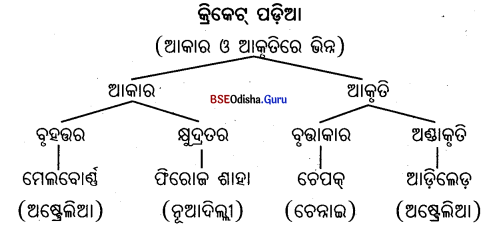
୪.ତା’ପରେ ମାମୁ ତାଙ୍କ ଭାଣିଜୀ ମିତ୍ରୁକୁ ତା’ ଖାତା ମାଗିଲେ ଏବଂ ତା’ ଖାତାରେ ଅନୁଚ୍ଛେଦର ସାରାଂଶ ଲେଖୁ ଦେଲେ । ସାରାଂଶଟି ନିମ୍ନ ପ୍ରକାର ଥିଲା :

BSE Odisha 7th Class English Solutions Follow-Up Lesson 2 A Tiny Warrior session 2.1

୫. ଗିରିବାବୁ କହିଲେ, ‘ତୁମେ ବର୍ତ୍ତମାନ ଅନୁଚ୍ଛେଦଟିକୁ ଭଲ ଭାବରେ ବୁଝିପାରିଲ । ମାନେ ବହି କେବଳ ଓଡ଼ିଆ ଅର୍ଥ ଦେଇଥାଏ । ଏହା ଠିକ୍ ଭାବେ ଇଂରାଜୀ ଶିକ୍ଷା ପାଇଁ ଦରକାରୀ ନୁହେଁ ।

Notes And Glossary:
next ( ନେଷ୍ଟ ) – ପରେ
happened (ହାପେନ୍ସ) – ଘଟିଲା
topic (ଟପିକ୍) – ବିଷୟ/ବିଷୟବସ୍ତୁ
idea (ଆଇଡ଼ିଆ) – ଧାରଣା
silent (ସାଇଲେଣ୍ଟ୍) – ନୀରବ
facts (ଫ୍ରାକୃସ୍) – ତଥ୍ୟାବଳୀ
examples (ଏକ୍‌ଜାମ୍ପୁଲସ୍ ) – ଉଦାହରଣସମୂହ
bigger (ବିଗର୍ ) – ବୃହତ୍ତର
circle (ସର୍କଲ୍) – ବୃତ୍ତ
oval shapes (ଓଭାଲ୍ ସେପ୍‌) – ଅଣ୍ଡା ଆକୃତିର
different (ଡିଫରେଣ୍ଡ୍) – ଭିନ୍ନ/ଅଲଗା
properly (ପ୍ରପର୍‌ଲି) – ଠିକ୍ ଭାବରେ
understand ( ଅଣ୍ଡରଷ୍ଟାଣ୍ଡ୍) – ବୁଝିବା

Comprehension Questions (ବୋଧପରିମାପକ ପ୍ରଶ୍ନବଳୀ)

Question 1.
Who played the role of teacher in this paragraph?
(ଏହି ଅନୁଚ୍ଛେଦରେ କିଏ ଶିକ୍ଷକ ଭୂମିକା ନିର୍ବାହ କରିଥିଲେ ?)
Answer:
Mr. Giri played the role of teacher in this paragraph.

Question 2.
Who played the role of the student in this paragraph?
(ଏହି ଅନୁଚ୍ଛେଦରେ କିଏ ଶିକ୍ଷାର୍ଥୀ ଭୂମିକା ନିର୍ବାହ କରିଥିଲେ ? )
Answer:
Mitu played the role of the student in this paragraph.

Question 3.
How is one paragraph of a text different from another paragraph?
(ପାଠ୍ୟ ବିଷୟର ଗୋଟିଏ ଅନୁଚ୍ଛେଦ ଅନ୍ୟ ଏକ ଅନୁଚ୍ଛେଦଠାରୁ ଭିନ୍ନ କିପରି ? )
Answer:
Every paragraph has an idea or topic. In this respect two paragraphs of a text are different.

Question 4.
What does a writer do after giving the topic of the paragraph?
(ଜଣେ ଲେଖକ ବିଷୟ ସ୍ଥିର କଲାପରେ କ’ଣ କରନ୍ତି ?)
Answer:
After telling the topic, the writer gives some examples to explain the topic.

Question 5.
When Mitu answered the questions, did she keep her textbook open or closed?
(ମିତୁ ଯେତେବେଳେ ଉତ୍ତର ଦେଉଥିଲା, ସେ ପାଠ୍ୟପୁସ୍ତକ ଖୋଲା ରଖୁଥିଲା ନା ବନ୍ଦ କରିଥିଲା ?)
Answer:
When Mitu answered the questions, she kept her textbook open.

Question 6.
Was she able to answer most of the questions?
(ସେ ଅଧିକାଂଶ ପ୍ରଶ୍ନର ଉତ୍ତର ଦେବାରେ ସମର୍ଥ ହେଲା କି ?)
Answer:
Yes, she was able to answer most of the questions.

Question 7.
Is her uncle a good teacher ? How do you know?
(ତାଙ୍କର ମାମୁ ଜଣେ ଭଲ ଶିକ୍ଷକ କି ? ତୁମେ କିପରି ଜାଣୁଛ ?)
Answer:
Yes, her uncle is a good teacher. He explained the paragraph to Mitu bit by bit and made her understand everything.

Question 8.
Do you like the notes that her uncle made on the paragraph?
(ତା’ର ମାମୁ ଅନଚ୍ଛେଦ ଉପରେ ପ୍ରସ୍ତୁତ କରିଥିବା ସଂକ୍ଷିପ୍ତ ସାରାଂଶକୁ ତୁମେ ପସନ୍ଦ କରୁଛ କି ?)
Answer:
Yes, we like the notes that her uncle made on the paragraph.

Question 9.
Will the note help Mitu remember the paragraph?
(ଅନୁଚ୍ଛେଦଟିକୁ ମନେରଖ୍କୁ ମିତୁକୁ ସଂକ୍ଷିପ୍ତ ସାରାଂଶ ସାହାଯ୍ୟ କରିବ କି ?)
Answer:
Yes, the note will definitely help Mitu to remember the paragraph.

Question 10.
Why is meaning book not useful according to Mitu?
(ମିତୁ କହିବା ଅନୁସାରେ ମାନେ ବହି କାହିଁକି ଦରକାରୀ ନୁହେଁ ?)
Answer:
Meaning book is not at all useful, because it only gives the Odia meaning of the topic, but does not give knowledge.

Question 11.
What did her uncle say about meaning book?
(ତା’ର ମାମୁ ମାନେ ବହି ବିଷୟରେ କ’ଣ କହିଲେ ?)
Ans.
Her uncle said that meaning book is useless because it gives the Odia meaning only. It does not help in learning English properly.

Session – 3 (ତୃତୀୟ ପର୍ଯ୍ୟାୟ)

  • SGP-3 (Sense Group Paragraph-3)
  • Read paragraph-6 and 7 and answer the questions that follow.
    (ଅନୁଚ୍ଛେଦ ୬ ଓ ୭କୁ ପାଠ କର ଏବଂ ନିମ୍ନପ୍ରଦତ୍ତ ପ୍ରଶ୍ନଗୁଡ଼ିକର ଉତ୍ତର ଦିଅ ।)

6. Situ was silently sitting and watching what happened between her uncle and her sister. She broke her silence and asked, ‘If our teachers read aloud a paragraph and explain the meaning in Odia, are they doing the right thing ?”No, not at all. They are as harmful as the bazzar note”said Mr. Giri.

7. What happened after this is the story of Situ. Situ said how meaning books have lots of mistakes. One of her teachers did not give her any mark for an answer. He thought the wrong answer in the bazzar note was the right answer. She took this matter to her headmistress. She called the teacher and asked him to give her mark. She also banned the use of bazzar note books in their school. She made Situ the leader of the movement against meaning books in their school.

୬.ସିତୁ ନୀରବରେ ବସି ଲକ୍ଷ୍ୟ କରୁଥିଲା ଯାହା ତା’ର ମାମୁ ଓ ଭଉଣୀ ମଧ୍ଯରେ ଘଟୁଥିଲା । ନୀରବତା ଭାଙ୍ଗି ସେ ପଚାରିଲା, ‘‘ଯଦି ଆମେ ଶିକ୍ଷକମାନେ ଗୋଟିଏ ଅନୁଚ୍ଛେଦକୁ ବଡ଼ପାଟିରେ ପଢ଼ନ୍ତି ଏବଂ ଏହାର ଅର୍ଥ ଓଡ଼ିଆରେ ବୁଝାନ୍ତି, ସେମାନେ କ’ଣ ଠିକ୍ କରନ୍ତି ?’’ କେବେ ନୁହେଁ ! ଗିରିବାବୁ କହିଲେ, ‘ସେମାନେ ବଜାରର ମାନେ ବହି ପରି କ୍ଷତିକାରକ ଅଟନ୍ତି ।’’

୭.ଏହାପରେ ଯାହା ଘଟିଲା ତାହା ସିତୁର କାହାଣୀ ଥିଲା । ସିତୁ କହିଲା କିପରି ମାନେବହିଗୁଡିକରେ ବହୁତ ଭୁଲ ବା ତ୍ରୁଟି ରହୁଛି । ତା’ର ଜଣେ ଶିକ୍ଷକ ଗୋଟିଏ ପ୍ରଶ୍ନର ଉତ୍ତର ପାଇଁ ତାକୁ କିଛି ନମ୍ବର ଦେଇ ନଥିଲେ । ସେ ବଜାର ମାନେ ବହିରେ ଥିବା ଭୁଲ ଉତ୍ତରକୁ ଠିକ୍ ଉତ୍ତର ବୋଲି ଭାବୁଥିଲେ । ସେ (ସିତୁ) ଏହି ଘଟଣାକୁ ପ୍ରଧାନ ଶିକ୍ଷୟିତ୍ରୀଙ୍କ ଦୃଷ୍ଟିକୁ ଆଣିଲେ । ସେ ଶିକ୍ଷକକୁ ଡାକିଲେ ଏବଂ କହିଲେ ତାକୁ ନମ୍ବର ଦେବାକୁ । ସେ ମଧ୍ୟ ବଜାର ମାନେ ବହିଗୁଡିକୁ ତାଙ୍କ ବିଦ୍ୟାଳୟରେ ବ୍ୟବହାର କରିବାକୁ ନିଷେଧ କଲେ । ସେ ତାଙ୍କ ବିଦ୍ୟାଳୟରେ ବଜାର ମାନେ ବହି ବିରୋଧୀ ଆନ୍ଦୋଳନର ସିତୁକୁ ନେତ୍ରୀ କରିଦେଲେ ।

Notes And Glossary: (ଶବ୍ଦାର୍ଥ) :
watching (ଚିଙ୍ଗ୍) – ଦେଖିବା
broke (ବ୍ରୋକ୍) – ଭାଙ୍ଗିଲା
silence (ସାଇଲେନ୍ସ) – ନୀରବତା
not at all (ନଟ୍ ଆଟ୍ ଅଲ୍) – ଆଦୌ ନୁହେଁ
harmful (ହାର୍ମଫୁଲ୍) – କ୍ଷତିକାରକ
bazzar (ବଜାର)
banned – ନିଷେଧ କଲେ

Comprehension Questions (ବୋଧପରିମାପକ ପ୍ରଶ୍ନବଳୀ) :
Question 1.
What are these two paragraphs about-about Mitu, Mr. Giri or Situ ?
(ଏହି ଦୁଇଟି ଅନୁଚ୍ଛେଦ କାହା ବିଷୟରେ – ମିତ୍ରୁ, ମି.ଗିରି ନା ସିତୁ ବିଷୟରେ ?)
Answer:
These two paragraphs are about Situ.

Question 2.
Who said meaning books have lots of mistakes ?
(ମାନେ ବହିରେ ଅନେକ ଭୁଲ୍ ଅଛି ବୋଲି କିଏ କହିଥିଲା ?)
Answer:
Situ said that the meaning books have lots of mistakes.

Question 3.
Even if the answer of Situ was correct, why didn’t her teacher give her any mark?
(ଯଦିଓ ସିତୁର ଉତ୍ତର ଠିକ୍ ଥିଲା, ତା’ର ଶିକ୍ଷକ ତାକୁ କାହିଁକି କୌଣସି ନମ୍ବର ଦେଲେ ନାହିଁ ।)
Answer:
Though the answer of Situ was correct, her teacher didn’t give her any mark, because he thought that the wrong answer in the bazzar note was the right answer.

Question 4.
What did Situ do next?
(ତା’ପରେ ସିତୁ କ’ଣ କଲା ?)
Answer:
Then Situ took the matter to her headmistress.

Question 5.
What did the headmistress ban?
(ପ୍ରଧାନ ଶିକ୍ଷୟିତ୍ରୀ କ’ଣ ନିଷେଧ କରିଥିଲେ ?)
Answer:
The headmistress banned the use of bazzar note books in their school. She also made Situ the leader of the movement against bazzar note books in their school.

Question 6.
What was the movement about?
(ଆନ୍ଦୋଳନ କେଉଁ ବିଷୟରେ ଥିଲା ? )
Answer:
The movement was against the use of meaning books in their school.

Question 7.
Who did the headmistress make the leader of the movement? Why?
(ପ୍ରଧାନ ଶିକ୍ଷୟିତ୍ରୀ କାହାକୁ ଆନ୍ଦୋଳନର ନେତ୍ରୀ କରାଇଲେ ? କାହିଁକି ?)
Answer:
The headmistress made Situ the leader of the movement. Because Situ knew well about the harmful impact of the bazzar note books.

Question 8.
Will you use meaning book after reading this lesson?
(ଅଧ୍ୟାୟ ପଢ଼ି ସାରିବା ପରେ ତୁମେମାନେ ମାନେବହି ବ୍ୟବହାର କରିବ କି ?)
Answer:
No, we will never use the meaning books after reading this les son.

Session – 4 (ଚତୁର୍ଥ ପର୍ୟ୍ୟାୟ)
Post-Reading (ପଠନ ପରବର୍ତ୍ତୀ)

1. Visual Memory Development Technique (VMDT) :
(ଦୃଶ୍ୟ ସ୍ମୃତି ବିଚାର କୌଶଳ) : (Teacher decides)

2. Comprehension Activities (ବୋଧ ପରିମାପକ କାର୍ଯ୍ୟାବଳୀ) :
(a) Teacher frames MCQs. (ଶିକ୍ଷକ MCQ ତିଆରି କରନ୍ତୁ)
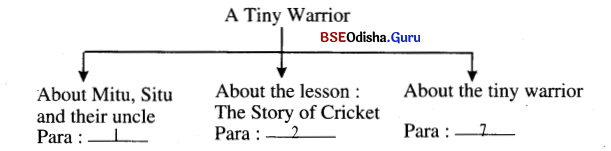
(b) The lesson is divided into three SGPs : three parts. The three topics/themes are given.
Write under each paragraph number. (Question with Answer)

BSE Odisha 7th Class English Solutions Follow-Up Lesson 2 A Tiny Warrior session 4

3. Listening (ଶୁଣିବା) :
Teacher frames listening activities.

Session – 5 (ଷଷ୍ଠ ପର୍ଯ୍ୟାୟ)
4. Speaking (କଥନ) :

(a) Chain-drill: Meaning books are harmful.
(b) Dialogue: (Follow the steps of previous lessons.)
Mr Giri: Where is Melbourne?
Mitu: In Australia
Mr Giri: Where is Feroz Shah Kotla Cricket Ground?
Mitu: In New Delhi
Mr Giri: Where is Chepauk Ground?
Mitu: In Chennai

5. Vocabulary ଶବ୍ଦାବଳୀ:
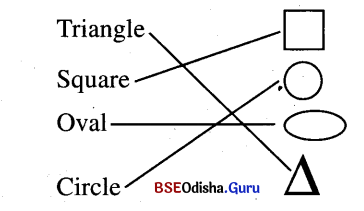
Match the words with the shapes. (Question with Answer)

BSE Odisha 7th Class English Solutions Follow-Up Lesson 2 A Tiny Warrior session 5

6. Writing (ଲିଖନାତ୍ମକ)

(a) Teacher gives some questions for writing in one sentence each.
(b) See the notes given by Mr. Giri on the paragraph. Now write a paragraph based on the notes. (Do not see the original paragraph while doing this task). Some help is given.

The paragraph is about __________ cricket ground. __________. Some cricket grounds are_____________. Some are ___________. The Melbourne ____________is ___________than the ___________. Some __________ are circular. Some ____________ are _________. The ___________ is ___________. The ___________is oval. The Melbourne _____________is in Australia.
Answer:
The paragraph is about size and shape of cricket ground. Some cricket grounds are bigger. Some are smaller. The Melbourne cricket ground is bigger than the Feroz Shah. Some cricket ground are circular. Some cricket grounds are oval. The Chepauk cricket ground is circular. The Adelaide cricket ground is oval. The Melbourne cricket ground is in Australia.

7. Mental Talk (ମାନସ କଥନ) :

_____________________________________________________

_____________________________________________________.
8. Let’s Think (ଚାଲ ଚିନ୍ତା କରିବା ବା କଳ୍ପନା କରିବା):

_____________________________________________________

_____________________________________________________.

Word Note: (The words/phrases have been defined mostly on their contextual meanings)

acute (ଆକ୍ୟୁଟ୍) – intense, severe (ଉତ୍କଟ)
ban – to say that something must not be done
bull dog (ବୁଲ୍ ଡର)- a type of strong dog (ଏକ ପ୍ରକାର ଶକ୍ତିଶାଳୀ କୁକୁର)
Chinese Great Wall (ଚାଇନିଜ୍ ଗ୍ରେଟ୍ ୱାଲ୍) – Historic Great Wall of Chine (ପ୍ରାଚୀର)
dazzling (ଡାକ୍‌ଲିଙ୍ଗ୍) – very bright (ଚମକୁଥୁବା )
disappear (ଡିସ୍‌ପିୟର) – to go away (ଅଦୃଶ୍ୟ ହେବା । ଦୂର ହେବା)
disturbed (ଡିଷ୍ଟର୍ବଡ୍) – made him worried/unhappy  (କଲା)
encyclopedias (ଏନସାଇକ୍ଲୋପିଡିଆ) – knowledge books (ଜ୍ଞାନ ପୁସ୍ତକ)
flooded (ଫ୍ଲଡେଡ୍) – filled with (moon light) (ଚନ୍ଦ୍ର ଆଲୋକ) ରେ ପରିପୂର୍ଣ୍ଣ
glamour (ଗ୍ଲାମର୍) – beauty (ସୌନ୍ଦର୍ଯ୍ୟ)
in contrast (ଇନ୍ କନ୍‌ଷ୍ଟ୍ରିଟ୍) – in comparison (ତୁଳନାତ୍ମକ ଭାବରେ)
indifferent (ଇନ୍‌ଫରେଣ୍ଡ୍) – lack of interest (ଅନାଗ୍ରହ)
lit by lamps (ପ୍ରଦୀପ ଦ୍ୱାରା ପ୍ରଜ୍ୱଳିତ) – lighted with lamps
palatial building (ପାଲଟିଆ ବିଲଡିଂ) – royal building (ରାଜକୀୟ ଭବନ)
prison (ପ୍ରିଜନ୍) – a building where usually thieves and criminals are kept for punishment
privileged (ପ୍ରିଭିଲିଜ୍) – blest with special benefits, wealth etc. (ବିଶେଷ ଅଧିକାରପ୍ରାପ୍ତ)
richness (ରିନେସ୍ ) – the quality of being rich (ବିତ୍ତଶାଳୀ ଭାବ)
sadness (ସ୍ୟାଡ଼ନେସ୍ ) – unhappiness (ଦୁଃଖ | ବିଷାଦ)
scattered (ସ୍କାଟର୍‌ଡ଼) – seen over a wide area (ବିଛୁରିତ)
surrounded (ସରାଉଣ୍ଡେଡ୍) – covered from all sides
tiny – small (ଛୋଟ)
toiling (ଟଏଲିଙ୍ଗ୍) – doing hard labour (ଅତ୍ୟଧ୍ଵ ପରିଶ୍ରମ କରୁଥିବା)
wretched condition – very poor condition
similarity (ସିମିଲାରିଟି) – ସମାନତା
warrior (ୱାରିଅର୍) – soldier (ଯୋଦ୍ଧା, କିନ୍ତୁ ଏଠାରେ ଭୁଲ ବ୍ୟବସ୍ଥା ବିରୁଦ୍ଧରେ ଲଢ଼ୁଥିବା ବ୍ୟକ୍ତି ପାଇଁ ବ୍ୟବହାର କରାଯାଇଛି)।

BSE Odisha 7th Class English Solutions Follow-Up Lesson 2 A Tiny Warrior Important Questions and Answers

(A) Choose the right answer from the options.
Question 1.
Mitu studies in class VII but Situ studies in class __________.
(i) IX
(iii) IV
(iv) V
(ii) X
Answer:
(iv) V

Question 2.
Mr. giri was their _________.
(i) uncle
(ii) father
(iii) grandfather
(iv) brother
Answer:
(i) uncle

Question 3.
The Melbourne cricket ground is in ___________.
(i) America
(ii) Japan
(iii) Australia
(iv) Korea
Answer:
(iii) Australia

Question 4.
Situ’s answer was correct but the teacher didn’t give her any mark because he ___.
(i) her handwriting is not good
(ii) she copied it from another student
(iii) he thought wrong answer of bazzar notebok to be correct
(iv) his relation with Mitu is not good.
Answer:
(iii) he thought wrong answer of bazzar notebok to be correct

Question 5.
The headmistress made __________the leader of the movement against meaning books in their school.
(i) Situ
(ii) Mitu
(iii) Mr. Giri
(iv) the English teacher
Answer:
(i) Situ

(B) Answer the following questions.
Question 1.
Are bazzar note books useful for students? Why? or Why not?
Answer:
No, the bazzar note books are not useful for students. They have lot of mistakes and a student can’t learn English properly by using them.

Question 2.
Why did Mr. Giri want to help Mitu in learning English?
Answer:
Mr. Giri saw Mitu reading a paragraph of English lesson from textbook and then followed a bazzar note book for its meaning. As this would not help her in learning English properly, so he wanted to help her.

(C) Re-arrange the jumbled words to make meaningful sentences.
1. attacks / the / his / walls / were / protection / outside / from
Answer:
The walls were his protection from outside attacks.

2. the / in / nights/building / moonlit / looked / beautiful / very
Answer:
In moonlit nights, the building looked very beautiful.

3. man / the / lived / rich /, / there / a / like / king / happily / very
Answer:
The rich man lived there like a king very happily.

4. people / to / poor / the / one / the / day/man / rich / his / took / son
Answer:
One day the rich man took his son to the poor people.

5. food / they /, / theirs / buy / me / grow
Answer:
We buy food, they grow theirs.

(D) Find whether True or False.
1. Once upon a time there was a very rich man.
Answer:
True

2. He along with his family lived in a small hut down the hill.
Answer:
False

3. The building, the walls all around and the gardens inside were lit by moonlight.
Answer:
False

4. His only sorrow was that his Only son did not like all his richness and glamour.
Answer:
True

5. One day the rich man took his son to wander in the forest.
Answer:
False

BSE Odisha 7th Class English Solutions Test-2

Odisha State Board BSE Odisha 7th Class English Solutions Test-2 Textbook Exercise Questions and Answers.

BSE Odisha Class 7 English Solutions Test-2

BSE Odisha 7th Class English Test-2 Text Book Questions and Answers

The figures in the right-hand margin indicate the marks for each question.
1. Your teacher will dictate ten words. Listen to him/her and write. [10]

text 2
Answer:
drowsy lullaby leap
mob stones heavier
weaver color
already float

BSE Odisha 7th Class English Solutions Test-2

2. Given below are some words. Your teacher will read aloud ten of them. Tick those s/he reads aloud. [10]
the study, family, paddy, wood, quack, worship, bow, arrow, collector, respect, grow, float, change, ride, spring.
Answer:
[Students tick the words that their teacher read aloud]

3. Your teacher will read aloud a paragraph. Listen to him/her and fill in the gaps. [10]
One day the ___________ man took ___________to the poor people living in ___________down the hills. He had in his mind to show his son how ___________he was in contrast to the ___________. He thought this would work like ______________.
Answer:
One day the rich man took his, son to the poor people living in small huts down the hills. He had in his mind to show his son how rich he was in contrast to the poor farmers. He thought this would work like medicine for his son’s sadness.

4. Your teacher will dictate ten names of persons. Listen to him/her and write in the space provided. [10]
text 2 Q4
Answer:
ବିରାକିଶୋର ଦାସ |  – Birakishore Das
ନିଲମାନି ମାର୍ଗ        – Nilamani Routray
ମଧୁସୂଦନ ଦାସ       – Madhusudan Das
ଗୋପାଳକୃଷ୍ଣ ଗୋଖଲେ | – Gopalkrushna Gokhle
ତିଲ୍କା ମାଜି             – Tilka Majhi
ଲକ୍ଷ୍ମଣ ନାୟକ |       – Laxman Nayak
ସୁରେନ୍ଦ୍ର ସାଇ          – Surendra Sai
ପଦ୍ମଲୋଚନ ବେହେରା | – Padmalochan Behera
ଲିଙ୍ଗରାଜ ନନ୍ଦା |      – Lingaraj Nanda
ରାଧନାଥ ରୟ        – Radhanath Roy

5. Your teacher will dictate ten names of persons. Listen to him/her and write in the space provided. [10]
text 2 Q5
Answer:
ବରିପଡା |  – Baripada
କେନ୍ଦୁଝର   – Keonjhar
କାକଟପୁର  – Kakatpur
ମୁମ୍ବାଇ |     – Mumbai
ରାୟାଗଡା | – Raygada
ବୋରିଗୁମା  – Boriguma
ସମ୍ବଲପୁର   – Sambalpur
କୋଲକାତା – Kolkata
ବେଙ୍ଗାଲୁରୁ  – Bengaluru
ଆହ୍ଲାବାଦ  – Allahabad

BSE Odisha 7th Class English Solutions Test-2

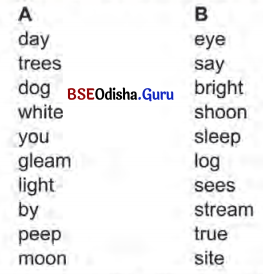
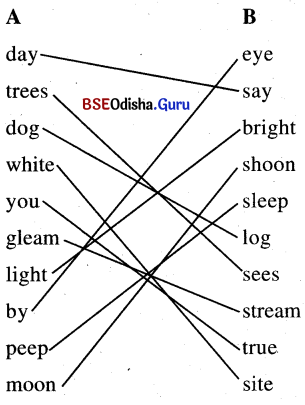
6. Match the pair of words that sound alike at the end.
Question 6
Answer:
Question 6.1

7. Order the letters to make meaningful words.
melca, mio, tresof, bitrba, cajkla, reed, veirr
Answer:
melca — camel
Inio — lion
tresof — forest
bitrba — rabbit
cajkla — jackal
reed — deer
veirr — river

BSE Odisha 7th Class English Solutions Test-2

8. Read the paragraph and answer the questions in complete sentences.[20]
There was a deep forest. In that deep forest lived a rabbit. One moonlit night the rabbit was walking happily near that forest. On his way, he came across a well. He looked into the well, and to his surprise, saw a big white ball. The white ball was floating on the water. The ball was nothing, but the reflection of the moon. But he thought it was a big cake.

(i) Where did the rabbit live?
Answer:
The rabbit lived in a deep forest.

(ii) Where was the rabbit walking?
Answer:
The rabbit was walking near the forest.

(iii) When was he walking near the forest?
Answer:
He was walking near the forest on a moonlit night.

(iv) What did he come across on his way?
Answer:
He came across a well on his way.

(v) What did he see in the well?
Answer:
He saw a big white ball floating on the water of the well.

(vi) What did he think?
Answer:
He thought that the big white ball was a big cake.

(vii) What was it?
Answer:
It was the reflection of the moon.

(viii)Was the rabbit clever? How do you know?
Answer:
No, the rabbit was not clever. Because he thought the reflection of the moon on the water was a big cake.

(ix) In the last line ‘it’ is used for
Answer:
In the last line ‘it’ is used for the reflection of the moon.

(x) What looked like a cake?
Answer:
The reflection of the moon on the water of the well looked like a cake.

BSE Odisha 7th Class English Solutions Test-2

9. Read the following poem and answer the questions in complete sentences. [14]

White sheep, white sheep
On a blue hill,
When the winds stop
You all stand still.

You all run away
When the winds blow.
White sheep, white sheep,
Where do you go?

Question 1.
What is the poem about?
Answer:
The poem is about clouds floating in the sky.

Question 2.
How many stanzas are there in this poem?
Answer:
There are two stanzas in this poem.

Question 3.
Where are the white sheep?
Answer:
The white sheep are on the blue hill.

Question 4.
When do they stand still?
Answer:
When the winds stop, they stand still.

Question 5.
When do they run away?
Answer:
When the winds blow, they run away.

Question 6.
Who is asking “Where do you go ?”
Answer:
The poet is asking “Where do you go ?”

Question 7.
Who is compared to the white sheep?
Answer:
The white clouds floating in the blue sky are compared to white sheep.