The First Step Question Answer Class 9 English Non-Detailed Chapter 3 BSE Odisha

Odisha State Board BSE Odisha 9th Class English Solutions Non-Detailed Chapter 3 The First Step Textbook Exercise Questions and Answers.

Class 9th English Non-Detailed Chapter 3 The First Step Question Answers BSE Odisha

The First Step Class 9 Questions and Answers

Introduction :
The men and the women are like the two sides of a coin. If one of the two becomes defective, the society can’t progress. Hence, the female education is highly necessary for the well being of the society. In the past female education was discouraged. But now “Education For All” is the slogan of the day. Still some parents are not conscious about sending their girlchildren to schools. Of course in some cases poverty comes in their way. All should be careful about the girls’ education for the betterment of the society. Now read the story “The First Step” to know the writer’s view on girls’ education

Notes :
coin – ମୁଦ୍ରା, society – ସମାଜ, defective – ତ୍ରୁଟିଯୁକ୍ତ, progress – ପ୍ରଗତି, necessary- ଆବଶ୍ୟକ, was discouraged- ନିରୁତ୍ସାହିତ ହେଲା, poverty – ଦାରିଦ୍ର୍ୟ, betterment- ଉନ୍ନତି,education- ଶିକ୍ଷା, conscious – ସଚେତ, of course – ଅବଶ୍ୟ.

ବିଷୟ ସୂଚନା :
ପୁରୁଷ ଏବଂ ନାରୀ ଗୋଟିଏ ମୁଦ୍ରାର ଦୁଇଟି ପାର୍ଶ୍ଵ ସଦୃଶ । ଏମାନଙ୍କ ମଧ୍ୟରୁ ଗୋଟିଏ ଯଦି ତ୍ରୁଟିଯୁକ୍ତ ହୁଏ, ତା’ହେଲେ ସମାଜ ପ୍ରଗତି କରିପାରିବ ନାହିଁ । ଏଣୁ, ସମାଜର ଉନ୍ନତି ପାଇଁ ନାରୀ ଶିକ୍ଷା ଅତ୍ୟନ୍ତ ଅପରିହାର୍ଯ୍ୟ । ଅତୀତରେ ନାରୀଶିକ୍ଷାକୁ ହତୋତ୍ସାହିତ କରାଯାଉଥିଲା । କିନ୍ତୁ ଆଜିର ସ୍ଲୋଗାନ୍ ହେଉଛି ‘‘ସମସ୍ତଙ୍କ ପାଇଁ ଶିକ୍ଷା ।’’ ତଥାପି କେତେକ ପିତାମାତା ସେମାନଙ୍କ ଝିଅକୁ ବିଦ୍ୟାଳୟକୁ ପଠାଇବାକୁ ସଚେତନ ନୁହନ୍ତି । ବୋଧହୁଏ କେତେକ କ୍ଷେତ୍ରରେ ଦାରିଦ୍ର୍ୟ ସେମାନଙ୍କ ରାସ୍ତାରେ (ପାଠପଢ଼ାରେ) କଣ୍ଟା ସାଢୁଛି । ଆମ ସମାଜର ଉତ୍ତରୋତ୍ତର ଉନ୍ନତି କଳ୍ପେ ଆମେ ସମସ୍ତେ ‘ବାଳିକା ଶିକ୍ଷା’’ ପ୍ରତି ଯତ୍ନବାନ୍ ହେବା ଉଚିତ । ବାଳିକା ଶିକ୍ଷା ସମ୍ବନ୍ଧରେ ଲେଖକଙ୍କ ଦୃଷ୍ଟିଭଙ୍ଗୀ ଜାଣିବା ପାଇଁ ଏବେ “The First Step” ଗପଟିକୁ ପଢ଼ ।

Summary: I
Ammu, was a ten-year-old motherless girl, who lived with her father, Chellappa and little brother, Chinni. She had to do all the household work. One day her father ordered her to make tea for him in the morning. She prepared it. Just then Chellappa told her that he wanted her to work as a maid in his new owner’s house. Chellappa was the watchman at the big house on the hill. The owner of the big house had died. Chellappa came to know that the new owner, his (the owners) sister’s daughter was coming to live there shortly. The new owner was in need of a reliable maid.

So Chellappa told his daughter to work as a maid there so that the earned money will be used for Chinni’s study. Ammu expressed her eagerness to go to school like her brother. But her father turned it down on the plea that education would be of no use to the girls. Ammu was in tears. She remembered her mother. Then Chellappa ordered his daughter to go to the big house and clean that house at 9 o’clock. Chellappa’s family lived in the servant’s quarters of the big house. Ammu cleaned her home first. Then she walked to the big house packing her father’s lunch.

BSE Odisha 9th Class English Solutions Non-Detailed Chapter 3 The First Step

Notes :
motherless – ମାତୃତ୍ୱହୀନ , household work – ଘର କାମ, prepared – ପ୍ରସ୍ତୁତ, maid – ଚାକରାଣୀ, watchman – ରାକ୍ଷୀ, owner – ମାଲିକ, reliable – ନିର୍ଭରଯୋଗ୍ୟ, eagerness -ଆଗ୍ରହ, cleaned – ସଫା, lunch – ମଧ୍ୟାହ୍ନ ଭୋଜନ

ସାରାଂଶ :
ଆମ୍ମୁ ଜଣେ ଦଶବର୍ଷୀୟା ମାତୃହରା ବାଳିକା ଥିଲା ଯିଏକି ତା’ର ବାପା ଚେଲାୱା ଓ ସାନଭାଇ ଚିନି ସହିତ ବାସ ଦେଲେ । ସେ ଚାହା ପ୍ରସ୍ତୁତ କରି ତା’ର ବାପାଙ୍କୁ ଦେଲା । ଠିକ୍ ସେହି ସମୟରେ ଚେଲାପ୍ପା ତାକୁ ନୂଆ ମାଲିକ ଘରେ ଚାକରାଣୀଭାବେ କାର୍ଯ୍ୟ କରିବାକୁ କହିଲା ।ମରିଯାଇଥିଲେ । ସେ ଶୁଣିବାକୁ ପାଇଥିଲା ଯେ ତାଙ୍କ ଭଉଣୀର ଝିଅ, ନୂଆ ମାଲିକାଣୀ ଭାବରେ ସେଠାରେ ରହିବାକୁ ଖୁବ୍ ଶୀଘ୍ର ଆସୁଛନ୍ତି । ନୂଆ ମାଲିକାଣୀ ଗୋଟିଏ ନିର୍ଭରଯୋଗ୍ୟ ଚାକରାଣୀ ରଖୁବାକୁ ଚାହୁଁଥିଲେ ।

ତେଣୁ ଚେଲ୍ଲାୱା ପୁଅର ପାଠପଢ଼ା ପାଇଁ ଟଙ୍କା ପାଇବାକୁ ଝିଅକୁ ସେଠାରେ ଚାକରାଣୀ ଭାବେ କାର୍ଯ୍ୟ କରିବାକୁ କହିଥିଲା । ଆମ୍ମୁ ତା’ର ଭାଇ ଭଳି ବିଦ୍ୟାଳୟକୁ ଯିବାକୁ ଆଗ୍ରହ ପ୍ରକାଶ କରିଥିଲା । ତା’ର ବାପା କିନ୍ତୁ ଶିକ୍ଷା ଝିଅମାନଙ୍କର କୌଣସି କାମରେ ଲାଗିବ ନାହିଁ ବୋଲି କହି କଥାଟିକୁ ଟାଳିଦେଲେ । ଆଖୁ ତା’ର ମାଆ କଥା ମନେପକାଇ କାନ୍ଦି ପକାଇଲା । ଚେଲ୍ଲାୱା ଦିନ ୯ଟାରେ ବଡ଼ଘରକୁ ଯାଇ ସେ ଘରକୁ ସଫା କରିବାକୁ ଝିଅକୁ ଆଦେଶ ଦେଲା । ସେମାନେ ବଡ଼ଘରର ଚାକରମାନଙ୍କ ଉଦ୍ଦିଷ୍ଟ ଘରେ ରହୁଥିଲେ । ଆମ୍ମୁ ପ୍ରଥମେ ନିଜ ଘର ସଫା କଲା । ତା’ପରେ ବାପାଙ୍କ ମଧ୍ୟାହ୍ନ ଭୋଜନ ଖାଦ୍ୟ ସଜାଡ଼ି ସାରି ଚାଲି ଚାଲି ବଡ଼ଘରକୁ ଚାଲିଲା ।

The Text: ପାଠ୍ୟଚିଷୟ
Paragraphwise Analysis
Text- 1

“Ammu! Wake up and make tea for me !” a hand roughly shook the ten-year-old girl awake. Ammu yawned and rubbed off the sleep from her eyes. She rose with a sigh and took the vessel of milk her father held out. Her eyes watered from the smoke that came out as she blew on the flames. “Come outside, I want to talk to you,” he ordered. Ammu carried the glass of tea and followed her father. “Yesterday evening, I learnt that the new owner will be coming any day to occupy the house,” he began.

“I was asked if a reliable maid would work there and I suggested your name at once.” Ammu’s father, Chellappa, was the watchman at the big house on the hill. The owner had died a couple of months ago, and they had heard that he had left the house to his sister’s daughter. The people in the neighbourhood wondered when the new owner would come to live there.

ଅନୁବାଦ :
“ ଆଖୁ ! ଉଠିପଡ଼ ଓ ମୋ ପାଇଁ ଚାହା ତିଆରି କର !’’ ଗୋଟିଏ ହାତ ବେପରୁଆ ଭାବରେ ଦଶବର୍ଷର ଝିଅକୁ ଆମ୍ମୁ ହାଇ ମାରିଲା ଓ ନିଜ ଆଖୁରୁ ନିଦ ପୋଛିଦେଲା । ଦୀର୍ଘଶ୍ଵାସ ମାରି ସେ ଉଠି ଠିଆହୋଇ ତା’ ବାପା ତା’ ଆଡ଼କୁ ବଢ଼ାଇଥବା କ୍ଷୀର ଜଗଟିକୁ ଧରିଲା । ଆଖୁ ଚୁଲି ଫୁଙ୍କୁଥିଲାବେଳେ ଧୂଆଁର ସ୍ପର୍ଶରେ ତା’ର ଆଖ୍ ଦୁଇଟିରେ ପାଣି ଜକେଇ ଆସିଲା । ‘‘ବାହାରକୁ ଆ, ମୁଁ ତୋ’ ସହିତ କଥା ହେବାକୁ ଚାହେଁ, ’’ ସେ ଆଦେଶ ଦେବା ଭଙ୍ଗୀରେ କହିଲେ । । ‘‘ଗତକାଲି ସନ୍ଧ୍ୟାରେ ମୁଁ ଜାଣିବାକୁ ପାଇଲି ଯେ ନୂଆ ଆମ୍ମୁ ଚାହା ଗ୍ଲାସ ନେଲା ଓ ତା’ର ବାପାଙ୍କ ପଛେ ପଛେ ଗଲା ସେ ଘରେ କାମ କରିବେ ଓ ମୁଁ ସଙ୍ଗେ ସଙ୍ଗେ ତୋ’ ନାଁ ପ୍ରସ୍ତାବ ଦେଇଦେଲି ।’’ ଆମ୍ମୁର ବାପା, ଚେଲାପା ପାହାଡ଼ ଉପରେ ଅବସ୍ଥିତ ବଡ଼ଘରେ ପହରାଦାର ଥିଲେ । ଘରର ମାଲିକ ଦୁଇ ମାସ ପୂର୍ବରୁ ମରିଯାଇଥିଲେ ଏବଂ ସେମାନେ ଶୁଣିଥିଲେ ଯେ ସେ (ମାଲିକ) ନିଜ ଭଉଣୀର ଝିଅକୁ ସେ ଘରଟି ଛାଡ଼ି ଦେଇଥଲେ । ପଡ଼ୋଶୀ ଲୋକମାନେ ଉତ୍ସୁକତାର ସହ ଚାହିଁ ରହିଥିଲେ ଯେ ନୂଆ ମାଲିକାଣୀ କେତେବେଳେ ସେଠାରେ ରହିବାକୁ ଆସିବେ ।

Text- 2
“The money will be useful,” Chellappa said thoughtfully as he sipped his tea. “Why ?” Ammu asked curiously. “Because I need money to send Chinni to school,” her father replied curtly. Chinni is Ammu’s little brother. “What about me? I would like to go to school too!” Ammu said. “You are only a girl. Of what use will education be to you? You will get married even before you finish the third grade! Chinni will get a good job if he is educated,” her father retorted. Ammu turned away to hide her tears.

She wished that her mother was alive. She would not have allowed Chellappa to speak so uncaringly. Her mother would have let Ammu go to school at least to learn the alphabet. “Ammu, I will be busy all day at the big house. Come there at 9 o’clock to clean the house. I want the new owner to get a good impression. But before that you clean our house,” Chellappa said. Ammu cleaned their home which was a room in the servant’s quarters of the big house. She washed all the clothes before having her own bath. She packed her father’s lunch and walked to the big house.

ଅନୁବାଦ :
ଚାହା ପିଉ ପିଉ ଚେଲାପା ଭାବୁକ ହୋଇ କହିଲା, ‘ଟଙ୍କା କାମରେ ଆସିବ ।’’ “‘କାହିଁକି ବାପା ?’’ ଆଖୁ ଜିଜ୍ଞାସୁ ଭାବରେ କହିଲା । “‘କାହିଁକି ନା ଚିନ୍ତିକୁ ସ୍କୁଲରେ ପାଠ ପଢ଼ାଇବାପାଇଁ ମୋର ଟଙ୍କା ଦରକାର,’’ ଆଣ୍ଠୁର ବାପା ରୁକ୍ଷ ଭାବରେ କହିଲେ । ଚିନି ହେଉଛି ଆମ୍ମୁର ଛୋଟ ଭାଇ । ‘ଆଉ ମୋ’ ସମ୍ବନ୍ଧରେ ? ମୁଁ ବି ଚିନି ଭଳି ସ୍କୁଲକୁ ଯିବାକୁ ଚାହୁଁଛି !’’ ଆଖୁ କହିଲା । ‘‘ତୁ’ ସାମାନ୍ୟ ଝିଅଟିଏ ! ତୋ ପାଇଁ ପାଠ କି କାମ ଦେବ ? ତୃତୀୟ ଶ୍ରେଣୀ ଶେଷ କରିବା ପୂର୍ବରୁ ତୁ ବାହା ହୋଇଯିବୁ । ଚିନ୍ନ ପାଠ ପଢ଼ିଲେ ଭଲ ଚାକିରିଟିଏ କରିବ,’’ ତା’ର ବାପା ଚଟାପଟ ଜୋର୍ ଦେଇ କହିଲେ ।

ନିଜର ଲୁହକୁ ଲୁଚାଇବାପାଇଁ ଆଖୁ ବୁଲି ପଡ଼ିଲା । ଏବେ ତା’ ମା’ ବଞ୍ଚୁ ଥାଆନ୍ତା କି ! ଏଭଳି ବେପରୁଆ ଭାବରେ ସେ ଚେଲ୍ଲାପାକୁ କୁହାଇ ଦେଇ ନ ଥା’ନ୍ତେ। ଅତି କମ୍‌ରେ ଅକ୍ଷର ଲେଖୂପଢ଼ି ଶିଖୁବାପାଇଁ ତା’ର ମାଆ ଆମ୍ମୁକୁ ନିଶ୍ଚୟ ସ୍କୁଲକୁ “‘ଆମ୍ମୁ, ମୁଁ ବଡ଼ଘରେ ଦିନସାରା ବ୍ୟସ୍ତ ରହିବି । ଘର ସଫା କରିବାକୁ ସେଠାକୁ ୯ଟା ନୂଆ ମାଲିକାଣୀ ଗୋଟିଏ ଭଲ ଧାରଣା ରଖନ୍ତୁ । କିନ୍ତୁ ତା’ ପୂର୍ବରୁ ତୁ ଆମର ଘରକୁ ସଫା ବେଳେ ଆସିବୁ । ମୁଁ ଚାହୁଁଛି ଘରର କରିଦେ, ’’ ଚେଲାପା କହିଲେ ।ଥିଲା । ଆଖୁ ନିଜେ ଗାଧୋଇବା ପୂର୍ବରୁ ସବୁ ପୋଷାକ ଧୋଇଦେଲା । ସେ ବାପାଙ୍କର ମଧ୍ୟାହ୍ନ ଭୋଜନକୁ ଡବାରେ ରଖୁଲା

BSE Odisha 9th Class English Solutions Non-Detailed Chapter 3 The First Step

Notes And Glossary : (ଟିପ୍ପଣୀ ଏବଂ ଗ୍ଲୋସାରୀ)

wake up – ଜାଗ୍ରତ ହୁଅ
roughly – severely – ପ୍ରାୟ
yawn – open the mouth wide and breathe in deeply due to tiredness – ଉଲଗ୍ନ କରିବା
rub – ଘଷିବା
sigh – ଦୀର୍ଘଶ୍ୱାସ ନେବା
vessel – ପାତ୍ର
reliable – ନିର୍ଭରଯୋଗ୍ୟ
maid – a female servant – ଚାକରାଣୀ
occupy – ଦଖଲ କରନ୍ତୁ
suggest – ପରାମର୍ଶ ଦିଅନ୍ତୁ
at once – ଏକା ଥରେ
watchman – ରାକ୍ଷୀ
wonder – curious to know – ଆଶ୍ଚର୍ଯ୍ୟ
thoughtfully – ଚିନ୍ତାରେ
sip – ଚୁପ୍
curiously – eagerly (to know something) – କୌତୂହଳର ସହ
curtly – rudely – ଚତୁରତାର ସହ
grade – class – ଗ୍ରେଡ୍
retort – make a sharp or immediate reply – ପ୍ରତ୍ୟାବର୍ତ୍ତନ
uncaringly – ଅବହେଳିତ ଭାବରେ
impression – ପ୍ରଭାବ
quarter – ଚତୁର୍ଥାଂଶ

Now Answer The Following Questions
(ବର୍ତ୍ତମାନ ନିମ୍ନଲିଖୂତ ପ୍ରଶ୍ନଗୁଡ଼ିକର ଉତ୍ତର ଲେଖ)

Question 1.
Who are the characters in this part of the story?
(ଗଳ୍ପଟିର ଏହି ଅଂଶରେ କେଉଁ ଚରିତ୍ରମାନେ ଅଛନ୍ତି ?)
Answer:
Chellappa, his ten year old daughter Ammu and son Chinni are the characters in this part of the story.

Question 2.
Describe Ammu’s house and family.
(ଆଶୁର ଘର ଓ ପରିବାର ବର୍ଣ୍ଣନା କର ।)
Answer:
Ammu’s father Chellappa was a watchman at the big house on the hill. She was ten years old and her brother, Chinni was five years old. She had lost her mother. They used to live in a room in the servant’s quarters of the big house.

Question 3.
Who was Chellappa? What did he tell Ammu?
( ଚେଲାୱା କିଏ ଥିଲେ ? ସେ ଆଣ୍ଠୁକୁ କ’ଣ କହିଲେ?)
Answer:
Chellappa was Ammu’s father who worked as a watchman at the big house on the hill. He told Ammu to work as a maid in the new owner’s house so that he can get money for his son, Chinni’s study.

Question 4.
Did Ammu want to go to school? How did her father react to Ammu’s wish to go to school?
(ଆଖୁ ସ୍କୁଲ ଯିବାକୁ ଚାହୁଁଥିଲା କି ? ଆମ୍ଭୁର ସ୍କୁଲ ଯିବା ଇଚ୍ଛାକୁ ନେଇ ତା’ର ବାପା କିପରି ପ୍ରତିକ୍ରିୟା ପ୍ରଦର୍ଶନ କଲେ ?)
Answer:
Ammu came to know that her father was interested to send her little brother Chinni to school. So she expressed her eagerness to go to school like her brother. But Chellappa refused and told that education would be of no use to the girls like her. Besides she would get married before she finished the third grade.

Question 5.
Do you think Ammu’s father would send her to school?
(ତୁମେ ଭାବୁଛ କି ଆମ୍ମୁର ବାପା ତାକୁ ସ୍କୁଲକୁ ପଠାଇବେ ?)
Answer:
No. Ammu’s father wouldn’t send her to school as he did not approve the girls’ education.

Summary: II

Chellappa’s new owner, Mrs Mohan was a slim and grey-haired lady. She was also a widow. Chellappa introduced his daughter with the new owner and told her that his daughter had already cleaned the house before her arrival. Mrs Mohan was educated and very polite and kind. The next morning when Ammu went there. Mrs Mohan greeted her and offered a glass of tea before cleaning the house. Ammu was very happy with her new owner.

When she was working in the drawing-room she was attracted towards the book case. She opened a book and looked at the pictures in it with great interest. That day Mrs Mohan asked Ammu about her brothers and sisters. Ammu told in a thrilling voice how her father had decided to educate her brother, Chinni. Again she also told with regret how her request for attending school had been turned down by her father. Mrs Mohan could realize Ammu’s desire to study.

BSE Odisha 9th Class English Solutions Non-Detailed Chapter 3 The First Step

Notes :
slim – ପତଳା, widow – ବିଧବା, educated – ଶିକ୍ଷିତ, polite- ନମ୍ର, drawing-room- ଚିତ୍ରାଙ୍କନ କକ୍ଷ, interest – ଆଗ୍ରହ, thrilling – ରୋମାଞ୍ଚକର, regret – ଅନୁଶୋଚନା, realize – ଅନୁଭବ କରିବା

ସାରାଂଶ :
ଚେଲ୍ଲାୱାର ନୂଆ ମାଲିକାଣୀ, ଶ୍ରୀମତୀ ମୋହନ ଖୁବ୍ ପତଳୀ ଓ ପଦ୍ମକେଶୀ ମହିଳା ଥିଲେ । ସେ ମଧ୍ୟ ବିଧବା ଥିଲେ । ଚେଲ୍ଲାୱା ନିଜ ଝିଅକୁ ନୂଆ ମାଲିକାଣୀ ସହିତ ପରିଚିତ କରାଇଦେଲା ଏବଂ ତା’ର ଝିଅ ତାଙ୍କ ଆସିବା ପୂର୍ବରୁ ଘର ସଫା କରି ସାରିଥିବା କଥା ପ୍ରକାଶ କଲା । ଶ୍ରୀମତୀ ମୋହନ ଶିକ୍ଷିତା, ନମ୍ର ଓ ଦୟାଳୁ ଥିଲେ । ପରଦିନ ସକାଳୁ ଯେତେବେଳେ ଆଖୁ ସେଠାକୁ ଗଲା । ଶ୍ରୀମତୀ ମୋହନ ତାକୁ ଅଭିନନ୍ଦନ ଜଣାଇଲେ ଏବଂ ଘର ସଫା କରିବା ପୂର୍ବରୁ ଗୋଟିଏ ଗ୍ଲାସ୍ ଚାହା ପିଇବାକୁ ଦେଲେ ।

ଆମ୍ମୁ ତା’ର ନୂଆ ମାଲିକାଣୀ ଉପରେ ଭାରି ଖୁସି ଥିଲା । ବୈଠକଘରେ କାମ କରୁଥିବା ସମୟରେ ସେ ବହିଥାକ ପ୍ରତି ଆକର୍ଷିତ ହେଲା । ସେ ଗୋଟିଏ ବହି ଖୋଲି ସେଥ‌ିରେ ଥ‌ିବା ଚିତ୍ରଗୁଡ଼ିକୁ ଅତି ଆଗ୍ରହର ସହିତ ଦେଖୁବାକୁ ଲାଗିଲା । ସେହିଦିନ ଶ୍ରୀମତୀ ମୋହନ ଆମ୍ଭକୁ ତା’ର ଭାଇ ଓ ଭଉଣୀମାନଙ୍କ ବିଷୟରେ ପଚାରିଲେ । ତା’ର ବାପା କିପରି ତା’ର ସାନଭାଇ, ଚିନିକୁ ପଢ଼ାଇବାକୁ ସ୍ଥିର କରିଛନ୍ତି ବୋଲି ଆମ୍ମୁ ପ୍ରକାଶ କଲା । ପୁନଶ୍ଚ ସେ ବିଦ୍ୟାଳୟକୁ ଯିବାପାଇଁ କରିଥିବା ଅନୁରୋଧକୁ ତା’ର ବାପା କିପରି ପ୍ରତ୍ୟାଖ୍ୟାନ କରିଛନ୍ତି ତାହା ବଡ଼ ଦୁଃଖରେ କହିଲା । ଶ୍ରୀମତୀ ମୋହନ ଆଞ୍ଜୁର ପାଠପଢ଼ା ପ୍ରତି ଥିବା ଆଗ୍ରହ ବିଷୟରେ ଜାଣିବାକୁ ପାଇଲେ ।

The Text: ପାଠ୍ୟଚିଷୟ
Paragraphwise Analysis
Text- 1

The new owner arrived. She was a slim, grey-haired lady, dressed in a spotless white saree. “Madam, my daughter, Ammu, will work for you. She has already cleaned your house before your coming’’, Chellappa smiled. “Then I don’t need your help today, Ammu. Will you come tomorrow morning ?” she asked. Ammu nodded. “You can go home now. Come at nine in the morning,” the woman said and asked Chellappa to carry in the suitcases.

The new owner’s name was Mrs. Mohan, and she was a widow. She had a daughter who was married and lived in Bombay. The next morning Ammu went to Mrs. Mohan’s house. “Good morning, Ammu,” Mrs. Mohan greeted her. “Come and have a glass of tea before beginning work. Since you cleaned the house thoroughly only yesterday, it will be enough if you just dust everything. I will be busy unpacking in the bedroom if you want anything.”

ଅନୁବାଦ :
“‘ମହାଶୟା, ମୋ ଝିଅ, ଆଖୁ ଆପଣଙ୍କ ପାଇଁ କାମ କରିବ । ଆପଣ ଏଠାକୁ ଆସିବା ପୂର୍ବରୁ ସେ ଆପଣଙ୍କର ଘରକୁ ସଫା କରିଦେଇ ସାରିଛି,’’ ଚେଲାପା ମୁରୁକି ହସି କହିଲେ । ‘ହେଲେ ଆଜି ମୁଁ ତୋର ସାହାଯ୍ୟ ଦରକାର କରୁନାହିଁ, ଆମ୍ଭେ । ଆସନ୍ତାକାଲି ସକାଳେ ତୁ ଏଠାକୁ ଆସିବୁ କି ?’ ମାଲିକାଣୀ ପଚାରିଲେ । ଆଖୁ ମୁଣ୍ଡ ହଲାଇ ସମ୍ମତି ଜଣାଇଲା ।

‘‘ତୁ ଏବେ ଘରକୁ ଯାଆ ! ସକାଳେ ୯ଟାରେ ଆ,’’ ମହିଳାଜଣକ କହିଲେ ଓ ଘର ଭିତରକୁ ସୁକେଶ ଆଣିବାପାଇଁ ଚେଲ୍ଲାପାକୁ କହିଲେ । ବିବାହିତା ଓ ବମ୍ବେରେ ରହୁଥିଲା । କଲେ । ‘ଆ ଓ କାମ ଆରମ୍ଭ କରିବା ପୂର୍ବରୁ ଏକ ଗ୍ଲାସ୍ ଚାହା ପିଇନେ । ଯେହେତୁ କାଲି ତୁ ଭଲ ଭାବରେ ଘର ସଫା କରିଦେଇଛୁ, ସବୁ ଜିନିଷରୁ କେବଳ ଧୂଳି ଝାଡ଼ିଦେଲେ ଯଥେଷ୍ଟ ହେବ । ତୁ’ ଯଦି କିଛି ଚାହୁଁଛୁ କହ, ମୁଁ ଶୋଇବା ଘରେ ଜିନିଷଗୁଡ଼ିକୁ ଖୋଲି ବାହାର କରିବାରେ ବ୍ୟସ୍ତ ରହିବି ।’’

Text- 2
Ammu washed the few vessels she found in the sink. She took up the duster and went to the drawing-room. The bookcase drew her like a magnet. She fingered the books lovingly and gazed at the pictures in a book. Ammu turned as she heard footsteps approach.
“I will have to sort out all the books. There is quite a vast collection here, and my own books will be coming soon,” said Mrs. Mohan pretending not to have noticed the book in Ammu ’s hand.

“Now, sit down and tell me about yourself. Do you have any brothers and sisters ?” “I have a younger brother, Chinni. He is five years old,” said Ammu. “What does he do ?” “Appa is sending Chinni to school from next week,” Ammu’s voice held a tremor. “Don’t you also want to go to school ?” Mrs. Mohan asked gently. “Appa says it will be of no use to me as I am a girl. If Chinni is educated, it will help him to get a job,” Ammu replied without emotion, “Shall I go and wash the clothes?”

BSE Odisha 9th Class English Solutions Non-Detailed Chapter 3 The First Step

ଅନୁବାଦ :
ବେସିନ୍ ମଧ୍ଯରେ ପଡ଼ିଥିବା କେତେକ ବାସନକୁ ଆମ୍ଭୁ ଧୋଇ ସଫା କଲା । ସେ ଝାଡ଼ଣ ନେଲା ଓ ବୈଠକ ଘର ଭିତରକୁ ଗଲା । ବହି ଆଲମୀରା ତାକୁ (ଆଶୁକୁ) ଚୁମ୍ବକ ଭଳି ଆକର୍ଷିତ କଲା । ଅତି ଖୁସିରେ ବହିଗୁଡ଼ିକୁ ଛୁଇଁ ଗୋଟିଏ ବହିରେ ଥ‌ିବା ସୁନ୍ଦର ଛବି ଆଡ଼କୁ ନିରେଖ୍ ଚାହିଁଲା । ପାଦ ଶବ୍ଦ ପାଖେଇ ଆସୁଥିବାର ଶୁଣି ଆଖୁ ବୁଲି ପଡ଼ିଲା । ‘‘ମୋତେ ବହିସବୁକୁ ସଜାଡ଼ିବାକୁ ପଡ଼ିବ । ଏଠାରେ ବହୁତ ବହି ସଂଗୃହୀତ ହୋଇ ରହିଛି ଓ ମୋର ନିଜର ବହିସବୁ ଶୀଘ୍ର ଆସିଯିବ ।’’ ଆମ୍ମୁର ହାତରେ ଥ‌ିବା ବହିଟିକୁ ନ ଦେଖୁଥ‌ିବାର ଛଳନା କରି ଶ୍ରୀମତୀ ମୋହନ କହିଲେ, ‘ଏବେ ବସିପଡ଼ ଓ ତୋ ବିଷୟରେ ମୋତେ କହ । ତୋର କେହି ଭାଇ ଓ ଭଉଣୀ ଅଛନ୍ତି ?’’

‘‘ମୋର ଗୋଟିଏ ସାନ ଭାଇ ଅଛି ଯାହାର ନାମ ଚିନ୍ତି । ତା’ର ବୟସ ୫ ବର୍ଷ ।’’ ଆଖୁ କହିଲା । ‘ସେ କ’ଣ କରୁଛି ?”” ‘‘ବାପା ଆସନ୍ତା ସପ୍ତାହରୁ ଚିନିକୁ ସ୍କୁଲ୍ ପଠାଇବେ,”’ ଆଖୁ କମ୍ପିତ କଣ୍ଠରେ କହିଲା । ‘‘ତୁ କ’ଣ ତା’ ଭଳି ସ୍କୁଲକୁ ଯିବାକୁ ଚାହୁଁ କି ?’’ ଶ୍ରୀମତୀ ମୋହନ ଧୀର ସ୍ଵରରେ ପଚାରିଲେ । ‘‘ବାପା କହୁଛନ୍ତି ମୁଁ ଗୋଟିଏ ଝିଅ ହୋଇଥ‌ିବାରୁ ଏହା ମୋର କୌଣସି କାମରେ ଆସିବ ନାହିଁ । ଯଦି ଚିନ୍ତି ପାଠ ପଢ଼ି ଶିକ୍ଷିତ ହୁଏ, ଏହା ତାକୁ (ଚିନିକୁ) ଗୋଟିଏ ଚାକିରି ପାଇବାରେ ସାହଯ୍ୟ କରିବ,’’ ବିନା ଆବେଗରେ ଆଖୁ କହି ଚାଲିଲା, ‘ମୁଁ ଏବେ ଯାଇ ଲୁଗାପଟାଗୁଡ଼ିକୁ ସଫା କରିଦେବି କି ???

Notes And Glossary : (ଟିପ୍ପଣୀ ଏବଂ ଗ୍ଲୋସାରୀ)

slim – ପତଳା
grey – haired – ଧୂସର
spotless – ଦାଗହୀନ
nodded – ଆଣ୍ଠେଇ ଦେଲେ
widow – ବିଧବା
vessels – ପାତ୍ରଗୁଡିକ
sink – ବୁଡ଼ିଯିବା
duster – ଧୂଳି
bookcase – ବୁକ୍କେସ୍
fingered – ଆଙ୍ଗୁଠି
magnet – ଚୁମ୍ବକ
gazed – ଅନାଇଲା
footsteps – ପଦାଙ୍କ
collection – ସଂଗ୍ରହ
greet – ନମସ୍କାର
thoroughly – ପୁରା
enough – ଯଥେଷ୍ଟ
dust – ଧୂଳି
unpacking – ପ୍ୟାକ୍ କରିବା
sort out – ବାଛି ନଅ
quite – ଯଥେଷ୍ଟ
vast – ବିସ୍ତୃତ
pretend – ଛଳନା କର
notice – ନୋଟିସ୍
tremor – କମ୍ପନ
gently – ଧୀରେ ଧୀରେ

Now Answer The Following Questions
(ବର୍ତ୍ତମାନ ନିମ୍ନଲିଖୂତ ପ୍ରଶ୍ନଗୁଡ଼ିକର ଉତ୍ତର ଲେଖ)

Question 1.
Who was the new owner of the house? What was she like?
(ଘରଟିର ନୂଆ ମାଲିକାଣୀ କିଏ ଥିଲେ ? ସେ କିପରି ଲୋକ ଥିଲେ ?)
Answer:
The owner of the big house had died and he had left the house to his sister’s daughter, Mrs. Mohan. She was a slim and grey-haired widow and dressed in a spotless white saree.

Question 2.
What did Ammu do at Mrs Mohan’s house the next morning?
(ପରିଦିନ ସକାଳେ ଆଖୁ ଶ୍ରୀମତୀ ମୋହନଙ୍କ ଘରେ କ’ଣ କଲା ?)
Answer:
The next morning Ammu went to Mrs Mohan’s house. Mrs Mohan told her just to dust everything as she had already cleaned the house thoroughly the previous day. Ammu washed the vessels in the sink. She took up the duster and went to the drawing-room to dust the things there.

Question 3.
What drew Ammu like a magnet? What did she do then? Why?
(କ’ଣ ଆଖୁକୁ ଚୁମ୍ବକ ଭଳି ଟାଣି ଆଣିଲା ? ସେତେବେଳେ ସେ କ’ଣ କଲା ? କାହିଁକି ?)
Answer:
When she went to the drawing-room with the duster, the bookcase drew her like a magnet. She opened a book and gazed at the pictures in it. She did so because she had great interest in the books.

Question 4.
Mrs Mohan asked Ammu if she wanted to go to school. Did she say anything about her brother?
(ଆଖୁ ସ୍କୁଲକୁ ଯିବାକୁ ଚାହୁଁଛି କି ବୋଲି ଶ୍ରୀମତୀ ମୋହନ ପଚାରିଲେ । ସେ ତା’ର ଭାଇ ବିଷୟରେ କିଛି କହିଲା କି ?)
Answer:
Mrs Mohan first asked Ammu about her brothers and sisters. When she learnt from Ammu that she had only one brother of five years, she inquired about him. Ammu told that her father was sending him to school from the next week. Then she asked Ammu if she wanted to go to school.

Question 5.
What did Ammu say to Mrs Mohan?
(ଆମ୍ଭୁ ଶ୍ରୀମତୀ ମୋହନଙ୍କୁ କ’ଣ କହିଲା ?)
Answer:
Ammu told Mrs Mohan that her father was interested only for her brother’s education but not for her education. According to her father education would be of no use to her, but it would help her brother to get a job.

BSE Odisha 9th Class English Solutions Non-Detailed Chapter 3 The First Step

Question 6.
Will Mrs Mohan help her to go to school?
(ଶ୍ରୀମତୀ ମୋହନ ତାକୁ ସ୍କୁଲ୍ ଯିବାକୁ ସାହାଯ୍ୟ କରିବେ କି?)
Answer:
Mrs Mohan will certainly help her to go to school. Because she is an educated lady and she wants to spread girls’ education in the society. She has already noticed Ammu’s interest towards the books.

Summary: III

Mrs Mohan realized the cause of Ammu’s unhappiness and thought of starting a small school for unfortunate girls like Ammu. She ate the simple lunch she had cooked. Then she told Ammu to have her lunch there. Ammu was taken aback by her new owner’s kindness. Mrs Mohan encouraged Ammu to attend school. She also assured her to provide financial assistance for her study. Ammu began crying and told that her father would never agree.

Mrs Mohan consoled her wiping her tears. She was worried to help the hopeless girl. So she thought of another plan. She told that she would teach Ammu at home everyday after her work as she was a retired headmistress. Ammu felt very happy as she was anxious to learn alphabet. Mrs Mohan taught her the alphabet that very moment. Ammu returned home happily after an hour.

Notes :
realize – ହୃଦୟଙ୍ଗମ କର, unhappiness – ଅସନ୍ତୁଷ୍ଟ, unfortunate – ଦୁର୍ଭାଗ୍ୟ, kindness – ଦୟା, encourage- ଉତ୍ସାହ, attend- ଧ୍ୟାନ ଦେବା, assure- ନିଶ୍ଚିତ କର, assistance- ସହାୟତା, agree- ସହମତ, console – କୋନସୋଲ, hopeless – ନିରାଶା, retired – ଅବସର ପ୍ରାପ୍ତ, financial – ଆର୍ଥିକ, alphabet – ବର୍ଣ୍ଣମାଳା

ସାରାଂଶ :
ଶ୍ରୀମତୀ ମୋହନ, ଆଖୁର ଦୁଃଖର କାରଣ ହୃଦୟଙ୍ଗମ କଲେ ଏବଂ ଆଖୁ ଭଳି ହତଭାଗିନୀ ଝିଅମାନଙ୍କ ପାଇଁ ଛୋଟ ସ୍କୁଲ୍‌ଟିଏ ଆରମ୍ଭ କରିବାକୁ ଚିନ୍ତାକଲେ । ସେ ନିଜେ ରୋଷେଇ କରିଥିବା ସାଦାସିଧା ମଧ୍ୟାହ୍ନ ଭୋଜନ ଖାଇଲେ । ତା’ପରେ ଆମ୍ମୁକୁ ସେଠାରେ ମଧ୍ୟାହ୍ନ ଭୋଜନ କରିବାକୁ କହିଲେ । ଆଣ୍ଠୁ ମାଲିକାଣୀଙ୍କର ଏତାଦୃଶ ଦୟାଭାବ ଦେଖୁ ବିସ୍ମିତ ହେଲା । ଶ୍ରୀମତୀ ମୋହନ ଆମ୍ମୁକୁ ସ୍କୁଲ ଯିବାକୁ ଉତ୍ସାହିତ କଲେ । ସେ ମଧ୍ୟ ତା’ର ପାଠପଢ଼ା ପାଇଁ ଆର୍ଥିକ ସହାୟତା ଯୋଗାଇ ଦେବାକୁ ପ୍ରତିଶ୍ରୁତି ଦେଲେ । ଆମ୍ମୁ କାନ୍ଦିବାକୁ ଆରମ୍ଭ କଲା ଏବଂ କହିଲା ଯେ ତା’ର ବାପା ଏ କଥାରେ ଆଦୌ ଏକମତ ହେବେ ହୋଇପଡ଼ିଲେ । ତେଣୁ ସେ ଆଉ ଏକ ଉପାୟ ଚିନ୍ତାକଲେ । ସେ କହିଲେ ଯେ ଆମ୍ମୁ ତା’ର କାର୍ଯ୍ୟ ସାରିବା ପରେ ତାକୁ ଘରେ ସେ ବର୍ଣ୍ଣମାଳା ଶିଖୁବାପାଇଁ ଉତ୍କଣ୍ଠିତ ଥିଲା । ସେହି ମୁହୂର୍ତ୍ତରେ ହିଁ ଶ୍ରୀମତୀ ମୋହନ ତାକୁ ବର୍ଣ୍ଣମାଳା ଶିଖାଇଲେ । ଘଣ୍ଟାଏ ପରେ ଆମ୍ମୁ ଆନନ୍ଦରେ ଘରକୁ ଫେରିଲା ।

The Text: ପାଠ୍ୟଚିଷୟ
Paragraphwise Analysis
Text- 1

Mrs. Mohan realized that she had to get through to Ammu somehow. Perhaps she could start a small school for unfortunate girls like Ammu, she mused. Then the big house would resound with children’s laughter. Mrs. Mohan went to the kitchen and set aside food for Ammu. She then ate the simple lunch she had cooked. “Have your lunch first and then do these dishes. Come to the drawing room after you finish,” she said. Ammu was taken aback by her employer’s kind ways. It had been quite some time since someone had spoken kindly to her. “Ammu, you must go to school. Ask your father not to worry about money. Girls should also go to school. Tell your father that I shall pay your fees,” Mrs. Mohan said gently.

ଅନୁବାଦ : ଶ୍ରୀମତୀ ମୋହନ ଅନୁଭବ କଲେ ଯେ ଯେପରି ହେଉ ସେ ଆଣ୍ଠୁକୁ ବୁଝାଇବେ । ସେ ଏକ ଗଭୀର ଭାବନାରେ ବୁଡ଼ିଗଲେ ଯେ ସମ୍ଭବତଃ ଆଖୁ ଭଳି ଭାଗ୍ୟହୀନା ଝିଅମାନଙ୍କ ପାଇଁ ସେ ଗୋଟିଏ ବିଦ୍ୟାଳୟ ଖୋଲିବେ । ତା’ପରେ ବଡ଼ଘରଟି ପିଲାମାନଙ୍କର ଖିଲିଖିଲି ହସରେ ପୂରି ଉଠିବ । ଶ୍ରୀମତୀ ମୋହନ ରୋଷେଇ ଘରକୁ ଗଲେ ଓ ଆଖୁ ପାଇଁ ଖାଦ୍ୟ ଅଲଗା ରଖିଲେ । ସେ ନିଜେ ଆସିବୁ,’’ ସେ କହିଲେ । ମାଲିକାଣୀଙ୍କର ଦୟାପୂର୍ଣ୍ଣ କଥାରେ ଆମ୍ମୁ ଆଶ୍ଚର୍ଯ୍ୟଚକିତା ପୂର୍ବରୁ ହୁଏତ କାହାଠାରୁ ଶୁଣିଥିଲା । ‘‘ଆମ୍ମୁ, ତୁ’ ନିଶ୍ଚୟ ସ୍କୁଲ୍ ଯିବୁ । ବାପାଙ୍କୁ କହିବୁ ସେ ଟଙ୍କା ତୋ’ ବାପାଙ୍କୁ କହ ମୁଁ ତୋ’ର ଦରମା ହୋଇଗଲା । ଏଭଳି ଦୟା ଓ ମଧୁର କଥା ଆଖୁ ବହୁତ ଦିନ ପାଇଁ ବ୍ୟସ୍ତ ହେବେନି । ଝିଅମାନେ ମଧ୍ୟ ସ୍କୁଲ୍ ଯିବା ଉଚିତ । ଦେବି,’’ ଶ୍ରୀମତୀ ମୋହନ ଧୀର ସ୍ୱରରେ କହିଲେ ।

Text – 2
“No, no!” Ammu began crying. “My father will never agree.” “He will. I spoke to him yesterday about it.” Mrs. Mohan said wiping Ammu’s tears. “But then who will work for you? Who will cook for my father and brother ?” Ammu asked seriously. “Then I have another plan. I am a retired headmistress. I shall teach you every day. You come here after finishing your chores and / shall teach you as long as you want. How do you like that ?” Mrs. Mohan asked. “Fine.” Ammu’s eyes shone. “Well, shall we begin today itself?” she begged “Of course” Mrs. Mohan laughed and began with the alphabet. An hour later, Ammu went home in a happy daze. She had taken the first step towards her goal.

ଅନୁବାଦ :
‘‘ନା, ନା !’’ ଆଖୁ କାନ୍ଦିବାକୁ ଆରମ୍ଭ କଲା । ‘ବାପା କେବେହେଲେ ରାଜି ହେବେ ନାହିଁ ।’’ ‘‘ସେ ନିଶ୍ଚୟ ରାଜି ହେବେ । ଏ ବିଷୟରେ ଗତକାଲି ତାଙ୍କୁ କହିଥିଲି’’ ଆଶୁର ଲୁହ ପୋଛି ଦେଇ ଶ୍ରୀମତୀ ମୋହନ କହିଲେ । ‘ତା’ହେଲେ ଆପଣଙ୍କ ପାଇଁ କିଏ କାମ କରିବ ? କିଏ ମୋ ବାପା ଓ ଭାଇଙ୍କ ପାଇଁ ରାନ୍ଧିଦେବ ?’’ ଆଖୁ ଗମ୍ଭୀର ହୋଇ କହିଲା । ସବୁଦିନ ପଢ଼ାଇବି । ଘରର ଯାବତୀୟ କାମ ସାରି ତୁ ଏଠାକୁ ଆସିବୁ ଓ ତୋର ଯେତେ ସମୟ ଇଚ୍ଛା ମୁଁ ତୋତେ ପଢ଼ାଇବି । ତୁ ଏହାକୁ କିପରି ଭାବୁଛୁ ?’’ ଶ୍ରୀମତୀ ମୋହନ ପଚାରିଲେ । “‘ଖୁବ୍ ଭଲ ।’’ ଆଞ୍ଜୁର ଆଖ୍ ଦୁଇଟି ଆନନ୍ଦରେ ଝଲସି ଉଠିଲା । ‘‘ଠିକ୍ ଅଛି, ଆଜି ଆମେ ଆରମ୍ଭ କରିଦେବା କି ??? ସେ ଅନୁରୋଧ କଲା । ‘ଅବଶ୍ୟ’’ ଶ୍ରୀମତୀ ମୋହନ ହସି ଉଠିଲେ ଓ ଆଶୁକୁ ବର୍ଣ୍ଣମାଳା ଶିଖାଇଲେ । ଘଣ୍ଟାଏ ପରେ ଆଖୁ ଖୁସିରେ ଘରକୁ ଫେରିଲା । ଲକ୍ଷ୍ୟସ୍ଥଳ ଆଡ଼କୁ ଯିବା ନିମନ୍ତେ ସେ ପ୍ରଥମ ପଦକ୍ଷେପ ନେଇ ସାରିଥିଲା ।

Notes And Glossary : (ଟିପ୍ପଣୀ ଏବଂ ଗ୍ଲୋସାରୀ)

realized – ହୃଦୟଙ୍ଗମ କଲା
unfortunate – ଦୁର୍ଭାଗ୍ୟ
get through – ଅତିକ୍ରମ କର
muse – to think carefully – ମ୍ୟୁଜ୍
resound – ଧ୍ୱନି
taken aback – surprised – ବିସ୍ମିତ
gently – ଧୀରେ ଧୀରେ
wiping – ପୋଛିବା
seiously – ଗମ୍ଭୀରତାର ସହିତ
retired – ଅବସର ପ୍ରାପ୍ତ
chores – a routine or boring task – ଘର କାମ
begged – ଭିକ ମାଗିଲା
daze – unable to think due to confusion – ବିହ୍ୱଳ କରିବା
held out – stretched out – ଉଛୁଳି ପଡ଼ିଛି I held out the book at Sneha.
approach – come near – ନିକଟକୁ ଆସିବା I heard some foot steps approach.
at least – barely – ଅନ୍ତତଃ
of course – ଅବଶ୍ୟ
step – ସୋପାନ
goal – aim – ଲକ୍ଷ୍ୟ

Answer The Following Questions
(ବର୍ତ୍ତମାନ ନିମ୍ନଲିଖୂତ ପ୍ରଶ୍ନଗୁଡ଼ିକର ଉତ୍ତର ଲେଖ)

Question 1.
What important event took place in the last part of the story?
(ଗଳ୍ପଟିର ଶେଷଭାଗରେ କେଉଁ ଗୁରୁତ୍ଵପୂର୍ଣ୍ଣ ଘଟଣା ଘଟିଲା ?)
Answer:
Ammu began to learn alphabet by Mrs Mohan was the important event that took place in the last part of the story.

Question 2.
What did Mrs Mohan plan to help Ammu?
(ଶ୍ରୀମତୀ ମୋହନ ଆମ୍ଭୁକୁ ସାହାଯ୍ୟ କରିବାକୁ କ’ଣ ଯୋଜନା କରିଥିଲେ ?)
Answer:
Mrs Mohan made up her mind to help Ammu in learning alphabet. So she planned to help Ammu by opening a small school for the unfortunate girls like Ammu.

BSE Odisha 9th Class English Solutions Non-Detailed Chapter 3 The First Step

Question 3.
Why was Ammu not ready to accept Mrs Mohan’s help to begin with?
(ଆରମ୍ଭରୁ ଶ୍ରୀମତୀ ମୋହନଙ୍କର ସାହାଯ୍ୟ ନେବାକୁ ଆଶୁ କାହିଁକି ରାଜି ନ ଥୁଲା ?)
Answer:
Mrs Mohan suggested Ammu to attend school. She was also prepared to pay the school fees for Ammu. But Ammu was not ready to accept Mrs Mohan’s help to begin with as she knew that her father would never agree to it. Besides, she was worried for Mrs Mohan’s household work and to cook for her father and brother.

Question 4.
What was the next plan that Mrs Mohan had?
(ଶ୍ରୀମତୀ ମୋହନ କରିଥିବା ପରବର୍ତ୍ତୀ ଯୋଜନାଟି କ’ଣ ଥିଲା ?)
Answer:
Mrs Mohan came to know from Ammu about her inability to go to school as she had to work as a maid and cook for her father and brother. So she thought of another plan. She planned to teach Ammu in her home. She told Ammu that she would teach her after she had finished all her household work.

Question 5.
What made Ammu happy at the end?
(ଆଶୁକୁ ଶେଷରେ କ’ଣ ଖୁସି କଲା ?)
Answer:
Mrs Mohan decided to help Ammu in her study. So she took her final decision to teach Ammu regularly after her work. That really made Ammu very happy.

Question 6.
What was Ammu’s first step towards her goal?
(ଲକ୍ଷ୍ୟ ଦିଗରେ ଆଶୁର ପ୍ରଥମ ପଦକ୍ଷେପ କ’ଣ ଥିଲା?)
Answer:
Mrs Mohan proposed to teach Ammu every day at home. Ammu became very happy and requested her to begin it that day. Mrs Mohan began with the alphabet and Ammu started learning it. It was her first step towards her goal.

Writing: ଲେଖିବା :

Answer the following questions in about fifty words each.
(ନିମ୍ନଲିଖତ ପ୍ରଶ୍ନଗୁଡ଼ିକର ଉତ୍ତର ୫୦ଟି ଲେଖାଏଁ ଶବ୍ଦରେ ଦିଅ ।)

Question 1.
Who was Chellappa? What did he want Ammu to do?
(ଚେଲ୍ଲାୱା କିଏ ଥିଲା ? ଆଖୁ କ’ଣ କରୁ ବୋଲି ସେ ଚାହୁଁଥିଲା ?)
Answer:
Chellappa was the watchman at the big house on the hill. He lived with his ten-year-old daughter Ammu and five-year-old son Chinni in a room in the servant’s quarters of the big house. He came to know that the new owner of the big house was in need of a reliable maid. He was very poor. So he wanted his daughter to work as a maid for the new owner so that he could get money for his five years old son, Chinni’s study.

Question 2.
Why was Ammu unhappy? Will made her happy?
(ନିମ୍ନଲିଖତ ପ୍ରଶ୍ନଗୁଡ଼ିକର ଉତ୍ତର ୫୦ଟି ଲେଖାଏଁ ଶବ୍ଦରେ ଦିଅ ।)
Answer:
Ammu’s father told her to work as a maid in the new owner’s house to get money for her little brother’s study. She realized that she would be deprived of availing primary education. It made her very unhappy. Her new owner, Mrs Mohan came to know about it and wanted to help the unfortunate girl. She told that she would teach Ammu at home regularly. This proposal of Mrs Mohan made her happy.

BSE Odisha 9th Class English Solutions Non-Detailed Chapter 3 The First Step

Question 3.
Collect information about Mrs Mohan from the story and write a paragraph about her.
(ଗଳ୍ପଟିରୁ ଶ୍ରୀମତୀ ମୋହନଙ୍କ ବିଷୟରେ ସୂଚନା ସଂଗ୍ରହ କର ଏବଂ ତାଙ୍କ ବିଷୟରେ ଗୋଟିଏ ଅନୁଚ୍ଛେଦ ଲେଖ ।)
Answer:
The owner of the big house had died and he had left it to his sister’s daughter, Mrs Mohan. She was a retired headmistress. She was slim and a grey haired lady. She became the new owner and occupied that house. She was a gentle, kind hearted and considerate lady. After her arrival Mrs Mohan came to know about Ammu’s desire to study. She realized it and decided to teach her at home. In the end Mrs Mohan taught her and Ammu became very happy.

Question 4.
Which character do you like the most? Why?
(କେଉଁ ଚରିତ୍ରଟିକୁ ତୁମେ ସବୁଠାରୁ ଅଧ‌ିକ ଭଲ ପାଉଛ ? କାହିଁକି ?)
Answer:
Among all the characters I like Mrs Mohan the most. Mrs Mohan was a retired headmistress. She was slim and grey haired and wore spotless white sari. She was very kind and soft spoken. She came to know that Ammu was unable to study and was forced to work as a maid due to her poverty. She realized this social problem and extended her helping hands towards the unfortunate girl. She started teaching Ammu with the alphabet. All these qualities makes one admire Mrs Mohan.

Question 5.
Write a paragraph on Ammu’s future.
(ଆମ୍ଭର ଭବିଷ୍ୟତ ବିଷୟରେ ଗୋଟିଏ ଅନୁଚ୍ଛେଦ ଲେଖ ।)
Or, What do you think about Ammu’s future ?
(ତୁମେ ଆମ୍ଭର ଭବିଷ୍ୟତ ବିଷୟରେ କ’ଣ ଭାବୁଛ ?)
Answer:
Ammu was a ten-year-old motherless girl. Her father, Chellappa was very poor. She also worked as a maid to add the earning of her father. Fortunately her owner, Mrs Mohan started her teaching at home everyday. She was delighted. This shows her happy future. She will definitely spend her days happily as she has already taken the first step towards her goal. She was anxious for her education and now it is within her reach. In future, she will lead a happy life and will motivate others for women education.

Question 6.
How did the writer indicate the serious social problem and suggest solution to it?
(ଲେଖକ କିପରି ଭୟଙ୍କର ସାମାଜିକ ସମସ୍ୟା ବିଷୟରେ ସୂଚନା ଏବଂ ଏହାର ପ୍ରତିକାର ପାଇଁ ପ୍ରସ୍ତାବ ଦେଇଥିଲେ ?)
Answer:
In the present story the writer pointed out the negligence of girls’ education due to illiteracy and poverty in our society. This is a serious social problem. The parents are not conscious about the education of their girl children and neglect them. The parents think that education will be of no use to the girls. In the story, Ammu, a ten-year old girl, was forced to work as a maid instead of going to school. Fortunately, she got an opportunity to study due to the timely help of Mrs Mohan.

The writer has suggested solution to this social problem through the character of Mrs Mohan. He has sent a message to all the literate and established people of the society to expand their hands to help those girls in need. If those section of people will be kind and helpful, this social problem would be solved to some extent.

Activity : କାର୍ଯ୍ୟକଳାପ :

I. Read the following jumbled sentences and arrange them in proper order to get the story.
(ଅସଜଡ଼ା ବାକ୍ୟଗୁଡ଼ିକୁ ପଢ଼ ଓ ଗପଟିକୁ ପାଇବାକୁ ସେଗୁଡ଼ିକୁ ଯଥାକ୍ରମରେ ସଜାଅ ।)
(1) Mrs Mohan, the new owner knew about Ammu’s desire to study.
(2) Mrs Mohan realized the cause of Ammu’s unhappiness and thought of starting a small school for unfortunate girls.
(3) Ammu, a ten-year-old motherless girl, lived with her father and little brother, Chinni.
(4) Mrs Mohan told Ammu that she would help Ammu go to school.
(5) In the end Mrs Mohan taught her the alphabet and Ammu went home happily.
(6) Ammu was very eager to go to school like her brother.
(7) Chellappa, her father wanted her to work as a maid in the new owner’s house to get money for Chinni’s study.

Answer: (ଉତ୍ତର)
(3) Ammu, a ten-year-old motherless girl, lived with her father and little brother, Chinni.
(7) Chellappa, her father wanted her to work as a maid in the new owner’s house to get money for Chinni’s study.
(6) Ammu was very eager to go to school like her brother.
(1) Mrs Mohan, the new owner knew about Ammu’s desire to study.
(2) Mrs Mohan realized the cause of Ammu’s unhappiness and thought of starting a small school for unfortunate girls.
(4) Mrs Mohan told Ammu that she would help Ammu go to school.
(5) In the end Mrs Mohan taught her the alphabet and Ammu went home happily.

II. Arrange the statements in Column A in order as they appear in the story. Next match those with the characters in column B.
(ଗପରେ ରହିଥ‌ିବା କ୍ରମ ଅନୁସାରେ ‘A’ ସ୍ତମ୍ଭରେ ଥ‌ିବା ଉକ୍ତିଗୁଡ଼ିକୁ ସଜାଅ । ତା’ପରେ ‘B’ ସ୍ତମ୍ଭରେ ଥିବା ଚରିତ୍ରମାନଙ୍କ ସହିତ ସେଗୁଡ଼ିକୁ ମିଳାଅ ।)

            A B
(a) I have a younger brother. (a) Chellappa
(b) I do not need your help today.
(c) The money will be useful.
(d) My father will never agree. (b) Ammu
(e) I shall teach you everyday.
(f) I want to talk to you.
(g) I will be busy all day at the big house.
(h) It will help him to get a job. (c) Mrs Mohan

Answer: (ଉତ୍ତର)

A B
(f) I want to talk to you. (a) Chellappa
(c) The money will be useful. (a) Chellappa
(h) It will help him to get a job. (a) Chellappa
(g) I will be busy all day at the big house. (a) Chellappa
(b) I do not need your help today. (c) Mrs Mohan
(a) I have a younger brother. (b) Ammu
(d) My father will never agree. (b) Ammu
(e) I shall teach you everyday. (c) Mrs Mohan

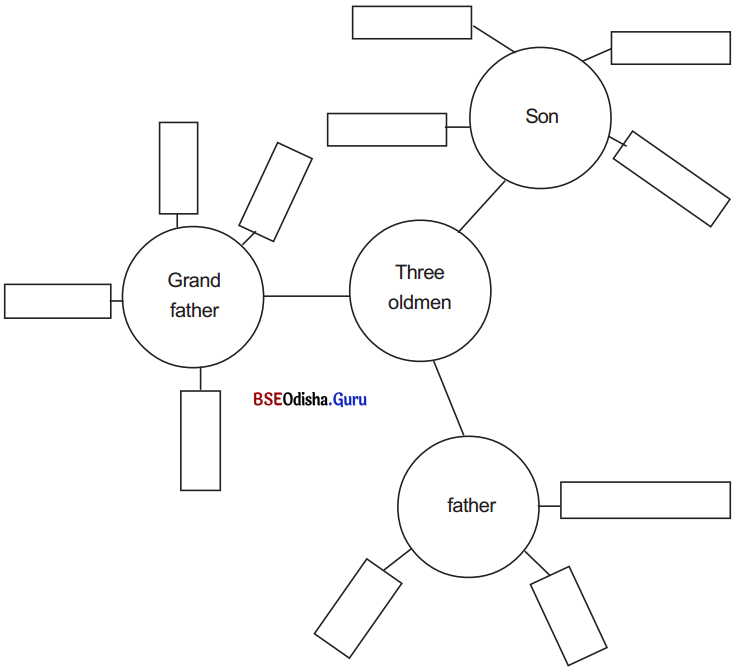
III. Read the following main ideas of the story, “The First Step” and put them, in the appropriate boxes in the ‘Flow Chart’.
(“The First Step”’ ଗଳ୍ପର ନିମ୍ନଲିଖ୍ତ ମୁଖ୍ୟ ବିଷୟବସ୍ତୁକୁ ପଢ଼ ଏବଂ ସେଗୁଡ଼ିକୁ ‘ପ୍ରବାହ ଚିତ୍ର’ର ଉପଯୁକ୍ତ କୋଠରିରେ ରଖ ।)

• Chellappa’s decision to send Chinni to school and Ammu to be a maid.
• Mrs Mohan’s interest and thought to open a school for unfortunate girls like Ammu.
• Ammu’s wish to go to school like his brother, Chinni.
• Mrs Mohan’s final decision to teach Ammu and beginning of Ammu’s ‘Alphabet learning’.
• Mrs Mohan’s realisation about Ammu’s interest for study.

BSE Odisha 9th Class English Solutions Non-Detailed Chapter 3 The First Step

BSE Odisha 9th Class English Solutions Non-Detailed Chapter 3 The First Step Q activity III.1

Answer: (ଉତ୍ତର)
BSE Odisha 9th Class English Solutions Non-Detailed Chapter 3 The First Step Q activity III.2

IV. Column ‘A’ below names the important characters in the story. And column ‘B’ lists some words and phrases which describe them. You will match each character with the words/phrases that describe it. One is done for you.
(ନିମ୍ନରେ ସ୍ତମ୍ଭ ‘A’ରେ ଗପରେ ଥିବା ପ୍ରଧାନ ଚରିତ୍ରମାନଙ୍କ ନାମ ଅଛି ଏବଂ ସ୍ତମ୍ଭ ‘B’ରେ ସେମାନଙ୍କୁ ବର୍ଣ୍ଣନା କରୁଥିବା କେତେକ ଶବ୍ଦ ବା ଶବ୍ଦପୁଞ୍ଜର ତାଲିକା ଅଛି । ତୁମେ ପ୍ରତ୍ୟେକ ଚରିତ୍ରକୁ ସେମାନଙ୍କୁ ବର୍ଣ୍ଣନା କରୁଥିବା ଶବ୍ଦ ବା ଶବ୍ଦପୁଞ୍ଜ ସହ ମିଳାଇବ । ଗୋଟିଏ ତୁମ ପାଇଁ କରି ଦିଆଯାଇଛି ।)

Column ‘A’ Column ‘B’
1. Chellappa poor
polite
widow
motherless girl
2. Ammu old
watchman
owner
kind
helping
uncaring
maid
3. Mrs Mohan slim
love for books a young girl educated illiterate servant grey haired

Answer:

 Column ‘A’ Column ‘B’
1. Chellappa poor
watchman
uncaring
illiterate
servant
2. Ammu motherless girl
maid
love for books
3. Mrs Mohan a young girl
polite
widow
old
owner
kind
helping
slim
educated grey haired

BSE Odisha 9th Class English The First Step Important Questions and Answers

Answer The Following In A Sentence:

Question 1.
Which character do you like most?
Answer:
We like the character of Mrs. Mohan the most.

Question 2.
How did the writer indicate the serious social problem and suggest solution to it?
Answer:
All parents should be very conscious about sending their girl-children to schools. All educated people should make it a point to impart education to unfortunate girls in our country.

Question 3.
Who were Ammu’s family members?
Answer:
Chellappa, Ammu and Chinni were the family members of Ammu.

Question 4.
Why was Ammu unhappy?
Answer:
Ammu’s father told her to work as a maid in the new owner’s house to get money for her little brother, Chinni’s study.

Question 5.
Who was Mrs. Mohan?
Answer:
Mrs. Mohan was a retired headmistress.

Question 6.
Who was Ammu? Why did she remember her mother?
Answer:
Ammu was a ten-year-old innocent and poor girl.

Question 7.
Who was Chellapa?
Answer:
Chellapa was a poor man.

BSE Odisha 9th Class English Solutions Non-Detailed Chapter 3 The First Step

Question 8.
What did he do?
Answer:
He was working as a watchman at the big house on the hill.

Question 9.
How did Mrs Mohan help Ammu?
Answer:
Mrs Mohan came to know that Ammu was interested to study. So she decided to teach her at home.

Answer The Following In A Word Or A Phrase:

Question 1.
“Well, shall we begin today,” who asked this?
Answer:
Ammu

Question 2.
What was Ammu’s first step towards her goal?
Answer:
starting education

Question 3.
What is the slogan of the day?
Answer:
Education for all

Question 4.
What is the name of Ammu’s father?
Answer:
Chellappa

Question 5.
Who was Chinni?
Answer:
Ammu’s little brother

Question 6.
What drew Ammu like a magnet?
Answer:
the bookcase

Question 7.
“I will have to sort out all the books.” Who said this?
Answer:
Mrs Mohan

Question 8.
“Girls should go to school.” Who told this?
Answer:
Mrs Mohan

Fill In The Blanks:
1. Ammu’s father was asked to select a __________.
Answer:
reliable maid

2. The owner of the big house died a __________ of months ago.
Answer:
couple

3. Ammu’s father was a ___________ at the big house on the hill.
Answer:
watchman

4. The people in the neighborhood wondered when the __________ would come to live here.
Answer:
new owner

5. Money was needed to send ____________ to school.
Answer:
Chinni

6. According to Chellappa, Ammu will get married before she finishes the _________.
Answer:
third grade

7. Ammu’s father retorted, Chinni will get a job if he is _______________.
Answer:
educated

8. Ammu thought her mother would have let Ammu go to school at least to learn the _____________.
Answer:
alphabet

BSE Odisha 9th Class English Solutions Non-Detailed Chapter 3 The First Step

9. Ammu’s father wants the new owner to get a _______________.
Answer:
good impression

10. Ammu and his father lived in ___________ of the big house.
Answer:
servants quarters

11. The owner of the big house was a slim __________ lady, dressed in a spotless white saree.
Answer:
grey haired

12. The name of the new owner was ___________.
Answer:
Mrs Mohan

13. Mrs Mohan was a _____________.
Answer:
widow

14. Mrs Mohan’s daughter lived in ____________.
Answer:
Bombay

15. Ammu fingered ____________ lovingly and gazed at them.
Answer:
books

16. Mrs Mohan ____________ not to have noticed the book in Ammu’s hand.
Answer:
pretended

17. Chinni was Ammu’s ___________.
Answer:
younger brother

18. Ammu’s voice had a ____________ when she told that her father was going to send Chinni to school.
Answer:
tremor

19. According to Chellappa if Chinni is educated, it will help him to __________.
Answer:
get a good job

20. Mrs Mohan realized that she had to get through ___________somehow.
Answer:
Ammu

21. Mrs Mohan decided to start a school for unfortunate girls like ___________.
Answer:
Ammu

22. Ammu was taken aback by her employer ____________.
Answer:
kind ways

23. Ammu began crying because she knew that her ___________ would never agree.
Answer:
father

24.’ Mrs Mohan was a ___________.
Answer:
retired teacher

Multiple Choice Questions With Answers :

Question 1.
“Well, shall we begin today,” who asked this?
(A) Mrs Mohan
(B) Chellappa
(C) Ammu
(D) none of these
Answer:
(C) Ammu

BSE Odisha 9th Class English Solutions Non-Detailed Chapter 3 The First Step

Question 2.
‘Chores’ means ___________.
(A) routine task
(B) dull task
(C) exciting task
(D) useless task
Answer:
(A) routine task

Question 3.
At first Mrs Mohan began to teach Ammu with ___________.
(A) letters
(B) words
(C) alphabet
(D) numbers
Answer:
(C) alphabet

Question 4.
Ammu went home in a ____________ after starting her study.
(A) happy daze
(B) cheering mood
(C) unhappy daze
(D) sorrowful mood
Answer:
(A) happy daze

Question 5.
Ammu had taken the first step towards her goal because she had already started her ___________.
(A) study
(B) earnings
(C) work
(D) teaching
Answer:
(A) study

Question 6.
Mrs Mohan went to the kitchen and set aside ___________ for Ammu.
(A) tiffin
(B) food
(C) tea
(D) milk
Answer:
(B) food

Question 7.
Ammu was a girl of ___________ years old.
(A) eight
(B) nine
(C) ten
(D) eleven
Answer:
(C) ten

Question 8.
What is the name of Ammu’s father?
(A) Chhellapa
(B) Chellappa
(C) Chelapa
(D) Chelappa
Answer:
(B) Chellappa

Question 9.
Ammu’s father was a ____________ at the big house on the hill.
(A) watchman
(B) sweeper
(C) servant
(D) caretaker
Answer:
(A) watchman

Question 10.
Money was needed to send ____________ to school.
(A) Chinni
(B) China
(C) Ammu
(D) Chinu
Answer:
(A) Chinni

BSE Odisha 9th Class English Solutions Non-Detailed Chapter 3 The First Step

Question 11.
Ammu’s father retorted, Chinni will get a job if he is ______________.
(A) studied
(B) educated
(C) learned
(D) taught
Answer:
(B) educated

Question 12.
Ammu thought her mother would have let Ammu go to school at least to learn the ____________.
(A) third grade
(B) alphabet
(C) words
(D) all the above
Answer:
(B) alphabet

Question 13.
The owner of the big house was a slim _________ lady, dressed in a spotless white saree.
(A) grey haired
(B) white haired
(C) black haired
(D) curly haired
Answer:
(A) grey haired

Question 14.
The name of the new owner was ____________.
(A) Mr Mohan
(B) Mrs Mohan
(C) Mrs Das
(D) Mrs Mahajan
Answer:
(B) Mrs Mohan

Question 15.
Mrs Mohan’s daughter lived in ______________.
(A) Bombay
(B) Delhi
(C) Chennai
(D) Kolkata
Answer:
(A) Bombay

BSE Odisha 9th Class English Non-Detailed Text:
The Lost Child Question Answer Class 9 English Non-Detailed Chapter 2 BSE Odisha

Odisha State Board BSE Odisha 9th Class English Solutions Non-Detailed Chapter 2 The Lost Child Textbook Exercise Questions and Answers.

Class 9th English Non-Detailed Chapter 2 The Lost Child Question Answers BSE Odisha

The Lost Child Class 9 Questions and Answers

Introduction :

The village fair plays an important role in the villages in India. It is meant for amusement and entertainment in the midst of the dull routine life. The villagers visit the fairs along with their family members. But it has special attraction for the children. The rural people buy various articles in the fair. They also remember certain incidents that take place in it. The present story ‘The Lost Child” describes a child’s visit to a fair with his parents. Now read the story and see how a child was lost in the crowded fair and what was the consequence.

Notes :
village fair – ଗ୍ରାମ ମେଳା, important – ଗୁରୁତ୍ୱପୂର୍ଣ୍ଣ, role – ଭୂମିକା, amusement – ମନୋରଞ୍ଜନ, entertainment – ମନୋରଞ୍ଜନ, routine life – ନିତ୍ୟ ଜୀବନ |, articles – ପ୍ରବନ୍ଧଗୁଡିକ, incidents – ଘଟଣା, parents – ପିତାମାତା

ବିଷୟ ସୂଚନା :
ଆମୋଦପ୍ରମୋଦ ଓ ଅବସର ବିନୋଦନ ପାଇଁ ଏହା ଉଦ୍ଦିଷ୍ଟ । ଗ୍ରାମବାସୀମାନେ ସପରିବାରେ ଏହି ମେଳାଗୁଡ଼ିକୁ ବୁଲି ଯାଆନ୍ତି । କିନ୍ତୁ ଛୋଟ ପିଲାଙ୍କ ପାଇଁ ଏହା ଏକ ସ୍ଵତନ୍ତ୍ର ଆକର୍ଷଣ ସୃଷ୍ଟି କରିଥାଏ । ଗ୍ରାମାଞ୍ଚଳର ଲୋକମାନେ ମେଳାରୁ କିଛି ନିତ୍ୟବ୍ୟବହାର୍ଯ୍ୟ ଦ୍ରବ୍ୟ ମଧ୍ଯ କ୍ରୟ କରିଥା’ନ୍ତି । ଏଥୁରେ ଘଟୁଥ‌ିବା ନିର୍ଦ୍ଦିଷ୍ଟ ଘଟଣାଗୁଡ଼ିକୁ ମଧ୍ୟ ସେମାନେ ମନେ ରଖି’ନ୍ତି । ଆଲୋଚ୍ୟ ଗପଟିରେ ଦେଖୁବା ପିଲାଟି କିପରି ଜନଗହଳିପୂର୍ଣ୍ଣ ମେଳାରେ ହଜିଗଲା ଓ ଏହାପରେ ଏହାର ପରିଣତି କ’ଣ ହୋଇଥିଲା ।

Summary: I

Once a little boy was going to a village fair with his parents. It was the festival of spring. A large number of village people were also going to that fair. On his way to the fair the child being fascinated by the beautiful toys lagged behind. His parents called him loudly to walk pace with them. He went to them and expressed his desire to buy the toy. But it was turned down by his tyrant father. His mother diverted his attention cleverly towards a flowering mustard field.

He found a group of dragon flies were moving in search of sweetness from the flowers. He was delighted to see it. Again he was left behind, attracted by the little insects and worms along the footpath. The parents called the child who was behind them. As he came near his parents, who were sitting in the grove, a shower of young flowers fell upon him. He enjoyed the cooing of doves there and forgot his parents. Once again his parents gathered him up and took the curved footpath to the fair.

BSE Odisha 9th Class English Solutions Non-Detailed Chapter 2 The Lost Child

Notes:
festival – ପର୍ବ, spring – ବସନ୍ତ, way – ଉପାୟ, toy – ଖେଳନା, fascinated – ଆକର୍ଷିତ, lagged behind – ପଛରେ,ପଛରେ ପଡିଛି , tyrant – ଅତ୍ୟାଚାରୀ, attention – ଧ୍ୟାନ , cleverly – ଚତୁରତାର ସହିତ, mustard-field – ସୋରିଷ କ୍ଷେତ୍ର , dragon fly – ନାଗ ସାପ grove – ବଗିଚା, shower – ସାୱାର, curved path – ବକ୍ର ପଥ

ସାରାଂଶ :
ଏକଦା ଗୋଟିଏ ଛୋଟ ପିଲା ତା’ର ବାପା-ମାଆଙ୍କ ସହିତ ଗୋଟିଏ ଗ୍ରାମ୍ୟମେଳାକୁ ଯାଉଥିଲା । ଏହା ବସନ୍ତ ଉତ୍ସବ ଥିଲା । ଅନେକ ଗ୍ରାମବାସୀ ମଧ୍ଯ ସେହି ମେଳାକୁ ଯାଉଥିଲେ । ବାଟରେ ପିଲାଟି ଦୋକାନଗୁଡ଼ିକରେ କଣ୍ଢେଇଗୁଡ଼ିକୁ ଦେଖିବାକୁ ପାଇଲା । ସୁନ୍ଦର ସୁନ୍ଦର କଣ୍ଢେଇଗୁଡ଼ିକଦ୍ବାରା ଆକର୍ଷିତ ହୋଇ ସେ ଟିକିଏ ପଛରେ ରହି ଯାଇଥିଲା । ତା’ର ବାପା-ମାଆ ତାଙ୍କ ସହିତ ମିଶି ଚାଲିବାକୁ ପିଲାଟିକୁ ଉଚ୍ଚ ସ୍ବରରେ ଡାକିଲେ । ସେ ସେମାନଙ୍କ ନିକଟକୁ ଯାଇ ନିଜର କଣ୍ଢେଇ କିଣିବାର ଇଚ୍ଛା ବିଷୟରେ କହିଲା । କିନ୍ତୁ ତା’ର ସ୍ବେଚ୍ଛାଚାରୀ ବାପା ଏହାକୁ ପ୍ରତ୍ୟାଖ୍ୟାନ କଲେ । ମାଆ ଚତୁରତାର ସହିତ ପିଲାଟିର ଦୃଷ୍ଟିକୁ ସମ୍ମୁଖରେ ଥ‌ିବା ପୁଷ୍ପଭରା ସୋରିଷ କ୍ଷେତ ଆଡ଼କୁ ନେଇ ଯାଇଥିଲେ ।

ସେ ଦଳେ କଙ୍କି ଫୁଲରୁ ମଧୁ ସଂଗ୍ରହ କରିବାପାଇଁ ଏଣେତେଣେ ବୁଲୁଥିବାର ଦେଖିବାକୁ ପାଇଲା । ସେ ଏହା ଦେଖୁ ଭାରି ଖୁସି ହୋଇଗଲା । ରାସ୍ତା କଡ଼ରେ ଘୂରି ବୁଲୁଥ‌ିବା ନାନା ପ୍ରଜାତିର କୀଟପତଙ୍ଗ ପ୍ରତି ଆକୃଷ୍ଟ ହୋଇ ସେ ପୁଣି ପଛରେ ରହିଗଲା । ବାପା-ମାଆ. ପଛରେ ରହିଯାଇଥିବା ପିଲାଟିକୁ ଡାକ ପକାଇଲେ । ତୋଟାରେ ବସିଥିବା ବାପା-ମାଆଙ୍କ ନିକଟକୁ ଆସିବାବେଳେ ପିଲାଟି ଉପରେ କିଛି ସଦ୍ୟ ଫୁଲ ଝରି ପଡ଼ିଥିଲା । ସେଠାରେ କପୋତଗୁଡ଼ିକର କୁହୁତାନ ଉପଭୋଗ କରି ସେ ବାପା-ମାଆଙ୍କର ଉପସ୍ଥିତି ଭୁଲିଗଲା । ପୁଣିଥରେ ବାପା-ମାଆ ପିଲାଟିକୁ ପାଖକୁ ଆଣିଲେ ଓ ଅଙ୍କାବଙ୍କା ପାଦଚଲା ରାସ୍ତା ଦେଇ ମେଳା ଆଡ଼କୁ ଅଗ୍ରସର ହେଲେ ।

The Text: ପାଠ୍ୟଚିଷୟ
Paragraphwise Analysis
Text- 1

It was the festival of spring. From the wintry shades of narrow lanes and streets appeared a colourfully dressed humanity. Some walked, some rode on horses, others sat, being carried in bamboo and bullock carts. One little boy ran between his father’s legs, brimming over with life and laughter. “Come, child, come” called his parents, as he lagged behind, fascinated by the toys in the shops that lined the way. He hurried towards his parents, his feet obedient to their call.

As he came to where they had stopped to wait for him, he could not suppress the desire of his heart, even though he well knew the old, cold stare of refusal in their eyes. “I want that toy, ” he pleaded. His father looked at him red-eyed, in his familiar tyrant’s way. His mother, melted by the free spirit of the day was tender and, giving him her finger to hold, said, “Look, child, what is before you!” It was flowering mustard-field, pale like melting gold as it swept across miles and miles of even land.

ଏହା ବସନ୍ତକାଳୀନ ପର୍ବ ଥିଲା । ଅଣଓସାରିଆ ଗଳି ରାସ୍ତା ଓ ମୁଖ୍ୟ ରାସ୍ତାଗୁଡ଼ିକର ଶୀତଳ ଛାୟାରୁ ନାନା ରଙ୍ଗର ପୋଷାକ ପରିହିତ ଦଳଦଳ ଲୋକ ଦୃଶ୍ୟମାନ ହେଉଥିଲେ । କେତେକ ଚାଲୁଥିଲେ, କେତେକ ଘୋଡ଼ା ପିଠିରେ ବସିଥିଲେ, ଅନ୍ୟମାନେ ବାଉଁଶ ଅଥବା ବଳଦଗାଡ଼ିରେ ବସିଥିଲେ । ଛୋଟ ପିଲାଟିଏ ତା’ର ମୁହଁରେ ଆଶା ଓ ଆନନ୍ଦର ଜୀବନ୍ତ ହସ ଖେଳାଇ ତା’ ବାପାର ପ୍ରସାରିତ ଗୋଡ଼ ମଧ୍ୟ ଦେଇ ଦୌଡ଼ିଗଲା ।

ଯାଇଥିଲାବେଳେ ବାପାମା’ ତାକୁ ଡାକି କହିଲେ, ‘ଆ, ପୁଅ, ଆ ।’’ ବାପାମା’ଙ୍କର ଡାକକୁ ସମ୍ମାନ ଜଣାଇ ପିଲାଟି ଚଞ୍ଚଳ ଚଞ୍ଚଳ ସେମାନଙ୍କ ଆଡ଼କୁ ପାଦ ବଢ଼ାଇଲା । ବାପାମା’ ତା’ ପାଇଁ ଯେଉଁଠାରେ ଅପେକ୍ଷା କରିଥିଲେ ସେଠାକୁ ପୁଅ ଯେତେବେଳେ ଆସି ପହଞ୍ଚିଲା, ସେ ନିଜର ହୃଦୟର ଇଚ୍ଛାକୁ ନିୟନ୍ତ୍ରଣ କରିପାରିଲା ନାହିଁ, ଯଦିଓ ସେ ବାପାମା’ଙ୍କର ଆଜ୍‌ରେ ପ୍ରତ୍ୟାଖ୍ୟାନର ସେହି ପୁରୁଣା ଓ ନିଷ୍ପ୍ରଭ ଚାହାଣିର ଉତ୍ତର ବିଷୟରେ ସେ ଭଲରୂପେ ଅବଗତ ଥିଲା । ‘‘ମୋର ସେହି ଖେଳଣା ଦରକାର,’’ ପିଲାଟି କାକୁତିମିନତି ହୋଇ କହିଲା ।

ବାପା ନିଜର ଚିରପରିଚିତ କଠୋର ସ୍ଵଭାବରେ ଲାଲ ଆଖରେ ପୁଅ ଆଡ଼କୁ ଚାହିଁଲେ । ମେଳା ଭଳି ଖୋଲା ଓ ଖୁସିର ଦିନରେ ଉଲ୍ଲସିତ ହୋଇ ଉଠିଥ‌ିବା ମା’ ପୁଅ ପ୍ରତି ଟିକେ କୋମଳ ହୋଇ ଓ ପୁଅକୁ ଧରିବାପାଇଁ ନିଜର ହାତ ବଢ଼ାଇଦେଇ କହିଲେ, ‘‘ଦେଖ ପୁଅ, ତୋ’ ଆଗରେ ସେଇଟା କ’ଣ ଅଛି !’’ ଏହା ଥିଲା ଫୁଲ ଫୁଟିଥିବା ଗୋଟିଏ ସୋରିଷ କ୍ଷେତ, ତରଳ ସୁନା ଭଳି ହାଲୁକା ରଙ୍ଗର ଏହି କ୍ଷେତ ସମତଳଭୂମିରେ ମାଇଲ୍ ମାଇଲ୍ ପର୍ଯ୍ୟନ୍ତ ବ୍ୟାପିଥିଲା ।

Text -2
A group of dragon-flies were moving noisily on their bright purple wings in search of sweetness from the flowers. The child followed them in the air with his gaze, till one of them would still its wings and rest, and he would try to catch it. But his mother gave a cautionary call: “Come, child, come, on to the footpath.” He cheerfully ran towards his parents and walked by their side for a while, being, however, soon left behind, attracted by the little insects and worms along the footpath that were coming out of their hiding places to enjoy the sunshine.

“Come, child, come!” his parents called from the shade of a grove where they had seated themselves on the edge of a well. He ran towards them. A shower of young flowers fell upon the child as he entered the grove, and, forgetting his parents, he began to gather the raining petals in his hands. But lot He heard the cooing of doves and ran towards his parents, shouting, “The dove! The dove!” The raining petals dropped from his forgotten hands. “Come, child, come!” they called to the child, who had now gone running in fear round the banyan tree, and gathering him up they took the narrow, curved footpath which led to the fair through the mustard fields.

BSE Odisha 9th Class English Solutions Non-Detailed Chapter 2 The Lost Child

ଅନୁବାଦ :
ଫୁଲଗୁଡ଼ିକରୁ ମିଠା ରସ ସଂଗ୍ରହ ଉଦ୍ଦେଶ୍ୟରେ ଦଳେ କଙ୍କି ସେମାନଙ୍କର ଉଜ୍ଜ୍ଵଳ ନୀଳ ଲୋହିତ ରଙ୍ଗର ଡେଣାସବୁକୁ ଝାଡ଼ି ଡେଣାଗୁଡ଼ିକୁ ସ୍ଥିର କରି ବସି ପଡ଼ିଲା, ପିଲାଟି ତାକୁ ଧରିବାକୁ ଚେଷ୍ଟା କଲା । କିନ୍ତୁ ତାହାର ମା’ ତାକୁ ସତର୍କ କରାଇବା ସ୍ବରରେ ଡାକ ଛାଡ଼ିଲେ, ‘‘ଆ ପୁଅ, ପାଦଚଲା ରାସ୍ତା ଉପରକୁ ଉଠି ଆ !’’ ପିଲାଟି ଖୁସିରେ ବାପାମା’ଙ୍କ ଆଡ଼କୁ ଦୌଡ଼ିଲା ଓ କିଛି ମୁହୂର୍ତ୍ତ ସେମାନଙ୍କ ପାଖଦେଇ ଚାଲିଲା । କିନ୍ତୁ ସୂର୍ଯ୍ୟକିରଣକୁ ଉପଭୋଗ କରିବାକୁ ନିଜ ନିଜ ଲୁଚିବା ଜାଗାମାନଙ୍କରୁ ବାହାରି ଆସୁଥ‌ିବା ଛୋଟ ଛୋଟ କୀଟ ଓ ପୋକଗୁଡ଼ିକୁ ରାସ୍ତା ଉପରେ ଦେଖୁ ମୁଗ୍‌ଧ ହୋଇ ପିଲାଟି ଖୁବ୍ ଶୀଘ୍ର ପଛରେ ରହିଗଲା।

‘‘ଆ, ପୁଅ, ଆ !’’ ଏକ ତୋଟାର ଛାଇତଳେ ଗୋଟିଏ କୂଅର ଧାର ଉପରେ ବସିଥିବା ବାପାମା’ ଡାକ ଛାଡ଼ିଲେ । ପିଲାଟି ସେମାନଙ୍କ ପାଖକୁ ଦୌଡ଼ିଲା । ପିଲାଟି ତୋଟା ଭିତରକୁ ପଶୁଥିବାବେଳେ କେତେଗୁଡ଼ିଏ ଛୋଟ ଫୁଲ ତା’ ଉପରେ ବିଞ୍ଚ୍ ହୋଇଗଲା ଓ ପିଲାଟି ନିଜର ବାପାମା’ଙ୍କୁ ଭୁଲିଯାଇ, ଗଦା ହୋଇ ପଡ଼ୁଥ‌ିବା ପାଖୁଡ଼ାଗୁଡ଼ିକୁ ହାତରେ ସଂଗ୍ରହ କରିବାକୁ ଲାଗିଲା । କିନ୍ତୁ ହେଲେ କି ଚମତ୍କାର ! ସେ ଏତିକିବେଳେ କପୋତମାନଙ୍କର ରାବ ଶୁଣିଲା ଓ ‘କପୋତ ! କପୋତ ?’’ ଚିତ୍କାର ଛାଡ଼ି ବାପାମା’ଙ୍କ ପାଖକୁ ଦୌଡ଼ିଗଲା । ଅଜାଣତରେ ବିଚରାର ହାତରୁ ପାଖୁଡ଼ାଗୁଡ଼ିକ ତଳେ ପଡ଼ିଗଲା ।

‘‘ଆ, ପୁଅ, ଆ !’’ ସେମାନେ (ବାପାମା’) ପିଲାକୁ ପୁଣି ଡାକିଲେ । ହେଲେ ପିଲାଟି ସେତେବେଳକୁ ବରଗଛର ପଛପାଖକୁ ଭୟରେ ଦୌଡ଼ି ପଳାଇଥୁଲା ଓ ତାକୁ ସେଠାରୁ ଧରି ସେମାନେ (ବାପାମା’) ଅଣଚଉଡ଼ା, ବଙ୍କା ପାଦଚଲା ରାସ୍ତା ଉପର ଦେଇ ଚାଲିଲେ ଯେଉଁ ରାସ୍ତାଟି ସୋରିଷ କ୍ଷେତଗୁଡ଼ିକ ଦେଇ ମେଳା ବା ପଡ଼ିଆ ଆଡ଼କୁ ପଡ଼ିଥିଲା ।

Notes And Glossary: (ଟିପ୍ପଣୀ ଏବଂ ଗ୍ଲୋସାରୀ)

wintry – ଶୀତଳ
shade – ଛାଇ
appeared – ଦେଖାଗଲା
humanity – ମାନବିକତା
brimming – to be full of something – କିଛି ପରିପୂର୍ଣ୍ଣ ହେବା
lag behind – to move more slowly than other people – ଅନ୍ୟ ଲୋକଙ୍କ ଅପେକ୍ଷା ଧୀରେ ଧୀରେ ଗତି କରିବାକୁ
fascinated – very interested – ବହୁତ ଆଗ୍ରହୀ
hurried – past tense of hurry – ଅତୀତର ଶୀଘ୍ର
obedient – ଆଜ୍ଞାକାରୀ
suppress – to prevent from expressing feeling or emotion – ଭାବନା କିମ୍ବା ଭାବନା ପ୍ରକାଶ କରିବାକୁ ରୋକିବା ପାଇଁ
desire – ଇଚ୍ଛା
stare – act of looking at – ଦେଖିବାର କାର୍ଯ୍ୟ
refusal – ପ୍ରତ୍ୟାଖ୍ୟାନ
plead – to ask for something in a strong and serious way – ଦୃଢ଼ ଓ ଗମ୍ଭୀର ଭାବରେ କିଛି ମାଗିବା
tyrant – who has complete power in a country and uses it in a cruel and unfair way – ଅତ୍ୟାଚାରୀ
melted – ଦ୍ରବୀଭୂତ
spirit – ଆତ୍ମା
tender – କୋମଳ
mustard – field – କ୍ଷେତ୍ର
pale – ଫିକା
swept – ଧୋଇଗଲା
dragon – flies – ଡ୍ରାଗନ୍
noisily – କୋଳାହଳ
cautionary – giving advice or warning – ପରାମର୍ଶ କିମ୍ବା ଚେତାବନୀ ଦେବା
grove – group of trees – ବୃକ୍ଷର ଗୋଷ୍ଠୀ
shower – ସାୱାର
petal – the delicate (light and pleasant) coloured part of a flower – ଫୁଲର ସୂକ୍ଷ୍ମ (ହାଲୁକା ଏବଂ ମନୋରମ) ରଙ୍ଗୀନ ଅଂଶ
cooing – soft low sound of doves/pegions – କପୋତ / ପେଗିଅନର କୋମଳ ନିମ୍ନ ଧ୍ୱନି
dove – କପୋତ
curved – ବକ୍ର

Now Answer The Following Questions
(ବର୍ତ୍ତମାନ ନିମ୍ନଲିଖୂତ ପ୍ରଶ୍ନଗୁଡ଼ିକର ଉତ୍ତର ଲେଖ)

Question 1.
Find out the persons described in the story. Where are they going?
(ଗଳ୍ପଟିରେ ବର୍ଣ୍ଣିତ ବ୍ୟକ୍ତିମାନଙ୍କୁ ଦର୍ଶାଅ । ସେମାନେ କୁଆଡ଼େ ଯାଉଛନ୍ତି ?)
Answer:
The persons, described in the story, were almost village people. Some were walking, some were riding on horses and others were sitting in bamboo and bullock carts. They were going to a village fair.

Question 2.
Why did the child lag behind?
(ପିଲାଟି କାହିଁକି ପଛରେ ପଡ଼ିଗଲା ?)
Answer:
The child was attracted by the beautiful toys displayed in the shops that lined the way. So he lagged behind.

BSE Odisha 9th Class English Solutions Non-Detailed Chapter 2 The Lost Child

Question 3.
What things did the child see on his way to the fair? What attracted him most?
(ମେଳାକୁ ଯିବା ବାଟରେ ପିଲାଟି କେଉଁ କେଉଁ ଜିନିଷମାନ ଦେଖୁଲା ? କେଉଁ ଜିନିଷଟି ତାକୁ ଅତ୍ୟଧ୍ୱକ ଆକର୍ଷିତ କରିଥିଲା ?)
Answer:
On his way to the fair he saw toys displayed in the shops that lined the way, the flowering mustard-field, the dragon-flies and a beautiful grove. The sight of the beautiful grove with the cooing of the doves attracted him most.

Question 4.
Did the child gather anything on the way? What was it? What happened to it?
(ପିଲାଟି ବାଟରେ କିଛି ଜିନିଷ ସଂଗ୍ରହ କଲା କି ? ଏହା କ’ଣ ଥିଲା ? ଏହାର କ’ଣ ହେଲା ?)
Answer:
As the child entered the grove, some flowers fell upon him. He gathered the showering petals in his hands. He heard the cooing of the doves and ran towards his parents. In the mean time, the petals dropped from his forgotten hands.

Question 5.
What were his father and mother like?
(ତା’ର ବାପା ଓ ମାଆ କିପରି ଲୋକ ଥିଲେ ?)
Answer:
His father was very strict and tyrant. But his mother was kind and loving.

Question 6.
“Come, child, come” who said this? How many times and why?
(‘‘ଆସ, ପୁଅ, ଆସ’’ – ଏକଥା କିଏ କହିଲା ? କେତେ ଥର ଓ କାହିଁକି ?)
Answer:
“Come, child come”- the child’s parents said this. They said this four times in order to gather him up.

Question 7.
What do you think the next part of the story will be about?
(ଗଳ୍ପଟିର ପରବର୍ତ୍ତୀ ଅଂଶ କ’ଣ ହୋଇଥବ ବୋଲି ତୁମେ ଭାବୁଛ ?)
Answer:
I think the next part of the story will be about the child’s visit to different stalls in the fair.

Summary: II
The child with his parents arrived the village square and saw a sweetmeat seller selling various kinds of sweets like gulab-jamun, rasagulla, burfi etc. He murmured to have his favourite sweet, burfi. But he knew well about the negative answer of his parents. So he moved on. Then he came across a flower-seller who was selling garlands of gulmohur. He expressed his desire to have the garland in a very low voice.

But he knew it well that his parents would refuse to buy it. So, without waiting for an answer, he moved on. As the child moved on, he saw a man selling balloons of different colours. He wanted to have it. But he didn’t ask for it as he knew the attitude of his parents. So he walked ahead. Just then he heard a snake-charmer playing a flute to a snake. He went towards the snake-charmer. But, thinking of his parents he proceeded a head. He wanted to go on the round about.

Notes:
arrived- ପହଞ୍ଚିଲା , square- ବର୍ଗ, sweetmeat seller- ମିଠା ବିକ୍ରେତା, murmured- ଅଭିଯୋଗ କଲେ, favourite- ପ୍ରିୟ, garland- ଫୁଲମାଳ, attitude- ମନୋଭାବ, snake-charmer- ସାପ-ଚମତ୍କାର, flute- ବଂଶୀ, roundabout- ଗୋଲାକାର

ସାରାଂଶ :
ପିଲାଟି ତା’ର ବାପା-ମାଆଙ୍କ ସହିତ ଗାଆଁ ଛକରେ ପହଞ୍ଚିଲା ଓ ଜଣେ ମିଠାବିକାଳି ଗୁଲାବଜାମୁ, ରସଗୋଲା, ଇତ୍ୟାଦି ନାନା ରକମର ମିଠା ବିକ୍ରି କରୁଥିବାର ଦେଖିଲା । ସେ ତା’ର ପ୍ରିୟ ମିଠା ବର୍ଫି ଖାଇବାକୁ ଗୁଣୁଗୁଣୁ ହୋଇ କହୁଥିଲା । ମାତ୍ର ସେ ତା’ର ବାପାଙ୍କ ନାସ୍ତିସୂଚକ ଉତ୍ତର ବିଷୟରେ ଭଲଭାବରେ ଜାଣିଥିଲା । ତେଣୁ ସେ ଆଗକୁ ଚାଲିଲା । ତା’ପରେ ସେ କୃଷ୍ଣଚୂଡ଼ା ଫୁଲହାର ବିକୁଥ‌ିବା ଜଣେ ଫୁଲ ବିକାଳିଙ୍କୁ ଦେଖିଲା । ଫୁଲମାଳଟିଏ କିଣିବାର ଇଚ୍ଛାକୁ ସେ ଅତି ନିମ୍ନ ସ୍ବରରେ ପ୍ରକାଶ କଲା । କିନ୍ତୁ ବାପାମା’ ଏହା କିଣିବାକୁ ମନା କରିବେ ବୋଲି ସେ ଭଲ ଭାବରେ ଜାଣିଥିଲା । ତେଣୁ ଉତ୍ତରକୁ ଅପେକ୍ଷା ନ କରି ଆଗକୁ ଚାଲିଲା ।

ପିଲାଟି ଟିକିଏ ଆଗକୁ ଯାଇ ଦେଖୁଲା ଗୋଟିଏ ଲୋକ ରଙ୍ଗବେରଙ୍ଗର ବେଲୁନ୍ ବିକ୍ରି କରୁଛି । ସେ ଏହାକୁ ପାଇବାକୁ ଇଚ୍ଛା କରୁଥିଲା । ମାତ୍ର ସେ ଏହାକୁ ମାଗିଲା ନାହିଁ କାରଣ ସେ ତା’ର ବାପାମାଆଙ୍କ ମନୋଭାବ ଭଲ ଭାବରେ ଜାଣିଥିଲା । ତେଣୁ ସେ ଆଗକୁ ଅଗ୍ରସର ହେଲା । ଠିକ୍ ସେହି ସମୟରେ ଗୋଟିଏ ସାପୁଆ କେଳା ସାପ ନିକଟରେ ବଂଶୀବାଦନ କରୁଥିବାର ଶୁଣିଲା । ସେ ସାପୁଆ କେଳା ଆଡ଼କୁ ଅଗ୍ରସର ହେଲା । ମାତ୍ର ବାପା-ମାଆଙ୍କ ନାସ୍ତିସୂଚକ ମନୋଭାବ କଥା ଚିନ୍ତାକରି ଆଗକୁ ଚାଲିଲା । ସେ ଚକ୍ରଦୋଳିରେ ବସିବାକୁ ଇଚ୍ଛା କରୁଥିଲା । ପୁରୁଷ, ମହିଳା ଓ ପିଲାମାନେ ଚକ୍ରାକାରରେ ବୁଲି ଆନନ୍ଦରେ ଚିତ୍କାର କରୁଥା’ନ୍ତି ।

BSE Odisha 9th Class English Solutions Non-Detailed Chapter 2 The Lost Child

The Text: ପାଠ୍ୟଚିଷୟ
Paragraphwise Analysis
Text- 1

He went towards the basket where the flowers lay heaped. As they neared the village, the child could see footpaths full of people. He felt at both repelled and fascinated by the confusion of the world he was entering. A sweetmeat seller hawked, “gulab-jaman, rasagulla, burfi, jalebi, ” at the comer of the entrance. The child stared open eyed and his mouth watered for the burfi that was his favourite Sweet. “I want that burfi, ” he slowly murmured.

But he half knew, as he begged, that his plea would not be heeded because his parents would say he was greedy. So, without waiting for an answer he moved on. A flower-seller hawked, “A garland of gulmohur, a garland of gulmohur!” The child murmured. “I want the garland. ” But he well knew his parents would refuse to buy him those flowers because they would say that they were cheap. So, without waiting for an answer, he moved on.

ଅନୁବାଦ :
ପିଲାଟି ପାଦଚଲା ରାସ୍ତାରେ ଲୋକଙ୍କ ଭିଡ଼ ଦେଖୁଲା । ନୂଆ ଏକ ଦୁନିଆ ଭିତରେ ପ୍ରବେଶ କରୁଥିବାର ଦ୍ବନ୍ଦ୍ବରେ ସେ ଉଭୟ ଆତଙ୍କିତ ଓ ଆକର୍ଷିତ ହେଉଥାଏ । ଜଣେ ମିଠାବିକାଳି ପ୍ରବେଶ ପଥର କୋଣରେ ଡାକ ଛାଡ଼ୁଥାଏ, ‘ଗୁଲାବଜାମୁ, ରସଗୋଲା, ବର୍‌ଫି, ଜଲେବି ।’’ ପିଲାଟି ଆଖ୍ ବଡ଼ବଡ଼ କରି ଚାହିଁଲା ଓ ତା’ର ସବୁଠାରୁ ପ୍ରିୟ ମିଠାଇ ବର୍‌ଫି ପାଇଁ ତା’ ପାଟିରୁ ଲାଳ ବୋହିଲା ।’’ ଗୁଣୁଗୁଣୁ ହୋଇ ସେ କହି ପକାଇଲା, ‘‘ମୋର ବର୍‌ଫି ଦରକାର ।’’

କିନ୍ତୁ କାକୁତିମିନତି ହୋଇ ବର୍ଫି ଚାହୁଁଥିବା ପିଲାଟି ଭଲଭାବରେ ଜାଣିଥୁଲା ଯେ ତାହାର ଅନୁରୋଧକୁ ତା’ର ବାପାମା’ ଗୁରୁତ୍ଵ ଦେବେ ନାହିଁ, ବରଂ ସେ ଲୋଭୀ ବୋଲି କହିବେ । ତେଣୁ ସେ ଉତ୍ତରକୁ ଅପେକ୍ଷା ନ କରି ଆଗକୁ ଚାଲିଲା । ଜଣେ ଫୁଲବିକାଳି ଡାକୁଥାଏ, ‘କୃଷ୍ଣଚୂଡ଼ା ହାର, କୃଷ୍ଣଚୂଡ଼ା ହାର !’’ ପିଲାଟି ପୂର୍ବଭଳି ଗୁଣୁଗୁଣୁ ହୋଇ କହିଲା, ‘ମୋର ସେହି ହାରଟି ଦରକାର ।’’ କିନ୍ତୁ ସେ ଭଲ ଭାବରେ ଜାଣିଥିଲା ଯେ ତା’ର ବାପାମା’ ତା’ ପାଇଁ ଫୁଲ କିଣିବାକୁ ବାରଣ କରିବେ, ବରଂ ସେମାନେ କହିବେ ଫୁଲଗୁଡ଼ିକ ନିକୃଷ୍ଟମାନର । ତେଣୁ ସେମାନଙ୍କ ଉତ୍ତରକୁ ଅପେକ୍ଷା ନ କରି ସେ ଆଗେଇ ଚାଲିଲା ।

Text- 2
A man stood holding a pole with yellow, red, green and purple balloons flying from it. Seeing the colourful pole, the child desired to possess them all. But he well knew his parents would never buy him the balloons, because they would say he was too old to play with such toys. So he walked on farther.

A snake-charmer stood playing a flute to a snake which coiled itself in a basket, its head raised in a graceful bend like the neck ofa swan, while the music stole into its invisible ears. The child went towards the snake-charmer. But, knowing his parents hadforbidden him to hear such coarse music as the snake-charmer played, he proceededfarther. There was a roundabout infull swing. Men, women and children, carried away in a whirling motion, shrieked and cried with dizzy laughter.

ଅନୁବାଦ :
ଉଡୁଥ‌ିବା ହଳଦିଆ, ନାଲି, ସବୁଜ, ନୀଳ-ଲୋହିତ ରଙ୍ଗର ବେଲୁନ୍‌ଗୁଡ଼ିକୁ ଗୋଟିଏ ବାଉଁଶରେ ଧରି ଗୋଟିଏ ବେଲୁନ୍‌ଲା ଠିଆ ହୋଇଥିଲା । ରଙ୍ଗୀନ୍ ଖୁଣ୍ଟକୁ ଦେଖ୍, ପିଲାଟି ସେସବୁକୁ ପାଇବାକୁ ଇଚ୍ଛା ପ୍ରକାଶ କଲା । କିନ୍ତୁ ସେ ଭଲ ଭାବରେ ଜାଣିଥିଲା ତା’ର ବାପାମା’ ତାକୁ କେବେ ବି ବେଲୁନ୍ କିଣି ଦେବେ ନାହିଁ, ବରଂ ସେମାନେ କହିବେ ଏଭଳି ବେଲୁନ୍ ଖେଳିବାପାଇଁ ପୁଅର ବୟସ ଯଥେଷ୍ଟ ବଢ଼ିଗଲାଣି । ତେଣୁ ସେ ଆଗକୁ ମାଡ଼ି ଚାଲିଲା । ସାପୁଆ କେଳାଟିଏ ସାପ ନିକଟରେ ଠିଆ ହୋଇ ବଂଶୀଟିଏ ବଜାଉଥୁଲା, ସାପଟି ଗୁଡ଼େଇ ହୋଇ ଝୁଡ଼ି ଭିତରେ ପଡ଼ିଥିଲା ।

ଏହାର ମୁଣ୍ଡ ଗୋଟିଏ ହଂସର କମନୀୟ ବକ୍ର ବେକ ଭଳି ସୁନ୍ଦର ଭାବରେ ଉପରକୁ ଉଠିଲା, ଯେତେବେଳେ ବଂଶୀର ସୁଲଳିତ ସଙ୍ଗୀତ ତାହାର କାନର ଅଦୃଶ୍ୟ ଗହ୍ଵର ଭିତରେ ଗୁଞ୍ଜରଣ ସୃଷ୍ଟି କଲା, ପିଲାଟି ସାପୁଆକେଳା ଆଡ଼କୁ ଚାଲିଲା । କିନ୍ତୁ ତା’ର ବାପାମା’ ସାପୁଆକେଳା ବଜାଉଥ‌ିବା କର୍କଶ ସଙ୍ଗୀତ ଶୁଣିବାକୁ ତାକୁ ବାରଣ କରିବେ ଜାଣି ସେ ପୁଣି ଆଗକୁ ଚାଲିଲା । ଆଗରେ ଗୋଟିଏ ଗୋଲାକାର ଦୋଳି ଫୁଲ୍ ଦମ୍ରେ ବୁଲୁଥିଲା । ଘୂର୍ଣାୟମାନ ଅବସ୍ଥାରେ ଚିତ୍କାରପୂର୍ଣ୍ଣ ହସ ଓ ଭୟଜନିତ ଚିତ୍କାର ସହିତ ପୁରୁଷ, ମହିଳା ଓ ପିଲାମାନେ ଘୂରି ବୁଲୁଥିଲେ ।

Notes And Glossary : (ଟିପ୍‌ପଣୀ ଓ କଠିନ ଶବ୍ଦାର୍ଥ)

lay – ଶଯ୍ୟା
heap – to put a lot of something in a pile on something – କିଛି ଉପରେ ଏକ ଗଦା ଭିତରେ ବହୁତ କିଛି ରଖିବା
repel – to make somebody feel horror or disgust – କାହାକୁ ଭୟ କିମ୍ବା ଘୃଣା ଅନୁଭବ କରିବା
fascinated – ଆକର୍ଷିତ
confusion – ଦ୍ୱନ୍ଦ୍ୱ
sweetmeat – a sweet/candy, any food preserved in sugar – ମିଠା ମିଠା
hawk – to try to sell things by going from place to place asking – ବାଘ
people to buy them – ଲୋକମାନେ ସେମାନଙ୍କୁ କିଣିବାକୁ
entrance – ପ୍ରବେଶ
burfi – a kind of sweet – ଏକ ପ୍ରକାର ମିଠା
mouth watered – ପାଟି ଜଳସେଚିତ
murmur – to say something in a soft-quiet voice that is difficult to hear and understand – ଅଭିଯୋଗ
half – ଅଧା
favourite – ପ୍ରିୟ
plea – an urgent emotional request for something – ନିବେଦନ
heed – to pay careful attention to somebody’s advice or warning – ଧ୍ୟାନ ଦିଅ
greedy – ଲୋଭୀ
gulmohur – ଗୁଲମୋହର
cheap – ଶସ୍ତା
pole – ପୋଲ
purple – ବାଇଗଣୀ
possess – ଅଧିକାର
farther – ଅଧିକ
snake – charmer – ସାପ
coil – କୋଇଲ୍
graceful – ଅନୁଗୁଳ
invisible – ଅଦୃଶ୍ୟ
forbidden – ନିଷେଧ
coarse – କଠିନ
proceeded – ଅଗ୍ରଗତି କଲା
roundabout – ଗୋଲାକାର
whirling – ଘୂର୍ଣ୍ଣିବାତ୍ୟା
motion – ଗତି
shriek – to give a loud high shout (when excited, frightened or in pain) – ଉଚ୍ଚ ସ୍ୱରରେ
dizzy – feeling as if everything is spinning around – ମୁଣ୍ଡ ବୁଲାଇବା
whirlpool – a swimming pool in which – ଯେଉଁଥିରେ ଏକ ସୁଇମିଂ ପୁଲ୍
water moves in circles – ବୃତ୍ତରେ ଜଳ ଗତି କରେ
laughter – ହସ

Now Answer The Following Questions
(ବର୍ତ୍ତମାନ ନିମ୍ନଲିଖୂତ ପ୍ରଶ୍ନଗୁଡ଼ିକର ଉତ୍ତର ଲେଖ)

Question 1.
Who did the child see at the fair?
(ପିଲାଟି ମେଳାରେ କାହାକୁ ଦେଖୁଲା ?)
Answer:
The child saw a sweetmeat seller, a flower seller, a balloon seller, a snake-charmer and a roundabout at the fair.

Question 2.
Did the child want to buy anything in the fair? What are they? Why did he move on without waiting for his father’s reply?
(ପିଲାଟି ମେଳାରେ କିଛି କିଣିବାକୁ ଚାହିଁଲା କି ? ସେଗୁଡ଼ିକ କ’ଣ ? ସେ କାହିଁକି ତା’ର ବାପାଙ୍କର ଉତ୍ତରକୁ ଅପେକ୍ଷା ନ କରି ଆଗକୁ ଚାଲିଲା ?)
Answer:
The child wanted to buy burfi, a garland and balloons in the fair. But he didn’t ask his father about them, rather he murmered. He moved on without waiting for his father’s reply, because he knew it well that his father would turn it down stating some plea or other.

BSE Odisha 9th Class English Solutions Non-Detailed Chapter 2 The Lost Child

Question 3.
Did his parents buy him anything? Why?
(ତା’ର ବାପାମାଆ ତାକୁ କିଛି କିଣିଦେଲେ କି ? କାହିଁକି ?)
Answer:
His parents didn’t buy him anything. Perhaps they were poor and did not pay heed to the boy’s request.

Question 4.
Did he like the music played by the snake-charmer? How do you know this?
(ସାପୁଆ କେଳା ବଜାଉଥ‌ିବା ବାଦ୍ୟକୁ ସେ ପସନ୍ଦ କଲା କି ? ତୁମେ ଏହା କିପରି ଜାଣୁଛ ?)
Answer:
The child liked the music played by the snake-charmer. As he was fascinated by the music he went towards the snake-charmer at the fair.

Question 5.
What was it that attracted the child most?
(ପିଲାଟିକୁ ଅତ୍ୟଧ୍ୱ ଆକର୍ଷିତ କରିଥିବା ଜିନିଷଟି କ’ଣ ଥିଲା ?)
Answer:
Gulab-jaman, rasagulla, burfi and jalebi displayed at the sweetmeat shop attracted the child most. But he wanted to eat the burfi which was his favourite sweet.

Question 6.
The child made a bold request to his parents to go on the round-about. Will the parents allow him?
(ଦୋଳିରେ ବସିବାକୁ ପିଲାଟି ତା’ର ବାପାମାଆଙ୍କୁ ଏକ ଦୃଢ଼ ଅନୁରୋଧ କଲା । ତା’ର ବାପାମାଆ ତାକୁ ଅନୁମତି ଦେବେ କି ?)
Answer:
No, the child did not get any reply as his parents were not there when he made a bold request to go on the round-about.

Summary: III

The child made a bold request to his parents to go on the roundabout. But there was no reply. He turned to look on either side but couldn’t find them in the crowd. He cried bitterly out of fear. He ran here and there in the crowd to find his parents. At last he ran to a temple which was overcrowded. The poor child struggled to find a way in the crowd but failed. He raised his voice with the highest pitch to find out his parents. Fortunately, a man in the crowd heard his cry and lifted him up in his arms.

Notes :
reply- ଉତ୍ତର, bitterly- ତିକ୍ତ ଭାବରେ, struggled- ସଂଘର୍ଷ କଲା, failed- ବିଫଳ ହେଲା, pitch- ପିଚ୍, fortunately- ସୌଭାଗ୍ୟବଶତଃ, lifted- ଉତ୍ତୋଳିତ

ସାରାଂଶ :
ପିଲାଟି ଚକ୍ରଦୋଳିରେ ବସିବାପାଇଁ ବାପା-ମାଆଙ୍କୁ ଦୃଢ଼ ଅନୁରୋଧ କଲା । କିନ୍ତୁ ଏହାର କୌଣସି ଉତ୍ତର ମିଳିଲା ନାହିଁ । ପିଲାଟି ବହୁତ ସଂଗ୍ରାମ କରୁଥିଲା; କିନ୍ତୁ ପାରିଲା ନାହିଁ । ନିଜର ବାପା-ମାଆଙ୍କୁ ଖୋଜି ବାହାର କରିବାକୁ ଖୁବ୍ ଜୋର୍‌ରେ ବଡ଼ ପାଟିରେ ଡାକ ପକାଇଲା । ସୌଭାଗ୍ୟବଶତଃ ଜନଗହଳି ମଧ୍ୟରେ ଜଣେ ଲୋକ ତା’ର କ୍ରନ୍ଦନ ଶୁଣି ତାକୁ ହାତରେ ଟେକି ଆଣିଲା ।

The Text: ପାଠ୍ୟଚିଷୟ
Paragraphwise Analysis
Text- 1

The child watched them intently and then he made a bold request: “I want to go on the roundabout, please, Father, Mother. ” There was no reply. He turned to look at his parents. They were not there ahead of him. He turned to look on either side. They were not there. He looked behind. There was no sign of them. A full, deep cry rose within his dry throat and with a sudden jerk of his body he ran from where he stood, crying in real fear, “Mother, Father. “- Tears rolled down from his eyes. Out of fear he ran to one side first, then to the other, hither and thither in all directions, knowing not where to go. “Mother, Father, ” he cried. His yellow turban came untied and his clothes became muddy.

ଅନୁବାଦ :
ପିଲାଟି ସେମାନଙ୍କୁ (ଦୋଳିରେ ବୁଲୁଥିବା ଲୋକମାନଙ୍କୁ) ଏକ ଲୟରେ ଦେଖୁଲା ଓ ତା’ପରେ ସେ ଦୃଢ଼ ଅନୁରୋଧ କରି କହିଲା, ‘ମୁଁ ଦୋଳିରେ ବୁଲିବାକୁ ଚାହୁଁଛି, ବାପା, ବୋଉ, ମୋତେ ବୁଲିବାକୁ ଦିଅନା !’’
କୌଣସି ଉତ୍ତର ମିଳିଲା ନାହିଁ । ସେ ବାପାମା’ଙ୍କୁ ଦେଖିବାକୁ ବୁଲିପଡ଼ିଲା । ତା’ ଆଗରେ ବାପାମା’ ନ ଥିଲେ । ଦୁଇପଟକୁ ଦେଖୁବାକୁ ସେ ବୁଲିପଡ଼ିଲା । ସେଠାରେ ବି ସେମାନେ ନ ଥିଲେ । ସେ ପଛକୁ ଫେରି ଚାହିଁଲା । ସେଠାରେ ମଧ୍ୟ ସେମାନଙ୍କର କୌଣସି ଚିହ୍ନବର୍ଣ୍ଣ ନ ଥିଲା । ବୋଲି ଚିତ୍କାର କରି କାନ୍ଦି କାନ୍ଦି ଠିଆ ହୋଇଥିବା ସ୍ଥାନରୁ ଦୌଡ଼ିବାକୁ ଲାଗିଲା । ତା’ ଆଖୁ ଧାର ଧାର ଲୁହ ବୋହି ଆସିଲା । ସେ କେଉଁଠାକୁ ଯିବ ଜାଣି ନ ପାରି ଭୟରେ ପ୍ରଥମେ ଏପାଖ, ତା’ପରେ ସେପାଖ, ଏଣେ, ତେଣେ, ସବୁଆଡ଼େ ଦୌଡ଼ିବାକୁ ଲାଗିଲା ।

Text- 2
Having run to and fro for a while, he stood helpless, his cries changed into sobs. At little distances on the green grass he could see, through his filmy eyes, men and women talking. He tried to look intently, but there was no sign of his father and mother among these people. He ran quickly again, this time to a temple to which people seemed to be crowding. Every little inch of space here was congested with men, but he ran through people’s legs, his little sob lingering: “Mother, Father!” Near the entrance to the temple, however, the crowd became very thick: men jostled with each other. The poor child struggled to find a way between their feet, but finally failed and raised his voice with the highest pitch “Father, Mother!” A man in the rushing crowd heard his cry and, stooping with great difficulty, lifted him up in his arms.

ଅନୁବାଦ :
କିଛିକ୍ଷଣ ଏଣେତେଣେ ଦୌଡ଼ିବା ପରେ ପିଲାଟି ଅସହାୟ ଅବସ୍ଥାରେ ଠିଆ ହୋଇ ରହିଲା । ତା’ର କ୍ରନ୍ଦନ ଚିତ୍କାର ଏବେ ବିଷାଦମୟ ମୁଁ ମୁଁ କାନ୍ଦରେ ବଦଳି ଯାଇଥିଲା । ସବୁଜ ଘାସ ଉପରେ କିଛି ଦୂରରେ ଠିଆ ହୋଇ ନିଜର ଲୁହଭିଜା ଜାଲଜାଲୁଆ ପିଲାଟି ପୁଣି ଜୋର୍‌ରେ ଦୌଡ଼ିଲା, ଏଥର ଗୋଟିଏ ମନ୍ଦିର ଆଡ଼କୁ ଗଲା ଯେଉଁଠାରେ ଲୋକମାନେ ରୁଣ୍ଡ ହୋଇ ଗହଳି ଲୋକମାନଙ୍କର ଗୋଡ଼ ଭିତର ଦେଇ କାନ୍ଦର ରାହାକୁ ଲମ୍ବାଇ ‘‘ମାଆ …., ବାପା…..”’ ଡାକି ଦୌଡ଼ି ଚାଲିଲା । ମନ୍ଦିରର ପ୍ରବେଶଦ୍ଵାର ଭିତର ଦେଇ ବାହାରିଯିବାକୁ କଷ୍ଟେମଷ୍ଟେ ଗୋଟିଏ ବାଟ ଖୋଜିଲା, କିନ୍ତୁ ନିଷ୍ଫଳ ହେଲା ଓ ଗଳା ଫଟାଇ କରୁଣ ଚିତ୍କାର କଲା, “‘ବାପା …., ମାଆ ….. ।’’ ମନ୍ଦିର ଭିତରକୁ ଧସେଇ ପଶୁଥ‌ିବା ଜନସ୍ରୋତ ମଧ୍ୟରୁ ଜଣେ ବ୍ୟକ୍ତି ତାହାର କାନ୍ଦ ଶୁଣିପାରିଲା ଓ ବହୁତ କଷ୍ଟରେ ନଇଁପଡ଼ି, ନିଜ ବାହୁରେ ତାକୁ ଉଠାଇଲା ।

Notes And Glossary : (ଟିପ୍‌ପଣୀ ଓ କଠିନ ଶବ୍ଦାର୍ଥ)

intently – with strong interest and attention – ଧ୍ୟାନରେ
bold – ବୋଲ୍ଡ
turned – ବୁଲିଗଲା
ahead – ଆଗକୁ
jerk – ଜର୍କ
hither and thither – in many different directions – ଅନେକ ଭିନ୍ନ ଦିଗରେ
turban – ପଗଡି
untied – ଖୋଲା
muddy – କାଦୁଅ
to and fro – ଆଗକୁ ଆଉ ଆଗକୁ
sobs – କାନ୍ଦ
filmy – ଚଳଚ୍ଚିତ୍ର
crowding – ଭିଡ଼
congested – crowded – ଜନଗହଳିପୂର୍ଣ୍ଣ
lingering – ଦୀର୍ଘ ସମୟ
thick – ମୋଟା
jostle – to push roughly against somebody in a crowd – ଠେଲିଦେବା
struggled – ସଂଘର୍ଷ କଲା
highest pitch – ସର୍ବୋଚ୍ଚ ପିଚ୍
stoop – ଆଣ୍ଠୁଏ

Answer The Following Questions
(ନିମ୍ନଲିଖିତ ପ୍ରଶ୍ନଗୁଡ଼ିକର ଉତ୍ତର ଦିଅନ୍ତୁ)

Question 1.
What is section III about?
(ତୃତୀୟ ବିଭାଗଟି କେଉଁ ବିଷୟ ସମ୍ପର୍କିତ ଅଟେ ?)
Answer:
Section III is about the title of the story, “The Lost Child”. It is about the child’s being lost in the fair and his unconsolable cry for his parents.

BSE Odisha 9th Class English Solutions Non-Detailed Chapter 2 The Lost Child

Question 2.
What was the most attractive thing for the child? How do you know this?
(କେଉଁ ଜିନିଷଟି ପିଲାଟି ପାଇଁ ଅତ୍ୟଧିକ ଆକର୍ଷଣୀୟ ଥିଲା ? ତୁମେ ଏହା କିପରି ଜାଣୁଛ ?)
Answer:
The most attractive thing for the child was undoubtedly his parents. We know this from his repeated trembling sobs, “Mother, Father.”

Question 3.
What made the child cry? How did he try to look for his parents?
(କ’ଣ ପିଲାଟିକୁ କନ୍ଦାଇଦେଲା ? ସେ କିପରି ତା’ର ବାପାମାଆଙ୍କୁ ଖୋଜିବାକୁ ଚେଷ୍ଟାକଲା ?)
Answer:
The child looked for his parents in the fair but in vain. Soon he started crying out of fear. He ran from one direction to another. He looked all around him. He tried his best to find out his parents, but could not find them.

Question 4.
Who lifted the child up and how?
(ପିଲାଟିକୁ କିଏ ଉଠାଇନେଲା ଓ କିପରି ? )
Answer:
A kind man in the crowd heard the child’s cry. He was moved by the sorrowful cry of the child. Then the man, stooping with great difficulty, lifted the child up in his arms.

Question 5.
Do you think the child will find his parents?
(ତୁମେ ଭାବୁଛ କି ପିଲାଟି ତା’ର ବାପାମାଆଙ୍କୁ ଖୋଜି ପାଇବ ?)
Answer:
I think the child will find his parents.

SUMMARY: III
The man asked the child about his parents. The child wept more and more and wanted his father and mother. The man tried his best to make him happy. He took him to the snake-charmer, balloon seller and flower seller in order to divert his attention. But the child wanted nothing except his father and mother. The man made his last attempt to make him happy by giving sweets. The child turned his face from the sweet shop and only sobbed to get at his parents. The child lost interest in the things he had wanted earlier.

Notes :
asked – ପଚାରିଲା , wept- କାନ୍ଦିଲା, divert- ଡାଇଭର୍ଟ କରନ୍ତୁ, attention- ଧ୍ୟାନ, except- ଏହା ବ୍ୟତୀତ, attempt – ଚେଷ୍ଟା, interest- ଆଗ୍ରହ

ସାରାଂଶ :
ଓ ମାଆଙ୍କୁ ଖୋଜିଲା । ଲୋକଟି ପିଲାଟିକୁ ଖୁସି କରିବାକୁ ବହୁତ ଚେଷ୍ଟା କଲା । ସେ ପିଲାଟିର ମନ ପରିବର୍ତ୍ତନ ପାଇଁ ସାପୁଆକେଳା, ବେଲୁନ୍ ବିକାଳି ଓ ଫୁଲ ବିକାଳି ନିକଟକୁ ନେଲା । ମାତ୍ର ପିଲାଟି ତା’ର ବାପା-ମାଆଙ୍କ ବ୍ୟତୀତ ଅନ୍ୟ କିଛି ଚାହୁଁ ନଥିଲା । ଶେଷ ପଦକ୍ଷେପସ୍ୱରୂପ ଲୋକଟି ପିଲାଟିକୁ ମିଠାଇ ଦେଇ ଖୁସି କରିବାକୁ ଚେଷ୍ଟାକଲା । ପିଲାଟି ମିଠାଇ ଦୋକାନଆଡ଼ୁ ମୁଁହ ବୁଲାଇ ଆଣିଲା ଏବଂ ତା’ର ବାପା-ମାଆଙ୍କ ନିକଟରେ ପହଞ୍ଚିବାକୁ କେବଳ ବିକଳ ହୋଇ କାନ୍ଦୁଥିଲା । ପୂର୍ବରୁ ଚାହୁଁଥିବା ଦ୍ରବ୍ୟଗୁଡ଼ିକ ପ୍ରତି ତା’ର ତିଳେମାତ୍ର ଆଗ୍ରହ ନ ଥିଲା ।

The Text: ପାଠ୍ୟଚିଷୟ
Paragraphwise Analysis
Text- 1

“How did you get here, child? Whose baby are you ?” the man asked worriedly. The child wept more bitterly than ever now and only cried, “I want my mother, / want my father!” The man tried to soothe him by taking him to the roundabout. “Will you have a ride on the horse ?”, he gently asked as he approached the ring. The child did not look at it, but he only shouted, “I want my mother, I want my father!” The man headed towards the place where the snake-charmer still played on the flute to the swaying cobra.

“Listen to that nice music, child!” he pleaded. But the child shut his ears with his fingers and shouted his double-pitched strain: “I want my mother, I want my father!” The man took him near the balloons, thinking the bright colours of the balloons would distract the child’s attention and quieten him. “Would you like a rainbow coloured balloon ?”, he very lovingly asked. The child turned his eyes from the flying balloons and just sobbed, “I want my mother, I want my father!”

ଅନୁବାଦ :
‘‘ଆରେ ବାପା, ତୁ’ ଏଠାକୁ ଆସିଲୁ କିପରି ? ତୁ କାହାର ପୁଅ ?’’ ଲୋକଟି ବ୍ୟସ୍ତ ହୋଇ ପଚାରିଲା । ପୂର୍ବାପେକ୍ଷା ପିଲାଟି ଏବେ ଅଧୂକ ଜୋର୍‌ରେ କଇଁ କଇଁ ହୋଇ କାନ୍ଦିଲା ଓ କେବଳ ଚିତ୍କାର ଛାଡ଼ି କହିଲା, ‘ମୁଁ ମା’ ପାଖକୁ ଯିବି, ବାପା ପାଖକୁ ପିଲାଟିକୁ ଚକ୍ରଦୋଳି ପାଖକୁ ନେଇ ଲୋକଟି ତାକୁ ଶାନ୍ତ କରିବାକୁ ଚେଷ୍ଟା କଲା । ଚକ୍ରଦୋଳି ପାଖକୁ ଯାଉଥିଲାବେଳେ ଲୋକଟି ଧୀର ଗଳାରେ ପିଲାଟିକୁ ପଚାରିଲା, ‘ତୁ’ ଘୋଡ଼ା ପିଠିରେ ବୁଲିବୁରେ ବାପା ?’’ ପିଲାଟି ଘୋଡ଼ା ଆଡ଼କୁ ନ ଚାହିଁ କେବଳ ଜୋର୍‌ରେ କାନ୍ଦି କହିଲା, ‘‘ମୁଁ ମା’ ପାଖକୁ ଯିବି, ବାପା ପାଖକୁ ଯିବି !””

ଫଣା ଉଠାଇ ବଂଶୀ ବାଦ୍ୟରେ ଝୁମିଝୁମି ନାଚୁଥିବା ସାପ ଓ ବଂଶୀ ବଜାଉଥବା ସାପୁଆକେଳା ଆଡ଼କୁ ଲୋକଟି ଆଗେଇଗଲା । ଲୋକଟି ସ୍ନେହବୋଳା ଶବ୍ଦରେ କହିଲା, ‘ମଧୁର/ମିଠା ସଙ୍ଗୀତକୁ ଶୁଣିବୁରେ ବାପା !’’ କିନ୍ତୁ ପିଲାଟି ଆଙ୍ଗୁଠିରେ କାନ ଦୁଇଟିକୁ ବନ୍ଦକରି ନିଜର ଚିତ୍କାରକୁ ଦୁଇଗୁଣା କରି କହିଲା, ‘‘ମାଆ ପାଖକୁ ଯିବି, ବାପା ପାଖକୁ ଯିବି ।’’ କାଳେ ଉଜ୍ଜ୍ଵଳ ରଙ୍ଗର ବେଲୁନ୍‌ଗୁଡ଼ିକ ପିଲାଟିର ମନ ବଦଳାଇ ତାକୁ ଶାନ୍ତ କରିବ, ଏହା ଚିନ୍ତା କରି ଲୋକଟି ତାକୁ ବେଲୁନ୍ ପାଖକୁ ନେଇଗଲା ଓ ତାକୁ ଶାନ୍ତ କରିବାକୁ ଚେଷ୍ଟା କରି ଅତି ଆଦରରେ କହିଲା, ‘ତୁ’ ଗୋଟିଏ ଇନ୍ଦ୍ରଧନୁ ରଙ୍ଗର ବେଲୁନ୍ ନେବୁ ?’’ ଉଡ଼ନ୍ତା ବେଲୁଗୁଡ଼ିକରୁ ନିଜର ଆଖ୍ ଫେରାଇ ଆଣି ପିଲାଟି କାନ୍ଦି କହିଲା, ‘ମୁଁ ମା’ ପାଖକୁ ଯିବି, ବାପା ପାଖକୁ ଯିବି !??

Text- 2
The man, still trying to make the child happy, bore him to the gate where theflower-seller sat. “Look! Can you smell those nice flowers, child! Would you like a garland to put round your neck ?” The child turned his nose away from the basket and repeated his sob, “I want my mother, I want my father!”

Thinking he could change the child’s mindand make him happy by a gift ofsweets, the man took him to the counter of the sweet shop. “What sweets would you like, child ?” he asked. The child turned hisfacefrom the sweet shop and only sobbed, “I want my mother, I want myfather!”

BSE Odisha 9th Class English Solutions Non-Detailed Chapter 2 The Lost Child

ଅନୁବାଦ :
ପିଲାଟିକୁ ଏବେ ବି ଖୁସି କରିବାକୁ ଚେଷ୍ଟା କରୁଥିବା ଲୋକଟି ତାକୁ ଫାଟକ ପାଖରେ ଫୁଲ ବିକୁଥ‌ିବା ଲୋକଟି ପାଖକୁ ନେଇଯାଇ କହିଲା, ‘ଦେଖ, ବାପା, ଏହି ସୁନ୍ଦର ଫୁଲଗୁଡ଼ିକରୁ ଗନ୍ଧ ବାରି ପାରୁଛୁ ? ତୋର ବେକ ଚାରିପଟେ ପକାଇବାପାଇଁ ତୁ ଗୋଟିଏ ହାର ଚାହୁଁଛୁ କି ?’’ ପିଲାଟି ଝୁଡ଼ିଠାରୁ ତା’ର ନାକ ଫେରାଇ ଆଣି ମୁଁ ସଁ ହୋଇ କାନ୍ଦି କହିଲା, ‘‘ମୁଁ ମାଆ ପାଖକୁ ଯିବି, ବାପା ପାଖକୁ ଯିବି !’’
‘ତୁ କେଉଁସବୁ ମିଠାଇ ଖାଇବୁରେ ବାପା ?’’ ଲୋକଟି ପଚାରିଲା । କିନ୍ତୁ ପିଲାଟି ମିଠାଇ ଦୋକାନରୁ ମୁହଁ ବୁଲେଇ ଆଣି କେବଳ ବିକଳ ହୋଇ କହିଲା, ‘ମୁଁ ମା’ ପାଖକୁ ଯିବି, ବାପା ପାଖକୁ ଯିବି !”

Notes And Glossary : (ଟିପ୍‌ପଣୀ ଓ କଠିନ ଶବ୍ଦାର୍ଥ)

bitterly – ତିକ୍ତ ଭାବରେ
soothe – to make somebody feel calmar/better – କାହାକୁ ଶାନ୍ତ / ଭଲ ଅନୁଭବ କରିବାକୁ |
approach – to come near – ନିକଟତର ହେବାକୁ
swaying – moving slowly from side to side – ପାର୍ଶ୍ୱରୁ ଧୀରେ ଧୀରେ ଗତି କରୁଛି
double – pitched – ପିଚ୍
strain – ଷ୍ଟ୍ରେନ୍
rainbow – ଇନ୍ଦ୍ରଧନୁ
distract – to take somebody’s attention away from that he wants – ସେ ଚାହୁଁଥିବା ଠାରୁ କାହାର ଧ୍ୟାନ ନେବାକୁ |
counter – the table of a shop – ଏକ ଦୋକାନର ଟେବୁଲ୍
quieten – to make someone calmer/less noise/silent – ଶାନ୍ତ କର

Answer The Following Questions
(ନିମ୍ନଲିଖିତ ପ୍ରଶ୍ନଗୁଡ଼ିକର ଉତ୍ତର ଦିଅନ୍ତୁ)

Question 1.
What did the man want to know from the child?
(ଲୋକଟି ପିଲାଟିଠାରୁ କ’ଣ ଜାଣିବାକୁ ଚାହିଁଲା ?)
Answer:
The man who rescued the child wanted to know about his parents and how he came to the fair ground.

Question 2.
Did the man try to make the child happy? How?
(ଲୋକଟି ପିଲାଟିକୁ ଖୁସି କରିବାକୁ ଚେଷ୍ଟାକଲା କି ? କିପରି ? )
Answer:
The man tried his best to make the child happy. He took him to the roundabout, snake charmer, balloon seller, flower seller and sweetmeat seller to divert his attention.

Question 3.
How did the child react to the man’s offerings?
( ପିଲାଟି ଲୋକଟିର ଉପହାରଗୁଡ଼ିକ ପ୍ରତି କିପରି ପ୍ରତିକ୍ରିୟା ପ୍ରଦର୍ଶନ କଲା ?
Answer:
The man wanted to make the child happy by his offerings. He wanted to offer him flower garland, beautiful balloons and sweets. But the child had lost interest in those things. On the contrary he only sobbed and wanted to see his mother and father.

Question 4.
What impression do you have on the man who helped the child?
( ପିଲାଟିକୁ ସାହାଯ୍ୟ କରିଥିବା ଲୋକଟି ଉପରେ ତୁମର ଧାରଣା କ’ଣ ?)
Answer:
No doubt the man who helped the child was very kind and affectionate. Because nobody in the crowd except that man came forward to help the child. He also tried to make the child comfortable by offering him many attractive things. His attempts to cheer up the child is praiseworthy.

BSE Odisha 9th Class English Solutions Non-Detailed Chapter 2 The Lost Child

Question 5.
Will the man be able to find the child’s parents? What will happen to the lost child?
(ଲୋକଟି ପିଲାଟିର ବାପାମାଆଙ୍କୁ ଖୋଜି ପାଇବାରେ ସକ୍ଷମ ହେବ କି ? ହଜିଯାଇଥିବା ପିଲାଟିର କ’ଣ ହେବ ?)
Answer:
Probably the man will be able to find the child’s parents. The child’s parents must also be looking for their lost child. They won’t leave the place unless their lost child is found out. After their meeting the child will be handed over to his parents.

Activity- I
କାର୍ଯ୍ୟକଳାପ- I

(A) The following is the summary of the story ‘The Lost Child’. Fill in the blanks of the summary with the suitable words from the bracket.
(ନିମ୍ନଲିଖଟି ‘The Lost Child’ ଗଳ୍ପର ସାରାଂଶ ଅଟେ । ବନ୍ଧନୀ ମଧ୍ଯରୁ ଉପଯୁକ୍ତ ଶବ୍ଦ ନେଇ ସାରାଂଶର ଶୂନ୍ୟସ୍ଥାନ ପୂରଣ କର ।)
(interest, happy, flower seller, roundabout, balloons, toys, village fair, snake charmer, sweetmeat seller, dragon flies, parents, beautiful grove, temple gate, ran, cried, father and mother)

Once a child went to a ________ with his parents. Fascinated by the _______ he lagged behind. On his way to the fair he saw the _________ a _________ etc. The child with his parents arrived the village square and saw a _________with various sweets, a ____________ with garlands of gulmohur, a man holding with ________ a ________ playing a flute to a snake and a _________ in full swing. He wanted to go on the roundabout and couldn’t find his ___________ in the crowd. Then he _________,_________ here and there in the crowd to find his parents. At the _________ a man lifted him up in his arms and asked him about his __________. The man wanted to make the child __________ but the child lost ____________in the things that he had wanted earlier.

Answer:
Once a child went to a village fair with his parents. Fascinated by the toys he lagged behind. On his way to the fair he saw the dragon flies, a beautiful grove etc. The child with his parents arrived the village square and saw a sweetmeat seller with various sweets, a flower seller with garlands of gulmohur, a man holding with balloons a snake charmer playing a flute to a snake and a roundabout in full swing. He wanted to go on the roundabout and couldn’t find his father and mother in the crowd. Then he cried, ran here and there in the crowd to find his parents. At the temple gate a man lifted him up in his arms and asked him about his parents. The man wanted to make the child happy but the child lost interest in the things that he had wanted earlier.

Writing: ଲେଖିବା:

Question 1.
What were the things the child saw on his way to the fair? Why did he lag behind his parents?
(ପିଲାଟି ମେଳାକୁ ଯିବା ବାଟରେ କେଉଁ ଜିନିଷମାନ ଦେଖିଲା ? ସେ ତା’ ବାପାମାଆଙ୍କଠାରୁ କାହିଁକି ପଛରେ ରହିଗଲା ?)
Or, Where was the child going? What made him lag behind his parents?
(ପିଲାଟି କେଉଁଠାକୁ ଯାଉଥିଲା ? କେଉଁଥିପାଇଁ ସେ ତା’ ବାପମାଆଙ୍କଠାରୁ ପଛରେ ରହିଗଲା ?)
Answer:
The child was going to a village fair with his parents. A number of people were going along the road. First of all the child was attracted towards the toys displayed in the shops on the way and lagged behind his parents. After few steps he was fascinated by a group of dragon-flies moving from flower to flower in a flowering mustard-field. So he lagged behind his parents. Again he was left behind, attracted by the insects and worms along the footpath. On the way he enjoyed the cooing of doves in a grove. So he always lagged behind his parents on his way to the fair.

Question 2.
What things in the fair attracted the child? Why did he move on without waiting for an answer from his parents?
(ମେଳାରେ କେଉଁ ଜିନିଷସବୁ ପିଲାଟିକୁ ଆକର୍ଷିତ କରିଥିଲା ? ସେ ତା’ର ବାପାମାଆଙ୍କ ଉତ୍ତରକୁ ଅପେକ୍ଷା ନ କରି କାହିଁକି ଆଗକୁ ଚାଲିଲା ?)
Answer:
The child arrived in the fair with his parents. He saw a sweetmeat seller with various sweets. Particularly the burfi displayed in the shop attracted him and he asked for it in a slow voice. But he was well aware about the attitude of his parents, so he moved on. He saw a flower-seller with garlands of gulmohur.

He was willing to buy one, but he couldn’t express it. As he moved on he found a man holding with balloons of different colours. He desired to possess them all. But he knew it well that his parents would refuse to buy it. So he moved on. At last he heard a snake charmer playing a flute to a snake. He was attracted towards the music. But he didn’t enjoy it because his parents would forbid him to hear such coarse music. So, he just walked farther without waiting for any answer from his parents.

BSE Odisha 9th Class English Solutions Non-Detailed Chapter 2 The Lost Child

Question 3.
When did he realize that he had lost his way ? How is it described in the story?
(ସେ ତା’ର ବାଟ ଭୁଲିଛି ବୋଲି କେତେବେଳେ ହୃଦୟଙ୍ଗମ କଲା ? ଏହା ଗଳ୍ପଟିରେ କିପରି ବର୍ଣ୍ଣିତ ହୋଇଛି ?)
Answer:
The child with his parents arrived the village square and enjoyed the fair. He was attracted towards various fascinating things for the children like burfi, balloons and garland of gulmohur. He wanted to go on the roundabout. So he made a bold request to his parents to allow him. But there was no reply. He turned to look on either side but couldn’t find them in the crowd. He looked all around him to locate his parents but in vain. He realized that he had lost his way in the fair. Then he tried to look for his father and mother.

Question 4.
Why did the lost child lose interest in the things that he had wanted earlier?
(ପୂର୍ବରୁ ଚାହିଁଥ‌ିବା ଜିନିଷଗୁଡ଼ିକ ପ୍ରତି ପିଲାଟି କାହିଁକି ଆଗ୍ରହ ହରାଇଲା?)
Answer:
The child visited various fascinating stall in the fair. He was interested to buy burfi, in a sweetmeat stall. He showed great interest to buy the garland of gulmohur and coloured balloons displayed in the fair. Fascinated by the round-about, he unfortunately lagged behind his parents and lost his way. He looked for his parents here and there but didn’t find them. He cried severely. Fortunately a man in the crowd lifted him up in his arms. He tried his best to make the child happy. He took the child to the stalls of his interest. He wanted to offer him these things. But the child lost interest in the things that he had wanted earlier. He only wanted to see his father and mother.

Question 5.
What do you think happens in the end? Does the child find his parents?
(ଶେଷରେ କ’ଣ ହେବ ବୋଲି ତୁମେ ଭାବୁଛ ? ପିଲାଟି ତା’ର ବାପାମାଆଙ୍କୁ ପାଇବ କି ?)
Answer:
Being attracted towards different attractive things and in his longing to get them the child lost his way in the crowd. The child didn’t find his parents. He was rescued by a man in the crowd. The child was still searching for his parents with the man till the end of the story. I think the child will find his parents. Because it is a village fair and there is no chance of missing. Besides his parents will also be looking for their lost child and will wait till the child will be found out.

(B) Read the following sentences and order them as they are used in the story and then fill in the blanks of the table. One is done for you.
(ନିମ୍ନଲିଖ୍ ବାକ୍ୟଗୁଡ଼ିକୁ ପଢ଼ ଓ ଗପଟିରେ ଯେଉଁ କ୍ରମରେ ଅଛି ସେହି କ୍ରମରେ ସଜାଅ ଓ ତା’ପରେ ଟେବୁଲ୍‌ରେ ଥ‌ିବା ଶୂନ୍ୟସ୍ଥାନ ପୂରଣ କର । ଗୋଟିଏ ତୁମ ପାଇଁ କରିଦିଆଯାଇଛି । )
(a) I want that burfi.
(b) I want that toy.
(c) I want that garland.
(d) Come, child come, on to the footpath.
(e) I want to go on the roundabout, please, father, mother.
(f) Come child come.
(g) Listen to that nice music, child.
(h) Look child what is before you !
(i) I want my mother, I want my father!
(j) Father, mother!
(k) Whose baby are you?
(l) What sweets would you like?

Section (Part) (What) Statements Who said? To whom?
I (f) Come, child, come. parents child
II
III
IV

Answer:

Section (Part) (What) Statements Who said? To whom?
I (f) Come, child, come.
(b) I want that toy.
(h) Look child what is before you!
(d) Come, child come, on to the footpath.
Parents
child
mother
mother
Child
parents
child
child
II (a) I want that burfi.
(c) I want that garland.
child
child
parents
parents
III (e) I want to go on the roundabout, please, father, mother.
(j) Father, mother!
Child
child
father and mother
father and mother
IV (k) Whose baby are you?
(i) I want my mother, I want my father!
(g) Listen to that nice music, child.
(1) What sweets would you like?
the man
child
the man
the man
Child
the man
child
child

(C) The main ideas of the story, “The Lost Child” are given below. Read and put them in the appropriate boxes of the Flow Chart. One has been done for you.
(“The Lost Child”” ଗଳ୍ପର ମୁଖ୍ୟ ବିଷୟବସ୍ତୁ ନିମ୍ନରେ ଦିଆଯାଇଛି । ସେଗୁଡ଼ିକୁ ପଢ଼ ଓ ପ୍ରବାହ ଚିତ୍ରର ଉପଯୁକ୍ତ କୋଠରିରେ ସେଗୁଡ଼ିକୁ ଲେଖ । ତୁମ ପାଇଁ ଗୋଟିଏ କରିଦିଆଯାଇଛି ।)

  • The child’s cry out of fear without seeing his parents in the crowd.
  • The child’s hesitation towards the attracted things in the fair and his sobbing to see his father and mother.
  • His eagerness to have different things from a sweetmeat seller with sweets, a lower seller with garlands, a snake charmer with a snake, a roundabout with full swing in the fair.
  • Attraction of the toys, a flowering mustard field, a group of dragon flies, the little insects and worms, a beautiful grove, the banyan tree etc. on the way to village fair.
  • A child’s visit to a village fair with parents.

BSE Odisha 9th Class English Solutions Non-Detailed Chapter 2 The Lost Child Q5C 1

Answer: (ଉତ୍ତର)

BSE Odisha 9th Class English Solutions Non-Detailed Chapter 2 The Lost Child Q5C 2

BSE Odisha 9th Class English The Lost Child Important Questions and Answers

Answer The Following In A Sentence:

Question 1.
What do you think happens in the end?
Answer:
We think the child does not find his parents in the end.

Question 2.
Why did the lost child lose interest in the things that he had wanted earlier?
Answer:
The lost child lost interest in the things like toys, burfi, balloons, gulmohur garland that he had wanted earlier.

BSE Odisha 9th Class English Solutions Non-Detailed Chapter 2 The Lost Child

Question 3.
What were the things the child saw on his way to the fair?
Answer:
On his way to the fair the child was attracted towards the toys displayed in the shops.

Question 4.
How did the child enjoy himself in the grove on his way to the fair?
Answer:
On his way he entered a grove where a shower of young flowers fell upon him. He became very happy and collected the petals in his hands.

Question 5.
What things in the fair attracted the child?
Answer:
First of all the child saw a sweets stall in the fair. The burfi displayed in the shop attracted him.

Question 6.
When did the child realize that he had lost his way?
Answer:
The child looked all around to locate his parents but in vain. He realized that he had lost his way in the fair.

Question 7.
How did the man try to make the child happy?
Answer:
The man could realise the situation and tried his best to make him happy.

Question 8.
Why did the child feel disheartened?
Answer:
The child lost interest in the things he had wanted earlier. Within himself he felt disheartened.

Question 9.
What did the man offer the child to divert his attention?
Answer:
As the child was crying for his parents, the man took him to different shops to divert his attention.

Answer The Following In A Word Or A Phrase:

Question 1.
Who lifted the boy hearing his cry?
Answer:
a man in the rushing crowd

Question 2.
Who were flying noisely on their bright purple wings?
Answer:
a group of dragon-flies

BSE Odisha 9th Class English Solutions Non-Detailed Chapter 2 The Lost Child

Question 3.
What fell upon the child as he entered the grove?
Answer:
a shower of young flowers

Fill In The Blanks:

Question 1.
The little boy ran between his father’s legs, brimming over with ________.
Answer:
life and laughter

Question 2.
While going to the fair, the boy lagged behind because he was fascinated by toys in the _________.
Answer:
shops

Question 3.
The boy pleaded to his parents to buy him ________.
Answer:
the toys

Question 4.
Father looked at the child red-eyed in his ________.
Answer:
familiar tyrant

Question 5.
The flowering mustard field looked pale like ________.
Answer:
melting gold

Question 6.
The child’s mother gave ________ call when he was following the dragon flies.
Answer:
a cautionary

Question 7.
The child was attracted by_______ along the footpath.
Answer:
little insects

Question 8.
In the grove the child, forgetting his parents began to _______.
Answer:
gather the raining petals

Question 9.
The child ran towards his parents hearing the ________.
Answer:
cooing of doves

BSE Odisha 9th Class English Solutions Non-Detailed Chapter 2 The Lost Child

Question 10.
As the child neared the village, the child could see ________.
Answer:
footpaths full of people

Question 11.
The boy hid himself _________ after hearing the cooing of doves.
Answer:
round the banyan tree

Question 12.
The child felt both _________ by the conclusion of the world he was entering.
Answer:
repelled and fascinated

Question 13.
A sweetmeat seller hawked ________.
Answer:
gulab-jamun, rasagulla, burfi, jalebi

Question 14.
The child’s mouth watered for _________.
Answer:
the burfi

Question 15.
The child knew that his plea wouldn’t be headed because his parents would say he was ________.
Answer:
greedy

Question 16.
A flower seller hawked ________.
Answer:
a garland of gulmohur

Question 17.
Seeing the colourful balloons the child desired to ________.
Answer:
possess them all

Question 18.
A snake charmer stood playing __________ to a snake which coiled itself in a basket.
Answer:
flute

Question 19.
The snake’s head raised in a graceful bend like _________.
Answer:
the neck of a swan

Question 20.
There was a _______ in full swing.
Answer:
round about

Question 21.
The child made a bold request to________.
Answer:
go on the round about

Question 22.
A full deep cry rose within his dry throat when the child couldn’t _________.
Answer:
find his mother and father

Question 23.
The boy was wearing a ________turban.
Answer:
yellow

Question 24.
The child’s cry changed into sobs after having run _______.
Answer:
here the there

Question 25.
There were a heavy crowd near the _______.
Answer:
temple

Question 26.
Near the entrance of the temple, however the crowd became _________.
Answer:
very thick

BSE Odisha 9th Class English Solutions Non-Detailed Chapter 2 The Lost Child

Question 27.
In the entrance of the temple people ________ with each other.
Answer:
jostled

Question 28.
The poor child struggled to find a way ________.
Answer:
between the people’s feet

Multiple Choice Questions With Answers :

Question 1.
“People in general’ means ________.
(A) humanity
(B) public
(C) human being
(D) all the above
Answer:
(A) humanity

Question 2.
At a little distance on the green grass the child could see, through his ________.
(A) tearful eyes
(B) filmy eyes
(C) bright eyes
(D) blue eyes
Answer:
(B) filmy eyes

Question 3.
“act of looking at”- The expression refers to ________.
(A) stare
(B) behold
(C) see
(D) watch
Answer:
(A) stare

Question 4.
The boy pleaded to his parents to buy him ________.
(A) the toys
(B) flowers
(C) fruits
(D) balloons
Answer:
(A) the toys

Question 5.
The flowering mustard field looked pale like _________.
(A) bright gold
(B) melting gold
(C) yellowish gold
(D) light gold
Answer:
(B) melting gold

Question 6.
The child’s mother gave _________call when he was following the dragon flies.
(A) a loud
(B) a threatening
(C) a cautionary
(D) an affectionate
Answer:
(C) a cautionary

Question 7.
The child’s mouth watered for ________.
(A) the rasagulla
(B) the burfi
(C) thejalebi
(D) gulab-jaman
Answer:
(B) the burfi

Question 8.
The child knew that his plea wouldn’t be headed because his parents would say he was _________.
(A) greedy
(B) naughty
(C) miser
(D) obstinate
Answer:
(A) greedy

Question 9.
A snake charmer stood playing ________ to a snake which coiled itself in a basket.
(A) flute
(B) violin
(C) pipe
(D) drum
Answer:
(A) flute

Question 10.
There was a _______in full swing.
(A) round about
(B) ladder
(C) both of these
(D) none of these
Answer:
(A) round about

BSE Odisha 9th Class English Solutions Non-Detailed Chapter 2 The Lost Child

Question 11.
The boy was wearing a _______turban.
(A) red
(B) yellow
(C) green
(D) grey
Answer:
(B) yellow

Question 12.
There was a heavy crowd near the _________.
(A) temple
(B) fair
(C) market
(D) village fair
Answer:
(A) temple

Question 13.
Near the entrance of the temple, however the crowd became _______.
(A) very thick
(B) very thin
(C) very large
(D) none of these
Answer:
(A) very thick

Question 14.
In the entrance of the temple people _________ with each other.
(A) pushed
(B) pulled
(C) jostled
(D) quarrelled
Answer:
(C) jostled

BSE Odisha 9th Class English Non-Detailed Text:

BSE Odisha 9th Class History Solutions Chapter 12 ଭାରତୀୟ ସଂସ୍କୃତି : ବିଭିନ୍ନତାରେ ଏକତା

Odisha State Board BSE Odisha 9th Class History Solutions Chapter 12 ଭାରତୀୟ ସଂସ୍କୃତି : ବିଭିନ୍ନତାରେ ଏକତା Textbook Exercise Questions and Answers.

BSE Odisha Class 9 History Solutions Chapter 12 ଭାରତୀୟ ସଂସ୍କୃତି : ବିଭିନ୍ନତାରେ ଏକତା

୧। ପ୍ରତ୍ୟେକ ପ୍ରଶ୍ନର ଉତ୍ତର ୬୦ ଗୋଟି ଶବ୍ଦ ମଧ୍ଯରେ ଲେଖ ।

(କ) ଭାରତୀୟ ସଂସ୍କୃତିର ଉଦାରତା କିପରି ପ୍ରତିଫଳିତ ହୁଏ ?
Answer:
ନିମ୍ନଲିଖିତ କାରଣରୁ ଭାରତୀୟ ସଂସ୍କୃତିର ଉଦାରତା ପ୍ରତିଫଳିତ ହୁଏ ।

  • ଭାରତୀୟ ସଂସ୍କୃତି ନିଜର ମୌଳିକ ଉପାଦାନଗୁଡ଼ିକ ସହିତ ବିଭିନ୍ନ ସମୟରେ ବିନା ଦ୍ୱିଧାରେ ଭିନ୍ନ ଭିନ୍ନ ମତବାଦ, ଧର୍ମବିଶ୍ଵାସ, ଭାଷା, ପ୍ରଥା, ପରମ୍ପରା ପ୍ରଭୃତିକୁ ଉଦାରତା ସହିତ ଗ୍ରହଣ କରି ନିଜକୁ ବଳିଷ୍ଠ କରିଛି । ଜୈନ ଓ ବୌଦ୍ଧଧର୍ମର ନୀତିଗୁଡ଼ିକ ମଧ୍ୟ ଏହି ସଂସ୍କୃତିରେ ସ୍ଥାନ ପାଇଛି ।
  • ଭାରତରେ ଇସ୍‌ଲାମ୍ ଧର୍ମର ପ୍ରବେଶ ପରେ ହିନ୍ଦୁ ଓ ଇସଲାମ୍ ଧର୍ମର ସମନ୍ୱୟ ଏବଂ ଉଭୟ ଧର୍ମାବଲମ୍ବୀଙ୍କ ସୌହାର୍ଘ୍ୟପୂର୍ଣ୍ଣ ସହାବସ୍ଥାନ ଭାରତୀୟ ସଂସ୍କୃତିର ଉଦାରତା ପ୍ରତିଫଳିତ କରେ ।
  • ମଧ୍ୟଯୁଗରେ ରାମାନୁଜ, ରାମାନନ୍ଦ ପ୍ରଭୃତି ଭକ୍ତି ଆନ୍ଦୋଳନର ପ୍ରବକ୍ତା ଏବଂ ଖୁଜା ମୁଇନୁଦ୍ଦିନ୍ ଚିପ୍ସି, ଶେଖ୍ ନିଜାମୁଦ୍ଦିନ୍ ଆଉଲିଆ ପ୍ରଭୃତି ସୁଫି ସନ୍ଥମାନଙ୍କର ଏକେଶ୍ୱରବାଦ, ମାନବସେବା, ଭକ୍ତି, ପ୍ରେମ, ଏକତା ଓ ଭ୍ରାତୃତ୍ୱର ବାର୍ତ୍ତାକୁ ଦେଶର ବିଭିନ୍ନ ସ୍ଥାନରେ ପ୍ରଚାର କରାଯାଇଥିଲା ।
  • ପାଶ୍ଚାତ୍ୟ ଦେଶଗୁଡ଼ିକର ଭାରତକୁ ଆଗମନ ପରେ ଖ୍ରୀଷ୍ଟଧର୍ମ ତଥା ପାଶ୍ଚାତ୍ୟ ଦର୍ଶନ, ସାହିତ୍ୟ, ବିଜ୍ଞାନ ଓ
  • ଏହିପରି ଭାବରେ ବିଭିନ୍ନ ସମୟରେ ଭାରତକୁ ଆଗମନ କରିଥିବା ଭିନ୍ନ ଭିନ୍ନ ଜାତି, ଧର୍ମ, ବର୍ଣ୍ଣ ଓ ଭାଷାର ଲୋକଙ୍କୁ ଆଦରି ନେଇ ଭାରତୀୟ ସଂସ୍କୃତି ଏହାର ଉଦାରତାର ପରିଚୟ ଦେଇଛି ।

(ଖ) ଭାରତର ଭୌଗୋଳିକ ବିଭିନ୍ନତାଗୁଡ଼ିକ କ’ଣ ?
Answer:
ନିମ୍ନରେ ଭାରତର ଭୌଗୋଳିକ ବିଭିନ୍ନତାଗୁଡ଼ିକ ଆଲୋଚନା କରାଯାଇଛି ।

  • ଭାରତର ଭିନ୍ନ ଭିନ୍ନ ସ୍ଥାନର ପ୍ରାକୃତିକ ଲକ୍ଷଣଗୁଡ଼ିକ ମଧ୍ୟରେ ଅନେକ ପ୍ରଭେଦ ପରିଲକ୍ଷିତ ହୋଇଥାଏ । ଉତ୍ତରରେ ହିମାଳୟ ପର୍ବତମାଳା, ଦକ୍ଷିଣରେ ମାଳଭୂମି ଏବଂ ପୂର୍ବ ଓ ପଶ୍ଚିମରେ ସମତଳଭୂମି ରହିଛି । କେତେକ ସ୍ଥାନରେ ଘଞ୍ଚ ଜଙ୍ଗଲ ଥିଲାବେଳେ ଆଉ କେତେକ ସ୍ଥାନରେ ମରୁଭୂମି ରହିଛି ।
  • ଭାରତର କେଉଁଠାରେ ପର୍ବତମାଳା ଅଛି ତ ଆଉ କେଉଁଠି ନଦୀନାଳର ପ୍ରାଚୁର୍ଯ୍ୟ ରହିଛି । କେଉଁଠାରେ ନଦୀ ଉପତ୍ୟକାର ଉର୍ବର ମାଟି ଉପଲବ୍ଧ ହେଉଥ‌ିବାବେଳେ ଆଉ କେଉଁଠି ଟାଙ୍ଗରା ଜମିର ଅନୁର୍ବର ମାଟି ଶସ୍ୟ ଉତ୍ପାଦନ ପାଇଁ ପ୍ରତିକୂଳ ପରିସ୍ଥିତି ସୃଷ୍ଟି କରିଛି ।
  • ଭୌଗୋଳିକ ସ୍ଥିତିର ପ୍ରଭେଦ ଯୋଗୁଁ ଜଳବାୟୁରେ ମଧ୍ୟ ବିଭିନ୍ନତା ଦେଖାଯାଏ । ମରୁଭୂମି ଅଞ୍ଚଳର ପ୍ରଖର ଗ୍ରୀଷ୍ମ, ହିମାଳୟ ଅଞ୍ଚଳରେ ପ୍ରବଳ ଶୀତ, ଦାକ୍ଷିଣାତ୍ୟ ପାହାଡ଼ିଆ ଅଞ୍ଚଳରେ ଶୁଷ୍କ ଜଳବାୟୁ, ପୂର୍ବ ଓ ପଶ୍ଚିମରେ ଆର୍ଦ୍ର ଗ୍ରୀଷ୍ମମଣ୍ଡଳୀୟ ଜଳବାୟୁ ଅନୁଭୂତ ହୋଇଥାଏ ।
  • ଭାରତରେ ବାର୍ଷିକ ବୃଷ୍ଟିପାତ ହାରରେ ମଧ୍ୟ ଅଞ୍ଚଳ ଭେଦରେ ତାରତମ୍ୟ ଦେଖାଯାଏ ।

(ଗ) ଧର୍ମଗତ ବିଭିନ୍ନତା ସତ୍ତ୍ଵେ ଭାରତରେ କିପରି ଏକତା ସୃଷ୍ଟି ହୋଇଛି ?
Answer:

  • ଭାରତରେ ଧର୍ମଗତ ବିଭିନ୍ନତା ଥିଲେ ସୁଦ୍ଧା ସମସ୍ତ ଧର୍ମାବଲମ୍ବୀଙ୍କ ମଧ୍ୟରେ ସମନ୍ବୟ, ସହନଶୀଳତା ଓ ସହଯୋଗ ରାଜ୍ୟରେ ସ୍ଥାପିତ ପ୍ରତ୍ୟେକ ଧର୍ମର ଧର୍ମପୀଠଗୁଡ଼ିକୁ ସଂପୃକ୍ତ ଧର୍ମର ବିଶ୍ବାସୀ ଯାତ୍ରା କରିବାଦ୍ଵାରା ଧର୍ମଗତ ସମସ୍ତଙ୍କ ଯୋଗଦାନ ଧର୍ମଗତ ବିଭିନ୍ନତାର ଏକତାକୁ ଦୃଢ଼ୀଭୂତ କରିଛି ।
  • ବେଦ, ଉପନିଷଦ୍, ଗୀତା, ରାମାୟଣ ଓ ମହାଭାରତର ସାରମର୍ମ ବ୍ୟକ୍ତିଗତ ଧର୍ମମତ ନିର୍ବିଶେଷରେ ପ୍ରତ୍ୟେକ ଭାରତୀୟଙ୍କୁ ପ୍ରଭାବିତ କରିଛି ।
  • ଭାରତରେ ଅବସ୍ଥିତ ହିନ୍ଦୁ ଧର୍ମର ତୀର୍ଥସ୍ଥାନଗୁଡ଼ିକୁ ଦେଶର ସଂଖ୍ୟାଗରିଷ୍ଠ ହିନ୍ଦୁମାନଙ୍କ ଯାତ୍ରା ଯୋଗୁଁ ଓ ବିଭିନ୍ନ ରାଜ୍ୟରେ ସ୍ଥାପିତ ପ୍ରତ୍ୟେକ ଧର୍ମର ଧର୍ମପୀଠଗୁଡ଼ିକୁ ସଂପୃକ୍ତ ଧର୍ମର ବିଶ୍ବାସୀ ଯାତ୍ରା କରିବାଦ୍ଵାରା ଧର୍ମଗତ ବିଭିନ୍ନତାରେ ଏକତା ସୃଷ୍ଟି ହୋଇଛି ।
  • ମଧ୍ୟଯୁଗର ଶେଷଭାଗରେ ଭକ୍ତି ଆନ୍ଦୋଳନ ଓ ସୁଫି ଆନ୍ଦୋଳନ ହିନ୍ଦୁ ଓ ମୁସଲମାନଙ୍କ ଏକତା ସୃଷ୍ଟି କରିବାରେ ସହାୟକ ହୋଇପାରିଛି ।

BSE Odisha 9th Class History Solutions Chapter 12 ଭାରତୀୟ ସଂସ୍କୃତି : ବିଭିନ୍ନତାରେ ଏକତା

(ଘ) କେଉଁ କାରଣଗୁଡ଼ିକ ପାଇଁ ଭାରତରେ ଭାଷାଗତ ବିଭିନ୍ନତାରେ ଏକତା ସମ୍ଭବ ହୋଇପାରିଛି ?
Answer:
ନିମ୍ନଲିଖ୍ କାରଣଗୁଡ଼ିକ ଯୋଗୁଁ ଭାରତରେ ଭାଷାଗତ ବିଭିନ୍ନତାରେ ଏକତା ସମ୍ଭବ ହୋଇପାରିଛି ।

  • ଭାରତରେ ପ୍ରତ୍ୟେକ ଅଞ୍ଚଳର ଭାଷା ଭିନ୍ନ ଏବଂ ଗୋଟିଏ ଅଞ୍ଚଳରେ ଏକାଧ୍ଵ ଭାଷାର ବ୍ୟବହାର କରାଗଲେ ମଧ୍ୟ ଭାଷାଗତ ବିଭିନ୍ନତାରେ ଏକତା ରହିଛି ।
  • ଆଞ୍ଚଳିକ ଭାଷାଗୁଡ଼ିକର ବହୁ ଅଂଶ ସଂସ୍କୃତ ଭାଷାରୁ ଆନୀତ ହୋଇଥିବାରୁ ତାହା ଭଷାଗତ ବିଭିନ୍ନତାରେ ଏକତା ଭାବ ଆଣିବାରେ ସାହାଯ୍ୟ କରିଛି ।
  • ମୁସଲମାନ ରାଜତ୍ଵ କାଳରେ ଭାରତରେ ପ୍ରଚଳିତ ଉର୍ଦ୍ଧ୍ଵ ଓ ପାରସୀ ଭାଷାର ହିନ୍ଦୀ ଭାଷା ସହିତ ସାମଞ୍ଜସ୍ୟ ରହିଥ‌ିବାରୁ ପାର୍ଥକ୍ୟ ଅତି ସ୍ପଷ୍ଟଭାବେ ପରିଲକ୍ଷିତ ହୋଇ ନଥିଲା ।
  • ଭାରତରେ ବ୍ରିଟିଶ୍ ଶାସନ ସମୟରେ ଇଂରାଜୀ ଭାଷାର ପ୍ରଚଳନ ପ୍ରତ୍ୟେକ ଭାରତବାସୀଙ୍କୁ ଏକ ଶାସନର ଡୋରରେ ବାନ୍ଧି ରଖିବା ସହିତ ପରୋକ୍ଷରେ ଭାରତୀୟମାନଙ୍କ ମନରେ ଏକତାଭାବ ଜାଗ୍ରତ କରିବାରେ ସାହାଯ୍ୟ କରିଥିଲା ।
  • ସ୍ଵାଧୀନ ଭାରତରେ ହିନ୍ଦୀ ଭାଷାକୁ ରାଷ୍ଟ୍ରଭାଷାର ମାନ୍ୟତା ଦିଆଯିବା ସହ ହିନ୍ଦୀ, ଇଂରାଜୀ ଓ ଆଞ୍ଚଳିକ ଭାଷାକୁ ହୋଇପାରିଥିଲା ।

୨। ପ୍ରତ୍ୟେକ ପ୍ରଶ୍ନର ଉତ୍ତର ୨୦ ଗୋଟି ଶବ୍ଦ ମଧ୍ଯରେ ଲେଖ ।

(କ) ସଂସ୍କୃତି କହିଲେ କ’ଣ ବୁଝାଯାଏ ?
Answer:
କୌଣସି ସମାଜରେ ଏହାର ସଭ୍ୟମାନଙ୍କ ଜରିଆରେ ତଥା ସାମୂହିକ ମୂଲ୍ୟବୋଧରେ ଥିବା ପରିପକ୍ବତା ଓ ମାର୍ଜିତ ଚିନ୍ତାଧାରର ପ୍ରତିଫଳନ ହେଉଛି ସଂସ୍କୃତି ।

(ଖ) କାହାକୁ ଭାରତୀୟ ସଂସ୍କୃତିର ମୂଳ ଉତ୍ସ ବୋଲି ବିବେଚନା କରାଯାଏ ?
Answer:
ସିନ୍ଧୁ ସଭ୍ୟତା ଓ ବୈଦିକ ସଭ୍ୟତାର ସଂସ୍କୃତିକୁ ଭାରତୀୟ ସଂସ୍କୃତିର ମୂଳ ଉତ୍ସ ବୋଲି ବିବେଚନା କରାଯାଏ ।

(ଗ) କେଉଁ ଧର୍ମଗୁଡ଼ିକ ଖ୍ରୀଷ୍ଟପୂର୍ବ ଷଷ୍ଠ ଶତାବ୍ଦୀରେ ଆବିର୍ଭୂତ ହୋଇଥିଲା ?
Answer:
ଖ୍ରୀଷ୍ଟପୂର୍ବ ଷଷ୍ଠ ଶତାବ୍ଦୀରେ ଜୈନ ଓ ବୌଦ୍ଧ ଧର୍ମର ଆବିର୍ଭାବ ହୋଇଥିଲା ।

(ଘ) କେଉଁମାନେ ଭକ୍ତି ଆନ୍ଦୋଳନର ପ୍ରବକ୍ତା ଥିଲେ ?
Answer:
ରାମାନୁଜ, ରାମାନନ୍ଦ, ବଲ୍ଲଭାଚାର୍ଯ୍ୟ, ଶ୍ରୀଚୈତନ୍ୟ, କବୀର, ନାନକ, ମୀରାବାଈ ପ୍ରଭୃତି ଭକ୍ତି ଆନ୍ଦୋଳନର ପ୍ରବକ୍ତା ଥିଲେ ।

(ଙ) ଦୁଇଜଣ ସୁଫି ସନ୍ଥଙ୍କ ନାମ ଲେଖ ।
Answer:
ଦୁଇଜଣ ସୁଫି ସନ୍ଥଙ୍କର ନାମ ହେଲା – ଖୁଜା ମୁଇନୁଦ୍ଦିନ୍ ଚିସ୍ତି ଏବଂ ଶେଖ୍ ନିଜାମୁଦ୍ଦିନ୍ ଆଉଲିଆ ।

(ଚ)ଉଦାର ଧର୍ମନୀତି ଗ୍ରହଣ କରିଥିବା ପ୍ରାଚୀନଯୁଗର ଚାରିଜଣ ଶାସକଙ୍କ ନାମ ଲେଖ ।
Answer:
ଉଦାର ଧର୍ମନୀତି ଗ୍ରହଣ କରିଥିବା ପ୍ରାଚୀନ ଯୁଗର ଚାରିଜଣ ଶାସକଙ୍କର ନାମ ହେଲା – ଅଶୋକ, କନିଷ୍କ, ହର୍ଷବର୍ଦ୍ଧନ ଓ ଆକବର ।

(ଛ) ସିନ୍ଧୁ ସଭ୍ୟତା ସମୟରେ ଭାରତ ବାହାରେ କେଉଁ ଅଞ୍ଚଳଗୁଡ଼ିକରେ ଭାରତୀୟ ସଂସ୍କୃତି ବ୍ୟାପିଥିଲା ?
Answer:
ସିନ୍ଧୁ ସଭ୍ୟତା ସମୟରେ ଭାରତ ବାହାରେ ଇରାନ୍, ଇଜିପ୍ଟ, ମେସୋପଟାମିଆ ଓ ଗ୍ରୀକ୍ ଦେଶରେ ଭାରତୀୟ ସଂସ୍କୃତି ବ୍ୟାପିଥିଲା ।

BSE Odisha 9th Class History Solutions Chapter 12 ଭାରତୀୟ ସଂସ୍କୃତି : ବିଭିନ୍ନତାରେ ଏକତା

(ଜ) ଭାରତରେ କିଭଳି ଭିନ୍ନ ଭିନ୍ନ ଜଳବାୟୁ ଅନୁଭୂତ ହୁଏ ?
Answer:

  • ଭାରତରେ ମରୁଭୂମି ଅଞ୍ଚଳରେ ପ୍ରଖର ଗ୍ରୀଷ୍ମ, ହିମାଳୟର ବରଫାଚ୍ଛନ୍ନ ଅଞ୍ଚଳରେ ପ୍ରବଳ ଶୀତ, ଦାକ୍ଷିଣାତ୍ୟର ପାହାଡ଼ିଆ ଅଞ୍ଚଳରେ ଶୁଷ୍କ ଜଳବାୟୁ ତଥା ପୂର୍ବ ଓ ପଶ୍ଚିମରେ ଥିବା ଉପକୂଳବର୍ତ୍ତୀ ଅଞ୍ଚଳରେ ଆର୍ଦ୍ର ଗ୍ରୀଷ୍ମମଣ୍ଡଳୀୟ ଜଳବାୟୁ ଅନୁଭୂତ ହୋଇଥାଏ ।
  • ମୋଟାମୋଟି କହିବାକୁ ଗଲେ ଭାରତରେ ମେରୁଦେଶୀୟ, ନାତିଶୀତୋଷ୍ଣ ଓ ଗ୍ରୀଷ୍ମମଣ୍ଡଳୀୟ ଜଳବାୟୁ ଅନୁଭୂତ ହୋଇଥାଏ ।

(ଝ) ପ୍ରାଚୀନ ଯୁଗରେ ଶାସକମାନେ ନିଜକୁ କେଉଁ ଉପାଧ୍ଧରେ ଭୂଷିତ କରି ସାର୍ବଭୌମ କ୍ଷମତା ଘୋଷଣା କରିଥିଲେ ?
Answer:
ପ୍ରାଚୀନ ଯୁଗର ଶାସକମାନେ ନିଜକୁ ମହାରାଜା, ରାଜାଧୁରାଜ, ମହାରାଜାଧୁରାଜ, ଚକ୍ରବର୍ତୀ ଓ ସମ୍ରାଟ ଭାବେ ଭୂଷିତ କରି ସାର୍ବଭୌମ କ୍ଷମତା ଘୋଷଣା କରିଥିଲେ ।

(ଞ) ଭାରତରେ ବାସ କରୁଥିବା ଯେ କୌଣସି ଚାରିଗୋଟି ଜାତି (ବର୍ଷ)ର ନାମ ଲେଖ ।
Answer:
ଭାରତରେ ବାସ କରୁଥିବା ଚାରିଗୋଟି ଜାତି (ବର୍ଷ)ର ନାମ ହେଲା – ନେଗ୍ରିଟୋ, ପ୍ରୋଟୋ-ଅଷ୍ଟ୍ରୋଲଏଡ୍, ମଙ୍ଗୋଲଏଡ୍, ମେଡ଼େଟେରେନିଆନ୍ ବା ଦ୍ରାବିଡ଼ିଆନ୍ ।

୩ । ପ୍ରତ୍ୟେକ ପ୍ରଶ୍ନର ଉତ୍ତର ଗୋଟିଏ ବାକ୍ୟରେ ଲେଖ ।

(କ) ଭାରତୀୟ ସଂସ୍କୃତିର ସ୍ଵାତନ୍ତ୍ର୍ୟ କ’ଣ ?
Answer:
‘ବିଭିନ୍ନତାରେ ଏକତା’ ହେଉଛି ଭାରତୀୟ ସଂସ୍କୃତିର ସ୍ବାତନ୍ତ୍ର୍ୟ ।

(ଖ) ଭାରତର ବିଭିନ୍ନ ସ୍ଥାନରେ କାହିଁକି ଭିନ୍ନ ଭିନ୍ନ ପ୍ରକାର ଜଳବାୟୁ ଅନୁଭୂତ ହୁଏ ?
Answer:
ଭୌଗୋଳିକ ସ୍ଥିତିର ପ୍ରଭେଦ ଯୋଗୁଁ ଭାରତର ବିଭିନ୍ନ ସ୍ଥାନରେ ଭିନ୍ନ ଭିନ୍ନ ପ୍ରକାର ଜଳବାୟୁ ଅନୁଭୂତ ହୁଏ ।

(ଗ) ପ୍ରାଚୀନ କାଳର ମୁନିଋଷିମାନେ ହିମାଳୟ ପର୍ବତକୁ କ’ଣ ଭାବେ ବର୍ଣ୍ଣନା କରିଛନ୍ତି ?
Answer:
ପ୍ରାଚୀନ କାଳର ମୁନିଋଷିମାନେ ହିମାଳୟ ପର୍ବତକୁ ଦେବସ୍ଥାନ ବୋଲି ବର୍ଣ୍ଣନା କରିଛନ୍ତି ।

(ଘ) ଖ୍ରୀଷ୍ଟପୂର୍ବ ଷଷ୍ଠ ଶତାବ୍ଦୀରେ ଭାରତରେ କେତୋଟି ମହାଜନପଦ ଥିଲା ?
Answer:
ଖ୍ରୀଷ୍ଟପୂର୍ବ ଷଷ୍ଠ ଶତାବ୍ଦୀରେ ଭାରତ ଷୋହଳଟି ମହାଜନପଦ ବା ରାଜ୍ୟ ଥିଲା ।

(ଙ)‘‘ବୈଜ୍ଞାନିକ ପଦ୍ଧତିରେ ବିଭିନ୍ନ ମାନବଗୋଷ୍ଠୀର ତୁଳନାତ୍ମକ ଅଧ୍ୟୟନ ପାଇଁ ଭାରତ ଏକ ସଂଗ୍ରହାଳୟ’’– ଏହି ଉକ୍ତିଟି କାହାର ?
Answer:
‘‘ବୈଜ୍ଞାନିକ ପଦ୍ଧତିରେ ବିଭିନ୍ନ ମାନବଗୋଷ୍ଠୀର ତୁଳନାତ୍ମକ ଅଧ୍ୟୟନ ପାଇଁ ଭାରତ ଏକ ସଂଗ୍ରହାଳୟ’’– ଏହି ଉକ୍ତିଟି ଐତିହାସିକ ଭିନ୍‌ସେଣ୍ଟ ସ୍ମିଥ୍ଙ୍କର ।

(ଚ) କେଉଁ ବଂଶର ରାଜତ୍ଵ ସମୟରେ ସଂସ୍କୃତ ଭାଷାର ଗୁରୁତ୍ଵ ବୃଦ୍ଧି ପାଇଲା ?
Answer:
ଗୁପ୍ତ ବଂଶର ରାଜତ୍ଵ ସମୟରେ ସଂସ୍କୃତ ଭାଷାର ଗୁରୁତ୍ଵ ବୃଦ୍ଧି ପାଇଲା ।

(ଛ) କେଉଁ ସମୟରୁ ଭାରତରେ ପାରସୀ ଭାଷାର ପ୍ରଚଳନ ହେଲା ?
Answer:
ମୁସଲମାନମାନଙ୍କ ଆଗମନ ପରଠାରୁ ଭାରତରେ ପାରସୀ ଭାଷାର ପ୍ରଚଳନ ହେଲା ।

(କ) କେଉଁ ବେଦରୁ ଭାରତୀୟ ଶାସ୍ତ୍ରୀୟ ସଂଗୀତର ଉତ୍ପତ୍ତି ହୋଇଛି ?
Answer:
ସାମବେଦରୁ ଭାରତୀୟ ଶାସ୍ତ୍ରୀୟ ସଂଗୀତର ଉତ୍ପତ୍ତି ହୋଇଛି ।

BSE Odisha 9th Class History Solutions Chapter 12 ଭାରତୀୟ ସଂସ୍କୃତି : ବିଭିନ୍ନତାରେ ଏକତା

(ଝ) ଭାରତୀୟ ଲୋକଗୀତରୁ ଆନୀତ ଯେକୌଣସି ଦୁଇଟି ସଙ୍ଗୀତ ରାଗର ନାମ ଲେଖ ।
Answer:
ଭାରତୀୟ ଲୋକଗୀତରୁ ଆନୀତ ଦୁଇଟି ସଙ୍ଗୀତ ରାଗର ନାମ ହେଲା – ଭୈରବ ଓ ସାରଙ୍ଗ ।

(ଞ) ଭାରତୀୟ ସଂସ୍କୃତିକୁ କାହିଁକି ବହୁ ସଂସ୍କୃତି ବିଶିଷ୍ଟ କୁହାଯାଏ ?
Answer:
ବିଭିନ୍ନତାରେ ଏକତା ଭଳି ସ୍ବାତନ୍ତ୍ର୍ୟ ଭାରତୀୟ ସଂସ୍କୃତିକୁ ବହୁ ସଂସ୍କୃତି ବିଶିଷ୍ଟ କରି ଉନ୍ନତ ଓ ସମୃଦ୍ଧ କରିପାରିଥିବାରୁ ଭାରତୀୟ ସଂସ୍କୃତିକୁ ବହୁ ସଂସ୍କୃତି ବିଶିଷ୍ଟ ବୋଲି କୁହାଯାଏ ।

୪। ପ୍ରତ୍ୟେକ ପ୍ରଶ୍ନରେ ଦିଆଯାଇଥବା ଚାରିଗୋଟି ବିକଳ୍ପ ମଧ୍ୟରୁ ଠିକ୍ ଉତ୍ତରଟି ସଙ୍ଗେ ତା’ର କ୍ରମିକ ନମ୍ବର ବାଛି ଲେଖ ।

(କ) ବୈଦିକ ଯୁଗରେ କେଉଁ ଧର୍ମର ପ୍ରାଧାନ୍ୟ ରହିଥିଲା ?
(i) ଭକ୍ତି ଧର୍ମ
(ii ଜୈନ ଧର୍ମ
(iii) ବ୍ରାହ୍ମଣ୍ୟ ଧର୍ମ
(iv) ବୌଦ୍ଧ ଧର୍ମ
Answer:
(iii) ବ୍ରାହ୍ମଣ୍ୟ ଧର୍ମ

(ଖ) ଦ୍ରାବିଡ଼ ଜାତିର ଲୋକଙ୍କୁ ଅନ୍ୟଥା କ’ଣ କୁହାଯାଏ ?
(i) ନେଗ୍ରିଟୋ
(ii) ମଙ୍ଗୋଲଏଡ୍
(iii) ମେଡ଼େଟେରେନିଆନ୍
(iv) ନର୍‌ଡ଼ିକ୍‌
Answer:
(iii) ମେଡ଼େଟେରେନିଆନ୍

(ଗ) କେଉଁମାନଙ୍କୁ ‘ମଜ୍‌ବି’ କୁହାଯାଏ ?
(i) ମୁସଲମାନ ସୁନି
(ii) ମୁସଲମାନ ସିଆ
(iii) ନିମ୍ନଜାତିର ଶିଖ୍
(iv) କଳା ଜୀଉ
Answer:
(iii) ନିମ୍ନଜାତିର ଶିଖ୍

BSE Odisha 9th Class History Solutions Chapter 12 ଭାରତୀୟ ସଂସ୍କୃତି : ବିଭିନ୍ନତାରେ ଏକତା

(ଘ) ମଧ୍ୟଯୁଗର ଶେଷ ଭାଗରେ କେଉଁ ଧର୍ମମତ ହିନ୍ଦୁ ଓ ମୁସଲମାନଙ୍କ ମଧ୍ୟରେ ଏକତା ଭାବ ଜାଗ୍ରତ କଲା ?
(i) ଭକ୍ତି
(ii) ସୁଫି
(iii) ସତ୍ୟପୀର
(iv) ଦିନ୍-ଇ-ଲ୍ଲାହୀ
Answer:
(iii) ସତ୍ୟପୀର

(ଙ) ଆର୍ଯ୍ୟ ସମାଜର ପ୍ରତିଷ୍ଠାତା କିଏ ?
(i) ରାମମୋହନ ରାୟ
(ii) ଦୟାନନ୍ଦ ସରସ୍ଵତୀ
(iii) ସ୍ଵାମୀ ବିବେକାନନ୍ଦ
(iv) ମହାଦେବ ଗୋବିନ୍ଦ ରାନାଡ଼େ
Answer:
(ii) ଦୟାନନ୍ଦ ସରସ୍ଵତୀ

(ଚ) ଥ୍ଓସୋଫିକାଲ୍ ସୋସାଇଟି କିଏ ପ୍ରତିଷ୍ଠା କରିଥିଲେ ?
(i) ଦୟାନନ୍ଦ ସରସ୍ୱତୀ
(ii) ଆନିବେସାନ୍ତ
(iii) ମିର୍ଜା ଘୁଲାମ୍ ମହମ୍ମଦ
(iv) ସୟଦ ଅହମ୍ମଦ ଖାନ୍
Answer:
(ii) ଆନିବେସାନ୍ତ

(ଛ) ଅହମ୍ମଦିଆ ଆନ୍ଦୋଳନ କିଏ ଆରମ୍ଭ କରିଥିଲେ ?
(i) ସୟଦ ଅହମ୍ମଦ ଖାନ୍
(ii) ମିର୍ଜା ଘୁଲାମ୍ ଅହମ୍ମଦ
(iii) ରାମମୋହନ ରାୟ
(iv) ଆନିବେସାନ୍ତ
Answer:
(ii) ମିର୍ଜା ଘୁଲାମ୍ ଅହମ୍ମଦ

(ଜ) ଭାରତର ପ୍ରାୟ କେତୋଟି ମାତୃଭାଷା ଥ‌ିବାର ଜଣାଯାଏ ?
(i) ୫୪୪
(ii) ୨୨
(iii) ୧୬୫୨
(iv) ୩୧
Answer:
(iii) ୧୬୫୨

(ଝ) କେଉଁ ଭାଷା ଭାରତର ସର୍ବ ପୁରାତନ ଭାଷାଭାବେ ପରିଗଣିତ ହୁଏ ?
(i) ପାଲି
(ii) ପ୍ରାକୃତ
(iii) ସଂସ୍କୃତ
(iv) ଆରବୀ
Answer:
(ii) ପ୍ରାକୃତ

BSE Odisha 9th Class History Solutions Chapter 12 ଭାରତୀୟ ସଂସ୍କୃତି : ବିଭିନ୍ନତାରେ ଏକତା

(ଞ) କେଉଁ ତିନୋଟି ଭାଷାକୁ ନେଇ ଭାରତରେ ତ୍ରିଭାଷା ନୀତି ପ୍ରଚଳନ କରାଗଲା?
(i) ହିନ୍ଦୀ-ଇଂରାଜୀ-ଆଞ୍ଚଳିକ ଭାଷା
(ii) ହିନ୍ଦୀ-ଉର୍ଦୁ-ଆଞ୍ଚଳିକ ଭାଷା
(iii) ହିନ୍ଦୀ-ଇଂରାଜୀ-ଉର୍ଦୁ
(iv) ହିନ୍ଦୀ-ଇଂରାଜୀ -ସଂସ୍କୃତ
Answer:
(i) ହିନ୍ଦୀ-ଇଂରାଜୀ-ଆଞ୍ଚଳିକ ଭାଷା

Air Pollution: A Hidden Menace Question Answer Class 10 English Chapter 8 BSE Odisha

Odisha State Board BSE Odisha 10th Class English Solutions Chapter 8 Air Pollution: A Hidden Menace Textbook Exercise Questions and Answers.

Class 10th English Chapter 8 Air Pollution: A Hidden Menace Question Answers BSE Odisha

Air Pollution: A Hidden Menace Class 10 Questions and Answers

D. Let’S Understand The Text

Question 1.
What accident took place at Bhopal in 1984?
(୧୯୮୪ରେ ଭୋପାଳରେ କେଉଁ ଦୁର୍ଘଟଣା ଘଟିଥିଲା ?)
Answer:
The most tragic industrial accident took place at Bhopal in 1984.

Question 2.
Why is it called an industrial accident?
(ଏହାକୁ କାହିଁକି ଏକ ଔଦ୍ୟୋଗିକ ଦୁର୍ଘଟଣା କୁହାଯାଏ ?)
Answer:
It is called ah industrial accident as it occurred in a chemical plant operated by Union Carbide. Deadly gas from it escaped into the atmosphere for which over 4000 local residents were killed and many others were blind and crippled.

Question 3.
What were the tragic consequences Of it?
(ଏହାର ଦୁଃଖଦ ପରିଣତି କ’ଣ ଥିଲା ?)
Answer:
The tragic consequences of the most tragic industrial accident in Bhopal were heart-rendering. As a result of the escapement of deadly gas from the chemical plant into the atmosphere, more than 4000 local residents were killed and many others were blind and crippled.

Question 4.
How is air important for man?
(ବାୟୁ କିପରି ମନୁଷ୍ୟ ପାଇଁ ଗୁରୁତ୍ଵପୂର୍ଣ୍ଣ ?)
Answer:
Air is highly essential for every living being. Because a man can’t live without breathing even for a minute and for breathing air is essential. So air is important for man. It is estimated that an average adult exchanges 15 kg of air a day, in comparison to 1.5 kg of food, and 2.5 kg of water.

Question 5.
What is the major source of contamination of the human body?
(ମନୁଷ୍ୟ ଶରୀର ପ୍ରଦୂଷଣର ମୁଖ୍ୟ ଉତ୍ସ କିଏ ? )
Answer:
Air pollution is a major source of contamination of the human body.

BSE Odisha 10th Class English Solutions Chapter Chapter 8 Air Pollution: A Hidden Menace

Question 6.
What is the composition of air?
(ବାୟୁର ଗଠନ କ’ଣ ?)
Answer:
Air is composed of 78 per cent nitrogen, 21 per cent oxygen, a little less than 1 per cent argon and 0.03 per cent carbon dioxide. These elements make up 99.9 per cent of dry air.

Question 7.
When is air said to be polluted?
(ବାୟୁ କେତେବେଳେ ପ୍ରଦୂଷିତ ହୋଇଛି ବୋଲି କୁହାଯାଏ ?)
Answer:
Air is a mixture of gases and its different component gases remain in a definite proportion/ratio. The air is pure so long as that definite proportion of component gases is continued to exist. If the oxygen level gets reduced in air, irritating gases enter the atmosphere, air is said to be polluted.

Question 8.
What fuels do the industries use?
(ଶିଳ୍ପଗୁଡ଼ିକ କେଉଁସବୁ ଜାଳେଣି ବ୍ୟବହାର କରନ୍ତି ?)
Answer:
Most industries require steam. In order to produce steam they use fuels like coal, coke or furnace oil.

Question 9.
How does the released smoke affect man?
(ନିର୍ଗତ ବାଷ୍ପ ମନୁଷ୍ୟକୁ କିପରି ପ୍ରଭାବିତ କରିଥାଏ ?)
Answer:
The released smoke of different industries containing obnoxious gases, ash and dust particles mingles with the air and pollutes it. They enter our body through respiration and cause great harm to our lungs without our knowledge.

Question 10.
Why do thermal power stations cause more pollution?
(ତାପଜ ବିଦ୍ୟୁତ୍ କେନ୍ଦ୍ରଗୁଡ଼ିକ କାହିଁକି ଅଧିକ ପ୍ରଦୂଷଣ ଘଟାଇଥାଏ ?)
Answer:
Thermal power stations discharge high amounts of smoke along with ash into the atmospheric air in comparison to other industries. So they cause more pollution than any other industry and chemical plants.

BSE Odisha 10th Class English Solutions Chapter Chapter 8 Air Pollution: A Hidden Menace

Question 11.
What are the other industries equally harmful to us?
(ଆମ ପାଇଁ ସମପରିମାଣରେ କ୍ଷତିକାର କ ଅନ୍ୟାନ୍ୟ ଶିଳ୍ପଗୁଡ଼ିକ କ’ଣ ?)
Answer:
Other industries like cement industries, steel industries and ore processing industries and chemical plants are equally harmful to us thermal plants.

Question 12.
Why is the number of automobiles increasing on the road?
(ରାସ୍ତା ଉପରେ ମୋଟରଗାଡ଼ି ସଂଖ୍ୟା ବଢ଼ିଚାଲିଛି କାହିଁକି ?)
Answer:
The population is increasing at a very rapid rate. So in order to meet the demand of the exploding population, the automobiles on the road are increasing.

Question 13.
How do automobiles contribute to air pollution?
(ମୋଟରଗାଡ଼ିଗୁଡ଼ିକ ବାୟୁ ପ୍ରଦୂଷଣରେ କିପରି ସହାୟକ ହୋଇଥା’ନ୍ତି ?)
Answer:
Automobiles release maximum carbon monoxide into the atmosphere so that the air is polluted. It is calculated that automobiles are responsible for 60 per cent of air pollution in different parts of the world.

Question 14.
What are the effects of air pollution on vegetable crops and trees?
(ପନିପରିବା ଫସଲ ଓ ବୃକ୍ଷଗୁଡ଼ିକ ଉପରେ ବାୟୁ ପ୍ରଦୂଷଣର କି ପ୍ରଭାବ ପଡ଼ିଥାଏ ?)
Answer:
Car exhaust gases cause a lot of harm to many flower and vegetable crops. They are completely destroyed by air pollution. Trees have been seriously affected and killed by pollution from power plants.

Question 15.
How are buildings affected by polluted air?
(ପ୍ରଦୂଷିତ ବାୟୁଦ୍ଵାରା ଅଟ୍ଟାଳିକାଗୁଡ଼ିକ କିପରି କ୍ଷତିଗ୍ରସ୍ତ ହୁଅନ୍ତି ?)
Answer:
Air pollution causes harm to buildings. Fine buildings become shabby, and their walls get blackened with soot that has settled on them by air pollution. Building surfaces may actually deteriorate because of polluted air.

BSE Odisha 10th Class English Solutions Chapter Chapter 8 Air Pollution: A Hidden Menace

Question 16.
What health problems are caused by polluted air?
(ପ୍ରଦୂଷିତ ବାୟୁଦ୍ଵାରା କେଉଁ ସ୍ଵାସ୍ଥ୍ୟ ସମସ୍ୟା ସୃଷ୍ଟି ହୁଏ ?)
Answer:
Polluted air causes a lot of health hazards. It causes eye irritations, scratchy throats and respiratory illness.

Question 17.
How is air pollution responsible for increasing the temperature?
(ତାପମାତ୍ରା ବୃଦ୍ଧି ପାଇଁ ବାୟ ପଦଷଣ କିପରି ଦାୟୀ ?)
Answer:
The amounts of air pollutants like carbon dioxide, methane and nitrous oxide in the atmosphere are increasing. These gases tend to trap the radiation that reaches the earth from the sun. As a result of which the atmospheric temperature is continuously increasing. This process would eventually lead to global warming.

Question 18.
What harm can refrigerant do?
(ଶୀତଳକାରକ ପଦାର୍ଥ କି କ୍ଷତି କରିପାରେ ?)
Answer:
A substance that belongs to a group of chemicals and chlorofluorocarbons is used as a refrigerant. The use of this substance may destroy the atmospheric layer that protects us from the harmful rays of the sun.

Question 19.
What is acid rain?
(ଅମ୍ଳବୃଷ୍ଟି କ’ଣ ?)
Answer:
Acid rain is a kind of precipitation which contains a sulphur oxide, nitrogen oxide and other chemicals. And this acid rain affects everything that it falls on.

Question 20.
How is water affected by acid rain?
(ଅମ୍ଳବୃଷ୍ଟିଦ୍ୱାରା ଜଳ କିପରି କ୍ଷତିଗ୍ରସ୍ତ ହୁଏ ?)
Answer:
Acid rain makes the water of rivers and lakes poisonous as it contains oxides of sulphur and nitrogen and other chemicals. The water turns acidic and affects aquatic animals and plants. It also affects crops, buildings and drinking water.

BSE Odisha 10th Class English Solutions Chapter Chapter 8 Air Pollution: A Hidden Menace

Question 21.
What is the impact of acid rain on soil?
(ମୃତ୍ତିକା ଉପରେ ଅମ୍ଳବୃଷ୍ଟିର ପ୍ରଭାବ କ’ଣ ?)
Answer:
Acid rain changes the soil’s nutrient content. It washes away nutrients like potassium, calcium and magnesium from the upper layer that help trees grow. Acid rain kills large patches of forests leaving behind leafless skeletons of trees.

Question 22.
What are the ways to control air pollution?
(ବାୟୁ ପ୍ରଦୂଷଣ ନିୟନ୍ତ୍ରଣର ଉପାୟଗୁଡ଼ିକ କ’ଣ ?)
Answer:
There are three basic ways to control air pollution preventive measures, dispersal measures and collection measures. Preventive measures can be taken by changing the raw materials used in industry or the ingredients of fuel. Dispersal measures can be taken by raising the heights of tall chimneys of the factories. Collection measures can be taken by designing equipment to trap pollutants before they escape into the atmosphere.

Question 23.
How have different countries tried to check it?
(ବିଭିନ୍ନ ଦେଶଗୁଡ଼ିକ ଏହାକୁ ରୋକିବାକୁ କିପରି ପ୍ରୟାସ କରିଛନ୍ତି ?)
Answer:
Different countries have tried to check air pollution by taking many initiatives such as making laws, setting standards and norms to ensure quality air and burning low-sulphur coal and oil in factories and power plants.

Question 24.
How have the air quality programmes brought us benefits?
(କିପରି ବାୟୁର ଗୁଣାତ୍ମକ ବୃଦ୍ଧି ସମ୍ପର୍କିତ କାର୍ଯ୍ୟକ୍ରମଗୁଡ଼ିକ ଆମର ଉପକାର କରିଛନ୍ତି ?)
Answer:
Air quality programmes have brought us benefits in many areas. For example, burning low-sulphur coal and oil in factories and power plants has lowered pollution in many cities. In order to meet standards, automobile engines are redesigned and new cars have been equipped with devices like catalytic converter which changes pollutants into harmless substances and reduces air pollution.

Question 25.
Why do we still need to find out better ways to control air pollution?
(ତଥାପି ଆମେ କାହିଁକି ବାୟୁ ପ୍ରଦୂଷଣ ନିୟନ୍ତ୍ରଣ ନିମନ୍ତେ ଉନ୍ନତ ଉପାୟମାନ ବାହାର କରିବା ଦରକାର କରୁଛୁ ?)
Answer:
Although the formulation of certain laws and set of standards and norms have checked air pollution up to some extent, it hasn’t been completely checked. So we still need to find out better ways to control air pollution. It is not easy to bring about the new development needed to control it. Now physicians, engineers, botanists and meteorologists are carrying out research, seeking new ways to check it. In the future, we can breathe pure air in the cities where the sunlight is no longer blocked by an umbrella of air pollution.

BSE Odisha 10th Class English Solutions Chapter Chapter 8 Air Pollution: A Hidden Menace

E. Let’S Go Beyond The Text

Question 1.
Why does the oxygen level in the atmosphere get reduced? What could be its consequences?
(ବାୟୁମଣ୍ଡଳରେ ଅମ୍ଳଜାନ ସ୍ତର କମିଯାଇଛି କାହିଁକି ? ଏହାର ପରିଣାମ କ’ଣ ହୋଇପାରେ ? )
Answer:
The oxygen level in the atmosphere gets reduced for many reasons. Due to deforestation, the photosynthesis process has been reduced and the amount of oxygen gets reduced. Besides burning process also reduces the amount of oxygen in the atmosphere. If it so happens then living beings will be definitely deprived of availing adequate oxygen. Besides, through respiration oxygen gets converted into carbon dioxide which traps radiation that reaches the earth from the sun, as a result, the atmosphere becomes warmer and would eventually lead to global warming.

Question 2.
How do the chemical industries cause dangerous air pollution? What are its far-reaching consequences?
(ରସାୟନ ଶିଳ୍ପଗୁଡ଼ିକ କିପରି ବିପଜନକ ବାୟୁ ପ୍ରଦୂଷଣ ସୃଷ୍ଟି କରୁଛନ୍ତି ? ଏହାର ସୁଦୂରପ୍ରସାରୀ ପରିଣାମ କ’ଣ ?)
Answer:
The chemical industries release certain toxic fumes into the atmosphere, along with smoke. It mingles with the atmospheric air and pollutes it. When people inhale that toxic substance, they suffer from serious diseases.

Question 3.
How is acid rain caused?
(ଅମ୍ଳବୃଷ୍ଟି କିପରି ସୃଷ୍ଟି ହୁଏ ?)
Answer:
Acid rain is a broad term referring to a mixture of wet and dry deposition from the atmosphere containing higher than normal amounts of nitric and sulphuric acid. The chemical forerunners of acid rain formation result from both natural sources such as volcanoes and decaying vegetation and man-made sources primarily emissions of sulphur dioxide and nitrogen oxides resulting from fossil fuel combustion. Acid rain occurs when these gases react in the atmosphere with water, oxygen and other chemicals to form various acidic compounds.

Question 4.
How does polluted air travel from one country to another?
(ପ୍ରଦୂଷିତ ବାୟୁ କିପରି ଗୋଟିଏ ଦେଶରୁ ଅନ୍ୟ ଦେଶକୁ ଯାଇଥାଏ ?)
Answer:
The polluted air is carried away by the wind from one country to another, often for distances of thousands of miles.

Question 5.
What steps can be taken to reduce the pollution caused by automobiles? Is air pollution a global problem?
(ମୋଟରଗାଡ଼ିଦ୍ଵାରା ସୃଷ୍ଟି ହେଉଥ‌ିବା ପ୍ରଦୂଷଣକୁ କମାଇବାପାଇଁ କି କି ପଦକ୍ଷେପ ନିଆଯାଇପାରେ ? ଏହା ଏକ ଜାଗତିକ ସମସ୍ୟା କି ?)
Answer:
The pollution caused by automobiles can be reduced by taking certain steps. First of all, the ingredients of fuel used in automobiles should be changed. Secondly, automobile engines should be redesigned and equipped with new devices like catalytic converters which can change pollutants into harmless substances. Yes, air pollution is a global problem. It is a problem for the whole world.

BSE Odisha 10th Class English Solutions Chapter Chapter 8 Air Pollution: A Hidden Menace

(ii) Given below is a table. Read the text and complete the table.

Given below is a table. Read the text and complete the table.

Answer:

Given below is a table. Read the text and complete the table Answer

F. Let’S Do Some Activities

1. Let’s think together :
The text you have read mentions some steps to reduce air pollution. Now work in groups to suggest more steps for dealing with the problem. You can refer to newspapers, and journals and discuss among yourselves to get more ideas (The teacher divides the class into four or five groups for the purpose)(This activity will be done in the class by the teacher.)

2. Let’s speak and listen :
Each group presents its ideas in class regarding the steps to control air pollution. Other groups listen and react to the ideas. After all the groups have presented ideas, commonly agreed aspects should be finalized. (The teacher acts as the observer and coordinator.) (This activity will be done in the class by the teacher.)

3. Let’s write :
Write a letter to the Editor of a newspaper / the Minister, Department of Environment explaining the importance of clean air and suggesting ways to keep it clean and pure. (ପରିଷ୍କାର ବାୟୁର ଗୁରୁତ୍ଵ ଏବଂ ଏହାକୁ ପରିଷ୍କାର ଓ ବିଶୁଦ୍ଧ ରଖିବାର ଉପାୟମାନ ବୁଝାଇ ସମ୍ବାଦପତ୍ରର ସମ୍ପାଦକ/ପରିବେଶ ବିଭାଗର ମନ୍ତ୍ରୀଙ୍କୁ ଏକ ପତ୍ର ଲେଖ ।)

Pubusahi, Khurda
Date ……………………..

To,
The Editor
The Telegraph
Kolkata
Sub – Importance of clean air.

Dear Sir,

I shall be much obliged if you kindly publish this news item in your widely circulated newspaper.
Everybody needs pure and clean air in order to make his body fit. It is essential for the human body. Man can’t live even a moment without air. But it has become a dream now. Every comer of the world is filled with polluted air because of the growing industries of automobiles. When we respire the polluted air we suffer from many harmful diseases. The polluted air has caused a lot of harm not only to living creatures but also to trees and buildings.

All living creatures need pure and clean air so that they can keep themselves fit both physically and mentally. We all have to do something to keep it clean. A large number of trees should be planted every year to neutralize some pollutants. Some of the industries should be disestablished. The raw materials used in factories or the ingredients of fuel should be changed and equipment should be designed in such a way that can trap the pollutants before they escape into the atmosphere. Automobile engines should be equipped with devices that can change pollutants into harmless substances. Above all the government should pass laws to prevent and control air pollution.

Through your much-esteemed paper, I would like to draw the attention of the public as well as the government to do something to check air pollution and ensure a pure air.

Yours faithfully
Sasmita Praharaj

BSE Odisha 10th Class English Solutions Chapter Chapter 8 Air Pollution: A Hidden Menace

4. Let’s debate:
Some speak ‘for’ the motion and some ‘against’. The teacher acts as Chairperson.
(କେତେକ ପ୍ରସ୍ତାବ ସପକ୍ଷରେ ଓ କେତେକ ପ୍ରସ୍ତାବ ବିପକ୍ଷରେ କହିବେ, ଶିକ୍ଷକ ସଭାପତିଭାବେ କାର୍ଯ୍ୟ କରିବେ ।)
(i) Use of private vehicles should be banned to control air pollution.
(ବେସରକାରୀ ଯାନବାହନ ବ୍ୟବହାର ନିଷିଦ୍ଧ ହେବା ଉଚିତ ।)
Answer:
Group — A (For)
Undoubtedly the number of private vehicles used is more than the number of government vehicles. Their contribution to causing air pollution is more. It causes near about 60 per cent of air pollution. Some people misuse their vehicles. Even they take their vehicles to a very short distances. Some people use it as a luxury item. So private vehicles should be banned so that air pollution can be controlled.

Group – B (Against)
Only private vehicles can meet the demand of the exploding population. Though a number of passenger carriers and goods carriers are run by the government, they can’t meet the rising demand of the people. Government can’t provide adequate service transportation. Of course, vehicles are responsible for air pollution. But all private vehicles shouldn’t be banned. A lot of problems will arise if it is done.

(ii) Industries being the major source of pollution need to be disestablished
(ପ୍ରଦୂଷଣର ମୁଖ୍ୟ ଉତ୍ସ ହୋଇଥିବାରୁ ଶିଳ୍ପଗୁଡ଼ିକୁ ବିଲୋପ କରିବା ଆବଶ୍ୟକ ।)
Answer:
Group – A (For)
Most industries spew smoke, ash, dust and other pollutants into the atmospheric air. So the air gets polluted. It affects human beings, aquatic creatures, plants, trees as well as soil. Of course, industries fulfil the demand of the people. But they need to be disestablished to check pollution and save people and others from its ill effects.

Group – B (Against)
Modem society would come to halt without industries. Industrial products fulfil the demand of the people. Everything we use in our day-to-day life is a product of an industry or other. So the industries shouldn’t be disestablished.

G. Lets Enrich Our Vocabulary:

(i) There are some words/phrases in the text used to convey the harmful effects of air pollution on mankind.
(ବାୟୁ ପ୍ରଦୂଷଣର ମଣିଷ ସମାଜ ଉପରେ କ୍ଷତିକାରକ ପ୍ରଭାବ ଜଣାଇବା ନିମନ୍ତେ ପାଠ୍ୟ ବିଷୟରେ କେତେଗୁଡ଼ିଏ ଶବ୍ଦ|ବାକ୍ୟାଶ ଅଛି ।)
A few examples are given : deadly, irritating gases, a
ଅଳ୍ପ କେତୋଟି ଉଦାହରଣ ଦିଆଯାଇଛି: deadly, irritating gases
Pick out other such words/expressions from the text and write in your copy.
(ସେହିଭଳି ଅନ୍ୟାନ୍ୟ ଶବ୍ଦ/ବାକ୍ୟାଶଗୁଡ଼ିକୁ ପାଠ୍ୟ ବିଷୟରୁ ବାଛି ତୁମ ଖାତାରେ ଲେଖ ।)

(ii) toxic fumes, toxic substances, respiratory illness, sensitive tissues, polluted air, dense smoke, scratchy throats, serious diseases
(a)The word ‘respiration’ is the noun form of the verb ‘respire’.
(respiration’ଶବ୍ଦଟି କ୍ରିୟାପଦ ‘respire’ର ବିଶେଷ୍ୟ ରୂପ ।)
Now with the help of a dictionary find out verb/noun forms of the following.
(ବର୍ତ୍ତମାନ ଅଭିଧାନର ସାହାଯ୍ୟ ନେଇ ନିମ୍ନଲିଖତଗୁଡ଼ିକର କ୍ରିୟା| ବିଶେଷ୍ୟ ରୂପ ବାହାର କର ।)

Noun Verb Verb Noun
Resident Consume
Pollution Alter
Composition Believe
Inhalation Reduce
Emission Produce
Comparison Operate
Knowledge Expect
Recovery Represent
Destruction Radiate
Contamination Illustrate
Precipitation Justify
Deterioration Prevent

Answer:

Noun Verb Verb Noun
Resident Reside Consume Consumption
Pollution Pollute Alter Alteration
Composition Compose Believe Belief
Inhalation Inhale Reduce Reduction
Emission Emit Produce Production
Comparison Compare Operate Operation
Knowledge Know Expect Expectation
Recovery Recover Represent Representation
Destruction Destroy Radiate Radiation
Contamination Contaminate Illustrate Illustration
Precipitation Precipitate Justify Justification
Deterioration Deteriorate Prevent Prevention

BSE Odisha 10th Class English Solutions Chapter Chapter 8 Air Pollution: A Hidden Menace

(b) Arrange the words provided under noun and verb in the order in which they should come in a dictionary.
( Noun ଓ verb ତଳେ ଦିଆଯାଇଥିବା ଶବ୍ଦଗୁଡ଼ିକୁ ସେମାନେ ଅଭିଧାନରେ ଆସୁଥ‌ିବା କ୍ରମରେ ସଜାଅ । )
Answer:

Noun Verb Noun Verb
Comparison

Contamination

Deterioration

Inhalation

Pollution

Recovery

Alter

Consume

Illustrate

Operate

Produce

Reduce

Composition

Destruction

Emission

Knowledge

Precipitation

Resident

Believe

Expect

Justify

Prevent

Radiate

Represent

(iii) Read the sentences below :
buildings of Krakow are slowly being destroyed by acidic smog.
Mark the word underlined. Two words, i.e. ‘smoke and fog’ (smoke + fog) have formed the word ‘smog’. Such process of word formation is known as blending. Many new words are being made in this process and are increasingly in use.

Given below is an exercise. Complete it.
Foreign + exchange bank = ………………… bank
………………. + …………….. policy = Exim policy
Slim + tender = ……………..
……………… + …………….. = telecast
Answer:
Foreign + exchange bank = Forex bank
Export + import policy = Exim policy
Slim + tender = slender
Television + broadcast = telecast

(iv) Given below are some expressions. Use a single word for each expression. Go to the text to find the words.
(ନିମ୍ନରେ କେତେକ ଶବ୍ଦପୁଞ୍ଜ ଦିଆଯାଇଛି । ପ୍ରତ୍ୟେକ ଶବ୍ଦପୁଞ୍ଜ ପାଇଁ ଗୋଟିଏ ଶବ୍ଦ ବ୍ୟବହାର କର ଶବ୍ଦଗୁଡ଼ିକ ପାଇବା ପାଇଁ ପାଠ୍ୟବିଷୟ ଦେଖ ।)
a great threat
getting worse day by day
things used to make something
a body of laws
one who studies weather conditions
Answer:
a great threat – menace
getting worse day by day – deteriorating
things used to make something – ingredients
a body of laws – legislation
one who studies weather conditions – meteorologist

BSE Odisha 10th Class English Solutions Chapter Chapter 8 Air Pollution: A Hidden Menace

H. Let’s Learn Language:

(a) Mark the following sentences used in the text:
(ପାଠ୍ୟ ବିଷୟରେ ବ୍ୟବହୃତ ନିମ୍ନଲିଖୂ ବାକ୍ୟଗୁଡ଼ିକୁ ଲକ୍ଷ୍ୟ କର ।)
(i) …………………..  irritating gases enter the atmosphere.
(ii) every day, every moment we breathe polluted air to become a victim of air pollution.

The words underlined above are known as ‘participle adjectives. Here ‘irritating’ is the present participle adjective and ‘polluted’ is the past participle adjective in the above sentences.
(ଉପର ରେଖାଙ୍କିତ ଶବ୍ଦଗୁଡ଼ିକ ‘participle adjectives’ ଭାବେ ପରିଚିତ । ଉପର ବାକ୍ୟଗୁଡ଼ିକରେ ‘irritating’ ହେଉଛି ‘present participle adjective’ ଓ ‘polluted’ ହେଉଛି ‘past participle adjective’ ।)

Find out in the text how many such participles are there and make a list.
(ଏପରି କେତୋଟି participle ପାଠ୍ୟବିଷୟରେ ଅଛି ଖୋଜି ବାହାର କର ଓ ଏକ ତାଲିକା ପ୍ରସ୍ତୁତ କର ।)

Present Participle _______, ________, ________, ________
Past Participle ________, _________, ________, ________
Answer:
Present Participle — surviving, exploding (population), damaging (effects),drinking, designing, expanding (society), processing
Past Participle — contaminated, increased, industrialised, polluted

Complete the following sentences with appropriate participles of the verbs given in brackets.
(ବନ୍ଧନୀ ମଧ୍ୟରେ ପ୍ରଦତ୍ତ କ୍ରିୟାଗୁଡ଼ିକର ଉପଯୁକ୍ତ participleଗୁଡ଼ିକୁ ବ୍ୟବହାର କରି ନିମ୍ନଲିଖ ବାକ୍ୟଗୁଡ଼ିକୁ ପୂର୍ଣ୍ଣ କର ।)

1. The beggar is wearing a _______ shirt. (tear)
2. My father bought me a ______ suit. (swim)
3. My friend wanted a _______ instrument. (clean)
4. 1 never like to take a _______ egg. (boil)
5. Air pollution causes ______ problem. (breath)
6. People get deceased in a _______ atmosphere. (pollute)
7. Air pollution has _______ effect on buildings. (damage)
8. Severity of air pollution is more found in _______ countries. (develop)
Answer:
1. The beggar is wearing a torn shirt. (past participle)
2. My father bought me a swimming suit. (the present participle)
3. My friend wanted a cleaning instrument. (the present participle)
4. 1 never like to take a boiled egg. (past participle)
5. Air pollution causes breathing problems. (the present participle)
6. People get deceased in a polluted atmosphere. (past participle)
7. Air pollution has a damaging effects on buildings. (the present participle)
8. Severity of air pollution is more found in developed countries. (past participle)

(b) Punctuate the following text (ନିମ୍ନଲିଖ୍ ପାଠ୍ୟଟିକୁ ବିରାମ ଚିହ୍ନ ଦେଇ ଲେଖ) :
In the United States, control of air pollution is chiefly the responsibility of the state and local governments all the states have air quality management programmes which are patterned after federal laws the basic federal law dealing with air pollution is the clean air act of 1970 amended in 1990 under this law the federal environment protection again sets standards for air quality what are the standards.
Answer:
In the United States, control of air pollution is chiefly the responsibility of the state and local governments. All the States have air quality management programmes which are patterned after federal laws. The basic federal law dealing with air pollution is the Clean Air Act of 1970 amended in 1990. Under this law, the Federal Environment Protection Agency sets standards for air quality. What are the standards?

BSE Odisha 10th Class English Solutions Chapter Chapter 8 Air Pollution: A Hidden Menace

I. Let’S Prepare A Project

You live in a locality. You might have experienced some sort of pollution in your locality. It might be pollution of air or water or soil or could be noise pollution. Survey your area with a focus on the nature of pollution, its ill effects, causes of pollution and measures to control the same. Analyse and interpret the data/information collected. Write all these in a project format.
(It could be an individual or group project.)
(ତୁମେ ଏକ ଅଞ୍ଚଳରେ ବାସ କରୁଛ । ତୁମ ଅଞ୍ଚଳରେ କେତେକ ପ୍ରକାର ପ୍ରଦୂଷଣର ଅନୁଭୂତି ତୁମର ଥାଇପାରେ । ଏହା ବାୟୁ ବା ଜଳ ବା ମୃତ୍ତିକା ବା ଶବ୍ଦ ପ୍ରଦୂଷଣର ହୋଇଥାଇପାରେ । ପ୍ରଦୂଷଣର ପ୍ରକୃତି, ଏହାର କୁପ୍ରଭାବ, ପ୍ରଦୂଷଣର କାରଣ, ଏହାର ନିୟନ୍ତ୍ରଣ ଉପାୟ ଆଦି ଉପରେ ନଜର ରଖ୍ ତୁମ ଅଞ୍ଚଳ ସର୍ବେକ୍ଷଣ କର । ସଂଗୃହୀତ ତଥ୍ୟକୁ ବିଶ୍ଳେଷଣ ଓ ବ୍ୟାଖ୍ୟା କର ।) (ଏହା ବ୍ୟକ୍ତିଗତ ବା ଦଳଗତ ଯୋଜନା ହୋଇପାରେ ।)
Answer:
Title of the Project:
Air Pollution in Choudwar – Causes and Impacts on Environment.

Purpose of the study :
To find out the causes and bad effects of air pollution on the human population in Choudwar and to suggest control measures.
1. Air is the life breath of living beings but polluted air stands in the way of life.
2. Growing industrialization and deforestation are the causes of air pollution.

Methodology:
A survey method by sampling was adopted to carry out this study. Data from the field were collected on the following parameters covering a period of the last five years.

  • Number of industries
  • Running of vehicles/bikes etc., traffic jam
  • No. of trees existing, cut down or newly planted trees during the year 2002-2006.
  • Use of pesticides in the agricultural fields
  • Use of LPG instead of firewood.
  • Use of air conditioners, and coolers like electronic machinery.

Findings :
The entire area chosen for the study was surveyed and data were collected by direct observation from Government records, by interviewing senior citizens and local people including farmers. The collected year wise data are presented in the following tables.
Number of industries in Choudwar during the years 2002-2006

Type of industry 2002 2003 2004 2005 2006
Textile industry 01 01 03 05 10
Paper industry Nil Nil Nil 01 02
Scrap Iron industry 02 02 04 04 06
Plastic industry 01 03 03 06 06
Sugar industry Nil Nil Nil 01 01
Cement industry Nil Nil Nil Nil 01
Total 04 06 10 17 26

Number of vehicles plying on the highway passing through Choudwar at a particular hour during the years 2002-2006

Type of vehicles 2002 2003 2004 2005 2006
Two-wheelers 10 25 48 55 70
Cars, jeeps, etc. 04 07 15 21 35
Three wheelers 07 19 27 35 45
Buses and trucks 05 12 25 30 42

Number of big trees existing, cut down and newly planted in Choudwar during the years 2002-2006 (Collected from records of Office of the Forest Department,
Govt, of Odisha)
Number of Trees

Trees 2002 2003 2004 2005 2006
Existing 700 450 280 200 150
Cut down 50 250 170 80 30
Planted 300 150 90 70 50

Number of farmers using pesticides in their fields during those years Number of farmers in %

2002 2003 2004 2005 2006
Pesticide users 5% 15% 30% 55% 85%

Number of families using LPG as fuel for cooking during those years Number of LPG user families (in %)

2002 2003 2004 2005 2006
LPG users 8% 30% 65% 78% 91%

Number of people suffering from health disorders caused by air pollution at Choudwar during years 2002-2006 (Collected from Govt. Hospital records)
Number of people

Name of the disease 2002 2003 2004 2005 2006
Respiratory disorders 15 30 58 156 230
Skin disorders 18 25 37 48 115
Eye disorders 25 36 49 65 130
Cancer 02 10 14 22 36
Blood disorders 03 08 11 18 26

From the above data it becomes apparent that the air of Choudwar has been polluted during those years due to an increase in the load of vehicular traffic (Table 2), a number of different industries (Table 1) and a number of pesticides users, lack of required green cover, cutting down a large number of trees, poor plantation drive and above all due to lack of required awareness among people regarding the cause and effects of air pollution.

As a result, disorders of the respiratory system, skin, eyes, blood etc. are on the rise in this area. The only satisfying development is the rise in the number of families using LPG as fuel for cooking. Though it is not possible to install the industrialisation, use of pesticides and number of vehicles used for transportation, the following remedial measures can be taken to reduce the degree of pollution as well as the extent of pollution-related health disorders.

  • Industrialists should be cajoled to use smokeless fuels and develop green covers around the factories.
  • Industries should be compelled to use precipitators, scrubbers and filters to check the production of particulate matter.
  • Industries should be shifted to places far from human habitation.
  • Owners of automobiles should use positive crankcase ventilation and catalytic converter to reduce emissions.
  • The use of low-sulphur fuel should be made compulsory.
  • Antipollution devices and alternate fuels should be used in automobiles.
  • No big tree should be cut down further and steps should be taken for adequate – plantation.
  • The public should be made aware of air pollution through electronic media, print media, shows, symposia etc.

Conclusion:
Hence a clear and transparent atmosphere is pleasant for leading a smooth life. The presence of smoke and dust in the air irritates the human mind. High population density and a large number of plying automobiles, industries etc. make the air highly polluted. This polluted air contains carbon monoxide, nitrogen, hydrocarbons, sulphur dioxide, dust, ashes, pesticide granules etc. which are detrimental to human health. Every citizen should come forward to wipe out the pollution so that we can make the world better.

BSE Odisha 10th Class English Solutions Chapter Chapter 8 Air Pollution: A Hidden Menace

Let’s Know More

A. Related words.

Noun Verb Adjective Adverb
alteration alter alterable alterably
alarm alarm alarming alarmingly
contamination contaminate contaminated
death die dead deadly
damage damage damaging
disorder disorder disorderly
difficulty difficult
difference differ different


Noun Verb Adjective Adverb
pollution pollute polluted
origin originate original originally
irritation irritate irritating irritatingly
industry industrialize industrial industrially
explosion explode explosive explosively
drama dramatize dramatic dramatically
involvement involve involved
improvement improve
sense sensitize sensitive sensitively
strike strike striking strikingly
event eventful eventually
prevention prevent preventive
participation participate participative
production Produce productive
acid acidify acidic acidly
danger endanger dangerous
surety ensure sure surely
distance distant

B. A single word for the group of words:
1. relating to industry – industrial
2. someone who suffers as a result of something – victim
3. of many different kinds – manifold
4. chemically inactive gas – argon
5. having small holes – porous
6. a mixture of smoke and fog – smog
7. things used to make something – ingredient
8. a person who studies weather conditions – meteorologist
9. a system of sending out smoke-emission
10. a body of laws – legislation
11. rain or snow falling to the ground – precipitation
12. a place where waste materials are left – dump
13. easily feeling pain – sensitive
14. inhaling or exhaling air – respiration
15. polluted by the addition of harmful substances – contaminated
16. act of breathing something in – inhalation
17. the waste materials or rubbish – garbage
18. a person who smokes cigarettes – a smoker
19. the seriousness of something unpleasant – severity
20. great threat – menace
21. going out of steam or smoke from an engine – exhaust
22. first step – an initiative
23. substances causing pollution – pollutant
24. cause discomfort – irritate
25. a person who studies plants – a botanist
26. a tall chimney at a factory – smokestacks
27. getting worse day by day – deteriorating

C. Opposite words (antonyms) of the following words.
local – national
survive – crumple, die
victim – attacker .assailant
obvious – obscure, imperceptible
pure – impure
dense – thin, sparse
knowledge – ignorance
high – low
dangerous – safe
disperse – gather
tragic – glorious, successful
damage – repair
inhale – exhale
contaminate – purify
adult – juvenile
pollution – purity
equivalent – different, dissimilar
large – small
crucial – unimportant, complimentary
pollute – purify, clean
enter – exit
urban-rural
disappear – appear
slowly – quickly
significant – insignificant, meaningless
expand – contract
difficulty – easiness
death – birth
different – similar
harmless – harmful
easy – difficult
mingle – separate, part
irritate – appease, pacify

BSE Odisha 10th Class English Solutions Chapter Chapter 8 Air Pollution: A Hidden Menace

BSE Odisha 10th Class English Air Pollution: A Hidden Menace Important Questions and Answers

Very Short Objective Questions With Answers
Answer The Following Questions In A Word Or A Phrase

Question 1.
When did the industrial accident take place at Bhopal?
Answer:
on 3 December 1984

Question 2.
From where did the deadly gas escape into the atmosphere?
Answer:
a chemical plant operated by Union Carbide

Question 3.
How many local residents were killed due to the industrial accident at Bhopal?
Answer:
over 4000

Question 4.
How much food does an average adult consume a day?
Answer:
1.5 kg

Question 5.
What do you mean by contaminated food?
Answer:
impure food

Question 6.
Which gas is the major constituent of air?
Answer:
nitrogen-78%

Question 7.
What can lead to respiratory disorders?
Answer:
inhalation polluted air

Question 8.
What is new in air pollution?
Answer:
the scope and severity

Question 9.
What do industries spew?
Answer:
dense smoke

Question 10.
Why are fuels burnt in industries?
Answer:
to produce steam

BSE Odisha 10th Class English Solutions Chapter Chapter 8 Air Pollution: A Hidden Menace

Question 11.
When is smoke produced?
Answer:
during burning process

Question 12.
What does polluted air contain?
Answer:
obnoxious gases, ash and dust particles

Question 13.
Which internal parts of the human body slowly become garbage dumps for pollutants?
Answer:
our lungs

Question 14.
What do you mean by obnoxious gases?
Answer:
unpleasant gases

Question 15.
Which industries discharge high amounts of smoke and ash?
Answer:
Thermal Power Stations

Question 16.
Which industries release toxic fumes into the air?
Answer:
chemical industries

Question 17.
What amount of pollutants do the automobiles in Kolkata spew every day?
Answer:
about 1500 tonnes

Question 18.
What do automobiles release into the atmosphere?
Answer:
carbon monoxide

Question 19.
How have trees been killed?
Answer:
pollution from power plants

Question 20.
What causes rubber tyres on automobiles to crack and become porous?
Answer:
air pollution

BSE Odisha 10th Class English Solutions Chapter Chapter 8 Air Pollution: A Hidden Menace

Question 21.
Where were the periods of high levels of air pollution liked to an increased number of deaths?
Answer:
in the United States and Europe

Question 22.
Which gases tend to trap the radiation that reaches the earth from the sun?
Answer:
carbon dioxide, methane and nitrous oxide

Question 23.
What may destroy the atmospheric layer?
Answer:
chlorofluorocarbons

Question 24.
What causes the damage to the water in lakes and rivers?
Answer:
acid rain

Question 25.
Where have 4000 lakes been affected due to acid rain?
Answer:
in Sweden

Question 26.
What are the soil’s nutrients?
Answer:
potassium, calcium and magnesium

Question 27.
Which fish has vanished from the river of Central Wales?
Answer:
Dipper fish

Question 28.
From where has the Brown Tout vanished?
Answer:
Norwegian lakes

Question 29.
What harm can acid rain do to the skin?
Answer:
skin lesions

Question 30.
How are the beautiful buildings of Krakow being destroyed?
Answer:
by acidic smog

BSE Odisha 10th Class English Solutions Chapter Chapter 8 Air Pollution: A Hidden Menace

Question 31.
Where is acid rain eating into the marble of its world-famous monuments?
Answer:
in Athens

Question 32.
How many basic approaches are there to control air pollution?
Answer:
three

Question 33.
What are the basic approaches to control air pollution?
Answer:
preventive measure, dispersal measure and collection measure

Question 34.
What do all the industrialized countries have to prevent and control air pollution?
Answer:
some type of legislation

Question 35.
How are the pollutants carried from one country to another?
Answer:
by the wind

Question 36.
What has caused damage in Sweden?
Answer:
acids produced in Britain and France

Question 37.
What has brought improvements in many areas?
Answer:
air quality programmes

Question 38.
What can change pollutants into harmless substances?
Answer:
catalytic converter

Question 39.
What do you mean by ‘emission system’?
Answer:
a system of sending out smoke

Question 40.
What has been made in different countries to check air pollution and ensure quality air?
Answer:
law, setting standards and norms

BSE Odisha 10th Class English Solutions Chapter Chapter 8 Air Pollution: A Hidden Menace

Fill In The Blanks With Right Words

1. Air pollution is a hidden __________.
Answer:
menace

2. The most tragic industrial accident occurred at __________ in 1984.
Answer:
Bhopal

3. Union Carbide is a ________ plant.
Answer:
chemical

4. In the most tragic industrial accident __________ people were killed.
Answer:
4000

5. A man can live without food for ___________.
Answer:
a month

6. It is estimated that an average adult exchanges __________ kg of air a day.
Answer:
15

7. A man can intake __________ kg of water in a day.
Answer:
2.5

8. The quantum of pollutants that enter our body through respiration would be _________ in comparison to food and water.
Answer:
manifold

9. Air is a mixture of several _________.
Answer:
gases

10. The percentage of carbon dioxide in the air is __________.
Answer:
0.03

BSE Odisha 10th Class English Solutions Chapter Chapter 8 Air Pollution: A Hidden Menace

11. If the composition of air is altered, the oxygen level gets __________.
Answer:
reduced

12. Polluted air can lead to __________.
Answer:
respiratory disorders

13. ________ is new in air pollution.
Answer:
Scope and severity

14. Most industries spew _________ from their chimneys.
Answer:
dense smoke

15. Industries require __________ to run on.
Answer:
steam

16. During the burning of the fuels, along with heat, __________ is also produced.
Answer:
smoke

17. We respire polluted air containing, __________ ash and dust particles.
Answer:
obnoxious gases

18. ________ are rated the first among the industries that discharge high amounts of smoke and ash into the atmosphere.
Answer:
Thermal Power Stations

19. All ________ also release toxic fumes into the air, along with the smoke.
Answer:
chemical industries

20. Automobiles in Greater Kolkata alone spew about _________ tonnes of pollutants into the atmosphere every day.
Answer:
1500

BSE Odisha 10th Class English Solutions Chapter Chapter 8 Air Pollution: A Hidden Menace

21. Automobiles are responsible for __________ per cent of air pollution.
Answer:
60

22. Automobiles release a maximum of _________ into the atmosphere.
Answer:
carbon monoxide

23. Many flower and vegetable crops suffer ill effects from __________ gases.
Answer:
car exhaust

24. Building surfaces may actually be because _________ of air pollution.
Answer:
deteriorate

25. Air pollution causes rubber tyres on automobiles to crack and become __________.
Answer:
porous

26. In both the __________. periods of high levels of air pollution were linked to an increased number of deaths.
Answer:
United States and Europe

27. The synonym of ‘intake’ is __________.
Answer:
consumption

28. The antonym of ‘obnoxious’ is __________.
Answer:
pleasant/agreeable

29. Obnoxious gases tend to _________ the radiation that reaches the earth from the sun.
Answer:
trap

30. ‘Chlorof1urocarbon is used as a and a cleaner _________.
Answer:
refrigerant

BSE Odisha 10th Class English Solutions Chapter Chapter 8 Air Pollution: A Hidden Menace

31. Acid rain contains oxides of _________ along with other chemicals.
Answer:
sulphur and nitrogen

32. In Sweden __________ lakes have been positioned due to acid rain.
Answer:
400

33. Acid rain leaches away __________ from the upper layer of the soil.
Answer:
nutrients

34. Acid rain poisons __________.
Answer:
aquatic plants and animals

35. The Pied Flycatcher and Apollo Butterfly are threatened by acid rain in ___________.
Answer:
Sweden

36. __________ fish has vanished from the river of Central Wales.
Answer:
The Dipper fish

37. Smoke + fog = __________ (Fill in the blank with a blending word)
Answer:
smog

38. Krakow is a town of __________.
Answer:
Poland

39. Changing of raw materials comes under __________ measures.
Answer:
preventive

40. According to the experts more damage has been done in the past 25 years than in the previous years.
Answer:
200

BSE Odisha 10th Class English Solutions Chapter Chapter 8 Air Pollution: A Hidden Menace

41. Raising the heights of smokestacks comes under __________ measures.
Answer:
dispersal measures

42. the highly industrialized countries of (he world have some type of ___________ to prevent and control air pollution.
Answer:
legislation

43. Acids produced in Britain and France have caused damage in ___________.
Answer:
Sweden

44. The death of lakes in Eastern Canada has been caused by acid rain that originated in the ___________.
Answer:
United States

45. Air quality programmes have brought _________ in many areas.
Answer:
improvements

46. __________ changes pollutants into harmless substances in new cars.
Answer:
Catalytic converter

47. The synonym of ‘trap’ is ___________.
Answer:
retain

48. The persons who research plants are called __________.
Answer:
Botanists

49. _________ of new cars is a new invention to control air pollution.
Answer:
Emission system

50. Acid rain can also cause skin _________.
Answer:
lesions

BSE Odisha 10th Class English Solutions Chapter Chapter 8 Air Pollution: A Hidden Menace

51. Perhaps the day will come when the sunlight is no longer blocked by __________.
Answer:
an umbrella of pollution

52. Buildings of Krakow are being destroyed by ___________.
Answer:
acidic smog

53. Pollution control means ________ prices.
Answer:
higher

54. A blend of foreign and exchange banks is ___________.
Answer:
forex bank

55. A blending for export and import policy is __________.
Answer:
Exim policy

56. A blending word for slim and tender is ___________.
Answer:
slender

57. When we mix television with broadcast the blending word will be ___________.
Answer:
telecast

58. Brown trouts have vanished from ___________.
Answer:
the Norwegian lakes

59. Beautiful buildings in Krakow are being destroyed by __________.
Answer:
acidic smog

60. The world-famous marble monuments in Athens are being destroyed by ___________.
Answer:
acid rain

BSE Odisha 10th Class English Solutions Chapter Chapter 8 Air Pollution: A Hidden Menace

61. It is estimated that an average adult takes ___________. kg air, water and food in a day.
Answer:
19

62. Without our knowledge our lungs are becoming __________.
Answer:
dumps

63. Lorries, trucks and goods carriers are called _______ vehicles.
Answer:
heavy

64. Cars, jeeps and buses are called ________ vehicles.
Answer:
light

65. A two-wheeler that has no gear system is called __________.
Answer:
moped

66. Carbon dioxide, methane and nitrous oxide are inviting ___________.
Answer:
global warming

67. Air pollution represents a loss of billion of __________ every year.
Answer:
dollars

68. Acid rain poisons plants and animals that live in __________.
Answer:
water

69. The levels of air pollution in Kolkata, Delhi, Mumbai and Chennai are ___________.
Answer:
alarming

70. The upper layer of soil contains potassium, magnesium and __________.
Answer:
calcium

BSE Odisha 10th Class English Solutions Chapter Chapter 8 Air Pollution: A Hidden Menace

Question 71.
A person who studies plants is called ___________.
Answer:
botanist

72. The process of in and exhaling air is called __________.
Answer:
respiration

73. Acid rain washes away __________ from the upper layer of soil.
Answer:
nutrients

74. Air pollution from car exhaust can be controlled by using ___________.
Answer:
catalytic converter

75. Athens is the capital city of ___________.
Answer:
Greece

76. Coal, coke and furnace oil are called __________.
Answer:
fuels

77. Bhopal gas tragedy is an example of __________.
Answer:
industrial accident

78. The byproducts from the smelters are poisoning __________.
Answer:
cattle

79. Acid rain is leaving behind leafless __________.
Answer:
skeleton of trees

80. If the trend of automobile exhausts continues, we have to wear __________ in the future.
Answer:
nasal filters

BSE Odisha 10th Class English Solutions Chapter Chapter 8 Air Pollution: A Hidden Menace

Multiple Choice Questions With Answers
Pick out the correct alternative.

Question 1.
The capital of Madhya Pradesh is __________?
(A) Jagadalpur
(B) Bhopai
(C) Patna
(D) Simia
Answer:
(B) Bhopal

Question 2.
The industrial accident in Bhopal took place in the year ____________?
(A) 1964
(B) 1974
(C) 1984
(D) 1994
Answer:
(C) 1984

Question 3.
The chemical plant at Bhopal was operated by __________?
(A) Samsung Digital
(B) Union Carbide
(C) Onida Carbide
(D) Maruti Carbide
Answer:
(B) Union Carbide

Question 4.
How many people in Bhopal were killed due to the industrial accident?
(A) 2000
(B) 3000
(C) 4000
(D) 5000
Answer:
(C) 4000

Question 5.
Man can’t live without for a minute?
(A) eating
(B) drinking
(C) breathing
(D) bathing
Answer:
(C) breathing

Question 6.
Every day a large number of pollutants enter our body through __________?
(A) respiration
(B) consumption
(C) operation
(D) legislation
Answer:
(A) respiration

Question 7.
Air which is a mixture of several gases consists of _________ per cent nitrogen?
(A) 28
(B) 78
(C) 88
(D) 98.
Answer:
(B) 78

Question 8.
When _________ level is reduced in the air. Do irritating gases enter the atmosphere?
(A) Oxygen
(B) Nitrogen
(C) Argon
(D) Carbon monoxide
Answer:
(A) Oxygen

Question 9.
If we respire polluted air, it leads us to ___________?
(A) mental disorder
(B) respiratory illness
(C) cardiac disorder
(D) optical disorder
Answer:
(B) respiratory illness

Question 10.
Most of the industries __________ dense smoke from their chimneys?
(A) sew
(B) spew
(C) flew
(D) exhaust
Answer:
(B) spew

BSE Odisha 10th Class English Solutions Chapter Chapter 8 Air Pollution: A Hidden Menace

Question 11.
Coal. coke and furnace oil are called __________?
(A) fuel
(B) fodder
(C) fire
(D) ore
Answer:
(A) fuel

Question 12.
We respire the air containing obnoxious gases and without our knowledge our lungs become?
(A) garbage carrier
(B) garbage dumps
(C) power stations
(D) spray cans
Answer:
(B) garbage dumps

Question 13.
Which industries are raced the first among industries that discharge high amounts of smoke and ash into the air?
(A) cement, steel and ore processing industries.
(B) herbal medicine industries
(C) automobile industries
(D) telecommunication industries
Answer:
(A) cement, steel and ore processing industries.

Question 14.
Do chemical industries release _____________ and smoke into the air?
(A) acidic fumes
(B) toxic fumes
(C) polluted dust
(D) harmful ash
Answer:
(B) toxic fumes

Question 15.
A person who lives in Kolkata inhales toxic substances equivalent to smoking?
(A) three packets of cigarettes.
(B) two packets of cigarettes
(C) two cups of toxic acid
(D) three bottles of alcohol.
Answer:
(B) two packets of cigarettes

Question 16.
Lorries and goods carriers are called vehicles?
(A) harmless
(B) light
(C) heavy
(D) invalid
Answer:
(C) heavy

Question 17.
Do automobiles contribute _____________ per cent of air pollution?
(A) 40
(B) 50
(C) 60
(D) 70
Answer:
(C) 60

Question 18.
If the trend of automobile exhausts continues, we have to wear _____________ ¡ri future?
(A) ear cover
(B) nasal filters
(C) sunglasses
(D) mouth covers
Answer:
(B) nasal filters

Question 19.
Pollutants may be carried from one country to another?
(A) the water
(B) the wind
(C) the animals
(D) the birds
Answer:
(B) the wind

Question 20.
Which programme has brought improvements in the air?
(A) water purification
(B) soil conservation
(C) deforestation
(D) air quality
Answer:
(D) air quality

BSE Odisha 10th Class English Solutions Chapter Chapter 8 Air Pollution: A Hidden Menace

Vocabulary
Do As Directed.

Question 1.
Most industries spew dense smoke. the underlined word means ___________?
Answer:
throw out

Question 2.
Air pollution is nothing new but what is new is the scope and severity of air pollution. the underlined word means _________?
Answer:
seriousness

Question 3.
The polluted air contains obnoxious gases. Does the underlined word mean __________?
Answer:
unpleasant

Question 4.
Acid rain leaches away soil nutrients. The underlined phrase means __________?
Answer:
washes away

Question 5.
At first, we didn’t understand the seriousness of her wounds. (Substitute a single word for the underlined part)
Answer:
severity

Question 6.
Nowadays a number of cars are plying on road. The meaning of ‘plying’ is ___________?
Answer:
running

Question 7.
Air pollution is a hidden menace. Here ‘menace’ means __________?
Answer:
threat

Question 8.
A single bomb can __________ a country in a minute. (Fill in the blank with the verb form of ‘destruction’)
Answer:
destroy

Question 9.
The _________ of rice is more in our state than any other state. (Fill in the blank with the noun form of ‘consume’)
Answer:
consumption

Question 10.
Air pollution causes _______ illness. (Fill in the blank with a related word of ‘respire’)
Answer:
respiratory

BSE Odisha 10th Class English Solutions Chapter Chapter 8 Air Pollution: A Hidden Menace

Question 11.
Contaminated food causes harm to our bodies. The meaning of the underlined word is __________?
Answer:
impure

Question 12.
Some countries have some type of legislation to prevent and control air pollution. The underlined word means __________?
Answer:
a body of law

Question 13.
We respire the polluted air containing obnoxious gases. The underlined word means _________?
Answer:
unpleasant

Question 14.
Acid rain causes skin ‘lesions’. The underlined word means __________?
Answer:
injuries

Question 15.
Another concern is acid rain. Here ‘concern’ means _________?
Answer:
worry

Question 16.
Building surfaces may actually become worse because of air pollution. A single word for the underlined expression will be _________?
Answer:
deteriorate

BSE Odisha 10th Class English Solutions Chapter Chapter 8 Air Pollution: A Hidden Menace

Subjective Questions With Answers
Answer the following question in about 50 words.

Question 1.
What are the basic approaches to control air pollution?
Answer:
There are three basic approaches to controlling air pollution. Preventive measures can be taken by changing the raw materials used in industry or the ingredients of fuel. Dispersal measures can be taken by raising the heights of smokestacks and collection measures can be taken by designing equipment to trap pollutants before they escape into the atmosphere.

Question 2.
What is acid rain and how does it cause damage in lakes and rivers?
Answer:
Acid rain is rain that contains oxides of sulphur and nitrogen along with other chemicals released into the atmosphere. It is very harmful to the environment. It makes water in rivers and lakes poisonous. The water turns acidic and affects aquatic animals and plants. It affects crops, trees, buildings, soils, drinking water as well as human beings.

Question 3.
What is the composition of air? When is air said to be polluted?
Answer:
Pure air doesn’t contain a single element. It is a mixture of several gases. It comprises 78 per cent nitrogen, 21 per cent oxygen, a little less than 01 per cent argon together with 0.03 per cent carbon dioxide. The air is pure and transparent as long as this composition is maintained. If the oxygen level gets reduced or irritating gases enter the atmosphere, the air is said to be polluted.

Question 4.
What are the basic approaches to control air pollution?
Answer:
There are three basic approaches to controlling air pollution. Preventive measures can be taken by changing the raw materials used in industry or the ingredients of fuel. Dispersal measures can be taken by raising the heights of smokestacks and collection measures can be taken by designing equipment to trap pollutants before they escape into the atmosphere.

Question 5.
What is acid rain and how does it cause damage to lakes and rivers? Or, What are the harmful effects of acid rain?
Answer:
Acid rain is rain that contains oxides of sulphur and nitrogen along with other chemicals released into the atmosphere. It is very harmful to the environment. It makes the water of the rivers and lakes poisonous. The water turns acidic and affects aquatic animals and plants. It affects crops, trees, buildings, soils, drinking water as well as human beings.

Question 6.
Where and when did the tragic Industrial accident take place? What were its consequences? Or, What accident took place at Bhopal in 1984? What were its tragic consequences?
Answer:
The most tragic industrial accident took place in Bhopal on 3 December 1984. A deadly gas from a chemical plant operated by Union Carbide escaped into the atmosphere. As a result of it, 4000 thousand local residents were killed and a large section of the city’s surviving population was rendered blind and crippling.

Question 7.
How is smoke produced? Where does it go?
Answer:
Various industries require steam. In order to produce the steam, they use fuels like coal, coke or furnace oil. These fuels are burnt in industries. During burning, along with heat, smoke is also produced. Of course, it disappears in a short time. But actually, it mingles with the atmospheric air and pollutes it.

Question 8.
How do thermal power stations cause more pollution?
Answer:
Some of the significant industries contributing to air pollution are cement, steel and ore-processing industries. But thermal power stations are rated the first among them as they discharge high amounts of smoke and ash into the atmospheric air. So they cause more pollution.

Question 9.
What are the effects of air pollution on vegetable crops and trees?
Answer:
Automobiles release maximum carbon monoxide into the atmosphere. As a result, the air is polluted. Particularly vegetable crops suffer ill effects from car exhaust gases. Many trees have been killed by the pollution from power plants.

Question 10.
How are buildings affected by polluted air?
Answer:
Polluted air not only affects human beings but also plants as well as buildings. Due to air pollution, fine buildings become shabby, and their walls blackened with soot that has settled on them. Building surfaces may actually deteriorate because of polluted air.

BSE Odisha 10th Class English Solutions Chapter Chapter 8 Air Pollution: A Hidden Menace

Question 11.
What harm can refrigerant do?
Answer:
Chlorofluorocarbons are a group of chemicals. They are gaseous compounds of chlorine, fluorine and carbon. These substances are used as refrigerants and cleaners. They can cause damage to the atmospheric layer. They may destroy the atmospheric layer (ozone layer) that protects us from harmful kinds of solar energy.

Question 12.
How is acid rain caused?
Answer:
Acid rain is caused due to the presence of sulphur oxide, nitrogen oxide and other chemicals in the atmosphere. It occurs when these gases react in the atmosphere with water, oxygen and other chemicals to form various acidic compounds.

Question 13.
Why do we still need to find out better ways to control air pollution?
Answer:
In spite of the formulation of laws and set of standards and norms, air pollution hasn’t been completely checked. So we still need to find out better ways to control it. Now physicians, engineers, botanists and meteorologists are carrying on research seeking new ways to check it.

Question 14.
What steps can be taken to reduce the air pollution caused by automobiles and factories?
Answer:
To reduce the air pollution caused by automobiles, the engines have been redesigned and new cars have been equipped with devices such as catalytic converters. They convert pollutants into harmless substances. Because of these new devices, air pollution from car exhaust has been reduced. Burning of low-sulphur coal and oil in factories has lowered pollution in many cities.

Question 15.
How do pollutants travel from one country to another?
Answer:
Now industrialised countries have taken steps to prevent and control air pollution. But one difficulty is that pollutants may be carried by the wind from one country to another. They often travel distances of thousand of miles. The death of lakes in eastern Canada has been caused by the acid rain that originated in the United States. Acids produced in Britain and France have caused damage in Sweden.

Question 16.
How is air more important for the man than food and water?
Answer:
A man can live without food for a month, and without water for two or three days. But he cannot live without breathing even for a minute. It is estimated that an average adult exchanges 15 kg of air a day, in comparison to about 1.5 kg of food consumed and 2.5 kg of water intake. So it is clear that air is more important for the man than food and water.

Question 17.
How do automobiles cause air pollution?
Answer:
The number of vehicles plying on the roads is increasing day by day to meet the demand of an exploding population of the world. Equally a greater number of lorries, and goods carriers are on the move. The use of cars, jeeps, and two-wheelers has increased dramatically along with heavy vehicles. Automobiles release Carbon Monoxide into the atmosphere. Thus they are responsible ’ for about 60 per cent of air pollution in various parts of the world.

Question 18.
How is air pollution responsible for increasing the temperature? Or, What is global warming and how is it caused?
Answer:
Global warming is the gradual increase in the earth’s temperature caused by high levels of Carbon Monoxide, Methane and Nitrous Oxide in the atmosphere. These gases tend to trap the radiation that reaches the earth from the sun. This process would eventually lead to global warming.

Question 19.
What health problems are caused by polluted air?
Answer:
The high cost of air pollution is most strikingly illustrated in its damaging effects on the human body. Polluted air causes eye irritations, scratchy throats and respiratory diseases. It also contributes to a number of serious diseases in the human body. The high levels of air pollution were linked to an increased number of deaths in Europe and the United States.

Question 20.
What are the industries that contribute to air pollution?
Answer:
Our air is being polluted with the by-products of industries. Of all the industries thermal power stations are rated the first, that discharge plenty of smoke and ash into the atmosphere. Besides cement, steel and ore processing industries also contribute to air pollution. Some of the chemical industries also release toxic fumes into the air along with the smoke.

BSE Odisha 10th Class English Solutions Chapter Chapter 8 Air Pollution: A Hidden Menace

Question 21.
Why does the oxygen level in the atmosphere get reduced?
Answer:
Various industries have been set up in modern times to meet the growing demand of the exploding population. They release irritating gases along with smoke into the atmosphere. These harmful irritating gases mingle in the atmosphere and pollute the air. So oxygen level in the atmosphere gets reduced and the air is said to be polluted causing respiratory disorders.

Question 22.
How have air quality programmes brought us benefits? Or, What are the air quality programmes made in different countries?
Answer:
The air quality programmes have brought improvements in several areas. Burning low-sulphur coal and oil in factories and power stations has reduced air pollution in many cities. The automobile engines have been redesigned and new cars are equipped with devices such as catalytic converters, which convert pollutants into harmless substances.

Question 23.
What are the basic approaches to control air pollution?
Answer:
There are three basic approaches to checking air pollution. They are preventive measures, dispersal measures and collection measures. Preventive measures involve changing the raw materials used in the industries or ingredients of fuel. Dispersal measures are raising the heights of smokestacks. Collection measure is designing equipment to trap pollutants before they escape into the atmosphere.

Air Pollution: A Hidden Menace Summary in English

Lead-In

If our surroundings get polluted we suffer from many kinds of diseases and sicknesses. If our surroundings get highly polluted our life gets endangered. Many factors contribute to this air getting polluted. Smoke rises from automobiles, workshops, restaurants and hotels pollute our environment. The harmful gas rises from heaps of filth, from the latrines and urinals and from the uncleaned drains also pollutes our environment. This air pollution is a hidden menace and poses the greatest threat to mankind in future. Let’s read this topic and think of ways in which we can ensure that we breathe clean and pure air.

ଉପକ୍ରମ :

ଆମ ଚତୁଃପାର୍ଶ୍ଵ ଦୂଷିତ ହୋଇଗଲେ ଆମେ ନାନାପ୍ରକାର ରୋଗ ତଥା ଅସୁସ୍ଥତାର ଶିକାର ହେଉ । ଯଦି ଆମ ଚତୁଃପାର୍ଶ୍ଵ ବହୁମାତ୍ରାରେ ଦୂଷିତ ହୋଇଯାଏ ତେବେ ଆମ ଜୀବନ ବିପଦଗ୍ରସ୍ତ ହୋଇପଡ଼େ । ବାୟୁ ଦୂଷିତ ହେବା ନିମନ୍ତେ ଅନେକ ଉପାଦାନ ସହାୟକ ହୋଇଥାଆନ୍ତି । ଯାନବାହନ, କଳକାରଖାନା, ରେଷ୍ଟୁରାଣ୍ଟ ଓ ହୋଟେଲ୍‌ରୁ ବାହାରୁଥିବା ଧୂଆଁ ପରିବେଶକୁ ଦୂଷିତ କରିଥାଏ । ଅଳିଆଗଦା, ପାଇଖାନା ଓ ମୂତ୍ରାଗାର ତଥା ଅପରିଷ୍କୃତ ନର୍ଦ୍ଦମାରୁ ବାହାରୁଥ‌ିବା କ୍ଷତିକାରକ ବାଷ୍ପ ମଧ୍ୟ ପରିବେଶକୁ ଦୂଷିତ କରିଥାଏ । ଏହି ବାୟୁ ପ୍ରଦୂଷଣ ଏକ ଲୁକ୍‌କାୟିତ ବିପଦ ସଦୃଶ ଏବଂ ଭବିଷ୍ୟତରେ ମାନବଜାତି ପାଇଁ ସବୁଠାରୁ ବଡ଼ ଭୟ/ବିପଦ ସୃଷ୍ଟି କରିବ । ଚାଲ ଏହି ବିଷୟଟିକୁ ପଢ଼ିବା ଓ ବିଭିନ୍ନ ଉପାୟ ଚିନ୍ତା କରିବା ଯଦ୍ଦାରା ଆମେ ନିର୍ମଳ ତଥା ଶଦ୍ଧ ବାୟ ସେବନ କରିପାରିବା ବୋଲି ନିଶ୍ଚିତ ହୋଇପାରିବା ।

BSE Odisha 10th Class English Solutions Chapter Chapter 8 Air Pollution: A Hidden Menace

Paragraphs Explanation

Para: No one can forget one of the most tragic industrial accidents that occurred at Bhopal on 3 December 1984. Deadly gas from a chemical plant operated by Union Carbide escaped into the atmosphere, killing over 4000 local residents and rendering them blind and crippling a large section of the city’s surviving population. Not only Bhopal but now every city, every town, and every corner of the earth is facing such a crucial problem. Every day, every moment we breathe polluted air and may become a victim of air pollution.

ଅନୁବାଦ : ୧୯୮୪ ମସିହା ଡିସେମ୍ବର ୩ ତାରିଖ ଦିନ ଭୋପାଳରେ ଘଟିଥ‌ିବା ସର୍ବାଧ‌ିକ ମର୍ମନ୍ତୁଦ ଔଦ୍ୟୋଗିକ (ଶିଳ୍ପ) ଦୁର୍ଘଟଣାକୁ କେହି ଭୁଲିପାରିବେ ନାହିଁ । ୟୁନିଅନ୍ କାର୍ବାଇଡ୍ଦ୍ୱାରା ପରିଚାଳିତ ଏକ ରାସାୟନିକ ଶିଳ୍ପରୁ ମାରାତ୍ମକ ବାଷ୍ପ ବାୟୁମଣ୍ଡଳକୁ ନିର୍ଗତ ହୋଇ ୪୦୦୦ରୁ ଊର୍ଦ୍ଧ୍ବ ସ୍ଥାନୀୟ ଅଧିବାସୀ ପ୍ରାଣତ୍ୟାଗ କଲେ ଏବଂ ସହରର ବଞ୍ଚିଯାଇଥ‌ି ଲୋକସଂଖ୍ୟାର ଅଧିକାଂଶ ଭାଗକୁ ଅନ୍ଧ ଓ ପଙ୍ଗୁ କରିଦେଇଥିଲା । ବର୍ତ୍ତମାନ କେବଳ ଭୋପାଳ ନୁହେଁ ପୃଥ‌ିବୀର ପ୍ରତ୍ୟେକ ନଗର, ପ୍ରତ୍ୟେକ ସହର, ପୃଥ‌ିବୀର ପ୍ରତ୍ୟେକ କୋଣ ଏହିପରି ଏକ ସଙ୍କଟମୟ ସମସ୍ୟାର ସମ୍ମୁଖୀନ ହେଉଛି । ପ୍ରତିଦିନ, ପ୍ରତି ମୁହୂର୍ତ୍ତରେ ଆମେ ଦୂଷିତ ବାୟୁ ଗ୍ରହଣ କରୁଛ ଓ ବାୟୁ ପ୍ରଦୂଷଣର ଶିକାର ହେଉଛୁ ।

Para: A man can live without food for a month, and without water for two or three days, but he cannot live without breathing even for a minute. It is estimated that an average adult exchanges 15 kg of air a day, in comparison to about 1.5 kg of food consumed and 2.5 kg of water intake. It is obvious that the quantum of pollutants that enter our body through respiration would be manifold in comparison to those taken in through polluted water or contaminated food.

ଅନୁବାଦ : ଜଣେ ଲୋକ ଖାଦ୍ୟ ବିନା ଗୋଟିଏ ମାସ, ପାଣି ବିନା ଦୁଇ କିମ୍ବା ତିନି ଦିନ ବଞ୍ଚିପାରିବ, କିନ୍ତୁ ଶ୍ଵାସକ୍ରିୟା ବିନା ଏପରିକି ଗୋଟିଏ ମିନିଟ୍ ମଧ୍ୟ ବଞ୍ଚୁପାରିବ ନାହିଁ । ଏହା ଆକଳନ କରାଯାଇଛି ଯେ ଜଣେ ସାଧାରଣ ପ୍ରାପ୍ତବୟସ୍କ ବ୍ୟକ୍ତି ଦିନକୁ ପ୍ରାୟ ୧.୫ କି.ଗ୍ରା. ଖାଦ୍ୟ ଓ ୨.୫ କି.ଗ୍ରା. ଜଳ ଗ୍ରହଣ କରୁଥିବାବେଳେ ସେହି ତୁଳନାରେ ୧୫ କି.ଗ୍ରା. ବାୟୁ ବିନିମୟ କରିଥାଏ । ଏହା ସ୍ପଷ୍ଟ ଯେ ଯେତିକି ପରିମାଣର ପ୍ରଦୂଷଣକାରୀ ଆମ ଶରୀର ମଧ୍ୟକୁ ଶ୍ଵାସକ୍ରିୟାଦ୍ଵାରା ପ୍ରବେଶ କରନ୍ତି, ତାହା ଆମେ ଗ୍ରହଣ କରୁଥିବା ଦୂଷିତ ଜଳ ଓ ଖାଦ୍ୟ ତୁଳନାରେ ବହୁଗୁଣ କ୍ଷତିକାରକ ।

Para: Air is a mixture of gases comprising 78 per cent nitrogen, 21 per cent oxygen and a little less than 1 per cent argon, together with 0.03 per cent carbon dioxide. These elements make up 99.9 per cent of dry air. As long as this composition is maintained, the air is pure. If this composition is altered, i.e. the oxygen level gets reduced or irritating gases enter the atmosphere, then the air is said to be polluted and inhalation of this polluted air can lead to respiratory disorders.

ଅନୁବାଦ : ବାୟୁ ହେଉଛି କେତେଗୁଡ଼ିଏ ବାଷ୍ପର ମିଶ୍ରଣ ଯେଉଁଥିରେ ୭୮ ପ୍ରତିଶତ ଯବକ୍ଷାରଜାନ, ୨୧ ପ୍ରତିଶତ ଅମ୍ଳଜାନ ଏବଂ ଏକ ପ୍ରତିଶତରୁ ସାମାନ୍ୟ କମ୍ ଆର୍‌ଗନ୍ ସହିତ ୦.୦୩ ପ୍ରତିଶତ ଅଙ୍ଗାରକାମ୍ଳ ଅନ୍ତର୍ଭୁକ୍ତ । ଏହି ଉପାଦାନଗୁଡ଼ିକ ଶୁଷ୍କ ବାୟୁର ୯୯.୯ ପ୍ରତିଶତ ପୂରଣ କରିଥାଏ । ଯେଉଁ ପର୍ଯ୍ୟନ୍ତ ଏହି ସମାହାର ସ୍ଥିର ଥ‌ିବ, ବାୟୁ ଶୁଦ୍ଧ ରହିବ । ଯଦି ଏହି ସମାହାରରେ ବ୍ୟତିକ୍ରମ ଘଟିବ ଅସନ୍ତୁଳିତ ହୋଇଯିବ, ଉଦାହରଣସ୍ୱରୂପ, ଅମ୍ଳଜାନ ସ୍ତର ହ୍ରାସ ପାଇବ କିମ୍ବା ବାୟୁମଣ୍ଡଳରେ ବିରକ୍ତିକର ବାଷ୍ପସବୁ ପ୍ରବେଶ କରିବ, ତେବେ ବାୟୁ ଦୂଷିତ ହୋଇଛି ବୋଲି କୁହାଯିବ ଏବଂ ଏହି ଦୃଷିତ ବାୟ ସେବନ ଶ୍ଵାସକ୍ରିୟାଜନିତ ସମସ୍ୟା ସୃଷ୍ଟି କରିପାରେ ।

Para: Our air is being poisoned with the by-products of an expanding technological society. Air pollution is nothing new, but what is new is the scope and severity of air pollution.

ଅନୁବାଦ : ପ୍ରସାରଣଶୀଳ ବୈଷୟିକ ବିଦ୍ୟାସମ୍ପନ୍ନ ସମାଜର ଉପଜାତ ଦ୍ରବ୍ୟଗୁଡ଼ିକଦ୍ବାରା ଆମ ଦାୟ ବିଷାକ୍ତ ହୋଇଯାଇଛି । ବାୟୁ ପ୍ରଦୂଷଣ କିଛି ନୂଆ କଥା ନୁହେଁ, ବରଂ ଯାହାକିଛି ନୂଆ ତାହା ହେଉଛି ବାୟୁପ୍ରଦୂଷଣର ପରିସର ଓ କ୍ଷତିକାରିତା ।

Para: In recent times, quite a large number of industries can be seen in urban areas as well as in rural pockets. Most of these industries spew dense smoke from their chimneys. What is this smoke made of and how is it produced? Industries require steam and to produce it various fuels such as coal, coke, and furnace oil are burnt. During burning, along with heat, smoke is produced. Where does this smoke go? Apparently, it disappears in a short time but in reality, it never does so. Instead, it mingles with the atmospheric air and pollutes it. We respire this polluted air containing obnoxious gases, ash and dust particles. Without our knowledge, our lungs slowly become garbage dumps for these pollutants.

ଅନୁବାଦ : ସମ୍ପ୍ରତି ସହରାଞ୍ଚଳ ତଥା ଗ୍ରାମାଞ୍ଚଳରେ ଅନେକ ଶିଳ୍ପାନୁଷ୍ଠାନ ଦେଖିବ । ତନ୍ମଧ୍ୟରୁ ଅଧିକାଂଶ ଶିଳ୍ପ ସେମାନଙ୍କର ଧୂମନଳିକାରୁ ଧୂଆଁ ନିର୍ଗତ କରୁଛନ୍ତି । ଏହି ଧୂଆଁ କେଉଁଥ‌ିରେ ତିଆରି ଓ କିପରି ଉତ୍ପନ୍ନ ହେଉଛି ? ଶିଳ୍ପଗୁଡ଼ିକ ବାଷ୍ପ ଆବଶ୍ୟକ କରନ୍ତି ଏବଂ ଏହା ଉତ୍ପନ୍ନ କରିବାପାଇଁ ବିଭିନ୍ନ ଜାଳେଣି ଯଥା – କୋଇଲା, କୋକ୍, ଉତ୍ତପ୍ତ ତେଲ ଇତ୍ୟାଦି ଦହନ କରାଯାଏ । ଦହନ ସମୟରେ ଉତ୍ତାପ ସହିତ ଧୂଆଁ ମଧ୍ୟ ଉତ୍ପନ୍ନ ହୁଏ । ଏହି ଧୂଆଁସବୁ କୁଆଡ଼େ ଯାଏ ? ଆପାତତଃ ଅଳ୍ପ ସମୟ ମଧ୍ୟରେ ଏହା ଅଦୃଶ୍ୟ ହୋଇଯାଏ; କିନ୍ତୁ ବାସ୍ତବରେ ତାହା ହୁଏ ନାହିଁ । ତା’ ବଦଳରେ ଏହା ବାୟୁମଣ୍ଡଳର ବାୟୁରେ ମିଶିଯାଏ ଓ ଏହାକୁ ଦୂଷିତ କରେ । ଆମେ ଏହି ବିରକ୍ତିକର ବାଷ୍ପ, ପାଉଁଶ ଓ ଧୂଳିକଣା ଥ‌ିବା ପ୍ରଦୂଷିତ ବାୟୁକୁ ନିଃଶ୍ୱାସପ୍ରଶ୍ଵାସରେ ଗ୍ରହଣ କରୁ । ଆମ ଅଜ୍ଞାତରେ ଆମ ଫୁସ୍‌ଫୁସ୍ ଏହି ପ୍ରଦୂଷଣକାରୀ ଉପାଦାନଗୁଡ଼ିକର ଆବର୍ଜନା ଗଦାରେ ପରିଣତ ହୁଏ ।

BSE Odisha 10th Class English Solutions Chapter Chapter 8 Air Pollution: A Hidden Menace

Para: Thermal power stations are rated the first among the industries that discharge high amounts of smoke and ash. Other significant industries contributing to air pollution are cement, steel and ore processing industries. Some of the chemical industries also release toxic fumes into the air, along with the smoke.

ଅନୁବାଦ : ଅଧ‌ିକ ପରିମାଣର ଧୂଆଁ ଓ ପାଉଁଶ ଛାଡୁଥ‌ିବା ଶିଳ୍ପମାନଙ୍କ ମଧ୍ୟରେ ତାପଜ ବିଦ୍ୟୁତ୍ କେନ୍ଦ୍ରଗୁଡ଼ିକ ପ୍ରଥମଶ୍ରେଣୀ ଅନ୍ତର୍ଭୁକ୍ତ । ଅନ୍ୟାନ୍ୟ ଉଲ୍ଲେଖଯୋଗ୍ୟ ବାୟୁ ପ୍ରଦୂଷଣ କରୁଥିବା ଶିଳ୍ପଗୁଡ଼ିକ ହେଉଛି ସିମେଣ୍ଟ, ଇସ୍ପାତ ଏବଂ ଧାତୁପିଣ୍ଡ ପ୍ରକ୍ରିୟାକରଣ ଶିଳ୍ପ । କେତେକ ରାସାୟନିକ ଶିଳ୍ପ ମଧ ବାୟୁ ଭିତରକୁ ଧୂଆଁ ସହିତ ବିଷାକ୍ତ ବାଷ୍ପ ଛାଡ଼ିଥାଆନ୍ତି ।

Para: Automobile exhausts are in no way less dangerous than industrial smoke. It is reported that automobiles in Greater Kolkata alone spew about 1500 tonnes of pollutants into the atmosphere every day. It is stated that a person living in Kolkata, whether he is a smoker or not, is forced to inhale toxic substances equivalent to smoking two packets of cigarettes a day. The level of pollution in cities like Delhi, Mumbai and Chennai are equally alarming. To meet the demands of an exploding population, the number of buses plying on the roads are being increased. Equally a greater number of lorries and other goods carriers are on the move.

Along with heavy vehicles, the use of cars, jeeps and two-wheelers such as bikes, scooters and mopeds has increased dramatically – all contributing to significant levels of air pollution. Automobiles are responsible for 60 per cent of air pollution in various parts of the world as they release maximum carbon monoxide into the atmosphere. The menace of air pollution attributed to automobile exhausts has now reached the peak level and if this trend continues, we may have to wear nasal filters on our noses in future.

ନୁହନ୍ତି । ସୂଚନା ମିଳେ ଯେ କେବଳ ବୃହତ୍ କୋଲ୍‌କାତା ସହରରେ ଗାଡ଼ିମଟରଗୁଡ଼ିକ ଦୈନିକ ୧୫୦୦ ଟନ୍‌ ପ୍ରଦୂଷଣକାରୀ ପଦାର୍ଥ ବାୟୁମଣ୍ଡଳକୁ ନିର୍ଗତ କରିଥା’ନ୍ତି । । କୋଲକାତାରେ ବାସ କରୁଥିବା ଜଣେ ବ୍ୟକ୍ତି ଧୂମପାନକାରୀ ହୋଇଥାଉ ବା ନ ହୋଇଥାଉ, ସେ ଦୈନିକ ଦୁଇ ପ୍ୟାକେଟ୍ ସିଗାରେଟ୍ ପାନ କରିବା ସହ ସମପରିମାଣର ବିଷାକ୍ତ ବାଷ୍ପ ପ୍ରଶ୍ଵାସରେ ନେବାକୁ ବାଧ୍ୟ ହୋଇଥାଏ ବୋଲି କୁହାଯାଏ । ଦିଲ୍ଲୀ, ମୁମ୍ବାଇ ଓ ଚେନ୍ନାଇ ସହରଗୁଡ଼ିକର ପ୍ରଦୂଷଣ ସ୍ତର ସମାନ ହାରରେ ବିପଜ୍ଜନକ । ବିସ୍ଫୋରିତ ଜନସଂଖ୍ୟାର ଚାହିଦା ପୂରଣ କରିବାକୁ ରାସ୍ତାରେ ଚଳାଚଳ କରୁଥିବା ବସ୍ ସଂଖ୍ୟା ମଧ୍ୟ ବଢୁଛି । ସମ ପରିମାଣର ଟ୍ରକ୍, ଓ ଅନ୍ୟ ଦ୍ରବ୍ୟବାହକ ଗାଡ଼ିଗୁଡ଼ିକ ମଧ୍ୟ ଚଳାଚଳ କରୁଛି । ଭାରୀ ଯାନ ସହିତ କାର୍, ଜିପ୍, ବାଇକ୍ ସ୍ଫୁଟର ଓ ମୋପେଡ୍ ପରି ଦୁଇଚକିଆ ଯାନ ଚଳାଚଳ ଅତି ନାଟକୀୟ ଭାବରେ ବୃଦ୍ଧି ପାଇଛି । ଏସବୁ ବାୟୁ ପ୍ରଦୂଷଣକୁ ଏକ ଗୁରୁତ୍ଵପୂର୍ଣ୍ଣ ସ୍ତରରେ ପହଞ୍ଚାଇବାରେ ସହାୟକ ହୋଇଛି । ପୃଥ‌ିବୀର ବିଭିନ୍ନ ପ୍ରାନ୍ତରେ ୬୦ ପ୍ରତିଶତ ବାୟୁ ପ୍ରଦୂଷଣ ପାଇଁ ଯାନବାହନଗୁଡିକ ଦାୟୀ ଯେହେତୁ ସେଗୁଡ଼ିକ ଯଥେଷ୍ଟ ପରିମାଣର କାର୍ବନ ମନୋକ୍ସାଇଡ଼ ବାଷ୍ପ ବାୟୁମଣ୍ଡଳକୁ ନିର୍ଗତ କରିଥା’ନ୍ତି । ଯାନବାହନର ନିଷ୍କାସିତ ଧୂମ ହେତୁ ବାୟୁ ପ୍ରଦୂଷଣର ବିପଦ ଏବେ ଶୀର୍ଷ ସ୍ତରରେ ପହଞ୍ଚିଛି ଏବଂ ଯଦି ଏହି ଗରିମା ରାଇ ରବେ ତେବେ ଆମକ ହୁଏତ ଭବିଷ୍ୟତରେ ଅନନାସିକ ଛଣା ଯନ୍ତ୍ରସବ ନାକରେ ପିନ୍ଧିବାକୁ ପଡ଼ିପାରେ ।

Para: The damage caused by pollution is enormous. In money alone, it represents a loss of billions of dollars each year. Many flower and vegetable crops suffer ill effects from car exhaust gases. Trees have been killed by pollution from power plants. Cattle have been poisoned by the fumes from smelters and recover aluminium from ore. Air pollution causes rubber tyres on automobiles to crack and become porous. Fine buildings become shabby, their walls blackened with soot that has settled on them. Building surfaces may actually deteriorate because of air pollution.

ଅନୁବାଦ : ପ୍ରଦୂଷଣଦ୍ୱାରା ହେଉଥ‌ିବା କ୍ଷତି ଅତି ବ୍ୟାପକ । କେବଳ ଟଙ୍କା ଆକାରରେ ପ୍ରତିବର୍ଷ ନିୟୁତ ନିୟୁତ ସଂଖ୍ୟକ ଡଲାର କ୍ଷତି ହେଉଛି । କାର ନିଃସୃତ ବାଷ୍ପଗୁଡ଼ିକର ଖରାପ ପ୍ରଭାବରେ ଅନେକ ଫୁଲ ଓ ପରିବା ଫସଲ କ୍ଷତିଗ୍ରସ୍ତ ହୁଏ । ବିଦ୍ୟୁତ୍ ଉତ୍ପାଦନ କେନ୍ଦ୍ରରୁ ଉତ୍ପନ୍ନ ପ୍ରଦୂଷଣଦ୍ୱାରା ଗଛଗୁଡ଼ିକ ମରି ଯାଉଛନ୍ତି । ଧାତୁ ଦ୍ରାବକଶାଳାରୁ ଓ ଧାତୁପିଣ୍ଡରୁ ଆଲୁମିନିୟମ୍ ପ୍ରସ୍ତୁତି ସମୟରେ ନିର୍ଗତ ବାଷ୍ପଦ୍ବାରା ଗୋରୁଗାଈଗୁଡ଼ିକ ବିଷକ୍ରିୟାଦ୍ୱାରା କ୍ଷତିଗ୍ରସ୍ତ ହେଉଛନ୍ତି । ବାୟୁ ପ୍ରଦୂଷଣ ମୋଟରଗାଡ଼ିର ରବର ଟାୟାରଗୁଡ଼ିକରେ ସଂକୀର୍ଣ୍ଣ ଫାଟ ସୃଷ୍ଟି କରେ ଓ ସେଗୁଡ଼ିକ ସଚ୍ଛିଦ୍ର ହୋଇଯାଏ । ସୁନ୍ଦର ସୁନ୍ଦର କୋଠାବାଡ଼ିଗୁଡ଼ିକ ଅପରିଷ୍କାର ହୋଇଯାଏ, ସେଗୁଡ଼ିକର କାନ୍ଥ ସେଥ‌ିରେ ବସିଯାଇଥବା ଅଳନ୍ଧୁଦ୍ବାରା କଳା ପଡ଼ିଯାଏ । ବାୟୁ ପ୍ରଦୂଷଣ ହେତୁ କୋଠା ଚଟାଣସବୁ ବାସ୍ତବରେ କ୍ଷତିଗ୍ରସ୍ତ ହୋଇପାରେ ।

Para: But the high cost of air pollution is most strikingly illustrated in its damaging effects on the human body. Air pollution causes eye irritations, scratchy throats, and respiratory illnesses. It also contributes to a number of serious diseases. In both the United States and Europe, periods of high levels of air pollution were linked to an increased number of deaths.

ଅନୁବାଦ : କିନ୍ତୁ ବାୟୁ ପ୍ରଦୂଷଣର ବଡ଼ କ୍ଷତିଭାବେ ମଣିଷ ଶରୀର ଉପରେ ପକାଉଥ‌ିବା ଖରାପ ପ୍ରଭାବକୁ ଅତି ବିସ୍ମୟକର ଭାବରେ ବର୍ଣ୍ଣନା କରାଯାଏ । ବାୟୁ ପ୍ରଦୂଷଣ ଚକ୍ଷୁ ପ୍ରଦାହ, ଗଳା କର୍କଶତା ଓ ଶ୍ଵାସକ୍ରିୟାଜନିତ ଅସୁସ୍ଥତା ସୃଷ୍ଟି କରାଇଥାଏ । ଏହା ମଧ୍ୟ ଅନେକ ପ୍ରକାରର ଗୁରୁତର ରୋଗ ସୃଷ୍ଟି କରାଏ । ଉଭୟ ସଂଯୁକ୍ତ ରାଷ୍ଟ୍ର ଏବଂ ଇଉରୋପରେ ଉଚ୍ଚ ସ୍ତରର ବାୟୁ ପ୍ରଦୂଷଣ ସମୟରେ ମୃତ୍ୟୁସଂଖ୍ୟା ମଧ୍ୟ ବୃଦ୍ଧି ପାଇଥିଲା ।

Para: Much direct harm is done by air pollution. Scientists are alarmed because the amounts of gases such as carbon dioxide, methane, and nitrous oxide in our atmosphere are increasing. These gases tend to trap the tradition that reaches the earth from the sun and as a consequence of which the atmosphere could become warmer. This process would eventually lead to global warming.

ଅନୁବାଦ : ବାୟୁ ପ୍ରଦୂଷଣଦ୍ୱାରା ବହୁ ପରିମାଣର ପ୍ରତ୍ୟକ୍ଷ କ୍ଷତି ଘଟୁଛି । ବୈଜ୍ଞାନିକମାନେ ସତର୍କ ହୋଇଯାଇଛନ୍ତି କାରଣ ଆମ ବାୟୁମଣ୍ଡଳରେ ଅଙ୍ଗାରକାମ୍ଳ, ମିଥେନ୍ ଏବଂ ନାଇଟ୍ରସ୍ ଅକ୍‌ସାଇଡ୍ ଭଳି ବାଷ୍ପଗୁଡ଼ିକର ପରିମାଣ ବୃଦ୍ଧି ପାଇବାରେ ଲାଗିଛି । ଏହି ବାଷ୍ପଗୁଡ଼ିକ ପୃଥ‌ିବୀରେ ପହଞ୍ଚିଥ‌ିବା ସୂର୍ଯ୍ୟଙ୍କ ବିକିରଣକୁ ଧରି ରଖେ ଏବଂ ଯାହାଫଳରେ କି ବାୟୁମଣ୍ଡଳ ଅଧିକ ଉତ୍ତପ୍ତ ହୋଇଯାଇପାରେ । ଏହି ପ୍ରକ୍ରିୟା ଶେଷ ପରିଣତି ବିଶ୍ବ ତାପନ ଅବସ୍ଥା ଆଡ଼କୁ ନେଇଯିବ ।

Para: Scientists have been concerned, too, about the widespread use of a substance that may destroy the atmospheric layer that protects us from harmful kinds of solar energy. This substance belongs to a group of chemicals and chlorofluorocarbons. It is used as a refrigerant and a cleaner and was once widely used in spray cans.

ଅନୁବାଦ : ବୈଜ୍ଞାନିକମାନେ ମଧ୍ୟ ଗୋଟିଏ ଉପାଦାନର ବ୍ୟାପକ ବ୍ୟବହାର ବିଷୟରେ ଚିନ୍ତା ପ୍ରକଟ କରିଛନ୍ତି ଯାହାକି କ୍ଷତିକାରକ ସୌରଶକ୍ତିଠାରୁ ଆମକୁ ସୁରକ୍ଷା ପ୍ରଦାନ କରୁଥିବା ବାୟୁମଣ୍ଡଳୀୟ ସ୍ତରରୁ ନଷ୍ଟ କରିଦେଇପାରେ । ଏହି ଉପାଦାନ ଏକ ରାସାୟନିକ ଶ୍ରେଣୀ ଓ କ୍ଲୋରୋଙ୍ଗ୍ ରୋକାର୍ବନର ଅନ୍ତର୍ଭୁକ୍ତ । ଏହା ଏକ ଥଣ୍ଡା କରିପାରୁଥିବା ଦ୍ରବ୍ୟ ଓ ସଫା କରିପାରୁଥିବା ଦ୍ରବ୍ୟ ଭଳି ବ୍ୟବହାର କରାଯାଏ ଏବଂ ସିଞ୍ଚନ ପାତ୍ରରେ ବ୍ୟାପକ ଭାବରେ ଏକଦା ଏହାକୁ ବ୍ୟବହାର କରାଯାଉଥିଲା ।

BSE Odisha 10th Class English Solutions Chapter Chapter 8 Air Pollution: A Hidden Menace

Para: Another concern is acid rain. This is rain or other precipitation that contains oxides of sulphur and nitrogen, along with other chemicals. Acid rain causes damage to lakes and rivers. It poisons the plants and animals that live in the water. It may also affect crops and other plants. Stone buildings and monuments and drinking water.

ଅନୁବାଦ : ଅନ୍ୟ ଏକ ଚିନ୍ତାଜନକ ବିଷୟ ହେଉଛି ଅମ୍ଳ ବୃଷ୍ଟି । ଏହା ଏକ ବୃଷ୍ଟିପାତ କିମ୍ବା ଅନ୍ୟ ଧରଣର ବୃଷ୍ଟି ଯେଉଁଥରେ ସଲଫର୍‌ ଅକ୍‌ସାଇଡ୍ ଓ ଯବକ୍ଷାରଜାନ ଅକ୍‌ସାଇଡ୍ ସହିତ ଅନ୍ୟାନ୍ୟ ରାସାୟନିକ ପଦାର୍ଥ ରହିଥାଏ । ଅମ୍ଳ ବୃଷ୍ଟି ହ୍ରଦ ତଥା ନଦୀଗୁଡ଼ିକର କ୍ଷତି ସାଧନ କରିଥାଏ । ଏହା ଜଳରେ ଥ‌ିବା ଉଭିଦ ଓ ଜୀବମାନଙ୍କୁ ବିଷକ୍ରିୟାଗ୍ରସ୍ତ କରାଏ । ଏହା ମଧ୍ଯ ଫସଲ ତଥା ଅନ୍ୟାନ୍ୟ ଉଦ୍ଭିଦ, ପ୍ରସ୍ତର ସୌଧ, ସ୍ମୃତିସୌଧ ଓ ପାନୀୟ ଜଳକୁ କ୍ଷତିଗ୍ରସ୍ତ କରାଏ ।

Para: Acid rain affects everything it falls on. The water in rivers and lakes turns acidic. For instance, in Sweden, 4000 lakes have been so severely affected that no fish has survived. It also changes the soil’s nutrient content. It washes or leaches away nutrients like potassium, calcium and magnesium from the upper layer that help trees grow. Acid rain kills large stretches of forests, leaving behind leafless skeletons of trees.

ଅନୁବାଦ : ଅମ୍ଳ ବୃଷ୍ଟି ପଡ଼ୁଥ‌ିବା ପ୍ରତ୍ୟେକ ଜିନିଷକୁ କ୍ଷତିଗ୍ରସ୍ତ କରାଏ । ନଦୀ ଓ ହ୍ରଦର ଜଳ ଅମ୍ଳୀୟ ହୋଇଯାଏ । ଉଦାହରଣସ୍ୱରୂପ, ସ୍ବିଡ଼େନରେ ୪୦୦୦ ହ୍ରଦ ଏତେ ପରିମାଣରେ ଗୁରୁତର କ୍ଷତିଗ୍ରସ୍ତ ହୋଇଛି ଯେ ସେଥ‌ିରେ କୌଣସି ମାଛ ବଞ୍ଚାହାନ୍ତି । ଏହା ମଧ୍ୟ ମୃତ୍ତିକାର ପୁଷ୍ଟିକର ଉପାଦାନକୁ ପରିବର୍ତ୍ତନ କରିଦିଏ । ଏହା ଉପର ସ୍ତରରେ ଥ‌ିବା ପୋଟାସିୟମ୍, କ୍ୟାଲସିୟମ୍, ମାଗ୍ନେସିୟମ୍ ଭଳି ପୁଷ୍ଟିକର ଉପାଦାନଗୁଡ଼ିକୁ ଧୋଇନିଏ ଯାହାକି ଉଭିଦ ଅଭିବୃଦ୍ଧିରେ ସହାୟକ ହୋଇଥାଏ । ଅମ୍ଳ ବୃଷ୍ଟି ବିସ୍ତୀର୍ଣ୍ଣ ଅଞ୍ଚଳର ଜଙ୍ଗଲକୁ ନଷ୍ଟ କରିଦିଏ, କେବଳ ପଛରେ ଛାଡ଼ିଯାଏ ପତ୍ରଶୂନ୍ୟ ବୃକ୍ଷସମୂହ ।

Para: When forests begin to die, the animals and birds in those forests follow. Among the growing list of species threatened by acid rain are the Pied Flycatcher and Apollo Butterfly in Sweden. The Dipper fish has vanished from the river of Central Wales, and the Brown Trout from Norwegian lakes. The list goes on.

ଅନୁବାଦ : ଜଙ୍ଗଲଗୁଡ଼ିକ ଶେଷ ହେବା ଆରମ୍ଭ କଲେ, ସେହି ଜଙ୍ଗଲଗୁଡ଼ିକର ପଶୁପକ୍ଷୀଙ୍କ ପାଳି ତା’ ପରେ ପରେ ପଡ଼େ । ଅମ୍ଳବୃଷ୍ଟିଦ୍ୱାରା ବିପଦରେ ପଡ଼ୁଥ‌ିବା ବିଭିନ୍ନ ପ୍ରଜାତିଙ୍କର ବର୍ଣିତ ତାଲିକାରେ ଅଛନ୍ତି ସ୍ବିଡ଼େନ୍‌ର ପାଏଡ୍ ଫ୍ଲାଇକ୍ୟାଚର ଓ ଆପୋଲୋ ବଟରଫ୍ଲାଏ । କେନ୍ଦ୍ରୀୟ ୱେଲ୍‌ସ୍‌ର ନଦୀରୁ ଡିପର୍ ମାଛଗୁଡ଼ିକ ଏବଂ ନରୱେ ହ୍ରଦଗୁଡ଼ିକରୁ ସାଲମନ୍‌ଜାତୀୟ ମାଛ ଅନ୍ତର୍ଦ୍ଧାନ ହୋଇଗଲେଣି । ଏହି ତାଲିକା ବଢ଼ି ବଢ଼ି ଚାଲିଛି ।

Para: What about our health? Acid rain irritates the sensitive tissues of our eyes and lungs, particularly in children. It can also cause skin lesions.

ଅନୁବାଦ : ଆମ ସ୍ୱାସ୍ଥ୍ୟ ବିଷୟରେ କ’ଣ କହିବା ? ଅମ୍ଳବୃଷ୍ଟି ଆମ ଆଖୁ ସମ୍ବେଦନଶୀଳ ଟିସୁ ଓ ଫୁସ୍‌ଫୁସ୍‌ ବିଶେଷକରି ଶିଶୁମାନଙ୍କ କ୍ଷେତ୍ରରେ ଅସ୍ବସ୍ଥ କରିପକାଏ । ଏହା ମଧ୍ୟ ଚର୍ମକ୍ଷତ ସୃଷ୍ଟି କରିପାରେ ।

Para: Living being apart, even buildings are not spared. In Poland, the beautiful old buildings of Karkow are slowly being destroyed by acidic smog. In Athens, a city which is highly polluted, acid rain is eating into the marble of its world-famous monuments. Experts say that more damage has been done in the past 25 years than in the previous 2000!

ଅନୁବାଦ : ଜୀବନ୍ତ ପ୍ରାଣୀମାନଙ୍କ ବ୍ୟତୀତ, ଏପରିକି କୋଠାଗୁଡ଼ିକ ବାଦ୍ ପଡ଼ନ୍ତି ନାହିଁ । ପୋଲାଣ୍ଡରେ ଅମ୍ଳଯୁକ୍ତ ଧୂମକୁହୁଡ଼ିଦ୍ୱାରା କ୍ରାକୋର ସୁନ୍ଦର ପୁରାତନ କୋଠାଗୁଡ଼ିକ ଧୀରେ ଧୀରେ ନଷ୍ଟ ହୋଇଯାଉଛି । ଅତ୍ୟ ପ୍ରଦୂଷିତ ଏଥେନ୍ସ ସହରରେ ଏହାର ପୃଥବୀପ୍ରସିଦ୍ଧ ସ୍ମୃତିସୌଧଗୁଡ଼ିକର ମାର୍ବଲ ପଥରକୁ ଅମ୍ଲବୃଷ୍ଟି ନଷ୍ଟ କରିବାରେ ଲାଗିଛି । ବିଶାରଦମାନେ କୁହନ୍ତି ଯେ ବିଗତ ୨୦୦୦ ବର୍ଷ ମଧ୍ୟରେ ହୋଇଥିବା କ୍ଷତିଠାରୁ ଗତ ୨୫ ବର୍ଷ ମଧ୍ୟରେ ଅଧୂକ କ୍ଷତି ଘଟିଛି ।

Para: There are three basic approaches to control air pollution – Preventive measures, such as changing the raw materials used in industry or the ingredients of fuel; dispersal measures such as raising the heights of smokestacks; and collection measures, such as designing equipment to trap pollutants before they escape into the atmosphere.

ଅନୁବାଦ : ବାୟୁ ପ୍ରଦୂଷଣକୁ ନିୟନ୍ତ୍ରଣ କରିବାକୁ ତିନୋଟି ପ୍ରମୁଖ ଉପାୟ ରହିଛି – ପ୍ରତିଷେଧମୂଳକ ପଦକ୍ଷେପ ଯଥା ଶିଳ୍ପରେ ବ୍ୟବହୃତ କଞ୍ଚାମାଲର ପରିବର୍ତ୍ତନ କିମ୍ବା ଜାଳେଣିର ଉପାଦାନଗୁଡ଼ିକର ପରିବର୍ତ୍ତନ କରିବା; ବିକ୍ଷେପଣ ପଦକ୍ଷେପ ଯଥା ଉଚ୍ଚ ଚିମିନିର ଉଚ୍ଚତା ବଢ଼ାଇବା ଏବଂ ସଂଗ୍ରହଣ ପଦକ୍ଷେପ ଯଥା ପ୍ରଦୂଷକଗୁଡ଼ିକୁ ବାୟୁମଣ୍ଡଳକୁ ଚାଲିଯିବା ପୂର୍ବରୁ ଧରି ରଖିବା ନିମନ୍ତେ ଯନ୍ତ୍ରପାତି ନିର୍ମାଣ କରିବା ।

Para: Nearly, all the highly industrialized countries of the world have some type of legislation to prevent and control air pollution. One difficulty is that pollutants may be carried by the wind from one country to another, often for distances of thousands of miles. The death of lakes in eastern Canada has been caused by acid rain that originated in the United States. Acids produced in Britain and France have caused damage in Sweden.

ଅନୁବାଦ : ପ୍ରାୟତଃ ସମସ୍ତ ଶିଳ୍ପସମୃଦ୍ଧ ରାଷ୍ଟ୍ରଗୁଡ଼ିକ ବାୟୁ ପ୍ରଦୂଷଣର ନିରାକରଣ ଓ ନିୟନ୍ତ୍ରଣ କରିବାକୁ କେତେକ ପ୍ରକାର ଆଇନ ପ୍ରଣୟନ କରିସାରିଛନ୍ତି । ଗୋଟିଏ ଅସୁବିଧା ହେଉଛି ବହୁତ ସମୟରେ ହଜାର ହଜାର ମାଇଲ ଅତିକ୍ରମ କରି ପ୍ରଦୂଷକଗୁଡ଼ିକ ଗୋଟିଏ ଦେଶରୁ ଅନ୍ୟ ଏକ ଦେଶକୁ ପବନଦ୍ଵାରା ପରିବାହିତ ହୋଇଯାଆନ୍ତି । ଯୁକ୍ତରାଷ୍ଟ୍ରରେ “ଉତ୍ପତ୍ତି ହୋଇଥ‌ିବା ଅମ୍ଲବୃଷ୍ଟିଦ୍ୱାରା ପୂର୍ବ କାନାଡ଼ାର ହ୍ରଦଗୁଡ଼ିକର କଂସ ସାଧନ ଘଟିଛି । ବ୍ରିଟେନ୍ ଓ ଫ୍ରାନ୍‌ସ୍‌ରେ ସୃଷ୍ଟି ହେଉଥ‌ିବା ଅମ୍ଳଗୁଡ଼ିକ ସ୍ବିଡ଼େରେ କ୍ଷତି ସାଧନ କରିଛି ।

Para: There have been many initiatives in different countries for making laws, and setting standards and norms to check air pollution and ensure quality air. Air quality programmes have brought improvements in many areas. For example, burning low-sulphur coal and oil in factories and power plants has lowered pollution in many cities. To meet standards, automobile engines have been re-designed and new cars have been equipped with devices such as the catalytic converter which changes pollutants into harmless substances. Because of these new devices, air pollution from car exhaust has also been reduced.

ଅନୁବାଦ : ବାୟୁ ପ୍ରଦୂଷଣ ରୋକିବାକୁ ଓ ଶୁଦ୍ଧ ବାୟୁ ପାଇବାର ନିଶ୍ଚିତତା ବୃଦ୍ଧି କରିବାକୁ ବିଭିନ୍ନ ଦେଶରେ ଆଇନ ପ୍ରଣୟନ, ମାନ ଓ ସାଧାରଣ ଢାଞ୍ଚା ସ୍ଥିର କରିବା ପାଇଁ ପ୍ରାଥମିକ ପଦକ୍ଷେପମାନ ନିଆଯାଇସାରିଛି । ବାୟୁର ଗୁଣବତ୍ତା ବୃଦ୍ଧି ସମ୍ପର୍କିତ କାର୍ଯ୍ୟକ୍ରମଗୁଡ଼ିକ ଅନେକ ଅଞ୍ଚଳରେ ଉନ୍ନତି ଆଣିଛି । ଉଦାହରଣସ୍ୱରୂପ, କାରଖାନାଗୁଡ଼ିକରେ ନିମ୍ନ ସଲ୍ଫର୍‌ଯୁକ୍ତ କୋଇଲା ଓ ତେଲ ଦହନଦ୍ୱାରା ଅନେକ ସହରରେ ପ୍ରଦୂଷଣର ମାତ୍ରା କମିଯାଇଛି । ମାନ ବଜାୟ ରଖିବାପାଇଁ ମଟରଗାଦିର ଇଞ୍ଜିନଗଦିକ ପନଃନିର୍ମାଣ କରାଯାଇଛି ଓ ନୂତନ କାରଗୁଡ଼ିକରେ ପ୍ରତିକ୍ରିୟାହୀନ ରୁପାନ୍ତରକାରୀ ଉପକରଣ ଖଞ୍ଜାଯାଇଛି ଯାହାକି ପ୍ରଦୂଷକଗୁଡ଼ିକୁ କ୍ଷତିବିହୀନ ପଦାର୍ଥକୁ ପରିବର୍ତ୍ତିତ କରିଦେଉଛି । ଏହି ନୂତନ ଉପକରଣଗୁଡ଼ିକ ଯୋଗୁଁ କାର ନିର୍ଗମନଜନିତ ବାୟୁ ପ୍ରଦୂଷଣ ହ୍ରାସ ପାଇଛି ।

Para: It is not easy to bring about the new developments needed to control air pollution. Many – physicians, engineers, meteorologists, botanists, and others are involved in research seeking new ways. Vast sums of money will have to be spent in the future to clean the air and to keep it clean. Often pollution control means higher prices – to cover the cost of control devices in emission systems of new cars, for example. But to most people, the cost is justified. Perhaps the day will come when people everywhere can breathe pure air in cities where the sunlight is no longer blocked by an umbrella of pollution.

ଅନୁବାଦ : ବାୟୁ ପ୍ରଦୂଷଣ ନିୟନ୍ତ୍ରଣ ନିମନ୍ତେ ଆବଶ୍ୟକ ନୂତନ ବିକାଶ ପ୍ରକ୍ରିୟା ଆଣିବା ଏତେ ସହଜ ନୁହେଁ । ଚିକିତ୍ସକ, ଯନ୍ତ୍ରୀ, ପାଣିପାଗ ବିଶାରଦ, ଉଭିଦ ବିଜ୍ଞାନୀ ଓ ଅନ୍ୟାନ୍ୟ ଅନେକ ଲୋକ ନୂତନ ଉପାୟମାନ ଖୋଜି ବାହାର କରିବାକୁ ଗବେଷଣାରତ ରହିଛନ୍ତି । ଭବିଷ୍ୟତରେ ବାୟୁକୁ ପରିଷ୍କାର କରିବାକୁ ଓ ଏହାକୁ ନିର୍ମଳ ରଖୁବାକୁ ପ୍ରଚୁର ଟଙ୍କା ଖର୍ଚ୍ଚ କରିବାକୁ ପଡ଼ିବ । ବହୁ କ୍ଷେତ୍ରରେ ପ୍ରଦୂଷଣ ନିୟନ୍ତ୍ରଣ ଅର୍ଥ ଅଧ‌ିକ ଅର୍ଥ ଖର୍ଚ୍ଚ – ଉଦାହରଣସ୍ୱରୂପ ନୂତନ କାରଗୁଡ଼ିକରେ ନିର୍ଗମନ ପଦ୍ଧତିରେ ସଂଯୁକ୍ତ ନିୟନ୍ତ୍ରକ ଯନ୍ତ୍ରପାତିଗୁଡ଼ିକର ଖର୍ଚ୍ଚ ଭରଣା କରିବା । କିନ୍ତୁ ଅଧିକାଂଶ ଲୋକଙ୍କ ମତ ଅନୁସାରେ ଏହି ଖର୍ଚ୍ଚ ଯୁକ୍ତିସଙ୍ଗତ । ବୋଧହୁଏ ସେହିଦିନ ଆସିବ ଯେଉଁଦିନ ସହରରେ ଲୋକମାନେ ସବୁଆଡ଼େ ଶୁଦ୍ଧ ବାୟୁ ସେବନ କରିପାରିବେ ଏବଂ ସେହି ସ୍ଥାନରେ ପ୍ରଦୂଷଣ ଛତାଦ୍ବାରା ଆଉ ସୂର୍ଯ୍ୟାଲୋକ ବାଧାପ୍ରାପ୍ତ ହେବ ନାହିଁ ।

BSE Odisha 10th Class English Solutions Chapter Chapter 8 Air Pollution: A Hidden Menace

Word Meaning /Glossary:
occurred -took place
industrial -relating to industry (ଶିଳ୍ପ ସମ୍ବନ୍ଧୀୟ | ) Jagatpur is an industrial town.
tragic – sorrowful I witnessed a tragic accident on the road.
deadly – capable of causing death (ମାରାତ୍ମକ)
Union Carbide – name of an industry in Bhopal (ଭୋପାଳସ୍ଥିତ ଏକ ଶିଳ୍ପର ନାମ )
plant – factory (କାରଖାନା)
escaped – released, slipped
rendering – leaving
crippling – damaging (ପଙ୍ଗୁ କରିଦେବା) The deadly gas made people crippled.
crucial – serious, important, vital (ଗୁରୁତ୍ୱପୂର୍ଣ୍ଣ)
victim – someone who suffers as a result of something Thousands of trees have fallen victim to this disease.
surviving – those have survived (ବଞ୍ଚିରନ୍ତିଯାଇଥିବା)
is estimated – is calculated
adult – grown-up (ପ୍ରାପ୍ତବୟସ୍କ)
in comparison to – relatively, comparatively (ତୁଳନାତ୍ମକ ଭାବରେ )
intake – consumption If you want to reduce your weight, you should reduce your intake of fat and alcohol.
quantum – quantity ( ପରମାଣ )
respiration – breathing (ଶ୍ଵାସକ୍ରିୟା )
polluted – Polluted water causes many diseases.
manifold – too many/much ( ଅତ୍ୟଧ୍ବକ)
comprising – act of mixing (ସମାହାର କାର୍ଯ୍ୟ )
composition – mixture of gases (ଗ୍ୟାସ୍‌ଗୁଡ଼ିକର ମିଶ୍ରଣ)
altered – changed (ବଦଳିଲା)
irritating – annoying (ବିରକ୍ତି)
getsreduced – is decreased (ହ୍ରାସପାଏ, କମିଯାଏ )
inhalation – the act of breathing in (ସେବନ )
respiratory disorders – illness caused by breathing (ଶ୍ଵାସକ୍ରି ୟାଜନି ତ ଅସୁସ୍ଥତା )
by-products – a secondary product made in the manufacturing of something else ( ଉପଜାତ ଦ୍ରବ୍ୟ)
Scope – sphere of activity
in recent times – recently (ନିକଟ ଅତୀତରେ)
rural pockets – rural areas (ଗ୍ରାମାଞ୍ଚଳ ସବୁ)
fuel – fire oil (ଜାଳେଣି ତୈଳ)
garbage dump – ଅଳିଆଗଦା
ore processing- (ଧାତୁପିଣ୍ଡ ପ୍ରକ୍ରିୟାକରଣ)
pollutants – ପ୍ରଦୂଷଣକାରୀ
automobile – ମୋଟର ଗାଡ଼ି
consumed – eaten
contaminated – that has been polluted
mixture – an act of getting mixed
severity – seriousness ( ଗମ୍ଭୀରତା)
apparently – clearly ( ସ୍ପଷ୍ଟ ଭାବରେ )
in reality – obviously, truly
mingles – mixes (ମିଶିଯାଏ)
alarming – threatening The forests are disappearing at an alarming rate.
respire – breathe in and out
obnoxious – deadly poisonous (ମାରାତ୍ମକ ଭାବେ ବିଷାକ୍ତ) Our atmosphere contains some useful as well as obnoxious gases.
radiation – ବିକିରଣ
irritation – ରାଗ
concerned – worried (ଉଦ୍‌ବେଗ | ଚିନ୍ତା ପ୍ରକଟ କରିବା)
refrigerant – ଥଣ୍ଡା କରି ପାରୁ ଥ‌ି ଦ୍ରବ୍ୟ
widespread – extensive (ବ୍ୟାପକ)
manifold – of many different kinds Mobile phone has manifold advantages.
contaminated –  impure (ଦୂଷିତ) We shouldn’t eat contaminated food.
argon – chemically inactive gas (ଏକ ନିଷ୍କ୍ରିୟ ବାଷ୍ପ / ଆର୍ଗନ୍)
furnace oil – ଚୁଲି ତେଲ
severity – seriousness Everybody should realise the severity of air pollution. (ଗମ୍ଭୀରତା)
spew – throw out The industries and vehicles that spèw harmful smoke to the atmosphere. (ନିର୍ଗତ କରିବା)
disappears – vanishes (ଅଦୃଶ୍ୟ ହୁଏ)
mingles with – is mixed with (ମିଶିଯାଏ)
garbage dumps – unwanted waste leaving place (ଅଳିଆ ଫିଙ୍ଗାଯାଉଥ‌ିବା ସ୍ଥାନ)
coke – baked coal ( ପୋଡ଼ା କୋଇଲା)
exhausts – the gas or steam out of the engine of a car etc (ବାଷ୍ପ ବା ଜଳୀୟବାଷ୍ପ ). Industrial smoke and automobile exhausts pollute the environment.
plying – running (ଯାତାୟାତ|ଚଳାଚଳ କରୁଛି) Nowadays a lot of vehicles are plying on the road.
menace – threat (ଧମକ/ବିପଦ) The busy road is a menace to the children’s safety.
smelters – furnaces (ଧାତୁ ଦ୍ରାବକଶାଳା )
porous – having small holes This clay pot is porous.
chlorofluorocarbons – chemicals used for cooling in refrigerators
vast stretches of foreSts – a large cover of forests
leafless – without leaf
skeletons of trees – dead leafless trees
vast stretches of forests – a large cover of forests
leafless – without leaf
skeletons of trees – dead leafless trees
precipitation – fall of rain, snow or hail There will be precipitation on hills tonight.
leaches away – washes away The rainwater leaches away the fertilizer from the fields.
upper layer – upper surface
lesions – wounds or injuries Excessive heat of the sun in summer cause skin lesions.
smog – a mixture of smoke and fog We can see sing around the industrial areas. (ସ୍ମଗ୍ – ଧୂଆଁମିଶ୍ରିତ କୁହୁଡ଼ି)
ingredients – things used to make something Imagination and hard work are the ingredients of success.
dispersal measures – ways of scattering things (ବିକ୍ଷେପଣ ପଦକ୍ଷେପ| ବିକ୍ଷେପଣ ପଦ୍ଧତି)
smokestacks – tall chimneys that carry. smoke away from factories
trap – retain Various designed equipment that should be used to trap pollutants.
raising – increasing (ବୃଦ୍ଧି କରିବା)
designing – making especially
peak level – top level
trend – rate
nasal filters – masks that cover nostrils
legislation – a body of laws The government will introduce legislation to restrict the sale of firearms.
equipment – device
trap – catch ( ଧରିବା )
meteorologist – a person who studies weather conditions Meteorologists can forecast weather.
prevent – check (ରୋକିବା)
emission system – a system of sending out smoke (ଧୂଆଁ ନିର୍ଗମନ ପ୍ରଣାଳୀ) New devices in emission system of new cars has checked the air pollution to some extent.
lakes – natural water bodies
are involved – are engaged ( କାର୍ଯ୍ୟବ୍ୟସ୍ତ ଅଛନ୍ତି )
initiative – preliminary steps
device – tool (ଉପକରଣ )
catalytic – ଅନୁଘଟକ
physician – ଚିକିତ୍ସକ
reduce – ହ୍ରାସ କରିବା
global warming – ବିଶ୍ବ ତାପନ/ବିଶ୍ଵ ଉଷ୍ମାୟନ global warming
the vast sum of money – a lot of money
soot – black powder produced from fuels
sensitive – easily feeling pain
thermal – relating to heat Thermal clothes are specially designed to keep the boy warm.
chemical industries – industries concerned with chemistry
toxic fumes – harmful gases (କ୍ଷତି କାରକ ଗ୍ୟାସ୍ )
atmosphere – ବାୟୁମଣ୍ଡଳ
smoker – one who smokes tabacco (ଯେ ଧୂମପାନ କରେ)
forced – bound (ବାଧ୍ୟ ହେବା )
exploding population – growing population
exhaust – going out smoke from an engine (ଇଞ୍ଜିନ୍‌ରୁ ବହିର୍ଗତ ଧୂଆଁ)
processing – taking a series of actions for a result (ପ୍ରକ୍ରିୟାକରଣ )
moped – a two-wheeler having no gear system
botanist – a person who studies the life of plants ( ଉଭିଦବିଜ୍ଞାନୀ)
discharge – release, allow leaving (ତ୍ଯାଗ କରେ)
equivalent – equal to (ସମାନ)
level – rate (ସ୍ତର)
exploding population – steep rise in population (ଜନସଂଖ୍ୟାର ଦ୍ରୁତ)
attributed – held responsible
continues – persists (ଚାଲୁ ରହେ)
nasal – relating to the nose
billions – a thousand millions
shabby – dirty ( ଅପରିଷ୍କାର )
deteriorate – worsen (ଖରାପ କରିବା)
surfaces – upper parts
strikingly illustrated – beautifully explained
damaging effects – ନଷ୍ଟକାରୀ ପ୍ରଭାବସବୁ
eye irritation – pain related to the eyes
scartchy throat – pain related to throat ( ତଣ୍ଟି ଯନ୍ତ୍ରଣା)
linked to – connected to (ସମ୍ପର୍କିତ)
alarmed – terrified (ଆତଙ୍କିତ)
eventually – finally (ଶେଷରେ)
solar energy – the energy of the sun (ସୌରଶକ୍ତି)

BSE Odisha 10th Class English Detailed Text:

BSE Odisha 9th Class History Solutions Chapter 11 ସୋଭିଏତ୍ ସଂଘର ବିଖଣ୍ଡୀକରଣ

Odisha State Board BSE Odisha 9th Class History Solutions Chapter 11 ସୋଭିଏତ୍ ସଂଘର ବିଖଣ୍ଡୀକରଣ Textbook Exercise Questions and Answers.

BSE Odisha Class 9 History Solutions Chapter 11 ସୋଭିଏତ୍ ସଂଘର ବିଖଣ୍ଡୀକରଣ

୧। ପ୍ରତ୍ୟେକ ପ୍ରଶ୍ନର ଉତ୍ତର ୬୦ ଗୋଟି ଶବ୍ଦ ମଧ୍ଯରେ ଲେଖ ।

(କ) କାହା ନେତୃତ୍ଵରେ ସୋଭିଏତ୍ ସଂଘ ପୃଥ‌ିବୀରେ ଦ୍ଵିତୀୟ ବୃହତ୍ ଅର୍ଥନୈତିକ ଶକ୍ତିରେ ପରିଣତ ହୋଇଥିଲା ? କେଉଁସବୁ କାରଣରୁ ଏହାର ଅର୍ଥନୀତି ବିପର୍ଯ୍ୟସ୍ତ ହୋଇଥିଲା ?
Answer:

  • ଷ୍ଟାଲିନ୍‌ଙ୍କ ନେତୃତ୍ୱରେ ସୋଭିଏତ୍ ସଂଘ ପୃଥ‌ିବୀର ଦ୍ବିତୀୟ ବୃହତ୍ ଅର୍ଥନୈତିକ ଶକ୍ତିରେ ପରିଣତ ହୋଇଥିଲା ।
  • ସୋଭିଏତ୍ ସଂଘର ଅର୍ଥନୀତି ବିପର୍ଯ୍ୟସ୍ତ ହେବାର କାରଣ :
    (a) ସୋଭିଏତ୍ ସଂଘ ଏବଂ ସାମ୍ୟବାଦୀ ଚୀନ୍ ମଧ୍ଯରେ ତୀବ୍ର ମତଭେଦ ଘଟି ବିଶ୍ୱରେ ସୋଭିଏତ୍ ସଂଘର ପ୍ରାଧାନ୍ୟ କ୍ଷୁଣ୍ଣ ହୋଇଥିଲା ।
    (b) ଆଲେକ୍ସା କୋସିଜିନ୍ ଓ ଲିଓନିଡ୍ ବ୍ରେଜ୍ନେଭ୍ଙ୍କସମୟରେ ଯୁକ୍ତରାଷ୍ଟ୍ର ଆମେରିକା ସହିତ ସୋଭିଏତ୍ ସଂଘର ଅସ୍ତ୍ରଶସ୍ତ୍ର ପ୍ରତିଯୋଗିତା ଓ ଶୀତଳ ଯୁଦ୍ଧ ଯୋଗୁଁ ଏହାର ସାମରିକ ଖର୍ଚ୍ଚ ଯଥେଷ୍ଟ ବୃଦ୍ଧି ପାଇଥିଲା।
    (c) ଅଶୀ ଦଶକର ଆରମ୍ଭରୁ ମୁଦ୍ରାଷ୍ଟୀତି, ଆବଶ୍ୟକ ସାମଗ୍ରୀର ଅଭାବ, କୃଷି ଉତ୍ପାଦନ ହ୍ରାସ ଏବଂ କଳାବଜାରର ପ୍ରଭାବରୁ ଦେଶର ଅର୍ଥନୀତି ଦୁର୍ବଳ ହୋଇଥିଲା ।
    (d) ସାମ୍ୟବାଦୀ ଲୌହପରଦା ନୀତି ଯୋଗୁଁ ବିଶ୍ବସ୍ତରୀୟ ସୂଚନା ପ୍ରଯୁକ୍ତିବିଦ୍ୟାର ଶିଳ୍ପାୟନ ସୁଫଳରୁ ସୋଭିଏତ୍ ସଂଘ ବଞ୍ଚତ ହୋଇ ଅନଗ୍ରସରତାର ଶିକାର ହୋଇଥିଲା ।
    (e) ଆମେରିକା ରାଷ୍ଟ୍ରପତି ରୋନାଲଡ଼ ରିଗାନ୍‌ଙ୍କଦ୍ୱାରା ଘୋଷିତ ତାରକା ଯୁଦ୍ଧ ଯୋଜନା ସୋଭିଏତ୍ ସଂଘର ଦୁର୍ବଳ ଅର୍ଥନୀତି ଉପରେ ଅତ୍ୟଧ୍ଵ ସାମରିକ ଖର୍ଜର ବୋଝ ଲଦି ଦେଇଥିଲା ।

(ଖ) ସୋଭିଏତ୍ ସଂଘର ବିପର୍ଯ୍ୟସ୍ତ ରାଜନୈତିକ ଅବସ୍ଥାକୁ ସୁଧାରିବାପାଇଁ ଗୋର୍ବାଚେଲ୍‌ଙ୍କଦ୍ଵାରା କେଉଁ ନୂତନ ନୀତି ଘୋଷିତ ହୋଇଥିଲା ? ଏହାର ପରିଣତି କ’ଣ ହେଲା?
Answer:

  • ସୋଭିଏତ୍ ସଂଘର ବିପର୍ଯ୍ୟସ୍ତ ରାଜନୈତିକ ଅବସ୍ଥାକୁ ସୁଧାରିବାପାଇଁ ଗୋର୍ବାଚେର୍‌ଙ୍କଦ୍ୱାରା ଗ୍ଲାସ୍‌ନସ୍ତ ବା ମୁକ୍ତ ରାଜନୈତିକ କାର୍ଯ୍ୟକଳାପ ନୀତି ଘୋଷିତ ହୋଇଥିଲା ।
  • ଗ୍ଲାସ୍‌ନସ୍ତ ନୀତିଦ୍ଵାରା ସୋଭିଏତ୍ ସଂଘରେ ମତବ୍ୟକ୍ତ କରିବାର ସ୍ଵାଧୀନତା ଏବଂ ସମ୍ବାଦପତ୍ରର ସ୍ଵାଧୀନତା
  • ସହସ୍ରାଧୂକ ରାଜନୈତିକ ବନ୍ଦୀ ଏବଂ ବିରୋଧୀମାନଙ୍କୁ କାରାମୁକ୍ତ କରାଗଲା ।
  • ସୋଭିଏତ୍ ସମାଜ ସମ୍ପର୍କିତ ଅଧ୍ୟୟନ ବ୍ୟାପକ ହେଲା ଏବଂ ବହୁ ଗୋପନୀୟ ତଥ୍ୟ ଲୋକଲୋଚନକୁ ଆସିଲା । ଗଣମାଧ୍ୟମ ଉପରେ ନିୟନ୍ତ୍ରଣ କୋହଳ ହେବା ଫଳରେ ସୋଭିଏତ୍ ସଂଘର ଦୁର୍ବଳତା ପଦାରେ ପଡ଼ିଗଲା ଓ ସରକାର ଜନସାଧାରଣଙ୍କର ଆସ୍ଥା ଓ ବିଶ୍ବାସ ହରାଇଲେ ।
  • ପୂର୍ବ ଇଉରୋପୀୟ ୱାରସ୍ ଚୁକ୍ତି ଅନ୍ତର୍ଭୁକ୍ତ ରାଷ୍ଟ୍ରସମୂହର ଆଭ୍ୟନ୍ତରୀଣ ବ୍ୟାପାରରେ ସୋଭିଏତ୍ ସଂଘର ହସ୍ତକ୍ଷେପ ବନ୍ଦ କରି ନିୟନ୍ତ୍ରଣ କୋହଳ କରି ଦିଆଯିବାରୁ ସେସବୁ ରାଷ୍ଟ୍ରରେ ସାମ୍ୟବାଦୀ ସରକାରଙ୍କର ପତନ ଘଟିଲା ।

(ଗ) ସୋଭିଏତ୍ ସଂଘର ଆର୍ଥନୀତିକ ଅବସ୍ଥାକୁ ସୁଧାରିବାପାଇଁ ଗୋର୍ବାଚେଭ୍ କେଉଁ ଦୁଇଟି ନୀତି ଘୋଷଣା କରିଥିଲେ ? ସୋଭିଏତ୍ ଅର୍ଥନୀତି ସେଗୁଡ଼ିକଦ୍ୱାରା କିପରି ପ୍ରଭାବିତ ହୋଇଥିଲା ?
Answer:

  • ସୋଭିଏତ୍ ସଂଘର ଆର୍ଥନୀତିକ ଅବସ୍ଥାକୁ ସୁଧାରିବାପାଇଁ ଗୋର୍ବାଚେଭ୍ ପେରିସ୍ତ୍ରୋଇକା ବା ଆର୍ଥନୀତିକ ପୁନର୍ବିନ୍ୟାସ ଏବଂ ଉସ୍କୋରେନିୟେ ବା ଦ୍ରୁତ ଆର୍ଥନୀତିକ ବିକାଶ ପରି ଦୁଇଟି ନୀତି ଘୋଷଣା କରିଥିଲେ ।
  • ଉକ୍ତ ଦୁଇଟି ନୀତି ବହୁ ବର୍ଷ ଧରି ମନ୍ଥର ହୋଇ ପଡ଼ିଥିବା ସୋଭିଏତ୍ ଅର୍ଥନୀତିରେ କୌଣସି ଉନ୍ନତି ଆଣିପାରି ନଥିଲା ।
  • ୧୯୯୦ ମସିହା ସୁଦ୍ଧା ସୋଭିଏତ୍ ସରକାର ଦେଶର ଅର୍ଥନୀତି ଉପରେ ସମ୍ପୂର୍ଣ୍ଣ ନିୟନ୍ତ୍ରଣ ହରାଇଲେ ।
  • ଲାଭ ହେଉନଥ‌ିବା ଉଦ୍ୟୋଗଗୁଡ଼ିକୁ ବଞ୍ଚାଇବାକୁ ଯାଇ ସରକାରୀ ଖର୍ଚ୍ଚ ବଢ଼ି ଚାଲିଲା ।
  • ସୋଭିଏତ୍ ସଂଘ ଅନ୍ତର୍ଭୁକ୍ତ ରାଷ୍ଟ୍ରମାନେ ସଂଘୀୟ ସରକାରକୁ ରାଜସ୍ୱ ଦେବାକୁ ମନା କରିଦେଲେ । ଫଳରେ ସୋଭିଏତ୍ ସଂଘର ଅର୍ଥନୀତି ସମ୍ପୂର୍ଣ୍ଣ ବିପର୍ଯ୍ୟସ୍ତ ହୋଇପଡ଼ିଲା ।

BSE Odisha 9th Class History Solutions Chapter 11 ସୋଭିଏତ୍ ସଂଘର ବିଖଣ୍ଡୀକରଣ

(ଘ) ସୋଭିଏତ୍ ସଂଘ ଅନ୍ତର୍ଭୁକ୍ତ ରାଷ୍ଟ୍ରଗୁଡ଼ିକରେ ସାମାଜିକ ଓ ସାଂସ୍କୃତିକ ବିଭେଦ ତୀବ୍ରତର ହେବାର ପରିଣତି କ’ଣ ହେଲା ?
Answer:

  • ସୋଭିଏତ୍ ସଂଘ ଅନ୍ତର୍ଭୁକ୍ତ ରାଷ୍ଟ୍ରଗୁଡ଼ିକରେ ସାମାଜିକ ଓ ସାଂସ୍କୃତିକ ବିଭେଦ ତୀବ୍ରତର ହେବାରୁ ସେହି ରାଷ୍ଟ୍ରଗୁଡ଼ିକର ନିର୍ବାଚନରେ ସାମ୍ୟବାଦୀ ଦଳ ପରାଜିତ ହୋଇ ଆଞ୍ଚଳିକ ଦଳମାନେ କ୍ଷମତାକୁ ଆସିଥିଲେ ।
  • ଫଳସ୍ବରୂପ ସୋଭିଏତ୍ ସଂଘର କେନ୍ଦ୍ରୀୟ କ୍ଷମତା ଦୁର୍ବଳ ହୋଇଗଲା ।
  • ରାଷ୍ଟ୍ରମାନେ ବହୁଦଳୀୟ ବ୍ୟବସ୍ଥା ପ୍ରବର୍ତ୍ତନ କରି ସମାଜବାଦୀ ଓ ଗଣତାନ୍ତ୍ରିକ ଦଳ ଗଠନ କଲେ, ଉଦାରୀକରଣ ପ୍ରକ୍ରିୟାର ପ୍ରଭାବରେ ସୋଭିଏତ୍ ସଂଘ ଅନ୍ତର୍ଭୁକ୍ତ ଲିଥୁଆନିଆ, ଇଣ୍ଡୋନିଆ, ଲାଟ୍‌ଭିଆ, ବେଲାରୁସ୍‌, ଇଉକ୍ରେନ୍, ମୋଲଡ଼ାଭିଆ, ଉଦ୍‌ବେକିସ୍ତାନ, ଜର୍ଜିଆ, ଆର୍ମେନିଆ ପ୍ରଭୃତି ରାଜ୍ୟ ସ୍ଵାଧୀନତା ଘୋଷଣା କରିଥିଲେ ।
  • ସାମ୍ୟବାଦୀ ଦଳକୁ ବାସନ୍ଦ କରାଗଲା ଓ ୱାରସ୍ ଚୁକ୍ତିକୁ ଭାଙ୍ଗି ଦିଆଗଲା ।
  • ୧୯୯୧ ଡିସେମ୍ବର ୨୫ ତାରିଖରେ ଗୋର୍ବାଚେଭ୍ ସୋଭିଏତ୍ ସଂଘର ରାଷ୍ଟ୍ରପତି ପଦରୁ ଇସ୍ତଫା ଦେବାର ଗୋଟିଏ ଦିନ ପରେ ସୋଭିଏତ୍ ସଂଘର ବିଲୟ ଘଟିଲା ।

୨। ପ୍ରତ୍ୟେକ ପ୍ରଶ୍ନର ଉତ୍ତର ୨୦ ଗୋଟି ଶବ୍ଦ ମଧ୍ଯରେ ଲେଖ ।

(କ) ଦ୍ଵିତୀୟ ବିଶ୍ୱଯୁଦ୍ଧ ପରେ ସୋଭିଏତ୍ ସଂଘ କିପରି ପୃଥ‌ିବୀର ଦ୍ଵିତୀୟ ବୃହତ୍ ଶକ୍ତି ଭାବରେ ପ୍ରତିଷ୍ଠିତ ହୋଇଥିଲା ?
Answer:

  • ୧୯୨୩ ମସିହାରେ ସାମ୍ୟବାଦୀ ସୋଭିଏତ୍ ସଂଘ ଆତ୍ମପ୍ରକାଶ କରିବା ପରେ ଲେନିନ୍‌ଙ୍କର ନୂତନ ଅର୍ଥନୈତିକ ନୀତିଦ୍ୱାରା ୧୯୨୧ ମସିହାରୁ ସୋଭିଏତ୍ ସଂଘରେ ଅର୍ଥନୈତିକ ସଂସ୍କାର ଆରମ୍ଭ ହୋଇଥିଲା ।
  • ୧୯୨୮ ମସିହାରେ ଯୋଶେଫ୍ ଷ୍ଟାଲିନ୍‌ଙ୍କଦ୍ଵାରା ପଞ୍ଚବାର୍ଷିକ ଯୋଜନାର ପ୍ରବର୍ତ୍ତନ ଫଳରେ ସୋଭିଏତ୍ ସଂଘ ଖୁବ୍ କମ୍ ସମୟ ମଧ୍ୟରେ ଏକ କୃଷିପ୍ରଧାନ ରାଷ୍ଟ୍ରରୁ ଶକ୍ତିଶାଳୀ ଶିଳ୍ପାନ୍ନତ ରାଷ୍ଟ୍ରରୂପେ ବିଶ୍ୱରେ ନିଜର ପରିଚୟ ସୃଷ୍ଟି କରି ପୃଥ‌ିବୀର ଦ୍ବିତୀୟ ବୃହତ୍ ଶକ୍ତି ଭାବେ ପ୍ରତିଷ୍ଠିତ ହୋଇଥିଲା ।

(ଖ) ଯୋସେଫ୍ ଷ୍ଟାଲିନ୍ ସୋଭିଏତ୍ ସଂଘକୁ କିପରି ଏକ ଶକ୍ତିଶାଳୀ ରାଷ୍ଟ୍ରରେ ପରିଣତ କରିଥିଲେ ?
Answer:

  • ଷ୍ଟାଲିନ୍‌ଙ୍କର ବଳିଷ୍ଠ ନେତୃତ୍ୱ ସୋଭିଏତ୍ ସଂଘର ଚତୁଃପାର୍ଶ୍ଵର ସାମ୍ୟବାଦର ଲୌହ ପରଦାକୁ ସୁଦୃଢ଼ କରିବା ସଙ୍ଗେ ସଙ୍ଗେ ଆନ୍ତର୍ଜାତିକ କ୍ଷେତ୍ରରେ ଏହାର ପ୍ରଭାବ ଓ ପ୍ରତିପତ୍ତିକୁ ବୃଦ୍ଧି କରିଥିଲା ।
  • ୧୯୪୯ ମସିହା ବେଳକୁ ସୋଭିଏତ୍ ସଂଘ ପୂର୍ବ ଇଉରୋପୀୟ ଦେଶ ଯଥା ପୋଲାଣ୍ଡ, ହଙ୍ଗେରୀ, ରୁମାନିଆ ପ୍ରଭୃତିରେ ସାମ୍ୟବାଦୀ ଶାସନ ପ୍ରତିଷ୍ଠା କରିଥିଲା । ଏହିପରି ଭାବରେ ଷ୍ଟାଲିନ୍ ସୋଭିଏତ୍ ସଂଘକୁ ଏକ ଶକ୍ତିଶାଳୀ ରାଷ୍ଟ୍ରରେ ପରିଣତ କରିଥିଲେ ।

(ଗ) କିଏ ତାରକା ଯୁଦ୍ଧ ଯୋଜନା ଘୋଷଣା କରିଥିଲେ ? ସୋଭିଏତ୍ ସଂଘର ଅର୍ଥନୀତି ଉପରେ ଏହାର କି’ ପ୍ରଭାବ ପଡ଼ିଥିଲା ?
Answer:

  • ଯୁକ୍ତରାଷ୍ଟ୍ର ଆମେରିକାର ରାଷ୍ଟ୍ରପତି ରୋନାଲ୍‌ଡ୍ ରିଗାନ୍ ତାରକା ଯୁଦ୍ଧ ଯୋଜନା ଘୋଷଣା କରିଥିଲେ ।
  • ଏହି ଯୋଜନା ସୋଭିଏତ୍ ସଂଘର ଦୁର୍ବଳ ଅର୍ଥନୀତି ଉପରେ ଅତ୍ୟକ ସାମରିକ ଖର୍ଚ୍ଚର ବୋଝ ଲଦି ଦେଇଥିଲା ।

BSE Odisha 9th Class History Solutions Chapter 11 ସୋଭିଏତ୍ ସଂଘର ବିଖଣ୍ଡୀକରଣ

(ଘ) ୧୯୮୬ ମସିହାରେ ମିଖାଇଲ୍ ଗୋର୍ବାଚେଲ୍‌ଙ୍କଦ୍ୱାରା ଘୋଷିତ ନୀତିଗୁଡ଼ିକ ବୁଝାଇ ଲେଖ ।
Answer:

  • ୧୯୮୬ ମସିହାରେ ମିଖାଇଲ୍ ଗୋର୍ବାଚେଭ୍ ଗ୍ଲାସ୍‌ନସ୍ତ, ପେରିସ୍ପୋଇକା ଏବଂ ଉସ୍କୋରେନିୟେ ନୀତିଗୁଡ଼ିକ ଘୋଷଣା କରିଥିଲେ ।
  • ରାଜନୈତିକ ଅବସ୍ଥାକୁ ସୁଧାରିବାଲାଗି ଗ୍ଲାସସ୍ତ ବା ମୁକ୍ତ ରାଜନୈତିକ କାର୍ଯ୍ୟକଳାପ ନୀତି ଘୋଷଣା କରାଯାଇଥିବାବେଳେ ଆର୍ଥନୀତିକ ପୁନର୍ଗଠନ ଓ ଦ୍ରୁତ ଆର୍ଥନୀତିକ ବିକାଶ ନିମନ୍ତେ ପେରିସ୍ପୋଇକା ଏବଂ ଉସ୍କୋରେନିୟେ ନୀତି ଘୋଷିତ ହୋଇଥିଲା ।

(ଙ) ଗ୍ଲାସ୍‌ନସ୍ତ ନୀତିର ପ୍ରଚଳନ ଫଳରେ ସୋଭିଏତ୍ ସଂଘରେ କି ସୁବିଧା ହେଲା ?
Answer:

  • ଗ୍ଲାସସ୍ତ ନୀତିର ପ୍ରଚଳନ ଫଳରେ ସୋଭିଏତ୍ ସଂଘରେ ମତବ୍ୟକ୍ତ କରିବାର ସ୍ବାଧୀନତା ଏବଂ ସମ୍ବାଦପତ୍ରର ସ୍ଵାଧୀନତା ସମ୍ଭବ ହୋଇଥିଲା । ସହସ୍ରାଧିକ ରାଜନୈତିକ ବନ୍ଦୀ ଏବଂ ବିରୋଧୀମାନଙ୍କୁ କାରାମୁକ୍ତ କରାଗଲା
  • ସୋଭିଏତ୍ ସମାଜ ସମ୍ପର୍କିତ ଅଧ୍ୟୟନ ବ୍ୟାପକ ହେଲା ଏବଂ ବହୁ ଗୋପନୀୟ ତଥ୍ୟ ଲୋକଲୋଚନକୁ ଆସିଲା ।

(ଚ) ପେରିସ୍ପୋଇକା ଓ ଉସ୍କୋରେନିୟେ ନୀତିର ଲକ୍ଷ୍ୟ କ’ଣ ଥିଲା ?
Answer:

  • ପେରିସ୍ତ୍ରୋଇକା ନୀତିର ଲକ୍ଷ୍ୟ ଥିଲା ସୋଭିଏତ୍ ସଂଘର ବିପର୍ଯ୍ୟସ୍ତ ଆର୍ଥନୀତିକ ଅବସ୍ଥାର ପୁନର୍ଗଠନ ।
  • ସେହିପରି ଉସ୍କୋରେନିୟେ ନୀତିର ଲକ୍ଷ୍ୟ ଥିଲା ବହୁବର୍ଷଧରି ମନ୍ଥର ହୋଇଯାଇଥିବା ସୋଭିଏତ୍ ସଂଘର ଅର୍ଥନୀତିର ଦ୍ରୁତ ବିକାଶ କରିବା ।

(ଛ) ଗ୍ଳାସ୍‌ନସ୍ତ ନୀତି ପ୍ରଣୟନର କୁପରିଣତିଗୁଡ଼ିକ ଲେଖ ।
Answer:

  • ଗ୍ଲାସ୍‌ନସ୍ତ ନୀତି ପ୍ରଣୟନଦ୍ୱାରା ଗଣମାଧ୍ୟମ ଉପରେ ନିୟନ୍ତ୍ରଣ କୋହଳ ହେବାଦ୍ୱାରା ସୋଭିଏତ୍ ସଂଘର ଦୁର୍ବଳତା ଲୋକଲୋଚନକୁ ଆସିଲା ଏବଂ ସରକାର ଜନସାଧାରଣଙ୍କର ଆଶା ଓ ବିଶ୍ଵାସ ହରାଇଲେ ।
  • ପୂର୍ବ ଇଉରୋପୀୟ ୱାରସ୍ ଚୁକ୍ତି ଅନ୍ତର୍ଭୁକ୍ତ ରାଷ୍ଟ୍ରସମୂହର ଆଭ୍ୟନ୍ତରୀଣ ବ୍ୟାପାରରେ ସୋଭିଏତ୍ ସଂଘର ହସ୍ତକ୍ଷେପ ବନ୍ଦକରି ନିୟନ୍ତ୍ରଣ କୋହଳ କରିଦିଆଯିବାରୁ ସେ ସମସ୍ତ ରାଷ୍ଟ୍ରରେ ସାମ୍ୟବାଦୀ ସରକାରଙ୍କର ପତନ ଘଟିଥିଲା ।

(ଜ) କେଉଁସବୁ କାରଣ ଯୋଗୁଁ ୧୯୯୦ ମସିହା ସୁଦ୍ଧା ସୋଭିଏତ୍ ସଂଘର ଅର୍ଥନୀତି ସମ୍ପୂର୍ଣ୍ଣ ବିପର୍ଯ୍ୟସ୍ତ ହୋଇପଡ଼ିଥିଲା ?
ନିମ୍ନଲିଖ୍ କାରଣରୁ ୧୯୯୦ ମସିହା ସୁଦ୍ଧା ସୋଭିଏତ୍ ସଂଘର ଅର୍ଥନୀତି ସମ୍ପୂର୍ଣ ବିପର୍ଯ୍ୟସ୍ତ ହୋଇପଡ଼ିଥିଲା ।
Answer:

  • ଲାଭ ହେଉନଥ‌ିବା ଉଦ୍ୟୋଗଗୁଡ଼ିକୁ ବଞ୍ଚାଇବାକୁ ଯାଇ ସରକାରୀ ଖର୍ଚ୍ଚ ବଢ଼ିଚାଲିଥିଲା ।
  • ସୋଭିଏତ୍ ସଂଘ ଅନ୍ତର୍ଭୁକ୍ତ ରାଷ୍ଟ୍ରମାନେ ସଂଘୀୟ ସରକାରକୁ ରାଜସ୍ୱ ଦେବାକୁ ମନା କରିଦେବାରୁ ଦେଶର ଅର୍ଥନୀତି ସମ୍ପୂର୍ଣ୍ଣ ବିପର୍ଯ୍ୟସ୍ତ ହୋଇପଡ଼ିଲା ।

BSE Odisha 9th Class History Solutions Chapter 11 ସୋଭିଏତ୍ ସଂଘର ବିଖଣ୍ଡୀକରଣ

(ଝ) ଉଦାରୀକରଣ ପ୍ରକ୍ରିୟାର ପ୍ରଭାବରେ ସୋଭିଏତ୍ ସଂଘରେ କି ପରିବର୍ତ୍ତନ ଘଟିଥିଲା ?
Answer:

  • ଉଦାରୀକରଣ ପ୍ରକ୍ରିୟାର ପ୍ରଭାବରେ ସୋଭିଏତ୍ ସଂଘ ଅନ୍ତର୍ଭୁକ୍ତ ଲିଥୁଆନିଆ, ଇଣ୍ଡୋନିଆ, ଲାଟ୍‌ଭିଆ ପ୍ରଭୃତି ରାଜ୍ୟଗୁଡ଼ିକ ସ୍ବାଧୀନତା ଘୋଷଣା କରିଥିଲେ ।
  • ସାମ୍ୟବାଦୀ ଦଳକୁ ବାସନ୍ଦ କରାଗଲା ଓ ୱାରସ୍ ଚୁକ୍ତିକୁ ଭାଙ୍ଗି ଦିଆଗଲା ।

(ଞ) ରୁଷୀୟ ରାଜ୍ୟଗୁଡ଼ିକ ସ୍ବାଧୀନ ହୋଇଥିଲେ ସୁଦ୍ଧା କେଉଁ ବିଷୟଗୁଡ଼ିକରେ କେନ୍ଦ୍ରୀୟ ରୁଷ୍ ସରକାର ଉପରେ ନିର୍ଭରଶୀଳ ରହିଲେ ?
Answer:
ରୁଷୀୟ ରାଜ୍ୟଗୁଡ଼ିକ ସ୍ୱାଧୀନ ହୋଇଥିଲେ ସୁଦ୍ଧା ପ୍ରତିରକ୍ଷା, ରାଜସ୍ୱ ଆଦାୟ, ଅସ୍ତ୍ରଶସ୍ତ୍ର ଓ ଆଣବିକ ନିୟନ୍ତ୍ରଣ କ୍ଷେତ୍ରରେ କେନ୍ଦ୍ରୀୟ ରୁଷ୍ ସରକାରଙ୍କ ଉପରେ ନିର୍ଭରଶୀଳ ରହିଲେ ।

୩ । ପ୍ରତ୍ୟେକ ପ୍ରଶ୍ନର ଉତ୍ତର ଗୋଟିଏ ବାକ୍ୟରେ ଲେଖ ।

(କ) କେବେ ରୁଷ୍ ଦେଶରେ ଜାର୍ ଶାସନ ବିରୋଧରେ ବୋଲ୍‌ସେଭିକ୍ ଆନ୍ଦୋଳନ ସଂଘଟିତ ହୋଇଥିଲା ?
Answer:
୧୯୧୭ ମସିହାରେ ରୁଷ୍ ଦେଶରେ ଜାର୍ ଶାସନ ବିରୋଧରେ ବୋଲ୍‌ସେଭିକ୍‌ ଆନ୍ଦୋଳନ ସଂଘଟିତ ହୋଇଥିଲା ।

(ଖ) କେବେଠାରୁ ସୋଭିଏତ୍ ସଂଘରେ ଅର୍ଥନୈତିକ ସଂସ୍କାର ଆରମ୍ଭ ହୋଇଥିଲା ?
Answer:
୧୯୨୧ ମସିହାରୁ ସୋଭିଏତ୍ ସଂଘରେ ଅର୍ଥନୈତିକ ସଂସ୍କାର ଆରମ୍ଭ ହୋଇଥିଲା ।

(ଗ) ଯୋସେଫ୍ ଷ୍ଟାଲିନ୍‌ଙ୍କର କେଉଁ ପଦକ୍ଷେପ ଫଳରେ ସୋଭିଏତ୍ ସଂଘ ଏକ ଶକ୍ତିଶାଳୀ ଶିଳ୍ପାନ୍ନତ ରାଷ୍ଟ୍ରରେ ପରିଣତ ହୋଇଥିଲା ?
Answer:
ଯୋସେଫ୍ ଷ୍ଟାଲିନ୍‌ଙ୍କର ପଞ୍ଚବାର୍ଷିକ ଯୋଜନା ପ୍ରବର୍ତ୍ତନ ଫଳରେ ସୋଭିଏତ୍ ସଂଘ ଏକ ଶକ୍ତିଶାଳୀ ଶିଜୋନ୍ନତ ରାଷ୍ଟ୍ରରେ ପରିଣତ ହୋଇଥିଲା ।

(ଘ) ଷ୍ଟାଲିନ୍‌ଙ୍କର ବଳିଷ୍ଠ ନେତୃତ୍ବର କି’ ପ୍ରଭାବ ସୋଭିଏତ୍ ସଂଘ ଉପରେ ପଡ଼ିଥିଲା ?
Answer:
ଷ୍ଟାଲିନ୍‌ଙ୍କର ବଳିଷ୍ଠ ନେତୃତ୍ୱ ସୋଭିଏତ୍ ସଂଘର ଚତୁଃପାର୍ଶ୍ବରେ ସାମ୍ୟବାଦର ଲୌହ ପରଦାକୁ ସୁଦୃଢ଼ କରିବା ସଙ୍ଗେ ସଙ୍ଗେ ଆନ୍ତର୍ଜାତିକ କ୍ଷେତ୍ରରେ ଏହାର ପ୍ରତିପତ୍ତିକୁ ବୃଦ୍ଧି କରିଥିଲା ।

(ଙ) ସାମ୍ୟବାଦୀ ଲୌହ ପରଦା ନୀତି ଯୋଗୁଁ ସୋଭିଏତ୍ ସଂଘ କିପରି କ୍ଷତିଗ୍ରସ୍ତ ହେଲା ?
Answer:
ସାମ୍ୟବାଦୀ ଲୌହ ପରଦା ନୀତି ଯୋଗୁଁ ବିଶ୍ବସ୍ତରୀୟ ସୂଚନା ପ୍ରଯୁକ୍ତିବିଦ୍ୟାର ଶିଳ୍ପାୟନ ସୁଫଳରୁ ସୋଭିଏତ୍ ସଂଘ ବଞ୍ଚତ ହୋଇ ଅନଗ୍ରସରତାର ଶିକାର ହୋଇଥିଲା ।

BSE Odisha 9th Class History Solutions Chapter 11 ସୋଭିଏତ୍ ସଂଘର ବିଖଣ୍ଡୀକରଣ

(ଚ) ଗୋର୍ବାଚେଭ୍ କେବେ ସୋଭିଏତ୍ ସଂଘର ପ୍ରଥମ କାର୍ଯ୍ୟନିର୍ବାହୀ ରାଷ୍ଟ୍ରପତି ରୂପେ ନିର୍ବାଚିତ ହେଲେ ?
Answer:
୧୯୯୦ ମସିହା ମାର୍ଚ୍ଚ ମାସ ୧୫ ତାରିଖରେ ଗୋର୍ବାଚେଭ୍ ସୋଭିଏତ୍ ସଂଘର ପ୍ରଥମ କାର୍ଯ୍ୟନିର୍ବାହୀ ରାଷ୍ଟ୍ରପତି ରୂପେ ନିର୍ବାଚିତ ହେଲେ ।

(ଛ) ବୋରିସ୍ ୟେଲସିନ୍‌ କିଏ ?
Answer:
ବୋରିସ୍ ୟେଲସିନ୍ ରୁଷ୍ ସାଧାରଣତନ୍ତ୍ରର ରାଷ୍ଟ୍ରପତି ଥିଲେ ।

(ଜ) କେବେ ସୋଭିଏତ୍ ସଂଘର ଅସ୍ତିତ୍ବ ଲୋପ ପାଇଲା ?
Answer:
୧୯୯୧ ମସିହା ଡିସେମ୍ବର ୨୬ ତାରିଖରେ ସୋଭିଏତ୍ ସଂଘର ଅସ୍ଥିତ୍ଵ ଲୋପ ପାଇଲା ।

(ଝ) କୃଶ୍ଚେ ଭ୍ଙ୍କର କେଉଁ ମନୋଭାବ ଯୋଗୁଁ ସେ କଠୋରପନ୍ଥୀଙ୍କଦ୍ୱାରା ନିନ୍ଦିତ ହେଲେ ?
Answer:
କୃଶ୍ଚେଭ୍ ତାଙ୍କର ଉଦାରବାଦୀ ମନୋଭାବ ଯୋଗୁଁ କଠୋରପନ୍ଥୀଙ୍କଦ୍ୱାରା ନିନ୍ଦିତ ହୋଇଥିଲେ ।

(ଞ) କେଉଁ କାରଣ ଯୋଗୁଁ ପୂର୍ବ ଇଉପରୋପୀୟ ୱାରସ୍ ଚୁକ୍ତି ଅନ୍ତର୍ଭୁକ୍ତ ରାଷ୍ଟ୍ରସମୂହରେ ସାମ୍ୟବାଦୀ ସରକାରର ପତନ ଘଟିଥିଲା ?
Answer:
ଉଦାରୀକରଣ ପ୍ରକ୍ରିୟାର ପ୍ରଭାବରେ ପୂର୍ବ ଇଉରୋପୀୟ ୱାରସ୍ ଚୁକ୍ତି ଅନ୍ତର୍ଭୁକ୍ତ ରାଷ୍ଟ୍ରସମୂହର ଆଭ୍ୟନ୍ତରୀଣ ବ୍ୟାପାରରେ ସୋଭିଏତ୍ ସଂଘ ହସ୍ତକ୍ଷେପ ବନ୍ଦ କରି ନିୟନ୍ତ୍ରଣ କୋହଳ କରିଦେବାରୁ ସେସବୁ ରାଷ୍ଟ୍ରରେ ବ୍ୟାପାରରେ ସୋଭିଏତ୍ ସଂଘ ହସ୍ତକ୍ଷେପ ବନ୍ଦ କରି ନିୟନ୍ତ୍ରଣ କୋହଳ କରିଦେବାରୁ ସେସବୁ ରାଷ୍ଟ୍ରରେ ସାମ୍ୟବାଦୀ ସରକାରର ପତନ ଘଟିଥିଲା ।

୪। ନିମ୍ନରେ ପ୍ରତ୍ୟେକ ପ୍ରଶ୍ନରେ ଦିଆଯାଇଥ‌ିବା ଚାରିଗୋଟି ବିକଳ୍ପ ମଧ୍ୟରୁ ଠିକ୍ ଉତ୍ତରଟି ସଙ୍ଗେ ତା’ର କ୍ରମିକ ନମ୍ବର ବାଛି ଲେଖ ।

(କ) କେଉଁ ସୋଭିଏତ୍ ପ୍ରଧାନମନ୍ତ୍ରୀଙ୍କ ସମୟରେ ଚୀନ୍‌ର ଶାସକ ମାଓ ସେ-ତୁଙ୍ଗଙ୍କ ସହିତ ସୋଭିଏତ୍ ସଂଘର ସମ୍ପର୍କ ତିକ୍ତ ହୋଇଥିଲା ?
(i) ଲେନିନ୍
(ii) କୃଶ୍ଚେଭ୍
(iii) ଷ୍ଟାଲିନ୍
(iv) ବ୍ରେଜନେଭ୍
Answer:
(ii) କୃଶ୍ଚେଭ୍

(ଖ) ଚେର୍ଣ୍ଣୋବିଲ୍ ଆଣବିକ ଶକ୍ତି କେନ୍ଦ୍ରର ଦୁର୍ଘଟଣା କେଉଁ ମସିହାରେ ଘଟିଥିଲା ?
(i) ୧୯୮୫
(ii) ୧୯୯୦
(iii) ୧୯୮୬
(iv) ୧୯୯୧
Answer:
(iii) ୧୯୮୬

BSE Odisha 9th Class History Solutions Chapter 11 ସୋଭିଏତ୍ ସଂଘର ବିଖଣ୍ଡୀକରଣ

(ଗ) କିଏ ୧୯୮୫ ମସିହା ମାର୍ଚ୍ଚ ମାସରେ ସୋଭିଏତ୍ ପଲିଟିବ୍ୟୁରୋର ସାଧାରଣ ସମ୍ପାଦକ ଭାବରେ ନିର୍ବାଚିତ ହୋଇଥିଲେ ?
(i) ନିକିତା କୃଶ୍ଚେଭ୍
(iii) ଲିଓନିଡ୍ ବ୍ରେଜ୍ନେଭ
(ii) ଆଲେକ୍ସି କୋସିଜିନ୍
(iv) ମିଖାଇଲ୍ ଗୋର୍ବାଚେଭ୍
Answer:
(iv) ମିଖାଇଲ୍ ଗୋର୍ବାଚେଭ୍

(ଘ) କାହାଦ୍ଵାରା ସୋଭିଏତ୍ ସଂଘରେ ପଞ୍ଚବାର୍ଷିକ ଯୋଜନାର ପ୍ରବର୍ତ୍ତନ ହୋଇଥିଲା ?
(i) ଭ୍ଲାଡ଼ିମିର ଲେନିନ୍
(ii) ଯୋସେଫ୍ ଷ୍ଟାଲିନ୍
(iii) ନିକିତା କୃଶ୍ଚେଭ୍
(iv) ଆଲେକ୍ସି କୋସିଜିନ୍
Answer:
(ii) ଯୋସେଫ୍ ଷ୍ଟାଲିନ୍

(ଙ) ଜର୍ଜିଆ କେବେ ସ୍ଵାଧୀନ ରାଜ୍ୟମାନଙ୍କର ରାଜ୍ୟ ଗୋଷ୍ଠୀ ସହିତ ମିଶିଥୁଲା ?
(i) ୧୯୯୦
(ii) ୧୯୯୧
(iii) ୧୯୯୨
(iv) ୧୯୯୩
Answer:
(iv) ୧୯୯୩

BSE Odisha 9th Class History Solutions Chapter 5 ଫାସୀବାଦ ଓ ନାଜିବାଦର ବିକାଶ

Odisha State Board BSE Odisha 9th Class History Solutions Chapter 5 ଫାସୀବାଦ ଓ ନାଜିବାଦର ବିକାଶ Textbook Exercise Questions and Answers.

BSE Odisha Class 9 History Solutions Chapter 5 ଫାସୀବାଦ ଓ ନାଜିବାଦର ବିକାଶ

୧ । ପ୍ରତ୍ୟେକ ପ୍ରଶ୍ନର ଉତ୍ତର ୬୦ ଗୋଟି ଶବ୍ଦ ମଧ୍ଯରେ ଲେଖ ।

(କ) ୧୯୨୯ ମସିହାରୁ ୧୯୩୩ ମସିହା ପର୍ଯ୍ୟନ୍ତ ପୃଥ‌ିବୀରେ ଦେଖାଦେଇଥ‌ିବା ଅର୍ଥନୈତିକ ସଙ୍କଟର କାରଣ ଓ ଫଳାଫଳ ସଂକ୍ଷେପରେ ବର୍ଣ୍ଣନା କର ।
Answer:
୧୯୨୯ରୁ ୧୯୩୩ ମସିହା ମଧ୍ୟରେ ପୃଥବୀରେ ଦେଖାଦେଇଥ‌ିବା ଅର୍ଥନୈତିକ ସଙ୍କଟର କାରଣ :

  • ପ୍ରଥମ ବିଶ୍ୱଯୁଦ୍ଧ ପରେ ଯୁକ୍ତରାଷ୍ଟ୍ର ଆମେରିକା ଓ ଇଉରୋପୀୟ ଦେଶମାନଙ୍କରେ ବାଣିଜ୍ୟ ବ୍ୟବସାୟ ବାଧାପ୍ରାପ୍ତ ହୋଇଥିଲା । ଯୁଦ୍ଧସାମଗ୍ରୀ ଉତ୍ପାଦନ କରୁଥ‌ିବା ଶିଳ୍ପଗୁଡ଼ିକ ବନ୍ଦ ହେବା ଯୋଗୁଁ ଅନେକ ଶ୍ରମିକ ବେକାର
  • ହୋଇଗଲେ । ବେସାମରିକ ସାମଗ୍ରୀ ଉତ୍ପାଦନ କରୁଥିବା କଳକାରଖାନାର ଶ୍ରମିକମାନେ ଅଧ୍ଵ ମଜୁରି ଦାବି କରି ଧର୍ମଘଟ କଲେ । ହୋଇ କଳକାରଖାନା ବନ୍ଦ କରିଦେଲେ । ଫଳରେ ଲକ୍ଷ ଲକ୍ଷ ଶ୍ରମିକ ବେକାର ହୋଇଗଲେ ।
  • ଶିଳ୍ପଜାତ ଦ୍ରବ୍ୟଗୁଡ଼ିକର ମୂଲ୍ୟବୃଦ୍ଧି ଯୋଗୁଁ ଜନସାଧାରଣ ଅତ୍ୟାବଶ୍ୟକ ସାମଗ୍ରୀ କିଣିପାରିଲେ ନାହିଁ । ଅନେକ ବ୍ୟାଙ୍କ୍ ଅଚଳ ହୋଇଗଲା ଓ ଲୋକମାନେ ସେମାନଙ୍କ ସଞ୍ଚ ଅର୍ଥ ହରାଇଲେ ।

ଫଳାଫଳ :

  • ଦାରିଦ୍ର୍ୟ, ବେକାରି ବୃଦ୍ଧି ପାଇ ଶାନ୍ତିଶୃଙ୍ଖଳା କ୍ଷେତ୍ରରେ ସମସ୍ୟା ସୃଷ୍ଟି ହେଲା ଓ ବିଭିନ୍ନ ଦେଶରେ ସମାଜବାଦୀ ଓ ସାମ୍ୟବାଦୀ ଦଳଗୁଡ଼ିକ ନେତୃତ୍ୱରେ ଶ୍ରମିକ ଆନ୍ଦୋଳନ ଆରମ୍ଭ ହେଲା ।
  • ଶ୍ରମିକ ଆନ୍ଦୋଳନ ଦମନ ନିମନ୍ତେ ଜମିଦାର, ପୁଞ୍ଜିପତି ଓ ଶିଳ୍ପପତିମାନେ ଉଗ୍ରବାଦୀ ଶକ୍ତିମାନଙ୍କ ସହାୟତା ଫାସୀବାଦୀ ଶକ୍ତି କୁହାଗଲା ।

BSE Odisha 9th Class History Solutions Chapter 5 ଫାସୀବାଦ ଓ ନାଜିବାଦର ବିକାଶ

(ଖ) ଫାସୀବାଦୀମାନେ ଇଟାଲୀ ଇଟାଲୀ ଦେଶରେ କିପରି କ୍ଷମତା ବିସ୍ତାର କରିଥିଲେ ସଂକ୍ଷେପରେ ଲେଖ ।
Answer:

  • ପ୍ରଥମ ବିଶ୍ୱଯୁଦ୍ଧ ପରେ ଦେଶରେ ଫାସୀବାଦର ବିକାଶ ଘଟିଥିଲା ଏବଂ ଏହା ଏକ ଉଗ୍ର ଜାତୀୟତାବାଦୀ ଦଳର ନୀତି ଥିଲା । ଇଟାଲୀର ଆଭ୍ୟନ୍ତରୀଣ ପରିସ୍ଥିତି ଫାସୀବାଦର ବିକାଶ ପାଇଁ ମାର୍ଗ ପ୍ରସ୍ତୁତ କରିଥିଲା ।
  • ପ୍ୟାରିସ୍ ଶାନ୍ତ ସମ୍ମିଳନୀରେ ସମ୍ମାନହାନି ସାଙ୍ଗକୁ ବିଶ୍ଵଯୁଦ୍ଧ ପରେ ଇଟାଲୀରେ ଆର୍ଥିକ ଅବସ୍ଥାରେ ଘୋର
  • କୃଷକ ଓ ଶ୍ରମିକମାନଙ୍କର ଆନ୍ଦୋଳନଦ୍ୱାରା ଶିଳ୍ପପତି, ପୁଞ୍ଜିପତି, ବ୍ୟବସାୟୀ ତଥା ଜମିଦାରମାନେ ଭୟଭୀତ ହୋଇ ଏହାକୁ ଦମନ କରିବାପାଇଁ ଇଟାଲୀରେ ନବଗଠିତ ଫାସୀବାଦୀ ଦଳକୁ ସାହାଯ୍ୟ ଓ ସମର୍ଥନ କରିବାଦ୍ୱାରା ସେଠାରେ ଫାସୀବାଦୀ ଆନ୍ଦୋଳନ ମୁଣ୍ଡ ଟେକିଲା ।
  • ଇଟାଲୀର ରାଜା ଭିକ୍ଟର ଇମାନୁଏଲ୍ ତୃତୀୟ ଇଟାଲୀର ଆର୍ଥିକ ସ୍ଵଚ୍ଛଳତା ଓ ଶାନ୍ତିଶୃଙ୍ଖଳା ରକ୍ଷା କରିବାରେ ସମ୍ପୂର୍ଣ ବିଫଳ ହେଲେ । ଅପରପକ୍ଷରେ ମୁସୋଲିନୀଙ୍କ ନେତୃତ୍ୱରେ ଫାସୀବାଦୀ ଦଳ ଜାତୀୟ ଐକ୍ୟ, ସାମ୍ରାଜ୍ୟ ବିସ୍ତାର, ଇଟାଲୀର ଗୌରବ ବୃଦ୍ଧିରେ ବିଶ୍ଵାସ କରେ ବୋଲି ଘୋଷଣା କରିଥିଲା ।
  • ୧୯୨୧ ନିର୍ବାଚନରେ ସଂଖ୍ୟାଗରିଷ୍ଠତା ହାସଲ କରିନଥିଲେ ମଧ୍ୟ ୧୯୨୨ ମସିହା ଅକ୍ଟୋବର ୨୮ ତାରିଖ ଦିନ ସେ ନିଜ ଅନୁଗାମୀମାନଙ୍କ ସହ ରୋମ ଅଭିମୁଖେ ଯାତ୍ରା କଲେ । ଏଥିରେ ଭୟଭୀତ ଇଟାଲୀର ରାଜା କର୍ଣ୍ଣଧାର ମୁସୋଲିନୀ ଅକ୍ଟୋବର ୨୯ ତାରିଖରେ ଇଟାଲୀର ପ୍ରଧାନମନ୍ତ୍ରୀ ହେଲେ ।

(ଗ) ଫାସୀବାଦ ପ୍ରତିଷ୍ଠା ଫଳରେ ଇଟାଲୀ ଦେଶର ଶାସନ କ୍ଷେତ୍ରରେ କି ପରିବର୍ତ୍ତନ ଦେଖାଦେଲା ?
Answer:

  • ସମାଜବାଦୀ ଓ ସାମ୍ୟବାଦୀ ନେତାମାନଙ୍କ ମଧ୍ୟରୁ ଅନେକଙ୍କୁ ହତ୍ୟା କରାଗଲା । କେତେକଙ୍କୁ ବନ୍ଦୀ କରାଗଲା କିମ୍ବା ନିର୍ବାସନ ଦଣ୍ଡ ଦିଆଗଲା । ଇଟାଲୀର ସଂସଦୀୟ ବ୍ୟବସ୍ଥାକୁ ଅକାମୀ କରି ଦିଆଗଲା ।
  • ମହାପରିଷଦ ନାମକ ଏକ ନୀତି ନିର୍ଦ୍ଧାରକ ସଂସ୍ଥା ପ୍ରତିଷ୍ଠା କରି ମନ୍ତ୍ରିମଣ୍ଡଳର ସ୍ଵାଧୀନତା ଉପରେ ଅଙ୍କୁଶ ଲଗାଇ ଦିଆଗଲା ।
  • ନିର୍ବାଚନ ଆଇନରେ ବ୍ୟାପକ ପରିବର୍ତ୍ତନ ଦେଖାଦେଲା । ୧୯୨୬ ମସିହାରେ ଫାସୀବାଦୀ ଦଳ ବ୍ୟତୀତ ଅନ୍ୟ ସମସ୍ତ ଦଳକୁ ବେଆଇନ ଘୋଷଣା କରାଗଲା । ଇଟାଲୀରେ ଏକଦଳୀୟ ଶାସନ ପ୍ରତିଷ୍ଠିତ ହେଲା ।
  • ସାର୍ବଜନୀନ ଭୋଟପ୍ରଥା ଉଠାଇ ଦିଆଗଲା । ସମ୍ବ ପତ୍ରଗୁଡ଼ିକର ସ୍ଵାଧୀନତା କାଢ଼ି ନିଆଗଲା । ସାମରିକ
  • ଦେଶର ସମସ୍ତ ଶାସନ କ୍ଷମତା ଫାସୀବାଦୀ ଦଳର ମୁଖ୍ୟ ମୁସୋଲିନୀଙ୍କ ହାତରେ କେନ୍ଦ୍ରୀଭୂତ ହେଲା ଏବଂ

(ଘ) ହିଟ୍‌ର୍ ସମସ୍ତ କ୍ଷମତା ନିଜ ହାତରେ କେନ୍ଦ୍ରୀଭୂତ କରି ଜର୍ମାନୀରେ ଏକଚ୍ଛତ୍ରବାଦ ଶାସନ ପ୍ରତିଷ୍ଠା
Answer:

  • ହିଟ୍‌ଲର୍ ସମସ୍ତ ଶାସନ କ୍ଷମତା ନିଜ ହାତରେ କେନ୍ଦ୍ରୀଭୂତ କରିବାପାଇଁ ସ୍ବତନ୍ତ୍ର ଆଇନମାନ ପ୍ରଣୟନ କରିଥିଲେ । ନାଜିଦଳକୁ ଜର୍ମାନୀର ଏକମାତ୍ର ରାଜନୈତିକ ଦଳ ବୋଲି ସ୍ବୀକୃତି ଦିଆଗଲା ।
  • ସମାଜବାଦୀ ଓ ସାମ୍ୟବାଦୀ ଦଳଗୁଡ଼ିକର ସଙ୍ଗଠନଗୁଡ଼ିକୁ ଭାଙ୍ଗି ଦିଆଗଲା । ସେମାନଙ୍କର ସମ୍ପତ୍ତିକୁ ବାଜ୍ୟାପ୍ତି କରାଗଲା ।
  • ଶ୍ରମିକ ସଙ୍ଗଠନଗୁଡ଼ିକୁ ଭାଙ୍ଗି ଦିଆଗଲା । ହଜାର ହଜାର ସମାଜବାଦୀ, ସାମ୍ୟବାଦୀ ଏବଂ ନାଜି ବିରୋଧୀଙ୍କୁ ମୃତ୍ୟୁଦଣ୍ଡ ଦିଆଗଲା ।
  • ଲକ୍ଷ ଲକ୍ଷ ଇହୁଦୀମାନଙ୍କୁ ହତ୍ୟା କରାଗଲା । ସମ୍ବାଦପତ୍ର ଓ ବେତାରକୁ ନିୟନ୍ତ୍ରଣ କରାଗଲା । ବ୍ୟକ୍ତିର ସ୍ଵାଧୀନତା ଲୋପ ପାଇଲା ।
  • ଭର୍ସାଇ ସନ୍ଧିର ସର୍ଭକୁ ଅବମାନନା କରି ଜର୍ମାନୀର ସାମରିକ ଶକ୍ତି ବୃଦ୍ଧି କରାଗଲା । ଆକାଶବାହିନୀ ଓ ନୌବାହିନୀ ଗଠନ କରି ସେଗୁଡ଼ିକୁ ଆଧୁନିକ ଅସ୍ତ୍ରଶସ୍ତ୍ରରେ ସଜ୍ଜିତ କରାଗଲା । ରାଇନ୍ ନଦୀ ଉପତ୍ୟକାରେ ପୁନର୍ବାର ସୈନ୍ୟ ମୁତୟନ କରାଗଲା, ଯାହା ଅନ୍ୟ ଏକ ବିଶ୍ଵଯୁଦ୍ଧ ପାଇଁ ମାର୍ଗ ପ୍ରସ୍ତୁତ କଲା ।

BSE Odisha 9th Class History Solutions Chapter 5 ଫାସୀବାଦ ଓ ନାଜିବାଦର ବିକାଶ

୨। ପ୍ରତ୍ୟେକ ପ୍ରଶ୍ନର ଉତ୍ତର ୨୦ ଗୋଟି ଶବ୍ଦ ମଧ୍ଯରେ ଲେଖ ।

(କ) ପ୍ରଥମ ବିଶ୍ୱଯୁଦ୍ଧର ଫଳସ୍ବରୂପ ପୃଥ‌ିବୀରେ କି କି ସମସ୍ୟା ଦେଖାଦେଇଥିଲା ?
Answer:
ପ୍ରଥମ ବିଶ୍ୱଯୁଦ୍ଧର ଫଳସ୍ଵରୂପ ପୃଥ‌ିବୀରେ ରାଜନୈତିକ ଅସ୍ଥିରତା, ଅର୍ଥନୈତିକ ସଙ୍କଟ, ସମାଜବାଦୀ ଓ ସାମ୍ୟବାଦୀ ଆନ୍ଦୋଳନ, ଜାତୀୟତାବାଦୀ ଜନଜାଗରଣ ଆଦି ବିଭିନ୍ନ ସମସ୍ୟାମାନ ଦେଖା ଦେଇଥିଲା ।

(ଖ) ୧୯୨୯ ମସିହାରୁ ୧୯୩୩ ମସିହା ପର୍ଯ୍ୟନ୍ତ ଦେଖାଦେଇଥ‌ିବା ଆନ୍ତର୍ଜାତିକ ଅର୍ଥନୈତିକ ସଙ୍କଟ ସମୟରେ କୃଷି ଉତ୍ପାଦନ କିପରି ପ୍ରଭାବିତ ହୋଇଥିଲା ?
Answer:

  • ୧୯୨୯ ମସିହାରୁ ୧୯୩୩ ମସିହା ମଧ୍ୟରେ ଦେଖା ଦେଇଥ‌ିବା ଆନ୍ତର୍ଜାତିକ ଅର୍ଥନୈତିକ ସଙ୍କଟ ସମୟରେ କୃଷି ଉତ୍ପାଦନ ବହୁ ଭାବରେ ପ୍ରଭାବିତ ହୋଇଥିଲା ।
  • କୃଷିକ୍ଷେତ୍ରରେ ଯଦିଓ ଶିଳ୍ପ ବିପ୍ଳବ ଯୋଗୁଁ ଯାନ୍ତ୍ରିକ ପଦ୍ଧତିର ବିନିଯୋଗ ହେତୁ ଉତ୍ପାଦନ ବିଶେଷ ଭାବରେ ବୃଦ୍ଧି ପାଇଥିଲା; କିନ୍ତୁ ଯୁଦ୍ଧ ଯୋଗୁଁ ବାଣିଜ୍ୟ ବ୍ୟବସାୟ ବନ୍ଦ ହୋଇଯିବା ଫଳରେ କୃଷିଜାତ ଦ୍ରବ୍ୟ ବିକ୍ରୟ ହୋଇ ଦୁରବସ୍ଥା ବଢ଼ିଲା ।

(ଗ) ଫାସୀବାଦ କାହାକୁ କୁହାଯାଏ ? ଏହାର ମୂଳ ଲକ୍ଷ୍ୟ କ’ଣ ?
Answer:

  • ଫାସୀବାଦୀ ଦଳର ଚିନ୍ତାଧାରାକୁ ଫାସୀବାଦ କୁହାଯାଏ ।
  • ହିଂସାତ୍ମକ ପନ୍ଥାଦ୍ଵାରା ଜଣେ କିମ୍ବା ମୁଷ୍ଟିମେୟ ବ୍ୟକ୍ତିଙ୍କ ହାତରେ ସମସ୍ତ ଶାସନ କ୍ଷମତା କେନ୍ଦ୍ରୀଭୂତ କରି ଦେଶରେ ଏକଚ୍ଛତ୍ରବାଦ ଶାସନ ପ୍ରତିଷ୍ଠା କରିବା ଫାସୀବାଦର ମୂଳ ଲକ୍ଷ୍ୟ ଥିଲା !

(ଘ) କେଉଁସବୁ କାରଣ ଯୋଗୁଁ ଇଟାଲୀ ଦେଶରେ ଫାସୀବାଦର ବିକାଶ ହୋଇଥିଲା ?
Answer:

  • ପ୍ରଥମତଃ, ପ୍ୟାରିସ୍ ଶାନ୍ତ ସମ୍ମିଳନୀରେ ଇଟାଲୀର ସମ୍ମାନହାନି ସାଙ୍ଗକୁ ବିଶ୍ଵଯୁଦ୍ଧ ପରବର୍ତୀ ଦାରିଦ୍ର୍ୟ, ବେକାରି, ଶ୍ରମିକ ଅଶାନ୍ତି, ଧର୍ମଘଟ ଓ ହିଂସାକାଣ୍ଡଦ୍ଵାରା ଦେଶର ଅବସ୍ଥା ବିପର୍ଯ୍ୟସ୍ତ ହୋଇଥିଲା । ଇଟାଲୀର ରାଜା ଭିକ୍ଟର ଇମାନୁଏଲ ତୃତୀୟ ଏ ପରିସ୍ଥିତିର ମୁକାବିଲା କରିବାରେ ବିଫଳ ହୋଇଥିଲେ ।
  • ଦ୍ଵିତୀୟତଃ, ସମାଜବାଦୀ ଓ ସାମ୍ୟବାଦୀ ଦଳଗୁଡ଼ିକ ନେତୃତ୍ୱରେ ପରିଚାଳିତ କୃଷି ଓ ଶିଳ୍ପ ଶ୍ରମିକଙ୍କ ଆନ୍ଦୋଳନ ଦମନ ନିମନ୍ତେ ପୁଞ୍ଜିପତି, ବ୍ୟବସାୟୀ ଓ ଶିଳ୍ପପତିମାନଙ୍କର ଇଟାଲୀରେ ନବଗଠିତ ଫାସୀବାଦୀ ଦଳକୁ ଅକୁଣ୍ଠ ସାହାଯ୍ୟ ଓ ସମର୍ଥନ ଦେଶରେ ଫାସୀବାଦର ବିକାଶ ପାଇଁ ପଥ ପରିଷ୍କାର କରିଥିଲା ।

BSE Odisha 9th Class History Solutions Chapter 5 ଫାସୀବାଦ ଓ ନାଜିବାଦର ବିକାଶ

(ଙ) ‘କଳାକୁର୍ତ୍ତା ବାହିନୀ’ କେଉଁମାନଙ୍କୁ କୁହାଯାଉଥିଲା ? ସେମାନେ ମୁଖ୍ୟତଃ କାହାର ବିରୋଧୀ ଥିଲେ ?
Answer:

  • ଫାସୀବାଦୀ ଦଳର ତତ୍ତ୍ଵାବଧାନରେ ତାଲିମପ୍ରାପ୍ତ ସ୍ଵେଚ୍ଛାସେବକମାନଙ୍କୁ ନେଇ ଏକ ସଶସ୍ତ୍ର ବାହିନୀ ଗଠନ କରାଯାଇଥିଲା । କଳା ପୋଷାକ ପରିଧାନ କରୁଥିବାରୁ ସେମାନଙ୍କୁ ‘କଳାକୁର୍ତ୍ତା ବାହିନୀ’ ବୋଲି କୁହାଗଲା ।
  • କରାଯାଇଥିଲା । କଳା ପୋଷାକ ପରିଧାନ କରୁଥିବାରୁ ସେମାନଙ୍କୁ ‘କଳାକୁର୍ତ୍ତା ବାହିନୀ’ ବୋଲି କୁହାଗଲା ।

(ଚ) ଫାସୀବାଦୀମାନେ ଇଟାଲୀରେ ଏକଚ୍ଛତ୍ର ଶାସନ ପ୍ରତିଷ୍ଠା ନିମନ୍ତେ କି କି ପଦକ୍ଷେପ ନେଇଥିଲେ ?
Answer:
ଏକଚ୍ଛତ୍ର ଶାସନ ପ୍ରତିଷ୍ଠା ପାଇଁ ଫାସିବାଦୀମାନେ ନେଇଥ‌ିବା ବିଭିନ୍ନ ପଦକ୍ଷେପଗୁଡ଼ିକ ହେଲା –

  • ସମାଜବାଦୀ ଓ ସାମ୍ୟବାଦୀ ନେତାମାନଙ୍କୁ ବନ୍ଦୀ ଓ ହତ୍ୟା କରାଗଲା କିମ୍ବା ନିର୍ବାସନ ଦଣ୍ଡ ଦିଆଗଲା ।
  • ନିର୍ବାଚନ ଆଇନରେ ବ୍ୟାପକ ପରିବର୍ତ୍ତନ କରାଗଲା ଏବଂ ସଂସଦୀୟ ବ୍ୟବସ୍ଥାକୁ ଅଚଳ କରି ଦିଆଗଲା ।
  • ବିଭିନ୍ନ ରାଜନୈତିକ ଦଳକୁ ବେଆଇନ ଘୋଷଣା କରାଗଲା ଏବଂ ସାର୍ବଜନୀନ ଭୋଟପ୍ରଥାକୁ ଉଚ୍ଛେଦ କରାଗଲା ।
  • ସମ୍ବାଦପତ୍ରଗୁଡ଼ିକ ଉପରେ କଟକଣା ଜାରି କରାଯିବା ସହ ସାମରିକ ଶିକ୍ଷାକୁ ବାଧ୍ୟତାମୂଳକ କରାଗଲା ।

(ଛ) କେଉଁ କାରଣ ଯୋଗୁଁ ପ୍ରଥମ ବିଶ୍ଵଯୁଦ୍ଧ ପରେ ଜର୍ମାନୀ ଦେଶରେ ନାଜି ବିପ୍ଳବର ଆରମ୍ଭ ହୋଇଥିଲା ?
Answer:

  • ପ୍ରଥମ ବିଶ୍ଵଯୁଦ୍ଧ ପରେ ଇଟାଲୀ ଦେଶ ପରି ଜର୍ମାନୀ ଦେଶରେ ମଧ୍ୟ ରାଜନୈତିକ ଅସ୍ଥିରତା, ଅର୍ଥନୈତିକ ସଙ୍କଟ, ଦାରିଦ୍ର୍ୟ, ବେକାରି, ଧର୍ମଘଟ, ହିଂସାକାଣ୍ଡ ଆଦି ଦେଖାଦେଇଥିଲା । ପୁନଶ୍ଚ ଭର୍ସାଇ ସନ୍ଧିରେ ଘୋର ଅପମାନ
  • ହିଟ୍‌ଲର୍‌ଙ୍କ ନେତୃତ୍ୱରେ ଏକ ଉଗ୍ର ଜାତୀୟତାବାଦୀ ଆନ୍ଦୋଳନ ଜନ୍ମ ନେଲା, ଯାହା ପରବର୍ତ୍ତୀ ସମୟରେ ନାଜି ବିପ୍ଳବ ନାମରେ ପରିଚିତ ହେଲା ।

BSE Odisha 9th Class History Solutions Chapter 5 ଫାସୀବାଦ ଓ ନାଜିବାଦର ବିକାଶ

(ଜ) ହିଟ୍‌ଲର୍ କେବେ ଓ କେଉଁଠାରେ ଜନ୍ମଗ୍ରହଣ କରିଥିଲେ ? ତାଙ୍କ ନେତୃତ୍ୱରେ କେବେ ନାଜିଦଳ ଗଠିତ ହୋଇଥିଲା ?
Answer:

  • ୧୮୮୯ ମସିହା ଅପ୍ରେଲ୍ ମାସ ୨୦ ତାରିଖ ଦିନ ଆଡ଼ଲଫ୍ ହିଟ୍‌ଲର୍ ଅଷ୍ଟ୍ରିଆ ଦେଶରେ ବାସ କରୁଥିବା ଜର୍ମାନ୍ ଅଧ୍ବବାସୀମାନଙ୍କ ମଧ୍ୟରେ ଜନ୍ମଗ୍ରହଣ କରିଥିଲେ ।
  • ତାଙ୍କ ନେତୃତ୍ୱରେ ୧୯୨୧ ମସିହାରେ ନାଜିଦଳ ଗଠିତ ହୋଇଥିଲା ।

(ଝ) ‘ମେଁ କାମ୍ପ’ ପୁସ୍ତକ କିଏ ରଚନା କରିଥିଲେ ? ଏହି ପୁସ୍ତକରେ କେଉଁ ବିଷୟରେ ଉଲ୍ଲେଖ ଅଛି ?
Answer:

  • ‘ମେଁ କାମ୍ପ’ ପୁସ୍ତକ ଆଡ଼ଲଫ୍ ହିଟ୍‌ଲର୍ ରଚନା କରିଥିଲେ ।
  • ଏହି ପୁସ୍ତକରେ ନାଜିଦଳର ଆଦର୍ଶ, ଚିନ୍ତାଧାରା ଓ କାର୍ଯ୍ୟକ୍ରମ ସମ୍ପର୍କରେ ଉଲ୍ଲେଖ ଅଛି ।

(ଞ) ହିଟ୍‌ଲର୍ ଜର୍ମାନୀକୁ ଆଉ ଗୋଟିଏ ବିଶ୍ଵଯୁଦ୍ଧ ପାଇଁ କିପରି ପ୍ରସ୍ତୁତ କରିଥିଲେ ?
Answer:

  • ହିଟ୍‌ଲର୍ ଭର୍ସାଇ ସନ୍ଧିର ସଉଁଗୁଡ଼ିକୁ ଅବମାନନା କରି ଜର୍ମାନୀର ସାମରିକ ଶକ୍ତି ବୃଦ୍ଧି କରିଥିଲେ ।
  • ଆକାଶବାହିନୀ ଓ ନୌବାହିନୀ ଗଠନ କରି ସେଗୁଡ଼ିକୁ ଅତ୍ୟାଧୁନିକ ଅସ୍ତ୍ରଶସ୍ତ୍ରରେ ସଜ୍ଜିତ କରିବା ସହିତ ରାଇନ୍ କରିଥିଲେ ।

୩ । ପ୍ରତ୍ୟେକ ପ୍ରଶ୍ନର ଉତ୍ତର ଗୋଟିଏ ବାକ୍ୟରେ ଲେଖ ।

(କ) ପ୍ରଥମ ବିଶ୍ଵଯୁଦ୍ଧ ପରେ ବିଭିନ୍ନ ଦେଶରେ ଦେଖା ଦେଇଥ‌ିବା ଶ୍ରମିକ ଆନ୍ଦୋଳନର ନେତୃତ୍ୱ କେଉଁମାନେ ନେଇଥିଲେ ?
Answer:
ପ୍ରଥମ ବିଶ୍ଵଯୁଦ୍ଧ ପରେ ବିଭିନ୍ନ ଦେଶରେ ଦେଖା ଦେଇଥ‌ିବା ଶ୍ରମିକ ଆନ୍ଦୋଳନରେ ନେତୃତ୍ୱ ସମାଜବାଦୀ ଓ ସାମ୍ୟବାଦୀ ଦଳଗୁଡ଼ିକ ନେଇଥିଲେ ।

BSE Odisha 9th Class History Solutions Chapter 5 ଫାସୀବାଦ ଓ ନାଜିବାଦର ବିକାଶ

(ଖ) ପ୍ରଥମ ବିଶ୍ଵଯୁଦ୍ଧ ପରବର୍ତ୍ତୀ ଶ୍ରମିକ ଆନ୍ଦୋଳନର ଲକ୍ଷ୍ୟ କ’ଣ ଥିଲା ?
Answer:
ପ୍ରଥମ ବିଶ୍ଵଯୁଦ୍ଧ ପରବର୍ତ୍ତୀ ଶ୍ରମିକ ଆନ୍ଦୋଳନର ଲକ୍ଷ୍ୟ ଥିଲା ବିପ୍ଳବଦ୍ଵାରା ରାଜତନ୍ତ୍ର ଲୋପ କରି ପ୍ରଜାତନ୍ତ୍ର ପ୍ରତିଷ୍ଠା କରିବା ।

(ଗ) କେଉଁମାନେ ଶ୍ରମିକ ଆନ୍ଦୋଳନକୁ ଦମନ କରିବାକୁ ଚେଷ୍ଟା କରିଥିଲେ ?
Answer:
ଜମିଦାର, ପୁଞ୍ଜିପତି ଓ ଶିଳ୍ପପତିମାନେ ଶ୍ରମିକ ଆନ୍ଦୋଳନକୁ ଦମନ କରିବାକୁ ଚେଷ୍ଟା କରିଥିଲେ ।

(ଘ) ଶ୍ରମିକ ଆନ୍ଦୋଳନର ଦମନ ପାଇଁ କାହାର ସାହାଯ୍ୟ ନିଆଯାଇଥିଲା ?
Answer:
ଶ୍ରମିକ ଆନ୍ଦୋଳନର ଦମନ ପାଇଁ ସ୍ୱେଚ୍ଛାଚାରୀ ତଥା ଉଗ୍ରବାଦୀ ଶକ୍ତିମାନଙ୍କର ସାହାଯ୍ୟ ନିଆଯାଇଥିଲା ।

(ଙ) ଫାସିସ୍ ଶବ୍ଦର ଅର୍ଥ କ’ଣ ?
Answer:
ଫାସିସ୍ ଶବ୍ଦର ଅର୍ଥ ବିଡ଼ାଏ କାଠି ବା କୁରାଢ଼ି ସହିତ ବିଡ଼ାଏ କାଠି ।

ଚ) ପ୍ରଥମେ କେଉଁ ଦୁଇଟି ଦେଶରେ ଫାସୀବାଦୀ ଆନ୍ଦୋଳନର ସୂତ୍ରପାତ ହୋଇଥିଲା ?
Answer:
ପ୍ରଥମେ ଇଟାଲୀ ଓ ଜର୍ମାନୀ ଦେଶରେ ଫାସିବାଦୀ ଆନ୍ଦୋଳନର ସୂତ୍ରପାତ ହୋଇଥିଲା ।

BSE Odisha 9th Class History Solutions Chapter 5 ଫାସୀବାଦ ଓ ନାଜିବାଦର ବିକାଶ

(ଛ) ମୁସୋଲିନୀ କେବେ ଓ କେଉଁଠାରେ ଜନ୍ମଗ୍ରହଣ କରିଥିଲେ ?
Answer:
୧୮୮୩ ମସିହାରେ ଇଟାଲୀର ରୋମାନାଠାରେ ମୁସୋଲିନୀ ଜନ୍ମଗ୍ରହଣ କରିଥିଲେ ।

(ଜ) ପ୍ରଥମ ବିଶ୍ୱଯୁଦ୍ଧବେଳେ ମୁସୋଲିନୀ କି କାର୍ଯ୍ୟ କରିଥିଲେ ?
Answer:
ପ୍ରଥମ ବିଶ୍ବଯୁଦ୍ଧବେଳେ ମୁସୋଲିନୀ ଜଣେ ସୈନିକ ଭାବରେ କାର୍ଯ୍ୟ କରିଥିଲେ ।

(ଝ) କେଉଁମାନଙ୍କୁ ନେଇ ମୁସୋଲିନୀ ଏକ ଦଳ ଗଢ଼ିଥିଲେ ?
Answer:
ଯୁଦ୍ଧଫେରନ୍ତା ବେକାର ସୈନିକ, ଦେଶଭକ୍ତ ନାଗରିକ ଓ ରାଜତନ୍ତ୍ର ବିରୋଧୀ କେତେକ ଲୋକଙ୍କୁ ନେଇ ମୁସୋଲିନୀ ଏକ ଦଳ ଗଢ଼ିଥିଲେ ।

(ଞ) ପ୍ରଥମ ବିଶ୍ଵଯୁଦ୍ଧ ପରେ ଜର୍ମାନୀରେ ପ୍ରତିଷ୍ଠିତ ସାଧାରଣତନ୍ତ୍ରକୁ କ’ଣ କୁହାଯାଏ ?
Answer:
ପ୍ରଥମ ବିଶ୍ଵଯୁଦ୍ଧ ପରେ ଜର୍ମାନୀରେ ପ୍ରତିଷ୍ଠିତ ସାଧାରଣତନ୍ତ୍ରକୁ ‘ୱେମର ସାଧାରଣତନ୍ତ୍ର’ କୁହାଯାଏ । ନିମ୍ନରେ ପ୍ରତ୍ୟେକ ପ୍ରଶ୍ନରେ ଦିଆଯାଇଥ‌ିବା ଚାରିଗୋଟି ବିକଳ୍ପ ମଧ୍ୟରୁ ଠିକ୍ ଉତ୍ତରଟି ସଙ୍ଗେ ତା’ର କ୍ରମିକ ନମ୍ବର ବାଛି ଲେଖ ।

BSE Odisha 9th Class History Solutions Chapter 5 ଫାସୀବାଦ ଓ ନାଜିବାଦର ବିକାଶ

୪ । ପ୍ରତ୍ୟେକ ପ୍ରଶ୍ନରେ ଦିଆଯାଇଥବା ଚାରିଗୋଟି ବିକଳ୍ପ ମଧ୍ୟରୁ ଠିକ୍ ଉତ୍ତରଟି ସଙ୍ଗେ ତା’ର କ୍ରମିକ ନମ୍ବର ବାଛି ଲେଖ ।

(କ) କେଉଁ ଭାଷାରୁ ଫାସିସ୍ ଶବ୍ଦଟି ଆସିଛି ?
(i) ଫ୍ରେଞ୍ଚ
(ii) ଲାଟିନ୍
(iii) ଇଂରାଜୀ
(iv) ଜର୍ମାନୀ
Answer:
(ii) ଲାଟିନ୍

(ଖ) କେଉଁ ଦେଶ ପ୍ୟାରିସ୍ ଶାନ୍ତ ସମ୍ମିଳନୀରୁ ନିରାଶ ହୋଇ ଫେରିଥିଲା ?
(i) ଇଟାଲୀ
(ii) ଯୁକ୍ତରାଷ୍ଟ୍ର ଆମେରିକା
(iii) ଜର୍ମାନୀ
(iv) ଫ୍ରାନ୍ସ
Answer:
(i) ଇଟାଲୀ

(ଗ) ହିଟ୍‌ଲର୍ କେଉଁ ଦେଶରେ ଜନ୍ମଗ୍ରହଣ କରିଥିଲେ ?
(i)ଜର୍ମାନୀ
(iii) ଇଟାଲୀ
(ii) ରୁଷିଆ
(iv) ଅଷ୍ଟ୍ରିଆ
Answer:
(iv) ଅଷ୍ଟ୍ରିଆ

BSE Odisha 9th Class History Solutions Chapter 5 ଫାସୀବାଦ ଓ ନାଜିବାଦର ବିକାଶ

(ଘ) କେଉଁ ମସିହାରେ ହିଟ୍‌ଲର୍ ବଳପୂର୍ବକ ଜର୍ମାନୀର ଶାସନ କ୍ଷମତା ଗ୍ରହଣ କରିବାକୁ ଚେଷ୍ଟା କରି ବିଫଳ
ହୋଇଥିଲେ ?
(i) ୧୯୨୧
(ii) ୧୯୨୨
(iii) ୧୯୨୩
(iv) ୧୯୨୪
Answer:
(iii) ୧୯୨୩

(ଙ) ହିଟ୍‌ଲର୍ ତାଙ୍କର କେଉଁ ନୀତି ଯୋଗୁଁ ପୁଞ୍ଜିପତି ଓ ଗଣତନ୍ତ୍ର ବିରୋଧୀ ଶକ୍ତିମାନଙ୍କର ସମର୍ଥନ ଲାଭ କରିଥିଲେ ?
(i) ସମରବାଦୀ
(ii) ଉଦାରବାଦୀ
(iii) ସମାଜବାଦୀ
(iv) ଉଗ୍ର ଜାତୀୟତାବାଦୀ
Answer:
(iv) ଉଗ୍ର ଜାତୀୟତାବାଦୀ

BSE Odisha 9th Class History Solutions Chapter 5 ଫାସୀବାଦ ଓ ନାଜିବାଦର ବିକାଶ

୫। ପାଠରେ ଦିଆଯାଇଥ‌ିବା ତୁମ ପାଇଁ କାମଗୁଡ଼ିକ ଶିକ୍ଷକଙ୍କ ସହାୟତା ଓ ନିର୍ଦ୍ଦେଶନାରେ ସମ୍ପାଦନ କର ।
Answer:
(ପିଲାମାନେ ଶିକ୍ଷକଙ୍କ ସାହାଯ୍ୟ ନେଇ ପ୍ରଶ୍ନଗୁଡ଼ିକର ଉତ୍ତର ଦେବେ ।)

BSE Odisha 10th Class Life Science Important Questions Chapter 4 ରେଚନ

Odisha State Board BSE Odisha 10th Class Life Science Important Questions Chapter 4 ରେଚନ ସଞ୍ଚାଳନ Important Questions and Answers.

BSE Odisha Class 10 Life Science Important Questions Chapter 4 ରେଚନ

Objective Type Questions with Answers 

A ଗୋଟିଏ ବାକ୍ୟରେ ଉତ୍ତର ଦିଅ ।

1. ଗବିଣୀବସ୍ତି କାହାକୁ କୁହାଯାଏ ?
ଉ-
ବୃକ୍‌କରେ ମୂତ୍ର ସଂଗ୍ରହ ନଳିକାଗୁଡ଼ିକ ଏକାଠି ହୋଇ ବୃକ୍‌କ ଭିତରେ ଥ‌ିବା ଏକ ଗହ୍ଵର ଭିତରକୁ ଖୋଲିଥା’ନ୍ତ ଏବଂ ଏହି ଗହ୍ଵରକୁ ଗବିଣୀ ବସ୍ତି କୁହାଯାଏ ।

2. ମୂତ୍ରାଶୟର ଅବସ୍ଥାନ ଓ କାର୍ଯ୍ୟ ସମ୍ବନ୍ଧରେ ଲେଖ ।
ଉ-
ପ୍ରତ୍ୟେକ ବୃକ୍‌କରୁ ଗୋଟିଏ ଲେଖାଏଁ ମୂତ୍ରସାରଣୀ ବାହାରି ତଳିପେଟରେ ଥ‌ିବା ମୂତ୍ରାଶୟ ଭିତରେ ପ୍ରବେଶ କରିଥାଏ । ଏଠାରେ ମୂତ୍ର ସଵତ ହୋଇ ରହେ ଓ ପରିସ୍ରା କଲାବେଳେ ମୂତ୍ର ମାର୍ଗ ଦେଇ ନିଷ୍କାସିତ ହୋଇଥାଏ ।

BSE Odisha 10th Class Life Science Important Questions Chapter 4 ରେଚନ

3. BSE Odisha 10th Class Life Science Important Questions Chapter 4 ରେଚନ 1
ମୁଖ୍ୟତଃ ଜଳ ଓ ୟୁରିଆ ଏବଂ ଅଳ୍ପ ପରିମାଣର ୟୁରିକ୍ ଏସିଡ଼, କ୍ରିଏଟିନିନ୍, ବିଭିନ୍ନ ଲବଣ; ଯଥା- ସୋଡ଼ିୟମ କ୍ଲୋରାଇଡ୍, ପୋଟାସିୟମ କ୍ଲୋରାଇଡ୍ ଆଦି ପ୍ରଧାନ ।

4. ମଣିଷ ପରିସ୍ରାର ରଙ୍ଗ ଈଷତ୍ ହଳଦିଆ କାହିଁକି ହୋଇଥାଏ ?
ଉ-
ମୂତ୍ରରେ ରହିଥ‌ିବା ୟୁରୋକ୍ରୋମ ନାମକ ବର୍ଣ୍ଣକଣା ଥ‌ିବା ହେତୁ ଜଣେ ସୁସ୍ଥ ବ୍ୟକ୍ତିର ପରିସ୍ରା ରଙ୍ଗ ଈଷତ୍ ହଳଦିଆ ହୋଇଥାଏ ।

5. ସୁସ୍ଥ ଲୋକର ମୂତ୍ରରେ କେଉଁ ଉପାଦାନ ରହିଲେ ରୋଗର ସୂଚନା ମିଳେ ?
ଉ-
ସୁସ୍ଥ ଲୋକର ମୂତ୍ରରେ ଗ୍ଲୁକୋଜ, ପ୍ରୋଟିନ୍ ବା କୌଣସି ରକ୍ତକଣିକା ନଥାଏ; ମାତ୍ର ମୂତ୍ରରେ ଏଭଳି ପରିବର୍ତ୍ତନ ଦେଖାଗଲେ ତାହା ରୋଗର ସୂଚନା ଦିଏ ।

6. ନିଷ୍କାସନ ବ୍ୟତୀତ ବୃକ୍‌କର ଅନ୍ୟ କାର୍ଯ୍ୟ କ’ଣ ?
ଉ-
ବୃକ୍‌କର ଅନ୍ୟ କାର୍ଯ୍ୟ ହେଉଛି ଶରୀରର ଜଳ ଓ ଧାତବ ଲବଣ ପରିମାଣର ନିୟନ୍ତ୍ରଣ, ରକ୍ତର ଅମ୍ଳ ଓ କ୍ଷାରୀୟ ସନ୍ତୁଳନ ରକ୍ଷା କରିବା, ଶରୀରର ରକ୍ତଚାପ ନିୟନ୍ତ୍ରଣ ଓ ଏରିଥ୍ରୋପୋଇଏଟିନ୍ ନାମକ ହରମୋନ୍ କ୍ଷରଣ କରି ଲୋହିତ ରକ୍ତ କଣିକା ତିଆରି କରିବାରେ ସାହାଯ୍ୟ କରିବା ।

7. ବୃକ୍‌କ ଶରୀରର ଅନ୍ତଃ ପରିବେଶକୁ କିପରି ସୁରକ୍ଷିତ ରଖେ ?
ଉ-
ପରିସ୍ରବଣ, ପୁନଃଶୋଷଣ, କ୍ଷରଣ ଏବଂ ନିଷ୍କାସନ -ଏହି ଚାରୋଟି ପ୍ରକ୍ରିୟା ମାଧ୍ୟମରେ ବୃକ୍‌କ ଶରୀରର ଅନ୍ତଃପରିବେଶକୁ ସୁରକ୍ଷିତ ରଖୁଥାଏ ।

8.ଯକୃତ କେଉଁ ବର୍ଜ୍ୟବସ୍ତୁ ନିଷ୍କାସନ କରିବାରେ ସାହାଯ୍ୟ କରେ ?
ଉ-
ଚୟାପଚୟରୁ ଉତ୍ପାଦିତ ବର୍ଜ୍ୟ; ଯଥା- ଖାଉଥ‌ିବା ଔଷଧର ଅବଶିଷ୍ଟ୍ୟଶ, ମାତ୍ରାଧ୍ଵ ଭିଟାମିନ୍, ଲୋହିତ ରକ୍ତକଣିକାର ବିଖଣ୍ଡନ ପ୍ରକ୍ରିୟାରେ ଜାତ ହେଉଥ‌ିବା ଭିତରକୁ ଯାଇଥାଏ, ପରେ ସେଠାରୁ ମଳ ସହ ନିଷ୍କାସିତ ହୋଇଥାଏ ।

9 .ଉଦ୍ଭଦରୁ ସୃଷ୍ଟି ହେଉଥ‌ିବା ବିଭିନ୍ନ ଉପଜାତ ପଦାର୍ଥର ନାମ ଲେଖ ।
ଉ-
ଉଦ୍ଭିଦରେ ରେଚନ ପାଇଁ ପ୍ରାଣୀ ପରି ସ୍ବତନ୍ତ୍ର ରେଚନ ଅଙ୍ଗ ନ ଥିବାରୁ ଚୟାପଚୟ ପ୍ରକ୍ରିୟାରେ ଜାତ ବିଭିନ୍ନ ଉପଜାତ ପଦାର୍ଥ ଉଭିଦର କେତେକ ବିଶେଷ ଅଂଶରେ ଗଚ୍ଛିତ ହୋଇ ରହେ ଏବଂ ଖଇର, ଝୁଣା, ଅଠା ଓ କ୍ଷୀର ଇତ୍ୟାଦି ଏହାର ଉଦାହରଣ ଅଟେ ।

B ଗୋଟିଏ ଶବ୍ଦରେ ଉତ୍ତର ଦିଅ ।

1. ମୂତ୍ର ସଂଗ୍ରହ ନଳିକାଗୁଡ଼ିକ ଏକାଠି ହୋଇ ବୃକ୍‌କ ଭିତରେ କାହା ମଧ୍ୟକୁ ଖୋଲିଥା’ନ୍ତି ?
2. ମୂତ୍ରାଶୟରେ ମୂତ୍ର ସଞ୍ଚିତ ହୋଇ ରହେ ଓ ପରିସ୍ରା କଲାବେଳେ କାହାଦେଇ ନିଷ୍କାସିତ ହୁଏ ?
3. ଗ୍ଲୋମେରୁଲସ୍‌ରେ କେଉଁ କାର୍ଯ୍ୟ ସମ୍ପାଦିତ ହୁଏ ?
4. ମୂତ୍ରରେ ଥିବା କେଉଁ ବଣ୍ଣକଣା ଯୋଗୁ ପରିସ୍ରାର ରଙ୍ଗ ଈଷତ୍ ହଳଦିଆ ଅଟେ ?
5. ସୁସ୍ଥ ବୟସ୍କ ପ୍ରାପ୍ତ ବ୍ୟକ୍ତିର ବୃକ୍‌କର ପ୍ରସ୍ଥ ପ୍ରାୟ କେତେ ସେ.ମି ?
6. କାହା ମଧ୍ୟଦେଇ ବୃକ୍‌କରୁ ମୂତ୍ର ମୂତ୍ରାଶୟକୁ ଆସେ ?
7. ଶିଖାକୋଷ ରେଚନ ଅଙ୍ଗ କେଉଁ ଜୀବଠାରେ ଦେଖାଯାଏ ?
8.ବୃକ୍‌କର ଭିତର ପାଖରେ ଥ‌ିବା ଖାଲୁଆ ସ୍ଥାନକୁ କ’ଣ କୁହାଯାଏ ?
9. ନେଫ୍ରିଡ଼ିଆ ରେଚନ ଅଙ୍ଗ କେଉଁ ଜୀବଠାରେ ଦେଖାଯାଏ ?
10. ସୁସ୍ଥ ଲୋକର ମୂତ୍ରରେ କ’ଣ ନ ଥାଏ ?
11. ଶରୀରରେ ପୁଷ୍ଟିସାର ଚୟାପଚୟ ଫଳରେ କ’ଣ ସୃଷ୍ଟି ହୁଏ ?
12. ରେଚନ ମାଧ୍ୟମରେ ପତଙ୍ଗମାନେ ଶରୀରରୁ କ’ଣ ନିଷ୍କାସନ କରନ୍ତି ?
13. ମେରୁଦଣ୍ଡୀ ପ୍ରାଣୀମାନଙ୍କର କେଉଁଠାରେ ୟୁରିଆ ଉତ୍ପନ୍ନ ହୁଏ ?
14. ବୃକ୍‌କର ଆକୃତି କେଉଁ ମଞ୍ଜିପରି ଅଟେ ?
15. ସୁସ୍ଥ ବୟଃପ୍ରାପ୍ତ ବ୍ୟକ୍ତିର ବୃକ୍‌କର ଲମ୍ବ ପ୍ରାୟ କେତେ ସେ.ମି ?
16. କାହା ମଧ୍ୟଦେଇ ବୃକ୍‌କୀୟ ଶିର, ଧମନୀ ଓ ମୂତ୍ରସାରଣୀ ବୃକ୍‌କ ସହ ସଂଯୁକ୍ତ ହୋଇଥାଏ ?
17. ସଂକୋଚି କି ଧାନୀ ରେଚନ ଅଙ୍ଗ କେଉଁ ଜୀବରେ ଦେଖାଯାଏ ?
18. ପ୍ରତ୍ୟେକ ବୃକ୍‌କୀୟ ନଳିକାର କପ୍ ପାର୍ଶ୍ଵଟି କେଉଁ ଆଡ଼କୁ ମୁହାଁଇଥାଏ ?
19. ବୃକ୍‌କୀୟ ନଳିକାର କପ୍‌କୁ କେଉଁ ନାମରେ ନାମିତ କରାଯାଇଛି ?
20. କେଉଁ ବ୍ୟବସ୍ଥା ରକ୍ତଛଣା କାର୍ଯ୍ୟ ପାଇଁ ବେଶ୍ ଉପଯୋଗୀ ଅଟେ ?

Anawers
1. ଗବିଣୀବସ୍ତି
2. ମୂତ୍ରମାର୍ଗ
3. ରକ୍ତଛଣା
4. ୟୁରୋକ୍ରୋମ୍
5. 5 – 7
6 . ମୂତ୍ର ସାରଣୀ
7. ଚେପ୍‌ଟା କୃମି
8. ହାଇଲମ୍‌
9. ଜିଆ
11. ଏମୋନିଆ
10. ଗ୍ଲା କୋଜ୍
12. ୟୁରିକ୍ ଅମ୍ଳ
13. ଯକୃତ
14. ଶିମ୍ବ
15. 10 12
16. ହାଇଲମ୍
17. ଏମିବା
18. ବାହାର
19. ବାଓମ୍ୟାନ୍ସ କ୍ୟାପ୍‌ସୁଲ୍
20. ଗ୍ଲୋମେରୁଲସ୍

BSE Odisha 10th Class Life Science Important Questions Chapter 4 ରେଚନ

C ଶୂନ୍ୟସ୍ଥାନ ପୂରଣ କର ।

1. ଶରୀରରେ ପୁଷ୍ଟିସାର ଚୟାପଚୟ ଫଳରେ ………………….. ନିର୍ଗତ ହୋଇଥାଏ ।
2. ଜଳଚର ପ୍ରାଣୀ ଶରୀର ରୁ ଉତ୍ପନ୍ନ ହେଉଥ‌ିବା ଏମୋନି ଆକୁ ……………… ଜଳୀୟ ପରିବେଶକୁ ନିଷ୍କାସିତ କରିଥାନ୍ତି ।
3. ସାର୍କ ଜାତୀୟ ମାଛ ଶରୀରରୁ ………………… ବର୍ଜ୍ୟବସ୍ତୁ ନିଷ୍କାସିତ କରନ୍ତି ।
4. ସରୀସୃପ ଓ ପତଙ୍ଗ ମାନେ ଶରୀର ରୁ ……………………….. ବର୍ଜ୍ୟବସ୍ତୁ ନିଷ୍କାସିତ କରନ୍ତି ।
5. ୟୁରିଆ ……………. ଠାରେ ପ୍ରସ୍ତୁତ ହୁଏ ।
6. ଏମୋନିଆ ସହ CO2 ର ସଂଯୋଗ ଘଟି ………………… ଉତ୍ପନ୍ନ ହୋଇଥାଏ ।
7. ମଣିଷ ଶରୀରର ………………….. ଅଙ୍ଗରେ ରକ୍ତରୁ ୟୁରିଆ ଅଲଗା ହୁଏ ।
8. ବୃକ୍‌କର ଭିତର ପାଖରେ ଥ‌ିବା ଖାଲୁଆ ସ୍ଥାନକୁ ……………………… କୁହାଯାଏ ।
9. ପ୍ରତ୍ୟେକ ବୃକ୍‌କ ଭିତରେ …………………… ନଳିକା ରହିଥାଏ ।
10. ଗ୍ଲୋମେରୁଲସ୍ ଓ ବାଓମ୍ୟାନ୍ସ କ୍ୟାପସୁଲ୍ ମିଶି …………………… ଗଠନ କରନ୍ତି !
11. ବୃକ୍‌କରେ ମୂତ୍ର ସଂଗ୍ରହ ନଳୀକାଗୁଡ଼ିକ ଏକାଠି ହୋଇ ବୃକ୍‌କ …………………. ଭିତରେ ଥ‌ିବା ଭିତରକୁ ଖୋଲିଥା’ନ୍ତି ।
12. ପ୍ରତ୍ୟେକ ବୃକ୍‌କରୁ ଗୋଟିଏ ଲେଖାଏଁ ………………………… ତଳିପେଟରେ ଥ‌ିବା ମୂତ୍ରାଶୟ ଭିତରେ ପଶିଥାଏ ।
13. ବୃକ୍‌କରୁ ……………… ନାମକ ହରମୋନ୍ କ୍ଷରିତ ହୋଇଥାଏ ।
14. ଝାଳ ତିଆରି କରିବା ………………….. ଅଙ୍ଗର ଅନ୍ୟତମ କାର୍ଯ୍ୟ ।
15. ଝାଳ ବାଷ୍ପୀଭୂତ ହେବା ଫଳରେ ଶରୀର ……………….. ହୋଇଥାଏ ।
16. ପାକତନ୍ତ୍ର ସହିତ ଜଡ଼ିତ …………………………. ନିଷ୍କାସନ କରିବାରେ ସହାୟକ ହୋଇଥାଏ ।
17. ନିଃଶ୍ବାସ ଛାଡ଼ିଲାବେଳେ ଫୁସ୍‌ଫୁସ୍‌ରୁ ଶରୀରରେ ଉତ୍ପନ୍ନ CO2 ଓ ………………….. ବାଷ୍ପ ନିଷ୍କାସିତ ହୋଇଥାଏ ।
18. ତେନ୍ତୁଳିରେ ………………….. ଅମ୍ଳ ଅଛି ।
19. ଲେମ୍ବୁରେ ………………….. ଅମ୍ଳ ଅଛି ।
20. ସିନା ଗଛରୁ ………………….. ଉପକ୍ଷାର ମିଳେ ।
21. ତମାଖୁ ପତ୍ରରେ ………………….. ପରି ଉପକ୍ଷାର ରହିଥାଏ ।
22. ପ୍ରତ୍ୟେକ ବୃକ୍‌କ …………… ରୁ ଅଧିକ ନେଫ୍ରନଦ୍ୱାରା ଗଠିତ ।
23. ଜିଆ ଓ ଜୋକ ……………………… କରନ୍ତି । –
24. ରେଜିନ୍ ଓ ଟାନିନ୍ ପରି ବର୍ଜ୍ୟବସ୍ତୁଗୁଡ଼ିକ ପରିପକ୍ବ …………………….. ରେ ସଂଗୃହୀତ ହୋଇଥାଏ ।
25. ୟୁରିଆର ସଂକେତ ……………………… ।

Anawers
1. ଏମୋନିଆ
4. ୟୁରିକ୍ ଅମ୍ଳ
2. ବିସରଣ
3. ୟୁରିଆ
5. ଯକୃତ
6. ୟୁରିଆ
7. ବୃକକ୍
8. ହାଇଲମ୍
9. 10 ଲକ୍ଷରୁ ଅଧିକ
10. ମାପିଝିଆନ୍ ପିଣ୍ଡ
11. ଗବିଣୀବସ୍ତି
12. ମୂତ୍ରସାରଣୀ
13. ଏରିଥ୍ରୋପୋଇଏଟିନ୍
14. ଚର୍ମ
15. ଶୀତଳ
16. ଯକୃତ
17. ଜଳୀୟ
18. ଟାର୍ଟାରିକ
19. ସାଇଟ୍ରିକ୍
20. କୁଇନାଇନ୍‌
21. ନିକୋଟିନ୍
22. 10 ଜାଷ
23. ନେଫ୍ରିଡ଼ିଆ
24. ଜାଇଲେମ୍
25. NH2 – CO – NH2

(D) ଠିକ୍ ଉକ୍ତ ପାଇଁ (✓) ଓ ଭୁଲ୍ ଉକ୍ତ ପାଇଁ (✗) ଚିହ୍ନ ଦିଅ ।

1. ସାର୍କଜାତୀୟ ମାଛ ଶରୀରରୁ ଇଉରିଆ ତ୍ୟାଗ କରେ ।
2. ଗ୍ଲୋମେରୁଲସ୍ ଓ ବାଓମ୍ୟାନ୍‌ କ୍ୟାପ୍‌ସୁଲ୍ ମିଶି ମାଲପିଝିଆନ୍ ପିଣ୍ଡ ଗଠନ କରନ୍ତି ।
3.ମୂତ୍ରରେ ଥ‌ିବା ଗ୍ଲୁକୋଜ୍ ଓ ଏମିନୋ ଏସିଡ଼୍ ଶରୀର ପାଇଁ ଉପଯୋଗୀ ନୁହେଁ ।
4. ଆମ ଶରୀରରେ ଫୁସ୍‌ଫୁସ୍ ଓ ଯକୃତ ରେଚନ କାର୍ଯ୍ୟ କରନ୍ତି ନାହିଁ ।
5. ବୃକ୍‌କ ଶରୀର ମଧ୍ୟରେ ରକ୍ତଚାପକୁ ନିୟନ୍ତ୍ରଣ କରେ ଏବଂ ହରମୋନ୍ ମଧ୍ଯ କ୍ଷରଣ କରେ ।
6. RBC ତିଆରିରେ ଏରିଥ୍ରୋପୋଇଏଟିନ୍‌ ହରମୋନ୍ ସହାୟକ ହୋଇଥାଏ ।
7. ଚର୍ମରେ ଥ‌ିବା ସ୍ବେଦଗ୍ରନ୍ଥି ବ୍ୟବସ୍ଥାଦ୍ବାରା ଝାଳ ପ୍ରସ୍ତୁତ ହୁଏ ।
8. ଝାଳର ଘନୀଭବନ ପ୍ରକ୍ରିୟା ହେତୁ ଶରୀର ଶୀତଳ ହୋଇଥାଏ ।
9. ମାଲପିଝିଆନ୍ ନଳିକା ରେଚନ ଅଙ୍ଗ ଝିଣ୍ଟିକାଠାରେ ଦେଖାଯାଏ ।
10. ଶରୀରରୁ ବର୍ଜ୍ୟବସ୍ତୁ କିଛି ପରିମାଣରେ ଝାଳ ଆକାରରେ ଚର୍ମଦେଇ ନିଷ୍କାସିତ ହୁଏ ।
11. ତମାଖୁ ପତ୍ରରେ ଟାର୍ଟାରିକ୍ ଅମ୍ଳ ଉପକ୍ଷାର ଥାଏ ।
12. ଉଦ୍ଭଦରେ ଷ୍ଟୋମାଟା ଶ୍ଵାସକ୍ରିୟା ସମ୍ପାଦନ କରିବା ସହ ଏକ ରେଚନ ଅଙ୍ଗ ଭଳି କାର୍ଯ୍ୟ କରେ ।
13. ବୃକ୍‌କ ଓ ଚର୍ମ ରେଚନ ଅଙ୍ଗ ମଣିଷଠାରେ ଦେଖାଯାଏ ।
14. ସୁସ୍ଥ ବୟଃପ୍ରାପ୍ତ ବ୍ୟକ୍ତିର ବୃକ୍‌କର ମୋଟେଇ ପ୍ରାୟ 4 ସେ.ମି ।
15. ପ୍ରତ୍ୟେକ ବୃକ୍‌କୀୟ ନଳିକାର ଗୋଟିଏ ପାର୍ଶ୍ବ କପ୍ ଆକୃତି ବିଶିଷ୍ଟ ।
16. ସଂକୋଚିକିଧାନୀ ଏମିବାର ରେଚନ ଅଙ୍ଗ ଅଟେ ।
17. ବୃକ୍‌କର ମୋଟେଇ ପ୍ରାୟ 2 ସେ.ମି. ଅଟେ ।
18. ଗ୍ଲୋମେରୁଲସ୍ ଓ ହାଇଲମ୍ ମିଶି ମାଝିଆନ୍ ପିଣ୍ଡ ଗଠନ କରନ୍ତି ।
19. ପରିସ୍ରା ମୂତ୍ରମାର୍ଗ ଦେଇ ନିଷ୍କାସିତ ହୁଏ ।
20. ମୂତ୍ରରେ ୟୁରୋକ୍ରୋମ୍ ନାମକ ବର୍ଣ୍ଣକଣା ଥିବାରୁ ପରିସ୍ରା ହଳଦିଆ ହୁଏ ।
21. ଝାଳ ତିଆରି ପାଇଁ ଚର୍ମରେ ଶିଖାକୋଷ ରହିଥାଏ ।

BSE Odisha 10th Class Life Science Important Questions Chapter 4 ରେଚନ

Anawers
1. (✓)
2. (✓)
3. (✗)
4. (✗)
5. (✓)
6. (✓)
7. (✓)
8.(✗)
9. (✓)
10. (✓)
11. (✗)
12. (✓)
13. (✓)
14. (✗)
15. (✓)
16. (✓)
17. (✗)
18. (✗)
19. (✓)
20. (✓)
21. (✗)

E ‘କ’ ସ୍ତମ୍ଭରେ ପ୍ରଥମ ଯୋଡ଼ାର ସମ୍ପର୍କକୁ ଲକ୍ଷ୍ୟକରି ‘ଖ’ ସ୍ତମ୍ଭରେ ଦ୍ଵିତୀୟଟିରେ ଶୂନ୍ୟସ୍ଥାନ ପୂରଣ କର ।

1. ‘କ’ ସ୍ତମ୍ଭ ‘ଖ’ ସ୍ତମ୍
ବୃକ୍‌କ : ଯକୃତ ୟୁରିଆ ନିଷ୍କାସନ :
NH3 : ଏମୋନିଆ NH2-CO-NH2 :
ସ୍ତନ୍ୟପାୟୀ : ପତଙ୍ଗ ୟୁରିଆ :
ମୂତ୍ରାଶୟ : ମୂତ୍ରାସଞୟ ମୂତ୍ରମାର୍ଗ :
ମୂତ୍ରସଞ୍ଚୟ ସିନା : କୁଇନାଇନ୍ ତମାଖୁ :

Anawers

‘କ’ ସ୍ତମ୍ ‘ଖ’ ସ୍ତମ୍
ବୃକକ୍ : ଯକୃତ ୟୁରିଆ ନିଷ୍କାସନ : ୟୁରିଆ
NH3 : ଏମୋନିଆ NH2-CO-NH2 : ୟୁରିଆ
ସ୍ତନ୍ୟପାୟୀ : ପତଙ୍ଗ ୟୁରିଆ : ୟୁରିକ୍ ଅମ୍ଳ
ମୂତ୍ରାଶୟ : ମୂତ୍ରାସଞୟ ମୂତ୍ରମାର୍ଗ : ମୂତ୍ର ନିଷ୍କାସନ
ମୂତ୍ରସଞ୍ଚୟ ସିନା : କୁଇନାଇନ୍ ତମାଖୁ : ନିକୋଟିନ


2.‘କ’ ସ୍ତମ୍ ‘ଖ’ ସ୍ତମ୍
ତେନ୍ତୁଳି : ଟାର୍ଟାରିକ୍ ଅମ୍ଳ ଲେମ୍ବୁ :
ଯକୃତ କୃମି : ଶିଖାକୋଷ ନେରିସ୍ :
ପିତାକୃମି : ଶିଖାକୋଷ ଜିଆ :
ସ୍ବେଦପ୍ରସ୍ତୁତି : ସ୍ବେଦଗ୍ରନ୍ଥି ରକ୍ତଚାପ ନିୟନ୍ତ୍ରଣ :
ଟେଷ୍ଟିସ୍ : ଟେଷ୍ଟୋଷ୍ଟିରନ୍ ବୃକ୍‌କ :

Anawers

‘କ’ ସ୍ତମ୍ ‘ଖ’ ସ୍ତମ୍ଭ
ଟେଷ୍ଟିସ୍ : ଟେଷ୍ଟୋଷ୍ଟିରନ୍ ଲେମ୍ବୁ : ସାଇଟ୍ରିକ୍ ଅମ୍ଳ
ଯକୃତ କୃମି : ଶିଖାକୋଷ ନେରିସ୍ : ନେପିଡ଼ିଆ
ପିତାକୃମି : ଶିଖାକୋଷ ଜିଆ : ନେପିଡ଼ିଆ
ସ୍ବେଦପ୍ରସ୍ତୁତି : ସ୍ବେଦଗ୍ରନ୍ଥି ରକ୍ତଚାପ ନିୟନ୍ତ୍ରଣ : ବୁକ
ଟେଷ୍ଟିସ୍ : ଟେଷ୍ଟୋଷ୍ଟିରନ୍ ବୃକ୍‌କ : ଏରିଥୋପୋଇଏଟିନ୍


3.‘କ’ ସ୍ତମ୍ ‘ଖ’ ସ୍ତମ୍ଭ
ବଳକାଜଳ : ଷ୍ଟେମାଟା ରେଜିନ୍ ଓ ଟାମିନ୍ :
ସିନା : କୁଇନାଇନ୍ ଲେମ୍ବୁ :
ସାଇଟ୍ରିକ୍ ଅମ୍ଳ : ଲେ ଟାଟାରିକ ଅମ୍ଳ :
ଯକୃତ : ମାତ୍ରାଧ୍ଵ ଭିଟାମିନ୍ ଫୁସ୍‌ଫୁସ୍ :
ଚର୍ମ : ଝାଳ ଯକୃତ :

Anawers

‘କ’ ସ୍ତମ୍ ‘ଖ’ ସ୍ତମ୍ଭ
ବଳକାଜଳ : ଷ୍ଟେମାଟା ରେଜିନ୍ ଓ ଟାନିନ୍ : ପରିପକ୍ବ ଳାଇଲେପ୍
ସିନା : କୁଇନାଇନ୍ ଲେମ୍ବୁ : ସାଇଟ୍ରିକ୍ ଅମ୍ଳ
ସାଇଟ୍ରିକ୍ ଅମ୍ଳ : ଲେ ଟାର୍ଟାରିକ ଅମ୍ଳ : ତେନ୍ତୁଳି
ଯକୃତ : ମାତ୍ରାଧ୍ଵ ଭିଟାମିନ୍ ଫୁ ସ୍‌ଫୁ ସ୍ CO2+ କଳୀସ୍କକାଷ୍ଠ
ଚର୍ମ : ଝାଳ ଯକୃତ : ପିତ୍ତରସ


BSE Odisha 10th Class Life Science Important Questions Chapter 4 ରେଚନ

Multiple Choice Questions (Mcqs) With Answers

1. କ୍ଷୁଦ୍ରାନ୍ତର କେଉଁ ଅଂଶରେ ଉଭୟ ଅଗ୍ନାଶୟ ରସ ଓ ପିତ୍ତ ମିଶିଥାଏ ?
(A) ଗ୍ରସନୀ
(C) ଯେସୁନମ୍
(B) ଗ୍ରହଣୀ
(D) ଇଲିୟମ୍
Answer
(B) ଗ୍ରହଣୀ

2. ଆମର ବକ୍ଷ ଗହ୍ଵର ଓ ଉଦର ଗହ୍ଵର କେଉଁଟି ଦ୍ଵାରା ପୃଥକ୍ ହୋଇଅଛି ?
(A) ଷ୍ଟରନମ୍
(B) ଅନ୍ତଃ ପଞ୍ଜରା ମାଂସପେଶୀ
(C) ମଧ୍ଯଚ୍ଛଦା
(D) ଗ୍ଲଟିସ୍
Answer
(C) ମଧ୍ଯଚ୍ଛଦା

3. କେଉଁଟି କ୍ଷୁଦ୍ରାନ୍ତର ପ୍ରଥମ ଅଂଶ ?
(A) ଗ୍ରସନୀ
(C) ଯେଯୁନମ୍
(B) ଗ୍ରହଣୀ
(D) ଇଲିୟମ୍
Answer
(B) ଗ୍ରହଣୀ

4. କେଉଁ ବର୍ଜ୍ୟ ଜାଇଲେମ୍ବୂରୁ ସଂଗୃହୀତ ହୋଇଥାଏ ?
(A) ଟାନିନ୍
(B) ଅଠା
(C) ନିକୋଟିନ୍
(D) ସାଇଟ୍ରିକ୍ ଅମ୍ଳ
Answer
(A) ଟାନିନ୍

5. କେଉଁଟି ସୁସ୍ଥଲୋକର ମୂତ୍ରରେ ନ ଥାଏ ?
(A) ୟୁରିଆ
(B) କ୍ଲୋରାଇଡ୍
(C) ଗ୍ଲୁକୋଜ୍
(D) ଜଳ
Answer
(C) ଗ୍ଲୁକୋଜ୍

6. କେଉଁଟି ସିନା ଗଛର ଉପକ୍ଷାର ?
(A) କୁଇନାଇନ୍
(B) ଟାନିନ୍
(C) ନିକୋଟିନ୍
(D) ରେଜିନ୍
Answer
(A) କୁଇନାଇନ୍

BSE Odisha 10th Class Life Science Important Questions Chapter 4 ରେଚନ

7. କେଉଁଟି ପିତ୍ତରସ କ୍ଷରଣ କରେ ?
(A) ଅଗ୍ନ୍ୟାଶୟ
(C) ଗ୍ରହଣୀ
(B) ଯକୃତ୍
(D) ପାକସ୍ଥଳୀ
Answer
(B) ଯକୃତ୍

8.. ପୋଷ ଗ୍ରନ୍ଥିର କ୍ଷରଣ କ୍ଷମତାକୁ କେଉଁଟି ନିୟନ୍ତ୍ରିତ କରିଥାଏ ?
(A) ହାଇପୋଥାଲାମସ୍
(B) ମଧ୍ୟ ମସ୍ତିଷ୍କ
(C) ସୁଷୁମ୍ନା କାଣ୍ଡ
(D) ପଶ୍ଚ ମସ୍ତିଷ୍କ
Answer
(A) ହାଇପୋଥାଲାମସ୍

9. ମୂତ୍ର ସଂଗ୍ରହ ନଳିକାଗୁଡ଼ିକ ଏକାଠି ହୋଇ ବୃକ୍‌କ ଭିତରେ କାହା ମଧ୍ୟକୁ ଖୋଲିଥା’ନ୍ତି ?
(A) ଗବିଣୀବସ୍ତି
(C) ମେଡ୍ୟୁଲା
(B) ହାଇଲମ୍
(D) କର୍ଟେକ୍ସ
Answer
(A) ଗବିଣୀବସ୍ତି

10. ମୂତ୍ରାଶୟରେ ମୂତ୍ର ସଞ୍ଚିତ ହୋଇ ରହେ ଓ ପରିସ୍ରା କଲାବେଳେ କାହାଦେଇ ନିଷ୍କାସିତ ହୁଏ ?
(A) କର୍ଟେକ୍ସ
(B) ମେଡ୍ୟୁଲା
(C) ହାଇଲମ୍
(D) ମୂତ୍ରମାର୍ଗ
Answer
(D) ମୂତ୍ରମାର୍ଗ

11. ଗ୍ଲୋମେରୁଲସ୍‌ରେ କେଉଁ କାର୍ଯ୍ୟ ସମ୍ପାଦିତ ହୁଏ ?
(A) ରକ୍ତପ୍ରବାହ
(B) ରକ୍ତ ଜମାଟ ବାନ୍ଧିବା
(C) ରକ୍ତଛଣା
(D) ରକ୍ତ ଶୋଧନ
Answer
(C) ରକ୍ତଛଣା

12. ମୂତ୍ରରେ ଥିବା କେଉଁ ବର୍ଷକଣା ଯୋଗୁ ପରିସ୍ରାର ରଙ୍ଗ ଈଷତ୍ ହଳଦିଆ ଅଟେ ?
(A) କ୍ଲୋରୋଫିଲ୍
(C) ମେଜୋଫିଲ୍
(B) ୟୁରୋକ୍ରୋମ୍
(D) ନିଉଟ୍ରୋଫିଲ୍
Answer
(B) ୟୁରୋକ୍ରୋମ୍

13. ସୁସ୍ଥ ବୟସ୍କ ପ୍ରାପ୍ତ ବ୍ୟକ୍ତିର ବୃକ୍‌କର ପ୍ରସ୍ଥ ପ୍ରାୟ କେତେ ସେ.ମି. ?
(A) 2-3
(C) 4-5
(B) 3-4
(D) 5-7
Answer
(D) 5-7

14. କାହା ଦେଇ ବୃକ୍‌କରୁ ମୂତ୍ର ମୂତ୍ରାଶୟକୁ ଆସେ ?
(A) କର୍ଟେକ୍ସ
(B) ମେଡ୍ୟୁଲା
(D) ମୂତ୍ର ସାରଣୀ
(C) ହାଇଲମ୍
Answer
(D) ମୂତ୍ର ସାରଣୀ

15. ଶିଖାକୋଷ ରେ ଚନ ଅଙ୍ଗ କେଉଁ ଜୀବ ଠାରେ ଦେଖାଯାଏ ?
(A) ଏମିବା
(B) ସଞ୍ଜ
(C) ଚେପ୍‌ଟା କୃମି
(D) ଜିଆ
Answer
(C) ଚେପ୍‌ଟା କୃମି

BSE Odisha 10th Class Life Science Important Questions Chapter 4 ରେଚନ

16. ବୃକ୍‌କର ଭିତର ପାଖରେ ଥିବା ଖାଲୁଆ ସ୍ଥାନକୁ କ’ଣ କୁହାଯାଏ ?
(A) ମୂତ୍ର ସାରଣୀ
(B) ଗବିଣୀବସ୍ତି
(C) ହାଇଲମ୍
(D) ମେଡ୍ୟୁଲା
Answer
(C) ହାଇଲମ୍

17. ନେଫ୍ରିଡ଼ିଆ ରେଚନ ଅଙ୍ଗ କେଉଁ ଜୀବଠାରେ ଦେଖାଯାଏ ?
(A) ଜିଆ
(C) ହାଇଡ୍ରା
(B) ଏମିବା
(D) ଚେପ୍‌ଟା କୃମି
Answer
(A) ଜିଆ

18. ସୁସ୍ଥ ଲୋକର ମୂତ୍ରରେ କ’ଣ ନ ଥାଏ ?
(A) ୟୁରିକ୍ ଅମ୍ଳ
(B) କ୍ରିଏଟିନିନ୍
(C) ୟୁରୋକ୍ରୋମ୍
(D) ପ୍ଲା କୋଜ୍
Answer
(D) ପ୍ଲା କୋଜ୍

19. ଶରୀରରେ ପୁଷ୍ଟିସାର ଚୟାପଚୟ ଫଳରେ କ’ଣ ସୃଷ୍ଟି ହୁଏ ?
(A) ୟୁରିଆ
(B) ୟୁରିକ୍ ଅମ୍ଳ
(C) ଆମୋନିଆ
(D) ଗ୍ଲୋ କୋଜ୍
Answer
(C) ଆମୋନିଆ

20. BSE Odisha 10th Class Life Science Important Questions Chapter 4 ରେଚନ 2
(A) ଏମୋନିଆ
(B) ୟୁରିଆ
(C) ୟୁରିକ୍ ଅମ୍ଳ
(D) ଅଙ୍ଗାରକାମ୍ଳ
Answer
(C) ୟୁରିକ୍ ଅମ୍ଳ

21. ମେରୁଦଣ୍ଡୀ ପ୍ରାଣୀମାନଙ୍କର କେଉଁଠାରେ ୟୁରିଆ ଉତ୍ପନ୍ନ ହୁଏ ?
(A) ଫୁସ୍‌ଫୁସ୍
(C) ଅଗ୍ନାଶୟ
(B) ବୃକ୍‌କ
(D) ଯକୃତ
Answer
(D) ଯକୃତ

BSE Odisha 10th Class Life Science Important Questions Chapter 4 ରେଚନ

BSE Odisha 10th Class Life Science Important Questions Chapter 4 ରେଚନ 3

1. ରେଚନ କ’ଣ ? ଏହାର ଆବଶ୍ୟକତା କ’ଣ ? ବିଭିନ୍ନ ଜଳଚର ଓ ସ୍ଥଳଚର ପ୍ରାଣୀମାନେ ରେଚନ କାର୍ଯ୍ୟ କିପରି ସମ୍ପାଦନ କରନ୍ତି ବୁଝାଅ ।
ଊ-

  • ଶରୀରରେ ହେଉଥ‌ିବା ବିଭିନ୍ନ ଚୟାପଚୟ ପ୍ରକ୍ରିୟାରୁ ସୃଷ୍ଟି ହେଉଥ‌ିବା ବର୍ଜ୍ୟବସ୍ତୁ ଶରୀର ପାଇଁ କ୍ଷତିକାରକ ଓ ଅଦରକାରୀ ଅଟେ । ଏଣୁ ପରିବେଶକୁ ପ୍ରଦୂଷଣମୁକ୍ତ ରଖେ ଓ ବିଭିନ୍ନ ଜୈବ ରହେ ଓ ଶରୀର ସୁସ୍ଥ ରହେ । ଏହି ପ୍ରକ୍ରିୟାକୁ ରେଚନ କହନ୍ତି ।
  • ରେଚନ ତନ୍ତ୍ର ମାଧ୍ୟମରେ ଶରୀରରୁ ଏମୋନିଆ, ୟୁରିଆ, ୟୁରିକ୍ ଏସିଡ୍ ଜାତୀୟ ବର୍ଜ୍ୟବସ୍ତୁର୍ ନିଷ୍କାସନ ହୁଏ ଏବଂ ଶରୀରରେ ଜଳ ଓ ଧାତବ ଲବଣ ଆଦି ପଦାର୍ଥ ସନ୍ତୁଳନ ବଜାୟ ରହେ ।
  • ଶରୀରରେ ପୁଷ୍ଟିସାର ଚୟାପଚୟ ଫଳରେ ଏମୋନିଆ ନିର୍ଗତ ହୋଇଥାଏ । ଏମୋନିଆ ଏକ ଗ୍ୟାସୀୟ ପଦାର୍ଥ ଏବଂ ଜଳରେ ଏମୋନିଆ ଶରୀର ପାଇଁ କ୍ଷତିକାରକ ଅଟେ ।
  • ଜଳଚର ପ୍ରାଣୀମାନେ ଶରୀର ରୁ ଉତ୍ପନ୍ନ ଏମୋନି ଆକୁ ବି ସରଣ ପ୍ରକ୍ରିୟାଦ୍ଵାରା ସିଧାସଳଖ ଜଳୀୟ ପରିବେଶକୁ ନିଷ୍କାସିତ କରିଥା’ନ୍ତି ।
  • ସ୍ଥଳଚର ପ୍ରାଣୀମାନେ ଶରୀରରେ ଜାତ ହେଉଥ‌ିବା ଏମୋନିଆକୁ ୟୁରିଆ ବା କରିଥା’ନ୍ତି । ଯଥା – ସ୍ତନ୍ୟପାୟୀ ପ୍ରାଣୀ ଇତ୍ୟାଦି ୟୁରିକ୍ ୟୁରିଆ ତ୍ୟାଗ କରୁଥିବାବେଳେ ପକ୍ଷୀ, ସରୀସୃପ ଓ ପତଙ୍ଗମାନେ ୟୁରିକ୍ ଏସିଡ୍ ନିଷ୍କାସନ କରିଥା’ନ୍ତି

2. ବୃକ୍‌କର ଅନ୍ତଃଗଠନ ଓ କାର୍ଯ୍ୟ ସମ୍ବନ୍ଧରେ ବିବରଣୀ ପ୍ରଦାନ କର ।
ଉ-

  • ପ୍ରତ୍ୟେକ ବୃକ୍‌କ ଭିତରେ 10 ଲକ୍ଷରୁ ଅଧିକ ସୂକ୍ଷ୍ମ ବୃକ୍‌କୀୟ ନଳିକା ରହିଥାଏ ।
  • ପ୍ରତି ବୃକ୍‌କୀୟ ନଳିକାର ଗୋଟିଏ ପାର୍ଶ୍ଵ ‘କପ୍’ ବା ଗିନା ଆକୃତିର । କପ୍ ଆକୃତିର ପାର୍ଶ୍ୱଟି ବୃକ୍‌କର ବାହାର ପଟକୁ ମୁହେଁଇଥାଏ । ଏହି କପ୍‌କୁ ବାଓମ୍ୟାନ୍ସ କ୍ୟାପ୍‌ସୁଲ କୁହାଯାଏ ।
  • ପ୍ରତି ନେଫ୍ରନ୍ ସହ ବୃକ୍‌କୀୟ ଧମନୀର ଗୋଟିଏ ଲେଖାଏଁ ସୂକ୍ଷ୍ମ ଶାଖା (ଏଫରେଣ୍ଟ ଅନ୍ତର୍ବାହୀ ଉପଧମନୀ) ସଂଯୁକ୍ତ ହୋଇଥାଏ ।
  • ଏହା ନେଫ୍ରନ୍ ଭିତରେ ପ୍ରବେଶ କରି ଅନେକ ଅତି ସୂକ୍ଷ୍ମ ଶାଖାପ୍ରଶାଖା ବା କୈଶିକନଳୀରେ ପରିଣତ ହୋଇଥାଏ । ଏସବୁ କୈଶିକନଳୀ ବହିର୍ବାହୀ ଉପଧମନୀ ସୃଷ୍ଟି ହୁଏ ।
  • କୈଶିକନଳୀଗୁଡ଼ିକର ପ୍ରାଚୀର ଖୁବ୍ ପତଳା । ଏ ଦୁଇଟି ଉପଧମନୀ ସହ ସଂଶ୍ଳିଷ୍ଟ କୈଶିକନଳୀର ଏହି ଗୁଚ୍ଛକୁ କୈଶିକାଗୁଚ୍ଛ ବା ଗ୍ଲୋମେରୁଲସ୍ କୁହାଯାଏ ।
  • ବାଓମ୍ୟାନ୍ସ କ୍ୟାପସୁଲର ‘କପ୍’ରେ ଏହା ଯୋହୋଇ ରହିଥାଏ । ରକ୍ତ, ଅନ୍ତର୍ବାହୀ ବାହାରକୁ ଯାଇଥାଏ ।
  • ରକ୍ତଛଣା’ କାର୍ଯ୍ୟ ପାଇଁ ଏହି ବ୍ୟବସ୍ଥା ବେଶ୍ କରନ୍ତି ।
  • ବୃକ୍‌କୀୟ ନଳିକାର କେତେକ ଅଂଶ ବୃକ୍‌କ ଭିତରେ ଗୁଡ଼େଇ ରହି ଶେଷ ମୁଣ୍ଡଟି ମୂତ୍ର ସଂଗ୍ରହନଳିକା ମଧ୍ଯରେ ପଶିଥାଏ ।
  • ମୂତ୍ର ସଂଗ୍ରହ ନଳିକାଗୁଡ଼ିକ ଏକାଠି ହୋଇ ବୃକ୍‌କ ଭିତରେ ଥ‌ିବା ଏକ ଗହ୍ଵର ଭିତରକୁ ଖୋଲିଥା’ନ୍ତ ଓ ଏହି ଗହ୍ଵରଟିକୁ ଗବିଣୀ ବସ୍ତି କୁହାଯାଏ ।
  • ପ୍ରତ୍ୟେକ ବୃକ୍‌ କରୁ ଗୋଟିଏ ଲେଖାଏଁ ମୂତ୍ରସାରଣୀ ବାହାରି ତଳିପେଟରେ ଥ‌ିବା ମୂତ୍ରାଶୟ ଭିତରେ ପଶିଥାଏ ।
  • ମୂତ୍ରାଶୟରେ ମୂତ୍ର ସଞ୍ଜୁ ହୋଇ ରହେ ଓ ପରିସ୍ରା କଲାବେଳେ ତାହା ମୂତ୍ରମାର୍ଗ ଦେଇ ନିଷ୍କାସିତ ହୋଇଥାଏ ।

BSE Odisha 10th Class Life Science Important Questions Chapter 4 ରେଚନ 4

1. ବିଭିନ୍ନ ପ୍ରକାର ପ୍ରାଣୀମାନଙ୍କର ବର୍ଜ୍ୟବସ୍ତୁର ନାମ ଲେଖ । ମେରୁଦଣ୍ଡୀ ପ୍ରାଣୀମାନଙ୍କ ୟୁରିଆ କିପରି ଉତ୍ପନ୍ନ ହୁଏ ?
ଉ-

  • ଶରୀରରେ ହେଉଥ‌ିବା ଚୟାପଚୟ ପ୍ରକ୍ରିୟାରୁ ଏମୋନିଆ, ୟୁରିଆ, ୟୁରିକ୍ ଏସିଡ୍ ଭଳି ବର୍ଜ୍ୟ ପଦାର୍ଥ ଉତ୍ପନ୍ନ ହୁଏ ।
  • ଶରୀରରେ ପୁଷ୍ଟିସାରର ଚୟାପଚୟରୁ ଜାତ ହେଉଥ‌ିବା ଏମୋନିଆ ଜଳରେ ଅତିମାତ୍ରାରେ ଦ୍ରବଣୀୟ । ଦ୍ରବୀଭୂତ ଏମୋନିଆ ଶରୀର ପାଇଁ କ୍ଷତିକାରକ ।
  • ଜଳଚର ପ୍ରାଣୀ ଏମୋନିଆ ବିସରଣ ପ୍ରକ୍ରିୟାରେ ପ୍ରାଣୀଙ୍କ କ୍ଷେତ୍ରରେ ଏମୋନିଆ ୟୁରିଆ କିମ୍ବା ହୋଇଥାଏ । ମେରୁଦଣ୍ଡୀ ପ୍ରାଣୀମାନଙ୍କର ଯକୃତରେ ଏମୋନିଆ ସହ ଅଙ୍ଗାରକାମ୍ଳ ସଂଯୋଗ ଘଟି ୟୁରିଆ ସୃଷ୍ଟି ହୁଏ ।

2. BSE Odisha 10th Class Life Science Important Questions Chapter 4 ରେଚନ 6
ଉ-

  • ପତଙ୍ଗ ଓ ସରୀସୃପମାନଙ୍କଠାରେ ଏମୋନିଆରୁ ୟୁରିକ୍ ଏସିଡ୍ ତିଆରି ହୋଇଥାଏ । ୟୁରିକ୍ ଏସିଡ୍ ଜଳରେ ପ୍ରାୟ ଅଦ୍ରବଣୀୟ ତେଣୁ ମୂତ୍ର ତିଆରି ପରେ ଏହା ଦ୍ରବଣରୁ ସହଜରେ ବାହାରି ଯାଇଥାଏ ।
  • ଦ୍ରବଣରେ ଥିବା ଜଳ ରକ୍ତ ଭିତରକୁ ପୁନର୍ବାର ଶୋଷିତ ହୋଇ ଚାଲିଯାଏ ।
  • ଏଣୁ ପତଙ୍ଗ, ବିହଙ୍ଗ ଓ ସରୀସୃପ ଆଦି ପ୍ରାଣୀ ରେଚନ ପ୍ରକ୍ରିୟାରେ ଅଧ‌ିକ ଜଳକ୍ଷୟ କରନ୍ତି ନାହିଁ । ୟୁରିକ୍ ଏସିଡ୍ ମଳ ସହିତ ନିଷ୍କାସିତ ହୋଇଥାଏ ।

3. ବୃକ୍‌କ ବ୍ୟତୀତ ଶରୀରର ଅନ୍ୟ ରେଚନ ଅଙ୍ଗଗୁଡ଼ିକ କିପରି କାର୍ଯ୍ୟ କରନ୍ତି ଉଦାହରଣ ସହ ଲେଖ ।
ଉ-

  • ଶରୀରରୁ ବର୍ଜ୍ୟବସ୍ତୁ କିଛି ପରିମାଣରେ ଝାଳଆକାରରେ ଚର୍ମଦେଇ ନିଷ୍କାସିତ ହୁଏ । ଝାଳ ତିଆରି ଚର୍ମର ଅନ୍ୟ ଏକ କାର୍ଯ୍ୟ । ଏଥ‌ିପାଇଁ ଝାଳ ଆକାରରେ ଶରୀର ରୁ ନିଷ୍କାସିତ ହୋଇଥାଏ । ଝାଳ ବାଷ୍ପୀଭୂତ ହେବାଫଳରେ ଶରୀର ଶୀତଳ ରହେ ।
  • ପାକତନ୍ତ୍ର ସହ ଜଡ଼ିତ ଯକୃତ କିଛି ବର୍ଜ୍ୟବସ୍ତୁ ଶରୀର ଶୀତଳ ରହେ । ଖାଇଥ‌ିବା ଔଷଧର ଅବଶିଷ୍ଟ୍ୟଶ ମାତ୍ରାତ୍ମ ପ୍ରକ୍ରିୟାରୁ ଜାତ ହେଉଥ‌ିବା ବର୍ଷକଣା ପିତ୍ତରସ ସହ ମିଶି ଖାଦ୍ୟନଳୀ ଭିତରକୁ ଯାଇଥାଏ । ସେଠାରେ ମଳଦ୍ଵାରା ନିଷ୍କାସିତ ହୋଇଥାଏ ।
  • ନିଃଶ୍ଵାସ ଛାଡ଼ିଲେ ଫୁସ୍‌ଫୁସ୍‌ ଶରୀରରେ ଉତ୍ପନ୍ନ ଅଙ୍ଗାରକାମ୍ଳ ଓ ଜଳୀୟବାଷ୍ପ ନିଷ୍କାସି ତ ହୋଇଥାଏ ।

BSE Odisha 10th Class Life Science Important Questions Chapter 4 ରେଚନ

BSE Odisha 10th Class Life Science Important Questions Chapter 4 ରେଚନ 5

1. ରେଚନ ବ୍ୟତୀତ ବୃକ୍‌କର ଅନ୍ୟ କାର୍ଯ୍ୟ ସମ୍ବନ୍ଧରେ ଲେଖ ।
ଉ-

  • ଶରୀରର ଜଳ ଓ ଧାତବଲବଣ ପରିମାଣ ନିୟନ୍ତ୍ରଣ କରେ ।
  • ରକ୍ତରେ ଅମ୍ଳ ଓ କ୍ଷାରୀୟ ମାତ୍ରା ନିୟନ୍ତ୍ରଣ କରୁଥିବା ପଦାର୍ଥମାନଙ୍କ ସନ୍ତୁଳନ ରକ୍ଷାକରେ ।
  • ଶରୀରରେ ଉଚ୍ଚରକ୍ତଚାପ ନିୟନ୍ତ୍ରଣ କରେ ।
  • ଏରି ଥ୍ରୋପୋଇଏଟିନ୍ ନାମକ ହରମୋନ୍ କ୍ଷରଣକରି ଲୋହିତ ରକ୍ତକଣିକା ତିଆରିରେ ସାହାଯ୍ୟ କରେ ।

2. ରସଧାନୀ ଓ ପତ୍ରଦ୍ଵାରା ଉଭିଦର ରେଚନ କିପରି ସମ୍ପାଦିତ ହୋଇଥାଏ ବୁଝାଅ ।
ଉ-

  • ଅନେକ ଉଦ୍ଭଦର ବର୍ଜ୍ୟବସ୍ତୁଗୁଡ଼ିକ କୋଷମଧ୍ୟସ୍ଥ ରସଧାନୀରେ ସଂଗୃହୀତ ହୋଇଥାଏ ।
  • ସ୍ଥଳବିଶେଷରେ ପତ୍ରରେ ସଂଗୃହୀତ ହେଲାପରେ ପତ୍ର ଶୁଖ୍ ଝଡ଼ିପଡ଼େ ।

3. ଏମୋନିଆ କ’ଣ ଓ ଏହା ଜୀବ ଶରୀରରେ କିପରି ସୃଷ୍ଟି ହୁଏ ?
ଉ-

  • ଏମୋନିଆ ଗ୍ୟାସୀୟ ପଦାର୍ଥ । ଏହା ଜଳରେ ଅତି ମାତ୍ରାରେ ଦ୍ରବଣୀୟ । ଦ୍ରବୀଭୂତ ଏମୋନିଆ ଶରୀର ପାଇଁ କ୍ଷତିକାରକ ।
  • ଶରୀରରେ ପୁଷ୍ଟିସାରର ଚୟାପଚୟ ଫଳରେ ଏମୋନିଆ ନିର୍ଗତ ହୋଇଥାଏ ।

4. ବୃକ୍‌କର ଅବସ୍ଥାନ ଓ ବାହ୍ୟ ଗଠନ କିପରି ?
ଉ-

  • ମଣିଷର ମଧ୍ୟଚ୍ଛଦାର ଠିକ୍ ତଳକୁ ଉଦର ଦୁଇଟି ବୃକ୍‌କ ଅଛି । ବୃକ୍‌କର ଆକାର ପ୍ରାୟ ଶିମ୍ବ ମଞ୍ଜିପରି, ଲମ୍ବ ପ୍ରାୟ 10 ରୁ 12 ସେ.ମି. ପ୍ରସ୍ଥ ପ୍ରାୟ 5 ରୁ 7 ସେ.ମି. ଓ ମୋଟେଇ ପ୍ରାୟ 3 ସେ.ମି.।
  • ବୃକ୍‌କର ଖାଲୁଆ ଅଂଶକୁ ହାଇଲମ୍ କହନ୍ତି । ହାଇଲମ୍‌ରେ ବୃକ୍‌କୀୟ ଶିରା, ବୃକ୍‌କୀୟ ଧମନୀ ଓ ମୂତ୍ର ସାରଣୀ ସଂଯୁକ୍ତ ହୋଇଥାଏ। ମୂତ୍ରାଶୟ ସହ ସଂଯୁକ୍ତ ହୋଇଥାଏ ।

5. ବାଓମ୍ୟାନ୍ସ କ୍ୟାପସୁଲ କ’ଣ ? ଏଥିରେ ନେଫ୍ରନ୍ ସଂଖ୍ୟା କେତେ ?
ଊ-

  • ପ୍ରତ୍ୟେକ ବୃକ୍‌କର ଭିତରେ 10 ଲକ୍ଷରୁ ଅଧି ସୂକ୍ଷ୍ମ ବୃକ୍‌କୀୟ ନଳିକା ବା ନେଫ୍ରନ୍ ଥାଏ ।
  • ପ୍ରତି ବୃକ୍‌କୀୟ ନଳିକାର ଗୋଟିଏ ପାର୍ଶ୍ଵ ଗିନା ବା କପ୍ ଆକୃତିର ଓ କପ୍ ଆକୃତିର ମୁହଁ ବୃକ୍‌କର ବାହାରପଟକୁ ମୁହାଁଇ ଥାଏ । ଏହି କପ୍କୁ ବାଓମ୍ୟାନ୍ସ କ୍ୟାପସୁଲ୍ କୁହାଯାଏ ।

6. ଗ୍ଲୋମେରୁଲସ୍ କିପରି ଗଠିତ ହୋଇଥାଏ ?
ଉ-

  • ନେଫ୍ରାନ୍ ସହ ସଂଯୁକ୍ତ ଏଫରେଣ୍ଟ ଉପଧମନୀ କୈଶିକନଳୀରେ ପରିଣତ ହୋଇଥାଏ । ଏହି କୈଶିକ ନଳୀ ପରସ୍ପର ସହ ମିଶି ଯାଇ ଇଫରେଣ୍ଟ ଉପଧମନୀ ଜାତ ହୁଏ ।
  • ଏହି ଦୁଇ ଉପଧମନୀ ସହ ସଂଶ୍ଳିଷ୍ଟ କୈଶିକନଳୀର ଏହି ଗୁଚ୍ଛକୁ କୈଶିକ ଗୁଚ୍ଛ ବା ଗ୍ଲୋମେରୁଲସ୍ କହନ୍ତି ।

7. ଗ୍ଲୋମେରୁ ଲ ସ୍କୋରେ କେଉଁ କେଉଁ ପଦାର୍ଥ ଛାଣିହୋଇ ବୃକ୍‌କୀୟ ନଳିକା ମଧ୍ଯରେ ଆସେ ଓ କେଉଁ ପଦାର୍ଥ ପୁନଃ ଶୋଷିତ ହୋଇଥାଏ ?
ଉ-

  • ବୃକ୍‌ କୀୟ ନଳିକା ମଧ୍ୟକୁ ଆସୁଥ୍, ଏମିନୋ ଏସିଡ୍, ୟୁରିଆ, ୟୁରିକ୍ ଏସିଡ୍, କ୍ରି ଏଟନି ନ୍, ସୋଡ଼ିୟମ୍, ପୋଟାସିୟମ୍ ଇତ୍ୟାଦି ।
  • ରୁ କୋଜ ଓ ଏମୋନିଆ ଏସିଡ୍, ଜଳ ଭଳି ଉପାଦାନ ଆମ ଶରୀର ପାଇଁ ଅଧ୍ୟା ନ ହୋଇ କୈଶିକ ରକ୍ତନଳୀ ଭିତରକୁ ପୁନଃ ଶୋଷିତ ହୋଇଥାଏ ।

8. ୟୁରିଆ କେଉଁଠାରେ ଓ କିପରି ପ୍ରସ୍ତୁତ ହୁଏ ? ଏହା କିପରି ନିଷ୍କାସିତ ହୁଏ ?

  • ୟୁରିଆ ଯକୃତଠାରେ ତିଆରି ହୁଏ ।
  • ଏମୋନିଆ ଓ ଅଙ୍ଗାରକାମ୍ଳର ରାସାୟନିକ ସଂଯୋଗ ଘଟିଲେ ୟୁରିଆ ତିଆରି ହୁଏ ।
  • ବୃକ୍‌କଦ୍ଵାରା ୟୁରିଆ ନିଷ୍କାସିତ ହୁଏ ।

9. ଶିଖାକୋଷ, ନେଫ୍ରିଡ଼ିଆ ଓ ମାଲପିଝି ଆନ୍ ନଳିକାର କାର୍ଯ୍ୟ କ’ଣ ?

  • ଚେପ୍‌ଟା କୃମି, ଫିତାକୃମି, ଯକୃତ କୃମି ଶିଖାକୋଷଦ୍ଵାର। ଏମୋନି ଆ ତ୍ୟାଗ କରିଥା’ନ୍ତି ।
  • ଜିଆ, ଜୋକ, ନେରିସ୍ ନେଫ୍ରିଡ଼ିଆ ଦ୍ଵାରା ଏମୋନିଆ କିମ୍ବା ୟୁରିଆ ତ୍ୟାଗ କରିଥାନ୍ତି । ଝିଣ୍ଟିକା ମାଝିଆନ୍ ନଳିକା ଦ୍ଵାରା ୟୁରିକ୍

10. ସ୍ବେଦଗ୍ରନ୍ଥିର କାର୍ଯ୍ୟ ଲେଖ ।
ଉ-

  •  ଝାଳ ତିଆରି କରିବାପାଇଁ ଚର୍ମରେ ସ୍ବେଦଗ୍ରନ୍ଥି ରହିଛି ।
  • ଏହି ଗ୍ରନ୍ଥିଦ୍ୱାରା ରକ୍ତରୁ ଧାତବ ଲବଣ, ସାମାନ୍ୟ ୟୁରିଆ ଶୋଷିତ ହୋଇ ପରେ ଝାଳ ଆକାରରେ ଶରୀରରୁ ନିଷ୍କାସିତ ହୋଇଥାଏ ।

11. ରେଚନ ତନ୍ତ୍ର କାହାକୁ କୁହାଯାଏ ?

  • ପାଇଁ ଅଦରକାରୀ ଓ ହାନିକାରକ ଅଟେ ।
  • ଶରୀରରେ ଧ୍ଵଂ ବିଶେଷ ବ୍ୟବସ୍ଥାଦ୍ୱାରା
  • ଯେଉଁ ଅଙ୍ଗମାନଙ୍କ ସହାୟତାରେ ଏହି କାର୍ଯ୍ୟ ସମ୍ପାଦିତ ହୁଏ, ତାହାକୁ ରେଚନ ତନ୍ତ୍ର କୁହାଯାଏ । ମନୁଷ୍ୟର ରେଚନ ତନ୍ତ୍ର ବୃକ୍‌କ, ମୂତ୍ରସାରଣୀ ଓ ମୂତ୍ରାଶୟ ଇତ୍ୟାଦିକୁ ନେଇ ଗଠିତ ।

BSE Odisha 10th Class Life Science Important Questions Chapter 4 ରେଚନ

12. ସୁସ୍ଥ ବ୍ୟକ୍ତିର ମୂତ୍ର ଈଷଦ୍ ହଳଦିଆ କାହିଁକି ? ମୂତ୍ରରେ କେଉଁ ଉପାଦାନ ଥିଲେ ବ୍ୟକ୍ତି ଅସୁସ୍ଥ ବୋଲି ଜଣାପଡ଼େ ।
ଊ-

  • ମୂତ୍ରରେ ୟୁରୋକ୍ରୋମ୍ ନାମକ ବର୍ଷକଣା ଥିବା ହେତୁ ଜଣେ ସୁସ୍ଥ ବ୍ୟକ୍ତିର ପରିସ୍ରା ରଙ୍ଗ ଈଷତ୍ ହଳଦିଆ ହୋଇଥାଏ ।
  • ମୂତ୍ରରେ ନିମ୍ନଲିଖ୍ ଉପାଦାନ ରହିଲେ ବ୍ୟକ୍ତି ଅସୁସ୍ଥ ବୋଲି ଜଣାପଡ଼େ; ଯଥା- ଗ୍ଲୁକୋଜ୍, ପ୍ରୋଟିନ୍, ରକ୍ତକଣିକା ।

13. ଏଫରେଣ୍ଟ (ଅନ୍ତର୍ବାହୀ) ଓ ଇଫରେ ଣ୍ଟ (ବର୍ହିବାହୀ) ଉପଧମନୀ କିପରି ସୃଷ୍ଟିହୁଏ ?
ଉ-

  • ପ୍ରତି ନେଫ୍ରନ୍ ସହ ସଂଯୁକ୍ତ ହୋଇ ରହିଛି ଶାଖା ଯାହାକୁ ଏଫରେଣ୍ଟ (ଅନ୍ତର୍ବାହୀ)
  • ଏହା ନେଫ୍ରନ୍ ଭିତରେ ପ୍ରବେଶ କରି ଅନେକ ଅତି ସୂକ୍ଷ୍ମ ଶାଖାପ୍ରଶାଖା ବା କୈଶିକନଳୀରେ ପରିଣତ ହୋଇଥାଏ । ଏସବୁ କୈଶିକନଳୀ ପରସ୍ପର ସହ ପୁଣି ମିଶିଯିବାଦ୍ଵାରା ଇଫରେଣ୍ଟ ବା ବହିର୍ବାହୀ ଉପଧମନୀ ଜାତ ହୁଏ ।

CHSE Odisha Class 12 Math Notes Chapter 5 Determinants

Odisha State Board CHSE Odisha Class 12 Math Notes Chapter 5 Determinants will enable students to study smartly.

CHSE Odisha 12th Class Math Notes Chapter 5 Determinants

Evaluation of determinants:
CHSE Odisha Class 12 Math Notes Chapter 5 Determinants 1
Note: We can evaluate a determinant along any row or column.

Minors and cofactors:
Minor of an element aij is the determinant obtained by deleting ith row and jth column denoted by Mij.
Example.
CHSE Odisha Class 12 Math Notes Chapter 5 Determinants 2

CHSE Odisha Class 12 Math Notes Chapter 5 Determinants

Properties of determinant:
(a) The value of a determinant remains unchanged by changing rows to columns and columns to rows.
(b) The interchange of two adjacent rows or columns of determinant changes the sign of a determinant without changing its numerical value
CHSE Odisha Class 12 Math Notes Chapter 5 Determinants 3
(c) If two rows or columns of a determinant are identical then the value of determinant is zero.
(d) If every element of any row or column is multiplied by a factor, then the determinant is multiplied by that factor.
(e) If every element of any row (or column) of a determinant is expressed as sum of two or more numbers, then the determinant can be expressed as the sum of two or more determinants.
CHSE Odisha Class 12 Math Notes Chapter 5 Determinants 4
(f) A determinant remains unchanged by adding k times the elements of any row (or column) to corresponding elements of any other row (or column) where k is any number or function.

Cramer’s rule to solve a system of linear equations:
Let
a1x + b1y + c1z = d1
a2x + b2y + c2z = d2
a3x + b3y + c3z = d3
is system of linear equations
CHSE Odisha Class 12 Math Notes Chapter 5 Determinants 5
Note:
(i) If D1 = D2 = D3 = D = 0 then the system has infinitely many solutions.
(ii) If D = 0 and atleast one of D1, D2 or D3 is not zero then the system has no solution.

BSE Odisha 10th Class Political Science Solutions Chapter 2 ସାମ୍ବିଧାନିକ ବ୍ୟବସ୍ଥା

Odisha State Board BSE Odisha 10th Class Political Science Solutions Chapter 2 ସାମ୍ବିଧାନିକ ବ୍ୟବସ୍ଥା Textbook Exercise Questions and Answers.

BSE Odisha Class 10 Political Science Solutions Chapter 2 ସାମ୍ବିଧାନିକ ବ୍ୟବସ୍ଥା

Subjective Type Questions With Answers

ଦୀର୍ଘ ଉତ୍ତରମୂଳକ ପ୍ରଶ୍ନୋତ୍ତର
ପ୍ରତ୍ୟେକ ପ୍ରଶ୍ନର ଉତ୍ତର ପ୍ରାୟ ୩୦ ଗୋଟି ଶବ୍ଦରେ ଲେଖ ।

୧।. ଆମ ସମ୍ବିଧାନରେ ନିର୍ବାଚନଭିଭିକ ସ୍ଥାନୀୟ ସ୍ୱାୟତ୍ତ ଶାସନ ବ୍ୟବସ୍ଥା କେଉଁ ଧାରାରେ ଓ କିପରି ସୂଚିତ ହୋଇଛି ?
Answer:

  • ସମ୍ବିଧାନରେ ୭୩ ତମ ଓ ୭୪ ତମ ସମ୍ବିଧାନ ସଂଶୋଧନ ଆଇନ ଜରିଆରେ ଆମ ସମ୍ବିଧାନରେ ନିର୍ବାଚନଭିଭିକ ସ୍ଥାନୀୟ ସ୍ୱାୟତ୍ତ ଶାସନ ବ୍ୟବସ୍ଥା ସୂଚିତ ହୋଇଛି ।
  • ଦେଶର ସହରାଞ୍ଚଳରେ ପୌର ନିଗମ, ପୌରପାଳିକା ଓ ବିଜ୍ଞାପିତ ଅଞ୍ଚଳ ପରିଷଦ ଗଠନର ବ୍ୟବସ୍ଥା ରହିଛି ।
  • ସେହିପରି ଗ୍ରାମାଞ୍ଚଳରେ ଜିଲ୍ଲା ପରିଷଦ, ପଞ୍ଚାୟତ ସମିତି ଓ ଗ୍ରାମ ପଞ୍ଚାୟତର ବ୍ୟବସ୍ଥା ରହିଛି ।
  • ଏହି ସ୍ୱାୟତ୍ତ ଶାସନ ବ୍ୟବସ୍ଥାଦ୍ୱାରା ତୃଣମୂଳ ସ୍ତରରେ ଗଣତନ୍ତ୍ର ପ୍ରତିଷ୍ଠିତ ହୋଇପାରିଛି ଓ ଏହା ଫଳରେ ତୃଣମୂଳ ସ୍ତର ପର୍ଯ୍ୟନ୍ତ ଗଣତାନ୍ତ୍ରିକ ବିକେନ୍ଦ୍ରୀକରଣ ସମ୍ଭବ ହୋଇପାରିଛି ।

ସଂଷିପ୍ତ ଉତ୍ତରମୂଳକ ପ୍ରଶ୍ନୋତ୍ତର
ପ୍ରତ୍ୟେକ ପ୍ରଶ୍ନର ଉତ୍ତର ପ୍ରାୟ ୨୦ ଗୋଟି ଶବ୍ଦରେ ଲେଖ ।

୧।. ସମ୍ବିଧାନ ପ୍ରଣୟନ ସଭାର ପ୍ରଥମ ବୈଠକ କେବେ ବସିଥିଲା ଓ କେବେ ନୂତନ ସମ୍ବିଧାନ ପ୍ରଣୟନ କାର୍ଯ୍ୟ ଶେଷ ହେଲା ?
Answer:

  • ସମ୍ବିଧାନ ପ୍ରଣୟନ ସଭାର ପ୍ରଥମ ବୈଠକ ୧୯୪୬ ମସିହା ଡିସେମ୍ବର ମାସ ୯ ତାରିଖରେ ବସିଥିଲା ।
  • ୧୯୪୯ ମସିହା ନଭେମ୍ବର ମାସ ୨୬ ତାରିଖ ଦିନ ନୂତନ ସମ୍ବିଧାନ ପ୍ରଣୟନ କାର୍ଯ୍ୟ ଶେଷ ହେଲା ।

୨।. କେଉଁ କେଉଁ ରାଜ୍ୟ ବିଧାନମଣ୍ଡଳରେ ବିଧାନ ପରିଷଦ ରହିଛି ?
Answer:

  • ଭାରତରେ ୫ଟି ରାଜ୍ୟର ବିଧାନମଣ୍ଡଳରେ ବିଧାନ ପରିଷଦ ରହିଛି ।
  • ସେହି ରାଜ୍ୟଗୁଡ଼ିକ ହେଉଛି – ବିହାର, ମହାରାଷ୍ଟ୍ର, କର୍ଣ୍ଣାଟକ, ଉତ୍ତର ପ୍ରଦେଶ ଏବଂ ଆନ୍ଧ୍ରପ୍ରଦେଶ ।

BSE Odisha 10th Class Political Science Solutions Chapter 2 ସାମ୍ବିଧାନିକ ବ୍ୟବସ୍ଥା

୩।. ୭୩ ତମ ଓ ୭୪ତମ ସମ୍ବିଧାନ ସଂଶୋଧନ ଆଇନ ସମ୍ପର୍କରେ ଲେଖ ।
Answer:

  • ୭୩ତମ ସମ୍ବିଧାନ ସଂଶୋଧନ ଆଇନ ଜରିଆରେ ଗ୍ରାମାଞ୍ଚଳରେ ଜିଲ୍ଲା ପରିଷଦ, ପଞ୍ଚାୟତ ସମିତି ଓ ଗ୍ରାମ
  • ୭୪ତମ ସମ୍ବିଧାନ ସଂଶୋଧନ ଆଇନ ଜରିଆରେ ଦେଶର ସହରାଞ୍ଚଳରେ ପୌର ନିଗମ, ପୌରପାଳିକା

Objective Type Questions With Answers

A. ଗୋଟିଏ ବାକ୍ୟରେ ଉତ୍ତର ଲେଖ ।

1. ଭାରତରେ ଏକ ପରୋକ୍ଷ ବା ପ୍ରତିନିଧୂମୂଳକ ଗଣତନ୍ତ୍ର କିପରି ପ୍ରତିଷ୍ଠିତ ହୋଇପାରିଛି ?
Answer:
ଆମ ଭାରତର ବହୁଳ ଜନସଂଖ୍ୟା ଓ ଆୟତନର ବିଶାଳତା ଦୃଷ୍ଟିରୁ ଆମ ଦେଶରେ ଏକ ପରୋକ୍ଷ ବା ପ୍ରତିନିଧୂମୂଳକ ଗଣତନ୍ତ୍ର ପ୍ରତିଷ୍ଠି କରାଯାଇପାରିଛି ।

2. ସମ୍ବିଧାନ ପ୍ରଣୟନ ସଭାର ପ୍ରଥମ ବୈଠକ କେବେ ବସିଥିଲା ?
Answer:
୧୯୪୬ ମସିହା ଡିସେମ୍ବର ମାସ ୯ ତାରିଖରେ ସମ୍ବିଧାନ ପ୍ରଣୟନ ସଭାର ପ୍ରଥମ ବୈଠକ ବସିଥିଲା ।

3. ଆମ ଦେଶର ବୃହତ୍ ସମ୍ବିଧାନ ତିଆରି କରିବାପାଇଁ କେତେ ଦିନ ସମୟ ଲାଗିଥିଲା ?
Answer:
ଦୀର୍ଘ ୨ ବର୍ଷ ୧୧ ମାସ ଓ ୧୮ ଦିନ ପରେ ଆମ ଦେଶ ପାଇଁ ଏକ ସମ୍ବିଧାନ ତିଆରି ହୋଇଥିଲା ।

4. ଆମ ସମ୍ବିଧାନରେ ଅଧ୍ଵ ସୁରକ୍ଷା କାହାକୁ ଦିଆଯାଇଛି ?
Answer:
ଭାରତର ନାଗରିକମାନଙ୍କର ମୌଳିକ ଅଧିକାରକୁ ଅଧ୍ଵକ ସୁରକ୍ଷା ପ୍ରଦାନ କରିଥାଏ ।

5. ଭାରତର ସଂସଦ କେଉଁମାନଙ୍କୁ ନେଇ ଗଠିତ ?
Answer:
ଲୋକସଭା, ରାଜ୍ୟସଭା ଓ ରାଷ୍ଟ୍ରପତିଙ୍କୁ ନେଇ ସଂସଦ ଗଠିତ ହୋଇଛି ।

BSE Odisha 10th Class Political Science Solutions Chapter 2 ସାମ୍ବିଧାନିକ ବ୍ୟବସ୍ଥା

6. ରାଜ୍ୟର ମୁଖ୍ୟମନ୍ତ୍ରୀମାନେ କାହା ନିକଟରେ ଉତ୍ତରଦାୟୀ ?
Answer:
ମୁଖ୍ୟମନ୍ତ୍ରୀଙ୍କ ନେତୃତ୍ୱାଧୀନ ରାଜ୍ୟ ମନ୍ତ୍ରିମଣ୍ଡଳ ରାଜ୍ୟ ବିଧାନସଭା ନିକଟରେ ଏହାର ସମସ୍ତ କାର୍ଯ୍ୟକଳାପ ପାଇଁ ସାମୂହିକ ଭାବରେ ଉତ୍ତରଦାୟୀ ।

7. ଭାରତର ଜନସାଧାରଣ ଦେଶର ଆଇନ ପ୍ରଣୟନ କ୍ଷେତ୍ରରେ କିପରି ଅଂଶଗ୍ରହଣ କରିଥା’ନ୍ତି ?
Answer:
ପ୍ରତ୍ୟକ୍ଷ ନିର୍ବାଚନ ମାଧ୍ୟମରେ କେନ୍ଦ୍ରରେ ଲୋକସଭା ଓ ରାଜ୍ୟରେ ବିଧାନସଭାକୁ ସଦସ୍ୟ ନିର୍ବାଚିତ କରାଇ ଭାରତର ଜନସାଧାରଣ ଆଇନ ପ୍ରଣୟନ କ୍ଷେତ୍ରରେ ପରୋକ୍ଷ ଭାବରେ ଅଂଶଗ୍ରହଣ କରିଥା’ନ୍ତି ।

8. ଆମ ସମ୍ବିଧାନରେ କେଉଁ ପ୍ରକାର ସ୍ଥାନୀୟ ସ୍ୱାୟତ୍ତ ଶାସନ ସୂଚିତ ହୋଇଛି ?
Answer:
୭୩ ଓ ୭୪ ତମ ସମ୍ବିଧାନ ସଂଶୋଧନ ଆଇନ ବଳରେ ଆମ ସମ୍ବିଧାନରେ ନିର୍ବାଚନଭିଭିକ ସ୍ଥାନୀୟ ସ୍ୱାୟତ୍ତ ଶାସନ

9. କେଉଁମାନଙ୍କ ପାଇଁ ଭାରତରେ ‘ସାର୍ବଜନୀନ ସାବାଳକ ମତଦାନ ବ୍ୟବସ୍ଥା’ ପ୍ରଚଳିତ ହେଉଛି ?
Answer:
ଭାରତରେ ଲୋକସଭା, ରାଜ୍ୟ ବିଧାନସଭା ଓ ସ୍ୱାୟତ୍ତ ଶାସନ ସଂସ୍ଥାଗୁଡ଼ିକର ପ୍ରତିନିଧିମାନଙ୍କୁ ନିର୍ବାଚିତ କରିବାପାଇଁ ବ୍ୟବସ୍ଥା ପ୍ରଚଳନ କରାଯାଇଛି ।

10. ସମ୍ବିଧାନର ୩୨୬ ଧାରାରେ କ’ଣ ଉଲ୍ଲେଖ କରାଯାଇଛି ?
Answer:
ଆମ ସମ୍ବିଧାନର ୩୨୬ ଧାରାରେ ‘ସାର୍ବଜନୀନ ସାବାଳକ ମତଦାନ ପ୍ରଥା’ ବିଷୟରେ ଉଲ୍ଲେଖ କରାଯାଇଛି ।

BSE Odisha 10th Class Political Science Solutions Chapter 2 ସାମ୍ବିଧାନିକ ବ୍ୟବସ୍ଥା

B. ଗୋଟିଏ ଶବ୍ଦରେ ଉତ୍ତର ଲେଖ ।

1. ସାର୍ବଜନୀନ ସାବାଳକ ମତଦାନ ଅଧିକାର ସମ୍ପର୍କିତ ସୂଚନା ସମ୍ବିଧାନର କେଉଁ ଧାରାରେ ଉଲ୍ଲେଖ ଅଛି ?
2. କିଏ କହିଥିଲେ ‘ଗଣତନ୍ତ୍ର ହେଉଛି ଲୋକମାନଙ୍କର, ଲୋକମାନଙ୍କଦ୍ୱାରା, ଲୋକମାନଙ୍କ ପାଇଁ ସରକାର’’ ।
3. ସମ୍ବିଧାନ ପ୍ରଣୟନ ସଭା ଗଠନ କରିବାପାଇଁ କିଏ ପ୍ରସ୍ତାବ ଦେଇଥିଲା ?
4. ଭାରତକୁ କେବେଠାରୁ ଏକ ସର୍ବଭୌମ ଗଣତାନ୍ତ୍ରିକ ସାଧାରଣତନ୍ତ୍ର ଭାବେ ଘୋଷଣା କରାଯାଇଥିଲା ?
5. କେବେ ସମ୍ବିଧାନ ପ୍ରଣୟନ ସଭାରେ ନୂତନ ସମ୍ବିଧାନ ଗୃହୀତ ହେଲା ?

Answer:
1. ଧାରା – ୩୨୬
2. ଆବ୍ରାହମ୍ ଲିଙ୍କନ୍
3. କ୍ୟାବିନେଟ୍ ମିଶନ
4. ୧୯୫୦
5. ୧୯୪୯ ନଭେମ୍ବର ୨୬

C. ଶୂନ୍ୟସ୍ଥାନ ପୂରଣ କର ।

1. ଗଶତନ୍ତ୍ରରେ _______________ ହେଉଛନ୍ତି ସାର୍ବଭୌମ କ୍ଷମତାର ଅଧିକାରୀ ।
2. କ୍ୟାବିନେଟ୍ ମିଶନ ପ୍ରସ୍ତାବ ଅନୁସାରେ ଆମ ଦେଶରେ _________________ ପ୍ରସ୍ତୁତ କରାଯାଇଥିଲା ।
3. କେଦ୍ରମନ୍ତ୍ରମଶ୍ତଳ _________________ ନିକଟରେ ସାମୂହିକଭାବେ ଉତ୍ତରଦାୟୀ ଅଟନ୍ତି ।
4. ବିଧାନ ପରିଷଦର ସଦସ୍ୟମାନେ ଲୋ _________________ ଭାବରେ ନିର୍ବାଚିତ ହୁଅନ୍ତି ।
5. ବର୍ତ୍ତମାନ ମାତ୍ର _________________ ଟି ରାଜ୍ୟରେ ବିଧାନ ପରିଷଦ ରହିଅଛି ।
6. ଭାବରେ _____________ ବର୍ଷରୁ ଊର୍ଦ୍ଧ୍ବ ବୟସ୍କ ବ୍ୟକ୍ତିମାନେ ମତଦାନ ଅଧିକାର ଉପଭୋଗ କରୁଛନ୍ତି ।
7. ରାଜ୍ୟ ମନ୍ତ୍ରିମଣ୍ଡଳର ନେତୃତ୍ୱ ______________ ନେଇଥା’ନୁ ।
8. ୭୩ ଓ ୭୪ତମ ସମ୍ବିଧାନ ସଂଶୋଧନ ___________________ ଶାସନ ପାଇଁ ଉଦ୍ଦିଷ୍ଟ ଥିଲା ।

Answer:
1. ଜନସାଧାରଣ
2. ସମ୍ବିଧାନ
3. ଲୋକସଭା
4. ପରୋକ୍ଷ
5. ୫
6. ୧୮
7. ମୁଖ୍ୟମନ୍ତ୍ର।
8. ସ୍ୱାୟତ୍ତ

BSE Odisha 10th Class Political Science Solutions Chapter 2 ସାମ୍ବିଧାନିକ ବ୍ୟବସ୍ଥା

D. ଠିକ୍ ଉକ୍ତି ପାଇଁ (✓ ) ଚିହ୍ନ ଓ ଭୁଲ୍ ଉକ୍ତି ପାଇଁ (x) ଚିହ୍ନ ଦିଅ ।

1. ୧୯୪୭ ଅଗଷ୍ଟ ୧୫ ତାରିଖ ଦିନ ଭାରତକୁ ଏକ ସାର୍ବଭୌମ ଗଣତାନ୍ତ୍ରିକ ସାଧାରଣତନ୍ତ୍ର ଭାବେ ଘୋଷଣା କରାଯାଇଥିଲା ।
2. ଏବେ ବିଶ୍ୱରେ ପ୍ରାୟତଃ ୧୨୦ଟି ଦେଶରେ ଗଣତାନ୍ତ୍ରିକ ଶାସନ ବ୍ୟବସ୍ଥା ରହିଛି ।
3. ଗଣତନ୍ତ୍ର ଶାସନରେ ପ୍ରଧାନମନ୍ତ୍ରୀ ହେଉଛନ୍ତି ସାର୍ବଭୌମ କ୍ଷମତାର ଅଧିକାରୀ ।
4. ଯେଉଁ ସରକାରରେ ପ୍ରତ୍ୟେକ ବ୍ୟକ୍ତି ଅଂଶଗ୍ରହଣ କରିଥା’ନ୍ତି, ତାହାକୁ ରାଜତନ୍ତ୍ର କୁହାଯାଏ ।
5. ଆମ ଭାରତର ବହୁଳ ଜନସଂଖ୍ୟା ଓ ଆୟତନର ବିଶାଳତା ଦୃଷ୍ଟିରୁ ଏଠାରେ ଏକ ପ୍ରତ୍ୟକ୍ଷ ଗଣତନ୍ତ୍ର ପ୍ରତିଷ୍ଠିତ ହୋଇଛି ।
6. ସମ୍ବିଧାନ ପ୍ରଣୟନ ସଭାର ପ୍ରଥମ ବୈଠକ ୧୯୪୫ ଡିସେମ୍ବର ୯ ତାରିଖରେ ବସିଥିଲା ।
7. ସମ୍ବିଧାନ ପ୍ରଣୟନ ହେବାପାଇଁ ୨ ବର୍ଷ ୧୧ ମାସ ୧୮ ଦିନ ଲାଗିଥିଲା ।
8. ଭାରତର ଜନସାଧାରଣ ହେଉଛନ୍ତି ସାର୍ବଭୌମ କ୍ଷମତାର ଅଧିକାରୀ ।
9. ରାଷ୍ଟ୍ରପତି ହେଉଛନ୍ତି ସଂସଦର ଏକ ଅବିଚ୍ଛେଦ୍ୟ ଅଙ୍ଗ ।
10. ରାଜ୍ୟସଭାର ସଦସ୍ୟମାନେ ପରୋକ୍ଷ ଭାବେ ନିର୍ବାଚିତ ହୁଅନ୍ତି ।
11, ଆମ ଦେଶରେ ଲୋକସଭା ଓ ରାଜ୍ୟ ବିଧାନସଭା ପାଇଁ ପ୍ରତିନିଧୂ ଚୟନ ପରୋକ୍ଷ ନିର୍ବାଚନ ମାଧ୍ୟମରେ କରାଯାଇଥାଏ ।
12. ଭାରତରେ ଜଣେ ମତଦାତାଙ୍କର ସର୍ବନିମ୍ନ ବୟସସୀମା ୨୧ ବର୍ଷ ରଖାଯାଇଛି ।
13. ଦେଶର ରାଜ୍ୟ ସ୍ତରରେ ଥ‌ିବା ବିଧାନସଭାର ନିର୍ବାଚିତ ସଦସ୍ୟମାନେ ଲୋକସଭାର ସଦସ୍ୟମାନଙ୍କୁ ନିର୍ବାଚିତ କରନ୍ତି ।
14. ବିଧାନ ପରିଷଦର ସଦସ୍ୟମାନେ ଲୋକମାନଙ୍କଦ୍ୱାରା ପ୍ରତ୍ୟକ୍ଷ ଭାବରେ ନିର୍ବାଚିତ ହୁଅନ୍ତି ।
15. ଆମ ସମ୍ବିଧାନର ୩୨୪ ଧାରାରେ ସାର୍ବଜନୀନ ସାବାଳକ ମତଦାନ ପ୍ରଥା ବିଷୟରେ ଉଲ୍ଲେଖ କରାଯାଇଛି ।
16. ଗଣତନ୍ତ୍ର ଶାସନରେ କ୍ଷମତାର ବିକେନ୍ଦ୍ରୀକରଣ ପାଇଁ ନିର୍ଦ୍ଦିଷ୍ଟ ବ୍ୟବସ୍ଥା ରହିଛି ।
17. ଭାରତରେ ନାଗରିକମାନଙ୍କର ମୌଳିକ ଅଧିକାରକୁ ସୁରକ୍ଷିତ ରଖାଯାଇଅଛି ।
18. ୧୯୪୬ ମସିହା ଡିସେମ୍ବର ମାସ ୯ ତାରିଖରେ ସମ୍ବିଧାନ ପ୍ରଣୟନ ସଭାର ଦ୍ବିତୀୟ ବୈଠକ ବସିଥିଲା ।

Answer:
1. x
2. x
3. x
4. x
5. x
6. x
7. ✓
8. ✓
9. ✓
10. ✓
11. x
12. x
13. x
14. x
15. x
16. ✓
17. ✓
18. x

BSE Odisha 10th Class Political Science Solutions Chapter 2 ସାମ୍ବିଧାନିକ ବ୍ୟବସ୍ଥା

E. ‘କ ‘ସ୍ତମ୍ଭ ସହିତ ‘ଖ’ ସ୍ତମ୍ଭର ମିଳନ କର ।

E. ‘କ ‘ସ୍ତମ୍ଭ ସହିତ ‘ଖ’ ସ୍ତମ୍ଭର ମିଳନ କର ।
Answer:
E. ‘କ ‘ସ୍ତମ୍ଭ ସହିତ ‘ଖ’ ସ୍ତମ୍ଭର ମିଳନ କର । Answer

2.
E. ‘କ ‘ସ୍ତମ୍ଭ ସହିତ ‘ଖ’ ସ୍ତମ୍ଭର ମିଳନ କର । Question 2
Answer:
E. ‘କ ‘ସ୍ତମ୍ଭ ସହିତ ‘ଖ’ ସ୍ତମ୍ଭର ମିଳନ କର । Answer 2

CHSE Odisha Class 12 Math Notes Chapter 11 Differential Equations

Odisha State Board CHSE Odisha Class 12 Math Notes Chapter 11 Differential Equations will enable students to study smartly.

CHSE Odisha 12th Class Math Notes Chapter 11 Differential Equations

(a) Differential equation:
It is an equation involving independent variables, dependent variables and their derivatives.

(b) Ordinary D.E:
Differential equation that contains derivatives with respect to a single independent variable.

(c) Partial D.E:
Differential equation that contains derivatives with respect to more than one independent variable.

(d) Order of a D.E:
Order of a differential equation is the order of the highest order derivative occurs in the equation.
eg. \(\frac{d^3 y}{d x^3}+\left(\frac{d y}{d x}\right)^5\)+ y = 0 is of order – 3.

(e) Degree of D.E:
Degree of a differential equation is the power of the highest order derivative occurs in the equation after changing to integral powers.
In the above example the degree is ‘1’.

CHSE Odisha Class 12 Math Notes Chapter 11 Differential Equations

(f) Formation of a D.E:
(i) Differential equation for f(x, y, a) = 0 … (1)
can be obtained by eliminating a from (1) and
\(\frac{d}{d x}\)f(x, y, a) = 0 … (2)
(ii) Differential equation for
f(x, y, a, b) = 0 … (1)
can be obtained by eliminating a, b from (1),
\(\frac{d}{d x}\)f(x, y, a, b) = 0 … (2)
and \(\frac{{d}^2}{{dx}^2}\)f(x, y, a, b) = 0 … (3)

(g) Solution of a D.E:
A solution of a differential equation is a function which satisfies the given equation.
General Solution: A solution is a general solution if it contains as many arbitrary constants as the order of the differential equation.
Particular Solution: It is a solution that can be obtained by giving particular values to the arbitrary constants.
Singular Solution: The solutions which can not be obtained from the general solution are singular solution.

(h) First order and first degree differential equation:
Definition:
A first order first degree differential equation takes the form
\(\frac{d y}{d x}\) = f(x, y)

Standard types and methods of solution:
(i) Variable separable:
If we can express \(\frac{d y}{d x}\) = f(x, y) in the form N(y) dy = M(x) dx
then we can get a solution by direct integration. The reduced equation is called equation with separable variables.

(ii) Equations reducible to variables separable form:
If the equation is in the form
\(\frac{d y}{d x}\) = f(ax + by + c) then pur z = ax + by + c to reduce the equation to variable separable form.
The equations of the form \(\frac{d y}{d x}=\frac{a_1 x+b_1 y+c_1}{a_2 x+b_2 y+c_2}\) where \(\frac{a_1}{a_2}=\frac{b_1}{b_2}\) can be reduced to variable separable form by putting z = a1x + b2y.

(iii) Homogeneous differential equation:
A differential equation of the form \(\frac{d y}{d x}=\frac{f(x, y)}{g(x, y)}\) where f(x, y) and g(x, y) are homogeneous function of x, y and of same degree is a homogeneous differential equation.
Solution process:
Put y = vx, \(\frac{d y}{d x}=v+x \frac{d v}{d x}\) to reduce the equation to variable separable form. Then solve

CHSE Odisha Class 12 Math Notes Chapter 11 Differential Equations

(iv) Equations reduciable to homogeneous form:
Form of the equation:
CHSE Odisha Class 12 Math Notes Chapter 11 Differential Equations 1
CHSE Odisha Class 12 Math Notes Chapter 11 Differential Equations 2

Homogeneous equations:
Let f(x,y) and g(x, y) be homogeneous functions of x and y of same degree.
Then \(\frac{d y}{d x}=\frac{f(x, y)}{g(x, y)}\) is called a homogeneous differential equation.
For homogeneous differential equation put y = vx and the proceed.

BSE Odisha 10th Class Political Science Solutions Chapter 1 ନୂତନ ରାଜ୍ୟଗୁଡ଼ିକର ଗଠନ

Odisha State Board BSE Odisha 10th Class Political Science Solutions Chapter 1 ନୂତନ ରାଜ୍ୟଗୁଡ଼ିକର ଗଠନ Textbook Exercise Questions and Answers.

BSE Odisha Class 10 Political Science Solutions Chapter 1 ନୂତନ ରାଜ୍ୟଗୁଡ଼ିକର ଗଠନ

୧. ପ୍ରତ୍ୟେକ ପ୍ରଶ୍ନର ଉତ୍ତର ପ୍ରାୟ ୬୦ ଗୋଟି ଶବ୍ଦରେ ଲେଖ ।

(କ) ଗୋଆ ରାଜ୍ୟ ଗଠନ ସମ୍ପର୍କରେ ଆଲୋଚନା କର ।
Answer:

  • ୧୯୬୧ ମସିହା ଡିସେମ୍ବର ମାସ ୧୯ ତାରିଖ ଦିନ ଗୋଆ, ଡାମନ ଓ ଡିଉ ଭାରତରେ ମିଶିଲା ।
  • ଏହା ପୂର୍ବରୁ ଦୀର୍ଘ ୪୫୦ ବର୍ଷ ଧରି ଏହି ଅଞ୍ଚଳ ପର୍ତ୍ତୁଗାଲ ଅଧୀନରେ ଥିଲା ।
  • ଭାରତ ସହିତ ମିଶିବା ପରେ ସମ୍ବିଧାନ ସଂଶୋଧନ ଆଇନ ବଳରେ ଏହି ଅଞ୍ଚଳ ପ୍ରଥମେ ଏକ କେନ୍ଦ୍ରଶାସିତ ଅଞ୍ଚଳର ମାନ୍ୟତା ପାଇଥିଲା ।
  • ୧୯୮୭ ମସିହାର ଗୋଆ ରାଜ୍ୟ ପୁନର୍ଗଠନ ଆଇନ ବଳରେ ୧୯୮୭ ମସିହା ମେ ମାସ ୩୦ ତାରିଖରେଏକ ରାଜ୍ୟର ମାନ୍ୟତା ପାଇଥିଲା ।

(ଖ) ‘କ’ ଶ୍ରେଣୀର ରାଜ୍ୟଗୁଡ଼ିକର ନାମ ଲେଖ ।
Answer:

  • ନୂତନ ସମ୍ବିଧାନର ପ୍ରଥମ ପରିଶିଷ୍ଟରେ ସୂଚିତ ତାଲିକା ଅନୁସାରେ ନଅଗୋଟି ରାଜ୍ୟକୁ ‘କ’ ଶ୍ରେଣୀଭୁକ୍ତ କରାଯାଇଥିଲା । ସେହିସବୁ ରାଜ୍ୟର ଶାସନ ମୁଖ୍ୟଭାବେ ରାଷ୍ଟ୍ରପତିଙ୍କ ଦ୍ବାରା ନିଯୁକ୍ତ ଜଣେ ଜଣେ ରାଜ୍ୟପାଳ ରହିଲେ ।
  • ଏହି ନଅ ଗୋଟି ପ୍ରଦେଶ ପ୍ରାକ୍ତନ ବ୍ରିଟିଶ୍ ଶାସନାଧୀନ ଭାରତୀୟ ପ୍ରଦେଶ ଥିଲା ।
  • ୧୯୫୦ ମସିହାର ନୂତନ ସମ୍ବିଧାନ କାର୍ଯ୍ୟକାରୀ ହେବାପରେ ଏହି ରାଜ୍ୟଗୁଡ଼ିକ ‘କ’ ଶ୍ରେଣୀଭୁକ୍ତ ରାଜ୍ୟଭାବେ ଗ୍ରହଣ କରାଗଲା ।
  • ସେହି ‘କ’ ଶ୍ରେଣୀଭୁକ୍ତ ରାଜ୍ୟଗୁଡ଼ିକ ହେଲା – ଆସାମ, ବିହାର, ବମ୍ବେ, ମଧ୍ୟପ୍ରଦେଶ, ମାଡ୍ରାସ, ଓଡ଼ିଶା, ପଞ୍ଜାବ, ସଂଯୁକ୍ତ ପ୍ରଦେଶ ଓ ପଶ୍ଚିମବଙ୍ଗ ।

BSE Odisha 10th Class Political Science Solutions Chapter 1 ନୂତନ ରାଜ୍ୟଗୁଡ଼ିକର ଗଠନ

(ଗ) ଦିଲ୍ଲୀ ଶାସନ ବ୍ୟବସ୍ଥା ଆଲୋଚନା କର ।
Answer:

  • ୧୯୮୭ ମସିହାଠାରୁ ଦିଲ୍ଲୀକୁ ଏକ କେନ୍ଦ୍ରଶାସିତ ଅଞ୍ଚଳ ଭାବେ ଘୋଷଣା କରାଯାଇଥିଲା । କିନ୍ତୁ ୧୯୯୨ ମସିହାଠାରୁ ଏହାକୁ ଏକ ସ୍ଵତନ୍ତ୍ର ରାଜ୍ୟର ମାନ୍ୟତା ମିଳିଛି ।
  • ୧୯୯୨ ମସିହା ଫେବୃୟାରୀ ୧ ତାରିଖ ଦିନଠାରୁ ସମ୍ବିଧାନର ଧାରା ୨୩୯(କ) (କ) ଓ ୨୩୯(କ) (ଖ), ଏବଂ ୬୯ ତମ ସମ୍ବିଧାନ ସଂଶୋଧନ ଆଇନ ବଳରେ ସମ୍ବିଧାନରେ ଏହି ନୂତନ ବ୍ୟବସ୍ଥା ଯୋଗ କରାଯାଇ ଦିଲ୍ଲୀକୁ ‘‘ଜାତୀୟ ରାଜଧାନୀ ଅଞ୍ଚଳ’’ର ମାନ୍ୟତା ମିଳିଛି ।
  • ୧୯୯୩ ମସିହା ପରଠାରୁ ଦିଲ୍ଲୀପାଇଁ ଗୋଟିଏ ବିଧାନସଭା ଓ ଗୋଟିଏ ମନ୍ତ୍ରିପରିଷଦର ବ୍ୟବସ୍ଥା କରାଯାଇଛି ।
  • କେବଳ ରାଜ୍ୟ ତାଲିକାଭୁକ୍ତ ତିନୋଟି ବିଷୟ; ଯଥା – ଆଇନ ଓ ଶାନ୍ତିଶୃଙ୍ଖଳାରକ୍ଷା, ପୋଲିସ୍ ଓ ଜମିଜମା ବିଷୟ ବ୍ୟତୀତ ଅନ୍ୟ ସମସ୍ତ ବିଷୟରେ ଆଇନ ପ୍ରଣୟନ କ୍ଷମତା ଦିଲ୍ଲୀ ବିଧାନସଭାର ଅଛି ।
  • ଦିଲ୍ଲୀର ଶାସନମୁଖ୍ୟ ହେଉଛନ୍ତି ରାଷ୍ଟ୍ରପତିଙ୍କଦ୍ୱାରା ନିଯୁକ୍ତ ଜଣେ ଉପରାଜ୍ୟପାଳ ବା ଲେଫ୍‌ଟନନାଣ୍ଡ ଗଭର୍ଣ୍ଣର

(ଘ) ଭାଷାଭିତ୍ୟିକ ପ୍ରଦେଶ ଆୟୋଗର କେଉଁମାନେ ସଦସ୍ୟ ଥିଲେ ଏବଂ ଏହି ଆୟୋଗର ସୁପାରିସ କ’ଣ ଥିଲା ?
Answer:

  • ୧୯୪୮ ମସିହାରେ ‘ଭାଷାଭିଭିକ ପ୍ରଦେଶ ଆୟୋଗ’ ଗଠନ କରାଯାଇଥିଲା ।
  • ଏହି ଆୟୋଗ ଗଠନ ପାଇଁ ସମ୍ବିଧାନ ପ୍ରଣୟନ ସଭା ସୁପାରିସ କରିଥିଲା ।
  • ଏଥରେ ଯେଉଁ ତିନିଜଣ ସଦସ୍ୟ ରହିଲେ, ସେମାନେ ହେଲେ ପଣ୍ଡିତ ଜବାହରଲାଲ ନେହେରୁ, ସର୍ଦାର ବଲ୍ଲଭ ଭାଇ ପଟେଲ ଓ ପଟ୍ଟାଭି ସୀତାରାମାୟା ।
  • ଏହି ଆୟୋଗ ଭାଷାଭିଭିକ ରାଜ୍ୟ ଗଠନର ବିରୋଧୀ ଥିଲା ସତ, ମାତ୍ର ଆନ୍ଧ୍ରପ୍ରଦେଶ ଗଠନ ଦିଗରେ ଆୟୋଗର

୨. ପ୍ରତ୍ୟେକ ପ୍ରଶ୍ନର ଉତ୍ତର ପ୍ରାୟ ୨୦ ଗୋଟି ଶବ୍ଦରେ ଲେଖ ।

(କ) ପଣ୍ଡିଚେରୀ / ପୁଡୁଚେରୀର ସାମ୍ବିଧାନିକ ବ୍ୟବସ୍ଥା ।
Answer:

  • ୧୯୬୨ ମସିହା ଡିସେମ୍ବର ମାସର ଚତୁର୍ଦ୍ଦଶ ସମ୍ବିଧାନ ସଂଶୋଧନ ଆଇନ ଅନୁସାରେ ପଣ୍ଡିଚେରୀ ଏକ କେନ୍ଦ୍ରଶାସିତ ଅଞ୍ଚଳର ମାନ୍ୟତା ପାଇଥିଲା ।
  • ୧୯୭୪ ମସିହାଠାରୁ ଏଠାରେ ଏକ ବିଧାନସଭା ଓ ମନ୍ତ୍ରିପରିଷଦର ବ୍ୟବସ୍ଥା ରଖାଯାଇଛି । ଏହାର ଶାସନମୁଖ୍ୟ ହେଉଛନ୍ତି ରାଷ୍ଟ୍ରପତିଙ୍କଦ୍ୱାରା ନିଯୁକ୍ତ ଜଣେ ଉପରାଜ୍ୟପାଳ ବା ଲେଫ୍‌ଟନନାଣ୍ଡ ଗଭର୍ଣ୍ଣର ।

BSE Odisha 10th Class Political Science Solutions Chapter 1 ନୂତନ ରାଜ୍ୟଗୁଡ଼ିକର ଗଠନ

(ଖ) ‘ଖ’ ଶ୍ରେଣୀଭୁକ୍ତ ରାଜ୍ୟମାନଙ୍କର ମୁଖ୍ୟଙ୍କୁ କ’ଣ କୁହାଯାଏ ?
Answer:

  • ‘ଖ’ ଶ୍ରେଣୀରେ ପାଞ୍ଚଗୋଟି ରାଜ୍ୟ ଥିଲା ।
  • ‘ଖ’ ଶ୍ରେଣୀଭୁକ୍ତ ରାଜ୍ୟମାନଙ୍କର ଶାସନମୁଖ୍ୟଙ୍କୁ ‘ରାଜ୍ୟ ପ୍ରମୁଖ’ କୁହାଯାଉଥିଲା ।

(ଗ) ଜାମ୍ମୁ ଓ କାଶ୍ମୀରକୁ ବର୍ତ୍ତମାନ କେଉଁ ଶ୍ରେଣୀଭୁକ୍ତ କରାଯାଇଛି ?
Answer:

  • ୨୦୧୯ ମସିହା ଅକ୍ଟୋବର ୩୧ ତାରିଖରେ ଜାମ୍ମୁ ଓ କାଶ୍ମୀର ରାଜ୍ୟ ପୁନର୍ଗଠନ ଆଇନ ୨୦୧୯ ଅନୁସାରେ ଜାମ୍ମୁ ଓ କାଶ୍ମୀରକୁ ବିଭାଜନ କରାଯାଇଥିଲା ।
  • ଜାମ୍ମୁ ଓ କାଶ୍ମୀର ଏବଂ ଲଦାଖ ନାମକ ଦୁଇଟି କେନ୍ଦ୍ରଶାସିତ ଅଞ୍ଚଳ ଭାବେ ଗଠିତ ହୋଇଛି । ଫଳରେ ଆମ ଦେଶରେ କେନ୍ଦ୍ରଶାସିତ ଅଞ୍ଚଳ ସଂଖ୍ୟା ୭ରୁ ୯ କୁ ବୃଦ୍ଧିପାଇଛି ।