Constructions and Tilings Class 7 Notes Maths Part 2 Chapter 6

Easy-to-read Ganita Prakash Class 7 Notes and Part 2 Chapter 6 Constructions and Tilings Class 7 Notes save valuable study time during exam season.

Class 7 Maths Chapter 6 Constructions and Tilings Notes

Class 7 Constructions and Tilings Notes

A geometric construction is a step-by-step method of drawing lines, angles and shapes with accuracy, without guessing or drawing freehand.
Each construction is based on mathematical reasoning.

Perpendicular Bisector
A line that bisects a given line and is perpendicular to it, is called the perpendicular bisector.

Construction of Perpendicular Bisector:
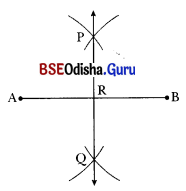
Constructions and Tilings Class 7 Notes Maths Part 2 Chapter 6-1
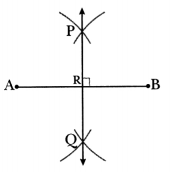
Step 1: Draw the given line segment, say AB.
Step 2: Open the compass such that its radius is greater than half of AB. Place the compass’s pointer on point A and draw two arcs, one above and one below the line segment.
Step 3: Keeping the same radius (do not change the compass setting), place the pointer on B. Draw another two arcs intersecting the previous arcs at points P and Q.
Step 4: Using a ruler, draw a line passing through P and Q. The line PQ is the required perpendicular bisector of AB, intersecting it at point R. Here, R is the midpoint of AB.

Constructions and Tilings Class 7 Notes Maths Part 2 Chapter 6

Angle Bisector
An angle bisector is a ray drawn from the vertex of an angle that makes the two parts of the angle exactly of the same measure.

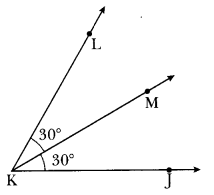
For example, in the figure, ray KM divides the ∠LKJ measuring 60° into two equal parts, the measure of each smaller angle is equal to 30°, i.e. ∠LKM = ∠JKM = 30°.
Constructions and Tilings Class 7 Notes Maths Part 2 Chapter 6-2
Additionally, ray KM is called angle bisector of ∠LKJ.

Construction of an Angle Bisector:
Constructions and Tilings Class 7 Notes Maths Part 2 Chapter 6-3
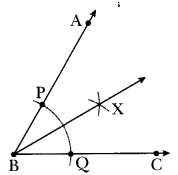
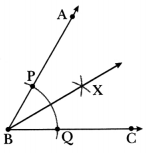
Step 1: Draw the given angle, say ∠ABC.
Step 2: Place compass pointer on B. Open it to an arbitrary radius and draw an arc intersecting both arms of ∠ABC at points P and Q. This ensures BP = BQ.
Step 3: With P as the centre and a radius more than half of PQ, draw an arc. With the same radius and Q as the centre, draw another arc intersecting the previous arc at point X.
Step 4: Join BX. The ray BX is the required angle bisector of ∠ABC.

Construction of an Angle Equal to Given Angle
Suppose we have to copy an angle ∠BAC i.e. to make an angle equal to ∠BAC. However, we do not know the measure of ∠BAC. For this we follow the given steps:
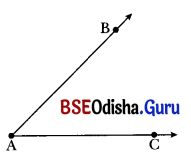
Constructions and Tilings Class 7 Notes Maths Part 2 Chapter 6-4
Step 1: Draw a ray PQ with initial point P.
Step 2: Place the compass pointer at vertex A. Open it to a convenient/arbitrary radius and draw an arc intersecting both arms of ∠BAC at points J and K.
Step 3: Taking caution and making sure that the opening (or the radius) of the compass does not change, place the pointer on P. Draw an arc intersecting ray PQ at point M.
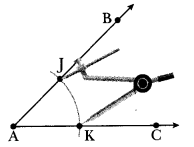
Constructions and Tilings Class 7 Notes Maths Part 2 Chapter 6-5
Step 4: Place the compass pointer on K and adjust the width so that pencil lead rests exactly on measuring the distance KJ).
Step 5: Again, taking caution that the radius of the compass has not changed, place the pointer on M and draw a new arc that intersects the previous arc at point L.
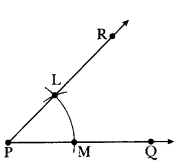
Constructions and Tilings Class 7 Notes Maths Part 2 Chapter 6-6
Step 6: Draw a ray starting from point P and passing through point L using a ruler.
Step 7: Label a point R on ray PL. ∠QPR is required angle, which is an exact copy of ∠BAC.

Constructions and Tilings Class 7 Notes Maths Part 2 Chapter 6

Construction of an Angle Measuring 60°
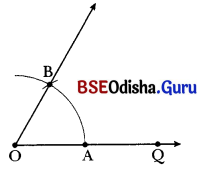
Constructions and Tilings Class 7 Notes Maths Part 2 Chapter 6-7
To draw 60° angle, we follow the given steps:
Step 1: Draw a ray OQ with initial point O.
Step 2: Taking 0 as the centre and with the convenient radius, draw an arc intersecting the ray OQ at point A.
Step 3: With A as the centre and using the same radius as step 2, draw another arc to intersect the first arc at point B.
Step 4: Draw ray OB. ∠AOB is required angle of measure 60°.

Construction of a line parallel to a Given Line
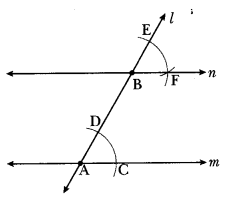
If a transversal intersects two lines and the corresponding angles formed are equal, then the two lines are parallel.
Constructions and Tilings Class 7 Notes Maths Part 2 Chapter 6-8
To draw a line through B which is parallel to line m, we follow the given steps:
Step 1: Take any point A on line m. Join B and A to form a transversal line l.
Step 2: With A as centre and any convenient radius, draw an arc intersecting line m at point
C and line l at point D.
Step 3: Using the same radius as in step 2, draw another arc with B as centre. Let this arc intersect line l at point E.
Step 4: Place the pointed tip of the compass at D and adjust the opening so that the pencil lead is at C. This measures the length CD.
Step 5: With E as centre and the radius equal to length CD, draw an arc. This arc will cut the previous arc (drawn in step 3) at point F.
Step 6: Join B and F with a ruler to get a new line n.
The line n drawn through point B is parallel to line m, because the corresponding angles formed are equal, i.e. ∠EBF = ∠DAC.

Constructions and Tilings Class 7 Notes Maths Part 2 Chapter 6

Arch Designs
Constructions and Tilings Class 7 Notes Maths Part 2 Chapter 6-9
Arch designs have a symmetrical and geometric structure.

To create these arches, one must first draw accurate supporting lines on a flat surface like paper or stone.

A trefoil arch is a type of arch that has three rounded curves joined together, forming a shape like three small overlapping circles. The word “trefoil” means three leaves, so the arch looks a bit like a three-leaf clover.

Symmetry is essential for a trefoil arch. It must posses line symmetry to ensure the structure is balanced.

A pointed arch is formed by two arcs that meet at a sharp top point.

It uses two equal line segments placed at an angle. By locating their midpoints, arcs are drawn using the wavy wave method

Constructions and Tilings Class 7 Notes Maths Part 2 Chapter 6

Regular Hexagons
Constructions and Tilings Class 7 Notes Maths Part 2 Chapter 6-10
A regular polygon is a shape whose all sides are equal in length and all angles are equal in measure.

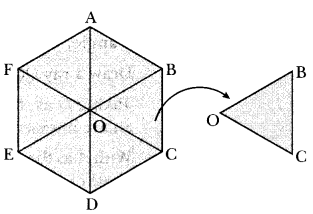
A regular hexagon can be visualised as being made up of six identical equilateral triangles.

The six triangles form a closed hexagonal shape.

The outer boundary becomes a regular hexagon.

Each interior angle of the hexagon is 120° (since two 60° angles meet at each vertex of hexagon).

Lines joining opposite vertices (diagonals) of the hexagon pass straight through the centre.

Tiling
Tiling means covering a region completely with given shapes, without any gaps or overlaps. One important type of tiling problem is to check whether the total number of unit squares in a given region can be fully covered by a given type of tile.

In any tiling problem, the first and most important step is a counting check, i.e. the total number of unit squares in the grid must be divisible by the area of one tile.

In general, an m × n rectangular grid can be tiled using 2×1 dominoes if and only if m × n is even, which means at least one of m orn must be even.

Certain regular shapes, like squares, equilateral triangles, and regular hexagons, can tile the entire plane without leaving gaps or overlaps. For example, regular hexagons form a natural tiling pattern, commonly seen in bee hives.

Other regular polygons (like Pentagon) result in unavoidable gaps or overlaps, so they cannot tile a flat surface (plane) perfectly.

Constructions and Tilings Class 7 Notes Maths Part 2 Chapter 6

Types of Bisector
Perpendicular bisector:
A line that bisects a given line and is perpendicular to it, is called the perpendicular bisector
Constructions and Tilings Class 7 Notes Maths Part 2 Chapter 6-11
PQ is perpendicular bisector of AB.

Angle bisector: A ray drawn from the vertex of an angle that divides the angle into two equal parts is called the angle bisector.
Constructions and Tilings Class 7 Notes Maths Part 2 Chapter 6-12
Here, BX is angle bisector of ∠ABC.

Copying An Angle
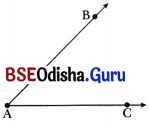
Copying an angle means constructing an angle that is exactly equal in measure to a given angle. We can copy a given angle using geometric instruments (a ruler and a compass), without measuring the angle with a protractor.
Consider the given angle to be ∠BAC.
Steps of construction to copy an angle:
Constructions and Tilings Class 7 Notes Maths Part 2 Chapter 6-13
Step 1: Draw a ray PQ with P as the initial point.
Step 2: With the compass at A and any radius, draw an arc cutting the arms of ∠BAC at J and K.
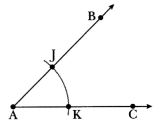
Constructions and Tilings Class 7 Notes Maths Part 2 Chapter 6-14
Step 3: Without changing the compass opening, place it at P and draw an arc cutting PQ at M.
Step 4: Place the compass at K and open it to reach J (measure KJ).
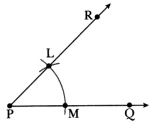
Constructions and Tilings Class 7 Notes Maths Part 2 Chapter 6-15
Step 5: Keeping the same opening, place the compass at M and draw an arc intersecting the previous arc at L.
Step 6: Using a ruler, draw a ray from P through L.
Step 7: Mark any point R on this ray. ∠RPQ is the required angle, equal to ∠BAC.

Tilings
Tiling (or tessellation) is the process of covering a flat region using a set of shapes so that there are absolutely no gaps or overlaps.

In general, a regular polygon can tile the plane only if the interior angle divides 360° exactly (whole number of times).

Constructions and Tilings Class 7 Notes Maths Part 2 Chapter 6

The hexagonal tiling is highly efficient; it is famously used by bees in honeycombs because it covers the area without wasting space and uses the minimum amount of wax to store the maximum amount of honey.

Tangram
A tangram is a mathematical puzzle made by cutting a square into seven geometric pieces, called tans.
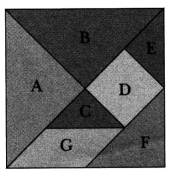
Constructions and Tilings Class 7 Notes Maths Part 2 Chapter 6-16

Adolescence: A Stage of Growth and Change Class 7 Question Answer Science Chapter 6

Go through BSE Odisha Class 7 Science Solutions and Class 7 Science Chapter 6 Adolescence: A Stage of Growth and Change Question Answer to understand textbook questions more clearly.

Class 7 Science Curiosity Chapter 6 Question Answer

Science Curiosity Class 7 Chapter 6 Question Answer

Adolescence: A Stage of Growth and Change Class 7 Questions and Answers

Let Us Enhance Our Learning

Question 1.
Ramesh, an 11-year-old boy, developed a few pimples on his face. His mother told him that this is because of ongoing biological changes in his body.
(i) What could be the possible reasons for the development of these pimples on his face?
(ii) What can he do to get some relief from these pimples?
Answer:
(i) The development of pimples on Ramesh’s face could be due to the hormonal changes and oily secretions from the skin that occur during adolescence.
(ii)

  • Avoid squeezing or picking the pimples.
  • Maintain good body hygiene.
  • Drink plenty of water.
  • Use a gentle cleanser for the face.

Adolescence: A Stage of Growth and Change Class 7 Question Answer Science Chapter 6

Question 2.
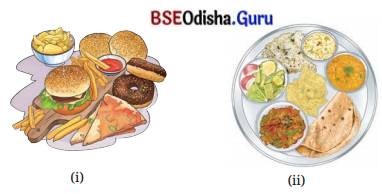
Which of the following food groups would be a better option for adolescents and why?
Adolescence A Stage of Growth and Change Class 7 Question Answer Science Chapter 6.2
Answer:
The food group (B), would be a better choice for adolescents because it contains sources of all essential nutrients, i.e., carbohydrates, proteins, fats, vitamins, and minerals that are necessary for supporting the rapid growth and development occurring during this period. On the other hand, food group (A) contains various junk foods that are high in fats and sugar but low in essential nutrients.

Question 3.
Unscramble the underlined word in the following sentences:
(i) The discharge of blood in adolescent girls which generally occurs every 28-30 days is nstmnoiaretu.
(ii) The hoarseness in the voice of adolescent boys is due to enlarged iceov xob.
(iii) Secondary sexual characteristics are natural signs that the body is preparing for adulthood and mark the onset of urtypeb.
(iv) We should say NO to lahoclo and srugd as they are addictive.
Answer:
(i) nstmnoiaretu – menstruation
(ii) iceov xob – voice box
(iii) urtypeb – puberty
(iv) lahoclo – alcohol, srugd – drugs

Question 4.
Shalu told her friend, “Adolescence brings only physical changes, like growing taller or developing body hair.” Is she correct? What would you change in this description of adolescence?
Answer:
No, Shalu is partially correct because adolescence not only brings physical changes like growing taller or the appearance of body hair, but also includes internal (biological) changes indicating reproductive capability, as well as emotional and behavioural changes.

Adolescence: A Stage of Growth and Change Class 7 Question Answer Science Chapter 6

Question 5.
During a discussion in the class, some of the students raised the following points. What questions would you ask them to check the correctness of these points?
(i) Adolescents do not need to worry about behavioural changes.
(ii) If someone tries a harmful substance once, they can stop anytime they want.
Answer:
The following questions can be asked to check the correctness of points made by the students:
(i)

  • Can ignoring certain behavioural changes affect mental health or social relationships later on?
  • Why do you think it is important for adolescents to adapt to changes in a positive way rather than worrying about them?
  • Are behavioural changes during adolescence linked to hormonal changes, and how can one handle these changes?

(ii)

  • Can harmful substances like tobacco and alcohol cause addiction, and is it easy to stop using them once a person becomes dependent?
  • How does peer pressure or emotional state influence the ability to stop using a substance?
  • Has any research shown that people can easily quit using harmful substances after trying them just once?

Question 6.
Adolescents sometimes experience mood swings. On some days, they feel very energetic and happy, while on other days, they may feel low. What other behavioural changes are associated with this age?
Answer:
Adolescents undergo several behavioural changes, such as:

  • A strong desire for independence, developing their own identity, and personal decision making.
  • A desire to explore new interests and engage in varied activities like music, dance, or sports.
  • Increased influence of peers, attraction to them, and trying to mimic their behaviour.
  • Intense emotions, frequent mood swings and increased sensitivity.
  • Getting involved in social work and initiatives to support the needy and the disadvantaged.

Question 7.
While using a toilet, Mohini noticed that used sanitary pads were scattered near the bin. She got upset and shared her feelings with her friends. They discussed the importance of menstrual hygiene and healthy sanitary habits. What menstrual hygiene and sanitary habits would you suggest to your friends?
Answer:
The following menstrual hygiene and sanitary habits should be followed:

  • Properly disposing used sanitary pads by wrapping them in paper and disposing them in a dustbin.
  • Using clean, reusable cloth pads or sanitary napkins.
  • Washing hands with soap and water before and after handling sanitary products.
  • Cleaning the pubic area regularly to maintain hygiene and prevent bacterial or fungal infections.

Adolescence: A Stage of Growth and Change Class 7 Question Answer Science Chapter 6

Question 8.
Mary and Manoj were classmates and good friends. On turning 11, Mary developed a little bulge on the front of her neck. She visited the doctor who gave her medication and asked to take iodine-rich diet. Similarly, a bump was developed on the front of Manoj’s neck when he turned 12. However, the doctor told him that it was a part of growing up. According to you, what could be the possible reason for advising Mary and Manoj differently?
Answer:
The doctor advised Mary and Manoj differently because the causes of their neck bulges were different.

  • In Mary’s case, the bulge on her neck was likely due to goitre, a condition caused by iodine deficiency. Iodine is essential for performing physical and mental activities efficiently. When the body lacks iodine, it leads to a disease called goitre and a prominent bulge or swelling on the front of the neck is a characteristic symptom of this disease. Therefore, the doctor advised her to take an iodine-rich diet and prescribed required medication.
  • On the other hand, in Manoj’s case, the bulge on his neck was due to the natural growth of the voice box during puberty. This results in the formation of the Adam’s apple, which is a normal part of male development and also causes the voice to become deeper and hoarse.

Question 9.
During adolescence, the boys and girls undergo certain physical changes, a few of which are given below.
(i) Change in voice
(ii) Development of breasts
(iii) Growth of moustache
(iv) Growth of facial hair
(v) Pimples on the face
(vi) Growth of hair in the pubic region
(vii) Growth of hair in armpits
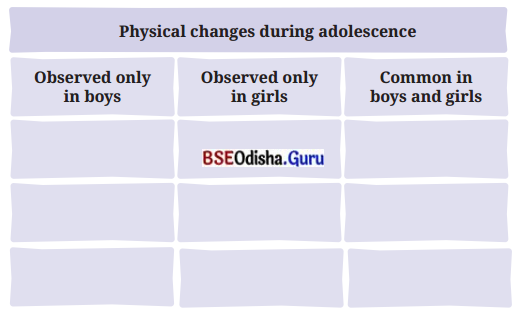
Categorise these changes in the table given below:
Adolescence A Stage of Growth and Change Class 7 Question Answer Science Chapter 6.1
Answer:

Physical changes during adolescence
Observed only in boys Observed only in girls Common in boys and girls
Change in voice Development of breasts Pimples on the face
Growth of moustache Growth of hair in the pubic region
Growth of facial hair Growth of hair in armpits

Question 10.
Prepare a poster mentioning the tips for adolescents to live a healthy lifestyle.
Answer:
The students should prepare the poster themselves.

Class 7 Curiosity Chapter 6 Question Answer

InText Questions

Question 1.
What changes are most commonly seen during adolescence? [Page 75]
Answer:
Commonly observable changes during adolescence are:

  • Increase in height and weight
  • Appearance of hair in different parts of the body, like the armpits and pubic region
  • Change in voice (more prominent in boys)
  • Oily secretions from the skin causing pimples on the face

Adolescence: A Stage of Growth and Change Class 7 Question Answer Science Chapter 6

Question 2.
Is adolescence just about physical changes or changes associated with reproductive capability? [Page 78]
Answer:
No, adolescence also brings about significant emotional and behavioural changes along with other changes.

Question 3.
Does an ideal nutritious diet for adolescents mean consuming only protein and carbohydrate-rich foods? [Page 79]
Answer:
For proper growth and to perform well in studies and sports, we not only require proteins and carbohydrates, but also an adequate amount of fats, vitamins, and minerals, along with a proper intake of dietary fibre and water.

Question 4.
In what ways do nutrients support our growth and development? [Page 79]
Answer:
Nutrients such as proteins, fats, carbohydrates, vitamins and minerals play a crucial role in keeping our body healthy. These nutrients are obtained from foods like milk, curd, cheese, spinach, millets, kidney beans, and dried fruits such as raisins and figs.
These nutrients help our body in the following ways:

  • Support the growth and development of bones and muscles
  • Increase strength and help build a healthy body
  • Aid in the formation of blood
  • Improve energy levels

Question 5.
Adolescents, especially girls, may suffer from blood-related health problems due to a deficiency of iron or vitamin B12. Name and describe such health problem(s). [Page 80]
Answer:
Anaemia is a blood-related health problem caused by a deficiency of iron or vitamin B12. It leads to low haemoglobin levels, resulting in weakness, fatigue, and pale skin. Adolescent girls are more prone to anaemia due to rapid growth and blood loss during menstruation.

Question 6.
How can we manage iron deficiency in our body? [Page 80]
Answer:
Iron deficiency can be prevented and managed by including iron-rich foods in our diet, such as beans, nuts, dried apricots, spinach, lentils, legumes, broccoli, and fortified cereals. In some cases, doctors may also recommend iron supplements to maintain healthy iron levels in the body.

Question 7.
What are some sources of vitamin B12? [Page 80]
Answer:
Vitamin B12 is mainly obtained from foods such as eggs, meat, liver, fish, cheese, milk, fortified cereals, nutritional yeast, and green leafy vegetables.

Adolescence: A Stage of Growth and Change Class 7 Question Answer Science Chapter 6

Question 8.
List some government schemes that aim to prevent deficiency diseases like anaemia. [Page 80]
Answer:
In India, the Adolescent Anaemia Control Programme focuses on reducing the prevalence and severity of anaemia among adolescents and supports the government’s Anaemia Mukt Bharat initiative under the National Health Mission.
The Weekly Iron and Folic Acid Supplementation (WIFS) programme is a key component of the Anaemia Mukt Bharat strategy. It involves the supervised weekly consumption of Iron and Folic Acid (IFA) tablets by both school-going and outof-school adolescents to prevent iron-deficiency anaemia.

Question 9.
Why do changes occur during the adolescent life stage? [Page 84]
Answer:
Many changes during adolescence, including menstruation and other signs of puberty, are primarily due to the production of certain chemicals in our bodies called hormones.

Connecting the Dots Class 7 Notes Maths Part 2 Chapter 5

Easy-to-read Ganita Prakash Class 7 Notes and Part 2 Chapter 5 Connecting the Dots Class 7 Notes save valuable study time during exam season.

Class 7 Maths Chapter 5 Connecting the Dots Notes

Class 7 Connecting the Dots Notes

Statistical Questions and Statements
A statistical question is a question that can be answered by collecting and analysing data.

A statistical statement is a claim or summary about some phenomenon, expressed in terms of numerical values, proportions, probabilities or predictions.

A non-statistical question does not need data collection as it has usually one, fixed answer.

Asking a statistical question, collecting data, analysing it and making a statistical statement together form the statistical process.
Connecting the Dots Class 7 Notes Maths Part 2 Chapter 5-1

Connecting the Dots Class 7 Notes Maths Part 2 Chapter 5

Visualisation of data with a Dot Plot
A dot plot is a simple way of visualising data using dots, where each dot represents one observation.
In a dot plot:

  1. Spacing between the horizontal and the vertical lines must be equal.
  2. The dots are placed in a line or a row, usually along a number line.
  3. If the same observation occurs more than once, place the dots one above the other.

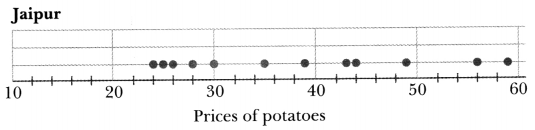
For example, the given data shows how the prices of potatoes change across different months of the year in Jaipur.

Month Jan Feb Mar Apr May Jun Jul Aug Sep Oct Nov Dec
Price in Jaipur (in ₹/ kg) 25 24 43 28 30 35 39 26 49 56 59 44

The dot plot for the given data is drawn as:
Connecting the Dots Class 7 Notes Maths Part 2 Chapter 5-2

Range of the given data is difference between its extremes, i.e. the difference between the highest and the lowest values in the dataset.
Range = Highest Value (Maximum) Lowest Value (Minimum)

Representative Value of the Data
A representative value of a dataset is a single number, often called a measure of central tendency, that summarises the entire dataset.

Average or Arithmetic mean (or simply Mean) is the value we get when we add up all the observations in the group and divide the total by the count of observations in the group.
\(\text { Mean }=\frac{\text { Sum of all values in the data }}{\text { Number of values in the data }}\)

The value of the Arithmetic mean depends on the total of all values and number of values, so more observations do not guarantee a higher mean.

The Median of a data set is the value in the middle, when all observations are arranged in order. It splits the data into two groups of equal size.

Connecting the Dots Class 7 Notes Maths Part 2 Chapter 5

If n is odd, Median = value of the \(\left(\frac{n+1}{2}\right)^{\text {th }}\) observation
If n is even, \(\text { Median }=\frac{\text { value of the }\left(\frac{n}{2}\right)^{\text {th }} \text { observation }+ \text { value of }\left(\frac{n}{2}+1\right)^{\text {th }} \text { observation }}{2}\)

An outlier is a data value which significantly deviates from the rest of the values in the data set.

Effect of Outliers on Mean and Median:
The mean may move up (or down), depending on the presence of an outlier to the right (or left).

The median usually remains near the centre of the main cluster of data and is more stable than the mean (especially in presence of outliers).

Mean is sensitive to outliers, while the median is more stable and often better represents the central tendency of the complete data set.

While working with data, it is important to understand the difference between a zero value and no value. For example, in a cricket match:

A score of 0 means the player played and scored 0 runs. Therefore, it must be counted to find mean or median.

A blank (no score) means the player did not bat in that match. Therefore, that match should not be counted while finding the average.

Visualisation of data with a Double Bar Graph
A clustered bar graph is a type of bar graph in which two or more bars are placed side by side to compare related quantities.

Like the single bar graphs, clustered bar graphs can be of two types: Horizontal and Vertical, depending on the orientation of bars.

Connecting the Dots Class 7 Notes Maths Part 2 Chapter 5

A double bar graph is a special case of a clustered bar graph in which exactly two bars are drawn for each category such as a team, a place, a time period, a type of item etc.

To draw a double bar graph for a given data, follow the steps given below:
Step 1: Draw axes and choose a scale: Draw vertical and horizontal axes, label them, and select a common scale for the vertical axis (or horizontal axis in case of horizontal double bar graph).
Step 2: Draw bars for each data set: For each category, draw bars of equal width side by side, using different colours or patterns.
Step 3: Add title and key: Give the graph a proper title and include a key (legend) to identify each data set.
Step 4: Check and label carefully: Ensure all bars are correctly labelled and spaced evenly.

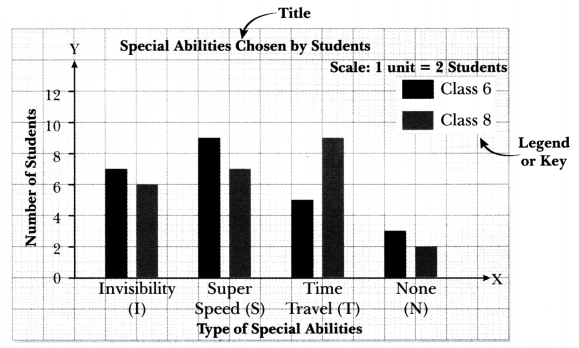
For example, for the given data:

Special Abilities Chosen by Students

Invisibility (I)

Super Speed (S)

Time Travel (T)

None(N)

Class 6

7

9

5

3

Class 8

6

7

9

2

The double graph is drawn as:
Connecting the Dots Class 7 Notes Maths Part 2 Chapter 5-3

Interpretation of Double Bar Graphs
Interpreting a graph means studying it carefully to understand the information shown, comparing values, and drawing meaningful conclusions from the data.

To make sense of the data easily, we can follow a simple two-step process:
Step 1: Observe and identify the given data

  1. To do this, first read the title of the graph to know what is being measured and compared.
  2. Next, observe the x-axis and y-axis to identify the categories shown and the unit of measurement.
  3. Finally, check the scale of the graph so that the values and differences can be interpreted correctly.

Step 2: Analyse the data and make inferences

  1. To do this, analyse the values shown in the graph.
  2. Compare the data for different categories.
  3. Draw conclusions based on your observations.

Connecting the Dots Class 7 Notes Maths Part 2 Chapter 5

A well-drawn graph must be clear and accurate: It should have a proper title, correctly labelled axes, a common scale, equal spacing, and a key so that the data can be understood easily.

Introduction
Statistical questions are questions that involve variability in data and require data collection and analysis to answer.

A data set is an organised collection of related information or numerical values,
Range is the difference between the maximum and minimum values in a data set.

Representative Value
A representative value of a data set is a single number, often called a measure of central tendency, that summarises the entire data set. For example, mean and median.

Arithmetic Mean (Average) Median
\(\text { Mean }=\frac{\text { Sum of all observations }}{\text { Number of observations }}\) Median is the middle value of an ordered data.
Mean can be understood as fair share or equal distribution. If number of observations i.e., n is even,
\(\text { Median }=\left(\frac{n+1}{2}\right)^{\text {th }} \text { value }\)
Mean is widely used in daily life (rainfall, height, income, prices, sports performance) If number of observations i.e., n is even,
\(\text { Median }=\frac{\left(\frac{n}{2}\right)^{\text {th }} \text { value }+\left(\frac{n}{2}+1\right)^{\text {th }} \text { value }}{2}\)

Note:

  1. An outlier is a number that is very different from the others in a set of data — it is much bigger or much smaller than most of the values.
  2. The mean can be easily affected by outliers, but the median usually stays the same and gives a better idea of the middle of the data set.

Connecting the Dots Class 7 Notes Maths Part 2 Chapter 5

Visualisation of Data
Data visualisation helps in understanding data better using tools like dot plots and clustered bar graphs.

Dot Plots

Double Bar Graphs

A dot plot is a simple, visual graph used to represent numerical data by placing dots above a labeled number line. Double bar graphs are used to compare two related quantities by showing a pair of bars for each category using the same scale.
In a dot plot:

  1. Each dot represents one value from the data set.
  2. Spacing between the horizontal and vertical lines must be equal.
  3. The dots are placed in a line or row, usually along a number line.
  4. If the same number appears more than once, we stack the dots on top of each other.
To draw a double bar graph for a given data, follow the steps given below:
Step 1: Draw axes and choose a scale
Step 2: Draw bars for each data set
Step 3: Add title and key
Step 4: Check and label carefully


Interpreting the Graphs
Interpreting a graph means studying it carefully to understand the information shown, comparing values and drawing meaningful conclusions from the data.

To make sense of the data easily, we can follow a simple two-step process:
Step 1: Observe and identify the given data
Step 2: Analyse the data and make inferences

Another Peek Beyond the Point Class 7 Notes Maths Part 2 Chapter 4

Easy-to-read Ganita Prakash Class 7 Notes and Part 2 Chapter 4 Another Peek Beyond the Point Class 7 Notes save valuable study time during exam season.

Class 7 Maths Chapter 4 Another Peek Beyond the Point Notes

Class 7 Another Peek Beyond the Point Notes

Decimals are another way to show parts of a whole. Instead of writing fractions like \(\frac{1}{4}\) or \(\frac{1}{5}\), we use a point or period (‘.’) as a separator called a decimal point.
A decimal number has 3 parts.
Another Peek Beyond the Point Class 7 Notes Maths Part 2 Chapter 4-1

A decimal point indicates where the whole number part ends and the fractional part begins in a decimal number.

Also, decimals such as 0.1 and 0.01 can be expressed in the form of fractions as \(\frac{1}{10}\) and \(\frac{1}{100}\), respectively.

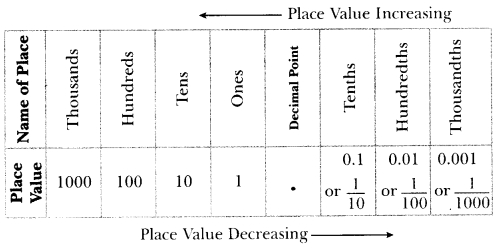
Place Value in a Decimal: Each digit in a number denotes a value depending on where it is placed. This is called the place value.
Another Peek Beyond the Point Class 7 Notes Maths Part 2 Chapter 4-2
Place value chart for decimals is given in the figure.
For example,
137.85 = 1 × 100 + 3 × 10 + 7 × 1 + 8 × \(\frac{1}{10}\) + 5 × \(\frac{1}{100}\)

Converting Fractions to Decimals (When Denominators are 10, 100, 1000, …): A fraction represents the division of the numerator by the denominator.

Another Peek Beyond the Point Class 7 Notes Maths Part 2 Chapter 4

Write the dividend as it is and put a decimal point at the end.
Count the zeroes in the divisor.

Move the decimal point left by the same number of places as the count of zeroes in the divisor. Add zeroes in front if needed.

Multiplication of a Decimal Number with a Whole Number
Repeated Addition Method: Multiplying a decimal by a whole number can be done by adding the decimals as many times as the whole number indicates.
For example, multiplying 6.5 by 7 is same as adding 6.5 seven times,
i. e. 6.5 × 7 = 6.5 + 6.5 + 6.5 + 6.5 + 6.5 + 6.5 + 6.5 = 45.5

Multiplication of Decimal by 10, 100 and 1000: When a decimal number is multiplied by 10, 100, or 1000, the decimal point shifts to the right by as many places as there are zeros in the multiplier.
For example, (i) 24.576 × 100 = 2457.6
(ii) 0.3251 × 1000 = 325.1

If there are not enough digits to shift the decimal point, zeroes are added to the right.
For example, 1.34 × 1000 = 1340.0 = 1340

Multiplication of a Decimal Number with a Decimal Number
Fraction Method (Converting Decimals to Fractions): Multiplication of decimals is same as multiplication of their corresponding fractions.
Step 1: Change decimals to corresponding fractions
Step 2: Multiply Numerator and Denominator, respectively
Step 3: Turn the final fraction back into a decimal

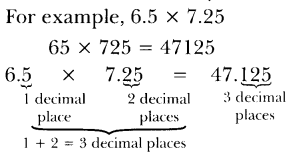
Decimal Shifting Method (Making them Whole Number)
Another Peek Beyond the Point Class 7 Notes Maths Part 2 Chapter 4-3
Step 1: Ignore the decimal points and multiply the numbers as whole numbers.
Step 2: Count the total number of digits after the decimal point in both numbers.
Step 3: From the right of the product, shift the decimal point to the left by the count obtained in step 2.

Another Peek Beyond the Point Class 7 Notes Maths Part 2 Chapter 4

Relation between Product and Numbers
If both numbers are greater than 1 (e.g., 3.4 X 6.5), the product (22.1) is greater than both the numbers.

If both number are between 0 and 1 (e.g., 0.75 x 0.4), the product (0.3) is less than both the numbers.

If one number is between 0 and 1 and one number is greater than 1 (e.g., 0.75 X 5), the product (3.75) is less than the number greater than 1 and greater than the number between 0 and 1.

Division of Decimals by 10, 100, 1000, …: When a number is divided by 10, 100, 1000, and so
on, move the decimal point to the left by as many places as there are zeros in the divisor.

Number ÷10 ÷100 ÷1000
12.02 1.202 0.1202 0.01202

If we run out of digits while moving the decimal point, we add zeros at the start of the number.

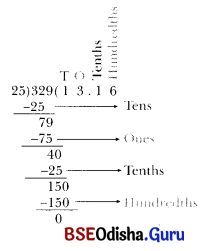
Decimal Division Using Place Value
Another Peek Beyond the Point Class 7 Notes Maths Part 2 Chapter 4-4
Step 1: Divide as you do with counting numbers, starting from the highest place value.
Step 2: If there is a remainder, regroup it into the next smaller place value digit and continue dividing.
Step 3: When you move from the Ones place to the Tenths place in the division, place a decimal point in the quotient.
Step 4: If necessary, add zeros to the right of the decimal point in the dividend and continue the division until the remainder becomes zero or the digits in the quotient begin to repeat.

Another Peek Beyond the Point Class 7 Notes Maths Part 2 Chapter 4

When the divisor is a decimal, we can convert it into a counting number by suitably multiplying it by 10, 100, 1000, and so on. We must also multiply the dividend by the same number.

Once the divisor is converted into a counting number, we proceed with the division by following the same place-value procedure (long division) to find the quotient.

A recurring decimal is a decimal that follows a repeating pattern of digits after the decimal point.
For example, \(\frac{1}{3}\) = 0.333… and \(\frac{12}{99}\) = 0.121212…

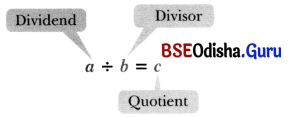
Relation between Dividend, Divisor and Quotient
When the divisor is between 0 and 1.
For example, 135 ÷ 0.5 (0 < 0.5 <1) The quotient (270) is greater than the dividend (135). When the divisor is greater than 1. For example, 135 ÷ 2.5 (> 1)
The quotient (54) is smaller than the dividend (135).

When the divisor is exactly 1.
For example, 135 ÷ 1
The quotient (135) is equal to the dividend (135).

Leap Year
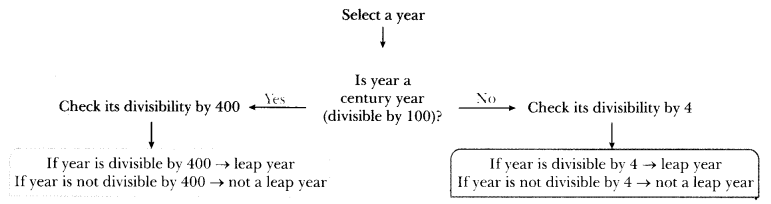
A leap year is a year with 366 days. In the Gregorian calendar, years divisible by 4 are leap years, but century years are leap years only if they are divisible by 400.

Process to determine whether a year is a leap year:
Another Peek Beyond the Point Class 7 Notes Maths Part 2 Chapter 4-5

Another Peek Beyond the Point Class 7 Notes Maths Part 2 Chapter 4

Multiplication of Decimal Numbers
For small whole numbers, multiplication can be viewed as adding the decimal number multiple times.

While multiplying a number by 10, 100, 1000, move the decimal point to the right by as many places as there are zeros in the multiplier.
If you run out of digits while moving the decimal point, add zeros at the end.

Multiplication of decimals is same as multiplication of their corresponding fractions.

Division of Decimal Numbers
When the divisor is a decimal, we can convert it into a counting number by suitably multiplying it by 10, 100, 1000, and so on. We must also multiply the dividend by the same number.

Once the divisor is converted into a counting number, we proceed with the division by following the same place-value procedure (long division) to find the quotient.

A recurring decimal is a decimal that follows a repeating pattern of digits after the decimal point.

Relationship between Dividend, Divisor and Quotient
When the divisor is between 0 and 1 [e.g., 135 ÷ 0.5 (0 < 0.5 <1)], the quotient (270) is greater than the dividend (135). When the divisor is greater than 1 [e.g., 135 ÷ 2.5 (> 1)], the quotient (54) is smaller than the dividend (135).

When the divisor is exactly 1 (e.g., 135 ÷ 1), the quotient (135) is equal to the dividend (135).

Another Peek Beyond the Point Class 7 Notes Maths Part 2 Chapter 4

Relation between Product and Numbers
If both numbers are greater than 1 (e.g., 3.4 × 6.5), the product (22.1) is greater than both the numbers.

If both numbers are between 0 and 1 (e.g., 0.75 × 0. 4), the product (0.3) is less than both the numbers.

If one number is between 0 and 1 and one number is greater than 1 (e.g., 0.75 × 5), the product (3.75) is less than the number greater than 1 and greater I than the number between 0 and 1.

Leap Year
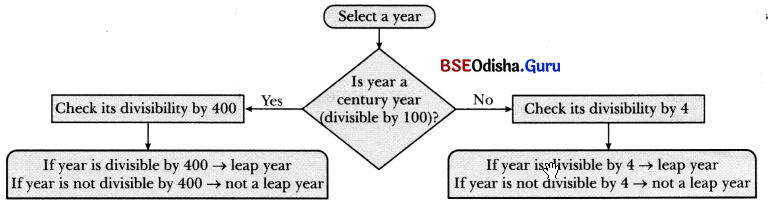
A leap year is a year with 366 days. In the Gregorian calendar, years divisible by 4 are leap years, but century years are leap years only if they are divisible by 400.

Process to determine whether a year is a leap year:
Another Peek Beyond the Point Class 7 Notes Maths Part 2 Chapter 4-6

Class 6 Science Chapter 9 Question Answer Odia Medium ପୃଥକୀକରଣର ପଦ୍ଧତି

Go through 6th Class Science Book Odia Medium Question Answer and Class 6 Science Chapter 9 Question Answer Odia Medium ପୃଥକୀକରଣର ପଦ୍ଧତି to understand textbook questions more clearly.

6th Class Science Chapter 9 Question Answer Odia Medium

Class 6 Science Chapter 9 Odia Medium

ଆସ ଆମ ଶିକ୍ଷଣର ଅଭିବୃଦ୍ଧି କରିବା

Question 1.
ଅଲଗା କରିବା ପାଇଁ ହାତରେ ବାଛିବା ପ୍ରଣାଳୀର ଉଦ୍ଦେଶ୍ୟ କ’ଣ ?
(କ) ଛାଣିବା
(ଖ) ବାଛି ଅଲଗା କରିବା
(ଗ) ବାଷ୍ପୀକରଣ ହେବା
(ଘ) ଅବକ୍ଷୟ ହେବା
Answer:
(ଖ) ବାଛି ଅଲଗା କରିବା

Question 2.
ନିମ୍ନ ଲି ଖତ ପଦାର୍ଥଗୁଡ଼ିକ ମଧ୍ୟରୁ କେଉଁଟି ସାଧାରଣତଃ ମନ୍ଥନ ପଦ୍ଧତି ବ୍ୟବହାର କରି ଅଲଗା କରାଯାଏ ?
(କ) ପାଣିରୁ ତେଲ
(ଖ) ପାଣିରୁ ବାଲି
(ଗ) କ୍ଷୀରରୁ ଲହୁଣୀ
(ଘ) ବାୟୁରୁ ଅମ୍ଳଜାନ
Answer:
(ଗ) କ୍ଷୀରରୁ ଲହୁଣୀ

Class 6 Science Chapter 9 Question Answer Odia Medium ପୃଥକୀକରଣର ପଦ୍ଧତି

Question 3.
ପରିସ୍ରବଣ ପାଇଁ ସାଧାରଣତଃ କେଉଁ କାରଣ ଆବଶ୍ୟକ ?
(କ) ଉପକରଣ ଆକାର
(ଖ) ବାୟୁର ଉପସ୍ଥିତି
(ଗ) ଛିଦ୍ରର ଆକାର
(ଘ) ମିଶ୍ରଣର ତାପମାତ୍ରା
Answer:
(ଗ) ଛିଦ୍ରର ଆକାର

Question 4.
ନିମ୍ନରେ ଦିଆଯାଇଥିବା ଉକ୍ତିଗୁଡ଼ିକୁ ଠିକ୍ (✓) କିମ୍ବା ଭୁଲ (✗) କାରଣ ସହ କୁହ । ଭୁଲ ଉକ୍ତିଟିକୁ ସଂଶୋଧନ କର ।

(କ) ଲୁଣ ଦ୍ରବଣରୁ ଲୁଣ ଅଲଗା କରିବା ପାଇଁ ଖରାରେ ରଖାଯାଏ ।
Answer:
(✓)
ଉକ୍ତିଟି ଠିକ୍ ଅଟେ । କାରଣ ଖରାରେ ଜଳ ବାଷ୍ପୀଭୂତ ହୋଇଯିବ ଏବଂ ମୂଳ ପାତ୍ରରେ କଠିନ ଲୁଣ ରହିଯିବ ।

(ଖ) ମିଶ୍ରଣରେ ଉପାଦାନର ମାତ୍ରା କମ୍ ହେଲେ ହିଁ ହାତରେ ବାଛିବା ପ୍ରଣାଳୀ ବ୍ୟବହାର କରିବା ଉଚିତ।
Answer:
(✓)
ଉକ୍ତିଟି ଠିକ୍ ଅଟେ, କାରଣ ମିଶିଥ‌ିବା ଉପାଦାନର ମାତ୍ରା କମ୍ ଥ‌ିବାରୁ ହାତରେ ବାଛିବା ସହଜ ହୋଇଥାଏ ।

(ଗ) ମୁଢ଼ି ଏବଂ ଚାଉଳର ମିଶ୍ରଣର ମିଶ୍ରଣକୁ ଘଷିବା ଦ୍ଵାରା ଅଲଗା କରାଯାଇପାରିବା ।
Answer:
(✗)
ଉକ୍ତିଟି ଭୁଲ ଅଟେ, କାରଣ ଏହି ମିଶ୍ରଣକୁ ଉଡ଼ାଇବା କିମ୍ବା ପାଛୁଡ଼ିବାଦ୍ଵାରା ଅଲଗା କରାଯାଇପାରିବ ।
ଠିକ୍ ଉକ୍ତି : ମୁଢ଼ି ଓ ଚାଉଳର ମିଶ୍ରଣକୁ କୁଲାରେ ପାଛୁ ଡ଼ି ବ। ଦ୍ଵା। ର। ଅ ଲ ଗ କରାଯାଇପାରିବ ।

Class 6 Science Chapter 9 Question Answer Odia Medium ପୃଥକୀକରଣର ପଦ୍ଧତି

(ଘ) ସୋରିଷ ତେଲ ଏବଂ ଲେମ୍ବୁ ପାଣିର ମିଶ୍ରଣକୁ ଆସ୍ରବଣଦ୍ଵାରା ଅଲଗା କରାଯାଇପାରିବ ।
Answer:
(✓)
ଉକ୍ତିଟି ଠିକ ଅଟେ, କାରଣ ତେଲ ଓ ପାଣିର ସାନ୍ଦ୍ରତା ଅଲଗା ଅଟେ ।

(ଙ) ଚାଉଳ ଚୂନା ଏବଂ ପାଣିର ମିଶ୍ରଣକୁ ଅଲଗା କରିବା ପାଇଁ ଚାଲୁଣୀ ବ୍ୟବହାର କରାଯାଏ ।
Answer:
(✗)
ଉକ୍ତିଟି ଭୁଲ ଅଟେ । ଚାଉଳ ଚୁନା ଓ ପାଣିର ମିଶ୍ରଣକୁ ପରି ସ୍ରବଣ ପଦ୍ଧତିରେ ଅଲଗା କରାଯାଇପାରିବ ।
ଠିକ୍ ଉକ୍ତି : ଚାଉଳ ଚୂନା ଓ ପାଣିର ମିଶ୍ରଣକୁ ଅଲଗା କରିବା ପାଇଁ ପରି ସ୍ରବଣ ପଦ୍ଧତି ବ୍ୟବହାର କରାଯାଏ ।

Question 5.
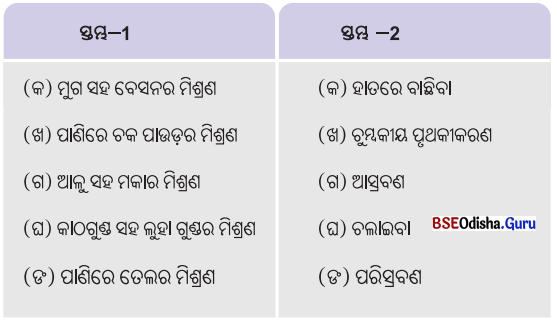
ସ୍ତମ୍ଭ-1 ରେ ଥ‌ିବା ମିଶ୍ରଣଗୁଡ଼ିକୁ ସ୍ତମ୍ଭ-2 ରେ ଥିବା ସେମାନଙ୍କର ପୃଥକୀକରଣ କରିବା ପଦ୍ଧତି ସହିତ ଯୋଡ଼ ।
Class 6 Science Chapter 9 Question Answer Odia Medium ପୃଥକୀକରଣର ପଦ୍ଧତି 1
Answer:

ସ୍ତମ୍ଭ-1 ସ୍ତମ୍ଭ-2
(କ) ମୁଗ ସହ ବେସନର ମିଶ୍ରଣ (ଘ) ଚଲାଇବା
(ଖ) ପାଣିରେ ଚକ ପାଉଡ଼ର ମିଶ୍ରଣ (ଙ)ପରିସ୍ରବଣ
(ଗ) ଆଳୁ ସହ ମକାର ମିଶ୍ରଣ (କ) ହାତରେ ବାଛିବା
(ଘ) କାଠଗୁଣ୍ଡ ସହ ଲୁହା ଗୁଣ୍ଡର ମିଶ୍ରଣ (ଖ) ଚୁମ୍ବକୀୟ ପୃଥକୀକରଣ
(ଙ) ପାଣିରେ ତେଲର ମିଶ୍ରଣ (ଗ) ଆସ୍ରବଣ

Class 6 Science Chapter 9 Question Answer Odia Medium ପୃଥକୀକରଣର ପଦ୍ଧତି

Question 6.
କେଉଁ ପରିସ୍ଥିତିରେ କଠିନ ପଦାର୍ଥକୁ ତରଳ ପଦାର୍ଥରୁ ଅଲଗା କରିବା ପାଇଁ ତୁମେ ଛଣା ପରିବର୍ତ୍ତେ ଆସ୍ରବଣ ପଦ୍ଧତିକୁ ବ୍ୟବହାର କରିବ ?
Answer:
ଯେତେବେଳେ କଠିନ କଣିକାଗୁଡ଼ିକ ଭାରୀ ହୋଇଥାଆନ୍ତି ଏବଂ ପାତ୍ରର ନିମ୍ନଭାଗରେ ସ୍ଥିର ଭାବରେ ରହି ଯାଆନ୍ତି ସେତେବେଳେ ଆସ୍ରବଣ ପଦ୍ଧତିରେ ଏହି କଠିନ ଓ ତରଳ ପଦାର୍ଥକୁ ଅଲଗା କରାଯାଇଥାଏ । କଠିନ କଣକାଗୁଡ଼ିକ ପାତ୍ରର ନିମ୍ନ ଭାଗରେ ରହିଥା’ନ୍ତି ଏବଂ ପରିଷ୍କାର ତରଳ ପଦାର୍ଥ ପାତ୍ରର ଉପରିଭାଗରେ ରହିଥାଏ, ତେ ଣୁ ଆସ୍ର ବ ଣ ପଦ୍ଧତିରେ ଏହାକୁ ଅଲଗା କରାଯାଇଥାଏ । ଉଦାହରଣ ସ୍ଵରୂପ ବାଲି ଓ ଜଳର ମିଶ୍ରଣକୁ ଏହି ପଦ୍ଧତିରେ ଅଲଗା କରାଯାଇଥାଏ ।

Question 7.
ତୁମ ନାକରେ ଥିବା କେଶର ଉପସ୍ଥିତିକୁ କୌଣସି ପୃଥକୀକରଣ ପ୍ରକ୍ରିୟା ସହିତ ସମ୍ବନ୍ଧିତ କରିପାରିବ କି ?
Answer:
ହଁ, ନାକରେ ଥ‌ିବା କେଶ ପ୍ରାକୃତିକ ଫିଲଟର (ଛଣା ଯନ୍ତ୍ର) ପରି କାର୍ଯ୍ୟ କରିଥାଏ । କେଶର ଉପସ୍ଥିତ ଯୋଗୁଁ ଶ୍ଵାସକ୍ରିୟା ସମୟରେ ବାୟୁମଣ୍ଡଳରେ ଧୂଳିକଣା ତଥା ଦୂଷିତ କଣିକାଗୁଡ଼ିକ ଛାଣିହୋଇ ନାକ ପୁଡ଼ାରେ ରହିଯାଏ ।

Question 8.
କୋଭିଡ଼ -19 ମହାମାରୀ ସମୟରେ ଆମେ ସମସ୍ତେ ମାସ୍କ ପିନ୍ଧିଥିଲେ । ସାଧାରଣତଃ, ଏହା କେଉଁ ପଦାର୍ଥରେ ତିଆରି ହୋଇଥାଏ ? ଏହି ମାସ୍କର ଭୂମିକା କ’ଣ ?
Answer:
କୋଭିଡ଼- 19 ସମୟରେ ଆମେ ପିନ୍ଧୁଥ‌ିବା ମାସ୍କ ସାଧାରଣତଃ କଟନ (କପାସୂତା), ସଂଶ୍ଳେଷିତ ତନ୍ତୁରୁ ପ୍ରସ୍ତତ ସୂତା ବା ପଲିପ୍ରପିଲିନ୍ ରୁ ତିଆରି ହୋଇଥାଏ । ଏହି ମାସ୍କର ମୁଖ୍ୟ ଭୂମିକା ହେଉଛି ବାୟୁମଣ୍ଡଳରେ ଭାସିବୁଲୁଥିବା ରୋଗ ସୃଷ୍ଟିକାରୀ ବ୍ୟାକ୍ଟେରିଆ ଓ ଭାଇରସ୍ ଆଦିକୁ ସୁସ୍ଥଲୋକର ଶରୀର ମଧ୍ୟକୁ ଶ୍ଵାସକ୍ରିୟା ମାଧ୍ୟମରେ ପ୍ରବେଶ କରିବାରେ ପ୍ରତିବନ୍ଧକ ସୃଷ୍ଟିକରିବା ଓ ରୋଗ ବ୍ୟାପିବାକୁ ନଦେବା ।

Question 9.
ଆଳୁ, ଲୁଣ ଓ କାଠଗୁଣ୍ଠ ଯୁକ୍ତ ମିଶ୍ରଣ ତୁମକୁ ଦିଆଯାଇଛି । ଏହି ମିଶ୍ରଣରୁ ପ୍ରତ୍ୟେକ ଉପାଦାନକୁ ଅଲଗା କରିବା ପାଇଁ ପ୍ରକ୍ରିୟାଗୁଡ଼ିକୁ ପର୍ଯ୍ୟାୟକ୍ରମେ ବର୍ଣ୍ଣନା କର ।
Answer:
ସୋପାନ – 1 : ପ୍ରଥମେ ଆଳୁକୁ ହାତରେ ବାଛି ଅଲଗା କରିବା ।
ସୋପାନ – 2 : ଲୁଣ ଓ କାଠଗୁଣ୍ଠ ମିଶ୍ରଣରେ ପାଣି ମିଶାଯାଉ । ଏହାଦ୍ଵାରା ଲୁଣ ପାଣିରେ ଦ୍ରବୀଭୂତ ହେବ ।
ସୋପାନ – 3: ପରି ସ୍ରବଣ ପଦ୍ଧତି ରେ ଏହି ମିଶ୍ର ଣରେ ଥ‌ିବା କାଠ ଗୁଣ୍ଡକୁ ଅଲଗା କରାଯାଇପାରିବ ।
ସୋପାନ – 4 : ବାଷ୍ପୀଭବନ ପଦ୍ଧତି ବ୍ୟବହାର କରି ଲୁଣ ପାଣିରେ ଥିବା ଜଳକୁ ବାଷ୍ପ କରାଯାଇପାରିବ ଏବଂ ପାତ୍ରରେ ଲୁଣ ଅବଶେଷ ଆକାରରେ ରହିଯିବ ।

Class 6 Science Chapter 9 Question Answer Odia Medium ପୃଥକୀକରଣର ପଦ୍ଧତି

Question 10.
ବୁଦ୍ଧିମତୀ ଲୀଲା ଶୀର୍ଷକ କାହାଣୀ ପଢ଼ ଏବଂ ସବୁଠାରୁ ଉପଯୁକ୍ତ ବିକଳ୍ପକୁ ଠିକ୍ଠିହ୍ନ (✓) ଦିଅ । ପାରାଗ୍ରାଫ୍ ପାଇଁ ତୁମ ପସନ୍ଦର ଏକ ଉପଯୁକ୍ତ ଶୀର୍ଷକ ମଧ୍ୟ ପ୍ରଦାନ କର ।

ଲୀଲା ତାଙ୍କ ବାପାଙ୍କ ସହ ଚାଷ ଜମିରେ କାମ କରୁଥିବା ବେଳେ ସେ ଜାଣିବାକୁ ପାଇଲା ଯେ, ସେମାନେ ପିଇବା ପାଣି ଘରେ ଛାଡ଼ି ଦେଇଛନ୍ତି । ବାପାଙ୍କୁ ଶୋଷ/ ଭୋକ ଲାଗିବା ପୂର୍ବରୁ ସେ ନିକଟସ୍ଥ ପୋଖରୀରୁ କିଛି ପାଣି ଶସ୍ୟ ଆଣିବାକୁ ଯାଇଥିଲା । ପାତ୍ରରେ କିଛି ପାଣି ଭରିବା ପରେ ସେ ଦେଖୁଲା ଯେ ପାଣିରେ କାଦୁଅ ମିଶିଛି ଏବଂ ପିଇବା ପାଇଁ ଉପଯୁକ୍ତ/ଅନୁପଯୁକ୍ତ । ପାଣିକୁ ଶୁଦ୍ଧ କରିବା ପାଇଁ ସେ ଏହାକୁ କିଛି ସମୟ ସ୍ଥିର କରି ରଖୁଲା ଏବଂ ତା’ପରେ ସେ କାଗଜ/ ମସଲିନ କପଡ଼ା ବ୍ୟବହାର କରି କାଦୁଅ ପାଣିକୁ ଛାଣି/ମନ୍ଥନ ରଖୁଲା । ଏହାପରେ ଲୀଳା ଏକ ଆବଦ୍ଧ ପାତ୍ରରେ ପାଣିକୁ ପ୍ରାୟ 10 ମିନିଟ୍ ପର୍ଯ୍ୟନ୍ତ ଥଣ୍ଡା କଲା | ଫୁଟାଇଲା । ଥଣ୍ଡା କରିବା/ଫୁଟିବା ପରେ ସେ ଏହାକୁ ପୁଣି ଥରେ ଛାଣି/ମନ୍ଥନ କରି ପିଇବା ପାଇଁ ଉପଯୁକ୍ତ / ଅନୁପଯୁକ୍ତ କରିଥିଲା । ଖାଦ୍ୟ ଖାଉଥ‌ିବା ବେଳେ ସେ ତାଙ୍କ ବାପାଙ୍କୁ ଏହି ପାଣି ପିଆଇଥିବାରୁ ସେ ଆଶୀର୍ବାଦ ଦେଇଥିଲେ ଏବଂ ତା’ର ପ୍ରୟାସକୁ ପ୍ରଶଂସା କରିଥିଲେ ।
Answer:
ଲୀଲା ତାଙ୍କ ବାପାଙ୍କ ସହ ଚାଷ ଜମିରେ କାମ କରୁଥିବା ବେଳେ ସେ ଜାଣିବାକୁ ପାଇଲା ଯେ, ସେମାନେ ପିଇବା ପାଣି ଘରେ ଛାଡ଼ି ଦେଇଛନ୍ତି । ବାପାଙ୍କୁ ଶୋଷ (✓)/ଭୋକ ଲାଗିବା ପୂର୍ବରୁ ସେ ନିକଟସ୍ଥ ପୋଖରୀରୁ କିଛି ପାଣି(✓)/ଶସ୍ୟ ଆଣିବାକୁ ଯାଇଥିଲା । ପାତ୍ରରେ କିଛି ପାଣି ଭରିବା ପରେ ସେ ଦେଖିଲା ଯେ ପାଣିରେ କାଦୁଅ ମିଶିଛି ଏବଂ ପିଇବା ପାଇଁ ଉପଯୁକ୍ତ | ଅନୁପଯୁକ୍ତ(✓) । ପାଣିକୁ ଶୁଦ୍ଧ କରିବା ପାଇଁ ସେ ଏହାକୁ କିଛି ସମୟ ସ୍ଥିର କରି ରଖୁଲ ଏବଂ ତା’ପରେ ସେ କାଗଜ/ମସଲିନ(✓) କପଡ଼ା ବ୍ୟବହାର କରି କାଦୁଅ ପାଣିକୁ ଛାଣି (✓)|ମନ୍ଥନ ରଖୁଲା । ଏହାପରେ ଲୀଳା ଏକ ଆବଦ୍ଧ ପାତ୍ରରେ ପାଣିକୁ ପ୍ରାୟ 10 ମିନିଟ୍ ପର୍ଯ୍ୟନ୍ତ ଥଣ୍ଡା କଲା|ଫୁଟାଇଲା(✓) । ଥଣ୍ଡା କରିବା(✓)| ଫୁଟିବା ପରେ ସେ ଏହାକୁ ପୁଣି ଥରେ ଛାଣି(✓)/ ମନ୍ଥନ କରି ପିଇବା ପାଇଁ ଉପଯୁକ୍ତ (✓) ଅନୁପଯୁକ୍ତ କରିଥିଲା । ଖାଦ୍ୟ ଖାଉଥ‌ିବା ବେଳେ ସେ ତାଙ୍କ ବାପାଙ୍କୁ ଏହି ପାଣି ପିଆଇଥିବାରୁ ସେ ଆଶୀର୍ବାଦ ଦେଇଥିଲେ ଏବଂ ତା’ର ପ୍ରୟାସକୁ ପ୍ରଶଂସା କରିଥିଲେ ।

ଉପଯୁକ୍ତ ଶୀର୍ଷକ : ପାଣିକୁ ପରିଷ୍କାର ଓ ବିଶୁଦ୍ଧ କରିବା ପାଇଁ ଲୀଲାର ଚତୁର ସାମାଧାନ ।

ଶୂନ୍ୟସ୍ଥାନ ପୂରଣ କର ।

(କ) ତଳେ କଠିନ, ଓଜନିଆ ପଦାର୍ଥ ବସିଯିବା ପ୍ରଣାଳୀକୁ _______ କୁହାଯାଏ ।
Answer:
ବକ୍ଷେପଣ

(ଖ) ଜଳରେ ଥିବ। ହାଲୁକ। ପଦାର୍ଥକୁ ______ ପ୍ରଣାଳୀରେ ପୃଥକ୍ କରାଯାଏ ।
Answer:
ଆସ୍ରବଣ

(ଗ) ଚାହାରୁ ଚାହା ଗୁଣ୍ଡ ପୃଥକ୍ କରି ବାର ପ୍ରଣାଳୀକୁ ______ କୁହାଯାଏ ।
Answer:
ପରିସ୍ରବଣ

Class 6 Science Chapter 9 Question Answer Odia Medium ପୃଥକୀକରଣର ପଦ୍ଧତି

(ଘ) ଜଳ ବାଷ୍ପ ହେବାର ପ୍ରକ୍ରିୟାକୁ ______ କୁହାଯାଏ ।
Answer:
ବାଷ୍ପୀକରଣ

(ଙ) କ୍ଷୀରରୁ ଲହୁଣୀ ପୃଥକ୍ କରିବା ପ୍ରଣାଳୀକୁ ______ କୁହାଯାଏ ।
Answer:
ମନ୍ଥନ ପ୍ରଣାଳୀ

(ଚ) ଚୁମ୍ବକ ଓ ଅଚୁମ୍ବକୀୟ ପଦାର୍ଥକୁ ଅଲଗା କରିବାର ପ୍ରଣାଳୀକୁ _______ କୁହାଯାଏ ।
Answer:
ଚୁମ୍ବକୀୟ ପୃଥକୀକରଣ ପ୍ରଣାଳୀ

ଠିକ୍ ଉତ୍ତର ପାଖରେ (✓) ଚିହ୍ନ ଓ ଭୁଲ୍ ଉତ୍ତର ପାଖରେ (✗) ଚିହ୍ନ ଦିଅ । (ପ୍ରଶ୍ନ ସହ ଉତ୍ତର)

(କ) ଲୁଣ ଦ୍ରବଣରୁ ଲୁଣ ଅଲଗା କରିବା ପାଇଁ ଖରାରେ ରଖାଯାଏ ।
Answer:
(✓)

(ଖ) ଚାଉଳ ଚୁନା ଓ ପାଣିର ମିଶ୍ରଣକୁ ଅଲଗା କରିବା ପାଇଁ ଚାଲୁଣୀ ବ୍ୟବହାର କରାଯାଏ ।
Answer:
(✗)

(ଗ) ସୋରିଷ ତେଲ ଓ ଲେମ୍ବୁ ପାଣିର ମିଶ୍ରଣକୁ ଆସ୍ରବଣ ପ୍ରଣାଳୀ ଦ୍ଵାରା ଅଲଗା କରାଯାଇପାରିବ ।
Answer:
(✓)

(ଘ) ମୁଢ଼ି ଓ ଚାଉଳର ମିଶ୍ରଣକୁ କୁଲାରେ ପାଛୋଡ଼ି ବାଦ୍ଵାର। କରାଯାଇପାରିବ ।
Answer:
(✓)

Class 6 Science Chapter 9 Question Answer Odia Medium ପୃଥକୀକରଣର ପଦ୍ଧତି

(ଙ) ମିଶ୍ରଣରେ ଉପାଦାନର ମାତ୍ରା କମ୍ ହେଲେ ହିଁ ହାତର ବାଛିବା ପ୍ରଣାଳୀ ବ୍ୟବହାର କରିବା ଉଚିତ ।
Answer:
(✓)

‘କ’ ସ୍ତମ୍ଭ ସହିତ ‘ଖ’ ସ୍ତମ୍ଭର ସଂପର୍କ ବାଛ ।

‘କ’ ସ୍ତମ୍ଭ ‘ଖ’ ସ୍ତମ୍ଭ
ମୁଗ ସହ ବେସନର ମିଶ୍ରଣ ହାତରେ ବାଛିବା
ପାଣିରେ ଚକ୍ ପାଉଡ଼ର ମିଶ୍ରଣ ଚୁମ୍ବକର ପୃଥକୀକରଣ
ଆଳୁ ସହ ମକାର ମିଶ୍ରଣ ଆସ୍ରବଣ
କାଠଗୁଣ୍ଡ ସହ ଲୁହାଗୁଣ୍ଡର ମିଶ୍ରଣ ପରି ସ୍ରବଣ
ପାଣିରେ ତେଲର ମିଶ୍ରଣ ଚଲାଇବା

Answer:

‘କ’ ସ୍ତମ୍ଭ ‘ଖ’ ସ୍ତମ୍ଭ
ମୁଗ ସହ ବେସନର ମିଶ୍ରଣ ଚଲାଇବା
ପାଣିରେ ଚକ୍ ପାଉଡ଼ର ମିଶ୍ରଣ ପରିସ୍ରବଣ
ଆଳୁ ସହ ମକାର ମିଶ୍ରଣ ହାତରେ ବାଛିବା
କାଠଗୁଣ୍ଡ ସହ ଲୁହାଗୁଣ୍ଡର ମିଶ୍ରଣ ଚୁମ୍ବକର ପୃଥକୀକରଣ
ପାଣିରେ ତେଲର ମିଶ୍ରଣ ଆସ୍ରବଣ


Finding Common Ground Class 7 Notes Maths Part 2 Chapter 3

Easy-to-read Ganita Prakash Class 7 Notes and Part 2 Chapter 3 Finding Common Ground Class 7 Notes save valuable study time during exam season.

Class 7 Maths Chapter 3 Finding Common Ground Notes

Class 7 Finding Common Ground Notes

The Highest Common Factor (HCF) of a group of numbers is the greatest number that divides each number in the group completely, without leaving any remainder.
For example: HCF of 12 and 18 is 6.

We use HCF when we need to find the largest possible size that fits perfectly into different measurements, such as the largest tile for a floor.

A prime number is a number greater than 1 that has exactly two factors: 1 and the number itself. For example, 11 has only two factors 1 and 11, so it is a prime number.

Every number has a unique way of being broken down into its prime building blocks or prime factors. We call this process Prime Factorisation.
For example: 6 = 2 × 3; Here 2 and 3 are primes.
50 = 2 × 5 × 5; Here, 2 and 5 are primes.

Finding Common Ground Class 7 Notes Maths Part 2 Chapter 3

Any composite number can be written as a product of prime numbers.

Methods of finding HCF
Prime Factorisation Method
Step 1: Find the prime factorisation of each of the given numbers.
Step 2: Identify the common factors in the prime factorisation of all the given numbers.
Step 3: Multiply the common factors to obtain the HCF.
For example: Consider numbers 36, 42 and 64. Their prime factorisation are:
36 = 2 × 2 × 3 × 3
42 = 2 × 3 × 7
64= 2 × 2 × 2 × 2 × 2 × 2
∴ HCF of 36, 42 and 64 = 2

Common Factor Method
Step 1: Arrange all the given numbers in a row, separated by commas, for which we need to find the HCF.
Step 2: Divide all the numbers by any factor i.e., common to all of the given numbers. ;
Step 3: If there are still any common factors, divide the quotients by them and keep dividing until there is no common factor for all the given numbers.
Step 4: The product of these common factors will give the highest common factor.
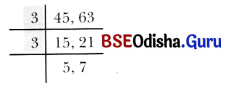
For example: Consider numbers 45 and 63. Using common factor method, we get
HCF of 45 and 63 = 3 × 3 = 9
Finding Common Ground Class 7 Notes Maths Part 2 Chapter 3-1

Repeated Division Method
Step 1: Divide the larger number by the smaller number and find the remainder.
Step 2: Take the remainder as the new divisor and divisor of step 1 as the new dividend, then divide.
Step 3: Repeat until the remainder is 0. The last divisor thus obtained is the HCF.
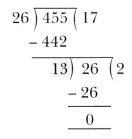
For example: Consider numbers 26 and 455. Using repeated division method, we get
HCF of 26 and 455 = 13
Finding Common Ground Class 7 Notes Maths Part 2 Chapter 3-2

Finding Common Ground Class 7 Notes Maths Part 2 Chapter 3

For numbers that share no common factors other than 1 (called co-primes, like 7 and 15), the F1CF is always 1. Therefore, the HCF of two co-prime numbers is always 1.

The Least Common Multiple (LCM) is the smallest non-zero number that is a multiple of all the given numbers.

For example, LCM of 15 and 20 is 60, as 60 is the smallest non-zero number that is a multiple of both 15 and 20.

We use LCM to find when events that happen at different intervals will align or meet again, like bells ringing or joggers crossing a start line.

Methods of finding LCM
Prime Factorisation Method
Step 1: Write the prime factorisation of each given number and list all the prime factors involved.
Step 2: For each prime factor, take the greatest number of times it appears in any of the numbers.
If two numbers are multiplied
Step 3: Multiply these factors to obtain the LCM.
For example: Consider numbers 36, 42 and 64. Their prime factorisation are:
36 = 2 × 2 × 3 × 3
42 = 2 × 3 × 7
64 = 2 × 2 × 2 × 2 × 2 × 2
∴ LCM of 36, 42 and 64 = 2 × 2 × 2 × 2 × 2 × 2 × 3 × 3 × 7 = 4032

Finding Common Ground Class 7 Notes Maths Part 2 Chapter 3

Common Division Method
Step 1: Write the given numbers in a row, separated by commas.
Step 2: Divide these numbers by the least prime number which divides at least one of the numbers.
Step 3: Write the quotients below, and bring down the numbers that are not divisible by the prime number.
Step 4: Repeat Steps 2 and 3 with the new row. Continue until all numbers in a row become 1.
Step 5: Find the product of all the divisors used in the process. This gives the LCM.
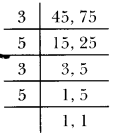
For example: Consider numbers 45 and 75. Using common division method, we get
LCM of 45 and 75 = 3 × 5 × 3 × 5 = 225
Finding Common Ground Class 7 Notes Maths Part 2 Chapter 3-3

Properties of HCF and LCM
The HCF of a set of given numbers is always either smaller than all the numbers or equal to the smallest number.
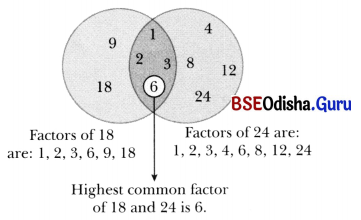
For example, HCF (18, 24) = 6 → smaller than both the numbers
Also, HCF (8, 16) = 8 → equal to the smallest number

The LCM of a set of given numbers is always either greater than all the numbers or equal to the greatest number.
For example, LCM (6, 8) = 24 → greater than both the numbers
Also, LCM (8, 16) = 16 → equal to the greatest number

The HCF of a set of co-prime numbers is 1 and the LCM of co-prime numbers is the product of the co-primes.
For example, 8 and 15 are co-prime numbers as their common factor is 1.
Here, LCM (8, 15) = 120 = 8 × 15 and HCF (8, 15) = 1

Finding Common Ground Class 7 Notes Maths Part 2 Chapter 3

The HCF of a set of given numbers is a factor of their LCM. In other words, the LCM of given numbers is a multiple of their HCF.
For example, HCF and LCM of 12 and 18 are 6 and 36, respectively. Here, 6 is a factor 36.

If two numbers are multiplied by the same number, then both their HCF and LCM are also multiplied by that number.

If the HCF of two numbers a and b is H and their LCM is L, then for any number k:
HCF (ka, kb) = kH and LCM (ka, kb) = kL

For any two given numbers, if the first number is a factor of the second number, then the first number is their HCF and the second number is their LCM.
For example, consider the numbers 8 and 48. As 8 is a factor of 48,
HCF (8, 48) = 8 and LCM (8, 48) = 48

Relationship Between HCF, LCM and the Product of Two Numbers
The product of LCM and HCF of two numbers is equal to the product of the numbers, i.e.
For any two numbers a and b, LCM (a, b) × HCF (a, b) = a × b

Highest Common Factor (HCF)
The largest positive integer that divides two or more given numbers exactly.
Finding Common Ground Class 7 Notes Maths Part 2 Chapter 3-4

Finding Common Ground Class 7 Notes Maths Part 2 Chapter 3

Least Common Multiple (LCM)
The smallest positive integer that is a multiple of two or more given numbers.
Finding Common Ground Class 7 Notes Maths Part 2 Chapter 3-5

Properties of HCF and LCM
The HCF of given numbers is always either smaller than all the numbers or equal to the smallest number.

The LCM of given numbers is always either greater than all the numbers or equal to the greatest number.

HCF of co-prime numbers is 1 and the LCM of co-prime numbers is the product of the co-primes.

The HCF of a set of given numbers is a factor of their LCM. In other words, the LCM of given numbers is a multiple of their HCF.

If two numbers are multiplied by the same number, then both their HCF and LCM are also multiplied by that number.
HCF(ka, kb) = kH and LCM(ka, kb) = kL, where, H and L are HCF (a, b) and LCM (a, b) respectively.

Given any two numbers, if the first number is a factor of the second number, then the first number is their HCF and the second number is their LCM.

The product of LCM and HCF of two numbers is equal to the product of the numbers, i.e. LCM × HCF = Product of two numbers.

Operations with Integers Class 7 Notes Maths Part 2 Chapter 2

Easy-to-read Ganita Prakash Class 7 Notes and Part 2 Chapter 2 Operations with Integers Class 7 Notes save valuable study time during exam season.

Class 7 Maths Chapter 2 Operations with Integers Notes

Class 7 Operations with Integers Notes

Integers are a set of numbers that include natural numbers, their additive inverses (negative integers) and zero.

Two numbers are said to be additive inverses of each other if their sum is zero.
For example, — 3 is the additive inverse of 3 and 5 is the additive inverse of – 5 as 3 + (— 3) = 0 and (— 5) + 5 = 0.

Addition and Substraction of Integers
Sum of two positive integers is always positive.
Sum of two negative integers is always negative.

When two integers with the same sign are added, their magnitudes are added and the sign of the result remains the same as the given integers.

When two integers with different signs are added, the result is obtained by finding the difference of their magnitudes (greater magnitude – smaller magnitude), and the sign of the answer is the sign of the integer with greater magnitude.

“Subtraction” is same as “adding the opposite” or “adding the additive inverse”.

Operations with Integers Class 7 Notes Maths Part 2 Chapter 2

Multiplication of Integers
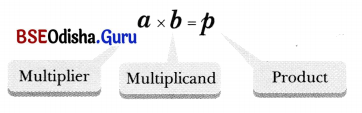
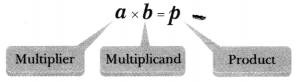
In a × b = p, numbers a, b and p are called multiplier, multiplicand and product respectively.
Operations with Integers Class 7 Notes Maths Part 2 Chapter 2-1

The magnitude of the product does not change Multiplier Multiplicand with the change in the signs of both the multiplier and the multiplicand.

When both numbers (multiplier and multiplicand) are positive, the product is positive. When both numbers (multiplier and multiplicand) are negative, the product is positive.

When one of the multiplier or the multiplicand is positive and the other is negative, their product is negative.

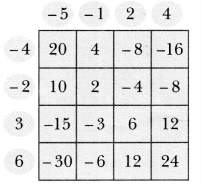
Magic Grid of Integers
Operations with Integers Class 7 Notes Maths Part 2 Chapter 2-2
Each number in the grid is formed by multiplying one row factor and one column factor.

So, each cell contains the product of one row factor and one column factor.
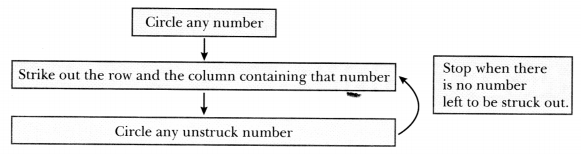
Operations with Integers Class 7 Notes Maths Part 2 Chapter 2-3
When a number is circled, its row and column are crossed out.
This ensures that no row or column is used more than once.
As a result, each row factor and each column factor is included exactly once in final multiplication.

No matter which valid numbers are chosen—provided only one number is selected from each row and each column—the product remains the same.

Operations with Integers Class 7 Notes Maths Part 2 Chapter 2

Division of Integers
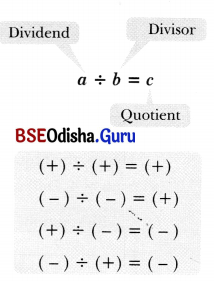
The magnitude of the quotient does not change with the change in the signs of the dividend and the divisor.
Operations with Integers Class 7 Notes Maths Part 2 Chapter 2-4
When a positive integer is divided by another positive integer, a positive result is obtained.
When a negative integer is divided by a positive integer, a negative result is obtained.

When a positive integer is divided by a negative integer, a negative result is obtained.

When a negative integer is divided by another negative integer, a positive result is obtained.

Properties Related to Multiplication and Division of Integers
Commutative Property of Multiplication (Swapping)
For any two integers, a and b, we can say that a × b = b × a

Associative Property of Multiplication (Grouping)
For any three integers, a, b and c, we can say that (a × b) × c = a × (b × c).

Distributive Property of Multiplication Over Addition
For any three integers, a, b and c, we can say that a × (b + c) = a × b + a × c

The sign of a product is positive if the number of negative integers in the product is even.
For example, (- 3) × (- 2) × (- 1) × (- 4) = 24 [Number of negative integers = 4 (even)]

The sign of a product is negative if the number of negative integers in the product is odd.
For example, (- 5) × (- 1) × (- 3) = – 15 [Number of negative integers = 3 (odd)]

Division of two numbers is not commutative. For example, 4 ÷ 2 ≠ 2 ÷ 4

Division of three numbers is not associative. For example, (16 ÷ 4) ÷ 2 ≠ 16 ÷ (4 ÷ 2)

Operations with Integers Class 7 Notes Maths Part 2 Chapter 2

Identify the Pattern
Imagine a “number machine” or “machine”, which performs a defined set of arithmetic operations on the numbers it receives as inputs.

The operations done by the machine are hidden, and our task is to identify the rule by carefully observing the relationship between the input numbers and the output number.
Inputs → Machine → Outputs

Multiplication of Integers
Operations with Integers Class 7 Notes Maths Part 2 Chapter 2-5
The magnitude of the product does not change with the change in the signs of the multiplier and the multiplicand.
For example, 3 × 2 = 6; 3 × (- 2) = – 6; – 3 × 2 = – 6; -3 × (-2) = 6

Quick Rules: Multiplication of integers
(+) × (+) = (+); (-) × (-) = (+)
(+) × (-) = (-); (-) × (+) = (-)

Division of Integers
Operations with Integers Class 7 Notes Maths Part 2 Chapter 2-6
The magnitude of the quotient does not change with the change in the signs of the dividend and the divisor.
For example, 8 ÷ 4 = 2; 8 ÷ (- 4) = – 2;
– 8 ÷ 4 = – 2; – 8 ÷ (- 4) = 2

Quick Rules: Division of integers
(+) ÷ (+) = (+); (-) ÷ (-) = (+)
(+) ÷ (-) = (-); (-) ÷ (+) = (-)

Operations with Integers Class 7 Notes Maths Part 2 Chapter 2

Properties Related to Multiplication and Division
Commutative property of multiplication: a × b = b × a
Associative property of multiplication: (a × b) × c = a × (b × c)
Distributive property of multiplication over addition: a × (b + c) = a × b + a × c

The sign of a product is positive if the number of negative integers in the product is even.
For example, (- 3) × (- 2) × (- 1) × (- 4) = 24 [Number of negative integers = 4 (even)]

The sign of a product is negative if the number of negative integers in the product is odd.
For example, (-5) × (-1) × (-3) = – 15 [Number of negative integers = 3 (odd)]

Division of two numbers is not commutative. For example, 4 ÷ 2 ≠ 2 ÷ 4
Division of three numbers is not associative. For example, (16 ÷ 4) ÷ 2 ≠ 16 ÷ (4 ÷ 2)

Class 6 Science Chapter 8 Question Answer Odia Medium ଜଳର ବିଭିନ୍ନ ଅବସ୍ଥା

Go through 6th Class Science Book Odia Medium Question Answer and Class 6 Science Chapter 8 Question Answer Odia Medium ଜଳର ବିଭିନ୍ନ ଅବସ୍ଥା to understand textbook questions more clearly.

6th Class Science Chapter 8 Question Answer Odia Medium

Class 6 Science Chapter 8 Odia Medium

ଆସ ଆମ ଶିକ୍ଷଣର ଅଭିବୃଦ୍ଧି କରିବା

Question 1.
ନିମ୍ନଲିଖ ମଧ୍ୟରୁ କେଉଁଟି ଘନୀଭବନକୁ ସବୁଠାରୁ ଭଲ ଭାବରେ ବର୍ଣ୍ଣନା କରେ ?
(କ) ଜଳକୁ ବାଷ୍ପ ଅବସ୍ଥାରେ ପରିଣତ କରିବା ।
(ଖ) ଜଳ ତରଳରୁ ଗ୍ୟାସୀୟ ଅବସ୍ଥାରେ ପରିଣତ ହେବାର ହେବାର ପ୍ରକ୍ରିୟା ।
(ଗ) କ୍ଷୁଦ୍ର ଜଳ ବୁନ୍ଦାରୁ ମେଘ ସୃଷ୍ଟି ହେବା ।
(ଘ) ଜଳୀୟ ବାଷ୍ପକୁ ଏହାର ତରଳ ଅବସ୍ଥାରେ ରୂପାନ୍ତରିତ କରିବା ।
Answer:
(ଘ) ଜଳୀୟ ବାଷ୍ପକୁ ଏହାର ତରଳ ଅବସ୍ଥାରେ ରୂପାନ୍ତରିତ କରିବା !

Question 2.
ନିମ୍ନଲିଖତ କେଉଁ ପ୍ରକ୍ରିୟାରେ ବାଷ୍ପୀକରଣ ଅତ୍ୟନ୍ତ ଗୁରୁତ୍ଵପୂର୍ଣ୍ଣ ତାହା ଚିହ୍ନଟ କର ।
(i) ରଙ୍ଗ କରିବା
(କ) କ୍ରୟନ୍
(ଖ) ପାଣିର ରଙ୍ଗ
(ଗ) ଆକ୍ରେଲିକ୍ ରଙ୍କ
(ଘ) ପେନ୍‌ସିଲ ରଙ୍ଗ
Answer:
(ଖ) ପାଣିର ରଙ୍ଗ

Class 6 Science Chapter 8 Question Answer Odia Medium ଜଳର ବିଭିନ୍ନ ଅବସ୍ଥା

(ii) କାଗଜରେ ଲେଖୁ
(କ) ପେନସିଲ୍ ରେ
(ଖ) କାଳି ପେନ୍‌ରେ
(ଗ) ବଲ୍ ପଏଣ୍ଟ ପେନ୍‌ରେ
Answer:
(ଖ) କାଳି ପେନ୍‌ରେ

Question 3.
ଆଜିକାଲି ଅନେକ ସ୍ଥାନରେ ସବୁଜ ରଙ୍ଗର ପ୍ଲାଷ୍ଟିକ ଘାସ ଦେଖିବାକୁ ମିଳୁଛି । ପ୍ରାକୃତିକ ଘାସ ଚାରି ପଟେ ଥ‌ିବ ସ୍ଥାନରେ, ପ୍ଲାଷ୍ଟିକ୍ ଘାସ ଚାରିପାଖରେ ଥ‌ିବା ସ୍ଥାନ ଅପେକ୍ଷା ଥଣ୍ଡା ଅନୁଭୂତ ହୁଏ କାହିଁକି ?
Answer:
ପ୍ଲାଷ୍ଟିକ୍ ଘାସ ଚାରିପାଖରେ ଥ‌ିବା ପ୍ରାକୃତିକ ଘାସ ଚାରିପଟେ ଥ‌ିବା ସ୍ଥାନ ଅପେକ୍ଷା ସ୍ଥାନରେ ଅଧିକ ଥଣ୍ଡା ଅନୁଭୂତ ହୋଇଥାଏ, କାରଣ ପ୍ରାକୃତିକ ଘାସ ଉଚ୍ଛେଦନ ପ୍ରଣାଳୀରେ ବାୟୁମଣ୍ଡଳକୁ ଜଳୀୟ ବାଷ୍ପ ତ୍ୟାଗ କରିଥାଏ । ଜଳର ବାଷ୍ପୀଭବନ କ୍ରିୟା ହେତୁ ଶୀତଳତା ସୃଷ୍ଟି ହୋଇଥାଏ ।

Question 4.
ଜଳ ବ୍ୟତୀତ ଅନ୍ୟ ତରଳ ପଦାର୍ଥର ଉଦାହରଣ ଦିଅ ଯାହା ବାଷ୍ପୀଭୂତ ହୋଇଥାଏ ?
Answer:
ଜଳ ବ୍ୟତୀତ ଅନ୍ୟ ତରଳ ପଦାର୍ଥଗୁଡ଼ିକ ହେଲା କ୍ଷୀର, ଆଲକହଲ, ସ୍ପିରିଟ୍, ଇଥର, ଆଖ୍ ଡ୍ରପ, ସାନିଟାଇଜର ।

Question 5.
ଫ୍ୟାନ୍ ଏହାର ଚାରିପଟର ବାୟୁକୁ ଗତିଶୀଳ କରାଏ, ଯାହା ଥଣ୍ଡାପାଗର ଅନୁଭବ ଦିଏ । ଓଦାଲୁଗାକୁ ଶୁଖାଇବା ପାଇଁ ଫ୍ୟାନ୍ ଚଲାଇବା ଆମକୁ ଅଜବ ଲାଗିପାରେ, କାରଣ ଫ୍ୟାନ୍ ସାଧାରଣତଃ ବସ୍ତୁକୁ ଥଣ୍ଡା କରେ, ଗରମ ନୁହେଁ । ସାଧାରଣତଃ ଯେତେବେଳେ ପାଣି ବାଷ୍ପୀଭୂତ ହୁଏ, ସେତେବେଳେ ଥଣ୍ଡା ପବନ ନୁହେଁ, ତାପ ଦରକାର ହୋଇଥାଏ । ଏ ବିଷୟରେ ତୁମେ କ’ଣ ଭାବୁଛ ?
Answer:

  • ଫ୍ୟାନ୍ ଏହାର ଚାରିପଟର ବାୟୁକୁ ଗତିଶୀଳ କରାଇଥାଏ । ଓଦାଲୁଗାକୁ ଶୁଖାଇବା ପାଇଁ ଆମେ ଫ୍ୟାନ୍ ବ୍ୟବହାର କରିଥାଉ କାରଣ ପବନ ବହୁଥ‌ିବା ସ୍ଥାନରେ ଓଦାଲୁଗା ଶୀଘ୍ର ଶୁଖ୍ଯାଏ ।
  • ପବନର ବେଗ ବଢ଼ିଲେ ଓଦାଲୁଗା ର ଚତୁଃପାର୍ଶ୍ଵରେ ଥିବା ଜଳୀୟବାଷ୍ପର ଅଣୁଗୁଡ଼ିକ ବାୟୁ ସହ ଏକାଠି ହୋଇ ଉଡ଼ିଯାଏ ବା ଦୂରକୁ ଚାଲି ଯାଏ ।
  • ଫଳସ୍ଵରୂପ ଚାରିପାର୍ଶ୍ଵରେ ଥ‌ିବା ବାୟୁରେ ଜଳୀୟବାଷ୍ପର ପରିମାଣ କମିଯାଏ । ଏହା ଯୋଗୁଁ ବାଷ୍ପୀଭବନର ବେଗ ବୃଦ୍ଧି ପାଇଥାଏ ଏବଂ ଓଦାଲୁଗା ସହଜରେ ଶୁଖୁଯାଏ ।

Class 6 Science Chapter 8 Question Answer Odia Medium ଜଳର ବିଭିନ୍ନ ଅବସ୍ଥା

Question 6.
ସାଧାରଣତଃ ନାଳରୁ କାଦୁଅ ବାହାର କରି ଏହାକୁ ନାଳ ପାଖରେ ଗଦା ଆକାରରେ ୩-୪ ଦିନ ପର୍ଯ୍ୟନ୍ତ ଛାଡ଼ି ଦିଆଯାଏ । ଏହାପରେ ଏହାକୁ ଏକ ବଗିଚା କିମ୍ବା କ୍ଷେତକୁ ପଠାଯାଏ, ଯେଉଁଠାରେ ଏହାକୁ ସାର ଭାବରେ ବ୍ୟବ ହାର କରାଯାଇପାରିବ । ଏହି ପଦ୍ଧତି କାଦୁଅର ପରିବହନ ଖର୍ଚ୍ଚକୁ ହ୍ରାସ କରିଥାଏ ଏବଂ ଏହାକୁ ପରିଚାଳନା କରୁଥ‌ିବା ବ୍ୟକ୍ତିଙ୍କୁ ସୁର କ୍ଷା ଦେଇଥାଏ । ଏହା ଉପରେ ଚିନ୍ତା କର ଏବଂ ଏହା କିପରି ହୁଏ ବର୍ଣ୍ଣନା କର ।
Answer:

  • ସାଧାରଣତଃ ନାଳରୁ କାଦୁଅ ବାହାର କରି ଏହାକୁ ନାଳ ପାଖରେ ଗଦା କରି ୩-୪ ଦିନ ଛାଡ଼ିଦିଆଯାଏ ।
  • ଏହି ସମୟରେ କାଦୁଅରେ ଥ‌ିବା ଜଳୀୟ ଅଂଶ ବାଷ୍ପୀଭବନ ପ୍ରକ୍ରିୟାରେ ବାଷ୍ପ ହୋଇ ବାହାରି ଯାଏ । ଏହା ଫଳରେ କାଦୁଅ ଶୁଖାଯାଏ ଏବଂ ହାଲୁକା ହୋଇଯାଏ ।
  • ଏହାକୁ ପରିଚାଳନା କରୁଥିବା ବ୍ୟକ୍ତିଙ୍କ ପାଇଁ ଶୁଖୁ କାଦୁଅକୁ ଦୂରସ୍ଥାନକୁ ନେବା ସହଜ ତଥା ନିରାପଦ ହୋଇଥାଏ ଏବଂ ପରିବହନ ଖର୍ଚ୍ଚ ମଧ୍ୟ କମ୍ ହୋଇଥାଏ ।

Question 7.
ଗୋଟିଏ ଦିନ ପାଇଁ ତୁମ ଘରର କାର୍ଯ୍ୟ ଉପରେ ନଜର ରଖ । ବାଷ୍ପୀକରଣ ସହିତ ଜଡ଼ିତ କାର୍ଯ୍ୟଗୁଡ଼ିକ ଚିହ୍ନଟ କର । ବାଷ୍ପୀକରଣ ପ୍ରକ୍ରିୟାକୁ ବୁଝିବା ଆମର ଦୈନନ୍ଦିନ କାର୍ଯ୍ୟରେ କିପରି ସାହାଯ୍ୟ କରେ ?
Answer:

  • ଦୈନନ୍ଦିନ ଜୀବନରେ ଆମେ ବାଷ୍ପୀକରଣ ସହ ଜଡ଼ିତ ବିଭିନ୍ନ କାର୍ଯ୍ୟ ସଂପାଦନ କରିଥାଉ ଏବଂ ଏହି ପ୍ରକ୍ରିୟା ଆମକୁ ବିଭିନ୍ନ କାର୍ଯ୍ୟ ସଂପାଦନ ପାଇଁ ସାହାଯ୍ୟ ମଧ୍ୟ କରି ଥାଏ ।
  • ଓଦାଲୁଗାକୁ ବାହାରେ ମେଲାକରି ଶୁଖାଇଲେ ବାଷ୍ପୀଭବନ ପ୍ରକ୍ରିୟା ହେତୁ ଏହା ଶୀଘ୍ର ଶୁ ଖ୍ଯାଏ ।
  • ରୋଷେଇ ଘରେ ପ୍ରବେଶ ନକରି ମଧ୍ୟ ଆମେ ରନ୍ଧା ଖାଦ୍ୟର ବାସ୍ନା ପାଇଥାଉ ।
  • ଓଦା ବାସନକୁସନକୁ କିଛି ସମୟ ରଖିଦେଲେ ବାଷ୍ପୀଭବନ ପ୍ରକ୍ରିୟା ହେତୁ ଏହା ଆପେ ଆପେ ଶୁଖ୍ଯାଏ ।

Question 8.
ପ୍ରକୃତିରେ କଠିନ ଅବସ୍ଥାରେ ଜଳ କିପରି ଥାଏ ?
Answer:
ପ୍ରକୃତିରେ ଜଳ ବରଫ, କୁଆପଥର ଆଦି ରୂପରେ କଠିନ ଅବସ୍ଥାରେ ରହିଥାଏ ।

Class 6 Science Chapter 8 Question Answer Odia Medium ଜଳର ବିଭିନ୍ନ ଅବସ୍ଥା

Question 9.
“‘ଜଳ ବ୍ୟବହାର କରିବା ଆମର ଅଧିକାର ବଦଳରେ ଜଳର ସଂରକ୍ଷଣ ଆମର ଦାୟିତ୍ବ ଅଟେ – ଏହି ଉକ୍ତିଟିକୁ ବୁଝାଅ । ନି ଜର ଚିନ୍ତାଧାରାକୁ ଅନ୍ୟମାନଙ୍କୁ କୁହ ।
Answer:

  • ଜଳ ବ୍ୟବହାର କରିବା ଆମର ଅଧିକାର ଅଟେ କିନ୍ତୁ ଜଳର ସଂରକ୍ଷଣ ଆମର ଦାୟିତ୍ଵ ଅଟେ ।
  • ପୃଥ‌ିବୀରେ ଉପଲବ୍ଧ ଜଳର ମାତ୍ର ଅଳ୍ପ ଅଂଶ ଉଦ୍ଭିଦ, ପ୍ରାଣୀ ଓ ମନୁଷ୍ୟଙ୍କ ବ୍ୟବହାର ପାଇଁ ଉପଯୁକ୍ତ । ଅଧିକାଂଶ ଜଳ ସମୁଦ୍ରରେ ଥ‌ିବାରୁ ଏହାକୁ ସିଧାସଳଖ ବ୍ୟବହାର କରାଯାଇ ପାରିବ ନାହିଁ । ପିଇବା ପାଇଁ ଓ ଅନ୍ୟାନ୍ୟ କାର୍ଯ୍ୟ ପାଇଁ ମଧ୍ୟ ଆମେ ଜଳ ବ୍ୟବହାର କରିଥାଉ ।
  • ଜନସଂଖ୍ୟା ବୃଦ୍ଧି ସହିତ ଜଳର ଆବଶ୍ୟକତା ମଧ୍ୟ ବୃଦ୍ଧି ପାଉଛି । ଜଳର ଆବଶ୍ୟକତା ବଢ଼ୁଥ‌ିବା ଯୋଗୁ ବିଶ୍ୱର ଅନେକ ସ୍ଥାନରେ ଏହାର ଅଭାବ ଦେଖାଦେଇଛି । ତେଣୁ ଜଳକୁ ଅପଚୟ ନ କରି ନିୟନ୍ତ୍ରିତ ବ୍ୟବହାର କରିବା ତେଣୁ ଜଳର ସଂରକ୍ଷଣ କରିବା ଆମର ମୁଖ୍ୟ ଜରୁରୀ ଅଟେ ।

Question 10.
ଖରା ଦିନେ ବାହାରେ ଠିଆ ହୋଇଥିବା ଏକ ଦୁଇ ଚକିଆ ସିଟ୍ ଅତ୍ୟନ୍ତ ଗରମ ହୋଇଯାଇଛି । ତୁମେ ଏହାକୁ କିପରି ଥଣ୍ଡା କରିପାରିବ ?
Answer:
ଖରାଦିନେ ବାହାରେ ଠିଆ ହୋଇଥ୍ । ଏକ ଦୁଇଚକିଆ ଯାନ ର ସିଟ୍ ଅନ୍ୟନ୍ତ ଗ ର ମ ହୋଇଯାଇଛି । ଏହାକୁ ଥଣ୍ଡା କରିବା ପାଇଁ –

  1. ଗାଡ଼ିର ସିଟ୍‌କୁ ଓଦା କନାରେ ବା ଗାମୁଛାରେ ଘୋଡ଼ାଇ ରଖୁବା ଦ୍ଵାର। ସିଟ୍ ଥଣ୍ଡା ହୋଇଥାଏ । ଓଦା କପଡ଼ାରେ ଥିବା ଜଳ ତାପ ଶୋଷଣ କରି ବାଷ୍ପୀଭୂତ ହୋଇଥାଏ । ଫଳରେ ବାଷ୍ପୀଭବନ ଶୀତଳତା ସୃଷ୍ଟି କରିଥାଏ ।
  2. ଗରମ ସିଟ୍ ଉପରେ ପାଣି ଛିଞ୍ଚିବାଦ୍ଵାରା ଜଳ ବାଷ୍ପୀଭୂତ ହୋଇଥାଏ । ବାଷ୍ପୀଭବନ ସିଟ୍‌ ତାପମାତ୍ରା ହ୍ରାସ କରିଥାଏ ।

ଶୂନ୍ୟସ୍ଥାନ ପୂରଣ କର ।

(କ) ଆମ ରକ୍ତରେ _______ ଏକ ମୁଖ୍ୟ ଉପାଦାନ ।
Answer:
ବଳୀ

Class 6 Science Chapter 8 Question Answer Odia Medium ଜଳର ବିଭିନ୍ନ ଅବସ୍ଥା

(ଖ) ଅନେକ ଅଦରକାରୀ ପଦାର୍ଥ ଜଳରେ ଦ୍ରବୀଭୂତ ହୋଇ _____ ଓ ______ ଆକାରରେ ଆମ ଶରୀରରୁ ବାହାରିଯାଏ ।
Answer:
ମୂତ୍ର, ଝାଳ

(ଗ) ଜଳ ଏକ _____ ।
Answer:
ଦ୍ରାବକ

(ଘ) ମାଟିର ______ କୁ ଜଳ ଦ୍ରବୀଭୂତ କରିଥାଏ ।
Answer:
ଲବଣ

(ଙ) ଉଦ୍ଭଦ ______ ଜାତୀୟ ଖାଦ୍ୟ ପ୍ରସ୍ତୁତ କରିଥାଏ ।
Answer:
ଶର୍କରା
(ଚ) ମହାନଦୀର ବନ୍ୟାଜଳକୁ ରୋକିବା ପାଇଁ ______ ଠାରେ ବନ୍ଧ କରାଯାଇଛି ।
Answer:
ହୀରାକୁଦ

ବନ୍ଧନୀ ମଧ୍ଯରୁ ଉପଯୁକ୍ତ ଶବ୍ଦବାଛି ଶୂନ୍ୟସ୍ଥାନ ପୂରଣ କର ।

(କ) ଜଳ ଓ ______ ମିଶି ଶର୍କରା ସୃଷ୍ଟି ହୁଏ ।
(ଅମ୍ଳଜାନ, ଅଙ୍ଗାରକାମ୍ଳ, ଖଣିଜଲବଣ)
Answer:
ଅଙ୍ଗାରକାମ୍ଳ

(ଖ) ଉଦ୍ଭଦ ______ କ୍ରିୟାରେ ଜଳୀୟବାଷ୍ପ ତ୍ୟାଗ କରେ ।
(ଉଦ୍ବେଦନ, ବାଷ୍ପୀଭବନ, ଘନୀକରଣ)
Answer:
ଉସ୍ବେଦନ

Class 6 Science Chapter 8 Question Answer Odia Medium ଜଳର ବିଭିନ୍ନ ଅବସ୍ଥା

(ଗ) _____ ମାଟିର ଜଳ ଧରିରଖୁର କ୍ଷମତା ସବୁଠାରୁ ଅଧିକ ।
(ଚିକିଟା, ବାଲିଆ, ଦୋରସା)
Answer:
ଚିକିଟା

(ଘ) _____ ମାଟିର ଜଳ ଧରିରଖୁର କ୍ଷମତା ସବୁଠାରୁ କମ୍ ।
(ଚିକିଟା, ବାଲିଆ, ଦୋରସା )
Answer:
ବାଲିଆ

(ଙ) ______ ଗ୍ୟାସ୍‌କୁ ମାଟିରେ ମିଶାଇବାପାଇଁ ସାହାଯ୍ୟ କରୁଥିବା ବୀଜାଣୁ ମଧ୍ୟ ଜଳ ଆବଶ୍ୟକ କରନ୍ତି ।
(ଅମ୍ଳଜାନ, ଯବକ୍ଷାରଜାନ, ଅଙ୍ଗାରକାମ୍ଳ)
Answer:
ଯବକ୍ଷାରଜାନ

ରେଖାଙ୍କିତ ପଦ ନ ବଦଳାଇ ଭ୍ରମ ଥିଲେ ସଂଶୋଧନ କର ।

(କ) ରକ୍ତର ମୁଖ୍ୟ ଉପାଦାନ ଖାଦ୍ୟ ।
Answer:
ରକ୍ତର ମୁଖ୍ୟ ଉପାଦାନ ଜଳ ।

(ଖ) ବାଲିଆ ମାଟିରେ ପରିବା ଚାଷ ଭଲ ହୁଏ ।
Answer:
ଦୋରସା ମାଟିରେ ପରିବା ଚାଷ ଭଲ ହୁଏ

(ଗ) ଦୋରସା ମାଟିର ଜଳଧାରଣ କ୍ଷମତା ସବୁଠାରୁ ଅଧିକ ।
Answer:
ଚିକିଟା ମାଟିର ଜଳଧାରଣ କ୍ଷମତା ସବୁଠାରୁ ଅଧୂକ ।

Class 6 Science Chapter 8 Question Answer Odia Medium ଜଳର ବିଭିନ୍ନ ଅବସ୍ଥା

(ଘ) ଚିକିଟା ମାଟିର ଜଳଧାରଣ କ୍ଷମତା ସବୁଠାରୁ କମ୍ ।
Answer:
ବାଲିଆ ମାଟିର ଜଳଧାରଣ କ୍ଷମତା ସବୁଠାରୁ କମ୍ ।

(ଙ) ଗଛ ଜଳତ୍ୟାଗ କରିବାକୁ ଅପଚୟ କୁହାଯାଏ ।
Answer:
ଗଛ ଜଳତ୍ୟାଗ କରିବାକୁ ଉଦ୍ବେଦ ନ କୁହାଯାଏ ।

ଠିକ୍ ଉତ୍ତର ପାଖରେ (✓) ଚିହ୍ନ ଓ ଭୁଲ୍ ଉତ୍ତର ପାଖରେ (✗) ଚିହ୍ନ ଦିଅ । (ପ୍ରଶ୍ନ ସହ ଉତ୍ତର)

(କ) ବାଲିଆ ମାଟିର ଜଳ ଧରି ରଖୁବାର କ୍ଷମତା ସବୁଠାରୁ ବେଶି ।
Answer:
(✗)

(ଖ) ଚିକିଟା ମାଟିର ଜଳ ଧରି ରଖୁବାର କ୍ଷମତା ସବୁଠାରୁ କମ୍ ।
Answer:
(✗)

(ଗ) ନଦୀ, ପୋଖରୀ ଇତ୍ୟାଦି ଜଳର ଉତ୍ସ ଅଟେ ।
Answer:
(✓)

(ଘ) ଜଳ ଏକ ଦ୍ରବଣ ।
Answer:
(✗)

Class 6 Science Chapter 8 Question Answer Odia Medium ଜଳର ବିଭିନ୍ନ ଅବସ୍ଥା

(ଙ) ଆମ ରକ୍ତରେ ଜଳ ଏକ ମୂଖ୍ୟ ଅଂଶ ଅଟେ ।
Answer:
(✓)

‘କ’ ସ୍ତମ୍ଭ ସହିତ ‘ଖ’ ସ୍ତମ୍ଭର ସଂପର୍କ ବାଛ ।

‘କ’ ସ୍ତମ୍ଭ ‘ଖ’ ସ୍ତମ୍ଭ
ତରଭୁଜ ମରୁଡ଼ି
ଅଙ୍ଗାରକାମ୍ଳ କମ୍ ଜଳ
ମାଟି ଅଧ୍ଵ ଜଳ
ନଦୀବନ୍ଧ ଶ୍ଵେତସାର
ଚିନାବାଦାମ ଅଣୁଜୀବ

Answer:

‘କ’ ସ୍ତମ୍ଭ ‘ଖ’ ସ୍ତମ୍ଭ
ତରଭୁଜ ଅଧ୍ଵ ଜଳ
ଅଙ୍ଗାରକାମ୍ଳ ଶ୍ଵେତସାର
ମାଟି ଅଣୁଜୀବ
ନଦୀବନ୍ଧ ମରୁଡ଼ି
ଚିନାବାଦାମ କମ୍ ଜଳ

Class 6 Science Chapter 8 Question Answer Odia Medium ଜଳର ବିଭିନ୍ନ ଅବସ୍ଥା

ସଂକ୍ଷିପ୍ତ ପ୍ରଶ୍ନୋତ୍ତର

Question 1.
ଜଳ ସମ୍ପଦର ସୁରକ୍ଷା କରିବା କାହିଁକି ?
Answer:

  • ପ୍ରାଣୀ ଓ ଉଭିଦ ବଞ୍ଚିରହିବା ପାଇଁ ଜଳ ମୁଖ୍ୟତଃ ଆବଶ୍ୟକ ।
  • ଜଳ ଦୂଷିତ ହେଲେ ଜୀବଜଗତ ଆଉ ବଞ୍ଚିରହିପାରିବ ନାହିଁ, ଏଣୁ ଜଳ ସମ୍ପଦର ସୁରକ୍ଷା ଆବଶ୍ୟକ ।

Question 2.
ମନୁଷ୍ୟ ଶରୀରରେ ଜଳ କି କି କାର୍ଯ୍ୟ କରେ?
Answer:

  • ଜଳ ଆମ ଶରୀରରେ ରକ୍ତକୁ ତରଳ ରଖେ । ପ୍ରତ୍ୟେକ ଜୀବକୋଷରେ ଅଧାରୁ ଅଧିକ ଜଳ ରହିବାଯୋଗୁଁ ସେଗୁଡ଼ିକ କାର୍ଯ୍ୟକ୍ଷମ ରହନ୍ତି ।
  • ଅନେକ ଅଦରକାରୀ ପଦାର୍ଥ ଜଳରେ ଦ୍ରବୀଭୂତ ହୋଇ ମୂତ୍ର ଓ ଝାଳ ଆକାରରେ ଆମ ଶରୀରରୁ ବାହାରିଯାଏ ।

Question 3.
ଉଭିଦ କେଉଁ କେଉଁ କାର୍ଯ୍ୟପାଇଁ ଜଳ ଆବଶ୍ୟକ କରେ ?
Answer:

  • ଖାଦ୍ୟ ପ୍ରସ୍ତୁତି ପାଇଁ ଉଦ୍ଭିଦ ଜଳ ଆବଶ୍ୟକ କରେ । ଅଙ୍ଗାରକାମ୍ଳ ଓ ଜଳର ସଂଯୋଗରେ ହିଁ ଶର୍କରା ସୃଷ୍ଟି ହୁଏ ।
  • ମାଟିରେ ଅଣୁଜୀବ ମାନେ ବଢ଼ିଥା’ନ୍ତି । ଯବକ୍ଷାର ଜାନକୁ ମାଟିରେ ମିଶାଇବାପାଇଁ ସାହାଯ୍ୟ କରୁଥିବା ବୀଜାଣୁ ମଧ୍ଯ ଜଳ ଆବଶ୍ୟକ କରି ଥା’ନ୍ତି ।
  • ଜଳ ଏକ ଦ୍ରାବକ ହୋଇଥିବାରୁ ମାଟିର ଲବଣକୁ ଏହା ଦ୍ରବୀଭୂତ କରିଥାଏ ।

Class 6 Science Chapter 8 Question Answer Odia Medium ଜଳର ବିଭିନ୍ନ ଅବସ୍ଥା

ଦୀର୍ଘ ପ୍ରଶ୍ନୋତ୍ତର

Question 1.
ଜଳ ସଂରକ୍ଷଣ ପାଇଁ କେଉଁ କେଉଁ ବିଷୟପ୍ରତି ଧ୍ୟାନଦେବା ଆବଶ୍ୟକ ?
Answer:
ଜଳ ସଂରକ୍ଷଣପାଇଁ ନିମ୍ନଲିଖ ବିଷୟପ୍ରତି ଧ୍ୟାନଦେବା ଆବଶ୍ୟକ –

  1. ଜଳକୁ ଅଯଥା ଅଧିକ ବ୍ୟବହାର କରିବା ଓ ନଷ୍ଟ କରିବା ନାହିଁ ।
  2. ବ୍ୟବହାର ନ କରିବା ବେଳେ ପାଣି ଟ୍ୟାପ୍‌କୁ ସର୍ବଦା ବନ୍ଦ ରଖ୍ ।
  3. ଜଳ ଉତ୍ସଗୁଡ଼ିକର ପ୍ରଦୂଷଣ କମାଇବା ପାଇଁ ଯତ୍ନନେବା ।
  4. ବର୍ଷାଜଳକୁ ଗ୍ରାମାଞ୍ଚଳରେ ଛୋଟ ଜଳଭଣ୍ଡାରରେ ସାଇତିରଖ୍ ।
  5. ସହରାଞ୍ଚଳର ଛାତରେ ପଡ଼ୁଥ‌ିବା ବର୍ଷାଜଳ ଅମଳକରିବା; ଅର୍ଥାତ୍ ଏହାକୁ ବୋହିଯିବାକୁ ନଦେଇ ଗର୍ଭ ଖନନ କରି ସେଣ୍ଡ୍‌ରେ ସଂଗ୍ରହ କରିବା ।

Changes Around Us: Physical and Chemical Class 7 Question Answer Science Chapter 5

Go through BSE Odisha Class 7 Science Solutions and Class 7 Science Chapter 5 Changes Around Us: Physical and Chemical Question Answer to understand textbook questions more clearly.

Class 7 Science Curiosity Chapter 5 Question Answer

Science Curiosity Class 7 Chapter 5 Question Answer

Changes Around Us: Physical and Chemical Class 7 Questions and Answers

Let Us Enhance Our Learning

Question 1.
Which of the following statements are the characteristics of a physical change?
(i) The state of the substance may or may not change.
(ii) A substance with different properties is formed.
(iii) No new substance is formed.
(iv) The substance undergoes a chemical reaction.
(a) (i) and (ii)
(b) (ii) and (iii)
(c) (i) and (iii)
(d) (iii) and (iv)
Answer:
(c) In a physical change, no new substance is formed. Thus, properties of a substance remain the same. Also, no chemical reaction is involved in a physical change. The state of a substance may change in a physical change (like, the melting of ice), or may not change (like the breaking of a glass).

Changes Around Us: Physical and Chemical Class 7 Question Answer Science Chapter 5

Question 2.
Predict which of the following changes can be reversed and which cannot be reversed. If you are not sure, you may write that down. Why are you not sure about these?
(i) Stitching cloth to a shirt
(ii) Twisting of straight string
(iii) Making idlis from a batter
(iv) Dissolving sugar in water
(v) Drawing water from a well
(vi) Ripening of fruits
(vii) Boiling water in an open pan
(viii) Rolling up a mat
(ix) Grinding wheat grains to flour
(x) Forming of soil from rocks
Answer:
The changes that can be reversed are as follows:
(ii) Twisting of a straight string: It can be straightened again.
(iv) Dissolving sugar in water: Dissolved sugar can be obtained again from sugar solution by evaporating the water.
(v) Drawing water from a well: Water can be poured back into the well.
(viii) Rolling up a mat: The process can be reversed by spreading the mat again.

In contrast, the changes that cannot be reversed are as follows:
(i) Stitching cloth to a shirt: To stitch a shirt, cloth is cut into pieces, and the original cloth cannot be obtained.
(iii) Making idlis from a batter: The batter cannot be obtained again from the cooked idlis. Hence, this process cannot be reversed.
(vi) Ripening of fruits: The raw fruits cannot be recovered again.
(vii) Boiling water in an open pan: Water vapour escapes into the air. Thus, the process cannot be reversed. However, if a lid is placed to cover the pan, the water vapour cools and condenses on the inner side of the lid, and hence, the water can be collected again.
(ix) Grinding wheat grains to flour: After grinding wheat grains into fine powder or flour, grains cannot be obtained back. Hence, this process cannot be reversed.
(x) Forming of soil from rocks: Soil is formed from rocks through weathering. Once rocks are broken into fine particles and mixed with organic matter and air/water, to form soil, they cannot turn back into solid rocks naturally. Hence, this process cannot be reversed.

Changes Around Us: Physical and Chemical Class 7 Question Answer Science Chapter 5

Question 3.
State whether the following statements are True or False. In case a statement is False, write the correct statement.
(i) Melting of wax is necessary for burning a candle.
Answer:
True

(ii) Collecting water vapour by condensing involves a chemical change.
Answer:
False Collecting water vapour by condensation involves a physical change, as it only involves a state change from gas to liquid.

(iii) The process of converting leaves into compost is a chemical change.
Answer:
True

(iv) Mixing baking soda with lemon juice is a chemical change.
Answer:
True

Question 4.
Fill in the blanks in the following statements:

(i) Nalini observed that the handle of her cycle has got brown deposits. The brown deposits are due to …………, and this is a …………change.
Answer:
rusting, chemical

(ii) Folding a handkerchief is a …………change and can be ………….
Answer:
physical, reversed

(iii) A chemical process in which a substance reacts with oxygen with evolution of heat is called ……….., and this is a …………change.
Answer:
combustion, chemical

Changes Around Us: Physical and Chemical Class 7 Question Answer Science Chapter 5

(iv) Magnesium, when burnt in air, produces a substance called …………. The substance formed is …………in nature. Burning of magnesium is a …………change.
Answer:
magnesium oxide, basic, chemical

Question 5.
Are the changes of water to ice and water to steam, physical or chemical? Explain.
Answer:
The changes of water to ice and water to steam only involve the change in state of water from liquid to solid and gas, respectively. Since no new substance is formed in any of these processes, these are classified as physical changes.

Question 6.
Is curdling of milk a physical or chemical change? Justify your statement.
Answer:
Curdling of milk is a chemical change as a new substance i.e., curd, with entirely different properties from those of milk is formed. The process cannot be reversed.

Question 7.
Natural factors, such as wind, rain, etc., help in the formation of soil from rocks. Is this change physical or chemical and why?
Answer:
Formation of soil from rocks involves both physical and chemical changes. Soil is formed from rocks through weathering. The breaking of rocks into smaller particles by wind, water and temperature changes is a physical change. The reaction of rocks with water, air and other substances causes changes in their chemical composition, which is a chemical change. Organic matter later mixes with these particles to form soil.

Question 8.
Read the following story titled ‘Eco-friendly Prithvi’, and tick the most appropriate option(s) given in the brackets. Provide a suitable title of your choice for the story.

Prithvi is preparing a meal in the kitchen. He chops vegetables, peels potatoes, and cuts fruits (physical changes/chemical changes). He collects the seeds, fruits, and vegetable peels into a clay pot (physical change/chemical change). The fruits, vegetable peels, and other materials begin to decompose due to the action of bacteria and fungi, forming compost (physical change/chemical change).

He decides to plant seeds in the compost and water them regularly. After a few days, he notices that the seeds begin to germinate and small plants start to grow, eventually blooming into colourful flowers (physical change/chemical change). His efforts are appreciated by all his family members.
Answer:

  • Physical change
  • Physical change
  • Chemical change
  • Chemical change

Suitable title – “Waste to Wonder”

Changes Around Us: Physical and Chemical Class 7 Question Answer Science Chapter 5

Question 9.
Some changes are given here. Write physical changes in the area marked ‘A’ and chemical changes in the area marked ‘B’. Enter the
changes which are both physical and chemical in the area marked ‘C’. Process of burning a candle; Tearing of paper; Rusting; Curdling of milk; Ripening of fruits; Melting of ice; Folding of clothes; Burning of magnesium and Mixing baking soda with vinegar.
Changes Around Us Physical and Chemical Class 7 Question Answer Science Chapter 5.1
Answer:
Changes Around Us Physical and Chemical Class 7 Question Answer Science Chapter 5.3

Question 10.
The experiments shown in figures (A), (B), (C), and (D) were performed. Find out in which case(s) did lime water turn milky and why?
Changes Around Us Physical and Chemical Class 7 Question Answer Science Chapter 5.2
Answer:
In cases (A) and (D), lime water turned milky. The reaction of baking soda with an acid present in vinegar and lemon juice results in the evolution of carbon dioxide gas, which turns lime water milky.

Class 7 Curiosity Chapter 5 Question Answer

InText Questions

Question 1.
Consider the following conversation between two students:
Student A: An ice cube that I placed on this plate half an hour ago has now become water.
Student B: This banana had a few brown spots on it yesterday; now it has more brown spots today and a strong smell.
What kind of changes are these students talking about? [Page 57]
Answer:
Student A is talking about the melting of ice, which is a physical change, as there occurs only a change in the state of water, from solid to liquid.
Student B is talking about the rotting of a banana, which is a chemical change.

Question 2.
Is there any similarity between the changes listed in A, B, and C?
A: Creating some objects by folding sheets of paper
B: Playing with a balloon by inflating and then déflating it
C: Crushing a piece of chalk [Page 59]
Answer:
All the given processes, A, B and C, represent physical changes as the original material remains the same; only a change in appearance, i.e., shape and size, takes place.

Question 3.
Vinegar and baking soda react with each other to evolve carbon dioxide, which turns lime water milky. Will water and baking soda react in the same way? Will it be a physical or a chemical change? [Page 61]
Answer:
No, water and baking soda do not react with each other to evolve carbon dioxide gas.
Mixing of baking soda with water is considered to be a physical change.

Question 4.
Explain whether burning of magnesium is a physical or a chemical change. [Page 62]
Answer:
Burning of magnesium is a chemical change because when magnesium ribbon is burnt in air, a new substance, i.e., magnesium oxide, is formed.

Question 5.
Why does a burning candle stop burning after some time, if covered with a glass tumbler?
Answer:
If a burning candle is covered with a glass tumbler, id does not have a continuous supply of oxygen. It utilises the oxygen present in the surrounding air under the glass tumbler, but after some time, when all the oxygen is utilised, the candle stops burning.

Question 6.
What changes take place when a candle is lit? Classify them as physical and chemical changes. [Page 65]
Answer:
When a candle is lit, processes such as melting of wax, its solidification (after some melted wax trickles down the sides), evaporation and burning of wax vapour takes place. Here, melting of wax, its solidification, and evaporation are physical changes. The burning of wax vapour in the flame is a chemical change. Therefore, burning of candle involves both physical and chemical changes.

Changes Around Us: Physical and Chemical Class 7 Question Answer Science Chapter 5

Question 7.
Can all changes be considered desirable? If no, explain why. [Page 66]
Answer:
No, all changes cannot be considered desirable. Only the useful changes, such as cooking food and setting curd, are desirable. Changes like rusting of iron are not desirable.

Changes Around Us: Physical and Chemical Class 7 Question Answer Science Chapter 5

Question 8.
List some desirable changes that you may have noticed happening around you [Page 66]
Answer:
The following desirable changes may happen around us in our daily livers

  • Fermentation of dough
  • Germination of seeds
  • Composting of waste
  • Decay of dead leaves and plants
  • Boiling and freezing of water
  • Baking a cake or bread
  • Flowering of plants
  • Water cycle (evaporation, condensation, rainfall)
  • Drying of wet clothes
  • Cutting and cooking of vegetables

Class 6 Science Chapter 7 Question Answer Odia Medium ତାପମାତ୍ରା ଏବଂ ଏହାର ମାପ

Go through 6th Class Science Book Odia Medium Question Answer and Class 6 Science Chapter 7 Question Answer Odia Medium ତାପମାତ୍ରା ଏବଂ ଏହାର ମାପ to understand textbook questions more clearly.

6th Class Science Chapter 7 Question Answer Odia Medium

Class 6 Science Chapter 7 Odia Medium

ଆସ ଆମ ଶିକ୍ଷଣର ଅଭିବୃଦ୍ଧି କରିବା

ପାଖାପାଖ୍
Question 1.
ଜଣେ ସୁସ୍ଥ ମଣି ଷର ସାଧାରଣ ତାପମାତ୍ରା |
(କ) 98.6° C
(ଖ) 37.0° C
(ଗ) 32.0° C
(ଘ) 27.0 C
Answer:
(ଖ) 37.0° C

Question 2.
37° ସେଲସିୟସ ତାପମାତ୍ରା = ______
(କ) 97.4° F
(ଖ) 97.6° F
(ଗ) 98.4° F
(ଘ) 98.0° F
Answer:
(ଘ) 98.0° F

Class 6 Science Chapter 7 Question Answer Odia Medium ତାପମାତ୍ରା ଏବଂ ଏହାର ମାପ

Question 3.
ଖାଲି ସ୍ଥାନଗୁଡ଼ିକ ପୂରଣ କର :
(କ) ଏକ ବସ୍ତର ଉଷ୍ମତା ବା ଥଣ୍ଡାପଣ ତାହାର ______ ଦ୍ଵାରା ନିର୍ଦ୍ଧାରଣ କରାଯାଏ ।
(ଖ) ବ ର ଫ – ପାଣି ରତାପମାତ୍ରା । ______ ଥର୍ମୋମିଟର ଦ୍ଵାରା ମାପ କରାଯାଇପାରିବ ନାହିଁ ।
(ଗ) ତାପମାତ୍ରାର ଏକକ ହେଉଛି ______
Answer:
(କ) ତାପମାତ୍ରା
(ଖ) ଜ୍ଵର-ମାପକ ଥର୍ମୋମିଟର (କ୍ଲିନିକାଲ ଥର୍ମୋମିଟର)
(ଗ) ସେଲସିୟସ

Question 4.
ବିଜ୍ଞାନାଗାର ଥର୍ମୋମିଟରର ପରିସର ସାଧାରଣତଃ ______ ହୋଇଥାଏ ।
(କ) 10°C ରୁ 100 C
(ଖ) −10°C ରୁ 110 C
(ଗ) 32°C ରୁ 45 C
(ଖ) 35°C ରୁ 42 C
Answer:
(ଖ) −10°C ରୁ 110 C

Question 5.
ଚିତ୍ରରେ ଦର୍ଶାଯାଇଥିବା ଭଳି ଜଳର ତାପମାତ୍ରା ମାପିବା ପାଇଁ 4 ଜଣ ଶିକ୍ଷାର୍ଥୀ ଏକ ବିଜ୍ଞାନାଗାର
Class 6 Science Chapter 7 Question Answer Odia Medium ତାପମାତ୍ରା ଏବଂ ଏହାର ମାପ 1
ଥର୍ମୋମିଟର ବ୍ୟବହାର କରିଥିଲେ: ତାପମାତ୍ରା ମାପିବା ପାଇଁ କିଏ ଠିକ୍ ଉପାୟ ଅବଲମ୍ବନ କରିଛି ବୋଲି ତୁମେ ଭାବୁଛ ?
(କ) ଛାତ୍ର 1
(ଗ) ଛାତ୍ର 3
(ଖ) ଛାତ୍ର 2
(ଘ) ଛାତ୍ର 4
Answer:
(ଖ) ଛାତ୍ର 2

Class 6 Science Chapter 7 Question Answer Odia Medium ତାପମାତ୍ରା ଏବଂ ଏହାର ମାପ

Question 6.
ନିମ୍ନଲିଖତ ତାପମାତ୍ରା ଦେଖାଇବା ପାଇଁ ଥର୍ମୋମିଟର (ଚିତ୍ର)ରେ ଲାଲ ରଙ୍ଗ ଦିଅ । (ପ୍ରଶ୍ନ ସହ ଉତ୍ତର)
Class 6 Science Chapter 7 Question Answer Odia Medium ତାପମାତ୍ରା ଏବଂ ଏହାର ମାପ 2
Answer:
Class 6 Science Chapter 7 Question Answer Odia Medium ତାପମାତ୍ରା ଏବଂ ଏହାର ମାପ 3

Question 7.
ଚିତ୍ରରେ ଦର୍ଶାଯାଇଥିବା ଥର୍ମୋମିଟରର ଅଂଶକୁ ନିରୀକ୍ଷଣ କର ଏବଂ ନିମ୍ନଲିଖତ ପ୍ରଶ୍ନଗୁଡ଼ିକର ଉତ୍ତର ଦିଅ :
Class 6 Science Chapter 7 Question Answer Odia Medium ତାପମାତ୍ରା ଏବଂ ଏହାର ମାପ 4
(କ) ଏହା କେଉଁ ପ୍ରକାରର ଥର୍ମୋମିଟର ?
(ଖ) ଥର୍ମୋମିଟରର ପାଠ୍ୟଙ୍କ କେତେ ସୂଚାଇଛି ?
(ଗ) ଏହି ଥର୍ମୋମିଟର ମାପିପାରୁଥ‌ିବା ସର୍ବନିମ୍ନ ତାପମାତ୍ରା କେତେ ?
Answer:
(କ) ଏହା ଏକ ବିଜ୍ଞାନାଗାର ଥର୍ମୋମିଟର ।
(ଖ) ଥର୍ମୋମିଟରର ପାଠ୍ୟଙ୍କ 26° C
(ଗ) ଏହି ଥର୍ମୋମିଟର ମାପିପାରୁଥ‌ିବା ସର୍ବନିମ୍ନ ତାପମାତ୍ରା –10° C

Class 6 Science Chapter 7 Question Answer Odia Medium ତାପମାତ୍ରା ଏବଂ ଏହାର ମାପ

Question 9.
ବୈଷ୍ଣବୀ ଅସୁସ୍ଥ ଥ‌ିବାରୁ ସ୍କୁଲ ଯାଇନାହିଁ । ସାରଣୀ ଅନୁଯାୟୀ ତାଙ୍କ ମା’ ତିନି ଦିନ ଧରି ତାଙ୍କ ଶରୀରର ତାପମାତ୍ରା ଲେଖୁ ରଖୁଛନ୍ତି ।
Class 6 Science Chapter 7 Question Answer Odia Medium ତାପମାତ୍ରା ଏବଂ ଏହାର ମାପ 5
(କ) ବୈଷ୍ଣବୀଙ୍କ ସର୍ବୋଚ୍ଚ ତାପମାତ୍ରା କେତେ ଥିଲା ?
(ଖ) କେଉଁ ଦିନ ଓ କେଉଁ ସମୟରେ ବୈଷ୍ଣବୀଙ୍କ ସର୍ବୋଚ୍ଚ ତାପମାତ୍ରା ରେକର୍ଡ଼ କରାଯାଇଥିଲା ?
(ଗ) କେଉଁ ଦିନ ବୈଷ୍ଣବୀଙ୍କ ତାପମାତ୍ରା ସ୍ଵାଭାବି କ ହୋଇଥିଲା ?
Answer:
(କ) ବୈଷ୍ଣବୀଙ୍କ ସର୍ବୋଚ୍ଚ ତାପମାତ୍ରା 40.0°C ଥ୍ଲା
(ଖ) ପ୍ରଥମ ଦିନ ସନ୍ଧ୍ୟା ୭ଟା ସମୟରେ ବୈଷ୍ଣବୀଙ୍କ ସର୍ବୋଚ୍ଚ ତାପମାତ୍ରା ରେକର୍ଡ଼ କରାଯାଇଥିଲା ।
(ଗ) ତୃତୀୟ ଦିନ ବୈଷ୍ଣବୀଙ୍କ ତାପମାତ୍ରା ସ୍ଵାଭାବିକ ହୋଇଥିଲା ।

Class 6 Science Chapter 7 Question Answer Odia Medium ତାପମାତ୍ରା ଏବଂ ଏହାର ମାପ

Question 10.
ଯଦି ତୁମକୁ ତାପମାତ୍ରା। 22.5° ସେଲ ସି ୟସ ମାପିବାକୁ ପଡ଼ିବ, ତେବେ ତୁମେ ନିମ୍ନଲି ଖୂ ତ ତିନୋଟି ଥର୍ମୋମିଟର ମଧ୍ୟରୁ କେଉଁଟି ବ୍ୟବହାର କରିବ ବୁଝାଅ ।
Class 6 Science Chapter 7 Question Answer Odia Medium ତାପମାତ୍ରା ଏବଂ ଏହାର ମାପ 6
ଚିତ୍ର : ତିନୋଟି ଥର୍ମୋମିଟର
Answer:
ଥର୍ମୋମିଟର (ଖ) ଟି ବ୍ୟବହାର କରିବୁ । କାରଣ ଏହାର ପ୍ରତି 1°C ପାଇଁ 2ଟି (ଛୋଟ ବଡ଼) ଘର ବ୍ୟବହାର କରାଯାଇଛି ।

Question 11.
ଚିତ୍ରରେ ଥର୍ମୋମିଟର ଦ୍ଵାରା ଦର୍ଶାଯାଇଥ୍ ବ ତାପମାତ୍ରା ହେଉଛି
Class 6 Science Chapter 7 Question Answer Odia Medium ତାପମାତ୍ରା ଏବଂ ଏହାର ମାପ 7
(କ) 28.0°C
(ଗ) 26.5°C
(ଖ) 27.5°C
(ଘ) 25.3°C
Answer:
(ଖ) 27.5°C

Class 6 Science Chapter 7 Question Answer Odia Medium ତାପମାତ୍ରା ଏବଂ ଏହାର ମାପ

Question 12.
ଏକ ବିଜ୍ଞାନାଗାର ଥର୍ମୋମିଟରରେ ( ସେଲସିୟସ୍ ରୁ 100° ସେଲସିୟସ୍ ମଧ୍ୟରେ 50 ଟି ବିଭାଗ ରହିଥାଏ । ଏହି ଥର୍ମୋମିଟରର ପ୍ରତ୍ୟେକ ଭାଗ କ’ଣ ମାପ କରେ ?

Question 13.
ଏକ ଥର୍ମୋମିଟରର ସ୍କୁଲ ଅଙ୍କନ କର ଯେଉଁଥରେ ସର୍ବନିମ୍ନ ଭାଗର ପାଠ୍ୟଙ୍କ 0.5 ଡ୍ରଗୀ ସେଲସିୟସ ହୋଇଥବ । ତୁମେ କେବଳ 10°C ରୁ 20°C ମଧ୍ୟରେ ଥ‌ିବା ଭାଗକୁ ଅଙ୍କନ କରିପାରିବ ।
Answer:
ଛାତ୍ରଛାତ୍ରୀମାନେ ନିଜେ ଅଙ୍କନ କରିବେ ।

Question 14.
କେହି ଜଣେ ତୁମକୁ କହୁଛନ୍ତି ଯେ ତାଙ୍କୁ 101 ଡିଗ୍ରୀ ଜ୍ଵର ହୋଇଛି । ଏହା କେଉଁ ସ୍କୁଲ – ସେଲସିୟସ୍/ ଫାରେନ୍‌ହୀଙ୍କୁ ବୁଝାଉଛି ?
Answer:
101 ଡିଗ୍ରୀ ଜ୍ଵର ହୋଇଛି ଅର୍ଥାତ୍ ଏହା ଫାରେନ୍‌ହୀଙ୍କୁ ବୁଝାଉଛି ।

ଅଧ୍ବକ ଶିଖ୍

ଇଣ୍ଟରନେଟ୍‌ରୁ ବିଲେଇ, କୁକୁର, ଘୋଡ଼ା, ଓଟ, ଗାଈ ଓ ମଇଁଷି ଭଳି ଜୀବଜନ୍ତୁଙ୍କ ଶରୀରର ତାପମାତ୍ରା କିପରି ମାପ କରାଯାଏ ସେ ବିଷୟରେ ତଥ୍ୟ ସଂଗ୍ରହ କର । ଆଖପାଖ ଅଞ୍ଚଳରେ ଥିବା ପ୍ରାଣୀ ଚିକିତ୍ସାଳୟରୁ ପଶୁମାନଙ୍କ ତାପମାତ୍ରା ମାପ ।

ଭାରତର କେଉଁ କେଉଁ ସ୍ଥାନକୁ ସାଧାରଣତଃ ସବୁଠାରୁ ଥଣ୍ଡା ଓ ଗରମ ସ୍ଥାନ ବୋଲି ବିବେଚନା କରାଯାଏ । ଏହି ସବୁ ସ୍ଥାନରେ ସର୍ବନିମ୍ନ ଓ ସର୍ବୋଚ୍ଚ ତାପମାତ୍ରା ରେକର୍ଡ଼ କର ।
ଆମ ସୌରମଣ୍ଡଳର ବିଭିନ୍ନ ଗ୍ରହ ସୂର୍ଯ୍ୟଠାରୁ ଭିନ୍ନ ଭିନ୍ନ ଦୂରତାରେ ଅଛନ୍ତି । ଇଣ୍ଟରନେଟ୍‌ରୁ ସୂର୍ଯ୍ୟଠାରୁ ଗ୍ରହଗୁଡ଼ିକର ଦୂରତା ଓ ପ୍ରତି ଗ୍ରହର ତାପମାତ୍ରାକୁ ନେଇ ଏକ ସାରଣୀ ପ୍ରସ୍ତୁତ କରି । ସୂର୍ଯ୍ୟର କେନ୍ଦ୍ରସ୍ଥଳରେ ତାପମାତ୍ରା 15 ନିୟୁତ ଡିଗ୍ରୀ କୌଣସି ସୀମା ନାହିଁ । ବୈଜ୍ଞାନିକ ମତ ଅନୁଯାୟୀ -273.15°C (0 କେଲଭିନ୍) ଅଟେ ଏବଂ
ସେଲସିୟସ ପର୍ଯ୍ୟନ୍ତ ପହଞ୍ଚିଥାଏ । ସର୍ବୋଚ୍ଚ ତାପମାତ୍ରାର ସର୍ବନିମ୍ନ ତାପମାତ୍ରାର ଏକ ସୀମା ରହିଛି । ଏହା ପାଖାପାଖୁ ଏହାକୁ ପରମ ଶୂନ୍ୟ କୁହାଯାଏ ।

Class 6 Science Chapter 7 Question Answer Odia Medium ତାପମାତ୍ରା ଏବଂ ଏହାର ମାପ

ଶୂନ୍ୟସ୍ଥାନ ପୂରଣ କର ।

(i) ଗୋଟିଏ ବସ୍ତୁର ______ ଅବସ୍ଥା ଏହାର ତାପମାତ୍ରାକୁ ସୂଚାଇଥାଏ ।
Answer:
ତାପୀୟ

(ii) ______ ଯନ୍ତ୍ର ସାହାଯ୍ୟରେ ତାପମାତ୍ରା ମାପ କରାଯାଇଥାଏ ।
Answer:
ତାପମାନ ଯନ୍ତ୍ର ବା ଥର୍ମୋମିଟର

(iii) ବିକିରଣ ଉପାୟରେ ତାପ ସଂଚରଣ ପାଇଁ କୌଣସି ______ ଦରକାର ହୁଏ ନାହିଁ ।
Answer:
ମାଧ୍ୟମ

(iv) ଗାଢ଼ ରଙ୍ଗର ପୋଷାକ ହାଲ୍‌କା ରଙ୍ଗର ପୋଷାକ ତୁଳନାରେ _____ ତାପ ଅବଶୋଷଣ କରିପାରେ ।
Answer:
ଅଧ୍ଵକ

(v) ଗୋଟିଏ ଷ୍ଟିଲ ଚାମଚ ଗରମ ପାଣିରେ ବୁଡ଼ାଇଲେ ଉଭୟଙ୍କ ତାପମାତ୍ରା _______ ହେଲାଯାଏଁ ତାପ ପାଣିରୁ ଚାମଚକୁ ପ୍ରବାହିତ ହେବ ।
Answer:
ସମାନ

(vi) ମଣିଷ ଦେହର ସାଧାରଣ ତାପମାତ୍ରା ________ ।
Answer:
37° C ବା 98.4° F

Class 6 Science Chapter 7 Question Answer Odia Medium ତାପମାତ୍ରା ଏବଂ ଏହାର ମାପ

(vii) ଗାଢ଼ ରଙ୍ଗର ପୋଷାକ ________ ଋତୁରେ ପିନ୍ଧାଯାଏ ।
Answer:
ଶୀତ

(viii) ଏକ ଥର୍ମୋମିଟର ପରିସର _______ ଅଟେ ।
Answer:
10° C ବା 110° C

(ix) ଦୂର ତାପମାନ ଯନ୍ତ୍ରର ପରାସ _____ ଅଟେ ।
Answer:
35° Cରୁ 42°

(x) ପଦାର୍ଥରେ ଥିବା ଅଣୁଗୁଡ଼ିକର ଗତିର ବେଗ ବଢ଼ିଲେ ପଦାର୍ଥର ଉଷ୍ଣତା ______ ।
Answer:
ବଢ଼େ

(xi) ତାପମାନ ଯନ୍ତ୍ରର ପ୍ରାନ୍ତରେ ଥ‌ିବା ବଲ୍‌______ ରେ ପୂର୍ଣ୍ଣ ଅଟେ ।
Answer:
ପାରଦ

(xii) ______ ଏକ ତରଳ ଧାତୁ ଅଟେ ।
Answer:
ପାରଦ

(xiii) ବାୟୁରେ _______ ପ୍ରକ୍ରିୟାରେ ତାପ ସଞ୍ଚରିତ ହୋଇଥାଏ ।
Answer:
ପରିଚଳନ

Class 6 Science Chapter 7 Question Answer Odia Medium ତାପମାତ୍ରା ଏବଂ ଏହାର ମାପ

(xiv) ପାରଦରେ ତାପ ସଞ୍ଚରଣ ______ ପ୍ରକ୍ରି ୟାରେ ହୋଇଥାଏ ।
Answer:
ପରିବହନ

ବାମପାର୍ଶ୍ଵର ସମ୍ପର୍କଦ୍ଵୟକୁ ଦେଖୁ ଦକ୍ଷିଣ ପାର୍ଶ୍ବର ଶୂନ୍ୟସ୍ଥାନ ପୂରଣ କର ।

(i) ସେଲ୍‌ସିୟସ୍ ସ୍କେଲ୍ : °C :: ଫାରେନ୍‌ହାଇଟ୍ ସ୍କେଲ୍ : ______
Answer:
°F

(ii) °C ସ୍କେଲର ଦୁଇପ୍ରାନ୍ତର ମାପାଙ୍କ : 35 ଓ 42 :: °F ସ୍କେଲର ଦୁଇମାପାଙ୍କ : _______
Answer:
94 ଓ 108

(iii) ପାରଦ : ତାପ ପରିବହନ :: ସମୁଦ୍ର ସମୀର : ________
Answer:
ତାପ ପରିଚଳନ

(iv) ପାରଦ : ତାପ ସୁପରିବାହୀ :: କାଠ : ________
Answer:
ତାପ କୁପରିବାହୀ

(v) ତରଳ ଓ ଗ୍ୟାସୀୟ ପଦାର୍ଥରେ ତାପ ସଂଚରଣ : ପରିଚଳନ :: ବିନା ମାଧ୍ୟମରେ ତାପ ସଂଚରଣ : ________
Answer:
ବିକିରଣ

(vi) ପାର ଦର ସ୍ଫୁ ଟନାଙ୍କ : 357°C :: ପାର ଦର ହିମାଙ୍କ : ________
Answer:
−39°C

Class 6 Science Chapter 7 Question Answer Odia Medium ତାପମାତ୍ରା ଏବଂ ଏହାର ମାପ

(vii) ଜ୍ଵର ତାପମାନ ଯନ୍ତ୍ରର ପରାସ : 35°C ରୁ 42°C :: ପରୀକ୍ଷାଗାର ତାପମାନ ଯନ୍ତ୍ରର ପରାସ : _______
Answer:
−10°C ରୁ 110°

(viii) ଧାତୁ : ସୁପରିବାହୀ :: ରବର : ________
Answer:
କୁପରିବାହୀ

(ix) ତରଳ : ପରିଚଳନ :: ବିନା ମାଧ୍ୟମ : _______
Answer:
ବିକିରଣ

(x) ଜ୍ଵର ତାପମାନ ଯନ୍ତ୍ର : 35°C – 42°C :: ପରୀକ୍ଷାଗାର ତାପମାନ ଯନ୍ତ୍ର : ________
Answer:
-10°C 110°C

(xi) ଗ୍ରୀଷ୍ମଋତୁ : ହାଲ୍‌କା ରଙ୍ଗର ପୋଷାକ :: ଶୀତଋତୁ : _________
Answer:
ଗାଢ଼ ରଙ୍ଗର ପୋଷାକ

(xii) ପାରଦ : ପରିବହନ :: ବରଫ : ________
Answer:
ପରିଚଳନ

ବନ୍ଧନୀ ମଧ୍ଯରୁ ଉପଯୁକ୍ତ ଶବ୍ଦବାଛି ଶୂନ୍ୟସ୍ଥାନ ପୂରଣ କର ।

(i) ଜ୍ଵର ତାପମାନ ଯନ୍ତ୍ରର ଦୈର୍ଘ୍ୟ ପ୍ରାୟ, ______ ସେ.ମି. ।
(10, 20, 30, 40)
Answer:
10

Class 6 Science Chapter 7 Question Answer Odia Medium ତାପମାତ୍ରା ଏବଂ ଏହାର ମାପ

(ii) _______ ଯନ୍ତ୍ରରେ ପାରଦକୁ ତାପମାତ୍ରା ମାପକ ପଦାର୍ଥ ରୂପରେ ବ୍ୟବହାର କରାଯାଏ ନାହିଁ ।
(ଜ୍ୱର ତାପମାନ, ପରୀକ୍ଷାଗାର ତାପମାନ, ଡିଜିଟାଲ୍ ତାପମାନ, କୌଣସିଟି ନୁହେଁ)
Answer:
ଡିଜିଟାଲ୍ ତାପମାନ

(iii) କଠିନ ପଦାର୍ଥ ମଧ୍ଯରେ ______ ପ୍ରଣାଳୀରେ ତାପ ସଂଚରଣ ହୁଏ ।
(ପରିବହନ, ପରିଚଳନ, ବିକିରଣ, କୌଣସିଟି ନୁହେଁ)
Answer:
ପରିବହନ

(iv) ତରଳ ପଦାର୍ଥ ମଧ୍ୟରେ _______ ପ୍ରଣାଳୀରେ ତାପ ସଂଚରଣ ହୁଏ ।
(ପରିବହନ, ପରିଚଳନ, ବିକିରଣ, କୌଣସିଟି ନୁହେଁ)
Answer:
ପରିଚଳନ

(v) ଗ୍ୟାସୀୟ ପଦାର୍ଥ ମଧ୍ଯରେ ______ ପ୍ରଣାଳୀରେ ତାପ ସଂଚରଣ ହୁଏ ।
( ପରିବହନ, ପରିଚଳନ, ବିକିରଣ, କୌଣସିଟି ନୁହେଁ)
Answer:
ବିକିରଣ

(vi) _______ ବ୍ୟତୀତ ସମସ୍ତ ଅଧାତୁ ତାପ କୁପରିବାହୀ ।
(ଅଙ୍ଗାର, ଗ୍ରାଫାଇଟ୍, ଗନ୍ଧକ, ଫସଫରସ୍)
Answer:
ଗ୍ରାଫାଇଟ୍

ଗୋଟିଏ ବା ଦୁଇଟି ଶବ୍ଦରେ ଲେଖ ।

(i) 37° C ବା 98.4°F କାହାର ଦେହର ତାପମାତ୍ରା ଅଟେ ?
Answer:
37° C ବା 98.4°F ସୁସ୍ଥ ବ୍ୟକ୍ତିଙ୍କର ଦେହର ହାରାହାରି ତାପମାତ୍ରା ଅଟେ ।

Class 6 Science Chapter 7 Question Answer Odia Medium ତାପମାତ୍ରା ଏବଂ ଏହାର ମାପ

(ii) ଜ୍ଵର ତାପମାନ ଯନ୍ତ୍ରର ଦୈର୍ଘ୍ୟ ପ୍ରାୟ କେତେ ହୋଇଥାଏ ?
Answer:
10 6ପ.ମି.

(iii) ତୁମ ଦେହର ତାପମାତ୍ରା ପ୍ରାୟ କେତେ ଅଟେ ?
Answer:
37°C ବା 98.4°F

(iv) କେଉଁ ତାପମାନ ଯନ୍ତ୍ରରେ ପାରଦକୁ ତାପମାତ୍ରା ମାପକ ପଦାର୍ଥ ରୂପରେ ବ୍ୟବହାର କରାଯାଏ ନାହିଁ ?
Answer:
ଡିଜିଟାଲ୍ ତାପମାନ ଯନ୍ତ୍ର

(v) କଠିନ ପଦାର୍ଥ ମଧ୍ଯରେ ତାପ କେଉଁ ଉପାୟରେ ସଞ୍ଚରିତ ହୁଏ ?
Answer:
ପରିବହନ

(vi) ହିଟର ସାମନାରେ ବସିଲେ ଆମେ କେଉଁ ଉପାୟରେ ହିଟରରୁ ନିର୍ଗତ ତାପ ପାଇଥାଉ ?
Answer:
ବିକିରଣ

ଚାରୋଟି ସମ୍ଭାବ୍ୟ ଉତ୍ତର ମଧ୍ୟରୁ ଠିକ୍ ଉତ୍ତରଟି ବାଛି ଲେଖ ।

(କ) କେଉଁ ରଙ୍ଗ ସବୁଠାରୁ ଅଧିକ ତାପ ବିକିରଣ କରେ ?
(i) କଳା
(ii) ଧଳା
(iii) ସବୁଜ
(iv) ନାଲି
Answer:
(i) କଳା

Class 6 Science Chapter 7 Question Answer Odia Medium ତାପମାତ୍ରା ଏବଂ ଏହାର ମାପ

(ଖ) କେଉଁ ପ୍ରକ୍ରିୟାରେ ଅଣୁଗୁଡ଼ିକ ଉତ୍ତପ୍ତ ବସ୍ତୁରୁ ଶୀତଳ ବସ୍ତୁକୁ ସଞ୍ଚରିତ ହୁଏ ନାହିଁ ?
(i) ପରିବହନ
(ii) ପରିଚଳନ
(iii) ବିକିରଣ
(iv) ପରିବହନ ଓ ପରିଚଳନ
Answer:
(iii) ବିକିରଣ

(ଗ) ରୁମ୍ ହିଟର କେଉଁ ନିୟମ ଅନୁସାରେ କାର୍ଯ୍ୟକରେ ?
(i) ପରିବହନ
(ii) ପରିଚଳନ
(iii) ବିକିରଣ
(iv) ପରିବହନ ଓ ପରିଚଳନ
Answer:
(iii) ବିକିରଣ

(ଘ) ପାରଦର ସ୍ଫୁଟନାଙ୍କ କେତେ °C ?
(i) – 39°C
(ii) 110°C’
(iii) 259°C
(iv) 357°C
Answer:
(iv) 357°C

(ଙ) ଧାତୁରେ ତାପ ସଞ୍ଚରଣ କେଉଁ ପ୍ରଣାଳୀରେ ହୁଏ ?
(i) ପରିବହନ
(ii) ପରିଚଳନ
(iii) ବିକିରଣ
(iv) ପରିବହନ ଓ ବିକିରଣ
Answer:
(i) ପରିବହନ

Class 6 Science Chapter 7 Question Answer Odia Medium ତାପମାତ୍ରା ଏବଂ ଏହାର ମାପ

ରେଖାଙ୍କିତ ପଦ ନ ବଦଳାଇ ଭ୍ରମ ଥିଲେ ସଂଶୋଧନ କର ।

(i) °F ସ୍କେଲର ଦୁଇ ପ୍ରାନ୍ତର ମାପାଙ୍କ 35 ଓ 42 ଅଟେ ।
Answer:
°F ସ୍କେଲର ଦୁଇ ପ୍ରାନ୍ତର ମାପାଙ୍କ 94 ଓ 108 ଅଟେ ।

(ii) ପାରଦରେ ତାପ ସଂଚରଣ ପରିଚଳନ ପ୍ରକ୍ରିୟାରେ ହୋଇଥାଏ ।
Answer:
ପାରଦରେ ତାପ ସଂଚରଣ ପରିଚଳନ ପ୍ରକ୍ରିୟାରେ ହୋଇଥାଏ ।

(iii) ଦିନବେଳା ଜଳଭାଗରୁ ସ୍ଥଳଭାଗକୁ ବହି ଆସୁଥୁବା ପବନକୁ ‘ସ୍ଥଳ ସମୀର’ କୁହାଯାଏ ।
Answer:
ଦିନବେଳା ଜଳଭାଗରୁ ସ୍ଥଳଭାଗକୁ ବହି ଆସୁଥ‌ି ପବନକୁ ସମୁଦ୍ର ସମୀର କୁହାଯାଏ ।

(iv) ସ୍ଥଳ ସମୀର ଓ ସମୁଦ୍ର ସମୀର ବାୟୁର ପରିବହନ ପ୍ରକ୍ରିୟାର ଦୃଷ୍ଟାନ୍ତ ଅଟେ ।
Answer:
ସ୍ଥଳ ସମୀର ଓ ସମୁଦ୍ର ସମୀର ବାୟୁର ପରିଚଳନ ପ୍ରକ୍ରିୟାର ଦୃଷ୍ଟାନ୍ତ ଅଟେ ।

(v) ଜଳ ଓ ବାୟୁ ତାପର ସୁପରିବାହୀ ଅଟନ୍ତି ।
Answer:
ଜଳ ଓ ବାୟୁ ତାପର କୁପରିବାହୀ ଅଟନ୍ତି ।

Class 6 Science Chapter 7 Question Answer Odia Medium ତାପମାତ୍ରା ଏବଂ ଏହାର ମାପ

ନିମ୍ନଲିଖତ ପ୍ରଶ୍ନଗୁଡ଼ିକର ଉତ୍ତର ଠିକ୍ ଥିଲେ ଠିକ୍ (✓) ଚିହ୍ନ ଓ ଭୁଲ ଥିଲେ ଭୁଲ (✗) ଚିହ୍ନ ଦିଅ ।

(i) ଜ୍ଵର ତାପମାନ ଯନ୍ତ୍ରର ଦୈର୍ଘ୍ୟ ପ୍ରାୟ ୮ ସେ.ମି. ହୋଇଥାଏ ?
Answer:
(✗)

(ii) ତୁମ ଦେହର ତାପମାତ୍ରା ପ୍ରାୟ 37°C ବା 97.4°F ଅଟେ ?
Answer:
(✗)

(iii) ଡିଜିଟାଲ୍ ତାପମାନ ଯନ୍ତ୍ରରେ ପାରଦକୁ ତାପମାତ୍ରା ମାପକ ପଦାର୍ଥ ରୂପରେ ବ୍ୟବହାର କରାଯାଏ ନାହିଁ
Answer:
(✓)

(iv) କଠିନ ପଦାର୍ଥ ମଧ୍ଯରେ ତାପ ପରିଚଳନ ଉପାୟରେ ସଞ୍ଚରିତ ହୁଏ ।
Answer:
(✗)

(v) ହିଟର ସାମନାରେ ବସିଲେ ଆମେ ବିକିରଣ ଉପାୟରେ ହିଟରରୁ ନିର୍ଗତ ତାପ ପାଇଥାଉ ?
Answer:
(✓)

‘କ’ ସ୍ତମ୍ଭର ଶବ୍ଦ ସହ ‘ଖ’ ସ୍ତମ୍ଭର ସମ୍ପର୍କ ବାଛି ସ୍ତମ୍ଭ ମିଳନ କର ।

‘କ’ ସ୍ତମ୍ଭ ‘ଖ’ସ୍ତମ୍ଭ
ନିରାପଦବତୀ କୁପରିବାହୀ
ତାପମାନଯନ୍ତ୍ର 357°C
ପ୍ଲାଷ୍ଟିକ୍ -39°C
ହିମାଙ୍କ ଡେଭି
ଫୁଟନାଙ୍କ ଗାଲିଲିଓ

Answer:

‘କ’ ସ୍ତମ୍ଭ ‘ଖ’ସ୍ତମ୍ଭ
ନିରାପଦବତୀ ଡେଭି
ତାପମାନଯନ୍ତ୍ର ଗାଲିଲିଓ
ପ୍ଲାଷ୍ଟିକ୍ କୁପରିବାହୀ
ହିମାଙ୍କ -39°C
ଫୁଟନାଙ୍କ 357°C

Class 6 Science Chapter 7 Question Answer Odia Medium ତାପମାତ୍ରା ଏବଂ ଏହାର ମାପ

ଅତିସଂକ୍ଷିପ୍ତ ପ୍ରଶ୍ନୋତ୍ତର

ଗୋଟିଏ ବାକ୍ୟରେ ଉତ୍ତର ଦିଅ ।
(i) ବସ୍ତୁର ତାପୀୟ ସ୍ଥିତି କେଉଁ ଯନ୍ତ୍ର ସାହାଯ୍ୟରେ ଜାଣି ହେବ ?
Answer:
ତାପମାନ ଯନ୍ତ୍ର ସାହାଯ୍ୟରେ ବସ୍ତୁର ତାପୀୟ ସ୍ଥିତି ଜାଣି ହେବ ।

(ii) ତାପମାନ ଯନ୍ତ୍ରରେ କେଉଁ ସ୍କେଲ ଅଛି ?
Answer:
ତାପମାନ ଯନ୍ତ୍ରରେ ସେଲସିୟସ, ଫାରେନ୍ହାଇଟ୍, ରୋମର, କେଲଭିନ୍ ଓ ଡିଜିଟାଲ୍ ଇତ୍ୟାଦି ସ୍କେଲ ଅଛି ।

(iii) ତାପମାନ ଯନ୍ତ୍ରର ପ୍ରଥମ ଉଦ୍ଭାବକ କିଏ ଓ କେଉଁ ମସିହାରେ ସେ ଏହାକୁ ଉଦ୍ଭାବନ କରିଥିଲେ ?
Answer:
ତାପମାନ ଯନ୍ତ୍ରର ପ୍ରଥମ ଉଦ୍ଭାବକ ଗାଲିଲିଓ । 1592 ମସିହାରେ ସେ ଏହାକୁ ତିଆରି କରିଥିଲେ ।

(iv) ଆଧୁନିକ ତାପମାନ ଯନ୍ତ୍ର କେଉଁ ମସିହାରେ ତିଆରି ହେଲା ?
Answer:
ଆଧୁନିକ ତାପମାନ ଯନ୍ତ୍ର 1655 ମସିହାରେ ତିଆରି ହେଲା ।

(v) ପ୍ରଥମେ ତାପମାନ ଯନ୍ତ୍ରରେ ସୂଚକ ଭାବେ କ’ଣ ବ୍ୟବହାର ହେଉଥିଲା ?
Answer:
ପ୍ରଥମେ ତାପମାନ ଯନ୍ତ୍ରରେ ସୂଚକ ଭାବେ ଆଲକୋହଲ ବ୍ୟବହାର ହେଉଥିଲା ।

Class 6 Science Chapter 7 Question Answer Odia Medium ତାପମାତ୍ରା ଏବଂ ଏହାର ମାପ

(vi) ଗୋଟିଏ ପଦାର୍ଥର ଉଷ୍ମତା ପଦାର୍ଥର କାହା ଉପରେ ନିର୍ଭର କରେ ?
Answer:
ଗୋଟିଏ ପଦାର୍ଥର ଉଷ୍ମତା ପଦାର୍ଥର ଅଣୁମାନଙ୍କର ଗତି ଉପରେ ନିର୍ଭର କରେ ।

(vii) ସେଲ୍‌ସିୟସ୍ ତାପମାନ ଯନ୍ତ୍ରର ମାପାଙ୍କ କେତେ ?
Answer:
ସେଲ୍‌ସିୟସ୍ ତାପମାନ ଯନ୍ତ୍ରର ମାପାଙ୍କ 35 ରୁ 42 ଡିଗ୍ରୀ ସେଲ୍‌ସିୟସ୍ ।

(viii)ଫାରେନ୍‌ହାଇଟ୍‌ ତାପମାନ ଯନ୍ତ୍ରର ମାପାଙ୍କ କେତେ ?
Answer:
ଫାରେନ୍‌ହାଇଟ୍ ତାପମାନ ଯନ୍ତ୍ରର ମାପାଙ୍କ 94° ରୁ 108° ଫାରେନ୍ହାଇଟ ।

(ix) ପଦାର୍ଥର ତାପମାତ୍ରା ବଦଳିବା ସହିତ ପଦାର୍ଥର ଭୌତିକ ପରିବର୍ତ୍ତନର କ’ଣ ସମ୍ବନ୍ଧ ରହିଛି ?
Answer:
ପଦାର୍ଥର ତାପମାତ୍ରା ବଦଳିବା ସହିତ ପଦାର୍ଥର ସଂକୋଚନ ଓ ପ୍ରସାରଣ ହୁଏ ।

(x) ଆଧୁନିକ ତାପମାନ ଯନ୍ତ୍ରରେ ସୂଚକ ଭାବେ କ’ଣ ବ୍ୟବହାର ହେଉଛି ?
Answer:
ଆଧୁନିକ ତାପମାନ ଯନ୍ତ୍ରରେ ସୂଚକ ଭାବେ ପାରଦ ବ୍ୟବହାର ହେଉଛି ।

(xi) ପାରଦର ସ୍ଫୁଟନାଙ୍କ ଓ ହିମାଙ୍କ କେତେ ?
Answer:
ପାରଦର ସ୍ଫୁଟନାଙ୍କ 357 ଡିଗ୍ରୀ ସେଲସିୟସ ଓ ହିମାଙ୍କ 39 ଡିଗ୍ରୀ ସେଲସିୟସ୍ ।

(xii) ତାପ କେତେ ପ୍ରକାରରେ ସଞ୍ଚରିତ ହୁଏ ଓ କ’ଣ କ’ଣ ?
Answer:
ତାପ ତିନି ପ୍ରକାରରେ ସଞ୍ଚରିତ ହୁଏ – ପରିବହନ, ପରିଚଳନ ଓ ବିକିରଣ ।

Class 6 Science Chapter 7 Question Answer Odia Medium ତାପମାତ୍ରା ଏବଂ ଏହାର ମାପ

(xiii)କଠିନ ପଦାର୍ଥରେ ତାପ ସଞ୍ଚରଣକୁ କ’ଣ କହନ୍ତି ?
Answer:
କଠିନ ପଦାର୍ଥରେ ତାପ ସଞ୍ଚରଣକୁ ପରିବହନ କହନ୍ତି ।

(xiv)ତରଳ ଓ ଗ୍ୟାସରେ ତାପ ସଞ୍ଚରଣକୁ କ’ଣ କହନ୍ତି ?
Answer:
ତରଳ ଓ ଗ୍ୟାସରେ ତାପ ସଞ୍ଚରଣକୁ ପରିଚଳନ କହନ୍ତି ।

(xv) ବିନା ମାଧ୍ୟମରେ ତାପ ସଞ୍ଚରଣକୁ କ’ଣ କହନ୍ତି ?
Answer:
ବିନା ମାଧ୍ୟମରେ ତାପ ସଞ୍ଚରଣକୁ ବିକିରଣ କହନ୍ତି ।

ଦୀର୍ଘ ପ୍ରଶ୍ନୋତ୍ତର

Question 1.
ତାପ ପରିବହନ କିପରି ହୁଏ, ବୁଝାଅ ତାପ ସୁପରିବାହୀ ଓ ତାପ କୁପରିବାହୀ ପଦାର୍ଥ କ’ଣ ?
Answer:

  • ପରିବହନ ପ୍ରକ୍ରିୟାଦ୍ଵାରା ତାପ ସଞ୍ଚରଣରେ କଠିନ ବସ୍ତୁର ଅଣୁଗୁଡ଼ିକ ତାଙ୍କର ସ୍ଥାନରୁ ସ୍ଥାନାନ୍ତରିତ ହୁଅନ୍ତି ନାହିଁ ।
  • ବସ୍ତୁର ଯେଉଁ ଅଣୁଗୁଡ଼ିକ ଅଗ୍ନି ସଂସ୍ପର୍ଶରେ ଆସନ୍ତି ସେମାନେ ତାପ ଶକ୍ତି ଗ୍ରହଣ କରନ୍ତି । ଫଳରେ ଏହି ଅଣୁମାନଙ୍କର ହାରାହାରି ଯାନ୍ତ୍ରିକ ଶକ୍ତି ବୃଦ୍ଧିପାଏ ।
  • ତେଣୁ ଏହି ଅଣୁଗୁଡ଼ିକ (ବିସ୍ଥାପିତ ନ ହୋଇ) ତାଙ୍କର ମାଧ୍ୟ-ସ୍ଥାନରେ ରହି ଅଧ୍ଵ ବେଗରେ ପ୍ରକମ୍ପିତ ହୁଅନ୍ତି ।
  • ଏହି କମ୍ପନରତ ଅଣୁ ସେମାନଙ୍କର ପାଖ ଅଣୁକୁ କିଛି କମ୍ପନ ସଞ୍ଚରଣ କରନ୍ତି । ଏହି ପ୍ରକ୍ରିୟାରେ ଅଣୁଗୁଡ଼ିକ ନିଜ ନିଜ ସ୍ଥାନ ପରିତ୍ୟାଗ କରନ୍ତି ନାହିଁ । କିନ୍ତୁ ତାପଶକ୍ତି ଏ ମୁଣ୍ଡରୁ ସେ ମୁଣ୍ଡକୁ ସଞ୍ଚାରିତ ହୁଏ । ଏହା ହିଁ ପରିବହନ ପ୍ରକ୍ରିୟା । ପାରଦ ଏକ ତରଳ ପଦାର୍ଥ ହେଲେ ମଧ୍ୟ ଏଥ‌ିରେ ତାପ ପରିବହନ ଉପାୟରେ ସଂଚରିତ ହୁଏ ।
  • ଯେଉଁ ପଦାର୍ଥ ମଧ୍ୟରେ ତାପ ପରିବହନ ପ୍ରକ୍ରିୟାରେ ସଞ୍ଚରିତ ହୁଏ ସେମାନଙ୍କୁ ତାପ ସୁପରିବାହୀ କୁହାଯାଏ । ସମସ୍ତ ଧାତବ ପଦାର୍ଥ ତାପ ସୁପରିବାହୀ ଅଟେ ।
  • ପ୍ଲାଷ୍ଟିକ୍, କାଠ, କାଚ, ରବର ଇତ୍ୟାଦି କଠିନ ପଦାର୍ଥ ହୋଇଥିଲେ ମଧ୍ୟ ସେମାନଙ୍କ ମଧ୍ୟରେ ତାପ ସଞ୍ଚରିତ ହୁଏ ନାହିଁ । ତେଣୁ ଏଗୁଡ଼ିକୁ ତାପ କୁପରିବାହୀ କୁହାଯାଏ

Class 6 Science Chapter 7 Question Answer Odia Medium ତାପମାତ୍ରା ଏବଂ ଏହାର ମାପ

Question 2.
ଜ୍ଵର ତାପମାନ ଯନ୍ତ୍ରର ଗଠନ ପ୍ରଣାଳୀ ବର୍ଣ୍ଣନା କର ।
Answer:

  • ଜ୍ଵର ତାପମାନ ଯନ୍ତ୍ର ଥର୍ମୋମିଟରର ଦୈର୍ଘ୍ୟ ପ୍ରାୟ 10 ସେ.ମି. ଅଟେ ।
  • ଏହା ଗୋଟିଏ ସରୁ ଏବଂ ଏକ ସମାନ କାଚନଳୀ ଅଟେ ।
  • ଏହାର ଯେଉଁ ପ୍ରାନ୍ତଟି ପତଳା ଓ ଚକ୍ରକ୍ କରୁଥାଏ ତାହାକୁ ତାପମାନ ଯନ୍ତ୍ରର ବଲ୍‌ବ କୁହାଯାଏ ।
  • କାଚନଳୀର ଅବଶିଷ୍ଟ ଅଂଶ ଏକ କୈଶିକ କାଚନଳୀ ଅଟେ ।
  • ଏହି କୈଶିକ ନଳୀ ଅଂଶରେ ଦୁଇଟି ସ୍କେଲ୍ ଅଛି ଗୋଟିଏ ସ୍କେଲ୍‌ର ନାମ °F ଓ ଅନ୍ୟଟିର ନାମ °C ।
  • °C ସ୍କେଲ୍‌ର ଦୁଇ ପ୍ରାନ୍ତର ମାପାଙ୍କ 35 ଓ 42 ଅଟେ ।
  • °F ସ୍କେଲର ଦୁଇ ପ୍ରାନ୍ତର ମାପାଙ୍କ 94 ଓ 108 ଅଟେ ।

Question 3.
ଜ୍ଵର ତାପମାନ ଯନ୍ତ୍ର କିପରି ବ୍ୟବହାର କରିବ ?
Answer:

  1. ଜ୍ଵର ତାପମାନ ଯନ୍ତ୍ରରେ ଥ‌ିବା C ଚିହ୍ନିତ ସ୍କେଲ୍‌କୁ ସେଲ୍‌ସିୟସ୍ ସ୍କେଲ୍ ଓ °F ଚିହ୍ନିତ ସ୍କେଲ୍‌କୁ ଫାରେନ୍‌ହାଇଟ୍ ସ୍କେଲ୍ କୁହାଯାଏ ।
  2. ଏହାର ଯେକୌଣସି ସ୍କେଲ୍‌ରେ ପାଖାପାଖୁ ଥ‌ିବା ଦୁଇଟି ବଡ଼ ଦାଗର ପରାସ 1°C ଅଟେ । ଦୁଇଟି ବଡ଼ ଦାଗ ମଧ୍ୟରେ 5 ଟି ସମାନ ଭାଗ ଥାଏ । ଗୋଟିଏ ଛୋଟ ଭାଗର ପାଠ୍ୟଙ୍କ ଅଟେ \(\frac{1^0 \mathrm{C}}{2}\) = 0.2°C ।
  3. ବ୍ୟବହାର କରିବା ପୂର୍ବରୁ ତାପମାନ ଯନ୍ତ୍ରଟିକୁ ଆଣ୍ଟିସେପଟିକ୍ ଦ୍ରବଣ ବା ପାଣିରେ ଧୋଇଦେବା ଉଚିତ୍ ।
  4. ତାପମାନ ଯନ୍ତ୍ରକୁ ହାତରେ ଧରି ଥରେ ବା ଦୁଇଥର ଝାଡ଼ିଦେଲେ ତାହାର ପାଠ୍ୟଙ୍କ 35°C ତଳକୁ ଚାଲି ଆସିବ । ଏହାପରେ ତାପମାନ ଯନ୍ତ୍ରର ବଲ୍‌ବକୁ କାଖ ତଳେ ବା ଜିଭ ତଳେ ପ୍ରାୟ 2 ମିନିଟ୍ ରଖୁବା ଆବଶ୍ୟକ ।
  5. ତା’ପରେ ତାପମାନ ଯନ୍ତ୍ରକୁ କାଢ଼ିଆଣି ତାପମାତ୍ରାର ପାଠ୍ୟଙ୍କ ନିଆଯାଏ ।

Working with Fractions Class 7 Notes Maths Chapter 8

Easy-to-read Ganita Prakash Class 7 Notes and Chapter 8 Working with Fractions Class 7 Notes save valuable study time during exam season.

Class 7 Maths Chapter 8 Working with Fractions Notes

Class 7 Working with Fractions Notes

Types of Fractions

Type of Fraction What it means Example
Proper Fraction Numerator < Denominator {Numerator less than Denominator} \(\frac{1}{3}, \frac{4}{7}, \frac{2}{5},\) etc.
Improper Fraction Numerator ≥ Denominator {Numerator equal to or greater than Denominator} \(\frac{1}{1}, \frac{3}{2}, \frac{7}{4},\) etc.
Mixed Fraction A whole number + a proper fraction \(1 \frac{1}{4}, 3 \frac{2}{5}, 5 \frac{3}{7},\) etc.
Equivalent Fractions Look different but have the same value \(\frac{1}{2}=\frac{2}{4}=\frac{3}{6}\) etc.

To multiply a whole number by a fraction, we simply multiply the numerator of the fraction by the whole number, keeping the denominator same.
For example, \(3 \times \frac{1}{2}=\frac{3 \times 1}{2}=\frac{3}{2}\)

Note: Fraction \(\frac{a}{b}\) is said to be in its lowest form, if a and b have no common factor other than 1.

Multiplication can be understood as repeated addition. It tells us how many times one number is added to itself.
For example, 3 × 4 = 12 because 4 + 4 + 4 = 12 (3 times).
This idea works with fractions too: \(3 \times \frac{1}{4}=\frac{3}{4}\) because \(\frac{1}{4}+\frac{1}{4}+\frac{1}{4}=\frac{3}{4}\).

Working with Fractions Class 7 Notes Maths Chapter 8

Multiplication is the number that is to be multiplied by another number (called the multiplier).
For example, in \(8 \times \frac{3}{5}=\frac{24}{5},\) 8 is multiplier while \(\frac{3}{5}\) is multiplicand.

Sometimes ‘of’ means ‘multiplication’. For example, \(\frac{3}{4}\) of 20 = \(\frac{3}{4} \times 20\) = 15.

Unit fractions (like \(\frac{3}{n}\)) get smaller as the number in the bottom (denominator) gets bigger.
For example, \(\frac{1}{2}>\frac{1}{5}>\frac{1}{10}\)

Product ot two fractions = \(\frac{\text { Product of their numerators }}{\text { Product of their denominators }} \text {. For example, } \frac{2}{3} \times \frac{5}{11}=\frac{2 \times 5}{3 \times 11}=\frac{10}{33}\)

(i) When two proper fractions are multiplied, their product is less than each of the fractions.
For example, the product of \(\frac{1}{2} \text { and } \frac{3}{4} \text { is } \frac{3}{8} \text { and } \frac{3}{8}\) is less than both \(\frac{1}{2} \text { and } \frac{3}{4}\).

(ii) The product of a proper fraction and an improper fraction is greater than or equal to the proper fraction and less than the improper fraction.
For example, the product of \(\frac{5}{2} \text { and } \frac{1}{4} \text { is } \frac{5}{8} \text { and } \frac{1}{4}<\frac{5}{8}<\frac{5}{2}\).

(iii) When two improper fractions are multiplied, their product is greater than both the fractions or equal to either of them.
For example, the product of \(\frac{5}{2} \text { and } \frac{5}{4} \text { is } \frac{25}{8} \text { and } \frac{25}{8}\) is greater than both and \(\frac{5}{2} \text { and } \frac{5}{4}\).

The reciprocal of a fraction can be obtained by interchanging the numerator and denominator.
So, the reciprocal of a fraction \(\frac{a}{b} \text { is } \frac{b}{a}\).

Working with Fractions Class 7 Notes Maths Chapter 8

Relation between the Area of a Rectangle and Multiplication of Fractions
Working with Fractions Class 7 Notes Maths Chapter 8-1
In the given figure, a square of area 1 square unit is divided into 15 equal rectangles. So, the area of each small rectangle = \(\frac{1}{15}\) square units
Number of shaded rectangles = 4
Therefore, total shaded area = \(4 \times \frac{1}{15}=\frac{4}{15}\) square units

Now, let’s verify this mathematically:
Length of shaded region = \(\frac{4}{5}\); Breadth of shaded region = \(\frac{1}{3}\)
Area of shaded region = Length × Breadth = \(\frac{4}{5} \times \frac{1}{3}=\frac{4 \times 1}{5 \times 3}=\frac{4}{15}\)

In general, if we want to find the product of two fractions, we can find the area of the rectangle formed with the two fractions as its sides.

The area of the rectangle remains the same even if the length and the breadth are interchanged,
i. e. the order of multiplication does not matter. Thus,
\(\frac{a}{b} \times \frac{c}{d}=\frac{c}{d} \times \frac{a}{b}\)

Division of Fractions

Division of a Whole Number by a Fraction Rule: \(a \div \frac{b}{c}=a \times \frac{c}{b}\) For Example, \(5 \div \frac{5}{4}=5 \times \frac{4}{5}=4\)
Division of a Fraction by Another Fraction Rule: \(\frac{a}{b} \div \frac{c}{d}=\frac{a}{b} \times \frac{d}{c}\) For Example, \(\frac{3}{7} \div \frac{4}{7}=\frac{3}{7} \times \frac{7}{4}=\frac{3}{4}\)
Division of a Fraction by a Non-zero Whole Number Rule: \(\frac{a}{b} \div c=\frac{a}{b} \times \frac{1}{c}\) For Example, \(\frac{6}{13} \div 6=\frac{6}{13} \times \frac{1}{6}=\frac{1}{13}\)

Working with Fractions Class 7 Notes Maths Chapter 8

Note:

  1. When the divisor is greater than 1, the quotient is smaller than the dividend. For example, 15 ÷ 3 = 5. Here, 5 < 15 as 3 > 1.
  2. When the divisor is equal to 1, the quotient is the same as the dividend. For example, 8 ÷ 1 = 8.
  3. When the divisor is smaller than 1, the quotient is greater than the dividend. For example, 8 ÷ \(\frac{1}{2}\) = 16. Here, 16 > 8 as \(\frac{1}{2}\) < 1.

Important Points to Remember

  1. Smaller divisor → Bigger quotient
  2. Bigger divisor → Smaller quotient
  3. When the whole number 0 is divided by a fraction, we get 0 as the quotient.

Introduction
Proper Fraction: Numerator < Denominator. For example, \(\frac{2}{7}, \frac{5}{8},\) etc. Value of proper fraction is always less than 1. Improper Fraction: Numerator > Denominator.
For example, \(1, \frac{8}{5}, \frac{13}{5},\) etc.
Value of an improper fraction is always greater than or equal to 1.

Mixed Fraction: A whole number + A proper fraction.
For example, \(1 \frac{1}{4}, 3 \frac{1}{2},\) etc.

Equivalent Fractions: Look different but have the same value.
For example, \(\frac{1}{2}=\frac{2}{4}=\frac{3}{6}\)

Working with Fractions Class 7 Notes Maths Chapter 8

Multiplication of Fractions
Product of two fractions = \(\frac{\text { Product of their numerators }}{\text { Product of their denominators }} \text {. For example, } \frac{3}{5} \times \frac{5}{9}=\frac{5 \times 3}{5 \times 9}\)
Based on above formula we can conclude the following result:

Condition Description of Product Example Comparison
Two Proper Fractions The product is less than each of the fractions. \(\frac{1}{3} \times \frac{5}{7}=\frac{5}{21}\) \(\frac{5}{21}<\frac{1}{3} \text { and } \frac{5}{21}<\frac{5}{7}\)
Proper x Improper The product is greater than or equal to the proper fraction but less than the improper fraction. \(\frac{1}{3} \times \frac{7}{3}=\frac{7}{9}\) \(\frac{1}{3}<\frac{7}{9}<\frac{7}{3}\)
Two Improper Fractions The product is greater than both the fractions or equal to either of them. \(\frac{7}{3} \times \frac{8}{5}=\frac{56}{15}\) \(\frac{56}{15}>\frac{7}{3} \text { and } \frac{56}{15}>\frac{8}{5}\)


Division of Fractions
The reciprocal of a fraction can be obtained by interchanging the numerator and denominator.
So, the reciprocal of a fraction \(\frac{a}{b} \text { is } \frac{b}{a}\)

Whole Number ÷ Fraction \(a \div \frac{b}{c}=a \times \frac{c}{b}\)
For Example: \(5 \div \frac{3}{4}=5 \times \frac{4}{3}=\frac{20}{3}\)
Fraction ÷ Fraction \(\frac{a}{b} \div \frac{c}{d}=\frac{a}{b} \times \frac{d}{c}\)
For Example: \(\frac{3}{7} \div \frac{1}{5}=\frac{3}{7} \times \frac{5}{1}=\frac{15}{7}\)
Fraction ÷ Non-zero Whole Number \(\frac{a}{b} \div c=\frac{a}{b} \times \frac{1}{c}\)
For Example: \(\frac{1}{8} \div 3=\frac{1}{8} \times \frac{1}{3}=\frac{1}{24}\)