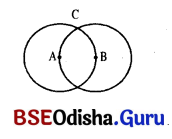
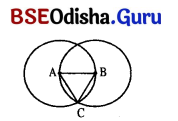
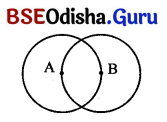
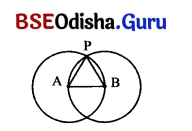
Light: Shadows and Reflections Class 7 Extra Questions and Answers Science Chapter 11

Students can include Class 7 Curiosity Extra Questions and Class 7 Science Chapter 11 Light: Shadows and Reflections Extra Question Answer in their daily self-study routine.

Class 7 Science Chapter 11 Light: Shadows and Reflections Extra Questions

Class 7 Science Chapter 11 Extra Questions on Light: Shadows and Reflections

Light: Shadows and Reflections Class 7 Very Short Question Answer

Question 1.
Riya noticed that her book, table, and chair were clearly visible even though they were not emitting light. How is she able to see these objects?
Answer:
Riya is able to see the book, table and chair because light from a luminous source (such as a bulb) falls on them and is reflected to her eyes. These objects do not produce their own light; they are visible due to reflected light.

Question 2.
Why is our shadow shorter at noon compared to in the morning or evening?
Answer:
In the morning and evening, the Sun is near the horizon, so sunlight comes from a small angle from the horizon and makes our shadows long. At noon, the Sun is almost right above us, so sunlight comes straight down, and our shadows are very short.

Question 3.
What are luminous and non-luminous objects?
Answer:
Luminous objects are those that emit their own light (e.g., Sun, candle flame, electric bulb). Nonluminous objects do not emit light and are seen only when they reflect light from a luminous source (e.g., Moon, book, chair).

Light: Shadows and Reflections Class 7 Extra Questions and Answers Science Chapter 11

Question 4.
You are given a transparent glass sheet. Suggest any two ways to make it translucent without breaking it.
Answer:
Two ways to make a transparent glass sheet translucent (without breaking it):

  • Rub its surface with sandpaper to make it rough.
  • Apply a thin coating of oil/grease/wax/paint on the glass surface.

Question 5.
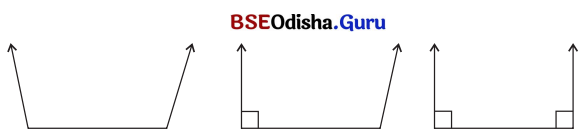
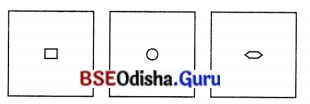
You have three opaque strips with very small holes of different shapes as shown in figure below. If you obtain an image of the sun on a wall through these holes, will the image formed by these holes be the same or different?
Light Shadows and Reflections Class 7 Extra Questions and Answers Science Chapter 11.1
Answer:
When the image of the Sun is obtained on a wall through small holes of different shapes, the images formed will all appear the same, that is circular. The shape of the hole only changes brightness and sharpness, not the basic circular shape of the Sun’s image.

Question 6.
What are the three things required to form a shadow?
Answer:
Three things required to form a shadow are a source of light, an opaque object, and a screen/surface (wall, floor, paper etc.)

Question 7.
Which object produces a shadow of the same shape irrespective of its orientation with respect to the light source?
Answer:
A spherical object produces a circular shadow in every position because its outline remains the same in all orientations with respect to the light source and the screen.

Question 8.
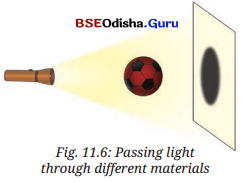
Why does a rubber ball cast a shadow but a glass ball does not?
Answer:
A rubber ball is opaque, so it blocks light and forms a clear shadow. A glass ball is transparent, so it allows most light to pass through it and therefore does not form a distinct shadow.

Question 9.
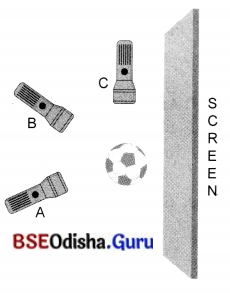
Three torches A, B and C shown in figure alongside are switched on one by one. The light from which of the torches will not form a shadow of the ball on the screen.
Light Shadows and Reflections Class 7 Extra Questions and Answers Science Chapter 11.2
Answer:
A shadow is formed only when an object blocks the path of light falling on a screen. If the light from a torch does not directly fall on the screen, then no shadow can be produced. In this case, the light from torch C does not reach the screen, so it will not form any shadow of the ball on the screen.

Light: Shadows and Reflections Class 7 Extra Questions and Answers Science Chapter 11

Question 10.
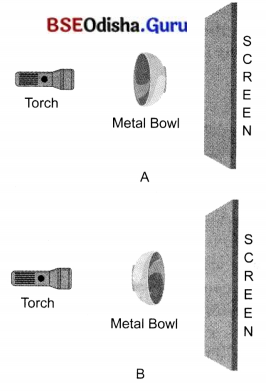
Look at the figure given below.
Light Shadows and Reflections Class 7 Extra Questions and Answers Science Chapter 11.3
Will there be any difference in the shape of the shadow formed on the screen in A and B?
Answer:
No, the shape of the shadow formed in both the cases will be circular.

Question 11.
A small mirror can still show the complete image of a large tree. How is this possible?
Answer:
A plane mirror forms an image using the light reflected from the object. Even a small mirror can reflect light coming from different parts of a large tree into our eyes. Therefore, the whole tree can be seen in the mirror, though the image appears smaller because the tree is far away.

Question 12.
Write one difference and one similarity in the nature of the image formed by a plane mirror and a pinhole camera.
Answer:
Similarity: In both cases, the image formed is laterally inverted.
Difference: A plane mirror forms a vertically erect image, while a pinhole camera forms a vertically inverted image.

Light: Shadows and Reflections Class 7 Short Question Answer

Question 1.
A student covered a torch with red cellophane sheet to obtain red light. Using the red light she obtains a shadow of an opaque object. She repeats this activity with green and blue light. Will the colour of the light affect the shadow? Explain.
Answer:
The colour of light does not change the shadow. The shadow remains dark because it is the region where light is blocked by the opaque object. Only the colour of the illuminated area around the shadow changes according to the colour of the torch light (red/green/blue).

Question 2.
State any two observations that show light travels in a straight line.
Answer:

  • A candle flame can be seen through a straight tube, but it cannot be seen through a bent tube.
  • When light is passed through two or three pinholes, a bright spot is obtained on the screen only when the pinholes are exactly in one line; if any one pinhole is shifted, the spot disappears.

Light: Shadows and Reflections Class 7 Extra Questions and Answers Science Chapter 11

Question 3.
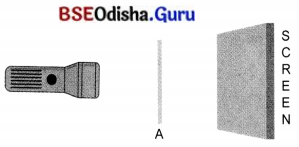
A sheet of plywood, a piece of muslin cloth and that of a transparent glass, all of the same size and shape, were placed at A one by one in the arrangement shown in the figure. Will a shadow be formed in each case? If yes, how will the shadow on the screen be different in each case? Give reasons for your answer.
Light Shadows and Reflections Class 7 Extra Questions and Answers Science Chapter 11.5
Answer:
Yes, shadows will differ because the three materials are opaque, translucent and transparent. A sheet of plywood will form a dark, well-defined shadow on the screen because plywood is opaque and does not allow light to pass through it. A piece of muslin cloth will form a faint and less sharp shadow because muslin cloth is translucent. It allows some light to pass through, so the shadow is lighter and blurred. A transparent glass sheet will not form a distinct shadow (it may be very faint) because glass is transparent and allows most of the light to pass through it.

Question 4.
How can the same object form shadows of different sizes and shapes?
Answer:
The size of a shadow depends on the distance between the light source, the object and the screen. When the object is moved closer to the light source, the shadow becomes larger; when it is moved closer to the screen, the shadow becomes smaller and clearer. The shape of the shadow can change when the object is tilted or turned because the outline of the object facing the light changes.

Question 5.
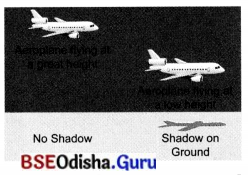
Observe the given illustration of two aeroplanes flying at different heights above the ground. Why is the shadow of the aeroplane visible on the ground when it is flying low, but hardly visible when it is flying very high in the sky? Explain scientifically.
Light Shadows and Reflections Class 7 Extra Questions and Answers Science Chapter 11.4
Answer:
When an aeroplane is flying very high, it is far from the ground. Therefore, the shadow spreads over a large area and its edges become less sharp. As a result, the shadow becomes very faint and is hardly visible on the ground. When the aeroplane is flying low, it is closer to the ground. It blocks sunlight over a smaller area and forms a sharper, darker shadow. Hence, the shadow is clearly visible.

Question 6.
Answer the following questions.

(i) Does the image formed in a plane mirror change size when we move farther or closer to it?
Answer:
No. The image formed by a plane mirror remains the same size as the object.

(ii) Why cannot images formed by a plane mirror be obtained on a screen?
Answer:
A plane mirror forms a virtual image. Since the reflected rays do not actually meet, the image cannot be obtained on a screen.

(iii) If a person moves 1 m closer to a plane mirror, how much does the image move and in which direction?
Answer:
The image also moves 1 m closer to the mirror, i.e., it shifts by the same distance as the person moves.

Light: Shadows and Reflections Class 7 Extra Questions and Answers Science Chapter 11

Question 7.
Answer the following questions.

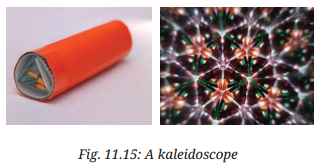
(i) What is a kaleidoscope? How does it work?
Answer:
A kaleidoscope is an optical instrument made using plane mirrors arranged inside a tube. Small coloured beads or pieces are kept at one end. Light entering the tube undergoes multiple reflections in the mirrors and forms repeated images of the coloured pieces, producing patterns seen through the viewing end.

(ii) Why does a kaleidoscope show a new pattern every time it is rotated?
Answer:
On rotating the kaleidoscope, the coloured pieces change their arrangement. This changes the pattern of multiple reflections, so a new pattern is seen each time.

Light: Shadows and Reflections Class 7 Long Question Answer

Question 1.
What is reflection of light? Describe an activity to show this effect.
Answer:
Reflection of light is the phenomenon in which light, after striking a smooth and polished surface, bounces back into the same medium.
Activity to show reflection of light: Take a plane mirror or a shiny steel plate and place it upright on a table. Allow light from a torch to fall on its surface. The light ray strikes the mirror and is reflected back from its surface, showing the reflection of light. This activity demonstrates that smooth and shiny surfaces reflect light.

Question 2.
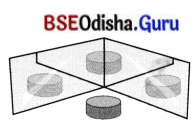
During a science activity, Riya placed two plane mirrors perpendicular to each other on a table. She kept a bottle cap between them and observed three images of the bottle cap.
(i) What will happen to the number of images if the mirrors in this activity are brought closer at a smaller angle?
(ii) What will happen if the mirrors are kept parallel to each other? Give one real-life example where this effect can be seen.
(iii) Name one device that works on the principle of multiple reflections.
(iv) Can these images be obtained on a screen?
Light Shadows and Reflections Class 7 Extra Questions and Answers Science Chapter 11.6
Answer:
(i) When the mirrors are brought closer by making the angle between them smaller, the number of images increases. This is because light undergoes more reflections between the mirrors.
(ii) If the mirrors are kept parallel to each other, a very large number of images are formed due to repeated reflections of light. This effect can be seen in barber shops or dressing rooms where mirrors are placed opposite each other.
(iii) A kaleidoscope works on the principle of multiple reflections of light.
(iv) No, these images cannot be obtained on a screen because plane mirrors form virtual images.

Question 3.
A periscope and a kaleidoscope use mirrors in different ways. Explain the arrangement of mirrors in each and how this arrangement helps in their use.
Answer:
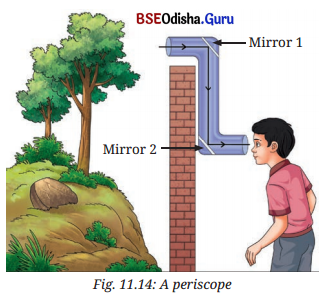
A periscope consists of two plane mirrors placed inside a tube in a particular arrangement. The mirrors are kept parallel to each other and are inclined at an angle (45°) so that light from an object enters the top opening, reflects from the first mirror, then from the second mirror, and finally reaches the observer’s eyes. This arrangement allows light to change direction twice, enabling a person to see objects that are not directly visible, such as objects behind a wall or above eye level.

A kaleidoscope uses plane mirrors (generally three) arranged in a pattern inside a tube, with coloured beads or pieces at one end. Light enters the tube and undergoes multiple reflections between the three mirrors. Because of these repeated reflections, many images of the coloured objects are formed, creating beautiful and symmetrical patterns. This arrangement is useful for producing decorative designs.

Light: Shadows and Reflections Class 7 Extra Questions and Answers Science Chapter 11

Question 4.
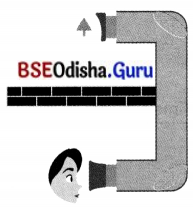
Riya, a curious class 7 student, chooses a reverse periscope as her science project for the school exhibition. She wants to show how light can be redirected so that a person looking from a low position can see above a raised platform.
Light Shadows and Reflections Class 7 Extra Questions and Answers Science Chapter 11.7
(i) How many times does light get reflected in this optical device?
Answer:
Light gets reflected two times in the reverse periscope, once from the top mirror and once from the bottom mirror.

(ii) What would happen if one of the mirrors inside the reverse periscope is tilted at the wrong angle?
Answer:
If a mirror is tilted wrongly, the light rays will not reach the eye properly. As a result, the image may look shifted, unclear, or may not be visible at all.

(iii) What is the principle behind the working of a reverse periscope?
Answer:
The principle behind the working of a reverse periscope is the reflection of light travelling in a straight line from plane mirrors.
When light from an object strikes the mirrors placed at 45° inside the reverse periscope, it gets reflected twice and changes direction. This allows a person to see over a raised platform without changing their position.

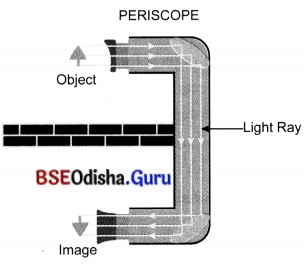
(iv) Is the image formed by the given reverse periscope laterally inverted? Explain with the help of a diagram.
Answer:
No, the image formed by a periscope is not laterally inverted. This is because the two successive reflections cancel each other’s lateral inversion.
Light Shadows and Reflections Class 7 Extra Questions and Answers Science Chapter 11.8

Light: Shadows and Reflections Class 7 Picture Based Questions

Observe the given pictures and answer the questions that follow:

Question 1.
A wall clock is shown in the figure alongside.
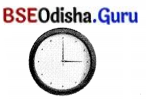
Light Shadows and Reflections Class 7 Extra Questions and Answers Science Chapter 11.9
(i) What will be the vertical mirror image time of the clock?
Answer:
In the figure, the clock shows 3:00. Its vertical mirror image time will be 9:00.

(ii) At what time will the clock and its mirror image be the same?
Answer:
The clock and its mirror image show the same time at 12:00 and 6:00.

Light: Shadows and Reflections Class 7 Extra Questions and Answers Science Chapter 11

(iii) Find the vertical mirror image times if the actual time in the above clock is 1:00, 2:00, 4:00, and 5:00. Observe the pattern and state the relation between clock and its mirror image time.
[Hint: Compare each time with its mirror image and notice what they add up to.]
Answer:
Vertical mirror image times:
1: 00 11: 00 2: 00
10: 00,100
Relation/pattern: Actual time + mirror image time =12: 00 (i.e., mirror time =12: 00- actual time).

OR

(iii) Find the time in vertical mirror image if the time in the clock is (a) 4: 45 (b) 10:10.
Answer:
Mirror time =11: 60- given time
(a) 11: 60-4: 45=7: 15
(b) 11: 60-10: 10=1: 50

Question 2.
Few words are given in the boxes as shown alongside:
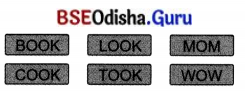
Light Shadows and Reflections Class 7 Extra Questions and Answers Science Chapter 11.10
(i) Identify the words whose mirror image changes in a vertical plane mirror.
Answer:
BOOK, LOOK, COOK, TOOK
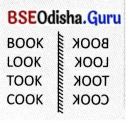
Light Shadows and Reflections Class 7 Extra Questions and Answers Science Chapter 11.11

(ii) Identify the words whose mirror image changes in a horizontal plane mirror.
Answer:
MOM, LOOK, WOW, TOOK
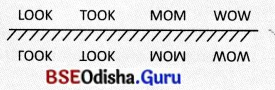
Light Shadows and Reflections Class 7 Extra Questions and Answers Science Chapter 11.12

(iii) Write two properties of the image formed by a plane mirror.
Answer:
Two properties of the image formed by a plane mirror:

  • The image is erect.
  • The image is of the same size as the object.

OR

(iii) If the distance between a plane mirror and a person is 2 m, what will be the distance between the person and his image in the mirror?
Answer:
Distance between mirror and person =2m In a plane mirror, the image forms at the same distance behind the mirror.
So, image is 2 m behind the mirror.
Distance between person and image
= 2 m+2m=4m

Light: Shadows and Reflections Class 7 Activity Based Questions

Read the following activity and answer the questions that follow:

1. Objective: To demonstrate that light travels in a straight line and use this fact to explain why a pinhole camera forms an inverted image.
Materials required: Torch, two cardboard sheets, pin/needle, tape, a candle, a white sheet/wall as screen, 2 books/stands.

Procedure:

  • Take two cardboard sheets and make a small hole at the centre of each using a pin. Name them Sheet A and Sheet B.
  • In a dark room, fix Sheet A upright on a table using books so that it stands vertically. Place the torch behind Sheet A so that light passes through the hole.
  • Keep Sheet B a little away from Sheet A. Adjust Sheet B until you can see a bright spot of light passing through both holes and falling on the wall/screen.
  • Now shift Sheet B slightly sideways and observe what happens to the bright spot on the screen.
  • Remove Sheet B and place a lighted candle (or any bright object) behind Sheet A. Observe the image formed on the screen through the pinhole. Note that the image appears inverted.
  • Enlarge the pinhole slightly and observe the image again.

(i) When Sheet B is shifted slightly to one side, the bright spot on the screen disappears. Explain why this happens.
Answer:
The bright spot is seen only when both pinholes are in the same straight line. Light travels in a straight line, so when the second sheet is shifted, the holes are no longer aligned and light cannot pass through both pinholes to reach the screen. Hence, the bright spot disappears.

Light: Shadows and Reflections Class 7 Extra Questions and Answers Science Chapter 11

(ii) Describe the image formed on the wall/screen by the pinhole camera. Mention any two characteristics of the image.
Answer:
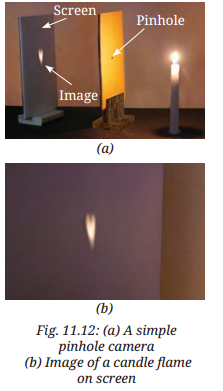
The image formed by a pinhole camera on the wall/screen is inverted (upside down). It is usually smaller than the object and it is also laterally inverted.

(iii) Predict what will happen if the pinhole is made larger. Mention the change in brightness and sharpness of the image.
Answer:
If the pinhole is made larger, more light enters, so the image becomes brighter. However, the image becomes less sharp (blurred) because rays from one point of the object spread over a larger area of the screen.

OR

(iii) Why is the image formed by the pinhole inverted?
Answer:
The image formed by a pinhole is inverted because light travels in straight lines. Rays of light from the top of the object pass through the small hole and reach the lower part of the screen, while rays from the bottom of the object reach the upper part of the screen. This crossing of light rays at the pinhole causes the image to appear upside down.

Light: Shadows and Reflections Extra Questions for Practice

Question 1.
A ball is placed between a torch and a wall. The torch and wall remain fixed. The ball is moved closer to the torch. What change will occur?
(a) The shadow becomes smaller and sharper
(b) The shadow becomes larger and blurred
(c) The shadow disappears completely
(d) The shadow shifts colour
Answer:
(b) When the ball is moved closer to the torch, it blocks a wider spread of rays, so the shadow on the wall becomes larger: The shadow also becomes blurred and the edges less sharp because the light spreads out more from the torch.

Question 2.
A shiny steel plate is placed between a torch and a wall. A dark patch is seen on the wall, and a bright spot appears elsewhere on the opposite wall. The best explanation is:
(a) The steel plate is translucent, so both shadow and light pass through.
(b) The steel plate blocks some light and emits its own light.
(c) The steel plate blocks and reflects the same light to another direction.
(d) Torchlight bends around the steel plate to form the bright spot.
Answer:
(c) The steel plate acts as an opaque object for the direct beam, so it creates a shadow (dark patch). At the same time, its shiny surface reflects part of the light, producing a bright spot on the opposite wall.

Light: Shadows and Reflections Class 7 Extra Questions and Answers Science Chapter 11

Question 3.
A student observes a beam of sunlight entering a dark room through a small hole. Which of the following statements are correct?
(i) Light travels in a straight line.
(ii) The beam spreads in all directions immediately upon entering the room.
(iii) A narrow beam is formed due to linear propagation of light.
(iv) This observation supports the idea of reflection.
(a) (i) and (iii) only
(b) (i), (ii) and (iii)
(c) (ii) and (iv) only
(d) (i), (iii) and (iv)
Answer:
(a) (i) and (iii) only

Question 4.
An object is placed in front of a screen with a light source behind it. Which of the following statements are correct?
(i) The object must block light to form a shadow.
(ii) Transparent objects form dark shadows.
(iii) Opaque objects form dark shadows.
(iv) Shadow size depends only on the position of the object and the light source.
(a) (i) and (iii) only
(b) (i), (iii) and (iv)
(c) (ii) and (iv) only
(d) (i), (ii) and (iv)
Answer:
(a) Shadow size depends on the position of the object, the light source and the screen.

Questions 5 and 6 consist of two statements – Assertion (A) and Reason (R). Answer these questions by selecting the correct option:
(a) Both A and R are true and R is the correct explanation of A.
(b) Both A and R are true but R is not the correct explanation of A.
(c) A is true but R is false.
(d) A is false but R is true.

Question 5.
Assertion (A): The image formed by a pinhole camera shows the colours of the object.
Reason (R): A pinhole camera forms an image due to reflection from a shiny surface inside the box.
Answer:
(c) A pinhole camera can show colours because light coming from the object carries colour information and forms the image on the sereen. But the image is not formed due to reflection inside the box: it is formed because light passes through a tiny hole and falls on an opposite screen.

Question 6.
Assertion (A): The left side of the object appears as the right side in the mirror image.
Reason (R): The image formed by a plane mirror is laterally inverted.
Answer:
(a) Both A and R are true and R is the correct explanation of A.

Question 7.
What is a luminous object? Give one example.
Answer:
A luminous object is an object that emits its own light. The Sun is an example of a luminous object.

Question 8.
State one observation that proves that light travels in a straight line.
Answer:
When light passes through two or more pinholes, a bright spot is seen on the screen only when the pinholes are in one straight line. This observation shows that light travels in a straight line.

Question 9.
Define reflection of light with one observation.
Answer:
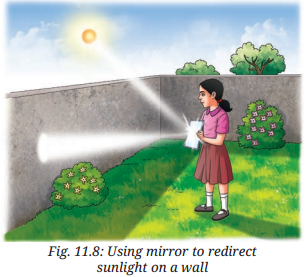
Reflection of light is the change in direction of light when it falls on a shiny surface or a mirror. For example, when sunlight falls on a plane mirror or a polished steel plate, a bright spot is seen on a wall, showing that the light has been redirected.

Question 10.
In a torch-ball-screen setup, two different shadow sizes are obtained without changing the ball. How is this possible?
Answer:
The size of the shadow depends on both the size and position of the object relative to the light source and the screen. If the ball is moved closer to the torch, its shadow on the screen becomes larger. If the ball is moved closer to the screen (keeping the torch fixed), the shadow becomes smaller.

Question 11.
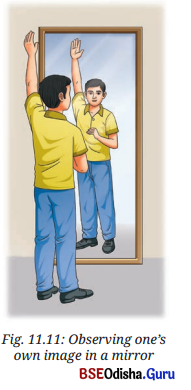
Meera stands in front of a plane mirror while getting ready for school. She moves a little closer to the mirror and then steps back. She also raises her right hand and notices the movement of the image.

(i) Why is Meera able to see her image in the plane mirror?
Answer:
Light from Meera’s body falls on the plane mirror and is reflected back into her eyes, allowing her to see her image.

(ii) What change does Meera observe in the image when she moves closer to or away from the mirror?
Answer:
The image also appears to move closer or farther by the same distance, because the image in a plane mirror is formed at the same distance behind the mirror as the object is in front.

(iii) Why does Meera see her raised right hand as the left hand in the mirror?
Answer:
A plane mirror causes lateral inversion, due to which the right side of the object appears as the left side in the image.
OR
(iii) Will the size of Meera’s image change if she moves nearer to the mirror? Give a reason.
Answer:
No, the size of the image remains the same because a plane mirror always forms an image equal in size to the object.

Question 12.
(i) Classify materials as transparent, translucent and opaque on the basis of transmission of light. Give an example of each.
Answer:
Materials are classified on the basis of how much light they allow to pass through them. Transparent materials allow light to pass almost completely, for example, clean water Translucent materials allow light to pass partially, for example, frosted glass. Opaque materials do not allow light to pass through at all, for example, cardboard.

Light: Shadows and Reflections Class 7 Extra Questions and Answers Science Chapter 11

(ii) Explain how these materials affect shadow formation.
Answer:
Opaque materials block light completely and form dark, clear shadows. Translucent materials block only part of the light, so they form lighter shadows. Transparent materials allow most of the light to pass. so they generally do not form a dark shadow, though some transparent objects may produce a faint shadow.
Class 7 Maths Chapter 7 Question Answer Odia Medium ତିନୋଟି ପରସ୍ପର ଛେଦୀ ସରଳ ରେଖାର କଥା

Students can use Class 7 Math Solution Odia Medium and Class 7 Maths Chapter 7 Question Answer Odia Medium ତିନୋଟି ପରସ୍ପର ଛେଦୀ ସରଳ ରେଖାର କଥା to check their answers after solving exercises.

7th Class Maths Chapter 7 Question Answer Odia Medium

Class 7 Maths Chapter 7 Odia Medium

Question 1.
ଯେତେବେଳେ ତିନୋଟି ଶୀର୍ଷବିନ୍ଦୁ ଏକ ସରଳରେଖା ଉପରିସ୍ଥ ହେବେ ସେତେବେଳେ କ’ଣ ହେବ ?
Solution:
ଯେତେବେଳେ ତିନୋଟି ଶୀର୍ଷବିନ୍ଦୁ ଏକ ସରଳରେଖା ଉପରିସ୍ଥ ହେବେ ସେତେବେଳେ ଏକ ସରଳରେଖା ଉତ୍ପନ୍ନ ହେବ ।

7.1 ସମବାହୁ ତ୍ରିଭୁଜ :

Page No. (149 to 151)

ଯେଉଁ ତ୍ରିଭୁଜର ତିନୋଟି ବାହୁ ଓ ତିନୋଟି କୋଣ ପରସ୍ପର ସମାନ, ତାହାକୁ ସମବାହୁ ତ୍ରିଭୁଜ କୁହାଯାଏ । ଏହାର ପ୍ରତ୍ୟେକ କୋଣ

Question 1.
ଏକ ସମବାହୁ ତ୍ରିଭୁଜ ଅଙ୍କନ କର ଯାହାର ପ୍ରତ୍ୟେକ ବାହୁର ଦୈର୍ଘ୍ୟ 4 ସେ. ମି. ।
Solution:
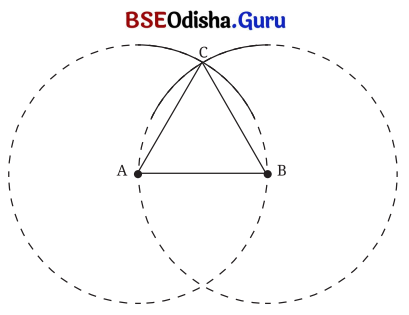
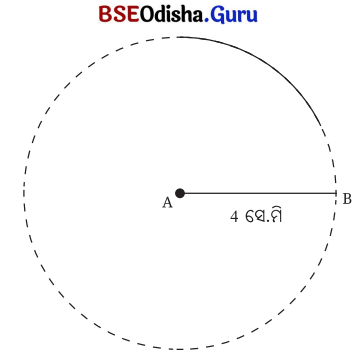
• ସୋପାନ – 1 : ଚିତ୍ରରେ ଦର୍ଶାଯାଇଥ‌ିବା ଭଳି A ବିନ୍ଦୁକୁ କେନ୍ଦ୍ରକରି, AB = 4 ସେ.ମି. ବ୍ୟାସାର୍ଦ୍ଧ ନେଇ ଏକ ବୃହତ ଚାପ ଅଙ୍କନ କର । ‘B’ ବିନ୍ଦୁଟି ଏହି ଚାପ ଉପରିସ୍ଥ ଯେକୌଣସି ବିନ୍ଦୁ ହୋଇପାରିବ । (ଚିତ୍ର-1)
Class 7 Maths Chapter 7 Question Answer Odia Medium ତିନୋଟି ପରସ୍ପର ଛେଦୀ ସରଳ ରେଖାର କଥା 1
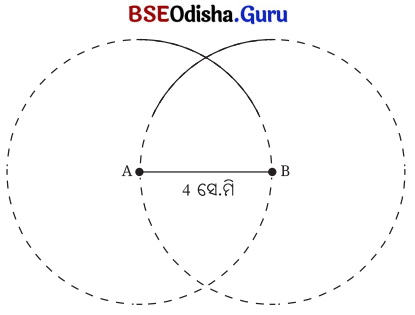
• ସୋପାନ – 2 : ‘B’ କୁ କେନ୍ଦ୍ରକରି 4 ସେ.ମି. ବ୍ୟାସାର୍ଦ୍ଧ ନେଇ ଅନ୍ୟ ଏକ ବୃହତଚାପ ଅଙ୍କନ କର । ଚାପଦ୍ଵୟର ଛେଦବିନ୍ଦୁଟିକୁ ‘C’ ନାମରେ ନାମିତ କରାଯାଉ । (ଚିତ୍ର-2)
Class 7 Maths Chapter 7 Question Answer Odia Medium ତିନୋଟି ପରସ୍ପର ଛେଦୀ ସରଳ ରେଖାର କଥା 2
• ସୋପାନ – 3 : AC ଓ BCର ଦୈର୍ଘ୍ୟ 4 ସେ.ମି. ହେବ । AC ଓ BC କୁ ଯୋଗ କଲାପରେ ଆମେ ଆବଶ୍ୟକୀୟ ସମବାହୁ ତ୍ରିଭୁଜ ABC ପାଇବା । (ଚିତ୍ର-3)
Class 7 Maths Chapter 7 Question Answer Odia Medium ତିନୋଟି ପରସ୍ପର ଛେଦୀ ସରଳ ରେଖାର କଥା 3

Class 7 Maths Chapter 7 Question Answer Odia Medium ତିନୋଟି ପରସ୍ପର ଛେଦୀ ସରଳ ରେଖାର କଥା

7.2 ତ୍ରିଭୁଜର ବାହୁମାନଙ୍କର ଦୈର୍ଘ୍ୟ ଦତ୍ତ ଥିଲେ ତ୍ରିଭୁଜ ଅଙ୍କନ :

Page No. (151 to 163)

Question 1.
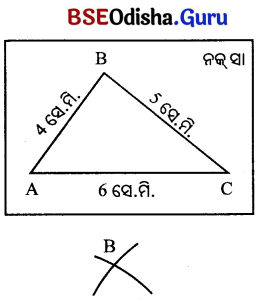
ତ୍ରିଭୁଜଟିଏ ଅଙ୍କନ କର ଯାହାର ବାହୁଗୁଡ଼ିକର ଦୈର୍ଘ୍ୟ 4 ସେ.ମି., 5 ସେ.ମି. ଏବଂ 6 ସେ.ମି. ।
Solution:
ଅଙ୍କନ ପ୍ରଣାଳୀ :
ପ୍ରଥମ ସୋପାନ :
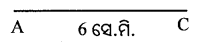
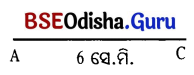
6 ସେ.ମି. ଦୈର୍ଘ୍ୟର \(\overline{\mathrm{AC}}\) ରେଖାଖଣ୍ଡ ଅଙ୍କନ କର ।
Class 7 Maths Chapter 7 Question Answer Odia Medium ତିନୋଟି ପରସ୍ପର ଛେଦୀ ସରଳ ରେଖାର କଥା 4
ଦ୍ଵିତୀୟ ସୋପାନ :
A କୁ ବ୍ୟାସାର୍ଦ୍ଧ କରି 4 ସେ.ମି. (AB) ବ୍ୟାସାର୍ଦ୍ଧ ବିଶିଷ୍ଟ ଏକ ଚାପ ଅଙ୍କନ କର ।
Class 7 Maths Chapter 7 Question Answer Odia Medium ତିନୋଟି ପରସ୍ପର ଛେଦୀ ସରଳ ରେଖାର କଥା 5
ତୃତୀୟ ସୋପାନ :
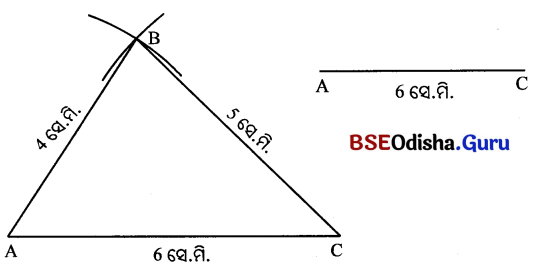
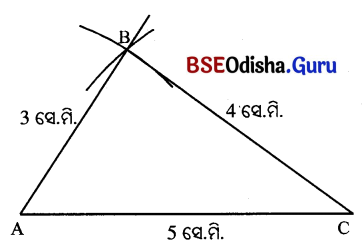
C କୁ କେନ୍ଦ୍ର କରି 5 ସେ.ମି. BC ବ୍ୟାସାର୍କ ବିଶିଷ୍ଟ ଚାପ ଅଙ୍କନ କର, ଯେପରି ତାହା ପୂର୍ବରୁ ଅଙ୍କା ହୋଇଥିବା ଚାପକୁ ଛେଦ କରିବ । ଛେଦବିନ୍ଦୁର ନାମ B ଦିଅ ।

ଚତୁର୍ଥ ସୋପାନ :
\(\overline{\mathrm{AB}}\) ଓ \(\overline{\mathrm{BC}}\) ଅଙ୍କନ କର ।
∴ ABC ଏକ ଆବଶ୍ୟକୀୟ ତ୍ରିଭୁଜ ।
Class 7 Maths Chapter 7 Question Answer Odia Medium ତିନୋଟି ପରସ୍ପର ଛେଦୀ ସରଳ ରେଖାର କଥା 6
ସୋପାନ – 1 : ଯେକୌଣସି ବାହୁର ଦୈର୍ଘ୍ୟକୁ ଭୂମିରୂପେ ନିଅ । ମନେକରୁ AB = 4 ସେ.ମି. ।
ସୋପାନ – 2 : A କୁ କେନ୍ଦ୍ରକରି 5 ସେ.ମି. ବ୍ୟାସାର୍କ ବିଶିଷ୍ଟ ଏକ ବୃହତ ଚାପ ଅଙ୍କନ କର ।
ସୋପାନ – 3 : ପୁନଶ୍ଚ ‘B’ କୁ କେନ୍ଦ୍ରକରି 6 ସେ.ମି. ବ୍ୟାସାର୍କ ବିଶିଷ୍ଟ ଏକ ଚାପ ଅଙ୍କନ କର ଯେପରିକି ଏହା ପୂର୍ବ ଚାପକୁ ଛେଦ କରିବ ।
ସୋପାନ – 4 : ଦୁଇଟି ଚାପର ଛେଦବିନ୍ଦୁ ହେଉଛି ତୃତୀୟ ବିନ୍ଦୁ ‘C’ । AC ଓ BC କୁ ଯୋଗକଲେ ଆବଶ୍ୟକୀୟ ତ୍ରିଭୁଜ ABC ପାଇବା

ଅଙ୍କନ କର :

Question 1.
ନିମ୍ନୋକ୍ତ ବାହୁଗୁଡ଼ିକର ଦୈର୍ଘ୍ୟ (ସେ.ମି.) ନେଇ ତ୍ରିଭୁଜ ଅଙ୍କନ କର ।
(a) 4, 4, 6
(b) 3, 4, 5
(c) 1, 5, 5
(d) 4, 6, 8
(e) 3.5, 3.5, 3.5
Solution:
(a) ବାହୁଗୁଡ଼ିକର ଦୈର୍ଘ୍ୟ 4 ସେ.ମି., 4 ସେ.ମି., ଓ 6 ସେ.ମି.
(i) ପ୍ରଥମ ସୋପାନ : 6 ସେ.ମି. ଦୈର୍ଘ୍ୟର \(\overline{\mathrm{AC}}\) ରେଖାଖଣ୍ଡ ଅଙ୍କନ କର ।
Class 7 Maths Chapter 7 Question Answer Odia Medium ତିନୋଟି ପରସ୍ପର ଛେଦୀ ସରଳ ରେଖାର କଥା 7
(ii) ଦ୍ଵିତୀୟ ସୋପାନ : A ଓ C କୁ ବ୍ୟାସାର୍ଦ୍ଧ କରି 4 ସେ.ମି. AB ଓ BC ବ୍ୟାସାର୍ଦ୍ଧ ବିଶିଷ୍ଟ ଚାପ ଅଙ୍କନ କରାଯାଉ ।
(iii) ତୃତୀୟ ସୋପାନ ; B ଠାରେ ଉତ୍ପନ୍ନ ବିନ୍ଦୁରୁ A ଓ C କୁ ଯୋଗକଲେ ABC ଆବଶ୍ୟକୀୟ ତ୍ରିଭୁଜ ମିଳିବ ।
Class 7 Maths Chapter 7 Question Answer Odia Medium ତିନୋଟି ପରସ୍ପର ଛେଦୀ ସରଳ ରେଖାର କଥା 8

(b) ବାହୁଗୁଡ଼ିକର ଦୈର୍ଘ୍ୟ 3 ସେ.ମି., 4 ସେ.ମି., ଓ 5 ସେ.ମି.
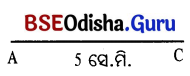
(i) ପ୍ରଥମ ସୋପାନ : 5 ସେ.ମି. ଦୈର୍ଘ୍ୟର \(\overline{\mathrm{AC}}\) ରେଖାଖଣ୍ଡ ଅଙ୍କନ କର ।
Class 7 Maths Chapter 7 Question Answer Odia Medium ତିନୋଟି ପରସ୍ପର ଛେଦୀ ସରଳ ରେଖାର କଥା 9
(ii) ଦ୍ଵିତୀୟ ସୋପାନ : A କୁ ବ୍ୟାସାର୍ଦ୍ଧ କରି 3 ସେ.ମି. (AB) ବ୍ୟାସାର୍କ ବିଶିଷ୍ଟ ଏକ ଚାପ ଅଙ୍କନ କରାଯାଉ ।
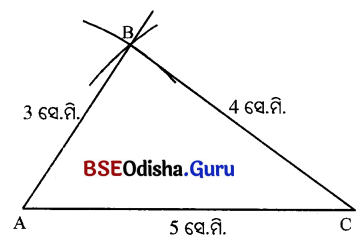
(iii) ତୃତୀୟ ସୋପାନ : C କୁ କେନ୍ଦ୍ର କରି 4 ସେ.ମି. BC ବ୍ୟାସାର୍ଦ୍ଧ ବିଶିଷ୍ଟ ଚାପ ଅଙ୍କନ କର, ଯେପରି ତାହା ପୂର୍ବରୁ ଅଙ୍କା ହୋଇଥିବା ଚାପକୁ ଛେଦ କରିବ । ଛେଦବିନ୍ଦୁର ନାମ B ଦିଅ ।
(iv) ଚତୁର୍ଥ ସୋପାନ : \(\overline{\mathrm{AB}}\) ଓ \(\overline{\mathrm{BC}}\) ଅଙ୍କନ କର ।
∴ ABC ଏକ ଆବଶ୍ୟକୀୟ ତ୍ରିଭୁଜ ।
Class 7 Maths Chapter 7 Question Answer Odia Medium ତିନୋଟି ପରସ୍ପର ଛେଦୀ ସରଳ ରେଖାର କଥା 10
ଏହି ସୋପାନଗୁଡ଼ିକୁ ଅନୁସରଣ କରି ପିଲାମାନେ (c), (d) ଓ (e) ଅଙ୍କନ ନିଜେ କରିବେ ।
ଯେଉଁ ତ୍ରିଭୁଜର ପ୍ରତ୍ୟେକ ବାହୁର ଦୈର୍ଘ୍ୟ ସମାନ ତାହାକୁ ‘ସମବାହୁ’ ତ୍ରିଭୁଜ କୁହାଯାଏ । ଯେଉଁ ତ୍ରିଭୁଜର ଯେକୌଣସି ଦୁଇବାହୁର ଦୈର୍ଘ୍ୟ ସମାନ, ତାହାକୁ ‘ସମଦ୍ଵିବାହୁ’ ତ୍ରିଭୁଜ କୁହାଯାଏ ।

Class 7 Maths Chapter 7 Question Answer Odia Medium ତିନୋଟି ପରସ୍ପର ଛେଦୀ ସରଳ ରେଖାର କଥା

ନିଜେ କରି ଦେଖ :

Question 1.
ଗୋଟିଏ ବୃତ୍ତର ଉପରିସ୍ଥ ବିନ୍ଦୁ କିମ୍ବା ବୃତ୍ତର କେନ୍ଦ୍ରବିନ୍ଦୁ ବ୍ୟବହାର କରି ସମଦ୍ବିବାହୁ ତ୍ରିଭୁଜ ଅଙ୍କନ କର ।
Class 7 Maths Chapter 7 Question Answer Odia Medium ତିନୋଟି ପରସ୍ପର ଛେଦୀ ସରଳ ରେଖାର କଥା 11
Solution:
(i) ‘O’ କୁ କେନ୍ଦ୍ରବିନ୍ଦୁ ଭାବେ ନେଇ ଗୋଟିଏ ବୃତ୍ତ ଅଙ୍କନ କରାଯାଉ ।
Class 7 Maths Chapter 7 Question Answer Odia Medium ତିନୋଟି ପରସ୍ପର ଛେଦୀ ସରଳ ରେଖାର କଥା 12
(ii) ବୃତ୍ତ ଉପରେ ଦୁଇଟି ବିନ୍ଦୁ A ଓ B ନି ଆଯାଉ ।
(iii) OA, AB ଓ BO କୁ ଯୋଗ କର ।
Class 7 Maths Chapter 7 Question Answer Odia Medium ତିନୋଟି ପରସ୍ପର ଛେଦୀ ସରଳ ରେଖାର କଥା 13
(iv) Δ AOB ଏକ ଆବଶ୍ୟକୀୟ ସମଢ଼ିବାହୁ ତ୍ରିଭୁଜ ।

Question 2.
ସମ ବ୍ୟାସାର୍ଦ୍ଧ ବିଶିଷ୍ଟ ବୃତ୍ତ ଉପରିସ୍ଥ ବିନ୍ଦୁ କିମ୍ବା ବୃତ୍ତର କେନ୍ଦ୍ରକୁ ନେଇ ସମବାହୁ ତ୍ରିଭୁଜ ଏବଂ ସମଜ୍ଜିବାହୁ ତ୍ରିଭୁଜ ଅଙ୍କନ ସମ୍ଭବ ।
Class 7 Maths Chapter 7 Question Answer Odia Medium ତିନୋଟି ପରସ୍ପର ଛେଦୀ ସରଳ ରେଖାର କଥା 14
Solution:
ସମଦ୍ଵିବାହୁ ତ୍ରିଭୁଜ ଅଙ୍କନ :
(i) ପ୍ରଥମ ଚିତ୍ରରେ, ଗୋଟିଏ ବିନ୍ଦୁ C ନି ଆଯାଉ ।
Class 7 Maths Chapter 7 Question Answer Odia Medium ତିନୋଟି ପରସ୍ପର ଛେଦୀ ସରଳ ରେଖାର କଥା 15
(ii) AB, CB ଓ BA କୁ ଯୋଗକର ।
Class 7 Maths Chapter 7 Question Answer Odia Medium ତିନୋଟି ପରସ୍ପର ଛେଦୀ ସରଳ ରେଖାର କଥା 16
(ii) Δ ABC ଗୋଟିଏ ଆବଶ୍ୟକୀୟ ସମଙ୍ଗିବାହୁ ତ୍ରିଭୁଜ ।

ପ୍ରଥମ ଚିତ୍ରରେ ସମବାହୁ ତ୍ରିଭୁଜ ଅଙ୍କନ :
Class 7 Maths Chapter 7 Question Answer Odia Medium ତିନୋଟି ପରସ୍ପର ଛେଦୀ ସରଳ ରେଖାର କଥା 17
(i) ସମବାହୁ ତ୍ରିଭୁଜ ପାଇବାକୁ ହେଲେ ଦୁଇଟି ବୃତ୍ତ ଛେଦବିନ୍ଦୁକୁ P ନାମରେ ନାମିତ କରାଯାଉ ।
(ii) AP, PB ଓ BA କୁ ଯୋଗ କର ।
Class 7 Maths Chapter 7 Question Answer Odia Medium ତିନୋଟି ପରସ୍ପର ଛେଦୀ ସରଳ ରେଖାର କଥା 18
(iii) Δ APB ଏକ ଆବଶ୍ୟକୀୟ ସମଦ୍ବିବାହୁ ତ୍ରିଭୁଜ ।

ସମଦିବାହୁ ତ୍ରିଭୁଜ ଅଙ୍କନ :
Class 7 Maths Chapter 7 Question Answer Odia Medium ତିନୋଟି ପରସ୍ପର ଛେଦୀ ସରଳ ରେଖାର କଥା 19
(i) AB, BC ଓ CA କୁ ଯୋଗ କରାଯାଉ ।
Class 7 Maths Chapter 7 Question Answer Odia Medium ତିନୋଟି ପରସ୍ପର ଛେଦୀ ସରଳ ରେଖାର କଥା 20
(ii) Δ ABC ଏକ ଆବଶ୍ୟକୀୟ ସମଦ୍ଵିବାହୁ ତ୍ରିଭୁଜ ।

Question 3.
3 ସେ.ମି., 4 ସେ.ମି., 8 ସେ.ମି. ବାହୁର ଦୈର୍ଘ୍ୟ ନେଇ ଏକ ତ୍ରିଭୁଜ ଅଙ୍କନ ସମ୍ଭବ କି ?
Solution:
ତ୍ରିଭୁଜର ଯେକୌଣସି ଦୁଇବାହୁର ସମଷ୍ଟି ତୃତୀୟ ବାହୁର ଦୈର୍ଘ୍ୟଠାରୁ ବୃହତ୍ତର । ତେଣୁ ତ୍ରିଭୁଜ ଅଙ୍କନ ସମ୍ଭବ ନୁହେଁ । (3 + 4 = 7, ଯାହା 8 ଠାରୁ କ୍ଷୁଦ୍ରତର) ତେଣୁ ଏହା ସମ୍ଭବ ନୁହେଁ ।

Question 4.
2 ସେ.ମି., 3 ସେ.ମି., 6 ସେ.ମି. ବାହୁର ଦୈର୍ଘ୍ୟ ନେଇ ଏକ ତ୍ରିଭୁଜ ଅଙ୍କନ ସମ୍ଭବ କି ?
Solution:
ତ୍ରିଭୁଜର ଯେକୌଣସି ଦୁଇବାହୁର ଦୈର୍ଘ୍ୟର ସମଷ୍ଟି ତୃତୀୟ ବାହୁର ଦୈର୍ଘ୍ୟଠାରୁ ବୃହତ୍ତର । ତେଣୁ ତ୍ରିଭୁଜ ଅଙ୍କନ ସମ୍ଭବ ନୁହେଁ । (2 + 3 = 5, ଯାହା 6 ଠାରୁ କ୍ଷୁଦ୍ରତର) ତେଣୁ ଏହା ସମ୍ଭବ ନୁହେଁ ।

Question 5.
ତ୍ରିଭୁଜର ବାହୁମାନଙ୍କର ଦୈର୍ଘ୍ୟ 10 ସେ.ମି., 15 ସେ.ମି. ଏବଂ 30 ସେ.ମି. ନେଇ ତ୍ରିଭୁଜ ଅଙ୍କନ କରିବା ସମ୍ଭବପର କି ନୁହେଁ ପରୀକ୍ଷା କର ।
Solution:
ତ୍ରିଭୁଜର ବାହୁମାନଙ୍କର ଦୈର୍ଘ୍ୟ 10 ସେ.ମି., 15 ସେ.ମି. ଓ 30 ସେ.ମି.
ଏଠାରେ 10 + 15 < 30
ଏଠାରେ ତ୍ରିଭୁଜର ଦୁଇ ବାହୁର ଦୈର୍ଘ୍ୟ ତୃତୀୟ ବାହୁଠାରୁ କ୍ଷୁଦ୍ରତ୍ତର ତେଣୁ ତ୍ରିଭୁଜ ଅଙ୍କନ ସମ୍ଭବ ନୁହେଁ ।

Question 6.
କୌଣସି ଏକ ତ୍ରିଭୁଜ ଅଙ୍କନ କରାଯାଇପାରିବ କି, ଯାହାର ବାହୁଗୁଡ଼ିକର ଦୈର୍ଘ୍ୟ 3 ସେ.ମି., 4 ସେ.ମି. ଏବଂ 5 ସେ.ମି. ? ଏହା ତୁମେ ଅଙ୍କନ ମାଧ୍ୟମରେ ପରୀକ୍ଷା କରି ଦେଖ ।
Solution:
ଏଥରେ ତ୍ରିଭୁଜର ଦୁଇ ବାହୁର ଦୈର୍ଘ୍ୟର ସମଷ୍ଟି ତୃତୀୟ ବାହୁଠାରୁ ବୃହତ୍ତର । ତେଣୁ ତ୍ରିଭୁଜ ଅଙ୍କନ ସମ୍ଭବ । ଏଠାରେ 32 + 42 = 52 ତେଣୁ ତ୍ରିଭୁଜ ଅଙ୍କନ କଲେ ଏହା ଏକ ସମକୋଣୀ ତ୍ରିଭୁଜ ହେବ ।

Class 7 Maths Chapter 7 Question Answer Odia Medium ତିନୋଟି ପରସ୍ପର ଛେଦୀ ସରଳ ରେଖାର କଥା

ନିଜେ କରି ଦେଖ :

Question 1.
ଆମେ ଅଙ୍କନ କରି ଜାଣିପାରିଲୁ ଯେ, 3 ସେ.ମି., 4 ସେ.ମି., 8 ସେ.ମି. ଏବଂ 2 ସେ.ମି., 3 ସେ.ମି., 6 ସେ.ମି.ର ଦୈର୍ଘ୍ୟ ନେଇ ତ୍ରିଭୁଜ ଅଙ୍କନ କରିବା ସମ୍ଭବ ନୁହେଁ । ଏହି ବିଷୟ ତ୍ରିଭୁଜ ଅଙ୍କନ ନକରି ତୁମେ ଜାଣିପାରିଛ କି ?
Solution:
ଯଦି ଯେକୌଣସି ଦୁଇଟି ବାହୁର ଦୈର୍ଘ୍ୟ ତୃତୀୟ ବାହୁଠାରୁ ବଡ଼, ତେବେ ତ୍ରିଭୁଜ ଅଙ୍କନ ସମ୍ଭବ ।
ଏଠାରେ 3 + 4 = 7 । 8 ଠାରୁ 7 ବଡ଼ ନୁହେଁ । ତେଣୁ ତ୍ରିଭୁଜ ଅଙ୍କନ ସମ୍ଭବ ନୁହେଁ ।

Question 2.
ନିମ୍ନରେ ଦିଆଯାଇଥୁବା ପ୍ରତ୍ୟେକ କ୍ଷେତ୍ରରେ ଦୈର୍ଘ୍ୟଗୁଡ଼ିକ ନେଇ ତ୍ରିଭୁଜ ଅଙ୍କନ ସମ୍ଭବ କି ନୁହେଁ, କହିପାରିବ କି ?
(a) 10 କି.ମି., 10 କି.ମି. ଏବଂ 25 କି.ମି.
(b) 5 ମି.ମି., 10 ମି.ମି. ଏବଂ 20 ମି.ମି.
(c) 12 ସେ.ମି., 20 ସେ.ମି. ଏବଂ 40 ସେ.ମି.
ତୁମେ ଅନୁଭବ କରିପାରୁଥିବେ ଯେ, ରଫ୍ ଚିତ୍ର ବ୍ୟବହାର କରି ସଳଖ ରାସ୍ତା ଓ ବୁଲାଣି ରାସ୍ତା ଓ ବୁଲାଣି ରାସ୍ତା ମାଧ୍ୟମରେ ପ୍ରତ୍ୟେକ ଦୈର୍ଘ୍ୟ ଓ ଅନ୍ୟ ଦୁଇଟି ଦୈର୍ଘ୍ୟର ଯୋଗଫଳ ସହିତ ସମ୍ପର୍କ ସ୍ଥାପନ କରିପାରିବା । ଏହିପରି ଭାବରେ ଆମକୁ ତିନୋଟି ପ୍ରକାରର ସମ୍ପର୍କ ସ୍ଥାପନ କରିବାକୁ ହେବ ।
Solution:
(a) 10 କି.ମି., 10 କି.ମି. ଏବଂ 25 କି.ମି. । ଏଠାରେ 10 + 10 < 25
ଦୁଇ ବାହୁର ଦୈର୍ଘ୍ୟ ତୃତୀୟ ବାହୁଠାରୁ ସାନ ହୋଇଥୁବାରୁ ତ୍ରିଭୁଜ ଅଙ୍କନ ସମ୍ଭବ ନୁହେଁ ।

(b) 5 ମି.ମି., 10 ମି.ମି. ଏବଂ 20 ମି.ମି. । ଏଠାରେ 5 + 10 < 20
ଦୁଇ ବାହୁର ଦୈର୍ଘ୍ୟ ତୃତୀୟ ବାହୁଠାରୁ ସାନ ହୋଇଥିବାରୁ ତ୍ରିଭୁଜ ଅଙ୍କନ ସମ୍ଭବ ନୁହେଁ ।

(c) 12 ସେ.ମି., 20 ସେ.ମି. ଏବଂ 40 ସେ.ମି.। ଏଠାରେ 12 + 20 < 40
ଦୁଇ ବାହୁର ଦୈର୍ଘ୍ୟ ତୃତୀୟ ବାହୁ ଠାରୁ ସାନ ହୋଇଥୁବାରୁ ତ୍ରିଭୁଜ ଅଙ୍କନ ସମ୍ଭବ ନୁହେଁ ।

Question 3.
ପୂର୍ବରୁ ଆଲୋଚିତ ପ୍ରତ୍ୟେକ ଦୈର୍ଘ୍ୟମାନଙ୍କର ସେଟ୍‌କୁ ନେଇ ଅତିକମ୍ରେ ଦୁଇଥର ତୁଳନା କଲେ ଜାଣିପାରିବା ଯେ ସଳଖ ଦୈର୍ଘ୍ୟ ଅନ୍ୟ ଦୁଇଟିର ଦୈର୍ଘ୍ୟର ଯୋଗଫଳଠାରୁ କମ୍ । (ଯଦି ନୁହେଁ, ପୁନର୍ବାର ଯାଞ୍ଚ କର) ଉଦାହରଣ : 10 ସେ.ମି., 15 ସେ.ମି. ଏବଂ 30 ସେ.ମି.
ଏଠାରେ ଦୁଇଟି ତୁଳନା ହୋଇପାରିବ : 10 < 15 + 30, 15 < 10 + 30
କିନ୍ତୁ ଏହା ତୃତୀୟ ବାହୁର ଦୈର୍ଘ୍ୟ ପାଇଁ ସମ୍ଭବ ନୁହେଁ, ଯେହେତୁ : 30 > 10 + 15

(a) ଏହା କ’ଣ ସବୁବେଳେ ସମ୍ଭବ ? ବାହୁମାନଙ୍କର ଯେକୌଣସି ଦୈର୍ଘ୍ୟପାଇଁ ଅତିକମ୍‌ରେ ଦୁଇଟି ତୁଳନା ସର୍ବଦା ସମ୍ଭବ କି, ଯେଉଁଠାରେ ସଳଖ ଦୈର୍ଘ୍ୟ ଅନ୍ୟ ଦୁଇଟିର ଦୈର୍ଘ୍ୟର ସମଷ୍ଟିଠାରୁ କମ୍ ହେବ ?
Solution:
ନା, ସବୁବେଳେ ତିନୋଟି ଦୈର୍ଘ୍ୟପାଇଁ ଏହା ସମ୍ଭବ ନୁହେଁ ।
ତିନୋଟି ଦୈର୍ଘ୍ୟ 5 ସେ.ମି., 6 ସେ.ମି. ଏବଂ 8 ସେ.ମି. ନେଲେ
5 + 6 > 8, 6 + 8 > 5 ଓ 5 + 8 > 6

(b) ପୁଣିଥରେ, ଦିଆଯାଇଥିବା ବାହୁଗୁଡ଼ିକର ଦୈର୍ଘ୍ୟର ସେମାନଙ୍କ ମଧ୍ୟରୁ କେଉଁ ବାହୁର ଦୈର୍ଘ୍ୟ ଅନ୍ୟ ଦୁଇଟି ବାହୁର ଦୈର୍ଘ୍ୟର ସମଷ୍ଟିଠାରୁ ସାନ ହେବ, ଏହା ବିନା ହିସାବରେ କହିହେବ କି ? (ସୂଚନା : ସଳଖ ଦୈର୍ଘ୍ୟକୁ ଉକ୍ରମରେ ବିଚାରକୁ ନେବା ।)
Solution:
ହଁ, ଏହା ବିନା ହିସାବରେ କହିବା ସମ୍ଭବ ହେବ । ଯଦି ଆମେ ତିନୋଟି ବାହୁର ଦୈର୍ଘ୍ୟକୁ ଉର୍ଦ୍ଧ୍ବକ୍ରମରେ ସଜାବ, ଏହା ସହଜ ହୋଇଯିବ ।
(i) ବାହୁଗୁଡ଼ିକର ଦୈର୍ଘ୍ୟ ଯଥା – a < b < c (କ୍ଷୁଦ୍ରତରରୁ ବୃହତ୍ତର) ଭାବରେ ସଜାଯାଉ ।
(ii) ତା’ପରେ ଦେଖ‌ିବାକୁ ପଡ଼ିବ ଯେ, ସବୁଠାରୁ ବୃହତ୍ତର ବାହୁ ଅନ୍ୟ (a + b) ଦୁଇ ବାହୁର ଦୈର୍ଘ୍ୟର ସମଷ୍ଟିଠାରୁ ସାନ ।
(iii) ଯଦି c < a + b ହୁଏ, ତେବେ ସମସ୍ତ ତ୍ରିଭୁଜଟି ଅସମାନତା ଧର୍ମ ଆପେଆପେ ସର୍ତ୍ତ ପୂରଣ କରିବ ।
(iv) ଯଦି c ≥ a + b, ତେବେ ତ୍ରିଭୁଜଟି ଗଠନ ସମ୍ଭବ ହେବ ନାହିଁ ।

(c) ଦିଆଯାଇଥବା ତ୍ରିଭୁଜର ତିନୋଟି ବାହୁର ଦୈର୍ଘ୍ୟ ପାଇଁ ତ୍ରିଭୁଜଟି ଅଙ୍କନ ସମ୍ଭବ କି ନୁହେଁ ଜାଣିବା ପାଇଁ ଆମେ କ’ଣ ତୁଳନା କରିବା ଆବଶ୍ୟକ ? Solution:
ଯଦି ତିନୋଟି ବାହୁର ଦୈର୍ଘ୍ୟ ଦତ୍ତ ଥିଲେ ତ୍ରିଭୁଜଟି ଅଙ୍କନ ସମ୍ଭବ ନୁହେଁ, ଜାଣିବା ପାଇଁ ଆମକୁ ତ୍ରିଭୁଜର ଅସମାନତା ଧର୍ମ ବ୍ୟବହାର କରିବା । ପ୍ରତ୍ୟେକ ବାହୁର ଦୈର୍ଘ୍ୟ ଅନ୍ୟ ଦୁଇଟି ବାହୁର ଦୈର୍ଘ୍ୟର ସମଷ୍ଟିଠାରୁ ନିଶ୍ଚିତ ସାନ ହେବ । ଏଥିପାଇଁ a, b ଓ c ବାହୁଗୁଡ଼ିକ ପାଇଁ ଆମେ ନିଶ୍ଚୟ ଯାଞ୍ଚ କରିବା :
(1) a + b > c
(2) a + c > b ଏବଂ (3) b + c > a

ଯେତେବେଳେ ପ୍ରତ୍ୟେକ ବାହୁର ଦୈର୍ଘ୍ୟ ଅନ୍ୟ ଦୁଇଟି ବାହୁର ଦୈର୍ଘ୍ୟର ସମଷ୍ଟିଠାରୁ ସାନ, ତାହା ତ୍ରିଭୁଜର ଅସମାନତା ଧର୍ମକୁ ସୂଚାଏ ।

ଉଦାହରଣ : ଦୈର୍ଘ୍ୟ ସେଟ୍ 3, 4, 5 ତ୍ରିଭୁଜ ଅସମାନତାକୁ ସୂଚାଏ ।
କିନ୍ତୁ 10, 15, 30 ତ୍ରିଭୁଜର ଅସମାନତାକୁ ସୂଚାଏ ନାହିଁ ।
ଆମେ ଦେଖୁଲୁ ଯେ, ବାହୁତ୍ରୟର ଦୈର୍ଘ୍ୟ ଯଥା- 10, 15, 30 ତ୍ରିଭୁଜର ଅସମାନତାକୁ ସୂଚାଏ ନାହିଁ । ତେଣୁ ଏଗୁଡ଼ିକର ତ୍ରିଭୁଜର ବାହୁମାନଙ୍କର ଦୈର୍ଘ୍ୟ ହୋଇପାରିବ ନାହିଁ ।

Question 4.
4 ସେ.ମି., 5 ସେ.ମି. ଏବଂ 8 ସେ.ମି. ଦୈର୍ଘ୍ୟବିଶିଷ୍ଟ ବାହୁମାନଙ୍କୁ ନେଇ ତ୍ରିଭୁଜ ଅଙ୍କନ ସମ୍ଭବପର କି ?
Solution:
ବାହୁତ୍ରୟର ଦୈର୍ଘ୍ୟ 4 ସେ.ମି., 5 ସେ.ମି. ଏବଂ 8 ସେ.ମି. ତ୍ରିଭୁଜର ଅସମାନତାକୁ ସୂଚାଇଅଛି । ତେଣୁ ତ୍ରିଭୁଜ ଅଙ୍କନ ସମ୍ଭବ ।
8 < 4 + 5 = 9

ବୃତ୍ତର ଅଙ୍କନ କଳ୍ପନା କରିବା :
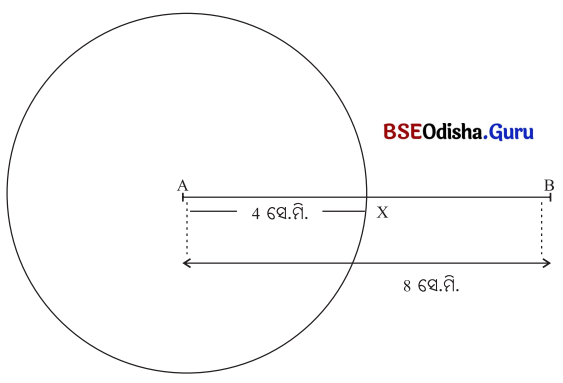
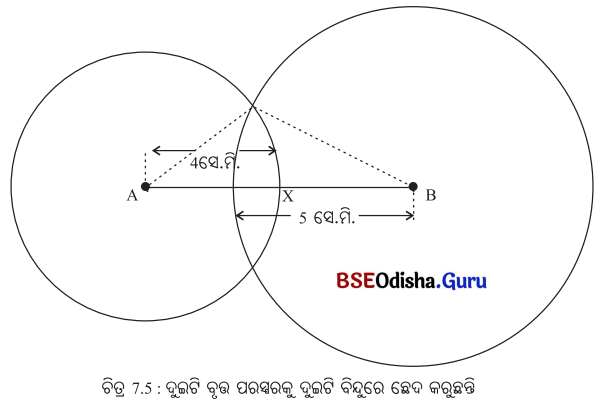
• ଆମେ ସବୁଠାରୁ ବଡ଼ବାହୁ AB (8 ସେ.ମି.)କୁ ଭୂମି ରୂପେ ନେଇ ବୃତ୍ତ ଅଙ୍କନ ଆରମ୍ଭ କରିବା । ଏହାପରେ ଆମେ ପର୍ଯ୍ୟାୟକ୍ରମେ 4 ସେ.ମି., 5 ସେ.ମି. ଦୈର୍ଘ୍ୟ ପାଇଁ ଏକ ବୃହତ୍ ଚାପ ଅଙ୍କନ କରିବା । ଆମେ ଚାପ ପରିବର୍ତ୍ତେ ସମ୍ପୂର୍ଣ୍ଣ ବୃତ୍ତଟିଏ ଅଙ୍କନ କରିବା । ‘A’କୁ କେନ୍ଦ୍ର ଭାବେ ନେଇ 4 ସେ.ମି. ବ୍ୟାସାର୍କର ଏକ ବୃତ୍ତ ଅଙ୍କନ କରିବା ।

• ବର୍ତ୍ତମାନ ‘B’ କୁ କେନ୍ଦ୍ରକରି 5 ସେ.ମି. ବ୍ୟାସାର୍ଦ୍ଧ ନେଇ ଏକ ବୃତ୍ତ ଅଙ୍କନ କରିବା ।
Class 7 Maths Chapter 7 Question Answer Odia Medium ତିନୋଟି ପରସ୍ପର ଛେଦୀ ସରଳ ରେଖାର କଥା 21

Question 1.
ଯେଉଁ ଜ୍ୟାମିତିକ ଚିତ୍ରଟି ମିଳିବ ତାହାର ଏକ ବିଶ୍ଳେଷଣ ଚିତ୍ରଟିଏ (ରଫ ଚିତ୍ର) ଅଙ୍କନ କରିପାରିବ କି ?
Solution:
ନିମ୍ନରେ ଦିଆଯାଇଥୁବା ଚିତ୍ରରେ AX = 4 ସେ.ମି. ଏବଂ AB = 8 ସେ.ମି. ତେଣୁ BX = ? ଏହି ଦୈର୍ଘ୍ୟଟିରେ ଆମେ କ’ଣ ଚିତ୍ରଟି ଅନୁମାନ କରିପାରିବା ? ଚିତ୍ର ଅନୁଯାୟୀ ବିନ୍ଦୁ X, A ଏବଂ B ଏକ ସରଳରେଖାରେ ଅଛନ୍ତି ।
AB = AX + BX ⇒ BX = AB – AX = (8 – 4) ସେ.ମି. = 4 ସେ.ମି. ।

• ଯେହେତୁ BX = 4 ସେ.ମି. ଏବଂ ‘B’କୁ କେନ୍ଦ୍ରକରି ବୃତ୍ତର ବ୍ୟାସାର୍ଦ୍ଧ 5 ସେ.ମି. ଅଟେ । ତେଣୁ ଏହା ନିର୍ଦ୍ଦିଷ୍ଟ ଯେ ବୃତ୍ତଦ୍ଵୟ ପରସ୍ପରକୁ ଦୁଇଟି ବିନ୍ଦୁରେ ଛେଦ କରିବେ ।
Class 7 Maths Chapter 7 Question Answer Odia Medium ତିନୋଟି ପରସ୍ପର ଛେଦୀ ସରଳ ରେଖାର କଥା 22

ନିଜେ କରି ଦେଖ :

Question 1.
ନିମ୍ନଲିଖତ ଦୈର୍ଘ୍ୟସେଟ୍‌ରୁ କେଉଁଗୁଡ଼ିକ ତ୍ରିଭୁଜର ବାହୁମାନଙ୍କର ଦୈର୍ଘ୍ୟ ହୋଇପାରିବ । ତୁମର ଉତ୍ତରକୁ ବର୍ଣନା କର । ମନେରଖ ଯେ, ପ୍ରତ୍ୟେକ ସେଟ୍‌ରେ ବାହୁମାନଙ୍କର ଦୈର୍ଘ୍ୟ ମାପର ଏକକ ସମାନ ।
(a) 2, 2, 5
(b) 3, 4, 6
(c) 2, 4, 8
(d) 5, 5, 8
(e) 10, 20, 25
(f) 10, 20, 35
(g) 24, 26, 28
Solution:
(a) ଏଠାରେ ବାହୁତ୍ରୟ 2, 2, 5,
∴ 2 + 2 = 4 < 5 ( ଦୁଇ ବାହୁର ସମଷ୍ଟି ତୃତୀୟ ବାହୁଠାରୁ କ୍ଷୁଦ୍ରତ୍ତର) ତେଣୁ 2, 2, 5 ତ୍ରିଭୁଜର ବାହୁମାନଙ୍କର ଦୈର୍ଘ୍ୟ ହୋଇପାରିବ ନାହିଁ ।

(b) ଏଠାରେ ବାହୁତ୍ରୟ 3, 4, 6,
∴ 3 + 4 = 7 > 6, 3 + 6 = 9 > 4, 4 + 6 = 10 > 3
ଦୁଇଟି ବାହୁର ଦୈର୍ଘ୍ୟ ତୃତୀୟ ବାହୁଠାରୁ ବୃହତ୍ତମ ।
ତେଣୁ 3, 4, 6 ତ୍ରିଭୁଜର ବାହୁମାନଙ୍କର ଦୈର୍ଘ୍ୟ ହୋଇପାରିବେ ।

(c) ଏଠାରେ ବାହୁତ୍ରୟ 2, 4, 8
∴ 2 + 4 = 6 < 8 ତେଣୁ 2, 4, 8 ତ୍ରିଭୁଜର ବାହୁମାନଙ୍କର ଦୈର୍ଘ୍ୟ ହୋଇପାରିବ ନାହିଁ ।

(d) ଏଠାରେ ବାହୁତ୍ରୟ 5, 5, 8
∴ 5 + 5 = 10 > 8, 5 + 8 = 13 > 5, 5 + 8 = 13 > 5
ଦୁଇଟି ବାହୁର ଦୈର୍ଘ୍ୟ ତୃତୀୟ ବାହୁଠାରୁ ବୃହତ୍ତମ ।
ତେଣୁ 5, 5, 8 ତ୍ରିଭୁଜର ବାହୁମାନଙ୍କର ଦୈର୍ଘ୍ୟ ହୋଇପାରିବେ ।

(e) ଏଠାରେ ବାହୁତ୍ରୟ 10, 20, 25
∴ 10 + 20 = 30 > 25, 10 + 25 = 35 > 20, 20 + 25 = 45 > 10
ଦୁଇଟି ବାହୁର ଦୈର୍ଘ୍ୟ ତୃତୀୟ ବାହୁଠାରୁ ବୃହତ୍ତମ ।
ତେଣୁ 10, 20, 25 ତ୍ରିଭୁଜର ବାହୁମାନଙ୍କର ଦୈର୍ଘ୍ୟ ହୋଇପାରିବେ ।

(f) ଏଠାରେ ବାହୁତ୍ରୟ 10, 20, 35
∴ 10 + 20 = 30 < 35 ତେଣୁ 10, 20, 35 ତ୍ରିଭୁଜର ବାହୁମାନଙ୍କର ଦୈର୍ଘ୍ୟ ହୋଇପାରିବ ନାହିଁ ।

(g) ଏଠାରେ ବାହୁତ୍ରୟ 24, 26, 28
∴ 24 + 26 = 50 > 28, 24 + 28 = 52 > 26, 26 + 28 = 54 > 24
ଦୁଇଟି ବାହୁର ଦୈର୍ଘ୍ୟ ତୃତୀୟ ବାହୁଠାରୁ ବୃହତ୍ତମ ।
ତେଣୁ 24, 26, 28 ତ୍ରିଭୁଜର ବାହୁମାନଙ୍କର ଦୈର୍ଘ୍ୟ ହୋଇପାରିବେ ।
ଯେତେବେଳେ ବାହୁଗୁଡ଼ିକର ଦୈର୍ଘ୍ୟ ତ୍ରିଭୁଜର ଅସମାନତାକୁ ସୂଚାଏ (ଦୈର୍ଘ୍ୟମାନଙ୍କର ସେଟ୍‌ଟିରେ ପ୍ରତ୍ୟେକ ବାହୁର ଦୈର୍ଘ୍ୟ ଅନ୍ୟ ଦୁଇ ବାହୁର ଦୈର୍ଘ୍ୟର ସମଷ୍ଟିଠାରୁ ସାନ) ସେତେବେଳେ ସେହି ଦୈର୍ଘ୍ୟଗୁଡ଼ିକ ଏକ ତ୍ରିଭୁଜର ବାହୁ ହୋଇପାରିବେ ।

Question 2.
ଆମେ କିପରି ଭାବେ ନିଶ୍ଚିତ ହେବା ଯେ, ଯେଉଁ ଦୈର୍ଘ୍ୟମାନଙ୍କର ସେଟ୍ ତ୍ରିଭୁଜର ଅସମାନତାକୁ ସୂଚାଏ ସେତେବେଳେ ହିଁ ତ୍ରିଭୁଜ ଅଙ୍କନ ସମ୍ଭବ ?
Solution:
ହଁ, ତିନୋଟି ବାହୁର ଦୈର୍ଘ୍ୟର ସେଟ୍ ତ୍ରିଭୁଜର ଅସମାନତା ଧର୍ମକୁ ସୂଚାଏ, ତେବେ ତ୍ରିଭୁଜଗୁଡ଼ିକ ସର୍ବଦା ସମ୍ଭବପର ହେବ ।

Question 3.
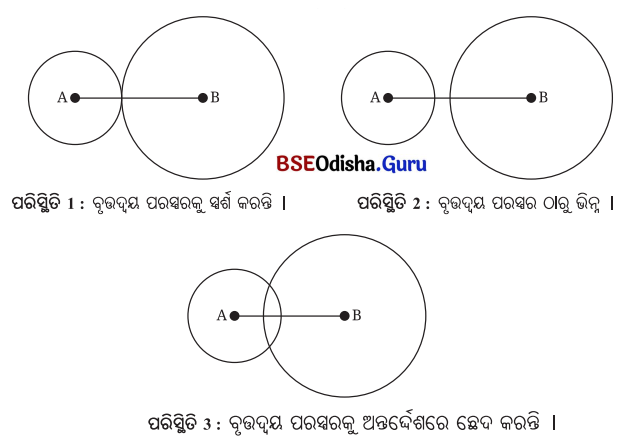
ଦୁଇଟି ବୃତ୍ତ ଅଙ୍କନ କରି ନିମ୍ନୋକ୍ତ ପରିସ୍ଥିତିଗୁଡ଼ିକୁ ଆଲୋଚନା କର ।
Solution:
Class 7 Maths Chapter 7 Question Answer Odia Medium ତିନୋଟି ପରସ୍ପର ଛେଦୀ ସରଳ ରେଖାର କଥା 23

Question 4.
ଉପରୋକ୍ତ ତିନୋଟି ସମ୍ଭାବ୍ୟ ପରିସ୍ଥିତି ମଧ୍ୟରୁ କେଉଁଟି ତ୍ରିଭୁଜ ଅଙ୍କନ ପାଇଁ ସହାୟକ ହେବ ?
Solution:
ଯେତେବେଳେ ବୃତ୍ତଦ୍ଵୟ ପରସ୍ପରକୁ ଅନ୍ତର୍ଦେଶରେ ଛେଦ କରିବେ (ପରିସ୍ଥିତି 3) ସେତେବେଳେ ନିଶ୍ଚିତ ଭାବେ ତ୍ରିଭୁଜ ଅଙ୍କନ ସମ୍ଭବ ହେବ ।

Class 7 Maths Chapter 7 Question Answer Odia Medium ତିନୋଟି ପରସ୍ପର ଛେଦୀ ସରଳ ରେଖାର କଥା

Question 5.
ଉପରେ ଦିଆଯାଇଥିବା ସମ୍ଭାବ୍ୟଗୁଡ଼ିକରୁ ଆମେ ବଡ଼ ବାହୁ ଏବଂ ଅନ୍ୟ ସାନ ବାହୁଦ୍ଵୟ ମଧ୍ଯରେ ସମ୍ପର୍କ ସ୍ଥିର କରିବା ।
Solution:
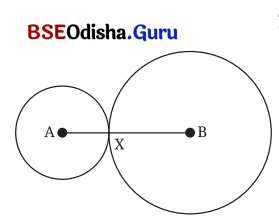
ପରିସ୍ଥିତି – 1 : ବୃତ୍ତଦ୍ଵୟ ପରସ୍ପରକୁ ଗୋଟିଏ ବିନ୍ଦୁରେ ସ୍ପର୍ଶ କରନ୍ତି ।
ବ୍ୟାସାର୍ଦ୍ଧ ଦ୍ଵୟର ସମଷ୍ଟି = AB
କିମ୍ବା, କ୍ଷୁଦ୍ରତମ ବାହୁଦ୍ୱୟର ଦୈର୍ଘ୍ୟର ସମଷ୍ଟି = ବୃହତ୍ତମ ବାହୁର ଦୈର୍ଘ୍ୟ ।
Class 7 Maths Chapter 7 Question Answer Odia Medium ତିନୋଟି ପରସ୍ପର ଛେଦୀ ସରଳ ରେଖାର କଥା 24

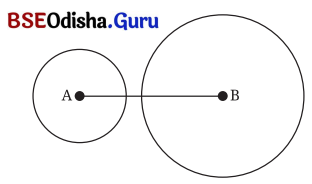
ପରିସ୍ଥିତି – 2 : ବୃତ୍ତଦ୍ଵୟ ପରସ୍ପରକୁ ଅନ୍ତର୍ଦେଶରେ ଛେଦ କରନ୍ତି ନାହିଁ ।
ଏଠାରେ ବ୍ୟାସାର୍ଦ୍ଧଦ୍ଵୟର ସମଷ୍ଟି < AB
କିମ୍ବା କ୍ଷୁଦ୍ରତମ ବାହୁଦ୍ୱୟର ଦୈର୍ଘ୍ୟର ସମଷ୍ଟି < ବୃହତ୍ତମ ବାହୁର ଦୈର୍ଘ୍ୟ ।
Class 7 Maths Chapter 7 Question Answer Odia Medium ତିନୋଟି ପରସ୍ପର ଛେଦୀ ସରଳ ରେଖାର କଥା 25

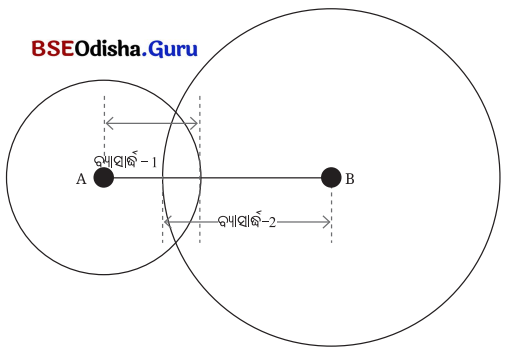
ପରିସ୍ଥିତି – 3 : ବୃତ୍ତଦ୍ଵୟ ପରସ୍ପରକୁ ଅନ୍ତର୍ଦେଶରେ ଛେଦ କରନ୍ତି । AB ଗୋଟିଏ ବୃତ୍ତର ବ୍ୟାସାର୍ଦ୍ଧ ଏବଂ ଅନ୍ୟବୃତ୍ତର ବ୍ୟାସାର୍ଦ୍ଧର କିଛି ଅଂଶକୁ ନେଇ ଗଠିତ । ବ୍ୟାସାର୍ଷଦ୍ୱୟର ଦୈର୍ଘ୍ୟର ସମଷ୍ଟି > AB
କିମ୍ବା, କ୍ଷୁଦ୍ରତମ ବାହୁଦ୍ୱୟର ଦୈର୍ଘ୍ୟର ସମଷ୍ଟି > ବୃହତ୍ତମ ବାହୁର ଦୈର୍ଘ୍ୟ ।
Class 7 Maths Chapter 7 Question Answer Odia Medium ତିନୋଟି ପରସ୍ପର ଛେଦୀ ସରଳ ରେଖାର କଥା 26

Question 6.
ଆମେ କ’ଣ ଏହି ବିଶ୍ଳେଷଣକୁ ତ୍ରିଭୁଜ ପାଇଁ ବ୍ୟବହାର କରିପାରିବା କି ? (ଯେତେବେଳେ ବାହୁର ଦୈର୍ଘ୍ୟଗୁଡ଼ିକ ତ୍ରିଭୁଜର ଅସମାନତା ପାଇଁ ସିଦ୍ଧ ହୁଏ ।)
Solution:
ଯେତେବେଳେ ଦିଆଯାଇଥିବା ବାହୁଗୁଡ଼ିକର ଦୈର୍ଘ୍ୟ ତ୍ରିଭୁଜର ଅସମାନତାକୁ ସିଦ୍ଧ କରେ, ସେତେବେଳେ କ୍ଷୁଦ୍ରତମ ବାହୁଦ୍ୱୟର ଦୈର୍ଘ୍ୟର ସମଷ୍ଟି ବୃହତ୍ତମ ବାହୁର ଦୈର୍ଘ୍ୟଠାରୁ ବୃହତ୍ତମର ହେବ । ଅର୍ଥାତ୍‌ ଏହା ପରିସ୍ଥିତି 3 କୁ ସୂଚାଏ, ଯେଉଁଠାରେ ବୃତ୍ତଦ୍ଵୟ ପରସ୍ପରକୁ ଅନ୍ତର୍ଦେଶରେ ଛେଦ କରନ୍ତି । ତେଣୁ ତ୍ରିଭୁଜ ସମ୍ଭବ ଅଟେ।

Question 7.
କେଉଁ ପ୍ରକାରର ବୃତ୍ତଦ୍ୱୟର ଦୈର୍ଘ୍ୟ ପାଇଁ ତ୍ରିଭୁଜ ଅସମାନତା ସିଦ୍ଧ ହେବ ନାହିଁ । ଏହି ପ୍ରକାରର 3ଟି ଉଦାହରଣ ଦିଅ ଯେଉଁଠାରେ ଦୈର୍ଘ୍ୟର ସେଗୁଡ଼ିକ ପାଇଁ ବୃତ୍ତଦ୍ଵୟ
(a) ପରସ୍ପରକୁ ଗୋଟିଏ ବିନ୍ଦୁରେ ସ୍ପର୍ଶ କରିବେ
(b) ପରସ୍ପରକୁ ଛେଦ କରିବେ ନାହିଁ ।
Solution:
(a) ଯେତେବେଳେ କ୍ଷୁଦ୍ରତମ ବାହୁର ଦୈର୍ଘ୍ୟର ସମଷ୍ଟି = ବୃହତ୍ତମ ବାହୁର ଦୈର୍ଘ୍ୟ ହେବ ।
ଉଦାହରଣ : (3, 4, 7); (5, 5, 10); (6, 8, 14)

(b) ପରସ୍ପରକୁ ଛେଦ କରିବେ ନାହିଁ : ଯେତେବେଳେ କ୍ଷୁଦ୍ରତମ ବାହୁର ଦୈର୍ଘ୍ୟର ସମଷ୍ଟି < ବୃହତ୍ତମ ବାହୁର ଦୈର୍ଘ୍ୟ ହେବ । ଉଦାହରଣ : (2, 3, 7); (4, 6, 11); (5, 7, 15)

Question 8.
ତ୍ରିଭୁଜଟିଏ ସମ୍ଭବପର ହେବାପାଇଁ ଏକ ସମ୍ପୂର୍ଣ୍ଣ ପ୍ରକ୍ରିୟା ନିର୍ଣ୍ଣୟ କର ।
Solution:
ଦିଆଯାଇଥିବା ତିନୋଟି ବାହୁର ଦୈର୍ଘ୍ୟ ମଧ୍ୟରୁ ଦୁଇଟି କ୍ଷୁଦ୍ରତମ ବାହୁର ଦୈର୍ଘ୍ୟର ସମଷ୍ଟି ଯଦି ବୃହତ୍ତର ବାହୁର ଦୈର୍ଘ୍ୟଠାରୁ ଅଧିକ ହୁଏ, ତେବେ ତ୍ରିଭୁଜଟି ସମ୍ଭବପର ହେବ ।
• ସିଦ୍ଧାନ୍ତ : ଯଦି କୌଣସି ଏକ ସେଟ୍‌ର ତିନୋଟି ଦୈର୍ଘ୍ୟ ତ୍ରିଭୁଜର ଅସମାନତା ପାଇଁ ସିଦ୍ଧ ହୁଏ, ତେବେ ତ୍ରିଭୁଜଟି ସମ୍ଭବପର ହେବ ଏବଂ ସେହି ଦୈର୍ଘ୍ୟଗୁଡ଼ିକ ତ୍ରିଭୁଜର ବାହୁଗୁଡ଼ିକର ଦୈର୍ଘ୍ୟ ହେବ । ଯଦି ଏହି ଦୈର୍ଘ୍ୟଗୁଡ଼ିକ ତ୍ରିଭୁଜର ଅସମାନତାକୁ ସିଦ୍ଧ ନକରେ, ତେବେ ତାହା ତ୍ରିଭୁଜର ବାହୁ ହେବେ ନାହିଁ ।

ନିଜେ କରି ଦେଖ :

Question 1.
ନିମ୍ନରେ ଦିଆଯାଇଥବା ଦୈର୍ଘ୍ୟଗୁଡ଼ିକର ପ୍ରତ୍ୟେକ ସେଟ୍‌ରେ ତ୍ରିଭୂଜ ସମ୍ଭବ ହେବ କି ? ପରୀକ୍ଷା କର ।
(a) 1, 100, 100
(b) 3, 6, 9
(e) 1, 1, 5
(d) 5, 10, 12 ଆମେ ଜାଣିଛୁ ଯେ, ତ୍ରିଭୁଜର ଯେକୌଣସି ଦୁଇଟି ବାହୁର ଦୈର୍ଘ୍ୟର ସମଷ୍ଟି ତୃତୀୟ ବାହୁଠାରୁ ବୃହତ୍ତର ହେଲେ, ତ୍ରିଭୁଜ ଅଙ୍କନ ସମ୍ଭବ ହେବ । (a) ଏଠାରେ 1, 100, 100 1 + 100 = 101 > 100, 1 + 100 = 101 > 100, 100 + 100 = 200 > 1
ଯେହେତୁ ଦୁଇ ବାହୁର ଦୈର୍ଘ୍ୟ ତୃତୀୟ ବାହୁଠାରୁ ବୃହତ୍ତର, ତ୍ରିଭୁଜ ଅଙ୍କନ ସମ୍ଭବ ।

(b) ଏଠାରେ 3, 6, 9
3 + 6 = 9 = 9, 6 + 9 = 15 > 3, 3 + 9 = 12 > 6
3 + 6 = 9 ଠାରୁ 9 ବଡ଼ ନୁହେଁ, ସମାନ ।
∴ ତ୍ରିଭୁଜ ସୂତ୍ର ଅନୁସାରେ ଏଠାରେ ତ୍ରିଭୁଜ ଅଙ୍କନ ସମ୍ଭବ ନୁହେଁ ।

(c) ଏଠାରେ 1, 1, 5
1 + 1 = 2 < 5
∴ ତ୍ରିଭୁଜ ସୂତ୍ର ଅନୁସାରେ ଏଠାରେ ତ୍ରିଭୁଜ ଅଙ୍କନ ସମ୍ଭବ ନୁହେଁ ।

(d) ଏଠାରେ 5, 10, 12 5 + 10 = 15 > 12, 5 + 12 = 17 > 10, 10 + 12 = 22 > 5
ଯେହେତୁ ଦୁଇ ବାହୁର ଦୈର୍ଘ୍ୟ ତୃତୀୟ ବାହୁଠାରୁ ବୃହତ୍ତର, ତ୍ରିଭୁଜ ଅଙ୍କନ ସମ୍ଭବ ।

Question 2.
50, 50, 50 କୁ ନେଇ ସମବାହୁ ତ୍ରିଭୁଜ ସମ୍ଭବ ହେବ କି ? ସାଧାରଣତଃ, ଯେକୌଣସି ବାହୁର ଦୈର୍ଘ୍ୟ ପାଇଁ ସମବାହୁ ତ୍ରିଭୁଜ ସମ୍ଭବ ହେବ କି ? ତାହା ବର୍ଣ୍ଣନା କର ।
Solution:
ସମବାହୁ ତ୍ରିଭୁଜର ସମସ୍ତ ବାହୁଗୁଡ଼ିକ ସମାନ ।
ଏଠାରେ ବାହୁଗୁଡ଼ିକ 50, 50, 50
50 + 50 = 100 > 50
ତ୍ରିଭୁଜ ଅଙ୍କନ ସୂତ୍ର ଅନୁସାରେ ତ୍ରିଭୁଜ ଅଙ୍କନ ସମ୍ଭବ ।

Question 3.
ନିମ୍ନରେ ଦିଆଯାଇଥବା ମୂଲ୍ୟ ସହ ତୃତୀୟ ବାହୁର ସମ୍ଭାବ୍ୟ ଅତି କମ୍‌ରେ 5ଟି ମୂଲ୍ୟ ନିର୍ଦ୍ଧାରଣ କର, ଯେପରିକି ଏହା ତ୍ରିଭୁଜର ବାହୁଗୁଡ଼ିକର ଦୈର୍ଘ୍ୟ ହେବ । (ଦଶମିକ ମୂଲ୍ୟ ମଧ୍ଯ ନିର୍ଦ୍ଧାରଣ କରାଯାଇପାରେ)
(a) 1, 100
(b) 5, 5
(c) 3, 7
Solution:
(a) ଆମେ ଜାଣିଛେ ତ୍ରିଭୁଜ ଅଙ୍କନ ବେଳେ ତୃତୀୟ ବାହୁଟି ଦୁଇଟି ବାହୁର ଦୈର୍ଘ୍ୟର ସମଷ୍ଟି ଠାରୁ ସାନ ହେବା ଦରକାର । ତୃତୀୟ ବାହୁଟି ଦୁଇଟି ବାହୁର ବିୟୋଗଫଳଠାରୁ ବୃହତ୍ତର ହେବା ଦରକାର ।
ତେଣୁ ସମ୍ଭାବ୍ୟ ତୃତୀୟ ବାହୁଟି = 99.1, 99.2, 99.3, 99.4, 99.5, 99.6, ….. 100.9

(b) ତୃତୀୟ ବାହୁଟି 0 (5 – 5) ଠାରୁ ବଡ଼ ଓ 10 (5 + 5) ଠାରୁ ସାନ ହେବା ଦରକାର ।
ତେଣୁ ସମ୍ଭାବ୍ୟ ତୃତୀୟ ବାହୁଟି = 1, 2, 3, 4, 5, 6, 7, 8, 9

(c) ତୃତୀୟ ବାହୁଟି 4 (7 – 3) ଠାରୁ ବଡ଼ ଓ 10 (3 + 7) ଠାରୁ ସାନ ହେବା ଦରକାର । ତେଣୁ ସମ୍ଭାବ୍ୟ ତୃତୀୟ ବାହୁଟି = 5, 6, 7, 8, 9

Class 7 Maths Chapter 7 Question Answer Odia Medium ତିନୋଟି ପରସ୍ପର ଛେଦୀ ସରଳ ରେଖାର କଥା

7.3 ତ୍ରିଭୁଜର କେତେକ ବାହୁ ଓ କୋଣ ଦତ୍ତ ଥିଲେ, ତ୍ରିଭୁଜ ଅଙ୍କନ :

Page No. (163 to 169)

ଦୁଇଟି ବାହୁ ଓ ସେମାନଙ୍କ ଅନ୍ତର୍ଗତ କୋଣ :
ଦୁଇଟି ବାହୁ ଓ ସେମାନଙ୍କ ଅନ୍ତର୍ଗତ କୋଣକୁ ନେଇ ତ୍ରିଭୁଜ ଅଙ୍କନ ।
(i) କମ୍ପାସ ବ୍ୟବହାର କରି ଗୋଟିଏ ବାହୁର ଦୈର୍ଘ୍ୟ ଅଙ୍କନ କରାଯାଉ ।
(ii) ଏହି ବାହୁର ଗୋଟିଏ ପାର୍ଶ୍ଵ ବିନ୍ଦୁରେ 60 କୋଣ ଅଙ୍କନ କରାଯାଉ ।
(iii) ସେହି ବିନ୍ଦୁରୁ ଅନ୍ୟ ବାହୁର ଦୈର୍ଘ୍ୟ ନେଇ ଚାପ ଅଙ୍କନ କରାଯାଉ ।
(iv) ସମସ୍ତ ବିନ୍ଦୁଗୁଡ଼ିକୁ ଯୋଗକଲେ ଆବଶ୍ୟକୀୟ ତ୍ରିଭୁଜ ମିଳିବ ।

Question 1.
ତ୍ରିଭୁଜ ABC ଅଙ୍କନ କର ଯାହାର AB = 5 ସେ.ମି., AC = 4 ସେ.ମି., ∠A = 45°
Class 7 Maths Chapter 7 Question Answer Odia Medium ତିନୋଟି ପରସ୍ପର ଛେଦୀ ସରଳ ରେଖାର କଥା 27
Class 7 Maths Chapter 7 Question Answer Odia Medium ତିନୋଟି ପରସ୍ପର ଛେଦୀ ସରଳ ରେଖାର କଥା 28
Class 7 Maths Chapter 7 Question Answer Odia Medium ତିନୋଟି ପରସ୍ପର ଛେଦୀ ସରଳ ରେଖାର କଥା 29
Solution:
ଦିଆଯାଇଥିବା ବାହୁଗୁଡ଼ିକ ମଧ୍ୟରୁ AB କୁ ତ୍ରିଭୁଜର ଭୂମିରୂପେ ନିଅ ।
Class 7 Maths Chapter 7 Question Answer Odia Medium ତିନୋଟି ପରସ୍ପର ଛେଦୀ ସରଳ ରେଖାର କଥା 30
ସୋପାନ – 1 : କମ୍ପାସ ସାହାଯ୍ୟରେ ଗୋଟିଏ ବାହୁ AB = 5 ସେ.ମି. ଦୈର୍ଘ୍ୟ ଅଙ୍କନ କରାଯାଉ ।
ସୋପାନ – 2 : ପ୍ରୋଟ୍ରାକ୍ଟରରେ ∠A ଠାରେ 45 କୋଣ ଅଙ୍କନ କରାଯାଉ ।
ସୋପାନ – 3 : A ବିନ୍ଦୁକୁ କେନ୍ଦ୍ର କରି 4ସେ.ମି. ଦୈର୍ଘ୍ୟର ଏକ ଚାପ କାଟି ଏହାର ନାମ C ଦିଆଯାଉ
ସୋପାନ – 4 : BC କୁ ଯୋଗକଲେ ଆବଶ୍ୟକୀୟ ତ୍ରିଭୁଜ ABC ମିଳିବ ।

ନିଜେ କରି ଦେଖ :

Question 1.
ନିମ୍ନରେ ଦିଆଯାଇଥବା ମାପକୁ ନେଇ ତ୍ରିଭୁଜ ଅଙ୍କନ କର ଯେଉଁଠାରେ କୋଣଟି ବାହୁଦ୍ୱୟର ଅନ୍ତର୍ଗତ ଅଟେ ।
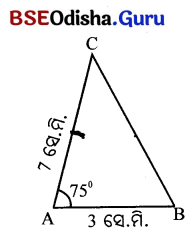
(a) 3 ସେ.ମି., 75°, 7 ସେ.ମି.
(b) 6 ସେ.ମି., 25°, 3 ସେ.ମି.
(c) 3 ସେ.ମି., 120°, 8 ସେ.ମି.
Solution:
(a) 3 ସେ.ମି., 75°, 7 ସେ.ମି.
Class 7 Maths Chapter 7 Question Answer Odia Medium ତିନୋଟି ପରସ୍ପର ଛେଦୀ ସରଳ ରେଖାର କଥା 31
(i) ଗୋଟିଏ ବାହୁ AB = 3 ସେ.ମି. ଦୈର୍ଘ୍ୟ ଅଙ୍କନ କର ।
(ii) ∠A = 75° ଅଙ୍କନ କର ଏବଂ କୋଣର ଅନ୍ୟ ବାହୁଟିକୁ ଅଙ୍କନ ପାଇଁ B ବିନ୍ଦୁକୁ କେନ୍ଦ୍ରକରି 7 ସେ.ମି. ଦୈର୍ଘ୍ୟର ଏକ ଚାପ ଅଙ୍କନ କର, ଯାହା C ବିନ୍ଦୁରେ ଛେଦ କରିବ ।
(iii) ଅନ୍ୟ ବାହୁ AB କୁ ଛାଡ଼ି ୯ ବିନ୍ଦୁ ଚିହ୍ନଟ କର ଯେପରି AC = 7 ସେ.ମି. ହେବ ।
(iv) BC କୁ ଯୋଗକଲେ ଆବଶ୍ୟକୀୟ ତ୍ରିଭୁଜ ମିଳିବ ।

(b) 6 ସେ.ମି., 25°, 3 ସେ.ମି.
Class 7 Maths Chapter 7 Question Answer Odia Medium ତିନୋଟି ପରସ୍ପର ଛେଦୀ ସରଳ ରେଖାର କଥା 32
(i) ଗୋଟିଏ ବାହୁ AB = 6 ସେ.ମି. ଦୈର୍ଘ୍ୟ ଅଙ୍କନ କରାଯାଉ ।
(ii) ∠A = 250 ଅଙ୍କନ କର ଏବଂ କୋଣର ଅନ୍ୟ ବାହୁଟିକୁ ଅଙ୍କନ କର ।
(iii) ଅନ୍ୟ ବାହୁ AB କୁ ଛାଡ଼ି C ବିନ୍ଦୁ ଚିହ୍ନଟ କର ଯେପରି AC = 3 ସେ.ମି. ହେବ ।
(iv) BC କୁ ଯୋଗକଲେ ଆବଶ୍ୟକୀୟ ତ୍ରିଭୁଜ ମିଳିବ ।

(c) 3 ସେ.ମି., 120°, 8 ସେ.ମି.
Class 7 Maths Chapter 7 Question Answer Odia Medium ତିନୋଟି ପରସ୍ପର ଛେଦୀ ସରଳ ରେଖାର କଥା 33
(i) ଗୋଟିଏ ବାହୁ AB = 8 ସେ.ମି. ଦୈର୍ଘ୍ୟ ଅଙ୍କନ କର ।
(ii) ∠A = 120° ଅଙ୍କନ କର ଏବଂ କୋଣର ଅନ୍ୟ ବାହୁଟିକୁ ଅଙ୍କନ କର ।
(iii) ଅନ୍ୟ ବାହୁ AB କୁ ଛାଡ଼ି C ବିନ୍ଦୁ ଚିହ୍ନଟ କର ଯେପରି AC = 3 ସେ.ମି. ହେବ ।
(iv) BC କୁ ଯୋଗକଲେ ଆବଶ୍ୟକୀୟ ତ୍ରିଭୁଜ ମିଳିବ ।

Question 2.
ଆମେ ଜାଣୁ ଯେ ବାହୁମାନଙ୍କର ଯେକୌଣସି ଦୈର୍ଘ୍ୟପାଇଁ ତ୍ରିଭୂଜ ଅଙ୍କନ ସମ୍ଭବ ନୁହେଁ । ସେହିପରି କିଛି ମାପ ଅଛି କି ଯାହା ଦୁଇବାହୁ ଏବଂ ଏହାର ଅନ୍ତର୍ଗତ କୋଣକୁ ନେଇ ତ୍ରିଭୁଜ ଅଙ୍କନ ସମ୍ଭବ ନୁହେଁ ? ତ୍ରିଭୁଜ ଅଙ୍କନ ସମୟରେ ତୁମେ ଯାହା ଲକ୍ଷ୍ୟ କଲ ତାହାକୁ ଆଧାରିତ କରି ଦର୍ଶାଅ ।
Solution:
ଯେତେବେଳେ ଅନ୍ତର୍ଗତ କୋଣର ପରିମାଣ 0° ବା 180° ଥ‌ିବ, ସେହି ସମୟରେ ତ୍ରିଭୁଜ ଅଙ୍କନ ସମ୍ଭବପର ନୁହେଁ ।

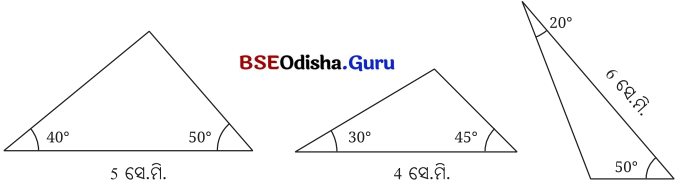
ଦୁଇଟି କୋଣ ଓ ଏହାର ଅନ୍ତର୍ଗତ ବାହୁ :

ଏଠାରେ ଦୁଇଟି କୋଣ ଓ ଗୋଟିଏ ବାହୁର ମାପ ଦିଆଯାଇଛି । ସେହି ବାହୁଟିକୁ ଆମ କୋଣଦ୍ଵୟର ଅନ୍ତର୍ଗତ ବାହୁ କହିଥାଉ । ଯଥା –
Class 7 Maths Chapter 7 Question Answer Odia Medium ତିନୋଟି ପରସ୍ପର ଛେଦୀ ସରଳ ରେଖାର କଥା 34

Question 3.
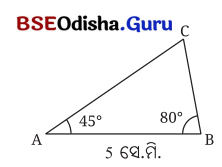
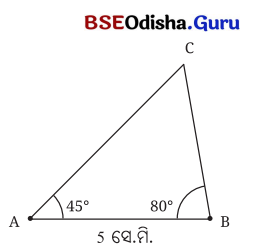
ABC ତ୍ରିଭୁଜ ଅଙ୍କନ କର ଯାହାର AB = 5 ସେ.ମି., ∠A = 45°, ∠B = 80°
Class 7 Maths Chapter 7 Question Answer Odia Medium ତିନୋଟି ପରସ୍ପର ଛେଦୀ ସରଳ ରେଖାର କଥା 35
Solution:
ସୋପାନ – 1 : ଗୋଟିଏ ବାହୁ AB = 5 ସେ.ମି. ଦୈର୍ଘ୍ୟ ଅଙ୍କନ କରାଯାଉ ।
ସୋପାନ – 2 : ∠A = 45° ଓ ∠B = 80° ପରିମାଣ ନେଇ A ଓ B ବିନ୍ଦୁରେ କୋଣ ଅଙ୍କନ କରାଯାଉ ।
ସୋପାନ – 3 : ଦୁଇଟି ରେଖାଖଣ୍ଡର ଛେଦବିନ୍ଦୁଟି ତୃତୀୟ ଶୀର୍ଷ ବିନ୍ଦୁ C ହେବ ।
ABC ଏକ ଆବଶ୍ୟକୀୟ ତ୍ରିଭୁଜ ଅଟେ ।
Class 7 Maths Chapter 7 Question Answer Odia Medium ତିନୋଟି ପରସ୍ପର ଛେଦୀ ସରଳ ରେଖାର କଥା 36

ନିଜେ କରି ଦେଖ :

Question 1.
ନିମ୍ନଲିଖୂତ ମାପକୁ ନେଇ ତ୍ରିଭୁଜ ଅଙ୍କନ କର ।
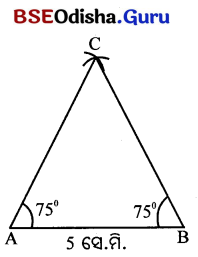
(a) 75°, 5 ସେ.ମି., 75°
(b) 25°, 3 ସେ.ମି., 60°
(c) 125°, 6 ସେ.ମି., 30°
Solution:
(a) 75°, 5 ସେ.ମି., 75°
Class 7 Maths Chapter 7 Question Answer Odia Medium ତିନୋଟି ପରସ୍ପର ଛେଦୀ ସରଳ ରେଖାର କଥା 37
(i) ଗୋଟିଏ ବାହୁ AB = 5 ସେ.ମି. ଦୈର୍ଘ୍ୟ ଅଙ୍କନ କରାଯାଉ ।
(ii) ∠A = 75° ଓ ∠B = 75° ପରିମାଣ ନେଇ କୋଣ ଅଙ୍କନ କରାଯାଉ ।
(iii) ଦୁଇଟି ରେଖାଖଣ୍ଡର ଛେଦବିନ୍ଦୁଟି ତୃତୀୟ ଶୀର୍ଷ ବିନ୍ଦୁ C ନିଅ ।
ABC ଏକ ଆବଶ୍ୟକୀୟ ତ୍ରିଭୁଜ ଅଟେ ।

(b) 25° 3 ସେ.ମି., 60°
Class 7 Maths Chapter 7 Question Answer Odia Medium ତିନୋଟି ପରସ୍ପର ଛେଦୀ ସରଳ ରେଖାର କଥା 38
(i) ଗୋଟିଏ ବାହୁ AB = 3 ସେ.ମି. ଦୈର୍ଘ୍ୟ ଅଙ୍କନ କର ।
(ii) ∠A = 25° ଓ ∠B = 60° ପରିମାଣ ନେଇ କୋଣ ଅଙ୍କନ କର ।
(iii) ଦୁଇଟି ରେଖାଖଣ୍ଡର ଛେଦବିନ୍ଦୁଟି ତୃତୀୟ ଶୀର୍ଷ ବିନ୍ଦୁ C ହେବ । ABC ଏକ ଆବଶ୍ୟକୀୟ ତ୍ରିଭୁଜ ଅଟେ ।

(c) 125°, 6 ସେ.ମି., 30°
Class 7 Maths Chapter 7 Question Answer Odia Medium ତିନୋଟି ପରସ୍ପର ଛେଦୀ ସରଳ ରେଖାର କଥା 39
(i) ଗୋଟିଏ ବାହୁ AB = 6 ସେ.ମି. ଦୈର୍ଘ୍ୟ ଅଙ୍କନ କର ।
(ii) ∠A = 125° ଓ ∠B = 30° ପରିମାଣ ନେଇ କୋଣ ଅଙ୍କନ କର ।
(iii) ଦୁଇଟି ରେଖାଖଣ୍ଡର ଛେଦବିଦୁଟି ତୃତୀୟ ଶୀର୍ଷ ବିନ୍ଦୁ C ହେବ ।
ABC ଏକ ଆବଶ୍ୟକୀୟ ତ୍ରିଭୁଜ ଅଟେ ।

ତ୍ରିଭୁଜଗୁଡ଼ିକର ଅଙ୍କନ ସବୁବେଳେ ସମ୍ଭବ କି ? :

Question 1.
ବିଭିନ୍ନ ପ୍ରକାରର ଦୁଇଟି କୋଣ ଓ ସଲଗ୍ନ ବାହୁ ନେଇ ତ୍ରିଭୁଜ ଅଙ୍କନ ସମ୍ଭବ କି ? ବର୍ଣ୍ଣନା କର ।
Solution:
ଯଦି ତ୍ରିଭୁଜର ଦୁଇକୋଣର ସମଷ୍ଟି 180° କିମ୍ବା 180° ରୁ ଅଧିକ ହେଲେ ତ୍ରିଭୁଜ ଅଙ୍କନ ସମ୍ଭବ ହେବ ନାହିଁ । କାରଣ ଦୁଇଟି ରେଖା ପରସ୍ପରକୁ ଛେଦ କରିବେ ନାହିଁ ।

Question 2.
ଏମିତି କିଛି ଉଦାହରଣ ଦିଅ ଯାହାକି ଦୁଇଟି କୋଣର ପରିମାଣ ଓ ଏହାର ଅନ୍ତର୍ଗତ ବାହୁନେଇ ତ୍ରିଭୁଜ ସମ୍ଭବପର ହେବ ନାହିଁ ।
Solution:
ଉଦାହରଣ :
(a) ଯଦି ଦୁଇଟି କୋଣର ପରିମାଣ 90° ଲେଖାଏଁ ହେବ ତ୍ରିଭୁଜ ଅଙ୍କନ ସମ୍ଭବପର ହେବ ନାହିଁ ।
(b) ଯଦି ଗୋଟିଏ କୋଣର ପରିମାଣ 100° ଓ ଅନ୍ୟ କୋଣଟିର ପରିମାଣ 90° ହେବ ତ୍ରିଭୁଜ ଅଙ୍କନ
ସମ୍ଭବପର ହେବ ନାହିଁ ।
ଆମେ ସେହି ପ୍ରକାରର ପରିସ୍ଥିତିକୁ କଳ୍ପନା କରିବା । ଭୂମିଟିଏ ଅଙ୍କନ କଲାପରେ ଅନ୍ୟ ପାର୍ଶ୍ଵ ଗୁଡ଼ିକ ଏପରି ଭାବରେ ଅଙ୍କନ କରିବା ଯେପରି ସେମାନେ ପରସ୍ପରକୁ ଛେଦ କରିବେ ନାହିଁ । ସେହିପରି କେତେକ ଉଦାହରଣ ନିମ୍ନରେ ଦିଆଗଲା ।
Class 7 Maths Chapter 7 Question Answer Odia Medium ତିନୋଟି ପରସ୍ପର ଛେଦୀ ସରଳ ରେଖାର କଥା 40

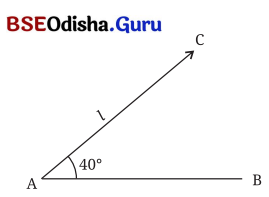
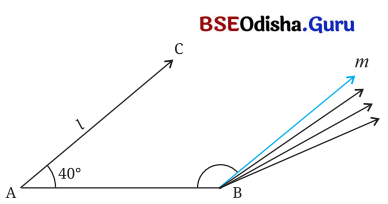
ଯଦି କୋଣଦ୍ଵୟ 90° ରୁ ଅଧିକ କିମ୍ବା 90° ସହ ସମାନ ହୁଏ, ତେବେ ତ୍ରିଭୁଜ ଅଙ୍କନ ସମ୍ଭବ ନୁହେଁ । ବର୍ତ୍ତମାନ ଭୂମି ଉପରିସ୍ଥ ବାହୁର କୌଣସି ଏକ କୋଣ ସୂକ୍ଷ୍ମକୋଣ ହେଉ । ମନେକର 40 । ଅନ୍ୟ କୋଣଟି ସମ୍ଭାବ୍ୟ କେତେ ହେବା ଦରକାର ଯାହାଦ୍ଵାରା ବାହୁଦ୍ୱୟ ପରସ୍ପରକୁ ଛେଦ କରିବେ ନାହିଁ ।
Class 7 Maths Chapter 7 Question Answer Odia Medium ତିନୋଟି ପରସ୍ପର ଛେଦୀ ସରଳ ରେଖାର କଥା 41
ଏହା ସ୍ପଷ୍ଟ ଯେ, B ଠାରୁ ରେଖାଟି ଯଥେଷ୍ଟ ଡାହାଣପଟକୁ ଅଙ୍କନ ହେଲେ, AC ରେଖା ଛେଦ କରିବ ନାହିଁ ।

ଉପରୋକ୍ତ ଚିତ୍ରରୁ ଏହା ସ୍ପଷ୍ଟ ଯେ ଯେଉଁରେଖା ସର୍ବନିମ୍ନ କୋଣ B ଠାରେ ସୃଷ୍ଟି କରୁଛି ତାହା ‘?’ ର ସମାନ୍ତରାଳ ହେବା ଆବଶ୍ୟକ । ମନେକର ସେହି ସମାନ୍ତରାଳ ରେଖାଟି ‘m’ ।
Class 7 Maths Chapter 7 Question Answer Odia Medium ତିନୋଟି ପରସ୍ପର ଛେଦୀ ସରଳ ରେଖାର କଥା 42

Question 3.
∠B ର ପ୍ରକୃତ ମୂଲ୍ୟ କୁହାଯାଇପାରିବ କି ?
Solution:
ଆମେ ଜାଣୁ ଯେ ଦୁଇଟି ସରଳରେଖାକୁ ଗୋଟିଏ ଛେଦକ ଛେଦକଲେ ଛେଦକର ଏକ ପାର୍ଶ୍ୱସ୍ଥ ଅନ୍ତସ୍ଥ କୌଣଦ୍ଵୟର ସମଷ୍ଟି 180° । ତେଣୁ ∠B = 140° ।

Question 4.
∠Bର କେଉଁ ମୂଲ୍ୟ ପାଇଁ ତ୍ରିଭୁଜ ଅଙ୍କନ ସମ୍ଭବପର ନୁହେଁ । AB ରେଖାଖଣ୍ଡ ଏଠାରେ କୌଣସି ଭୂମିକା ଗ୍ରହଣ କରେ କି ?
Solution:
ଉପରୋକ୍ତ ଆଲୋଚନାରୁ ଆମେ ଜାଣିପାରିଲୁ ଯେ, ତ୍ରିଭୁଜ ଅଙ୍କନ ପାଇଁ AB କୌଣସି ଭୂମିକା ଗ୍ରହଣ କରେ ନାହିଁ । ଆମେ କହିପାରିବା ଯେ ତ୍ରିଭୁଜ ଅଙ୍କନ ସମ୍ଭବପର ନୁହେଁ ଯେତେବେଳେ ∠B ପରିମାଣ 140 ସହ ସମାନ କିମ୍ବା ତା’ଠାରୁ ଅଧିକ ।

Class 7 Maths Chapter 7 Question Answer Odia Medium ତିନୋଟି ପରସ୍ପର ଛେଦୀ ସରଳ ରେଖାର କଥା

ନିଜେ କରି ଦେଖ :

Question 1.
ନିମ୍ନଲିଖୁତ ପ୍ରତ୍ୟେକ କୋଣପାଇଁ ଅନ୍ୟ ଏକ କୋଣ ନିର୍ଣ୍ଣୟ କର, ଯାହା ପାଇଁ ଏକ ତ୍ରିଭୁଜ ଅଙ୍କନ (i) ସମ୍ଭବ, (ii) ସମ୍ଭବ ନୁହେଁ । ପ୍ରତ୍ୟେକ କ୍ଷେତ୍ରରେ ଅତିକମ୍‌ରେ ଦୁଇଟି କୋଣ ନିଶ୍ଚୟ କର ।
(a) 30°
(b) 70°
(c) 54°
(d) 144°
Solution:
ସମ୍ଭବ ହେବ : 60° : 30° + 60° = 90° (ଯେହେତୁ ଦୁଇଟି କୋଣର ସମଷ୍ଟି 180° ରୁ କମ୍, ତୃତୀୟ କୋଣ ଯୋଗ କରିଲେ ତ୍ରିଭୁଜ ଅଙ୍କନ ସମ୍ଭବ ହେବ ।)
80° : 80° + 30° = 110° (ଯେହେତୁ ଦୁଇଟି କୋଣର ସମଷ୍ଟି 180 ରୁ କମ୍, ତୃତୀୟ କୋଣ ଯୋଗ କରିଲେ ତ୍ରିଭୁଜ ଅଙ୍କନ ସମ୍ଭବ ହେବ ।)
ସମ୍ଭବ ହେବ ନାହିଁ : 160° : 30° + 160° = 190°
(ଯେହେତୁ ଦୁଇଟି କୋଣର ସମଷ୍ଟି 180ରୁ ଅଧ୍ବକ, ତୃତୀୟ କୋଣ ଯୋଗ ହୋଇପାରିବ ନାହିଁ)
150° : 30° + 150° = 180°
(ଯେହେତୁ ଦୁଇଟି କୋଣର ସମଷ୍ଟି 180, ତୃତୀୟ କୋଣ ଯୋଗ ହୋଇପାରିବ ନାହିଁ ।)

(b) ସମ୍ଭବ ହେବ : 50° : 50° + 70° = 120° (ଯେହେତୁ ଦୁଇଟି କୋଣର ସମଷ୍ଟି 180° ରୁ କମ୍, ତୃତୀୟ କୋଣ ଯୋଗ କରିଲେ ତ୍ରିଭୁଜ ଅଙ୍କନ ସମ୍ଭବ ହେବ ।)
80° : 80° + 70° = 150° (ଯେହେତୁ ଦୁଇଟି କୋଣର ସମଷ୍ଟି 180 ରୁ କମ୍, ତୃତୀୟ କୋଣ ଯୋଗ କରିଲେ ତ୍ରିଭୁଜ ଅଙ୍କନ ସମ୍ଭବ ହେବ ।)
ସମ୍ଭବ ହେବ ନାହିଁ : 120° : 120° + 70° = 190°
(ଯେହେତୁ ଦୁଇଟି କୋଣର ସମଷ୍ଟି 180ରୁ ଅଧ୍ବକ, ତୃତୀୟ କୋଣ ଯୋଗ ହୋଇପାରିବ ନାହିଁ)
110° : 110° + 70° = 180°
(ଯେହେତୁ ଦୁଇଟି କୋଣର ସମଷ୍ଟି 180, ତୃତୀୟ କୋଣ ଯୋଗ ହୋଇପାରିବ ନାହିଁ ।)

(c) ସମ୍ଭବ ହେବ : 60° : 54° + 60° = 114° (ଯେହେତୁ ଦୁଇଟି କୌଣର ସମଷ୍ଟି 180° ରୁ କମ୍, ତୃତୀୟ କୋଣ ଯୋଗ କରିଲେ ତ୍ରିଭୁଜ ଅଙ୍କନ ସମ୍ଭବ ହେବ ।)
80° : 54° + 80° = 134° (ଯେହେତୁ ଦୁଇଟି କୋଣର ସମଷ୍ଟି 180° ରୁ କମ୍, ତୃତୀୟ କୋଣ ଯୋଗ କରିଲେ ତ୍ରିଭୁଜ ଅଙ୍କନ ସମ୍ଭବ ହେବ ।)
ସମ୍ଭବ ହେବ ନାହିଁ : 130° : 130° + 54° = 184°
(ଯେହେତୁ ଦୁଇଟି କୋଣର ସମଷ୍ଟି 180ରୁ ଅଧ୍ବକ, ତୃତୀୟ କୋଣ ଯୋଗ ହୋଇପାରିବ ନାହିଁ) 126° : 126° + 54° = 180°
(ଯେହେତୁ ଦୁଇଟି କୋଣର ସମଷ୍ଟି 180, ତୃତୀୟ କୋଣ ଯୋଗ ହୋଇପାରିବ ନାହିଁ ।)

(d) ସମ୍ଭବ ହେବ : 30° : 144° + 30° = 174° (ଯେହେତୁ ଦୁଇଟି କୋଣର ସମଷ୍ଟି 180° ରୁ କମ୍, ତୃତୀୟ କୋଣ ଯୋଗ କରିଲେ ତ୍ରିଭୁଜ ଅଙ୍କନ ସମ୍ଭବ ହେବ ।)
20° : 144° + 20° = 164° (ଯେହେତୁ ଦୁଇଟି କୋଣର ସମଷ୍ଟି 180° ରୁ କମ୍, ତୃତୀୟ କୋଣ ଯୋଗ କରିଲେ ତ୍ରିଭୁଜ ଅଙ୍କନ ସମ୍ଭବ ହେବ ।)
ସମ୍ଭବ ହେବ ନାହିଁ : 50° : 144° + 50° = 194°
(ଯେହେତୁ ଦୁଇଟି କୋଣର ସମଷ୍ଟି 180°ରୁ ଅଧ‌ିକ, ତୃତୀୟ କୋଣ ଯୋଗ ହୋଇପାରିବ ନୁହେଁ)
40°: 40° + 144° = 184°
(ଯେହେତୁ ଦୁଇଟି କୋଣର ସମଷ୍ଟି 180°, ତୃତୀୟ କୋଣ ଯୋଗ ହୋଇପାରିବ ନାହିଁ ।)

Question 2.
ନିମ୍ନଲିଖତ ଯୋଡ଼ିଗୁଡ଼ିକ ମଧ୍ୟରୁ କେଉଁଟି ତ୍ରିଭୁଜର କୋଣ ହୋଇପାରିବ ଏବଂ କେଉଁଗୁଡ଼ିକ ନୁହେଁ ?
(a) 35°, 150°
(b) 70°, 30°
(c) 90°, 85°
(d) 50°, 150°
Solution:
(a) ଦୁଇଟି କୋଣକୁ ଯୋଗ କଲେ = 35° + 150° = 185°
ଯେହେତୁ ଦୁଇଟି କୋଣର ପରିମାଣ 180° ରୁ ଅଧୁକ, ତେବେ ତ୍ରିଭୁଜ ଅଙ୍କନ ସମ୍ଭବ ନୁହେଁ ।

(b) ଦୁଇଟି କୋଣକୁ ଯୋଗ କଲେ = 70° + 30° = 100°
ଯେହେତୁ ଦୁଇଟି କୋଣର ପରିମାଣ 180° ରୁ କମ୍, ତେବେ ତ୍ରିଭୁଜ ଅଙ୍କନ ସମ୍ଭବ ।

(c) ଦୁଇଟି କୋଣକୁ ଯୋଗ କଲେ = 90° + 85° = 175°
ଯେହେତୁ ଦୁଇଟି କୋଣର ପରିମାଣ 180 ରୁ କମ୍, ତେବେ ତ୍ରିଭୁଜ ଅଙ୍କନ, ସମ୍ଭବ ।

(d) ଦୁଇଟି କୋଣକୁ ଯୋଗ କଲେ = 50° + 150° = 200°
ଯେହେତୁ ଦୁଇଟି କୋଣର ପରିମାଣ 180° ରୁ ଅଧୂକ, ତେବେ ତ୍ରିଭୁଜ ଅଙ୍କନ ସମ୍ଭବ ନୁହେଁ ।

ଯେତେବେଳେ ` ପ୍ରଦତ୍ତ କୋଣଦ୍ଵୟର ସମଷ୍ଟି 180° ରୁ କମ୍ ସେତେବେଳେ ଏହି କୋଣଗୁଡ଼ିକ ସହ ଏକ ତ୍ରିଭୁଜ ଅଙ୍କନ ସମ୍ଭବ । ଯଦି ଯୋଗଫଳ 180° ସହ ସମାନ କିମ୍ବା ବଡ଼ ହୁଏ ସେତେବେଳେ ଏହି କୋଣଗୁଡ଼ିକ ସହ ତ୍ରିଭୁଜ ଅଙ୍କନ ସମ୍ଭବ ହୋଇ ନଥାଏ ।

Question 3.
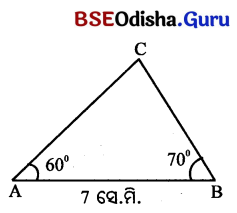
ଦୁଇଟି କୋଣ ନେବା ଯଥା- 60° ଏବଂ 70°, ଯାହାର ସମଷ୍ଟି 180° ରୁ କମ୍ । ଏହାର ଅନ୍ତର୍ଗତ ବାହୁ 5 ସେ.ମି. ହେଉ । ତୃତୀୟ କୋଣର ମାପ କେତେ ହୋଇପାରିବ ? ଯଦି ବାହୁର ଦୈର୍ଘ୍ୟ ପରିବର୍ତ୍ତନ ହୁଏ ତେବେ ତୃତୀୟ କୋଣର ମାପ ପରିବର୍ତ୍ତିତ ହେବ କି ? ମନେକର ବାହୁଟି 7 ସେ.ମି. ହୁଏ, ତ୍ରିଭୁଜଟି ଅଙ୍କନ କର ।
Solution:
Class 7 Maths Chapter 7 Question Answer Odia Medium ତିନୋଟି ପରସ୍ପର ଛେଦୀ ସରଳ ରେଖାର କଥା 43
ଆମେ ଜାଣିଛେ ଯଦି ଦୁଇଟି କୋଣର ସମଷ୍ଟି 180° ରୁ କମ୍ ହେବ, ତ୍ରିଭୁଜ ଅଙ୍କନ ସମ୍ଭବ ହେବ ।
ଏଠାରେ ଦୁଇଟି କୋଣ 60° ଓ 70°
ଦୁଇଟି କୋଣର ସମଷ୍ଟି = 60° + 70° = 130°
∴ ତୃତୀୟ କୋଣ = 180° – 130° = 50°
ଯଦି ବାହୁର ଦୈର୍ଘ୍ୟ ପରିବର୍ତ୍ତନ ହୁଏ ତେବେ ତୃତୀୟ କୋଣର ମାପରେ କୌଣସି ପରିବର୍ତ୍ତନ ହେବ ନାହିଁ ।
ଆବଶ୍ୟକୀୟ ତ୍ରିଭୁଜଟି ନିମ୍ନ ପ୍ରକାରର ହେବ ।

Question 4.
ସାଧାରଣତଃ ଯଦି ଦୁଇଟି କୋଣର ପରିମାଣ ସ୍ଥିର ତେବେ ତୃତୀୟ କୋଣର ପରିମାଣ ଅନ୍ତର୍ଗତ ବାହୁର ମାପ ଉପରେ ନିର୍ଭର କରେ କି ? ବିଭିନ୍ନ ପ୍ରକାର କୋଣ ଦୁଇଟି ଏବଂ ଦୈର୍ଘ୍ୟ ସହ ଚେଷ୍ଟା କର ।
Solution:
ମାପଗୁଡ଼ିକରୁ ଜାଣିପାରିବା ଯେ ତୃତୀୟ କୋଣ ପାଇଁ ବାହୁର କୌଣସି ପ୍ରଭାବ ନାହିଁ (କିମ୍ବା ଅତି ନଗଣ୍ୟ) ।

Question 5.
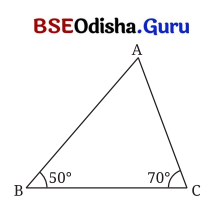
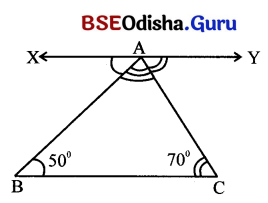
ABC ତ୍ରିଭୁଜଟି ଅଙ୍କନ କର ଯାହାର ∠B = 50° ଏବଂ ∠C = 70° । ଆସ ଦେଖୁବା କିପରି କୌଣସି ଅଙ୍କନ ନକରି ଆମେ ∠A ର ମାପକୁ ଲେଖିବା ?
Solution:
Class 7 Maths Chapter 7 Question Answer Odia Medium ତିନୋଟି ପରସ୍ପର ଛେଦୀ ସରଳ ରେଖାର କଥା 44
∠A + ∠B + ∠C = 180° ⇒∠A + 50° + 70° = 180°
⇒∠A + 120° = 180° ⇒∠A = 180° – 120° = 60°
ଆମେ ଦେଖୁଲୁ ଯେ ସମାନ୍ତର ସରଳରେଖାର ଧାରଣା ମାଧ୍ୟମରେ ଏକ ତ୍ରିଭୁଜର ଯେକୌଣସି ଦୁଇଟି କୋଣର ସମଷ୍ଟି 180° ରୁ କମ୍ ନିର୍ଣ୍ଣୟ କରିବା ଉପଯୋଗୀ ଥିଲା । ତୃତୀୟ କୋଣ ∠BACର ପରିମାଣ ଖୋଜି ବାହାର କରିବାରେ ମଧ୍ୟ ସମାନ୍ତର ସରଳରେଖା ସହାୟକ ହେବ ।

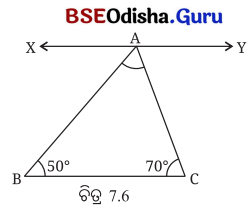
ମନେକର ‘A’ ଶୀର୍ଷବିନ୍ଦୁ ମଧ୍ୟଦେଇ BC ସହ ସମାନ୍ତର XY ସରଳରେଖା ଅଙ୍କନ କରାଯାଇଛି ।

Question 6.
ଆମେ ଏଠାରେ ∠XAB ଏବଂ ∠YAC ସୃଷ୍ଟି ହେବାର ଦେଖିପାରୁଛୁ । ସେମାନଙ୍କର ପରିମାଣ କେତେ ?
Solution:
ଯେହେତୁ, XY ସରଳରେଖା BC ସହ ସମାନ୍ତର, ∠XAB = ∠B ଏବଂ ∠YAC = ∠C ।
କାରଣ ସେମାନେ AB ଓ AC ଛେଦକଦ୍ୱୟର ଏକାନ୍ତର କୋଣ ।
ତେଣୁ ∠XAB = 50° ଏବଂ ∠YAC = 70°
∠XAB, ∠YAC ଓ ∠BAC ଏକତ୍ର 180° କୋଣ ସୃଷ୍ଟି କରନ୍ତି ।
ଆମେ ଜାଣୁ, ∠XAB + ∠YAC + ∠BAC = 180°
⇒ 50° + 70° + ∠BAC = 180°
⇒ 120° + ∠BAC = 180°
⇒ ∠BAC = 180° – 120° = 60°
∴ ତ୍ରିଭୁଜର ∠A = 60°, ∠B = 50° ଓ ∠C = 70°
Class 7 Maths Chapter 7 Question Answer Odia Medium ତିନୋଟି ପରସ୍ପର ଛେଦୀ ସରଳ ରେଖାର କଥା 45

Class 7 Maths Chapter 7 Question Answer Odia Medium ତିନୋଟି ପରସ୍ପର ଛେଦୀ ସରଳ ରେଖାର କଥା

ନିଜେ କରି ଦେଖ :

Question 1.
ନିମ୍ନରେ ଦିଆଯାଇଥବା ଦୁଇଟି କୋଣକୁ ନେଇ ତୃତୀୟ କୋଣ ନିର୍ଣ୍ଣୟ କର । (ସମାନ୍ତର ସରଳରେଖା ବ୍ୟବହାର କର)
(a) 36°, 72°
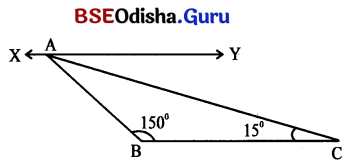
(b) 150°, 15°
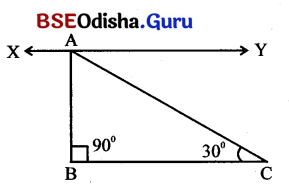
(c) 90°, 30°
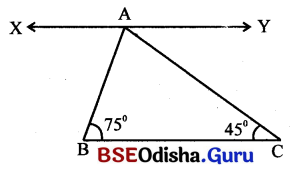
(d) 75°, 45°
Solution:
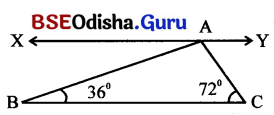
(a) ମନେକର ‘A’ ଶୀର୍ଷବିନ୍ଦୁ ମଧ୍ୟଦେଇ BC ସହ ସମାନ୍ତର XY ସରଳରେଖା ଅଙ୍କନ କରାଯାଇଛି । ଏହାଦ୍ଵାରା ଏଠାରେ ∠XAB ଏବଂ ∠YAC ସୃଷ୍ଟି ହୋଇଛି । ଯେହେତୁ, XY ସରଳରେଖା BC
ସହ ସମାନ୍ତର, ∠XAB = ∠B ଏବଂ ∠YAC = ∠C । କାରଣ ସେମାନେ AB ଓ AC ଛେଦକଦ୍ୱୟର ଏକାନ୍ତର କୋଣ ।
ତେଣୁ ∠XAB = 36° ଏବଂ ∠YAC = 72°
ଆମେ ଜାଣୁ, ∠XAB + ∠YAC + ∠BAC = 180°
⇒ 36° + 72° + ∠BAC = 180°
⇒ 108° + ∠BAC = 180°
⇒ ∠BAC = 180° – 108° = 72°
∴ ତ୍ରିଭୁଜର ∠A = 72°, ∠B = 36° ଓ ∠C = 72°
Class 7 Maths Chapter 7 Question Answer Odia Medium ତିନୋଟି ପରସ୍ପର ଛେଦୀ ସରଳ ରେଖାର କଥା 46

(b) ମନେକର ‘A’ ଶୀର୍ଷବିନ୍ଦୁ ମଧ୍ୟଦେଇ BC ସହ ସମାନ୍ତର XY ସରଳରେଖା ଅଙ୍କନ କରାଯାଇଛି । ଏହାଦ୍ଵାରା ∠XAB ଏବଂ ∠YAC ସୃଷ୍ଟି ହୋଇଛି । ଯେହେତୁ, XY ସରଳରେଖା BC ସହ ସମାନ୍ତର, ∠XAB = ∠B ଏବଂ ∠YAC = ∠C । କାରଣ ସେମାନେ AB ଓ AC ଛେଦକଦ୍ଵୟର ଏକାନ୍ତର କୋଣ ।
ତେଣୁ ∠XAB = 150°
ଏବଂ ∠YAC = 15°
ଆମେ ଜାଣୁ,
∠XAB + ∠YAC + ∠BAC = 180°
⇒ 150° + 15° + ∠BAC = 180°
⇒ 165° + ∠BAC = 180° ⇒ ∠BAC = 180° – 165° = 15°
∴ ତ୍ରିଭୁଜର ∠A = 15°, ∠B = 150° ଓ ∠C = 15°
Class 7 Maths Chapter 7 Question Answer Odia Medium ତିନୋଟି ପରସ୍ପର ଛେଦୀ ସରଳ ରେଖାର କଥା 47

(c) ମନେକର ‘A’ ଶୀର୍ଷବିନ୍ଦୁ ମଧ୍ୟଦେଇ BC ସହ ସମାନ୍ତର XY ସରଳରେଖା ଅଙ୍କନ କରାଯାଇଛି । ଏଠାରେ ∠XAB ଏବଂ ∠YAC ସୃଷ୍ଟି ହୋଇଛି । ଯେହେତୁ, XY ସରଳରେଖା BC ସହ ସମାନ୍ତର,
∠XAB = ∠B ଏବଂ ∠YAC = ∠C I କାରଣ ସେମାନେ AB ଓ AC ଛେଦକଦ୍ୱୟର ଏକାନ୍ତର କୋଣ ।
ତେଣୁ ∠XAB = 90° ଏବଂ ∠YAC = 30°
ଆମେ ଜାଣୁ, ∠XAB + ∠YAC + ∠BAC = 180°
= 90° + 30° + ∠BAC = 180°
⇒ 120° + ∠BAC = 180°
⇒ ∠BAC = 180° – 120° = 60°
∴ ତ୍ରିଭୁଜର ∠A = 60, ∠B = 90° ଓ ∠C = 30°
Class 7 Maths Chapter 7 Question Answer Odia Medium ତିନୋଟି ପରସ୍ପର ଛେଦୀ ସରଳ ରେଖାର କଥା 48

(d) ମନେକର ‘A’ ଶୀର୍ଷବିନ୍ଦୁ ମଧ୍ୟଦେଇ BC ସହ ସମାନ୍ତର XY ସରଳରେଖା ଅଙ୍କନ କରାଯାଇଛି ।
ଏଠାରେ ∠XAB ଏବଂ ∠YAC ସୃଷ୍ଟି ହୋଇଛି । ଯେହେତୁ, XY ସରଳରେଖା BC ସହ ସମାନ୍ତର, ∠XAB = ∠B ଏବଂ ∠YAC = ∠C । କାରଣ ସେମାନେ AB ଓ AC ଛେଦକଦ୍ଵୟର ଏକାନ୍ତର କୋଣ ।
ତେଣୁ ∠XAB = 75° ଏବଂ ∠YAC = 45°
ଆମେ ଜାଣୁ, ∠XAB + ∠YAC + ∠BAC = 1800
= 75° + 45 + ∠BAC = 180
⇒ 120 + ∠BAC = 180
⇒ BAC = 180 – 120 = 60
∴ ତ୍ରିଭୁଜର ∠A = 60°, ∠B = 75° ଓ ∠C = 45°
Class 7 Maths Chapter 7 Question Answer Odia Medium ତିନୋଟି ପରସ୍ପର ଛେଦୀ ସରଳ ରେଖାର କଥା 49

Question 2.
ପ୍ରତ୍ୟେକ କୋଣର ପରିମାଣ 70° ଥାଇ ଏକ ତ୍ରିଭୁଜ ଅଙ୍କନ ସମ୍ଭବ କି ? ଯଦି ଦୁଇଟି କୋଣର ପରିମାଣ 70° ଲେଖାଏଁ ହୁଏ, ତେବେ ତୃତୀୟ କୋଣର ପରିମାଣ କେତେ ? ଯଦି ପ୍ରତ୍ୟେକ କୋଣର ପରିମାଣ ସମାନ ହୁଏ, ତେବେ ଏହି କୋଣର ପରିମାଣ କେତେ ହେବ ?
Solution:
Class 7 Maths Chapter 7 Question Answer Odia Medium ତିନୋଟି ପରସ୍ପର ଛେଦୀ ସରଳ ରେଖାର କଥା 50
ନା, ପ୍ରତ୍ୟେକ କୋଣର ପରିମାଣ 70° ହେଲେ, 70° + 70° + 70° = 210° ଯାହା 180° ରୁ ବଡ଼ ।
ତେଣୁ ତ୍ରିଭୁଜ ଅଙ୍କନ ସମ୍ଭବ ନୁହେଁ ।
ଯଦି ଦୁଇଟି କୋଣର ପରିମାଣ 70° ହୁଏ, ତେବେ ∠A = ∠B = 70°
ABC ତ୍ରିଭୁଜରେ ∠A + ∠B + ∠C = 180°
= 70° + 70° + ∠C = 180°
= 140° + ∠C = 180°
= ∠C = 180° – 140° = 40°
ଯଦି ପ୍ରତ୍ୟେକ କୋଣ ସମାନ ହୁଏ ତେବେ A ABC ରେ ∠A = ∠B = ∠C
⇒ ∠A + ∠B + ∠C = 180°
⇒ ∠A + ∠A + ∠A = 180° ⇒ 3 × ∠A = 180° ⇒ ∠A = 60°
∴ ତ୍ରିଭୁଜର ପ୍ରତ୍ୟେକ କୋଣ 60

Question 3.
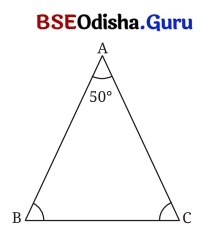
ଏଠାରେ ଏକ ତ୍ରିଭୁଜ ଅଛି ଯେଉଁଥ‌ିରେ ∠B = ∠C ଏବଂ ∠A = 50° ।
ତୁମେ ∠B ଏବଂ ∠Cର ପରିମାଣ ନିର୍ଣ୍ଣୟ କରିପାରିବ କି ?
Class 7 Maths Chapter 7 Question Answer Odia Medium ତିନୋଟି ପରସ୍ପର ଛେଦୀ ସରଳ ରେଖାର କଥା 51
Solution:
ଦଉଅଛି ∠B = ∠C, ∠A = 50°
ଆମେ ଜାଣୁ ତ୍ରିଭୁଜର ତିନିକୋଣର ସମଷ୍ଟି = 180°
∴ ∠A + ∠B + ∠C = 180°
⇒ 50° + ∠B + ∠B = 180° ⇒ 50° + 2∠B = 180°
⇒ 2∠B = 180° – 50° = 130° ⇒ ∠B = 130° ÷ 2 = 65°
∴ ତ୍ରିଭୁଜର ∠A = 50°, ∠B = 65° ଓ ∠C = 65°

ତ୍ରିଭୁଜର କୋଣ ପରିମାଣ ସମ୍ପୃକ୍ତ ଧର୍ମ :
Question 1.
ପ୍ରମାଣ କର ଯେ, ତ୍ରିଭୁଜର ତିନିକୋଣର ପରିମାଣର ସମଷ୍ଟି 180° ।
Class 7 Maths Chapter 7 Question Answer Odia Medium ତିନୋଟି ପରସ୍ପର ଛେଦୀ ସରଳ ରେଖାର କଥା 52
Solution:
Class 7 Maths Chapter 7 Question Answer Odia Medium ତିନୋଟି ପରସ୍ପର ଛେଦୀ ସରଳ ରେଖାର କଥା 53
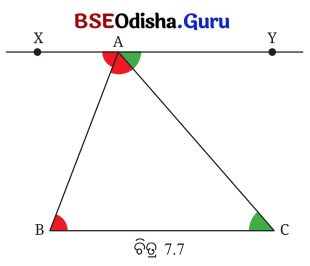
ABC ଏକ ତ୍ରିଭୁଜ ନିଆଯାଉ । ‘A’ ଶୀର୍ଷବିନ୍ଦୁ ମଧ୍ୟଦେଇ BC ସହ ସମାନ୍ତର ସରଳରେଖାଟିଏ ଅଙ୍କନ କର ।
ଆମକୁ ∠A + ∠B + ∠C ନିର୍ଣ୍ଣୟ କରିବାକୁ ହେବ ।
ଆମେ ଜାଣୁ ଯେ ∠B = ∠XAB, ∠C = ∠YAC
ତେଣୁ ∠A + ∠B + ∠C
= ∠A + ∠XAB + ∠YAC = 180°
ତେଣୁ ଆମେ ପ୍ରମାଣ କଲୁ ଯେ ଯେକୌଣସି ତ୍ରିଭୁଜର ତିନିକୋଣର ପରିମାଣର ସମଷ୍ଟି 180° ।
ଏହା ତ୍ରିଭୁଜର କୋଣ ପରିମାଣ ସମ୍ପୃକ୍ତ ଧର୍ମ ଅଟେ ।

ଆରମ୍ଭରେ ତୃତୀୟ କୋଣ ଏବଂ ଅନ୍ୟ ଦୁଇଟି କୋଣ ମଧ୍ୟରେ ସମ୍ପର୍କ ସ୍ପଷ୍ଟ ନଥିଲା । ତ୍ରିଭୁଜର ଉପର ଶୀର୍ଷ ବିନ୍ଦୁ ମଧ୍ୟଦେଇ ଅଙ୍କନ କରାଯାଇଥିବା ସମାନ୍ତର ସରଳରେଖା ଧାରଣା ଯୋଗୁଁ କୋଣ ମଧ୍ଯରେ ସମ୍ପର୍କ ସ୍ପଷ୍ଟ ହୋଇପାରିଲା । ଏହି ଚତୁର ଚିନ୍ତାଧାରା ଗଣିତ ଇତିହାସରେ “The Elements” ନାମକ ଏକ ପ୍ରଭାବଶାଳୀ ପୁସ୍ତକରୁ ମିଳିପାରିବ । ଏହି ପୁସ୍ତକ ଗ୍ରୀକ୍ ଗଣିତଜ୍ଞ “Euclid”ଙ୍କୁ ସମର୍ପଣ ଅଟେ ।
Class 7 Maths Chapter 7 Question Answer Odia Medium ତିନୋଟି ପରସ୍ପର ଛେଦୀ ସରଳ ରେଖାର କଥା 54
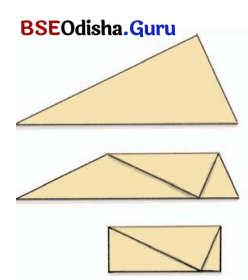
କୋଣର ପରିମାଣ ସମ୍ପୃକ୍ତ ଧର୍ମ ପରୀକ୍ଷାର ଆଉ ଏକ ସରଳ ଉପାୟ ରହିଅଛି । ଏକ କାଗଜରେ ତ୍ରିକୋଣୀୟ ଭାଙ୍ଗ ନେଇ ନିମ୍ନରେ ଦର୍ଶାଯାଇଥିବା ଉପାୟ
ଅବଲମ୍ବନ କରାଯାଇପାରିବ । ଏହି କାଗଜ ଭାଙ୍ଗଦ୍ଵାରା ତୁମେ ଦେଖିପାରୁଛ କି ତ୍ରିଭୁଜର ତିନିକୋଣର ସମଷ୍ଟି 180 ° ।

ବହିଃସ୍ଥ କୋଣ :

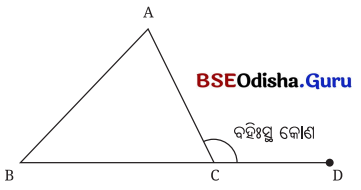
କୌଣସି ଏକ ତ୍ରିଭୁଜର ଅନ୍ତଃସ୍ଥ କୋଣର ସନ୍ନିହିତ ପରିପୂରକ କୋଣକୁ ତ୍ରିଭୁଜର ବହିଃସ୍ଥ କୋଣ କୁହାଯାଏ । ଚିତ୍ରରେ ∠ACD ତ୍ରିଭୁଜର ଏକ ବହିଃସ୍ଥ କୋଣ ଅଟେ ।
Class 7 Maths Chapter 7 Question Answer Odia Medium ତିନୋଟି ପରସ୍ପର ଛେଦୀ ସରଳ ରେଖାର କଥା 55
Question 1.
∠ACD ନିଶ୍ଚୟ କର, ଯଦି ∠A = 50 ଏବଂ ∠B = 60° ।
Solution:
∠A + ∠B + ∠ACB = 180°
⇒ 50° + 60° + ∠ACB = 180° ⇒∠ACB = 180° – 110° = 70°
ତେଣୁ ∠ACD = 180° – 70° = 110°
(ଯେହେତୁ ∠ACB ଓ ∠ACD ପରସ୍ପର ସନ୍ନିହିତ ପରିପୂରକ କୋଣ ଅଟେ ।)

Question 2.
∠A ଓ ∠B ବିଭିନ୍ନ କୋଣର ମାପ ପାଇଁ ବହିଃସ୍ଥ କୋଣ ନିର୍ଣ୍ଣୟ କର । ବହିଃସ୍ଥ କୌଣ ଓ ଅନ୍ୟ ଦୁଇଟି ଅନ୍ତଃସ୍ଥ କୋଣ ମଧ୍ଯରେ କ’ଣ ସମ୍ପର୍କ ଲକ୍ଷ୍ୟ କରୁଛ କି ?
ସୂଚନା : କୋଣ ପରିମାଣ ସମ୍ପୃକ୍ତ ଧର୍ମରୁ ∠A + ∠B + ∠ACB = 180°
ପୁନଶ୍ଚ ∠ACD + ∠ACB = 180° (ସନ୍ନିହିତ ପରିପୂରକ)
Solution:
∠A + ∠B + ∠ACB = 180°
⇒ 50° + 60° + ∠ACB = 180° ⇒∠ACB = 180° – 110° = 70°
ତେଣୁ ∠ACD = 180° – 70° = 110° ଅର୍ଥାତ୍ ∠ACD = ∠A + ∠B
(ଯେହେତୁ ∠ACB ଓ ∠ACD ପରସ୍ପର ସନ୍ନିହିତ ପରିପୂରକ କୋଣ ଅଟେ ।)
∴ ଏକ ତ୍ରିଭୁଜର ବହିଃସ୍ଥ କୋଣର ପରିମାଣ ଏହାର ଅନ୍ତଃସ୍ଥ ଦୂରବର୍ତ୍ତୀ କୋଣର ସମଷ୍ଟି ସଙ୍ଗେ ସମାନ ।

7.4 ତ୍ରିଭୁଜର ଉଚ୍ଚତା ସମ୍ପର୍କିତ ଅଙ୍କନ :

Page No. 170 

Question 1.
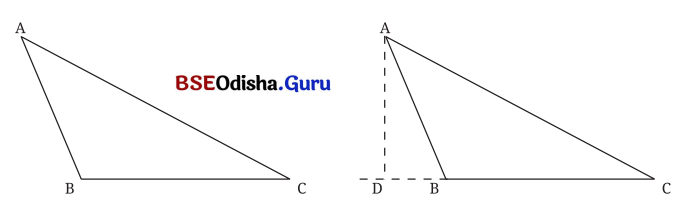
ABC ତ୍ରିଭୁଜ ବିଚାରକୁ ନିଆଯାଉ । ଶୀର୍ଷବିନ୍ଦୁ ‘A’ ରୁ ବିପରୀତ ବାହୁ ‘BC’ ପ୍ରତି ଅଙ୍କିତ ଲମ୍ବ ବା ଉଚ୍ଚତାର ଦୈର୍ଘ୍ୟ କେତେ ଏବଂ ଏହାକୁ କିପରି ମାପିପାରିବା ?
Class 7 Maths Chapter 7 Question Answer Odia Medium ତିନୋଟି ପରସ୍ପର ଛେଦୀ ସରଳ ରେଖାର କଥା 56
Solution:
ABC ତ୍ରିଭୁଜର ଶୀର୍ଷ ବିନ୍ଦୁ ‘A’ ରୁ ବିପରୀତ ବାହୁ ‘BC’ ପ୍ରତି ଲମ୍ବ ଅଙ୍କନ କରାଯାଉ । ‘BC’ ବାହୁକୁ ବର୍ଜିତ କରି B ଦିଗରେ D ପର୍ଯ୍ୟନ୍ତ ନିଆଯାଉ । AD କୁ ମାପ କରି ଏହାର ଦୈର୍ଘ୍ୟ ନିର୍ଣ୍ଣୟ କରାଯାଉ ।

କାଗଜ ଭାଙ୍ଗ ମାଧ୍ୟମରେ ଉଚ୍ଚତା :
ତ୍ରିଭୁଜାକୃତି ଖଣ୍ଡିଏ କାଗଜ ନିଅ । ଏହାର ଗୋଟିଏ ପାର୍ଶ୍ଵକୁ ଭୂମି ଭାବରେ ଗ୍ରହଣ କରି ଏହାକୁ ଏପରି ଭାବରେ ଭାଙ୍ଗି ଦିଅ ଯେପରିକି ଭାଙ୍ଗ ପଡ଼ିଥିବା ଦାଗଟି ଉପର ଶୀର୍ଷ ବିନ୍ଦୁରୁ ଭୂମି ପ୍ରତି ଲମ୍ବ ହେବ ।

ତ୍ରିଭୁଜର ଉଚ୍ଚତା ଅଙ୍କନ :
Class 7 Maths Chapter 7 Question Answer Odia Medium ତିନୋଟି ପରସ୍ପର ଛେଦୀ ସରଳ ରେଖାର କଥା 57
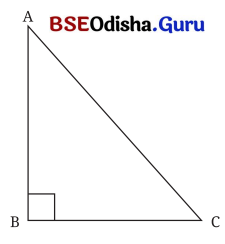
କୌଣସି ଏକ ତ୍ରିଭୁଜ ଅଙ୍କନ କର । BC କୁ ଭୂମିରୂପେ ନେଇ A, B, C ଶୀର୍ଷବିନ୍ଦୁ ନାମିତ କର । A ଠାରୁ BC ପ୍ରତି ଲମ୍ବ (ଉଚ୍ଚତା) ଅଙ୍କନ କରାଯାଉ । ଏହା ହିଁ ଏକ ତ୍ରିଭୁଜ ସମ୍ଭବ କି ଯାହାର ଗୋଟିଏ ବାହୁ ଏକ ଉଚ୍ଚତା ହେବ ? ସମ୍ଭବ ହେବ, ଯେତେବେଳେ ତ୍ରିଭୁଜର ଗୋଟିଏ କୋଣର ପରିମାଣ ସମକୋଣ ।

ଯେଉଁ ତ୍ରିଭୁଜର ଗୋଟିଏ କୋଣର ପରିମାଣ 90° (ସମକୋଣ), ସେହି ତ୍ରିଭୁଜକୁ ସମକୋଣୀ ତ୍ରିଭୁଜ କୁହାଯାଏ ।
A ଠାରୁ BC ପ୍ରତି ଲମ୍ବ (ଉଚ୍ଚତା) = AB

Class 7 Maths Chapter 7 Question Answer Odia Medium ତିନୋଟି ପରସ୍ପର ଛେଦୀ ସରଳ ରେଖାର କଥା

7.5 ତ୍ରିଭୁଜର ପ୍ରକାରଭେଦ :

Page No. (173 to 174)

ନିଜେ କରି ଦେଖ :

Question 1.
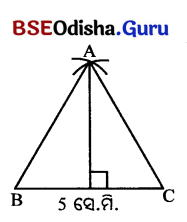
ABC ତ୍ରିଭୁଜ ଅଙ୍କନ କର ଯାହାର BC = 5 ସେ.ମି., AB = 6 ସେ.ମି., CA = 5 ସେ.ମି. ଏବଂ A ବିନ୍ଦୁଠାରୁ BC ପ୍ରତି ଲମ୍ବ ଅଙ୍କନ କର ।
Solution:
Class 7 Maths Chapter 7 Question Answer Odia Medium ତିନୋଟି ପରସ୍ପର ଛେଦୀ ସରଳ ରେଖାର କଥା 58
(i) BC = 5 ସେ.ମି.ଦୈର୍ଘ୍ୟର ଏକ ରେଖା ଅଙ୍କନ କର ।
(ii) କମ୍ପାସ ସାହାଯ୍ୟରେ B ବିନ୍ଦୁରୁ 6 ସେ.ମି. ଦୈର୍ଘ୍ୟର ଏକ ଚାପ ଅଙ୍କନ କର ।
(iii) C ବିନ୍ଦୁରୁ 5 ସେ.ମି. ଦୈର୍ଘ୍ୟ ନେଇ ଏକ ଚାପ ଅଙ୍କନ କର ।
ଦୁଇଟି ଚାପ ଯେଉଁ ବିନ୍ଦୁରେ ଛେଦ କରିବେ ତାହାକୁ A ଦିଅ ।
AB ଓ AC କୁ ଯୋଗ କର ।
(iv) ABC ଗୋଟିଏ ଆବଶ୍ୟକୀୟ ତ୍ରିଭୁଜ ।
(v) ସେୟାର ସାହାଯ୍ୟରେ A ବିନ୍ଦୁରୁ 90° ମାପ କରି ତାହାକୁ D ନାମ ଦିଅ । AD କୁ ଯୋଗ କର । AD, BC ପ୍ରତି ଲମ୍ବ ।

Question 2.
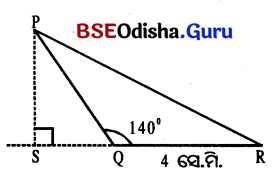
POR ତ୍ରିଭୁଜ ଅଙ୍କନ କର ଯାହାର QR = 4 ସେ.ମି., PQ = 7 ସେ.ମି, ∠Q = 140° । P ବିନ୍ଦୁଠାରୁ QR ପ୍ରତି ଲମ୍ବ ଅଙ୍କନ କର ।
Solution:
Class 7 Maths Chapter 7 Question Answer Odia Medium ତିନୋଟି ପରସ୍ପର ଛେଦୀ ସରଳ ରେଖାର କଥା 59
(i) ଗୋଟିଏ ବାହୁ QR = 4 ସେ.ମି. ଦୈର୍ଘ୍ୟ ଅଙ୍କନ କର ।
(ii) ∠Q = 140, ଅଙ୍କନ କର ଏବଂ କୋଣର ଅନ୍ୟ ବାହୁଟିକୁ ଅଙ୍କନ କର ।
(iii) ଅନ୍ୟ ବାହୁ QR କୁ ଛାଡ଼ି P ବିନ୍ଦୁ ଚିହ୍ନଟ କର ଯେପରି PQ = 7 ସେ.ମି. ହେବ ।
(iv) PR କୁ ଯୋଗକଲେ ଆବଶ୍ୟକୀୟ ତ୍ରିଭୁଜ ମିଳିବ ।
(v) ସେଟ୍‌ୟାର ସାହାଯ୍ୟରେ P ବିନ୍ଦୁରୁ 90° ମାପ କରି ତାହାକୁ S ନାମ ଦିଅ । PS କୁ ଯୋଗ କର । PS, QR ପ୍ରତି ଲମ୍ବ ।

Question 3.
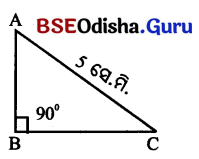
ABC ସମକୋଣୀ ତ୍ରିଭୁଜ ଅଙ୍କନ କର ଯାହାର ∠B = 90°, AC = 5 ସେ.ମି. । ଏହି ମାପନେଇ ଆଉ କେତୋଟି ତ୍ରିଭୁଜ ଅଙ୍କନ କରାଯାଇପାରିବ ?
(ସୂଚନା : ଧ୍ୟାନ ଦେବା ଯେ, ଅନ୍ୟ ମାପଗୁଡ଼ିକ ଯେକୌଣସି ମୂଲ୍ୟ ହୋଇପାରେ । AC କୁ ଭୂମି ଭାବରେ ନିଆଯାଉ । ∠A ଓ ∠C କେଉଁ ପରିମାଣ ହୋଇପାରିବ ଯାହାଫଳରେ ଅନ୍ୟକୋଣଟି 90° ହେବ ?)
Solution:
Class 7 Maths Chapter 7 Question Answer Odia Medium ତିନୋଟି ପରସ୍ପର ଛେଦୀ ସରଳ ରେଖାର କଥା 60
ଯେହେତୁ AC = 5 ସେ.ମି. ଓ ∠B = 90
ମନେକର ∠A = 40°
∴ ∠A + ∠B + ∠C = 180°
⇒ 40° + 90° + ∠C = 180°
⇒ ∠C = 180° – 130° ⇒ ∠C = 50°
(i) AC = 5 ସେ.ମି. ଦୈର୍ଘ୍ୟର ଏକ ରେଖା ଅଙ୍କନ କର ।
(ii) A ବିନ୍ଦୁରୁ 40° କୋଣ ଅଙ୍କନ କର ଓ B ବିନ୍ଦୁରୁ 50° କୋଣ ଅଙ୍କନ କର । ଦୁଇଟି ରେଖା ଯେଉଁ ବିନ୍ଦୁରେ ମିଳିତ ହେଉଛନ୍ତି ତାହାକୁ B ନାମ ଦିଅ ।
(iii) ABC ଏକ ଆବଶ୍ୟକୀୟ ତ୍ରିଭୁଜ ହେବ ।
(iv) A ର ମୂଲ୍ୟ ଯେକୌଣସି ମୂଲ୍ୟ ନେଇପାରିବେ ଏବଂ ∠C ର ମୂଲ୍ୟ ପାଇପାରିବେ, ଯେପରି ଉଭୟ କୋଣର ଯୋଗଫଳ ସର୍ବଦା 90° ହେବ ।

Question 4.
ଅଙ୍କନ ମାଧ୍ୟମରେ ପରୀକ୍ଷଣ କରି ଦେଖାଅ ଯେ, ଏପରି ସମବାହୁ ତ୍ରିଭୁଜ ସମ୍ଭବପର କି ? ଯାହାର
(i) ଗୋଟିଏ କୋଣ ସମକୋଣ
(ii) ଗୋଟିଏ ସ୍ଥୂଳକୋଣଏବଂ ଏକ ସମଦିବାହୁ ତ୍ରିଭୁଜ ଅଙ୍କନ କର ଯାହାର
(i) ଗୋଟିଏ କୋଣ ସମକୋଣ
(ii) ଗୋଟିଏ ସ୍ଥୂଳକୋଣ ।
Solution:
(i) ସମବାହୁ ତ୍ରିଭୁଜର ତିନି କୋଣର ପରିମାଣ ସମାନ । ଯଦି ଏହାର ଗୋଟିଏ କୋଣ ସମକୋଣ ଅର୍ଥାତ୍ 90°, ତେବେ ଅନ୍ୟ କୋଣ ଦୁଇଟି 90° ଲେଖାଏଁ ହେବ ।
ଅର୍ଥାତ୍ କୋଣତ୍ରୟର ସମଷ୍ଟି 90° + 90° + 90° = 270° ଯାହା 180° ଠାରୁ ବଡ଼ । ଏହା ଅସମ୍ଭବ ।
(ii) ସମବାହୁ ତ୍ରିଭୁଜର ଗୋଟିଏ କୋଣ ସ୍ଥୂଳକୋଣ ଅର୍ଥାତ୍ 90° ରୁ ବେଶୀ ହେଲେ ଅନ୍ୟ ସମସ୍ତ କୋଣ ମଧ୍ୟ 90° ରୁ ବେଶୀ ହେବ । ତେଣୁ ଏହା ଅସମ୍ଭବ ।

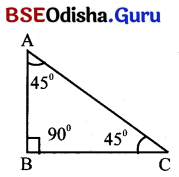
ସମକୋଣୀ ସମଦ୍ବିବାହୁ ତ୍ରିଭୁଜ ଅଙ୍କନ :
Class 7 Maths Chapter 7 Question Answer Odia Medium ତିନୋଟି ପରସ୍ପର ଛେଦୀ ସରଳ ରେଖାର କଥା 61
(i) BC = 5 ସେ.ମି. ଅଙ୍କନ କର ।
(ii) ∠A + ∠B + ∠C = 180° ⇒ ∠A + ∠B + ∠A = 180°
⇒ 2∠A + 90° = 180° = 2∠A = 180° – 90° = 90°
∴ ∠A = 45°
(iii) B ବିନ୍ଦୁରେ 90° ଓ C ବିନ୍ଦୁରେ 45° ଅଙ୍କନ କର ।
(iv) ଦୁଇଟି ରେଖା ଯେଉଁ ବିନ୍ଦୁରେ ମିଳିତ ହେବେ ତାହାକୁ A ନାମ ଦିଅ ।
(v) ବର୍ତ୍ତମାନ ABC ଏକ ଆବଶ୍ୟକୀୟ ତ୍ରିଭୁଜ ।

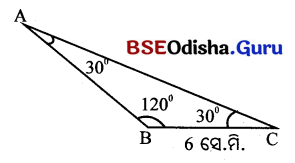
ସ୍ଥଳକୋଣୀ ସମଦ୍ଵିବାହୁ ତ୍ରିଭୁଜ ଅଙ୍କନ :
Class 7 Maths Chapter 7 Question Answer Odia Medium ତିନୋଟି ପରସ୍ପର ଛେଦୀ ସରଳ ରେଖାର କଥା 62
(i) BC = 6 ସେ.ମି. ଅଙ୍କନ କର ।
(ii) ମନେକର ∠B = 120°
(iii) ଯେହେତୁ ଏହା ସମଙ୍ଗିବାହୁ ତ୍ରିଭୁଜ, ∠A = ∠C
⇒ ∠A + ∠B + ∠C = 180° ⇒ ∠A + 120 + ∠A = 180°
⇒ 2∠A + 120° = 180° ⇒ 2∠A = 180° – 120° = 60°
∴ ∠A = 30° = ∠C
(iv) B ବିନ୍ଦୁରୁ 120° ଓ ୯ ବିନ୍ଦୁରୁ 30° ଅଙ୍କନ କର । ଯେଉଁଠି ସେମାନେ ମିଳିତ ହେବେ ତାହାର ନାମ A ଦିଅ ।
(v) ABC ଏକ ଆବଶ୍ୟକୀୟ ତ୍ରିଭୁଜ ।

Life Processes in Plants Class 7 Extra Questions and Answers Science Chapter 10

Students can include Class 7 Curiosity Extra Questions and Class 7 Science Chapter 10 Life Processes in Plants Extra Question Answer in their daily self-study routine.

Class 7 Science Chapter 10 Life Processes in Plants Extra Questions

Class 7 Science Chapter 10 Extra Questions on Life Processes in Plants

Life Processes in Plants Class 7 Very Short Question Answer

Question 1.
For the synthesis of glucose, what are the raw materials required by a plant?
Answer:
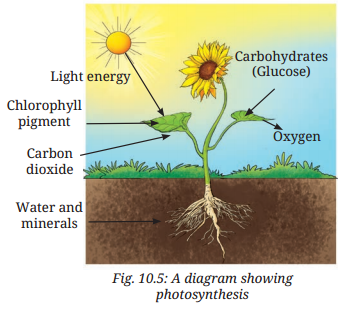
For synthesis of glucose plants require carbon dioxide and water along with the presence of sunlight and chlorophyll in leaves.

Question 2.
How do plants store the energy captured from sunlight during photosynthesis, and how is this stored energy released during respiration?
Answer:
The energy captured from sunlight during photosynthesis is stored in the form of glucose by the plant. During respiration, this glucose is broken down in the presence of oxygen to release energy, which is then used for various life processes.

Life Processes in Plants Class 7 Extra Questions and Answers Science Chapter 10

Question 3.
Sunlight, chlorophyll, carbon dioxide, water and minerals are raw materials essential for photosynthesis. Do you know where they are available? Fill in the blanks with the appropriate raw materials.

(i) Available in the plant: …………
Answer:

(ii) Available in the soil: …………
Answer:
Water and minerals

(iii) Available in the air: …………
Answer:
Carbon dioxide

(iv) Available during day: …………
Answer:
Sunlight

Question 4.
Which part/parts of a plant are involved in respiration?
Answer:
The process of respiration is performed by all living parts of a plant, as energy is required for various metabolic activities. Growing parts like floral buds, seeds of plants perform more respiration compared to other parts. Hence, all plant parts – green or non-green carry out respiration.

Life Processes in Plants Class 7 Extra Questions and Answers Science Chapter 10

Question 5.
Study the given equation and answer the questions that follow.
Life Processes in Plants Class 7 Extra Questions and Answers Science Chapter 10.1

(i) What does the equation depict?
Answer:
The equation depicts the process of photosynthesis.

(ii) Where does it occur?
Answer:
It occurs in the leaves.

(iii) What happens to the products?
Answer:
Glucose is broken down to release energy through respiration, while oxygen released is breathed in by other living organisms.

(iv) What are the requirements for this process?
Answer:
Water, chlorophyll, carbon dioxide, and sunlight.

Life Processes in Plants Class 7 Extra Questions and Answers Science Chapter 10

Question 6.
During an experiment, Aman observed that lime water in a test tube connected to a flask containing germinating bean seeds turned milky. Explain his observation. Would the same result occur with boiled beans?
Answer:

  • Germinating seeds were actively respiring and releasing carbon dioxide, which turned the lime water milky.
  • No, if boiled beans are used, the lime water will not turn milky because boiled seeds are dead and do not respire (no carbon dioxide is released).

Question 7.
A goat eats away all the leaves of a small plant (balsam). However, in a few days, new leaves could be seen sprouting in the plant again. How did the plant survive without leaves?
Answer:
Plants store the food they produce by photosynthesis in the stems and roots. So, when the goat eats all the leaves, the plant fulfils its requirement by utilising the food stored in stems and roots.

Question 8.
Radhika wants to find out whether a purple plant can make its own food. She keeps a purple plant in sunlight for four days. Which other type of coloured plant should Radhika keep as part of her study to compare with the purple plant?
Life Processes in Plants Class 7 Extra Questions and Answers Science Chapter 10.2
Answer:
Radhika should also keep a green plant as part of her study to compare with the purple plant. This comparison would make the experiment more reliable and accurate.

Question 9.
Potato and ginger are both underground parts that store food. Where is the food prepared in these plants?
Answer:
Food in potato and ginger plants is prepared in the leaves through photosynthesis and then transported via phloem to the underground parts for storage.

Life Processes in Plants Class 7 Extra Questions and Answers Science Chapter 10

Question 10.
Shiv while changing ink for his pen, dropped the ink refill in a small flower vase kept on his study table. He noticed red colour in the stem of the flower kept in the vase after a few hours. What is the reason behind his observation?
Answer:
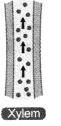
The red ink moved upwards through the stem due to the presence of xylem, which is responsible for the transport of water and minerals in plants. The xylem draws the coloured liquid (in this case, the ink mixed with water) from the vase up through the stem to the flower.

Question 11.
In our body, blood is the medium that transports nutrients from one place to another. What are the counterparts of blood, which transport nutrients in plants?
Answer:
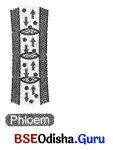
Xylem and phloem are the tissues in plants for the transport of water and nutrients (food), respectively.

Life Processes in Plants Class 7 Short Question Answer

Question 1.
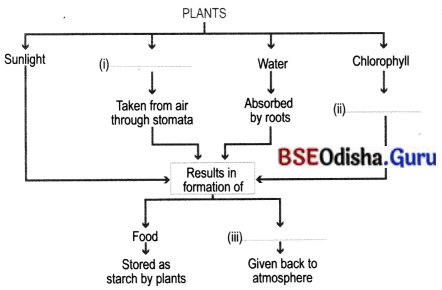
The following flowchart was given by Ashu’s teacher in homework. Help Ashu complete the flowchart.
Life Processes in Plants Class 7 Extra Questions and Answers Science Chapter 10.3
Answer:
(i) Carbon dioxide
(ii) Present in (green) leaves
(iii) Oxygen

Question 2.
Renu wanted to perform an experiment to show her brother Sunil the raw materials required for photosynthesis. She took two similar green plants- one of them she placed under shade and the other under sunlight.

(i) Which plant will show a positive result for the iodine test?
Answer:
The plant kept under sunlight will give a positive result for the iodine test.

(ii) Why will the plant you selected give a positive result for the iodine test, and the other not?
Answer:
Under sunlight, the green plant will perform photosynthesis, resulting in the production of starch. The other plant kept under shade will be unable to perform photosynthesis and produce starch without sunlight.

Life Processes in Plants Class 7 Extra Questions and Answers Science Chapter 10

(iii) Will there be any differences in the appearance of both the potted plants? State your reason.
Answer:
Yes, the plant kept in sunlight will be healthy, green, with more number of leaves. The plant kept under shade will be weak, have paleyellowish leaves and show poor growth.

Question 3.
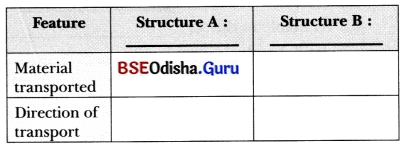
Name the two structures involved in the transportation of substances in plants, and compare them based on the following features:
Life Processes in Plants Class 7 Extra Questions and Answers Science Chapter 10.4
Answer:
The two structures involved in the transportation of substances in plants are xylem and phloem.

Feature A: Xylem B: Phloem
Material transported Transports water and minerals Transports food
Direction of transport Upward (from roots to leaves) Both upward and downward

Question 4.
Sunita saw the picture given alongside in an encyclopedia and wondered what it is. Study the given diagram and answer the following questions:
Life Processes in Plants Class 7 Extra Questions and Answers Science Chapter 10.5
(i) Which structure is represented by the diagram?
(ii) Where can you find these structures in a plant?
(iii) What is the role of this structure?
Answer:
(i) The diagram represents stomata.
(ii) Stomata can be found on leaves, especially on the lower leaf surface.
(iii) Stomata facilitates exchange of gases during photosynthesis and respiration.

Question 5.
A student uprooted a rose plant from the soil. Most of the root tips, with root hair were left behind in the soil. She planted it in a pot with new soil and watered it regularly. Will the plant grow or die? Give reason for your answer.
Answer:
The following possibilities exist:

  • Without the root hairs, the roots will not be able to absorb water and nutrients and the plant may die.
  • The rose plant may grow new roots and the plant will live.
  • The rose plant may not be able to survive in a different type of soil.

Question 6.
Observe the figures carefully and answer the following questions.
Life Processes in Plants Class 7 Extra Questions and Answers Science Chapter 10.6
(i) In which jar, will the amount of carbon dioxide be the highest and why?
(ii) In which jar, will the amount of carbon dioxide be the lowest and why?
Answer:
(i) Jar (C) will have the highest amount of carbon dioxide because the mice inside the jar are continuously respiring, using up oxygen and releasing carbon dioxide. Since there is no plant inside the jar to absorb the carbon dioxide, its amount keeps increasing and becomes maximum.
(ii) Jar (A) will have the lowest amount of carbon dioxide because there are no mice inside the jar. The plant continuously uses carbon dioxide for photosynthesis, reducing its amount, while releasing oxygen.

Life Processes in Plants Class 7 Extra Questions and Answers Science Chapter 10

Question 7.
Water transportation is said to form a oneway traffic, while the transport of food forms a two-way traffic in plants. Justify.
Answer:
Water transport is one-way because xylem carries water and minerals from the roots upwards to the leaves and other parts of the plant. In contrast, food transport is two-way because phloem carries food from the leaves, where it is produced, to all the parts that require it, such as the roots, developing flowers, or fruits, allowing movement in both upward and downward directions.

Question 8.
Mention the importance of respiration.
Answer:
Respiration involves the break down of glucose (food) and the release of energy; required for the growth and repair of various plant parts. Supporting growth and other life processes like preparing food, transportation, etc., require a lot of energy. Thus, respiration is essential for survival as it provides the energy required to carry out all such functions.

Question 9.
Two identical plants were kept under different conditions: [Scientific Temper and Critical Thinking Skill]
Plant A: Sunlight + water
Plant B: Sunlight + water + leaves coated with grease
After a few days, Plant B showed stunted growth.
(i) Which plant structure’s function do you think was affected?
(ii) Why did the greased plant show poor growth?
(iii) Mention any one life process that was impacted in Plant B.
Answer:
(i) The affected structure is stomata.
(ii) Grease blocked the stomata on the leaves, preventing the exchange of gases, thereby affecting food preparation and energy release.
(iii) Photosynthesis or respiration

Life Processes in Plants Class 7 Long Question Answer

Question 1.
Just as in human beings, the transport of water, minerals and food is also crucial for the growth and development of plants. Explain.
Answer:
Transport of water, minerals and food are essential for growth to take place. All activities utilise water and minerals. Synthesis of substances inside the body is a high energy consuming process. This energy is obtained by oxidation of food, i.e., glucose during respiration. This is why the transportation of food, water and minerals, all are essential for growth.

  • Water and minerals are transported through xylem, and food is transported through phloem.
  • Transport of water and minerals dissolved in it occurs only in one direction from the roots to upper plant parts; transport is unidirectional.
  • Transport of food occurs from leaves to all growing parts of a plant; transport is bidirectional.

Life Processes in Plants Class 7 Extra Questions and Answers Science Chapter 10

Question 2.
Plants have different mechanisms for synthesising, transporting, and utilising food to obtain energy. Discuss.
Answer:
Plants prepare food, distribute it, and use it to meet their energy needs through coordination between the following life processes:

  • Synthesis of food: Plants prepare their own food by photosynthesis. Green leaves containing chlorophyll use sunlight, carbon dioxide, and water to make food in the form of glucose, which is stored as starch.
  • Transport of food: The food prepared in the leaves is transported to all parts of the plant through the phloem. This process helps supply food to growing and storage parts like roots, stems, and fruits. Xylem transports water and minerals from the roots to the leaves, which are essential raw materials for photosynthesis. Thus, both xylem and phloem ensure that water, minerals, and food reach all parts of the plant for healthy growth.
  • Utilisation of food: Plants use the transported food for obtaining energy through respiration. During respiration, food (glucose) is broken down using oxygen to release energy needed for growth, repair, and other life activities.

Question 3.
Discuss how photosynthesis and respiration are essential for the survival of various living organisms.
Answer:
For the survival of all living organisms, energy is required. Animals are incapable of capturing light energy. Hence, they depend upon plants for this energy. Plants capture light energy from the Sun during photosynthesis and convert it into chemical energy. This chemical energy is available in the form of glucose. During respiration, glucose is oxidised to liberate energy. This liberated energy is used for performing various metabolic activities. This is why both photosynthesis and respiration are essential for the survival of all living organisms.

Question 4.
Priya read that organisms breathe in oxygen and breathe out carbon dioxide, in a continuous manner. She wonders then there should have been less oxygen and more carbon dioxide in the atmosphere. Based on your understanding, help Priya clear her confusion. Also, compare the life processes involved.
Answer:
This balance is maintained by two life processes: photosynthesis and respiration. Green plants take in carbon dioxide from the atmosphere and release oxygen during photosynthesis, while plants, animals, and humans take in oxygen and release carbon dioxide during respiration. This natural cycle ensures that the gases in the atmosphere are continuously exchanged and maintained.

Life Processes in Plants Class 7 Extra Questions and Answers Science Chapter 10

These two processes can be compared in the following manner:

Feature Photosynthesis Respiration
Purpose Food (glucose) is prepared by plants. Food is broken down to release energy.
Location Occurs primarily in the leaves and other green parts of the plant. Occurs in all parts of the plant.
Raw materials Requires carbon dioxide and water, along with chlorophyll and the presence of sunlight. Requires oxygen and glucose
Products Produces glucose and oxygen. Produces carbon dioxide, water, and energy.
Time Occurs mainly during the daytime. Occurs day and; night (does not require sunlight).
Importance Helps plants produce food. Provides energy for growth and life activities through the breakdown of the food produced.


Life Processes in Plants Class 7 Case Based Questions

Read the following passages and answer the questions that follow:
Life Processes in Plants Class 7 Extra Questions and Answers Science Chapter 10.7

Question 1.
Ved believes that plants also give out something during the process of making their food. He puts up an experimental set-up, as shown in the figure given below to collect evidence for the release of a particular gas during photosynthesis. Based upon his observation, answer the following questions:

(i) Ved observed the formation of air bubbles. Explain his observation.
Answer:
The oxygen gas produced in this set-up caused bubbles to emerge and get accumulated in the inverted test tube.

(ii) What is the source of the gas released?
Answer:
The source of the oxygen gas released is photosynthesis performed by the aquatic plant in the experimental set-up.

Life Processes in Plants Class 7 Extra Questions and Answers Science Chapter 10

(iii) How will the set-up behave if kept in a dark room?
Answer:
No air bubble formation will be observed in the set-up when kept in dark as no photosynthesis will occur in the absence of sunlight.

OR

(iii) Will the leaves of the aquatic plant form starch when kept in dark? How will Ved find out?
Answer:
No. Ved can confirm this with iodine test on a leaf plucked from the plant kept in the dark room. The leaf will not turn blue-black, indicating no starch formation.

Question 2.
Sara went on a vacation with her family for a few weeks and forgot to tell the caretaker to water the plant pots. When they returned, she noticed that the plants in their balcony appeared pale and unhealthy with wilted leaves, even though the plants were kept in sunlight. Sara wondered what may have caused this.

(i) Which life process in plants is mainly affected when water is not supplied?
Answer:
Photosynthesis

(ii) Name the structure through which water reaches the leaves.
Answer:
Xylem

(iii) Roots absorb minerals from the soil along with water. Can you tell why these minerals are important for the plant?
Answer:
Minerals are nutrients needed for healthy growth and proper functioning of the plant.

OR

(iii) Even though sunlight was available, why did the plants show poor growth?
Answer:
Plants showed poor growth even in the presence of sunlight because water is an essential raw material required for photosynthesis; food preparation cannot take place in its absence, thereby impacting the overall growth of the plant.

Life Processes in Plants Class 7 Picture Based Questions

Observe the given pictures and answer the questions that follow:

Question 1.
The given picture represents a microscopic view of a leaf peel with visible tiny pores on its surface.
Life Processes in Plants Class 7 Extra Questions and Answers Science Chapter 10.8
(i) What are these tiny pores called?
Answer:
Stomata

(ii) Name the life process(es) for which these structures are essential.
Answer:
Photosynthesis and Respiration

(iii) Which atmospheric gases enter and exit the plant through them? Explain how the opening and closing of these pores help the plant survive.
Answer:
Carbon dioxide and oxygen. The opening and closing of these pores help the plant exchange gases with their surroundings and lose water for excretion, another important life process. They are thus essential for a plant’s survival.

OR

(iii) Predict what would happen if all these pores remained permanently closed.
Answer:
If all stomata remained permanently closed, the exchange of gases would stop. As a result, the plant would neither be able to make food nor respire, and would eventually die.

Life Processes in Plants Class 7 Extra Questions and Answers Science Chapter 10

Question 2.
Sarla, a Class 7 science teacher, showed a diagram to explain plant transport systems to her students. Arrows in the image are indicating the direction of the movement of two different substances by two different pathways. Some arrows are labelled as ‘A’ and some are labelled as ‘B’.
Life Processes in Plants Class 7 Extra Questions and Answers Science Chapter 10.9

(i) The grey-coloured type A arrows in the picture depict the movement of which substance?
Answer:
Grey arrows, labelled as A depict the movement of water and minerals.

(ii) The black-coloured type B arrows in the picture depict the movement of which substance?
Answer:
Black arrows, labelled as B depict the movement of food.

(iii) Give correct names of the structures denoted by arrows A and B respectively.
Answer:
A – Xylem
B – Phloem

OR

(iii) How does the movement of substances through these two pathways differ?
Answer:
Movement of water, through xylem, is unidirectional, while movement of food, through phloem, is bidirectional.

Life Processes in Plants Class 7 Activity Based Questions

Read the following activity and answer the questions that follow:

1. Sarita, a Grade 7 science teacher, kept a healthy potted plant inside a dark room for thirty-six hours. On the third day, she plucked a leaf from the plant and demonstrated the starch test to her students during their practical class. Although the leaf was still green, it did not turn blue-black when tested with iodine solution.

Life Processes in Plants Class 7 Extra Questions and Answers Science Chapter 10

(i) Why did the leaf not turn blue-black in this case?
Answer:
The leaf did not turn blue-black because no photosynthesis occurred in the absence of sunlight, and all the stored starch was utilised. As a result, no starch was left or formed to react with iodine.

(ii) Name one condition necessary for food preparation that was missing.
Answer:
Sunlight

(iii) Even in the absence of food preparation, which life process must have continued in the plant? Explain your answer.
Answer:
Respiration, because it is independent of sunlight.

OR

(iii) How will a leaf from this potted plant, exposed to 24 hours of sunlight, behave if half of it is inserted in a bottle containing caustic soda and the other half is exposed to air, before performing the iodine test?
Answer:
The part of the leaf inside the bottle will not turn blue-black, as no food will be made in that part, in the absence of carbon dioxide (absorbed by caustic soda), while the part exposed to air will turn blue-black because photosynthesis can occur there.

Life Processes in Plants Extra Questions for Practice

Question 1.
As part of a revision test, Shubham was asked to identify the correct statement regarding life processes in plants from the options given below. Which option should he choose?
(a) During photosynthesis and respiration, exchange of water takes place.
(b) Glucose, synthesised during photosynthesis serves as an instant source of energy.
(c) Stomata help in capturing sunlight during photosynthesis.
(d) Phloem transports water and minerals from roots to all parts of the plant.
Answer:
(b) Glucose, synthesised during photosynthesis serves as an instant source of energy.

Question 2.
Growth in plants is indicated by:
(a) Increase in number of leaves and emergence of new branches
(b) Increase in length and thickness of its stem
(c) Increase in the number of flowers only
(d) Both (a) and (b)
Answer:
(d) Both (a) and (b)

Question 3.
Ashi was instructed by her teacher to select the plant part that participates in both photosynthesis and respiration. Which part should she choose from the ones listed below?
(a) Xylem
(b) Stomata
(c) Flower
(d) Seed
Answer:
(b) Xylem does not participate in the exchange of gases; flower is the reproductive organ of the plant; seed is a dormant structure that respires at a low rate but is not involved in photosynthesis as it lacks chlorophyll.

Question 4.
If the xylem of a plant stem is damaged, which process(es) will be most directly affected?
(a) Synthesis of food
(b) Transport of food to roots
(c) Storage of food in plant parts
(d) Both (a) and (b)
Answer:
If the xylem is damaged, water supply to leaves is reduced, directly affecting the synthesis of food (photosynthesis), not the transport of food to roots (done by phloem).

Questions 5 and 6 consist of two statements – Assertion (A) and Reason (R). Answer these questions by selecting the correct option:
(a) Both A and R are true and R is the correct explanation of A.
(b) Both A and R are true but R is not the correct explanation of A.
(c) A is true but R is false.
(d) A is false but R is true.

Life Processes in Plants Class 7 Extra Questions and Answers Science Chapter 10

Question 5.
Assertion (A): Food reaches from developing buds to leaves through the phloem.
Reason (R): Phloem can transport food in different directions depending on the needs of the plant.
Answer:
Food reaches from leaves to all plant parts, such as buds, through phloem.

Question 6.
Assertion (A): During the day, plants usually show a net release of oxygen.
Reason (R): The rate of photosynthesis is higher than the rate of respiration in the presence of sunlight.
Answer:
(a) Both A and R are true and R is the correct explanation of A.

Question 7.
Suman claims only water and sunlight are the raw materials used for photosynthesis. Is the claim made by her right?
Answer:
No, Suman is incorrect: the process of photosynthesis also requires carbon dioxide from air and chlorophyll pigment present in leaves, along with water and sunlight.

Question 8.
Mention the visible changes that occur in a plant when it is kept in dark for a long period of time.
Answer:
When a plant is kept in the dark for a long period of time, the leaves will gradually lose chlorophyll and become yellowish, and no new leaves will be formed. Overall growth of the plant will be stunted (no food production in absence of sunlight).

Question 9.
Why do non-green patches of leaves fail to provide a positive result for the iodine test? Also, state why broad leaves are more efficient in photosynthesis.
Answer:
The non-green leaf patches usually lack chlorophyll or may not have sufficient chlorophyll to prepare enough starch to be detected using the iodine test.
Broad leaves are more efficient in photosynthesis because they contain more chlorophyll and have a larger surface area to capture or absorb more sunlight.

Question 10.
Manoj, a farmer, observed that even when crops received enough sunlight, reduced rainfall during the growing season resulted in low crop yield compared to the previous year. He wondered what the reason could be. Do you think the internal processes of plants could have affected crop production under such conditions?
Answer:
Yes, the internal processes of plants like photosynthesis, respiration, and the transportation of water, minerals, and food are interdependent and together determine successful crop production. In the given situation:

  • Reduced rainfall limited the water supply, which is an essential raw material needed for photosynthesis, so less food must have been prepared.
  • Poor transport of water and food through xylem and phloem would have affected the supply of nutrients to all other parts of the plant.
  • Respiration depends on the food prepared to release energy for growth and development.
    With less food prepared. respiration released less energy, resulting in poor growth, weaker plants, and thus, a poor crop yield.

Question 11.
Joseph Priestley was a remarkable scientist of the 18th century. Priestley conducted an experiment in which he placed a mouse and a burning candle inside a sealed bell jar, but the mouse died. However, when he placed a mint plant along with the mouse in the bell jar with a burning candle, the mouse survived and the candle continued to burn. Based on this observation answer the following questions:
Life Processes in Plants Class 7 Extra Questions and Answers Science Chapter 10.10

(i) Which feature of plants did Priestley interpret from his observations?
Answer:
Priestley interpreted that plants restore to the air whatever breathing animals and the burning candle remove.

Life Processes in Plants Class 7 Extra Questions and Answers Science Chapter 10

(ii) Why did the mouse die in the first case, in the absence of the mint plant?
Answer:
The oxygen gas, within the bell jar, got consumed by the burning candle (burning requires oxygen) and the respiring mouse. In the absence of oxygen, the mouse could not respire and therefore died.

(iii) Identify the process responsible for the survival of the mouse in the second case. What are the products of this process?
Answer:
The mouse survived due to the availability of oxygen released during photosynthesis, by the mint plant. During photosynthesis, plants consume carbon dioxide, produce glucose, and release oxygen gas.
OR
(iii) Name the other life process that is occurring inside the bell jar. Out of scenarios A and B , in which jar will be the amount of carbon dioxide high and low respectively. Give reason.
Answer:
The process is respiration.

  • In scenario A, the mouse will breathe out carbon dioxide, thereby increasing its amount inside the bell jar.
  • In scenario B, the carbon dioxide released by the respiring mouse is used up by the mint plant in performing photosynthesis, hence the carbon dioxide concentration will be low.

Question 12.
Explore the consequences of the disappearance of photosynthetic organisms on the Earth.
Answer:

The disappearance of photosynthetic organisms would make the Earth uninhabitable for most living beings.

  • Plants produce oxygen through photosynthesis, which is essential for animals to breathe and respire. Without plants, the oxygen level in the atmosphere would drop, causing difficulty in breathing and suffocation.
  • Photosynthesis utilises and maintains the balance of carbon dioxide in the atmosphere. Without this process, carbon dioxide levels would increase, trapping more heat, which may lead to global warming and climate change.
  • Plant roots help to hold soil in place. Without plants, soil would be easily washed or blown away, leading to soil erosion.

Life Processes in Animals Class 7 Extra Questions and Answers Science Chapter 9

Students can include Class 7 Curiosity Extra Questions and Class 7 Science Chapter 9 Life Processes in Animals Extra Question Answer in their daily self-study routine.

Class 7 Science Chapter 9 Life Processes in Animals Extra Questions

Class 7 Science Chapter 9 Extra Questions on Life Processes in Animals

Life Processes in Animals Class 7 Very Short Question Answer

Question 1.
Name the parts of the alimentary canal where
(i) water gets absorbed from undigested food.
(ii) digested food gets absorbed.
(iii) taste of the food is perceived.
(iv) bile juice is produced.
Answer:
(i) Large intestine
(ii) Small intestine
(iii) Tongue
(iv) Liver

Life Processes in Animals Class 7 Extra Questions and Answers Science Chapter 9

Question 2.
If breathing is a part of respiration, then what is the difference between them? Give your answer in a tabular form.
Answer:

Breathing Respiration
It is the process of inhaling and exhaling air. It is the process of breaking down food to release energy in the presence of oxygen.
It is a physical process. It is a chemical process.

Question 3.
As Ajay climbed higher up the mountain, he realised that his breathing had become faster and his chest was moving rapidly. This made him wonder how inhalation and exhalation occurs during breathing, and if the diaphragm plays any role during inhalation. Provide an answer for the same.
Answer:

  • Inhalation is taking in oxygen-rich air, and exhalation is breathing out air rich in carbon dioxide.
  • During inhalation, the diaphragm contracts and moves downwards.

Question 4.
During a class discussion, Prerna said that respiration and breathing are interdependent. To which, Manav countered that respiration and breathing are different processes and can occur independently of each other. Based on your understanding, whose claim is correct and why?
Answer:
Prerna’s claim is right. Breathing supplies oxygen needed for respiration, and respiration releases energy that helps in breathing. Thus, although they are different processes, respiration and breathing are interdependent.

Question 5.
After the doctor advised Harsh’s uncle to avoid eating food rich in fats due to a liver infection, Harsh asked his teacher the following questions:
(i) Why did the doctor recommend avoiding food rich in fats?
Answer:
The doctor told Harsh’s uncle to avoid eating food rich in fats because the liver helps with fat digestion. When the liver is affected, it cannot function properly, thereby affecting the digestion of fats.

(ii) What does the liver secrete that helps in the digestion of fats?
Answer:
Liver secretes bile which breaks down fats into small droplets making it easier to digest and also neutralises acid present in the food (coming from stomach) in the small intestine.

Life Processes in Animals Class 7 Extra Questions and Answers Science Chapter 9

Question 6.
Following a football match in his school, Anish noticed that he was breathing heavily. His teacher explained that it is because his body requires more energy. What is this energy-releasing process called? Give its word equation.
Answer:
Glucose + Oxygen → Carbon dioxide + Water + Energy

Question 7.
While visiting a dairy farm, Preeti noticed that cows and buffalo swallow grass quickly without chewing much. Later, she saw them sitting calmly and chewing the same food again. Can you explain why ruminants show this type of feeding behaviour?
Answer:
Ruminants like cows and buffalo first swallow their food quickly and store it in a specialised structure called the rumen. Later, this partially digested food is brought back to the mouth and chewed again through a process called rumination. This helps them digest tough plant materials like grass properly.

Question 8.
Name the main components of the circulatory system. What is its primary function in the human body?
Answer:

  • Circulatory system includes the heart, blood, and blood vessels.
  • It helps in the transport of nutrients, oxygen, and other substances throughout the body.

Question 9.
As Aarav was eating bread, it felt soft and sweet after chewing. Curious, he asked his mother why this happened. She explained that it is due to a substance found in the mouth. What is this substance called, and what is its function in the mouth?
Answer:
Saliva is the watery fluid produced in the mouth. It contains a digestive juice that helps break down starch into sugar.

Question 10.
Give the pathway of air flow in the human respiratory system. How are lungs protected?
Answer:
Nostrils → Nasal passages → Windpipe → Bronchi → Smaller and finer branches of bronchi → Alveoli (balloon-like sacs)
– Lungs are protected by the rib cage.

Life Processes in Animals Class 7 Short Question Answer

Question 1.
Write down the function of the following parts:
(i) Oesophagus
(ii) Anus
(iii) Liver
Answer:
(i) Oesophagus: It is a long, flexible tube that contracts and relaxes in a wave-like motion to push the food down into the stomach.
(ii) Anus: It is the opening at the end of the digestive tract that expels the solid waste (stool) out of the body.
(iii) Liver: It secretes bile, which helps in the breakdown of fats.

Life Processes in Animals Class 7 Extra Questions and Answers Science Chapter 9

Question 2.
During a biology field trip, Ved came across the following animals:
(i) Tadpole
(ii) Snake
(iii) Fish
(iv) Lizard
(v) Earthworm
(vi) Goat
Can you help Ved name the respiratory organs of the given animals?
Answer:
(i) Gills
(ii) Lungs
(iii) Gills
(iv) Lungs
(v) Moist skin
(vi) Lungs

Question 3.
Apart from digestive and respiratory systems, what other systems are present in the human body? Write down their functions.
Answer:
The other two systems that work in coordination with digestive and respiratory systems are circulatory and excretory systems.

  • Circulatory system: It helps in the transport of nutrients, oxygen, carbon dioxide, and other substances via blood.
  • Excretory system: It removes waste products such as excess water and salts from the body.

Question 4.
During a science class, Mr. Joshi displayed an image of a balloon-shaped structure, essential in the process of respiration and asked the students to identify it and explain its function. What is the name of this structure, and what does it do?
Answer:
The balloon-like structures are called alveoli. These are small air sacs in the lungs where exchange of oxygen and carbon dioxide takes place. They have thin walls surrounded by fine tubes containing blood.

As blood flows through these fine tubes, it carries carbon dioxide from all parts of the body. which passes into the alveoli and is removed from the body when we breathe out. At the same time, oxygen from the air inside the alveoli enters the blood and is then carried to different parts of the body. These structures provide a larger surface area for the exchange of gases during respiration.

Question 5.
On an average, an adult human being at rest breathes 15-18 times per minute. The breathing rate, however, may differ under different conditions. Arrange the following activities given in the box in order of increasing breathing rates and give reason for your answer.
Sleeping, Cycling, Brisk walk, Watching T.V.
Answer:

  • Order of increasing breathing rate: Sleeping < Watching TV < Brisk walk < Cycling
  • Breathing rate increases with the energy demand of the body. While sleeping, the body’s energy requirement is lowest, so breathing is slowest. Watching TV requires slightly more energy, so breathing is comparatively faster. Brisk walking is a physical activity that requires more oxygen, increasing the breathing rate, and cycling is the most physically demanding among these activities, so the breathing rate is highest.

Life Processes in Animals Class 7 Extra Questions and Answers Science Chapter 9

Question 6.
‘Different animals have different mechanism for the digestion of food’. Comment on this statement taking into consideration the digestion in ruminants and birds.
Answer:
The differences in the mechanism of digestion in ruminants and birds are listed below:

Feature Ruminants
(cows and buffalo)
Birds
Type of food Plant material (grass) Grains, seeds, insects, etc.
Chewing Chew partially digested food Do not chew; swallow food as a whole
Grinding food Mouth (chewing); teeth present Teeth absent, food is broken down in a chamber called the gizzard

Life Processes in Animals Class 7 Long Question Answer

Question 1.
Shweta was studying the human digestive system and learnt that the pancreas is a vital organ located in the abdomen. It produces a secretion ‘X’ that is released into the small intestine, which is crucial for breaking down the food we eat into simpler substances that can be absorbed by the body.
Based on this information, answer the following questions.
(i) Name the secretion X .
(ii) What is the nature of X ?
(iii) What are the functions of X ?
(iv) Can digestion occur properly without X? Give reason for your answer.
Answer:
(i) Pancreatic juice
(ii) Basic in nature
(iii)

  • Neutralises acid present in the food.
  • Helps in the breakdown of carbohydrates, proteins, and fats.

(iv) No, digestion cannot occur properly without pancreatic juice because it breaks down carbohydrates, proteins, and fats. Without it, these nutrients cannot be digested and absorbed efficiently by the body.

Question 2.
(i) How do fishes and earthworms breathe?
(ii) What are the different adaptations for respiration used by amphibians like frogs during their life cycle? How is it helpful for them?
Answer:
(i) Fishes have specialised structures called gills for breathing, which are richly supplied with blood vessels. The exchange of oxygen and carbon dioxide between the blood and the gases dissolved in surrounding water takes place across them. Whereas, earthworms use their moist skin for the exchange of gases from the environment.

(ii) Amphibians, like frogs, use different body parts for breathing during different stages of their life:

  • Tadpoles breathe through gills, similar to fish.
  • Adult frogs breathe using lungs when on land and through their moist skin when underwater.

These adaptations help them to survive both in water and on land.

Life Processes in Animals Class 7 Extra Questions and Answers Science Chapter 9

Question 3.
(i) Rahul was learning about how humans breathe and wanted to know what respiration means and which parts of the body help us breathe.
How would you explain the human respiratory system to Rahul?
Answer:
The process of breaking down food to release energy is called respiration.
Main parts of the human respiratory system are:

  • Nostrils
  • Nasal passages
  • Windpipe
  • Lungs
  • Alveoli
  • Diaphragm

(ii) Give the word equation for respiration.
Answer:
Glucose + Oxygen → Carbon + Water + Energy dioxide

(iii) Write down the function(s) of:
(a) Nasal passages
(b) Alveoli
Answer:
(a) Nasal passages: It filters dust particles and moistens the air we breathe in.
(b) Alveoli: Alveoli are small balloon-like air sacs where the exchange of gases (oxygen and carbon dioxide) takes place.

Question 4.
One afternoon, while having lunch with her mother, Isha wondered how the food she eats is broken down inside the body. As she chewed her food, she started asking her mother a few questions about digestion. Based on their conversation, answer the following questions:
(i) Where does digestion begins in the body, and what is the role of saliva in digestion?
(ii) What does the stomach secrete to aid the process of digestion?
(iii) Define: (a) Mechanical digestion (b) Egestion
Answer:
(i) Digestion of food starts in the mouth. Saliva plays an important role in digestion by moistening the food, making it easier to chew and swallow. It contains a digestive juice that helps break down starch into sugar.
(ii) Stomach secretes digestive juice, acid, and mucus that aids in the process of digestion.
(iii)
(a) Mechanical digestion: The process of initial breakdown of food into fine pieces is called mechanical digestion. This process begins in the mouth as the teeth break down the food we eat into smaller pieces through crushing and chewing.
(b) Egestion: The process of removing undigested and unabsorbed food materials from the body in the form of stool, through the anus, is called egestion.

Life Processes in Animals Class 7 Case Based Questions

Read the following passages and answer the questions that follow:

Question 1.
Mohan was fascinated while watching his pet parrot, Peeku, eat grains quickly. He wondered how birds eat and digest food since they do not have teeth. Suddenly, he remembered his science class, where Mrs. Rita explained about a special structure, that helps birds in the process of digestion.

(i) Name the structure.
Answer:
Gizzard

(ii) Do ruminants also have this structure?
Answer:
No, ruminants such as cows and buffalo do not have a gizzard. Instead, they have a rumen, which helps in the digestion of food.

(iii) How does this structure help in the digestion of food?
Answer:
The gizzard has muscular walls and often contains small stones (grit) swallowed by the bird. The contraction and relaxation of the walls help to grind and crush the food into smaller pieces, making digestion easier.
OR
(iii) Is the process of digestion in birds different from that in humans? Give reason.
Answer:
Birds do not have teeth and they use a gizzard for grinding food, whereas humans chew food with their teeth before swallowing. This special structure called gizzard is absent in humans.

Question 2.
During the annual sports day at school, Rohan and Ravi participated in the 100 metre sprint.
After finishing the race, Rohan was gasping for breath. His face turned red, and his heart was beating rapidly. They counted their breaths per minute and observed that Rohan was breathing faster than Ravi. [Critical Thinking and Observation Skills]

(i) Why was Rohan breathing faster than Ravi after the race?
Answer:
Rohan might not be physically fit and healthy, or he might have run faster than Ravi, which required a higher oxygen supply to his muscles and resulted in faster breathing.

(ii) What are the end products formed during respiration in our body?
Answer:
Carbon dioxide, water, and energy.

(iii) What happens during respiration? Name the primary respiratory organ in humans.
Answer:

  • During respiration, food in the form of glucose is broken down to release energy.
  • Lungs are the primary respiratory organs in humans.

OR

(iii) Does blood play any role during the process of respiration?
Answer:
Yes, blood has a vital role in respiration. It functions as a transport medium for oxygen and carbon dioxide, facilitating gaseous exchange between the lungs and the body parts.

Life Processes in Animals Class 7 Picture Based Questions

Observe the given picture and answer the questions that follow:
Life Processes in Animals Class 7 Extra Questions and Answers Science Chapter 9.1

1. (i) Where are these structures found?
Answer:
Inner lining of the small intestine

(ii) Mention a structural characteristic of these structures.
Answer:
These are finger-like projections surrounded by tiny blood vessels.

Life Processes in Animals Class 7 Extra Questions and Answers Science Chapter 9

(iii) What are their functions?
Answer:
These finger-like projections increase the surface area for absorption and allow digested nutrients to pass into the blood, which is carried to different parts of the body to provide energy.
OR
(iii) Mention any two other roles of the location where these structures are found.
Answer:

  • The small intestine receives bile from the liver to break down fats into tiny droplets.
  • It also receives pancreatic juice to neutralise the acid in food.
  • Its inner lining secretes digestive juices that further break down fats, proteins, and carbohydrates.

Life Processes in Animals Class 7 Activity Based Questions

Read the following activity and answer the questions that follow:

Question 1.
Objective: To demonstrate the mechanism of breathing using a simple lung model.
Materials required: A transparent plastic bottle, two small balloons, one large rubber sheet, Y-shaped hollow tube, rubber bands and tape

Procedure:

  • Take a clean transparent plastic bottle and cut off its bottom.
  • Attach two small balloons to the ends of a Y-shaped tube using rubber bands.
  • Insert the tube into the mouth of the bottle and seal with tape to make it airtight.
  • Stretch the rubber sheet tightly over the open bottom of the bottle.
  • Pull the rubber sheet downward and then push it upward gently, while observing the balloons.

Observation: When the rubber sheet is pulled downwards, the balloons inside the bottle inflate.
When the rubber sheet is pushed upwards, the balloons deflate.
(i) Which process of breathing is represented when the balloons inflate?
(ii) What changes occur inside the bottle when the rubber sheet is pulled downwards?
(iii) What does the deflation of balloons indicate about the movement of air during exhalation?
Answer:
(i) Inhalation
(ii) The space inside the bottle increases, allowing air to enter into the balloons and they inflate.
(iii) Deflation of balloons indicates that air moves out of the lungs during exhalation due to reduced volume of the chest cavity.
OR
(iii) What should be kept the same in this activity for a fair demonstration? Mention ‘Yes’ or ‘No’ for each and give reason.

S. No. Should this be kept the same? Yes or No? Reason
(a) Size of the bottle
(b) Number of balloons
(c) Airtight sealing of the bottle

Answer:
(a) Yes; the bottle represents the chest cavity, changing its size affects the space for air.
(b) Yes; the balloons represent the lungs; changing their number is not possible, since humans have two lungs.
(c) Yes; air leakage will disturb air pressure and affect inflation and deflation of balloons.

Life Processes in Animals Extra Questions for Practice

Question 1.
As part of a revision test, Mohan was asked to identify ‘A’ and ‘B’ in the diagram given alongside. Which among the following options should he choose?
Life Processes in Animals Class 7 Extra Questions and Answers Science Chapter 9.2
(a) A – Carbon dioxide, B – Oxygen
(b) A – Oxygen, B – Carbon dioxide
(c) A – Carbon dioxide, B – Hydrogen
(d) A – Hydrogen, B – Oxygen
Answer:
(a) During respiration carbon dioxide is removed from the body when we breathe out. At the same time, oxygen from the air inside the alveoli enters the blood and is then carried to different parts of the body.

Life Processes in Animals Class 7 Extra Questions and Answers Science Chapter 9

Question 2.
While on a walk through the neighbourhood park, Ananya noticed some tadpoles swimming together in a pond. She wondered how these organisms breathe underwater. Which of the following structures help tadpoles in gaseous exchange?
(a) Gills
(b) Lungs
(c) Alveoli
(d) Moist skin
Answer:
(a) Gills

Question 3.
The image alongside shows a child who is blowing foggy air out of his mouth. Which terminology would be most appropriate for defining the act of blowing air out?
Life Processes in Animals Class 7 Extra Questions and Answers Science Chapter 9.3
(a) Breathing
(b) Exhalation
(c) Inhalation
(d) Respiration
Answer:
(b) Exhalation

Question 4.
While helping his father plant sunflower seedlings, Mihir noticed an earthworm with moist skin, as given alongside. Curious, he asked his father why earthworms have such skin. What could be the most appropriate explanation Mihir’s father can give?
Life Processes in Animals Class 7 Extra Questions and Answers Science Chapter 9.4
(a) It helps them escape from a predator’s grip.
(b) It helps them reflect sunlight during summer.
(c) It helps them absorb oxygen from the surroundings.
(d) It helps them absorb nutrients from the soil.
Answer:
(c) Earthworms breathe through their moist skin, which allows gaseous exchange.

Questions 5 and 6 consist of two statements – Assertion (A) and Reason (R). Answer these questions by selecting the correct option:
(a) Both A and R are true and R is the correct explanation of A.
(b) Both A and R are true but R is not the correct explanation of A.
(c) A is true but R is false.
(d) A is false but R is true.

Question 5
Assertion (A): Breathing is the process through which fresh air from outside enters the lungs and fills the alveoli.
Reason (R): Alveoli are balloon-like structures that help in increasing the surface area for exchange of gases.
Answer:
(b) Both A and R are true but R is not the correct explanation of A.

Question 6.
Assertion (A): The large intestine absorbs water and some salts from the undigested food, thus making the waste semi-solid, and it is called stool.
Reason (R): The stool is stored in the upper part of the large intestine, called the rectum.
Answer:
(c) Stool is stored in the lower part of the large intestine, called the rectum.

Question 7.
While teaching her younger brother, Arna explained that the small intestine is in fact the longest part of the digestive system and plays a major role in digestion of food. Her brother, Arsh wondered what exactly it does to help the body obtain energy. What functions are performed by the small intestine?
Answer:

  • The small intestine secretes digestive juice that further breaks down fats, proteins, and carbohydrates.
  • It has multiple finger-like projections that help in the absorption of nutrients into the blood.

Question 8.
Do different organisms have different breathing organs? Explain.
Answer:
Yes, different organisms have different breathing organs, as this enables them to adapt better to their environment.
For example, most aquatic organisms like fish breathe through gills. On the other hand, terrestrial animals such as birds, elephants, cows, and humans breathe through their lungs.

Question 9.
Ms. Rekha gave her Class 7 students an assignment to make a poster on alveoli. The poster should highlight their function and specific characteristics. What points should the students include in their posters?
Answer:

  • Function: Alveoli increase the surface area for efficient exchange of oxygen and carbon dioxide.
  • Characteristics: Alveoli are tiny, balloon-like air sacs in the lungs where exchange of gases take place. They have thin walls and are surrounded by blood vessels. They allow oxygen to enter the blood and carbon dioxide to exit the body.

Life Processes in Animals Class 7 Extra Questions and Answers Science Chapter 9

Question 10.
Observe the given figures and answer the following questions.
(i) Name the processes depicted by figures A and B.
Answer:
Figure A indicates the process of inhalation and figure B indicates the process of exhalation.

(ii) In the given figures indicate the direction of
Life Processes in Animals Class 7 Extra Questions and Answers Science Chapter 9.5
(a) movement of air
(b) movement of diaphragm
(c) movement of ribs
Answer:
Life Processes in Animals Class 7 Extra Questions and Answers Science Chapter 9.6

Question 11.
Sana, a Class 7 student, was very curious to learn about nutrients present in food. One day at school, her teacher conducted an experiment by adding a few drops of iodine solution to some boiled rice. To her surprise, the rice turned blue-black. Sana later repeated the experiment at her home, with slices of potato and chapati and saw similar results.

(i) What is starch?
Answer:
Starch is a type of complex carbohydrate present in our food.

(ii) Why did the food items show a blue-black colour when iodine was added?
Answer:
Rice, potatoes, and chapati turn blue-black when iodine solution is added to them because these food items contain starch.

(iii) In which part of the digestive system is starch first acted upon, and into which simpler substance is it converted?
Answer:
Digestion of starch begins in the mouth by the action of saliva which contains a digestive juice that helps break down starch into simple sugars.
OR
(iii) Can you think of any two food items that do not contain starch? How can you prove this using the iodine test?
Answer:
Examples of food items that do not have starch include lemon, cucumber, etc. These food items will not turn blue-black when tested with iodine solution.

Life Processes in Animals Class 7 Extra Questions and Answers Science Chapter 9

Question 12.
During a school field trip to a science museum, Aisha saw a model of the human digestive system and was curious about how it works. She asked her teacher to explain the different parts involved in digestion and how they function. How would the teacher explain the different parts of the digestive system to Aisha?
Answer:
Digestion in humans is a step-by-step process that takes place in the alimentary canal. The main organs and their respective roles are:

  • Mouth: Site where the food is chewed (mechanical digestion, aided by teeth), and mixed with saliva. Saliva contains digestive juice that begin the digestion of starch.
  • Oesophagus: Pushes food to the stomach using muscular movements (contraction and relaxation in a wave-like motion).
  • Stomach: Secretes acid and digestive juice that helps in the breakdown of protein, and the mucus secreted protects the stomach lining from the acid.
  • Small Intestine: Receives digestive secretions from three sources – the inner lining of the small intestine itself, liver (bile) and pancreas (pancreatic juice) that aids in the complete digestion of food. The nutrients are absorbed into the blood through finger-like projections present on their inner walls.
  • Large Intestine: Absorbs water and salts, and then forms solid waste (stool) from the undigested food that is temporarily stored in the rectum before expulsion.
  • Anus: Removes undigested waste from the body through the process of egestion.

Class 7 Maths Chapter 6 Question Answer Odia Medium ସଂଖ୍ୟା ଖେଳ

Students can use Class 7 Math Solution Odia Medium and Class 7 Maths Chapter 6 Question Answer Odia Medium ସଂଖ୍ୟା ଖେଳ to check their answers after solving exercises.

7th Class Maths Chapter 6 Question Answer Odia Medium

Class 7 Maths Chapter 6 Odia Medium

6.1 ସଂଖ୍ୟା କହେ ଆମ ଜିନିଷ :

Page No. (130 to 131)

Question 1.
ପାର୍ଶ୍ୱସ୍ଥ ଚିତ୍ରରେ ଥିବା ସଂଖ୍ୟାଗୁଡ଼ିକରୁ ଆମେ କ’ଣ ଜାଣୁଛନ୍ତି ? ପିଲାମାନେ ଏକ ଭିନ୍ନ ନିୟମ ଅବଲମ୍ବନ କରି ଗୋଟିଏ ଗୋଟିଏ ସଂଖ୍ୟାର ନାମ କହିବେ । ଏହି ସଂଖ୍ୟାଗୁଡ଼ିକ କ’ଣ ସୂଚାଉଛି ବୋଲି ତୁମେ ଭାବୁଛ ?
Class 7 Maths Chapter 6 Question Answer Odia Medium ସଂଖ୍ୟା ଖେଳ 1
Solution:
ଏଠାରେ ପ୍ରତ୍ୟେକ ପିଲା ତା’ର ସମ୍ମୁଖରେ ଛିଡ଼ା ହୋଇଥିବା ଡେଙ୍ଗା ପିଲାଙ୍କ ସଂଖ୍ୟାର ନାମ କହିଛନ୍ତି । ପିଲାମାନେ ଅନ୍ୟ ଏକ ପ୍ରକାରରେ ସଜାଇ ହୋଇ
ଛିଡ଼ା ହେବେ ଓ ପ୍ରତ୍ୟେକ ଏହି ନୂଆ ସଜ୍ଜିକରଣ ଅନୁଯାୟୀ ଗୋଟିଏ ଗୋଟିଏ ସଂଖ୍ୟା କହିବେ ?

Question 2.
ତୁମେ କହିପାରିବ କି ? ଏହି ସଂଖ୍ୟାଗୁଡ଼ିକ କ’ଣ ସୂଚନା ଦେଉଛନ୍ତି ? ନିରୀକ୍ଷଣ କର ଓ ଜାଣିବାକୁ ଚେଷ୍ଟା କର ।
Class 7 Maths Chapter 6 Question Answer Odia Medium ସଂଖ୍ୟା ଖେଳ 2
Solution:
ପ୍ରତ୍ୟେକ ପିଲା କହୁଥିବା ସଂଖ୍ୟା ଛାତ୍ରଙ୍କ ଉପରେ ଲେଖାଯାଇଛି । ‘0’ ଲେଖାଯାଇଥିବା ଛାତ୍ରର ବାମ ପାର୍ଶ୍ଵର କୌଣସି ଛାତ୍ର ଡେଙ୍ଗା ନୁହେଁ । ‘1’ ଲେଖାଥିବା ଛାତ୍ରର ବାମ ପାର୍ଶ୍ଵରେ ଥ‌ିବା ଛାତ୍ର ଡେଙ୍ଗା । ‘2’ ଲେଖାଥିବା ଛାତ୍ର ତାଙ୍କ ବାମ ପାର୍ଶ୍ଵର 2ଟି ଛାତ୍ର ଡେଙ୍ଗା । ‘5’ ଲେଖାଥିବା ଛାତ୍ରଙ୍କ ବାମ ପାର୍ଶ୍ଵରେ ତାଙ୍କ ଅପେକ୍ଷା 5 ଜଣ ଏବଂ ସେହିପରି ‘6’ ଲେଖାଥିବା ଛାତ୍ରଙ୍କ ବାମ ପାର୍ଶ୍ଵରେ ତାଙ୍କ ଅପେକ୍ଷା 6 ଜଣ ଡେଙ୍ଗା ଛିଡା ହୋଇଛନ୍ତି ।

ଏଠାରେ ସଂଖ୍ୟାକ୍ରମର ନିୟମଟି ହେଉଛି : ପ୍ରତ୍ୟେକ ପିଲା ତା’ର ସମ୍ମୁଖରେ ଛଡ଼ା ହୋଇଥୁବା ଡେଙ୍ଗା ପିଲାଙ୍କ ସଂଖ୍ୟା କହିବେ । ପୂର୍ବରୁ ଦୁଇଟି ଚିତ୍ରକୁ ନିରୀକ୍ଷଣ କରି ଏହି ସୂତ୍ରଟି ଉଭୟ କ୍ଷେତ୍ରପାଇଁ ପ୍ରଜୁର୍ଯ୍ୟ କି ନାହିଁ ଅନୁଧ୍ୟାନ କର ।

Question 3.
ଏହି ସୂତ୍ର ପ୍ରୟୋଗ କରି ନିମ୍ନସ୍ଥ ଚିତ୍ରରେ ପ୍ରତ୍ୟେକ ପିଲା କେଉଁ ସଂଖ୍ୟାର ନାମ କହିବେ ସେହି ସଂଖ୍ୟାକ୍ରମଟି ଲେଖ ।
Class 7 Maths Chapter 6 Question Answer Odia Medium ସଂଖ୍ୟା ଖେଳ 3
Solution:
Class 7 Maths Chapter 6 Question Answer Odia Medium ସଂଖ୍ୟା ଖେଳ 4

Class 7 Maths Chapter 6 Question Answer Odia Medium ସଂଖ୍ୟା ଖେଳ

ନିଜେ କରି ଦେଖ :

Question 1.
ବହିର ଶେଷରେ ସଂଖ୍ୟାକାଠିଗୁଡ଼ିକୁ ସଜାଥ କିମ୍ବା ଉଚ୍ଚତାକୁ କ୍ରମ ଅନୁସାରେ ସଜାଡ଼ି ଚିତ୍ର ଅଙ୍କନ କର, ଯେପରିକି କ୍ରମଗୁଡ଼ିକ ଏପରି ପଢ଼ିବା ।
(a) 0, 1, 1, 2, 4, 1, 5
(b) 0, 0, 0, 0, 0, 0, 0
(c) 0, 1, 2, 3, 4, 5, 6
(d) 0, 1, 0, 1, 0, 1,
(e) 0, 1, 1, 1, 1, 1, 1
(f) 0, 0, 0, 3, 3, 3, 3
Solution:
(a) ଦିଆଯାଇଥ‌ିବା କ୍ରମ
= 0, 1, 1, 2, 4, 1, 5
ଉଚ୍ଚତାକୁ କ୍ରମ ଅନୁସାରେ ସଜାଇ ଚିତ୍ର ଅଙ୍କନ କଲେ ନିମ୍ନ ପ୍ରକାରର ହେବ ।
Class 7 Maths Chapter 6 Question Answer Odia Medium ସଂଖ୍ୟା ଖେଳ 5
(b) ଦିଆଯାଇଥିବା କ୍ରମ
= 0, 0, 0, 0, 0, 0, 0
ଉଚ୍ଚତାକୁ କ୍ରମ ଅନୁସାରେ ସଜାଇ ଚିତ୍ର ଅଙ୍କନ କଲେ ନିମ୍ନ ପ୍ରକାରର ହେବ ।
Class 7 Maths Chapter 6 Question Answer Odia Medium ସଂଖ୍ୟା ଖେଳ 6
(c) ଦିଆଯାଇଥିବା କ୍ରମ
= 0, 1, 2, 3, 4, 5, 6
ଉଚ୍ଚତାକୁ କ୍ରମ ଅନୁସାରେ ସଜାଇ ଚିତ୍ର ଅଙ୍କନ କଲେ ନିମ୍ନ ପ୍ରକାରର ହେବ ।
Class 7 Maths Chapter 6 Question Answer Odia Medium ସଂଖ୍ୟା ଖେଳ 7
(d) ଦିଆଯାଇଥିବା କ୍ରମ
= 0, 1, 0, 1, 0, 1, 0
ଉଚ୍ଚତାକୁ କ୍ରମ ଅନୁସାରେ ସଜାଇ ଚିତ୍ର ଅଙ୍କନ କଲେ ନିମ୍ନ ପ୍ରକାରର ହେବ ।
Class 7 Maths Chapter 6 Question Answer Odia Medium ସଂଖ୍ୟା ଖେଳ 8
(e) ଦିଆଯାଇଥିବା କ୍ରମ
= 0, 1, 1, 1, 1, 1, 1
ଉଚ୍ଚତାକୁ କ୍ରମ ଅନୁସାରେ ସଜାଇ ଚିତ୍ର ଅଙ୍କନ କଲେ ନିମ୍ନ ପ୍ରକାରର ହେବ ।
Class 7 Maths Chapter 6 Question Answer Odia Medium ସଂଖ୍ୟା ଖେଳ 9
(f) ଦିଆଯାଇଥିବା କ୍ରମ
= 0, 0, 0, 3, 3, 3, 3
ଉଚ୍ଚତାକୁ କ୍ରମ ଅନୁସାରେ ସଜାଇ ଚିତ୍ର ଅଙ୍କନ କଲେ ନିମ୍ନ ପ୍ରକାରର ହେବ ।
Class 7 Maths Chapter 6 Question Answer Odia Medium ସଂଖ୍ୟା ଖେଳ 10

Question 2.
ନିମ୍ନରେ ଦିଆଯାଇଥବା ପ୍ରତ୍ୟେକ ଉକ୍ତି ପାଇଁ ଚିନ୍ତା କରି ଚିହ୍ନଟ କର ଯେ କେଉଁଗୁଡ଼ିକ ସର୍ବଦା ସତ୍ୟ, କେବଳ ବେଳେବେଳେ ସତ୍ୟ କିମ୍ବା ଆଦୌ ସତ୍ୟ ନୁହେଁ । ଯୁକ୍ତି ମାଧ୍ୟମରେ ଏହାର ସତ୍ୟାସତ୍ୟ ପ୍ରତିପାଦନ କର ।
(a) ଯଦି ଜଣେ ବ୍ୟକ୍ତି ‘0’ (ଶୂନ) କୁହନ୍ତି ତେବେ ସେ ସେହି ଦଳରେ ସବୁଠାରୁ ଡେଙ୍ଗା ବ୍ୟକ୍ତି ଅଟନ୍ତି ।
(b) ଯଦି ଜଣେ ବ୍ୟକ୍ତି ସବୁଠାରୁ ଡେଙ୍ଗା ତେବେ ତାଙ୍କ ପାଇଁ ସଂଖ୍ୟା ହେଉଛି ‘0’ (ଶୂନ) ।
(c) ପ୍ରଥମ ବ୍ୟକ୍ତିଙ୍କ ସଂଖ୍ୟା ହେଉଛି ‘0’ (ଶୂନ) ।
(d) ଯଦି ଜଣେ ବ୍ୟକ୍ତି ପ୍ରଥମରେ କିମ୍ବା ଶେଷରେ ଠିଆ ହୋଇ ନଥାନ୍ତି ଅର୍ଥାତ୍ ସେ ମଝିରେ ଯେକୌଣସି ସ୍ଥାନରେ ଠିଆ ହୋଇଥାଆନ୍ତି । ସେ ‘0’ (ଶୂନ) କହିପାରିବେ ନାହିଁ ।
(e) ଯେଉଁ ବ୍ୟକ୍ତି ସବୁଠାରୁ ବଡ଼ସଂଖ୍ୟା କହିବେ ତାଙ୍କର ଉଚ୍ଚତା ସମସ୍ତଙ୍କଠାରୁ ନିଶ୍ଚିତ କମ୍ ।
(f) ଆଠଜଣ ବ୍ୟକ୍ତି ଥିବା ଦଳରେ ସର୍ବବୃହତ୍ ସମ୍ଭାବ୍ୟ ସଂଖ୍ୟା କ’ଣ ହୋଇପାରେ ?
Solution:
(a) ବେଳେବେଳେ ସତ୍ୟ । ପ୍ରଥମ ଚିତ୍ରରେ ଜଣେ ବ୍ୟକ୍ତି କହିବେ ‘0’ ଓ ସେ ଗ୍ରୁପ୍‌ର ସବୁଠାରୁ ଡେଙ୍ଗା ।
Class 7 Maths Chapter 6 Question Answer Odia Medium ସଂଖ୍ୟା ଖେଳ 11
ଦ୍ଵିତୀୟ ଚିତ୍ରରେ ଜଣେ ବ୍ୟକ୍ତି B କହିବେ ‘0’ ଓ ସେ ଗ୍ରୁପ୍‌ ସବୁଠାରୁ ଡେଙ୍ଗା ନୁହେଁ ।
Class 7 Maths Chapter 6 Question Answer Odia Medium ସଂଖ୍ୟା ଖେଳ 12
(b) ସବୁବେଳେ ସତ୍ୟ । କାରଣ ଯଦି ଜଣେ ବ୍ୟକ୍ତି ସବୁଠାରୁ ଡେଙ୍ଗା ହେଲେ ତେବେ ତାଙ୍କ ପୂର୍ବରୁ ଥ‌ିବା କୌଣସି ବ୍ୟକ୍ତି ତାଙ୍କଠାରୁ ଡେଙ୍ଗା ହୋଇପାରିବେ ନାହିଁ । ତେଣୁ ସବୁଠାରୁ ଡେଙ୍ଗା ବ୍ୟକ୍ତିଙ୍କ ସଂଖ୍ୟା ସର୍ବଦା ‘0’ ହେବ ।

(c) ସବୁବେଳେ ସତ୍ୟ । ଯେହେତୁ ପ୍ରଥମ ବ୍ୟକ୍ତିର ବାମ ପାର୍ଶ୍ଵରେ କୌଣସି ବ୍ୟକ୍ତି ନଥା’ନ୍ତି ତେଣୁ ପ୍ରଥମ ବ୍ୟକ୍ତିଙ୍କ ସଂଖ୍ୟା ସର୍ବଦା ‘0’ ହେବ ।

(d) ବେଳେବେଳେ ସତ୍ୟ । ପ୍ରଥମ ଚିତ୍ରରେ ଜଣେ ବ୍ୟକ୍ତି ୯ ମଝିରେ ରହିଲେ ମଧ୍ୟ ସେ ‘0’ କହିବେ ।
Class 7 Maths Chapter 6 Question Answer Odia Medium ସଂଖ୍ୟା ଖେଳ 13
ଦ୍ଵିତୀୟ ଚିତ୍ରରେ ଜଣେ ବ୍ୟକ୍ତି ୯ ମଝିରେ ଅଛନ୍ତି । ମାତ୍ର ‘0’ କହିପାରିବେ ନାହିଁ ।
Class 7 Maths Chapter 6 Question Answer Odia Medium ସଂଖ୍ୟା ଖେଳ 14
(e) ବେଳେବେଳେ ସତ୍ୟ । ପ୍ରଥମ ଚିତ୍ରରେ F ସବୁଠାରୁ ବଡ଼ ସଂଖ୍ୟା 5 କହିବେ ଓ F ମଧ୍ୟ ଏହି ଗ୍ରୁପ୍‌ରେ ସବୁଠାରୁ ଉଚ୍ଚତାରେ ଛୋଟ ।
Class 7 Maths Chapter 6 Question Answer Odia Medium ସଂଖ୍ୟା ଖେଳ 15
ଦ୍ଵିତୀୟ ଚିତ୍ରରେ C ସବୁଠାରୁ ବଡ଼ ସଂଖ୍ୟା 1 ଓ C ମଧ୍ୟ ଏହି ଗ୍ରୁପ୍‌ରେ ସବୁଠାରୁ ଛୋଟ ଉଚ୍ଚତାରେ ନୁହେଁ ଏହି ଗ୍ରୁପ୍‌ରେ ।
Class 7 Maths Chapter 6 Question Answer Odia Medium ସଂଖ୍ୟା ଖେଳ 16

(f) ନିମ୍ନସ୍ଥ ଦର୍ଶାଯାଇଥ‌ିବା ଚିତ୍ରରେ ଆଠଜଣ ବ୍ୟକ୍ତି ଥ‌ିବା ଦଳରେ ସର୍ବବୃହତ୍ ସମ୍ଭାବ୍ୟ ସଂଖ୍ୟା ହେଉଛି 7 ।
Class 7 Maths Chapter 6 Question Answer Odia Medium ସଂଖ୍ୟା ଖେଳ 17

Class 7 Maths Chapter 6 Question Answer Odia Medium ସଂଖ୍ୟା ଖେଳ

6.2 ଯୋଡ଼ ବେଯୋଡ଼ ବାଛ :

Page No. (132 to 136)

କିଶୋର ପାଖରେ ଥିବା ସଂଖ୍ୟାକାର୍ଡ଼କୁ ନେଇ ସେ ଏକ ପ୍ରଶ୍ନଧନ୍ଦାକୁ ସମାଧାନ କରିବାରେ ଲାଗିପଡ଼ିଛି । ତା’ ପାଖରେ ଥ‌ିବା 5 ଟି ଖାଲି କୋଠରି ମଧ୍ୟରୁ ପ୍ରତ୍ୟେକ କୋଠରିରେ ଗୋଟିଏ ସଂଖ୍ୟା କାର୍ଡ଼ ରହିବ ଯେପରିକି କୋଠରିରେ ଥ‌ିବା ସଂଖ୍ୟାଗୁଡ଼ିକର ସମଷ୍ଟି 30 ହେବ । ଏହି ଧନ୍ଦାକୁ ସମାଧାନ କରିବା ପାଇଁ କୌଶଳଟିଏ ନିର୍ଣ୍ଣୟ କରିପାରିବ କି ?
Class 7 Maths Chapter 6 Question Answer Odia Medium ସଂଖ୍ୟା ଖେଳ 18
Question 1.
ଉପରେ ଦିଆଯାଇଥ‌ିବା ସଂଖ୍ୟା କାର୍ଡ଼ ମଧ୍ୟରୁ କେଉଁ ୫ଟି ସଂଖ୍ୟା କାର୍ଡ଼ର ଯୋଗପଳ 30 ହେବ ? ଏହା ସମ୍ଭବ ହେବ କି ? ଏହି ସଂଖ୍ୟା କାର୍ଡ଼ ମଧ୍ୟରୁ 5ଟି କାର୍ଡ଼ ବାଛିବାର ଅନେକ ଉପାୟ ଅଛି । ସମସ୍ତ ସମ୍ଭାବନା ଯାଞ୍ଚ ନକରି ସମାଧାନ ଖୋଜିବା ପାଇଁ କୌଣସି କୌଶଳ ଅଛି କି ?
Solution:
ବାମ ପାର୍ଶ୍ଵରେ ଥିବା 5ଟି ବାକ୍ସ ମଧ୍ଯରୁ ପ୍ରତ୍ୟେକ ବାକ୍ସରେ ଗୋଟିଏ ଅଯୁଗ୍ମ ସଂଖ୍ୟା ରହିବ ।
5ଟି ଅଯୁଗ୍ମ ସଂଖ୍ୟାର ଯୋଗଫଳ ଏକ ଅଯୁଗ୍ମ ସଂଖ୍ୟା ହେବ ଏବଂ ଏହା 30 ସହ ସମାନ ହେବ ନାହିଁ । କାରଣ 30 ଏକ ଯୁଗ୍ମ ସଂଖ୍ୟା ।
∴ ଏହାର ସମାଧାନ ପାଇଁ କୌଣସି କୌଶଳ ନାହିଁ ।
ଯୁଗ୍ମ ସଂଖ୍ୟାମାନଙ୍କର ଯୋଗଫଳ ସର୍ବଦା ଯୁଗ୍ମ ହେବ ।
ଦୁଇଟି ଅଯୁଗ୍ମ ସଂଖ୍ୟାର ଯୋଗଫଳ ସର୍ବଦା ଯୁଗ୍ମ ହେବ ।

Question 2.
ତିନୋଟି ଅଯୁଗ୍ମ ସଂଖ୍ୟାକୁ ଯୋଗକଲେ ଯୋଗଫଳ କେଉଁ ପ୍ରକାର ସଂଖ୍ୟା ହେବ ? ଯୋଗଫଳକୁ ଯୋଡ଼ିରେ ପ୍ରକାଶ କରିହେବ କି ?
Solution:
ତିନୋଟି ଅଯୁଗ୍ମ ସଂଖ୍ୟାର ଯୋଗଫଳ = ଦୁଇଟି ଅଯୁଗ୍ମ ସଂଖ୍ୟାର ଯୋଗଫଳ + ଗୋଟିଏ ଅଯୁଗ୍ମ ସଂଖ୍ୟା । = ଯୁଗ୍ମ ସଂଖ୍ୟା + ଅଯୁଗ୍ମ ସଂଖ୍ୟା = ଅଯୁଗ୍ମ ସଂଖ୍ୟା ।
∴ ତିନୋଟି ଅଯୁଗ୍ମ ସଂଖ୍ୟାକୁ ଯୋଗକଲେ ଯୋଗଫଳ ଅଯୁଗ୍ମ ସଂଖ୍ୟା ହେବ । ଯୋଗଫଳକୁ ଯୋଡ଼ିରେ ପ୍ରକାଶ କରିହେବ ନାହିଁ ।

Question 3.
ଯୋଗଫଳ କେଉଁ ପ୍ରକାର ସଂଖ୍ୟା ହେବ, ଅନ୍ଵେଷଣ କର ।
(a) ଚାରୋଟି ଅଯୁଗ୍ମ ସଂଖ୍ୟା
(b) ପାଞ୍ଚୋଟି ଅଯୁଗ୍ମ ସଂଖ୍ୟା
(c) ଛଅଟି ଅଯୁଗ୍ମ ସଂଖ୍ୟା
Solution:
(a) ଚାରୋଟି ଅଯୁଗ୍ମ ସଂଖ୍ୟାର ଯୋଗଫଳ
= ଦୁଇଟି ଅଯୁଗ୍ମ ସଂଖ୍ୟାର ଯୋଗଫଳ + ଦୁଇଟି ଅଯୁଗ୍ମ ସଂଖ୍ୟାର ଯୋଗଫଳ ।
= ଯୁଗ୍ମସଂଖ୍ୟା + ଯୁଗ୍ମ ସଂଖ୍ୟା = ଯୁଗ୍ମସଂଖ୍ୟା ।

(b) ପାଞ୍ଚୋଟି ଅଯୁଗ୍ମ ସଂଖ୍ୟାର ଯୋଗଫଳ = (ଦୁଇଟି ଅଯୁଗ୍ମ ସଂଖ୍ୟାର ଯୋଗଫଳ + ଦୁଇଟି ଅଯୁଗ୍ମ ସଂଖ୍ୟାର ଯୋଗଫଳ) + ଗୋଟିଏ ଅଯୁଗ୍ମ ସଂଖ୍ୟା ।
= ଯୁଗ୍ମ ସଂଖ୍ୟା + ଅଯୁଗ୍ମ ସଂଖ୍ୟା = ଅଯୁଗ୍ମ ସଂଖ୍ୟା ।

(c) ଛଅଟି ଅଯୁଗ୍ମ ସଂଖ୍ୟାର ଯୋଗଫଳ
= ଦୁଇଟି ଅଯୁଗ୍ମ ସଂଖ୍ୟାର ଯୋଗଫଳ + ଦୁଇଟି ଅଯୁଗ୍ମ ସଂଖ୍ୟାର ଯୋଗଫଳ + ଦୁଇଟି ଅଯୁଗ୍ମ ସଂଖ୍ୟାର ଯୋଗଫଳ
= ଯୁଗ୍ମ ସଂଖ୍ୟା + ଯୁଗ୍ମ ସଂଖ୍ୟା + ଯୁଗ୍ମ ସଂଖ୍ୟା = ଯୁଗ୍ମ ସଂଖ୍ୟା ।

Question 4.
ସୋମ ଓ ଓମ୍ ଦୁଇଭାଇ । ଠିକ୍ ଗୋଟିଏ ବର୍ଷ ବ୍ୟବଧାନରେ ଜନ୍ମ ହୋଇଛନ୍ତି । ଆଜି ସେମାନେ ସେମାନଙ୍କର ଜନ୍ମଦିନ ପାଳନ କରୁଛନ୍ତି । ଓମ୍‌ଙ୍କ କହିବା ଅନୁଯାୟୀ ଦୁହିଁଙ୍କର ବୟସ ମିଶି 112 ଅଟେ । ଏହା ସମ୍ଭବ କି ? କାହିଁକି ହେବ କିମ୍ବା କାହିଁକି ହେବ ନାହିଁ ?
Solution:
ଯେହେତୁ ଦୁଇଭାଇ ଗୋଟିଏ ବର୍ଷ ବ୍ୟବଧାନରେ ଜନ୍ମ ହୋଇଛନ୍ତି । ସେମାନଙ୍କର ବୟସ ଦୁଇଟି କ୍ରମିକ ସଂଖ୍ୟା ହେବ । ସେମାନଙ୍କର ବୟସ 51 ଓ 52 ହୋଇପାରିବ କି ?

51 + 52 = 103 । ଆଉ କିଛି କ୍ରମିକ ସଂଖ୍ୟାର ଉଦାହରଣ ନିଅ, ଯାହାର ଯୋଗଫଳ 112 ହେବ ।
ଗଣନ ସଂଖ୍ୟା 1, 2, 3, 4, 5, ….. କ୍ରମରେ ଯୁଗ୍ମ ଓ ଅଯୁଗ୍ମ ସଂଖ୍ୟା ଗୋଟିକ ପରେ ଗୋଟିଏ ଥାଆନ୍ତି । ଦୁଇଟି କ୍ରମିକ ସଂଖ୍ୟା ମଧ୍ୟରେ ଗୋଟିଏ ଯୁଗ୍ମ ଏବଂ ଅନ୍ୟଟି ଅଯୁଗ୍ମ ଅଟେ ।

ଏକ ଯୁଗ୍ମ ସଂଖ୍ୟା ଏବଂ ଏକ ଅଯୁଗ୍ମ ସଂଖ୍ୟାର ସମଷ୍ଟି କେଉଁ ପ୍ରକାର ସଂଖ୍ୟା ହେବ ? ସେମାନଙ୍କର ଯୋଗଫଳକୁ ଆମେ ଯୋଡ଼ିରେ ସଜାଇ ଲେଖିପାରିବା ନାହିଁ । ତେଣୁ ଏହା ଏକ ଅଯୁଗ୍ମ ସଂଖ୍ୟା ହେବ ।

ଯେହେତୁ 112 ଗୋଟିଏ ଯୁଗ୍ମ ସଂଖ୍ୟା ଏବଂ ସୋମ୍ ଓ ଓମ୍‌ର ବୟସ ଦୁଇଟି କ୍ରମିକ ସଂଖ୍ୟା ତେଣୁ ସେମାନଙ୍କର ବୟସର ସମଷ୍ଟି 112 ହେବ ନାହିଁ ।
ଆମେ ଯୁଗ୍ମ କିମ୍ବା ଅଯୁଗ୍ମ ସଂଖ୍ୟାର ଧର୍ମକୁ ସୂଚାଇବା ପାଇଁ ଯୋଡ଼, ବେଯୋଡ଼ ଶବ୍ଦ ବ୍ୟବହାର କରିଥାଉ । ଉଦାହରଣ ସ୍ଵରୂପ, ଦୁଇଟି କ୍ରମିକ ସଂଖ୍ୟାର ସମଷ୍ଟି ଅଯୁଗ୍ମ ଅଟେ ଏବଂ ସେହିପରି ଦୁଇଟି ଅଯୁଗ୍ମ ସଂଖ୍ୟାର ସମଷ୍ଟି ଯୁଗ୍ମ ଅଟେ ।

ନିଜେ କରି ଦେଖ :

Question 1.
ଯୁଗ୍ମ ଏବଂ ଅଯୁଗ୍ମ ସଂଖ୍ୟାର ଚିତ୍ରିତ ଉପସ୍ଥାପନାକୁ ଲକ୍ଷ୍ୟକରି ନିମ୍ନସ୍ଥ ଯୋଗକ୍ରିୟାରେ ଯୁଗ୍ମ ବା ଅଯୁଗ୍ମ (ଯୋଡ଼, ବେଯୋଡ଼) ସ୍ଥିର କର ।
(a) ଦୁଇଟି ଯୁଗ ଓ ଦୁଇଟି ଅଯୁଗ୍ମ ସଂଖ୍ୟାର ଯୋଗଫଳ
(ଉଦାହରଣ ସ୍ଵରୂପ : ଯୁଗ୍ମ + ଯୁଗ୍ମ + ଅଯୁଗ୍ମ + ଅଯୁଗ୍ମ)
Solution:
ଦୁଇଟି ଯୁଗ୍ମ ସଂଖ୍ୟା + ଦୁଇଟି ଅଯୁଗ୍ମ ସଂଖ୍ୟାର ଯୋଗଫଳ
= ଦୁଇଟି ଯୁଗ୍ମ ସଂଖ୍ୟାର ଯୋଗଫଳ + ଦୁଇଟି ଅଯୁଗ୍ମ ସଂଖ୍ୟାର ଯୋଗଫଳ
= ଯୁଗ୍ମ ସଂଖ୍ୟା + ଯୁଗ୍ମ ସଂଖ୍ୟା = ଯୁଗ୍ମସଂଖ୍ୟା ।

(b) ଦୁଇଟି ଅଯୁଗ୍ମ ସଂଖ୍ୟା ଓ ତିନୋଟି ଯୁଗ୍ମ ସଂଖ୍ୟାର ଯୋଗଫଳ
Solution:
ଦୁଇଟି ଅଯୁଗ୍ମ ସଂଖ୍ୟା + ତିନୋଟି ଯୁଗ୍ମ ସଂଖ୍ୟାର ଯୋଗଫଳ
= ଦୁଇଟି ଅଯୁଗ୍ମ ସଂଖ୍ୟାର ଯୋଗଫଳ + ତିନୋଟି ଯୁଗ୍ମ ସଂଖ୍ୟାର ଯୋଗଫଳ ।
= ଯୁଗ୍ମ ସଂଖ୍ୟା + ଯୁଗ୍ମସଂଖ୍ୟା = ଯୁଗ୍ମସଂଖ୍ୟା

(c) ପାଞ୍ଚୋଟି ଯୁଗ୍ମ ସଂଖ୍ୟାର ଯୋଗଫଳ
Solution:
ଆମେ ଜାଣିଛେ ଯେକୌଣସି ସଂଖ୍ୟକ ଯୁଗ୍ମ ସଂଖ୍ୟାର ଯୋଗଫଳ ଗୋଟିଏ ଯୁଗ୍ମସଂଖ୍ୟା । ତେଣୁ ପାଞ୍ଚୋଟି ଯୁଗ୍ମ ସଂଖ୍ୟାର ଯୋଗଫଳ ଗୋଟିଏ ଯୁଗ୍ମ ସଂଖ୍ୟା ହେବ ।

(d) ଆଠଟି ଅଯୁଗ୍ମ ସଂଖ୍ୟାର ଯୋଗଫଳ
Solution:
ଆମେ ଜାଣିଛେ ଯୁଗ୍ମ ସଂଖ୍ୟକ ଅଯୁଗ୍ମ ସଂଖ୍ୟାର ଯୋଗଫଳ ସର୍ବଦା ଗୋଟିଏ ଯୁଗ୍ମ ସଂଖ୍ୟା । ତେଣୁ ଆଠଟି ଅଯୁଗ୍ମ ସଂଖ୍ୟାର ଯୋଗଫଳ ଗୋଟିଏ ଯୁଗ୍ମ ସଂଖ୍ୟା ହେବ ।

Question 2.
ଆମେ ଜାଣୁ !
(a) ଯୁଗ୍ମ ସଂଖ୍ୟା + ଯୁଗ୍ମ ସଂଖ୍ୟା = ଯୁଗ୍ମ ସଂଖ୍ୟା ।
(b) ଅଯୁଗ୍ମ ସଂଖ୍ୟା + ଅଯୁଗ୍ମ ସଂଖ୍ୟା = ଯୁଗ୍ମ ସଂଖ୍ୟା ।
(c) ଯୁଗ୍ମ ସଂଖ୍ୟା + ଅଯୁଗ୍ମ ସଂଖ୍ୟା = ଅଯୁଗ୍ମ ସଂଖ୍ୟା ।
ଠିକ୍ ସେହିପରି, ନିମ୍ନରେ ଥ‌ିବା ପରିସ୍ଥିତି ପାଇଁ ଯୁଗ୍ମ ବା ଅଯୁଗ୍ମ ଲେଖ ।
(d) ଯୁଗ୍ମ ସଂଖ୍ୟା – ଯୁଗ୍ମ ସଂଖ୍ୟା = _____________ ।
(e) ଅଯୁଗ୍ମ ସଂଖ୍ୟା – ଅଯୁଗ୍ମ ସଂଖ୍ୟା = _____________ ।
(f) ଯୁଗ୍ମ ସଂଖ୍ୟା – ଅଯୁଗ୍ମ ସଂଖ୍ୟା = _____________ ।
(g) ଅଯୁଗ୍ମ ସଂଖ୍ୟା – ଯୁଗ୍ମ ସଂଖ୍ୟା = _____________ ।
Solution:
(d) ଯୁଗ୍ମ ସଂଖ୍ୟା – ଯୁଗ୍ମ ସଂଖ୍ୟା = ଯୁଗ୍ମ ସଂଖ୍ୟା ।
(e) ଅଯୁଗ୍ମ ସଂଖ୍ୟା – ଅଯୁଗ୍ମ ସଂଖ୍ୟା = ଯୁଗ ସଂଖ୍ୟା ।
(f) ଯୁଗ୍ମ ସଂଖ୍ୟା – ଅଯୁଗ୍ମ ସଂଖ୍ୟା = ଅଯଗ ସଂଖ୍ୟା ।
(g) ଅଯୁଗ୍ମ ସଂଖ୍ୟା – ଯୁଗ୍ମ ସଂଖ୍ୟା = ଅଯୁଗ୍ମ ସଂଖ୍ୟା ।

Class 7 Maths Chapter 6 Question Answer Odia Medium ସଂଖ୍ୟା ଖେଳ

ଗ୍ରୀକ୍ଟରେ ଥ‌ିବା ଛୋଟ ବର୍ଗାକାର କ୍ଷେତ୍ର :

ଗୋଟିଏ 3 × 3 ଗ୍ରୀଡ଼ରେ ୨ଟି ଛୋଟ ବର୍ଗାକାର କୋଠରି ଅଛି ଯାହା ଏକ ଅଯୁଗ୍ମ ସଂଖ୍ୟା ବିଶିଷ୍ଟ । ପୁନଶ୍ଚ 3 × 4 ଗ୍ରୀଡ଼ରେ 12ଟି ବର୍ଗାକାର କୋଠରି ଅଛି ଯାହା ଏକ ଯୁଗ୍ମ ସଂଖ୍ୟା ଅଟେ ।
Class 7 Maths Chapter 6 Question Answer Odia Medium ସଂଖ୍ୟା ଖେଳ 19
Question 1.
ଏକ ଗ୍ରୀକ୍ଟର ଦୈର୍ଘ୍ୟ ଓ ପ୍ରସ୍ଥର ମାପ ଜଣା ଥିଲେ ହିସାବ ନକରି ସେଥୁରେ କେତୋଟି ଛୋଟ ବର୍ଗାକାର କୋଠରି ହୋଇପାରିବ ଏବଂ ଏହା ଯୁଗ୍ମ ସଂଖ୍ୟକ ବା ଅଯୁଗ୍ମ ସଂଖ୍ୟକ ହେବ କହିପାରିବ କି ?
Solution:
Class 7 Maths Chapter 6 Question Answer Odia Medium ସଂଖ୍ୟା ଖେଳ 20
ଯଦି ଗୋଟିଏ ଗ୍ରୀଡ଼ରେ m ସଂଖ୍ୟକ ଧାଡ଼ି ଓ n ସଂଖ୍ୟକ ସ୍ତମ୍ଭ ଥାଏ, ସେଥିରେ ଥ‌ିବା ଛୋଟ ବର୍ଗାକାର
କୋଠରି ସଂଖ୍ୟା = m × n
ଉଦାହରଣ : ଗୋଟିଏ ଗ୍ରୀଡ଼ରେ 3 ଧାଡ଼ି ଓ 4ଟି ସ୍ତମ୍ଭ ଅଛି ।
ଛୋଟ ବର୍ଗକୋଠରି ସଂଖ୍ୟା = 3 × 4 = 12
ମନେକର ଗୋଟିଏ ଗ୍ରୀଡ୍‌ର ଧାଡ଼ିସଂଖ୍ୟା = m
ଓ ସ୍ତମ୍ଭ ସଂଖ୍ୟା = n ।
ଆମେ ପାଇବା m × n ସଂଖ୍ୟକ ଛୋଟ କୋଠରି ।
ଯଦି m ଓ n ଉଭୟ ଅଯୁଗ୍ମ ସଂଖ୍ୟା ହୋଇଥାନ୍ତି ତେବେ m × n = ଅଯୁଗ୍ମ ସଂଖ୍ୟା ହେବ ।
ଯଦି m ଓ n ମଧ୍ୟରୁ ଗୋଟିଏ ଯୁଗ୍ମ ସଂଖ୍ୟା ହୋଇଥାନ୍ତି ତେବେ m × n = ଯୁଗ୍ମ ସଂଖ୍ୟା
ଯଦି m ଓ n ଉଭୟ ଯୁଗ୍ମ ସଂଖ୍ୟା ହୋଇଥାନ୍ତି ତେବେ m × n = ଯୁଗ୍ମ ସଂଖ୍ୟା ହେବ ।

Question 2.
ନିମ୍ନସ୍ଥ ପରିମାପ ବିଶିଷ୍ଟ ଗ୍ରୀଡ଼ଗୁଡ଼ିକରେ ଛୋଟ ବର୍ଗାକାର କୋଠରି ସଂଖ୍ୟା ଯୁଗ୍ମ ବା ଅଯୁଗ୍ମ ହେବ ବାହାର କର ।
(a) 27 × 13
(b) 42 × 78
(c) 135 × 654
Solution:
(a) ଦିଆଯାଇଥିବା ଗ୍ରୀଡ଼ = 27 × 13
ଏଠାରେ 27 ଓ 13 ଉଭୟ ଅଯୁଗ୍ମ ସଂଖ୍ୟା ଅଟନ୍ତି ।
∴ ଗ୍ରୀଡ଼ରେ ଥ‌ିବା ଛୋଟ ବର୍ଗାକାର କୋଠରି ସଂଖ୍ୟା ଅଯୁଗ୍ମ ହେବେ ।

(b) ଦିଆଯାଇଥିବା ଗ୍ରୀଡ଼୍ = 42 × 78
ଏଠାରେ 42 ଓ 78 ଉଭୟ ଯୁଗ୍ମ ସଂଖ୍ୟା ଅଟନ୍ତି ।
∴ ଗ୍ରୀଡ଼ରେ ଥ‌ିବା ଛୋଟ ବର୍ଗାକାର କୋଠରି ସଂଖ୍ୟା ଯୁଗ୍ମ ହେବେ ।

(c) ଦିଆଯାଇଥୁବା ଗ୍ରୀଡ଼୍ = 135 × 654
ଏଠାରେ 135 ଅଯୁଗ୍ମ ସଂଖ୍ୟା ଓ 654 ଯୁଗ୍ମ ସଂଖ୍ୟା ଅଟନ୍ତି ।
∴ ଗ୍ରୀଡ଼ରେ ଥ‌ିବା ଛୋଟ ବର୍ଗାକାର କୋଠରି ସଂଖ୍ୟା ଯୁଗ୍ମ ହେବେ ।

ପରିପ୍ରକାଶରେ ଯୋଡ଼-ବିଯୋଡ଼ :
ଏକ ଗାଣିତିକ ପରିପ୍ରକାଶ 3n + 4 ବିଚାରକୁ ନିଅ । nର ବିଭିନ୍ନ ମୂଲ୍ୟ ପାଇଁ ପରିପ୍ରକାଶର ମାନ ଯୋଡ଼ (ଯୁଗ୍ମ) ଓ ବିଯୋଡ଼ (ଅଯୁଗ୍ମ) ହେବ ।

n 3n + 4 ର ମୂଲ୍ୟ ଯୁଗ୍ମ / ଅଯୁଗ୍ମ
3 13 ଅଯୁଗ୍ମ
8 28 ଯୁଗ୍ମ
10 34 ଯୁଗ୍ମ

Question 1.
ଏକ ଗାଣିତିକ ପରିପ୍ରକାଶ ଲେଖ ଯାହାର ମୂଲ୍ୟ ସର୍ବଦା ଯୋଡ଼ା ଯୋଡ଼ା ହୋଇ ରହିପାରିବ ବା ଯୁଗ୍ମ ସଂଖ୍ୟା ହେବ । ଉଦାହରଣ : (କ) 100b (ଖ) 48n – 2 । ଏହିପରି ଆଉ କିଛି ଉଦାହରଣ ଲେଖ ।
Solution:
(କ) ଗାଣିତିକ ପରିପ୍ରକାଶଟି = 100b
ଯେହେତୁ 100 ସଂଖ୍ୟାଟି ଯୁଗ୍ଧ, ଗାଣିତିକ ପରିପ୍ରକାଶ 100b ହେଉଛି ଯୁଗ୍ମ ସଂଖ୍ୟା ।
(ଯେକୌଣସି b ର ମୂଲ୍ୟ ପାଇଁ)

(ଖ) ଗାଣିତିକ ପରିପ୍ରକାଶଟି 48n – 2
ଯେହେତୁ 48 ଗୋଟିଏ ଯୁଗ୍ମ ସଂଖ୍ୟା, n ର ଯେକୌଣସି ମୂଲ୍ୟ ପାଇଁ 48n ଗୋଟିଏ ଯୁଗ୍ମ ସଂଖ୍ୟା ।
∴ 48n – 2 ଗୋଟିଏ ଯୁଗ୍ମ ସଂଖ୍ୟା, କାରଣ ଯୁଗ୍ମ ସଂଖ୍ୟା – ଯୁଗ୍ମ ସଂଖ୍ୟା = ଯୁଗ୍ମ ସଂଖ୍ୟା ।

(ଗ) ଗାଣିତିକ ପରିପ୍ରକାଶଟି 4n + 1
ଯେହେତୁ 4 ଗୋଟିଏ ଯୁଗ୍ମ ସଂଖ୍ୟା, n ର ଯେକୌଣସି ମୂଲ୍ୟ ପାଇଁ 4n ଗୋଟିଏ ଯୁଗ୍ମ ସଂଖ୍ୟା ।
∴ 4n + 1 ଗୋଟିଏ ଅଯୁଗ୍ମ ସଂଖ୍ୟା, କାରଣ ଯୁଗ୍ମ ସଂଖ୍ୟା + ଅଯୁଗ୍ମ ସଂଖ୍ୟା = ଅଯୁଗ୍ମ ସଂଖ୍ୟା ।

(ଘ) ଗାଣିତିକ ପରିପ୍ରକାଶଟି 2n + 3
ଯେହେତୁ 2 ଗୋଟିଏ ଯୁଗ୍ମ ସଂଖ୍ୟା, n ର ଯେକୌଣସି ମୂଲ୍ୟ ପାଇଁ 2n ଗୋଟିଏ ଯୁଗ୍ମ ସଂଖ୍ୟା ।
∴ 2n + 3 ଗୋଟିଏ ଅଯୁଗ୍ମ ସଂଖ୍ୟା, କାରଣ ଯୁଗ୍ମ ସଂଖ୍ୟା + ଅଯୁଗ୍ମ ସଂଖ୍ୟା = ଅଯୁଗ୍ମ ସଂଖ୍ୟା ।

Question 2.
କିଛି ଗାଣିତିକ ପରିପ୍ରକାଶ ଲେଖ ଯାହାର ମୂଲ୍ୟ ସର୍ବଦା ଅଯୁଗ୍ମ ସଂଖ୍ୟା ହେବ ।
Solution:
ଗାଣିତିକ ପରିପ୍ରକାଶଟି 4n + 1
ଯେହେତୁ 4 ଗୋଟିଏ ଯୁଗ୍ମ ସଂଖ୍ୟା, n ର ଯେକୌଣସି ମୂଲ୍ୟ ପାଇଁ 4n ଗୋଟିଏ ଯୁଗ୍ମ ସଂଖ୍ୟା ।
∴ 4n + 1 ଗୋଟିଏ ଅଯୁଗ୍ମ ସଂଖ୍ୟା, କାରଣ ଯୁଗ୍ମ ସଂଖ୍ୟା + ଅଯୁଗ୍ମ ସଂଖ୍ୟା = ଅଯୁଗ୍ମ ସଂଖ୍ୟା ।

Question 3.
3n + 4 ପରି ଅନ୍ୟ ଗାଣିତିକ ପରିପ୍ରକାଶ ଲେଖ ଯାହାର ମାନ ଯୁଗ୍ମ କିମ୍ବା ଅଯୁଗ୍ମ ହୋଇପାରେ ।
Solution:
ଗାଣିତିକ ପରିପ୍ରକାଶଟି = 5n + 8, ଯେଉଁଠାରେ n ଯୁଗ୍ମ କିମ୍ବା ଅଯୁଗ୍ମ ହୋଇପାରେ ।
5 ଗୋଟିଏ ଅଯୁଗ୍ମ ସଂଖ୍ୟା । ଯଦି n ଗୋଟିଏ ଯୁଗ୍ମ ସଂଖ୍ୟା ହୁଏ, 5n = ଯୁଗ୍ମ ସଂଖ୍ୟା ହେବ ।
∴ 5n + 8 ଗୋଟିଏ ଯୁଗ୍ମ ସଂଖ୍ୟା ହେବ । କାରଣ ଯୁଗ୍ମ ସଂଖ୍ୟା + ଯୁଗ୍ମ ସଂଖ୍ୟା = ଯୁଗ୍ମ ସଂଖ୍ୟା
ଯଦି n ଗୋଟିଏ ଅଯୁଗ୍ମ ସଂଖ୍ୟା ହୁଏ, 5n = ଅଯୁଗ୍ମ ସଂଖ୍ୟା ହେବ ।
∴ 5n + 8 ଗୋଟିଏ ଅଯୁଗ୍ମ ସଂଖ୍ୟା ହେବ, କାରଣ ଅଯୁଗ୍ମ ସଂଖ୍ୟା + ଯୁଗ୍ମ ସଂଖ୍ୟା = ଅଯୁଗ୍ମ ସଂଖ୍ୟା ।

Question 4.
k = 1, 2, 3, …… ପାଇଁ 6k + 2 ପରିପ୍ରକାଶର ମୂଲ୍ୟ 8, 14, 20, ………….. ଯେଉଁଥରେ ଅନେକ ଯୁଗ୍ମ ସଂଖ୍ୟା ନାହିଁ ।
Solution:
k = 1 ପାଇଁ, 6k + 2 = 6 × 1 + 2 = 8
k = 2 ପାଇଁ, 6k + 2 = 6 × 2 + 2 = 14
k = 3 ପାଇଁ, 6k + 2 = 6 × 3 + 2 = 20
k = 4 ପାଇଁ, 6k + 2 = 6 × 4 + 2 = 26
∴ k = 1, 2, 3, ……. ପାଇଁ 6k + 2 ପରିପ୍ରକାଶର ମୂଲ୍ୟ 8, 14, 20, ………. ଯେଉଁଥରେ ଅନେକ ଯୁଗ୍ମ ସଂଖ୍ୟା ନାହିଁ ।

Question 5.
ଏପରି କିଛି ଗାଣିତିକ ପରିପ୍ରକାଶ ଲେଖୁପାରିବା କି ଯାହାକୁ ବ୍ୟବହାର କରି ଆମେ ସମସ୍ତ ଯୁଗ୍ମ ସଂଖ୍ୟାକୁ ତାଲିକାଭୁକ୍ତ କରିପାରିବା (ସୂଚନା : ସମସ୍ତ ଯୁଗ୍ମ ସଂଖ୍ୟାର ଏକ ଗୁଣନୀୟକ 2)
Solution:
ମନେକର ଗୋଟିଏ ପରିପ୍ରକାଶ = 2n
n = 1 ପାଇଁ, 2n = 2 × 1= 2
n = 2 ପାଇଁ, 2n = 2 × 2 = 4
n = 3 ପାଇଁ, 2n = 2 × 3 = 6
n = 4 ପାଇଁ, 2n = 2 × 4 = 8
…………………………………
…………………………………
…………………………………
…………………………………
…………………………………
…………………………………
∴ ଗାଣିତିକ ପରିପ୍ରକାଶ 2n ପାଇଁ, ଆମେ କେବଳ ଯୁଗ୍ମସଂଖ୍ୟା ପାଇପାରିବା 2, 4, 6, ….. ଇତ୍ୟାଦି ।

Question 6.
ଏପରି ଗାଣିତିକ ପରିପ୍ରକାଶ ଅଛି କି ଯାହାକୁ ବ୍ୟବହାର କରି ଆମେ ସମସ୍ତ ଅଯୁଗ୍ମ ସଂଖ୍ୟାକୁ ତାଲିକାଭୁକ୍ତ କରିପାରିବା । ପୂର୍ବରୁ ଆମେ ଦେଖୁଛୁ ଯେ 4 ର ଗୁଣିତକ ପରିପ୍ରକାଶର n ତମ ପଦଟି ଇଂରାଜୀ ଅକ୍ଷର ‘n’କୁ ବ୍ୟବହାର କରି ସୂଚିତ ହୋଇଥାଏ ଯହିଁରେ n ଅନୁକ୍ରମର ପଦ ସଂଖ୍ୟାକୁ ସୂଚିତ କରେ । (ଯଥା- ପ୍ରଥମ, 23 ତମ (ତେଇଶିତମ), 100 ତମ (ଶହେତମ) ଏବଂ 17 ତମ (ସତରତମ)…. ଇତ୍ୟାଦି)
Solution:
ମନେକର ଗୋଟିଏ ଗାଣିତିକ ପରିପ୍ରକାଶଟି 2n – 1
ଯେହେତୁ 2 ଗୋଟିଏ ଯୁଗ୍ମ ସଂଖ୍ୟା, n ର ଯେକୌଣସି ମୂଲ୍ୟ ପାଇଁ 2n ଗୋଟିଏ ଯୁଗ୍ମ ସଂଖ୍ୟା ହେବ ।
∴ 2n – 1 ଗୋଟିଏ ଅଯୁଗ୍ମ ସଂଖ୍ୟା ହେବ, କାରଣ ଯୁଗ୍ମ ସଂଖ୍ୟା – ଅଯୁଗ୍ମ ସଂଖ୍ୟା = ଅଯୁଗ୍ମ ସଂଖ୍ୟା ।
n = 1 ପାଇଁ, 2n – 1 = 2 × 1 – 1 = 2 – 1 = 1
n = 2 ପାଇଁ, 2n – 1= 2 × 2 – 1 = 4 – 1 = 3
n = 3 ପାଇଁ, 2n – 1 = 2 × 3 – 1 = 6 – 1 = 5
n = 4 ପାଇଁ, 2n – 1 = 2 × 4 – 1 = 8 – 1 = 7
…………………………………
…………………………………
…………………………………
…………………………………
…………………………………
…………………………………
∴ ଗାଣିତିକ ପରିପ୍ରକାଶ 2n – 1 ପାଇଁ, ଆମେ କେବଳ ଅଯୁଗ୍ମସଂଖ୍ୟା ପାଇପାରିବା 1, 3, 5, 7…… ଇତ୍ୟାଦି ।

Question 7.
2 ର ଗୁଣିତକ ପାଇଁ n ତମ ପଦଟି କ’ଣ ହୋଇପାରେ ? କିମ୍ବା n ତମ ଯୁଗ୍ମ ସଂଖ୍ୟାଟି କ’ଣ ?
Solution:
ମନେକର ଗାଣିତିକ ପରିପ୍ରକାଶଟି = 2n, ଯେଉଁଠାରେ n ଯେକୌଣସି ଏକ ସଂଖ୍ୟା ।
n = 1, 2, 3, 4, ………… ପାଇଁ ଗାଣତିକ ପରିପ୍ରକାଶଟି 2, 4, 6, 8 ….. ହେବ, ଯାହାକି ଯୁଗ୍ମ ସଂଖ୍ୟା ।
ଯୁଗ୍ମ ସଂଖ୍ୟାର ସୂତ୍ର = 2n, ଯେଉଁଠାରେ n ଯୁଗ୍ମ କିମ୍ବା ଅଯୁଗ୍ମ ହୋଇପାରେ ।
∴ n ତମ ଯୁଗ୍ମ ସଂଖ୍ୟା = 2n
ମନେକର ଗାଣିତିକ ପରିପ୍ରକାଶଟି = 2n – 1, ଯେଉଁଠାରେ n ଯେକୌଣସି ସଂଖ୍ୟା ।
n = 1, 2, 3, 4………….. ପାଇଁ ଗାଣିତିକ ପରିପ୍ରକାଶଟି 1, 3, 5, 7 ………. ହେବ, ଯାହାକି ଅଯୁଗ୍ମ ସଂଖ୍ୟା ।
ଅଯୁଗ୍ମ ସଂଖ୍ୟାର ସୂତ୍ର = 2n – 1, ଯେଉଁଠାରେ n ଯୁଗ୍ମ କିମ୍ବା ଅଯୁଗ୍ମ ହୋଇପାରେ ।
∴ n ତମ ଅଯୁଗ୍ମ ସଂଖ୍ୟା ସଂଖ୍ୟା = 2n – 1

Class 7 Maths Chapter 6 Question Answer Odia Medium ସଂଖ୍ୟା ଖେଳ

Question 8.
ଶହେ ତମ ଅଯୁଗ୍ମ ସଂଖ୍ୟାଟି କେତେ ?
Solution:
ଆମେ ଜାଣିଛେ n ତମ ଅଯୁଗ୍ମ ସଂଖ୍ୟା = 2n – 1
∴ 100 ତମ ଅଯୁଗ୍ମ ସଂଖ୍ୟା = 2 × 100 – 1 = 200 – 1 = 199

Question 9.
ଶହେତମ ଯୁଗ୍ମ ସଂଖ୍ୟାଟି କେତେ ?
Solution:
ଆମେ ଜାଣିଛେ n ତମ ଯୁଗ୍ମ ସଂଖ୍ୟା = 2n
∴ 100 ତମ ଯୁଗ୍ମ ସଂଖ୍ୟା = 2 × 100 = 200

6.3 ଗ୍ରୀଡ଼ ମଧ୍ୟରେ ଅନ୍ଵେଷଣ :

Page No. (136 to 140)

ଏହି 3 × 3 ଗ୍ରୀଡ଼କୁ ପର୍ଯ୍ୟବେକ୍ଷଣ କର । ଏକ ସାଧାରଣ ନିୟମକୁ ପାଥେୟ କରି ଏଥରେ ସଂଖ୍ୟାଗୁଡ଼ିକ ଲେଖାଯାଇଛି । 1 ରୁ 9 ସଂଖ୍ୟାଗୁଡ଼ିକୁ ପୁନରାବୃତ୍ତି ନକରି ବ୍ୟବହାର କରାଯାଇଛି । ପୁନଶ୍ଚ ଗ୍ରୀଡ଼ ବାହାରେ ବୃତ୍ତ ମଧ୍ୟରେ କିଛି ସଂଖ୍ୟା ଲେଖାଯାଇଛି ।
Class 7 Maths Chapter 6 Question Answer Odia Medium ସଂଖ୍ୟା ଖେଳ 21
Question 1.
ନିମ୍ନସ୍ଥ ଗ୍ରୀଡ଼ଗୁଡ଼ିକର ଶୂନ୍ୟସ୍ଥାନ ପୂରଣ କର ।
Class 7 Maths Chapter 6 Question Answer Odia Medium ସଂଖ୍ୟା ଖେଳ 22
Solution:
Class 7 Maths Chapter 6 Question Answer Odia Medium ସଂଖ୍ୟା ଖେଳ 23
(i) ଆମେ ଦେଖ‌ିଲେ ଯେ 13 + 14 + 18 = 45
ଓ 24 + 9 + 12 = 45
1 + 2 + 3 + …… + 8 + 9 = 45
1 ରୁ 9 ସଂଖ୍ୟାଗୁଡ଼ିକୁ ପୁନରାବୃତ୍ତି ନକରି ଗ୍ରୀଡ୍ସକୁ ପୂର୍ଣ୍ଣାଙ୍ଗ କରି ଲେଖିହେବ ।

(ii) ଆମେ ଦେଖ‌ିଲେ ଯେ 24 + 15 + 16 = 45
ଓ 12 + 16 + 17 = 45
1 + 2 + 3 + …… + 8 + 9 =45
1 ରୁ 9 ସଂଖ୍ୟାଗୁଡ଼ିକୁ ପୁନରାବୃତ୍ତି ନକରି ଗ୍ରୀଡ଼କୁ ପୂର୍ଣ୍ଣାଙ୍ଗ କରି ଲେଖୁହେବ ।
Class 7 Maths Chapter 6 Question Answer Odia Medium ସଂଖ୍ୟା ଖେଳ 24

Question 2.
ନିମ୍ନ ଗ୍ରୀକ୍ଟର ଶୂନ୍ୟସ୍ଥାନରେ ସ୍ଵାଭାବିକ ସଂଖ୍ୟା ଲେଖୁ ଗ୍ରୀଡ୍‌ର ଶୂନ୍ୟସ୍ଥାନ ପୂରଣ କର ।
Class 7 Maths Chapter 6 Question Answer Odia Medium ସଂଖ୍ୟା ଖେଳ 25
Solution:
Class 7 Maths Chapter 6 Question Answer Odia Medium ସଂଖ୍ୟା ଖେଳ 26
ଏହି ଗ୍ରୀଡ୍‌ରେ ସଂଖ୍ୟା 9 ଅଛି, ଯାହା ପୂରଣ ହୋଇଛି ।
ତେଣୁ ଆମେ 1, 2, 3 ……. 8 ସଂଖ୍ୟାକୁ ନେଇ
ଶୂନ୍ୟସ୍ଥାନ ପୂରଣ କରିବାକୁ ହେବ ।
ତୃତୀୟ ସ୍ତମ୍ଭର ଯୋଗଫଳ = 26
ଗୋଟିଏ ସଂଖ୍ୟା 9 ହେଲେ ଅନ୍ୟ ଦୁଇଟି ସଂଖ୍ୟାର
ଯୋଗଫଳ 26 – 9 = 17 ହେବ ।
1, 2, 3, ……..8 ସଂଖ୍ୟା ମଧ୍ୟରୁ କୌଣସି ଦୁଇଟି ସଂଖ୍ୟାର ଯୋଗଫଳ 17 ହେବ ନାହିଁ ।
ସବୁଠାରୁ ବଡ଼ ସଂଖ୍ୟା 9 ପରେ 8 ଓ 7 ଅଛି । 8 + 7 = 15 ହେବ ।
ପ୍ରଥମ ଧାଡ଼ିର ସଂଖ୍ୟାମାନଙ୍କର ଯୋଗଫଳ 5 ଅଛି ।
କିନ୍ତୁ ସବୁଠାରୁ ଛୋଟ ସଂଖ୍ୟାମାନଙ୍କର ଯୋଗଫଳ 1 + 2 + 3 = 6 ହେବ ।
∴ ଗ୍ରୀଡ଼ଟି ପୂରଣ କରିବା ସମ୍ଭବ ହେବ ନାହିଁ ।

Question 3.
ଉପରିସ୍ଥ ଗ୍ରୀକ୍ଟର ଶୂନ୍ୟ କୋଠରିଗୁଡ଼ିକୁ ପୂରଣ କରିବା ସମ୍ଭବ ନୁହେଁ । କାରଣ କ’ଣ ?
Solution:
ସମ୍ଭାବ୍ୟ ସର୍ବନିମ୍ନ ରାଶି ; 1 + 2 + 3 = 6
ସମ୍ଭାବ୍ୟ ସର୍ବବୃହତ୍ ରାଶି : 9 + 8 + 7 = 24
ତେଣୁ ବୃତ୍ତ ମଧ୍ୟସ୍ଥ ସଂଖ୍ୟା 6 ଠାରୁ ସାନ ହେବ ନାହିଁ କିମ୍ବା 24 ଠାରୁ ବଡ଼ ହେବ ନାହିଁ । କିନ୍ତୁ ଦତ୍ତ ଗ୍ରୀଷ୍ମଲି ବୃତ୍ତସ୍ଥ ସଂଖ୍ୟା ମଧ୍ୟରେ 5 ଏବଂ 26 ରହିଅଛି । ତେଣୁ ଏହି ଗ୍ରୀନ୍ଥର ଶୂନ୍ୟସ୍ଥାନ ପୂରଣ କରିବା ସମ୍ଭବ ନୁହେଁ ।

Question 4.
ତିନୋଟି ଧାଡ଼ିର ସଂଖ୍ୟା ଏକତ୍ର ମିଶିଲେ ଏବଂ ସ୍ତମ୍ଭ ସଂଖ୍ୟାମାନ ଏକତ୍ର ମିଶିଲେ ଯୋଗଫଳ କାହିଁକି 45 ହେବ ?
Class 7 Maths Chapter 6 Question Answer Odia Medium ସଂଖ୍ୟା ଖେଳ 27
Solution:
ଦତ୍ତ ଗ୍ରୀଡ୍ର ଆମେ ଦେଖୁଲେ ଯେ ଧାଡ଼ିଗୁଡ଼ିକର ଯୋଗଫଳ ଏବଂ ସ୍ତମ୍ଭଗୁଡ଼ିକର ଯୋଗପଳ ସମାନ । ଏଠାରେ 1 ରୁ 9 ପର୍ଯ୍ୟନ୍ତ ସଂଖ୍ୟ ବ୍ୟବହାର କରାଯାଇଛି ।
1 ରୁ 9 ପର୍ଯ୍ୟନ୍ତ, 9ଟି ସଂଖ୍ୟାର ଯୋଗଫଳ
1 + 2 + 3 + 4 + 5 + 6 + 7 + 8 + 9 = 45
Class 7 Maths Chapter 6 Question Answer Odia Medium ସଂଖ୍ୟା ଖେଳ 28
ଏକ ବର୍ଗ ଗ୍ରୀଡ୍‌ର ପ୍ରତ୍ୟେକ ଧାଡ଼ି, ସ୍ତମ୍ଭ ଓ କୌଣିକ ସ୍ଥାନରେ ଥିବା ସଂଖ୍ୟାମାନଙ୍କର ଯୋଗଫଳ ସମାନ ହେଲେ ତାହାକୁ ଏକ କୁହୁକ ବର୍ଗ କୁହାଯାଏ । ଧାଡ଼ି ବା ସ୍ତମ୍ଭରେ ଥିବା ସଂଖ୍ୟାମାନଙ୍କର ଯୋଗଫଳକୁ କୁହୁକ ସମଷ୍ଟି କୁହାଯାଏ ।

ମନଇଚ୍ଛା ଯେକୌଣସି ସଂଖ୍ୟା ବ୍ୟବହାର କରି କୁହୁକ ବର୍ଗଟିର ଶୂନ୍ୟସ୍ଥାନ ପୂରଣ କରିବା କଷ୍ଟକର । କାରଣ, ଆମେ ଦେଖୁଲେ 1 ରୁ 9 ପର୍ଯ୍ୟନ୍ତ ସଂଖ୍ୟା ବ୍ୟବହାରକରି (ପୁନରାବୃତ୍ତି ନକରି) ଅନେକ ଉପାୟରେ ବର୍ଗଗୁଡ଼ଇକ ସ୍ଥାନ ପୂରଣ କରାଯାଇପାରେ । ପ୍ରକୃତରେ ଦେଖାଯାଇଛି 3, 62,880 ଉପାୟରେ ସଂଖ୍ୟାଗୁଡ଼ିକୁ ଗ୍ରୀଡ୍ରେ ଲେଖୁହେବ । ଆଶ୍ଚର୍ଯ୍ୟର କଥା ଏଥୁମଧ୍ୟରୁ କେତେଗୁଡ଼ିଏ ଉପାୟ ତାଲିକାଭୁକ୍ତ ନୁହେଁ । ଏକ କୁହୁକବର୍ଗ କେତୋଟି କୌଶଳରେ ପୂରଣ କରାଯାଇପାରିବ ତାହା ମଧ୍ୟ ନିର୍ଣ୍ଣୟ କରାଯାଇପାରେ ।

Class 7 Maths Chapter 6 Question Answer Odia Medium ସଂଖ୍ୟା ଖେଳ

Question 1.
କୁହୁକ ରାଶି କେତେ ହୋଇପାରେ ? ଏହା ଯେକୌଣସି ସଂଖ୍ୟା ହୋଇପାରିବ କି ?
Solution:
ଆମେ ଦେଖୁବା ଯେ 1 ରୁ 9 ପର୍ଯ୍ୟନ୍ତ ସଂଖ୍ୟା ବ୍ୟବହାର କରି ଏକ 3 × 3 ଗ୍ରୀଡ୍‌ର ଧାଡ଼ି ରାଶିଗୁଡ଼ିକର ଯୋଗଫଳ 45 ହେବ ଏବଂ ପ୍ରତ୍ୟେକ ଧାଡ଼ିର ରାଶିଗୁଡ଼ିକର ଯୋଗପଳ 15 ହେବ । ଆମେ ଜାଣିଲେ ଯେ । ରୁ 9 ସଂଖ୍ୟା ବ୍ୟବହାର କରି ଏକ କୁହୁକ ବର୍ଗରେ କୁହୁକ ରାଶି 15 ହେବା ଜରୁରୀ ଅଟେ । ଏହା ଯେକୌଣସି ସଂଖ୍ୟା ହୋଇପାରିବ ନାହିଁ ।

Question 2.
କୁହୁକ ବର୍ଗର କେନ୍ଦ୍ରରେ ସମ୍ଭାବ୍ୟ ରାଶିଗୁଡ଼ିକ କ’ଣ ହେବ ?
Class 7 Maths Chapter 6 Question Answer Odia Medium ସଂଖ୍ୟା ଖେଳ 29
Solution:
ଗୋଟିଏ ପରେ ଗୋଟିଏ ସମ୍ଭାବନାକୁ ବିଚାର କରିବା । କେନ୍ଦ୍ରସ୍ଥ ସଂଖ୍ୟା 9 ହୋଇପାରିବ କି ? ଯଦି ହଁ, ତେବେ ଅନ୍ୟ ବର୍ଗ କୋଠରିଗୁଡ଼ିକ ମଧ୍ୟରୁ ଗୋଟିକରେ 8 ନିଶ୍ଚିତ ଆସିବ । ଉଦାହରଣ ସ୍ଵରୂପ : କୌଣସିକ ରାଶିର ଯୋଗଫଳ 8 + 9 + ଅନ୍ୟ ଏକ ସଂଖ୍ୟା = 15 ହେବ କି ? କିନ୍ତୁ ଏହା ସମ୍ଭବ ନୁହେଁ । ଆମେ 8 କୁ ଅନ୍ୟ ଏକ ସ୍ଥାନରେ ରଖୁଲେ ମଧ୍ୟ ସମାନ ପରିସ୍ଥିତି ଉପୁଜିବ । ତେଣୁ କେନ୍ଦ୍ରରେ 9 ରହିପାରିବ ନାହିଁ । କେନ୍ଦ୍ରସ୍ଥ ସଂଖ୍ୟା ‘1’ ହୋଇପାରିବ କି ? ଯଦି ହଁ 2 ଅନ୍ୟ ଏକ କୋଠରିରେ ଲେଖାଯାଇ ପାରିବ । ଏଠାରେ ନିଶ୍ଚିତ ଭାବରେ 2 + 1 + ଅନ୍ୟ ଏକ ସଂଖ୍ୟା = 15 । ଏହା ଅସମ୍ଭବ । କାରଣ, ଆମେ କେବଳ 1 ରୁ 9 ପର୍ଯ୍ୟନ୍ତ ସଂଖ୍ୟା ବ୍ୟବହାର କରୁଛୁ । ଆମେ l କୁ ଯେଉଁଠାରେ ରଖିଲେ ମଧ୍ୟ ସମାନ ସମସ୍ୟା ସୃଷ୍ଟି ହେବ । ତେଣୁ । ରହିପାରିବ ନାହିଁ ।

1 ରୁ 9 ପର୍ଯ୍ୟନ୍ତ ସଂଖ୍ୟା ମଧ୍ୟରୁ ଏକ କୁହୁକ ବର୍ଗର କେନ୍ଦ୍ରସ୍ଥ ସଂଖ୍ୟା 5 ହେବା ଜରୁରୀ ।

କୁହୁକ ବର୍ଗର କେଉଁ କୋଠରିରେ କ୍ଷୁଦ୍ରତମ ସଂଖ୍ୟା । ଏବଂ ବୃହତ୍ତମ ସଂଖ୍ୟା 9 ଆସିବ । ଆମେ ଦ୍ଵିତୀୟ ପର୍ଯ୍ୟବେକ୍ଷଣରୁ ଜାଣିଲୁ ଯେ । ଓ 9 ସଂଖ୍ୟାଦ୍ଵୟ ସୀମାବର୍ତ୍ତୀ କୋଠରିମାନଙ୍କ ମଧ୍ୟରୁ ଯେକୌଣସି ଗୋଟିଏ କୋଠରିରେ ରହିବେ ।

ଯଦି 1 କୁ ବାମପଟେ ଉପରିସ୍ଥ କୋଣ ସ୍ଥାନରେ ରଖାଯାଏ ତେବେ 1 କୁ ଅନ୍ୟ ଦୁଇଟି ସଂଖ୍ୟାରେ ତିନୋଟି ଉପାୟରେ ଯୋଗ କରି ଯୋଗଫଳ 15 ନିଶ୍ଚିତ ପାଇବା ।
ଆମେ ପାଇବା, 1 + 5 + 9 = 15
1 + 6 + 8 = 15 ଦୁଇଟି ଉପାୟରେ ଲେଖିପାରିବା ।

Question 3.
9 କୁ ଏକ କୌଣିକ ସ୍ଥିତିରେ ରଖାଯାଇପାରିବ କି ?
Solution:
ସଂଖ୍ୟା 1 ଏବଂ 9 କୌଣିକ ସ୍ଥିତିରେ ଆଦୌ ରହିପାରିବେ ନାହିଁ । ତେଣୁ ସେ ଦୁହେଁ ମଝି ସ୍ଥାନଗୁଡ଼ିକରେ ରହିପାରିବେ ।

Question 4.
1 ଏବଂ 9 ପାଇଁ ଅନ୍ୟ ସମ୍ଭାବ୍ୟ ସ୍ଥିତିଗୁଡ଼ିକୁ ଦର୍ଶାଇ ପାରିବ କି ? ବର୍ତ୍ତମାନ, ଆମ କୁହୁକ ବର୍ଗର ଗୋଟିଏ ପୂର୍ବ ଧାଡ଼ି କିମ୍ବା ସ୍ତମ୍ଭ ଅଛି । ଏହାକୁ ସମାପ୍ତ କର ।
Solution:
Class 7 Maths Chapter 6 Question Answer Odia Medium ସଂଖ୍ୟା ଖେଳ 30

ନିଜେ କରି ଦେଖ :

Question 1.
1 ରୁ 9 ପର୍ଯ୍ୟନ୍ତ ସଂଖ୍ୟା ବ୍ୟବହାର କରି କେତୋଟି ଭିନ୍ନଭିନ୍ନ କୁହୁକ ବର୍ଗ ତିଆରି କରାଯାଇପାରିବ ?
Solution:
1 ରୁ 9 ପର୍ଯ୍ୟନ୍ତ ସଂଖ୍ୟାକୁ ପୁନରାବୃତ୍ତି ନକରି ଆମେ 8ଟି କୁହୁକ ବର୍ଗ ତିଆରି କରିପାରିବା ।
Class 7 Maths Chapter 6 Question Answer Odia Medium ସଂଖ୍ୟା ଖେଳ 31

Question 2.
2 ରୁ 10 ପର୍ଯ୍ୟନ୍ତ ସଂଖ୍ୟା ବ୍ୟବହାର କରି ଏକ କୁହୁକ ବର୍ଗ ଗଠନ କର । ଏଥନିମନ୍ତେ କେଉଁ କୌଶଳ ଅବଲମ୍ବନ କରିବ ? ଏହାକୁ 1 ରୁ 9 ପର୍ଯ୍ୟନ୍ତ ସଂଖ୍ୟା ବ୍ୟବହାର କରି ଗଠନ କରିଥୁବା କୁହୁକ ବର୍ଗ ସହିତ ତୁଳନା କର ।
Solution:
1 ରୁ 9 ପର୍ଯ୍ୟନ୍ତ ଯଥା – 1, 2, 3, 4, 5, 6, 7, 8, 9 ସଂଖ୍ୟାକୁ ବ୍ୟବହାର କରି ଗ୍ରୀଡ଼ ପ୍ରସ୍ତୁତ କରିପାରିବା ।
Class 7 Maths Chapter 6 Question Answer Odia Medium ସଂଖ୍ୟା ଖେଳ 32
2 ରୁ 10 ପର୍ଯ୍ୟନ୍ତ ଯଥା – 2, 3, 4, 5, 6, 7, 8, 9, 10 ସଂଖ୍ୟାକୁ ବ୍ୟବହାର କରି ଗ୍ରୀଡ଼୍ ପ୍ରସ୍ତୁତ କରିପାରିବା ।

Question 3.
ଏକ କୁହୁକ ବର୍ଗ ନିଅ, ଏବଂ
(a) କୁହୁକ ବର୍ଗର ପ୍ରତି କୋଠରିରେ ଥ‌ିବା ସଂଖ୍ୟାକୁ 1 ବଢ଼ାଅ ।
(b) କୁହୁକ ବର୍ଗର ପ୍ରତି କୋଠରିରେ ଥ‌ିବା ସଂଖ୍ୟାକୁ ଦ୍ଵିଗୁଣିତ କର ।
ପ୍ରତ୍ୟେକ କ୍ଷେତ୍ରରେ ଫଳାଫଳ ଗ୍ରୀଡ଼ଟି ଏକ କୁହୁକ ବର୍ଗ ହେଉଛି କି ? ପ୍ରତ୍ୟେକ କ୍ଷେତ୍ରରେ କୁହୁକ ରାଶି କିପରି ପରିବର୍ତ୍ତନ ହେଉଛି ଲକ୍ଷ୍ୟ କର ।
Solution:
Class 7 Maths Chapter 6 Question Answer Odia Medium ସଂଖ୍ୟା ଖେଳ 33
ମନେକର 1 ରୁ 9 ପର୍ଯ୍ୟନ୍ତ ସଂଖ୍ୟାକୁ ପୁନରାବୃତ୍ତି ନକରି ଗ୍ରୀଡ୍ ପ୍ରସ୍ତୁତ କଲେ ସଂଖ୍ୟାମାନଙ୍କର ସମଷ୍ଟି 15 ହେବ ଏବଂ ଗ୍ରୀଡ଼ଟି ନିମ୍ନ ପ୍ରକାରର
ହେବ ।

(a) କୁହୁକ ବର୍ଗର ପ୍ରତି କୋଠରିରେ ଥ‌ିବା ସଂଖ୍ୟାକୁ 1 ବଢ଼ାଇଲେ ସଂଖ୍ୟାମାନଙ୍କର ସମଷ୍ଟି 18 ହେବ ଏବଂ ଗ୍ରୀଜ୍ଝଟି ନିମ୍ନ ପ୍ରକାରର ହେବ । ଆମେ ଦେଖୁଲେ ଯେ ସଂଖ୍ୟାମାନଙ୍କର କ୍ରମରେ 1 ବର୍ଦ୍ଧିତ କଲେ ଗ୍ରୀକ୍ଚର ସଂଖ୍ୟାମାନଙ୍କର ଯୋଗଫଳରେ 3 ବୃଦ୍ଧି ଘଟୁଛି ।

(b) କୁହୁକ ବର୍ଗର ପ୍ରତି କୋଠରିରେ ଥ‌ିବା ସଂଖ୍ୟାକୁ ଦ୍ଵିଗୁଣିତ କଲେ ଗ୍ରୀଡ୍‌ଟି ନିମ୍ନପ୍ରକାରର ହେବ ଏବଂ ସଂଖ୍ୟାମାନଙ୍କର ସମଷ୍ଟି 30 ହେବ । ଆମେ ଦେଖୁଲେ ଯେ ସଂଖ୍ୟାମାନଙ୍କର କ୍ରମକୁ ଦ୍ଵିଗୁଣ କଲେ କଲେ ଗ୍ରୀନ୍ସର ସଂଖ୍ୟାମାନଙ୍କର ଯୋଗଫଳ ମଧ୍ୟ ଦ୍ଵିଗୁଣିତ ହେଉଛି ।

Question 4.
ଏକ କୁହୁକ ବର୍ଗରେ ଅନ୍ୟ ଏକ ଗାଣିତିକ ପ୍ରକ୍ରିୟା ଅବଲମ୍ବନ କରି ଅନ୍ୟ ଏକ କୁହୁକ ବର୍ଗ ଗଠନ କରିହେବ ?
Solution:
Class 7 Maths Chapter 6 Question Answer Odia Medium ସଂଖ୍ୟା ଖେଳ 34
ହଁ, ଏକ କୁହୁକ ବର୍ଗରେ ଅନ୍ୟ ଏକ ଗାଣିତିକ ପ୍ରକ୍ରିୟା ଅବଲମ୍ବନ କରି ଅନ୍ୟ ଏକ କୁହୁକ ବର୍ଗ ଗଠନ କରିହେବ । ଯଥା-
(a) ପ୍ରତ୍ୟେକ ସଂଖ୍ୟାରୁ ଏକ ନିର୍ଦ୍ଦିଷ୍ଟ ସଂଖ୍ୟାକୁ ବିୟୋଗ କଲେ ଆମେ ମଧ୍ୟ କୁହୁକ ବର୍ଗ ଗଠନ କରିପାରିବା ।
(b) ପ୍ରତ୍ୟେକ ସଂଖ୍ୟାକୁ ଏକ ନିର୍ଦ୍ଦିଷ୍ଟ ସଂଖ୍ୟାରେ ଭାଗ କଲେ ଆମେ ମଧ୍ୟ କୁହୁକ ବର୍ଗ ଗଠନ କରିପାରିବା ।

Question 5.
କ୍ରମାଗତ ନଅଟି କ୍ରମିକ ସଂଖ୍ୟା ବ୍ୟବହାର କରି (ଯେପରିକି 2 ରୁ 10, 3 ରୁ 11, 9 ରୁ 17 …ଇତ୍ୟାଦି) ଏକ କୁହୁକ ବର୍ଗ ଗଠନ ବିଷୟରେ ଆଲୋଚନା କର ।
Solution:
Class 7 Maths Chapter 6 Question Answer Odia Medium ସଂଖ୍ୟା ଖେଳ 35
Class 7 Maths Chapter 6 Question Answer Odia Medium ସଂଖ୍ୟା ଖେଳ 36
1 ରୁ 9 କ୍ରମିକ ସଂଖ୍ୟା ବ୍ୟବହାର କଲେ କୁହୁକ ବର୍ଗଟି ନିମ୍ନୋକ୍ତ ପ୍ରକାରର ହେବ ।
∴ କୁହୁକ ରାଶିର ଯୋଗଫଳ = 15
2 ରୁ 10 କ୍ରମିକ ସଂଖ୍ୟା ବ୍ୟବହାର କଲେ କୁହୁକ ବର୍ଗଟି ନିମ୍ନୋକ୍ତ ପ୍ରକାରର ହେବ ।
∴ କୁହୁକ ରାଶିର ଯୋଗଫଳ = 18
3 ରୁ 11 କ୍ରମିକ ସଂଖ୍ୟା ବ୍ୟବହାର କରି କୁହୁକ ବର୍ଗ ପାଇବାକୁ ହେଲେ । ରୁ 9 କ୍ରମିକ ସଂଖ୍ୟାରେ 2 ଯୋଗ କରିବାକୁ ହେବ ।
∴ କୁହୁକ ରାଶିର ଯୋଗଫଳ = 21
9 ରୁ 17 କ୍ରମିକ ସଂଖ୍ୟା ବ୍ୟବହାର କରି କୁହୁକ ବର୍ଗ ପାଇବାକୁ ହେଲେ
1 ରୁ 9 କ୍ରମିକ ସଂଖ୍ୟାରେ ୫ ଯୋଗ କରିବାକୁ ହେବ ।
∴ କୁହୁକ ରାଶିର ଯୋଗଫଳ = 39

Class 7 Maths Chapter 6 Question Answer Odia Medium ସଂଖ୍ୟା ଖେଳ

3 × 3 କୁହୁକ ବର୍ଗର ସାଧାରଣ ରୂପ :

Question 1.
କ୍ରମିକ ସଂଖ୍ୟା ବ୍ୟବହାର କରି ତୁମେ ଗଢ଼ିଥିବା ଏକ କୁହୁକ ବର୍ଗ ନିଅ । ଯଦି କେନ୍ଦ୍ରସ୍ଥ ସଂଖ୍ୟାଟି ‘m’ ହୁଏ, ତେବେ ଅନ୍ୟ ସଂଖ୍ୟାଗୁଡ଼ିକ କିପରି ‘m’ ସହିତ ସମ୍ବନ୍ଧିତ ଲକ୍ଷ୍ୟ କର । ପ୍ରତି କୋଠରିର ରାଶି m ଠାରୁ କେତେ ଅଧିକ କିମ୍ବା କେତେ କମ୍ ତାହା ବୀଜଗାଣିତିକ ପରିପ୍ରକାଶରେ ଲେଖ ।
Class 7 Maths Chapter 6 Question Answer Odia Medium ସଂଖ୍ୟା ଖେଳ 37
Solution:
Class 7 Maths Chapter 6 Question Answer Odia Medium ସଂଖ୍ୟା ଖେଳ 38
ଆମେ ଜାଣିଛେ 3 × 3 କୁହୁକ ବର୍ଗର କେନ୍ଦ୍ରସ୍ଥ ସଂଖ୍ୟାଟି m ହେଲେ, କୁହୁକ ରାଶିର ସମଷ୍ଟି 3m ହେବ ।
ସୋପାନ – 1 ; କୁହୁକ ରାଶିମାନଙ୍କର ସମଷ୍ଟି 3m ହେବ ।
ସୋପାନ – 2 : 9 ଟି ସଂଖ୍ୟା : m – 4, m – 3, m – 2, m – 1, m, m + 1, m + 2, m + 3, m + 4
ସୋପାନ – 3 : m – 4 ରୁ ଆରମ୍ଭ କରି 9 ଟି ସଂଖ୍ୟାରେ କୁହୁକ ବର୍ଗ ଗଠନ କଲେ ଏହା ନିମ୍ନ ପ୍ରକାରର ହେବ ।
ସୋପାନ – 4 : ଉପରୋକ୍ତ ଗ୍ରୀନ୍ସରେ 3ଟି ଧାଡ଼ି ଓ 3ଟି ସ୍ତମ୍ଭ ଅଛି ଏବଂ ଯେକୌଣସି ଧାଡ଼ି ଓ ସ୍ତମ୍ଭର ଯୋଗଫଳ 3m ହେଉଛି । ଏହି ଗ୍ରୀଡ଼କୁ ପ୍ରସ୍ତୁତ କରିବା ପାଇଁ ଆମେ 9 ଟି ସଂଖ୍ୟା ନେଇଥିଲେ,
ଯଥା – m – 4, m – 3, m – 2, m – 1, m, m + 1, m + 2, m + 3 ଓ m + 4

ନିଜେ କରି ଦେଖ :

Question 1.
ଏହି ସାଧାରଣ ରୂପକୁ ବ୍ୟବହାର କରି କେନ୍ଦ୍ରରେ 25 ରଖ୍ କୁହୁକ ବର୍ଗଟିଏ ଗଠନ କର ।
Class 7 Maths Chapter 6 Question Answer Odia Medium ସଂଖ୍ୟା ଖେଳ 39
Solution:
Class 7 Maths Chapter 6 Question Answer Odia Medium ସଂଖ୍ୟା ଖେଳ 40
ଯଦି ଗୋଟିଏ କୁହୁକ ବର୍ଗର କେନ୍ଦ୍ରସ୍ଥ ସଂଖ୍ୟା m ହେବ, କୁହୁକ ବର୍ଗଟି ନିମ୍ନ ପ୍ରକାରର ହେବ ।
ମନେକର m = 25
m – 4 = 25 – 4 = 21, m – 3 = 25 – 3 = 22, m – 2 = 25 – 2 = 23,
m – 1 = 25 – 1 = 24
m + 1 = 25 + 1 = 26, m + 2 = 25 + 2 = 27, m + 3 = 25 + 3 = 28,
m + 4 = 25 + 4 = 29
∴ ଉପର କୁହୁକ ବର୍ଗଟିରେ ଏହି ମୂଲ୍ୟଗୁଡ଼ିକୁ ବଦଳାଇଲେ ଆମେ ସଂଖ୍ୟାଗୁଡ଼ିକ ପାଇବା = 21, 22, 23, 24, 25, 26, 27, 28, 29
∴ କେନ୍ଦ୍ରସ୍ଥ ସଂଖ୍ୟା 25 କୁ ନେଇ କୁହୁକ ବର୍ଗ ଗଠନ କଲେ ଆମେ ନିମ୍ନ ପ୍ରକାରର ପାଇବା ।
∴ କୁହୁକ ରାଶିର ଯୋଗଫଳ = 75

Question 2.
ଯେକୌଣସି ଧାଡ଼ି, ସ୍ତମ୍ଭ କିମ୍ବା କୌଣୀୟ ସ୍ଥିତିର ପଦମାନଙ୍କର ଯୋଗଫଳକୁ ଏକ ଗାଣିତିକ ପରିପ୍ରକାଶରେ ପ୍ରକାଶ କରିପାରିବା କି ?
Solution:
Class 7 Maths Chapter 6 Question Answer Odia Medium ସଂଖ୍ୟା ଖେଳ 41
ଯଦି କୁହୁକ ବର୍ଗର କେନ୍ଦ୍ରସ୍ଥ ସଂଖ୍ୟା m ହେବ, ତେବେ ସାଧାରଣତଃ କୁହୁକ ବର୍ଗଟି ନିମ୍ନ ପ୍ରକାରର ହେବ ।
ଏଠାରେ ଯେକୌଣସି ଧାଡ଼ିର ସମଷ୍ଟି = 3m
ଯେକୌଣସି ସ୍ତମ୍ଭର ସମଷ୍ଟି = 3m
ଯେକୌଣସି କଣ୍ଠରେ ଥ‌ିବା ସଂଖ୍ୟାର ସମଷ୍ଟି = 3m

Question 3.
ପ୍ରାପ୍ତ ଫଳାଫଳକୁ ଲେଖ ।
(a) ସାଧାରଣ ରୂପରେ ପ୍ରତ୍ୟେକ ପଦରେ 1 ଯୋଗ କରିବା ପରେ
(b) ସାଧାରଣ ରୂପର ପ୍ରତ୍ୟେକ ପଦକୁ ଦ୍ଵିଗୁଣିତ କରିବା ପରେ
Solution:
ଯଦି କୁହୁକ ବର୍ଗର କେନ୍ଦ୍ରସ୍ଥ ସଂଖ୍ୟା m ହେବ,
ତେବେ କୁହୁକ ବର୍ଗଟି ନିମ୍ନ ପ୍ରକାରର ହେବ ।

(a) ସାଧାରଣ ରୂପରେ ପ୍ରତ୍ୟେକ ପଦରେ 1 ଯୋଗ କରିବା ପରେ, ତେବେ କୁହୁକ ବର୍ଗଟି ନିମ୍ନ ପ୍ରକାରର ହେବ ।
∴ କୁହୁକ ବର୍ଗର ସମଷ୍ଟି 3m + 3 ହେବ ।

(b) ସାଧାରଣ ରୂପର ପ୍ରତ୍ୟେକ ପଦକୁ ଦ୍ଵିଗୁଣିତ କରିବାପରେ,
ତେବେ କୁହୁକ ବର୍ଗଟି ଉପରୋକ୍ତ ପ୍ରକାରର ହେବ ।
∴ କୁହୁକ ବର୍ଗର ସମଷ୍ଟି 6m ହେବ ।

Question 4.
କୁହୁକ ରାଶି 60 ହୋଇଥୁବା ଏକ କୁହୁକ ବର୍ଗ ଗଠନ କର ।
Solution:
Class 7 Maths Chapter 6 Question Answer Odia Medium ସଂଖ୍ୟା ଖେଳ 43
60 କୁ 3 ଦ୍ଵାରା ଭାଗ କଲେ, 60 ÷ 3 = 20
ଏହି କୁହୁକ ବର୍ଗର କେନ୍ଦ୍ରସ୍ଥ ସଂଖ୍ୟା 20 ହେବ ।
କୁହୁକ ବର୍ଗ ଗଠନ କରିବା ପାଇଁ ୨ଟି ସଂଖ୍ୟାଗୁଡ଼ିକ ହେଉଛି – 20 – 4, 20 – 3, 20 – 2, 20 – 1, 20, 20 + 1, 20 + 2, 20 + 3, 20 + 4 = 16, 17, 18, 19, 20, 21, 22, 23, 24
ଏହି ସଂଖ୍ୟାଗୁଡ଼ିକୁ ନେଇ କୁହୁକ ବର୍ଗ ଗଠନ କଲେ ନିମ୍ନୋକ୍ତ ପ୍ରକାରର ହେବ ।
ଏଠାରେ ଯେକୌଣସି ଧାଡ଼ିର ସମଷ୍ଟି = 60
ଯେକୌଣସି ସ୍ତମ୍ଭର ସମଷ୍ଟି = 60
ଯେକୌଣସି କର୍ଣ୍ଣ ଥ‌ିବା ସଂଖ୍ୟାର ସମଷ୍ଟି = 60

Question 5.
କ୍ରମରେ ନଥ‌ିବା 9ଟି ସଂଖ୍ୟାକୁ ନେଇ ଏକ କୁହୁକ ବର୍ଗ ଗଠନ ସମ୍ଭବ କି ?
Solution:
Class 7 Maths Chapter 6 Question Answer Odia Medium ସଂଖ୍ୟା ଖେଳ 44
ମନେକର 1 ରୁ 9 ପର୍ଯ୍ୟନ୍ତ ସଂଖ୍ୟାକୁ ପୁନରାବୃତ୍ତି ନକରି କୁହୁକ ବର୍ଗ ପ୍ରସ୍ତୁତ କଲେ କୁହୁକ ରାଶିର ସମଷ୍ଟି 15 ହେବ ଏବଂ କୁହୁକ ବର୍ଗଟି ନିମ୍ନ ପ୍ରକାରର
ହେବ ।

କୁହୁକ ବର୍ଗର ପ୍ରତି କୋଠରିରେ ଥ‌ିବା ସଂଖ୍ୟାକୁ ଦ୍ଵିଗୁଣିତ କଲେ ଗ୍ରୀଜ୍ଝଟି ନିମ୍ନପ୍ରକାରର ହେବ ଏବଂ ସଂଖ୍ୟାମାନଙ୍କର ସମଷ୍ଟି 30 ହେବ ।

ଆମେ ଦେଖୁଲେ ଯେ ସଂଖ୍ୟାମାନଙ୍କର କ୍ରମକୁ ଦ୍ଵିଗୁଣ କଲେ କଲେ ଗ୍ରୀନ୍ସର ସଂଖ୍ୟାମାନଙ୍କର ଯୋଗଫଳ ମଧ୍ୟ ଦ୍ଵିଗୁଣିତ ହେଉଛି ଏବଂ ସଂଖ୍ୟାମାନଙ୍କର କ୍ରମଟି ବଦଳି ଯାଉଛି ।

∴ ଆମେ ଜାଣିଲେ ଯେ କ୍ରମରେ ନଥ‌ିବା ୨ଟି ସଂଖ୍ୟାକୁ ନେଇ ଏକ କୁହୁକ ବର୍ଗ ଗଠନ ସମ୍ଭବ ।

Class 7 Maths Chapter 6 Question Answer Odia Medium ସଂଖ୍ୟା ଖେଳ

ସର୍ବପ୍ରଥମ 4 × 4 କୁହୁକ ବର୍ଗ :

ସର୍ବପ୍ରଥମ 4 × 4 କୁହୁକ ବର୍ଗ ଦଶମ ଶତାବ୍ଦୀରେ ଭାରତର ଖଜୁରାହୋରେ ଥ‌ିବା ପାର୍ଶ୍ଵନାଥ ଜୈନ ମନ୍ଦିରରେ ଦେଖିବାକୁ ମିଳିଥିଲା । ଏହା ଚଉତିଶା ଯନ୍ତ୍ର ନାମରେ ଜଣାଶୁଣା । ଏହାର ଅର୍ଥ ଚଉତିରିଶ ବା 34 ।
Question 1.
ଏହାକୁ କାହିଁକି ଚଉତିଶା ଯନ୍ତ୍ର କୁହାଯାଉଛି ?
Solution:
ଏହାର ପ୍ରତି ଧାଡ଼ି, ସ୍ତମ୍ଭ ଓ କୌଣୀୟ ସଂଖ୍ୟାଗୁଡ଼ିକୁ ଯୋଗକଲେ କୁହୁକ ରାଶିଟି 34 ହେବ । ଦଉଚିତ୍ର ବ୍ୟତୀତ ଧାଡ଼ି, ସ୍ତମ୍ଭ ଓ କୌଣୀୟ ସ୍ଥିତିର ଚାରୋଟି ସଂଖ୍ୟାକୁ ନେଇ ଅନ୍ୟ କିଛି ସଂରଚନା ପ୍ରସ୍ତୁତ କରିପାରିବ କି ଯାହାର ଯୋଗଫଳ 34 ହେବ ।

6.4 ପ୍ରକୃତିର ପ୍ରିୟ ସଂଖ୍ୟା ଅନୁକ୍ରମ :

Page No. (142 to 145)

ବୀରାହଙ୍କ-ଫିବୋନାସି ସଂଖ୍ୟା :

Question 1.
କ୍ଷୁଦ୍ର ପଦଂଶ (1 ମାତ୍ରା), ଦୀର୍ଘ ପଦଂଶ (2 ମାତ୍ରା) ଥ‌ିବା ସଙ୍ଗୀତରେ କେତୋଟି 8 ମାତ୍ରା ବିଶିଷ୍ଟ ତାଳ ଅଛି ? ଅର୍ଥାତ୍ କେତୋଟି କୌଶଳରେ ଜଣେ ସେହି ସଂଗୀତରେ ଏକ ପାଦରେ ଥକ୍କା କ୍ଷୁଦ୍ରାଶ ଓ ଦୀର୍ଘ ପଦଂଶକୁ 8 ମାତ୍ରାରେ ପୂରଣ କରିବ ।
Solution:
ଗୋଟିଏ ଉଦାହରଣ ଦେଇ ଏହାକୁ ପ୍ରମାଣ କରିହେବ ।
ଉଦାହରଣ : ଷାଠିଏ ପଉଟି ଭୋଗରୁ ତୁମର, କାଢ଼ି ତ ନେଇନି ହରି
କୁହ ତେବେ କେଉଁ ଅପରାଧେ ମୋତେ, କଲ ଦାଣ୍ଡର ଭିକାରି ।
ଯଦି ଏହି ପଦରେ ଥ‌ିବା କ୍ଷୁଦ୍ର ପଦଂଶ I ମାତ୍ରା ସମୟ ଓ ଦୀର୍ଘ ପଦଂଶ 2 ମାତ୍ରା ସମୟ ନେଉଥାଏ, ତେବେ ଏଥ‌ିରେ ୫ ମାତ୍ରା ବିଶିଷ୍ଟ କେତୋଟି ତାଳ ଅଛି ।
ଅର୍ଥାତ୍ କୁ କେତୋଟି ଭିନ୍ନ ଭିନ୍ନ ଉପାୟରେ କେବଳ । କିମ୍ବା 2 ର ଯୋଗଫଳ ରୂପେ ଲେଖାଯାଇପାରିବ ।
8 = 2 + 2 + 2 + 2
8 = 1 + 1 + 1 + 1 + 1 + 1 + 2
8 = 2 + 2 + 1 + 1 + 2
8 = 1 + 1 + 1 + 1 + 1 + 1 + 1 + 1
8 = 1 + 2 + 2 + 1 + 2 ………… ଇତ୍ୟାଦି ।

Question 2.
1, 2, 3, 4 କୁ ଏହିପରି କେବଳ 1 କିମ୍ବା 2 ର ସମଷ୍ଟି ରୂପେ କେତେ ପ୍ରକାରରେ ଲେଖାଯାଇ ପାରିବ ?

ବିଭିନ୍ନ ଉପାୟ ମୋଟ ଉପାୟ ସଂଖ୍ୟା
n = 1 1 1
n = 2 1 + 1, 2 2
n = 3 1 + 1 + 1, 1 + 2, 2 + 1 3
n = 4 1 + 1 + 1 + 1, 1 + 1 + 2, 1 + 2 + 1, 2 + 1 + 1, 2 + 2 5
n = 5 1 + 1 + 1 + 1 + 1, 1 + 1 + 1 + 2, 1 + 1 + 2 + 1, 1 + 2 + 1 + 1, 1 + 2 + 2, 2 + 1 + 1 + 1, 2 + 1 + 2 8

ଏଥୁରୁ ଜଣାଯାଏ 5 ମାତ୍ରା ବିଶିଷ୍ଟ ତାଳର ମୋଟ ଉପାୟ ସଂଖ୍ୟା 8 ହେବ ।

ଏହି କୌଶଳରେ ଠିକ୍ ତାଳ ନିର୍ଣ୍ଣୟ ହେବାର କାରଣ ହେଉଛି 5 ମାତ୍ରା ବିଶିଷ୍ଟ ତାଳ ‘1+’ କିମ୍ବା ‘2+’ ରୁ ଆରମ୍ଭ ହୁଏ । ଯଦି ଏହା 1+ ରୁ ଆରମ୍ଭ ହୁଏ ତେବେ ଅବଶିଷ୍ଟ ସଂଖ୍ୟା 4 ମାତ୍ରା ବିଶିଷ୍ଟ ହେବ ଏବଂ ଆମେ ସେଗୁଡ଼ିକୁ 5ଟି ଉପାୟରେ ପୂର୍ବପରି ଲେଖୁପାରିବା । ଯଦି ଏହା 2+ ରୁ ଆରମ୍ଭ ହୁଏ ତେବେ ଅବଶିଷ୍ଟ ସଂଖ୍ୟା 3 ମାତ୍ରା ବିଶିଷ୍ଟ ଏବଂ ଆମେ ସେଗୁଡ଼ିକୁ 3ଟି ଉପାୟରେ ଲେଖୁପାରିବା ।

ତେଣୁ 5 ମାତ୍ରା ବିଶିଷ୍ଟ ତାଳର ମୋଟ ଉପାୟ ସଂଖ୍ୟା 4 ମାତ୍ରା ବିଶିଷ୍ଟ ତାଳ ଓ 3 ମାତ୍ରା ବିଶିଷ୍ଟ ତାଳର ମୋଟ ଉପାୟ ସଂଖ୍ୟାର ଯୋଗଫଳ ସହ ସମାନ ହେବ । = 3 + 5 = 8

6 ମାତ୍ରା ବିଶିଷ୍ଟ କେତୋଟି ତାଳ ଅଛି ଜାଣିବା ପାଇଁ 5 ମାତ୍ରା ବିଶିଷ୍ଟ ତାଳୁ ଓ 4 ମାତ୍ରା ବିଶିଷ୍ଟ ତାଳର ମୋଟ ଉପାୟ ସଂଖ୍ୟାର ସମଷ୍ଟି = 8 + 5 = 13 ହେବ।

7 ମାତ୍ରା ବିଶିଷ୍ଟ କେତୋଟି ତାଳ ଅଛି ଜାଣିବା ପାଇଁ 6 ମାତ୍ରା ବିଶିଷ୍ଟ ତାଳ ଓ 5 ମାତ୍ରା ବିଶିଷ୍ଟ ତାଳର ମୋଟ ଉପାୟ ସଂଖ୍ୟାର ସମଷ୍ଟି = 8 + 13 = 21 ହେବ।

8 ମାତ୍ରା ବିଶିଷ୍ଟ କେତୋଟି ତାଳ ଅଛି ଜାଣିବା ପାଇଁ 7 ମାତ୍ରା ବିଶିଷ୍ଟ ତାଳ ଓ 6 ମାତ୍ରା ବିଶିଷ୍ଟ ତାଳର ମୋଟ ଉପାୟ ସଂଖ୍ୟାର ସମଷ୍ଟି = 13 + 21 = 34 ହେବ ।

Question 3.
6 ମାତ୍ରା ବିଶିଷ୍ଟ ସମସ୍ତ ତାଳକୁ ବ୍ୟବସ୍ଥିତ ଢଙ୍ଗରେ 1 ଓ 2 ର ଯୋଗଫଳ ରୂପେ ଯଥାସମ୍ଭବ ଉପାୟରେ ଲେଖ । ତୁମେ ସମସ୍ତ 13ଟି ଉପାୟରେ ଲେଖୁପାରିଲ କି ?
Solution:
1. 6 = 1 + 1 + 1 + 1 + 1 + 1
2. 6 = 1 + 1 + 1 + 1 + 2
3. 6 = 1 + 1 + 1 + 2 + 1
4. 6 = 1 + 1 + 2 + 1 + 1
5. 6 = 1 + 2 + 1 + 1 + 1
6. 6 = 2 + 1 + 1 + 1 + 1
7. 6 = 1 + 1 + 2 + 2
8. 6 = 1 + 2 + 1 + 2
9. 6 = 1 + 2 + 2 + 1
10. 6 = 2 + 1 + 1 + 2
11. 6 = 2 + 1 + 2 + 1
12. 6 = 2 + 2 + 1 + 1
13. 6 = 2 + 2 + 2
∴ ଆମେ ପାଇଲେ 13 ଗୋଟି ଉପାୟ ।

ସମୟ ଅବଧ‌ି ମଧ୍ୟରେ କ୍ଷୁଦ୍ର ଏବଂ ଦୀର୍ଘ ପଦଂଶ ଥିବା ସମସ୍ତ ସଙ୍ଗୀତରେ ତାଳ ନିର୍ଣ୍ଣୟର କୌଶଳ 700 ଖ୍ରୀଷ୍ଟାବ୍ଦରେ ପ୍ରାକୃତ ଭାଷାବିତ୍ ବୀରାହଙ୍କ ପ୍ରଥମେ ଆବିଷ୍କାର କରିଥିଲେ । ତେଣୁ 1, 2, 3, 5, 8, 13, 21, 34, …. ଅନୁକ୍ରମକୁ ବୀରାହଙ୍କ ନାମ ଅନୁସାରେ ବୀରାହଙ୍କ ଅନୁକ୍ରମ ଓ ଏହି ଅନୁକ୍ରମରେ ଥ‌ିବା ସଂଖ୍ୟାଗୁଡ଼ିକୁ ବୀରାହଙ୍କ ସଂଖ୍ୟା କୁହାଯାଏ ।

ବୀରାହଙ୍କ ପରି ଅନ୍ୟ କେତେକ ଭାରତୀୟ ପଣ୍ଡିତ ସଂଗୀତ ଅଧ୍ୟୟନରେ ଏହି ସଂଖ୍ୟାକ୍ରମ ଉପରେ ଗବେଷଣା କରିଥିବାର ଜଣାଯାଏ । ଏପରିକି ବୀରାହଙ୍କ ପ୍ରାଚୀନ ସଂସ୍କୃତ ପଣ୍ଡିତ ପିଙ୍ଗଳଙ୍କ (ପ୍ରାୟ 300 ଖ୍ରୀଷ୍ଟପୂର୍ବରେ ଜନ୍ମ) ଗବେଷଣାଦ୍ଵାରା ଅନୁପ୍ରେରିତ ହୋଇଥିବାର ଜଣାଯାଏ । ବୀରାହକଙ୍କ ପରବର୍ତ୍ତୀ ସମୟରେ ଗୋପାଳ (ପ୍ରାୟ 1135 ଖ୍ରୀଷ୍ଟାବ୍ଦ) ଏବଂ ହେମଚନ୍ଦ୍ର (ପ୍ରାୟ 1150 ଖ୍ରୀଷ୍ଟାବ୍ଦ) ଏହି ସଂଖ୍ୟା ଅନୁକ୍ରମରେ ବ୍ୟବହାର ଓ ଗବେଷଣା କରିଥିବାର ପ୍ରମାଣ ମିଳେ ।

ପାଶ୍ଚାତ୍ୟ ଦେଶରେ ଏହି ସଂଖ୍ୟା ଅନୁକ୍ରମ ଇଟାଲୀ ଦେଶର ଗାଣିତିକ ଫିବୋନାସିଙ୍କ ନାମ ଅନୁସାରେ ଫିବୋନାସି ସଂଖ୍ୟା ଭାବେ ପରିଚିତ । ଫିବୋନାସି ପ୍ରାୟ 1200 ଖ୍ରୀଷ୍ଟାବ୍ଦରେ ଜନ୍ମଗ୍ରହଣ କରିଥିଲେ । ଏଣୁ ଏହି ସଂଖ୍ୟା ଅନୁକ୍ରମ ବ୍ୟବହାର କରିବାରେ ଫିବୋନାସି ପ୍ରଥମ, ଦ୍ଵିତୀୟ ବା ତୃତୀୟ ବ୍ୟକ୍ତି ନୁହଁନ୍ତି । ତେବେ କେତେକ ଏହି ସଂଖ୍ୟା ଅନୁକ୍ରମକୁ ବୀରାହଙ୍କ-ଫିବୋନାସି ସଂଖ୍ୟା କହନ୍ତି ।

Question 4.
କ୍ଷୁଦ୍ର ଓ ଦୀର୍ଘ ପଦଂଶ ଥ‌ିବା ପଦରେ 8 ମାତ୍ରା ବିଶିଷ୍ଟ କେତୋଟି ତାଳ ଅଛି ଜାଣିବା ପାଇଁ ବୀରାହଙ୍କ ଅନୁକ୍ରମର ୫ମ ପଦଟିକୁ ନେଇପାରିବା ।
Solution:
1, 2, 3, 5, 8, 13, 21, 34, 55 ……… ଯେହେତୁ ବୀରାହଙ୍କ ଅନୁକ୍ରମର ଅଷ୍ଟମ ପଦଟି 34 ଏଣୁ କ୍ଷୁଦ୍ର ଓ ଦୀର୍ଘ ପଦଂଶ ଯୁକ୍ତ ପଦରେ 8 ମାତ୍ରା ବିଶିଷ୍ଟ ତାଳର ମୋଟ ଉପାୟ ସଂଖ୍ୟା 34 ହେବ ।

Question 5.
ଏହି ଅନୁକ୍ରମର 55 ର ପରବର୍ତ୍ତୀ ପଦର ସଂଖ୍ୟାଟି କେତେ ହେବ ?
Solution:
ଅନୁକ୍ରମର ପରବର୍ତୀ ସଂଖ୍ୟାଟି ତା’ର ଠିକ୍ ପୂର୍ବବର୍ତୀ ସଂଖ୍ୟାଦ୍ଵୟର ଯୋଗଫଳ ସହ ସମାନ ହେବ ।
ଏଣୁ 55 ର ପରବର୍ତ୍ତୀ ସଂଖ୍ୟା = 55 + 34 = 89
∴ 55ର ପରବର୍ତ୍ତୀ ପଦର ସଂଖ୍ୟାଟି 89 ହେବ ।

Question 6.
ନିମ୍ନଲିଖତ ଅନୁକ୍ରମର ପରବର୍ତ୍ତୀ ତିନୋଟି ସଂଖ୍ୟା ଲେଖ ।
1, 2, 3, 5, 8, 13, 21, 34, 55, 89, ,•___, __, . ___)
Solution:
ଅନୁକ୍ରମଟି ହେଉଛି 1, 2, 3, 5, 8, 13, 21, 34, 55, 59, ………..
ଏହା ବୀରାହଙ୍କ ସଂଖ୍ୟା କ୍ରମ ।
ମନେକର Tn ଯଦି n ସଂଖ୍ୟକ କ୍ରମକୁ ବୁଝାଏ, ଆମେ T11, T12, T13 ନିର୍ଣ୍ଣୟ କରିବା ।
T11 = T9 + T10 = 55 + 89 = 144
T12 = T10 + T11 = 89 + 144 = 233
T13 = T11 + T12 = 144 + 233 = 377
∴ ପରବର୍ତ୍ତୀ ତିନୋଟି ସଂଖ୍ୟା 144, 233, 377 ହେବ ।

Question 7.
ଏହି ଅନୁକ୍ରମରେ 89 ର ପରବର୍ତୀ ସଂଖ୍ୟାଟି ଯୁଗ୍ମ ବା ଅଯୁଗ୍ମ ହେବ ? (ପୂର୍ବବର୍ତୀ ସଂଖ୍ୟାଦ୍ୱୟକୁ ଯୋଗ ନକରି) କହିପାରିବ କି ?
Solution:
ଏହି ଅନୁକ୍ରମେର 89 ର ପରବର୍ତ୍ତୀ ସଂଖ୍ୟାଟି ଯୁଗ୍ମ ହେବ ।

Question 8.
ଏହି ଅନୁକ୍ରମରେ ଯୁଗ୍ମ ଓ ଅଯୁଗ୍ମ ସଂଖ୍ୟାର ସ୍ଥାନ ନିରୂପଣ କରିବାର ଉପାୟ କ’ଣ ହୋଇପାରିବ ? ଏହି ଅନୁକ୍ରମ ଲେଖୁବାର ସଂରଚନା କ’ଣ ହୋଇପାରେ ? ଏହାକୁ ବୀଜଗାଣିତିକ ପରିପ୍ରକାଶରେ ଲେଖ ।
Solution:
ବୀରାହଙ୍କ ସଂଖ୍ୟାକ୍ରମ ହେଉଛି 1, 2, 3, 5, 8, 13, 21, 34, 55, ………………….
ମନେକର ଯଦି Tn = n ତମ କ୍ରମକୁ ବୁଝାଏ, ଆମେ ଜାଣିଲେ ଯେ
T3n ଓ T3n – 1 ଅଯୁଗ ହେବ, ଯେତେବେଳେ n = 0, 1, 2, 3, ………… ।
T3n+2 ଯୁଗ୍ମ ହେବ, ଯେତେବେଳେ n = 0, 1, 2, 3, ………. ।
ଏହି ଅନୁକ୍ରମ ଲେଖୁବାର ସଂରଚନା ହେଉଛି – O, E, O, O, E, O, O, E, O, O, E, …………..
ଆଜିକାଲି ବୀରାହଙ୍କ – ଫିବୋନାସି ସଂଖ୍ୟା ସଂଗୀତ ବିଦ୍ୟାଠାରୁ ଆରମ୍ଭ କରି ଚିତ୍ରକଳା, ଦୃଶ୍ଯକଳା, ବିଜ୍ଞାନ ପର୍ଯ୍ୟନ୍ତ ଅନେକ ଗାଣିତିକ ଓ କଳାତ୍ମକ ତତ୍ତ୍ଵର ଆଧାର ହୋଇଅଛି ।

6.5 ଗୁପ୍ତ ସଂଖ୍ୟା :

Page No. (146 to 147)

Question 1.
ଏଠାରେ U ଓ T ର ମୂଲ୍ୟ କ’ଣ ହୋଇପାରେ ?
Class 7 Maths Chapter 6 Question Answer Odia Medium ସଂଖ୍ୟା ଖେଳ 46
Solution:
Class 7 Maths Chapter 6 Question Answer Odia Medium ସଂଖ୍ୟା ଖେଳ 46
Class 7 Maths Chapter 6 Question Answer Odia Medium ସଂଖ୍ୟା ଖେଳ 47
∴ ସଂଖ୍ୟାଟି = 5

Question 2.
T ର ମୂଲ୍ୟ 2 କିମ୍ବା 3 ହୋଇପାରେ କି ?
Solution:
ନା, T ର ମୂଲ୍ୟ 2 କିମ୍ବା 3 ହୋଇପାରିବ ନାହିଁ ।

Question 3.
Class 7 Maths Chapter 6 Question Answer Odia Medium ସଂଖ୍ୟା ଖେଳ 48
ଏଠାରେ K2 ଏକ ଦୁଇଅଙ୍କ ବିଶିଷ୍ଟ ସଂଖ୍ୟା ଯାହାର ଏକକ ଅଙ୍କଟି 2 ଏବଂ K ଦଶକ ସ୍ଥାନରେ ଅଛି ।
K2 ନିଜ ସହ ମିଶିବା ପରେ ଯୋଗଫଳ ଏକ ତିନିଅଙ୍କ ବିଶିଷ୍ଟ ସଂଖ୍ୟା HMM ହେଉଛି । M ଅକ୍ଷରଟି କେଉଁ ଅଙ୍କ ବଦଳରେ ଲେଖାଯାଇଛି ?
ଯୋଗଫଳର ଉଭୟ ଦଶକ ଓ ଏକକ ଅଙ୍କ ସମାନ ଅଛି । H କେଉଁ ଅଙ୍କ ବଦଳରେ ଲେଖାଯାଇଛି ? ଏହି ଅଙ୍କଟି 2 କିମ୍ବା 3 ହୋଇପାରେ କି ?
Solution:
ମନେକର K = 7 ହେଲେ, Class 7 Maths Chapter 6 Question Answer Odia Medium ସଂଖ୍ୟା ଖେଳ 49
∴ M = 4 ଓ H = 1
H ଅଙ୍କଟି 2 କିମ୍ବା 3 ହୋଇପାରିବ ନାହିଁ, କାରଣ K ର ସର୍ବୋତ୍ତମ ଅଙ୍କ 9 ଓ 9 + 9 = 18
∴ ତେଣୁ H ଅଙ୍କଟି 2 କିମ୍ବା 3 ହୋଇପାରିବ ନାହିଁ ।

Question 4.
ଉଦାହରଣ :
Class 7 Maths Chapter 6 Question Answer Odia Medium ସଂଖ୍ୟା ଖେଳ 50
Solution:
Class 7 Maths Chapter 6 Question Answer Odia Medium ସଂଖ୍ୟା ଖେଳ 51
Class 7 Maths Chapter 6 Question Answer Odia Medium ସଂଖ୍ୟା ଖେଳ 52
ଏ ପ୍ରକାର ପ୍ରଶ୍ନକୁ ଗୁପ୍ତଲିଖନ ସମ୍ବନ୍ଧୀୟ ପ୍ରଶ୍ନ କୁହାଯାଏ ।

Class 7 Maths Chapter 6 Question Answer Odia Medium ସଂଖ୍ୟା ଖେଳ

ନିଜେ କରି ଦେଖ :

Question 1.
ଏକ ବିଜୁଳି ବତୀ ଜଳିବା ଅବସ୍ଥାରେ (ON) ଅଛି । ଓମ୍ ଏହାର ସୁଇଟ୍‌କୁ 77 ଥର ଦବାଇଲା । ତାହା ଜଳିବା ଅବସ୍ଥାରେ (ON) କିମ୍ବା ଲିଭିବା ଅବସ୍ଥାରେ (OFF)ରେ ରହିବ ? କାରଣ କ’ଣ ?
Solution:
ଓମ୍ ସୁଇଚ୍‌କୁ 77 ଥର ଦବାଇଲା ।
ଆମେ ଜାଣିଛେ ସୁଇଚ୍କୁ 2 ଥର, 4 ଥର, 6 ଥର ଦବାଇଲେ ଅର୍ଥାତ୍ ଯୁଗ୍ମ ସଂଖ୍ୟକ ଥର ଦବାଇଲେ ବିଜୁଳି ବତୀର କୌଣସି ପରିବର୍ତ୍ତନ ହେବ ନାହିଁ ।
∴ ବିଜୁଳିବତୀ ଜଳିବା ଅବସ୍ଥାରେ (ON) ରହିବ ।
ସୁଇଟ୍‌କୁ 76 ଥର ଦବାଇଲେ ବିଜୁଳିବତୀ (ON) ରହିବ ।
ସୁଇଟ୍‌କୁ 77 ଥର ଦବାଇଲେ ବିଜୁଳିବତୀ (OFF) ରହିବ ।

Question 2.
କୁନି ପାଖରେ ଏକ ପୁରୁଣା ଜ୍ଞାନ ମଣ୍ଡଳ ଥିଲା । ସେ ଯେତେବେଳେ ଏହି ବହିଟିକୁ ଖୋଲିଲା, ସେଥୁରୁ କେତେକ ଫର୍ଦ୍ଦ କାଗଜ (କ୍ରମରେ ନୁହେଁ) ଖସି ପଡ଼ିଲା । ଗଣିବାରୁ ଉଭୟ ପାର୍ଶ୍ଵରେ ଲେଖାଥିବା 50 ଫର୍ଦ୍ଦ ଖସିପଡ଼ିଥିବାର ଜଣାଗଲା । ପୃଷ୍ଠାଙ୍କ ମାନଙ୍କର ସମଷ୍ଟି 6000 ହେବ କି ? ହଁ ବା ନା କାରଣ ସହ ଦର୍ଶାଅ ।
Solution:
ଆମେ ଜାଣୁ ପୁସ୍ତକରେ ଯେକୌଣସି ପୃଷ୍ଠାର ଦୁଇପାର୍ଶ୍ୱ କ୍ରମିକ ସଂଖ୍ୟା ।
ଦୁଇଟି କ୍ରମିକ ସଂଖ୍ୟାରେ ଗୋଟିଏ ଯୁଗ୍ମ ଏବଂ ଅନ୍ୟଟି ଅଯୁଗ୍ମ ଅଟେ ।
ଗୋଟିଏ ପୁସ୍ତକର ପୃଷ୍ଠା ଦୁଇ ପାର୍ଶ୍ଵ ସଂଖ୍ୟାର ସମଷ୍ଟି ଗୋଟିଏ ଅଯୁଗ୍ମ ସଂଖ୍ୟା ।
ଉଦାହରଣ ସ୍ୱରୂପ – ପୃଷ୍ଠା 1 ଓ 2 ର ଯୋଗଫଳ 3 ।
ଯେହେତୁ ଖସି ପଡ଼ିଥିବା ଫର୍ଦ୍ଦ କାଗଜ ସଂଖ୍ୟା 50, ଯାହା ଯୁଗ୍ମ ସଂଖ୍ୟା ତେବେ ଖସିପଡ଼ିଥିବା 50 ଫର୍କ ବିଶିଷ୍ଟ କାଗଜର ମୋଟ ପୃଷ୍ଠା ଯୁଗ୍ମ ସଂଖ୍ୟା ହେବ ।
∴ ପୃଷ୍ଠାମାନଙ୍କର ସମଷ୍ଟି 6000 ହୋଇ ପାରିବ ।

Question 3.
ଏଠାରେ 2 × 3 ଗ୍ରୀଡ଼୍ ଅଛି । ପ୍ରତ୍ୟେକ ଧାଡ଼ି ଓ ସ୍ତମ୍ଭରେ ଗୁପ୍ତ ସଂଖ୍ୟାମାନଙ୍କର ସମଷ୍ଟି ଯୁଗ୍ମ (e), ଅଯୁଗ୍ମ (0) ବୃତ୍ତରେ ଦର୍ଶାଇ ଦିଆଯାଇଛି । ଯୁଗ୍ମ ପାଇଁ (even) ଓ ଅଯୁଗ୍ମ ପାଇଁ ଓ (odd) ଲେଖାଯାଇଛି । 6 ଟି କୋଠରିରେ 3ଟି ଯୁଗ୍ମ ଓ 3ଟି ଅଯୁଗ୍ମ ସଂଖ୍ୟା ଏପରି ଲେଖ ଯେପରିକି ଧାଡ଼ି ଓ ସ୍ତମ୍ଭରେ ଥ‌ିବା ସଂଖ୍ୟାମାନଙ୍କର ଯୋଗଫଳ ବୃତ୍ତରେ ଲେଖାଥିବା ସର୍ଭକୁ ପୂରଣ କରିବ ।
Class 7 Maths Chapter 6 Question Answer Odia Medium ସଂଖ୍ୟା ଖେଳ 53
Solution:
ଆମେ 3ଟି ଅଯୁଗ୍ମ ସଂଖ୍ୟା 3, 5, 7 ଓ 3ଟି ଯୁଗ୍ମ ସଂଖ୍ୟା 2, 4, 6 ଦ୍ଵାରା
2 × 3 ଗ୍ରୀଡ୍କୁ ପୂରଣ କଲେ ଆମେ ପାଇବା =
∴ ଧାଡ଼ି ଓ ସ୍ତମ୍ଭରେ ଥ‌ିବା ସଂଖ୍ୟାମାନଙ୍କର ଯୋଗଫଳ ବୃତ୍ତରେ ଲେଖାଥ‌ିବା ସର୍ଭକୁ ‘ପୂରଣ କରିବ ।
Class 7 Maths Chapter 6 Question Answer Odia Medium ସଂଖ୍ୟା ଖେଳ 54

Question 4.
ଏକ 3 × 3 କୁହୁକ ବର୍ଗ ଗଠନ କର ଯେଉଁଥରେ କୁହୁକ ରାଶିର ସମଷ୍ଟି 0 (ଶୂନ) ହେବ । କୋଠରିର ସମସ୍ତ ସଂଖ୍ୟା 0 (ଶୂନ) ହୋଇପାରିବ ନାହିଁ । (ଆବଶ୍ୟକସ୍ଥଳେ ଋଣାତ୍ମକ ସଂଖ୍ୟା ବ୍ୟବହାର କର ।)
1 ଠାରୁ 9 ପର୍ଯ୍ୟନ୍ତ ସଂଖ୍ୟା ପୁନରାବୃତ୍ତି ନକରି ନେଇ ଏକ 3 × 3 କୁହୁକ ବର୍ଗ ଗଠନ କଲେ ନିମ୍ନୋକ୍ତ ପ୍ରକାରର ହେବ ।
କୁହୁକ ରାଶି ମାନଙ୍କର ସମଷ୍ଟି = 15
କୁହୁକ ରାଶିର ସମଷ୍ଟି 0 ହେବା ପାଇଁ ପ୍ରତି
ସଂଖ୍ୟାରୁ ଆମେ 5 କୁ ବିୟୋଗ କଲେ 3 × 3
କୁହୁକ ବର୍ଗଟି ହେବ-
∴ ଏହା 3 × 3 କୁହୁକ ବର୍ଗର କୁହୁକ ରାଶିର ସମଷ୍ଟି 0 ଓ କୋଠରିର ସଂଖ୍ୟାଗୁଡ଼ିକ 0 ନୁହଁନ୍ତି ।
Class 7 Maths Chapter 6 Question Answer Odia Medium ସଂଖ୍ୟା ଖେଳ 55

Question 5.
ଶୂନ୍ୟସ୍ଥାନକୁ ଯୁଗ୍ମ ବା ଅଯୁଗ୍ମ ସଂଖ୍ୟା ନେଇ ପୂରଣ କର ।
(a) ଅଯୁଗ୍ମ ସଂଖ୍ୟକ ଯୁଗ୍ମ ସଂଖ୍ୟାର ସମଷ୍ଟି ……………………..
(b) ଯୁଗ୍ମ ସଂଖ୍ୟକ ଅଯୁଗ୍ମ ସଂଖ୍ୟାର ସମଷ୍ଟି ……………………..
(c) ଯୁଗ୍ମ ସଂଖ୍ୟକ ଯୁଗ୍ମ ସଂଖ୍ୟାର ସମଷ୍ଟି ……………………..
(d) ଅଯୁଗ୍ମ ସଂଖ୍ୟକ ଅଯୁଗ୍ମ ସଂଖ୍ୟାର ସମଷ୍ଟି ……………………..
Solution:
(a) ଅଯୁଗ୍ମ ସଂଖ୍ୟକ ଯୁଗ୍ମ ସଂଖ୍ୟାର ସମଷ୍ଟି = ଯୁଗ୍ମ ସଂଖ୍ୟା
(b) ଯୁଗ୍ମ ସଂଖ୍ୟକ ଅଯୁଗ୍ମ ସଂଖ୍ୟାର ସମଷ୍ଟି = ଯୁଗ୍ମ ସଂଖ୍ୟା
(c) ଯୁଗ୍ମ ସଂଖ୍ୟକ ଯୁଗ୍ମ ସଂଖ୍ୟାର ସମଷ୍ଟି = ଯୁଗ୍ମ ସଂଖ୍ୟା
(d) ଯୁଗ୍ମ ସଂଖ୍ୟକ ଅଯୁଗ୍ମ ସଂଖ୍ୟାର ସମଷ୍ଟି = ଅଯୁଗ୍ମ ସଂଖ୍ୟା

Question 6.
1 ରୁ 100 ପର୍ଯ୍ୟନ୍ତ ସମସ୍ତ ସଂଖ୍ୟାର ସମଷ୍ଟି ଯୁଗ୍ମ ବା ଅଯୁଗ୍ମ ହେବ ?
Solution:
1 ରୁ 100 ପର୍ଯ୍ୟନ୍ତ ସମସ୍ତ ସଂଖ୍ୟାକୁ ଯୋଗକଲେ = ( 1 + 2) + (3 + 4) + (5 + 6) + ……….. + (99 + 100)
ଏହି ମିଶାଣଫଳରେ 50 ଗୋଟି ବନ୍ଧନୀ ଅଛି, ପ୍ରତି ବନ୍ଧନୀରେ ଗୋଟିଏ ଯୁଗ୍ମ ଓ ଅଯୁଗ୍ମ ସଂଖ୍ୟା ଅଛି ।
ଆମେ ଜାଣିଛେ ଯୁଗ୍ମ ସଂଖ୍ୟା + ଅଯୁଗ୍ମ ସଂଖ୍ୟା = ଅଯୁଗ୍ମ ସଂଖ୍ୟା
ଯେହେତୁ 50 ଟି ବନ୍ଧନୀ ଅଛି ଆଉ 50 ଗୋଟିଏ ଯୁଗ୍ମ ସଂଖ୍ୟା ତେଣୁ 50ଟି ଅଯୁଗ୍ମ ସଂଖ୍ୟାର ଯୋଗଫଳ ଗୋଟିଏ ଯୁଗ୍ମ ସଂଖ୍ୟା ହେବ ।
∴ 1 ରୁ 100 ପର୍ଯ୍ୟନ୍ତ ସମସ୍ତ ସଂଖ୍ୟାର ସମଷ୍ଟି ଯୁଗ୍ମ ହେବ ।

Question 7.
ବୀରାହଙ୍କ ସଂଖ୍ୟା ଅନୁକ୍ରମରେ ଦୁଇଟି କ୍ରମିକ ସଂଖ୍ୟା 987 ଓ 1597 । ତେବେ ଅନୁକ୍ରମର ପରବର୍ତୀ ଓ ପୂର୍ବବର୍ତୀ ଦୁଇଟି ସଂଖ୍ୟା ଲେଖ ।
Solution:
ବୀରାହଙ୍କ ଅନୁକ୍ରମର ଦୁଇଟି କ୍ରମିକ ସଂଖ୍ୟା 987 ଓ 1597 ।
ବୀରାହଙ୍କ ଅନୁକ୍ରମଟି ହେଉଛି 1, 2, 3, 5, 8, ……… 987, 1597, ………….
ମନେକର Tn = 987
Tn + 1 = 1597
Tn + 2 = Tn + Tn + 1 = 987 + 1597 = 2584
Tn + 3 = Tn + 1 + Tn + 2 = 1597 + 2584 = 4181
∴ ଅନୁକ୍ରମର ପରବର୍ତ୍ତୀ ଦୁଇଟି ସଂଖ୍ୟା = 2584 ଓ 4181
ପୁଣି Tn + 1 = Tn – 1 + Tn ⇒ 1597 = Tn – 1 + 987
∴ Tn – 1 = 1596 – 987 = 610
Tn = Tn – 2 + Tn – 1 ⇒ 987 = Tn – 2 + 610
∴ Tn – 2 = 987 – 610 = 377
∴ ଅନୁକ୍ରମର ପୂର୍ବବର୍ତୀ ଦୁଇଟି ସଂଖ୍ୟା = 377 ଓ 610

Question 8.
ରମା ଆଠ ପାହାଚ ବିଶିଷ୍ଟ ସିଢ଼ି ଚଢ଼ିବାକୁ ଗଲା । ତା’ର ଚଢ଼ିବାର ନିୟମ ହେଲା, ସେ ଥରକରେ ଗୋଟିଏ ପାହାଚ ବା ଦୁଇଟି ପାହାଚ ଚଢ଼ିପାରିବ । ଉଦାହରଣ ସ୍ଵରୂପ ସେ 1, 2, 2, 1, 2 ଶୈଳୀରେ ଚଢ଼ିଲା । ତେବେ ସେ କେତୋଟି ଉପାୟରେ ସିଡ଼ିଟିକୁ ଚଢ଼ିପାରିବ ?
Solution:
ରମା ଆଠ ପାହାଚ ବିଶିଷ୍ଟ ସିଢ଼ି ଚଢ଼ିବାକୁ ଗଲା ।
ସେ ଥରକରେ ଗୋଟିଏ ପାହାଚ ବା ଦୁଇଟି ପାହାଚ ଚଢ଼ିପାରିବ ।
ବୀରାହଙ୍କ ଅନୁକ୍ରମଟି ହେଉଛି 1, 2, 3, 5, 8, 13, 21, ……………
ଏଠାରେ T8 = T6 + T7 = 13 + 21 = 34
∴ ରମା ସେ 34ଟି ଉପାୟରେ ସିଡ଼ିଟିକୁ ଚଢ଼ିପାରିବ ।

Class 7 Maths Chapter 6 Question Answer Odia Medium ସଂଖ୍ୟା ଖେଳ

Question 9.
ବୀରାହଙ୍କ ଅନୁକ୍ରମର 20ତମ ପଦଟି ଯୁଗ୍ମ ବା ଅଯୁଗ୍ମ କୁହ ? (ଅନୁକ୍ରମର 20ତମ ପଦ ପର୍ଯ୍ୟନ୍ତ ନ ଲେଖ୍)
Solution:
ବୀରାହଙ୍କ ଅନୁକ୍ରମଟି ହେଉଛି 1, 2, 3, 5, 8, 13, 21, ………………
ଏହି ଅନୁକ୍ରମରେ (3n + 2) ତମ ପଦ ହେଉଛି ଯୁଗ୍ମ ଯେଉଁଠାରେ n = 0, 1, 2, 3, ………….
ମନେକର 3n + 2 = 20
3n = 20 – 2 = 18 ଓ n = 18 ÷ 3 = 6
20ତମ ପଦ = (3n + 2) ତମ ପଦ ଯେଉଁଠାରେ n = 6
∴ ବୀରାହଙ୍କ ଅନୁକ୍ରମର 20ତମ ପଦଟି ଯୁଗ୍ମ ।

Question 10.
ନିମ୍ନଲିଖୁତ ଗାଣିତିକ ଉକ୍ତି ମଧ୍ୟରୁ କେଉଁଗୁଡ଼ିକ ସର୍ବଦା ସତ୍ୟ ହେବ ଚିହ୍ନଟ କର ।
(a) m ର ଯେକୌଣସି ମାନ ପାଇଁ 4m – 1 ପରିପ୍ରକାଶର ମାନ ସର୍ବଦା ଅଯୁଗ୍ମ ସଂଖ୍ୟା ମିଳିବ ।
(b) ସମସ୍ତ ଯୁଗ୍ମ ସଂଖ୍ୟାକୁ 6j – 4 ଭକ୍ତିରେ ପ୍ରକାଶ କରିପାରିବା ।
(c) ଉଭୟ 2p + 1 ଓ 2p – 1 ସମସ୍ତ ଅଯୁଗ୍ମ ସଂଖ୍ୟାକୁ ସୂଚାଏ ।
(d) 2f + 3 ପରିପ୍ରକାଶଟି ଉଭୟ ଯୁଗ୍ମ ଓ ଅଯୁଗ୍ମ ସଂଖ୍ୟା ପାଇଁ ପ୍ରଯୁଜ୍ୟ ।
Solution:
(a) 4m ସବୁବେଳେ ଯୁଗ୍ମ । ∴ 4m – 1 ସବୁବେଳେ ଅଯୁଗ୍ମ ହେବ । ତେଣୁ ଉକ୍ତିଟି ସତ୍ୟ ।

(b) j = 1, 2, 3, 4, …………. ପାଇଁ 6j = 6, 12, 18, 24, ………….
6j – 4 = 2, 8, 14, 20….. ଯେଉଁଗୁଡ଼ିକ ଯୁଗ୍ମ ସଂଖ୍ୟା ।
ଏହି ଯୁଗ୍ମ ସଂଖ୍ୟାଗୁଡ଼ିକ 6j – 4 ଉକ୍ତିରେ ପ୍ରକାଶ କରିହେବ ନାହିଁ । ତେଣୁ ଉକ୍ତିଟି ସତ୍ୟ ନୁହେଁ ।

(c) p = 1, 2, 3, 4, ………….. ପାଇଁ 2p + 1 = 3, 5, 7, 9, ………….
q = 1, 2, 3, 4, ………….. ପାଇଁ ପାଇଁ 2q – 1 = 1, 3, 5, 7, ………….
ସମସ୍ତ ଅଯୁଗ୍ମ ସଂଖ୍ୟା ପାଇଁ 2p + 1 ପ୍ରଯୁଜ୍ୟ ନୁହେଁ । ତେଣୁ ଉକ୍ତିଟି ସତ୍ୟ ନୁହେଁ ।

(d) f = 1, 2, 3, 4, ….. ପାଇଁ 2f + 3 = 5, 7, 9, 11, ……………
ଏଗୁଡ଼ିକ ଅଯୁଗ୍ମ ସଂଖ୍ୟା । ତେଣୁ ଉକ୍ତିଟି ସତ୍ୟ ନୁହେଁ ।

Question 11.
ଏହି ଗୁପ୍ତ ଲେଖ ବିଶିଷ୍ଟ ପ୍ରଶ୍ନଟିକୁ ସମାଧାନ କର। im
Solution:
ଦତ୍ତ ଗୁପ୍ତ ଲେଖଟି im ଆମେ U = 9, T = 1 ଓ A = 0 ନେଲେ, ଗୁପ୍ତଲେଖଟି im ହେବ ।
∴ ଏହାକୁ ସମାଧାନ କଲେ 91 + 10 = 101 ମିଳିବ । ତେଣୁ ଉକ୍ତିଟି ସତ୍ୟ ।

Measurement of Time and Motion Class 7 Extra Questions and Answers Science Chapter 8

Students can include Class 7 Curiosity Extra Questions and Class 7 Science Chapter 8 Measurement of Time and Motion Extra Question Answer in their daily self-study routine.

Class 7 Science Chapter 8 Measurement of Time and Motion Extra Questions

Class 7 Science Chapter 8 Extra Questions on Measurement of Time and Motion

Measurement of Time and Motion Class 7 Very Short Question Answer

Question 1.
Why were natural events like sunrise-sunset, seasons and Moon phases not enough for time measurement once people started travelling and working by strict schedules?
Answer:
Natural events like sunrise-sunset, seasons and Moon phases were not enough because they give only coarse time periods (day, month, season) and cannot measure small, exact intervals within a day. As travel and daily work began to follow fixed schedules, people needed devices that could mark shorter, more regular time intervals.

Question 2.
In an old monastery, monks used a candle clock and a sand clock (hourglass) during prayers inside the prayer hall, which was often exposed to winds. After a month, they found that the sand clock gave more consistent time than the candle clock. Why might the sand clock work more reliably than the candle clock in this situation?
Answer:
Wind affects the burning rate of a candle, making time measurement irregular, whereas sand flow in a sand clock is less affected by wind and remains more uniform.

Measurement of Time and Motion Class 7 Extra Questions and Answers Science Chapter 8

Question 3.
Two groups are asked to make a model of an ancient water clock. One team says the “flowingout” type is more accurate, while the other team says the “sinking-bowl” type is better in accuracy. Which group is correct and why?
Answer:
The group supporting the sinking-bowl type is correct because each sinking represents a fixed time interval, while the flowing-out type becomes inaccurate as the water flow rate changes.

Question 4.
A simple pendulum completes 25 oscillations in one minute. Find its time period. If the length of the pendulum is doubled, what will happen to the time period?
Answer:
Time taken for 25 oscillations =1 minute = 60s
Time period = T= \(\frac{60}{25}\) = 2.4s
So, the time period is 2.4 s.
If the length of the pendulum is doubled, the time period increases (a longer pendulum takes more time for one oscillation).

Question 5.
How will you decide between two objects, which one is slow and which one is fast?
(i) If both travel equal distances in different times.
(ii) If both travel different distances in equal time.
Answer:
(i) The object taking less time is faster.
(ii) The object covering more distance is faster.

Question 6.
Answer the following questions.
(i) Amit and Jatin have to cover different distances to reach their tuition classes, but they take the same time to reach the classes. What can you say about their speed?
(ii) If Amit covers a certain distance in one hour and Jatin covers the same distance in two hours, who travels at a higher speed?
Answer:
(i) The one who covers the greater distance in the same time has the higher speed.
(ii) Amit travels at a higher speed because he covers the same distance in less time.

Question 7.
Three students start running from the starting point at the same time. The picture shows the position of the students on the path after a minute. Which student ran the fastest? Explain in your answer.
Measurement of Time and Motion Class 7 Extra Questions and Answers Science Chapter 8.1
Answer:
Student 3 ran the fastest. The student farthest from the starting point ran the fastest because he covered the maximum distance in the same time.

Question 8.
A spaceship travels 36,000 km in one hour. Express its speed in km/s.
Answer:
Given, distance =36,000 km
Time =1 hour =60 × 60=3600 s
Speed = \(\frac{\text { Distance }}{\text { Time }}\)=\(\frac{36000}{3600}\) = 10 km/s

Measurement of Time and Motion Class 7 Extra Questions and Answers Science Chapter 8

Question 9.
A cyclist covers 30 km in 2 hours. Find his speed. If he doubles the speed, how much time will he take to cover the same 30 km distance?
Answer:
Given: Distance (d)=30 km and time (t)=2 hours
Speed (S)= \(\frac{d}{t}=\frac{30 \mathrm{~km}}{2 \mathrm{~h}}\)=15 km/h
New speed, S’=2 × 15=30 km/ h
Time taken, t’=\( \frac{30 \mathrm{~km}}{30 \mathrm{~km} / \mathrm{h}}\) = 1h
So, if the cyclist doubles his speed, he will take 1 hour to cover the same distance.

Question 10.
A student calculates that a car travelled 50 km in 1 hour with an average speed of 50 km/h. In his notebook, he writes: “Time taken: 1 hrs, average speed =50 kmps.” Is this presentation correct? If not, write it properly.
Answer:
No, it is not correct. The correct SI symbols are h for hour and km/h for speed. Also, kmps is incorrect; it should be km/h (or m/s if needed).
Correct presentation: Time taken =1h; Average speed =50 km/ h.
Therefore, the speed of the spaceship is 10 km/s.

Measurement of Time and Motion Class 7 Short Question Answer

Question 1.
Rishi visits a museum where he sees a sundial, a Ghatika-yantra, a candle clock and a digital quartz clock.
(i) How does a sundial help in measuring time? Why does it not work at night?
Answer:
A sundial shows time by the position of the shadow formed by the Sun. As the Sun appears to move across the sky, the shadow changes its position on the dial and indicates time. It does not work at night because the Sun is not present, so no shadow is formed.

(ii) What is a candle clock and how does it measure time?
Answer:
A candle clock is a marked candle used to measure time. As the candle burns, its length decreases steadily. The amount of candle burnt (or the mark reached) indicates how much time has passed.

Question 2.
An hourglass or sand clock is a device where sand flows from one bulb to another at a uniform rate. Meena flipped a 3 -minute hourglass five times, and each time she observed that the sand took nearly the same time to empty.

(i) Why does the sand take almost the same time each time?
Answer:
Because the sand flows through the narrow opening at nearly a constant rate each time, so it empties in almost the same duration.

(ii) What is the main limitation of using an hourglass?
Answer:
It measures only a fixed time interval (e.g., 3 minutes). To measure longer durations, it must be turned over again and again.

(iii) Name one modern device that can measure a time interval more accurately than an hourglass.
Answer:
A digital quartz clock (or a stopwatch).

Question 3.
Answer the following questions.

(i) Why are quartz clocks more accurate than pendulum clocks?
Answer:
Quartz clocks use the vibrations of a quartz crystal to keep time. These vibrations are extremely regular and are not affected by external factors like temperature, air, or slight movements. Meanwhile, the oscillation of a pendulum can get affected by these factors. Therefore, quartz clocks are more accurate than pendulum clocks.

Measurement of Time and Motion Class 7 Extra Questions and Answers Science Chapter 8

(ii) Which is the most accurate clock known today?
Answer:
The atomic clock is the most accurate clock known today. It measures time based on the vibrations of atoms (like caesium or rubidium).

Question 4.
The distance between Reema’s and Seema’s house is 12 km. Reema has to reach Seema’s place by 5:30 p.m. She started from her home at 4:30 p.m. on her scooter and covered 8 km in 30 minutes. On the way, she stopped at a shop for 10 minutes and then continued her journey. She finally reached Seema’s house exactly at 5:30 p.m.

(i) With what speed did she cover the second part of the journey?
Answer:
Second part distance =12-8=4 km
(i) Time taken for the second part = Total time – Time for first part – Time stopped at shop
=60-30-10=20 minutes = \(\frac{20}{60}h \)=\(\frac{1}{3}h\)
Speed for second part = \(\frac{4 \mathrm{~km}}{1 / 3 \mathrm{~h}}\)
= 4×3=12km/h

(ii) Calculate her average speed for the entire trip (including stoppage).
Answer:
Average speed = \(\frac{\text { Total distance }}{\text { Total time }}\)
Average speed = \(\frac{12 \mathrm{~km}}{1 \mathrm{~h}}=12 \mathrm{~km} / \mathrm{h}\)

Question 5.
Two toy cars, A and B, move along the same straight track.
(i) Car A travels 180 m in 30 s. Find its speed in m/s.
Answer:
For car A,
Speed =\(\frac{\text { Distance }}{\text { Time }}\)=\(\frac{180}{30}\)=6 m/s .

(ii) Car B travels 0.5 km in 50 s. Find its speed in m/s.
Answer:
For car B , distance =0.5 km=500 m and time =50 s
Speed = \(\frac{\text { Distance }}{\text { Time }}\)=\(\frac{500}{50}\)=10 m/s

(iii) If both cars continue to move with their respective speeds, which car will be ahead after 2 minutes, and by how much distance?
Answer:
Time =2 minutes =120 seconds
Distance covered by car A in 120 s
=(6m)× (120s)=720 m
Distance covered by car B in 120 s
=(10m/s) × (120s)=1200 m
Difference in distance: 1200-720=480 m
Hence, car B will be ahead by 480 m after 2 minutes.

Measurement of Time and Motion Class 7 Extra Questions and Answers Science Chapter 8

Question 6.
(i) Meera jogs around a 400 m track. She completes 5 laps in 10 minutes. What is her average speed in m/s?
Answer:
One lap is 400 m, so 5 laps correspond to a total distance of 5 × 400=2000 m. The time taken is 10 minutes, which is 10 × 60 = 600 seconds. Hence, her average speed is
Average speed = \(\frac{\text { Total distance }}{\text { Total time }}\)=\(\frac{2000}{600}\) m/s
= \(\frac{10}{3}\) ≈ 3.3m/s

(ii) At this jogging speed, how much time (in minutes) will she take to cover a distance of 3 km?
Answer:
To cover 3 km, i.e., 3000 m, at the same speed, we can use
Time = \(\frac{\text { Distance }}{\text { Speed }}\)=\(\frac{3000}{10/3}\)
= 3000 × \(\frac{3}{10}\) =900s.
900 seconds is equal to \(\frac{900}{60}\)=15 minutes.
So, she will take 15 minutes to cover 3 km at this jogging speed.

Question 7.
The timetable of a train is shown below.

Station Arrival Departure
New Delhi …………. 06:45 am
Meerut 08:03 am 08:05 am
Muzaffarnagar 08:45 am 08:47 am
Saharanpur 09:50 am 09:55 am
Roorkee 10:30 am ………..

(i) What is the total travel time of the train?
(ii) If the distance between New Delhi and Muzaffarnagar is about 120 km, then calculate the average speed of the train between them.
Answer:
(i) Total travel time of the train

  • The train starts from New Delhi at 06:45 AM.
  • It arrives at Roorkee at 10:30 AM. Time difference =3 hours 45 minutes

(ii) Average speed between New Delhi and Muzaffarnagar

  • Distance =120km
  • Departure from New Delhi = 06:45 AM
  • Arrival at Muzaffarnagar = 08:45 AM So, travel time =08: 45-06: 45=2 hours. Now,

Average speed = \(\frac{\text { Distance }}{\text { Time }}\)=\(\frac{120}{2}\)=60 km/h

Question 8.
Two cyclists, A and B, start together from the same point on a straight road and ride in the same direction. Their distances from the starting point are noted every 5 minutes and recorded in the table:

Time from start (min) 0 5 10 15 20
Distance of A (km) 0 1 2 3 4
Distance of B (km) 0 0.8 1.7 2.7 3.6

(i) Which cyclist is in uniform motion and which cyclist is in non-uniform motion? Give a reason for your answer.
Answer:
Cyclist A is in uniform motion because A covers equal distances ( 1 km ) in equal time intervals of 5 minutes. Cyclist B is in non-uniform motion

(ii) Calculate the average speed of each cyclist for the 20 minutes and state who is faster for the whole trip.
Answer:
In 20 minutes, which is \(\frac{20}{60}\)=\(\frac{1}{3}\) hour, cyclist A covers 4 km.
Average speed of A = \(\frac{\text { Total distance }}{\text { Total time }}\)=\(\frac{4}{1/3}\) km/h = 12 km/h
Cyclist B covers 3.6 km in the same time.
Average speed of B=\(\frac{3.6}{1/3}\) km/h=10.8 km/h
Therefore, cyclist A is faster overall because A’s average speed (12 km/h) is greater than B’s average speed (10.8 km/h).

Measurement of Time and Motion Class 7 Long Question Answer

Question 1.
On a school ground, a teacher marks a straight track of 100 m. Three students, Riya, Kabir and Meena, run from the start line to the finish line. Their times are measured with a stopwatch. Recorded times are as follows Riya: 10 s, Kabir: 12 s, Meena: 15 s.

(i) Calculate the average speed of each runner.
Answer:
Measurement of Time and Motion Class 7 Extra Questions and Answers Science Chapter 8.2

(ii) Who has the greatest average speed?
Answer:
Riya has the greatest average speed.

Measurement of Time and Motion Class 7 Extra Questions and Answers Science Chapter 8

(iii) If Meena starts fast, slows down in the middle and then speeds up near the end, is her motion uniform or non-uniform?
Answer:
If Meena starts fast, then runs slowly in the middle and speeds up again near the end, her speed does not remain the same throughout the run and she does not cover equal distances in equal intervals of time. Therefore, Meena’s motion is non-uniform.

(iv) Suppose the stopwatch started a little late only for Kabir. How would this error affect the calculated speed for Kabir?
Answer:
If the stopwatch starts a little late for Kabir, the time recorded for him will be less than the actual time he took. Since speed =\(\frac{\text { distance }}{\text { time }}\), using a smaller time makes the calculated speed greater than his true speed, so Kabir’s speed will appear higher than it really is.

Question 2.
The following given table shows the distance travelled by an object at different times:

Time (s) 0 10 20 30 40 50 60 70
Distance (m) 0 12 25 39 55 68 82 105

(i) Is the motion of the object uniform or nonuniform? Give a reason using the data in the table.
Answer:
The motion is non-uniform. In each 10 s interval the distances covered are different (12 m, 13 m, 14 m, 16 m, 13 m, 14 m, 23 m), so the object does not cover equal distances in equal intervals of time.

Measurement of Time and Motion Class 7 Extra Questions and Answers Science Chapter 8

(ii) Calculate the average speed of the object for the entire journey.
Answer:
In 70 s the total distance covered is 105 m Average speed = \(\frac{\text { Total distance }}{\text { Total time }}\)=\(\frac{105}{70}\)=1.5m/s

(iii) Find the speed between 20 s and 50 s.
Answer:
Between 20 s and 50 s, the distance changes from 25 m to 68 m.
Distance covered =68m – 25m=43m, time taken =30s.
Average speed between 20 s and 50 s= \(\frac{43}{30}\) m/s ≈ 1.43 m/s.

(iv) In which interval, 10-20 s, 30-40 s, or 60-70 s, does the object have the maximum speed?
Answer:
From 10 s to 20 s: Distance =25-12=13m
→ Speed = \(\frac{13}{10}\) = 1.3m/s
From 30 s to 40 s: Distance = 55 – 39 = 16m
→ Speed =\(\frac{16}{10}\)=1.6 m /s
From 60 s to 70 s: Distance =105-82=23m
→ Speed =\(\frac{23}{10}\)=2.3 m/s
Therefore, the greatest speed is 2.3 m/s, which occurs in the interval from 60 s to 70 s.

Measurement of Time and Motion Class 7 Case Based Questions

Read the following passages and answer the questions that follow:

Question 1.
Long ago, in the late 1500s, Galileo Galilei was sitting inside a church in Pisa. As he watched a big chandelier swinging gently, he noticed that no matter how wide or small the swing was, it seemed to take the same time to complete. This observation of a pendulum’s motion gave him the idea that pendulums could be used to measure time. Years later, in the 1600s, the Dutch scientist Christiaan Huygens turned Galileo’s idea into reality. He designed the first pendulum clock in 1656, which was far more accurate than earlier methods of time measurement.

(i) On what factor does the time period of a simple pendulum at a place depend?
Answer:
The time period of a simple pendulum at a place depends on the length of the pendulum. A longer pendulum takes more time to complete one oscillation than a shorter pendulum.

(ii) Which clocks later replaced pendulum clocks?
Answer:
Quartz clocks replaced pendulum clocks because they are more accurate and compact.

(iii) Name two methods used to measure time before the invention of the pendulum clock.
Answer:

  • Sundials: Measured time using the shadow of the Sun.
  • Water clocks: Measured time by the flow of water from one container to another.

OR

(iii) Why were pendulum clocks more accurate than earlier clocks?
Answer:
Pendulum has a regular, predictable motion and each oscillation takes nearly the same time, so equal time intervals could be measured more reliably than with earlier methods.

Question 2.
On a cool winter morning, Rehan boarded an express train from Lucknow to Kanpur, two cities 72 km apart. The train left Lucknow exactly at 7:00 AM.

  • Within the city limits, the train moved at 36 km/h for the first 18 km. Then it travelled with a speed of 72 km/h for the next 36 km.
  • Due to a signal, it had to halt for 6 minutes.
  • Finally, it covered the remaining 18 km at 36 km /h.

(i) How much time did the train take to cover the first 18 km?
Answer:
Time taken for the first 18 km :
Time =\(\frac{\text { Distance }}{\text { Speed }}\)=\(\frac{18}{36}\)=\(\frac{1}{2}\) h=30 minutes

Measurement of Time and Motion Class 7 Extra Questions and Answers Science Chapter 8

(ii) What will be the arrival time at Kanpur?
Answer:
Time for first 18 km at 36 km/h=30 minutes
Time for next 36 km at 72 km/h:
Time =\(\frac{36}{72}\)=30 minutes
Halt at signal =6 minutes

Time for last 18 km at 36 km/h:
Time =\(\frac{18}{36}\) h= \(\frac{1}{2}\) h=30 minutes
Total journey time is given as: 30+30+30+ 6=96 minutes =1h 36 minutes
The train starts at 7:00 AM, so the arrival time is approximately 8:36 AM.

OR

(ii) Calculate the average speed of the train for the whole journey.
Answer:
Total distance =72 km
Total time =96 minutes
96 min =\(\frac{96}{60}\) h=1.6 h
Average speed =\(\frac{\text { Total distance }}{\text { Total time }}\)=\(\frac{72}{1.6}\)
=45 km/h

(iii) Suppose the train did not have to stop at the signal and completed the same 72 km journey without the 6-minute halt. What would be its average speed then?
Answer:
If there is no 6 -minute halt, the total time becomes
96 min -6 min =90 min = \(\frac{90}{60}\) h=1.5 h
New average speed =\(\frac{72}{1.5}\) km/h=48 km/h

Measurement of Time and Motion Class 7 Picture Based Questions

Observe the given pictures and answer the questions that follow:

Question 1.
Measurement of Time and Motion Class 7 Extra Questions and Answers Science Chapter 8.3
(i) Which of the given devices use a periodic and oscillatory motion as the basis of time measurement?
Answer:
The device that uses periodic and oscillatory motion is E (Pendulum clock).

(ii) Identify the time-measuring devices labelled A , B, C, D, E, and F.
Answer:
A – Sundial, B – Water-flowing-out-type water clock, C – Floating-bowl-type water clock, D – Hourglass, E – Pendulum clock, F – Quartz clock

OR

(ii) Classify the devices shown (A, B, C, D, E, F) into ancient and modern time-measuring devices.
Answer:
Ancient devices: A (Sundial), B (Water-flowing-out-type water clock),
C (Floating-bowl-type water clock), D (Hourglass)
Modern devices: E (Pendulum clock), F (Quartz wall clock)

Measurement of Time and Motion Class 7 Extra Questions and Answers Science Chapter 8

(iii) A student says, “Among the devices shown, B and C both use water to measure time, but they do not work in exactly the same way.” Which of the following best explains this statement?
(a) In B, water flows out; in C, a floating bowl slowly sinks as water enters.
(b) In B, water evaporates; in C, water freezes.
(c) In B, water flows between bulbs; in C, sand flows between bulbs.
(d) In B, the water level stays fixed; in C, the water level never changes.
Answer:
(a) In B, water flows out at a steady rate from a container, whereas in C, a floating bowl gradually sinks as water enters it through a small hole.

Measurement of Time and Motion Class 7 Activity Based Questions

1. Objective: To determine whether the time period of a simple pendulum depends on its length and/or on the mass of its bob.
Materials required: A stand with a clamp, a strong thread, small metal bobs of different masses (or different coins wrapped carefully), a stopwatch, a ruler or a measuring tape, and a protractor (optional).

Procedure:

  • Tie one metal bob to one end of the thread and fix the other end to the stand.
  • Measure the length of the pendulum. Set the length to about 80 cm.
  • Pull the bob gently to one side and release it.
  • Start the stopwatch when the bob passes its central position. Measure the time taken for 10 complete oscillations.
  • Repeat two more times for the same length and same bob and note all three readings.
  • Now change the length of the pendulum to about 60 cm (same bob). Again, find the time for 10 oscillations, repeating three times.
  • Next, keep the length fixed (for example, again 80 cm), but replace the bob with another bob of a different mass. Measure the time for 10 oscillations three times.
  • Compare your readings for different lengths and different masses

(i) What is meant by the time period of a simple pendulum?
Answer:
The time period of a simple pendulum is the time taken by its bob to complete one full oscillation, i.e., one complete to-and-fro motion about the mean position.

(ii) For a simple pendulum of length 80 cm, the time taken for 10 complete oscillations is 18 s. Calculate the time period of this pendulum.
Answer:
Time period =\(\frac{Total time}{Number of oscillations}\) \(\frac{18 \mathrm{~s}}{10}\)= 1.8 s

(iii) When we change the bob to one of a different mass but keep the length of the pendulum the same, what do we observe about the time taken for 10 oscillations?
Answer:
On changing the bob to a different mass while keeping the length the same, the time taken for 10 oscillations remains nearly unchanged. This shows that, for a given length at a place, the time period does not depend on the mass of the bob.

OR

(iii) From your observations with the 80 cm and 60 cm pendulums, state how the time period of a simple pendulum depends on its length.
Answer:
The pendulum of greater length (80 cm) takes more time for the same number of oscillations than the pendulum of shorter length (60 cm). Hence, the time period increases with increase in length of the pendulum.

Measurement of Time and Motion Extra Questions for Practice

Question 1.
Two pendulums of equal length are set into motion at the same place. One bob is heavier. Their time periods will be
(a) larger for the heavier bob.
(b) smaller for the heavier bob.
(c) the same for both.
(d) unpredictable.
Answer:
(c) The time period of a simple pendulum at a given place depends on its length, not on the mass of the bob.

Question 2.
A cyclist moves with a speed of 18km/h for 40s. The distance covered is
(a) 100 m
(b) 200 m
(c) 150 m
(d) 250 m
Answer:
(b) First, convert the speed into m/s because time is given in seconds. 18km/h=18 ×\(\left(\frac{1000 \mathrm{~m}}{3600 \mathrm{~s}}\right)\) =18 × \((\frac{1000 \mathrm{~m}}{3600 \mathrm{~s}})\)=5m/s
Now,
Distance = Speed × Time.
Distance =5m/ s × 40s=200 m
So, the cyclist covers 200 m in 40 s.

Measurement of Time and Motion Class 7 Extra Questions and Answers Science Chapter 8

Question 3.
A car travels equal distances in equal intervals of time. Which statements are correct?
(i) The speed of the car is constant.
(ii) The car shows uniform motion.
(iii) The car shows non-uniform motion.
(iv) Distance covered by the car is given by speed x time.
(a) (i) and (ii) only
(b) (i), (ii), and (iv)
(c) (ii) and (iii) only
(d) (i), (iii), and (iv)
Answer:
(b) (i), (ii), and (iv)

Question 4.
Two cyclists start at the same time from the same point and travel in the same direction. Which statements are correct?
(i) The cyclist covering more distance in the same time is faster.
(ii) Speed depends only on time.
(iii) Speed depends on both distance and time.
(iv) Both cyclists must have the same speed.
(a) (i) and (iii) only
(b) (ii) and (iv) only
(c) (i), (ii), and (iii)
(d) (i), (iii), and (iv)
Answer:
(a) (i) and (iii) only

Questions 5 and 6 consist of two statements – Assertion (A) and Reason (R). Answer these questions by selecting the correct option:
(a) Both A and R are true and R is the correct explanation of A.
(b) Both A and R are true but R is not the correct explanation of A.
(c) A is true but R is false.
(d) A is false but R is true.

Question 5.
Assertion (A): In uniform linear motion, the object moves with constant speed.
Reason (R): In uniform linear motion, an object covers equal distances in equal intervals of time.
Answer:
(a) Both A and R are true and R is the correct explanation of A.

Question 6.
Assertion (A): A candle clock cannot be used accurately on a windy day.
Reason (R): Wind affects the steady burning of the candle.
Answer:
(a) Both A and R are true and R is the correct explanation of A.

Question 7.
Define one oscillation of a pendulum.
Answer:
One oscillation of a pendulum is one complete to-and-fro motion of the bob from one extreme position to the other extreme position and back to the first extreme position.

Question 8.
A speedometer shows 40km/h for a moment. Does that mean the vehicle travelled 40 km ?
Answer:
No. A speedometer shows the speed of the vehicle at that particular instant. A reading of 40 km/h means the vehicle is moving at a speed that can cover 40 km in one hour if it continues at the same speed.

Question 9.
What are the two types of water clocks used in earlier times? Explain the basic difference.
Answer:
The two types are:

  • Flowing-out type water clock: In this type, water was allowed to flow out of a container through a small hole. The level of water falling inside the container was used to measure time.
  • Sinking-bowl type water clock: In this type, a small bowl with a tiny hole was placed on the surface of water. Water slowly entered the bowl, and after a fixed time interval, the bowl filled and sank. Each sinking represented a fixed interval of time, making this type more reliable.

Thus, the basic difference is that the flowing-out type measures time by the changing water level, while the sinking-bowl type measures time by the sinking of the bowl after a fixed duration.

Measurement of Time and Motion Class 7 Extra Questions and Answers Science Chapter 8

Question 10.
A friend says, “If two objects travel for the same amount of time, they must have the same speed.” Correct this statement with an example-based explanation.
Answer:
The statement is incorrect because speed depends on both distance and time. For example, in 10 s, one object may travel 20m (speed =2m /s), and another may travel 50 m( speed =5 m/s). Even though the time is the same, the speeds are different.

Question 11.
A student notes the motion of a cyclist. In the first 10 minutes, the cyclist covers 2 km. In the next 10 minutes, he covers 3 km.

(i) Is the speed of the cyclist the same in both intervals?
Answer:
No, the speed is different in the two intervals, as in the equal duration of 10 minutes, the cyclist covers different distances, 2 km in the first 10 minutes and 3 km in the next. 10 minutes.

(ii) What type of motion does the cyclist show?
Answer:
The cyclist shows non-uniform motion as he covers unequal distances in equal intervals of time.

(iii) Which two quantities are needed to calculate speed?
Answer:
Speed is calculated using distance and time.
OR
(iii) If the cyclist covers more distance in less time, how does his speed change?
Answer:
Speed is distance covered divided by time taken to cover it. If the cyclist covers more distance in less time, his speed increases.

Question 12.
A student wants to find the time period of a simple pendulum using a stopwatch.

(i) Describe the correct method to measure the time period of a pendulum.
Answer:
Displace the bob slightly from its mean position and release it gently. Start the stopwatch when the bob is at an extreme position, count a fixed number of complete oscillations (such as 20), and stop the stopwatch when the bob completes that number of oscillations. Divide the total time by the number of oscillations to get the time period.

(ii) The student records the time for 20 complete oscillations as 36 s. Calculate the time period of the pendulum.
Answer:
Time period = \(\frac{\text { Total time for oscillations }}{\text { Number of oscillations }}\)
= \(\frac{36 \mathrm{~s}}{20}\)=1.8s

Measurement of Time and Motion Class 7 Extra Questions and Answers Science Chapter 8

(iii) The student repeats the experiment in two different ways:
(a) by using a bob of the same size but different mass, keeping the length unchanged
(b) by using the same bob but increasing the length of the thread.
State what change (if any) the student will observe in the time period in each case.
Answer:
(a) On changing the bob to another of the same size but different mass, the time period will remain the same because the time period does not depend on the mass of the bob.
(b) On increasing the length of the thread, the time period will increase because the time period depends on the length of the pendulum.

Earth, Moon, and the Sun Class 7 Notes Science Chapter 12

Combining textbook study with BSE Odisha Class 7 Science Notes and Class 7 Science Curiosity Chapter 12 Earth, Moon, and the Sun Notes can make exam preparation more effective.

Earth, Moon, and the Sun Notes Class 7

Class 7 Science Curiosity Chapter 12 Notes

Rotation of the Earth

  • Rotation is the motion in which all parts of an object move in circles around an imaginary line (axis) that passes through it.
  • The Earth rotates (spins) on its own axis in space, which is an imaginary line passing through the geographic North Pole and the South Pole.
  • When viewed from above the North Pole, the Earth rotates in the anticlockwise direction, that is, from west to east.
  • The Earth completes one rotation in about 24 hours, file Sun appears to rise in the east and set in the west, and its position in the sky changes during the day.
  • This apparent motion of the Sun is due to the rotation of the Earth, not because the Sun moves around the Earth.
    Earth, Moon, and the Sun Class 7 Notes Science Chapter 12 1
    Ancient Indian astronomer, Aryabhata, explained that the apparent westward motion of stars is due to Earth’s rotation and calculated the time for one rotation of the Earth to be about 23 hours 56 minutes 4.1 seconds, which is very close to the presently accepted value.

Earth, Moon, and the Sun Class 7 Notes Science Chapter 12

Day-Night Cycle

  • At any instant, sunlight falls only on half of the Earth, while the other half remains dark. The half of the Earth that faces the Sun has day, and the half that faces away from the Sun has night.
  • As the Earth rotates from west to east, any place on its surface moves into sunlight (sunrise), then to a position where the Sun is highest in the sky (noon), and then out of sunlight (sunset), giving rise to the day-night cycle.
  • In India, sunrise occurs first in the eastern parts and later in western parts because the Earth rotates from west to east.
    Earth, Moon, and the Sun Class 7 Notes Science Chapter 12 2

Apparent Motion of Stars and Moon

  • The stars, like the Sun, also appear to move across the sky because of the Earth’s rotation.
  • The Earth’s axis points very close to the Pole Star (Dhruva Tara) in the Northern Hemisphere, so the Pole Star appears nearly stationary in the sky. Other stars appear to move in circular paths around the Pole Star.
  • In long-exposure photographs, the apparent motion of stars due to Earth’s rotation is recorded as arcs of circles called star trails.
  • The moon also appears to rise in the east and set in the west due to the Earth’s rotation from west to east.

Earth, Moon, and the Sun Class 7 Notes Science Chapter 12

Revolution of the Earth

  • Revolution is the motion of an object around another object.
  • The Earth revolves around the Sun in an almost circular path called an orbit. It takes about 365 days and 6 hours for one complete revolution.

Changing View of Night Sky from the Earth

As the Earth revolves around the Sun, the night side of the Earth faces different directions in space at different times of the year.

Different patterns of stars (constellations) are seen in the sky at a fixed time of night in different months.

Indigenous communities such as the Bhil and Pawara in western India used the appearance of certain star patterns in the sky as markers for the arrival of monsoon rains.
Earth, Moon, and the Sun Class 7 Notes Science Chapter 12 3

Earth, Moon, and the Sun Class 7 Notes Science Chapter 12

Seasons on the Earth

The Earth’s axis of rotation is tilted with respect to its orbit around the Sun. The Earth maintains this tilt in the same direction in space as it revolves around the Sun.

Seasons are caused by the tilt of the Earth’s axis and the spherical shape of the Earth, which lead to variations in the duration and intensity of sunlight received at different places during the year.

In June, the Northern Hemisphere is tilted towards the Sun, while the Southern Hemisphere is tilted away. The same amount of sunlight falls on a smaller area in the Northern Hemisphere as compared to the Southern Hemisphere due to the spherical shape of the Earth’s surface, so the sunlight is more intense in the Northern hemisphere.

The Northern Hemisphere also receives sunlight for more than 12 hours a day in June, so days are longer and nights shorter. Therefore, the Northern Hemisphere has summer in June, while the Southern Hemisphere has winter at the same time.
Earth, Moon, and the Sun Class 7 Notes Science Chapter 12 4
Earth, Moon, and the Sun Class 7 Notes Science Chapter 12

In December, the situation is reversed. The Northern Hemisphere is tilted away from the Sun, receives less intense sunlight and has shorter days, leading to winter, while the Southern Hemisphere experiences summer.

Near the Equator, the length of day and night is almost always about 12 hours each, and the intensity of sunlight changes very little over the year. Therefore, regions near the Equator, including some southern states oflndia, do not experience very prominent seasons. However, local geographical factors can influence the climate of these regions.

NOTE: Two incorrect explanations often given for seasons are:

  • The hemisphere tilted towards the Sun is closer to it.
  • The oval shape of the Earth’s orbit makes the distance from the Sun vary greatly.

In reality, the differences in the Earth’s distance from the Sun over the year are small and are not the cause of seasons, and the Earth is actually closest to the Sun in January.

Solstices, Equinoxes, and Regional Effects

  • In the Northern Hemisphere, the longest clay and shortest night occur around 21 June, called the summer solstice. The shortest day and longest night occur around 22 December, called the winter solstice.
  • Around 21 March and 23 September, day and night are nearly equal in length; these clays are called equinoxes (spring equinox and autumn equinox).
  • At the North Pole, the Sun rises around 21 March and remains above the horizon for about six months, then sets around 22 September, after which there is almost six months of darkness. The South Pole experiences the opposite pattern.

Earth, Moon, and the Sun Class 7 Notes Science Chapter 12

Eclipses

Solar Eclipse

A solar eclipse occurs when the Moon comes between the Sun and the Earth in such a way that it blocks sunlight from reaching a part of the Earth.

The apparent size of an object depends on its actual size and its distance from the observer. Although the Sun is much larger than the Moon, it is very far away, while the Moon is much closer to the Earth; therefore, the Sun and the Moon appear nearly the same size in the sky.

Because their apparent sizes are similar, the Moon can cover the entire disc of the Sun, causing a total solar eclipse.

During a solar eclipse, the shadow of the Moon falls on a small region of the Earth’s surface.

In the central dark part of this region, the Sun is completely covered, and people see a total solar eclipse. In the surrounding region, where only part of the Sun is covered by the Moon, people see a partial solar eclipse.
Earth, Moon, and the Sun Class 7 Notes Science Chapter 12 5

Earth, Moon, and the Sun Class 7 Notes Science Chapter 12

As the Moon moves along its orbit and the Earth continues to rotate, the Moon’s shadow moves across the Earth’s surface; therefore, a total solar eclipse is visible at any one place only for a short time.

CAUTION: Even during a solar eclipse, sunlight is strong never look directly at the Sun, whether during an eclipse or like eclipse goggles or projection techniques should be used.

The planets Mercury and Venus revolve around the Sun between the Earth and the Sun but they do not cause eclipses. These planets, though larger than the Moon, are much farther from the Earth, so their apparent sizes are much smaller and they cannot block the Sun.

When Venus passes between the Sun and the Earth, it appears aS a tiny black dot moving across the Sun’s bright face; this rare event is called a Transit of Venus.

Lunar Eclipse

A lunar eclipse occurs when the Earth comes between the Sun and the Moon, so that sunlight cannot reach the Moon directly.

When the Moon passes completely into the Earth’s shadow, it is called a total lunar eclipse. When only a part of the Moon enters the Earth’s shadow and the rest remains sunlit, it is called a partial lunar eclipse.
Earth, Moon, and the Sun Class 7 Notes Science Chapter 12 5
During a total lunar eclipse, the bright disc of the Moon appears dark red in colour and remains so until the Moon moves out of the Earth’s shadow.
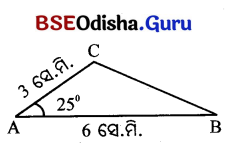
Unlike the Sun, the eclipsed full Moon can be safely watched with the naked eye, without any special protection.

Earth, Moon, and the Sun Class 7 Notes Science Chapter 12

Rotation of the Earth

  • Earth rotates on its axis from west to east.
  • This makes the Sun appear to move from east to west as observed from Earth.
  • One rotation takes about 24 hours, causing day and night.

Effect of the Tilt

  • The hemisphere tilted toward the Sun gets concentrated direct sunlight and longer days, causing summer.
  • The opposite hemisphere receives less direct sunlight and shorter days, causing winter.

Season in June
In June, the Northern Hemisphere is tilted toward the Sun.

  • Summer in the Northern Hemisphere.
  • Winter in the Southern Hemisphere
  • Summer Solstice: Longest day (21 June in the Northern Hemisphere)

Seasons in March and September

  • Equinoxes: Around 21 March (spring equinox) and 23 September (autumn equinox).
  • The Earth’s axis is not tilted toward or away from the Sun.
  • Both hemispheres receive equal amounts of sunlight, resulting in nearly equal day and night durations.

Earth, Moon, and the Sun Class 7 Notes Science Chapter 12

Season in December
In December, the Southern Hemisphere is tilted toward the Sun.

  • Winter in the Northern Hemisphere
  • Summer in the Southern Hemisphere.
  • Winter Solstice: Shortest day (22 December in the Northern Hemisphere).

Revolution of the Earth

The Earth revolves around the Sun in an orbit, completing one revolution in about 365 days and 6 hours.

Changing View of the Night Sky Annually
The stars visible in the night sky change throughout the year due to Earth’s revolution around the Sun.

Seasons

  • Seasons occur mainly because of the tilt of the Earth’s axis and the spherical shape of the Earth.
  • This tilt makes sunlight fall differently on different parts of Earth during the year.

Eclipses

  • Eclipses happen when the Sun, Moon and the Earth come in a straight line.
  • Eclipses can be total or partial, depending on the alignment of the Sun, Moon, and the Earth.

Earth, Moon, and the Sun Class 7 Notes Science Chapter 12

Solar Eclipse

A solar eclipse occurs when the Moon comes between the Sun and the Earth, blocking the sunlight from reaching the Earth.
CAUTION: Viewing a solar eclipse requires safety precautions to protect the eyes.

Lunar Eclipse
A lunar eclipse happens when the Earth comes between the Sun and the Moon and blocks sunlight from reaching the Moon. Viewing a Lunar eclipse is safe with the naked eye.

Light: Shadows and Reflections Class 7 Notes Science Chapter 11

Combining textbook study with BSE Odisha Class 7 Science Notes and Class 7 Science Curiosity Chapter 11 Light: Shadows and Reflections Notes can make exam preparation more effective.

Light: Shadows and Reflections Notes Class 7

Class 7 Science Curiosity Chapter 11 Notes

Sources of Light

  • The Sun emits its own light and is the main source of natural light on Earth; stars, lightning, natural fire and some animals such as fireflies, also emit their own light.
    • Early humans used fire as the first artificial light source and later used fuels like animal fat, oil, wax and gas for lighting.
    • With the invention of electricity and different electric light sources, most everyday lighting needs are now met by electric lamps and bulbs.
  • Luminous objects: Objects that emit their own light are called luminous objects.
  • Non-luminous objects: Objects that do not emit their own light are called non-luminous objects; they are seen because they reflect light from luminous objects.
  • The Moon is a non-luminous object; it does not produce its own light but reflects sunlight falling on it.

LED lamps are modern light sources that use much less electrical power, give brighter light and last longer than traditional lamps. Using LED lamps helps reduce electricity bills and is better for the environment, so their use is being promoted nationwide.

Light from the Sun does not reach us instantly; it takes about 8 minutes 20 seconds to travel from the Sun to the Earth. If the Sun suddenly stopped emitting light, we would still see it shining for about 8 minutes 20 seconds because of this travel time.

Light: Shadows and Reflections Class 7 Notes Science Chapter 11

Light Travels in a Straight Line

  • Light travels in straight lines from a source to objects and then to our eyes. We can see a light source or an illuminated object only when there is a clear, straight path for light to reach our eyes.
  • If a series of small openings are arranged in a straight line, light can pass through all of them to form a bright spot on a screen; if any opening is shifted out of line, the light is blocked and the spot disappears.

Light through Transparent, Translucent, and Opaque Materials

Transparent materials Translucent materials Opaque materials
When a beam of light falls on a transparent material, it passes through almost unchanged. When a beam of light falls on a translucent material, only part of the light passes through it, so the beam appears faint or diffused. When a beam of light falls on an opaque material, light is blocked completely, and no light passes through.
Objects placed behind them can be seen clearly. Objects placed behind them look blurred or unclear. Objects placed behind them are not visible at all.

Shadow Formation

  • A shadow is formed when an object blocks light from reaching a surface.
  • Opaque objects form dark, well-defined shadows. Translucent objects form lighter, blurred shadows, while some transparent objects may form very faint sfu5£lows.
  • We need a source of light, an opaque object, and a screen (such as a wall or ground) to observe a shadow.
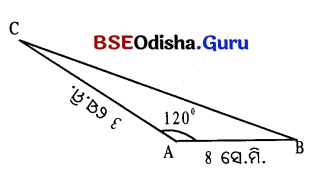
  • The size, shape and sharpness of a shadow depend on the position of the light source, the object and the screen.
  • Moving the object closer to the light source can make the shadow larger and fainter, while moving it closer to the screen can make the shadow smaller and sharper.
  • The colour of an object does not affect the colour of its shadow; shadows are always dark.
  • Shadows may not accurately show the shape of an object. Shadows usually match an object’s outline, but may appear stretched or distorted if the orientation of the object changes w.r.t the light source.
    Light Shadows and Reflections Class 7 Notes Science Chapter 11 1

Light: Shadows and Reflections Class 7 Notes Science Chapter 11

Reflection of Light

The bouncing back of light into the same medium when it strikes a surface is called reflection of light.

  • Reflection is most clearly seen on smooth, polished surfaces such as mirrors, glass, or calm water. Such surfaces reflect incoming light in a regular manner, forming clear images.
  • Rough surfaces scatter light in many directions and do not produce sharp images.
  • We are able to see objects only because of the reflection of light.
  • When light from a source, such as the Sun, a lamp, or a bulb, falls on an object. The object reflects the light in different directions. When the reflected light enters our eyes, we are able to see the object.
    Light Shadows and Reflections Class 7 Notes Science Chapter 11 2

Light: Shadows and Reflections Class 7 Notes Science Chapter 11

Images in a Plane Mirror

  • When you look into a plane mirror, you see your own reflection; similarly, we see reflections of other objects placed in front of the mirror.
  • The image formed by a plane mirror is erect (upright) and of the same size as the object.
  • The image formed by a plane mirror is virtual i.e., cannot be obtained on a screen.
  • The image formed by a plane mirror appears at the same distance behind the mirror as the object is in front of the mirror.
  • In the image formed by a plane mirror, your left appears as right and your right appears as left; this left-right reversal is called lateral inversion.
  • The word “AMBULANCE” is written as “ECNALUBMA” on the front of an ambulance so that it is read correctly in the rear view mirrors of the vehicles in front.
    Light Shadows and Reflections Class 7 Notes Science Chapter 11 3

Pinhole Camera

  • A pinhole camera is a device in which light rays from an object pass through a tiny hole (pinhole) and form an image on a screen.
  • The image formed by a pinhole camera is upside down, i.e., inverted. The image shows the colours of the objects, and its size depends on the distance between the object, pinhole, and screen.
  • The image formed by a pinhole camera is also laterally inverted.
    Light Shadows and Reflections Class 7 Notes Science Chapter 11 4

Some Optical Devices based on Reflection of Light

Periscope

  • A periscope is an optical instrument that uses mirrors to see objects over or around obstacles.
  • A periscope can be made by placing two plane mirrors, placed parallel to each other at 45° angle, inside a Z-shaped box or tube.
  • Reflection from the two mirrors enables us to see over or around obstacles, such as a wall or people standing in front.
  • Periscopes are used in submarines, tanks and bunkers so that people inside can see outside.
    Light Shadows and Reflections Class 7 Notes Science Chapter 11 5

Kaleidoscope

  • A kaleidoscope is an optical instrument that produces beautiful and ever-changing patterns by the reflection of light.
  • A kaleidoscope is made using three rectangular plane mirrors of equal size, arranged at 60° to each other to form a triangular prism shape, and placed inside a tube.
  • One end of the tube is covered with a transparent sheet, and small pieces of coloured bangles or beads are placed inside near this end.
    Light Shadows and Reflections Class 7 Notes Science Chapter 11 6
  • When you look through the other end, you see beautiful, symmetrical patterns formed by multiple reflections of the coloured pieces in the mirrors. When the kaleidoscope is turned or shaken the pieces move and you see a new pattern each time.
  • Multiple images formed due to reflections of reflections in three mirrors combine to form complex patterns.
  • Designers and artists often use kaleidoscopes to get ideas for new decorative patterns and designs.

Light: Shadows and Reflections Class 7 Notes Science Chapter 11

Luminous Objects: Objects that emit their own light.

Natural: Naturally occurring light sources.
For example, Sun, stars, lightning, fireflies etc.

Artificial: Man-made light sources.
For example, candles, oil lamps, tube light, LED etc.

Non-Luminous Objects

  • Objects that do not produce their own light.
  • These objects become visible when light from a luminous source falls on them and is reflected to our eyes.
  • For example, the Moon, trees, books, chairs, buildings, etc.

Interaction of Light with Different Materials

Transparent
Materials that let most light pass through, allowing us to see clearly.
Examples: Clean glass, clear water, air.

Translucent
Materials that let some light pass through but scatter it, giving a blurred view.
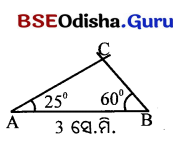
Examples: Frosted glass, butter paper, thin fabric.
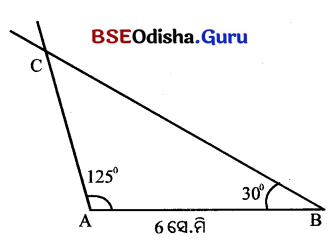
Light: Shadows and Reflections Class 7 Notes Science Chapter 11

Opaque
Materials that do not allow light to pass through them.
Examples: Wood, stone, metals.

Formation of Shadow

  • When light falling on a screen is blocked by an object, a dark patch called a shadow is formed on the screen.
  • To observe a shadow, a source of light, an opaque object, and a screen are required.
  • The shape, size, and sharpness of a shadow depends upon the position of the object, light source, and screen.
  • Shadows may not always accurately reflect the shape of an object.

Reflection of Light

  • Reflection is the bouncing back of light from a surface.
  • Reflection of light allows us to see objects and mirror images.
  • Regular reflection occurs on smooth surfaces and gives clear images.
  • Diffused reflection occurs on rough surfaces and scatters light, producing no clear image.

Reflection of Light by a Plane Mirror

  • A plane mirror is a flat, smooth surface that reflects light to form an image of an object.
  • The images formed by plane mirrors are upright, virtual, laterally inverted, and of the same size its the object.
  • The image appears at the same distance behind the mirror as the object is in front of it.
  • Plane mirrors are commonly used in wall mirrors and dressing mirrors.

Light: Shadows and Reflections Class 7 Notes Science Chapter 11

Optical Devices

Pinhole Camera

  • A pinhole camera is a simple optical device that forms a laterally inverted, upside down image of an object on a screen using light passing through a tiny hole.
  • It works on the principle that light travels in a straight line.

Periscope

  • A periscope is an optical instrument that allows a person to see objects that are not in the direct line of sight, typically over obstacles or from a concealed position.
  • It is based on the principle of reflection of light.
  • It is commonly used in submarines and tanks.

Kaleidoscope

  • A kaleidoscope is an optical instrument that produces beautiful, ever-changing patterns by the reflection of light off multiple mirrors positioned at specific angles.
  • It works on the principle of reflections of reflections.
  • It is frequently used by artists and designers to generate ideas for new patterns.

Life Processes in Plants Class 7 Notes Science Chapter 10

Combining textbook study with BSE Odisha Class 7 Science Notes and Class 7 Science Curiosity Chapter 10 Life Processes in Plants Notes can make exam preparation more effective.

Life Processes in Plants Notes Class 7

Class 7 Science Curiosity Chapter 10 Notes

Growth in Plants

  • Growth in plants involves parameters, such as the emergence of new leaves and branches, elongation and thickening of stems and roots, and an increase in height.
  • Water and sunlight are essential for healthy plant growth. Only plants that receive both water and sunlight grow healthy and strong. Lack of water or sunlight slows plant growth and may cause the plant to wilt (due to dehydration) or even die.

Life Processes in Plants Class 7 Notes Science Chapter 10

Food Preparation

Plants are autotrophs, i.e., they prepare their own food using resources from their surroundings. Leaves are the primary site for food preparation in plants.
Life Processes in Plants Class 7 Notes Science Chapter 10 1

Leaves and Chlorophyll

  • Leaves prepare food for the plant in the form of glucose, a simple carbohydrate.
  • The green colour of leaves is due to a special pigment called chlorophyll, which traps sunlight.
  • Leaves are usually broad and flat, which helps them receive maximum sunlight.
  • The food prepared is stored in the form of starch, a complex carbohydrate.
  • Presence of starch in leaves can be tested using iodine solution (blue-black colouration). Additionally, alcohol is used to decolourise or remove the chlorophyll pigments present in the leaf, which facilitates visualisation of the colour change during the iodine test.
  • Other plant parts that contain chlorophyll can also perform photosynthesis, such as young stems; in desert plants, the stems are adapted to carry out this process.
  • Leaves are not always green; they come in a variety of colours, like red, violet, and brown. Such plants also have chlorophyll and prepare food, but the green colour gets hidden as the proportion of other coloured pigments is greater.

Life Processes in Plants Class 7 Notes Science Chapter 10

Role of Sunlight

  • Sunlight provides the energy required to prepare food.
  • Leaves kept in sunlight produce starch, while those kept in darkness do not (negative iodine test), confirming sunlight’s indispensable role in this process.
  • Photosynthesis stops at night; starch serves as the reserve food supply during night-time.

Role of Air

  • Carbon dioxide is obtained from the air.
  • In the absence of carbon dioxide, starch is not formed in leaves, even if a leaf is exposed to sunlight.
  • Oxygen is produced during photosynthesis.
  • This can be experimentally verified by observing the air bubbles released by a water plant placed under a funnel in a beaker of water (in sunlight).
  • Oxygen is essential for respiration in living beings.

Photosynthesis: A Brief Account

The entire food preparation event is termed photosynthesis, a life process unique to plants.
Steps of Photosynthesis:

  • Roots absorb water and minerals from the soil.
  • Water is transported to the leaves through xylem (section 10.3.1).
  • Leaves take in carbon dioxide from the air through stomata.
  • Chlorophyll in leaves captures sunlight.
  • Using sunlight, water, and carbon dioxide, food (glucose) is prepared in the leaves.
  • Glucose serves as an instant energy source and later is converted into starch and stored in the plant.
  • Oxygen is released into the air as a by-product.
    Word equation:
    Life Processes in Plants Class 7 Notes Science Chapter 10 2

Life Processes in Plants Class 7 Notes Science Chapter 10

Stomata

  • Leaves have tiny pores called stomata.
  • Stomata help in the exchange of gases during photosynthesis (depicted here) and respiration.
    Life Processes in Plants Class 7 Notes Science Chapter 10 3

Transport in Plants

Transport of Water and Minerals

  • Roots absorb water and minerals from the soil.
  • Water and minerals move upward through xylem.
  • Xylem is present in roots, stems, and leaves, forming a continuous channel. Transport occurs only upwards, from roots to all aerial plant parts.
    Life Processes in Plants Class 7 Notes Science Chapter 10 4

Life Processes in Plants Class 7 Notes Science Chapter 10

Transport of Food

  • Food prepared in leaves is transported to all parts of the plant.
  • Transport of food occurs through phloem.
  • Food may be stored in roots, stems, fruits, or seeds.
  • Both upward and downward movement of nutrients take place in the phloem.
    Life Processes in Plants Class 7 Notes Science Chapter 10 5

Respiration in Plants

  • Plants respire just like other living beings to obtain energy from the food they produce.
  • This can be experimentally verified by placing germinating seeds in a sealed flask connected to a test tube containing lime water, which turns milky. The other test tube shows no change, confirming that germinating seeds release carbon dioxide during respiration.
  • Respiration occurs in all parts of the plant, both day and night. During respiration, glucose is broken down (using oxygen), with the release of carbon dioxide, water, and energy.
    Word equation: Glucose + Oxygen → Carbon dioxide + Water + Energy

Life Processes in Plants Class 7 Notes Science Chapter 10

Comparison between Photosynthesis and Respiration

Photosynthesis Respiration
Food (glucose) is prepared by plants. Food is broken down to release energy for growth and life activities.
Occurs primarily in the leaves and other green parts of the plant. Occurs in all parts of the plant.
Requires carbon dioxide and water, along with chlorophyll and the presence of sunlight. Requires oxygen and glucose.
Produces glucose and oxygen. Produces carbon dioxide, water, and energy.
Occurs mainly during the daytime. Occurs day and night (does not require sunlight).

Photosynthesis: The process by which plants prepare food in the presence of sunlight and chlorophyll.
Life Processes in Plants Class 7 Notes Science Chapter 10 2

Raw materials

  • Sunlight
  • Chlorophyll
  • Carbon dioxide
  • Water

Site of Photosynthesis

  • Leaves are the primary site of photosynthesis.
  • They contain a green pigment called chlorophyll, which captures sunlight.
  • Chlorophyll helps in food preparation in the form of carbohydrates (glucose).
  • As leaves prepare food, they are called the ‘food factories’ of plants.
  • Other parts of the plants which have chlorophyll (e.g., young stems) also perform photosynthesis.

Life Processes in Plants Class 7 Notes Science Chapter 10

Products of Photosynthesis

  • Glucose: The primary product; it is later converted into starch for storage (reserve food).
  • Oxygen: A by-product that all living beings respire to stay alive.

Site of Gaseous Exchange

  • Gaseous exchange occurs through tiny pores present on the surface of leaves called stomata.
  • Carbon dioxide and oxygen are exchanged during photosynthesis and respiration.

Growth in Plants

  • Growth involves the formation of new leaves, branches, stem thickening, and increase in height.
  • Requires sunlight and water

Experimental Chemicals and their Uses Iodine solution

  • Tests for the presence of starch in leaves (indicates whether photosynthesis has occurred in a leaf).
  • Alcohol – Removes chlorophyll from the leaf to help visualise the colour change during the starch test.
  • Caustic soda (sodium hydroxide) – Absorbs carbon dioxide (proves that carbon dioxide is necessary for photosynthesis).
  • Lime water – Turns milky in the presence of carbon dioxide (confirms respiration in plants).

Life Processes in Plants Class 7 Notes Science Chapter 10

Transportation

Transport of water and Minerals

  • Xylem transports water and minerals to leaves and other plant parts.
  • Transport occurs only upwards, from roots to all aerial plant parts through these thin tubular structures.
  • Water transported is used for various functions, like photosynthesis. Minerals are essential nutrients required for healthy growth of plants.

Transport of Food

  • Phloem is another set of thin, tubular structure that transports food in plants.
  • Transport occurs both upwards and downwards, from leaves to all plant parts.
  • Food transported is stored in parts like seeds and roots.

Respiration

  • Plants also respire like animals and human beings.
  • The process of break down of glucose in the presence of oxygen to release energy.
    Glucose + Oxygen → Carbon dioxide + Water + Energy

Raw Materials

  • Oxygen
  • Glucose

Life Processes in Plants Class 7 Notes Science Chapter 10

Site of Respiration

  • All plant parts, green or non-green, perform respiration.
  • Plants obtain the energy required for growth, development and performing other life processes through the breakdown of the food they produce.

Productof Respiration

  • Carbon dioxide
  • Water
  • Energy

Life Processes in Animals Class 7 Notes Science Chapter 9

Combining textbook study with BSE Odisha Class 7 Science Notes and Class 7 Science Curiosity Chapter 9 Life Processes in Animals Notes can make exam preparation more effective.

Life Processes in Animals Notes Class 7

Class 7 Science Curiosity Chapter 9 Notes

Life Processes

Certain essential functions that all living beings perform to survive are called life processes. Some examples of life processes include nutrition, respiration, excretion, etc.

Nutrition

  • All living beings require energy to perform life processes. This energy comes from the food they eat, which contains complex substances (nutrients) like carbohydrates, proteins, and fats that the body cannot use directly.
  • The process of breaking down complex food components into simpler forms that the body can absorb and use is called digestion.

Life Processes in Animals Class 7 Notes Science Chapter 9

(i) Digestion in Human Beings
Digestion in humans occurs inside a long tube called the alimentary canal, which extends from the mouth to the anus. Each component of the alimentary canal has its specific function(s).
Life Processes in Animals Class 7 Notes Science Chapter 9 1
Life Processes in Animals Class 7 Notes Science Chapter 9

Mouth

  • Teeth help break the food into smaller pieces by crushing and chewing it. This process of initial breakdown of food into fine pieces is called mechanical digestion.
  • Saliva present in the mouth contains a digestive juice that helps break down starch (complex carbohydrate) into simple sugars.
  • The chewed food, moistened with saliva, is then gently pushed to the back of the mouth with the help of the tongue, which helps in mixing the chewed food thoroughly with saliva.

Food pipe (Oesophagus)

  • Food then enters the food pipe (a muscular structure) whose walls contract and relax in a wave-like motion to push the food down into the stomach.
  • This wave-like motion continues all along the alimentary canal, helping to move food forward at every stage of digestion.

Stomach

  • Once the food reaches the stomach, the walls of the stomach begin to contract and relax, churning the food and mixing it well with the secretions released by the inner lining of the stomach that contains digestive juice, acid, and mucus.

Life Processes in Animals Class 7 Notes Science Chapter 9

Secretion Function(s)
Digestive juice Helps break down proteins into simpler substances
Add
  • Supports the digestion of proteins
  • Kills harmful bacteria that might have entered with the food
Mucus Protects the inner lining of the stomach from being damaged by the acid

Small Intestine

  • From the stomach, the partially digested food enters the small intestine.
  • It is about 6 metres long (longest part of the alimentary canal) and receives digestive secretions from its own inner lining, as well as from the liver and pancreas.
Component Secretion Function(s)
Liver Bile (Basic in nature)
  • Helps to neutralise the acid coming from the stomach
  • Breaks down fats into tiny droplets
Pancreas Pancreatic juice (Basic in nature)
  • Helps to neutralise acids present in the food
  • Breaks down carbohydrates, proteins, and fats
Inner lining Digestive juice Further breaks down fats, proteins, and carbohydrates into simpler forms

Life Processes in Animals Class 7 Notes Science Chapter 9

  • The inner wall of the small intestine is thin and covered with thousands of tiny, finger-like projections called villi, which increase the surface area for absorption of nutrients.
  • The blood vessels inside these finger-like projections absorb the digested nutrients and carry them to different parts of the bodv.
    Life Processes in Animals Class 7 Notes Science Chapter 9 2

Large Intestine

  • It is about 1.5 metres in length and absorbs water and salts from the undigested food, turning the waste into a semi-solid form known as stool.
  • The stool is stored in the rectum (lower part of the large intestine). When the body is ready to get rid of waste, it is removed through the anus by a process called egestion.
  • Eating foods that are rich in dietary fibre (like fruits, vegetables, and whole grains) helps the large intestine function properly, by making the stool easier to pass.

Life Processes in Animals Class 7 Notes Science Chapter 9

(ii) Digestion in Ruminants a Grass-eating animals like cows and buffalo, partially chew the grass and swallow it into their stomachs, where the initial digestion takes place.

Later, this partially digested food is brought back to the mouth for thorough chewing.

This process is called rumination, and animals that follow this method of digestion are called ruminants.

After this, the well-chewed food passes down the alimentary canal for complete digestion.
Life Processes in Animals Class 7 Notes Science Chapter 9 3

(iii) Digestion in Birds
Birds cannot chew their food as they do not have teeth. Instead, they have a special muscular chamber called gizzard that helps to break down food through the contraction and relaxation of its / walls.

Birds often swallow grit (small stones or sand) that collects in the gizzard and helps to grind the food mechanically.
Life Processes in Animals Class 7 Notes Science Chapter 9 4

Life Processes in Animals Class 7 Notes Science Chapter 9

Respiration

  • The process by which nutrients in the consumed food are converted into usable energy is called respiration (a chemical process).
  • It involves breathing (a physical process), which is a process of inhaling air rich in oxygen and exhaling air rich in carbon dioxide.

(i) Respiration in Human Beings
a Respiratory System: The respiratory system in humans includes the following components:
Life Processes in Animals Class 7 Notes Science Chapter 9 5

Component Feature and Function
Nostrils Nasal openings through which air enters our body
Nasal

Passages

Small passages, lined with tiny hair an4mucus through which air passes, trapping dust and dirt
Windpipe Tubular structure through which air reaches the lungs
Bronchi Two branches of the windpipe each entering into lungs
Lungs Primary breathing organ
Alveoli Small balloon-like sacs, richly supplied with blood vessels, present inside the lungs, where the exchange of gases takes place

Life Processes in Animals Class 7 Notes Science Chapter 9

Mechanism of Breathing

Inhaling (Breathing in)

  • Ribs move up and outwards
  • Diaphragm contracts and moves downwards
  • Volume of the chest cavity increases
  • Air enters the lungs
    Life Processes in Animals Class 7 Notes Science Chapter 9 6

Life Processes in Animals Class 7 Notes Science Chapter 9

Exhalation (Breathing out)

  • Ribs move down and inwards
  • Diaphragm relaxes and moves upwards
  • Volume of the chest cavity decreases
  • Air is pushed out of the lungs

Exchange of Gases During Respiration

  • Exchange of gases occurs at alveoli (sing, alveolus).
  • As blood flows through these fine tubes, it carries carbon dioxide from all parts of the body into the alveoli and is removed when we breathe out.
  • At the same time, oxygen from the air inside the alveoli enters the blood. This oxygen-rich blood is then carried (transported) to different parts of the body.
    Life Processes in Animals Class 7 Notes Science Chapter 9 7
  • Using the oxygen inhaled during breathing, the food is broken down to release energy (respiration).
    Word equation: Glucose + Oxygen → Carbon dioxide + Water + Energy
  • Oxygen travels from the lungs to our entire body with the help of the circulatory system, which includes the heart (pumps blood), blood, and blood vessels (carries blood throughout the body).

Life Processes in Animals Class 7 Notes Science Chapter 9

(ii) Respiration in Other Organisms

  • Animals like birds, elephants, lions, cows, goats, lizards, and snakes breathe through lungs.
  • On the other hand, aquatic organisms like fish have special breathing organs called gills, which are packed with tiny blood vessels and are designed to utilise dissolved oxygen from the water.
  • Amphibians, like frogs, use different body parts to breathe during different stages of their life.
  • Tadpoles use gills to breathe underwater. Breathing body parts in a fish
  • Adult frogs use lungs when they are on land and moist skin when they are underwater,
  • Earthworms also breathe through their moist skin.
    Life Processes in Animals Class 7 Notes Science Chapter 9 8

Life Processes in Animals Class 7 Notes Science Chapter 9

Digestion:
The process of breaking down complex food components into simpler forms.

Humans: Components and Mechanism

Mouth

  • Initiates mechanical digestion (breakdown of food into fine pieces, aided by teeth)
  • Releases saliva that breaks down starch into sugar, and moistens the food (aided by tongue)

Oesophagus (Food pipe)

  • Transports food from mouth to stomach through a wave-like motion

Stomach

  • Produces digestive juice (breaks down proteins), acid (kills harmful bacteria and aids in protein digestion), and mucus (protects the stomach lining from acid)

Small Intestine

  • Absorbs nutrients into the bloodstream with the help of numerous finger-like projections
  • Receives secretions from liver (bile – breaks down fats) and pancreas (produces pancreatic juice to neutralise acids and break down carbohydrates, proteins, and fats)
  • Inner lining secretes digestive juice for further break down of food

Life Processes in Animals Class 7 Notes Science Chapter 9

Large Intestine

  • Absorbs water and minerals (like salts)
  • Turns Undigested, semi-solid food into stool that is stored in the rectum

Anus

  • Expels stool from the body (egestion)

Other Animals

Ruminants

  • Food is partially chewed and stored in rumen.
  • Partially digested food, is brought back to the mouth and chewed again (rumination).

Birds

  • Lack teeth; food is broken down through contraction and relaxation of the walls of gizzard.
  • Gizzard grinds food using muscular actions of its walls and grit (small stones or sand).

Life Processes in Animals Class 7 Notes Science Chapter 9

Respiration
The chemical process of breaking down food to release energy utilising oxygen. It involves breathing (a physical process of
inhaling and exhaling air).
Glucose + Oxygen → Carbon dioxide + Water + Energy

Humans Components of Respiratory System

  • Nostrils: Nasal openings through which air enters our body
  • Nasal Passages: Small passages, lined with tiny hair and mucus through which air passes; traps dust and dirt
  • Windpipe: Tubular structure through which air reaches lungs
  • Bronchi: Iwo branches of the windpipe, each entering into lungs
  • Lungs: Primary breathing organs
  • Alveoli: Small balloon-like sacs surrounded by fine blood vessels, presen t inside lungs where the exchange of gases takes place.

Other Animals

  • Fish: Through gills
  • Tadpole: Through gills
  • Frog: Through lungs (on land) and moist skin (underwater)
  • Earthworm: Through moist skin
  • Bird, elephant, lion, cow, goat, lizard, snake: Lungs

Life Processes in Animals Class 7 Notes Science Chapter 9

Mechanism of Breathing

Inhaling (Breathing in)

  • Ribs move up and outwards
  • Diaphragm contracts and moves downwards
  • Volume of the chest cavity increases
  • Air (oxygen-rich) enters the lungs

Exhalation (Breathing Out)

  • Ribs move down and inwards
  • Diaphragm relaxes and moves upwards
  • Volume of the chest cavity decreases
  • Air (carbon dioxide-rich) is pushed out of the lungs

Circulatory System: Specialised system for the transport of nutrients, oxygen, and waste substances. It includes the heart, blood, and blood vessels.

Measurement of Time and Motion Class 7 Notes Science Chapter 8

Combining textbook study with BSE Odisha Class 7 Science Notes and Class 7 Science Curiosity Chapter 8 Measurement of Time and Motion Notes can make exam preparation more effective.

Measurement of Time and Motion Notes Class 7

Class 7 Science Curiosity Chapter 8 Notes

Measurement of Time

People noticed many naturally repeating events such as sunrise and sunset, phases of the Moon and change of seasons, and used them for measuring time. A day is based on the cycle of sunrise and sunset, and longer time intervals are organised using calendars.

To measure smaller intervals of time within a day, people developed simple devices like sundials, water clocks, hourglasses and candle clocks.

Measurement of Time and Motion Class 7 Notes Science Chapter 8
Measurement of Time and Motion Class 7 Notes Science Chapter 8 1

Device How it worked
Sundial Measured time using the changing position of a shadow cast by the Sun during the day.
Water Clock Used the flow of water into or out of a vessel.

(a)  Water flowing out-type: Water flows out of a vessel that has time markings; the fall in the water level represents different intervals of time.

(b)  Floating bowl-type (Ghatika-yantra): A bowl with a small hole floats on water; it fills and sinks, showing that a fixed time interval has passed.

Hourglass Measured time by the flow of sand from one glass bulb to another.
Candle Clock Candles with markings that indicated time as the wax burned down.

Early water clocks of water flowing out-type were inaccurate because the water flow slowed as the level dropped. To improve accuracy, the sinking bowl water clock (Ghatika-yantra) was developed, where a bowl sank in about 24 minutes, called one ghatika (ghati), and a 24-hour day was divided into 60 gliatis.

Measurement of Time and Motion Class 7 Notes Science Chapter 8

A Simple Pendulum

A simple pendulum consists of a small, heavy bob (usually a metal ball) suspended by a light, inextensible thread from a fixed support.

When the pendulum is at rest, the bob hangs vertically at its mean position. If the bob is pulled slightly to one side and then released, it moves to and fro about the mean position; this is an example of oscillatory and periodic motion.

One oscillation is completed when the bob goes from the mean position to one extreme, then to the other extreme and back to the mean position again.
Measurement of Time and Motion Class 7 Notes Science Chapter 8 2

  • The time taken for one complete oscillation is called the time period of the pendulum.
  • The time period of a simple pendulum at a given place depends only on its length, not on the mass of the bob.
  • For small oscillations, a pendulum of fixed length has nearly constant time period. It is used to measure time, such as in pendulum clocks.

Modern Clocks

  • All clocks, whether old or modern, are based on some continuously repeating process that can be used to mark equal intervals of time.
  • As each oscillation of the pendulum takes the same time, pendulum clocks count the oscillations to show hours, minutes, and seconds.
  • Quartz clocks use a tiny quartz crystal that vibrates very rapidly when electricity passes through it, and these vibrations are counted electronically to measure very accurate time.
  • Atomic clocks use vibrations of atoms such as caesium or rubidium, and because these vibrations are extremely regular, they are the most accurate clocks in the world.
  • Early pendulum clocks could gain or lose several seconds in a day, whereas atomic clocks can be so accurate that they may gain or lose only about a second in millions of years.

Measurement of Time and Motion Class 7 Notes Science Chapter 8

SI Unit of Time

  • The SI unit of time is the second, written with the symbol s.
  • Larger commonly used units are the minute (min) and hour (h), where 60 s = 1 min and 60 min = 1 h.
  • Names of time units (second, minute, hour) and their symbols (s, min, h) are written in lowercase, singular, and without a full stop.
  • While writing time, leave a space between the number and unit (e.g., 10 s, 5 min, 2 h); short forms like sec or hrs are not correct scientific symbols.

Slow or Fast

  • If two objects cover the same distance, the one that takes less time is said to be faster.
  • In a race, the runner who is farther ahead after the same time has covered more distance and is therefore running faster.

Need for Precise Time

  • In sports, modern timekeeping devices can record hundredths or thousandths of a second, helping to decide winners when differences are very small.
  • Medical instruments like ECG machines record very small time differences between heartbeats to detect health problems.
  • Digital systems, smartphones, computers and satellites work with signals that change in milliseconds or microseconds, so very precise clocks are needed in communication, navigation, space exploration and advanced science.

Measurement of Time and Motion Class 7 Notes Science Chapter 8

Speed

  • The speed of an object is the distance covered per unit time.
  • The SI unit of speed is metre per second (m/s).
  • When we calculate speed using total distance and total time, we are usually finding the average speed, because the actual speed may change during the journey.
  • Relationship between speed, distance, and time
    Speed = \(\frac{\text { Distance }}{\text { Time }}\)
  • Distance = Speed × Time
    Time = \(\frac{\text { Distance }}{\text { Speed }}\)

Uniform and Non-uniform Linear Motion

  • Linear motion: When an object moves along a straight line, its motion is called linear motion.
  • Uniform linear motion: An object moving along a straight line with a constant speed is said to be in uniform linear motion. In uniform linear motion, an object covers equal distances in equal intervals of time.
  • Non-uniform linear motion: An object moving along a straight line with a speed that changes with time is said to be in non-uniform linear motion. In non-uniform linear motion, an object covers unequal distances in equal intervals of time.
  • Uniform linear motion is an ideal case; in everyday life, vehicles and other objects rarely move with perfectly constant speed for long periods.
    • Speedometer: It shows the instantaneous speed of the vehicle at any moment, usually in km/h.
    • Odometer: It measures the total distance travelled by the vehicle, usually in kilometres.

Measurement of Time and Motion Class 7 Notes Science Chapter 8

Measurement of Time

  • Time is one of the most important physical quantities that helps us measure, compare, and understand changes in the physical world.
  • Since ancient times, people have observed natural events such as sunrise, sunset, and the phases of the Moon to measure time.

Time Measurement Devices

Early Devices

  • Sundial: Uses changing position of an object’s shadow cast by the Sun during the day.

Water Clock:

  • Flowing-out type: Time was measured by the flow of water out of a marked vessel.
  • Floating bowl type: Time was measured by placing a bowl with a small hole at the base on water; the time it took to fill and sink showed the passage of time.
  • Hourglass: Two bulbs with sand flowing from upper bulb to the lower one.
  • Candle Clock: Markings on candles; time tracked as candle burnt.

Modern Devices

  • Pendulum Clock: Measures time by the regular swing of a pendulum.
  • Quartz Clock: Used vibration of quartz crystals for higher precision.
  • Atomic Clock: Measure time using vibrations of caesium atoms; most accurate, lose only – 1 second in millions of years.

Measurement of Time and Motion Class 7 Notes Science Chapter 8

Units of Time

  • SI unit: second (s)
  • Conversions: 60 s = 1 min, 60 min = 1 h
  • Rules of writing units:
  • Always use lowercase for unit symbols.
  • Do not add plural forms or dots.
    Wrong: “sec”, “hrs” → Correct: “s”, “h”.

Simple Pendulum

  • A heavy small bob tied to a string and suspended from a rigid support.
  • A simple pendulum undergoes oscillatory motion.
  • Oscillatory motion is periodic in nature.

One Oscillation: Motion from the mean position → extreme position A → opposite extreme position B → back to the mean position.
Measurement of Time and Motion Class 7 Notes Science Chapter 8 3

Time Period (T): Time taken for one oscillation.

Factors Affecting Time Period:

  • Depends on length of string: longer length, greater time period.
  • Independent of mass of the bob.

Measurement of Time and Motion Class 7 Notes Science Chapter 8

Speed
Distance travelled by an object per unit time.
Speed = \(\frac{\text { Total distance covered }}{\text { Total time taken }}\)
SI unit: m/s
Other common unit: km/h.
Total distance covered = Speed × Total time taken
Total time taken = \(\frac{\text { Total distance covered }}{\text { Speed }}\)

To convert km/h → m/s, multiply by \(\frac{5}{18}\)
To convert m/s → km/h, multiply by \(\frac{18}{5}\)

Linear Motion
Uniform Linear Motion
An object moving in a straight line covers equal distances in equal time intervals.
Example: Car moving on a straight road at a constant speed of 40 km/h.

Measurement of Time and Motion Class 7 Notes Science Chapter 8

Non-uniform Linear Motion
An object moving in a straight line covers unequal distances in equal time intervals.
Example: Car speeding up on a straight road.