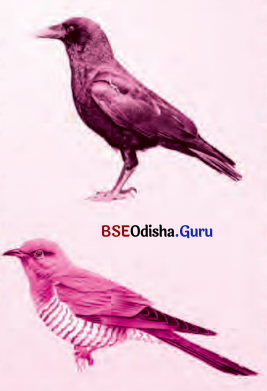
Lines and Angles Class 6 Solutions Maths Ganita Prakash Chapter 2

Students can refer to BSE Odisha Class 6 Math Solution and Ganita Prakash Chapter 2 Lines and Angles Class 6 Question Answer to understand textbook questions step by step.

Class 6 Maths Chapter 2 Lines and Angles Solutions

Ganita Prakash Class 6 Chapter 2 Solutions

Class 6 Maths Ganita Prakash Chapter 2 Solutions Lines and Angles

Question 1.
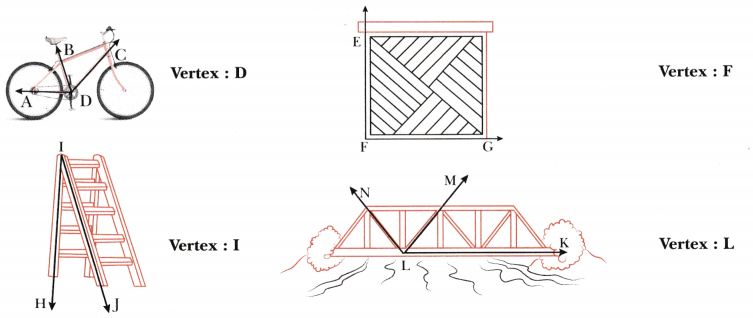
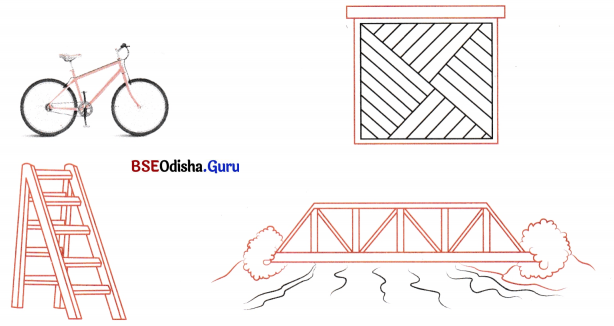
Can you find the angles in the given pictures? Draw the rays forming any one of the angles and name the vertex of the angle.
Lines and Angles Class 6 Solutions Maths Ganita Prakash Chapter 2 1
Solution:
Yes,
Lines and Angles Class 6 Solutions Maths Ganita Prakash Chapter 2 2

Lines and Angles Class 6 Solutions Maths Ganita Prakash Chapter 2

Question 2.
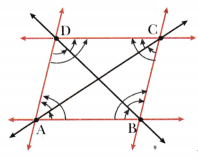
Mark any four points on your paper so that no three of them are on one line. Label them A, B, C and D. Draw all possible lines going through pairs of these points. How many lines do you get? Name them. How many angles can you name using A, B, C and D? Write them all down and mark each of them with a curve.
Solution:
A, B, C and D are four points.
Lines and Angles Class 6 Solutions Maths Ganita Prakash Chapter 2 3
The six possible lines are \(\overleftrightarrow{A B}\), \(\overleftrightarrow{B C}\), \(\overleftrightarrow{C D}\), \(\overleftrightarrow{A D}\), \(\overleftrightarrow{A C}\) and \(\overleftrightarrow{B D}\).
And, 12 possible angles arc ∠BAC, ∠CAD, ∠BAD, ∠ADB, ∠BDC, ∠ADC, ∠DCA. ∠ACB, ∠DCB, ∠ABD, ∠DBC, and ∠ABC.

Lines and Angles Class 6 Solutions Maths Ganita Prakash Chapter 2

Question 3.
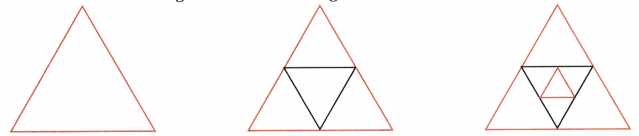
Find out the number of acute angles in each of the figures below.
Lines and Angles Class 6 Solutions Maths Ganita Prakash Chapter 2 4
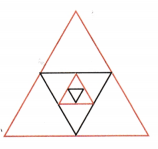
What will be the next figure and how many acute angles will it have? Do you notice any pattern in the numbers?
Solution:
First figure: There are three acute angles in the first figure.
Second figure: There are 12 acute angles in second figure (each of the 4 smaller triangles has 3 acute angles).
Third figure: There are 21 acute angles in the third figure (each of the 7 smaller triangles has 3 acute angles).
Lines and Angles Class 6 Solutions Maths Ganita Prakash Chapter 2 5
The next figure is given alongside. And, it has 30 acute angles.
The number of acute angles: 3, 12, 21, 30, …
Pattern: number of acute angles increase by 9 in each step.

Lines and Angles Class 6 Solutions Maths Ganita Prakash Chapter 2

Question 4.
Angles in a clock
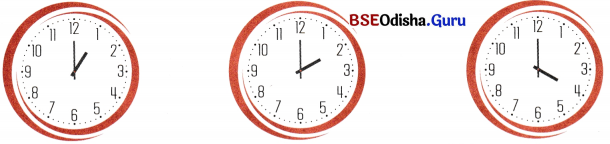
(a) The hands of a clock make different angles at different times. At 1 o’clock, the angle between the hands is 30°. Why?
(b) What will be the angle at 2 o’clock? And at 4 o’clock? 6 o’clock?
(c) Explore other angles made by the hands of a clock.
Lines and Angles Class 6 Solutions Maths Ganita Prakash Chapter 2 6
Solution:
(a) The clock is divided into 12 hours, so each hour mark is 30° apart, (\(\frac{360^{\circ}}{12}\) = 30°)
Therefore, at 1 o’clock the hour hand is at 1 and the minute hand is at 12, forming a 30° angle.

(b) At 2 o’clock, it is 60° (i.e. 30° × 2 = 60°),
At 4 o’clock, it is 120° (i.e. 30° × 4 = 120°)
At 6 o’clock, it is 180° (i.e. 30° × 6 = 180°)

(c) The angle increases by 30° for each hour. Other angle includes 90° at 3 o’clock, 150° at 5 o’clock and so on. ‘ Thus, on multiplying the hour by 30°, we can find the angle at any hour.

Question 5.
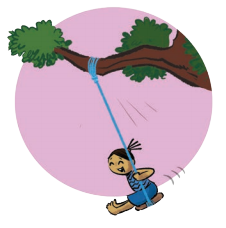
Vidya is enjoying her time on the swing. She notices that the greater the angle with which she starts the swinging, the greater is the speed she achieves on her swing. But where is the angle? Are you able to see any angle?
Lines and Angles Class 6 Solutions Maths Ganita Prakash Chapter 2 7
Solution:
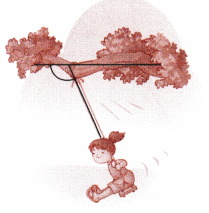
Yes, the angle is visible, and it is formed between the rope and the tree branch.
Lines and Angles Class 6 Solutions Maths Ganita Prakash Chapter 2 8

Lines and Angles Class 6 Solutions Maths Ganita Prakash Chapter 2

Question 6.
Observe the images below where there is an insect and its rotated version. Can angles be used to describe the amount of rotation?
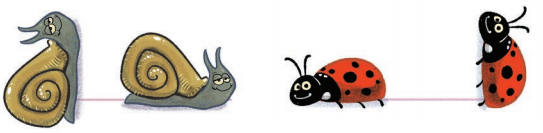
Lines and Angles Class 6 Solutions Maths Ganita Prakash Chapter 2 9
How? What will be the arms of the angle and the vertex?
Solution:
Yes, angles can he used to show the amount of rotation.
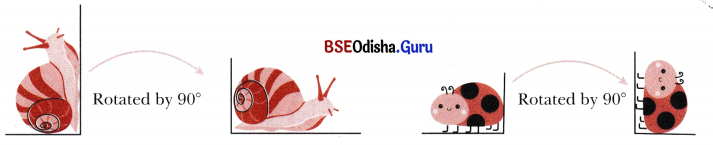
Lines and Angles Class 6 Solutions Maths Ganita Prakash Chapter 2 10
One arm of the angle is the horizontal line that the insects are on, and the other arm is the line that meets it at a corner point. The point where the two lines meet is the vertex of the angle.

Question 7.
In this figure, ∠TER = 80°. What is the measure of ∠BET? What is the measure of ∠SET?
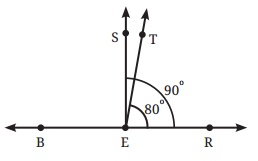
Lines and Angles Class 6 Solutions Maths Ganita Prakash Chapter 2 11
Solution:
Given, ∠TER = 80° and ∠SER = 90°
Now, ∠SET = ∠SER – ∠TER = 90° – 80° = 10°; ∠BET = ∠BES + ∠SET = 90° + 10° = 100°

Lines and Angles Class 6 Solutions Maths Ganita Prakash Chapter 2

Question 8.
Draw the letter ‘M’ such that the angles on the sides are 40° each and the angle in the middle is 80°.
Solution:
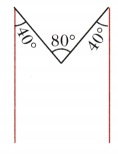
Lines and Angles Class 6 Solutions Maths Ganita Prakash Chapter 2 12
Note: In NCERT, the middle angle is given as 60°, which is not possible with side angles as 40°.

Question 9.
Draw the letter Y such that the three angles formed are 150°, 60° and 150°.
Solution:
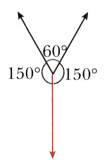
Lines and Angles Class 6 Solutions Maths Ganita Prakash Chapter 2 13

Question 10.
The Ashoka Chakra has 24 spokes. What is the degree measure of the angle between two spokes next to each other? What is the largest acute angle formed between two spokes?

Lines and Angles Class 6 Solutions Maths Ganita Prakash Chapter 2 14
Solution:
The angle between two spokes is 15° (i.e. \(\frac{360^{\circ}}{24}\)) because the Ashoka Chakra is a circle and dividing 360° by the number of spokes 24 gives the angle between two adjacent spokes.
Now, each pair of spokes can form different angles depending on how many spokes apart they are:
1 spoke apart → 15°;
2 spokes apart → 30°;
3 spokes apart → 45° ;
4 spokes apart → 60°;
5 spokes apart → 75°;
6 spokes apart → 90° → Not acute
7 spokes apart → 105° → Not acute (but obtuse)
So, the largest acute angle formed between two spokes = 75°.

Lines and Angles Class 6 Solutions Maths Ganita Prakash Chapter 2

InText Questions

Question 1.
In given figure, we have ∠AOB = ∠BOC = ∠COD = ∠DOE = ∠EOF = ∠FOG = ∠GOH = ∠HOI = ______. Why?
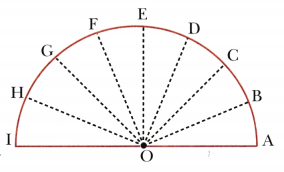
Lines and Angles Class 6 Solutions Maths Ganita Prakash Chapter 2 15
Solution:
In the figure, it is shown that a straight angle is divided into 8 equal angles:
∠AOB, ∠BOC, ∠COD, ∠DOE, ∠EOF, ∠FOG, ∠GOH, and ∠HOI.
A straight angle around a point measures 180°.
Since all 8 angles are equal, we divide 180° equally among them:
∠AOB = ∠BOC = … = ∠HOI = \(\frac{180^{\circ}}{8}\) = 22.5°

Lines and Angles Class 6 Extra Questions

Lines and Angles Class 6 Very Short Question Answer

Question 1.
In the figure, 8 points are given. Join the points A to E, E to F, F to B, B to G, G to C, C to H, H to D and D to C. How many line segments are formed?
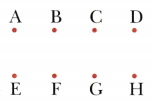
Lines and Angles Class 6 Solutions Maths Ganita Prakash Chapter 2 17
Solution:
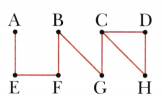
While joining the points A to E, E to F, F to B, B to G, G to C, C to H, H to D and D to C, we get the figure given alongside.
Lines and Angles Class 6 Solutions Maths Ganita Prakash Chapter 2 18
From the figure, the line segments are \(\overline{A E}, \overline{E F}, \overline{F B}, \overline{B G}, \overline{G C}, \overline{C H}, \overline{H D}\) and \(\overline{D C}\).
So, 8 line segments are formed.

Lines and Angles Class 6 Solutions Maths Ganita Prakash Chapter 2

Question 2.
In the given figure, write concurrent lines and their points of concurrence.
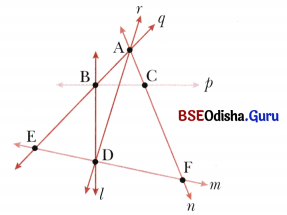
Lines and Angles Class 6 Solutions Maths Ganita Prakash Chapter 2 19
Solution:
We know that three or more lines that pass through the same point are called concurrent lines.

Concurrent Lines Point of Concurrence
line n, line q, line r A
line l, line p, line q B
line l, line m, line r D

Question 3.
Complete the statements given in Column I using the appropriate statements from Column II.

Column I Column II
(i) Three or more points are collinear (a) part of line having two endpoints.
(ii) Through a point (b) can be either parallel or intersecting.
(iii) Line segment is a (c) more than one line can pass.
(iv) Through two points (d) if they lie on the same line.
(v) Two lines in a plane (e) only one line can pass.

Solution:
We know that,
Three or more points are collinear if they lie on the same line.
Through a point more than one line can pass.
Line segment is a part of line having two endpoints. Through two points only one line can pass.
Two lines in a plane can be either parallel or intersecting.
∴ (i) – (d), (ii) – (c), (iii) – (a), (iv) – (e), (v) – (b)

Lines and Angles Class 6 Solutions Maths Ganita Prakash Chapter 2

Question 4.
Match the expressions in Column I with their correct descriptions from Column II.

Column I Column II
(i) \(\overrightarrow{P Q}\) (a) Line PQ
(ii) \(\overrightarrow{Q P}\) (b) Line segment PQ
(iii) \(\overleftrightarrow{P Q}\) (c) A ray with starting point P
(iv) \(\overline{P Q}\) (d) A ray with starting point Q

Solution:
Here,
(i) \(\overrightarrow{P Q}\) represents a ray with starting point P.
(ii) \(\overrightarrow{Q P}\) represents a ray with starting point Q.
(iii) \(\overleftrightarrow{P Q}\) represents a line PQ.
(iv) \(\overline{P Q}\) represents a line segment PQ.
∴ (i) – (c), (ii) – (d), (iii) – (a), (iv) – (b)

Lines and Angles Class 6 Solutions Maths Ganita Prakash Chapter 2

Question 5.
Write the name of the angles in the given figure.
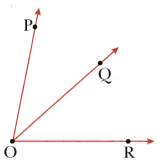
Lines and Angles Class 6 Solutions Maths Ganita Prakash Chapter 2 20
Solution:
In the given figure, the possible angles are as follows:

Vertex Arms Name of angle
O \(\overrightarrow{O P}\) and \(\overrightarrow{O Q}\) ∠POQ or ∠QOP
O \(\overrightarrow{O P}\) and \(\overrightarrow{O R}\) ∠POR or ∠ROP
O \(\overrightarrow{O Q}\) and \(\overrightarrow{O R}\) ∠ROQ or ∠QOR

Question 6.
How many acute angles are present in the given figure? Also, name them.
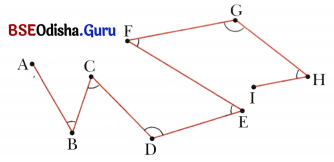
Lines and Angles Class 6 Solutions Maths Ganita Prakash Chapter 2 21
Solution:
We know that acute angles measure less than 90°.
In the given figure,
Acute angles: ∠ABC, ∠BCD, ∠DEF, ∠EFG and ∠GHI
So, 5 acute angles are present in the given figure.

Question 7.
In the figure, find ∠AOC.
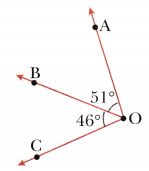
Lines and Angles Class 6 Solutions Maths Ganita Prakash Chapter 2 22
Solution:
Given, ∠AOB = 51° and ∠BOC = 46°
Now, ∠AOC = ∠AOB + ∠BOC = 51° + 46° = 97°

Lines and Angles Class 6 Solutions Maths Ganita Prakash Chapter 2

Question 8.
In the figure, find the missing angle.
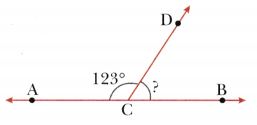
Lines and Angles Class 6 Solutions Maths Ganita Prakash Chapter 2 23
Solution:
From figure, ∠ACB is a straight angle.
∴ ∠ACB = 180°
⇒ ∠ACD + ∠BCD = 180° ,
⇒ 123° + ∠BCD = 180°
⇒ ∠BCD = 180°- 123° = 57°

Question 9.
Find the measure of the angle POQ given below using a protractor.
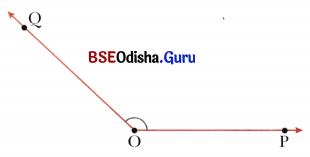
Lines and Angles Class 6 Solutions Maths Ganita Prakash Chapter 2 24
Solution:
Using protractor, we get ∠POQ = 137°.

Lines and Angles Class 6 Solutions Maths Ganita Prakash Chapter 2

Question 10.
Find the degree measures of ∠POR, ∠QOR and ∠QOS in the below figure.
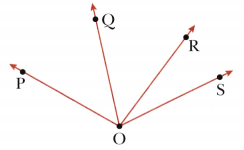
Lines and Angles Class 6 Solutions Maths Ganita Prakash Chapter 2 25
Solution:
Using protractor, we get
∠POR = 98°, ∠QOR = 50°, ∠QOS = 76°

Question 11.
In the figure, find the missing angle.
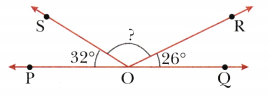
Lines and Angles Class 6 Solutions Maths Ganita Prakash Chapter 2 26
Solution:
From the figure, ∠POQ is a straight angle.
∴ ∠POQ = 180°
⇒ ∠QOR + ∠ROS + ∠SOP = 180°
⇒ 26° + ∠ROS + 32° = 180°
⇒ ∠ROS + 58° = 180°
⇒ ∠ROS = 180°-58° = 122°

Lines and Angles Class 6 Solutions Maths Ganita Prakash Chapter 2

Question 12.
In the figure given below, find the value of x°.
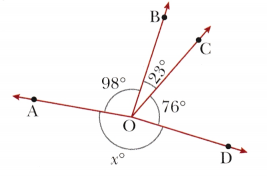
Lines and Angles Class 6 Solutions Maths Ganita Prakash Chapter 2 27
Solution:
We know that the complete angle at a point measures 360°
∴ ∠AOB + ∠BOC + ∠COD + ∠AOD = 360°
⇒ 98° + 23° + 76° + x° = 360°
⇒ 197° + x° = 360°
⇒ x° = 360°- 197° = 163°

Lines and Angles Class 6 Short Question Answer

Question 1.
What is the maximum and minimum number of points of intersection of four lines in a plane?
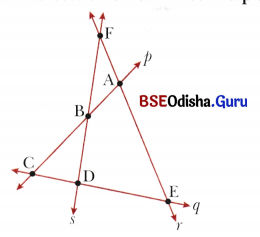
Lines and Angles Class 6 Solutions Maths Ganita Prakash Chapter 2 28
Solution:
When four lines intersect each other in such a way that each pair of lines meet at a different point, we get the maximum number of intersecting points.

Let the four lines be p, q, r and s. Then, the lines can intersect as shown in the figure to give the maximum number of points of intersection.

So, the maximum number of points of intersection of four lines in a plane is six.

Formula to confirm the answer:
Maximum number of points of intersection of n lines = \(\frac{n(n-1)}{2}\)
If all four lines are parallel, then they will not intersect at any point.
So, the minimum number of points of intersection of four lines in a plane is zero.

Question 2.
Lines l, m and n are concurrent. Also, lines p, m and n are concurrent. State whether lines p, l, m and n are concurrent or not.
Solution:
Three or more lines that pass through one common point is called concurrent lines. We are told that:

Lines l, m, and n are concurrent. So, they all meet at a point, let’s call it point A. Also, lines p, m, and n are concurrent. That means these lines also meet at point A. Now, let’s look at all the lines:
Line l goes through point A.
Line p goes through point A.
Line m goes through point A.
Line n goes through point A.
So, all four lines (l, m, n, and p) go through the same point A.
That means they are all concurrent.

Lines and Angles Class 6 Solutions Maths Ganita Prakash Chapter 2

Question 3.
Name all the line segments in each of the following figures.
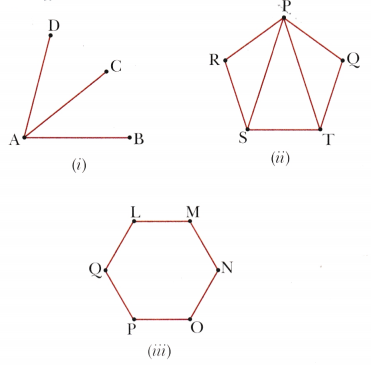
Lines and Angles Class 6 Solutions Maths Ganita Prakash Chapter 2 29
Solution:
All the line segments in figure (i) are \(\overline{A B}\), \(\overline{A C}\) and \(\overline{A D}\).
All the line segments in figure (ii) are \(\overline{P Q}\), \(\overline{P T}\), \(\overline{P S}\), \(\overline{P R}\), \(\overline{Q T}\), \(\overline{S R}\) and \(\overline{S T}\).
All the line segments in figure (iii) are \(\overline{L M}\), \(\overline{M N}\), \(\overline{N O}\), \(\overline{O P}\), \(\overline{P Q}\) and \(\overline{Q L}\).

Lines and Angles Class 6 Solutions Maths Ganita Prakash Chapter 2

Question 4.
There are four non-collinear points as shown in the figure. Draw lines through these points taking two at a time. Name the lines. How many such different lines can be drawn?
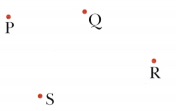
Lines and Angles Class 6 Solutions Maths Ganita Prakash Chapter 2 30
Solution:
The lines through the given points taking two at a time are \(\overleftrightarrow{P Q}, \overleftrightarrow{P R}, \overleftrightarrow{P S}, \overleftrightarrow{Q R}, \overleftrightarrow{Q S}\) and \(\overleftrightarrow{R S}\)
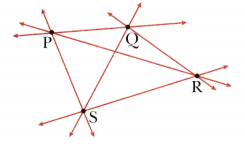
Lines and Angles Class 6 Solutions Maths Ganita Prakash Chapter 2 31
So, 6 different lines can be drawn from the given four non-collinear points.

Question 5.
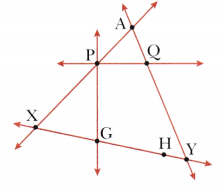
In the given figure, name
Lines and Angles Class 6 Solutions Maths Ganita Prakash Chapter 2 32
(i) lines containing the point P.
(ii) lines passing through the point Q.
(iii) line on which H lies.
(iv) three pairs of intersecting lines.
Solution:
(i) Lines containing the Point P are \(\overleftrightarrow{P Q}\), \(\overleftrightarrow{A X}\) and \(\overleftrightarrow{P G}\).
(ii) Lines through the point Q are \(\overleftrightarrow{A Y}\) and \(\overleftrightarrow{P Q}\).
(iii) Line on which lines is \(\overleftrightarrow{X Y}\).
(iv) Three pairs of intersecting hues are \(\overleftrightarrow{P Q}\) and \(\overleftrightarrow{P G}\); \(\overleftrightarrow{A X}\) and \(\overleftrightarrow{X Y}\); \(\overleftrightarrow{A Y}\) and \(\overleftrightarrow{X Y}\).

Lines and Angles Class 6 Solutions Maths Ganita Prakash Chapter 2

Question 6.
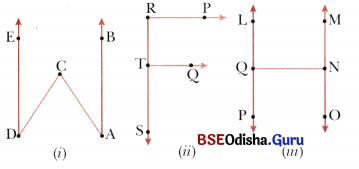
Identify and name the line segments and rays in each of the following figures.
Lines and Angles Class 6 Solutions Maths Ganita Prakash Chapter 2 33
Solution:
We know that the shortest path from point A to point B (including A and B) is called the line segment AB. It is denoted by either \(\overline{A B}\) or \(\overline{B A}\).
And a ray is a portion of a line that starts at one point (called the starting point or initial point of the ray) and goes on endlessly in a direction.

Figure Number Line Segment Ray
(i) \(\overline{A C}\), \(\overline{D E}\), \(\overline{A B}\) and \(\overline{C D}\) \(\overrightarrow{A B}\) and \(\overrightarrow{D E}\)
(ii) \(\overline{R T}\), \(\overline{R P}\), \(\overline{T Q}\), \(\overline{R S}\) and \(\overline{T S}\) \(\overrightarrow{R P}\), \(\overrightarrow{T Q}\), \(\overrightarrow{R S}\) and \(\overrightarrow{T S}\)
(iii) \(\overline{O N}\), \(\overline{Q L}\), \(\overline{Q P}\), \(\overline{L P}\), \(\overline{M N}\), \(\overline{N O}\) and \(\overline{M O}\) \(\overrightarrow{Q L}\), \(\overrightarrow{N M}\), \(\overrightarrow{N O}\) and \(\overrightarrow{Q P}\)

Lines and Angles Class 6 Solutions Maths Ganita Prakash Chapter 2

Question 7.
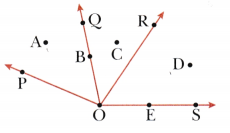
In the given figure, name the point(s):
Lines and Angles Class 6 Solutions Maths Ganita Prakash Chapter 2 34
(i) in the interior of ∠POQ.
(ii) in the interior of ∠POR.
(iii) in the exterior of ∠QOR.
(iv) in the exterior of ∠QOS. ..
(v) on ∠POS.
(vi) on ∠ROS.
Solution:
(i) Point A is in the interior of ∠POQ.
(ii) Points A, B, Q and C are in the interior of ∠POR.
(iii) Points A, P, D. E and S are in the exterior of ∠QOR.
(iv) Points A and P arc in the exterior of ∠QOS.
(v) Points P, O, E and S are on ∠POS.
(vi) Points R, O, E and S are on ∠ROS.

Lines and Angles Class 6 Solutions Maths Ganita Prakash Chapter 2

Question 8.
Compare two angles given below using superimposition and find which angle is smaller?
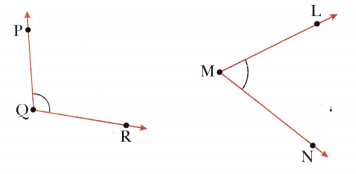
Lines and Angles Class 6 Solutions Maths Ganita Prakash Chapter 2 35
Solution:
Suppose we have a transparent circular paper which can be moved and placed from one figure to another figure.

Let us place the circular paper on the ∠PQR

The circular paper is placed in such a way that its centre is on the vertex of the angle i.e. Q. Mark the points A and B on the edge of circular paper at the points where the arms of the angle PQR pass through the circular paper.

After that put it on the other given angle ∠LMN, such that B lies on the arm MN and check which is smaller.
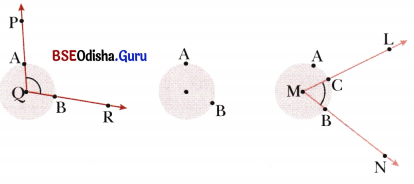
Lines and Angles Class 6 Solutions Maths Ganita Prakash Chapter 2 36
Hence, ∠LMN is smaller than ∠PQR.

Lines and Angles Class 6 Solutions Maths Ganita Prakash Chapter 2

Question 9.
In the figure, write another name for:
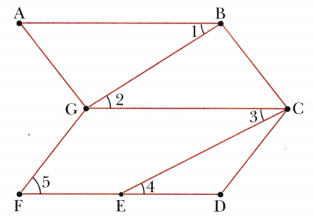
Lines and Angles Class 6 Solutions Maths Ganita Prakash Chapter 2 37
(i) ∠1
(ii) ∠2
(iii) ∠3
(iv) ∠4
(v) ∠5
Solution:
(i) Arms of’ the ∠1 are BA and BC and its vertex is B.
So. another name for ∠1 is ∠ABG or ∠GBA.

(ii) Aims of tIme ∠2 are GB amid GC and its vertex is G.
So, another name for ∠2 is ∠BGC or ∠CGB.

(iii) Arms of the ∠3 are CG and CE and its vertex is C.
So, another name for ∠3 is ∠GCE or ∠ECG.

(iv) Arms of the ∠4 arc ED and EC and its vertex is E.
So. another name for ∠4 is ∠CED or ∠DEC.

(v) Arms of the ∠5 are FE and FG and its vertex is F.
So, another name for ∠5 is ∠EFG or ∠GFE.

Lines and Angles Class 6 Solutions Maths Ganita Prakash Chapter 2

Question 10.
In each case, determine which angle is greater and why?
(i) ∠PQR or ∠XYZ
(ii) ∠XYZ or ∠LMN
(iii) ∠PQR or ∠LMN
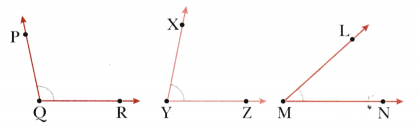
Lines and Angles Class 6 Solutions Maths Ganita Prakash Chapter 2 38
Solution:
On comparing by superimposition, we get
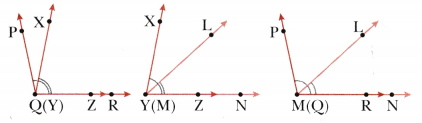
Lines and Angles Class 6 Solutions Maths Ganita Prakash Chapter 2 39
(i) ∠PQR is greater than ∠XYZ because the amount of rotation of ∠PQR is greater than the amount of rotation of ∠XYZ.
(ii) ∠XYZ is greater than ∠LMN because the amount of rotation of ∠XYZ is greater than the amount of rotation of ∠LMN.
(iii) ∠PQR is greater than ∠LMN because the amount of rotation of ∠PQR is greater than the amount of rotation of ∠LMN.

Question 11.
How many acute and obtuse angles are present in the given figure? Also, name them.
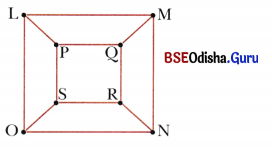
Lines and Angles Class 6 Solutions Maths Ganita Prakash Chapter 2 40
Solution:
We know that acute angles measure less than 90° and obtuse angles measure more than 90° but less than 180°.
In the given figure,
Acute angles: ∠OLP, ∠MLP, ∠LMQ, ∠NMQ, ∠MNR, ∠ONR, ∠NOS and ∠LOS
Obtuse angles: ∠LPS, ∠LPQ, ∠MQP, ∠MQR, ∠NRQ, ∠NRS, ∠OSR and ∠OSP
So, 8 acute angles and 8 obtuse angles are present in the given figure.

Lines and Angles Class 6 Solutions Maths Ganita Prakash Chapter 2

Question 12.
Classify the following angles (acute, obtuse, right, straight, complete):
(i) 80°
(ii) 90°
(iii) 180°
(iv) 175°
(v) 360°
Solution:
The given angles can be classified as follows:
(i) 80°: Acute angle
(ii) 90°: Right angle
(iii) 180°: Straight angle
(iv) 175°: Obtuse angle
(v) 360°: Complete angle

Question 13.
In the figure, if ∠POQ = 23° and ∠POR = 62°, then find ∠QOR.
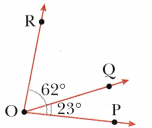
Lines and Angles Class 6 Solutions Maths Ganita Prakash Chapter 2 41
Solution:
Given,
∠POQ = 23° and ∠POR = 62°
From the figure, ∠POR = ∠POQ + ∠QOR
⇒ 62° = 23° + ∠QOR
Subtracting 23° from both sides, we get
62° – 23° = 23° + ∠QOR – 23°
⇒ ∠QOR = 39°

Lines and Angles Class 6 Solutions Maths Ganita Prakash Chapter 2

Question 14.
Construct an angle of 115° using a protractor.
Solution:
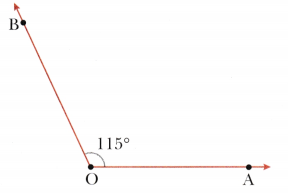
Lines and Angles Class 6 Solutions Maths Ganita Prakash Chapter 2 42
To draw an angle of 115° using a protractor, we follow the steps laid down below:
Step 1: Draw a ray \(\overrightarrow{O A}\).
Step 2: Place the protractor in such a way that its centre is exactly on the point 0 and the base line lies along \(\overrightarrow{O A}\).
Step 3: Starting from 0° on the right, move and look for the mark 115° mark on the protractor.
Step 4: Mark a point B against this 115° mark.
Step 5: Remove the protractor and draw the ray \(\overrightarrow{O B}\).
Thus, ∠AOB is the required angle whose measure is 115°.

Lines and Angles Class 6 Solutions Maths Ganita Prakash Chapter 2

Question 15.
How many degrees are there in:
(i) \(\frac{1}{2}\) of a straight angle?
(ii) \(\frac{3}{4}\) of a right angle?
Solution:
(i) \(\frac{1}{2}\) of a straight angle = \(\frac{1}{2}\) × 180° = 90°
(ii) \(\frac{3}{4}\) of right angle = \(\frac{3}{4}\) × 90°
= 3 × 22.5° = 67.5°

Question 16.
Measure the following angles with the help of a protractor and write the measure in degrees.
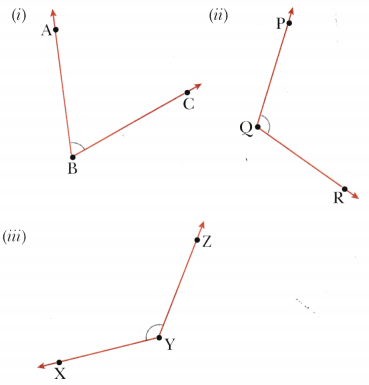
Lines and Angles Class 6 Solutions Maths Ganita Prakash Chapter 2 43
Solution:
(i) Using protractor, we get ∠ABC = 68°.
(ii) Using protractor, we get ∠PQR = 109°.
(iii) Using protractor, we get ∠XYZ = 125°.

Lines and Angles Class 6 Solutions Maths Ganita Prakash Chapter 2

Question 17.
Name the different angles and write their degree measures.
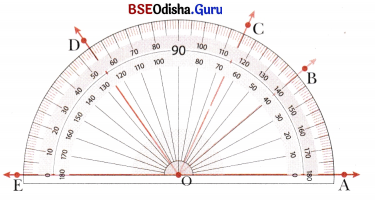
Lines and Angles Class 6 Solutions Maths Ganita Prakash Chapter 2 44
Solution:
All the possible angles are as follows: ;
∠AOB, ∠AOC, ∠AOD, ∠AOE, ∠BOC, ∠BOD, ∠BOE, ∠COD, ∠COE, ∠DOE
Now, ∠AOB = 40°; ∠AOC = 65°; ∠AOD = 125°; ∠AOE = 180°
∠BOC = ∠AOC – ∠AOB = 65° – 40° = 25°
∠BOD = ∠AOD – ∠AOB = 125°- 40° = 85°
∠BOE = ∠AOE – ∠AOB = 180° – 40° = 140°
∠COD = ∠AOD – ∠AOC = 125° – 65° = 60°
∠COE = ∠AOE – ∠AOC = 180° – 65°= 115°
∠DOE = ∠AOE – ∠AOD = 180°- 125°= 55°

Question 18.
Draw a line segment PQ of length 8 cm. Take a point R on PQ such that PR = 5 cm. At point R, draw SR ⊥ PQ.
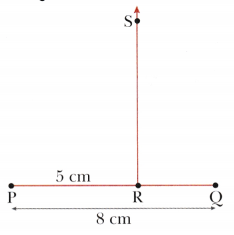
Lines and Angles Class 6 Solutions Maths Ganita Prakash Chapter 2 45
Solution:
To draw a required perpendicular line using a protractor, we follow the steps laid down below:
Step 1: Draw a line segment PQ of length 8 cm.
Step 2: Mark a point R on the line segment PQ such that PR = 5 cm.
Step 3: Draw SR perpendicular to PQ at R using protractor.
Thus, SR ⊥ PQ at point R.

Lines and Angles Class 6 Solutions Maths Ganita Prakash Chapter 2

Question 19.
State the type (obtuse, reflex, complete) of each of the following angles with their measure.
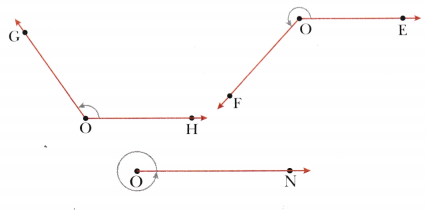
Lines and Angles Class 6 Solutions Maths Ganita Prakash Chapter 2 46
Solution:
Using protractor, we find
∠HOG = 125° (Obtuse angle)
∠EOE = 133°
⇒ Reflex of ∠EOE = 360°- 133° = 227° (Reflex angle)
∠NON = 360° (Complete angle)

Question 20.
Find the degree measures of ∠XOW, ∠XOY, ∠XOZ and ∠YOZ in the below figure.
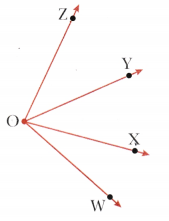
Lines and Angles Class 6 Solutions Maths Ganita Prakash Chapter 2 47
Solution:
We need to find the measures of ∠XOW, ∠XOY, ∠XOZ and ∠YOZ.
So, we place the protractor in such-a way that its centre coincide with the vertex 0 of the given angles and the base line lies along \(\overrightarrow{O W}\).
Starting from 0° on the right on inner scale, \(\overrightarrow{O X}\) passes through the 26° mark, \(\overrightarrow{O Y}\) passes through the 65° mark and \(\overrightarrow{O Z}\) passes through the 106° mark.
So, ∠XOW = 26°, ∠WOY = 65° and ∠WOZ = 106°
Now, ∠XOW = 26°
∴ ∠XOY = ∠WOY – ∠WOX = 65° – 26° = 39° [∵ ∠XOW = ∠WOX]
Also, ∠XOZ =∠WOZ – ∠WOX = 106° – 26° = 80°
And, ∠YOZ = ∠WOZ – ∠WOY = 106° – 65° = 41°

Lines and Angles Class 6 Solutions Maths Ganita Prakash Chapter 2

Lines and Angles Class 6 Long Question Answer

Question 1.
In the given figure, name
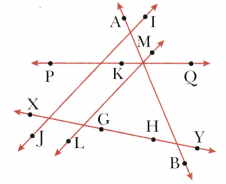
Lines and Angles Class 6 Solutions Maths Ganita Prakash Chapter 2 48
(i) Five pairs of intersecting lines.
(ii) Four collinear points.
(iii) Three collinear points.
(iv) Three concurrent lines.
Solution:
(i) Five pairs of intersecting lines are \(\overleftrightarrow{A B}\) and \(\overleftrightarrow{I J}\) ; \(\overleftrightarrow{P Q}\) and \(\overleftrightarrow{I J}\) ; \(\overleftrightarrow{X Y}\) and \(\overleftrightarrow{I J}\) ; \(\overleftrightarrow{X Y}\) and \(\overleftrightarrow{L M}\) ; \(\overleftrightarrow{X Y}\) and \(\overleftrightarrow{A B}\).
(ii) Four collinear points are X, G, H and Y.
(iii) Three collinear points are P, K and Q. As X, G, H and Y are collinear points, we can select any three points from X, G, H and Y as well for three collinear points.
(iv) Three concurrent lines are \(\overleftrightarrow{A B}\), \(\overleftrightarrow{L M}\) and \(\overleftrightarrow{P Q}\).

Lines and Angles Class 6 Solutions Maths Ganita Prakash Chapter 2

Question 2.
Consider the line XV in the adjoining figure. Find whether the given statements are true or false.
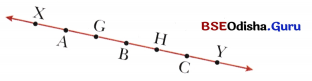
Lines and Angles Class 6 Solutions Maths Ganita Prakash Chapter 2 49
(i) B is a point on \(\overrightarrow{G Y}\).
(ii) A is a point on \(\overrightarrow{H Y}\).
(iii) G, B and H are points on the line segment GC.
(iv) \(\overrightarrow{H Y}\) is same as \(\overrightarrow{G Y}\).
(v) \(\overrightarrow{B X}\) is different from \(\overrightarrow{B Y}\).
(vi) A, B, C, G, H, X and Y are points on the line XY.
Solution:
(i) True
From the figure, the point B lies between the points G and Y.
Therefore, B is a point on \(\overrightarrow{G Y}\).

(ii) False
From the figure, the point A does not lie between the points H and Y.
Therefore, A is not a point on \(\overrightarrow{H Y}\).

(iii) True
From the figure, the point G is one endpoint of the line segment GC and the points B and H lie between points G and C.
Therefore, G, B and H are points on the line segment GC.

(iv) False
From the figure, the initial points of \(\overrightarrow{H Y}\) and \(\overrightarrow{G Y}\) are different.
Therefore, \(\overrightarrow{H Y}\) is not the same as \(\overrightarrow{G Y}\).

(v) True
From the figure, the initial points of the \(\overrightarrow{B X}\) and \(\overrightarrow{B Y}\) are same but they are moving in different directions.
Therefore, \(\overrightarrow{B X}\) is different from \(\overrightarrow{B Y}\).

(vi) True
From the figure, the points A, B, C, G, H, X and F lie on the line \(\overrightarrow{X Y}\).
Therefore, A, B, C, G, H, X and Y are points on the line \(\overrightarrow{X Y}\).

Lines and Angles Class 6 Solutions Maths Ganita Prakash Chapter 2

Question 3.
Draw rough diagrams of two angles for the condition which is possible.
(i) Vertex in common.
(ii) One arm in common.
(iii) Two arms in common.
(iv) Three points in common.
Solution:
Rough diagrams of two angles for the given condition are as follows:
(i) In the figure, ∠POQ and ∠XOY have vertex O in common.
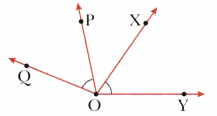
Lines and Angles Class 6 Solutions Maths Ganita Prakash Chapter 2 50

(ii) In the figure, ∠POO and ∠QOR have arm \(\overrightarrow{O Q}\) in common.
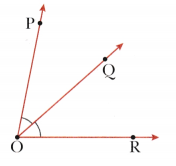
Lines and Angles Class 6 Solutions Maths Ganita Prakash Chapter 2 51

(iii) In the figure, ∠POQ and ∠XOY have two arms in common.
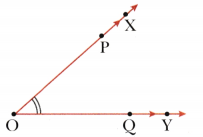
Lines and Angles Class 6 Solutions Maths Ganita Prakash Chapter 2 52

(iv) In the figure, ∠POQ and ∠QOR have three points O, S and Q in common.
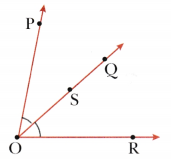
Lines and Angles Class 6 Solutions Maths Ganita Prakash Chapter 2 53

Lines and Angles Class 6 Solutions Maths Ganita Prakash Chapter 2

Question 4.
In each of the grids, join A to other grid points in the figure by a straight line to get:
(i) An acute angle
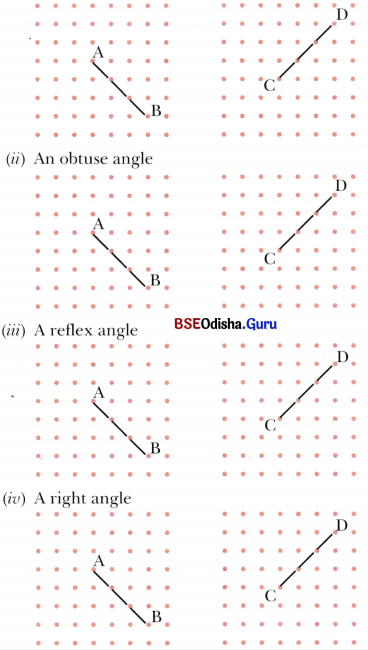
Lines and Angles Class 6 Solutions Maths Ganita Prakash Chapter 2 54
Solution:
(i) We know that an acute angle is greater than 0° and less than 90°.
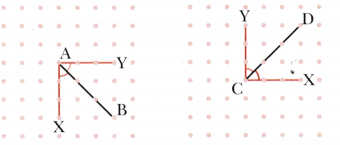
Lines and Angles Class 6 Solutions Maths Ganita Prakash Chapter 2 55
Here, ∠BAX, ∠BAY, ∠DCX and ∠DCY are acute angles.

(ii) We know that an obtuse angle is greater than 90° and less than 180°.
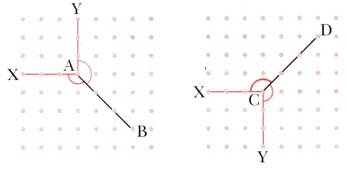
Lines and Angles Class 6 Solutions Maths Ganita Prakash Chapter 2 56
Here, ∠BAX, ∠BAY, ∠DCX and ∠DCY are obtuse angles.

Lines and Angles Class 6 Solutions Maths Ganita Prakash Chapter 2

(iii) We know that an obtuse angle is greater than 180° and less than 360°.
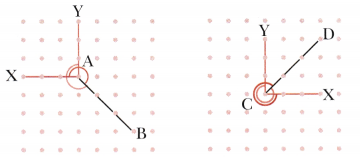
Lines and Angles Class 6 Solutions Maths Ganita Prakash Chapter 2 57
Here, ∠BAX, ∠BAY, ∠DCX and ∠DCY are reflex angles.

(iv) We know that a right angle is equal to 90°
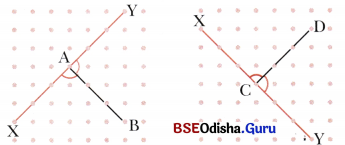
Lines and Angles Class 6 Solutions Maths Ganita Prakash Chapter 2 58
Here, ∠BAX, ∠BAY, ∠DCX and ∠DCY are right angles.

Question 5.
Find, the degree measures of ∠AOB, ∠BOE, ∠BOD, ∠COE and ∠COD.
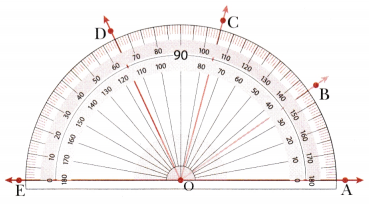
Lines and Angles Class 6 Solutions Maths Ganita Prakash Chapter 2 59
Solution:
For ∠AOB, \(\overrightarrow{O A}\) is at 0° mark on the right and \(\overrightarrow{O B}\) passes through the 35° mark from right.
Therefore, ∠AOB = 35°
For ∠BOE, \(\overrightarrow{O E}\) is at 0° mark on the left and \(\overrightarrow{O B}\) passes through the 145° mark from left.
Therefore, ∠BOE = 145°
For ∠COE, \(\overrightarrow{O E}\) is at 0° mark on the left and \(\overrightarrow{O C}\) passes through the 105° mark from left.
Therefore, ∠COE = 105°
For ∠BOD, we have
∠BOD = ∠BOE – ∠DOE …….. (i)
For ∠DOE, \(\overrightarrow{O E}\) is at 0° mark on the left and \(\overrightarrow{O D}\) passes through the 65° mark from left.
Therefore, ∠DOE = 65°
From (i), ∠BOD = 145° – 65° = 80° [∵ ∠BOE = 145° and ∠DOE = 65°]
For ∠COD, we have
∠COD = ∠COE – ∠DOE = 105°- 65° = 40°

Lines and Angles Class 6 Solutions Maths Ganita Prakash Chapter 2

Question 6.
Identify the types of angles represented by shaded portion in each:
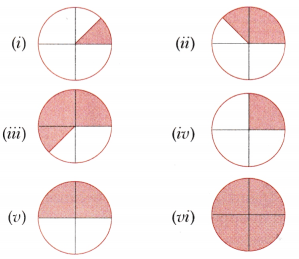
Lines and Angles Class 6 Solutions Maths Ganita Prakash Chapter 2 60
Solution:
(i) As the angle is less than quarter of a full turn, it is an acute angle.
(ii) As the angle is greater than quarter of a full turn but less than half of a full turn, it is an obtuse angle.
(iii) As the angle is greater than half of a full turn but less than a full turn, it is a reflex angle.
(iv) As the angle is equal to quarter of a full turn, it is a right angle.
(v) As the angle is equal to half of a full turn, it is a straight angle.
(vi) As the angle is equal to a full turn, it is a complete angle.

Lines and Angles Class 6 Case Based Questions

Question 1.
The Ashoka Chakra, found at the centre of the Indian national flag, is a symbol of righteousness and progress. It consists of 24 equally spaced spokes.
Based on the above information, answer the following questions:
(i) What is the angle between any two consecutive spokes of the Ashoka Chakra?
(ii) What is the largest acute angle that can be formed between any two spokes of the Ashoka Chakra?
(iii) What is the largest obtuse angle that can be formed between any two spokes of the Ashoka Chakra?
(iv) What is the smallest reflex angle that can be formed between any two spokes of the Ashoka Chakra?
Solution:
There are 24 spokes in the Ashoka Chakra.
(i) Since the spokes divide the circle into 24 equal parts, the angle between any two consecutive spokes is calculated by dividing the complete angle of a circle (360°) by 24. Thus, the angle between two consecutive spokes is \(\frac{360^{\circ}}{24}\) = 15°.

(ii) The largest acute angle that can be formed between any two spokes would be the greatest multiple of 15° that is still less than 90°.
The largest multiple of 15° and less than 90° is 75°.
Therefore, the largest acute angle between any two spokes is 75°.

Lines and Angles Class 6 Solutions Maths Ganita Prakash Chapter 2

(iii) The largest obtuse angle that can he formed between two spokes is the greatest multiple of 15°, which is greater than 90° but less than 1.80°.
The multiples of 15° (between 90° and 180°) are 105°, 120°, 135°, 150°, 165°.
Thus, the largest obtuse angle between any two spokes is 165°.

(iv) The smallest reflex angle that can be formed between two spokes is the smallest angle multiple of 15° greater than 180°, which would be 195° (since 180° + 15° = 195°).

Question 2.
Priya drawn a figure in her notebook as shown.
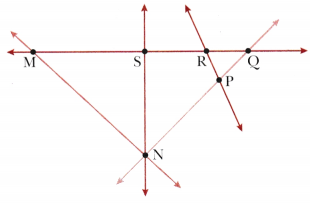
Lines and Angles Class 6 Solutions Maths Ganita Prakash Chapter 2 16
Based on the above information, answer the following questions:
(i) Write the collinear points.
(ii) Write the concurrent lines.
(iii) How many lines are concurrent at point N?
(iv) How many lines have point Q as the point of intersection?
Solution:
(i) Three or more points that lie on the same straight line are known as collinear points.
From the figure, N, P and O are collinear points.
And, M, S, R and Q are collinear points.

(ii) We know that three or more lines in a plane that pass through one point are known as concurrent lines.
From the figure, \(\overleftrightarrow{M N}\), \(\overleftrightarrow{S N}\) and \(\overleftrightarrow{Q N}\) are concurrent lines.

Lines and Angles Class 6 Solutions Maths Ganita Prakash Chapter 2

(iii) From the figure, we can see that three lines \(\overleftrightarrow{M N}\), \(\overleftrightarrow{S N}\) and \(\overleftrightarrow{Q N}\) are concurrent at point N.

(iv) From the figure, we can see that two lines. \(\overleftrightarrow{M Q}\) and \(\overleftrightarrow{N Q}\) intersect at point Q.
Patterns in Mathematics Class 6 Solutions Maths Ganita Prakash Chapter 1

Students can refer to BSE Odisha Class 6 Math Solution and Ganita Prakash Chapter 1 Patterns in Mathematics Class 6 Question Answer to understand textbook questions step by step.

Class 6 Maths Chapter 1 Patterns in Mathematics Solutions

Ganita Prakash Class 6 Chapter 1 Solutions

Class 6 Maths Ganita Prakash Chapter 1 Solutions Patterns in Mathematics

Question 1.
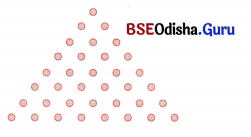
Why are 1, 3, 6, 10, 15, … called triangular numbers? Why are 1, 4, 9, 16, 25, … called square numbers or squares? Why are 1, 8, 27, 64, 125, … called cubes?
Solution:
As the dot representation of sequence 1,3, 6, 10, 15, … forms triangles, it is called triangular numbers sequence. As the dot representation of sequence 1,4, 9, 16, 25, … forms squares, it is called square numbers sequence.

As the dot representation of sequence 1,8, 27, 64, 125, … forms cubes, it is called cube numbers sequence.

Patterns in Mathematics Class 6 Solutions Maths Ganita Prakash Chapter 1

Question 2.
You will have noticed that 36 is both a triangular number and a square number! That is, 36 dots can be arranged perfectly both in a triangle and in a square. Make pictures in your notebook illustrating this!
This shows that the same number can be represented differently and play different roles, depending on the context. Try representing some other numbers pictorially in different ways!
Solution:
Representation of 36 as a triangular number:
Patterns in Mathematics Class 6 Solutions Maths Ganita Prakash Chapter 1 1
Representation of 36 as a square number:
Patterns in Mathematics Class 6 Solutions Maths Ganita Prakash Chapter 1 2

Representation of 10 as even number:
Patterns in Mathematics Class 6 Solutions Maths Ganita Prakash Chapter 1 3
Representation of 10 as triangular number:
Patterns in Mathematics Class 6 Solutions Maths Ganita Prakash Chapter 1 4

Question 3.
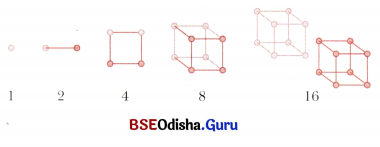
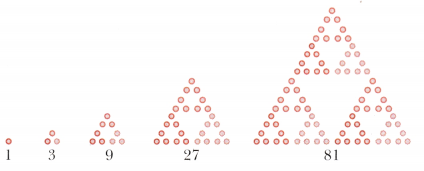
Can you think of pictorial way to visualise the sequence of Powers of 2? Powers of 3?
Solution:
Powers of 2 can be visualised as:
Patterns in Mathematics Class 6 Solutions Maths Ganita Prakash Chapter 1 5

Powers of 3 can be visualised as:
Patterns in Mathematics Class 6 Solutions Maths Ganita Prakash Chapter 1 6

Question 4.
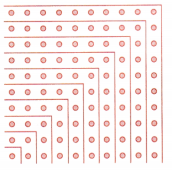
Can you find a similar pictorial explanation for why adding counting numbers up and down, i.e., 1, 1+2 + 1,1+2 + 3 + 2 + 1, … , gives square numbers?
Solution:
Yes,
As we can see, the dot representation of the addition of counting numbers up and down forms the dot representation of square numbers.

Patterns in Mathematics Class 6 Solutions Maths Ganita Prakash Chapter 1

Question 5.
Which sequence do you get when you start to add the All 1’s sequence up? What sequence do you get when you add the All l’s sequence up and down?
Solution:
Adding all 1 ’s sequence up
1 = 1
1 + 1 = 2
1 + 1 + 1 = 3
1 + 1 + 1 + 1 = 4 and so on.
Here, we get a sequence of counting numbers i.e. 1, 2, 3, 4, … .

Adding all l’s sequence up and down 1 = I
1 + 1 + 1 = 3
1 + 1 + 1 + 1 + 1 = 5 and so on.
Here, we get a sequence of odd numbers.

Question 6.
What happens when you add up pairs of consecutive triangular numbers? That is, take 1 + 3, 3 + 6, 6 + 10, 10 + 15,… ? Which sequence do you get?
Solution:
Adding up pairs of consecutive triangular numbers, we get
1 + 3 = 4;
3 + 6 = 9;
6 + 10 = 16;
10 + 15 = 25 and so on.
Here, we get a sequence of square numbers.

Patterns in Mathematics Class 6 Solutions Maths Ganita Prakash Chapter 1

Question 7.
What happens when you multiply the triangular numbers by 6 and add 1 ? Which sequence do you get?
Solution:
Triangular numbers are 1, 3, 6, 10, 15, …
On multiplying triangular numbers by 6 and add 1 to it, we get
1 × 6 + 1 = 7;
3 × 6 + 1 = 19;
6 × 6 + 1 = 37;
10 × 6 + 1 = 61;
15 × 6 + 1 = 91 and so on.
Hence, we get a sequence of hexagonal numbers.

InText Questions

Question 1.
Observe the pattern given below:
1 = 1
1 + 3 = 4
1 + 3 + 5 = 9
Why does this happen? Do you think it will happen forever?
Solution:
The sequence of odd numbers is: 1, 3, 5, 7, 9, 11,…
Sum of first 1 odd number = 1 = 12
Sum of first 2 odd numbers = 1 + 3 = 4 = 22
Sum of first 3 odd numbers = 1 + 3 + 5 = 9 = 32
Sum of first 4 odd numbers =1 + 3 + 5 + 7 = 16 = 42
Sum of first 5 odd numbers =1+3 + 5 + 7 + 9 = 25 = 52
Sum of first 6 odd numbers =1 + 3 + S + 7 + 9 + 11 = 36 = 62
Each time we add another odd number, the total becomes a perfect square.
Since the sequence of odd numbers keeps going forever, and the sum of the first n odd numbers is always n2, this pattern will continue forever.

Patterns in Mathematics Class 6 Solutions Maths Ganita Prakash Chapter 1

Question 2.
Pictorially represent and find the sum of the first 10 odd numbers.
Solution:
From figure, it is clear that
1 + 3 + 5 + 7 + 9 + 11 + 13 + 15 + 17 + 19 = 100 = 102
Patterns in Mathematics Class 6 Solutions Maths Ganita Prakash Chapter 1 7

Patterns in Mathematics Class 6 Extra Questions

Patterns in Mathematics Class 6 Very Short Question Answer

Question 1.
Find the next term of the sequence 1, 4, 9, 16,… .
Solution:
Given sequence is 1, 4, 9, 16, …, i.e. 12, 22, 32, 42, …, which is a sequence of squares.
So, next term, i.e. fifth term = 52 = 25

Question 2.
What is the sum of first 10 terms of the sequence of counting numbers?
Solution:
We know, the sequence of counting numbers is 1, 2, 3, 4, ….
Now, sum of first 10 terms of the sequence of counting numbers
= 1 + 2 + 3 + 4 + 5 + 6 + 7 + 8 + 9 + 10 = 55

Patterns in Mathematics Class 6 Solutions Maths Ganita Prakash Chapter 1

Question 3.
Identify the rule in the following number pattern and write the missing entries:
111 × 11 = 1221
121 × 11 = 1331
131 × 11 = 1441
141 × _____ = ______
_____ × 11 = 1661
161 × 11 = ______
Solution:
We observe that the first number on the left side increases by 10 each time: 111, 121, 131, 141, 151, 161,…
The result also increases by 110 each time: 1221, 1331, 1441, 1551, 1661, 1771, …
The first number is multiplied by 11 each time.
Thus, the missing numbers are as follows:
141 × 11 = 1551;
151 × 11 = 1661;
161 × 11 = 1771

Question 4.
Find the next term of the sequence 2 + 1, 2 + 2, 2 + 3, 2 + 4,… .
Solution:
Given sequence is 2 + 1, 2 + 2, 2 + 3, 2 + 4, ….
First term = 2 + 1
Second term = 2 + 2
Third term = 2 + 3
Fourth term = 2 + 4
So, next term, i.e. fifth term = 2 + 5

Question 5.
Find the next term of the sequence 2, 6, 12, 20, …
Solution:
C liven sequence is 2, 6, 12, 20, ….
Here, 2 = 1 × 2
6 = 2 × 3
12 = 3 × 4
20 = 4 × 5
So, next term = 5 × 6 = 30

Patterns in Mathematics Class 6 Solutions Maths Ganita Prakash Chapter 1

Question 6.
Find the next term of the sequence 1, 3, 6, 10, 15,
Solution:
Given sequence is 1, 3, 6, 10, 15
First term = 1
Second term = 3 = 1 + 2 (First term + 2)
Third term = 6 = 3 + 3 (Second term + 3)
Fourth term = 10 = 6 + 4 (Third term + 4)
Fifth term = 15 = 10 + 5 (Fourth term + 5)
So, next term = Fifth term + 6 = 15 + 6 = 21

Question 7.
What is the sum of first 12 terms of the sequence of all 1s?
Solution:
We know, the sequence of all 1 s is 1, 1, 1, 1, ….
Now, sum of first 12 terms of the sequence of all 1s
= 1 + 1 + 1 + 1 + 1 + 1 + 1 + 1 + 1 + 1 + 1 + 1 = 12

Question 8.
What is the sum of first 6 terms of the sequence of odd numbers?
Solution:
The sequence of odd numbers is 1, 3, 5, 7
Now, sum of first 6 terms of the sequence of odd numbers = 1 + 3 + 5 + 7 + 9 + 11 = 36 = 62

Question 9.
Write the first 5 square numbers.
Solution:
We know, the sequence of square numbers is 1, 4, 9, 16, 25, 36, …….
So, the first 5 square numbers are 1, 4, 9, 16 and 25.

Patterns in Mathematics Class 6 Solutions Maths Ganita Prakash Chapter 1

Question 10.
Write the first 4 triangular numbers.
Solution:
We know, the sequence of triangular numbers is 1, 3, 6, 10, 15, 21, 28, … .
So, the first 4 triangular numbers are 1, 3, 6 and 10.

Question 11.
Which sequence do you get on adding the counting numbers up?
Solution:
We know, the sequence of counting numbers is 1. 2, 3, 4, 5, … .
Now, on adding the counting numbers up, we get the following sequence:
1 = 1
1 + 2 = 3
1 + 2 + 3 = 6
1 + 2 + 3 + 4 = 10
1 + 2 + 3 + 4 + 5 = 15
So, the sequence is 1, 3, 6, 10, 15, …, which is the sequence of triangular numbers.

Patterns in Mathematics Class 6 Short Question Answer

Question 1.
Find the next term of the sequence 2, 16, 54, 128,
Solution:
Given sequence is 2, 16, 54, 128, ….
First term = 2 = 2 × 1 = 2 × 13
Second term = 16 = 2 × 8 = 2 × 23
Third term = 54 = 2 × 27 = 2 × 33
Fourth term = 128 = 2 × 64 = 2 × 43
So, next term, i.e. fifth term = 2 × 53 = 2 × 125 = 250

Patterns in Mathematics Class 6 Solutions Maths Ganita Prakash Chapter 1

Question 2.
Can you identify numbers which are both triangular as well as square numbers? Find 2 such numbers.
Solution:
We know, the sequence of triangular numbers is 1, 3, 6, 10, 15, 21, 28, 36, 45, ….
And the sequence of squares is 1,4, 9, 16, 25, 36, 49, 64, 81, ….
So, 1 and 36 are both triangular as well as square numbers.

Question 3.
Observe the pattern shown below and write the next three steps:
1 × 9 + 2 = 11
12 × 9 + 3 = 111
123 × 9 + 4 = 1111
Solution:
We observe that

  • On the left side, the first number starts at 1, then becomes 12, then 123, each time we add the next digit in order.
  • We multiply by 9 each time.
  • Then, we add next number (2, then 3, then 4)
  • On the right side the answer is made of all 1 s and the number of Is is one more than the number of digits in starting number.

So, next three steps will be:
1234 × 9 + 5 = 11111
12345 × 9 + 6 = 111111
123456 × 9 + 7 = 1111111

Question 4.
Identify the pattern in the following number pattern and write the missing terms:
2178 × 4 = 8712
21978 × 4 = 87912
219978 × 4 = _______
_____ × 4 = 8799912
21999978 × 4 = ________
219999978 × ______ = 879999912
Solution:
In the first number, we start with 2178 and keep adding one more 9 before 78 in each step.
Then, we multiply the number by 4. The result is a number starting with 87, followed by the same number of 9s, and ending with 12.
The missing numbers are as follows:
2178 × 4 = 8712
21978 × 4 = 87912
219978 × 4 = 879912
2199978 × 4 = 8799912
21999978 × 4 = 87999912
219999978 × 4 = 879999912

Patterns in Mathematics Class 6 Solutions Maths Ganita Prakash Chapter 1

Question 5.
Pairs of consecutive triangular numbers are added (i.e. 1 + 3, 3 + 6, …). Which sequence will you get on such addition? Write the 6th term of the new obtained sequence.
Solution:
We know, the sequence of triangular numbers is 1, 3, 6, 10, 15, 21, 28, … .
Now, on adding pairs of consecutive triangular numbers we get the following sequence:
1 + 3 = 4
3 + 6 = 9
6 + 10 = 16
10 + 15 = 25
15 + 21 = 36
21 + 28 = 49
So, the sequence is 4, 9, 16, 25, 36, 49, …, which represents the square numbers starting with 4.
Now, 6th term of the new obtained sequence is 49.

Question 6.
Which sequence do you get on adding the odd numbers up?
Solution:
We know, the sequence of odd numbers is 1, 3, 5, 7, 9, … .
Now, on adding the odd numbers up, we get the following sequence:
1 = 1
1 + 3 = 4
1 + 3 + 5 = 9
1 + 3 + 5 + 7 = 16
1 + 3 + 5 + 7 + 9 = 25
So, the sequence is 1,4, 9, 16, 25, …, which is the sequence of square numbers.

Patterns in Mathematics Class 6 Solutions Maths Ganita Prakash Chapter 1

Patterns in Mathematics Class 6 Long Question Answer

Question 1.
What will happen if you multiply the triangular numbers by 6 and add 1? Which sequence do you get?
Solution:
We know, the sequence of triangular numbers is 1, 3, 6, 10, 15, 21, 28, 36, 45, … .
Now, if we multiply the triangular numbers by 6 and add 1, we get the following sequence:
1 × 6 + 1 = 6 + 1 = 7
3 × 6 + 1 = 18 + 1 = 19
6 × 6 + 1 = 36 + 1 = 37
10 × 6 + 1 = 60 + 1 = 61
15 × 6 + 1 = 90 + 1 = 91
So, the required sequence is 7, 19, 37, 61, 91, …, which represents hexagonal numbers starting with 7.

Question 2.
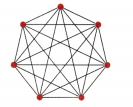
Find the number of line segments connecting any two distinct vertices of the polygon as shown in the figure.
Patterns in Mathematics Class 6 Solutions Maths Ganita Prakash Chapter 1 9
Solution:
We know, in a complete graph, every pair of vertices is connected by a unique line segment. The number of line segments in a complete graph with n vertices is given by \(\frac{n(n-1)}{2}\).
For K7 (Heptagon):
Number of vertices = 7
∴ Number of line segments
= \(\frac{n(n-1)}{2}\) = \(\frac{7(7-1)}{2}\) = 7 × 3 = 21
Patterns in Mathematics Class 6 Solutions Maths Ganita Prakash Chapter 1 10

Question 3.
Find the number of sides of a Koch Snowflake obtained after 5 iterations.
Solution:
To get from one shape to the next shape in the Koch Snowflake sequence, each line segment ‘_______’ is replaced by a speed bump ‘Patterns in Mathematics Class 6 Solutions Maths Ganita Prakash Chapter 1 11‘
Patterns in Mathematics Class 6 Solutions Maths Ganita Prakash Chapter 1 12

Number of iterations No. of sides
0 3 = 3 × 40
1 12 = 3 × 41
2 48 = 3 × 42
3 192 = 3 × 43
4 768 = 3 × 44

Thus,
After 5 iterations, number of sides = 3 × 45 = 3 × 1024 = 3072.

Patterns in Mathematics Class 6 Solutions Maths Ganita Prakash Chapter 1

Patterns in Mathematicse Class 6 Case Based Questions

Question 1.
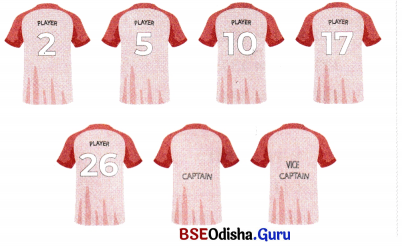
Players wear different jersey numbers to help fans and broadcasters identify them, especially in games like cricket and football where they look similar on the field.
Patterns in Mathematics Class 6 Solutions Maths Ganita Prakash Chapter 1 8
One day, Ashish went to the stadium to watch a cricket match. There, he observed the jersey numbers of some cricketers and found them to follow a sequence.
Based on the above information, answer the following questions:
(i) Write the rule for the sequence followed by the given numbers in words.
(ii) What will be the number on Captain’s jersey?
(iii) What will be the number on Vice-captain’s jersey?
Solution:
(i) Numbers on the jersey of players are given as
2 = 12 + 1;
5 = 22 + 1;
10 = 32 + 1;
17 = 42 + 1;
26 = 52 + 1
Rule of the sequence: n2 + 1; n = 1, 2, 3, …
(ii) Since captain is at 6th position, the number on his jersey is 62 + 1 = 36 + 1 = 37.
(iii) Since vice-captain is at 7th position, the number on his jersey is 72 + 1 = 49 + 1 = 50

Patterns in Mathematics Class 6 Solutions Maths Ganita Prakash Chapter 1

Question 2.
In Ms. Rina’s class, each student is given a unique roll number. One day, while arranging the books in the library, she noticed that the roll numbers of the students returning books followed a specific number pattern. She found that the roll numbers were: 1, 2, 3, 5, 8, 13, …
Based on the above information, answer the following questions:
(i) Write the rule for the sequence followed by the given numbers.
(ii) What is the name of the number sequence followed by the given numbers?
(iii) What will be the roll number of the 10th student?
Solution:
The given numbers are 1, 2, 3, 5, 8, 13, …
(i) First number = 1
Second number = 2
Third number = 3 = 1 + 2
(First number + Second Number)
Fourth number = 5 = 2 + 3
(Second number + Third Number)
Fifth number = 8 = 3 + 5
(Third number + Fourth Number)
Sixth number = 13 = 5 + 8
(Fourth number + Fifth Number)
Therefore, the rule for the sequence is,
First number = 1, Second number = 2, any other number = sum of previous two numbers

(ii) The given numbers are known as Virahanka numbers.

(iii) Observing the pattern (from above)
Seventh number = Fifth number + Sixth number
= 8 + 13 = 21
Eighth number = Sixth number + Seventh number
= 13 + 21 = 34
Ninth number = Seventh number + Eighth number
= 21 + 34 = 55
Tenth number = Eighth number + Ninth number
= 34 + 55 = 89
Therefore, the roll number of 10th student is 89.

BSE Odisha 6th Class Math Solution Book Ganita Prakash

BSE Odisha Guru Class 6 Maths Solutions ଗଣିତ ପ୍ରକାଶ Ganita Prakash, 6th Class Math Book Odia Medium Question Answer Pdf Download, Class 6 Math Book Solution Odia Medium.

BSE Odisha Class 6 Math Solution

BSE Class 6 Maths Solutions

BSE Odisha Guru Class 6 Maths Solutions Ganita Prakash

Class 6 Math Solution Odia Medium

Class 6 Odia Medium Math Solution

6th Class Math Odia Medium Solutions (Old Syllabus)

Chapter 1 ସଂଖ୍ୟାମାନଙ୍କୁ ଜାଣିବା

Chapter 2 ସଂଖ୍ୟା ସମ୍ବନ୍ଧୀୟ ଅଧ୍ବକ ଆଲୋଚନା

Chapter 3 ଜ୍ୟାମିତିରେ ମୌଳିକ ଧାରଣା

Chapter 4 ସ୍ଵାଭାବିକ ସଂଖ୍ୟା

Chapter 5 ଭଗ୍ନ ସଂଖ୍ୟା

6th Class Math Book Pdf Odia Medium Chapter 6 ଦଶମିକ ସଂଖ୍ୟା

Chapter 7 ବ୍ୟାବସାୟିକ ଗଣିତ

Class 6 Math Book Odia Medium Chapter 8 ପୂର୍ଣ୍ଣ ସଂଖ୍ୟା

Chapter 9 ସମତଳ ଉପରିସ୍ଥ ଜ୍ୟାମିତିକ ଆକୃତି

Chapter 10 ବୀଜଗଣିତ ସହିତ ପରିଚିତ

Class 6 Math Odia Medium Question Answer Chapter 11 ପରିମିତି

Chapter 12 ତଥ୍ୟ ପରିଚାଳନା ଓ ସଂରଚନା

6th Class Math Question Answer Odia Medium Chapter 13 ଜ୍ୟାମିତିକ ଅଙ୍କନ

BSE Odisha 6th Class Text Book Solutions

BSE Odisha Class 6 English Solutions Follow-Up Lesson 4 The Three Questions

Odisha State Board BSE Odisha 6th Class English Solutions Follow-Up Lesson 4 The Three Questions Textbook Exercise Questions and Answers.

BSE Odisha Class 6 English Solutions Follow-Up Lesson 4 The Three Questions

BSE Odisha 6th Class English Follow-Up Lesson 4 The Three Questions Text Book Questions and Answers

Session – 1 ( ସୋପାନ – ୧)

I. Pre-Reading (ପଢ଼ିବା ପୂର୍ବରୁ):
Here is a similar story for you. Read the story and do the activities. Some activities are given. The rest of the activities will be designed by your teacher. S/he will write them on the blackboard and help you do the tasks.
(ଏଠାରେ ତୁମ ପାଇଁ ଗୋଟିଏ ଏକାପରି ଗପ ଅଛି । ଗପଟିକୁ ପଢ଼ ଏବଂ କାର୍ଯ୍ୟାବଳୀଟିକୁ କର । କେତେକ କାର୍ଯ୍ୟାବଳୀ ଦିଆଯାଇଛି । ଅବଶିଷ୍ଟ କାର୍ଯ୍ୟାବଳୀ ତୁମ ଶିକ୍ଷକଙ୍କଦ୍ୱାରା ପ୍ରସ୍ତୁତ କରାଯିବ । ସେ (ପୁ/ସ୍ତ୍ରୀ) ସେଗୁଡ଼ିକୁ କଳାପଟାରେ ଲେଖିଦେବେ ଏବଂ ଏହି ପ୍ରଶ୍ନଗୁଡ଼ିକର ଉତ୍ତର କରିବାରେ ତୁମକୁ ସାହାଯ୍ୟ କରିବେ ।)

BSE Odisha Class 6 English Solutions Follow-Up Lesson 4 The Three Questions

II. While-Reading (ପଢ଼ିବା ସମୟରେ)
Text – (ପାଠ୍ୟବସ୍ତୁ)

Read paragraphs 1-3 silently and answer the questions that follow.
(ଅନୁଚ୍ଛେଦ ୧ – ୩ କୁ ନୀରବରେ ପଢ଼ା ଏବଂ ପରବର୍ତ୍ତୀ ପ୍ରଶ୍ନଗୁଡ଼ିକର ଉତ୍ତର ଦିଅ ।)
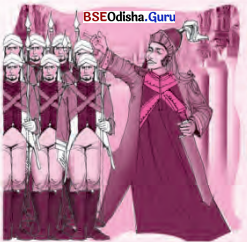
1. Once there was a great king in Germany. He liked soldiers very much because he was a good soldier himself. He had a special liking for one section of tall soldiers in his army. He kept that section under his own care and loved to watch it. He wanted to make it the best section of the army and tried hard to get the best men for it.
BSE Odisha Class 6 English Solutions Follow-Up Lesson 4 The Three Questions Q.1
2. At the first meeting, the king used to ask every new soldier the following three questions.
“How old are you?
How long have you served me already?
Do you like the food or the quarters here ?”

3. Once a man from another country came to join the German army. He did not know the German language, “How can I answer the king’s questions ?” he said, “I can’t understand them.”

ଓଡ଼ିଆ ଅନୁବାଦ :
(୧) ଏକଦା (ଥରେ) ଜର୍ମାନୀ ଦେଶରେ ଜଣେ ବିଶିଷ୍ଟ (ମହାନ୍) ରାଜା ଥିଲେ । ସେ ସୈନିକମାନଙ୍କୁ ବହୁତ ଭଲ ପାଉଥିଲେ କାରଣ ସେ ନିଜେ ଜଣେ ଭଲ ସୈନିକ ଥିଲେ । ତାଙ୍କର ତାଙ୍କ ସୈନ୍ୟବାହିନୀର ଏକ ଡେଙ୍ଗା ସୈନ୍ୟ ବିଭାଗ ପାଇଁ ସ୍ବତନ୍ତ୍ର ପସନ୍ଦ|ରୁଚି ଥିଲା । ସେ ସେହି ସୈନ୍ୟ ବିଭାଗ (ଦଳକୁ) ତାଙ୍କ ନିଜ ଦାୟିତ୍ଵରେ ରଖିଥିଲେ ଏବଂ ଏହାକୁ ଦେଖିବାକୁ ଭଲ ପାଉଥିଲେ । ସେ ଏହାକୁ ସୈନ୍ୟବାହିନୀର ସବୁଠାରୁ ଭଲ ବିଭାଗ (ଦଳ) ରୂପେ ଗଢ଼ିବାକୁ ଚାହୁଁଥିଲେ ଏବଂ ଏଥ‌ିପାଇଁ ସର୍ବୋତ୍ତମ ଲୋକମାନଙ୍କୁ ପାଇବାକୁ ବହୁତ ଚେଷ୍ଟା କରୁଥିଲେ ।

(୨) ପ୍ରଥମ ସାକ୍ଷାତ୍‌ରେ ରାଜା ପ୍ରତ୍ୟେକ ନୂଆ ସୈନିକଙ୍କୁ ପ୍ରାୟତଃ ନିମ୍ନଲିଖ୍ ତିନିଗୋଟି ପ୍ରଶ୍ନ ପଚାରୁଥିଲେ ।
ତୁମେ କେତେ ସମୟଧରି ମୋତେ ସେବା ପ୍ରଦାନ କରିଛ ? ତୁମେ ଏଠାରେ ଖାଦ୍ୟ କିମ୍ବା ବାସଗୃହ ପସନ୍ଦ କରୁଛ ?

(୩) ଥରେ ଅନ୍ୟ ଦେଶରୁ ଜଣେ ଲୋକ ଜର୍ମାନ୍ ସୈନ୍ୟବାହିନୀରେ ଯୋଗଦେବାକୁ ଆସିଲେ । ସେ ଜର୍ମାନ୍ ଭାଷା ଜାଣି ନଥୁଲେ, ସେ କହିଲେ, ‘‘କିପରି ମୁଁ ରାଜାଙ୍କର ପ୍ରଶ୍ନଗୁଡ଼ିକର ଉତ୍ତର ଦେଇପାରିବି ? ମୁଁ ତ ସେଗୁଡ଼ିକୁ ବୁଝିପାରିବି ନାହିଁ ।?

BSE Odisha Class 6 English Solutions Follow-Up Lesson 4 The Three Questions

Comprehension Questions – (ବୋଧମୂଳକ ପ୍ରଶ୍ନବଳୀ) :

Question 1.
Why did the king like soldiers ?
(କାହିଁକି ରାଜା ସୈନ୍ୟବାହିନୀକୁ ଭଲ ପାଉଥିଲେ ?)
Answer:
The king liked soldiers very much because he was a good soldier himself.

Question 2.
How many questions did the king ask a new soldier?
(ଜଣେ ନୂଆ ସୈନିକକୁ ରାଜା କେତେଗୋଟି ପ୍ରଶ୍ନ ପଚାରୁଥିଲେ ?)
Answer:
The king used to ask three questions to a new soldier.

Question 3.
What was the problem with the new soldier?
(ନୂଆ ସୈନିକର କ’ଣ ସମସ୍ୟା ଥିଲା ?)
Answer:
The problem with the new soldier was that he did not know the German language.

BSE Odisha Class 6 English Solutions Follow-Up Lesson 4 The Three Questions

Session – 2 (ସୋପାନ – ୨)
III. Post-Reading (ପଢ଼ିସାରିବା ପରେ)

Read paragraphs 4-6 silently and answer the questions that follow.
(ଅନୁଚ୍ଛେଦ ୪ – ୬ କୁ ନୀରବରେ ପଢ଼ ଏବଂ ପରବର୍ତ୍ତୀ ପ୍ରଶ୍ନଗୁଡ଼ିକର ଉତ୍ତର ଦିଅ ।)
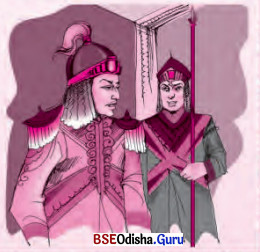
4. His officer told him all three questions and the way of answering them. He said the king always asked the same questions in the same order. So the soldier decided to answer them in that order

5. One day the king came to visit the army. He saw the new soldier and began to ask him questions. But this time the questions were in a different order. The soldier did not know this because he did not. understand the king’s words at all.
BSE Odisha Class 6 English Solutions Follow-Up Lesson 4 The Three Questions Q.2
6. King: How long have you been in my service?
Soldier: Thirty years, sir.
King: How is it? You look so young! What’s your age?
Soldier: Three weeks, sir.
King: What do you mean? Are you mad, or am I?
Soldier: Both sir.

BSE Odisha Class 6 English Solutions Follow-Up Lesson 4 The Three Questions

ଓଡ଼ିଆ ଅନୁବାଦ :
(୪). ତାଙ୍କର ଉଚ୍ଚ/ପଦସ୍ଥ କର୍ମଚାରୀ ତାଙ୍କୁ ସମସ୍ତ ତିନୋଟି ପ୍ରଶ୍ନ ଏବଂ ସେଗୁଡ଼ିକୁ ଉତ୍ତରଦେବା ଶୈଳୀ କହିଦେଲେ । ସେ କହିଲେ ଯେ ରାଜା ସର୍ବଦା ସେହି ଏକା ପ୍ରଶ୍ନ ଏକାକ୍ରମରେ ପଚାରନ୍ତି । ତେଣୁ ସୈନିକଟି ସ୍ଥିରକଲା ସେଗୁଡ଼ିକୁ ସେହି କ୍ରମରେ ଉତ୍ତର ଦେବାକୁ ।
(୫) ଦିନେ ରାଜା ସୈନ୍ୟବାହିନୀକୁ ପରିଦର୍ଶନ କରିବାକୁ ଆସିଲେ । ସେ ନୂଆ ସୈନିକକୁ ଦେଖିଲେ ଏବଂ ତାଙ୍କୁ ପ୍ରଶ୍ନଗୁଡ଼ିକ ପଚାରିବାକୁ ଆରମ୍ଭ କଲେ । କିନ୍ତୁ ଏଥର ପ୍ରଶ୍ନଗୁଡ଼ିକ ଭିନ୍ନ କ୍ରମରେ ଥିଲା । ସୈନିକଟି ଏହା ଜାଣିନଥୁଲା କାରଣ ସେ ରାଜାଙ୍କର ଶବ୍ଦଗୁଡ଼ିକୁ ଆଦୌ ବୁଝିପାରୁ ନଥିଲା ।

(୬) ରାଜା: କେତେକାଳ ହେଲା ତୁମେ ମୋ’ର ସେବାରେ ନିୟୋଜିତ ଅଛ ?
ସନିକ: ତିରିଶ ବର୍ଷ, ମହାଶୟ ।
ରାଜା: ଏହା କିପରି ସମ୍ଭବ ? ତୁମେ ଏତେ ଯୁବକ/କମ୍ ବୟସର ଦେଖାଯାଉଛ ? ତୁମର ବୟସ କେତେ ?
ସନିକ: ତିନି ସପ୍ତାହ, ମହାଶୟ ।
ରାଜା: ତୁମେ କ’ଣ ଭାବୁଛ ? ତୁମେ ପାଗଳ ନା ମୁଁ ?
ସନିକ: ଉଭୟ, ମହାଶୟ ।

Comprehension Questions – (ବୋଧମୂଳକ ପ୍ରଶ୍ନବଳୀ) :

Question 1.
Who helped the new soldier in preparing to answer the king’s questions?
(କିଏ ନୂଆ ସୈନିକକୁ ରାଜାଙ୍କ ପ୍ରଶ୍ନଗୁଡ଼ିକର ଉତ୍ତର ଦେବାପାଇଁ ପ୍ରସ୍ତୁତ କରିବାରେ ସାହାଯ୍ୟ କଲା ?)
Answer:
His officer helped the new soldier, in preparing to answer the king’s questions.

Question 2.
What did the king ask first?
(ରାଜା ପ୍ରଥମେ କ’ଣ ପଚାରିଲେ ?)
Answer:
The king first asked, “How long have you been in my service?

BSE Odisha Class 6 English Solutions Follow-Up Lesson 4 The Three Questions

Question 3.
What did the soldier answer?
(ସୈନିକଟି କ’ଣ ଉତ୍ତର ଦେଲା ?)
Answer:
The soldier answered, “Thirty years, sir.”

Session – 3 ( ସୋପାନ – ୩)
III. Post-Reading (ପଢ଼ିସାରିବା ପରେ)

1. Writing- (ଲେଖୁବା) :
(a) Answer the following questions
(କବିତାଟି କେଉଁ ବିଷୟରେ ଆଧାରିତ ?)

(i) Why did the king like soldiers?
(କାହିଁକି ରାଜା ସୈନିକମାନଙ୍କୁ ଭଲ ପାଉଥିଲେ ?)
Answer:
The king liked the soldiers very much because he was a good soldier himself.

BSE Odisha Class 6 English Solutions Follow-Up Lesson 4 The Three Questions

(ii) How many questions did the king ask?
(ରାଜା କେତୋଟି ପ୍ରଶ୍ନ ପଚାରିଲେ ?)
Answer:
The king asked three questions.

(iii) What was the problem with the new soldier ?
(ନୂଆ ସୈନିକର କ’ଣ ସମସ୍ୟା ଥିଲା ?)
The solder did not know.
Answer:
The soldier did not know the German language. So the problem with the new soldier was how he could answer the king’s questions.

(iv) Who helped him?
(କିଏ ତାକୁ ସାହାଯ୍ୟ କଲା ?)
Answer:
His officer helped him to answer the king’s questions.

BSE Odisha Class 6 English Solutions Follow-Up Lesson 4 The Three Questions

(v) Did the help work ?
(ସାହାଯ୍ୟଟି କାମରେ ଲାଗିଲା କି ?)
Answer:
No, the help did not work at all.

(vi) Why? (କାହିଁକି ?)
Because the king did
Answer:
Because the king did not ask the same questions in the same order. As the questions were in a different order, the soldier did not answer the king’s questions correctly.

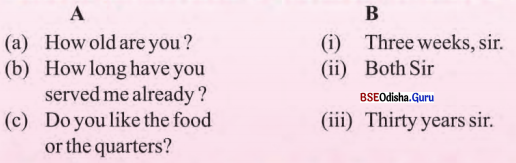
b. Match the questions under ‘A’ with the answers under ‘B’.
(‘A” ତଳେ ଥ‌ିବା ପ୍ରଶ୍ନଗୁଡ଼ିକୁ ‘B’ ତଳେ ଥିବା ଉତ୍ତରଗୁଡ଼ିକ ସହ ମିଳାଅ ।)
BSE Odisha Class 6 English Solutions Follow-Up Lesson 4 The Three Questions Q.1
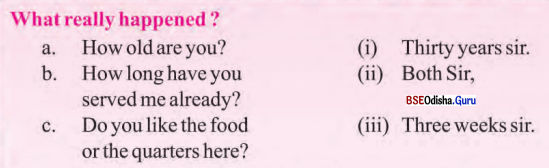
Answer:
BSE Odisha Class 6 English Solutions Follow-Up Lesson 4 The Three Questions Q.1Ans

BSE Odisha Class 6 English Solutions Follow-Up Lesson 4 The Three Questions Q.2
Answer:
BSE Odisha Class 6 English Solutions Follow-Up Lesson 4 The Three Questions Q.2Ans

Now write on what really happened based on your matching.
(ବର୍ତ୍ତମାନ ତୁମର ଯୋଡ଼ିବାକୁ ଭିତ୍ତିକରି ଯାହା ପ୍ରକୃତରେ ଘଟିଗଲା ଲେଖ ।)
When the king asked, “________ old _______?” The soldier replied, “__________” . Next , when he “How long _________ ?” The soldier replied, “___________”Finally, When____________________________ The soldier replied,___________________.
Answer:
When the king asked, “How old are you ?” The soldier replied, “Three weeks, sir.” Next, when he asked, “How long have you served me already? The soldier replied, “Thirty years, sir.” Finally, when the king asked. “Do you like the food or the quarters here ?’’ The soldier replied, “Both sir.’’

BSE Odisha Class 6 English Solutions Follow-Up Lesson 4 The Three Questions

Word Note – (ଶବ୍ଦାର୍ଥ)
(The words / phrases have been defined mostly on contextual meanings.)
(ଶବ୍ଦ । ଖଣ୍ଡବାକ୍ୟଗୁଡ଼ିକ ଅଧିକାଂଶତଃ ପ୍ରସଙ୍ଗଗତ ଅର୍ଥ ଉପରେ ନିର୍ଭର କରି ବ୍ୟାଖ୍ୟା କରାଯାଇଛି ।)

great – ବହୁତ ଭଲ
soldier – ସନିକ
liking – ପସନ୍ଦ
section – ବିଭାଗ
tall – ଲମ୍ବା
army – ସେନା
own – ନିଜର
care – ଯତ୍ନ
hard – କଠିନ
used to – ଅଭ୍ୟସ୍ତ
served – ପରିବେଷିତ
quarters – କ୍ୱାର୍ଟର୍ସ
German language – ଜର୍ମାନ ଭାଷା
order – କ୍ରମ
understand – ମୋତେ ବୁ
mad – ପାଗଳ
developed – ବିକଶିତ
satisfaction – ସନ୍ତୁଷ୍ଟ
anger – କ୍ରୋଧ
deaf – ବଧିର
seriously ill – ଗୁରୁତର ଅସୁସ୍ଥ
special liking- ବିଶେଷ ପସନ୍ଦ
same order – ସମାନ କ୍ରମ
decided – ସ୍ଥିର କଲା
visit – ପରିଦର୍ଶନ କରନ୍ତୁ
how long – କେତେ ଦିନ
began – ଆରମ୍ଭ ହେଲା
at all – ସବୁ ସମୟରେ
service – ସେବା
so young – ଏତେ ଯୁବକ
age – ବୟସ
weeks – ସପ୍ତାହଗୁଡିକ
mean – ଅର୍ଥ
both – ଉଭୟ
classmate – ସହପାଠୀ
problems – ସମସ୍ୟାଗୁଡିକ
finally – ଶେଷରେ

BSE Odisha 6th Class English Solutions Test-2(A)

Odisha State Board BSE Odisha 6th Class English Solutions Test-2(A) Textbook Exercise Questions and Answers.

BSE Odisha Class 6 English Solutions Test-2(A)

BSE Odisha 6th Class English Test-2(A) Text Book Questions and Answers

□ The figures in the right-hand margin indicate the marks for each question.
1. Write the following names of persons in English.
(Teacher will provide names of six persons in Odia.)

ଡାକ୍ତର ରାଜେନ୍ଦ୍ର ପ୍ରସାଦ
ରଣଜିତ ସିଂହ
ଅରବିନ୍ଦ ଘୋଷ
ବାଘା ଜତିନ
ସମ୍ରାଟ ଅଶୋକ |
ରାଜା ଦଶରଥ

Answer:
Doctor Rajendra Prasad
Ranjit Singh
Aurobindo Ghose
Bagha Jatin
Emperor Ashok
King Dasaratha

2. Write the following names of places in English.
(Teacher will provide names of six places in Odia.)

ପୁଡୁଚେରୀ |
ଶ୍ରୀ ଲଙ୍କା
ବିଜୟ ନାଗର
ମଥୁରା |
ମୁମ୍ବାଇ |
କପିଳାସ

Answer:
Puducherry
Srilanka
Vijaya Nagar
Mathura
Mumbai
Kapilas

BSE Odisha 6th Class English Solutions TEST - 2(A)

3. Your teacher will give a dictation of twelve words. Listen to him/her and write.

Answer:
village
classmate
friend
decided
deaf
Good Morning
fever
Germany
soldier
quarters
country
understand

4. Given below are some words. Your teacher will read aloud seven of them. Tick those s/he reads aloud.
language, young, neither, retire, gunny bag, religious, sight, greedy, weather, straightened, beautiful, special, elephant, bicycle
[Listen to your teacher carefully and tick those words as he reads aloud.]

5. Your teacher will read aloud a paragraph. Listen to him/her and fill in the gaps. (Question with Answer)
Once there lived a poor man in a village. He had a rich classmate. He lived in a town. They did not meet for a long time. In the meantime, the rich friend had problems with his ear and became deaf. His friend in the village could not know this.

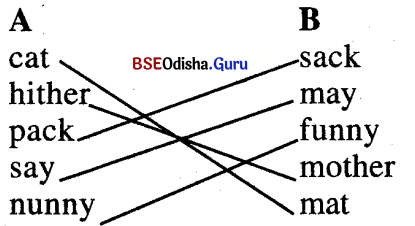
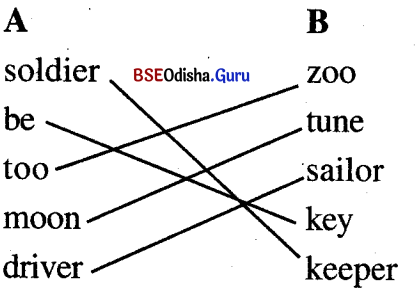
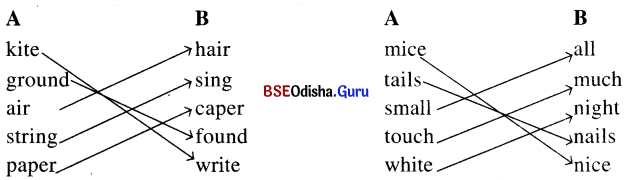
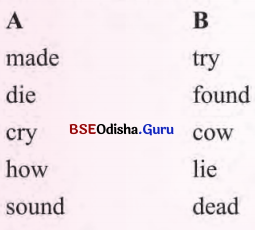
6. Match the words which sound alike at the end. (Question with Answer)

Match the words which sound alike at the end

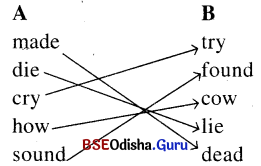
Answer:

Match the words which sound alike at the end Answer

BSE Odisha 6th Class English Solutions TEST - 2(A)

7. Read The poem and answer the questions incomplete sentences.

There was a dog and there was a cat.
One very thin and the other is fat.
Neither of them was a pet.
But the cat always sat on a mat.
and claimed she was a loving pet.

Question (i)
Who were there in the poem?
Answer:
In the poem, there were a dog and a cat.

Question (ii)
How were they?
Answer:
One was very thin and the other was fat.

Question (iii)
Were they pets?
Answer:
No, neither of them was a pet.

Question (iv)
Who sat on a mat?
Answer:
The cat always sat on a mat.

Question (v)
What did the cat claim?
Answer:
The cat claimed that she was a loving pet.

(vi)
Who was very thin?
Answer:
The dog was very thin.

BSE Odisha 6th Class English Solutions TEST - 2(A)

8. Read the following paragraph and answer the questions in complete sentences.
“There is a special school in Karagudi. It is special because it is not for children. Can you guess for whom it is ? It is for baby elephants. Who teaches them? The elephant trainers teach them. Like our schools, they have a timetable. They learn, play and eat according to this timetable.

Question (i)
What is there in Karagudi?
Answer:
There is a special school in Karagudi.

Question (ii)
Why is this school special?
Answer:
This school is special because it is not for children.

Question (iii)
Who are the students?
Answer:
Baby elephants are the students.

Question (iv)
Who are the teachers?
Answer:
The elephant trainers are the teachers.

Question (v)
What do they have like our schools?
Answer:
Like our schools, they have a timetable.

Question (vi)
How do they follow it?
Answer:
According to this timetable, they learn, play, and eat in the special school.

BSE Odisha 6th Class English Solutions TEST - 2(A)

9. Read the following poem and answer the questions in complete sentences.

It was a very cool night And there
was no crab in sight.
The fox looked for one
But there was none.
“Where did they go ?”
Not even one in sight!
They must be in their holes If
I’m right.”

Question (i)
How was the night?
Answer:
It was a very cool night.

Question (ii)
What was not in sight?
Answer:
There was no crab in sight.

Question (iii)
Who looked for the crab?
Answer:
The fox looked for the crab.

Question (iv)
Did he find one?
Answer:
No, he did not find any crab, because there was none.

Question (v)
Where did they go?
Answer:
They must have been in their holes.

Question (vi)
Who were there in the poem?
Answer:
There were the fox and the crab in the poem.

BSE Odisha 6th Class English Solutions TEST - 2(A)

10. Read the following paragraph and answer the questions in complete sentences.
Mahagiri was a big elephant. He was trained at a special school. He was bought by a merchant. The merchant made a lot of money by putting Mahagiri to work. The elephant was often sent to the forest to carry heavy logs of wood. Sometimes, he carried people from one place to another. Once, he even carried a bridegroom to the bride’s house! At times he was sent to a famous temple in a village nearby to lead the festival procession.

Question (i)
What is this paragraph about?
Answer:
This paragraph is about an elephant.

Question (ii)
Who was Mahagiri?
Answer:
Mahagiri was a big elephant.

Question (iii)
Where was Mahagiri trained?
Answer:
Mahagiri was trained at a special school.

Question (iv)
Who bought it?
Answer:
A merchant bought it.

Question (v)
How did the merchant make a lot of money?
Answer:
The merchant made a lot of money by putting Mahagiri to work.

Question (vi)
Why was the elephant often sent to the forest?
Answer:
The elephant was often sent to the forest to carry heavy logs of wood.

Question (vii)
What did he sometimes carry?
Answer:
Sometimes, he carried people from one place to another.

Question (viii)
What did he once even carry?
Answer:
Once, he even carried a bridegroom to the bride’s house.

Question (ix)
Where was he sent to at times?
Answer:
At times he was sent to a famous temple in a village nearby.

BSE Odisha 6th Class English Solutions TEST - 2(A)

Question (x)
Why was he sent to a famous temple?
Answer:
He was sent to a famous temple to lead the festival procession.

BSE Odisha 6th Class English Solutions Test-2(B)

Odisha State Board BSE Odisha 6th Class English Solutions Test-2(B) Textbook Exercise Questions and Answers.

BSE Odisha Class 6 English Solutions Test-2(B)

BSE Odisha 6th Class English Test-2(B) Text Book Questions and Answers

The figures in the right-hand margin indicate the marks for each question.
1. Write the following names of persons in English.
(Teacher will provide names of six persons ¡n Odia.)

ରାଜା ଦିବ୍ୟାସିଂହ ଦେବ
ରାଜା ରାମମୋହନ ରୟ |
ରାଜା ହରିଚନ୍ଦ୍ର
ରାମଚନ୍ଦ୍ର
ଚାଖି ଖୁଣ୍ଟିଆ
ଲକ୍ଷ୍ମଣ କୁମାର

Answer:
Raja Dibvasingh Deb
Raja Rammohan Roy
Raja Harischandra
Ramchandra
Chakhi Khuntia
Lakshmana Kumar

2. Write the following names of places ¡n English.
(Teacher will provide names of six places in Odia.)

ଦୌଲତାବାଦ
ସଂସଦ ଭବନ
ଜୁମ୍ମା ମସଜିଦ୍
ଦ୍ୱାରିକାପୁର
ଅୟୋଧ୍ୟା
ହସ୍ତିନା

Answer:
(i) Doulatabad
(ii) Parliament House
(iii) Jumma Mosque
(iv) Dwarikapura
(v) Ayodhya
(vi) Hasina

BSE Odisha 6th Class English Solutions Test-2(B)

3. Your teacher will give a dictation of twelve words. Listen to him/her and write.

Answer:
Tamilnadu
children
elephant
instructions
trainer
circus
special
guess
naughty
raises
praised
popular

4. Given below are some words. Your teacher will read aloud seven of them. Tick those s/he reads aloud.
perhaps, sailor, zoo, trumpet, musical, private, driver, moon, doctor, pilot, cousin, farmer, builder, nurse, painter.
[Listen to your teacher carefully and tick those words as he reads aloud.]

5. Your teacher will read aloud a paragraph. You listen to him/her and fill in the gaps. (Question with Answer)
On Makar holidays Raghunath would come to his village Dandbose, a few kilometers away from Rairangpur town in the district of Mavurbhanj. He was then working at Baripada. In those days he was the only educated man in his area.

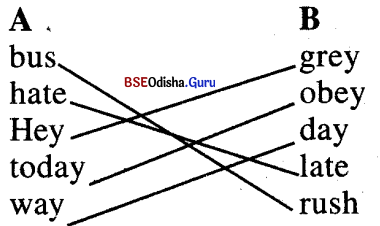
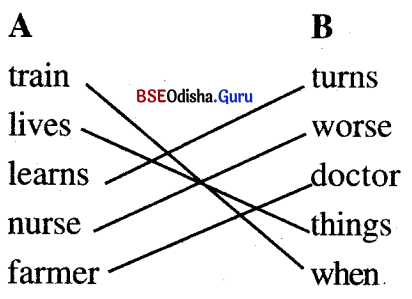
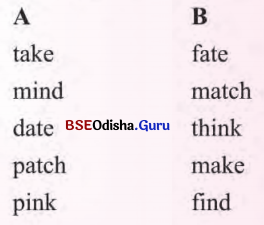
6. Match the words which sound alike at the end. (Question with Answer)

Match the words which sound alike at the end

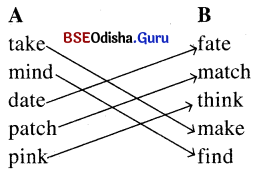
Answer:

Match the words which sound alike at the end Answer

BSE Odisha 6th Class English Solutions Test-2(B)

7. Read the poem and answer the questions in complete sentences.

When I grow up
I want to be
A detective
With a master key.
I could be a soldier
Perhaps a sailor too.
Or become a keeper
At Nandan Kanan Zoo.
I’d like to own a trumpet
And play a musical tune.
Or buy a private space-ship
To fly to the moon.

Question (i)
Who is ‘I’ in the poem?
Answer:
The poet is T in the poem.

Question (ii)
What does the child want to be in the 1st stanza?
Answer:
In the first stanza, the child wants to be a detective.

Question (iii)
What does a detective have with him?
Answer:
A detective has a master key with him.

Question (iv)
In the second stanza, the child likes three professions. What are they?
Answer:
In the second stanza, the child likes three professions. They are soldiers, sailors, and keepers at Nandan Kanan zoo.

Question (v)
In which stanza does the poet describe a child’s interest in music?
Answer:
In the third stanza of the poem, the poet describes a child’s interest in music.

Question (vi)
How does he want to fly to the moon?
Answer:
He wants to buy a private spaceship in order to (960) fly him to the moon.

BSE Odisha 6th Class English Solutions Test-2(B)

8. Read the following paragraph and answer the questions in complete sentences.
On Makar holidays Raghunath would come to his village Dandbose, a few kilometers away from Rairangpur town in the district of Mayurbhanj. He was then working at Baripada.

Question (i)
What is this paragraph about?
Answer:
This paragraph is about Raghunath.

Question (ii)
What is the name of his village?
Answer:
The name of his village is Dandbose.

Question (iii)
When would he come there?
Answer:
He would come there on the Makar holidays.

Question (iv)
How far is it from Rairangpur town?
Answer:
It is a few kilometers away from Rairangpur town.

Question (v)
Where is Rairangpur?
Answer:
Rairangpur is in the district of Mayurbhanj.

Question (vi)
Where was he working then?
Answer:
He was then working at Baripada.

BSE Odisha 6th Class English Solutions Test-2(B)

9. Read the following poem and answer the questions in complete sentences.

“My father is a doctor.
My sister’s a doctor too.
My cousin works with animals.
He’s a keeper at the zoo.
What can I be?
What do I want to do?
I don’t want to be a farmer,
A builder or a nurse.
I don’t want to be a pilot, that is even worse.

Question (i)
What is the name of the poem?
Answer:
The name of the poem is “What can I be ?”

Question (ii)
Who is ‘I’ in the poem?
Answer:
The poet/child is T in the poem.

Question (iii)
What are the child’s father and sister?
Answer:
Both the child’s father and sister are doctors.

Question (iv)
Who is a keeper at the zoo?
Answer:
His cousin is a keeper at the zoo?

Question (v)
What doesn’t he want to be?
Answer:
He doesn’t want to be a farmer, a builder, a nurse, and a pilot.

Question (vi)
Whose job is worse?
Answer:
A pilot’s job is even worse.

BSE Odisha 6th Class English Solutions Test-2(B)

10. Read the following paragraph and answer the questions in complete ententes.
“Raghunath Murmu was also a great writer. He had written many plays, novels, and poems in Santali. His most important play is ‘Kherwar Bir”. Martin Orans, a foreign scholar and writer, called this the Santali Mahabharata. Raghunath was awarded by the Odisha Sahitya Academy for his contribution to the Santali language and literature. The Government of Odisha has named the Medical College at Baripada after his name. What Fakir Mohan Senapati is to Odia language and literature, Raghunath Murmu is to Santali language and literature.

Question (i)
What else was Raghunath Murmu?
Answer:
Raghunath Murmu was also a great writer.

Question (ii)
What did he write in Santali?
Answer:
He had written many plays, novels and poems in Santali.

Question (iii)
Which book is Raghunath’s most important play?
Answer:
Raghunath’s most important play is “Kherwar Bir”.

Question (iv)
Who was Martin Orans?
Answer:
Martin Orans was a foreign scholar and writer.

Question (v)
Was he in high praise of Raghunath’s writings?
Answer:
Surely, he was in high praise of Raghunath’s writings.

Question (vi)
Which book is called (he Santal Mahabharat)?
Answer:
The book “Kherwar Bir” is called the Santal Mahabharata.

Question (vii)
What did the Odisha Sahitya Academy award him for?
Answer:
Raghunath Murmu was awarded by the Odisha Sahitya Academy for his contribution to Santali language and literature.

Question (viii)
What has the Government of Odisha done in his honor?
Answer:
In his honor, the Government of Odisha has named the Medical College at Baripada after his name.

Question (ix)
Who is Raghunath Murmu compared to?
Answer:
Raghunath Murmu is compared to Fakir Mohan Senapati.

BSE Odisha 6th Class English Solutions Test-2(B)

Question (x)
How are they equal?
Answer:
What Fakir Mohan Senapati is to Odia language and literature, Raghunath Murmu is to Santali language and literature.

BSE Odisha 6th Class English Solutions Follow-Up Lesson 7 What Can I Be?

Odisha State Board BSE Odisha 6th Class English Solutions Follow-Up Lesson 7 What Can I Be? Textbook Exercise Questions and Answers.

BSE Odisha Class 6 English Solutions Follow-Up Lesson 7 What Can I Be?

BSE Odisha 6th Class English Follow-Up Lesson 7 What Can I Be? Text Book Questions and Answers

Session – 1

I – Pre-Reading
□ Pre-reading questions

1. What is your father’s job? What is your mother’s job?
(ତୁମ ବାପାଙ୍କର ବୃତ୍ତି କ’ଣ ? ତୁମ ମାଆଙ୍କର ବୃତ୍ତି କ’ଣ ?)
2. What would you like to be in the future? What do you see in the picture?
(ତୁମେ ଭବିଷ୍ୟତରେ କ’ଣ ହେବାକୁ ପସନ୍ଦ କର ? ତୁମେ ଛବିରେ କ’ଣ ଦେଖୁଛ ?)

II. While-Reading

Text

Read the poem silently and answer the questions that follow.

Read the poem silently and answer the questions that follow.

My father is a doctor.
My sister’s a doctor too.
My cousin works with animals.
He’s- a keeper at the zoo. 4
What can I be?
What do I want to do?
I don’t want to be a farmer,
A builder or a nurse.
I don’t want to be a pilot,
that is even worse. 10
I don’t want to be a painter
But a keeper at the zoo.
That’s what I’ll be.
That’s what I want to do. 14

BSE Odisha 6th Class English Solutions Follow-Up Lesson 7 What Can I Be?

କବିତାର ଓଡ଼ିଆ ଉଚ୍ଚାରଣ :
ମାଇ ଫାଦର୍‌, ଇଜ୍ ଏ ଡକ୍ଟର ।
ମାଇ ସିଷ୍ଟର୍’ଜ୍ ଏ ଡକ୍ଟର ଠୁ।
ମାଇ କଜିନ୍ ୱାକ୍‌ସ୍‌ ଉଇଥ୍ ଆନିମାଲ୍‌ ।
ହି’ଜ୍ ଏ କିପର୍ ଆଟ୍ ଦ’ ଜୁ ।
ହ୍ମାଟ୍ କ୍ୟାନ୍ ଆଇ ବି ?
ଦ୍ଵାଟ୍ ଡୁ ଆଇ ୱାଣ୍ଟ୍ ଟୁ ଡୁ ?
ଆଇ ଡୋ’ଣ୍ଟ ୱାଣ୍ଟ ଟୁ ବି ଏ ଫାର୍ମର,
ଏ ବିଲ୍‌ଡ଼ର୍ ଅର୍ ଏ ନର୍ସ ।
ଆଇ ଡୋ’ଣ୍ଟ୍‌ ୱାଣ୍ଟ୍ ଟୁ ବି ଏ ପାଇଲଟ୍
ଦ୍ୟାଟ୍ ଇଜ୍ ଇଭେନ୍ ଓର୍ସ୍ ।
ଆଇ ଡୋ’ଣ୍ଟ୍ ୱାଣ୍ଟ୍ ଟୁ ବି ଏ ପେଣ୍ଟର୍,
ବଟ୍ ଏ କିପର୍ ଆଟ୍ ଦ’ ଜୁ ।
ବ୍ୟାଟ୍’ଜ୍ ହ୍ୱାଟ୍ ଆଇ’ଲ ବି ।
ବ୍ୟାଟ୍’ଜ୍ ହ୍ୱାଟ୍ ଆଇ ୱାଣ୍ଟ୍ ଟୁ ଡୁ ।

କବିତାର ସାରକଥା :
ମୋ ବାପା ଜଣେ ଡାକ୍ତର ।
ମୋ ଭଉଣୀ ମଧ୍ୟ ଜଣେ ଡାକ୍ତର ।
ମୋ ସମ୍ପର୍କୀୟ ଭାଇ ପଶୁମାନଙ୍କର ସହ କାର୍ଯ୍ୟ କରେ ।
ସେ ଜଣେ ଚିଡ଼ିଆଖାନାର କର୍ମଚାରୀ ଅଟେ ।
ମୁଁ କ’ଣ ହୋଇପାରିବି ?
କ’ଣ କରିବାକୁ ଚାହେଁ ?
ଚାହେଁନା ଜଣେ କୃଷକ ହେବାକୁ,
ଜଣେ ନିର୍ମାଣକାରୀ କିମ୍ବା ଧାଈ ।
ମୁଁ ଚାହେଁନା ଜଣେ ଉଡ଼ାଜାହାଜ ଚାଳକ ହେବାକୁ,
ତାହା ମଧ୍ୟ ଏପରିକି ବହୁତ ଖରାପ ।
ମୁଁ ଜଣେ ଚିତ୍ରକର ହେବାକୁ ଚାହେଁନା,
କିନ୍ତୁ ଜଣେ ଚିଡ଼ିଆଖାନାର କର୍ମଚାରୀ ।
ତାହା ଅଟେ ଯାହା ମୁଁ ହେବି ।
ତାହା ଅଟେ ଯାହା ମୁଁ କରିବାକୁ ଚାହେଁ ।

  • Your teacher reads the poem aloud. You listen to him/her without opening the book. Your teacher asks you: Who are there in this poem?
    (ତୁମ ଶିକ୍ଷକ କବିତାଟିକୁ ବଡ଼ପାଟିରେ ପଢ଼ିବେ । ବହି ନ ଖୋଲି, ତୁମେ ତାଙ୍କୁ (ପୁ/ସ୍ତ୍ରୀ) ମନଦେଇ ଶୁଣ । ତୁମ ଶିକ୍ଷକ ତୁମକୁ ପଚାରିବେ : ‘‘ଏହି କବିତାରେ କେଉଁମାନେ ଅଛନ୍ତି ?’’)
  • Your teacher reads the poem aloud a second time. You listen to him/her and at the same time see the poem.
    (ତୁମ ଶିକ୍ଷକ କବିତାଟିକୁ ବଡ଼ପାଟିରେ ଦ୍ଵିତୀୟଥର ପଢ଼ିବେ । ତୁମେ ତାଙ୍କୁ (ପୁ/ସ୍ତ୍ରୀ) ମନଦେଇ ଶୁଣିବ ଏବଂ ସେହି ସମୟରେ କବିତାଟିକୁ ଦେଖୁବ ।)

BSE Odisha 6th Class English Solutions Follow-Up Lesson 7 What Can I Be?

Comprehension Questions

Question 1.
How many stanzas are there in the poem?
(କବିତାରେ କେତୋଟି ପଦ ଅଛି ?)
Answer:
There are three stanzas in the poem.

How many lines are there in each stanza?
(ପ୍ରତ୍ୟେକ ପଦରେ କେତୋଟି ଧାଡ଼ି ରହିଛି ?)
Answer:
There are four lines each in 1st and last stanzas. But there are six lines in the second stanza.

Question 2.
Who is ‘F in the poem?
(କବିତାରେ ‘I? କିଏ ?)
Answer:
In the poem, T is the poet or the child.

Question 3.
What is the poem about?
(କବିତାଟି କେଉଁ ବିଷୟରେ ଲେଖାଯାଇଛି ?)
Answer:
The poem is about what the child/poet can be!

Question 4.
How many questions are there in the poem?
(କବିତାରେ କେତୋଟି ପ୍ରଶ୍ନ ରହିଛି ?)
Answer:
There are two questions in the poem.

What are they?
(ସେଗୁଡ଼ିକ କ’ଣ ?)
Answer:
They are – “What can I do? What do I want to do ?”

Question 5.
What are the child’s father and sister?
(ପିଲାଟିର ବାପା ଓ ଭଉଣୀ କ’ଣ ଅଟନ୍ତି ? )
Answer:
The child’s father and sister both are doctors.

BSE Odisha 6th Class English Solutions Follow-Up Lesson 7 What Can I Be?

Question 6.
Who is a zoo-keeper ?
(କିଏ ଚିଡ଼ିଆଖାନାର କର୍ମଚାରୀ ଅଟେ ?)
Answer:
His cousin is a zoo keeper.

Question 7.
Whose job is worse?
(କାହାର କାମ ଅଧିକ ଖରାପ ?)
Answer:
A pilot’s job is worse.

Question 8.
Which stanza tells you that the poet wants to be a keeper at the zoo?
(କେଉଁ ପଦଟି ତୁମକୁ କହେ ଯେ କବି ଚିଡ଼ିଆଖାନାର ଜଣେ କର୍ମଚାରୀ ହେବାକୁ ଚାହାଁନ୍ତି ?)
Answer:
The third stanza tells us that the poet wants to be a keeper at the zoo.

Question 9.
Is the poet happy? Why? Why not?
(କବି ସୁଖୀ କି ? କାହିଁକି ବା କାହିଁକି ନୁହେଁ ?)
Answer:
The poet is really happy. Because he wants to be a zoo keeper.

Question 10.
How many times the following words are repeated ? (Question with Answer)

How many times the following words are repeated

Answer:
a. my 3 times
b. keeper 2 times
c. doctor 2 times
d. I 7 times

BSE Odisha 6th Class English Solutions Follow-Up Lesson 7 What Can I Be?

Session – 3

III. Post-Reading

1. Writing

(a) Answer the following questions.
(ନିମ୍ନଲିଖତ ପ୍ରଶ୍ନଗୁଡ଼ିକର ଉତ୍ତର ଦିଅ ।)

Question (i)
What does the child / poet want to be ?
(ଶିଶୁ | କବି କ’ଣ ହେବାକୁ ଚାହାନ୍ତି ?)
Answer:
The child / poet wants to be a zoo-keeper.

Question (ii)
What is his father?
(ତାଙ୍କ ବାପା କ’ଣ ଅଟନ୍ତି ?)
Answer:
His father is a doctor.

Question (iii)
What is his sister?
(ତାଙ୍କ ଭଉଣୀ କ’ଣ ଅଟନ୍ତି ?)
Answer:
His sister is a doctor.

Question (iv)
What does the child not want to be?
(ପିଲାଟି କ’ଣ ହେବାକୁ ଚାହୁଁ ନାହିଁ ?)
Answer:
The child does not want to be a farmer, a builder, a nurse, a pilot, and a painter too.

(b) Write your own poem (the last word of the second and the last lines which rhyme are given. Rest you can choose).
(ତୁମ ନିଜର ଗୋଟିଏ କବିତା ଲେଖ । (ଦ୍ଵିତୀୟ ଓ ଶେଷ ଧାଡ଼ିର ଶେଷ ଶବ୍ଦ ଯାହା ଯତିପାତ ପଡ଼ୁଛି ଦିଆଯାଇଛି । ଅବଶିଷ୍ଟ ତୁମେ ପସନ୍ଦ କରିପାରିବ ।)
(Question with Answer)
I don’t want to be a builder or a nurse.
I don’t want to be a farmer.
I don’t want to be a pilot
I don’t want to be a teacher.

BSE Odisha 6th Class English Solutions Follow-Up Lesson 7 What Can I Be?

Word Note
(The words / phrases have been defined mostly on contextual meanings.)
(ଶବ୍ଦ । ଖଣ୍ଡବାକ୍ୟଗୁଡ଼ିକ ଅଧିକାଂଶତଃ ପ୍ରସଙ୍ଗଗତ ଅର୍ଥ ଉପରେ ନିର୍ଭର କରି ବ୍ୟାଖ୍ୟା କରାଯାଇଛି ।)

cousin – ବ୍ୟତୀତ ଅନ୍ୟ ଭାଇ
detective – ଗୁଇନ୍ଦା ପୋଲିସ
keeper at zoo – ଚିଡିଆଖାନା
sailor – ନାବିକ
soldier – ସୈନିକ
spaceship – ମହାକାଶଯାନ
taking turn – ପାଳିକରି କୌଣସି କାମ କରିବା
trumpet – ତୂରୀ, ବିଗୁଲ୍
master key – ମୁଖ୍ୟ ଚାବି
perhaps – ବୋଧହୁଏ, ପ୍ରାୟ
own – ନିଜର
that’s what – ସେଇଟା ଯାହା
musical tune – ସଙ୍ଗୀତ ସ୍ବର
buy – କିଣିବା
private – ବ୍ୟକ୍ତିଗତ
moon – ଚନ୍ଦ୍ର
I’d like (I would like) – ମୁଁ ପସନ୍ଦ କରେ ।
express – ପ୍ରକାଶ କରିବା
light-house – ଆଲୋକସ୍ତମ୍ଭ
builder – ନିର୍ମାଣକାରୀ
nurse – ସେବିକା
pilot – ବିମାନ ଚାଳକ
even – ଏପରିକି
Worse – ଅଧ୍ଵ ଖରାପ
painter – ଚିତ୍ରକାର

BSE Odisha 6th Class English Solutions Follow-Up Lesson 1 I Like Bats

Odisha State Board BSE Odisha 6th Class English Solutions Follow-Up Lesson 1 I Like Bats Textbook Exercise Questions and Answers.

BSE Odisha Class 6 English Solutions Follow-Up Lesson 1 I Like Bats

BSE Odisha 6th Class English Follow-Up Lesson 1 I Like Bats Text Book Questions and Answers

Session – 1 (ପ୍ରଥମ ପର୍ଯ୍ୟାୟ):
I. Pre-Reading (ପ୍ରାକ୍-ପଠନ):

→ Socialisation (ସାମାଜିକୀକରଣ):
→ The teacher thinks of a pre-reading activity.
(ଶିକ୍ଷକ ଏକ ପଢ଼ିବା ପୂର୍ବବର୍ତ୍ତୀ କାର୍ଯ୍ୟ ବିଷୟରେ ଚିନ୍ତା କରନ୍ତୁ ।)
Pre-reading
→ You may use pictures. You may also link the poem with the poem of the main lesson.
(ତୁମେ ଛବିଗୁଡ଼ିକୁ ବ୍ୟବହାର କରିପାର । ତୁମେ କବିତାଟିକୁ ମୁଖ୍ୟପାଠର କବିତା ସହ ଯୋଡ଼ିପାର ।)

→ What are there in the picture? What do they look like? That’s how bats sleep and rest hanging upside down. What an interesting way of resting and relaxing! Do you like to rest like bats hanging upside down?
(ଛବିରେ କ’ଣ ଅଛି ? ସେମାନେ କିପରି ଦେଖାଯାଉଛନ୍ତି ? ସେହିପରି ଭାବରେ ବାଦୁଡ଼ିମାନେ ଉପରୁ ତଳକୁ ଝୁଲିରହି ଶୁଅନ୍ତି ଏବଂ ବିଶ୍ରାମ ନିଅନ୍ତି । ବିଶ୍ରାମ ନେବା ଓ ନିଦ୍ରାଯିବାର କି କୌତୂହଳଜନକ ଉପାୟ ! ତୁମେ ବାଦୁଡ଼ିମାନଙ୍କ ପରି ଉପରୁ ତଳକୁ ଝୁଲିରହି ବିଶ୍ରାମ କରିବାକୁ ଭଲ ପାଅ କି ?)

→ In the poem ‘Mice’ the poet likes mice. Let’s read this poem to see if the poet likes bats.
(‘Mice” କବିତାରେ, କବି ମୂଷାମାନଙ୍କୁ ଭଲ ପାଇଛନ୍ତି । ଆସ ଆମେ ଏହି କବିତାଟି ପଢ଼ିବା ଏବଂ କବି ବାଦୁଡ଼ିମାନଙ୍କୁ ଭଲ ପାଆନ୍ତି କି ନାହିଁ ଦେଖୁବା ।)

BSE Odisha 6th Class English Solutions Follow-Up Lesson 1 I Like Bats

II. While-Reading (ପଢ଼ିବା ସମୟରେ ):
Follow the steps of the main lesson.
(ମୁଖ୍ୟ ବିଷୟର ସୋପାନଗୁଡ଼ିକୁ ଅନୁସରଣ କର ।)
TEXT (ବିଷୟବସ୍ତୁ):
Read the poem silently and answer the questions that follow.
(କବିତାଟିକୁ ନୀରବରେ ପଢ଼ ଏବଂ ପରବର୍ତ୍ତୀ ପ୍ରଶ୍ନଗୁଡ଼ିକର ଉତ୍ତର ଦିଅ ।)

textI like bats
Hanging upside down
Like rats. Like silk-cotton fruits
Swinging in wind
What a way to relax and rewind.
I wish I could
Do that
Like a bat
A way to find
After a day’s work
To relax and rewind
Upside down
Hang like bats.
I like bats
Hanging upside down
Like rats.
text 1
ଓଡ଼ିଆ ଉଚ୍ଚାରଣ :
ଆଇ ଲାଇକ୍ ବ୍ୟାଟ୍‌ସ୍
ହ୍ୟାଙ୍ଗିଙ୍ଗ୍ ଅପସାଇଡ୍ ଡାଉନ୍
ଲାଇକ୍ ମ୍ୟାଟ୍‌ସ୍ । ଲାଇକ୍ ସିଲ୍‌କ୍-କଟନ୍ ଫୁସ୍
ସୁଇଙ୍ଗିଙ୍ଗ୍ ଇନ୍ ଉଇଣ୍ଡ୍
ଦ୍ଵାଟ୍ ଏ ୱେ ଟୁ ରିଲାକ୍ସ ଆଣ୍ଡ ରିୱାଇଣ୍ଡ୍ ।
ଆଇ ଉଇସ୍ ଆଇ କୁଡ଼୍
ଡୁ ଦ୍ଯାଟ୍
ଲାଇକ୍ ଏ ବ୍ୟାଟ୍
ଏ ୱେ ଟୁ ଫାଇଣ୍ଡ୍
ଆଫ୍‌ଟର୍ ଏ ଡେ’ଜ୍ ୱାର୍କ
ଟୁ ରିଲାକ୍ସ ଆଣ୍ଡ ରିୱାଇଣ୍ଡ୍
ଅପ୍‌ସାଇଡ୍ ଡାଉନ୍
ଆଇ ଲାଇକ୍ ବ୍ୟାଟ୍‌ସ୍ ।
ହ୍ୟାଙ୍ଗିଙ୍ଗ୍ ଅଫ୍‌ସାଇଡ୍ ଡାଉନ୍
ଲାଇକ୍ ଗ୍ୟାସ୍ ।

BSE Odisha 6th Class English Solutions Follow-Up Lesson 1 I Like Bats

Knowing The Key Words (ମୁଖ୍ୟ ଶବ୍ଦଗୁଡ଼ିକୁ ଜାଣିବା):

like – ସଦୃଶ
bats – ବାଦୁଡି
hanging – ଫାଶୀ
upside – ଓଲଟା |
down – ତଳକୁ
like – ପରି
rats – ମୂଷା
silk – cotton – ଶିମିଳି-ତୁଳା
fruits – ଫଳ
swinging – ସୁଇଙ୍ଗ୍
in wind — ପବନରେ
could — କରିପାରନ୍ତି |
What a way — କି ଉପାୟ |
find — ଖୋଜିବା
relax — ବିଶ୍ରାମ କରିବା
day’s work — ଦିନର କାମ
rewind – ରିଭାଇଣ୍ଡ୍ |
wish — ଇଚ୍ଛା

ସାରକଥା | ଓଡ଼ିଆ ଅନୁବାଦ:
ମୁଁ ବାଦୁଡ଼ିମାନଙ୍କୁ ଭଲପାଏ
ସେମାନେ ଉପର ପାଖ ତଳକୁ କରି ଝୁଲୁଥା’ନ୍ତି ମୂଷାମାନଙ୍କ ସଦୃଶ । | ସେମାନେ ପବନରେ ଦୋଳି ଖେଳୁଥା’ନ୍ତି ଶିମିଳି ତୁଳା ଫଳଗୁଡ଼ିକ ପରି । | କି ସୁନ୍ଦର ଉପାୟ ବିଶ୍ରାମ କରିବାର ଏବଂ ପବନରେ ଦୋହଲିବାର । | ମୁଁ ଭାବୁଛି ମୁଁ ସେହିପରି କରି ପାରିଥା’ନ୍ତି ଏକ ବାଦୁଡ଼ି ପରି । | ଗୋଟିଏ ଦିନକର କାମ ପରେ ଏକ ଉପାୟ ଖୋଜି ପାଇବାକୁ ବିଶ୍ରାମ କରିବାକୁ ଏବଂ ପବନରେ ଦୋହଲିବାକୁ । | ଉପର ପାଖ ତଳକୁ କରି ଝୁଲୁଥା’ନ୍ତି ବାଦୁଡ଼ିମାନଙ୍କ ସଦୃଶ । ମୁଁ ଭଲପାଏ ବାଦୁଡ଼ିମାନଙ୍କୁ ଯେଉଁମାନେ ଉପର ପାଖ ତଳକୁ କରି ଝୁଲୁଥା’ନ୍ତି ମୂଷାମାନଙ୍କ ଭଳି ।

Comprehension Questions : (ବୋଧମୂଳକ ପ୍ରଶ୍ନବଳୀ)

The teacher is to try to frame his/her own questions. Here are some for him/her.
(ଶିକ୍ଷକ ତାଙ୍କର ନିଜର ପ୍ରଶ୍ନଗୁଡ଼ିକ ତିଆରି କରିବାକୁ ଚେଷ୍ଟା କରିବେ । ଏଠାରେ କେତେକ ତାଙ୍କ (ପୁ/ସ୍ତ୍ରୀ) ପାଇଁ ଅଛି ।)

Question 1.
How do bats hang?
(ବାଦୁଡ଼ିମାନେ କିପରି ଝୁଲୁଥା’ନ୍ତି ?)
Answer:
Bats hang upside down.

Question 2.
What are bats compared to ?
(ବାଦୁଡ଼ିମାନଙ୍କୁ କାହା ସହିତ ତୁଳନା କରାଯାଇଛି ?)
Answer:
Bats are compared to rats.

BSE Odisha 6th Class English Solutions Follow-Up Lesson 1 I Like Bats

Question 3.
Have you seen bats hanging upside down on trees in great numbers?
(ଗଛଗୁଡ଼ିକରେ ବାଦୁଡ଼ିମାନେ ବହୁ ସଂଖ୍ୟାରେ ଝୁଲି ରହିଥ‌ିବାର ତୁମେ ଦେଖୁଛ କି ?)
Answer:
Yes, we have seen bats hanging upside down on trees in great numbers.

Question 4.
Have you seen silk-cotton fruit hanging in great numbers? Do they look alike?
(ଶିମିଳି-ତୁଳା ଫଳ ବହୁ ସଂଖ୍ୟାରେ ଝୁଲୁଥ‌ିବା ତୁମେ ଦେଖୁଛ କି ? ସେଗୁଡ଼ିକ ଏକାପରି ଦେଖାଯାଆନ୍ତି କି ?)
Answer:
Yes, we have seen silk-cotton fruit hanging in great numbers. Really, they look alike.

Question 5.
What is the meaning of the word ‘rewind’? See the dictionary at the end of this lesson.
(‘ରିୱାଇଣ୍ଡ୍’ ଶବ୍ଦର ଅର୍ଥ କ’ଣ ? ଏହି ଅଧ୍ୟାୟର ଶେଷରେ ଥ‌ିବା ଅଭିଧାନ ବା ଶବ୍ଦାର୍ଥ ଦେଖ ।)
Answer:
The meaning of the word ‘rewind’ is taking a rest with occasional backward movement.
Teacher is to frame some questions from the second stanza.
(ଶିକ୍ଷକ ଦ୍ଵିତୀୟ ପଦରୁ କିଛି ପ୍ରଶ୍ନ ତିଆରି କରିବେ ।)

Session – 2 (ସୋପାନ – ୨)
III. Post-Reading (ପଢ଼ିସାରିବା ପରେ):
6. Writing (ଲେଖିବା ):

(a) Answer the following questions.
(ନିମ୍ନଲିଖ ପ୍ରଶ୍ନଗୁଡ଼ିକର ଉତ୍ତର ଦିଅ ।)

(i) How do bats hang ?
(ବାଦୁଡ଼ିମାନେ କିପରି ଝୁଲନ୍ତି ?)
Bats hang ______________________________________.
Answer:
Bats hang upside down.

(ii) What are bats compared to ?
(ବାଦୁଡ଼ିମାନଙ୍କୁ କାହା ସହ ତୁଳନା କରାଯାଇଛି ?)
Bats are ______________________________________.
Answer:
Bats are compared to rats.

BSE Odisha 6th Class English Solutions Follow-Up Lesson 1 I Like Bats

(iii) What swings in the wind?
(ପବନରେ କ’ଣ ଝୁଲିଥାଏ ?)
The silk – ______________________________________.
Answer:
The silk-cotton fruits swing in the wind.

(iv) Why does the poet like to hang like bats upside down?
(କବି କାହିଁକି ବାଦୁଡ଼ିମାନଙ୍କ ପରି ଉପରପାଖ ତଳକୁ କରି ଝୁଲିବାକୁ ଭଲପାଆନ୍ତି ?)
______________________________________to relax and ____________________________.
Answer:
The poet likes to hang like a bats upside down because it is a nice way to relax and rewind.

(b) Let us summarise the poem. Fill in the gaps.
(ଆସ ଆମେ କବିତାର ସାରାଂଶ ବାହାର କରିବା । ଶୂନ୍ୟସ୍ଥାନଗୁଡ଼ିକୁ ପୂରଣ କର ।) (Question with Answer)

The poet _____________________to see bats. _____________________. Bats hang like _____________. This is a good way to relax and ____________. The poet wants to_____________ _____________bats to relax ________________ ________________after the day’s ________________.
Answer:
The poet likes to see bats. They are hanging upside down. Bats hang like rats and like silk-cotton fruits swinging in wind. This is a good way to relax and rewind. The poet wants to hang upside down like a bat to relax and rewind after the day’s work.

(c) Think of writing a poem. Start with replacing ‘bats’ with some fruits and make minimum changes in the poem. Change the title accordingly.
(ଗୋଟିଏ କବିତା ଲେଖିବା କଥା ଭାବ । ‘ବାଦୁଡ଼ିମାନଙ୍କ’’ ବଦଳରେ କେତେକ ଫଳକୁ ନେଇ ଏବଂ କବିତାରେ ସ୍ଵଳ୍ପ ପରିବର୍ତ୍ତନ କରି ଆରମ୍ଭ କର । ସେହି ଅନୁସାରେ କବିତାର ଶିରୋନାମା ପରିବର୍ତ୍ତନ କର ।)

APPLES
Answer:
I like apples
Hanging upside down
Like rats. Like silk-cotton fruits
Swinging in wind
What a way to relax and rewind.
I wish I could
Do that
Like an apple
A way to find
After a day’s work
To relax and rewind
Upside down Hang like apples.
I like apples
Hanging upside down
Like rats.

BSE Odisha 6th Class English Solutions Follow-Up Lesson 1 I Like Bats

Knowing The Key Words (ମୁଖ୍ୟ ଶବ୍ଦଗୁଡ଼ିକୁ ଜାଣିବା):
(The words/phrases have been defined mostly on contextual meanings.)

Nibble – gentle and playful bite of a mouse. ମୂଷାର କୁଟ୍ କୁଟ୍ କରି କାଟି ଖାଇବା
Pink – (colour) pale red, ଫିକା ନାଲି |
Swinging – hanging and moving (bats have)
relax and rewind – taking rest (with occassional backward movement) ଆରାମରେ ବିଶ୍ରାମ ନେବା
upside down – legs upward and head downward. ଗୋଡ଼ ଉପରକୁ ଓ ମୁଣ୍ଡ ତଳକୁ କରି ଓଲଟା ରହିବା ।

BSE Odisha 6th Class English Solutions Test-1(B)

Odisha State Board BSE Odisha 6th Class English Solutions Test-1(B) Textbook Exercise Questions and Answers.

BSE Odisha Class 6 English Solutions Test-1(B)

BSE Odisha 6th Class English Test-1(B) Text Book Questions and Answers

The figures in the right-hand margin indicate the marks for each question.
1. Write the following Odia names of the persons in English. (Teacher will give the names of six persons in Odia.) [06]
Answer:
ଲାଲା ଲଜପାଟ ରୟ – Lala Lajpat Roy
B.R. ଆମ୍ବେଦକର | – B.R. Ambedkar
ବାଙ୍କିମ୍ ଚନ୍ଦ୍ର ପାଲ୍ – Bankim Chandra Pal.
ବୁକ୍ସି ଜଗବନ୍ଧୁ – Buxi Jagabandhu
ଫାକିର ମୋହନ ସେନାପତି – Fakir Mohan Senapati
ରାଧନାଥା ରାଧା – Radhanatha Ratha

2. Write the following place names in English. [06]
(Teacher will give names of six places in Odia.)
Answer:
ଶ୍ରୀନଗର – Srinagar
ହିମାଚଳ ପ୍ରଦେଶ – Himachal Pradesh
ପୁଡୁଚେରୀ – Puducheri
ଦ୍ୱାରିକା – Dwarika
ଚିଲିକା ହ୍ରଦ – Chilika lake
ନନ୍ଦନକାନନ୍ ପ୍ରାଣୀ ଉଦ୍ୟାନ – Nandankanan Zoo

BSE Odisha 6th Class English Solutions Test-1(B)

3. Your teacher will give a dictation of ten words. Write them in the space given below. [05]
Answer :
Jagannatha     Moon
Saraswati        Capital
Ganesha         Chief-Minister
Earth /World  President
Sun                 Garden

4. Given below are some words. Your teacher will read aloud five of them.
Tick those which s/he reads aloud. [05]
temper, catch, squirrel, little, agile, climbed, thrash, burst, bamboo, curry, foolish.
[Listen to your teacher and tick those words s/he reads.]

5. Your teacher will read aloud a paragraph. You listen to him/her and fill in the gaps. (Question with Answer) [08]
Once there lived a greedy fat old man. One day he got up at 6 a.m. and brushed his teeth at 6.30 a.m. He took tea at 7 a.m. and breakfast at 8.30 a.m. Do you know how much tea he took?

6. Match the words which sound alike at the end. (Question with Answer)
Test 1(b)

7. Read the poem and answer the questions. [10]
Their ears are pink,
Their teeth are white,
They run about
The house at night
They nibble things
They shouldn’t touch
And no one seems
To like them much.

BSE Odisha 6th Class English Solutions Test-1(B)

Question (i).
What is the color of their ears?
Answer:
The color of their ears is pink.

Question (ii).
What is the color of their teeth?
Answer:
The color of their teeth is white.

Question (iii).
Where do they run about at night?
Answer:
They run about the house at night.

Question (iv).
Which things do they nibble?
Answer:
They nibble things that they shouldn’t touch.

Question (v).
Do most people like mice?
Answer:
No, no one seems to like mice.

BSE Odisha 6th Class English Solutions Test-1(B)

8. Read the following paragraph and answer the questions in complete sentences. [20]
After eating the dog, the man walked, walked, and walked till he met a little squirrel. The little squirrel asked the old man, “Old man, old man, what makes you so fat? The old man said, “I’ve taken a very heavy breakfast. In my breakfast, I took two mugs of tea, two liters of milk, three tins of biscuits, and five big pieces of cakes.” Then I ate a little boy and a small dog. I’ll also eat you up if I can catch you”.

“But you cannot catch me, old man,” said the active, agile, little squirrel. Then the squirrel jumped up the tree, the old man also climbed up the tree. The little squirrel jumped up to the main branch of the tree. The old man also climbed up to the main branch of the tree. Next, the little squirrel jumped up to a thin branch. The old man also climbed up to the thin branch. But thrash ! the small branch broke and the old man fell to the ground. His big belly burst out.

Question (i).
Whom did the old man meet in this section?
Answer:
In this section, the old man met a little squirrel.

Question (ii).
What did the squirrel ask the old man?
Answer:
The squirrel asked the old man, “What makes you so fat?”

Question (iii).
How many mugs of tea did the old man take?
Answer:
The old man took two mugs of tea.

Question (iv).
How much milk did he take?
Answer:
He took two liters of milk.

Question (v).
How many tins of biscuits did he take in his breakfast?
Answer:
For his breakfast, he took three tins of biscuits.

BSE Odisha 6th Class English Solutions Test-1(B)

Question (vi).
How many pieces of cake did he take?
Answer:
He took five big pieces of cake.

Question (vii).
Where did the squirrel jump up first?
Answer:
The squirrel jumped up first to the tree.

Question (viii).
What did the old man do?
Answer:
The old man also climbed up the tree.

Question (ix).
Where did the squirrel jump up then?
Answer:
Then the squirrel jumped up to the main branch of the tree.

Question (x).
What happened to the old man when he fell down?
Answer:
When the old man fell down, his big belly burst out.

9. Read the following poem and answer the questions in complete sentences. [10]
“My story is said
The flowering plant is dead.
O flowering plant! Why did you die?
The black cow ate me up and made me lie.
O black cow! Why did the plant you eat?
Because the cowherd did not do well treat.
O, cowherd! Why didn’t you well the cow treat to eat?
The daughter-in-law did not give me food.”

BSE Odisha 6th Class English Solutions Test-1(B)

Question (i).
Why is the flowering plant dead?
Answer:
The flowering plant is dead because the black cow ate it up.

Question (ii).
Why did the cow eat up the flowering plant?
Answer:
The cow ate up the flowering plant because the cowherd did not well her treat.

Question (iii).
Why didn’t the cowherd well the cow treat to eat?
Answer:
The cowherd didn’t well the cow treat to eat because the daughter-in-law did not give him food.

Question (iv).
What is said?
Answer:
Your story is said.

Question (v).
What type of plant is dead?
Answer:
The flowering plant is dead.

BSE Odisha 6th Class English Solutions Test-1(B)

10. Read the following paragraph and answer the questions in a complete sentences. [20]
Once a foolish Santal son-in-law went to his in-law’s house. His mother-in-law cooked delicious dishes for her son-in-law. One of the dishes was a curry made out of the bamboo shoot. The son-in-law liked it very much and asked his mother-in-law, “Mother, the curry is extremely delicious. What is the curry made from? Instead of answering his question, she pointed at the bamboo door. The son-in-law asked, “Is it from bamboo ?” Yes, son, the curry is made from bamboo and is, therefore, called “Bamboo Curry”. The next day, the son-in-law was about to leave for his home. The bamboo curry came to his mind. He thought of cooking bamboo curry at home. But they did not have bamboo. So he carried home the bamboo door of his in-law’s house.

Question (i).
Who went to his father-in-law’s house?
Answer:
A foolish Santal son-in-law went to his father-in-law’s house.

Question (ii).
What did his mother-in-law cook for him?
Answer:
His mother-in-law cooked delicious dishes for him.

Question (iii).
What was one of the dishes made?
Answer:
One of the dishes was a curry made out of the bamboo shoot.

Question (iv).
How was the curry?
Answer:
The curry was extremely delicious.

BSE Odisha 6th Class English Solutions Test-1(B)

Question (v).
What did the son-in-law ask his mother-in-law?
Answer:
The son-in-law asked his mother-in-law what the curry was made from.

Question (vi).
What did the mother-in-law answer?
Answer:
Instead of answering his question, she pointed at the bamboo door.

Question (vii).
Why is the curry called “Bamboo Curry”?
Answer:
The curry is called ‘Bamboo Curry’ because it is made from bamboo.

Question (viii).
When was the son-in-law returning to his home?
Answer:
The next day, the son-in-law was returning to his home.

Question (ix).
What did he think of doing?
Answer:
He thought of cooking bamboo curry at home.

Question (x).
What did not they have? What did he do for that?
Answer:
They did not have bamboo. So he carried home the bamboo door of his in-law’s house.

BSE Odisha 6th Class English Solutions Test-1(A)

Odisha State Board BSE Odisha 6th Class English Solutions Test-1(A) Textbook Exercise Questions and Answers.

BSE Odisha Class 6 English Solutions Test-1(A)

BSE Odisha 6th Class English Test-1(A) Text Book Questions and Answers

The figures in the right-hand margin indicate the marks for each question.

1. Write the following Odia names of the persons in English. [06]
(Teacher will give the names of six persons in Odia.)
Answer:
ଲାଲ ବାହାଦୂର ଶାସ୍ତ୍ରୀ | – Lal Bahadur Shastri
ବାଲ ଗଙ୍ଗାଧର ତିଲକ | – Bal Gangadhar Tilak
ସର୍ଦ୍ଦାର ଭାଲାଭଭାଇ ପଟେଲ | – Sardar Ballavabhai Patel
ହରେକୃଷ୍ଣ ମହାତ୍ମା – Harekrushna Mahatab
ଭୀମା ଭୋଇ – Bhima Bhoi
ପ୍ରାଣକୃଷ୍ଣ ପରଜା | – Pranakrushna Parija

2. Write the following place names in English. [06]
(Teacher will give names of six places in Odia.)
Answer:
ହିମାଳୟ – Himalaya
ପଞ୍ଜାବ – Punjab
ଅରୁଣାଚଳ ପ୍ରଦେଶ – Arunachal Pradesh
କୋଲକାତା – Kolkata
ବ୍ରହ୍ମପୁର – Berhampur
ବାଲାସୋର – Balasore

BSE Odisha 6th Class English Solutions Test-1(A)

3. Your teacher will give a dictation of ten words. Write them in the space given below. [05]
Answer:
Grandfather      Ice-cream       Friend
Grandmother   Computer       Neighbour
Bread               Blackboard      Government
Mango

4. Given below are some words. Your teacher will read aloud five of them.
Tick those which s/he reads aloud. [05]
kite, paper, greedy, breakfast, tea, mugs, biscuits, cakes, conversation, heavey, squirrel.
[Listen to your teacher carefully and tick those words as he reads aloud.]

5. Your teacher will read aloud a paragraph. You listen to him/her and nil in the gaps. (Question with Answer) [08]
Answer:
The old man said, “I’ve taken two mugs of tea, and two liters of milk. I also took three tins of biscuits and five kilograms of cakes. And if I can catch you, I’ll eat you up .’’Then the old man caught the thin little boy and ate him up.

6. Match the words which sound alike at the end. (Question with Answer) [10]
Test - 1

BSE Odisha 6th Class English Solutions Test-1(A)

7. Read the poem and answer the questions. [10]
I think mice
Are rather nice.
Their tails are long
Their faces small,
They haven’t any
Skins at all.

Question (i).
What is this poem about?
Answer:
This poem is about mice.

Question (ii).
Who is ‘I’ at the beginning of the poem?
Answer:
‘I’ at the beginning of the poem is the poet himself.

Question (iii).
What are the tails of mice like?
Answer:
The tails of mice are long.

Question (iv).
How are their faces?
Answer:
Their faces are small.

Question (v).
They haven’t any skint at all”- What does this line mean?
Answer:
‘‘They haven’t any skins at all”- This line means that mice have very thin skins.

BSE Odisha 6th Class English Solutions Test-1(A)

8. Read the following paragraph and answer the questions in complete sentences. [20]
Once there lived a greedy fat old man. One day he got up at 6 a.m. and brushed his teeth at 6.30 a.m. He took tea at 7 a.m. and breakfast at 8.30 a.m. He took two mugs of tea and two liters of milk. Then he took three tins of biscuits and five big pieces of cake. After breakfast, he looked really very very fat.

Question (i).
What is this paragraph about?
Answer:
This paragraph is about a greedy fat old man.

Question (ii).
How was the old man?
Answer:
The old man was greedy and fat.

Question (iii).
When did he get up one day?
Answer:
One day he got up at 6 a.m.

Question (iv).
When did he brush his teeth?
Answer:
He brushed his teeth at 6.30 a.m.

Question (v).
What did he take at 7 a.m.?
Answer:
He took tea at 7 a.m.

Question (vi).
When did he take his breakfast?
Answer:
He took his breakfast at 8.30 a.m.

Question (vii).
How many mugs of tea did he take?
Answer:
He took two mugs of tea.

BSE Odisha 6th Class English Solutions Test-1(A)

Question (viii).
How much milk did he take?
Answer:
He took two liters of milk.

Question (ix).
How many tins of biscuit did he take?
Answer:
He took three tins of biscuits.

Question (x).
How did he look like after breakfast?
Answer:
After breakfast, he looked really very very fat.

9. Read the following poem and answer the questions in complete sentences. [10]

For want of a nail,
the shoe was lost.
For want of a shoe,
the horse was lost.
For want of a horse,
the rider was lost.
For want of a rider,
the battle was lost.
For want of a battle,
the kingdom was lost.
And all for the want of a
horseshoe nail.

Question (i).
Why was the shoe lost?
Answer:
The shoe was lost for want of a nail.

Question (ii).
Why was the horse lost?
Answer:
The horse was lost for want of a shoe.

Question (iii).
Why was the rider lost?
Answer:
The rider was lost for want of a horse.

BSE Odisha 6th Class English Solutions Test-1(A)

Question (iv).
Why was the battle lost?
Answer:
The battle was lost for want a rider.

Question (v).
Why was the kingdom lost?
Answer:
The kingdom was lost for want of a battle.

10. Read the following paragraph and answer the questions in a complete sentences. [20]
A son-in-law, after his marriage, was planning to visit his father-in-law’s house for the first time. A man from his village gave him the advice, “Use big and high-sounding words in your father-in-law’s house. Always sit on a high place. First say ‘No’ to any food given to you.”
He, therefore, used very long and high-sounding words. He told his mother-in-law, “You are the sweetest, kindest, greatest, and gentlest lady.” The mother-in-law was very much pleased to hear this. She praised her son-in-law in front of her neighbors for using high-sounding words and calling her the kindest and greatest lady.

Question (i).
What was the son-in-law’s plan?
Answer:
The son-in-law’s plan was to visit his father-in-law’s house.

Question (ii).
When was the son-in-law planning to visit his father-in-law’s house?
Answer:
After his marriage, the son-in-law was planning to visit his father-in-law’s house.

Question (iii).
Did he visit his father-in-law’s house before?
Answer:
No, he did not visit his father-in-law’s house before.

Question (iv).
Who advised him to do something at his in-law’s house?
Answer:
A man from his village advised him to do something at his in-law’s house.

BSE Odisha 6th Class English Solutions Test-1(A)

Question (v).
What was the first advice?
Answer:
The first piece of advice was to use big and high-sounding words in his father-in-law’s house.

Question (vi).
What was the second advice for the son-in-law?
Answer:
The second piece of advice for the son-in-law was always to sit on a high place.

Question (vii).
What was the third piece of advice for the son-in-law?
Answer:
The third piece of advice for the son-in-law was first to say ‘No’ to any food given to him.

Question (viii).
What did he tell his mother-in-law?
Answer:
He told his mother-in-law that she was the sweetest, kindest, greatest and gentlest lady.

Question (ix).
How did the mother-in-law feel to hear his words?
Answer:
The mother-in-law was very much pleased to hear his words.

Question (x).
What did she do?
Answer:
She praised her son-in-law in front of her neighbors for calling her the kindest and greatest lady.

BSE Odisha 6th Class English Solutions Test-1

Odisha State Board BSE Odisha 6th Class English Solutions Test-1 Textbook Exercise Questions and Answers.

BSE Odisha Class 6 English Solutions Test-1

BSE Odisha 6th Class English Test -1 Text Book Questions and Answers

  • The figures in the right-hand margin indicate the marks for each question.

1. Write the following Odia names of the persons in English.
(Teacher will give the names of six persons in Odia.) [06]
Test 1
Answer:
ମହାତ୍ମା ଗାନ୍ଧୀ – Mahatma Gandhi
ଜବାହରଲାଲ ନେହେରୁ | – Jawaharlal Nehru
ସୁଭାଷ ବୋଷ | – Subhas Bose
ଗୋପାବନ୍ଧୁ ଦାସ – Gopabandhu Das
ମଧୁସୂଦନ ଦାସ – Madhusudan Das
ବିଜୁ ପଟ୍ଟନାୟକ – Biju Patnaik

2. Write the following place names in English.
(Teacher will give names of six places in Odia.) [06]
Test 1.1
Answer:
ଦିଲ୍ଲୀ – Delhi
କାଶ୍ମୀର – Kashmir
ଅୟୋଧ୍ୟା – Ayodhya
ଆସାମ | – Assam
ଭୁବନେଶ୍ୱର – Bhubaneswar
କଟକ | – Cuttack

BSE Odisha 6th Class English Solutions Test-1

3. Your teacher will give a dictation of ten words. Write them in the space given below. [05]
Test 1.2
Answer :
School     Mother     Town
Book        House      Temple
Teacher    Village      God
Father

4. Given below are some words. Your teacher will read aloud five of them. Tick those which s/he reads aloud. [05]
house, gentle, great, night, cotton, lemon, nibble, thief, delicious, curry, kingdom, nail, battle, ground.
[Listen to your teacher and tick those words your teacher reads aloud.]

5. Your teacher will read aloud a paragraph. You listen to him/her and fill in the gaps. [08]
(Question with Answer)
Next ____________the son-in-law was ___________to leave for his ______________ . The bamboo _____________came to his ___________________. He thought of_____________ bamboo curry at home. But ________________ did not have _______________________.
Answer:
Next day the son-in-law was about to leave for his home. The bamboo curry came to his mind. He thought of cooking bamboo curry at home. But they did not have bamboo.

BSE Odisha 6th Class English Solutions Test-1

6. Match the words which sound alike at the end. (Question with Answer) [10]
(i)
Test 1.3
Answer:
Test 1.4
(ii)
Test 1.5
Answer:
Test 1.6

7. Read the poem and answer the questions. [10]

A kite on the ground
Is just paper and string
But up in the air
Will dance and sing.
A kite in the air
Will dance and caper
But back on the ground
Is just string and paper.

Question (a).
What is this poem about?
Answer:
This poem is about a kite.

Question (b).
What does it do when up in the air?
Answer:
When Up in the air, it will dance and sing.

Question (c).
What is it when it is on the ground?
Answer:
When on the ground, it is just paper and string.

BSE Odisha 6th Class English Solutions Test-1

Question (d).
Do you like flying a kite?
Answer:
Yes, I like flying a kite very much.

Question (e).
What are kites normally made of?
Answer:
Normally, kites are made of paper and string.

8. Read the following paragraph and answer the questions in complete sentences. [20]
A son-in-law after his marriage was planning to visit his father-in-law for the first time. A man from his village gave him some advice, “Use big and high-sounding words in your father-in-law’s house. Always sit in a high place. First, say ‘no’ to any food given to you.’’

Question (a).
What is the paragraph about?
Answer:
The paragraph is about a son-in-law.

Question (b).
What was he planning?
Answer:
He was planning to visit his father-in-law’s house.

Question (c).
When was he planning?
Answer:
He was planning after his marriage.

BSE Odisha 6th Class English Solutions Test-1

Question (d).
Had he gone to his father-in-law’s house before?
Answer:
No, he had not gone to his father-in-law’s house before.

Question (e).
Who gave him some advice?
Answer:
A man from his village gave him some advice.

Question (f).
How many pieces of advice did he give?
Answer:
He gave three pieces of advice.

Question (g).
What was the first advice?
Answer:
The first piece of advice was to use big and high-sounding words in his father-in-law’s house.

Question (h).
What was the second piece of advice?
Answer:
The second piece of advice was always to sit in a high place.

Question (i).
What was the third piece of advice?
Answer:
The third piece of advice was first to say ‘no’ to any food given to him.

BSE Odisha 6th Class English Solutions Test-1

Question (j).
Will he carry out the advice?
Answer:
Yes, he will carry out the advice.

9. Read the following poem and answer the questions in complete sentences. [10]

I woke up this morning
And I got out of bed,
Then I took a cup of tea
And ate a slice of bread.
1 went to the bus stop
And caught the bus to school,
On my way back it rained
And the weather was cool.

Question (i).
Who is T in the poem?
Answer:
T in the poem is the poet.

Question (ii).
What did s/he take after getting up?
Answer:
After getting up, s/he took a cup of tea.

Question (iii).
What did s/he eat?
Answer:
S/he ate a slice of bread.

BSE Odisha 6th Class English Solutions Test-1

Question (iv).
How did s/he go to school?
Answer:
S/he went to school by bus.

Question (v).
What happened on his / her way back?
Answer:
On his/her way back, it rained and the weather was cool.

10. Read the following paragraph and answer the questions in complete sentences. [20]
There was a crow and there was a cuckoo. They lived together happily. The crow was hard-working. But the cuckoo was very lazy. The crow brought food. The cuckoo only ate. The crow built a nest. She laid her eggs there. The cuckoo also wanted to lay eggs. But she had
test -1not built a nest. One day the crow was not in her nest. The cuckoo threw away the eggs and laid her own eggs there. The crow did not know this. She sat over the eggs for some days. Young ones came out. She took care of them. But when the young ones grew? up, they sang like cuckoos. So she drove them away. From that day the crow always drives away the cuckoo.

Question (i).
What is this paragraph about?
Answer:
This paragraph is about a crow and a cuckoo.

Question (ii).
Who was lazy?
Answer:
The cuckoo was very lazy.

Question (iii).
Who was hard-working?
Answer:
The crow was hard-working.

Question (iv).
Who brought food?
Answer:
The crow brought food.

BSE Odisha 6th Class English Solutions Test-1

Question (v).
Who ate it?
Answer:
The cuckoo only ate it.

Question (vi).
Who built a nest?
Answer:
The crow built a nest.

Question (vii).
What did the cuckoo do with the eggs of the crow?
Answer:
The cuckoo threw away the eggs of the crow and laid her own eggs there.

Question (viii).
Whose young ones the crow was taking care of?
Answer:
The crow was taking care of the young ones of the cuckoo.

Question (ix).
When did she come to know about this?
Answer:
When the young ones grew up and sang like cuckoos, she (crow) came to know about this.

Question (x).
Why could not she recognize them before?
Answer:
She (the crow) could not recognize them before because in her absence the cuckoo had thrown away her eggs and laid her (cuckoo’s) own eggs there. Further, the young ones of the crow and the cuckoo look alike.